A Private Tour for the day. The weather couldn’t make up its mind today – warm with sunny spells, but cloudy at times, and a few spits of light rain on and off. We spent the day along the North Norfolk coast between Cley and Kelling.
We met in the beach car park at Cley, a relaxed start too. Autumn migration is in full swing at the moment and it is always worth a look at the sea to see if anything is moving. They certainly were today! We only spent just over an hour here but saw a fabulous variety of birds arriving in off the sea from the Continent.
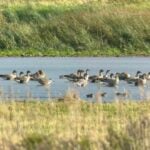
Wildfowl were well represented. Our first Brent Geese (11) of the autumn, coming in from Siberia for the winter. Lots of flocks of Teal and Wigeon, with a Pintail and five Shoveler mixed in, and two very distant Common Scoter. Not so many waders today – a few Dunlin and a single Sanderling flew past. However, there were lots of Black-headed Gulls moving and mixed in with them, a few Common Gulls and two young Mediterranean Gulls.
Some species are not usually thought of as migrants but our local population is boosted by birds leaving northern Europe and coming here for the winter. There Grey Herons coming in over the sea this morning were a case in point. It was nice to see those three – we do see them migrating like this from time to time. But it was just a sign of things to come.
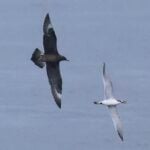
There were a few Razorbills on the sea. Several juvenile Gannets were diving off to our right in a melee of gulls and Sandwich Terns. A steady stream of Gannets seemed to be on the move, heading off east. A single Arctic Skua flew past further out.
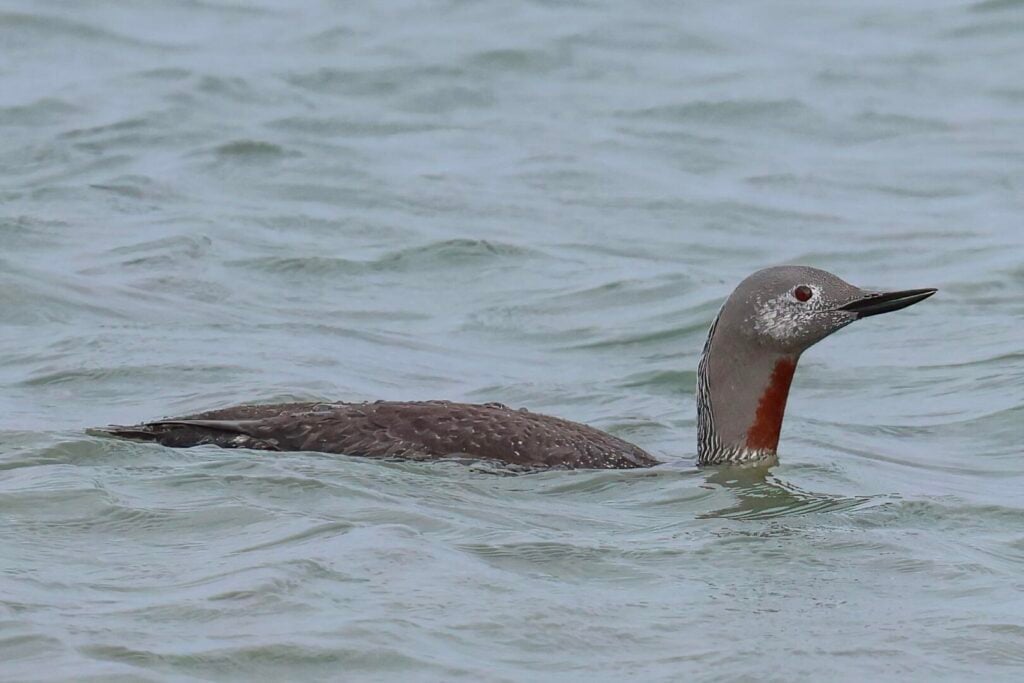
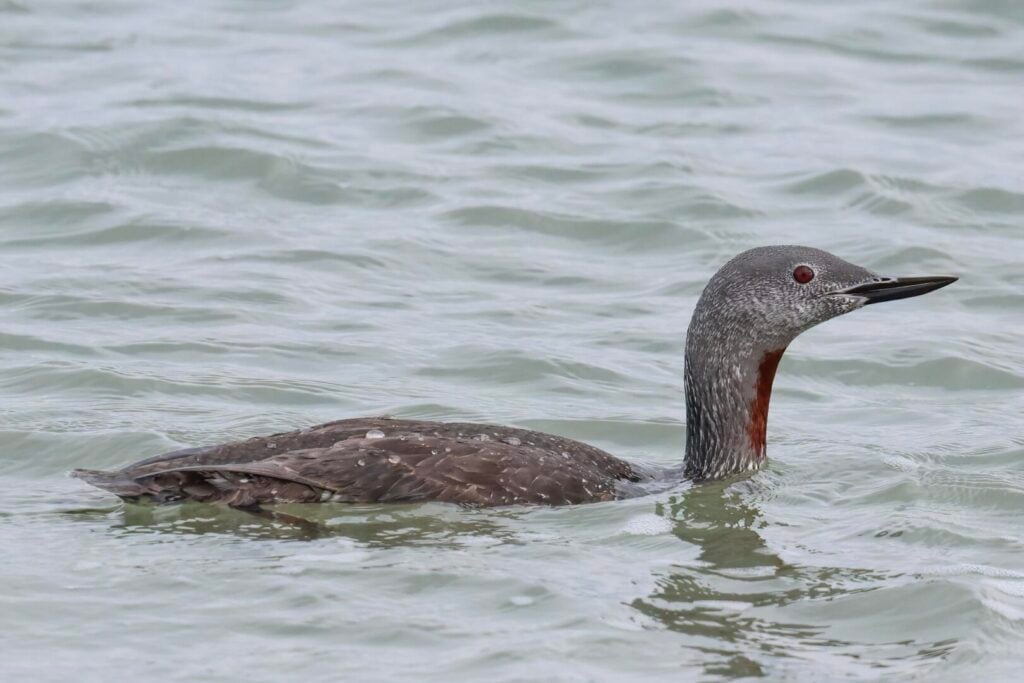
But one of the highlights here (of many) were the Red-throated Divers. There were a few flying past but at least three were on the sea and very close in. We saw them off to the west at first, but they were diving repeatedly and working their way towards us. We walked down onto the sand and eventually they surfaced just a few metres away from us. Adults just starting to moult, they still had their red throats. Stunning!
And we almost forgot, this was all against the backdrop of the large skeins of Pink-footed Geese which came up from Blakeney Freshes and flew over the Eye Field behind us, calling. We watched them dropping down onto North Scrape. Then, a little later, they all flew back the other way.
We could have stayed here longer but we noticed a message about an American Wigeon on Arnold’s Marsh, just on the other side of the reserve. We decided to drive round and walk up the East Bank. When we arrived, we could see the finder now looking back towards Pope’s Pool from the sluice. Scanning with the scopes, we quickly picked out the American Wigeon.
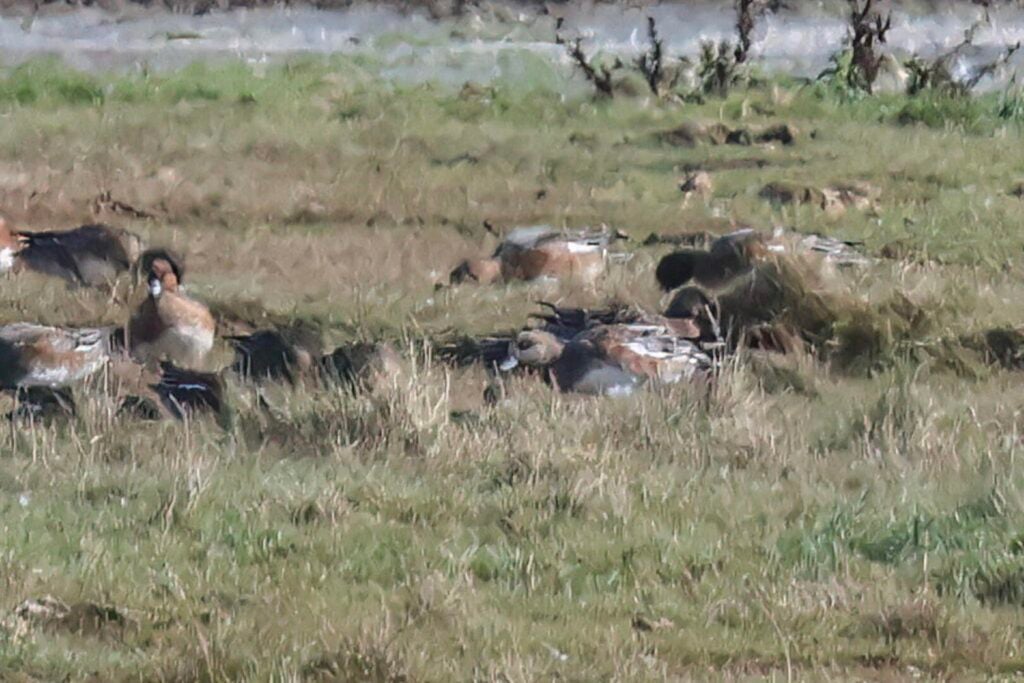
An eclipse drake, so not in the smartest plumage, but with a noticeably greyer head than the accompanying Eurasian Wigeons, dark mask and pale whitish forehead. It would later transpire that the American Wigeon was ringed. A metal ring, rather than an obvious aviculturist one, it still raises some questions about where it might have come from. but interesting that it obviously came in this morning with all the Eurasian Wigeons arriving from the Continent.
Continuing on to Arnold’s Marsh, there was a nice selection of waders on here today. Two Spotted Redshanks were asleep, but with a couple of Common Redshanks walking just behind them for comparison at one point. Presumably the same Greenshank we had seen earlier on Pope’s Pool was now here too. There were lots of Black-tailed Godwits and a single Bar-tailed Godwit, a Grey Plover, a Knot, several Curlew and a scattering of Dunlin.
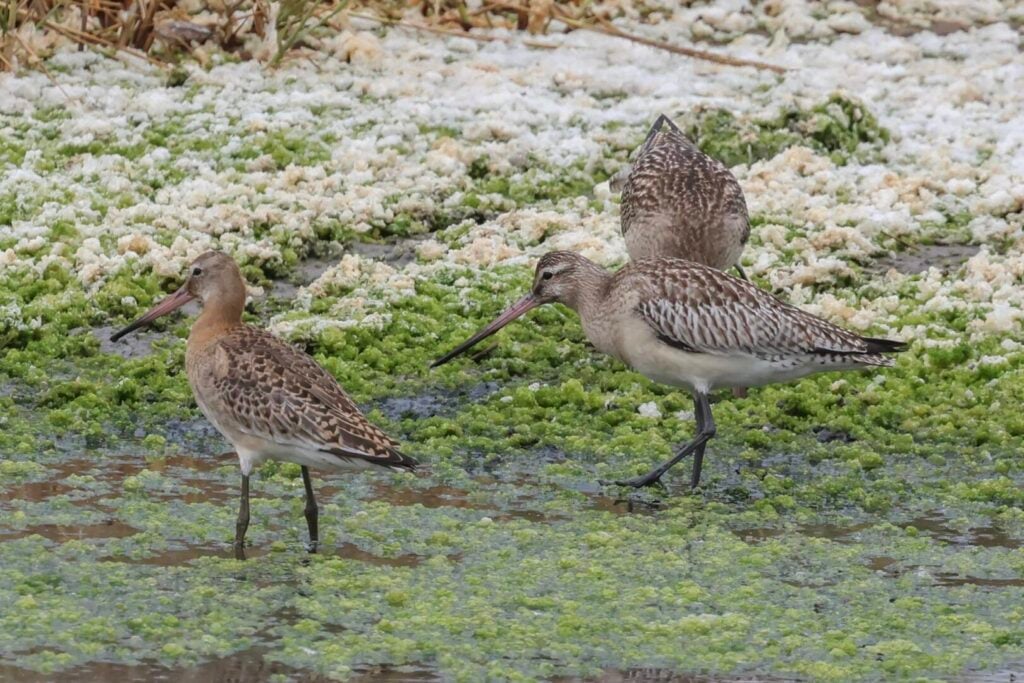
We couldn’t see anything different on the Brackish Lagoon but, as we walked up towards the beach, we found three more juvenile Bar-tailed Godwits feeding on the pools right by the bank. Great views, alongside a juvenile Icelandic Black-tailed Godwit too initially. A large wisp of fourteen Common Snipe flew high west overhead, possibly more migrants coming in off the sea. A couple of Ringed Plover came in over the beach and looked like they might drop in on Brackish but carried on straight through.
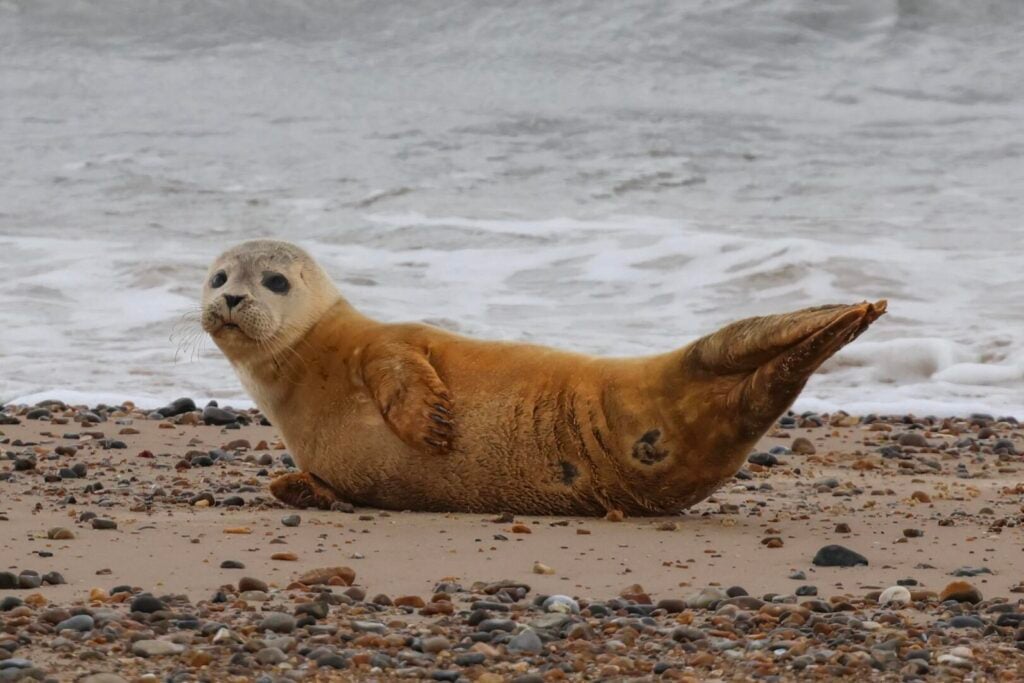
We had a quick look out to sea. A young Common Seal was hauled out on the beach. There were still small flocks of Teal and Wigeon flying past. Activity seemed to have dropped though, so we decided to walk back.
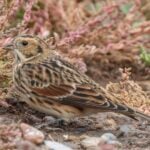
After lunch back in the picnic area at the Visitor Centre, we drove back along the coast to Salthouse. There had been a Lapland Bunting feeding along the Iron Road for the last few days. It can be elusive though and flies off into the fields at times. As we walked along the road from the village, we noticed a message saying it was there now. Sure enough, when we got up to the bridge, we found a small group of people watching it.
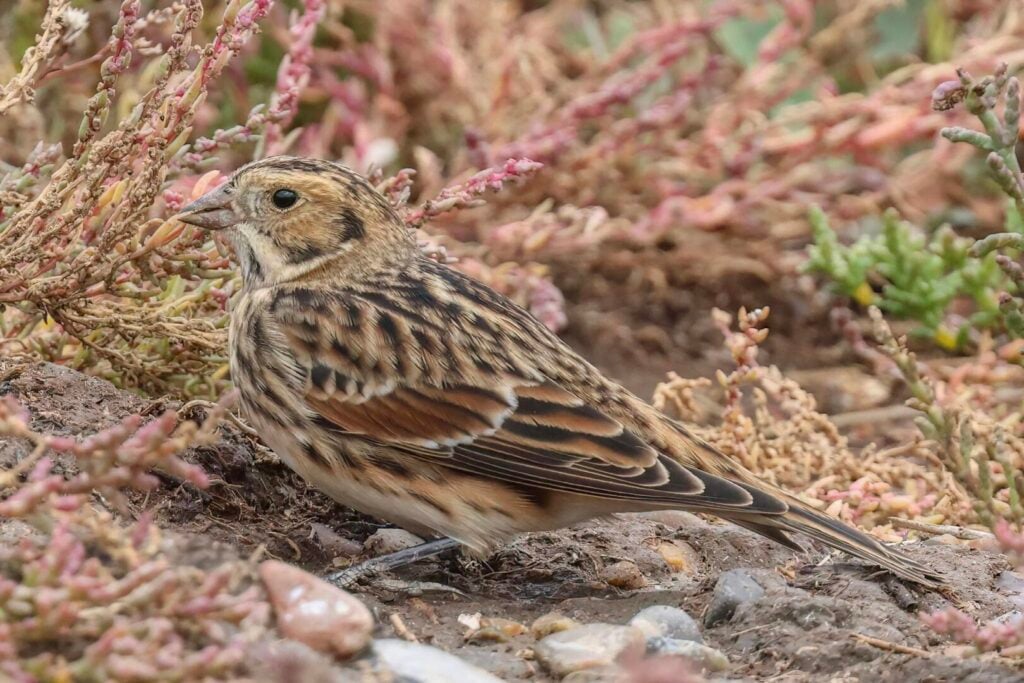
The Lapland Bunting was feeding on the glasswort growing on the edge of the track, only around five metres in front of us. Winter visitors from Scandinavia, they can be incredibly tame when they first arrive. This one certainly was, possibly it had not really seen humans before. Stunning views.
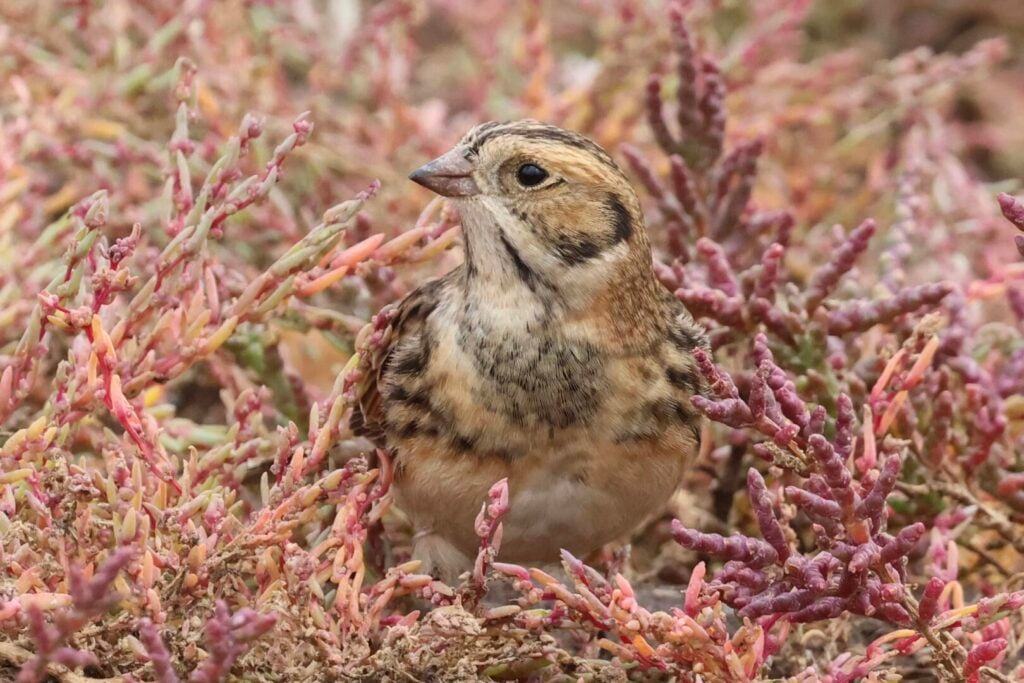
After a while, the Lapland Bunting stopped feeding and stretched. Then flew back over the bridge and along the track. We thought it might be heading to the puddle for a drink, but there were a couple of people there so perhaps it flew out to the pool on the grazing marsh instead. We walked back. On the way, we turned to see another seven Grey Herons flying west in a tight group over the beach.
We still had time for another stop, so we drove on to Kelling. It was school run time, but we managed to find somewhere to park in the village and set off up along Meadow Lane. There were lots of Goldfinches and Chaffinches in the fir tree and hedges. A mixed tit flock moved ahead of us – Long-tailed Tits, Blue and Great Tits, accompanied by a couple of Chiffchaffs and Blackcaps.
Scanning the Water Meadow from the gate, there was no sign of any Glossy Ibis, just a Mute Swan and a Common Snipe. Further down, there was the usual selection of ducks on the pool. Two Stonechats flicked ahead of us along the brambles. There were a couple more Stonechats around the Hard but nothing else with them. Two more Common Snipe flew over high.
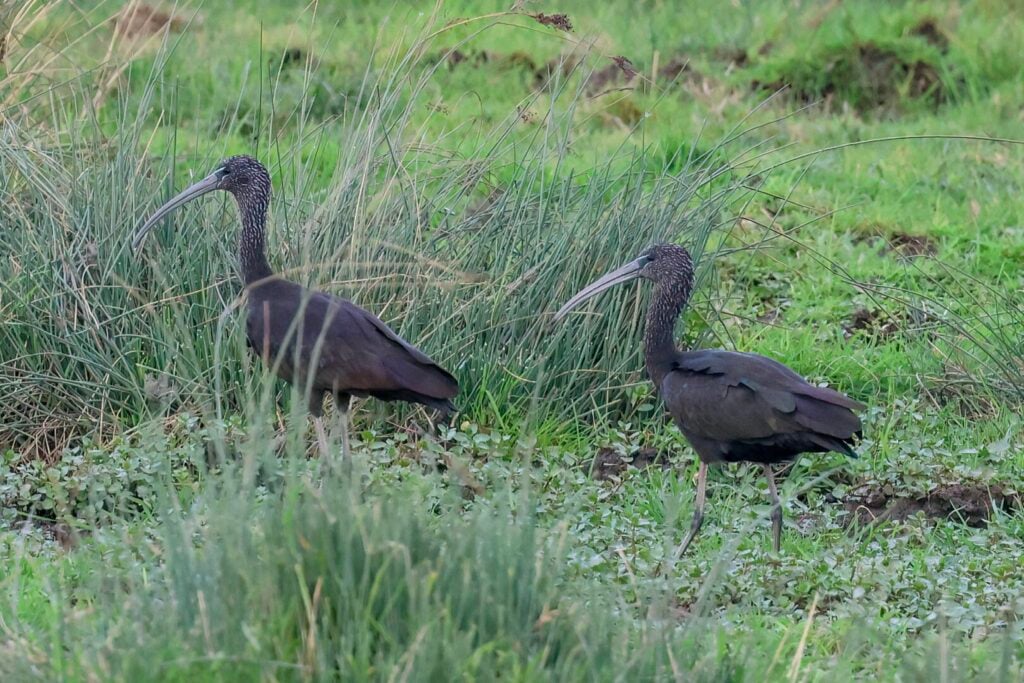
Up the path towards the gun emplacements, we couldn’t see the Glossy Ibis in their usual field west of the Quags. Then we realised we could just make them out, three of them in the main drain, east of Salthouse Beach Road. A long way off!
Looking out to sea, a single drake Common Scoter was on the water just offshore. It was asleep at first, then woke and started to preen so we could see the yellow stripe on its bill. A much better view than the two we had seen flying past way out to sea earlier. There were still a few Wigeon arriving, small flocks coming in over the sea.
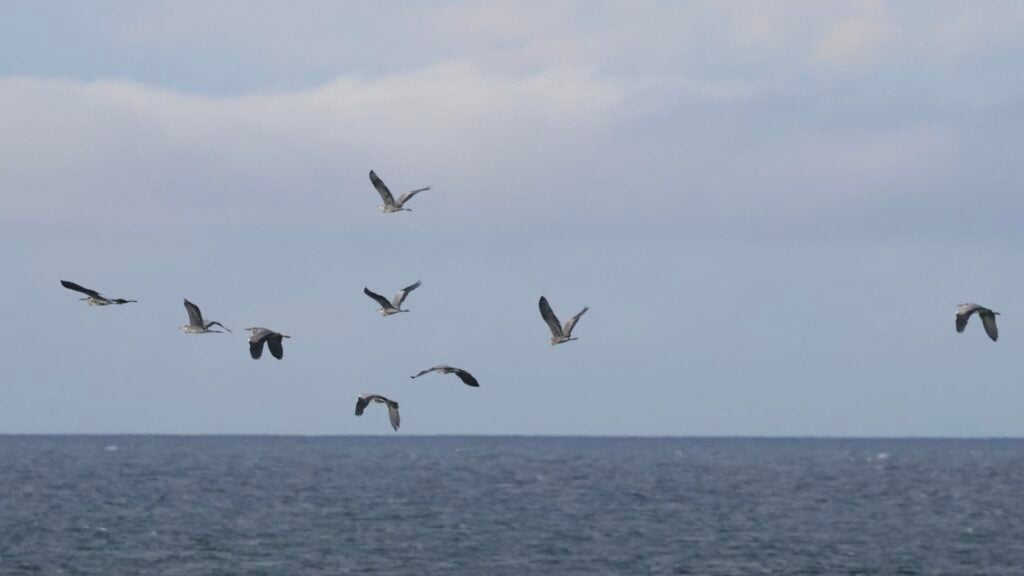
Then a flock of nine Grey Herons flew past over the beach and off west. Impressive in itself but we turned to see another twelve flying over the field behind us. Checking the local WhatsApp groups, even more had gone through while we were walking down here. An amazing arrival of Grey Herons today. Presumably conditions in Scandinavia had been suitable for them to set off. Great to watch.
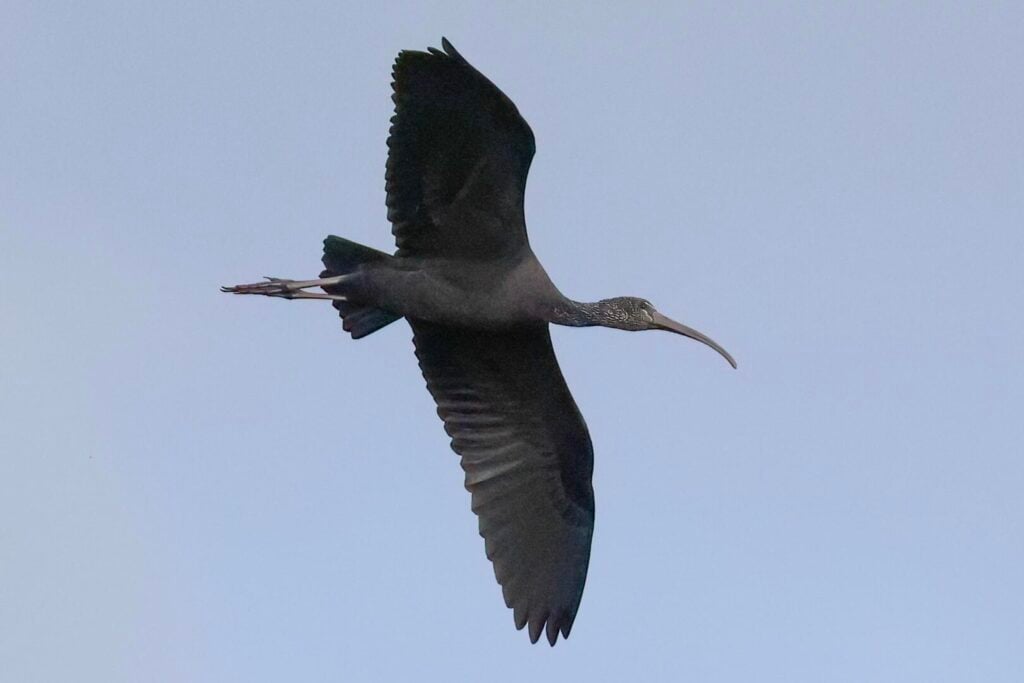
It was time for us to walk back. As we made our way up along the track past the Water Meadow, we looked up to see two Glossy Ibis circling over right ahead of us. They dropped down and from up at the metal gate we could see them feeding out on the wet grass. Just a little closer than the ones we had just seen! Presumably they were two of those three, but strange that they had lost one on the way here.
A lovely way to wrap things up. It had been a really interesting day, with too many highlights to choose from. Normally an American Wigeon or the close Lapland Bunting would be the bird of the day all on its own, but hard to ignore the amazing migration we had witnessed, and that’s ignoring the fantastic Red-throated Divers too.