A single day Autumn Migration tour in North Norfolk. It was a rather blustery day, the SW wind gusting up to 39mph. Despite that it felt surprisingly warm in the sunny spells and stayed dry all day. We spent the morning at Titchwell and in the afternoon drove back along the coast to Holkham.
We picked up half the group in Hindolveston and the other half in Wells. As we drove out along the coast road towards Holkham, a Great Spotted Woodpecker flew high over the fields parallel to the road. Presumably a bird on the move, dispersing.
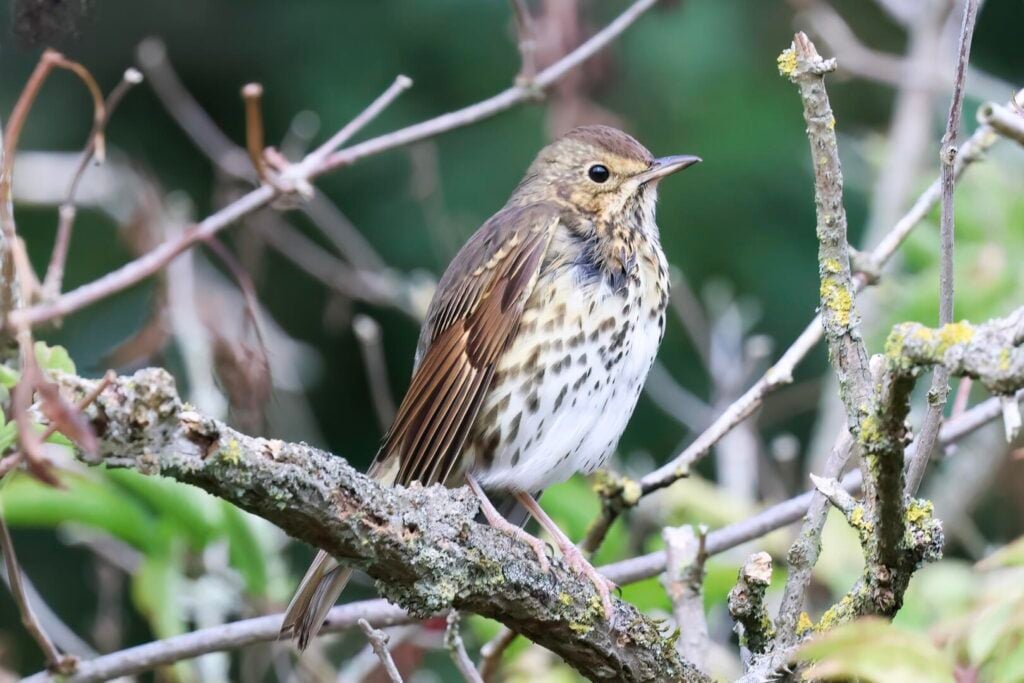
When we arrived at Titchwell, the car park was still surprisingly quiet. So we had a quick look round the overflow car park first. There were several Chaffinches feeding on the track, with lots of field maple seeds blown off the hedgerow trees in the blustery wind. A Blackcap flew across in front of us. A Song Thrush was perched in an elder bush, preening and several Blue Tits and a couple of Chiffchaffs flicked through the trees beyond.
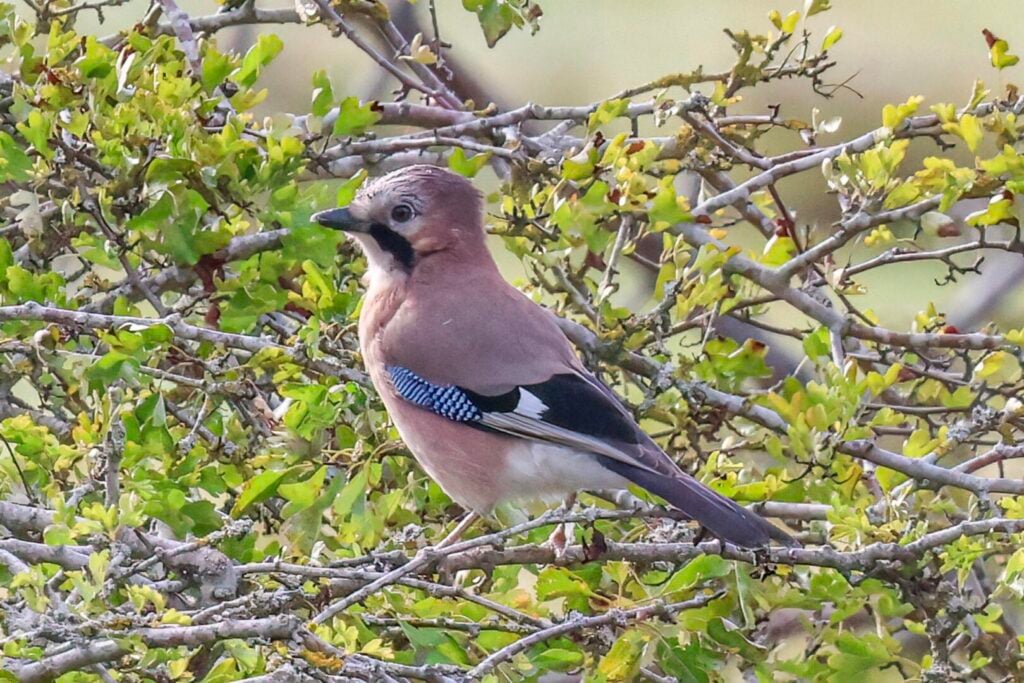
As we walked round to check the paddocks, a Jay flew across. Scanning from the gate, it was rather quiet. No sign of any obvious migrants having dropped in overnight. As we walked back round, a small group of House Martins disappeared over the tops of the trees.
Out onto the reserve, we checked the hedge across Thornham grazing meadow. A Kestrel was perched on the top of the cattle pen half way down but there was no sign of anything in the hedge. Several groups of Greylags circled round honking industrially.
Out of the trees, there was no sign of any House Martins now. Presumably the ones we had seen earlier had continued on west. Next stop Africa! A Grey Heron flew past in front of us, off west over the saltmarsh. They have been moving this week too, birds coming in from the continent, but hard to tell if this one was a migrant or a local bird. A couple of Marsh Harriers were quartering out over Thornham reedbed. A Cetti’s Warbler shouted at us from the reeds.
There were some very distant Pink-footed Geese flying over towards Holme. We could see a gathering of Spoonbills way off in Thornham Harbour too. A Chinese Water Deer was creeping around in the rushes out on the saltmarsh, where a Curlew was also standing. Another Great Spotted Woodpecker flew out over the reedbed and landed in the sallows.
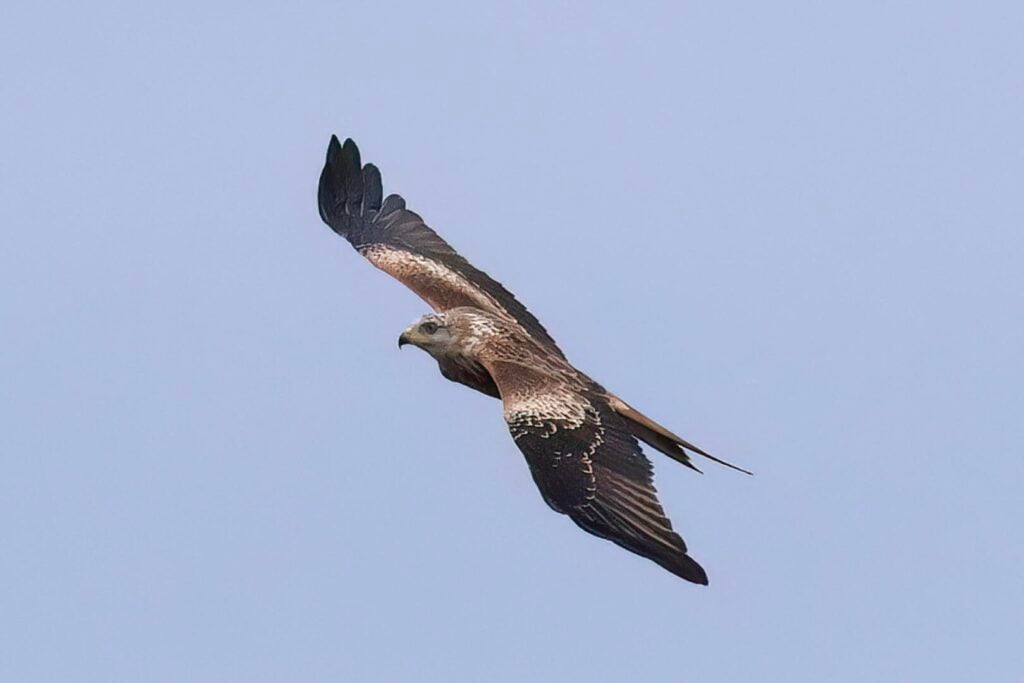
Another Red Kite drifted across over the Freshmarsh, flushing everything. We could see all the Black-tailed Godwits whirling round with their black-and-white wings.
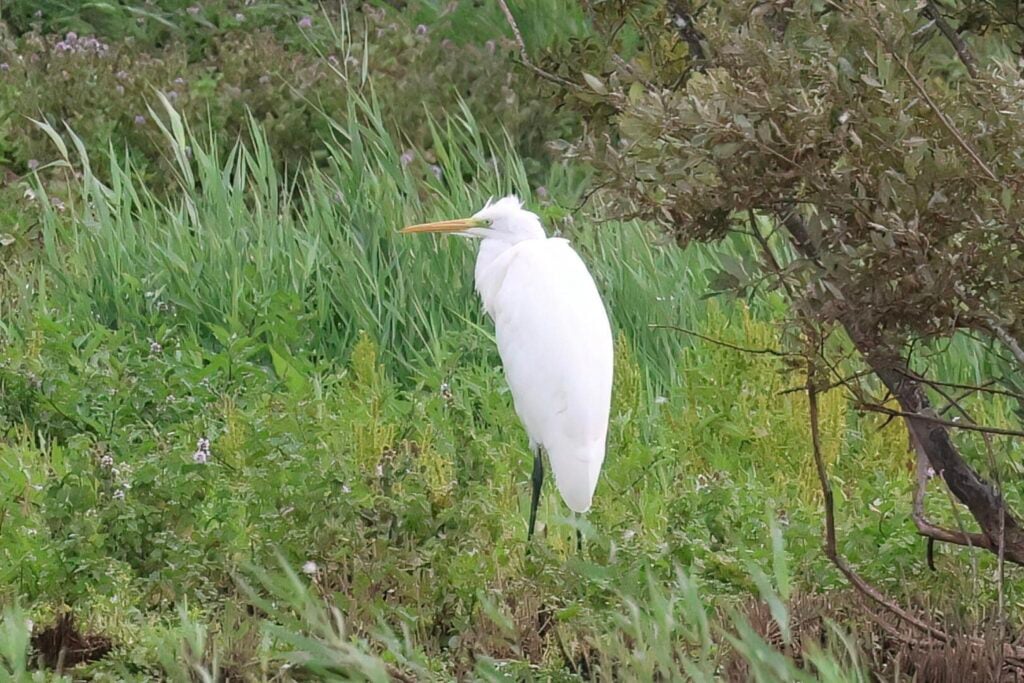
Up to the reedbed pool, a single Great White Egret was sheltering from the wind behind the bushes. We got it in the scope and admired its long, yellow-orange dagger of a bill. There were plenty of brown ducks around the edges, mainly Teal today. Two Coot swam up the channel on the far side.
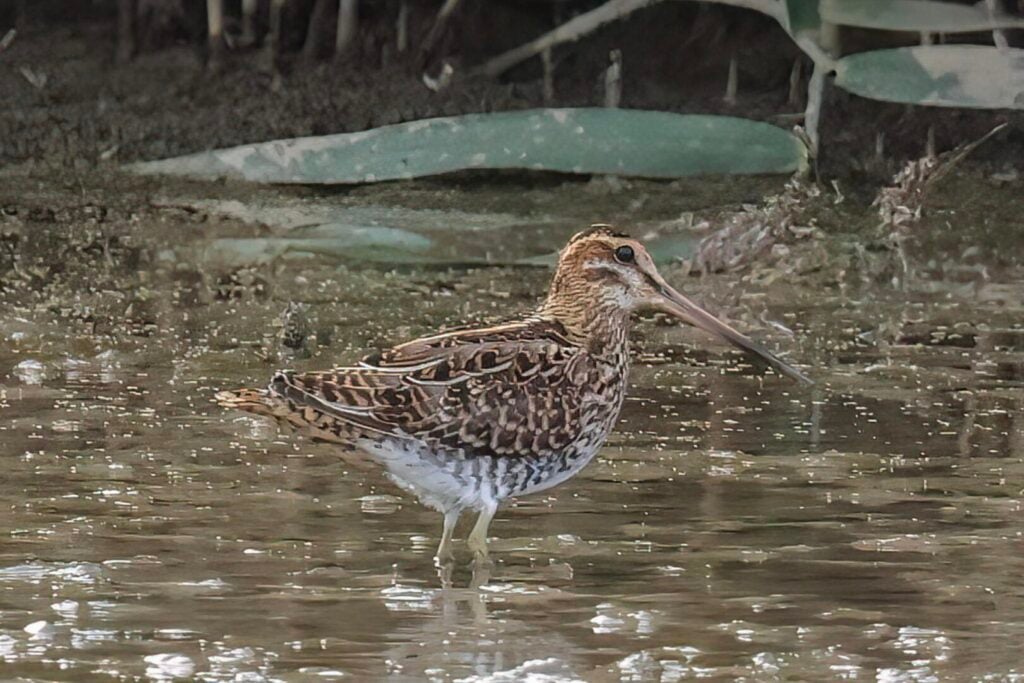
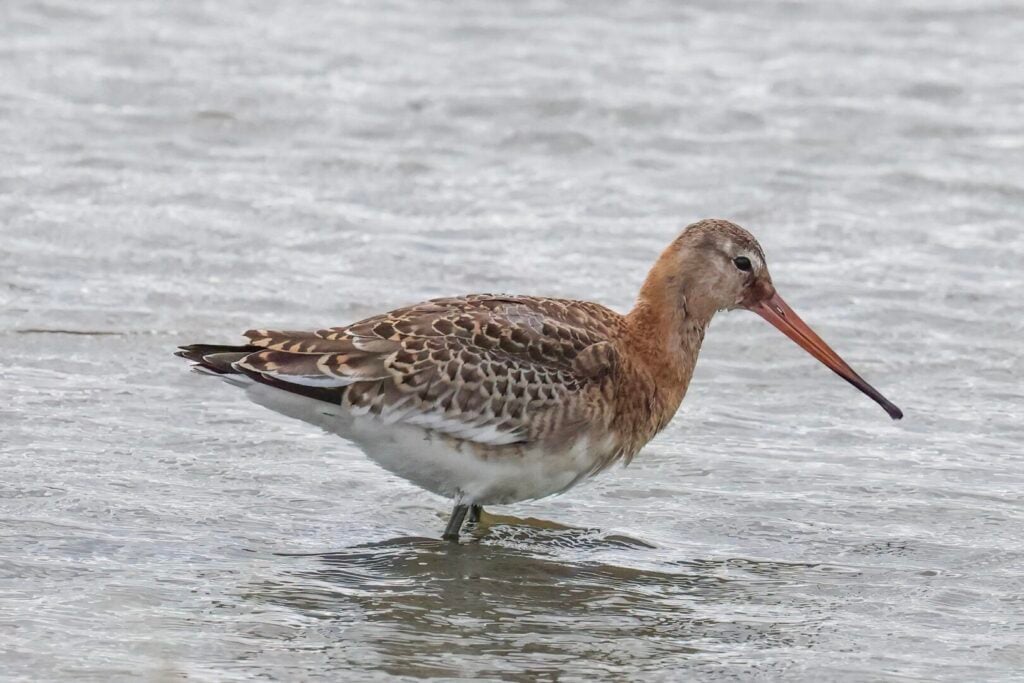
Into Island Hide, the Black-tailed Godwits had settled down and were mainly roosting, asleep on the islands now. A few juvenile islandica Black-tailed Godwits were actively feeding, over by the edge of the reeds, along with several Ruff. A Common Snipe flew across in front of the hide and landed in front of the reeds, followed by a second. We had a good view of them now, feeding on the wet mud.
The Avocets were mostly over the back of the water. Several more Ruff were feeding on the edge of the reeds the other side, including one with a partly white neck. Possibly a ‘satellite male’? We picked up a couple of late Sand Martins hawking back and forth right over the back of the Freshmarsh.
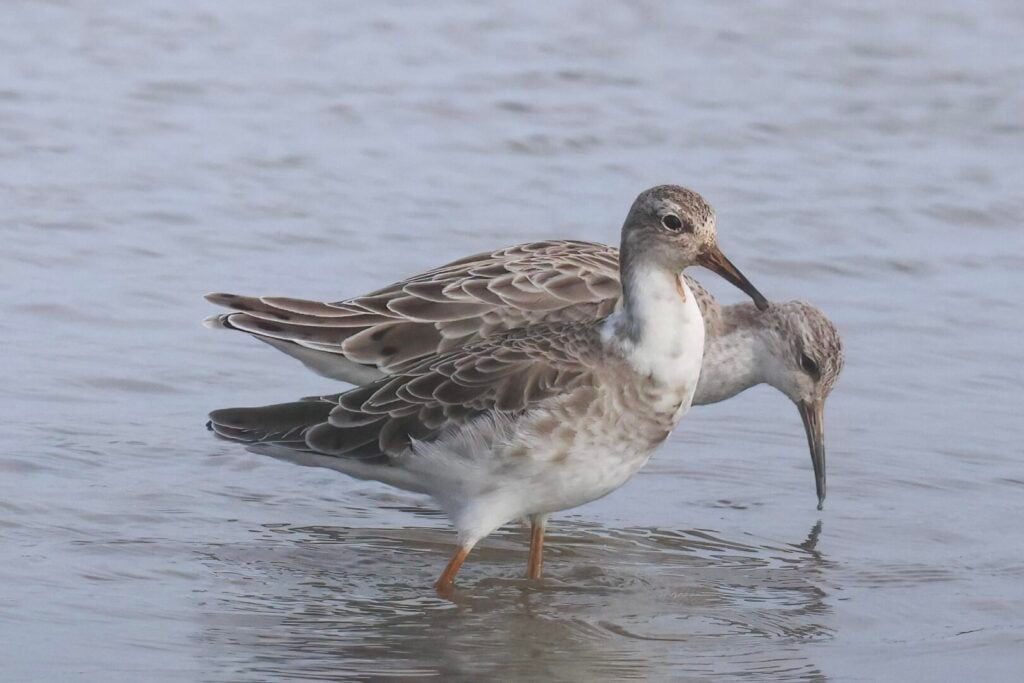
Back out to the main path, there were lots of Lapwings roosting out on the saltmarsh the other side. A few Redshank and more Ruff were mixed in with them. Three Golden Plover flew over calling plaintively.
It was a surprise to find the NW compartment almost completely dry again. It had just been starting to look good for waders again. No surprise that the Spotted Crake left a couple of days ago. There were just a couple of Ruff on the very small area of remaining water. Several Meadow Pipits and Pied Wagtails were out on the grass, and small groups of Linnets dropping in and out.
On to Parrinder Hide, the Green Sandpiper was feeding on the edge of the channel right in front again but moved quickly further back. Another juvenile islandica Black-tailed Godwit was close to the hide too.
Lots of Dunlin were feeding very actively on the mud right over the far side, in front of the reeds. Scanning through carefully, we found the single juvenile Curlew Sandpiper in with them. It was hard to pick out, in with all the Dunlin at first. When they all flew round at one point, the Curlew Sandpiper landed on its own with a Redshank, which made things a bit easier. Amazing to think it is making its way from Central Siberia to West Africa without the benefit of Google maps (other navigation apps are available!).
One of the Dunlin flew in and landed much closer, on the edge of the channel with a Common Snipe. A good size comparison together, with the Black-tailed Godwit nearby too. An eclipse drake Shoveler was standing on the bank, showing off its shovel of a bill. Several Gadwall were out on one of the islands further back, the drakes already coming out of their brown eclipse plumage.
Back out to the main path again, we could see the remedial work on the bank at the back of Volunteer Marsh still ongoing. Once they have completed that, it will be interesting to see if they have still have time (or money) left to do any work to the rest of the compartment. Most of it is completely covered by saltmarsh vegetation these days.
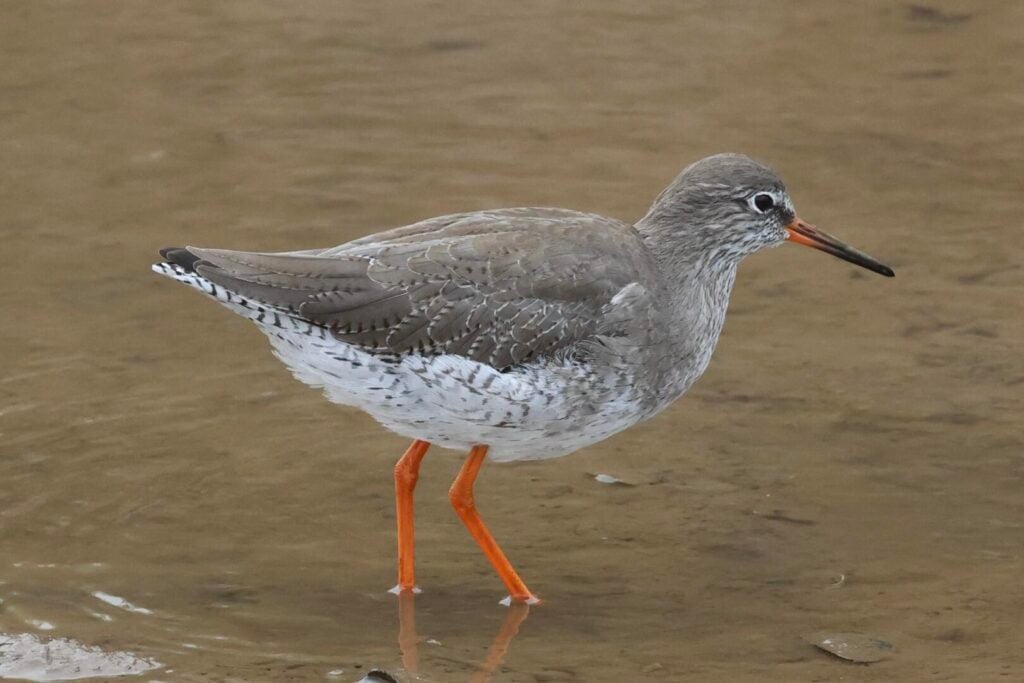
Scanning out along the channel at the far end, we could see several Redshanks and Curlews. A Bar-tailed Godwit was feeding with a Black-tailed Godwit on the muddy edge at the far end, so we got the scope on those. Then we noticed a second Bar-tailed Godwit asleep with a Greenshank much closer, on one side. A Grey Plover flew across and landed on the open mud. There were a couple of Turnstones too and a Curlew wrestling with a small crab. A very tame Redshank walked right past us on the mud.
Looking back, we picked up a juvenile Hobby circling over Parrinder Hide. Then it turned and dropped back down over the Freshmarsh, out of view behind the Parrinder bank.
There was not much on the Tidal Pool today, despite it being close to high tide. A group of Oystercatchers was roosting out on the saltmarsh island. Two pairs of Mallard were on the water, with one drake already out of eclipse with a bright green head catching the sunlight; the other still looking very scruffy.
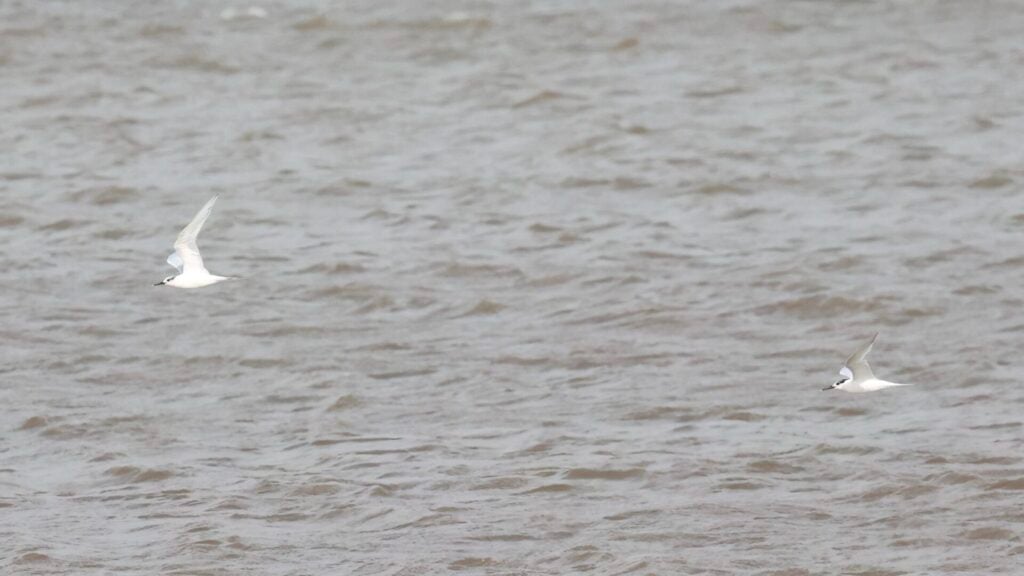
Continuing on to the beach, we managed to get out of the wind behind the dunes. A few Sandwich Terns flew past close in, along with a single Common Tern and an adult Mediterranean Gull further out. There were lots of terns feeding out over the water further to our left, two dark brown juvenile Gannets in with them.
Someone sat out on the edge of the dunes, who had apparently been there for an hour and a half, told us he had seen an Arctic Skua off here earlier. Thankfully, we didn’t have to wait anything like that long before we picked one up chasing a Sandwich Tern out over the sea. After going round and round a few times, the Sandwich Tern dropped its catch. The Arctic Skua swooped down and caught it, then drifted off further back to land on the sea again.
A couple of Great Crested Grebes were diving on the water just offshore. We picked up a single Common Scoter much further east, off towards Brancaster, struggling in the choppy water. A lone Sanderling flew along beach.
A small group of House Martins flew past in front of us, over the beach. Then we picked up a couple of Swallows flying west, out over the sea. Another one flew through the dunes behind us. There were obviously a few hirundines on the move today, despite the strong wind. They are leaving us now, on their way to Africa for the winter.
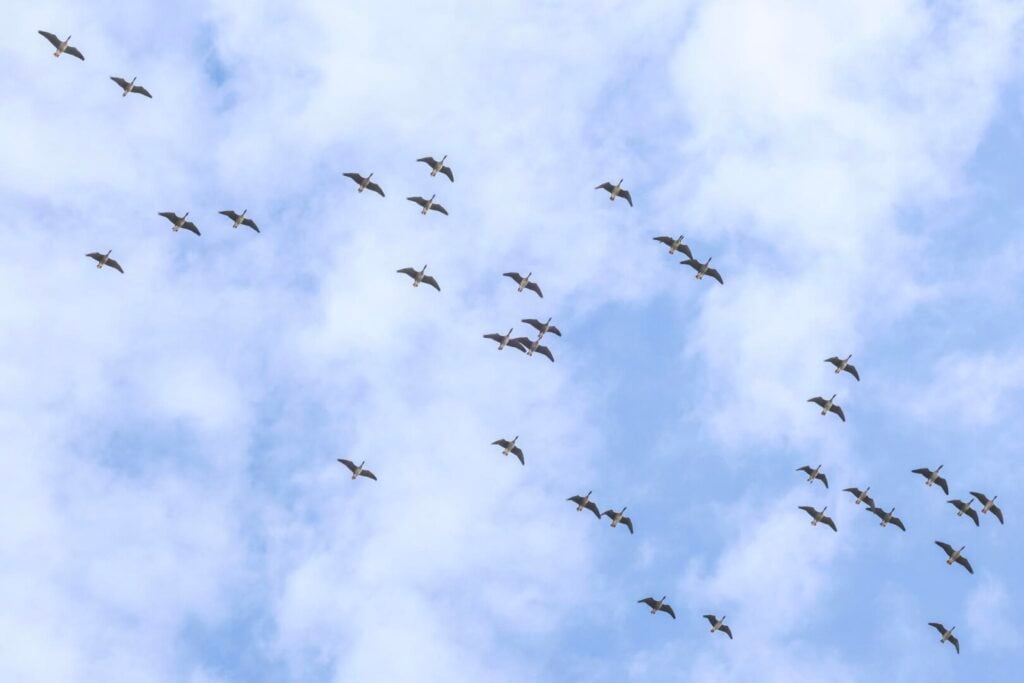
Several small skeins of Pink-footed Geese flew in from the east calling. Most flew over us and continued on west but one headed straight out to sea. It looked like it was heading for Lincolnshire, but then it turned and came back in. It seemed to be blown back east at the same time, and ended up arriving back over land pretty much where it had started. Taking the long way round! They have been arriving back here for the winter in recent days but hard to tell if the geese were coming in or just moving along the coast today.
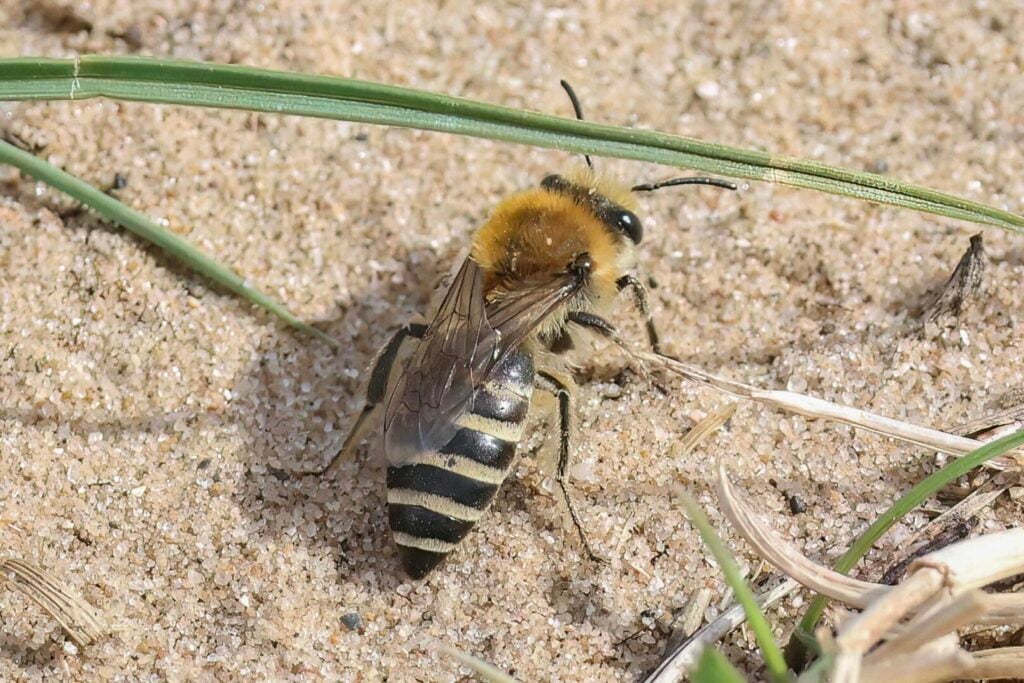
As we walked back, several Sea Aster Bees were flying around over the edge of the path but being blown round in the wind today. A Reed Bunting perched briefly on the bushes on the saltmarsh. Lots of Canada Geese and Greylags had landed now out on the Freshmarsh, a single hybrid with them.
Back to the trees, it was more sheltered. Out of the wind and in the warm sunshine, lots of dragonflies were flying round. Migrant Hawkers and Common Darters. Several Willow Emerald damselflies were chasing around the brambles. It was time for lunch, so we made our way round to the picnic area. While we were eating, we heard a Treecreeper call and looked across to see it climbing up the trunk of an alder next to us.
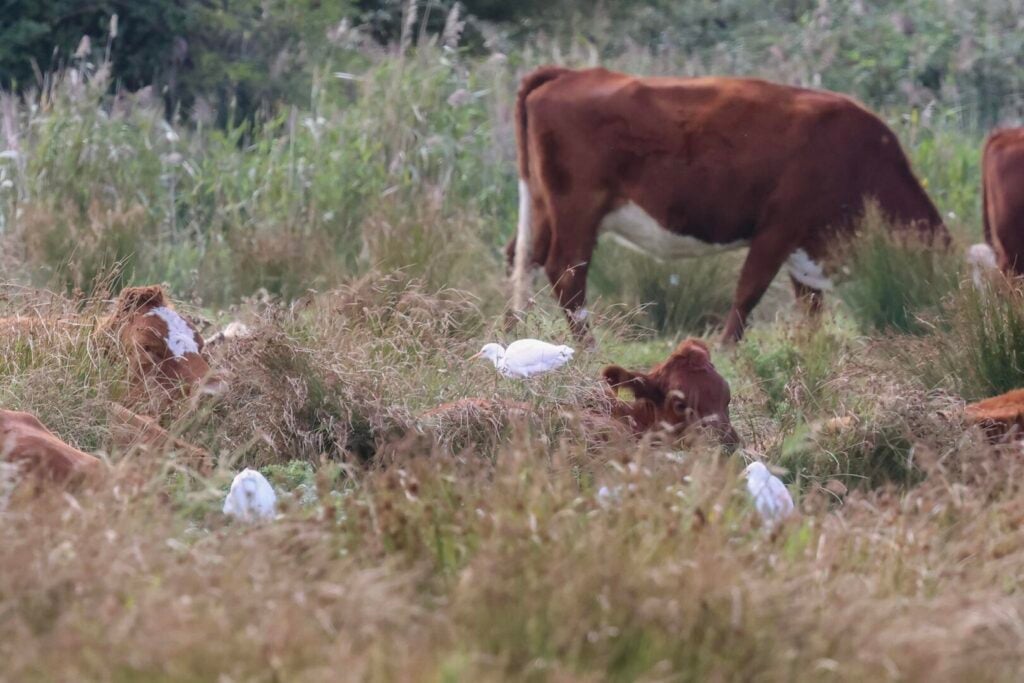
After lunch, we returned to the minibus and drove back east along the coast road to Holkham. On the way, a male Yellowhammer flew over the road in front of the minibus. It was still quite busy today on Lady Anne’s Drive, despite the wind. We could see several Cattle Egrets with the cows by the Drive, so we stopped and got out for a closer look.
As walked on, up to the far end, a Hobby appeared out over the grazing marsh to the left. As we watched, it dropped and zoomed low across over the grass, disappearing off back towards the cows.
We took the track west. A couple of Red Kites were hanging in the wind over the trees, enjoying the updraft. A few Chiffchaffs were calling in the trees and we found a couple of Great Tits but otherwise it was probably a bit too exposed and windy along here today. Everything seemed to be hunkered down. A few Speckled Wood and Wall Brown butterflies fluttered round in the trees. We could hear Pinkfeet calling and see groups every now and then out over the grazing marsh.
Stopping for a quick scan of Salts Hole, we found several Little Grebes and a few Gadwall on the water. Past Meals House, a Hummingbird Hawkmoth was hovering over the track beside us. It landed briefly on the bare earth but then quickly flew off. It has been a good year for them this year.
There were more Chiffchaffs and Blue Tits in the bushes just before crosstracks, but the mixed tit flock disappeared quickly off into the trees. A Green Woodpecker flew over. We met someone we knew coming back from the hide, who told us there had been no sign of the Red-necked Phalarope for about 90 minutes. Still, we were almost there now, so we thought we would give it a go anyway.
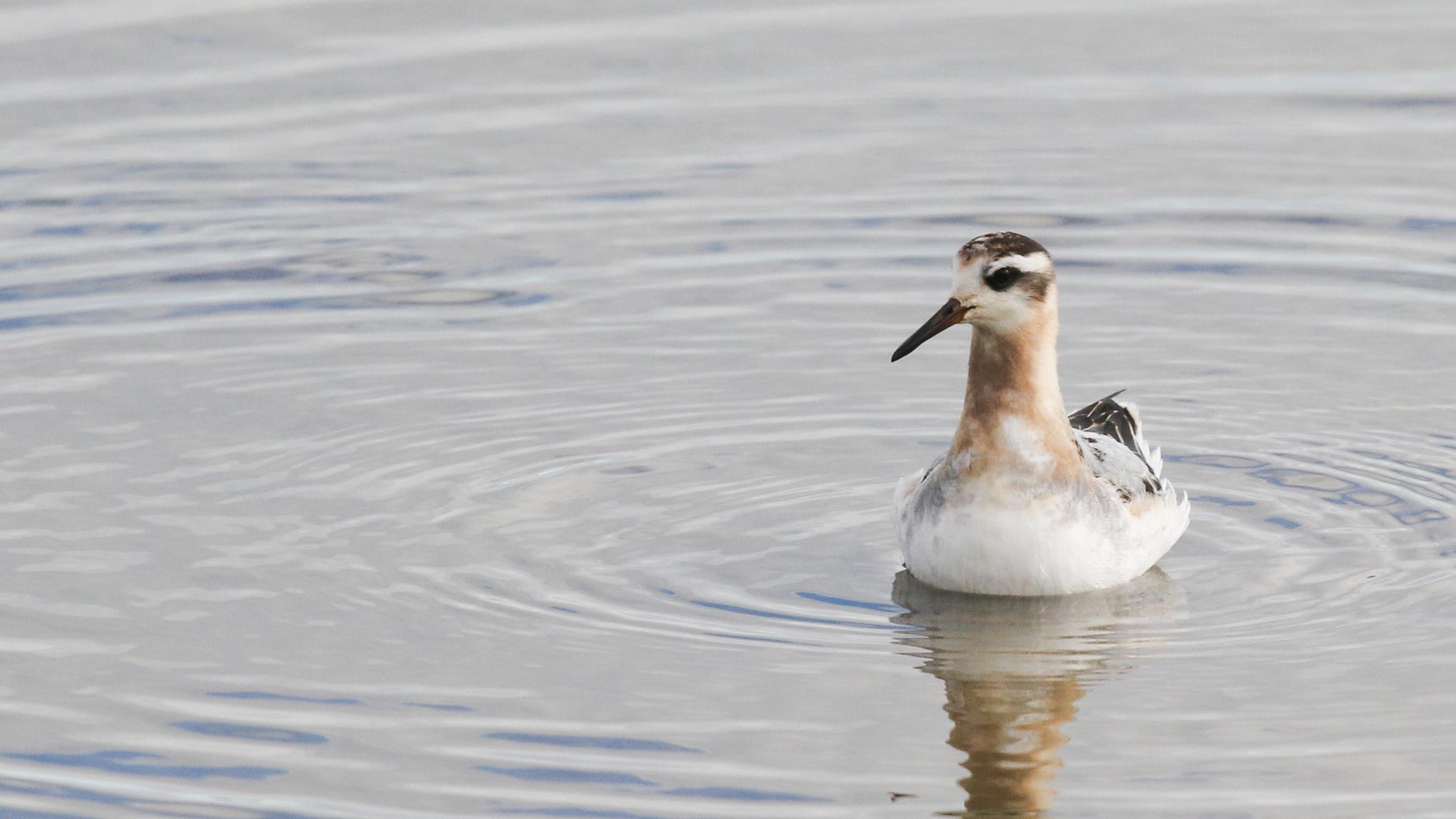
When we arrived in Joe Jordan hide, there was just a single Black-tailed Godwit out on the pool. But we hadn’t been in their long when the Red-necked Phalarope appeared. If only it always worked like that! The Phalarope has a habit of disappearing behind the reeds for long periods. We called the friend we had seen earlier and managed to catch him before he had gone too far, so he could come back out.
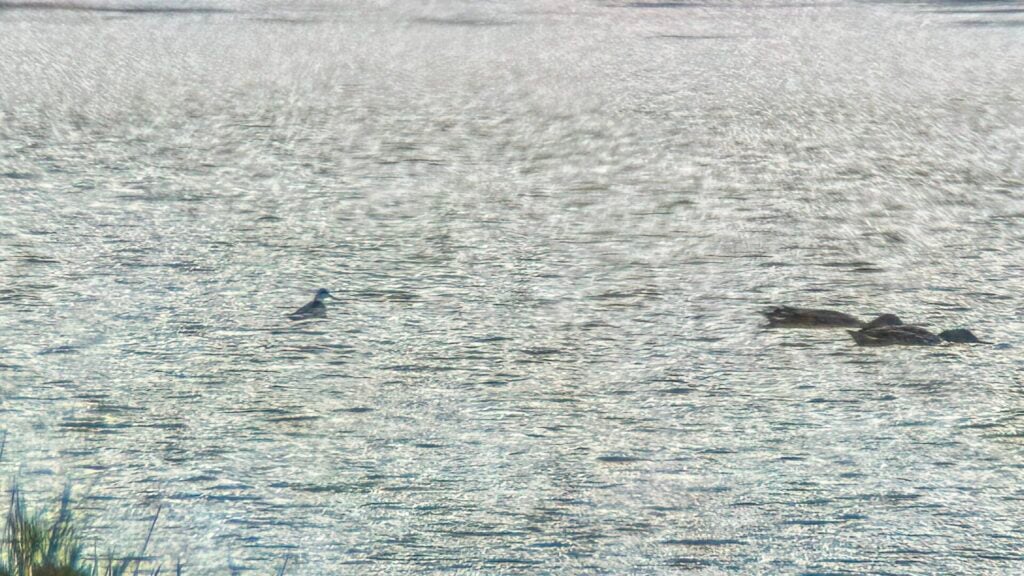
The Red-necked Phalarope was swimming in the shallow water, whirling round in circles as they do, picking at anything it managed to stir up to the surface. It was rather flighty though. At one point it landed with a small group of Teal. Then it flew round with a small group of Ruff and Dunlin. When they landed again together, we had a good size comparison. Tiny!
A juvenile, it was interesting to wonder where the Red-necked Phalarope might have from. Perhaps Shetland or northern Scandinavia, maybe Iceland even? Amazing to think it will spend the winter far out to sea, perhaps in the Indian Ocean or even possibly in the Pacific off Peru and Chile!
A Kestrel was hovering right in the front of the hide. Amazing to see how it managed to hold its head almost perfectly still despite the wind. A Jay landed briefly in one of the bushes in front of the hide. They are wandering now, looking for acorns. A Marsh Harrier drifted across over the grazing marsh.
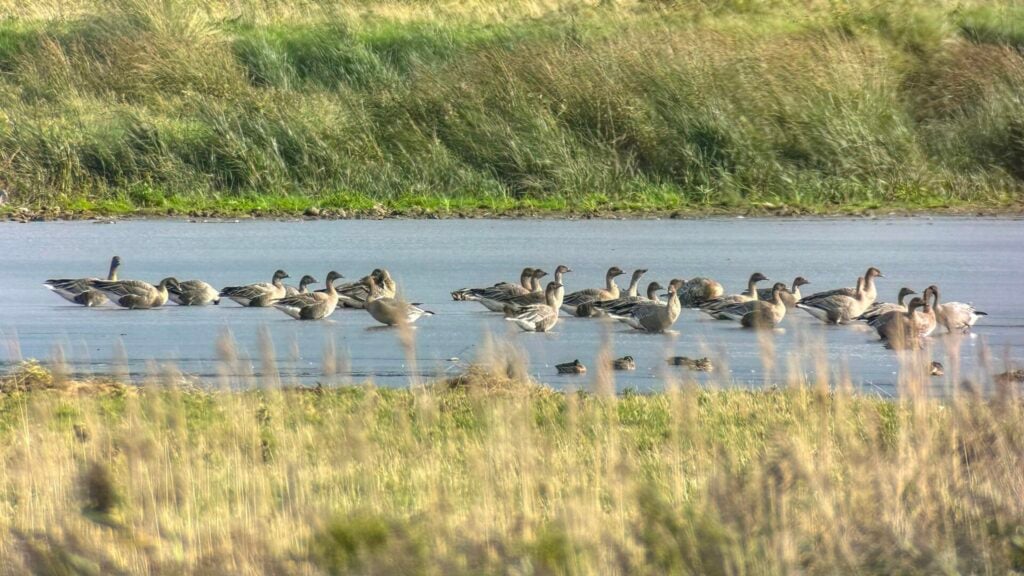
Small groups of Pink-footed Geese flew over and one landed on the small pool to the east. We got them in the scope for a closer look. Nice to see some on the ground too.
Then it was time for us to walk back. It had been a very enjoyable autumn day out, with a good selection of birds. Nice to watch some autumn migration in action too.