A single day Autumn Migration tour in North Norfolk. It was a glorious sunny day with light winds and the temperature up to a very pleasant 20C. More like summer than late September. Lovely to be out though perhaps a bit too good for grounding exhausted migrants.
Half the group met in Hindolveston. On our way out of the village, it was a surprise to find two very large Red Deer hinds feeding on the grass on the verge. We drove slowly past – not something you want to collide with! There were quite a few Jays flying across the fields on our journey up to the coast and we suspected they were on the move today. Our suspicions were confirmed when we learned that someone on the coast counted a total of over 70 flying through early morning.
We picked up the other half of the group in Wells and made our way east along the coast to Cley beach car park. Scanning the Eye Field first, we could see lots of Golden Plover feeding out on the short grass. A pair of Stonechats flicked up and down from the fence and several Meadow Pipits flew in and landed with them. A Red-legged Partridge was out on the grass too and several Egyptian Geese.
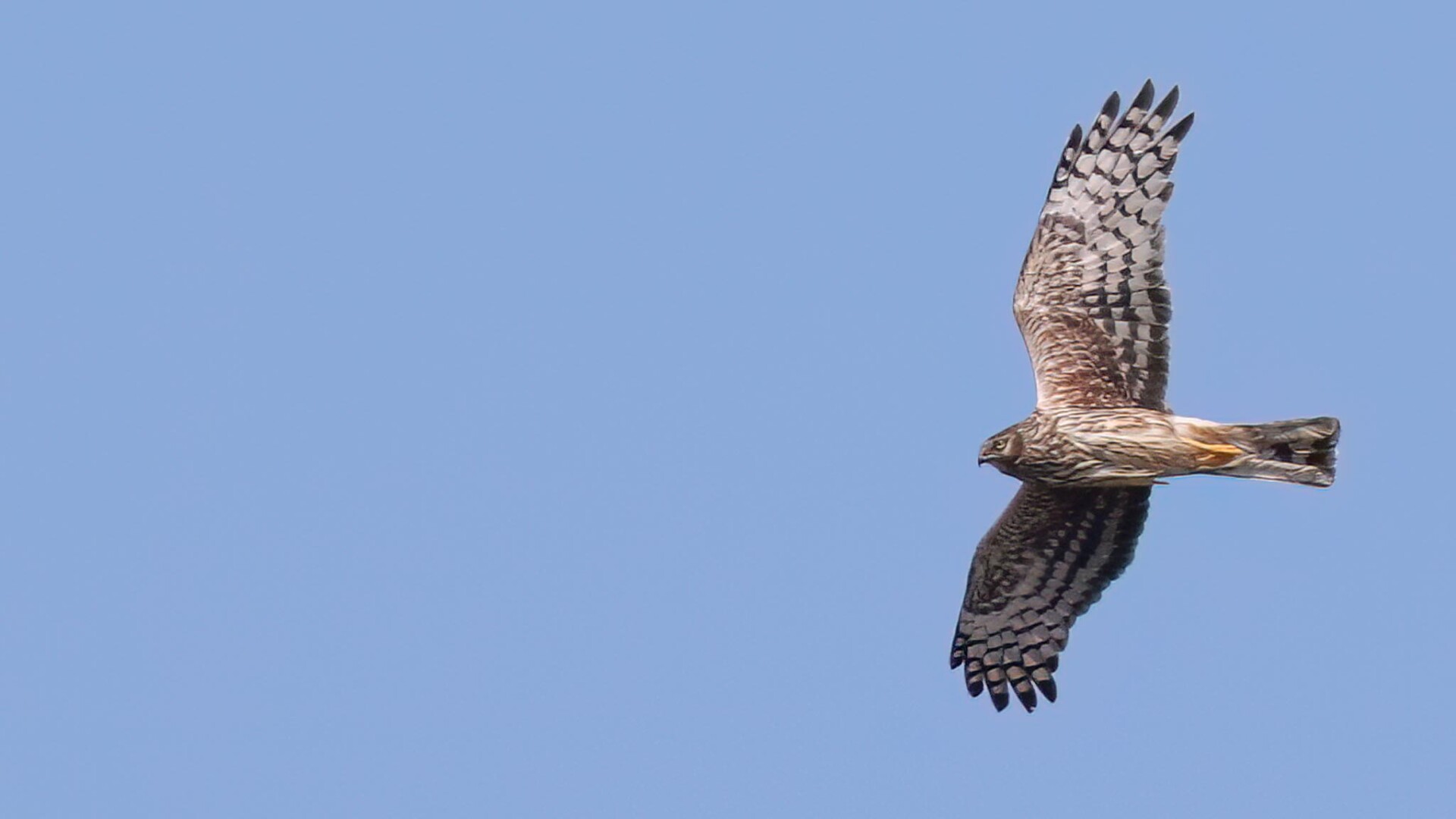
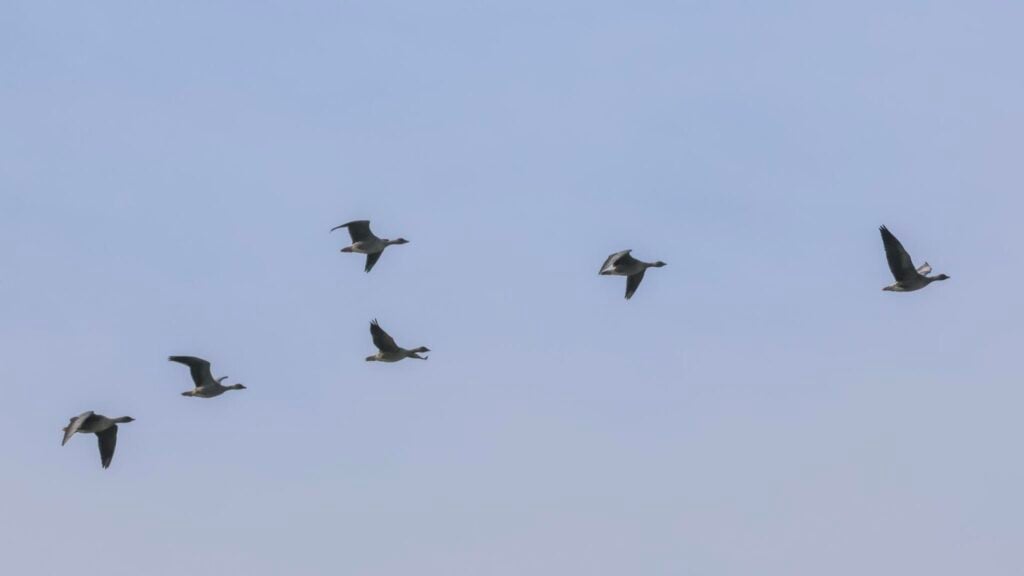
A male Marsh Harrier was perched in the bushes over by Blakeney Chapel, so we got it in the scope. Then watched it fly off towards Blakeney Point. We heard our first Pink-footed Geese calling and looked over to see a group of six flying in from the east, which continued on past in front of us.
Climbing up onto the top of the shingle, we turned our attention to the sea. There were some small groups of Razorbills out on the water, catching the morning sun. A couple of Gannets were diving very distantly offshore and a few more flew past. There were a few Sandwich Terns offshore and a single Common Tern as well. We picked up an Arctic Skua chasing a Sandwich Tern. Several Red-throated Divers flew past.
There were a few migrants arriving in from the Continent this morning. There were several flocks of Teal and Wigeon coming in over the sea, and a single Tufted Duck. Four Sanderling flew west over the beach. We suspected that a steady stream of Black-headed Gulls and a couple of Common Gulls passing by were probably migrants arriving too, but a line of Black-headed Gulls coming in from further offshore definitely were.
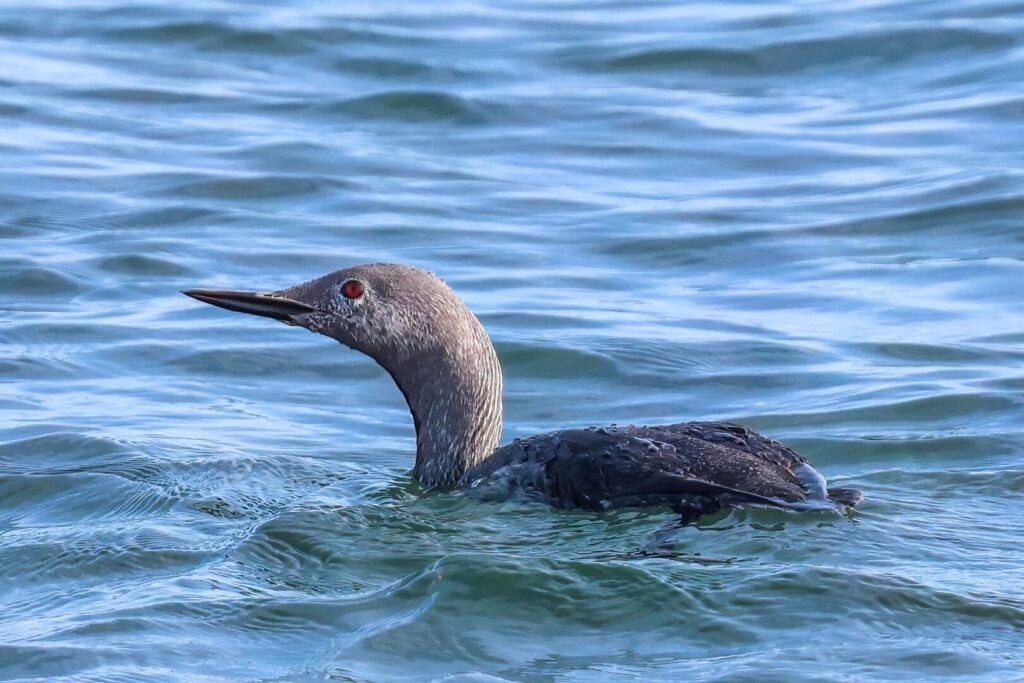
There had been a Black Guillemot offshore here for the last couple of weeks but it can be elusive, diving continually and drifting up and down along the coast. It had been reported on the sea off North Scrape this morning, so we decided to walk down and have a look at the scrape too. On the way, we stopped to admire a couple of moulting adult Red-throated Divers, still largely in breeding plumage, which were diving very close in off the beach again. Lovely views.
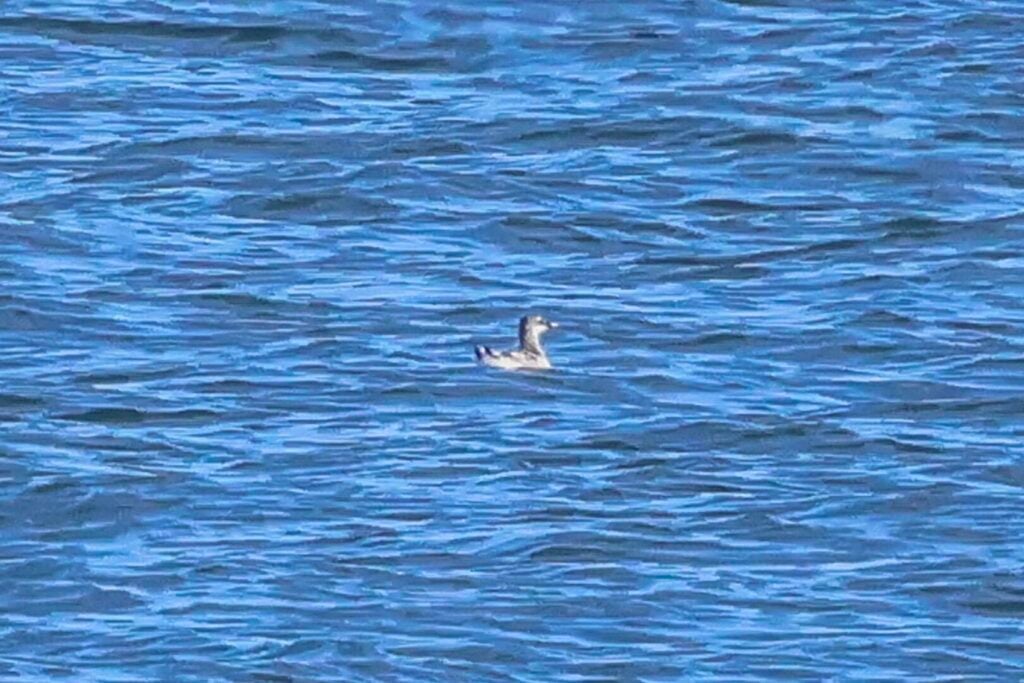
There were a few people standing on the beach further down but they hadn’t found the Black Guillemot. We had a quick scan and all we could see were lots of Razorbills, so we decided to walk over to the screen to check the scrape and have another go on our way back. We had just turned to leave when we noticed a message to say someone further along had found the Black Guillemot. So we walked back to the people we had just left and told them. Thankfully, after a couple of minutes, one of them located it
Helpfully the Black Guillemot had stopped diving and was preening now, allowing us all a chance to get a good look at it through the scopes. A 1st winter, Black Guillemot is a scarce visitor here, more commonly found on the rocky coasts around the north and west of Scotland. There were a couple of Little Gulls distantly offshore too but they were impossible to see when they landed.
Mission accomplished, we went over to North Screen now. They have been working on here during the week and have now let a bit more water on. It looks good for waders but they clearly hadn’t found it yet. All we managed to find on that score were a couple of Lapwings and a single Common Snipe asleep. A lone Turnstone flew over and on out to the beach. There were lots of Teal out in the middle.
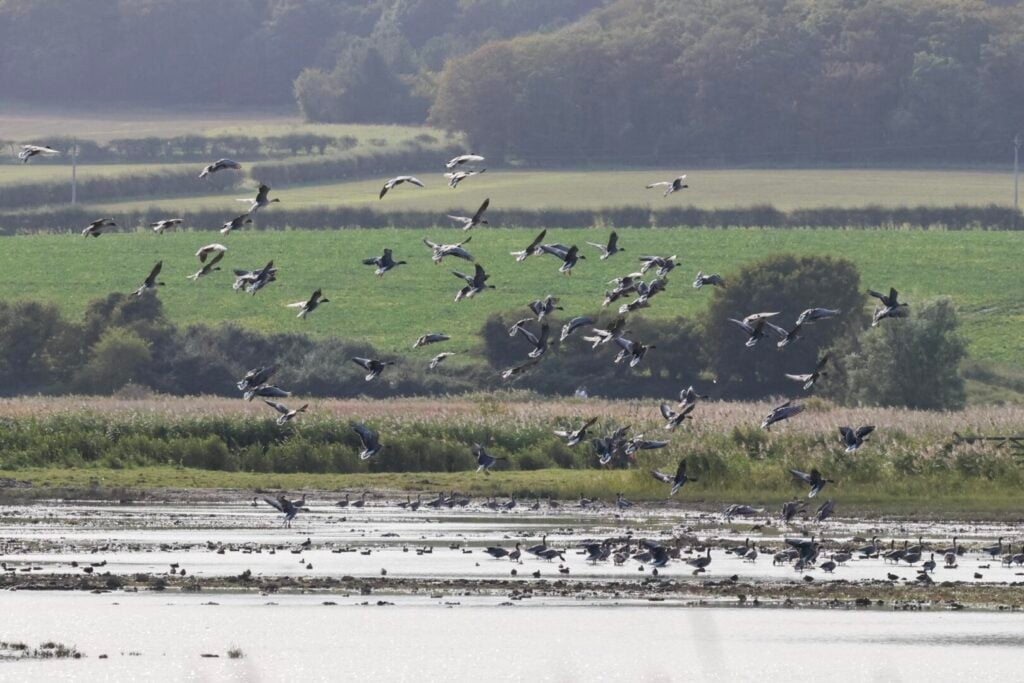
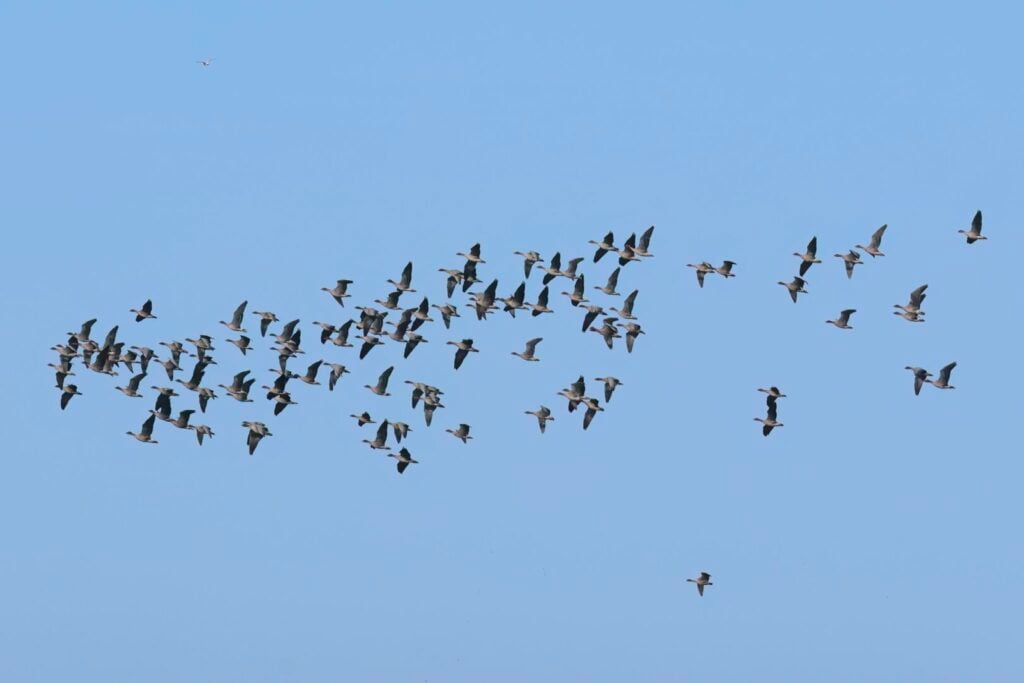
A large group of over a thousand Pink-footed Geese came up over the trees distantly beyond the village. An impressive sight, it looked like they would all drop down on Blakeney Freshes and we watched the first of them do just that. But a squadron of a couple of hundred broke off and flew straight towards us. They circled round over North Scrape calling and half of them eventually dropped down in front.
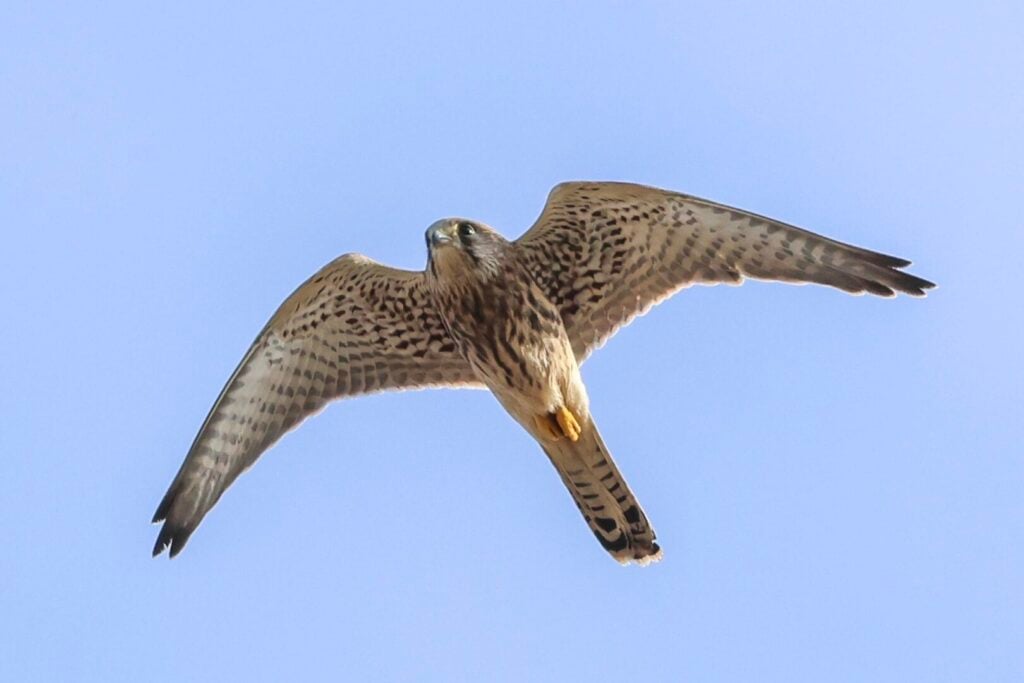
A Kestrel had been perched on one of the fence posts on the edge of Eye Field while we were on the beach. Now we noticed it high in the sky behind us and it seemed to be catching flying insects. It came right over our heads before stooping down back to its fence post. As we walked back to the car park, a Wall Brown butterfly landed to bask on the edge of the shingle. A Skylark flew up from the edge of the Eye Field right alongside us.
We drove round to Walsey Hills next and made our way up to the East Bank. Lots of Greylag Geese were gathered out on the grazing marshes and we could see their very large orange bills, very different from the Pink-footed Geese we had seen earlier. We had a quick listen at Don’s Pool but the reeds were quiet today, so we walked on further.
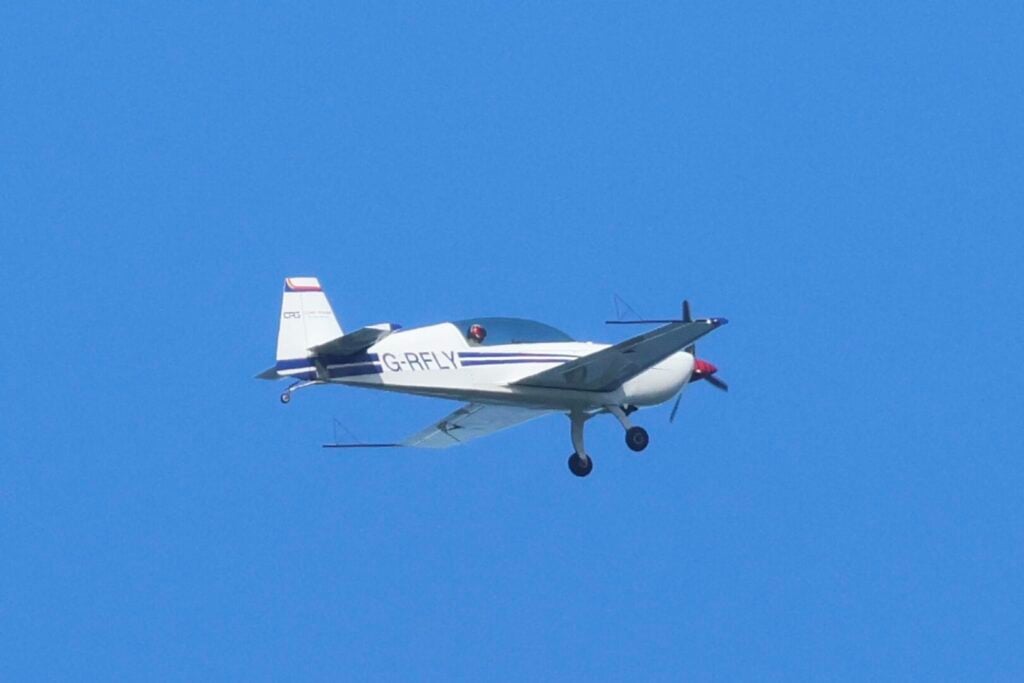
There was a small plane when we were here the other day, showing off doing stunts just off the beach. So it was a surprise to see it back here again today, doing the same thing. At times, it appeared to come in over the beach and was making a terrible racket. It flushed all the Pink-footed Geese off North Scrape and even all the waders off the central scrapes. This sort of recreational disturbance really should not be allowed here, so hopefully something can be done about it.
A large flock of Curlew flew in over the path and out over the grazing meadow, possibly flushed from somewhere by the plane. They dropped down on Pope’s Pool so we got them in the scopes for a closer look. There were a few Ruff around the muddy edges of the pool too. Looking through all the Wigeon, the drakes still in rusty eclipse plumage, we found three Pintail in with them.
A Lapwing on the grass in front of us looked absolutely stunning in the sunshine, so we got that in the scope and admired the varied colours as it turned in the light. Up at the Serpentine, we had closer views of a Ruff on the edge of the water as well.
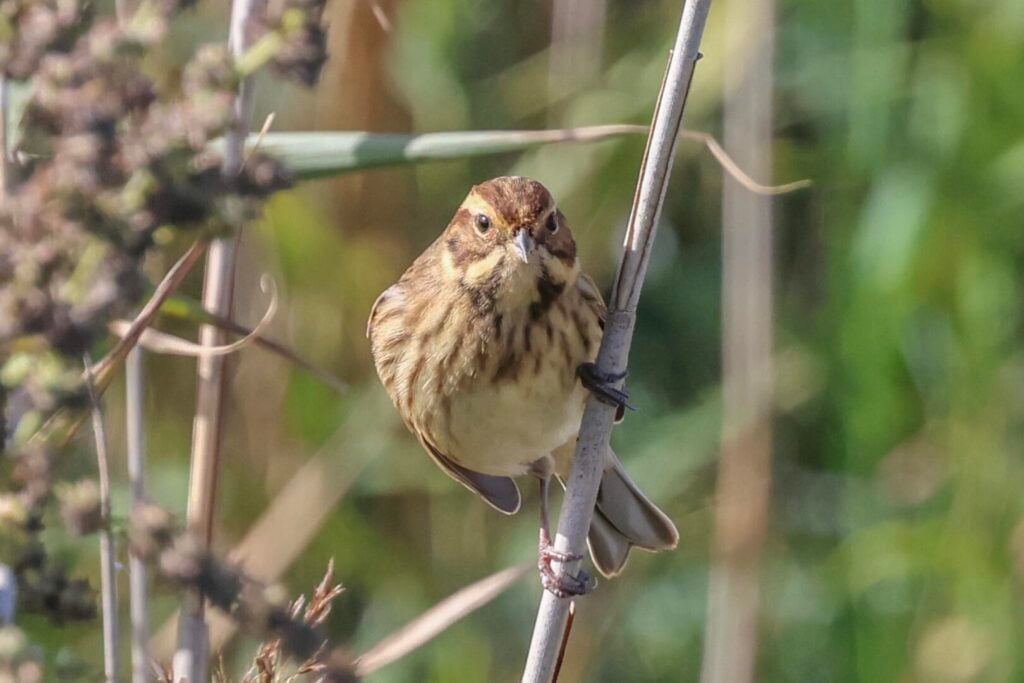
There were more birds on Arnold’s Marsh, so we carried on further, stopping for a quick scan of the Main Drain for Little Grebes. There were several Reed Buntings flying in and out between the long grass by the drain and the samphire the other side. A few Meadow Pipits and Pied Wagtails were in the samphire too and a large flock of Linnets flew up, whirled round and disappeared back in.
We could see lots of waders out on the marsh beyond. Scanning through all the Common Redshanks, we eventually found the two long-staying Spotted Redshanks. Their distinctive feeding action gave them away, even before they lifted their heads and we could see their longer, needle-fine bills. There were lots of Dunlin scattered around the small islands but despite checking carefully, we couldn’t find anything with them.
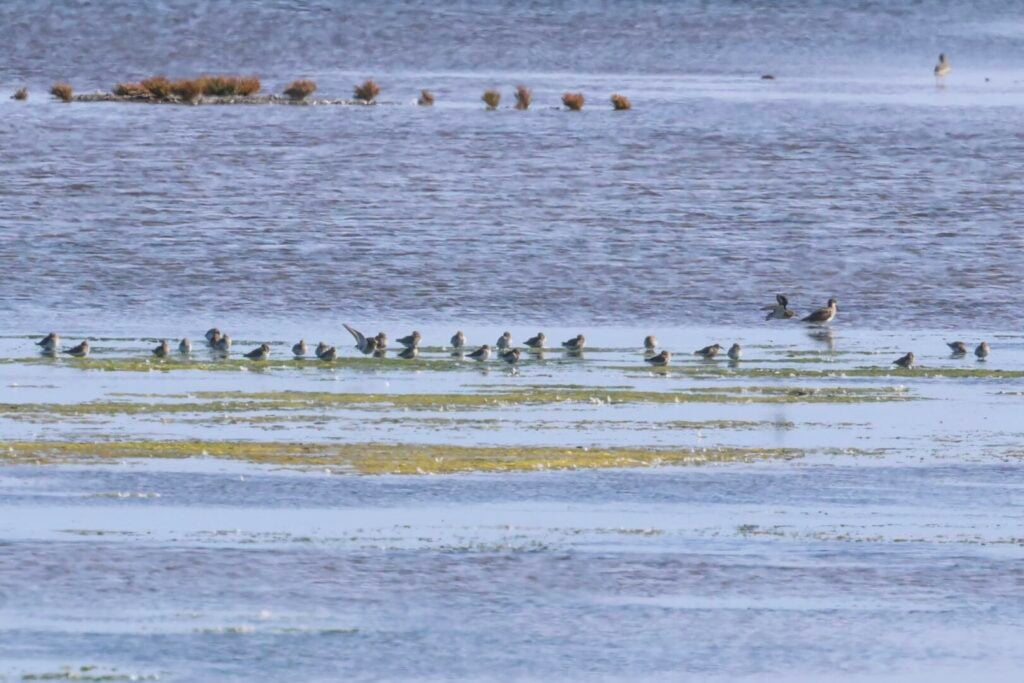
Two Grey Plover were on the edge of one of the shingle spits, with two Ringed Plovers in and out of the vegetation just behind them. There were lots of Black-tailed Godwits, mostly asleep, towards the back and a single juvenile Bar-tailed Godwit in the other corner. Four Avocets and several Curlew rounded off what was a very nice selection of waders on here today.
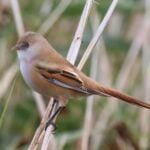
It was time for lunch when we got back to the minibus, so we drove round to the Visitor Centre. It was lovely sitting out in the picnic area today, really not like autumn at all. Afterwards, we decided to make our way out to check the hides. On the way out to Bishop Hide, we heard a couple of Bearded Tits call briefly from the reeds. But despite waiting for a minute or so, they didn’t call again.
There were lots of Lapwings out on Pat’s Pool and we had some nice closer views of the Avocets from here. A group of Black-tailed Godwits was feeding over by the far side and two juveniles were beyond the island in front of the hide. A single Common Snipe made a brief appearance on the reedy edge off to the left but disappeared in before everyone got a chance to see it in the scopes.
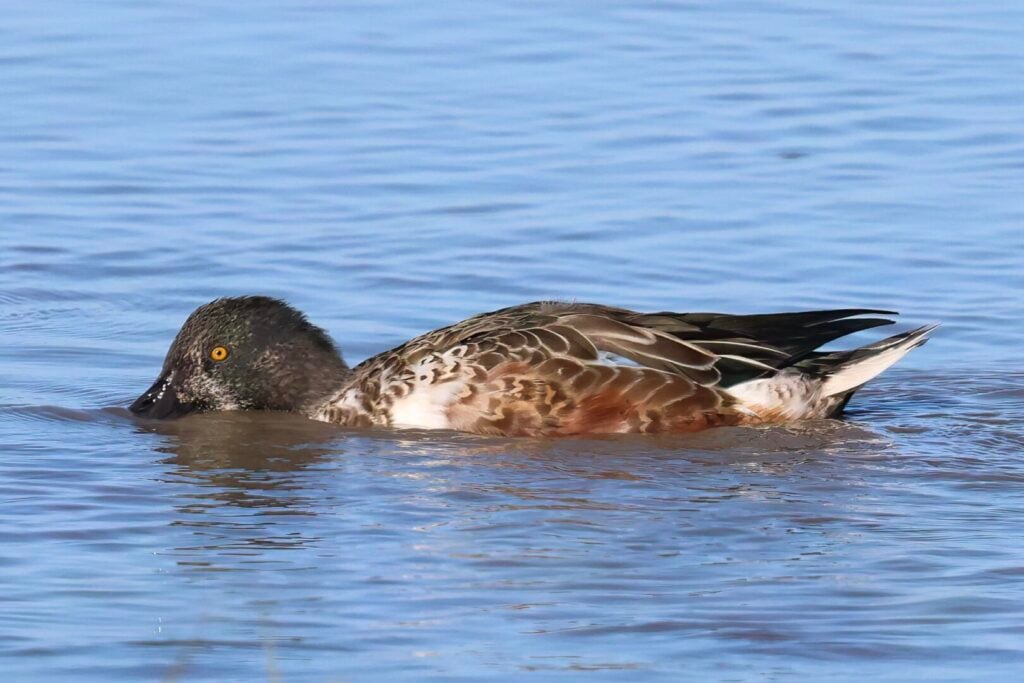
We made our way round to the central hides now to check Simmond’s Scrape. Again, there was a nice group of Dunlin on here. Three Common Snipe were feeding out in the open so we all got a chance to have a good look at them now. There were lots of Black-headed Gulls and a Lesser Black-backed Gull dropping in briefly. Several Shoveler were busy feeding in front of the hide, with their heads down. One preening on the near edge of Pat’s Pool showed off its large shovel of a bill.
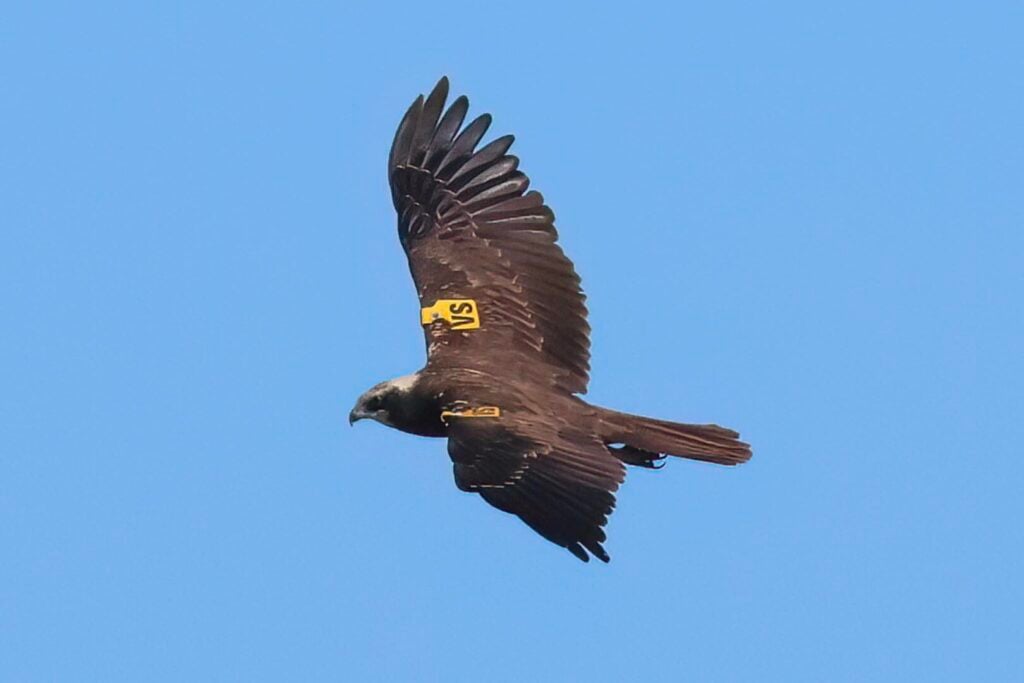
A young Marsh Harrier drifted in over the reedbed and across the back of the scrape. We could see it was carrying yellow wing tags, and speaking to the ringer, it was tagged in the Broads in June, one of a brood of two. It spooked a few of the waders and ducks and was promptly chased off by two or three Lapwings which swooped at it repeatedly. From above and behind, out of the reach of its talons.
Looking across to Pat’s Pool, we could see a small group of Ruff over towards the back. A single female was with several males and it was interesting to see the size difference alongside each other. The female Ruff are strikingly smaller than the males.
We still had time for one last stop, so we made our way back to the Visitor Centre. The four long-staying Glossy Ibis had apparently been in the fields by Watling Water earlier, so we drove that way for a look. There was no sign of them now though, just a couple of Grey Herons and lots of Canada Geese. So we continued on to Kelling for a walk down along the lane.
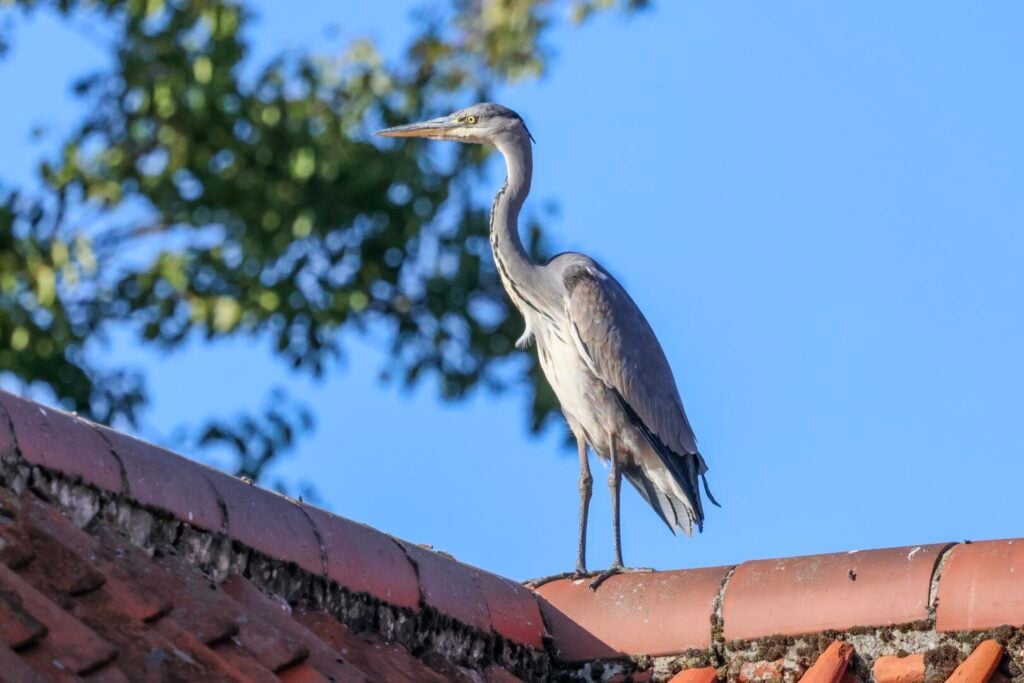
As we got out of the minibus, a Grey Heron was standing on the ridge of the roof across the road. Strangely, this bird has been hanging around the village for several days now and is often to be found on the roof, either of the Reading Room or King’s Barn opposite. Perhaps it came in with the big arrival of Grey Herons we saw on Wednesday.
As we walked up along the Lane, there were a few Blue Tits and Great Tits in the hedge, Chaffinch and Goldfinch. A couple of Chiffchaffs were calling and we could see one flycatching out from the branches in the top at one point. Lots of Ivy Bees were buzzing around the flowering ivy and we admired the bumper crop of holly berries and wild hops this year, as we passed.
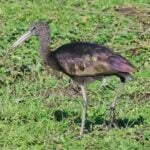
Looking out from the gate, lots of Rooks were gathered on the slope opposite. There was just a Grey Heron out on the wet mud, no sign of any Glossy Ibis now, although they had been flying in a little later when we had been down the last couple of times. So we were just about to head down for a look on the pool and try again on the way back when we noticed two Glossy Ibis flying in. They circled round and dropped down in the wet grass. Early today!
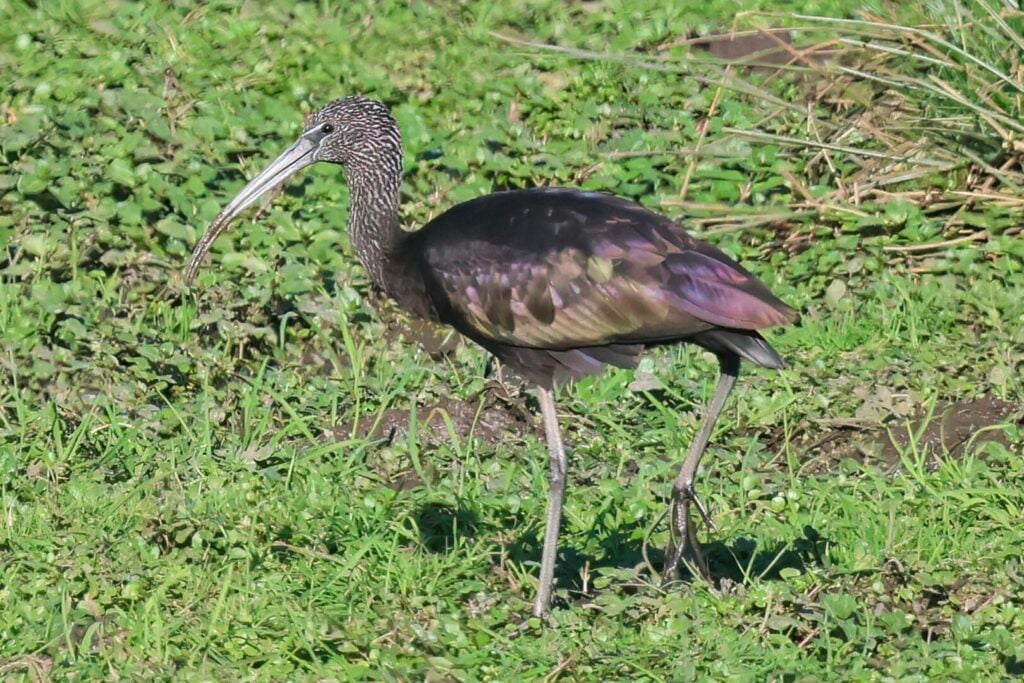
We got one of the Glossy Ibis in the scope and had a great view. Dark brown from a distance, in the afternoon sunshine we could really see why they are called ‘Glossy’. The wings and back shone metallic green, bronze, even blue and purple as it turned and caught the light.
There had apparently been a Great White Egret on the pool so we walked on down to check. We found it feeding in the long grass right of the back of the pool at first. We could just see its head and neck, and long, dagger-like yellow-orange bill.
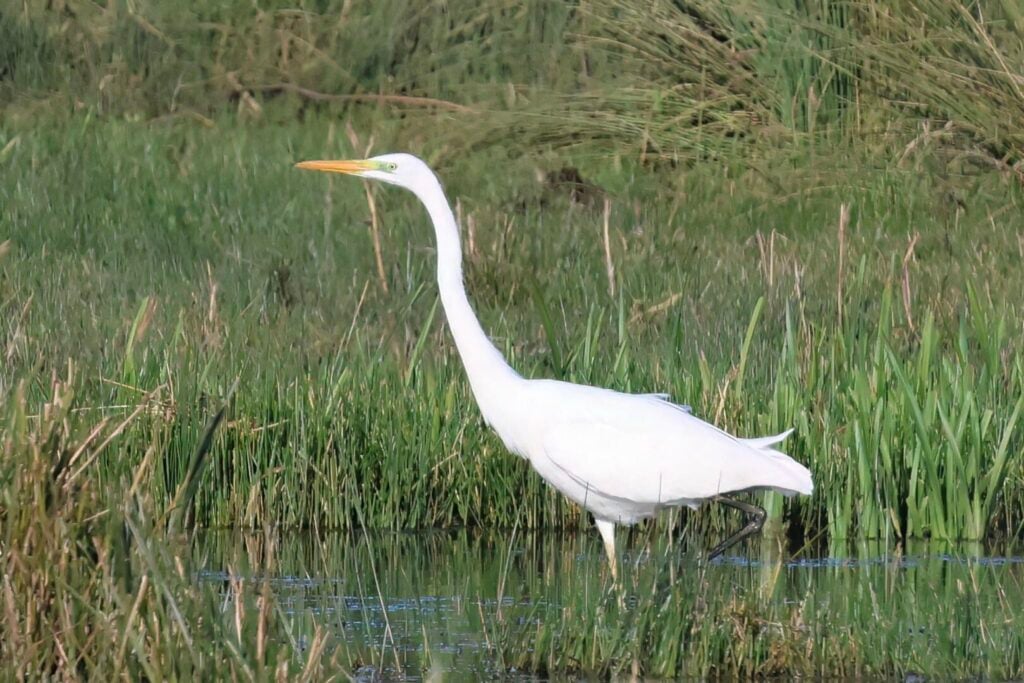
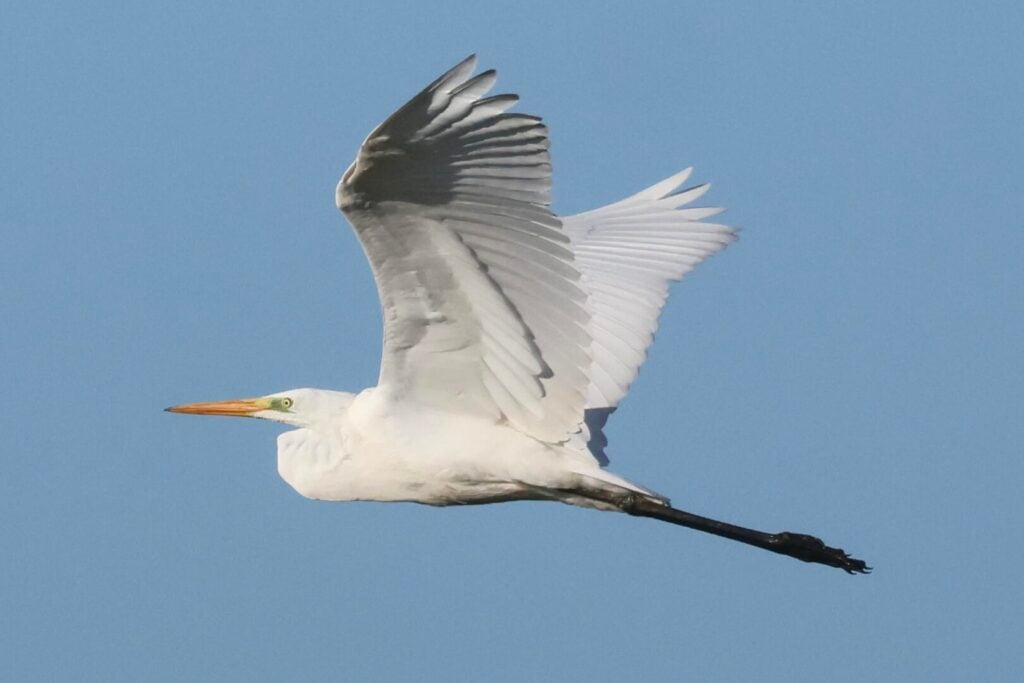
The Great White Egret walked out into the open, then stalked across and up onto one of the small islands as some people walked along the crosstrack. It looked nervous, craning its neck up, looking at the sky, so it wasn’t a surprise when it took off. We watched it fly off west. There had been one reported coming in off the sea at Salthouse earlier, so perhaps this was a fresh arrival from the continent too.
There were several Gadwall on the pool so we set up the scope for a closer look. The male Gadwall are already coming out of eclipse and getting back to their smartest again. Grey from a distance, they are actually a series of complex black-and-white patterns close up. Fine vermiculations on the flanks, scallops on the breast and pepper streaks on the head. The connoisseurs’ duck! After admiring them in the scope, it was time for us to walk back.
A lovely day out on the coast with some nice autumn migration and beautiful weather.