A single day Late Autumn Migration day tour in North Norfolk. It was a rather windy day, with a strong NE wind coming in off the sea. It was cloudy and rather grey but at least it remained mostly dry, with just a brief shower over lunch.
Our first destination this morning was Cley. It is always worth checking the sea at this time of year, to see what is coming in, and it sounded like there had been some ducks moving earlier. So we headed down to the beach car park.
Scanning the Eye Field first, we could see lots of Golden Plover out on the grass so we got some in the scope. A few Lapwing were further back too and a single Brent Goose was in the middle. A small group of Pink-footed Geese came up from the reserve and headed off inland. Then we noticed a much larger group flying east over the ridge beyond the village. Coming from their roost and flying inland to feed in the fields. A few small groups of Starlings flew west – just arriving from the continent for the winter, we would see them moving through all day.
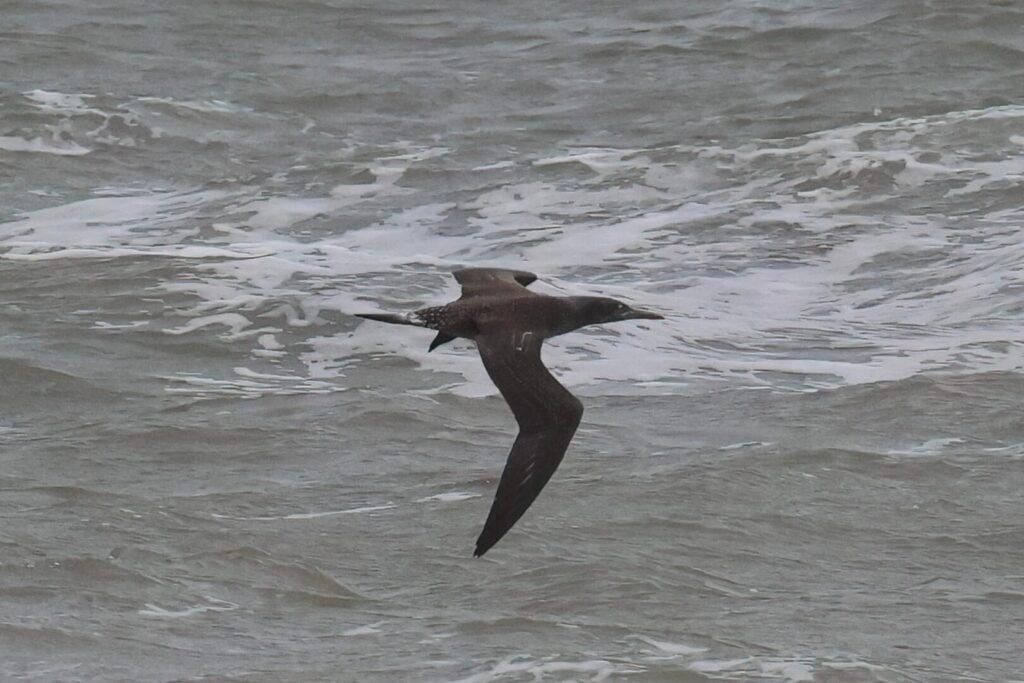
It was very windy yesterday and the wind had been forecast to drop today. But when we climbed up onto the top of the shingle, it was still very blustery. We probably wouldn’t last long here today! There were still a few dark juvenile Gannets lingering offshore. We couldn’t see any auks on the sea but a small mixed group of four Guillemots with a single Razorbill flew past. We managed to pick out a single Red-throated Diver on the water, which was rather rough today.
There didn’t appear to be many ducks moving now. A few Brent Geese flew past out over the water, coming in from Siberian for the winter. We picked up a couple of Common Scoter coming in too. We were hoping for some Eider, which had been coming past earlier, but no sign of any now. It was hard to hear anyone above the wind and the sound of the waves on the beach, so after about 15 minutes we decided to move on.
There had been a growing flock of Shorelarks at Salthouse the last couple of days, as well as the Twite which we saw over the weekend. So we drove round that way next to look for them. There was no space in the parking area at Iron Road, so we drove on to the head of the Little Eye footpath and parked there instead.
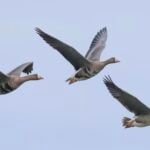
As we got out of the minibus, one of the group noticed some geese out on the grazing marshes by the start of the track. A pair of White-fronted Geese with two Greylags. We got them in the scope and could see the white around the base of the bill and the dark belly bars on the two Whitefronts. A Grey Heron was hiding in the vegetation in front.
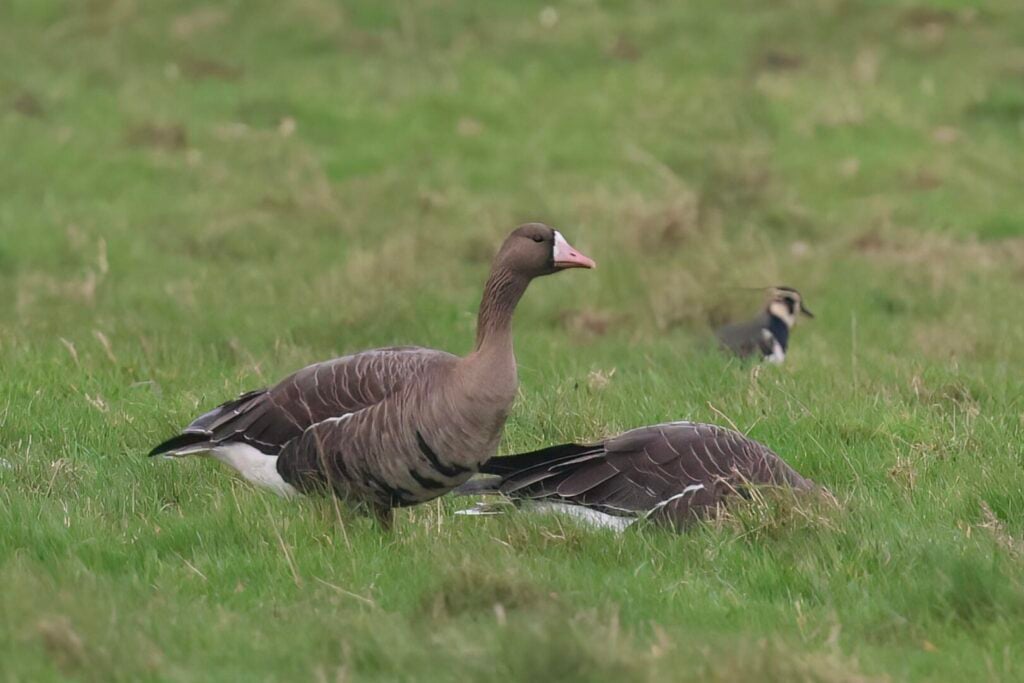
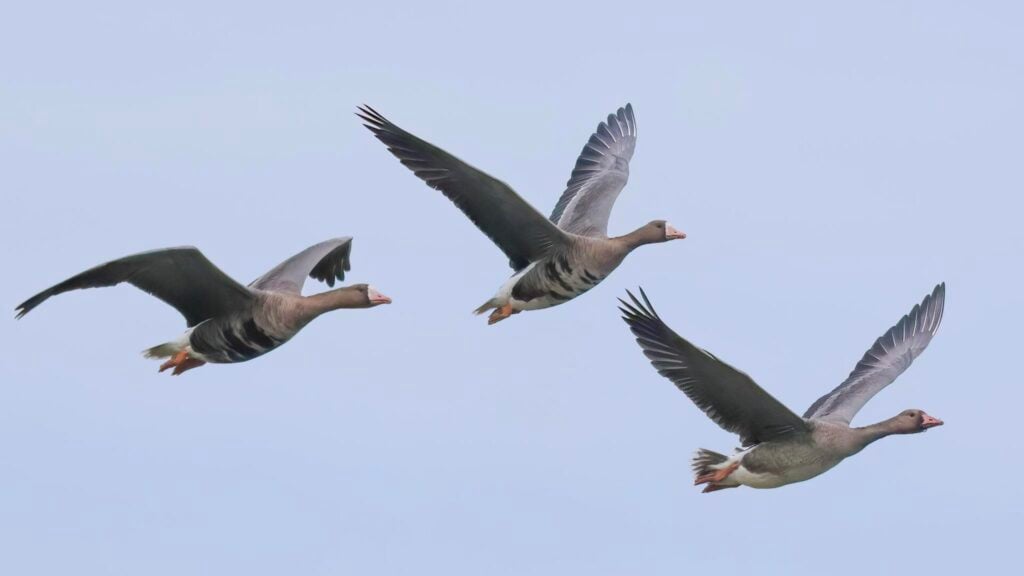
As we started to walk up the track, we found another group of eleven White-fronted Geese on the next field on the other side. These were even closer, several family groups, adults with juveniles. Then they took off and flew across right in front of us, landing again over towards Beach Road.
As we walked on to the beach, we noticed a large flock of ducks flying past over the shingle and a quick check confirmed they were about twenty Eider. They were still moving. We couldn’t see any sign of the Twite flying round where they had been the other day, so we decided to walk west on the shingle to look for the Shorelarks. There were several other people milling around and no one seemed to know where they had gone.
A couple walking towards us the other way flushed a group of small birds from the base of the shingle. As they flew past us, all we could see were a couple of Skylarks, a few Meadow Pipits and a Reed Bunting. Not what we were hoping for! Then we spotted a group of six small finches bouncing round and watched as they dropped down on the saltmarsh just the other side of the fence. Twite! We walked over but, even though they were very close and the vegetation was very short, we could not see them. They were presumably keeping down out of the wind.
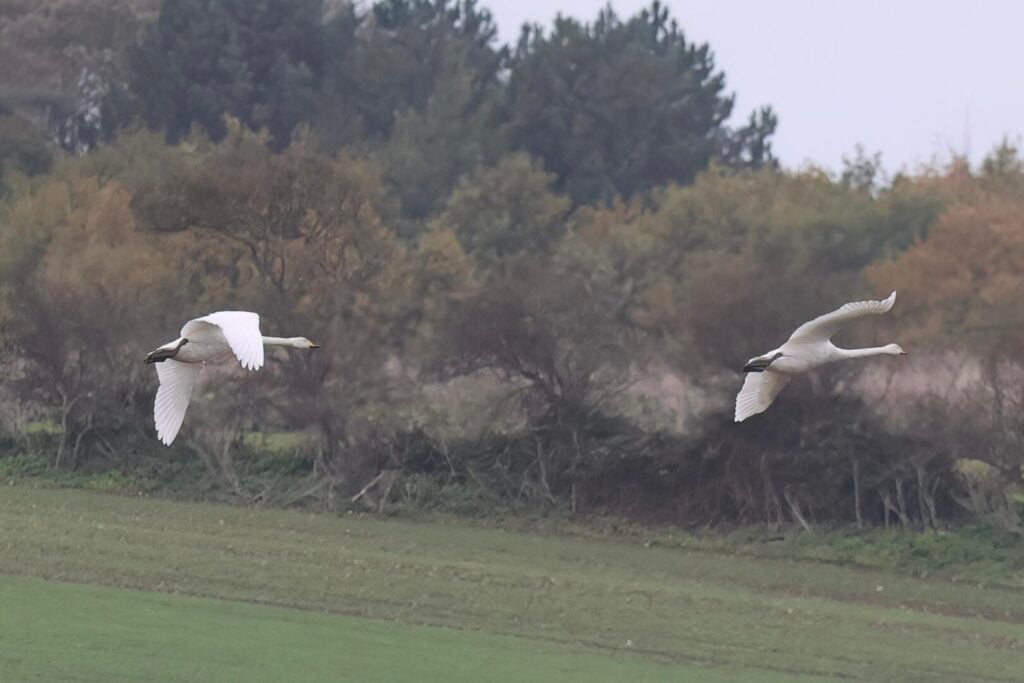
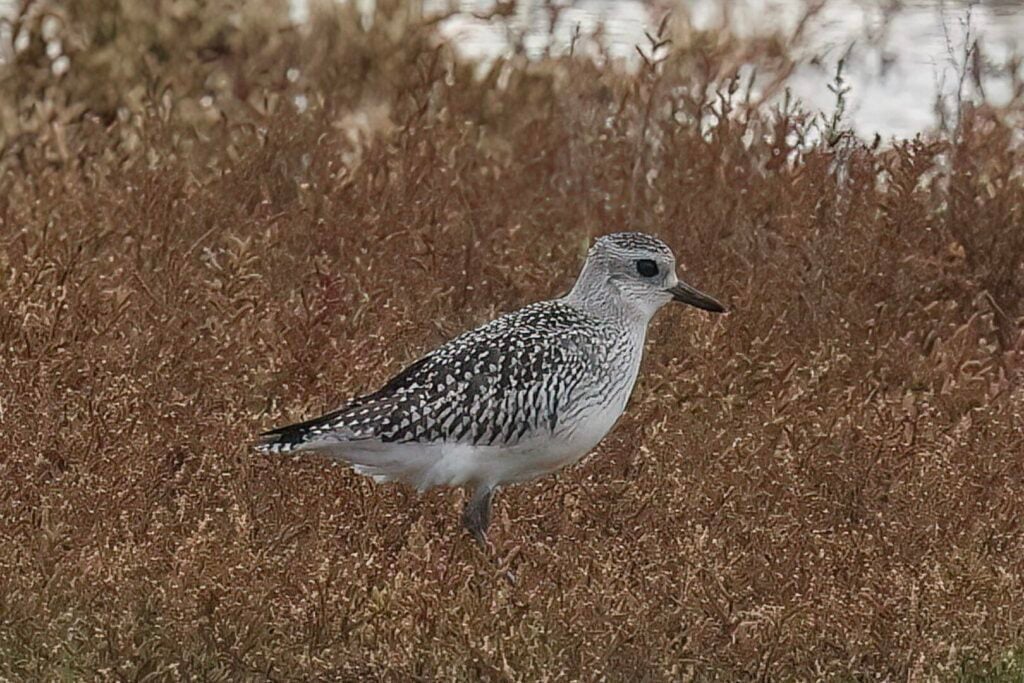
Figuring they must fly round again at some point, we stood and waited, scanning the vegetation for any sign of movement. There were a few other birds to look at here. Several Wigeon were around the edges of the pools. A Grey Plover flew in and landed right in front of us. A Red Kite and a Marsh Harrier drifted over Pope’s Reedbed. The biggest surprise was two Whooper Swans which flew west over the grazing marshes to the south of us. On their way from Iceland, probably heading for the Fens and just drifted slightly too far east.
A succession of people came over, thinking we were watching the Shorelarks and then walked off disappointed. Then, while we were scanning, we picked up a flock of a dozen or so lark-sized birds in the distance, the other side of Iron Road. Surely the Shorelarks, they appeared to drop down in the saltmarsh just the other side of the track. We decided to walk over to check.
When we got to the Iron Road, we didn’t have to wait too long before the twelve Shorelarks flew round again. This time, no doubt. They landed but most were out of view, on the near edge of a ditch where we couldn’t see them below the grass in front. However, two Shorelarks landed on a small island behind and one was visible for a time. We could see its head looking out from the low vegetation, its yellow face and black bandit mask. After a couple of minutes, it too disappeared.
We thought the Shorelarks might fly again, so we waited. Three smart Grey Plovers dropped in on the pool in front of us with a single Dunlin. Then a flock of twenty Twite flew low over the very spot where the Shorelarks were hiding. They disappeared off into the distance, beyond Sea Pool. An Osprey flew round several times – sadly it was the US Marines aircraft and not the bird!
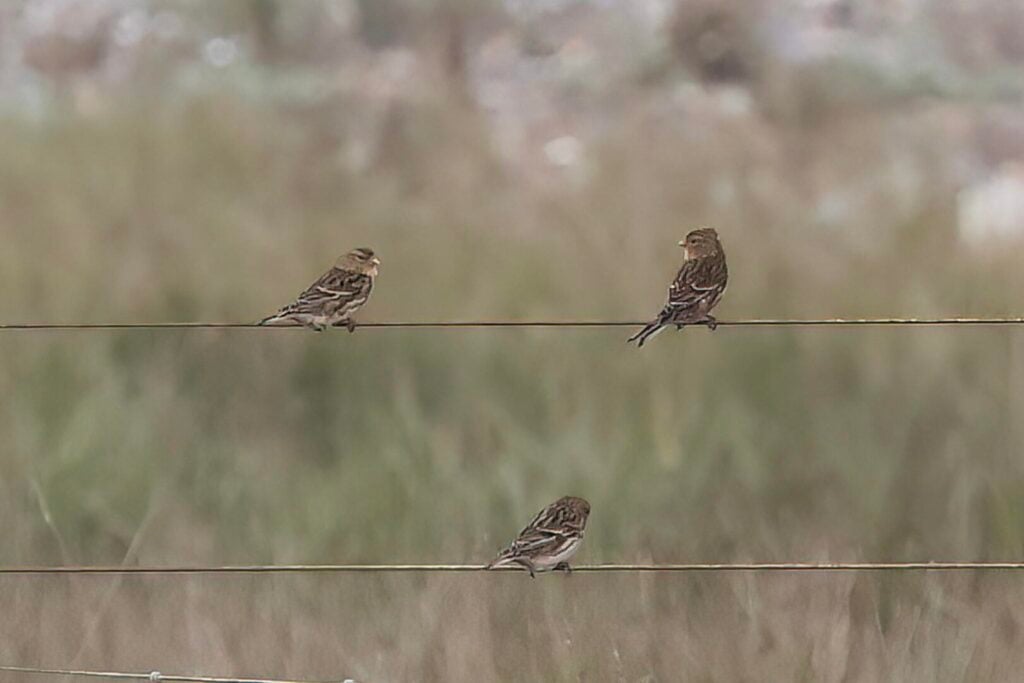
We thought that was it, but a couple of minutes later the flock of Twite flew back in and this time they landed on one of the fences below the shingle. A few dropped down into the grass below to feed but many stayed in full view on the wires. Nice views in the scope now.
Eventually the Shorelarks did fly up again. They circled round in front of us, nice flight views, but then headed off towards the beach. We thought they might land on the shingle but instead they turned east, flew over the top and disappeared down over the other side. We decided to continue on.
Over the bridge, we stopped for a scan of the Iron Road pool. There were a few Dunlin and Teal out in the middle. Scanning carefully around the edges we found a single Common Snipe along one edge. Very well camouflaged in the cut reed and mud, thankfully it was feeding actively which made it a bit easier to see. There were at least seven more White-fronted Geese with the Greylags and Wigeon on the grazing marsh beyond.
While a couple of the group waited for us here, the rest of us walked back to the village. As the road here is busy, we took the footpath inland, up over Sarbury Hill. As we walked through the bushes at the top, we noticed movement in the low alexanders right beside us. Expecting something like a tame Red-legged Partridge, it was a bit of a surprise as a Woodcock walked out, less than a foot away from us! Presumably an exhausted migrant just arrived in off the sea, it probably did not have the energy to fly off. It disappeared quickly into the dense blackthorn, out of view.
We picked up the minibus and drove back to pick up the others from Iron Road. It was time for lunch now, so we headed round to the Visitor Centre at Cley. Some of the group opted to get something warm to eat in the cafe, while others chose to ate in the minibus. It was actually reasonably sheltered in the picnic area although we eventually had to retreat back indoors as a brief shower blew in.
After lunch, we made our way east to Kelling. We figured it might be a bit more sheltered here, out of the wind, at least until we got down towards the beach. As we walked up the lane, we flushed several Blackbirds and a couple of Redwings out of the hedges ahead of us. Migrants which had probably arrived overnight and stopped to feed up on the berries. Down by the copse, we heard a Water Rail squealing from deep in the vegetation.
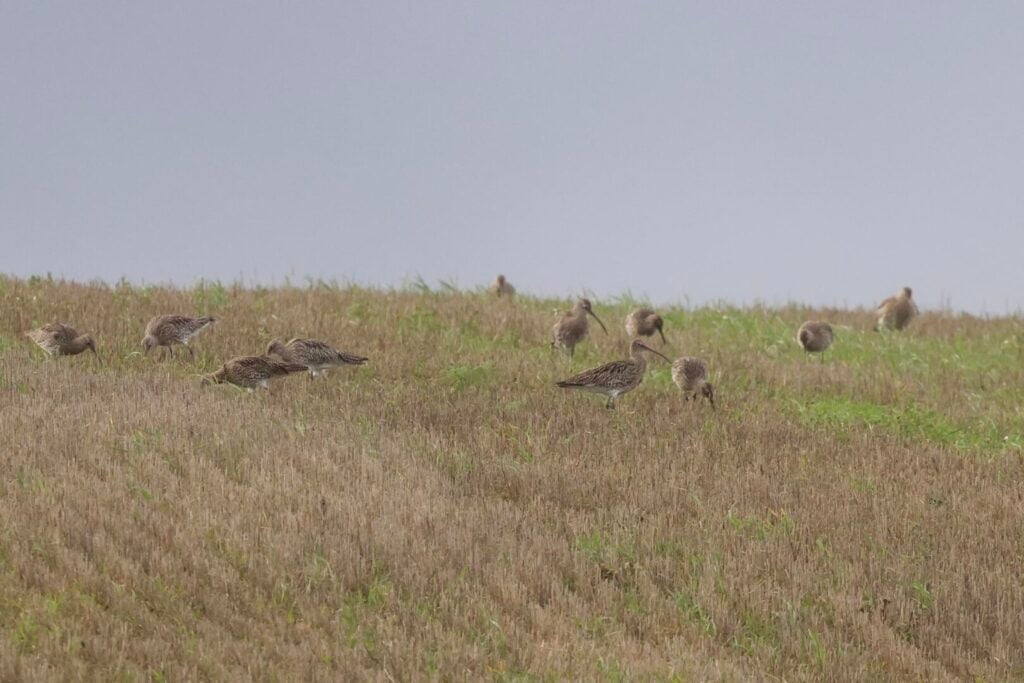
Looking over the stubble field the other side, a lot of Woodpigeons flew up and we could see several Stock Doves in with them. A large group of Curlews appeared over the ridge at the top and a sizeable flock of Linnets flew up and bounced round before dropping down again. A single Red-legged Partridge was in the stubble too.
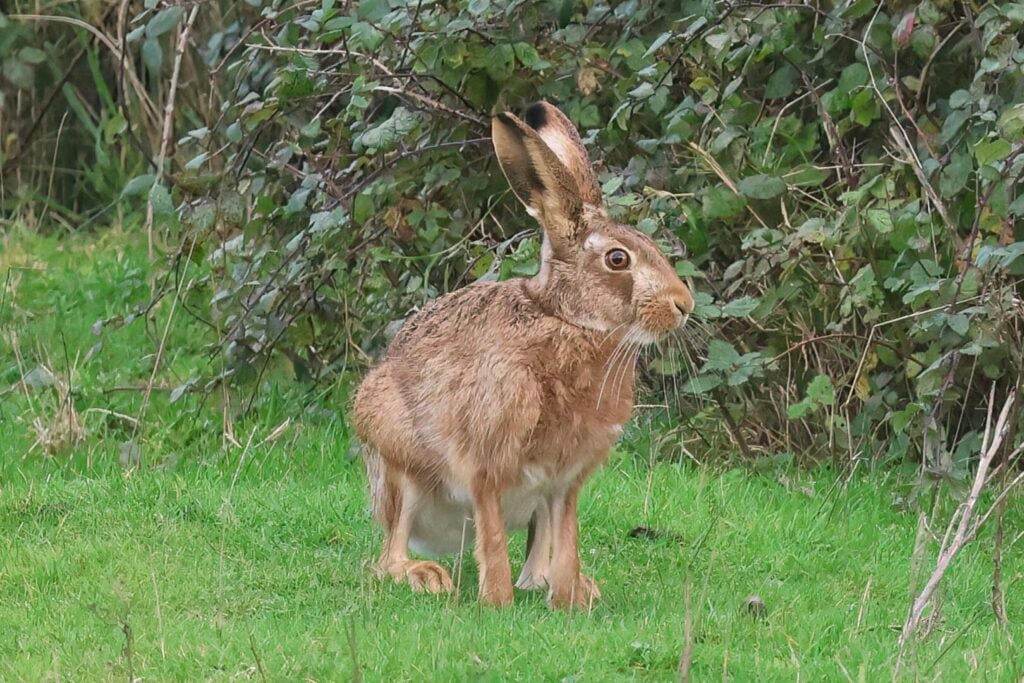
Scanning from the gate, we could see a couple more Red-legged Partridges, a Blackbird and a lone Moorhen, as well as lots of Rooks. We were just going to point out several distant Brown Hares, hunkered down in the lee of the bramble bushes on the grassy slope behind, when another Brown Hare ran out of the grass right in front of us. It stopped and looked at us for a minute or so before lolloping off behind the brambles.
Several more Red-legged Partridges ran off up along the edge of the next field down west of the path. A Common Buzzard flew over too. A little further on, a female Stonechat flicked up onto the brambles and posed nicely in front of us.
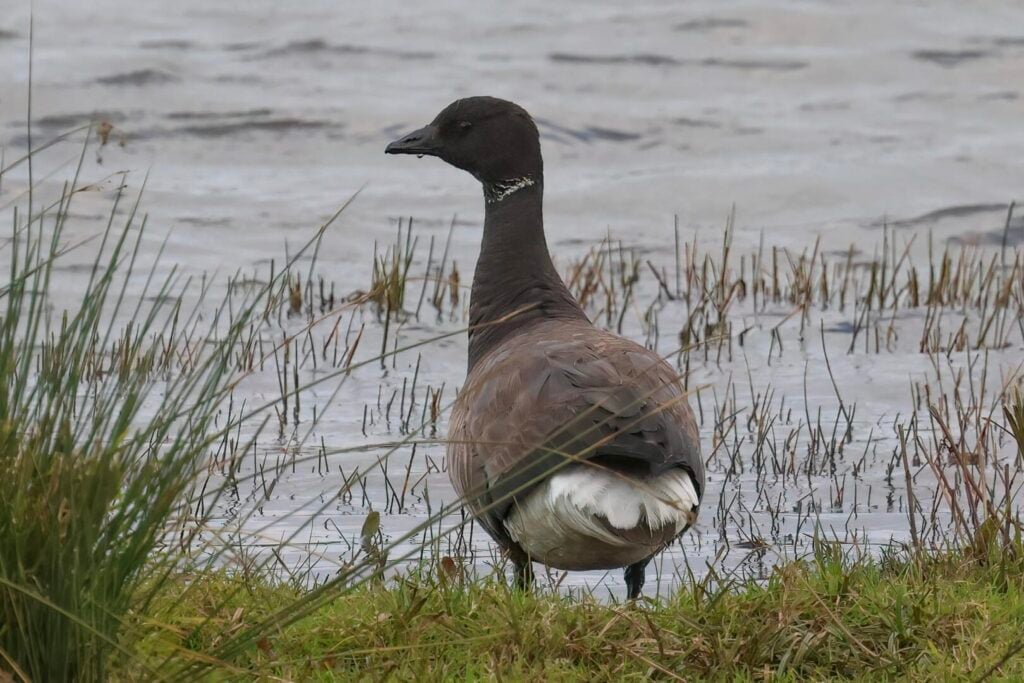
Down at the pool, we could see a few ducks on the water – the usual Wigeon, Gadwall, Mallard and a few Shoveler. A single Brent Goose was standing on the near shore. Having seen some arriving in over the sea earlier, we figured it was probably just resting here after its journey. Sure enough, it quickly flew off west.
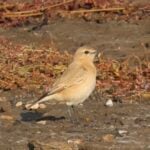
The Isabelline Wheatear had not been seen yesterday and we presumed it had moved on. But it had gone missing when it was here and we wondered whether it might just be hunkering down out of the wind and more difficult to see. We checked the dry pool on the Quags just in case but unsurprisingly there was no sign.
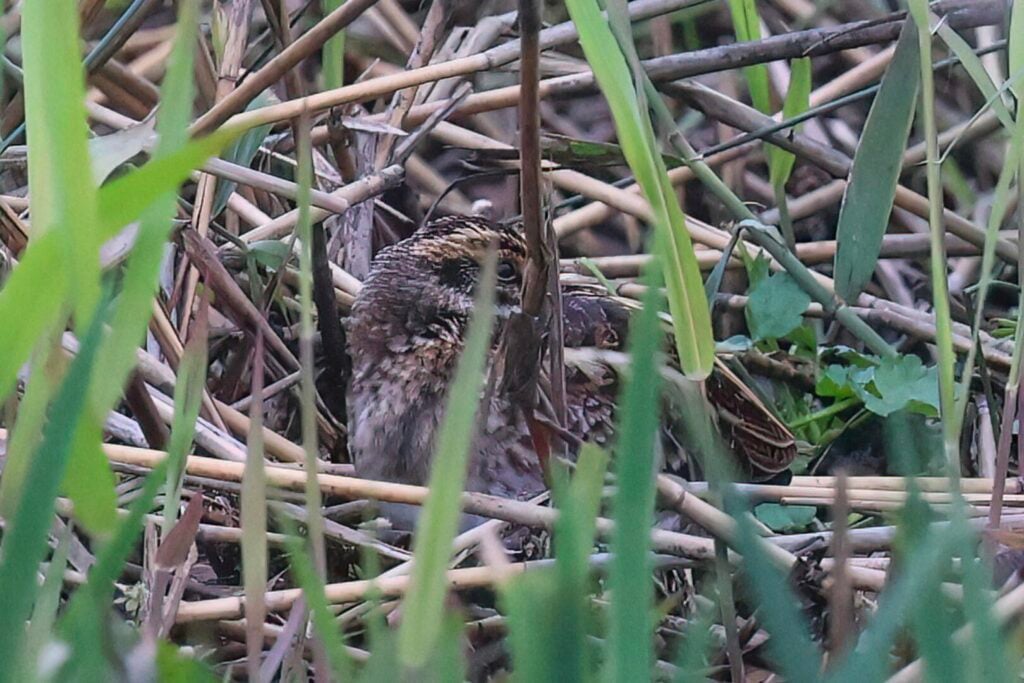
Back to the crosstrack, we had a quick scan round the margins of the Water Meadow pool to see if we could find a Jack Snipe. It didn’t take long. What was presumably the same Jack Snipe we had seen on our last two visits was in pretty much the same place again. It was asleep this time but we got it in the scope and could see it looking back at us.
If we headed back now, we might have time for another stop, so we walked back up the lane. The Blackbirds and thrushes flew out ahead of us again and this time there seemed to be more Redwings. They flew across the field and landed in the next hedge over, where we managed to get one or two Redwings in the scope before they dropped down to feed out of view. There were more Chaffinches in the trees along the lane too now, more migrants arrived from Scandinavia.
We drove back to Cley and parked at Walsey Hills. The wind felt like it had dropped at Kelling but when we got up on the East Bank if felt like it might have picked up instead. There were lots of Wigeon out on the grazing marshes and a group of Black-tailed Godwits distantly on Pope’s Pool beyond. Up at the Serpentine, we found a closer Black-tailed Godwit and a couple of Dunlin, along with more ducks. A Marsh Harrier drifted back and forth over the reedbed.
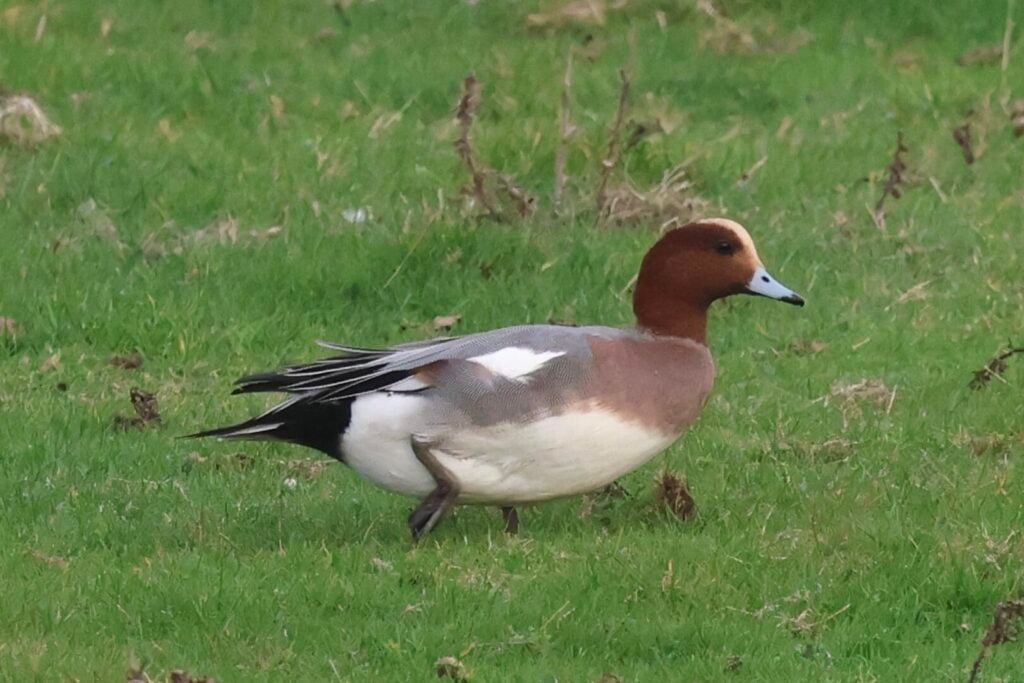
Pressing on towards the Richardson shelter, where we figured we could get out of the wind, we could see three Little Grebes in the main drain. Scanning Arnold’s Marsh, we found a couple of Bar-tailed Godwits. We got one in the scope and, as it walked across, it was in the same view as several Black-tailed Godwit at one point. There were also a few Grey Plover, Dunlin, Redshank and Curlew. Scanning the Brackish Lagoon, we found four drake Pintail. Slowly moulting back to breeding plumage, they have not yet acquired their long tin-tails.
Gulls were flying in and dropping down on the pools on their way in to roost. Lots of Black-headed Gulls had started to gather on Arnold’s and we picked out a winter adult Mediterranean Gull with them. Through the scope, we could see its brighter red and heavier bill and white wing tips. Unfortunately the 2nd winter Caspian Gull which appeared with the Herring Gulls on the Brackish Lagoon didn’t linger, and flew off towards the main scrapes instead.
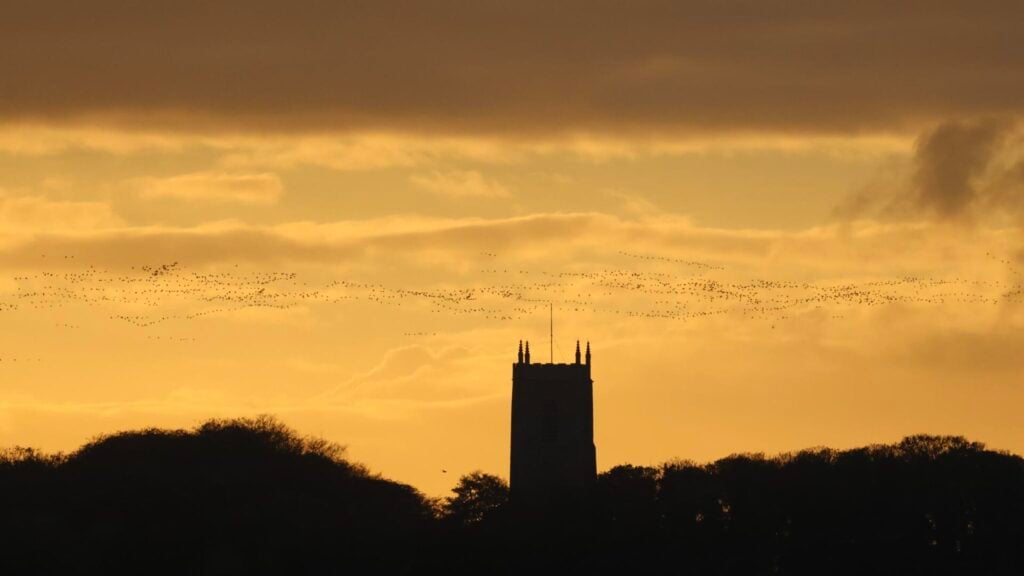
The Marsh Harriers were starting to gather over the reedbed ahead of going in to roost. We counted at least four in the air together at one point. There was some clear sky on the horizon to the south west, below the cloud, which was glowing yellow now with the setting sun. Then we noticed skein upon skein of Pink-footed Geese silhouetted in the sky there. They were little more than dots but they seemed to stretch almost from one side of the horizon to the other. Maybe 8-10 thousand geese in total. Amazing to watch.
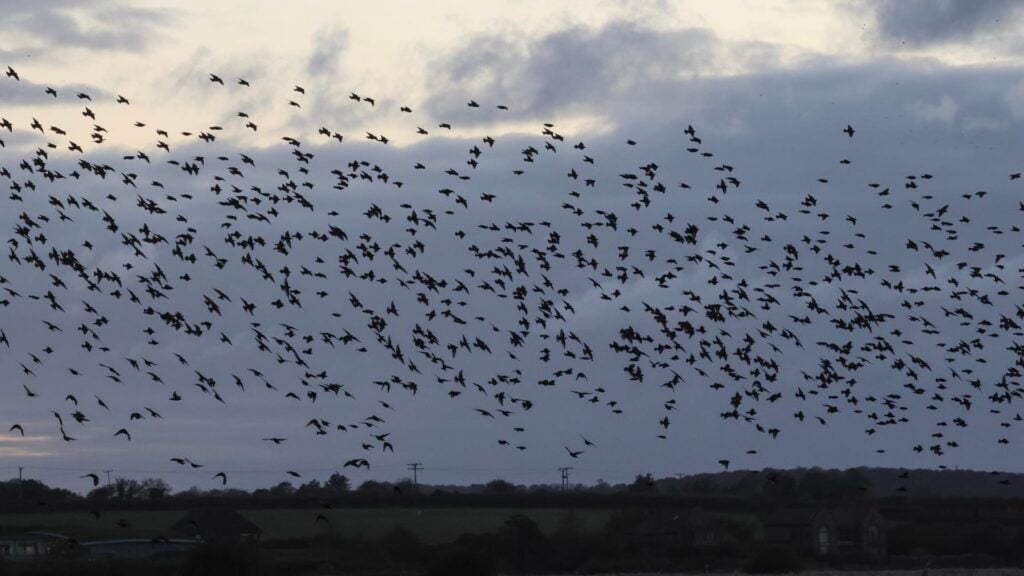
There were still small groups of Starlings flying west but they seemed to be gathering now over the reedbed and the Eye Field beyond. Maybe a couple of thousand in total. When they seemed to become more agitated and swirl round more actively, we looked across to see a juvenile Peregrine stooping at them. The Starlings easily avoided it and we lost sight of the Peregrine as it sped across and dropped down towards the birds gathered on North Scrape, out of view.
The Peregrine did us a favour, as lots of the Starlings now moved over to the NE corner of the reedbed, much closer to us. They put on an impressive display as they twisted and turned in front of us, a mini-murmuration. Gradually they started to drop down, an improbable number disappearing into an isolated bush in the reeds. There were probably too many and the ones on the outside were rather exposed. As we started to walk back, lots took to the air once more and then dropped down with a large group on the edge of the Serpentine for one last feed.
As we passed Don’s Pool, a large flock of about fifty Pied Wagtails flew round in front of us over the bank and then dropped down into the reeds to roost. It was time for bed! Or at least time for us to call it a day and head for home. Another very interesting day of autumn migration.