Day 3 of a 4-day Winter Wildfowl, Cranes & Owls tour. The weather was much better than yesterday, but still rather a mixture. After some snow and sleet showers first thing, we drove west into some lovely wintry sunshine. There was some patchy fog around the middle of the day which then lifted into low cloud in the afternoon. The wind had dropped to nothing too. We spent the day exploring the Fens.
With a long journey over to our first stop, we had an early start this morning. It was snowing as we met in Hindolveston and although they were showers we drove through more flurries on our way west. Further on, as it got towards dawn, the skies started to clear and brighten up.
The A47 was closed past King’s Lynn, so we had to make a diversion round via Holbeach into the edge of Lincolnshire. We would be visiting Deeping Lakes but stopped on the road just beyond the entrance to look through the swans. A hundred or so Whooper Swans were on the harvested sugar beet field right by the road, lovely close views.
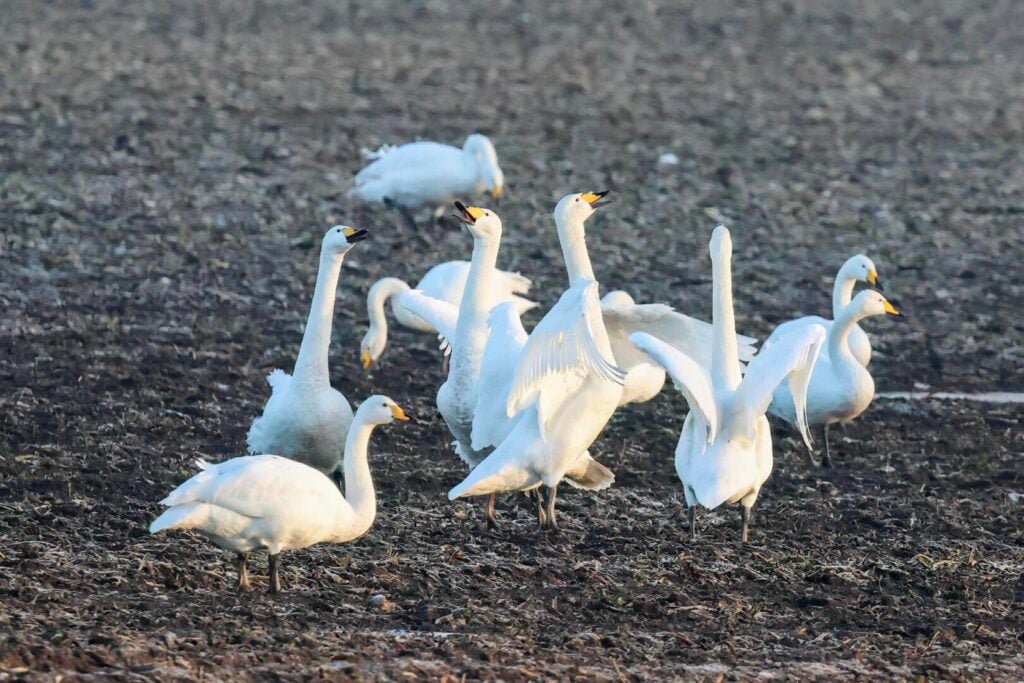
Looking through carefully, we picked out two Bewick’s Swans with them. They were noticeably smaller, with less yellow on their bills which was squared off rather than wedge shaped.
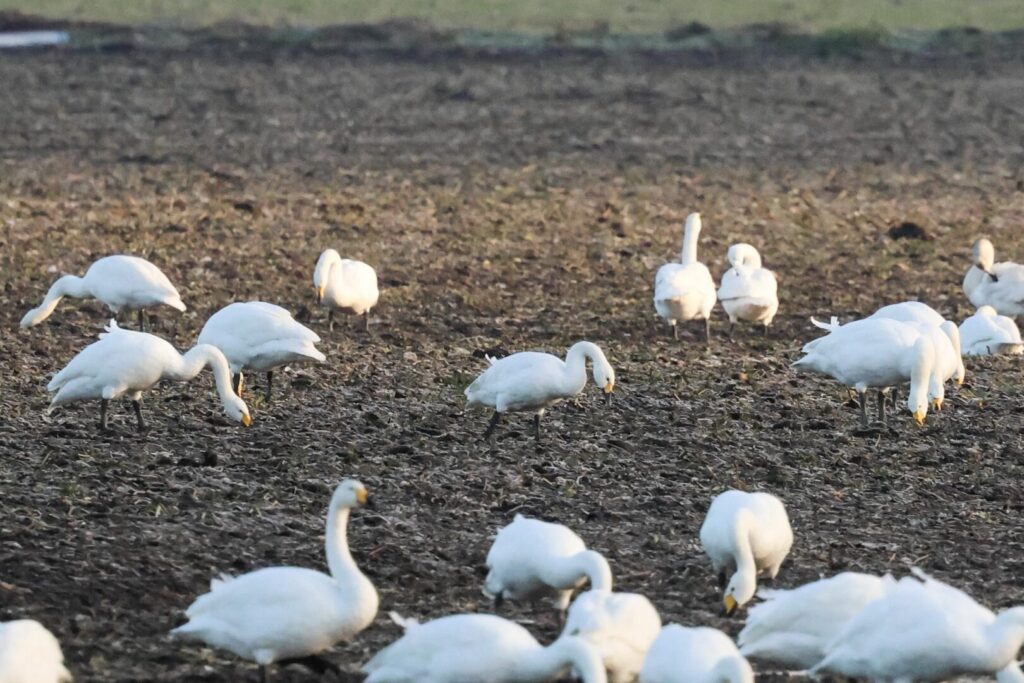
There were a few Canada Geese and Greylags with the Whooper Swans too. Several Egyptian Geese were standing further back. More white shapes a couple of fields over turned out to be mostly Mute Swans.
Several Yellowhammers and Reed Buntings were gathered in the bushes on the far side of the first field. A large flock of Linnets kept whirling round over the river bank behind us. Several Red Kites and Common Buzzards were standing around in the ploughed field next door.
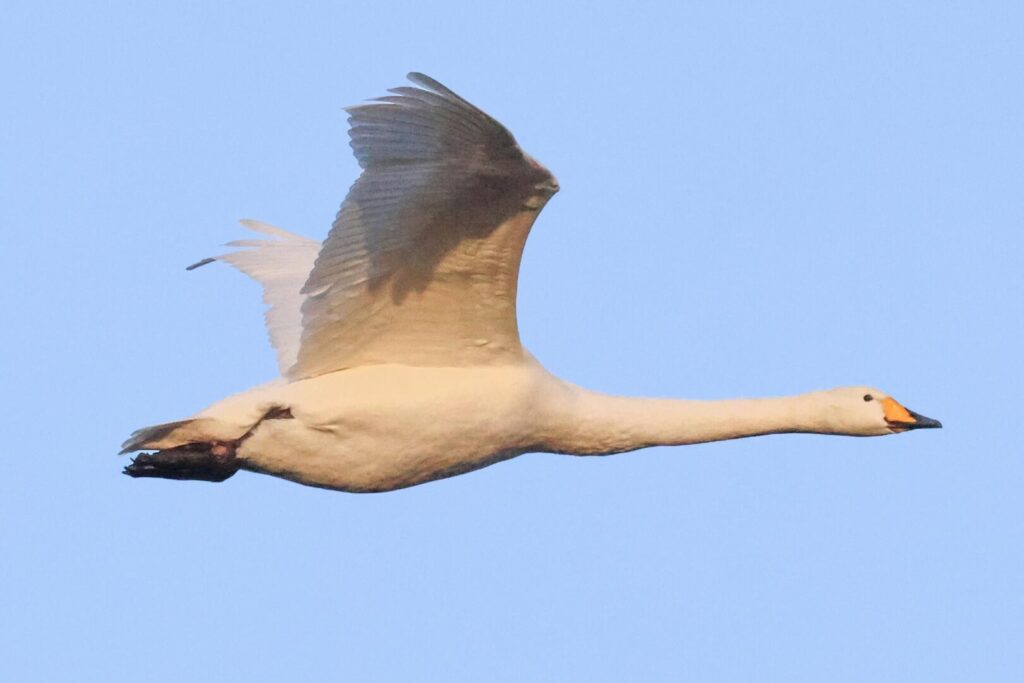
More Whooper Swans were arriving all the time, flying in past us from over the river. We were hoping the Snow Goose would come in here too this morning but there was no sign of it arriving with these swans. Then another birder stopped and told us it had just been found with another group of Whooper Swans a couple of miles down the road.
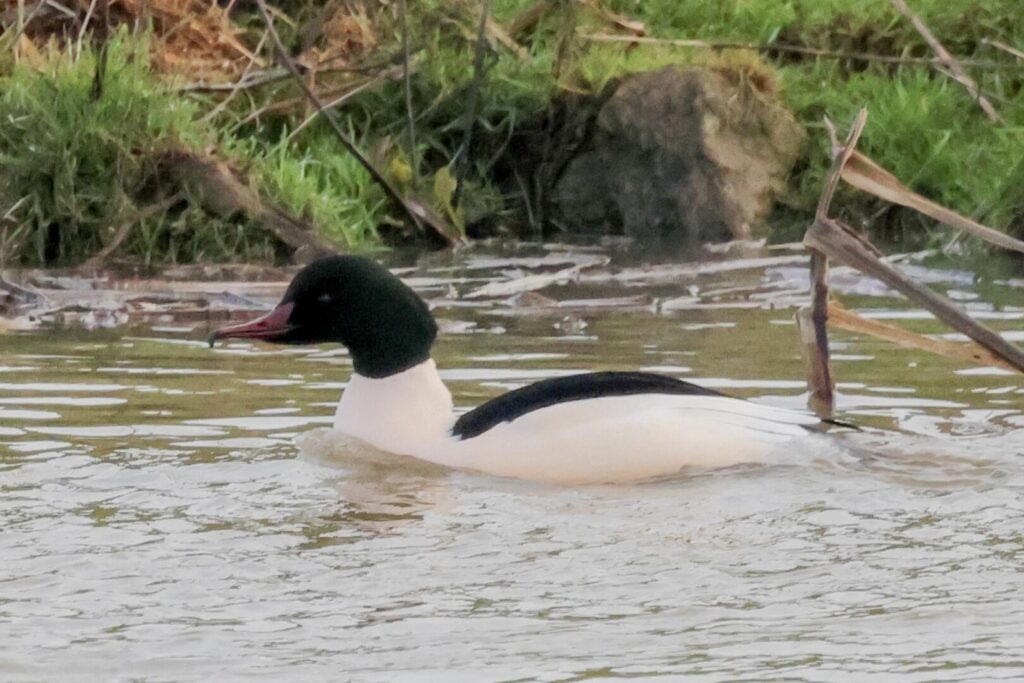
We drove up onto the bank beside the River Welland. Past the Crowland junction, the minor road beyond was still very icy. We stopped to look at a small group of Goosander on the far bank. As we pulled up, one by one they dropped back into the water.
There were just some Mute Swans in the field where the pin for the Snow Goose sighting was dropped. Looking further up, we could see lots more Whooper Swans way off in the distance, so we drive on. A couple of cars were parked on the verge and someone leaving gave us the thumbs up we were in the right place. The Swans were rather distant even from here but we set up the scope. The first bird we got onto was the Snow Goose.
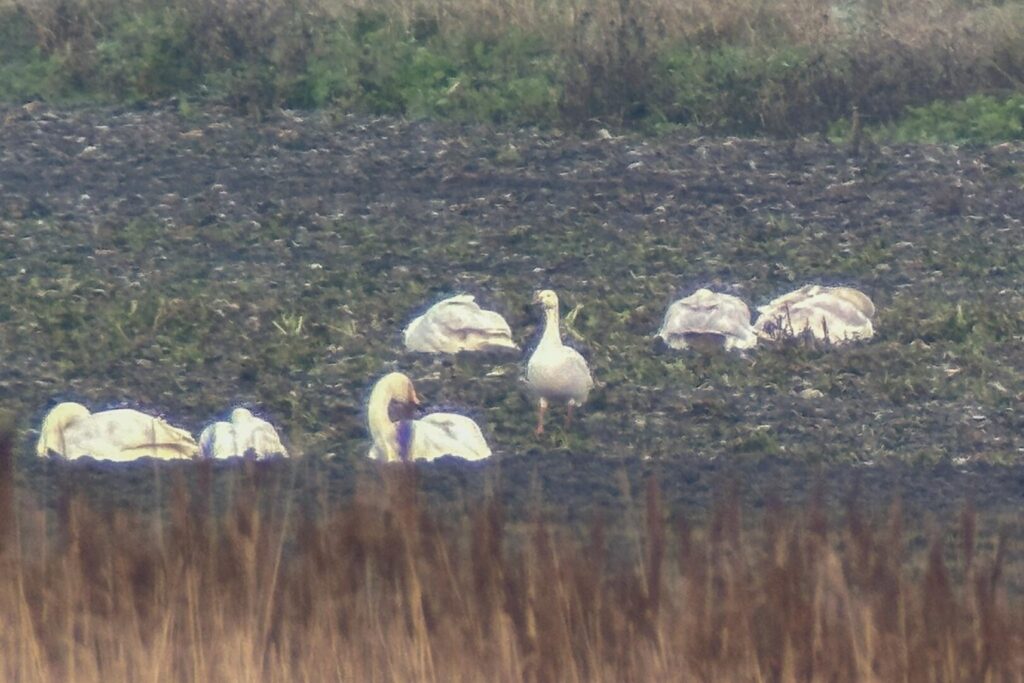
The Snow Goose was much smaller than the Whooper Swans it was with. We could see the black in its wing tips as it turned away and its smaller pink bill. It should be in North America but had probably taken a wrong turn and ended up in Iceland, then migrated here with the Whooper Swans. Snow Goose is common in captivity and a regular escapee. Most birds seen in the UK do not have such good credentials as this one.
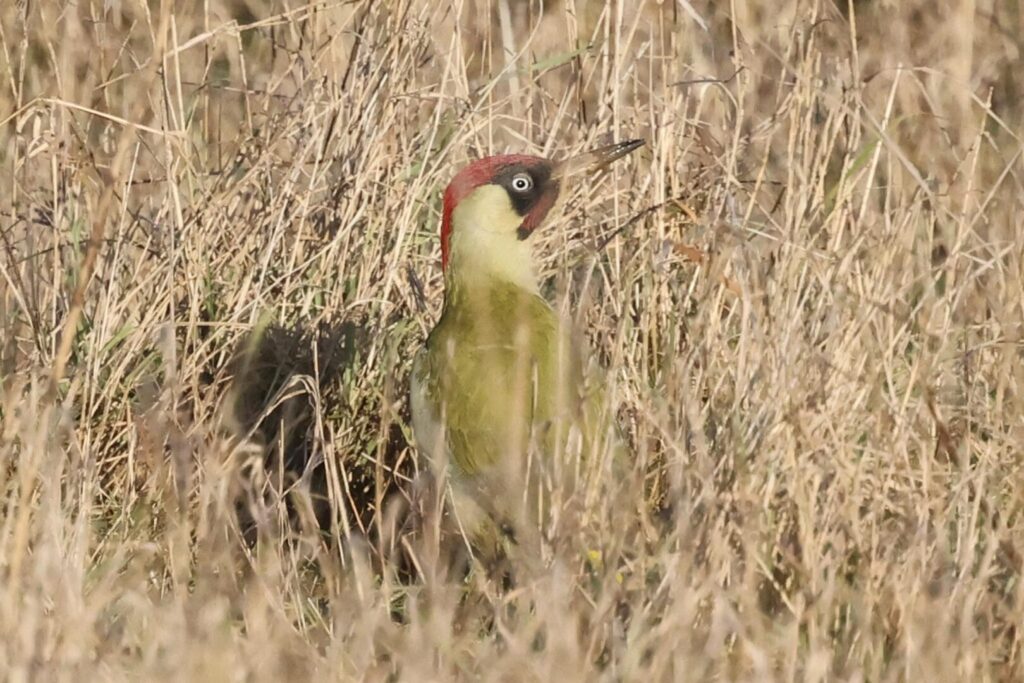
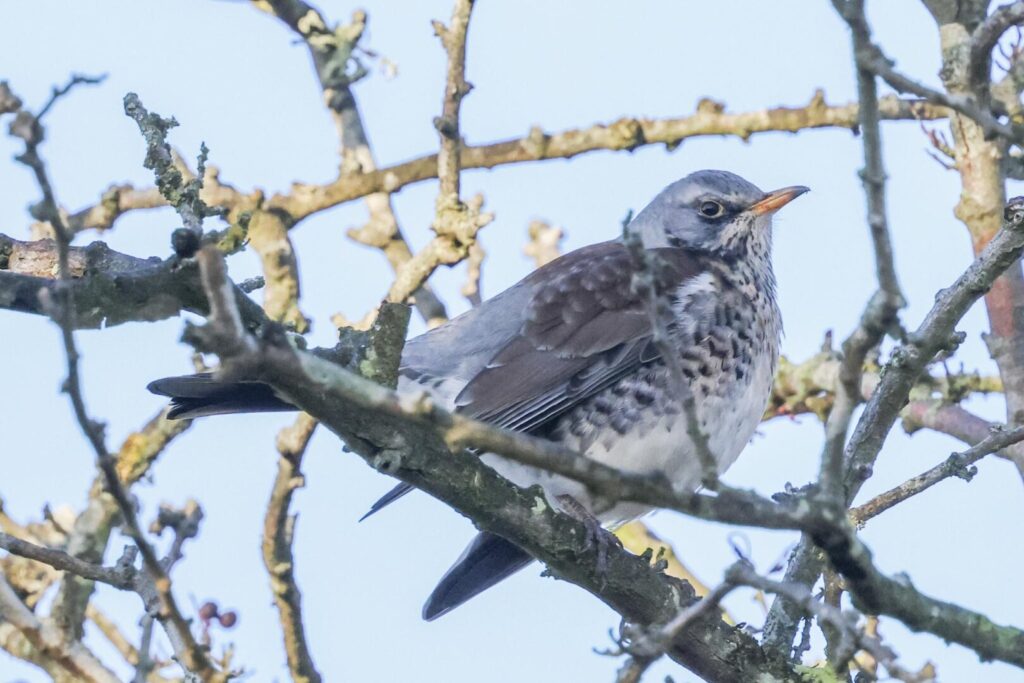
Back along the river bank, we looked across to see a large flock of several hundred Stock Doves come up out of fields the other side of the river. As we drove into the entrance track to Deeping Lakes, there were lots of Fieldfares and Redwings in the trees and hedges. Getting out in the car park, a Green Woodpecker flew across calling. It landed in a small birch tree where we got it in the scope, then dropped down onto the grass right in front of us.
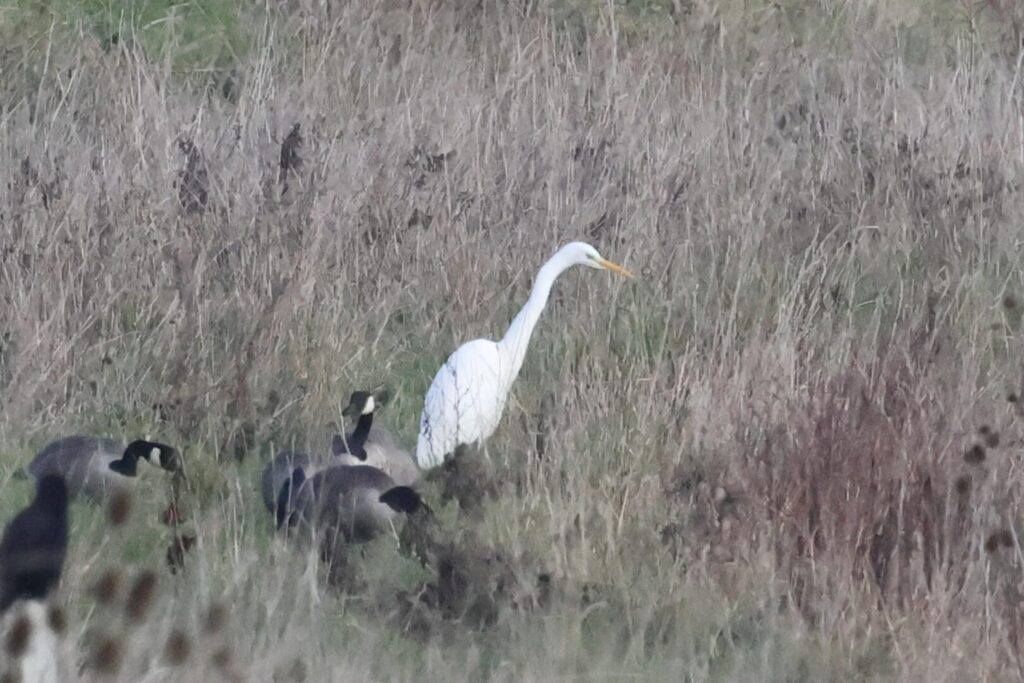
The car park and access track were very icy, so we walked in carefully. A Great White Egret flew over. There were more thrushes in the trees, Redwings with the Fieldfares. A Goldcrest flicked across the path ahead of us and disappeared into the brambles the other side.
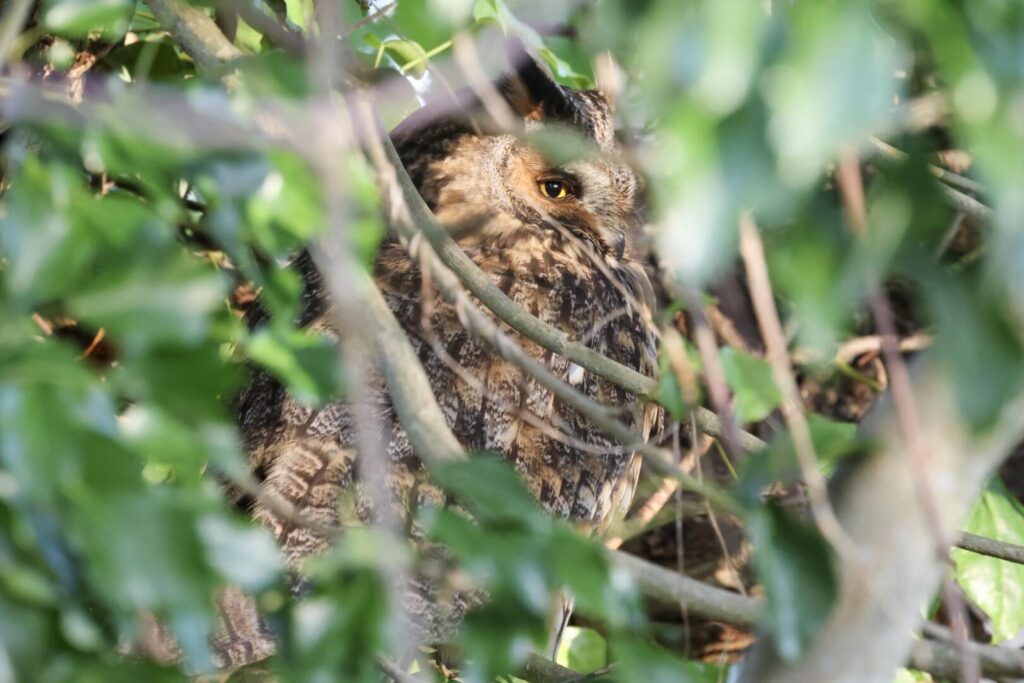
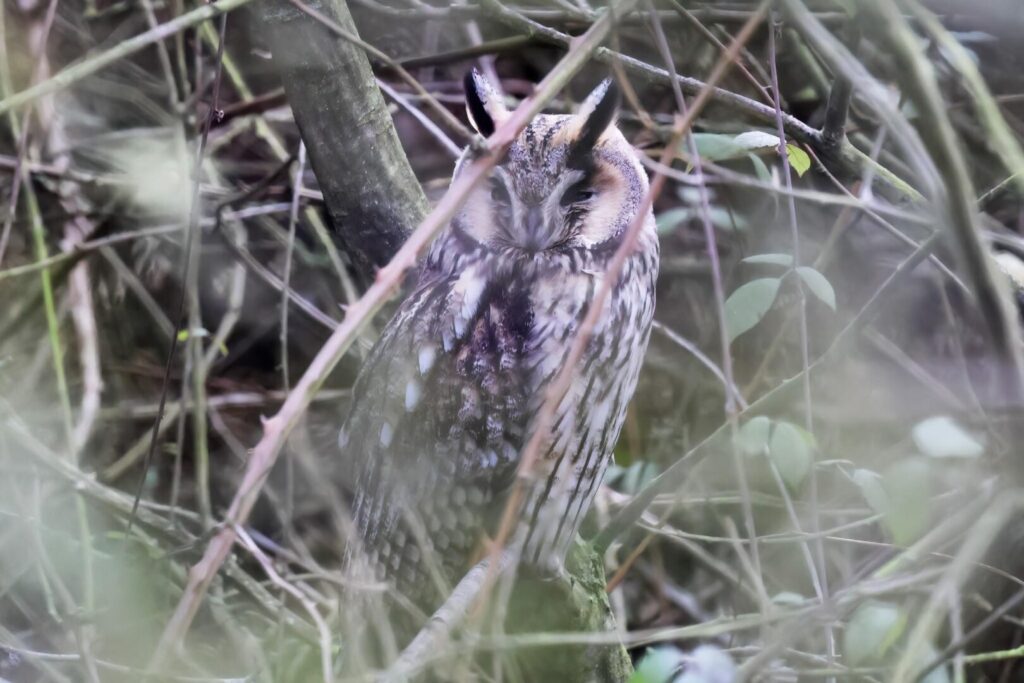
There were several photographers in the hide but we managed to see past them. Two Long-eared Owls were roosting very close, in the ivy. Great views of the main target here. They were mostly asleep but occasionally stirred and stretched and flashed their amber eyes. We eventually managed to find a third Long-eared Owl but it was mostly hidden, round behind the trunk lower down.
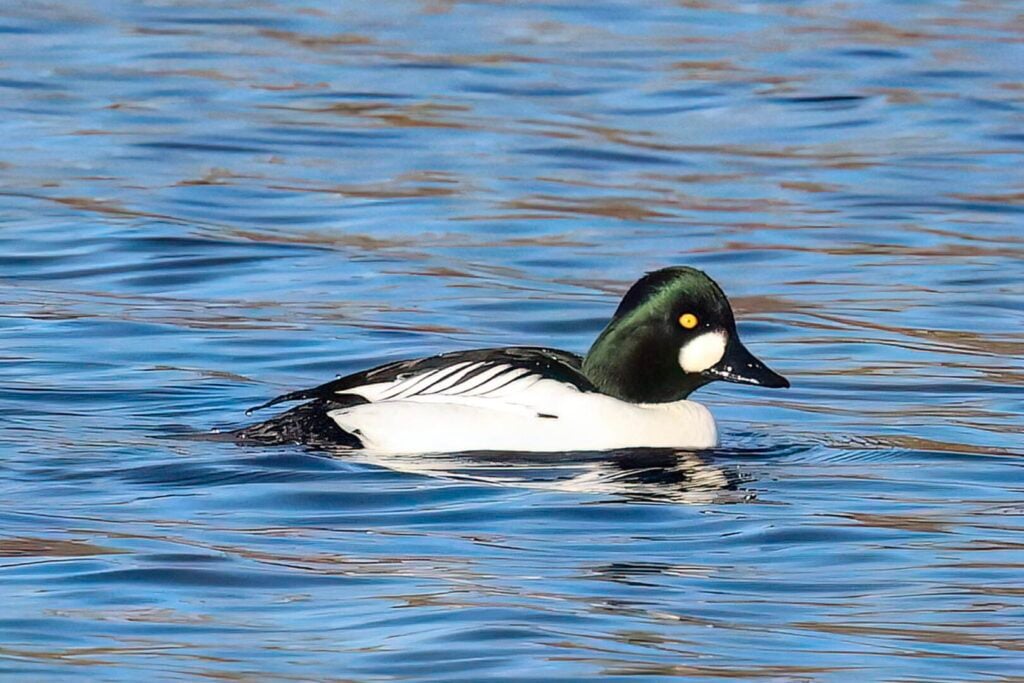
Looking out at the lake in front of the hide, we could see several Goldeneye and a couple of Goosander on the unfrozen part of the water. We made our way out and walked down along the path. Three more Goldeneye were on the water here. The two drakes were displaying, throwing their heads back. The female with them was not looking very impressed though.
In through the open trees, we flushed lots more Fieldfares and Redwings up out of the fallen leaves. Out onto the riverbank beyond, there was no sign of the Little Owl. Apparently it had been seen just before we arrived but had flown off, possibly gone into a hole in the trees. We made our way back along the river bank. A Chiffchaff flicked in and out of the ivy in the sunshine. The Great White Egret was now feeding on the river bank further up.
Back to the minibus, we drove into Crowland and stopped to use the facilities. As we made our way over to our next stop at Eldernell, it was rather foggy. Still, we could see over a thousand Whooper Swans in one of the fields by the road as we passed.
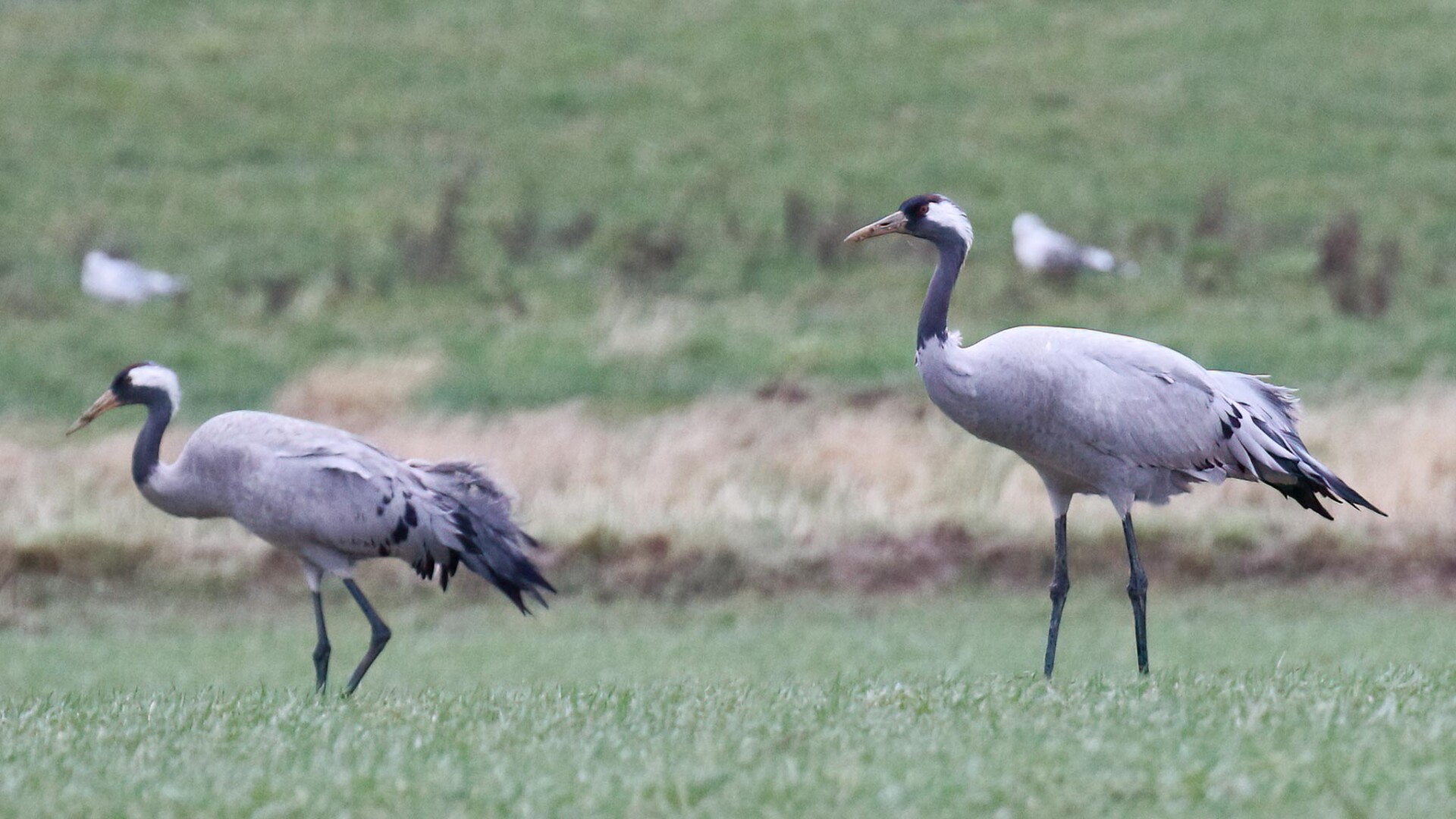
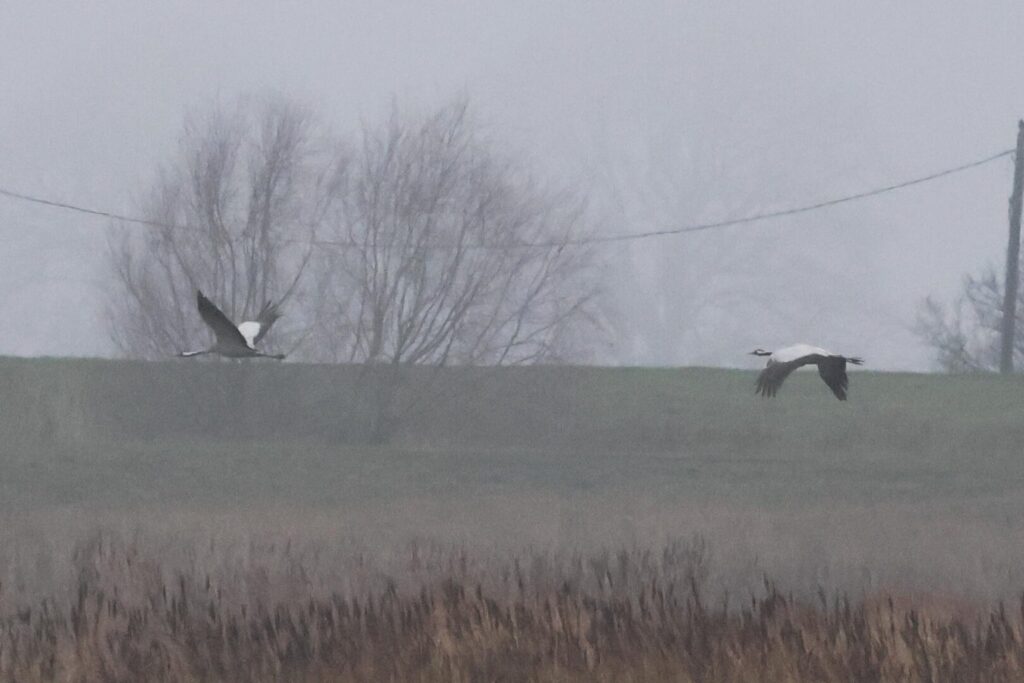
When we arrived in the car park at Eldernell, it was time for lunch. We stopped to eat looking out over the Nene Washes. It was rather misty and visibility wasn’t great but we still managed to pick up two Common Cranes flying past. Sandwiches had to be quickly put down!
After lunch, we climbed up onto the bank. As we walked along, we scanned the bushes and it didn’t take us long to find the first Long-eared Owl. There were actually several all roosting pretty close together. We managed to see four clearly, and there looked to be fifth owl deeper in, presumably another Long-eared Owl. We found a spot where we could see one fairly clearly and get a good view of its long ‘ears’.
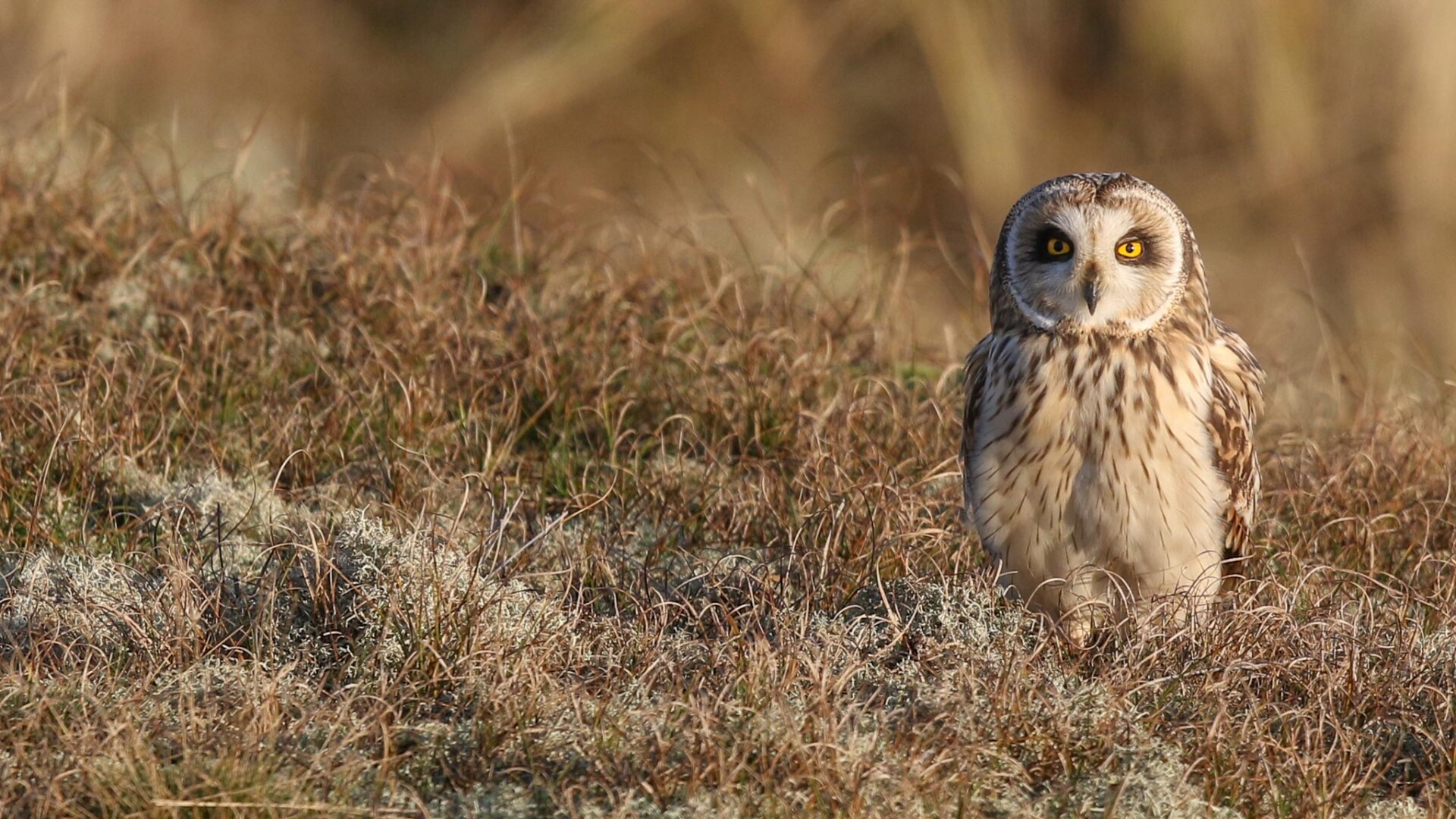
There are normally Short-eared Owls here too. Walking slowly back along the hedge, scanning carefully, we managed to find one. It appeared to be on its own and was better hidden than some of the Long-eared Owls. We got it in the scope and could see it was a different colour, greyer/buffer. Its shorter ‘ears’ were flattened back on top of its head.
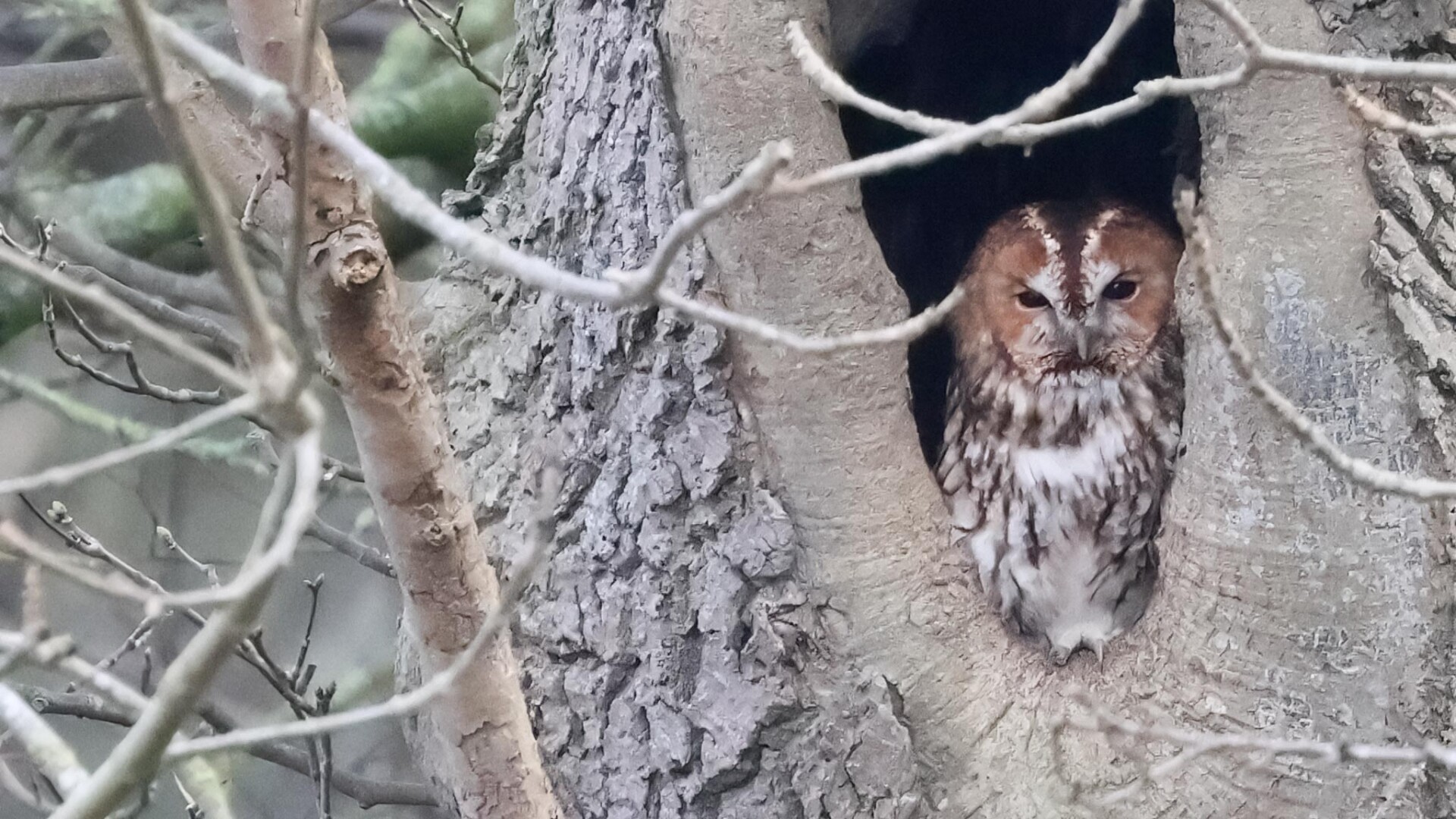
We would normally walk further down to try for the Tawny Owl. Two people coming back told us that it was not at the entrance to its hole so we decided not to waste time. As we walked back to the car park, the mist seemed to lift. We had a better view of the Washes now but couldn’t see anything else out there. We decided to move on.
As we drove over towards Welney, we saw lots more herds of swans in the fields. They appeared to be mostly Whooper Swans. Having seen the Bewick’s Swans well this morning, there was no need to stop and scan through the swans now. Thankfully Welney Wash Road was open, so we could get across today.
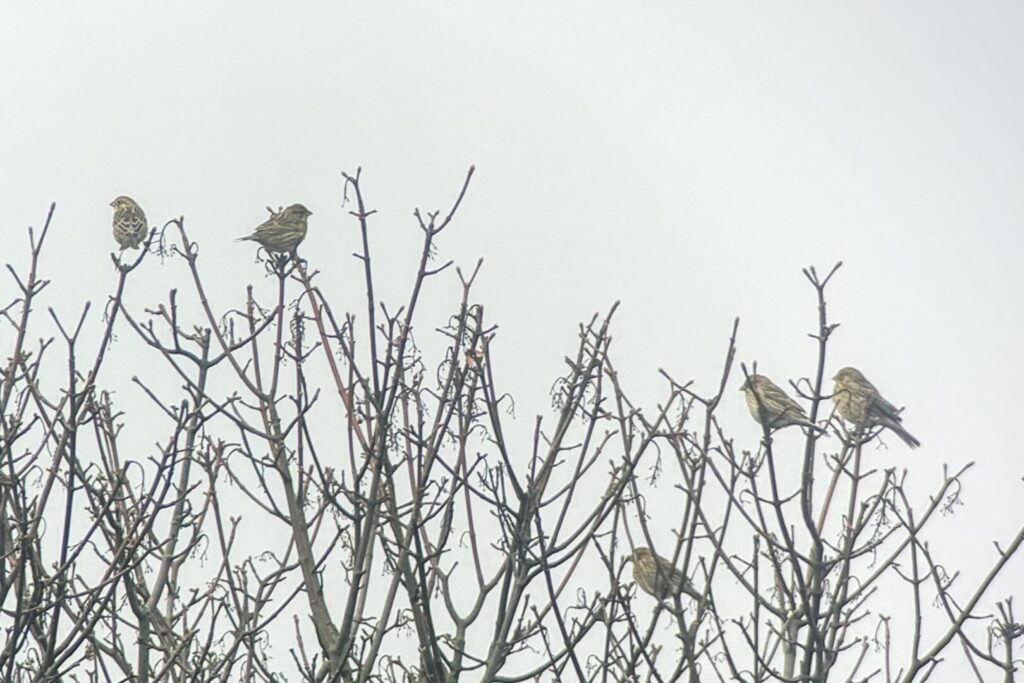
Rather than head to the reserve, we made a diversion first to look for Corn Buntings. They have been feeding in a field sown with a winter bird seed crop. As we drove up, a small group of Corn Buntings flew across the road in front of us and out over the ploughed field the other side. We stopped on the corner and got out in time to see a flock of about 40 Corn Buntings flying off over the ploughed field now. They must have been flushed by something.
We set up the scope and gradually the Corn Buntings started to drift back in. Some landed in the top of a tree by the road, others flew straight back into the crop. There were a few Reed Buntings feeding on the edge of road too until they were flushed by a passing car. The Corn Buntings were still rather jumpy and kept flying round and up into the trees or landing on some nearby wires. Given how they have declined, it is nice to see such a large flock. A reminder of how things used to be before our farmed countryside became quite so barren.
We drove round to Welney WWT Visitor Centre now. There were lots of cars in the car park. It was 3pm already and the swan feeding was just about to start. We stopped to look at the feeders. There were lots of House Sparrows in the brambles and all over the main feeders. Two Tree Sparrows were on some smaller feeders closer to us. There don’t seem to be as many Tree Sparrows here this year, so hopefully they are not going to disappear from here too.
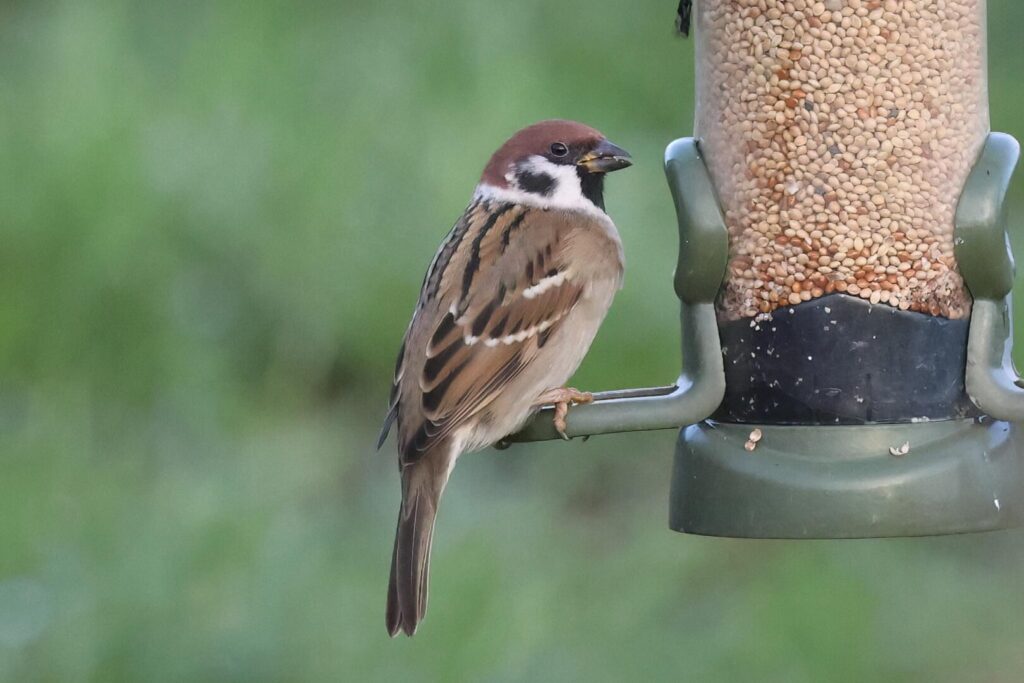
Having enjoyed the good views of the Tree Sparrows, we went into the Centre to use the facilities and get a hot drink, for anyone who wanted. A surprising number of the group (given the cold weather) decided it was time for ice cream! Looking out over Lady Fen, the pools were all frozen. A single Cattle Egret was out with the sheep. A flock of about twenty Ruff flew in and whirled round over the grass.
We usually come here for Short-eared Owls but there are none here this year. There had been a couple of Tundra Bean Geese out on the Washes here earlier in the day but talking to the warden, she wasn’t sure they were still there. They had apparently been coming and going. The light we already starting to go, it had been a long day and the group was tired after the early start. With a long drive, we decided to head back. There might still be time for tea and cake before dinner. Then another day and more to see tomorrow.