Day 3 of a 4-day Spring Migration tour. Another bright and sunny day, warm out of the lighter wind which swung round through NW to E during the day. It got up to 22C inland during the afternoon but a cooler 16C on the coast. We started in NW Norfolk and ended up back at Cley in the afternoon.
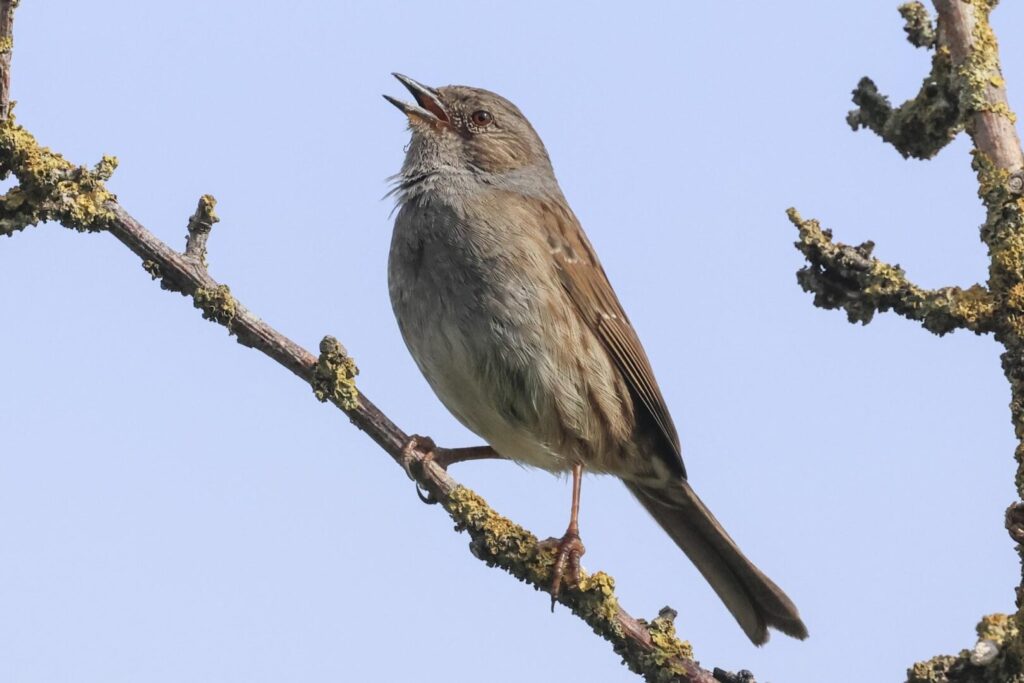
Our destination for the morning was Snettisham. Walking along the road, a Collared Dove flew past. Just for a second it had our hopes up, but it was not the dove we were hoping for here! In through the gate, we could hear a Lesser Whitethroat singing. We could just see it, in the top of a hawthorn, before it dropped back down into the leaves. There were several Greenfinches and Linnets in the bushes. A Dunnock was singing in the top of one ahead of us.
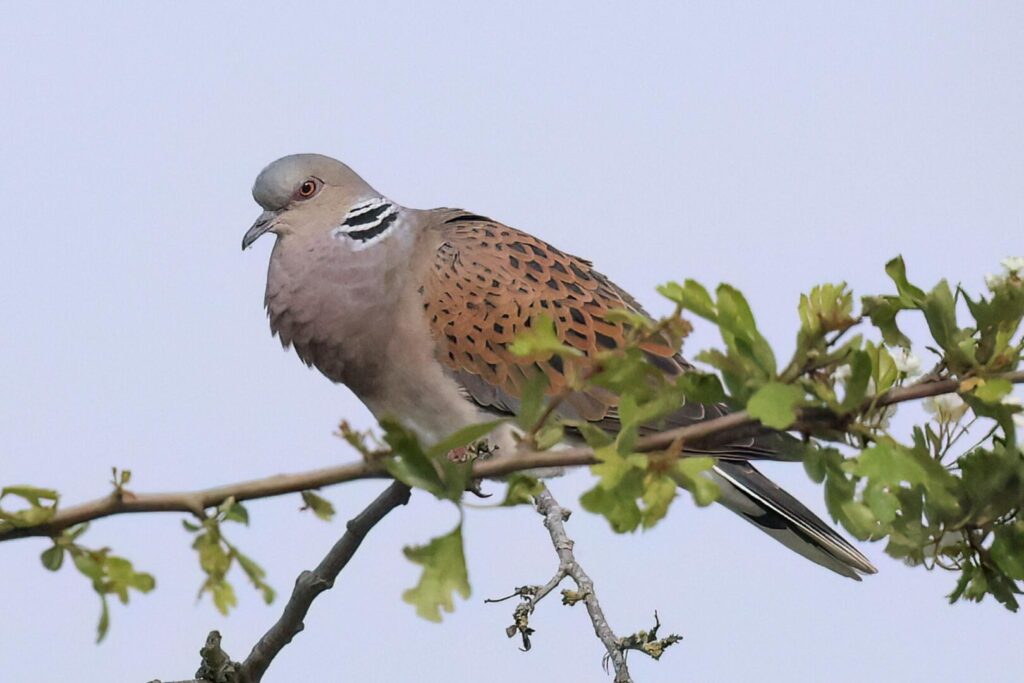
We heard a Turtle Dove purring over towards the car park now. So we took the path through but before we could get round it went quiet. When it started calling again it was further in now. Again, we got excited briefly when we found a dove preening in the top of a bush. But it was just another Collared Dove. Then the Turtle Dove started purring back towards the main path so we walked back out.
We walked on slowly, scanning the tops of the bushes through the gaps, and eventually found the Turtle Dove in the top of a hawthorn. Great views now in the scope. We watched as it alternated between preening and then purring.
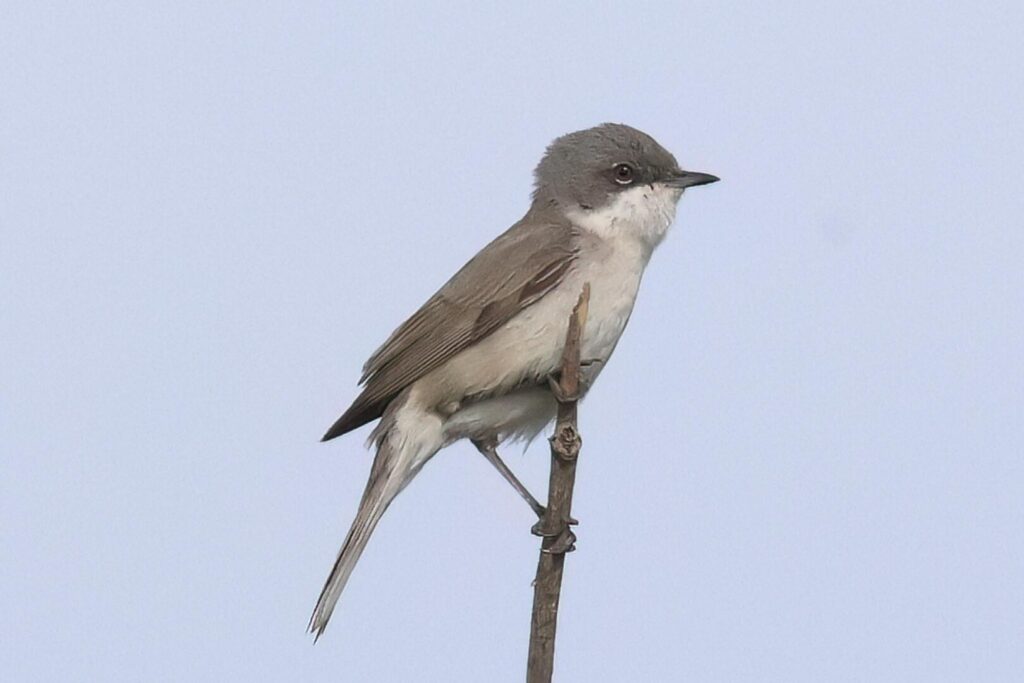
Eventually we had to tear ourselves away from the Turtle Dove, as it showed no sign of moving again now. There were several Common Whitehroats singing in the bushes and a Blackcap perched up briefly. An unusually showy Lesser Whitethroat flew up to a bare stem sticking out from the top of a bush and stayed there in full view singing for several minutes.
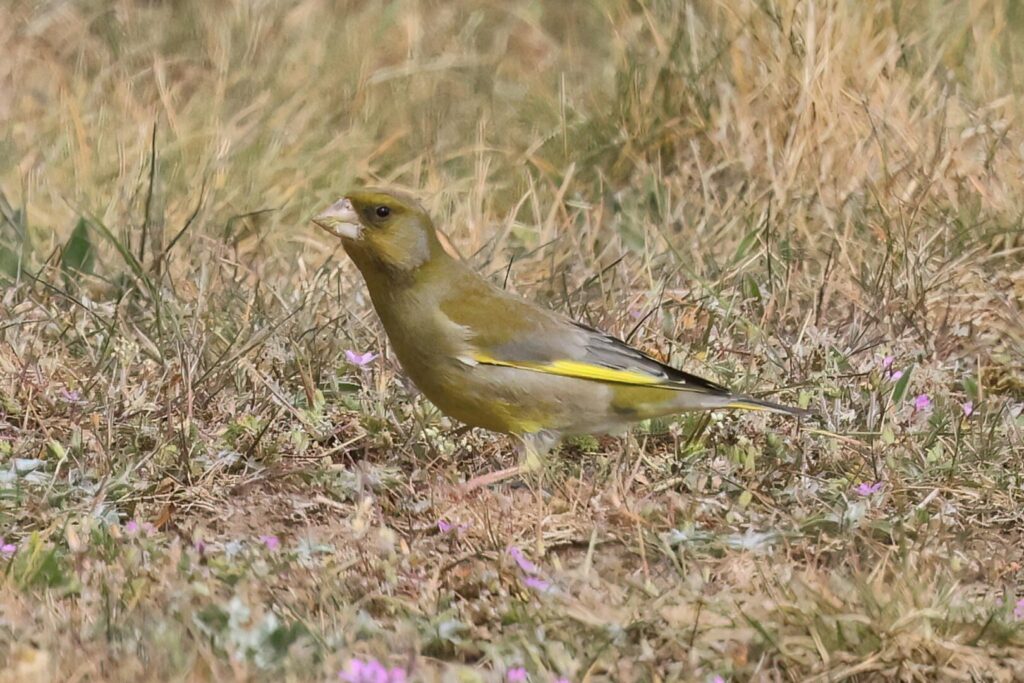
Out in the open area, we found a single female Wheatear out on the short grass. Several Stonechats flicked around between the isolated bushes. There were lots of Linnets and Greenfinches feeding on the grass too. One male Greenfinch looked particularly smart in amongst the pink flowers.
On the far side, there were several Sedge Warblers singing. One perched up on a fencepost.
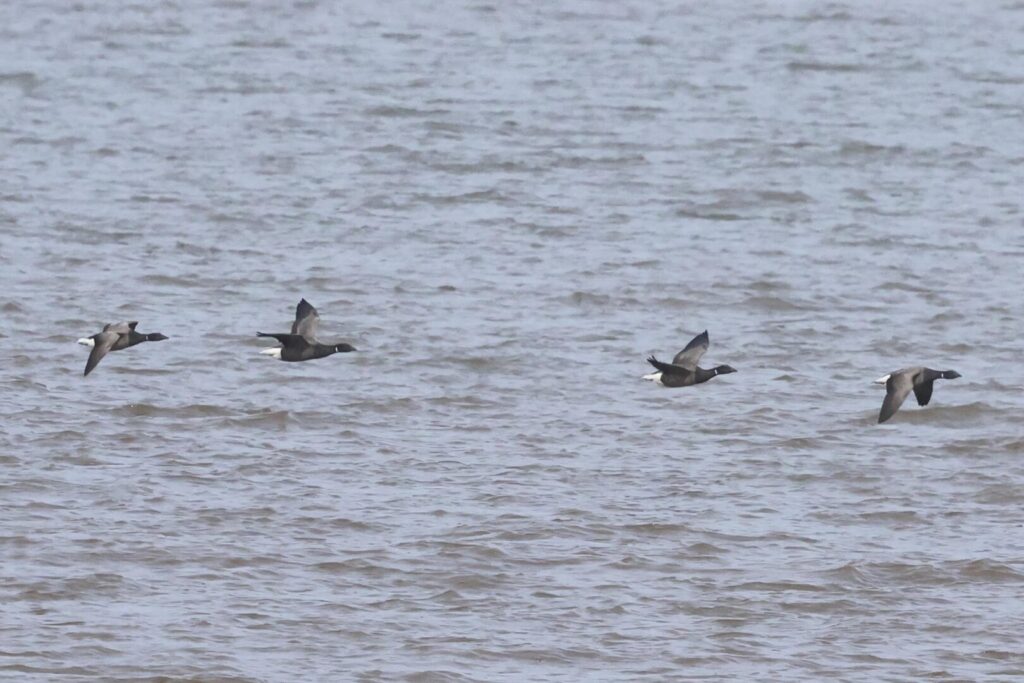
We walked up onto the seawall and looked out across the Wash. The tide was just going out, but was still on the stones. There were a few Oystercatchers and Ringed Plovers down on the shore. Four Brent Geese flew past.
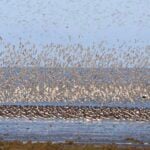
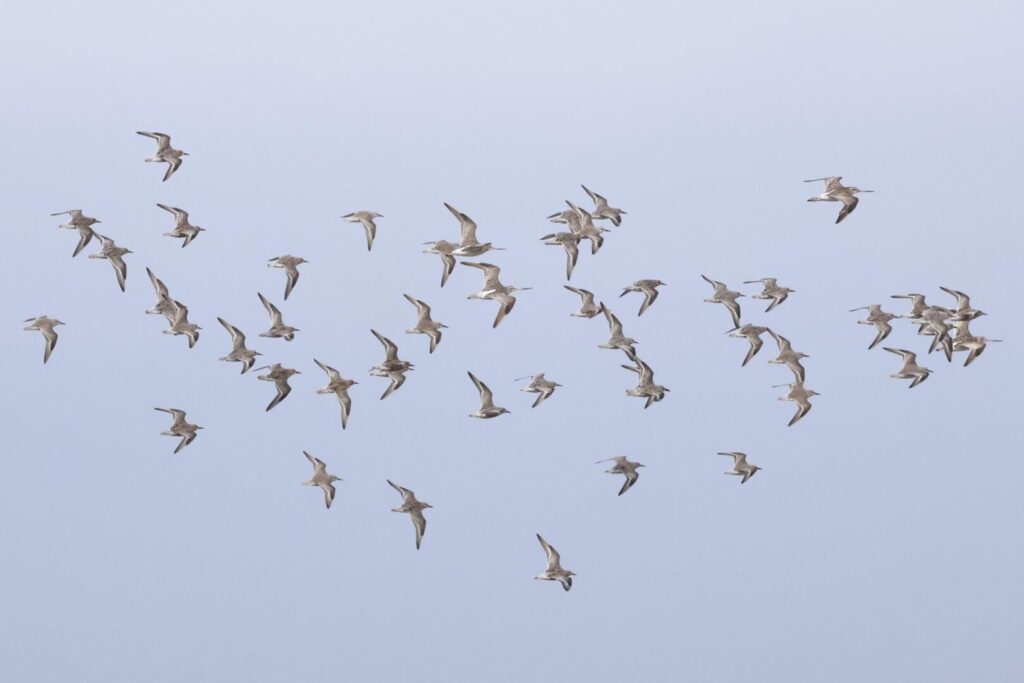
A large mixed flock of Knot and Bar-tailed Godwits flew in and circled round offshore, looking for somewhere to land. A small group of Sanderling flew past.
The tide was going out very quickly and the mud was just starting to appear. Several of the Bar-tailed Godwits landed in the shallow water just off the beach. A couple of them were already in very smart rusty breeding plumage, so we got one in the scope for a closer look.
There were a couple of Common Gulls on the beach too. A couple more Brent Geese flew in and landed on the mud. Two Great Crested Grebes drifted past offshore. A few Swallows flew south over the beach and the near edge of the water, migrants on their way straight through.
Lots of Curlews appeared out on the wet mud much further up to the north. They had presumably been roosting out on Ken Hill Marshes. One group of the Knot had landed now on the mud to the south of us, a few more Bar-tailed Godwit with them. A large flock of Black-tailed Godwits flew in and landed briefly on shore.
Back down into the middle of the Coastal Park, we walked on further up. There were lots more Sedge Warblers and Common Whitethroats singing in the bushes all the way along. A Meadow Pipit perched obligingly in a tree by the path. Lots of Linnets were feeding on the short grass, including some lovely pink- and red-breasted males.
A couple of Yellow Wagtails flew over calling. Migrants on the move, in the clear weather they kept on going and didn’t stop. Another Wheatear flew up from the grass by the water bowser, where the cattle had been grazing. We heard a Mediterranean Gull calling over towards Ken Hill Marshes.
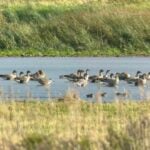
We cut across to the inner seawall and climbed up the steps to view the marshes beyond. The pools are drying out quickly now, with no rain to speak of for some time here. Lots of geese were out on the grass, mainly Greylags, but also a few Canada Geese and Egyptian Geese with them. There were plenty of goslings out there too.
There were a few waders on one of the remaining pools – including a black Spotted Redshank with four Common Redshanks. A male Ruff with four females was on the mud just behind. A Marsh Harrier drifted over, pursued aggressively by a couple of Lapwings. Further on, we could see why. Several tiny baby Lapwings were feeding out on the mud.
By the time we got back to the minibus, it was already after midday. We drove round to Titchwell and as we got out of the minibus, a Mediterranean Gull flew over the car park calling. The reserve were holding their Spring Fair in the picnic area but kindly let us use the picnic tables.
We were planning to come here tomorrow, as it was forecast to rain. So we would try somewhere else this afternoon. There had been no sign of yesterday’s Wryneck at Cley this morning but now a message came through that it was still there. So we drove over for a look. When we arrived, several people were milling around where it had last been reported. But there had been two reports, a significant distance apart. No one seemed to know anything about exactly where it was last seen and when
We had not got to the East Bank on Thursday, as it was too windy. We decided to walk on and come back this way if the Wryneck was refound. There were lots of people up and down the path, birders as well as non-birders, so perhaps there was too much disturbance. Several Hairy Dragonflies were hawking up and down over the Catchwater Drain. Up onto bank, it was good to see some more water now on the grazing marshes.
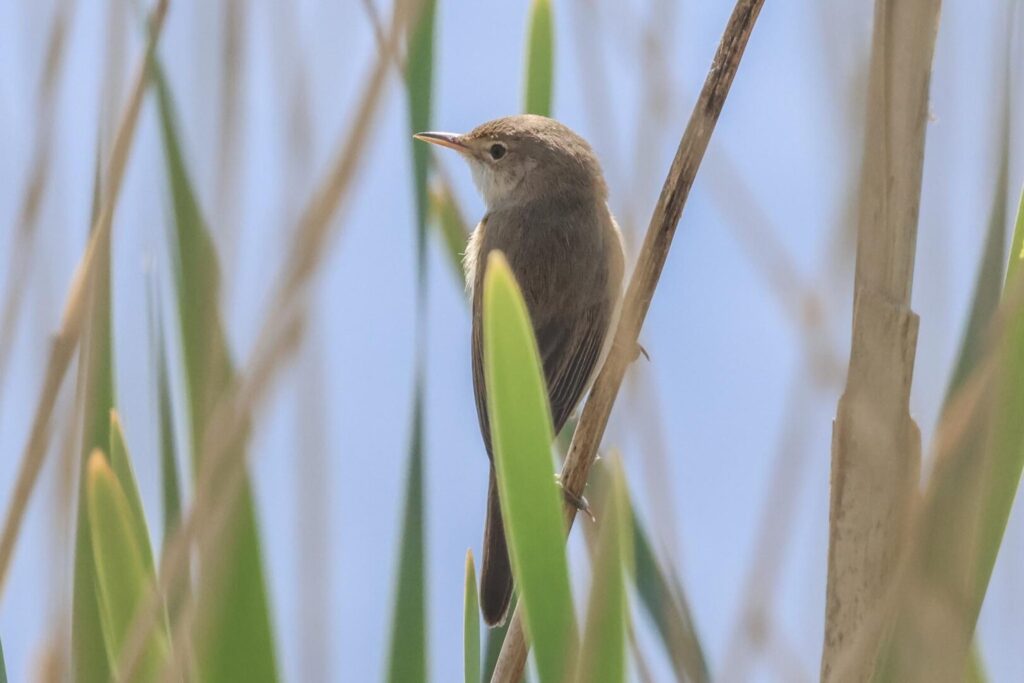
A Bearded Tit flew over Don’s Pool just as we arrived, but disappeared down behind the reeds at the front. We could hear more Bearded Tits pinging, and got some quick glimpses of them zipping around over the reeds further back. We decided to wait here and see if we could get a better view. There were several Reed Warblers flying around too. Unusually showy today, one perched up singing on the bulrushes at the back of the pool. Another landed halfway up the reeds right below us.
We picked up a female Bearded Tit working its way through the reeds at the back. Then a male Bearded Tit came down to drink at the base of the reeds on the back edge of the water. A nice view.
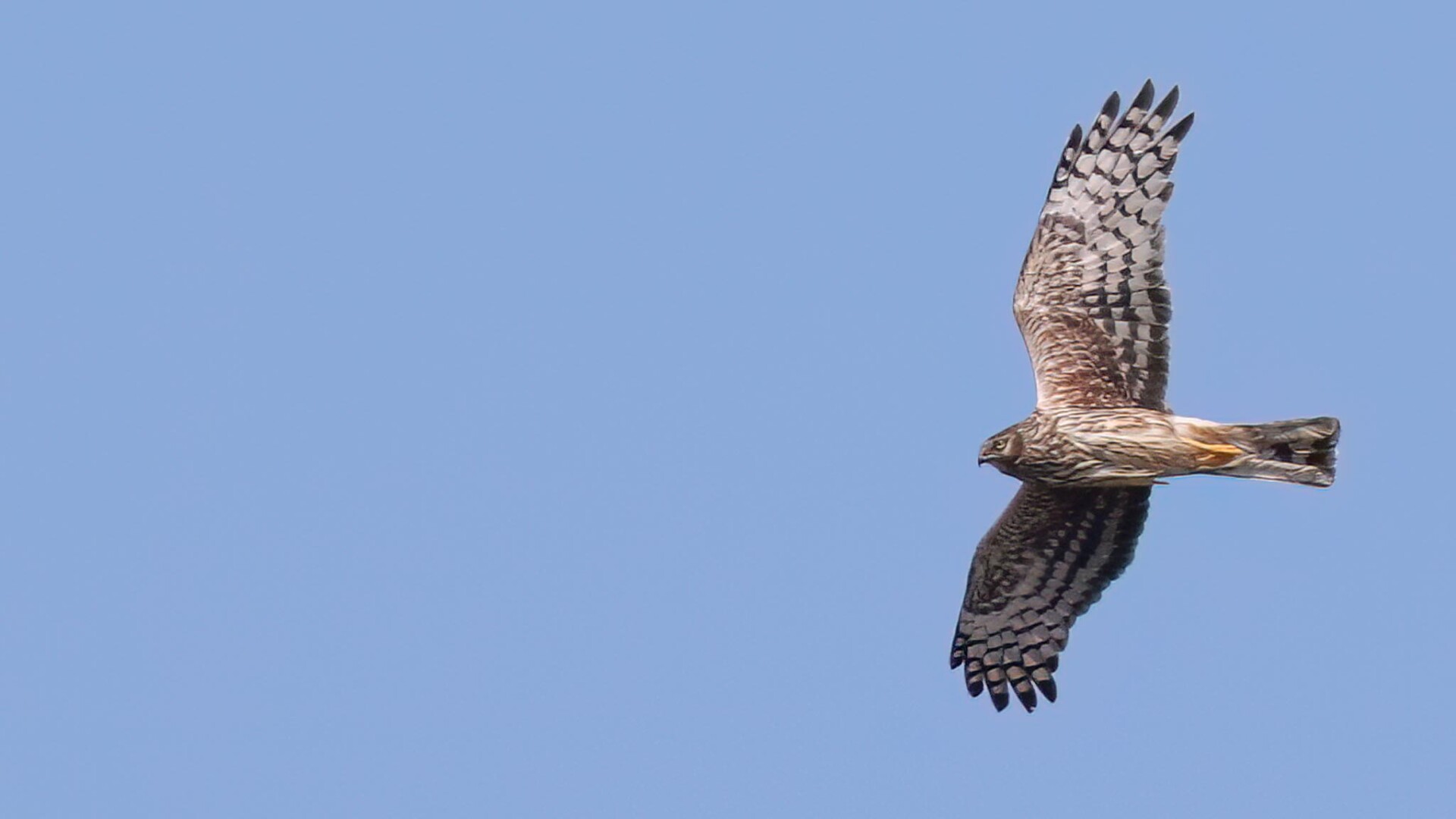
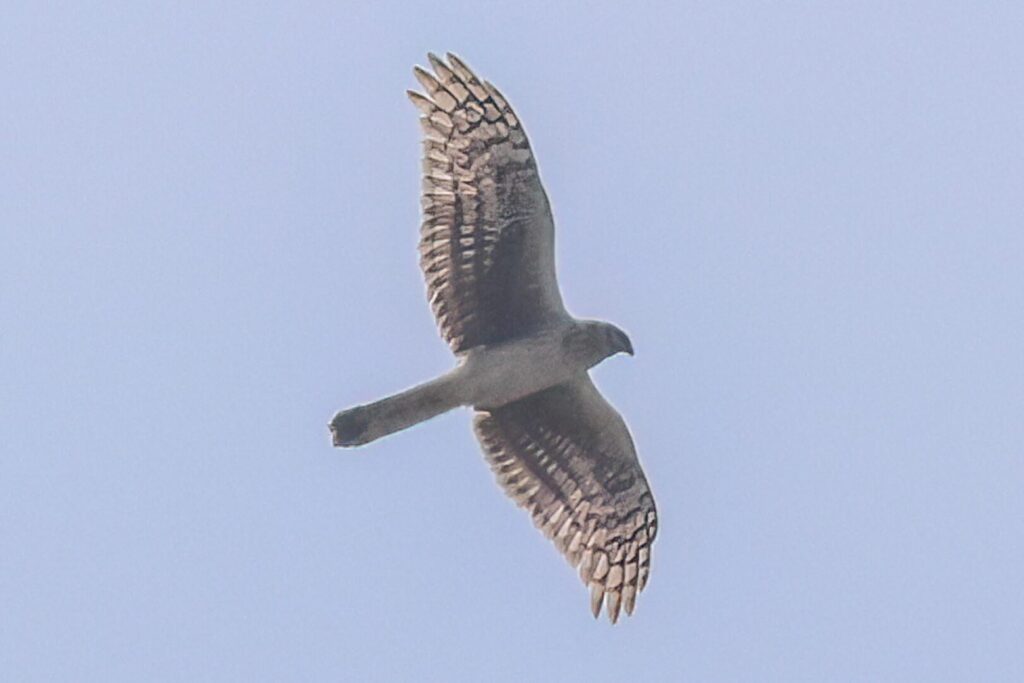
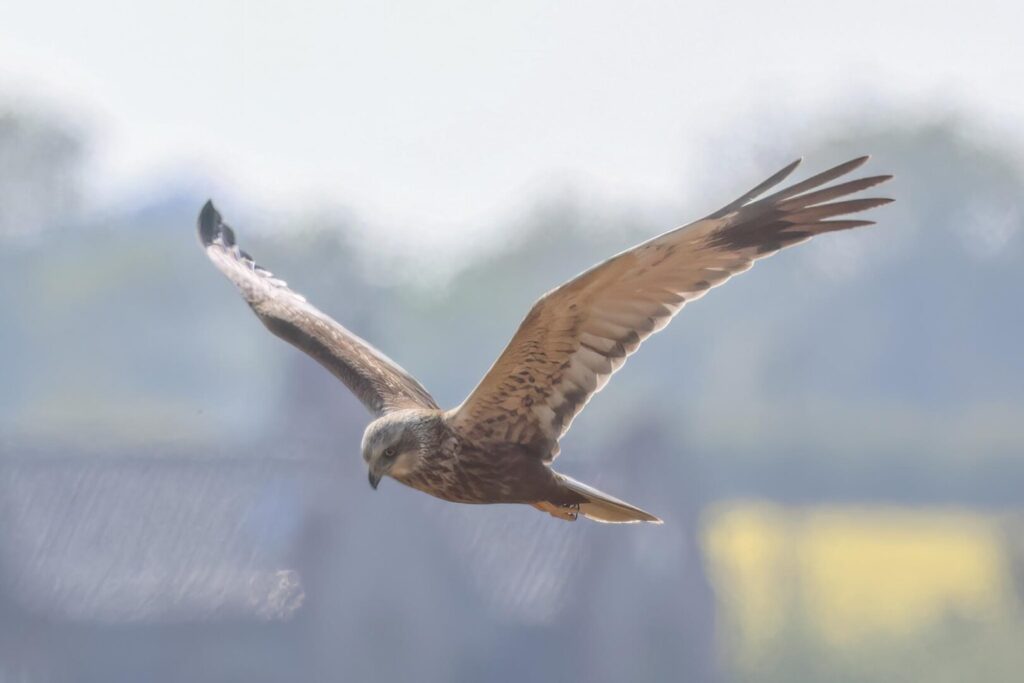
As we continued on, we noticed a raptor circling high over the reedbed. It was not the usual Marsh Harrier, smaller, slimmer and paler below, a ringtail Harrier. It was hard to see at first looking into the sun but it looked as if it had quite a broad hand to the wing. Getting it in the scope, we could then see that it had five fingers to the hand, confirming it as a Hen Harrier. It dropped down and flew round low over the reeds. Then as it was mobbed by a Lapwing, it circled up rapidly and flew off strongly inland.
A male Marsh Harrier flew in over the reedbed immediately after it had disappeared. A good comparison, we could see it was much larger and heavier, thicker set, with broader wings, as well as being very different in colouration.
As we moved on further, there were yet more Reed Warblers, Sedge Warblers and Reed Buntings singing in the reeds. Lots of Sand Martins were hawking out over the north side of the reedbed. Two or three Painted Lady butterflies flew past. A migrant, there seemed to be an arrival of them today.
Several Lapwings and Redshanks were displaying over the grazing marsh the other side. One male Redshank fluttered up singing right over our heads. A Grey Heron was luring on the edge of the reeds in the ditch in the middle of the grazing marshes.
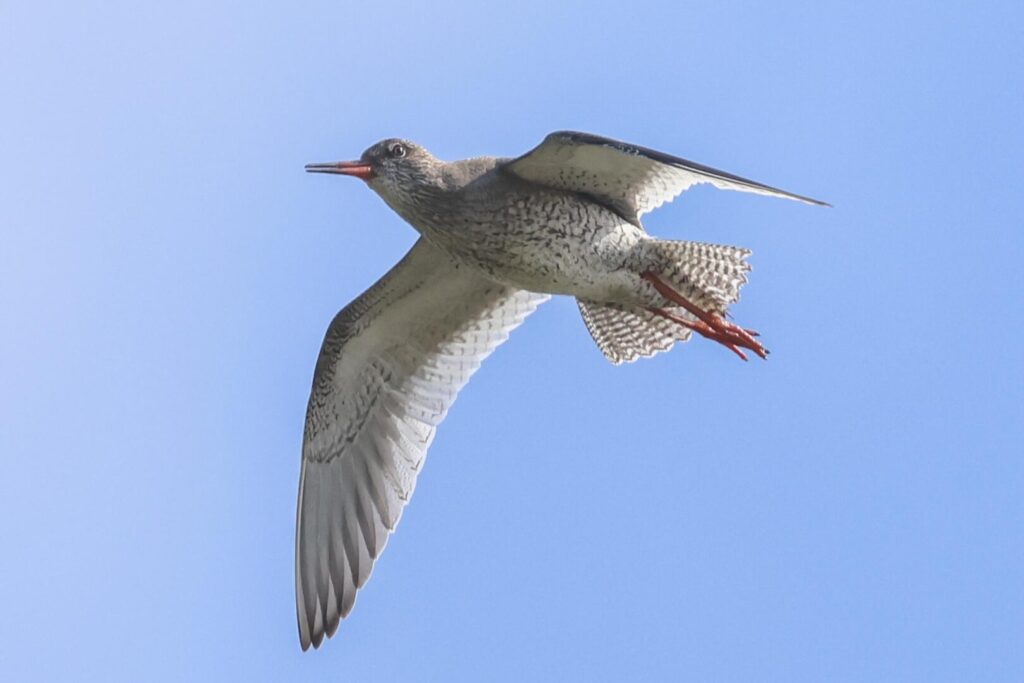
We stopped to scan the Serpentine. There were a couple of smart male Ruff out on the mud, one darker brown, the other paler and more rusty. We could see a single Ringed Plover, at least two Little Ringed Plovers and a Common Sandpiper on the mud too. Several Avocets were feeding in the shallow water.
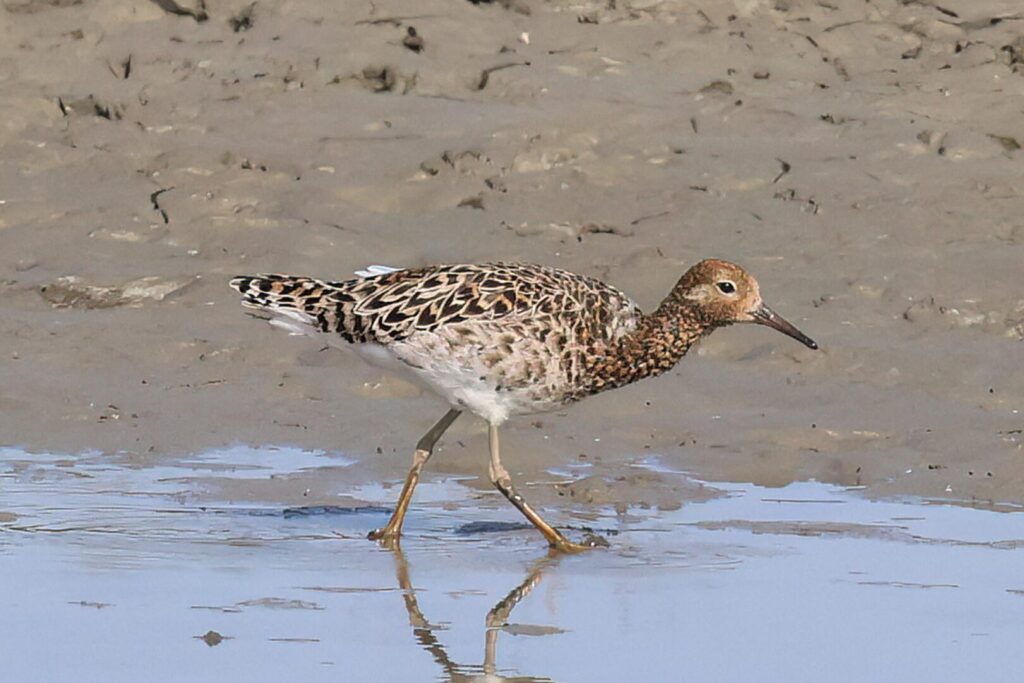
We had just started to walk on when three Bar-tailed Godwits dropped in. Then another three, these mostly in smart rusty breeding plumage. There seemed to be waders on the move this afternoon, presumably dropping in to refuel late afternoon.
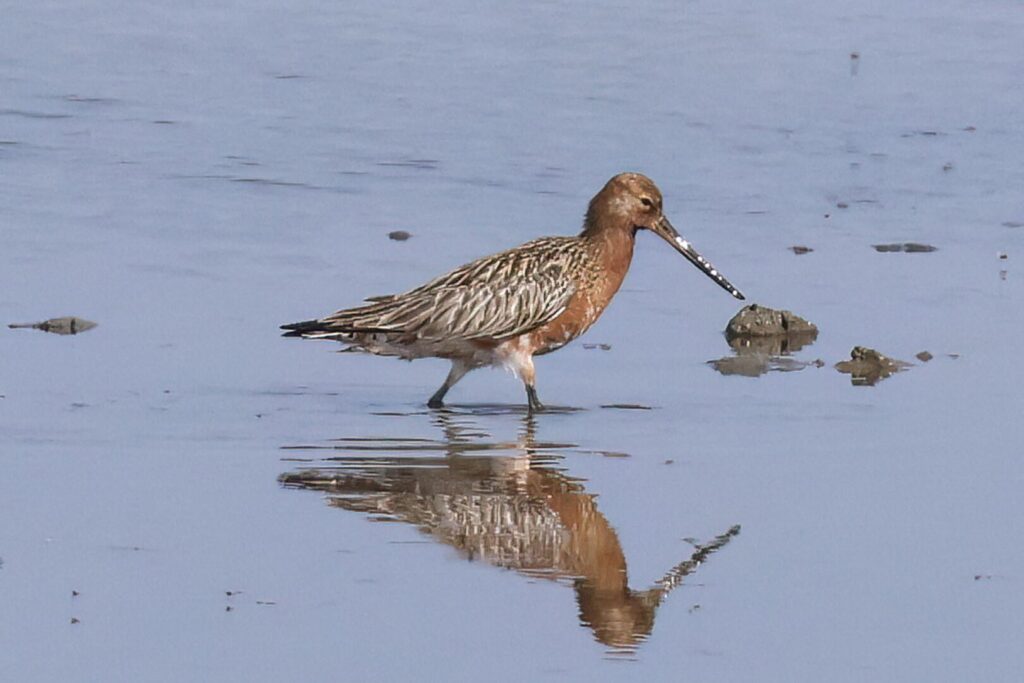
There were more Bar-tailed Godwits on Arnold’s Marsh, at least another eight. We found a small group of Knot feeding in the shallow water in the middle, most of those in red breeding plumage too. Two Grey Plovers were asleep on the shingle islands on the north side with a couple of Dunlin. Two Little Terns flew round calling, but headed straight back out to sea.
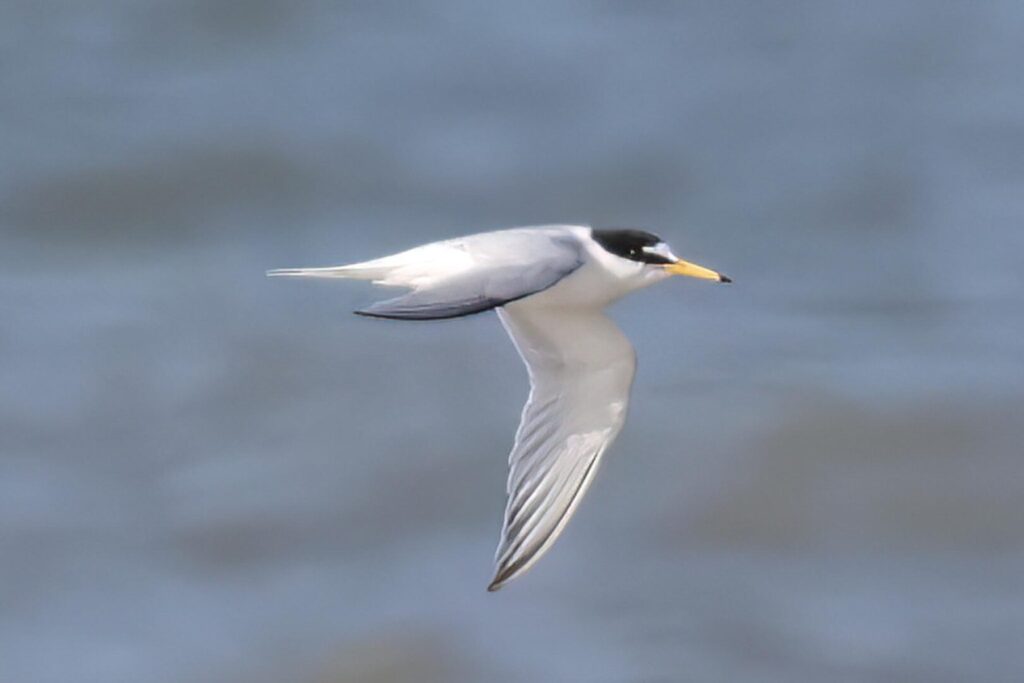
A Great White Egret was lurking in the main drain. An adult in breeding condition, with a dark bill – a pitfall for the unwary. Out at the beach, wore Little Terns were flying up and down offshore in small groups. Good views now – we could see their yellow bills and white foreheads.
As we walked back, there were still several people waiting for the Wryneck to appear, although in a different place to where everyone had been standing when we walked out. There was still no sign of it. As we said at the time, it was still around somewhere, probably feeding somewhere very close nearby but just where we couldn’t see it. We would see if it reappears tomorrow. For now, it was time to head home.