Day 4 of a 4-day Winter Wildfowl, Cranes & Owls tour. After a clear night with a heavy frost, it was a cloudy day with the wind picking up steadily. It was forecast to start raining from about 1pm, turning heavy from 3pm, but by the time we finished the most we had seen was a bit of light spitting. We spent the day in the Norfolk Broads.
There was an impressive sunrise to the east but by the time we arrived in the Broads it was already largely cloudy. As we were passing, we had a quick look along the track to St Benet’s Abbey first. We couldn’t see any Cranes and the only swans were very distant. Everything was still very frozen and even the Cattle Egrets seemed to have deserted the bulls out on the frosty grass. There were a couple of Stock Doves out from the car park.
As we drove on past Ludham Airfield, we could see a large herd of swans out in the fields. The plan was to try to do as much as possible this morning which required being out in the elements, given the forecast for rain and wind this afternoon. We could come back to the swans later.
We did make another quick diversion to look for some geese. Some of the Pink-footed Geese were close to the road though, too close for us to be able to get out. Their necks were up as we stopped, even though we were half hidden behind a bank. We scanned through those geese we could see using the minibus as a hide, although most of the flock was out of view over a low ridge. There had been a couple of Tundra Beans seen here recently.
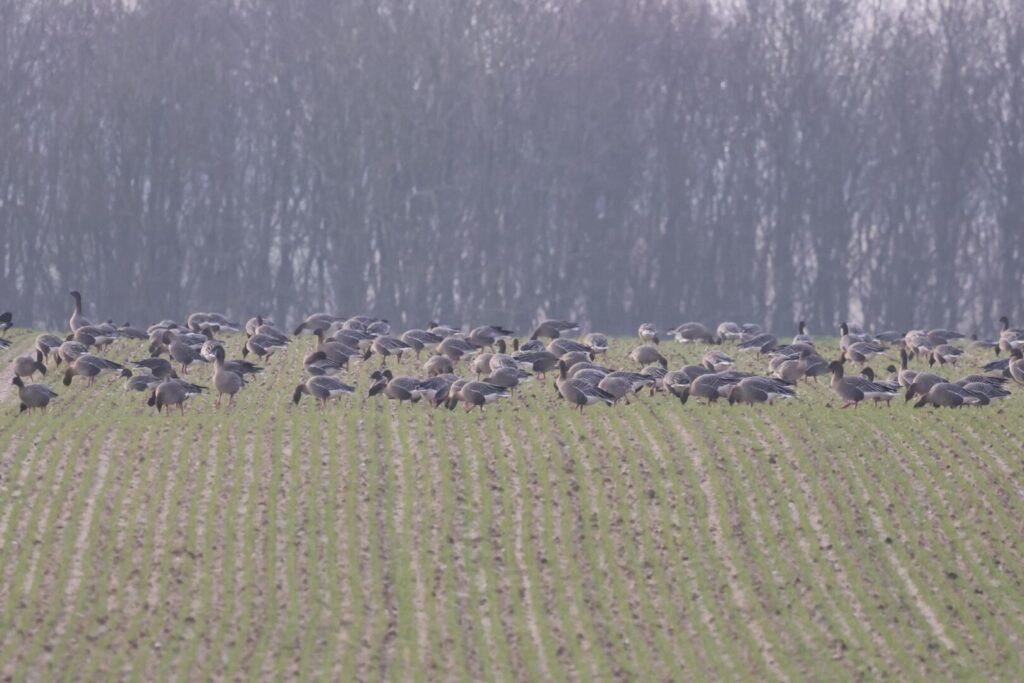
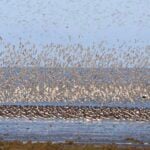
The closest birds walked slowly further back and they had just started to settle down when a motorbike on the road over the far side of the field spooked the whole flock. There were lots more Pink-footed Geese than we could have seen, thousands of them. They all circled round and landed again in the field much further back. We could get out now without disturbing them, but once more half the flock had landed over a ridge. There were no Beans in the part of the flock which was in view.
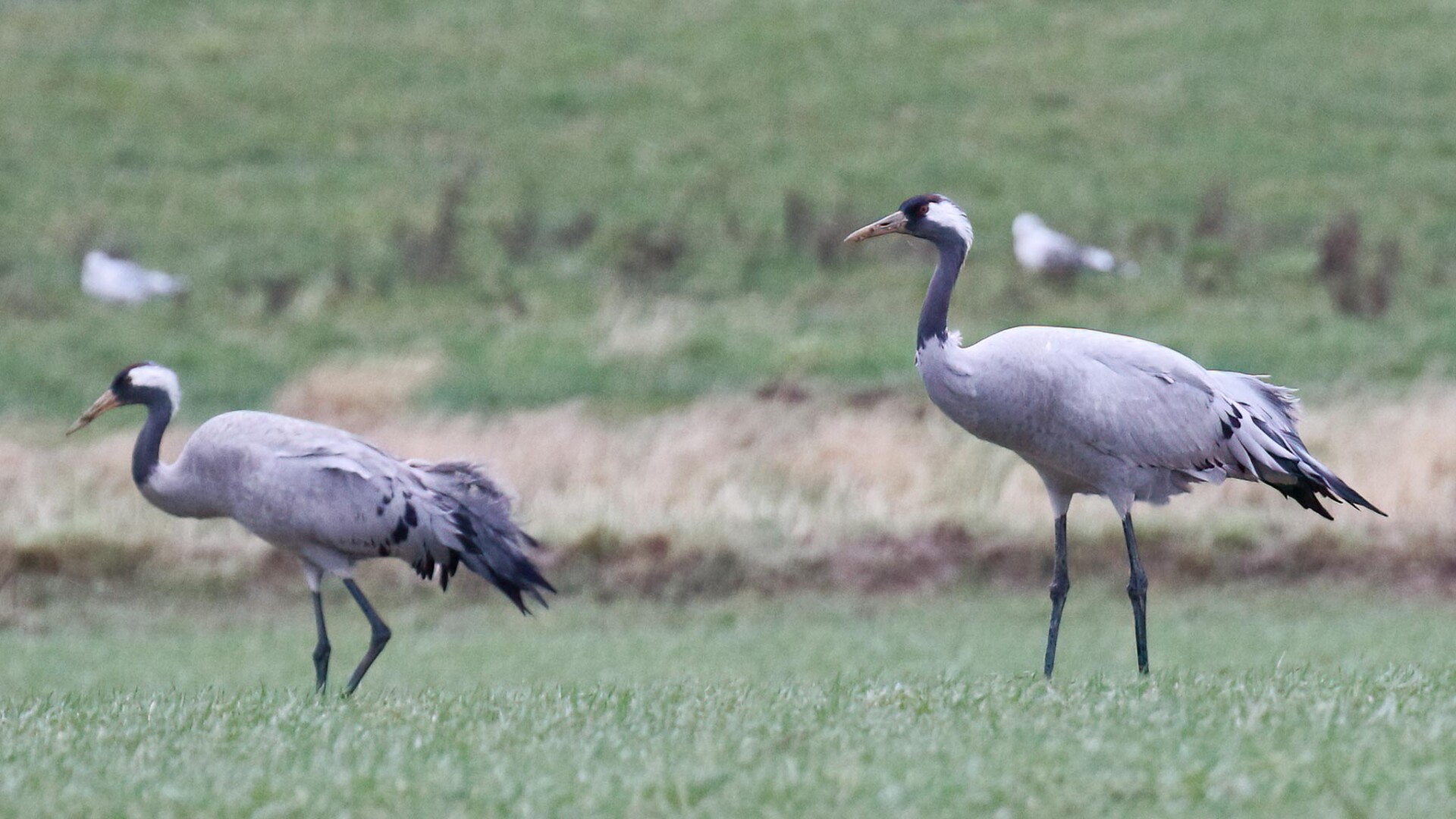
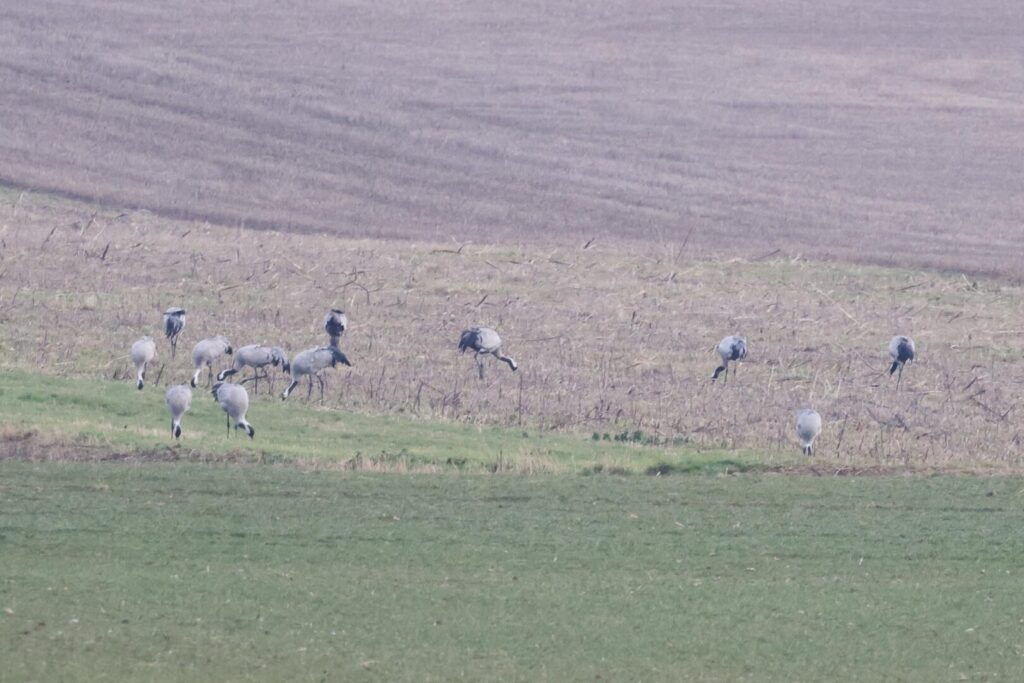
While we were watching the geese, three Common Cranes flew over. We watched them dropping down in the distance, towards an area where the Cranes often like to gather. Stopping briefly on the road on the far side of the goose field, the view of the Pinkfeet was no better but we could hear the Cranes bugling now.
Driving round, we found the Cranes in the field just as we expected, where we had seen them the other day. There were lots of them, we counted forty in total, including a few brown juveniles from 2025. They were far enough away that we could get out and get the scopes on them. Impressive birds and a great sight to see so many together. Two more flew in but landed out of view in some maize. How many more might have been hiding in there?!
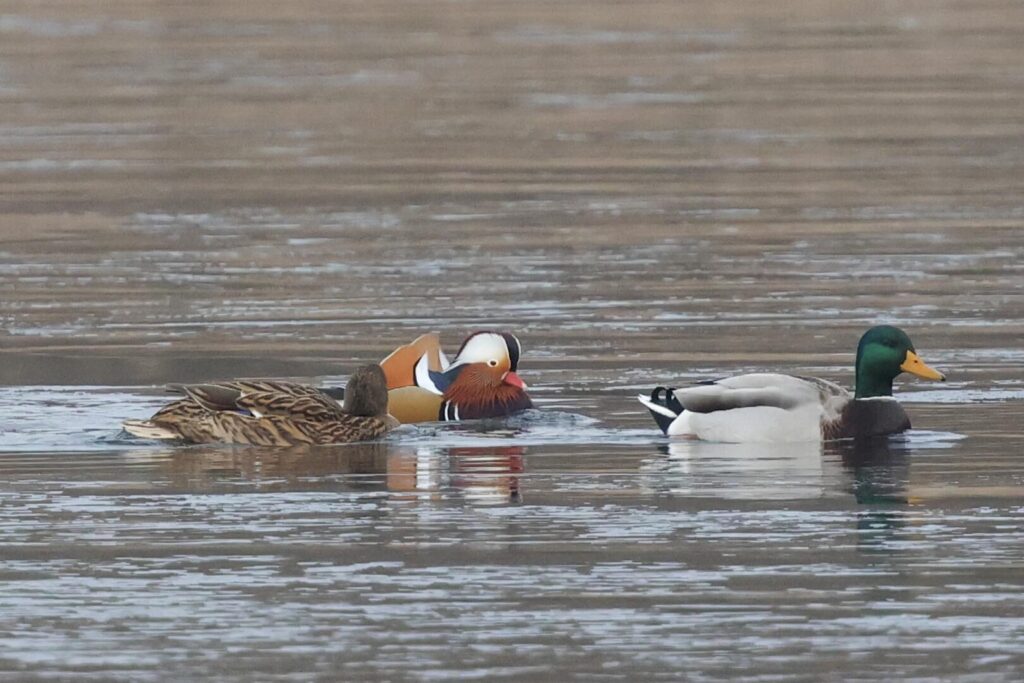
Back in the minibus, we drove on to Filby Broad next. On the way from the car park, we could see that Ormesby Little Broad was largely frozen. A flock of Long-tailed Tits moved quickly through the trees. As we walked out onto the boardwalk across the road, we noticed a drake Mandarin Duck with a group of Mallard on a small patch of open water close to the road. As we appeared, they swam in under the trees.
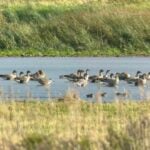
Filby Broad was largely frozen too. All the ducks were squashed in to another area of open water right out in the middle, surrounded by lots and lots of Coot. It was immediately obvious it would be difficult and time consuming to pick out the ones we particularly wanted to see. There were plenty of Tufted Duck and Common Pochard, and quite a few Goldeneye, plus several Great Crested Grebes. On the ice behind, we could see a few Shoveler, Teal and Gadwall. There were gulls too, including several Lesser Black-backed Gulls.
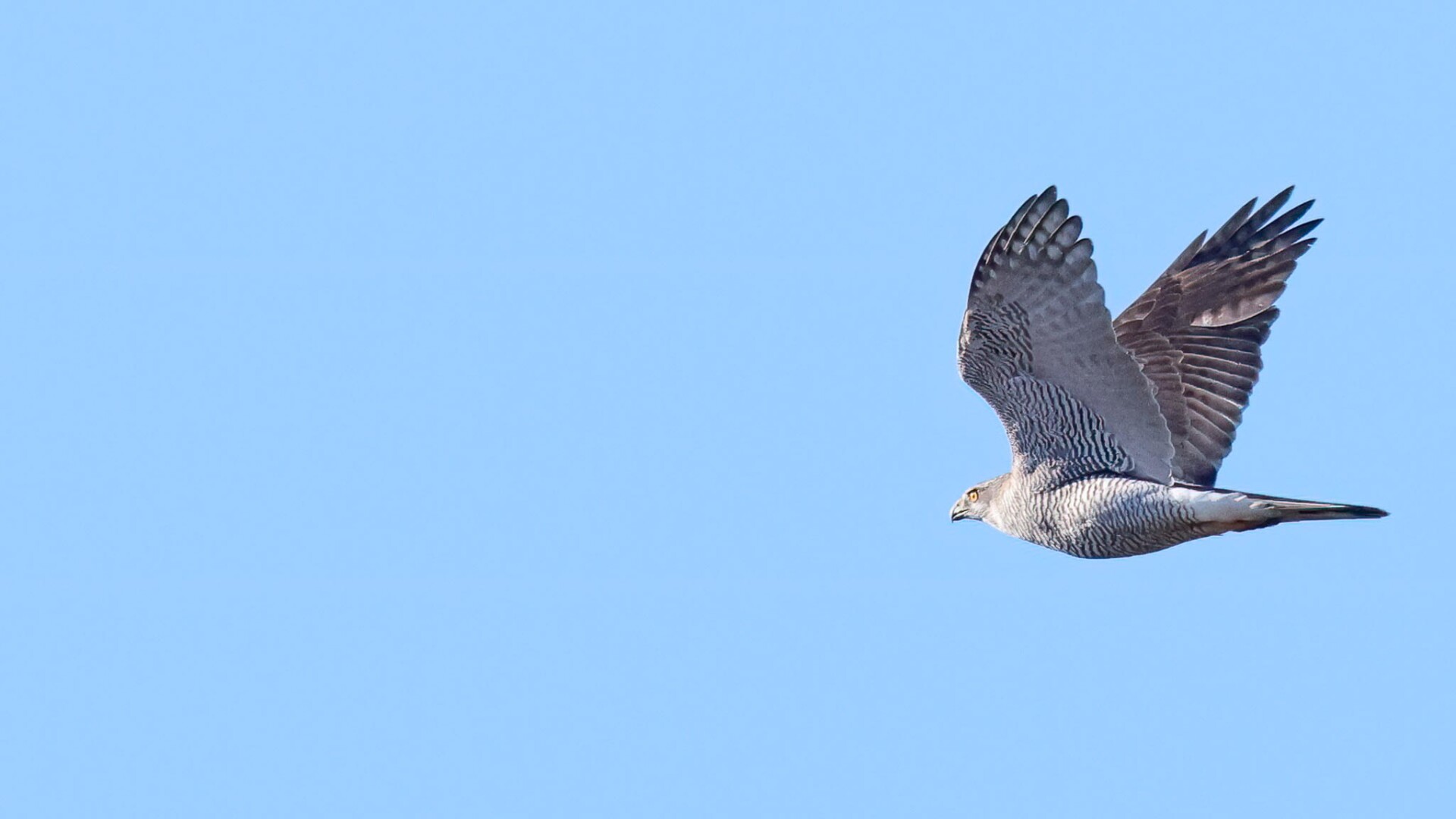
We did manage to find the redhead Smew relatively quickly, diving actively on the edge of the flock. But only a couple of members of the group managed to see it before it disappeared back in to the Coot flock. With only a couple of scopes between us, it was always going to be tricky. The wind was already picking up too and coming in over the frozen water it was decidedly cold. A Sparrowhawk flew across over the ice a couple of times. The Smew eventually came out again but had gone before anyone could see it this time.
We decided to move on before everyone froze. We had a quick walk up to the viewing platform overlooking Ormesby Little Broad. The trees along the path can be good for tits and Siskins, but it was cold and quiet in here today. A Grey Heron flew up from under the alders. A Bittern had flown across over the Broad earlier but didn’t put in a repeat showing for us. A Cormorant landed on the ice and a single Marsh Harrier flew across over the reeds on the far side.
Sticking to the mission to try to do as much as possible before the weather turned, we moved on again. Our next target was Short-eared Owl. We had chanced upon some in the dunes on the coast the other day and wanted to see if we could find them again. The wind had already picked up considerably when we arrived and got out overlooking the sea. We wrapped up in our coats, hats, etc and headed out towards the beach.
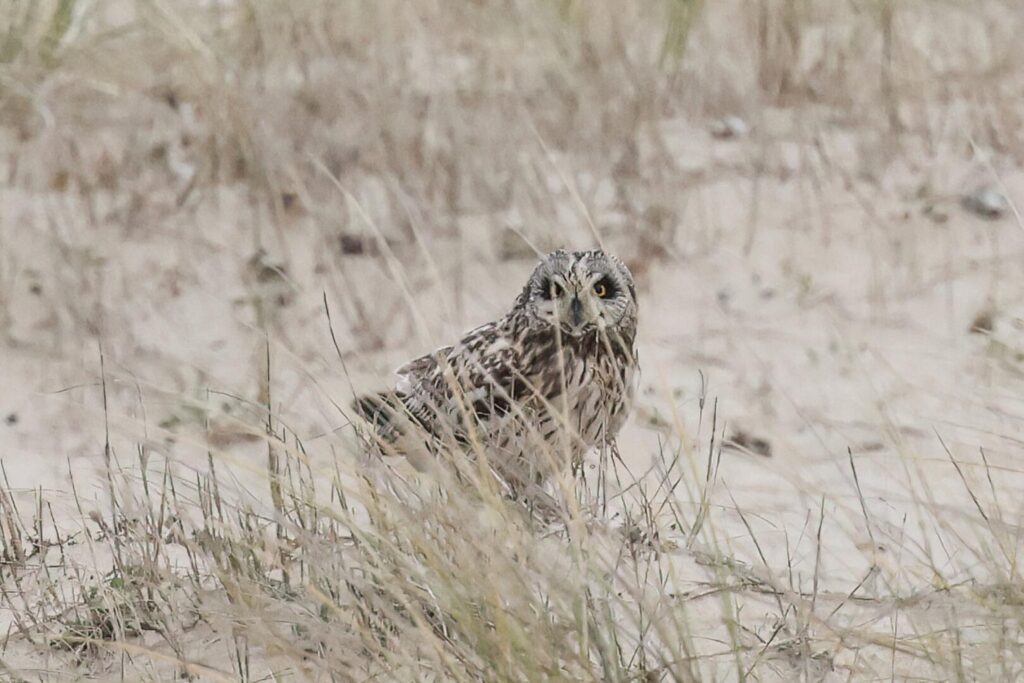
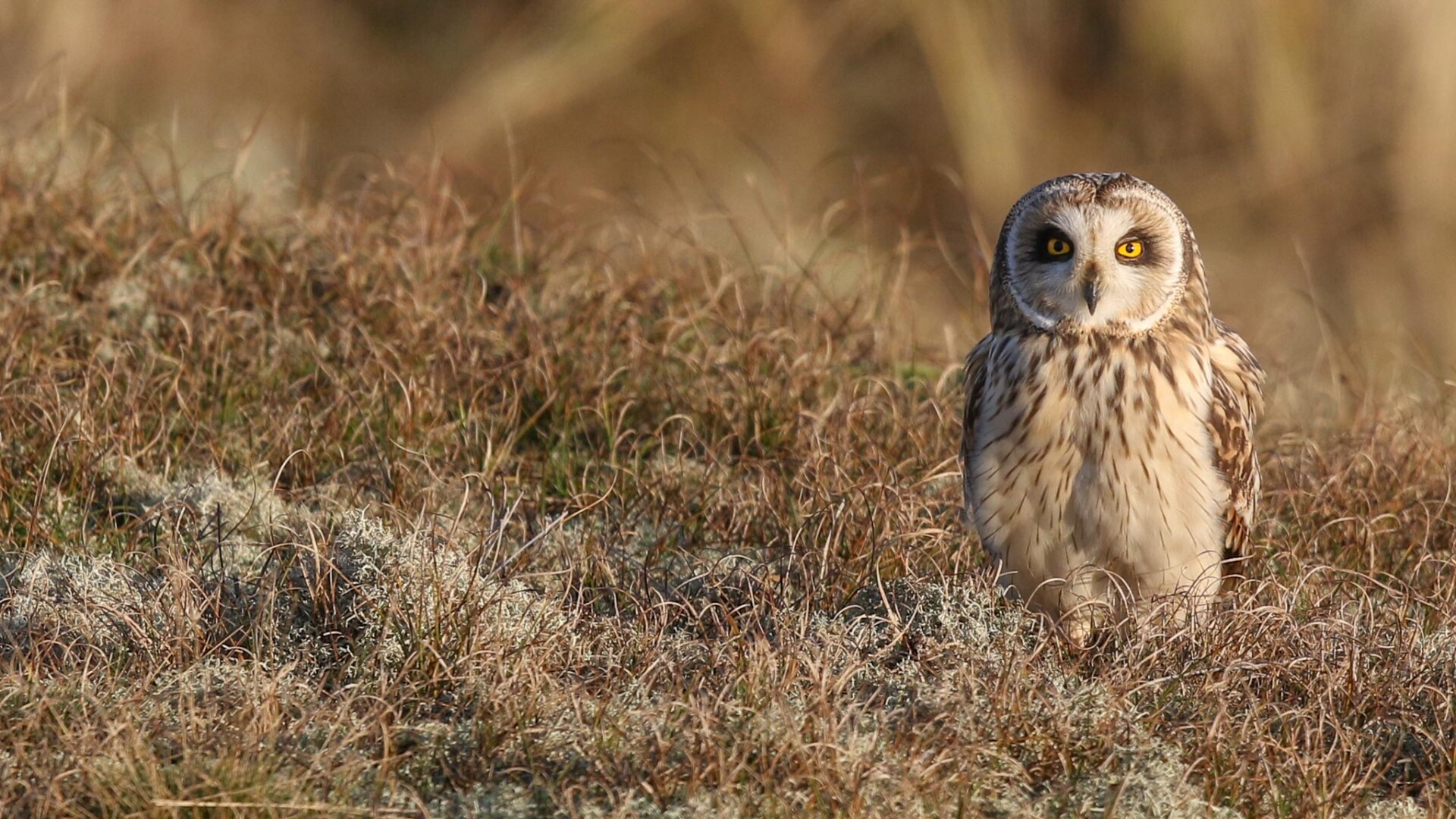
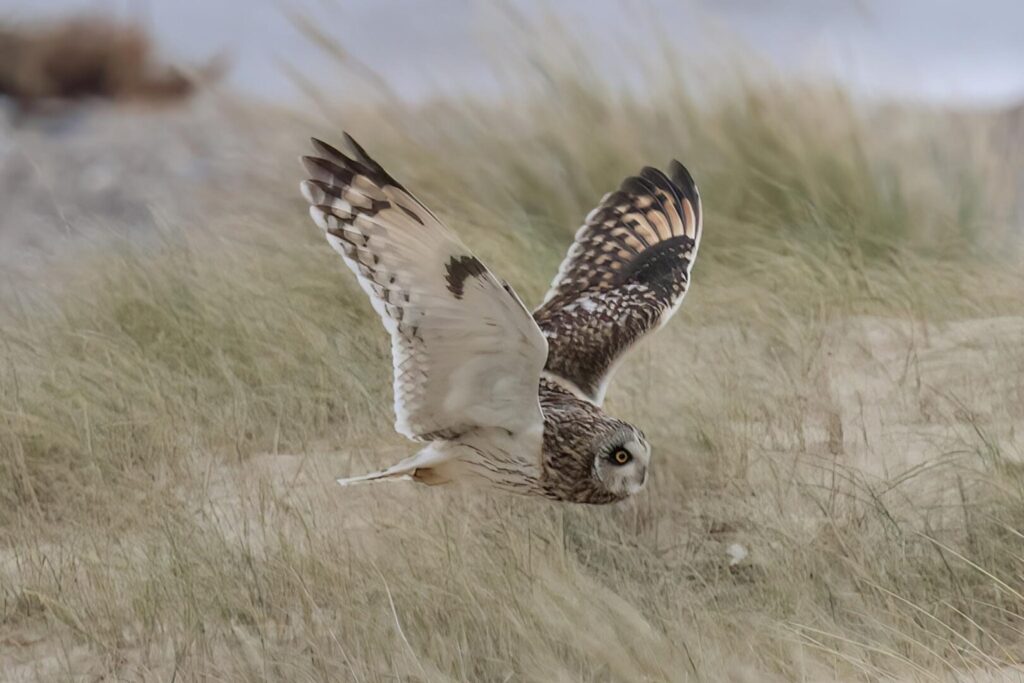
Unsurprisingly, given the time and conditions, there was no sign of any owl activity. As we walked slowly down through the marram grass we scanned carefully ahead of us. The Short-eared Owls were obviously well hunkered down today, out of the wind. Unfortunately, we were almost upon them before we noticed a tiny patch of heat source with the thermal imager. We froze instantly, but one came up out of the grass ahead of us. As it flew off, it brought a couple more up out of the grass too.
The Short-eared Owls flew up and down over the back of the beach beyond and a couple landed briefly in the open between the tufts of grass. We walked on out onto the edge of the beach beyond them and one by one they flew back towards the area we had first seen them. Great birds to watch. They settled back down into the grass and we left them in peace.
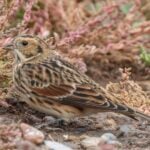
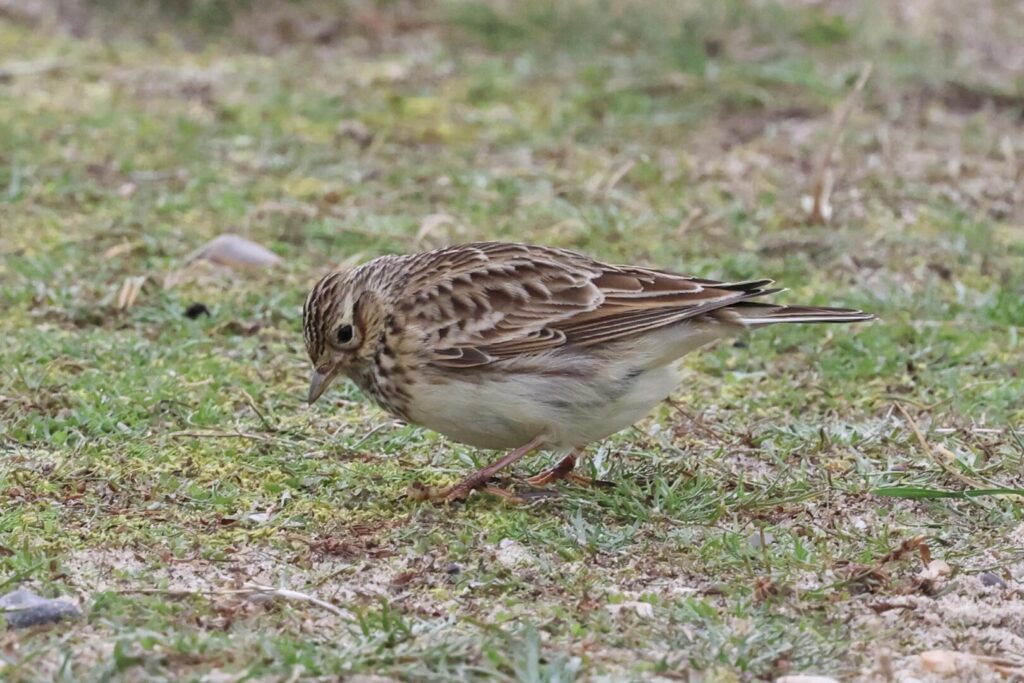
We had a quick look out along the back of the beach but there were no birds here today. The sand was blowing around. As we walked back in over the dunes, we found a Skylark feeding in a grassy hollow, out of the wind.
Great Yarmouth was traditionally one of the best places to see Mediterranean Gulls in winter, before they became established here. We needed to use the facilities and get some fuel, so we drove over there quickly next. Down along the prom, we didn’t even need to get out of the minibus before we picked up a winter adult Mediterranean Gull flying over the car park beside the minibus. We could see its pure white wing tips.
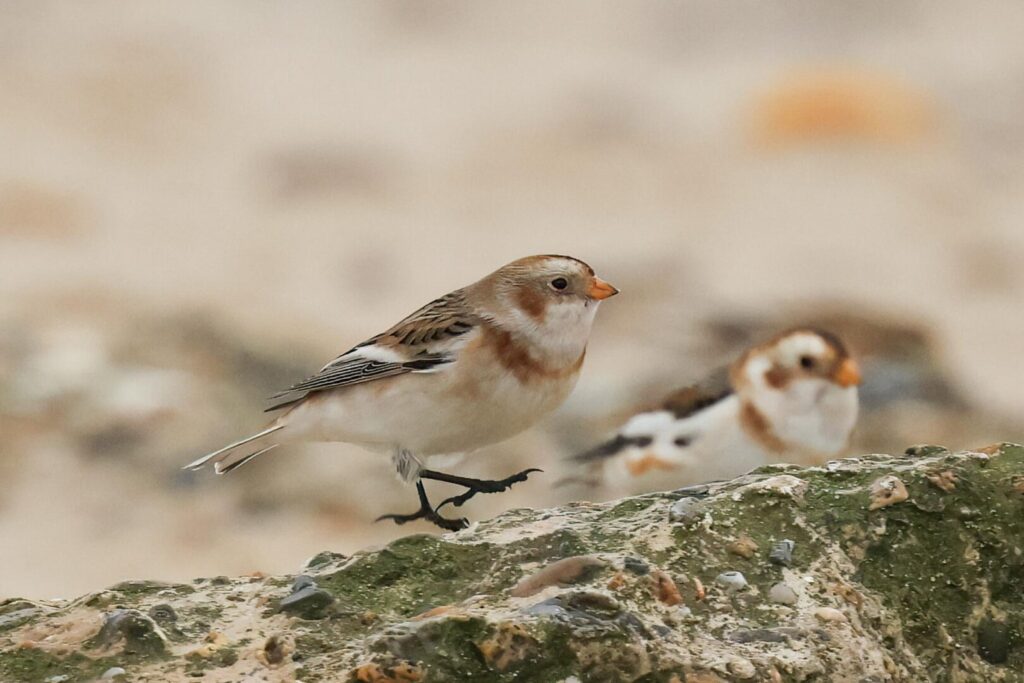
Our next stop was Winterton. It was lunchtime when we arrived in the car park on the edge of the dunes, so we stopped to eat. There was no sign of the Snow Buntings around the car park but it was surprisingly busy here today. After scanning up and down the beach we managed to find them feeding around the concrete blocks. Sandwiches interrupted, we had a look from the top of the cliff in front of the minibus. But before we could get the scope on them they were flushed by two people walking along the beach.
The Snow Buntings seemed to fly off a short distance to the south. So we decided to walk over the road and down onto the beach to see if we could find them again. The access to the beach has washed away once more so we couldn’t get down easily. Scanning from the edge of the dunes we couldn’t see them at first. Then they flew back in from the north and landed around the concrete blocks again. Good views through the scope and we managed to get down onto the sand for those that wanted photos.
There had been a Waxwing found in a roadside hedge at Horsey an hour or so earlier. They have been very scarce this winter, so it would be a nice bird to see. We were heading that way next but it sounded like it had flown off. So when news came through that it had reappeared, we set off.
When we arrived on the Horsey straight, there were a couple of the locals standing beside the road. They explained that it was still around somewhere, but was very mobile, flying up and down the hedge the other side. We drove on and parked in the large layby further up. As we started to walk back, we could see them pointing cameras into the hedge. The Waxwing was there but before we could all get to it, it flew again.
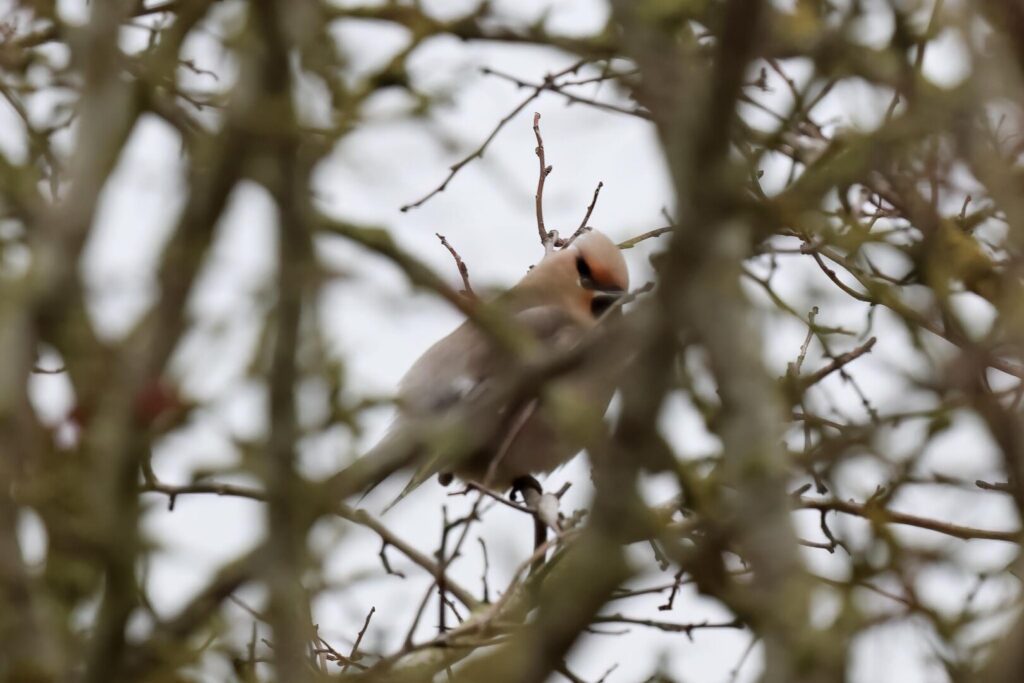
We followed the Waxwing down along the hedge. There were lots of Fieldfares, Redwings and Blackbirds feeding on the hawthorn berries and the Waxwing was loosely associating with them. The thrushes were very flighty though, so when they went, the Waxwing tended to fly too. A little further down, it landed nicely in the hedge in front of us for a minute or so, allowing most of the group to get a good look at it. Then someone walking on ahead of us flushed it and it disappeared off into the field beyond.
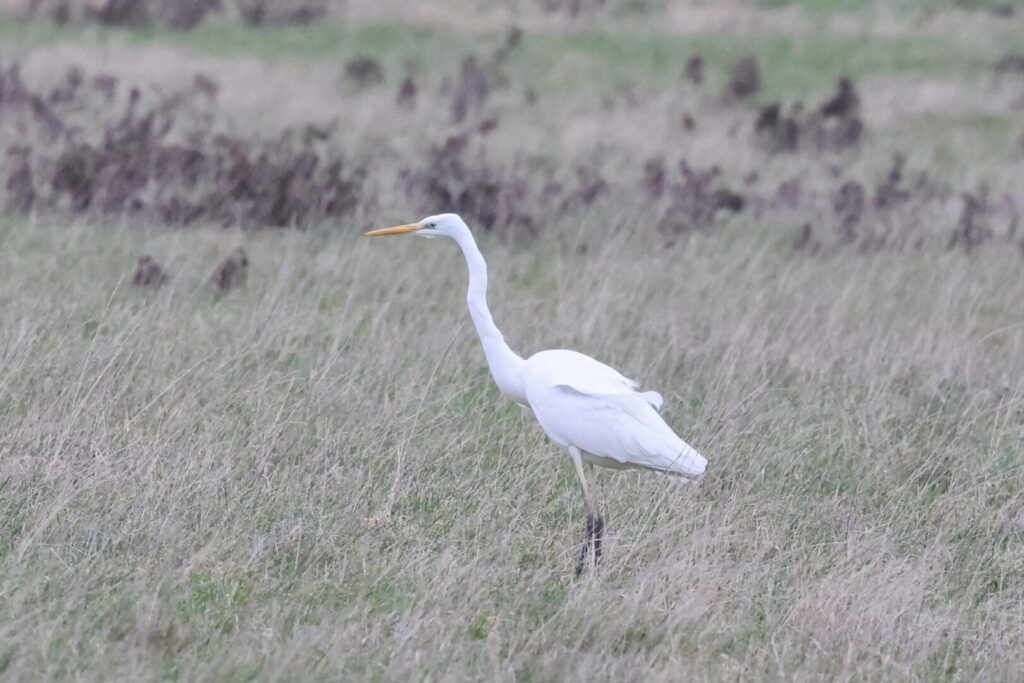
We walked back up to the minibus. We stopped to scan the trees over towards Horsey Mere. The Black-winged Kite had been seen here briefly again on Wednesday 7th but there had been no sign of it since. It is such a huge area, it could be anywhere though. All we could see now were a few Marsh Harriers. A Great White Egret landed in the field in front of us.
There were a couple more stops we wanted to make still so we moved on. After a quick stop to use the facilities by Horsey Mill, we drove on to Sea Palling. There were lots of Pink-footed Geese feeding in one of the fields just beyond the village. As we pulled up, one of the locals was just leaving and confirmed there were still at least a couple of Tundra Bean Geese in with them.
The geese were rather distant, but at least that meant we could get out without any fear of disturbing them. We managed to find some shelter in the lee of the bus station and set up the scope. It didn’t take long to find two Tundra Bean Geese. Even at that range and in the dull light, their legs shone day-glo orange. It helped that at one point, all the Pinkfeet moved out of the way and one of the Tundra Bean Geese was left with no other geese immediately around it. There was a single White-fronted Goose with them too.
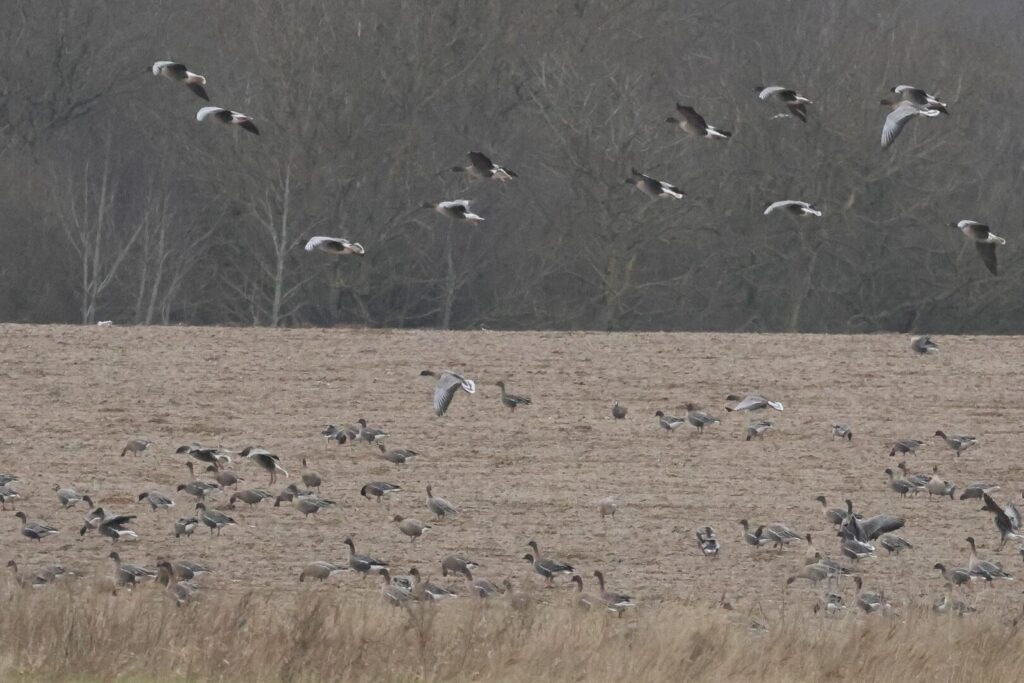
There were already a couple of thousand Pink-footed Geese in the field but then several thousand more flew in from the fields further back. It got harder to pick out the Tundra Beans in the throng now but our mission was already accomplished so we moved on.
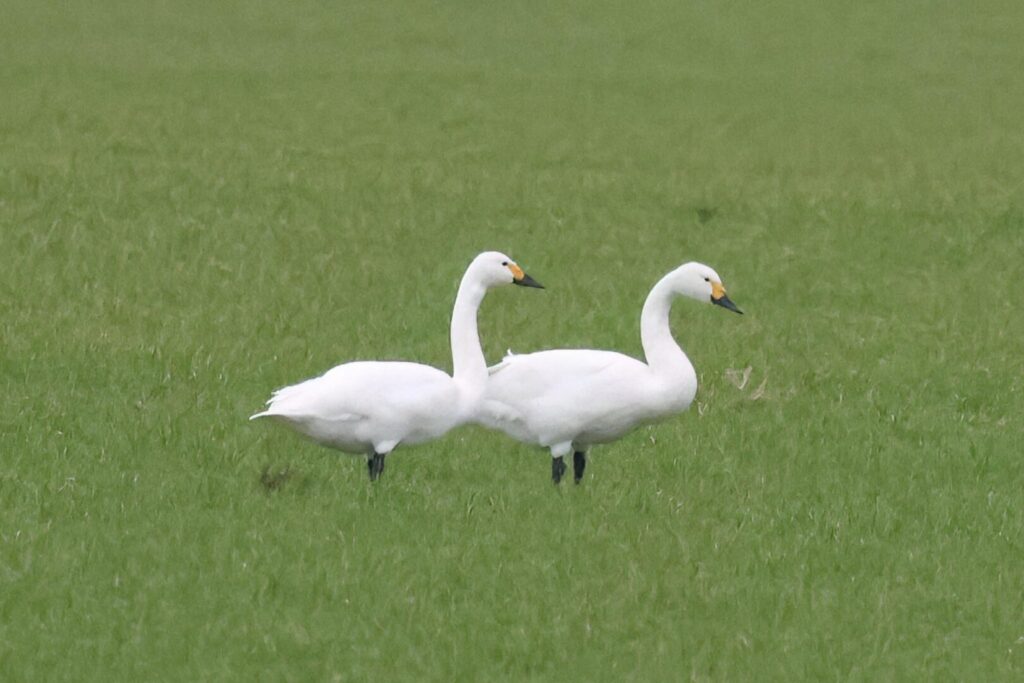
We started to make our way slowly inland. Some of the group had a long drive home this evening so we did not want to be too late back. We called in at Ludham Airfield and found some swans in one of the fields where we had seen them distantly earlier. There didn’t seem to be as many now but still we quickly picked out a couple of Bewick’s Swans next to two Whooper Swans on the edge of the group. The Bewick’s Swans were noticeably smaller. There were more Bewick’s Swans further over, but harder to pick out. Many of the swans were asleep or facing into the wind away from us.
We were just about to set off again when one of the group noticed a message come through on Rare Bird Alert that the Black-winged Kite had just been seen again at Horsey. Frustratingly, it was close to where we had been scanning for it only an hour earlier and just a short walk from where we had stopped to use the facilities at Horsey Mill. Everyone agreed we should head back and at least have a go at seeing it, as it was only about 15 minutes drive from here. Although it was now finally starting to spit with rain and the light was starting to go.
Unfortunately, by the time we got back round to Horsey it had been lost from view. It was picked up again distantly from Stubb Mill at Hickling, the other side of the Mere, but there was no time now to get there and there was no detail on which direction it had gone. It would be a needle in a haystack to find it from here, there were too many options to search, and we had just run out of time unfortunately.
Despite the slightly frustrating end, we had enjoyed a great day in the Broads. Time to head back for tea and cake one last time. Across the four days, there had been some difficult weather but we had still managed to see some great birds. Not least an excellent selection of winter wildfowl and geese, lots of Cranes and some great views of both Short-eared and Long-eared Owls.