Day 4 of a 4-day Spring Migration tour. It had originally been forecast to rain all day today. Once again, when it go to it, we didn’t get any rain at all (much though we need it, after a very dry April). It was cloudy most of the day and not as warm as yesterday, with a maximum of 16-17C. Very pleasant spring birding weather! We spent the day on the North Norfolk coast.
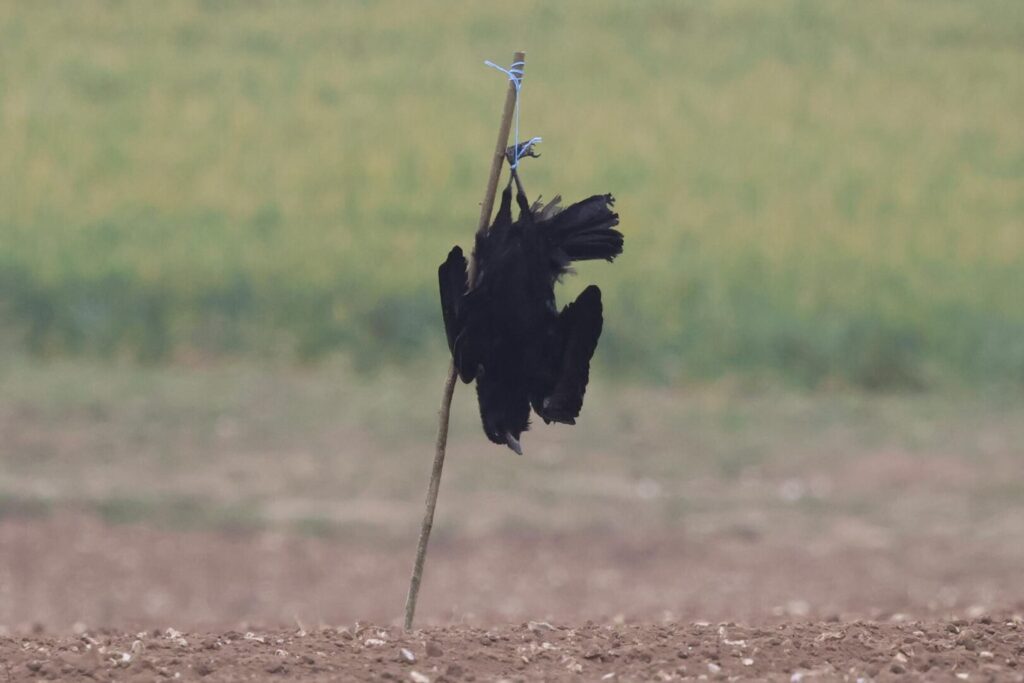
Our destination for the morning was Titchwell but on our way across there we stopped briefly at Choseley. It is always surprising to see crows still strung up on posts in the fields. It is meant as a bird scarer but of course it doesn’t work. A mediaeval practice based on folklore, like dunking witches, but perhaps we shouldn’t be surprised here.
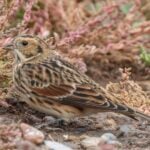
Sadly the farm here is a shadow of its former self regarding wildlife. We were hoping for a Corn Bunting but they seem to have all but disappeared from here now. We did find a couple of Yellowhammers in the hedge and on the wires. Of course, there was no shortage of Red-legged Partridges, released in huge quantities here for shooting. Two Stock Doves flew over and a Chinese Water Deer was just visible walking through the wheat higher up the hill.
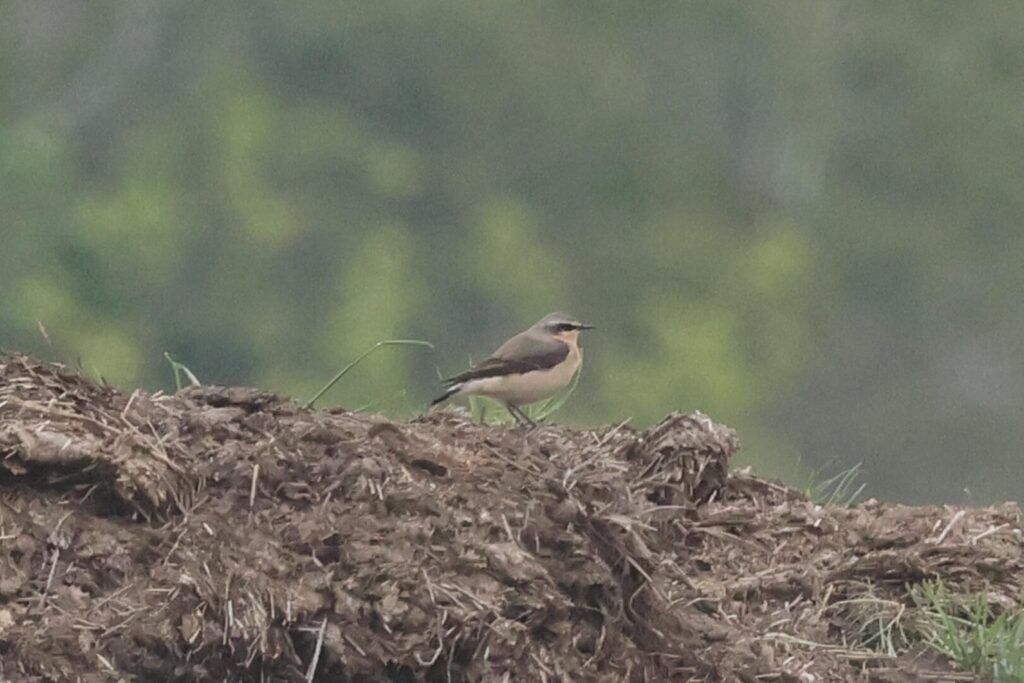
Dropping down to Titchwell, there was a report of a Nightingale in the car park again, but it seemed to have gone quiet. We walked round to scan the paddocks from the gate at the far end. A Wheatear was on the top of the dung heap – master of all it surveyed! A couple of Song Thrushes were feeding a fledged juvenile over by the hedge.
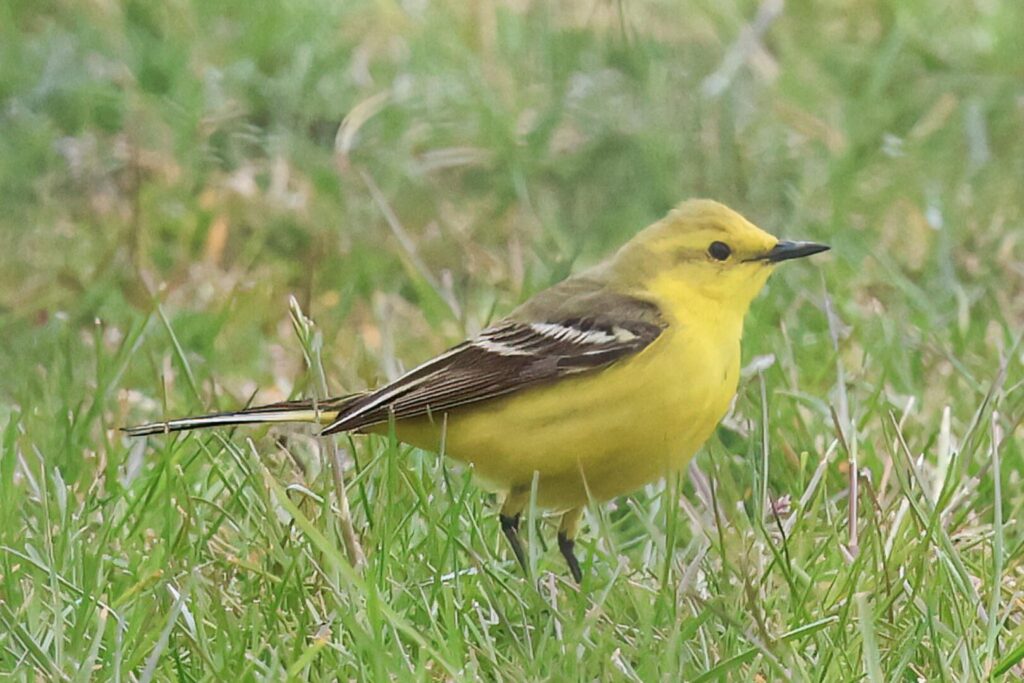
Then two Yellow Wagtails dropped in with the horses. They were very flighty and after a couple of minutes feeding in the grass, then flew up with one of the local Pied Wagtails. They landed briefly on the roof of the barn, then flew off. A nice start and a suggestion there may be some migrants moving still, despite the change in the weather.
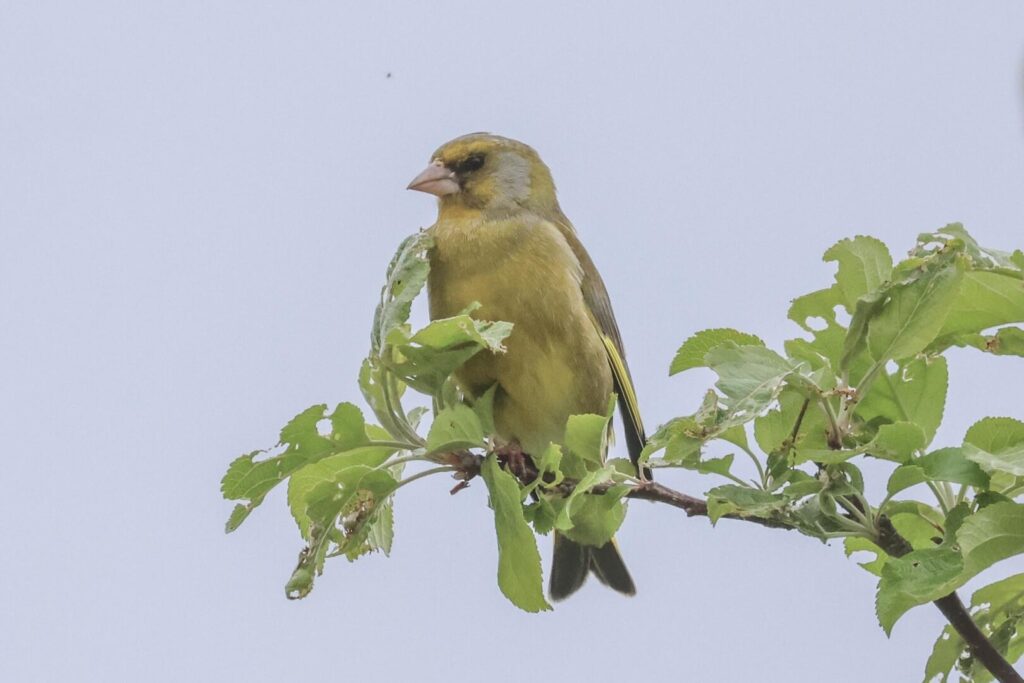
A Greenfinch was singing from the apple tree above the minibus as we finished sorting ourselves out, then we headed out onto the reserve. There were a couple of Blackcaps singing along the path to the Visitor Centre and a Goldcrest flicking around in the ivy.
We stopped to scan the hedge along the edge of the Thornham grazing meadow but couldn’t see anything in there today. There was another Chinese Water Deer making its way down along the edge.
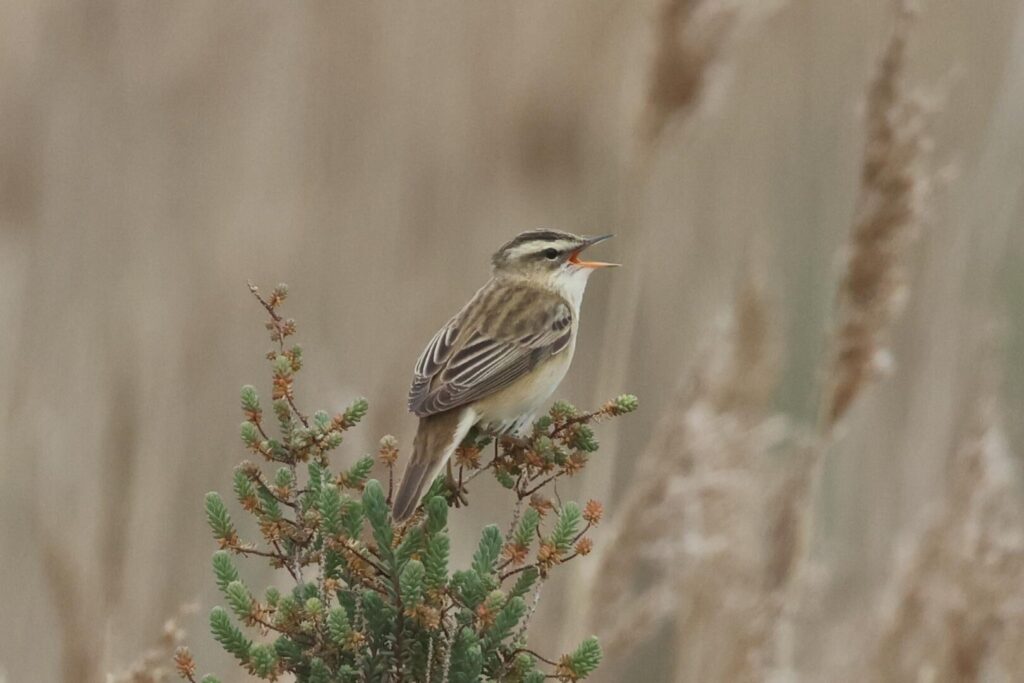
Out of the trees, there were lots of Reed Warblers and Sedge Warblers singing in the reeds either side of the path. One Sedge Warbler perched up very obligingly on the start of the saltmarsh. A Bearded Tit flew over the path ahead of us and disappeared straight down into the reeds the other side.
We could see a couple of Great White Egrets chasing each other round on the Reedbed Pool. One flew off over to the far corner but the other landed again down at the near end. A smart adult in breeding condition, we could see its mostly dark bill and red thighs.
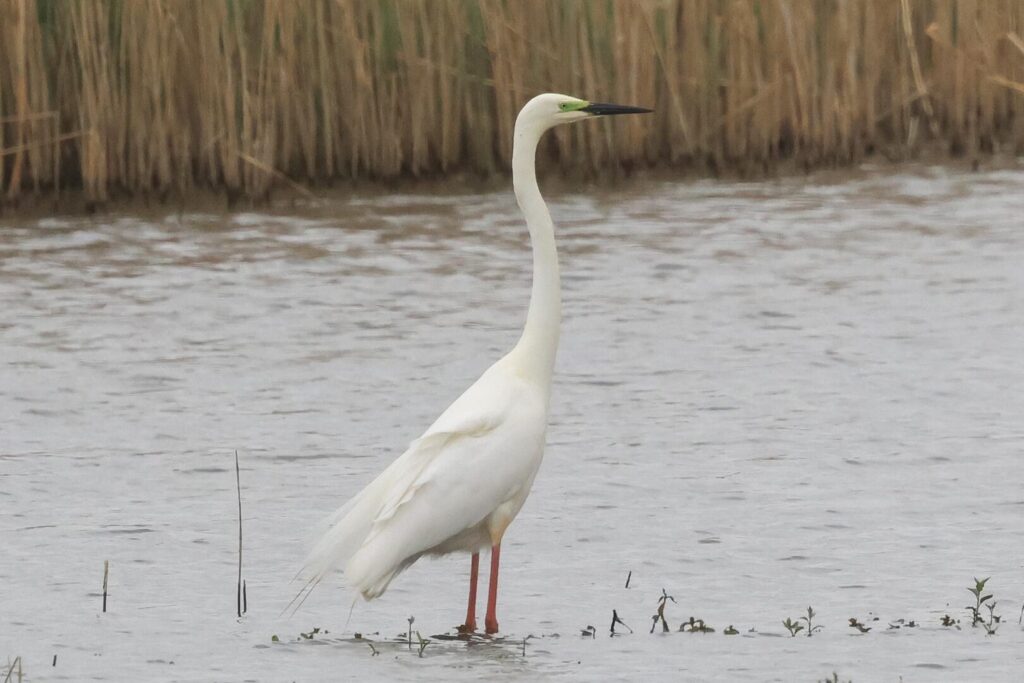
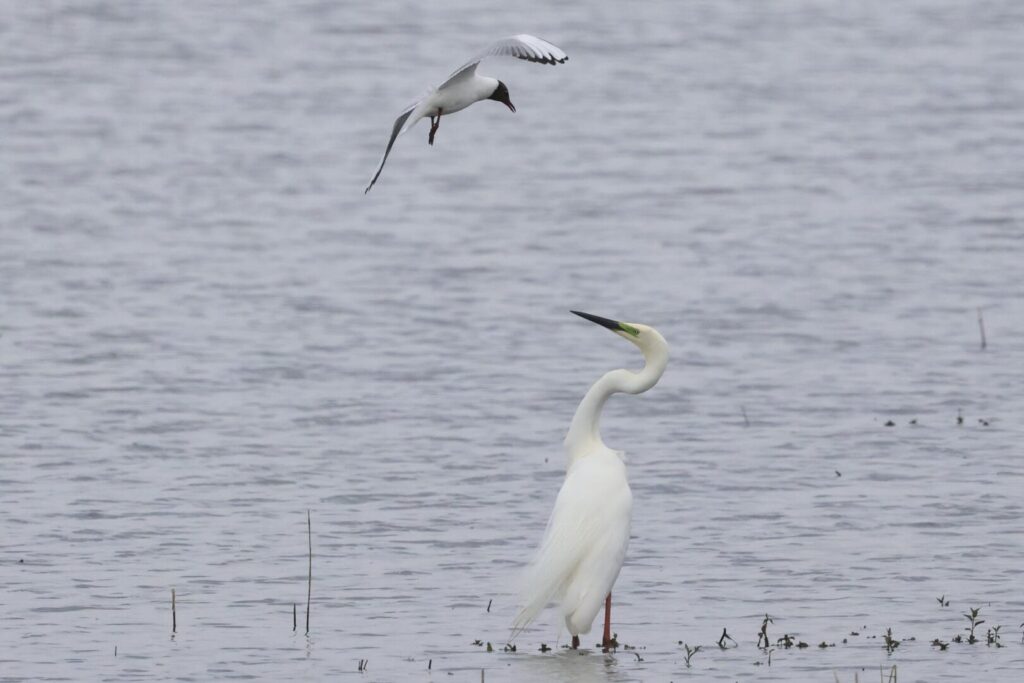
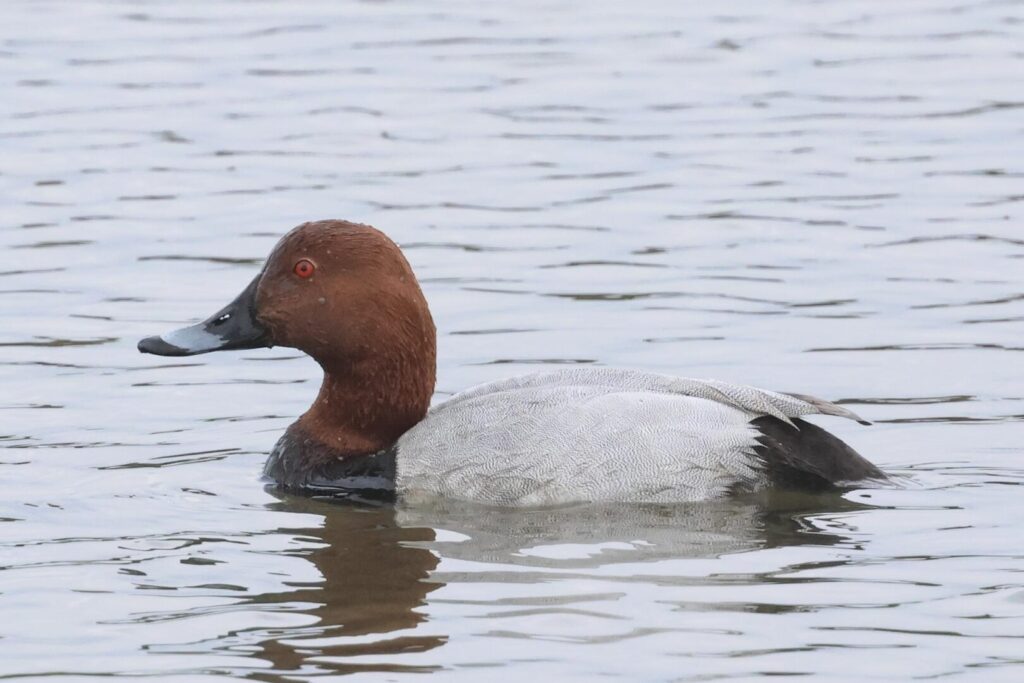
It then started to get mobbed by a couple of the Black-headed Gulls, swooping at it while it just ducked its head out of the way. A third Great White Egret flew over. Otherwise, there were a few Tufted Ducks and a pair of Common Pochard on the Pool.
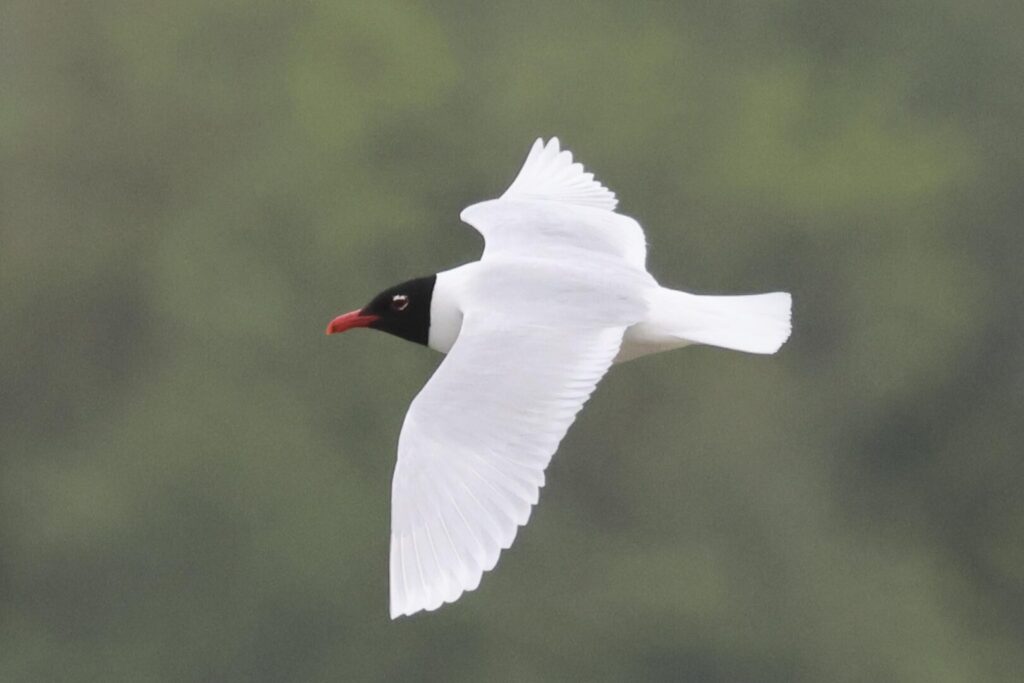
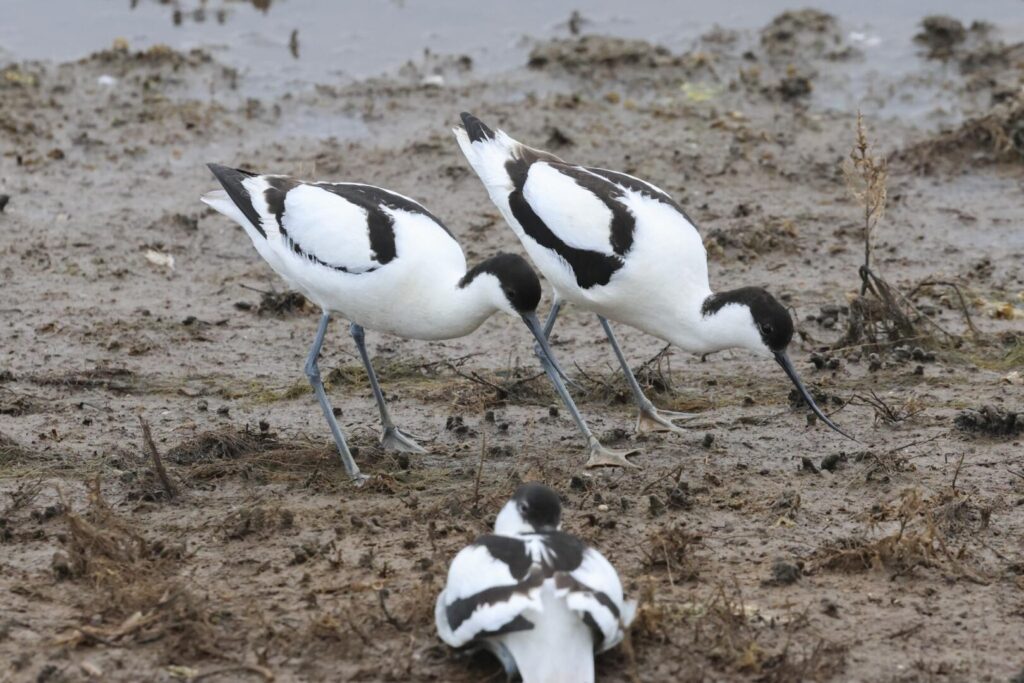
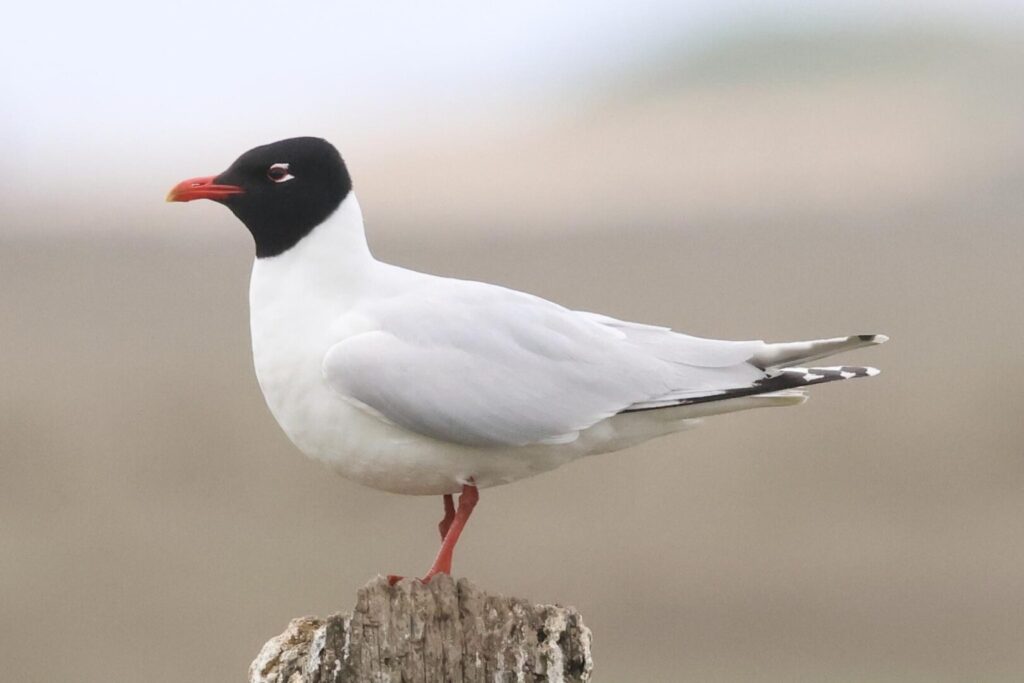
Continuing on to the Freshmarsh, we stood up on the bank to scan. There were lots of Avocets feeding in the water and Black-headed Gulls everywhere. An adult Mediterranean Gull flew round calling and a second summer, with black in its wingtips, did the same before landing on the water. It then proceeded to start chasing the Black-headed Gulls round.
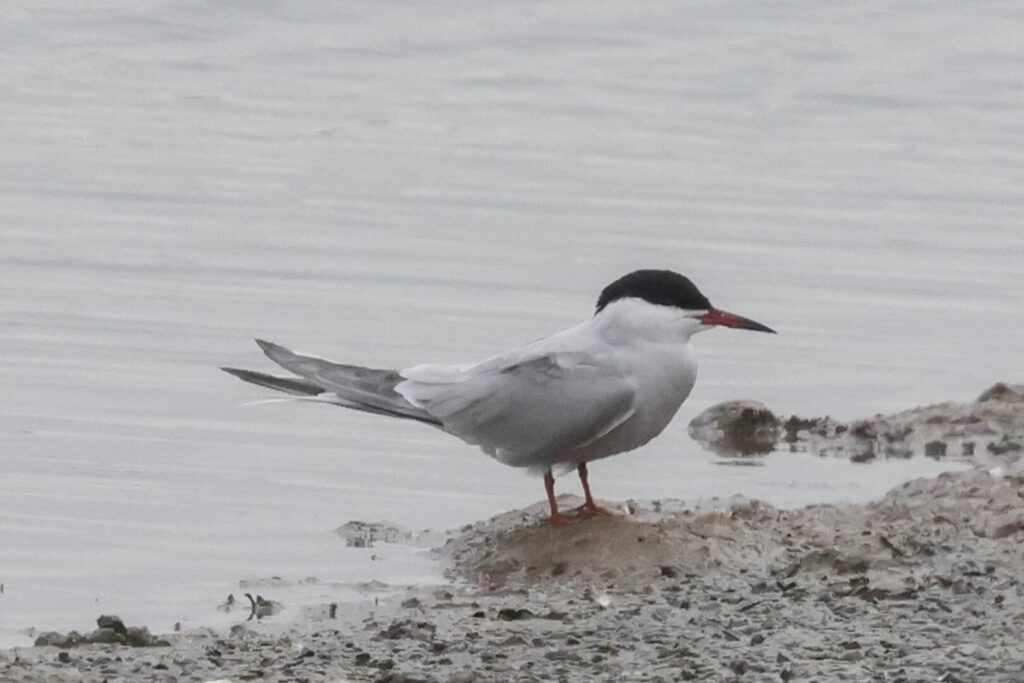
There are quite a few Common Terns in now. A couple of pairs were on the islands and more were flying round over our heads, calling.
We had high hopes that there might be some different waders dropping in today, with the change in the weather. But there were not so many on here – the water level is still high on the first compartment and more has been put on to top up the second recently. We did find at least three Common Sandpipers and a Ringed Plover. Plus a smart male Ruff which we had a closer look at in the scope. A group of six Black-tailed Godwits flew in but circled once and then flew off again.
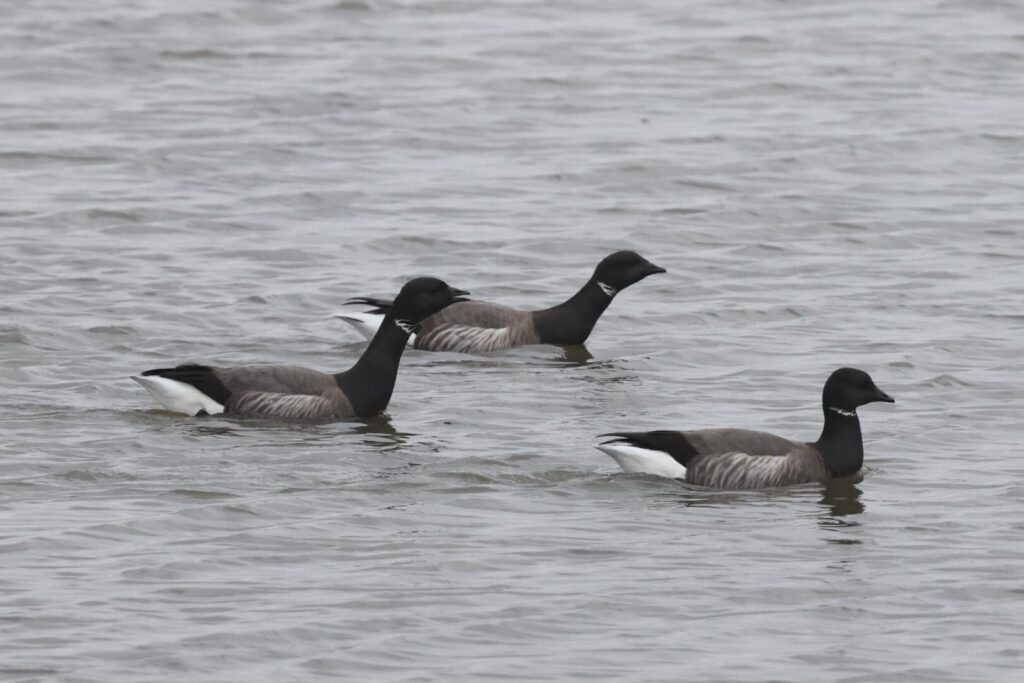
Looking over to the reeds at the far side, we picked up a small group of Bearded Tits working their way through. Nice views in the scopes before they disappeared back in. The Brent Geese commuted in and out of the saltmarsh behind us as usual, a couple almost flying between us at one point.
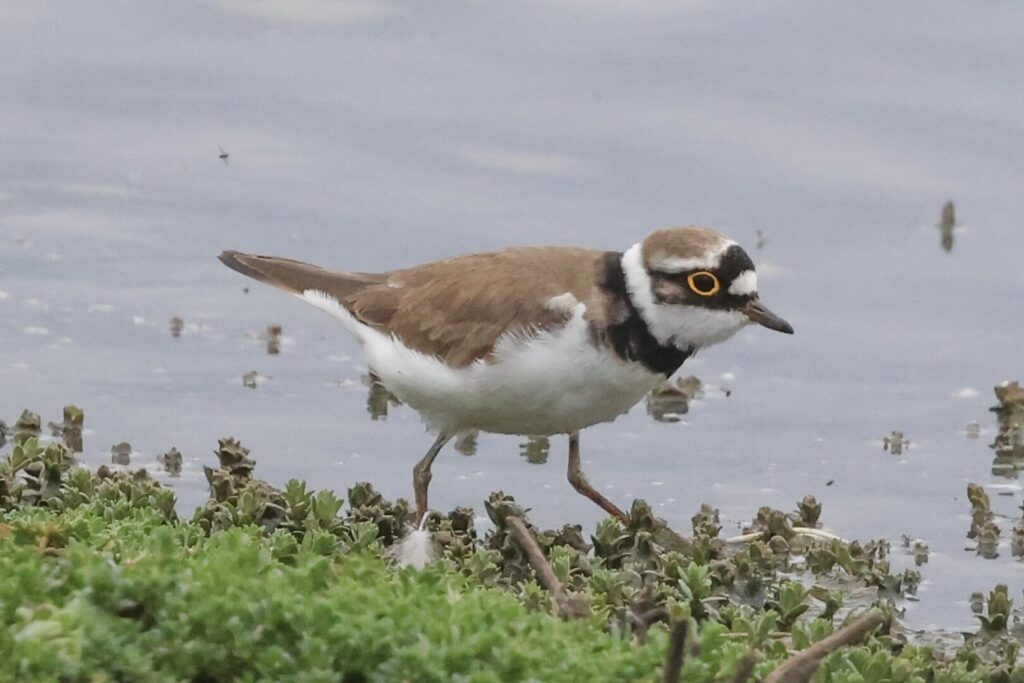
On the next compartment up, there were several Little Ringed Plovers. A Whimbrel dropped in on the edge of the island at the back to bathe and then stood on the grass to preen. There was a bit of darker grey cloud approaching from the south and it almost looked there might be some light rain. We went round to Parrinder Hide just in case.
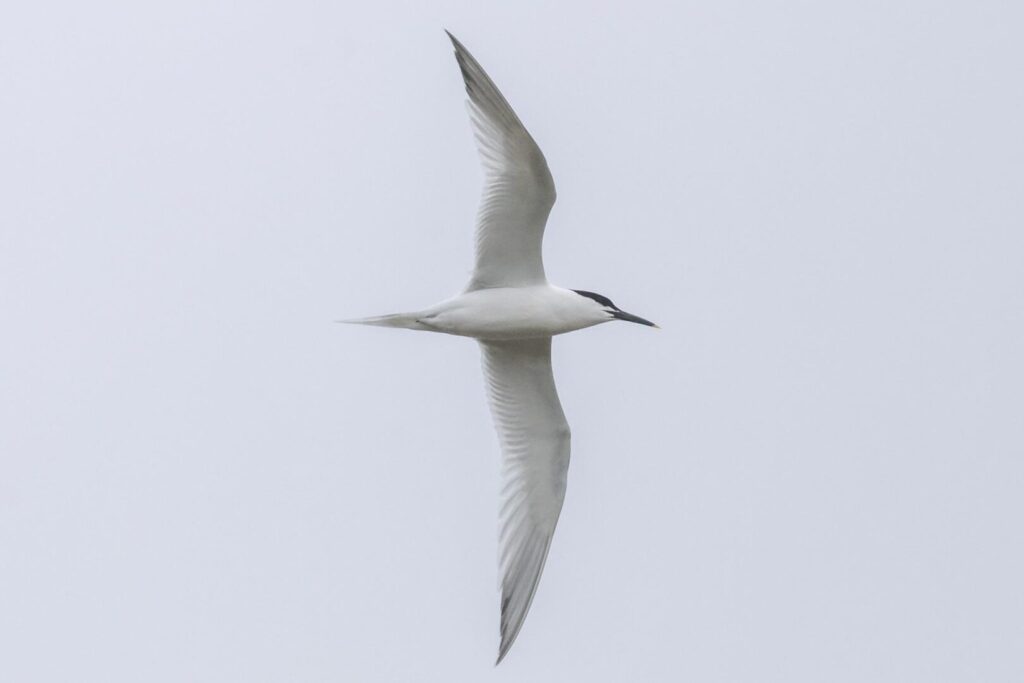
There are lots of Black-headed Gulls on all the islands but the Mediterranean Gulls which had been standing around here recently all seem to have decamped back to Scolt Head. We were hoping for Sandwich Tern too and we heard four calling as they approached. Unfortunately, after doing a couple of circuits over the Freshmarsh they flew back out towards the sea. We would have to make do with flight views.
There were a couple of Ruff out on the back compartment, different coloured males again. One of the Little Ringed Plovers worked its way down along the edge of the bund until it was right in front of the hide at one point. A great view of its golden eye ring close up. A few Linnets and a Meadow Pipit dropped in on the edge of the water.
The clouds passed over without dropping any rain, so we continued on out to the beach. There was nothing on the Volunteer Marsh and not much on the Tidal Pool either today. A couple of Common Pochard were diving just off the bank. We managed to find two Black-tailed Godwits over towards the back. A single Avocet was asleep on its nest on the mud island closest to the path. Several Swallows flew through without stopping, migrants on their way west.
Out at the beach, the tide was slowly going out but the mussel beds were still covered. We could see several Oystercatchers along the shore and eventually managed to find some Sanderling, gathered in a tight huddle roosting on the beach halfway towards Brancaster.
Looking out to sea, a steady stream of Sandwich Terns flew past. A couple of Little Terns were fishing just beyond the breakers too. Out on the water, we managed to find a couple of distant Great Crested Grebes and a single Common Scoter.
From the top of the dunes, we had a quick look at the pools out on the saltmarsh. About the only one with any water held a couple of Greenshanks and a single Grey Plover. The latter was looking particularly dapper, in breeding plumage with its black face and belly.
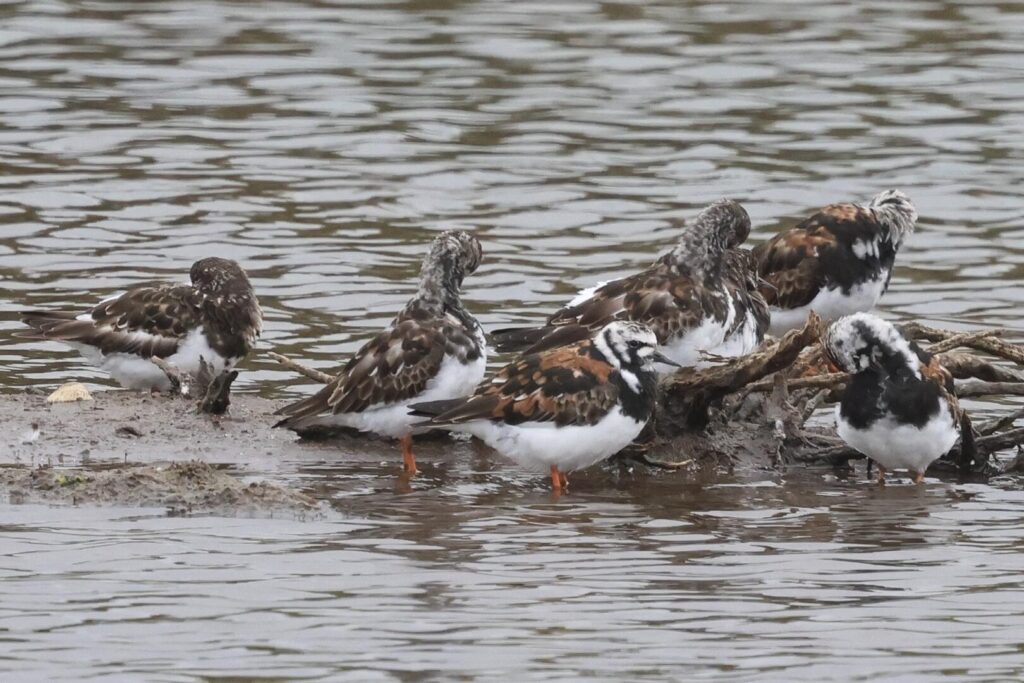
As the tide receded, several of the Oystercatchers flew in and landed on the beach in front of where they would shortly appear. The Sanderling flew back up the beach and then a couple of large flocks of Turnstone flew in and landed too.
It was hard to make out much colour on the Turnstones, against the water behind, but when something spooked all the waders, about half of them flew in straight past us and went down on the islands on the Tidal Pool. Most flew off before we got back, but there were still a couple of small groups left. Now we could see that several of the Turnstones were already moulting into their smart breeding plumage, with chestnut feathers in their upperparts and white faces.
Two more pairs of Avocets were now on the small muddy island where the one was still on its nest. They were calling noisily, bickering with each other. They were picking at the tufts of vegetation like they might be prospecting for a nest site. At one point, one of the pairs tried a small depression in the mud for size. Then one of them had a go at the sitting Avocet and disturbed it of its nest. Not very friendly! It sat down again just a foot or so away but off the nest, leaving its single egg uncovered.
Back at the Freshmarsh, we had a quick scan again to see if anything else had dropped in. We couldn’t see any different waders, but a Sandwich Tern flew in calling and circled round in front of us.
The second summer Mediterranean Gull was now perched on the post out on the saltmarsh behind us, still calling noisily from time to time.
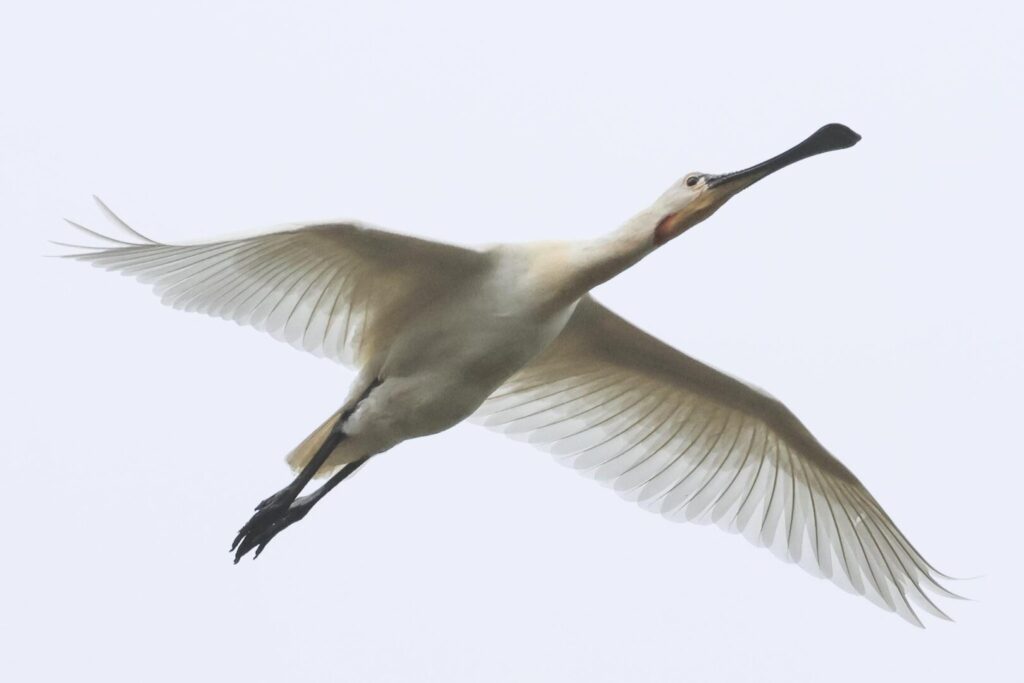
Further on, we stopped to look at a close Curlew on the saltmarsh. Looking up, a Spoonbill flew in over Thornham Marsh towards us. It flew straight over our heads and continued straight on over the reedbed.
The Spring Fair was still on in the picnic area but we were kindly allowed to use the picnic tables again. Several Common Swifts appeared over the trees. A Treecreeper put in a brief appearance too, climbing up a couple of the trunks on one side before flying across and disappearing deeper in.
After lunch, we made our way back to the car park. A couple of the group who had gone on ahead to use the facilities were now standing at the gate at the far end and called us over. Eight more Yellow Wagtails had now dropped in, including several bright males, and now showed very well feeding around the horses in front of us.
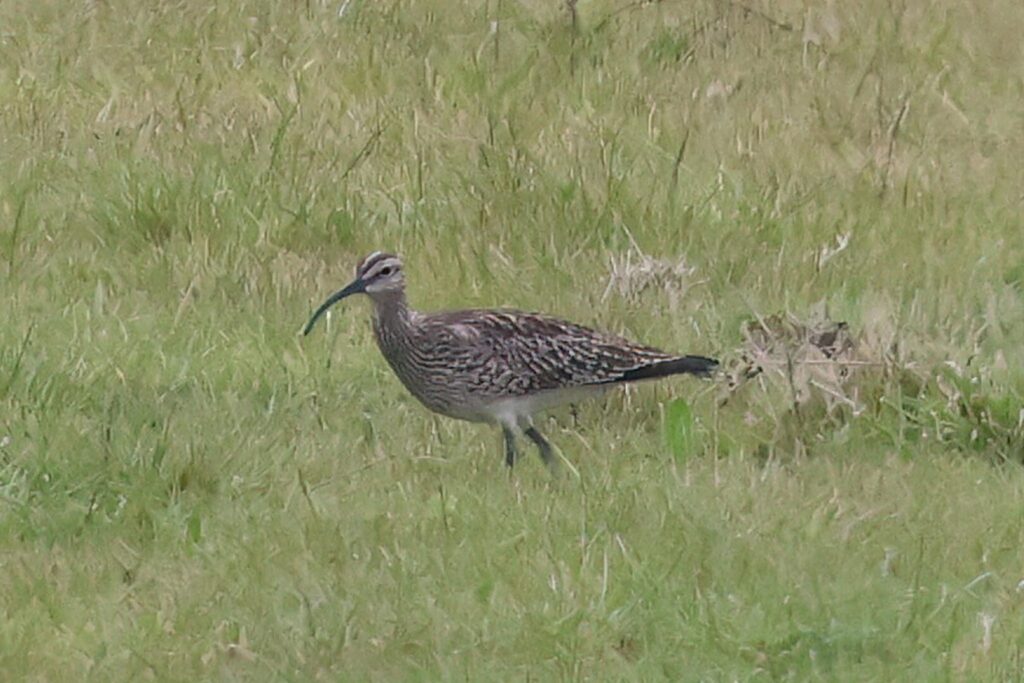
We drove round to Thornham Harbour next. From up on the seawall, we scanned the grazing meadows and immediately found a single Whimbrel feeding out on the grass. There were twenty here a few days ago, so it looked like most had probably moved on. One would do us though – nice views of its humbug-striped head in the scopes.
Walking on, a Cuckoo flew in from the east, over the saltmarsh and off towards Holme, calling briefly as it went on. A second summer Mediterranean Gull flew overhead calling as well. We wondered whether it could be the same bird which had been at Titchwell earlier, following us! There was a steady stream of Swallows flying through here too – nice to see some migration underway today.
There were just some Mallard and ducklings on the first grazing marsh pool and a Redshank on the second. We stopped and scanned the saltmarsh from the bench on the corner and could see several more Grey Plover in various stages of moult to breeding plumage. A couple of Turnstones were down in the harbour channel too. A Whimbrel called and flew past and we picked up a Curlew out on the saltmarsh.
We were hoping there might have been some different waders dropping in on the flood on the grazing meadow but instead wader numbers appeared to have dropped. There were still four female Ruff but no sign of any Snipe today. A single Wheatear was out on the grass and another male Yellow Wagtail dropped in briefly before flying off west. From the different angle, we could now see a Spoonbill feeding out on the harbour channel.
Frustratingly, we now got a message to say that the Wryneck had reappeared at Cley. They had found where it was hiding, on the edge of the field on the other side of the road. Unfortunately, we didn’t have a lot of time now and with a long drive home, people wanted to get back in good time.
On our way back east, we stopped off for a quick look at North Point. The pools here are getting very overgrown now and it is hard to see round the edges. The water levels were surprisingly high too, given how little rain there has been and how much everywhere else has dried out.
There were lots of Avocets on here but they looked like they might be trying to nest in the cultivated field in front of the car park. A pair of Oystercatchers and a couple of pairs of Lapwings were out here too.
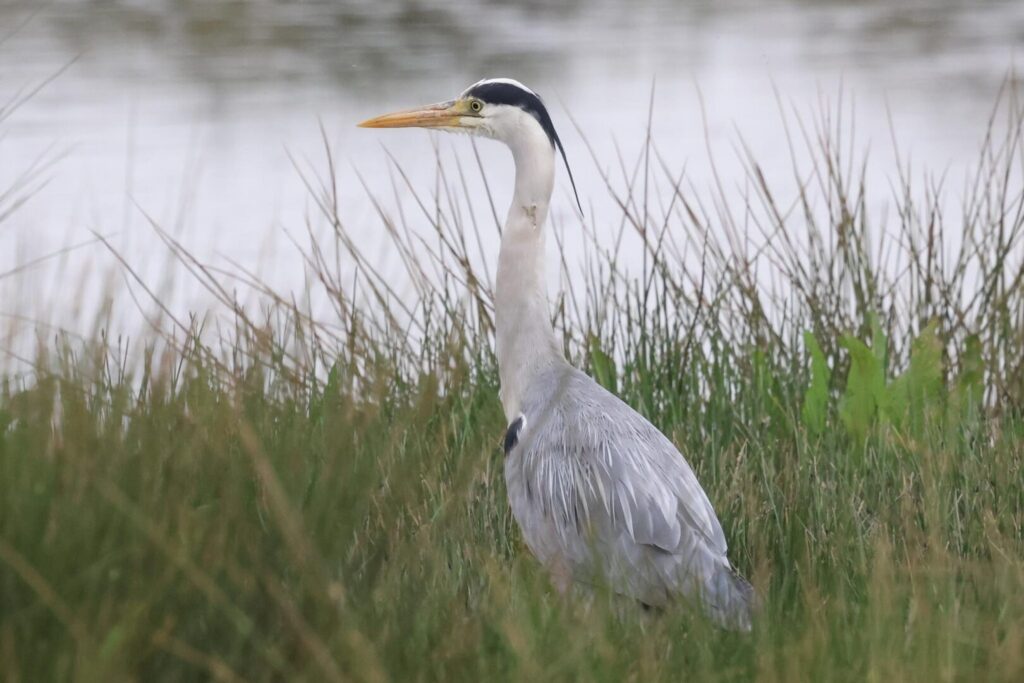
Walking down the path, a Grey Heron was standing in the rushes. We couldn’t see anything on the eastern pool, but out on the central one we found a single Greenshank. While we were watching it, a Common Snipe crept out of the grass.
Then we had to call it a day as we needed to drop one member of the group in Wells, to catch the bus. We were just in time, as it pulled in as we arrived. Then it was back to Hindolveston. Maybe time for one last piece of cake and a cup of tea for anyone who wasn’t in a rush to get away!
It had been a very enjoyable four days of spring migration. A great and varied list of birds and some special moments too.