Day 2 of a 4-day Winter Wildfowl, Cranes & Owls tour. Storm Goretti was hitting us today. The forecast was for heavy rain all day, with high winds gusting to 40mph. We even had a yellow weather warning from the Met Office. Once again, it didn’t turn out quite as bad as it was made out to be. Although it was wet and windy all day, the rain came and went and was often light. And it didn’t stop us getting out and finding some great birds.
Given the forecast, we set off a little later than normal this morning. A couple of Greenfinches landed in the trees by White House Farm as we loaded up the minibus. The House Sparrows were calling in the hedge. We would normally head for one of the reserves and get in the hides on a day like this, but the scrapes are mostly frozen at the moment. Not much fun sitting in a hide looking at empty ice! So we would have to find some birds elsewhere today.
The Black-bellied Dipper was first found at Bintree Mill on 5th December but then not seen again until 18th. The very intermittent sightings have continued since, and it had not been reported now since 5th January. We nearly didn’t go, but it is not far from our base in Hindolveston. We thought we could have a quick look from the minibus and not have to venture far in the conditions.
It was raining as we drove along the small road towards the Mill. From the warmth of the minibus, we stopped and scanned the stream before the Mill which the Dipper favours. Looking both sides of the bridge, upstream and downstream, we couldn’t see anything. Further down, there was nothing on the mill pond either. While the group remained in the bus, we had quick a look at the edges of the mill race under the mill itself. Nothing there either.
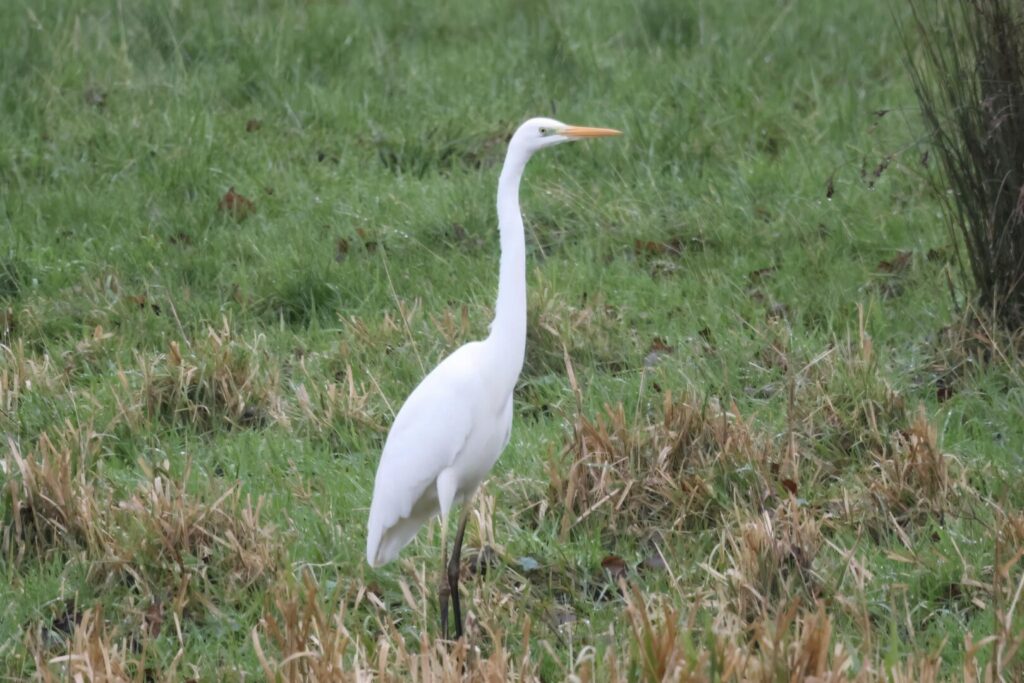
Back in the minibus, we turned round. A Great White Egret flew up out of the fields beyond and landed in a reedy channel behind the mill pond. Good views now from the bus. A Kingfisher flew in and landed on a bush on the far side of the mill pond. Then a dogwalker walked past along the road from behind us and the birds flushed. The Great White Egret flew off along the river ahead of us.
As we drove back towards the bridge, we decided to get out and have another quick look along the stream. There was no sign of anything downstream, and we couldn’t see anything under the bridge that side. We walked back up and onto the bridge, and now the Black-bellied Dipper flew out the other side calling. It had been sheltering from the rain under the bridge. It landed on the side of the stream, so we hurried back to the minibus and signalled for everyone to get out.
Thankfully the Black-bellied Dipper remained where it was for a while. We all had a good look at it, admiring its black belly, before it flew a bit further back. Now it walked into the water and started feeding in the shallows. Through the scope, we could see it diving under the water, swimming against the flow with its wings.
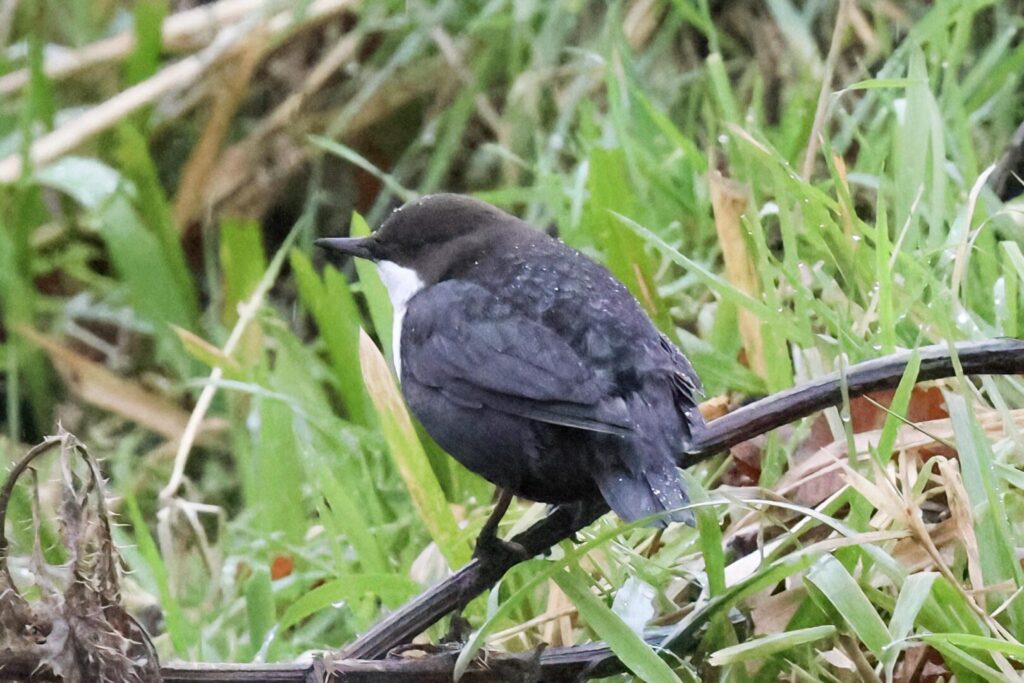
Black-bellied Dipper is one of continental races of ‘our’ Chestnut-bellied Dipper. Northern Scandinavian birds migrate south for winter, and occasionally birds come across the North Sea to the UK. Currently this is the only one which has been found in the whole country this winter. We watched it for a while, then decided to move on. A great start to the day.
The Eastern Black Redstart has been at Sheringham since at least Christmas Eve. It was first found in the ornamental gardens on the clifftop. For the last few days, it has mostly been feeding in gardens along the first street back from the coast. We figured it should be a bit sheltered from the worst of the wind here, so we decided to go and have a look for that next.
As we drove up along St Nicholas Place we could immediately see a small shape on the grass verge. We pulled up on the side of the road and a quick look through the windscreen confirmed it was indeed the Eastern Black Redstart. All a bit too easy!
The Eastern Black Redstart was looking a bit damp but seemed settled, as we watched it from the minibus. It was still finding one or two mealworms which had been left for it by visiting photographers. It has been very confiding, so we decided to brave the weather and get out for a closer look. But before everyone could disembark something spooked it and flew up over the hedge behind. After a while one of the group glimpsed it briefly in the bushes on the edge of the grass. It was not showing any sign of coming out though.
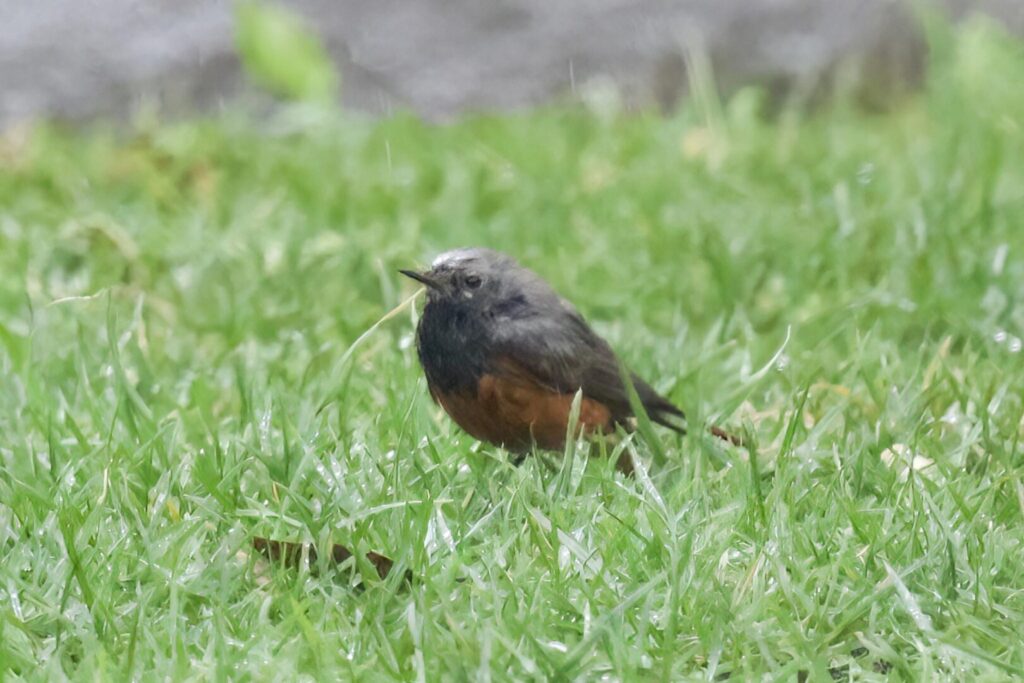
It started to rain, so we retreated back into minibus. We swapped seats, so those who had been in the back could get a better view. A Robin came out onto the verge and promptly chased off the Eastern Black Redstart when it followed. Thankfully the Redstart then flew up onto the top of the fence and then the hedge, where we could all get a good look.
Another successful stop, we decided to move on again. As we drove back west along the coast road, we made a quick stop at Salthouse. There had been a drake Pintail intermittently at the duck pond but there was no of it sign now. Just lots of Mallard and Moorhens. There didn’t seem to be anything on the pools further back either, just gulls, although at least the marshes seemed to have thawed out.
We continued on to Cley, and stopped at the Visitor Centre for a break and a chance for a hot drink. Scanning the scrapes from the warmth of the centre, the worst of the ice looked to have melted but still not many birds had returned yet. There were a few Teal, Shoveler and Shelduck on Pat’s Pool. Two or three Marsh Harriers seemed to be enjoying the wind over the reeds. There was very little else on the sightings board though, so we decided not to go out to the hides.
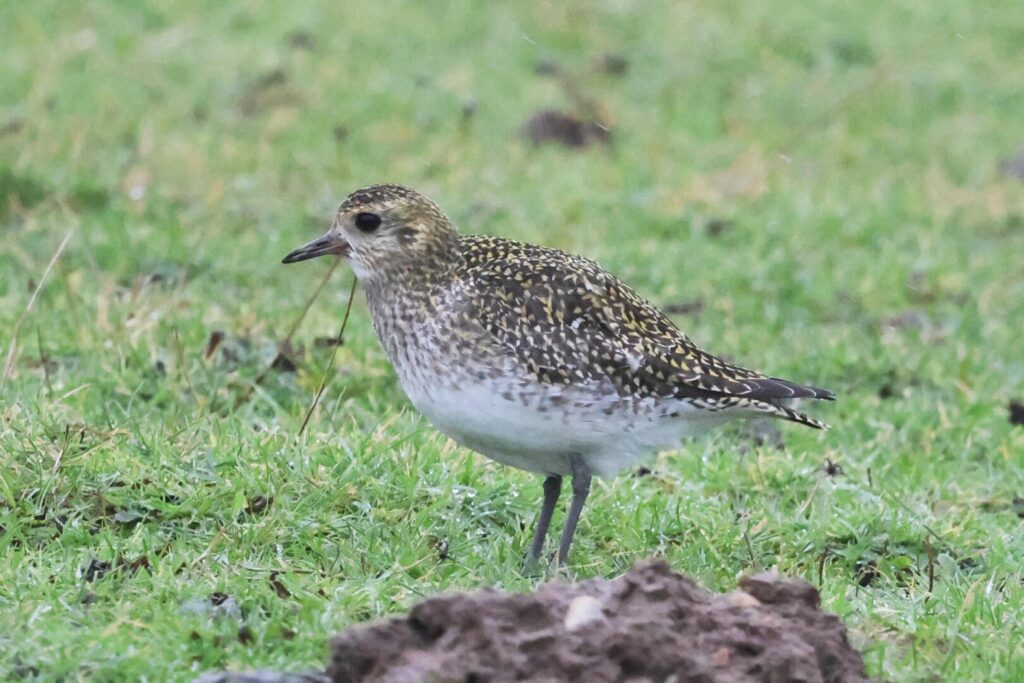
After we had warmed up, we got back into the minibus. Driving down along Beach Road, it was very wet after all the rain but we managed to get through. There were lots of waders in the Eye Field so we stopped to look. ‘As well as several Golden Plover, which we had hoped to find here, there were also three Grey Plover. Great close views, using the minibus as a mobile hide.
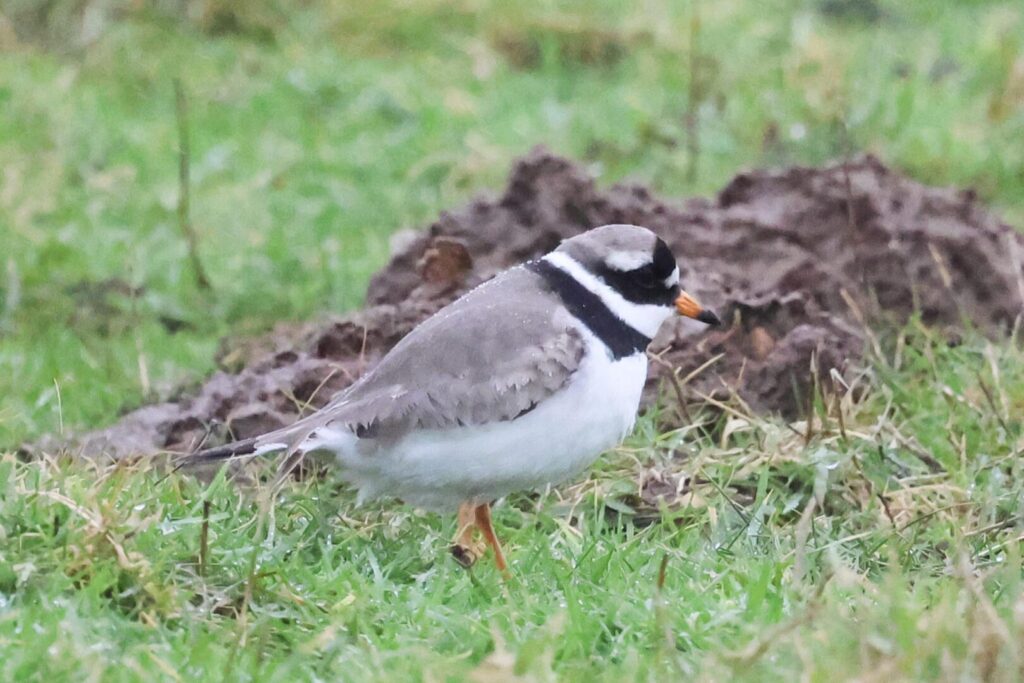
We counted at least 22 Ringed Plover, probably pushed out of the harbour by the high tide and it was too rough to roost out on the beach today. There were also a Common Snipe, a Dunlin and a Turnstone. Further back, we could see about 200 Brent Geese. Several Meadow Pipits flew round and landed in the grass and there were lots of Rooks too. A single Lapwing was on the West Bank, the other side.
Continuing on into the car park and the rain seemed to ease a touch. The sky to the north, over the sea, looked a little less threatening and brighter too. There had been a Snow Bunting on the beach over towards North Scrape recently but we were not sure it would be there still in this weather. We were also not sure anyone would fancy walking out in the weather today. But several people were keen to get out and we had mostly been sitting in the minibus this morning.
Out of the minibus, it was not even as bad as it looked. Those that wanted to wrapped up warm and we set off over the shingle. The sea was churning, impressive on days like this, and the wind was bracing. When we got out to the grass on the top of the beach, a Stonechat flicked out of the vegetation ahead of us. Further on, a couple of Skylarks came up in front of us and landed a bit further back.
As we walked on, we caught a flash of white as something disappeared behind the tufts of vegetation on the more open shingle beyond. Then the Snow Bunting flew out flashing its white wings. It was rather mobile, and flew again, this time round past us. It landed again behind. As we walked back, it flew again, this time out to the beach. We could see it feeding on the high tide line now. Then it flew back towards where we had first found it.
Success. Back to the minibus, and we hadn’t even really got wet! We returned to the Visitor Centre and they very kindly let us eat inside today. It was not very pleasant out in the picnic area. It also meant we could get hot drinks from the cafe, and a cheese scone was appreciated too.
We had seen Pink-footed Geese dropping down inland yesterday afternoon, so we decided to drive round and see if we could find where they were feeding. We drove up round through Wiveton and along the minor roads beyond. We kept stopping to scan from gateways and quickly found an impressive flock of Brent Geese feeding in a field of winter wheat.
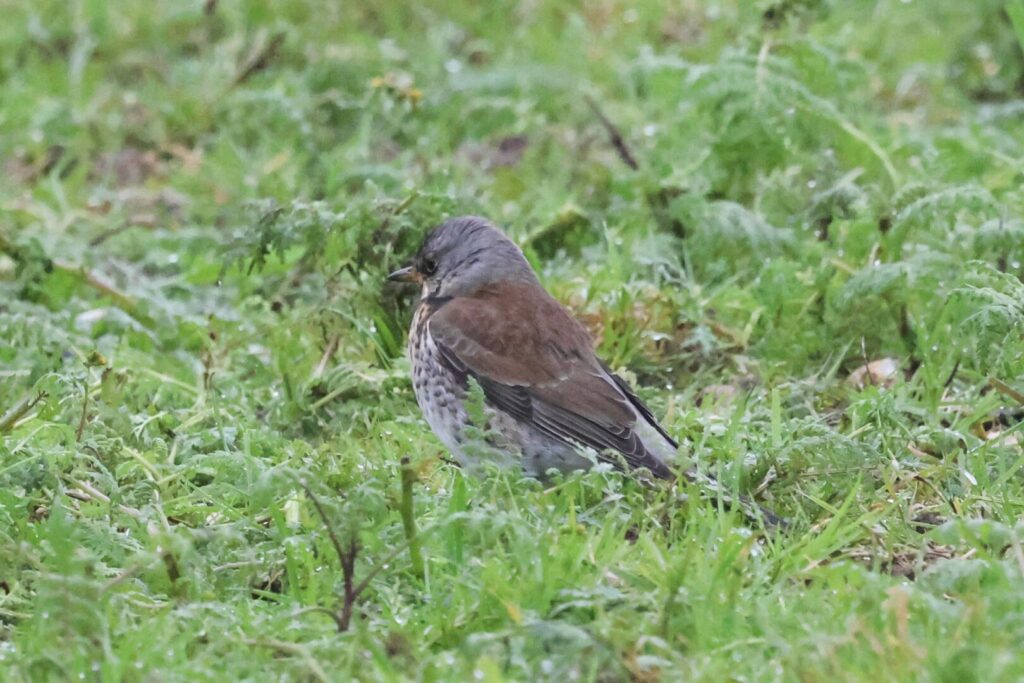
Several Chaffinches and a couple of Yellowhammers flew up out of the hedge ahead of us and dropped down into the field the other side. Then three Fieldfares flew out and landed briefly on top of the hedge. We drove on a short way further and stopped in a gateway. We could see the Fieldfares now on the ground on the edge of the crop with a couple of Blackbirds.
As we got out, a flock of Linnets flew round behind us along the road and laned in the top of the hedge. We walked back and found the Linnets on one side as two Yellowhammers flew in and landed in the top the other.
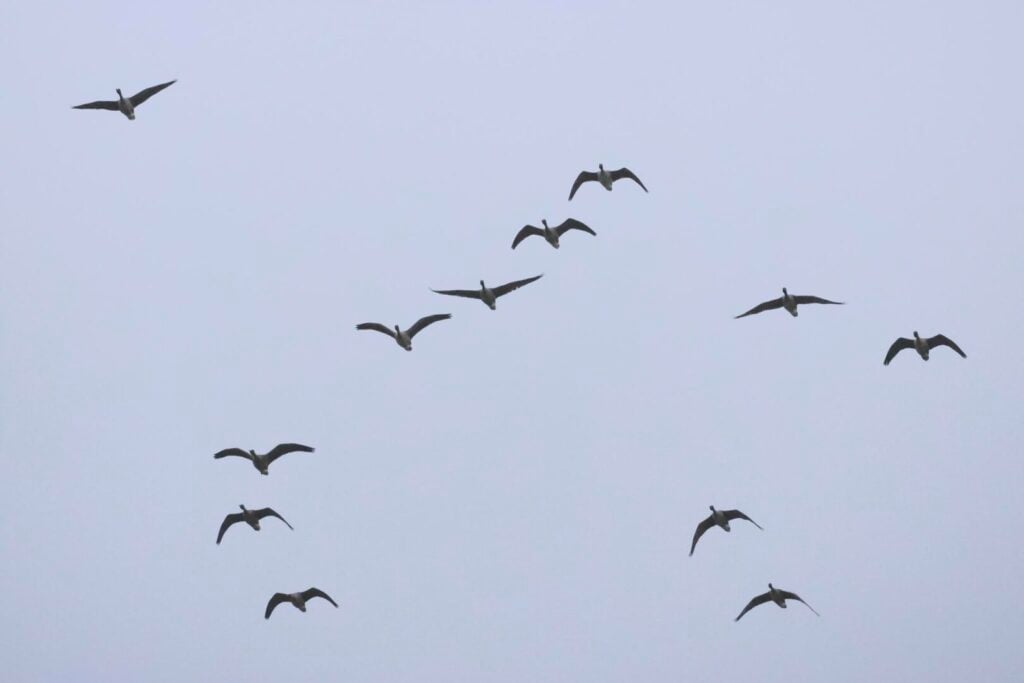
Several groups of Pink-footed Geese flew over calling now. But they were all heading in different directions, so we couldn’t tell where they were really coming from or going to. Something spooked all the Brent Geese from the valley below us and more Pink-footed Geese came up from behind the hedges. The Brents flew off one way, the Pinkfeet the other.
Some geese seemed to drop down over towards Morston so we thought we would have a look round there. We found a few Brents in a field but no sign of any Pinkfeet. Circling back round towards where we had seen all the geese fly up, we did find some Pink-footed Geese dropping down but they were mostly landing out of view and there was nowhere to stop.
We cut across to have a look at Bayfield Lake next. There had been a couple of Goosander here before the freeze and we thought the water might have thawed out a bit here too now. But when we arrived and had a quick look from the wall, we could see the lake was still mostly frozen. Several Mute Swans were in the only small area of open water and a Cormorant was perched in a dead tree, but we couldn’t see anything else. We decided it wasn’t worth walking round.
It wouldn’t be any fun standing around at the raptor roost tonight, waiting for birds to come in. There have been one or two Hen Harriers hunting close to Wells recently and we thought we might stand a chance of catching one here before it flew off to the roost. As we drove over, the skies seemed to get even greyer and the light appeared to be going early.
When we arrived, there were lots of Teal on the pools, but not much else. We were hoping we might also be able to check out the gulls dropping in to bathe from the fields inland but we were surprised to find none of those either at first. Only a handful flew in while we were scanning. A Marsh Harrier flew over but no sign of any other raptors.
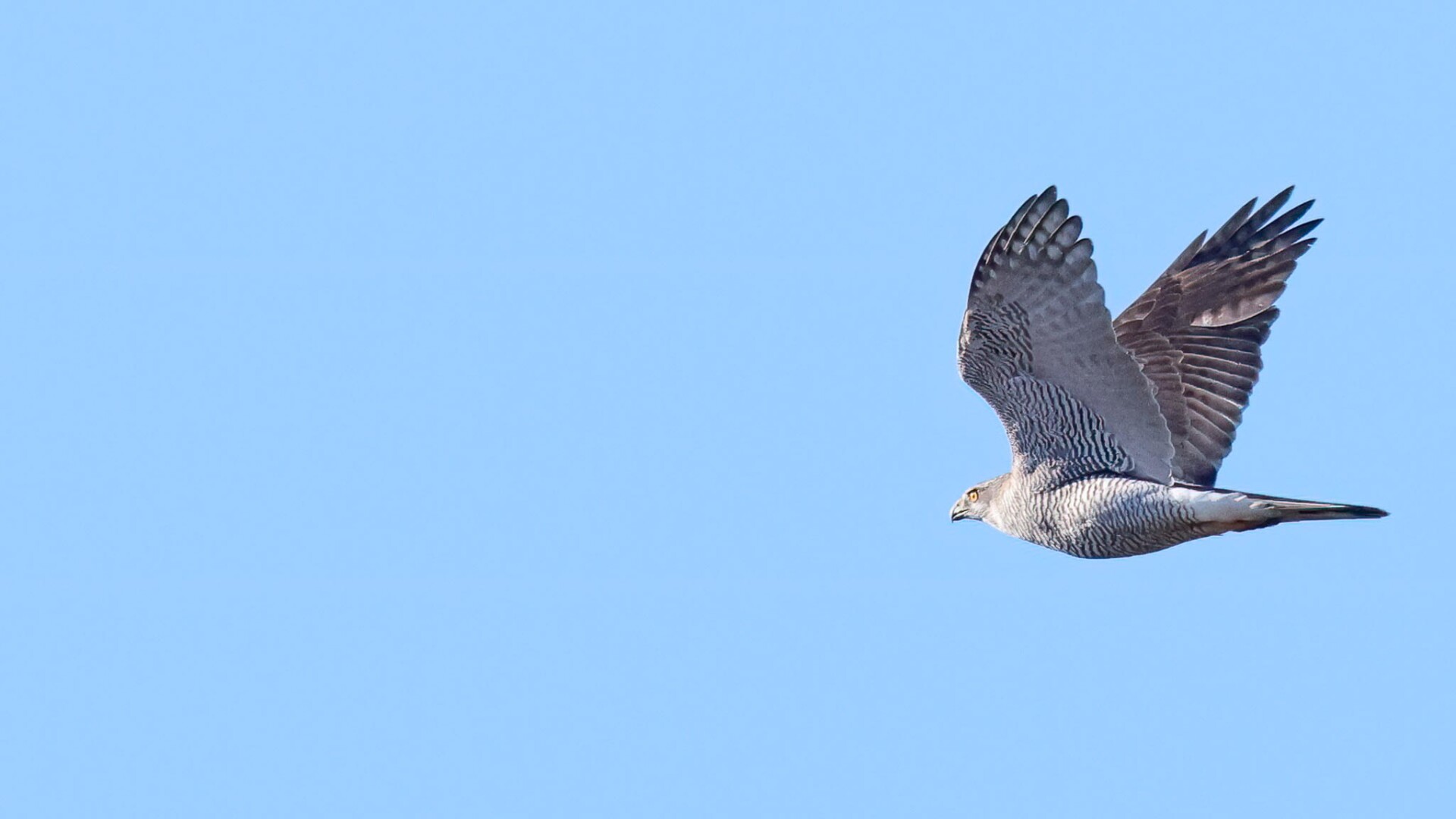
The cloud had thickened and now it started to sleet more heavily. We decided to call it a day and head back early for tea and cake. On our way back, we stopped to look at a Mistle Thrush on some wires. Several Redwings flew up out of the vegetation in the field below. Then a Sparrowhawk flew out, hunting low over the field. It landed on the fence on the edge of the paddocks beyond.
It had certainly not been easy birding in the weather today but it had been a much more successful day than we had feared it might be. The storm was expected to clear through overnight and the forecast looked better for the next couple of days. Hopefully a lot more to come.