Day 1 of a 4-day Spring Migration tour. It was a lovely bright and sunny day but with a blustery wind again. At least the wind had gone round to the E/ESE and was not as cold as it has been recently. We spent the day on the coast in NE Norfolk.
Our first destination this morning was Cley. As we got out of the minibus, a Cetti’s Warbler was shouting from the corner of the car park. Walking across the road to the Skirts, we heard Greenshanks calling and looked over the reeds to see everything come up off the scrapes. Something had spooked all the waders, and a couple of flocks disappeared off. One Greenshank was still flying round over the hides.
There were a couple of Sedge Warblers and Common Whitethroat singing along the Skirts path. A Great White Egret flew in over the West Bank and dropped down out of view onto the reserve. A male Marsh Harrier seemed to be half displaying over the reeds and then circled up high into the sky and off.
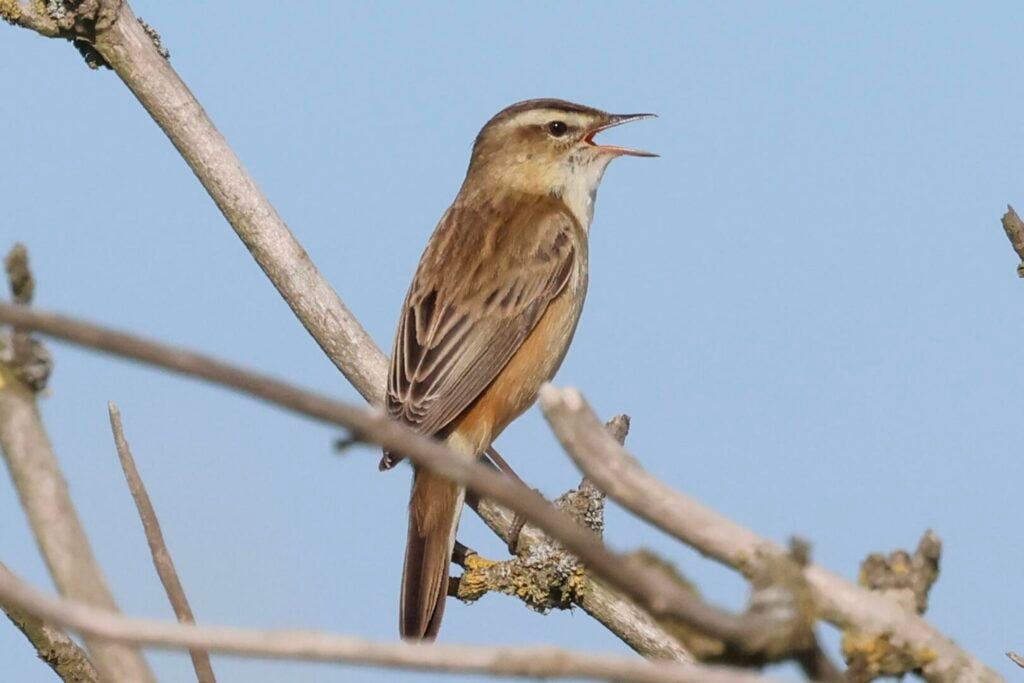
Along the boardwalk, we found a Sedge Warbler perched up nicely in a dead bush. We had a good view of its striking pale supercilium. A Reed Warbler was singing from deep in the reeds opposite.
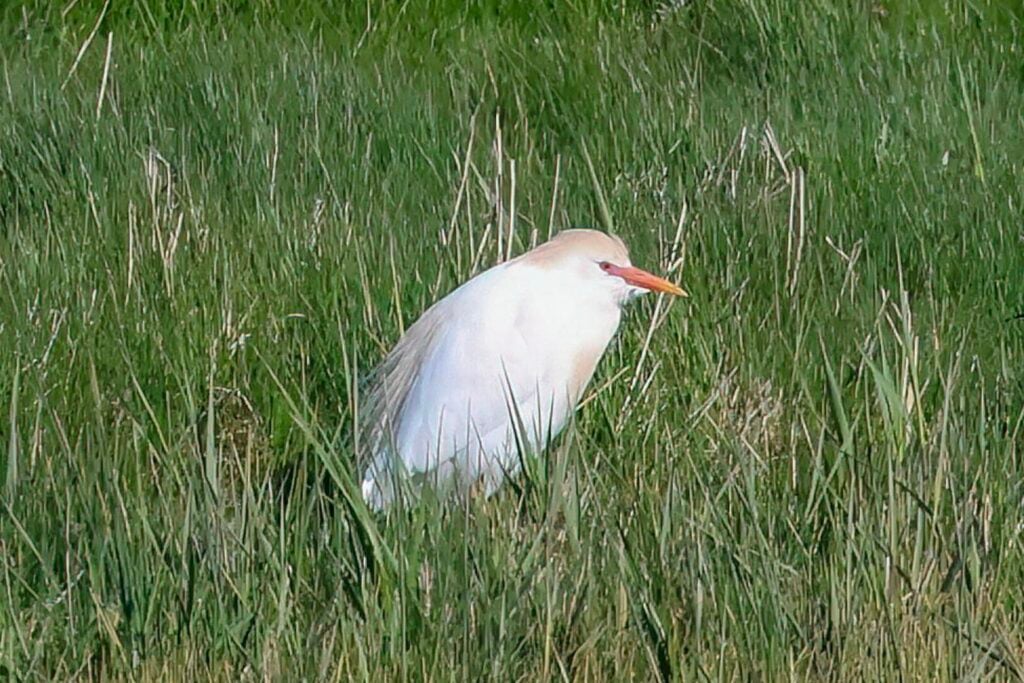
A Cattle Egret flew in low over the grazing marshes and appeared to drop down at the back of Whitwell Scrape. In to Avocet Hide, we found it there, standing in the low reeds on the bank at the back. A smart adult in breeding plumage. There had been 11 Wood Sandpipers on Pat’s Pool first thing but they had flown off. Then one was reported on Whitwell Scrape but looking round there was no sign of that now either.
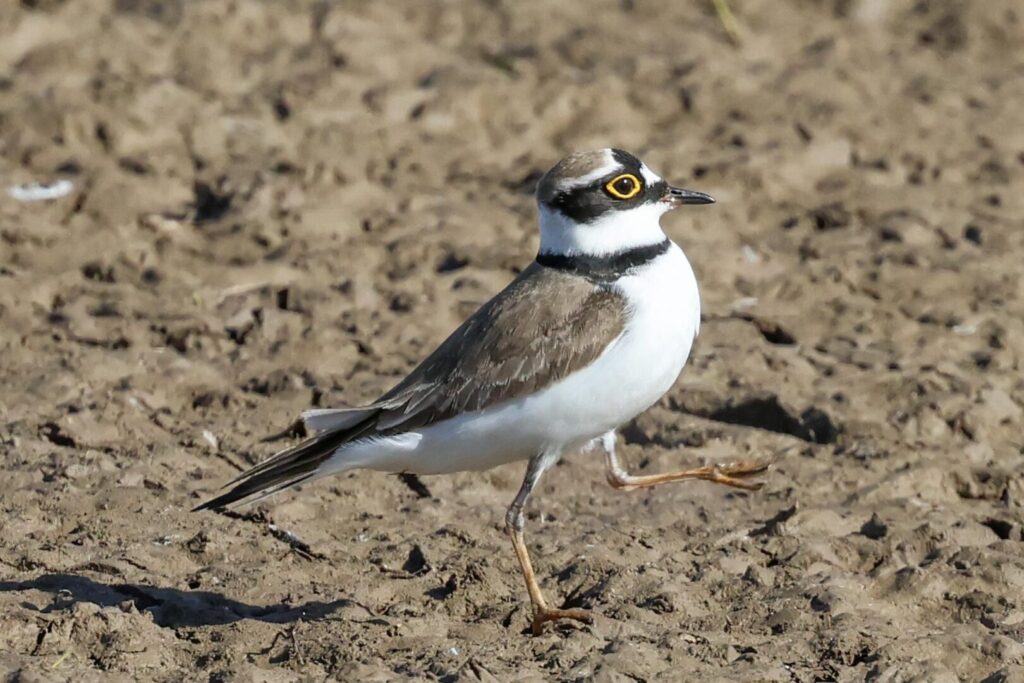
A pair of Redshanks was out on the edge of one of the islands. The male was displaying, fluttering its wings, with the female standing alongside looking disinterested. A Little Ringed Plover flew round displaying and calling too.
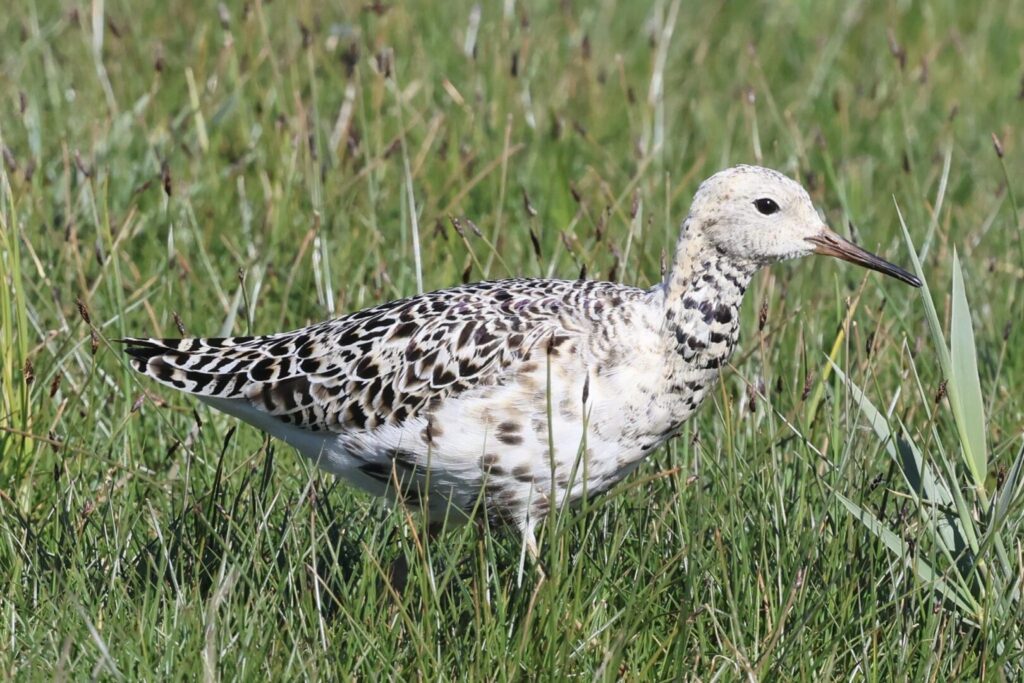
We could see a smart male Ruff out towards the back of the scrape, a very pale one with barring on the front of its neck. It worked its way along the edge towards us, then came out onto the grass on the bank. After a stretch and a quick preen, it sat down to go to sleep. Just a few minutes later, it then stood back up and walked back the other way.
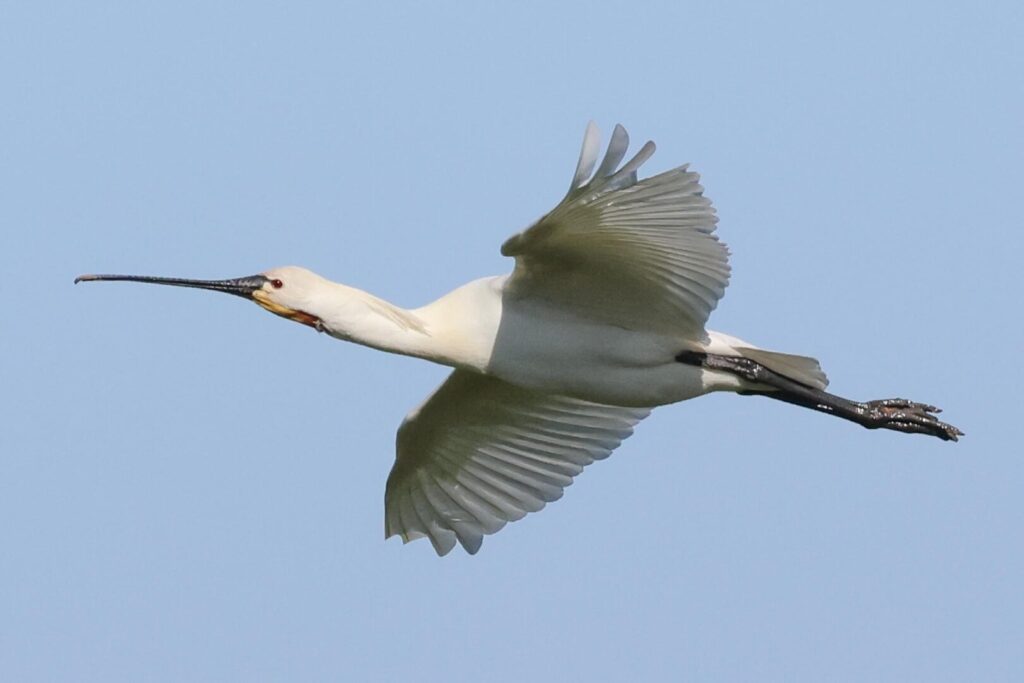
A Spoonbill dropped in at the back too. An adult with a yellow-tipped black bill.

It had a drink and a preen, stood there for a while, then flew off again back the way it had come.
Another pair of Little Ringed Plovers flew in. The female landed on the nearest island, then the male flew in too. He appeared to chase her off at first. Then he started displaying, standing with his chest puffed out, marching on the spot. That didn’t seem to work so he returned to chasing her and they both flew off.
Looking over to Simmond’s Scrape, we could see four Wigeon on one of the islands. The large number that were here through the winter have almost all left and just a few stragglers remain. Surprisingly there were no Avocets on either scrape today – they should be breeding here in good numbers at this time of year, so it is not clear where they have all gone and why.
We made our way round to Teal Hide next. On the way, we stopped for a quick look at South Pool from the boardwalk but all we could see on there at the moment were a couple of Redshanks.
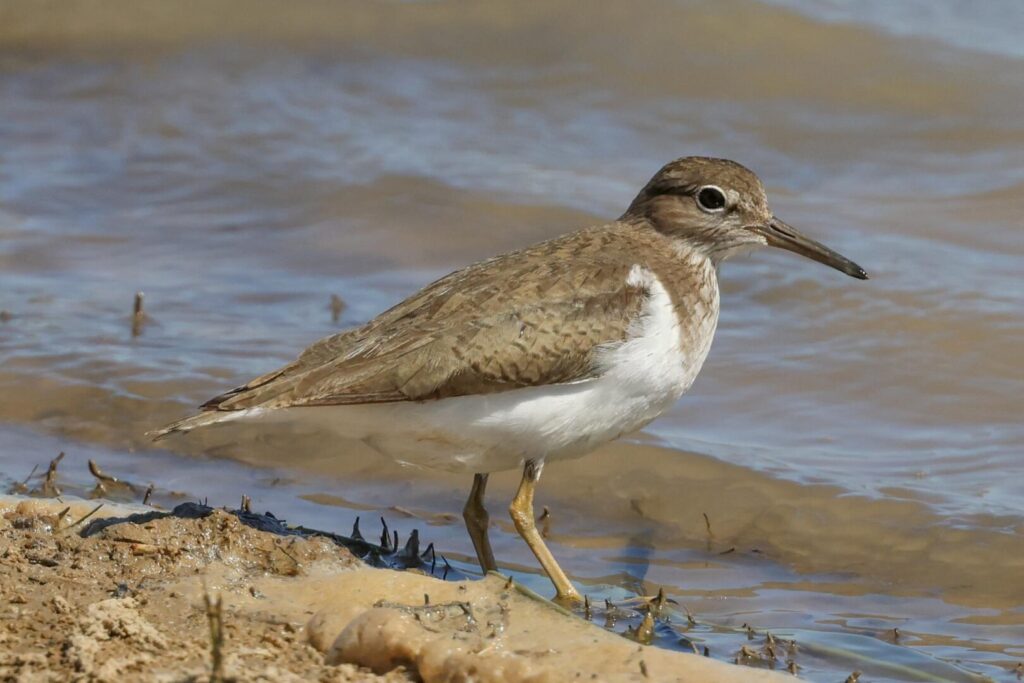
Into the hide, we could see lots of Ruff scattered around Pat’s Pool, at least twenty. There were several different males, no two the same colour, and quite a few much smaller females. A couple of Common Sandpipers were feeding along the front edge. Just a single pair of Avocets were on here. Several House Martins came down to collect mud from the nearest island.
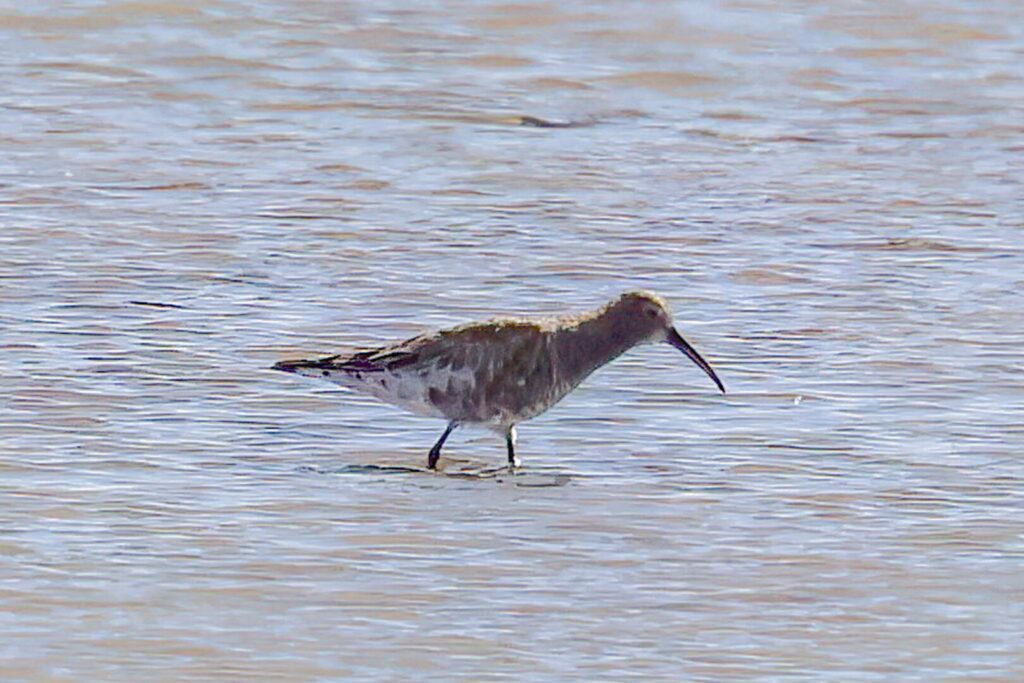
Scanning through, we found a Curlew Sandpiper over towards the far side. We got it in the scopes but we were looking into the sun from here. Presumably it was the same bird which had been reported on the Iron Road pool earlier but had decamped here instead. Then it flew in a little closer with the Ruff now in a single large group. We could see the Curlew Sandpiper was moulting into bright rusty breeding plumage.
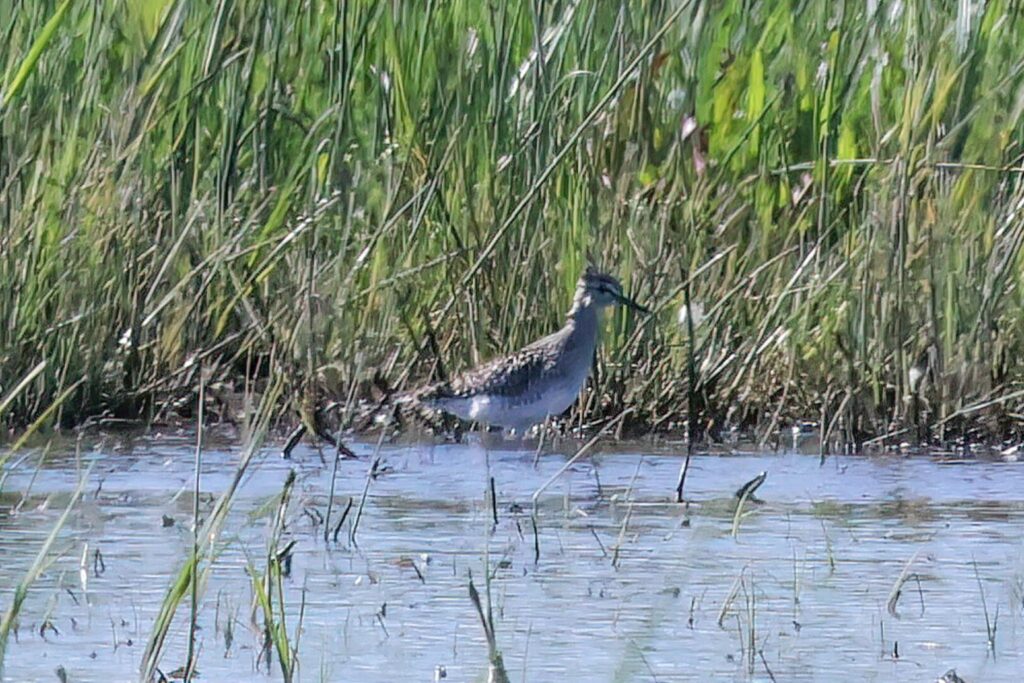
Some Wood Sandpipers flew in and landed on South Pool. They disappeared behind the low reeds along the front edge and didn’t come out for some time. Eventually one appeared in the left corner so we went out to the boardwalk and got it in the scope. We could see three Wood Sandpipers now. Then a fourth flew in over our heads calling and landed with them. Migrant waders arriving all the time, great to watch.
We had heard a Spotted Redshank call earlier but not been able to see it. Now one walked out from behind the low reeds too, into the same corner as the Wood Sandpipers, with a Common Redshank for comparison. We could see the Spotted Redshank’s longer, needle fine bill. It was still in non-breeding plumage, so paler than the Common Redshank at this stage. Another Spoonbill dropped down onto the pool and stood there with its shaggy nuchal crest blowing in the wind.
It had been a very productive wader session in the hides. Now we walked back to the Visitor Centre. A chance to buy permits and use the facilities. Afterwards, we got back in the minibus and drove round to the Beach Car Park.
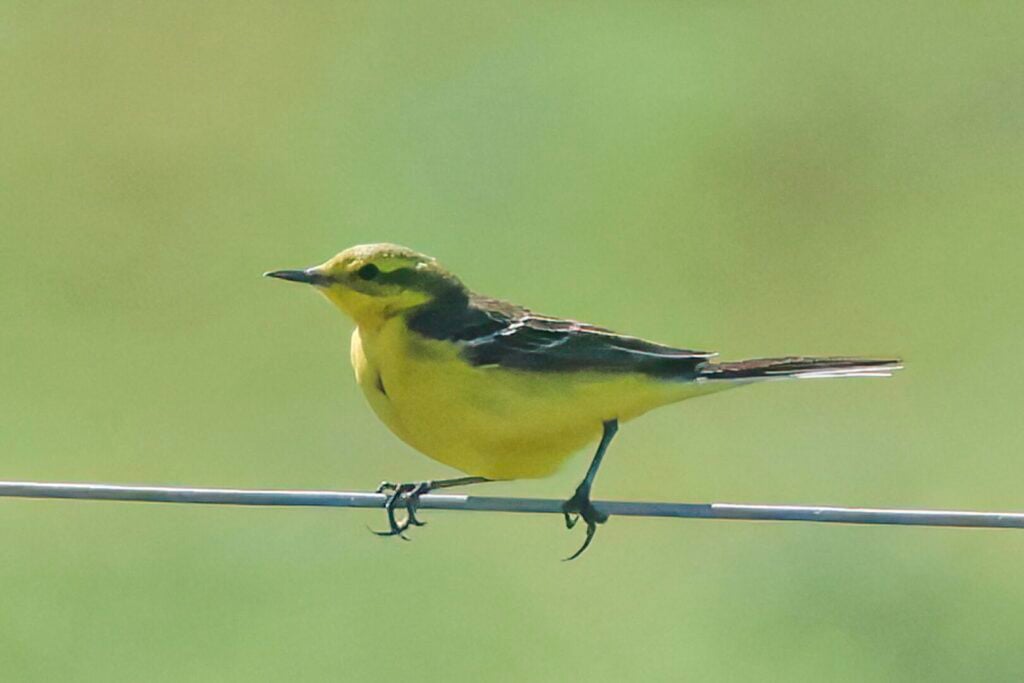
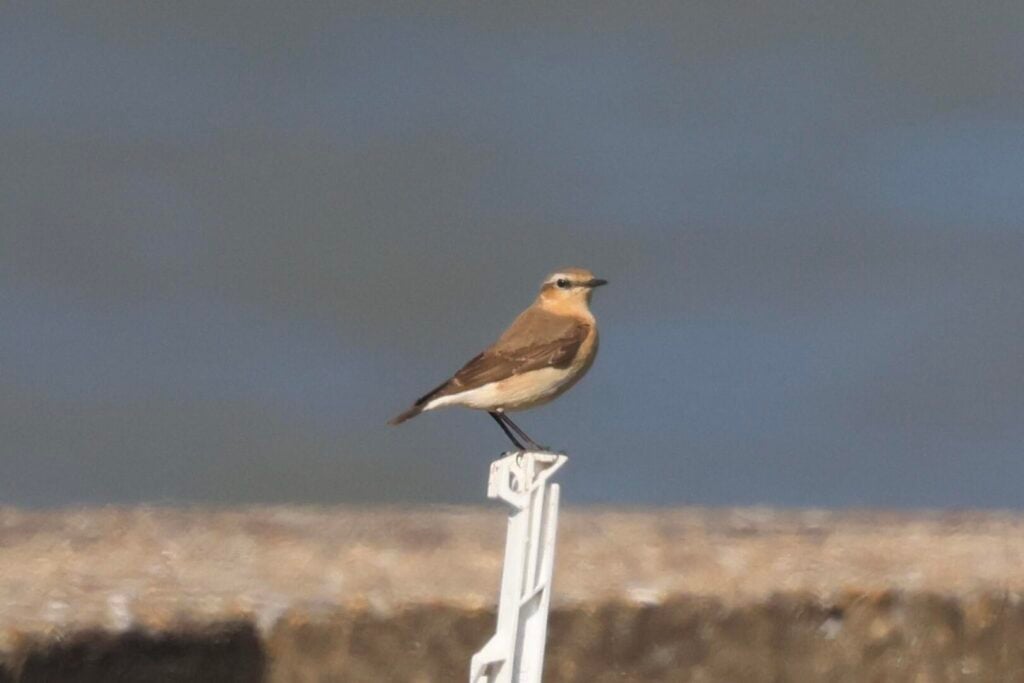
Several Wheatears were out on the grass in the Eye Field. We were just watching them, when one of the group found a smart male Yellow Wagtail nearby. It was feeding out on the grass beyond the pool at first, then took off. We thought it might be moving on, but it circled round and landed on the fence right in front of us. Showing off!
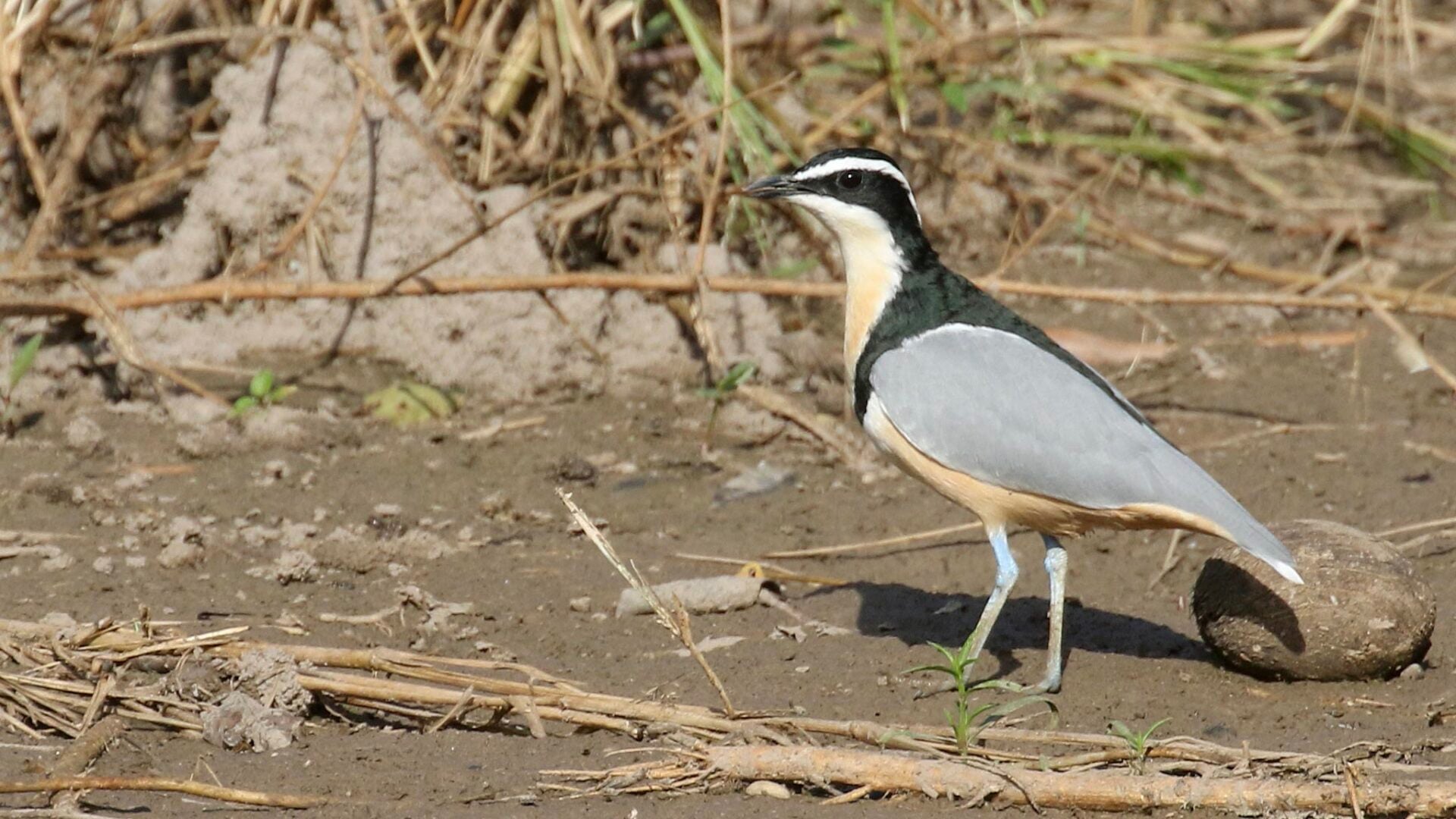
There were a couple of Egyptian Geese on the pool. We had hoped to find some Whimbrel but there was no sign of any in the field today.
We walked up onto the shingle ridge for a quick look at the sea. It seemed rather quiet. One of the group found a distant Red-throated Diver, still in non-breeding plumage. Two Sandwich Terns flew past. There had been lots of Little Terns up and down offshore the last couple of days but we couldn’t see any now.
Back to the minibus, we were just about to get in when we spotted a Golden Plover tucked down in the grass in front. Out came the scope again.
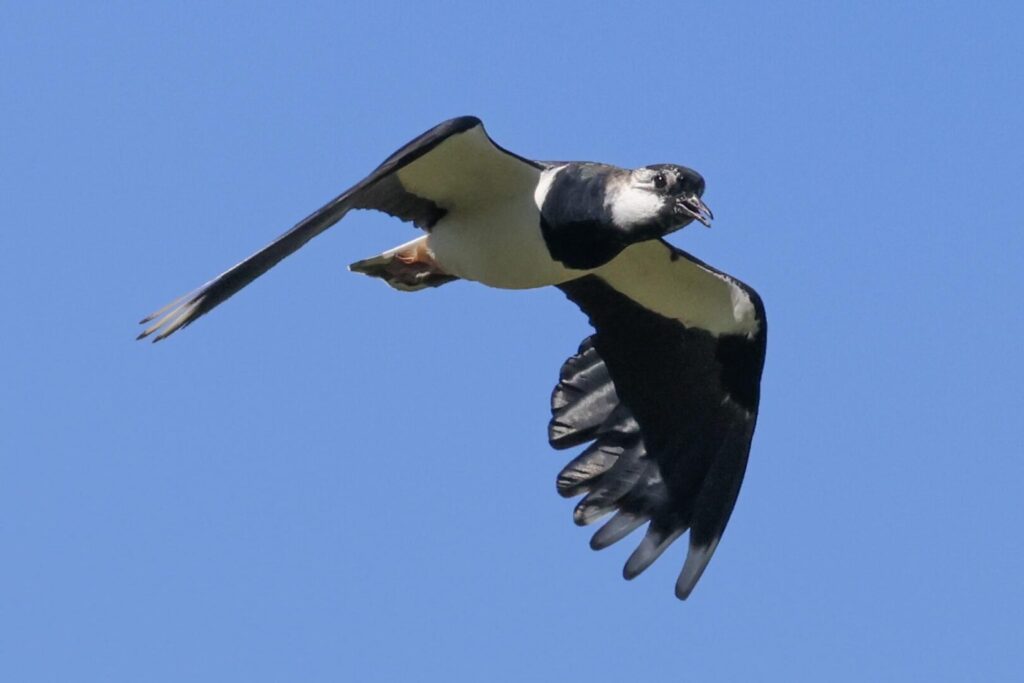
We drove round to Iron Road next. As we walked up to the pool, a couple of Lapwings were displaying over the grazing marsh, flying round, calling and tumbling.
Scanning the pool from the gate, we could see lots of Ruff, at least twenty. They were mostly females, much smaller than the males. Once again, none of the males were alike. What a fantastic variable species!
Walking round to Babcock Hide, a Lesser Whitethroat was singing in the bushes by the Catchwater Drain. It was hard to see, keeping down as they always do, but the blustery wind was not helping. A little further on, we noticed a Common Snipe feeding in a muddy gully out on the grazing marsh.
From the hide, we could see lots of Avocets on Watling Water. At least that explained where some of them have gone. There were lots of Common Sandpipers too, all around the edges. We counted at least seven but there were probably more. They were constantly chasing each other and interesting to hear them ‘singing’.
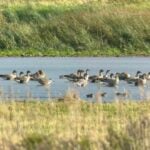
There has been a pair of Garganey here for the last couple of weeks but they can disappear. From one end of the hide, we found them now, asleep at the back, with several Gadwall and a Shoveler. Any further over and we wouldn’t have been able to see them behind the reeds. A pair of Egyptian Geese with goslings were on the spit in front.
Another Common Snipe was feeding at the back, between the Gadwall. There were several Little Ringed Plovers and a single Ringed Plover came in for a bath.
When a male Kestrel flew low over the scrape, it flushed everything. The ducks woke up and swam out into the water, but the Garganey went the wrong way, behind the reeds. They came back out quickly but went straight up onto the bank again and went back to sleep.
Back to the minibus, we drove round to the Visitor Centre again for lunch. We were out of the wind in the picnic area and in the sunshine. A Common Whitethroat flew in and started singing next to us, as did a Dunnock.
After lunch, we drove up onto the Heath. From the car park, we could hear a Turtle Dove purring. We had just managed to locate it in a dead birch tree when it took off and fluttered up displaying. Then it disappeared off over the trees.
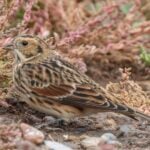
A pair of Woodlarks dropped in, down onto the open area in front of us. We watched them collecting food, presumably they have young in a nest nearby. The Turtle Dove started purring again but more distantly. From just the right spot, we could see it perched in another dead tree through a gap in the gorse. We got it in the scope this time and had a good look at it before it flew again and disappeared off.
Back to the minibus, we drove down to Kelling. It was nearly pick-up time at the school so we were lucky to find somewhere to park before all the parents arrived. Setting off up the lane, a Greenfinch was in the trees and a Pied Wagtail was on the playing field.
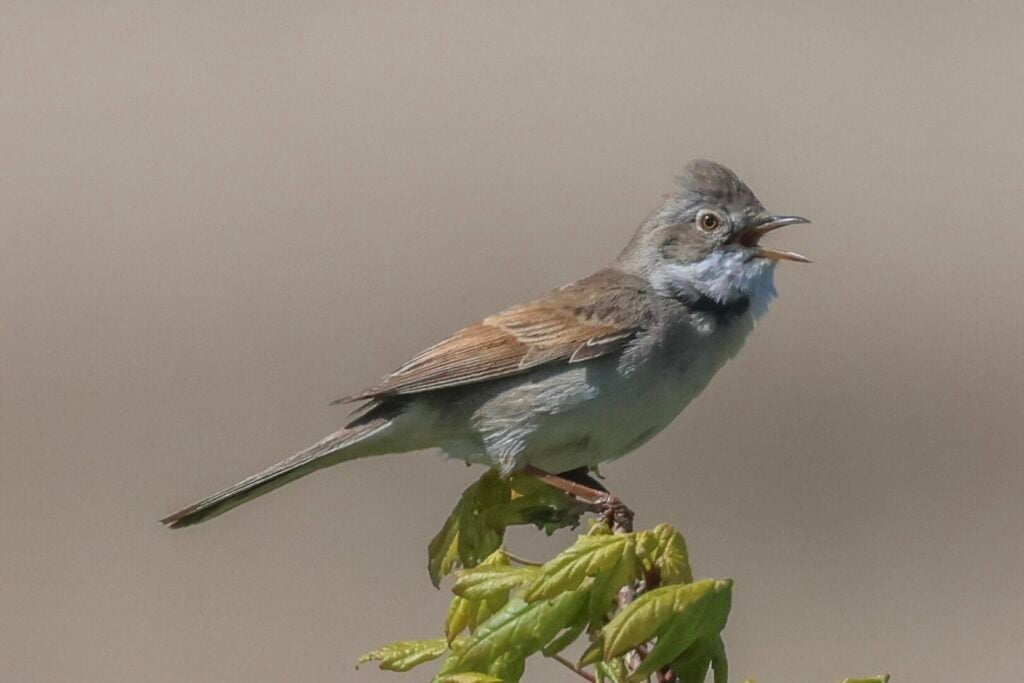
We could hear a Lesser Whitethroat singing in the next hedge over. Just beyond, there was a Blackcap singing too. When it flew back into a large hawthorn, we could see it moving around in the leaves. Several Chiffchaff and Common Whitethroat were singing here too.
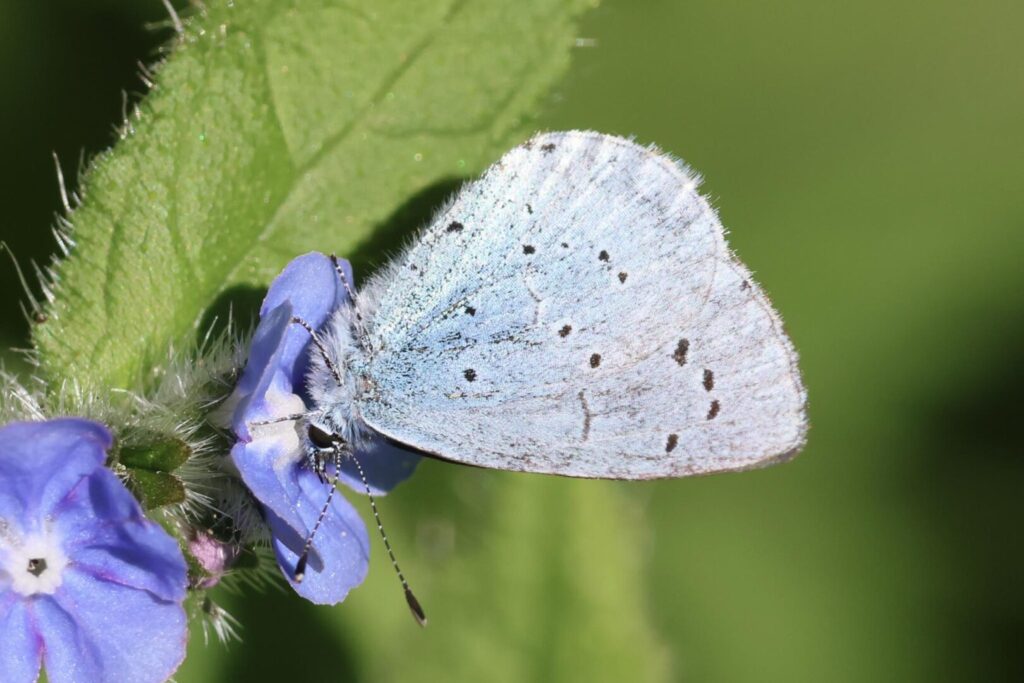
A couple of Red-legged Partridges were feeding in the field above. This is a big shooting estate and they release large numbers here every year. These ones had obviously avoided the guns! In the sunshine, there were lots of butterflies today – several Green-veined White and a few Orange-tips, lots of Holly Blues, a Speckled Wood, a couple of Wall and Peacocks.
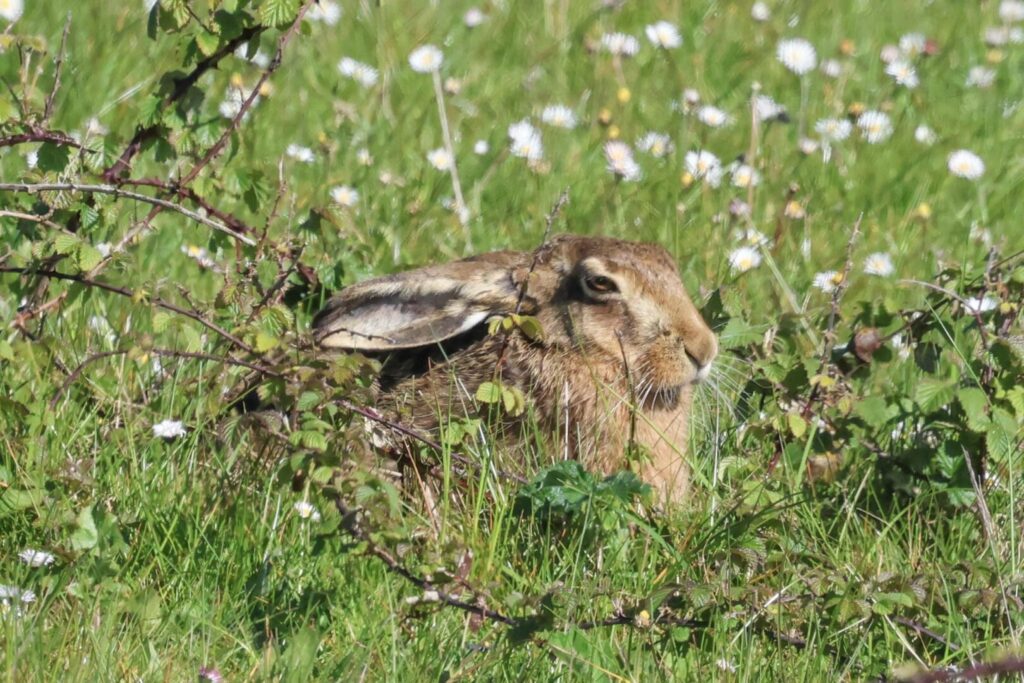
Scanning from the gate beyond the copse, there was a pair of Mute Swans and Gadwall in the watercress in front. Lots of Brown Hares were out on the hillside beyond, one in particular sprawled out, full stretch in the sunshine.
Down to the pool, we looked over the hedge. All we could see were just a few Mallard and Greylags and a pair of Oystercatchers on the grass, plus a Coot on the water behind.
As we continued on down the lane beyond the junction, there were Linnets and more Common Whitethroats in the brambles. Down to the next corner, there had been two Whinchats on the Quags earlier this morning but we couldn’t find them now. We turned round and walked down along the crosstrack towards the beach. A Cetti’s Warbler was shouting, and another called nearby before flying across in front of us. On the next corner, a very showy Sedge Warbler was perched in the top of the blackthorn singing.
The bramble field down behind the beach is often a good place for Whinchats. As we walked past, we could see lots of Linnets and several Common Whitethroats singing in the middle at first. A few yards further on and we looked across to see a smart male Whinchat perched up on the top of the brambles. Just what we wanted! We had a nice view of it in the scope, before it flew and we lost sight of it.
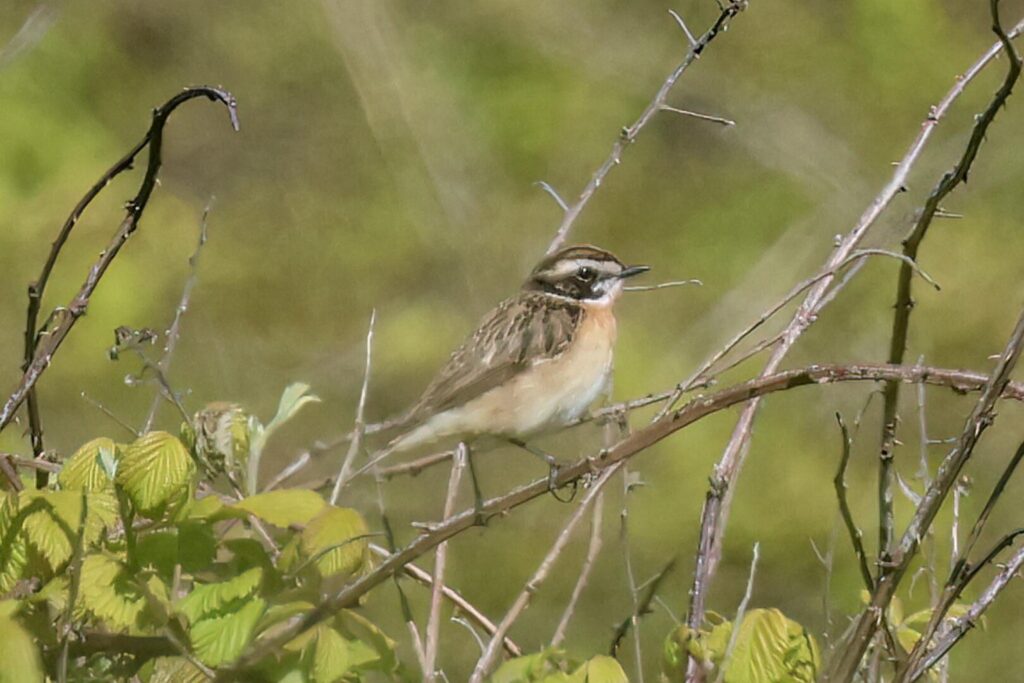
Further down, a pair of Stonechats was perched on the bushes, alarm calling. Walking up the hill on the permissive path, another pair of Stonechats was in the brambles further up. The Whinchat reappeared now briefly on the fence right over the far side of the bramble field, towards the top. Then it disappeared again!
Looking out to sea, we could see lots of Cormorants, Herring and Great Black-backed Gulls on the water. More of a surprise was a small group of Common Scoter, mostly drakes, the yellow on their bills catching the sun as they turned towards us. A common winter visitor, most have already left.
We had a quick look further up around the gun emplacements. A single female Wheatear was feeding from the sheep fence. As we started to walk back down, the second male Stonechat was now beating a large caterpillar on the concrete blocks.
Just before the crosstrack, there were two Brown Hares in the field. One looked to be hunkered down behind a small tuft of bramble in almost exactly the same place we saw it the other day. As we walked back round past the pool, there were now two Common Sandpipers on the edge, one hunkered down by the rushes which we had to have a closer look at to make sure it wasn’t something even more interesting.
Back to the minibus, and we drove back to Hindolveston. Time for tea and cake for those who wanted it. A great first day with lots of spring migrants – hopefully more tomorrow.