It is nothing if not exciting here all year round! We ran several Private Tours over the festive period but it is never a very popular time for groups. Still, there were lots of good birds to see and we managed to get out quite a bit to do some birding over Christmas and into the New Year.
A Black-bellied Dipper was first reported at Bintree Mill on 5th December but then not seen again until briefly on 18th. It was not until 20th though that it finally gave itself up and showed on and off through the day. Unfortunately it returned to being elusive over the subsequent weeks – hopefully it will stay the winter and at some point become a little easier to track down!

Black-bellied Dipper is the nominate race of Dipper found across much of continental Europe. Birds from further north migrate south for the winter and are regular but occasional visitors to the UK.
The next surprise was on Christmas Eve, when an Eastern Black Redstart was found around the ornamental gardens above the promenade at Sheringham. Only the second confirmed record for Norfolk, the first was in January 2021 when Covid restrictions meant it was difficult to see. So this was a very welcome addition for many Norfolk listers.
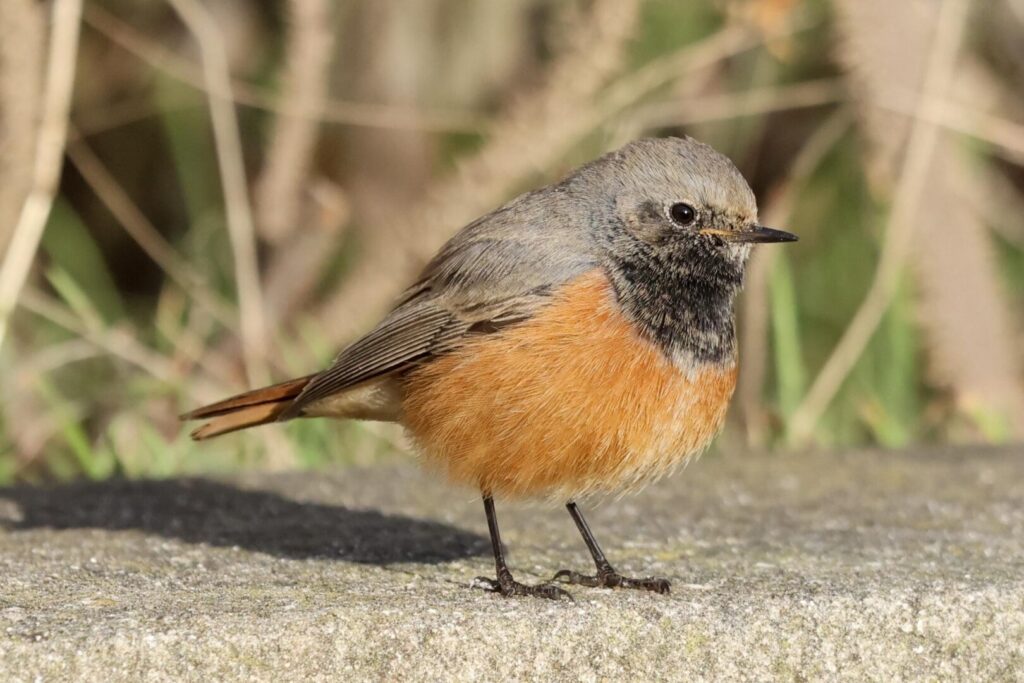
The eastern form of Black Redstart breeding in Central and East Asia, Eastern Black Redstart is a rare visitor here. A smart bird, it is still present at the time of writing.
Then, on Boxing Day, a Black-winged Kite was found in the Norfolk Broads at St Benet’s Abbey. Over the following days, it was found to be favouring an area a little further north, at Ludham Bridge. We saw it there on 30th December on a Private Tour and then again on 2nd January. It showed regularly until 4th January but then seemed to disappear after a period of heavy snowfall. It hasn’t gone far though, as it was seen again briefly at nearby Horsey on 7th. Another one which will hopefully hang around.
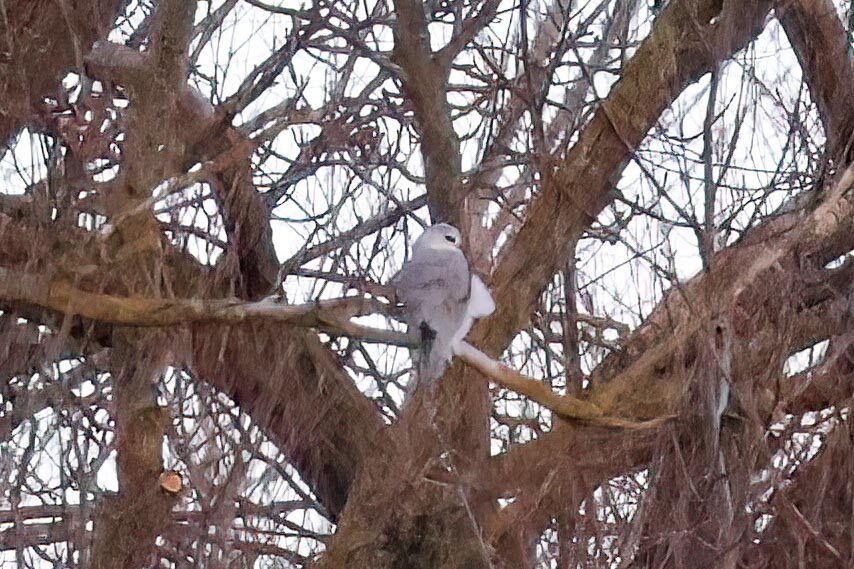
A Black-winged Kite was seen nearby, at Hickling Broad, from 7th-11th September. Could this be the same bird, having spent the intervening months somewhere inaccessible in the Broads? The first Black-winged Kite for Britain spent several days in the same area in July 2023. Could it even be the same individual returning again?
Numbers of swans in the Broads remain low, but with a bit of luck it is possible still to find a few Bewick’s Swans here. There have also been good numbers of Tundra Bean Geese and White-fronted Geese around. Filby Broad has once again had a variety of ducks. On 2nd January, we managed to catch up with the Ferruginous Duck and an obvious hybrid Ferruginous x Common Pochard, a female Ring-necked Duck and bizarrely a couple of Eider (very unusual on the Broads themselves).
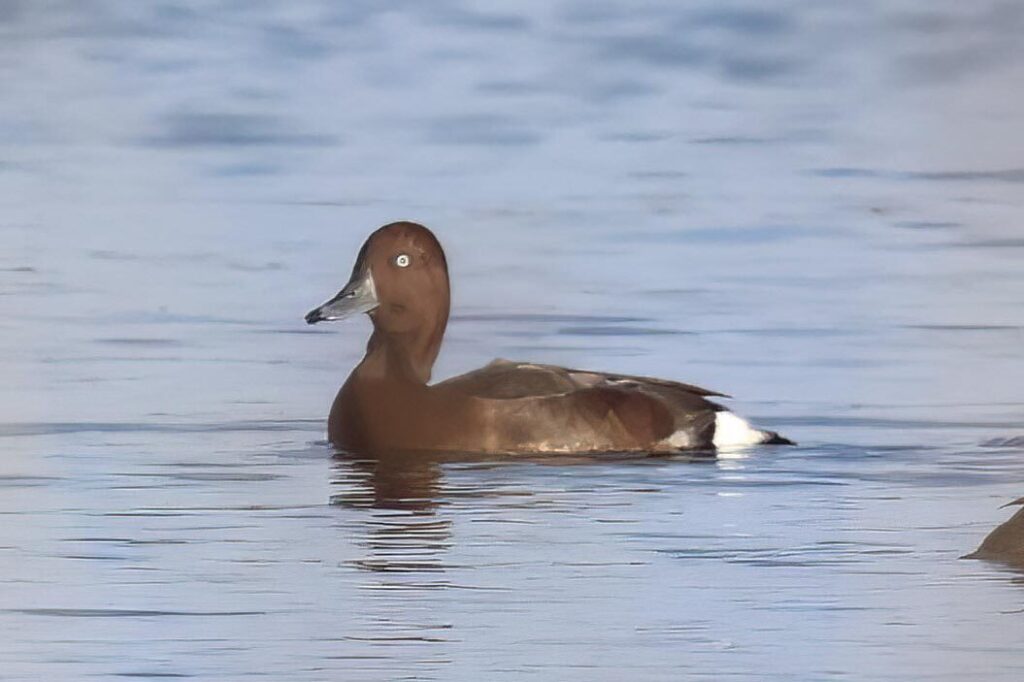
The Ferruginous Duck is usually very distant but today it was very near to the road on Ormesby Little Broad. Close-up, it clearly has quite a bit of black in the bill tip, more than is normal in adult drake Ferruginous Duck. It is not obviously a 1st winter. This bill pattern is common in Ferruginous Ducks in wildfowl collections, so perhaps this bird has either escaped from somewhere or is part of one of the release schemes on the near continent.
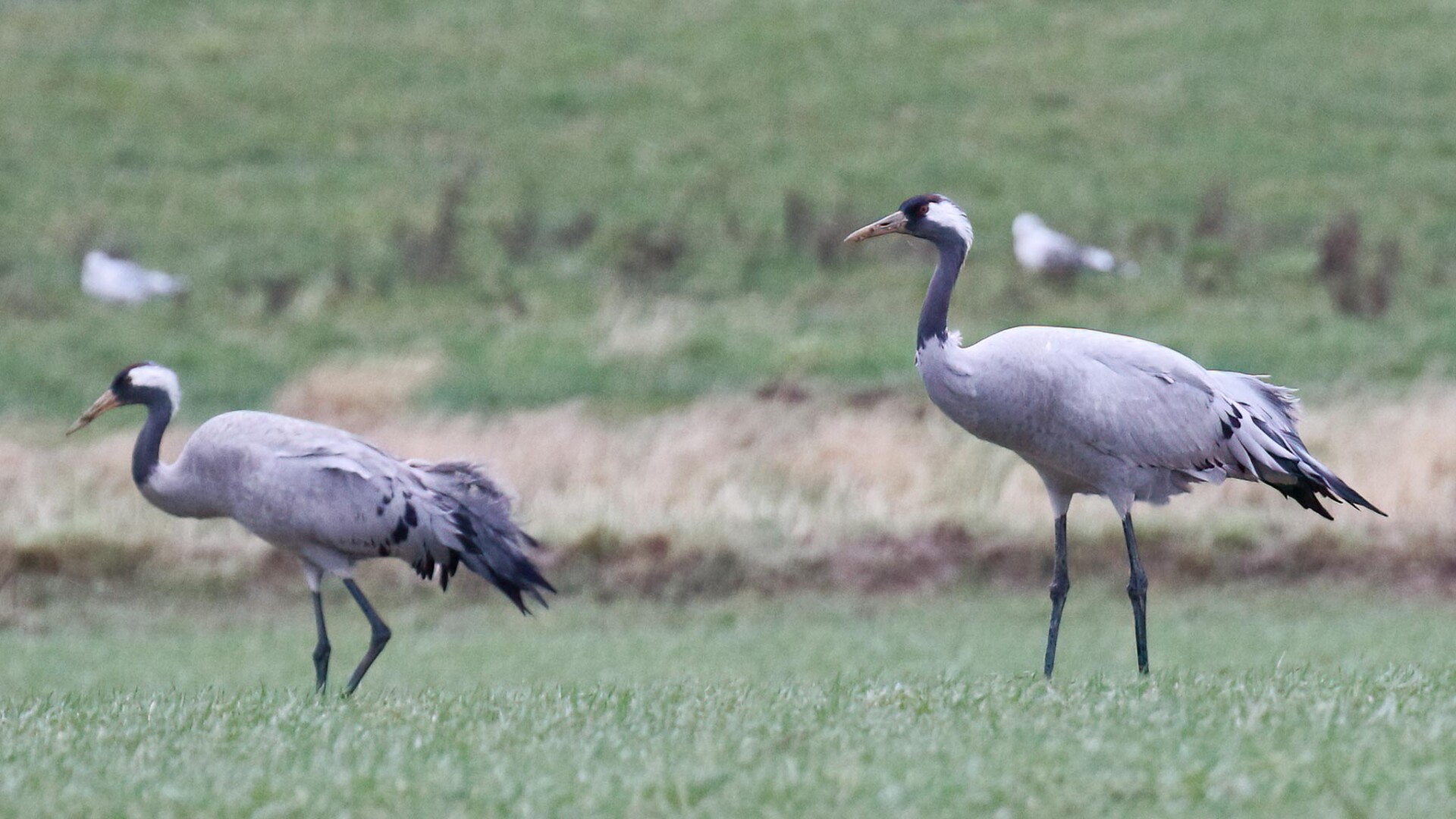
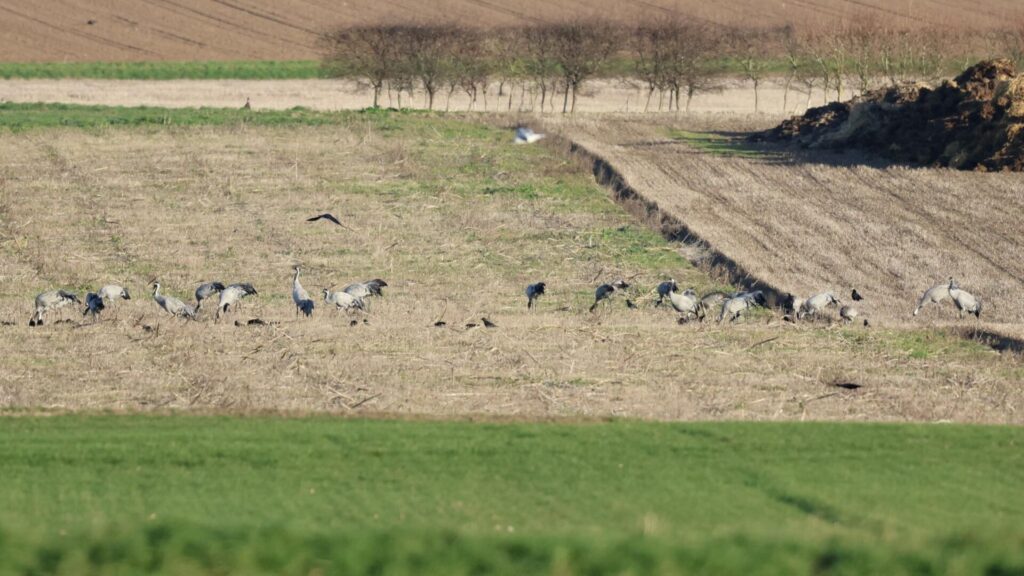
As well as the rarities in the Broads, there are always Common Cranes around. This flock of 31 was feeding in the fields on 2nd.
A trip over to the Fens on 3rd started with the Snow Goose in with the Whooper Swans at Deeping Lakes. We were lucky to find the birds right next to the road when we arrived.
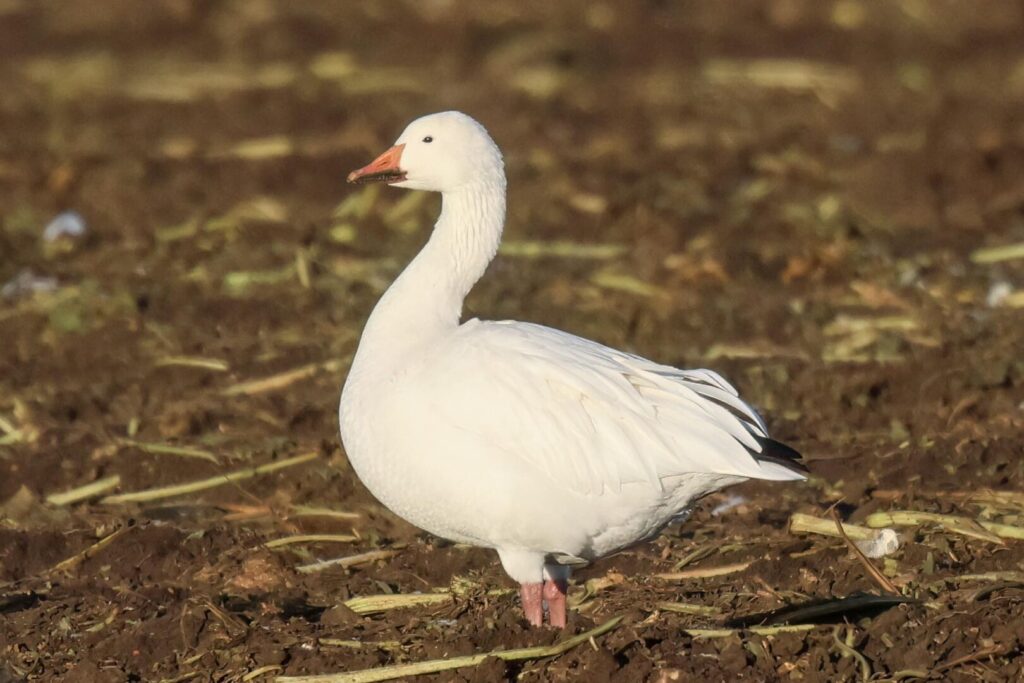
More usually found in North America, presumably the Snow Goose migrated here with the Whooper Swans from Iceland, having taken a wrong turn on its way south. It seemed perfectly happy with its choice of travelling companions, despite being dwarfed by them.
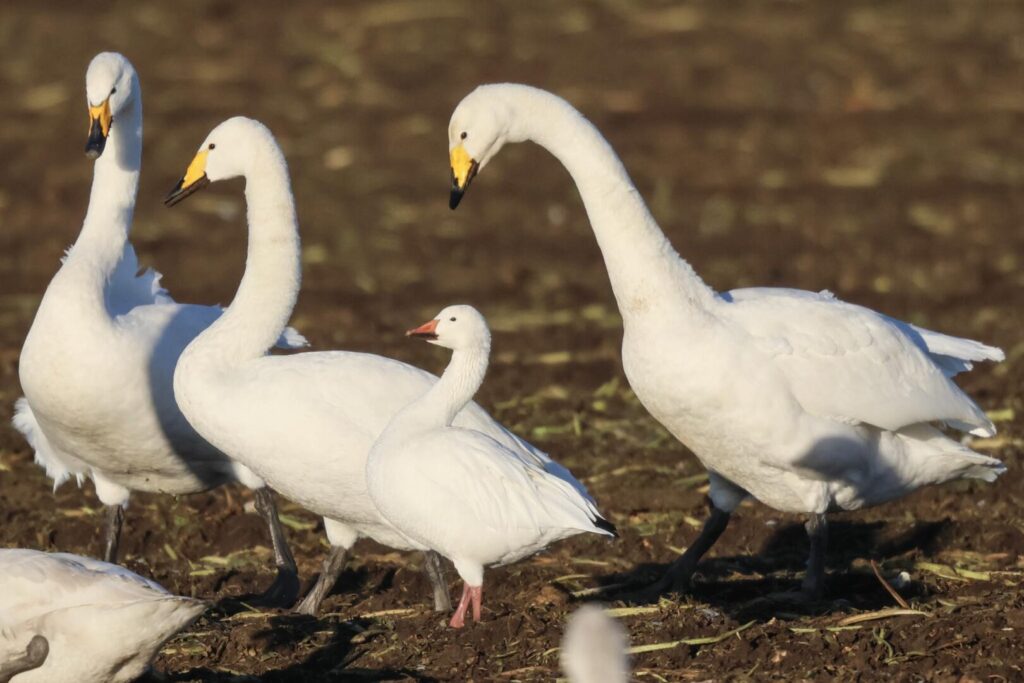
Numbers are still very low by historic standards, but there are more Bewick’s Swans with the large flocks of Whoopers around the Fens.
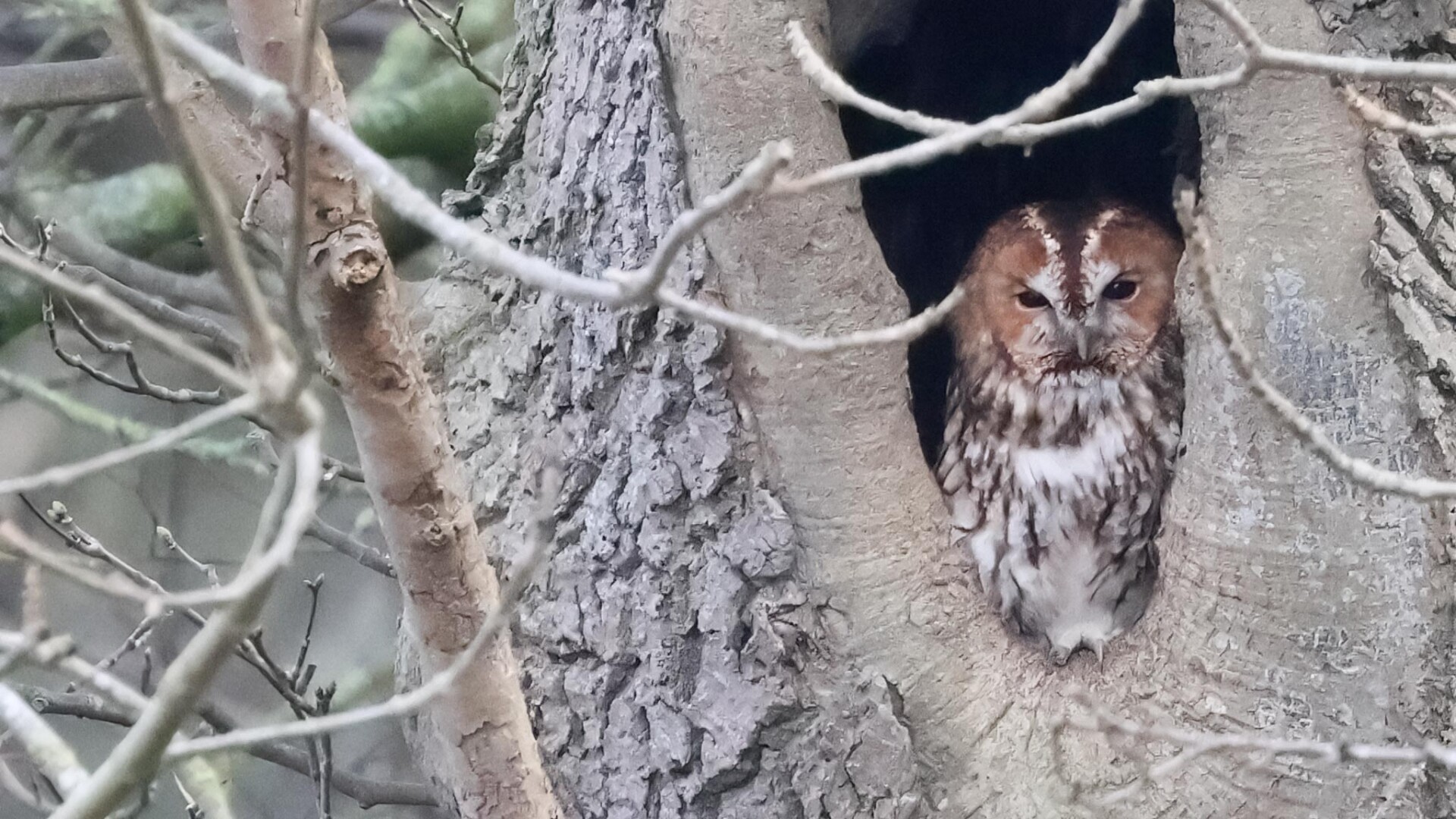
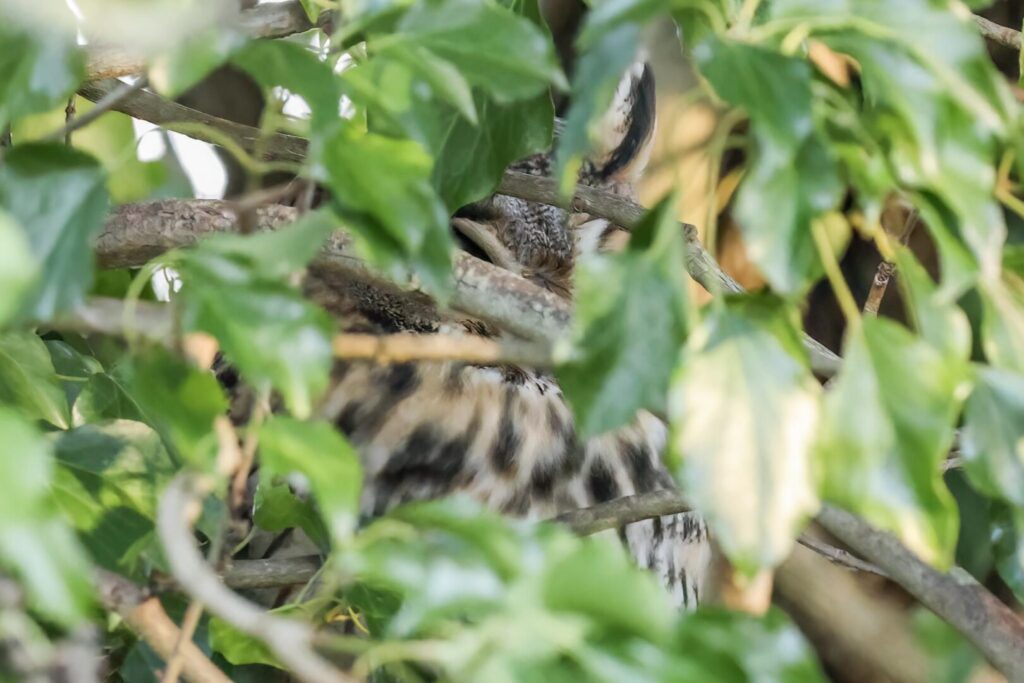
One Long-eared Owl was showing well from the hide at Deeping Lakes too.
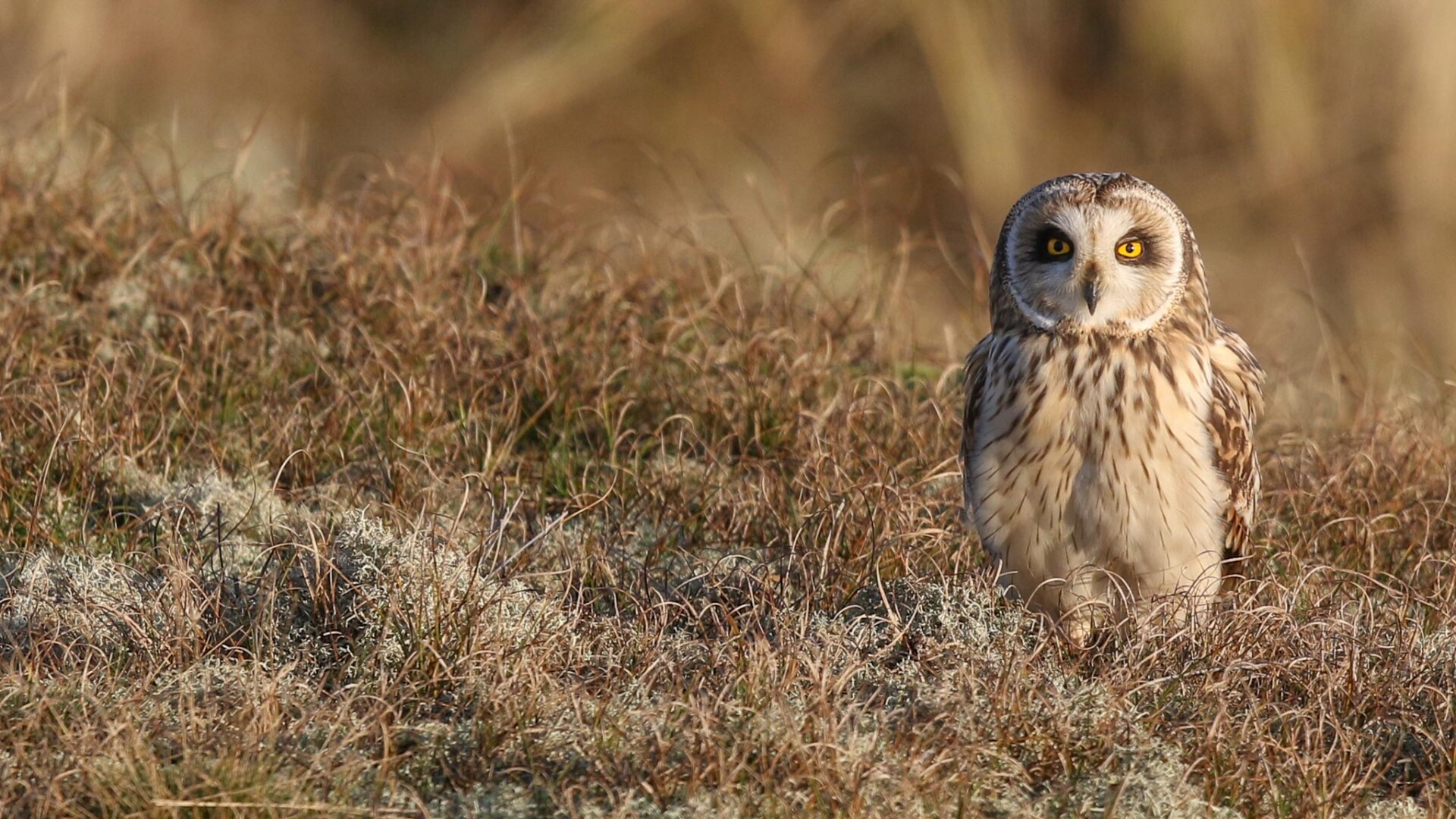
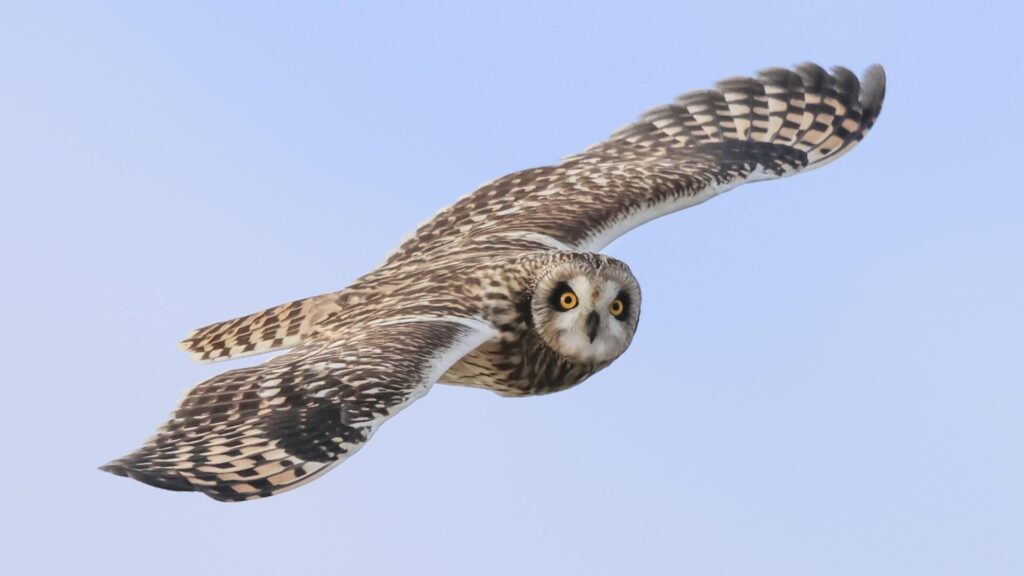
There are not so many Short-eared Owls in the Fens this winter, but thankfully there are some sites with good numbers in the Broads still.
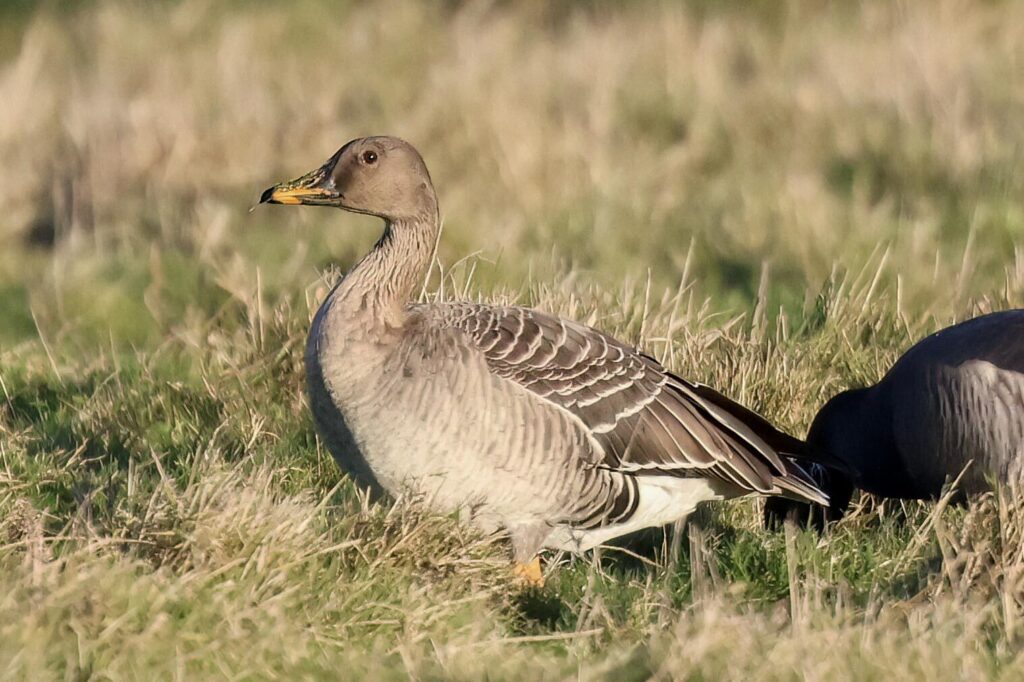
Back in North Norfolk, a Taiga Bean Goose was found with the Greylags at Wells on New Year’s Eve and hung around until 6th January. A rather small female, it caused some debate as to its identity at times. An interesting and educational bird to study.
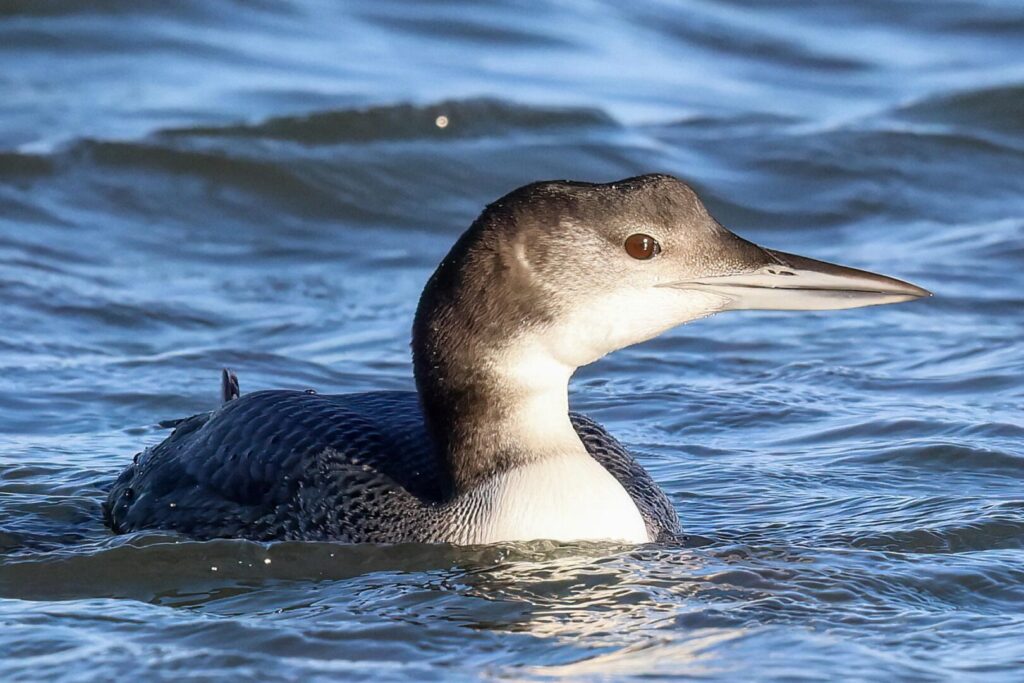
It has been a good few weeks for divers on the coast here. There has been at least one Great Northern Diver in the harbour at Wells for much of the winter, but by early January up to four were being seen.

Views could be very close at times, the birds seemingly totally unconcerned by all the people and dogs along the shore over the festive holidays. This is a very popular spot!
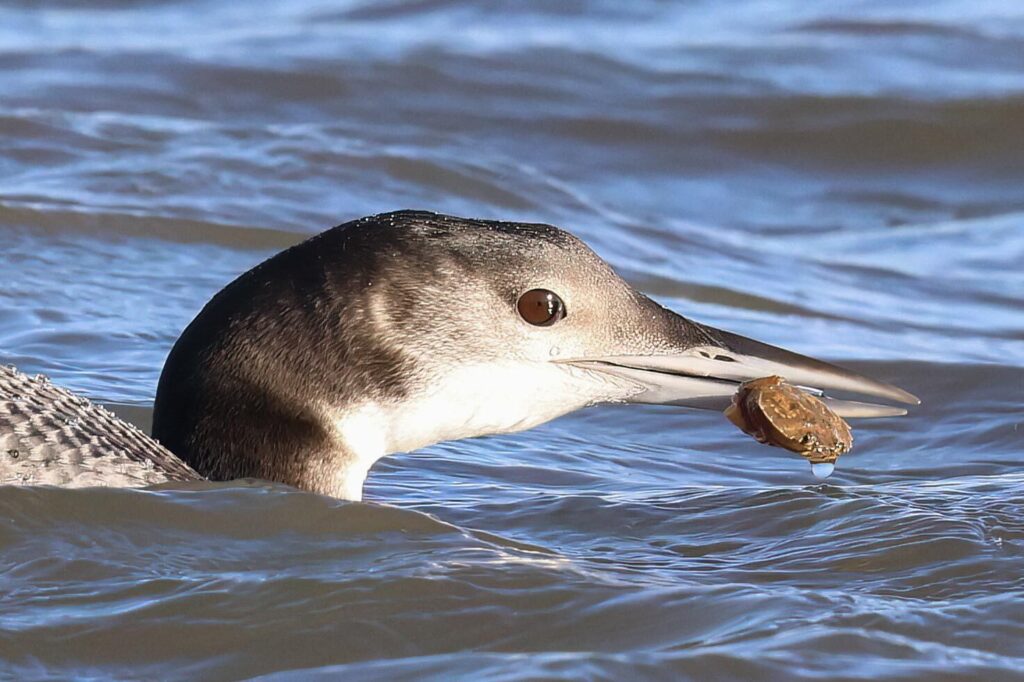
The Great Northern Divers could be seen catching shrimps and small crabs. It was great to watch them shaking the crabs by the legs to break the claws off before eating them.
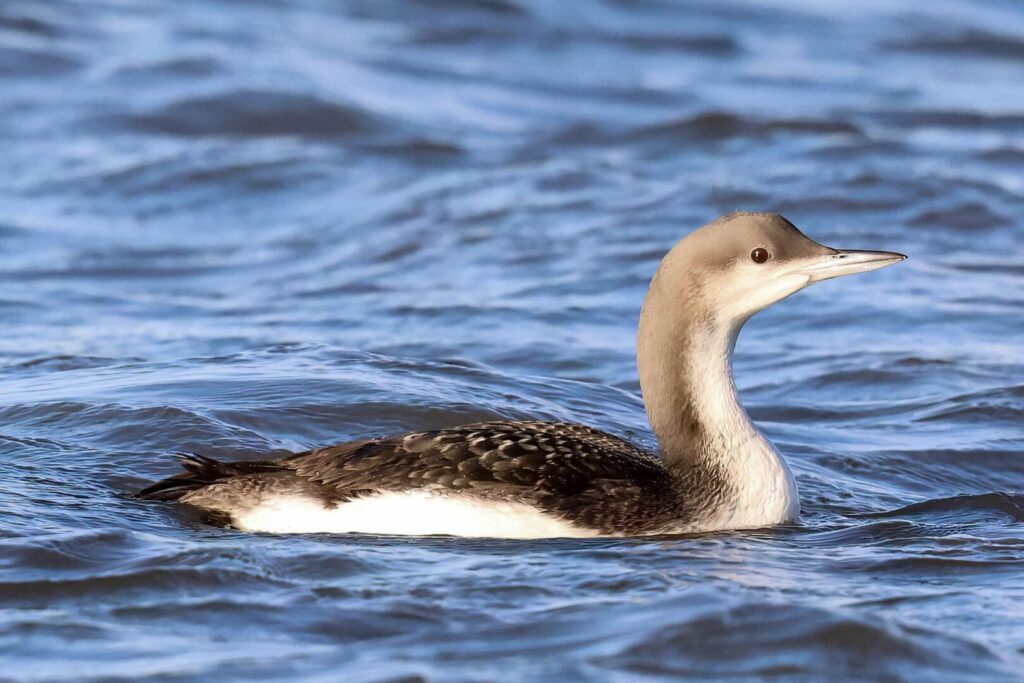
A Black-throated Diver was also coming regularly in to Brancaster Staithe channel over Christmas. Great views of this species too, the rarest of the three regular divers here. Unfortunately it disappeared on New Year’s Day, failing to make it onto most people’s 2026 list. Hopefully it might reappear again at some point.
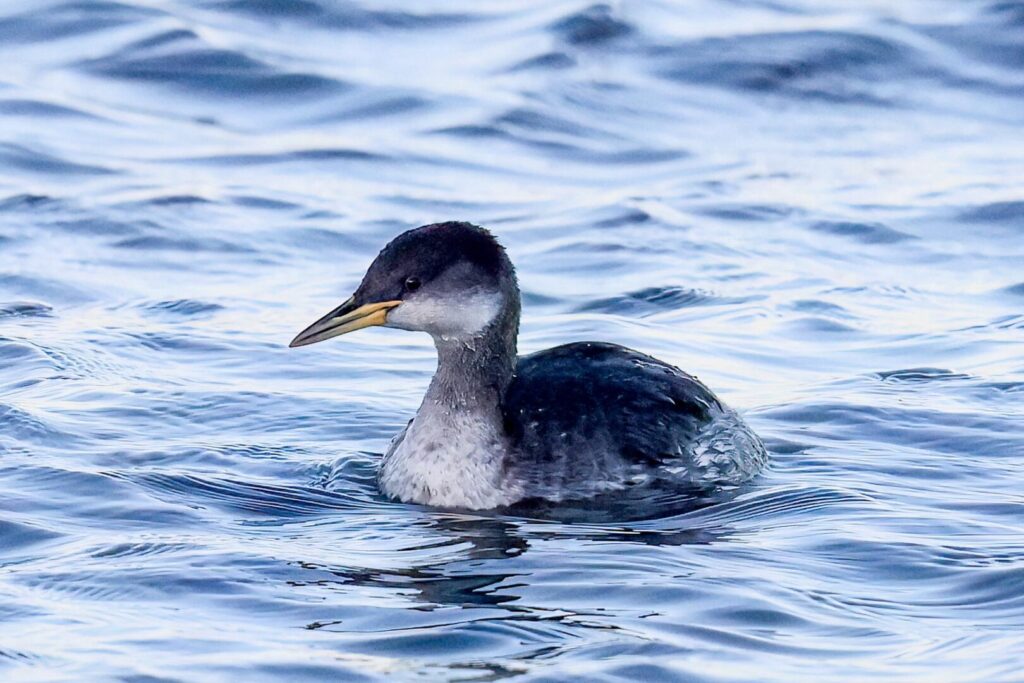
Having been seen once or twice briefly over the previous week or so, a Red-necked Grebe in Wells Harbour channel finally became more obliging from 4th January. At the time of writing, it is still showing well there.
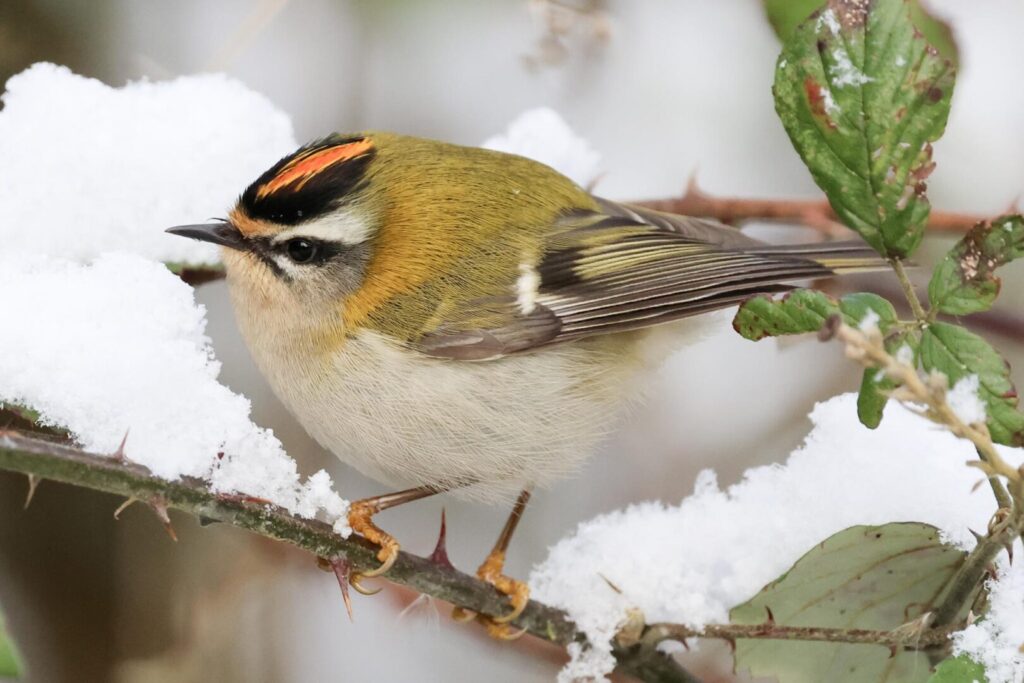
At least one of the Hume’s Warblers at Holkham, which had been around since November, remained until the weather turned cold. It was last seen late on 3rd January, very active and calling at dusk, presumably before moving on. Several of the Firecrests are still here though, and showing extremely well at times. For such small birds, they have to find food constantly to remain warm in the cold weather.
As the 2026 tour season in Norfolk starts in earnest, hopefully several of these birds will feature on our tours. If you would like to see any of them, you would be very welcome to join us.