Not a tour but a 3-week birding trip to Brazil back in August. Part 3 of this blog covers the third part of our trip, to the Brazilian Amazon. You can find Part 1 here & part 2 here.
It is such a vast country, and with limited time available, we needed to focus on a small area. On this trip, we took in the famous Pantanal, Cerrado and up into the Amazon basin, mainly in Mato Grosso but briefly just into neighbouring Pará state. We were looking for some specific localised endemic birds, as well as the spectacular variety of mammals the area offers.
If you are interested in visiting Brazil, please let us know and we would be happy to see if we can arrange a tour there. In the meantime, we have introduced an exciting new itinerary for 2026 to Peru, which takes in many similar species to the Amazon basin which we saw in Brazil. You can read all about the Peru tour here.
20th-23rd August – Rio Azul
The overnight bus from Cuiaba to Alta Floresta was scheduled to arrive at 11.10am, which always looked overly optimistic. We finally arrived at 12.25pm. Carlos from Rio Azul Jungle Lodge was waiting to pick us up at the bus station. He had some things to do in town before we could leave for the lodge so took us to a nearby self service restaurant for lunch. Once again, the food was excellent.
We eventually left Alta Floresta at 2.25pm and it took just over two hours to drive to the lodge, just across the border into Pará. We had crossed the whole of Mato Grosso overland, from Porto Jofre in the south, in a day and a half. Most of the last part of the journey was through huge fields of soya stubble. The odd patches of remnant forest a reminder that this was all rainforest not that many years ago. Very sad to see.
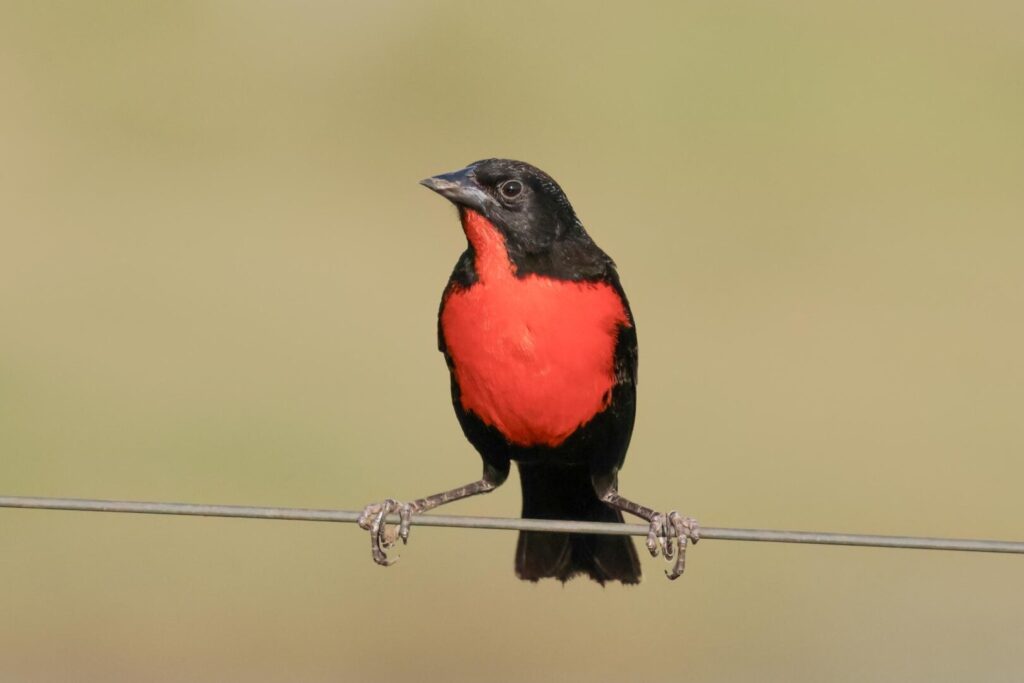
There were a few birds on the way, most notable of which were several flocks of Red-breasted Meadowlarks, a new one for the trip. We also saw a few White-tailed Hawks and numerous Burrowing Owls. A Razor-billed Curassow ran across the road as we passed through one of the forest remnants.
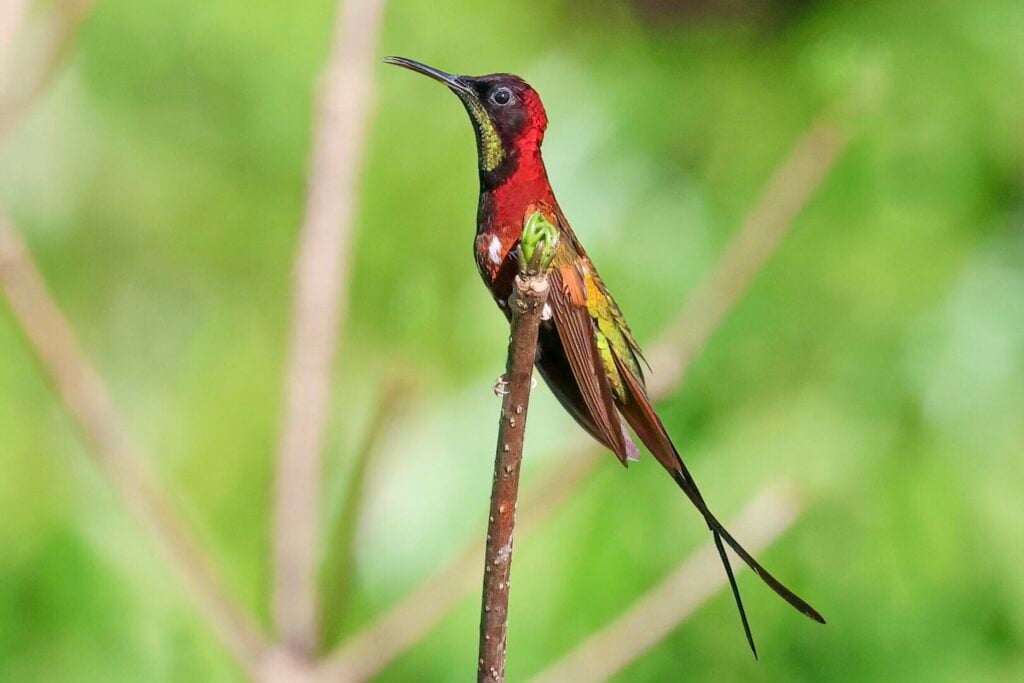
We finally arrived at the lovely lodge at Rio Azul after the best part of two days travelling. There were lots of hummingbirds coming in to the many feeders arranged on the bushes between the feeders. Best of all, they included at least three stunning Crimson Topaz, two males and one female. One of the main targets we were hoping to see while we were here.

We had enough time for a quick first look from the top of the tower, before the light started to go. There were lots of tanagers in the bushes around the lodge, the ubiquitous Silver-beaked and Palm, plus Blue-grey and Blue-necked Tanagers. Several White-faced Spider Monkeys were in the trees too. A Screaming Piha called – welcome to the Amazon basin! After a break for a shower, we headed up to the restaurant for a delicious dinner. The food here is really excellent.
After an early breakfast, we met local guide Isaac. He didn’t speak any English but we assumed he was mainly there to show us round. Our second main target here was Bald Parrot. Endemic to a small area in the central Amazon of Brazil, it was only identified as a species in 1999, having previously been assumed to be juveniles of the Vulturine Parrot. Rio Azul is probably the most reliable place to see it. We were told the entrance track was a good place to look so we headed down there.
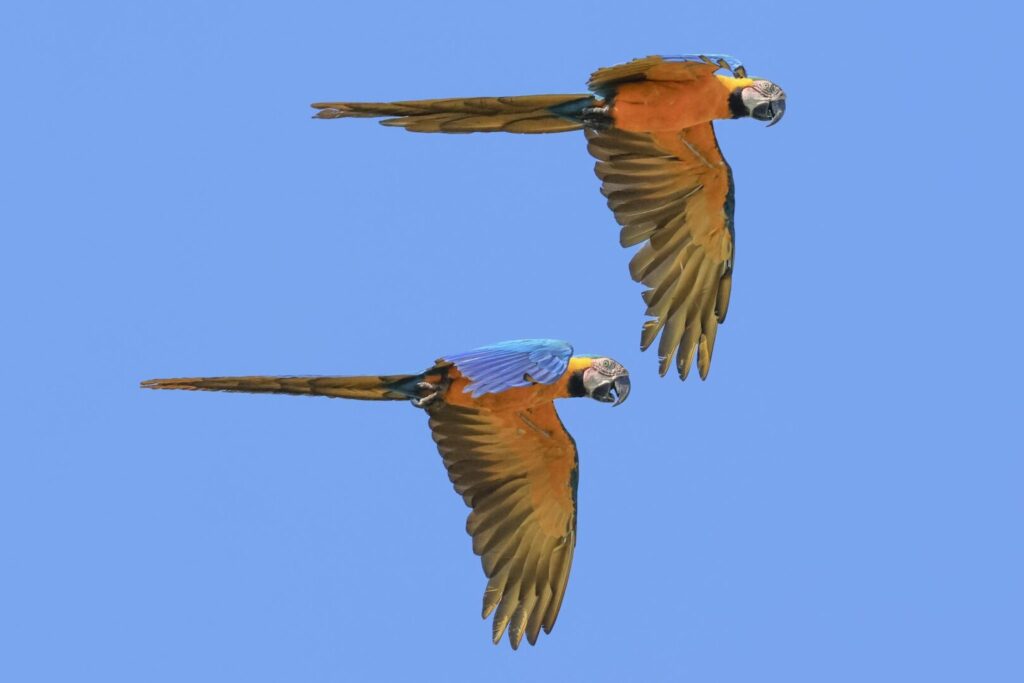
Walking along the track through the open ‘campinarana’ white sand forest, there was no shortage of parrots. We saw Red-fan and White-bellied Parrots, Orange-winged Amazons, Scarlet-shouldered Parrotlets, Santarem and White-eyed Parakeets. A variety of macaws flew over, including a couple of Chestnut-fronted and several Scarlet Macaws. There were lots of Blue-and-yellow Macaws, including a couple on a nestbox in the open scrub just outside the front gate. Isaac pointed out a call which he suggested was Bald Parrot but it was distant and we couldn’t be sure.
There were several Southern White-fringed Antwrens in the scrub and a couple of Red-shouldered Tanagers. We heard our first Trilling Gnatwrens. Four Black Caracaras flew over. A Roadside Hawk was on a nest in the scrub.

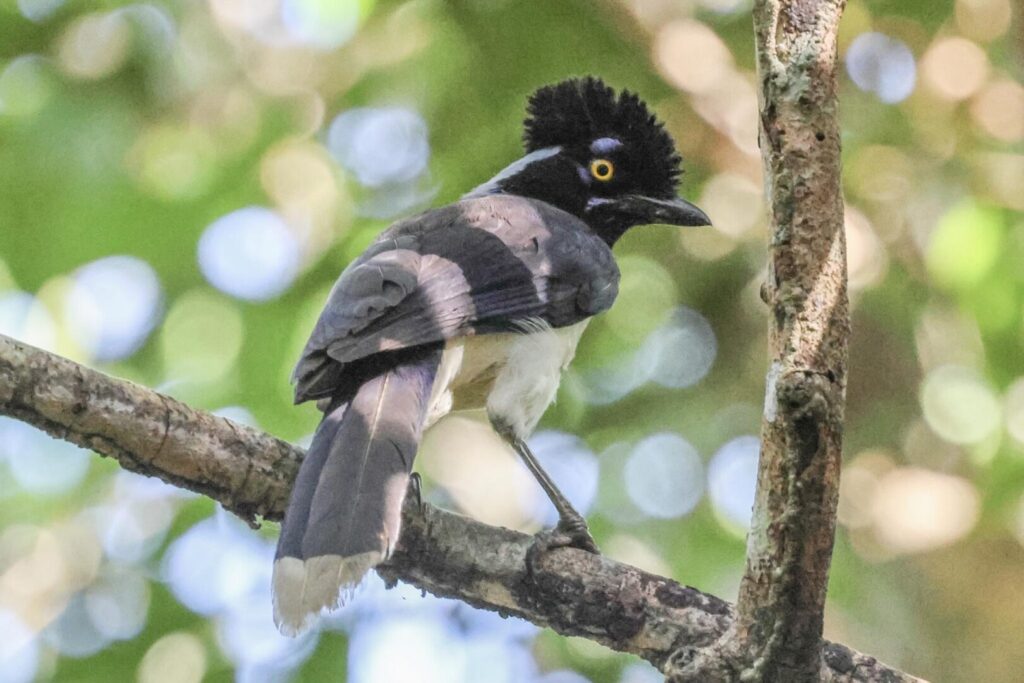
As it started to warm up, we walked a short way back along the track and took one of the trails in through the thicker trees. It wound down to the river and then round eventually back to the lodge. Typically slow going at times, we did find some nice birds. Early highlights were a couple of Greyish Mourners and Plush-crested Jays.
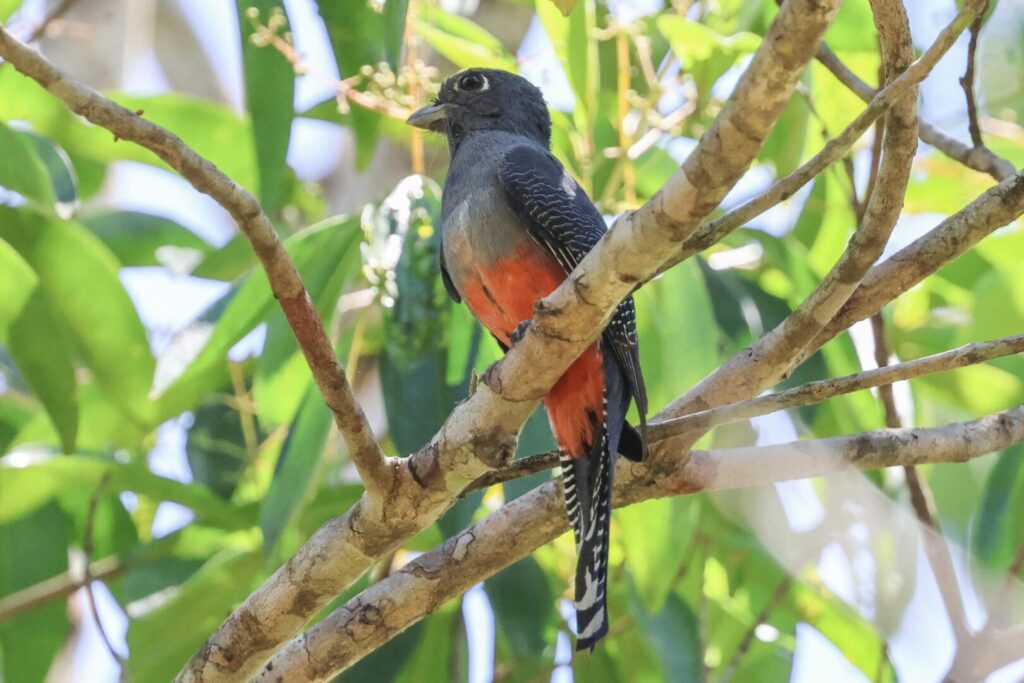
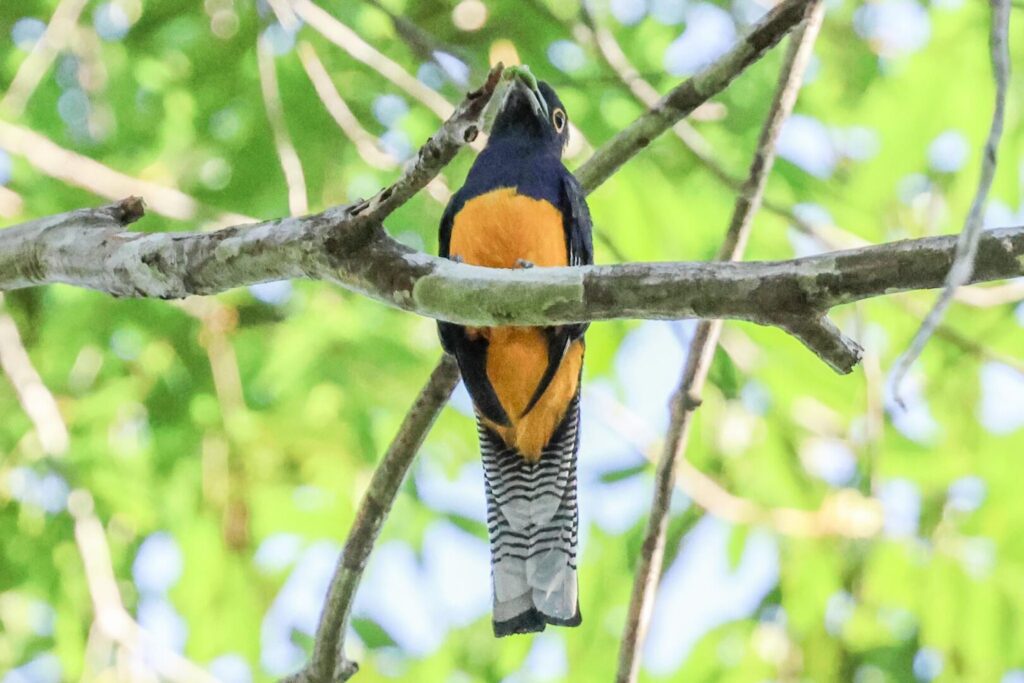
Other highlights included Bar-breasted Piculet, Paradise Jacamar, Grey-crowned Flatbill, White-flanked Antwren and Amazonian Barred Woodcreeper. We could hear a Bright-rumped Attila in the trees and managed to call in a mixed group of Short-billed and Purple Honeycreepers. As we got back to the lodge, a female Blue-crowned Trogon was in the bushes.
It wasn’t long before lunch and then in the heat of the early afternoon, we pottered around the lodge. There were good photo opportunities with all the hummingbirds around the feeders. Once again, there were up to 4 Crimson Topaz hanging around. The males were surprisingly aggressive, chasing off any other hummingbirds which tried to use their favoured feeders.

Great views of the commoner species, like White-necked Jacobin, Fork-tailed Woodnymph and Black-throated Mango.
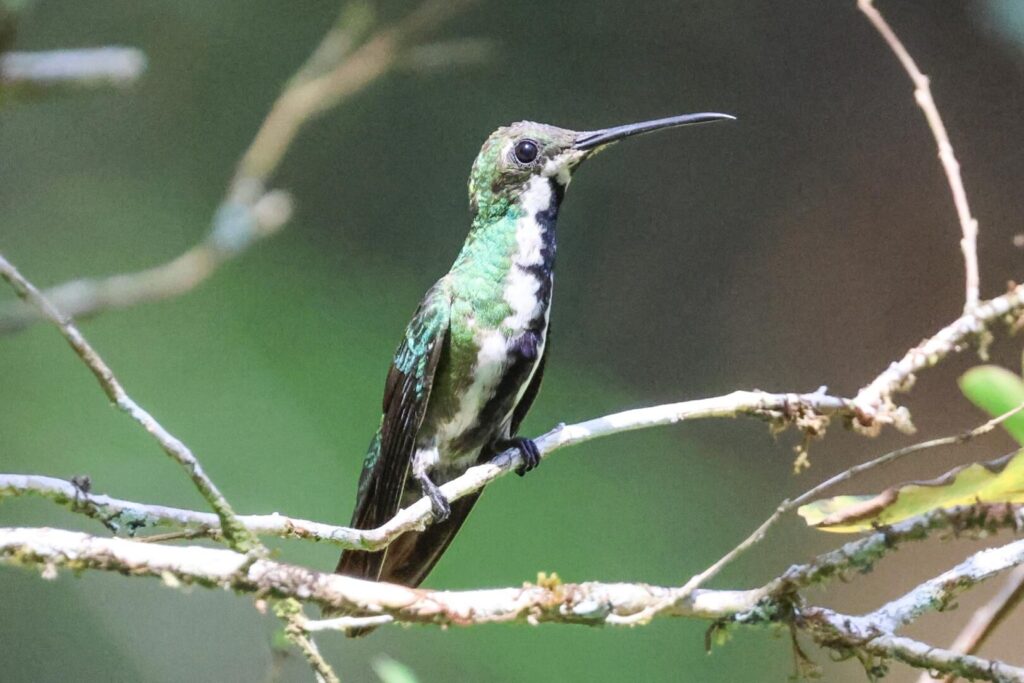
And Grey-breasted Sabrewing.
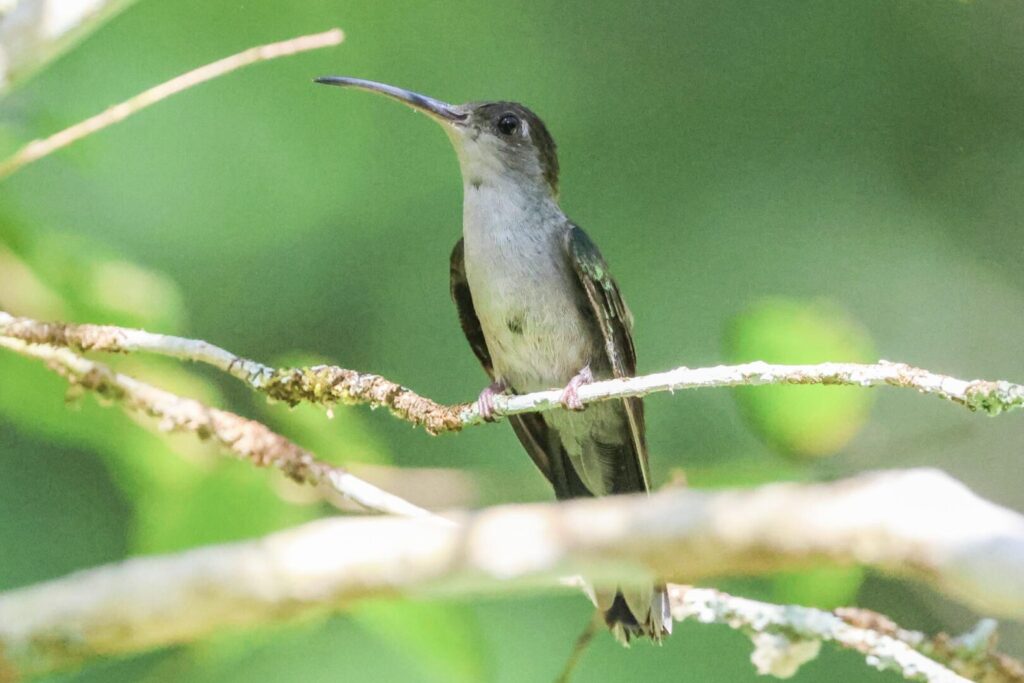
Gould’s Jewelfront was a new hummingbird for the trip.
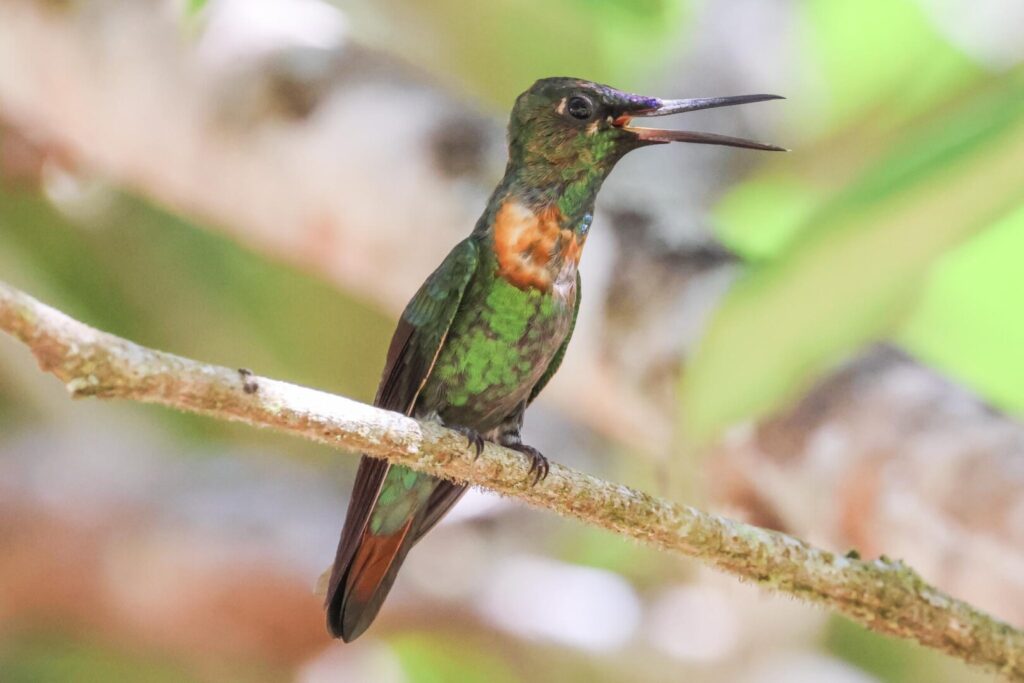
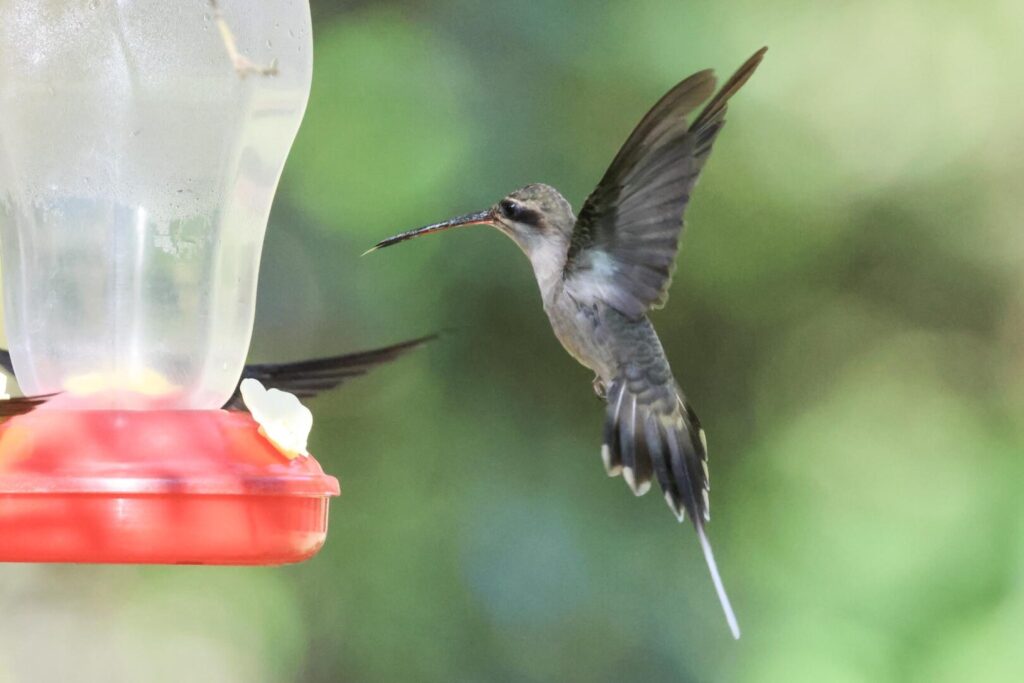
We had done surprisingly badly for hermits up to this point, but now we added two species which came in to the feeders – White-bearded and Rufous-breasted Hermits.

There was no real sign of it cooling down in the afternoon, but we went for a walk with Isaac into the forest. It was mostly rather quiet, but we managed to find a few birds. Several Amazonian Trogons, Pygmy Antwren and pair of Fasciated Antshrikes. A couple of Bronzy Jacamars and White-fronted Nunbird. Red-necked and Red-stained Woodpeckers. We managed to get eyes on Dusky-capped Greenlet but only heard Wing-barred Piprites and White-crested Spadebill. There were Honeycreepers and White-vented and Thick-billed Euphonias . As the light started to go, a Grey Tinamou ran across the track.
The following day, we were up early again and back out along the entrance track with Isaac. After only about an hour, he heard Bald Parrots call and with not too much searching we managed to find two in the trees. Success! Good views of them preening in the branches above us. Odd looking birds, perhaps the kind of parrot only a mother could love.

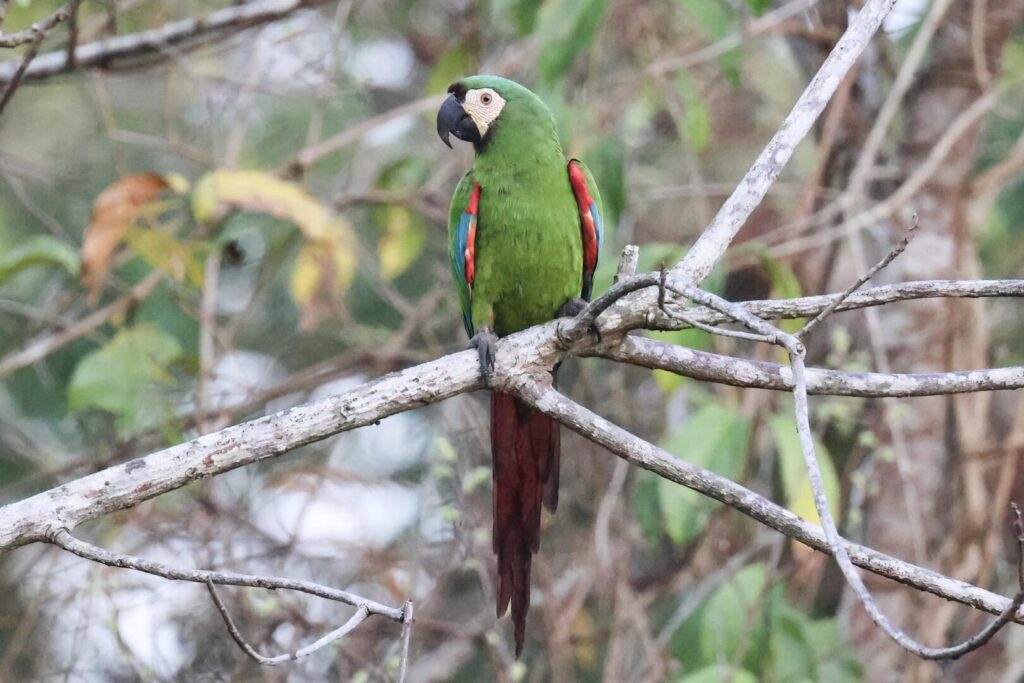
Once again, there was a nice selection of other parrots including a pair of Orange-cheeked Parrots and several Dusky-billed Parrotlets this morning. Two Red-bellied Macaws flew over.
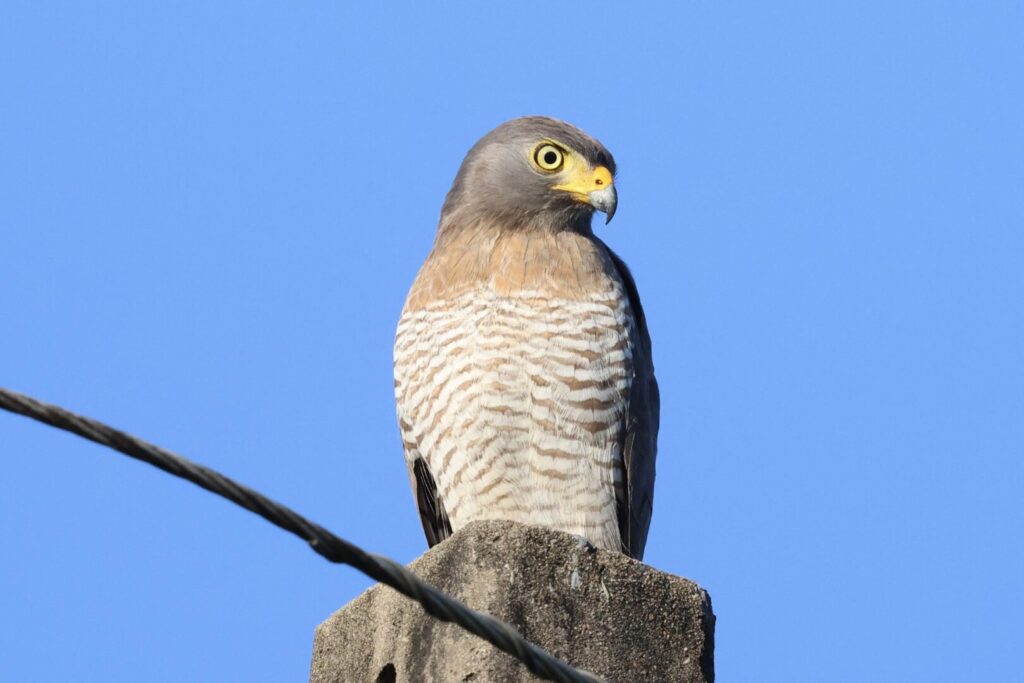
Mission accomplished, we walked slowly back to the lodge. We heard Barred Forest Falcon calling in the forest but it wouldn’t come out. We did catch up with Fiery-capped Manakin, a pair of Spix’s Warbling Antbirds and finally got to see one of the Trilling Gnatwrens. A Roadside Hawk was perched on a telegraph post in the sunshine, close to the nest we had seen yesterday.
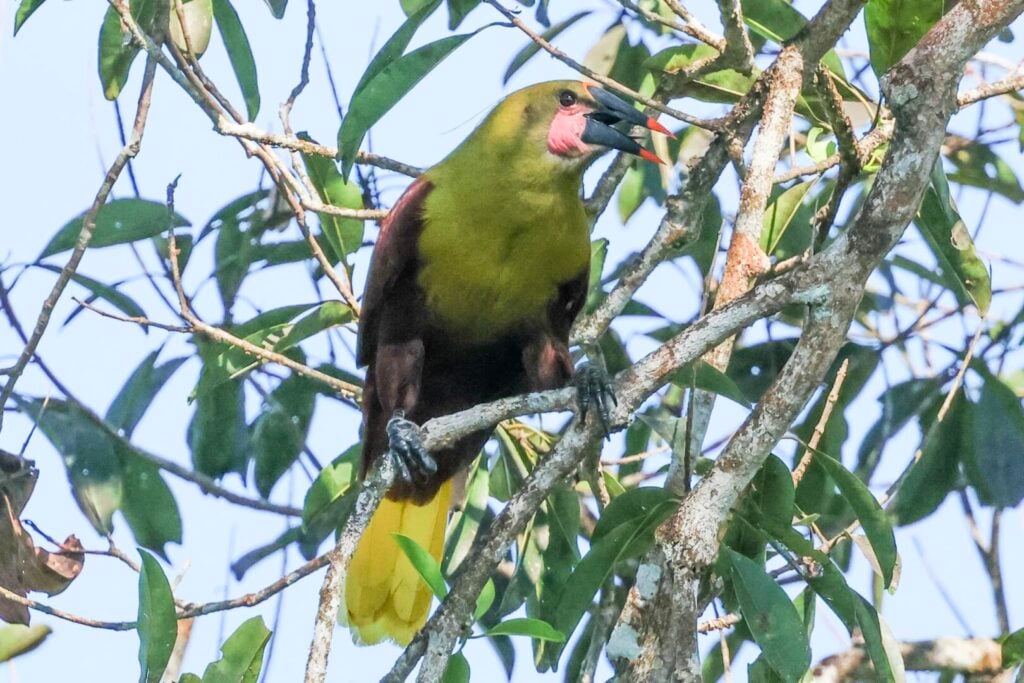
The tower can be a great place to stand and watch in the early mornings, so we headed up there now. There was a good variety of birds in the trees, including Gould’s Toucanet, Chestnut-eared Aracaris and White-throated Toucans. A pair of Yellow-tufted Woodpeckers were visiting a nest hole in a nearby tree, where an Olive Oropendola was displaying. Other highlights included a female Pompadour Cotinga, Black-crowned and Masked Tityras, White-throated Kingbird, Dusky-capped Woodcreeper and Masked Tanagers.
Several hummingbirds came up into the canopy to enjoy the early morning sunshine too, including a Crimson Topaz which landed in the trees in front of us.
We had arranged to go out on a boat on the river at 9am. This produced many of the usual species – Sunbittern, Capped and Striated Herons, Amazon and Green Kingfishers. A Bat Falcon was perched in the trees. Several Red-capped Cardinals were our first of the trip. On our way back, we tried one of the trails in off the river bank. We were hoping for Pavonine Quetzal along the river but it was hot and rather quiet now. Back by the jetty for the lodge, we found several Greater Anis in the trees and a Crowned Slaty Flycatcher.
We had a bit of downtime now. Checking the hummingbird feeders, we initially presumed a hermit round the same one as yesterday would be the White-bearded Hermit from yesterday. But on closer inspection it turned out to be a Straight-billed Hermit. As well as all the same species as before, a Long-billed Starthroat was also the first we had seen at Rio Azul.
Later in the afternoon, we went for a walk with Isaac round the trails through the forest again. It was quieter than yesterday but we did find a Ruddy Quail-Dove on the path ahead of us. We had good views of Green-backed and Amazonian Trogons, and heard Black-tailed. We saw a couple of Grey Antwrens. A large Yellow-footed Tortoise (also known as Brazilian Giant Tortoise) on the path was also good to see.
Our last morning at Rio Azul, we went out for a short walk again first thing. There was no sign of Isaac this morning, so we tried down along the trail through the forest where we had been yesterday afternoon. Reddish Hermit and Variable Woodpecker were both new for the trip. We also found Spot-winged Antshrike, a couple of Pygmy Antwrens and Spix’s Warbling Antbirds, and several Yellow-browed Antbirds. There were several Santarem Parakeets in the trees.

Then we headed back to the tower again. It was a little quieter than yesterday but it is a lovely place to stand and scan. A group of four Bald Parrots flew over. The Olive Oropendolas were displaying again.
There were lots of tanagers in the trees, including the usual Silver-beaked, Blue-gray and Palm, plus Green-and-gold and our only Fulvous-crested Tanager of the trip. Two Orange-bellied Euphonias were in the trees too.
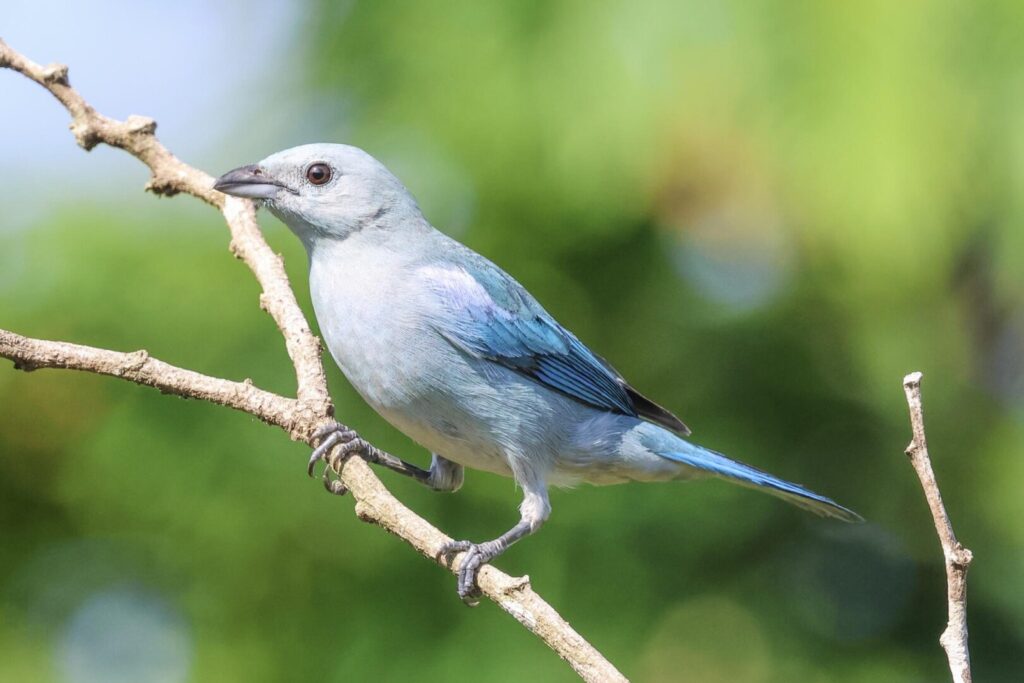
The tower is a great place for photo opportunities of some regular species too.

As it warmed up, raptors started to circle up out of the trees. Highlights included a single Grey-headed Kite, two Double-toothed Kites and seven Plumbeous Kites.
We headed back to our room to pack up and then up to the restaurant where we were given a snack to tide us over for the journey. We said our goodbyes – Rio Azul was one of the nicest places we stayed, delicious food, we cannot recommend it highly enough. Carlos and Osvaldo drove us back to Alta Floresta which took just under two hours and we arrived just after 1pm at the Cristalino Lodge office.
23rd-28th August – Cristalino
It was a journey of just under an hour in the minibus to the Teles Pires river and the boat jetty. We stopped briefly to look at a couple of Speckled Chachalacas in the trees by the road. A Tayra ran across the track as we entered the property where the jetty is located. Down at the river, the boat and guide Bruno were waiting for us. It was only about 20 minutes on the boat to the lodge. There were a couple of Black Skimmers, a Large-billed Tern and two Yellow-billed Terns on the river.
We arrived at Cristalino just before 3pm, and were promptly given more to eat! Bruno gave us an introduction and we discovered we had been put in a general interest rather than a birding group. Cristalino had apparently sent us an email to ask what we wanted to do, but a bit late. Only about a week beforehand and we were already well into our trip. And we had ongoing problems accessing our BT emails. Bruno said he would see what could be done and get back to us later.
For the remainder of the afternoon, we would go out on the boat trip as planned for a couple of hours. A couple of Drab Water Tyrants were around the dock area. Out along the river, there were lots of the usual waterbirds. Several Sunbitterns were along the shore,
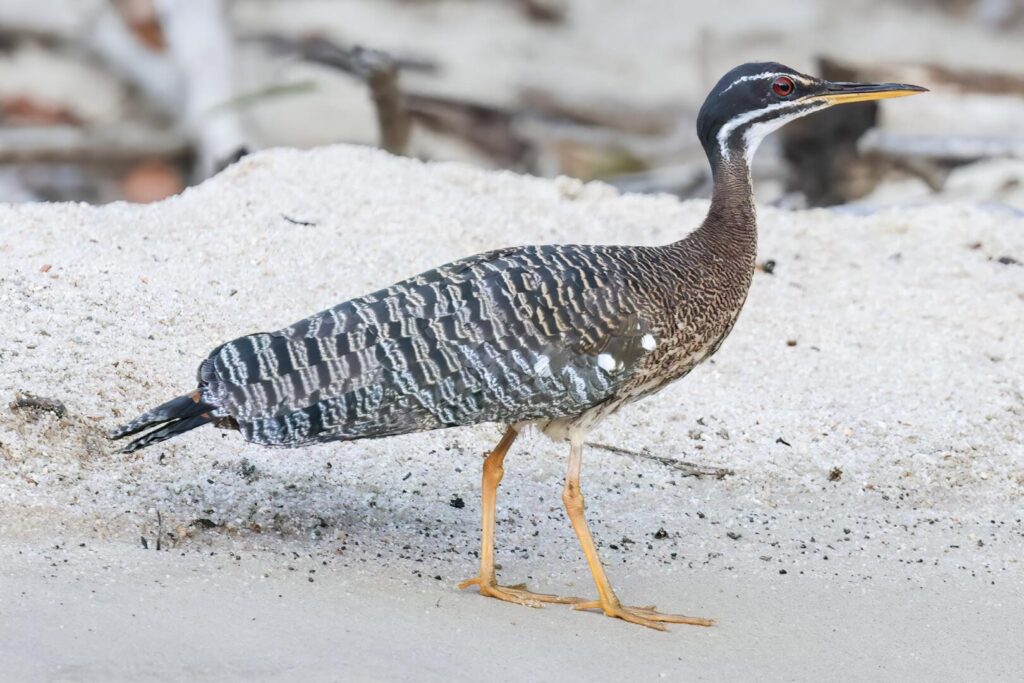
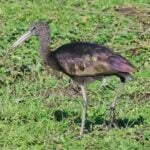
along with Anhinga and Neotropic Cormorant. Great views of Green Ibis…

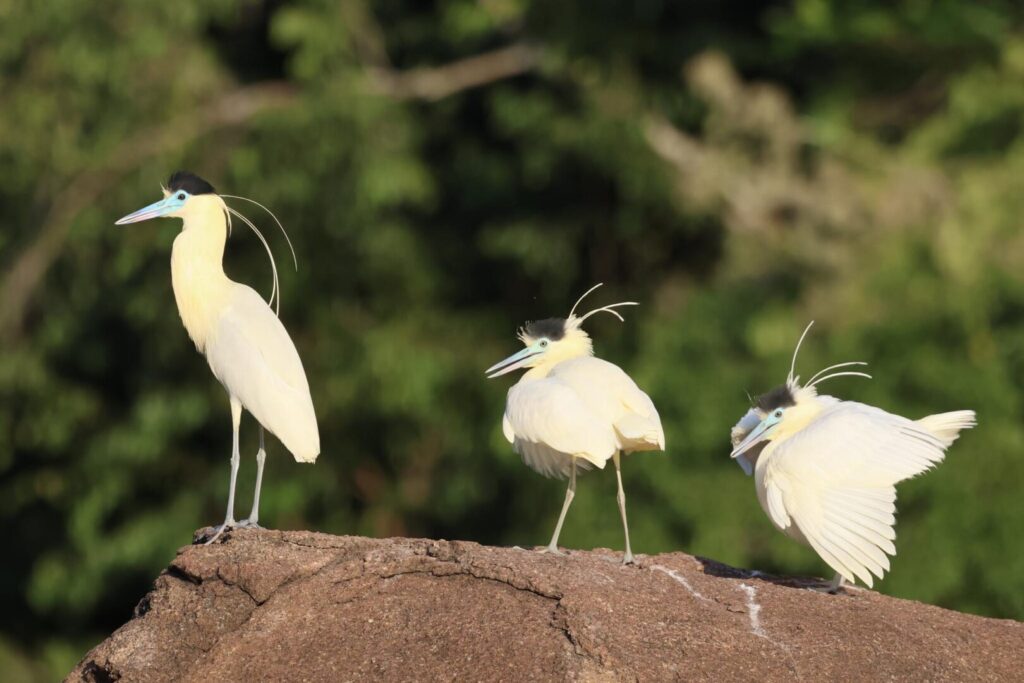
…and a family of Capped Herons on a rock in the middle of the river.
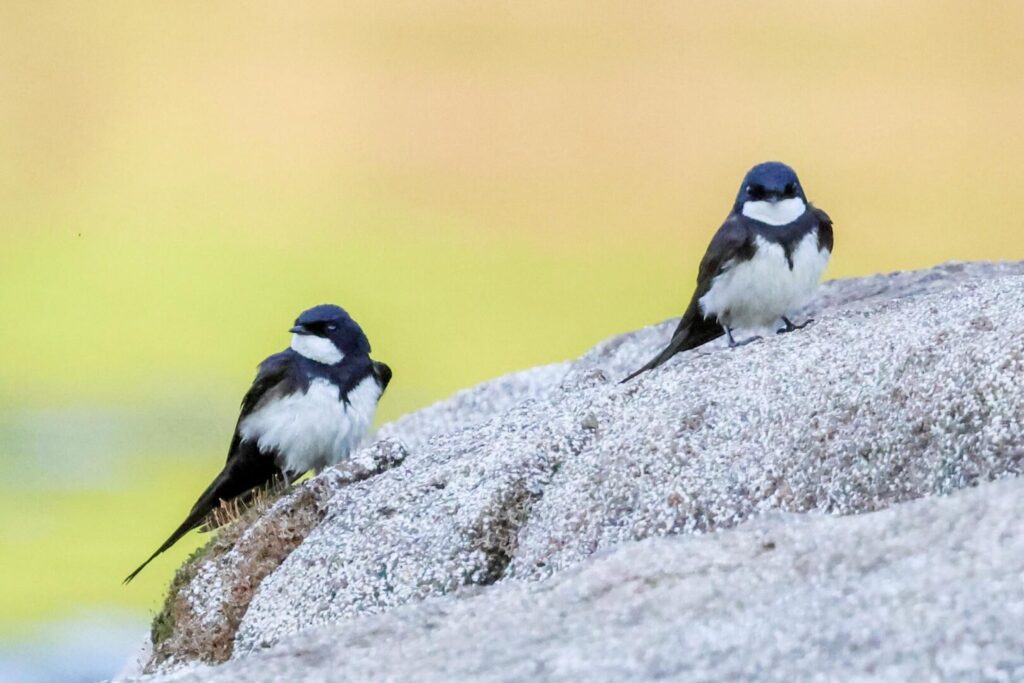
A King Vulture circled over and we finally completed the kingfisher set with three different Green-and-rufous Kingfishers. Both White-banded and Black-collared Swallows flew round over the water and landed on the rocks, the latter new for the trip.
There were Blue-and-yellow, Scarlet and Chestnut-fronted Macaws in the trees and flying over. At the Lime Tree Rapids, where we couldn’t get any further, we found a Spotted Sandpiper on the rocks, still spotty underneath. There was a nice selection of other wildlife too – Lowland Tapir and two different Neotropical River Otters, and lots of Yellow-spotted River Turtles.
A nice introduction to Cristalino from the river, it was back for a shower and then up for dinner. We would certainly not be going hungry here and excellent food again too. Bruno confirmed there was no bird guide available until tomorrow afternoon, so we would have to go out with the general interest group again in the morning.
We had a lie in this morning – the boat wasn’t leaving until 7am. A bit late in the day really. Along the river, there were the usual waterbirds. We did manage to see a group of Curl-crested Aracaris in the trees, Ringed and Yellow-throated Woodpeckers, a couple of Greater Anis and a Razor-billed Curassow on the bank.
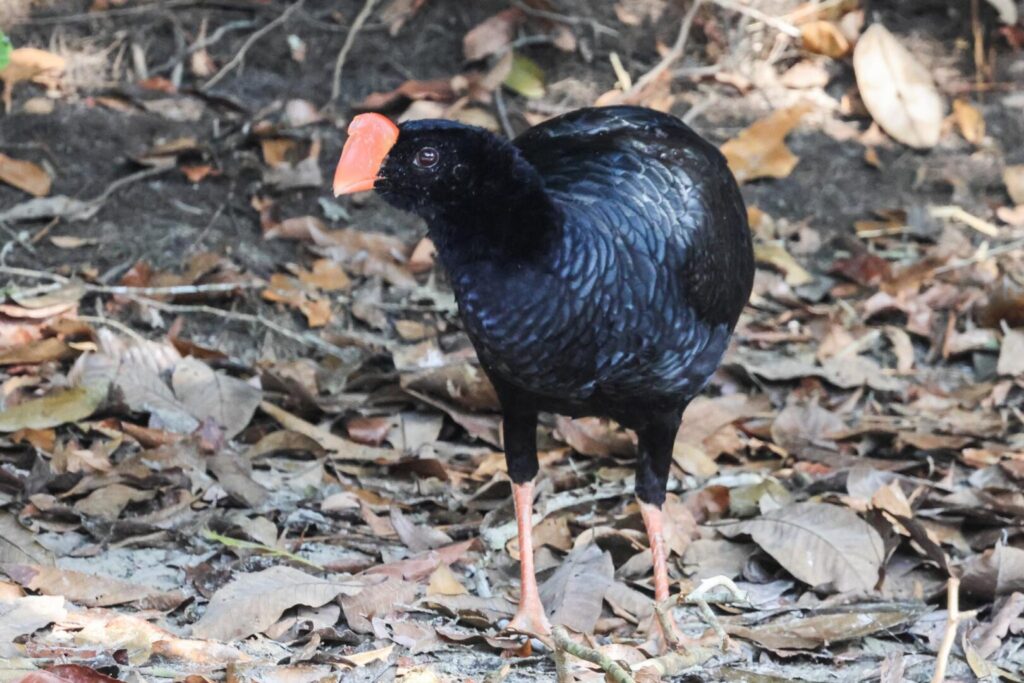
The boat motored up to the start of the Trilha Castanheira, where we disembarked for a walk. It was all a bit frustrating – no chance really to stop for birds. Even when Bruno heard a Cryptic Forest Falcon calling, we were only allowed very briefly to try and see it. The rest of the group got bored very quickly. We heard Helmeted Pygmy Tyrant too, but Bruno had moved on so we couldn’t linger.
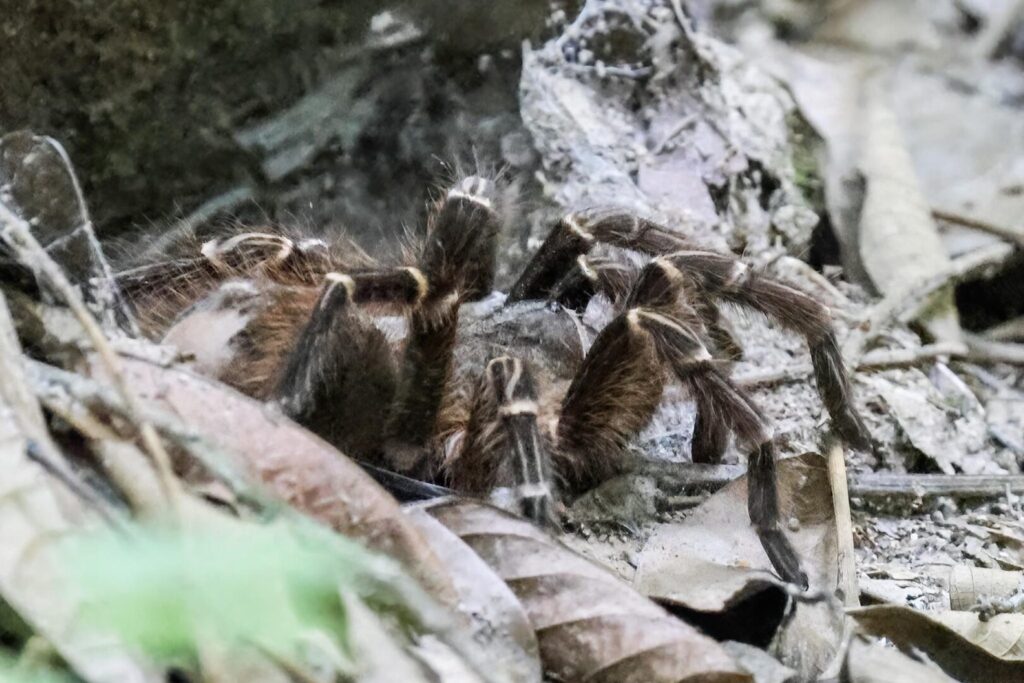
We did see a few bits and pieces – Tooth-billed Wren, Long-tailed Hermit, Bat Falcon, a couple of Red-headed Manakins. The Brazil nut trees were very impressive. A Northern Ghost Bat was roosting under a palm frond. A Tarantula sp (possibly Eupalaestrus campestratus) was lurking at the entrance to its hole in a rotten tree trunk.
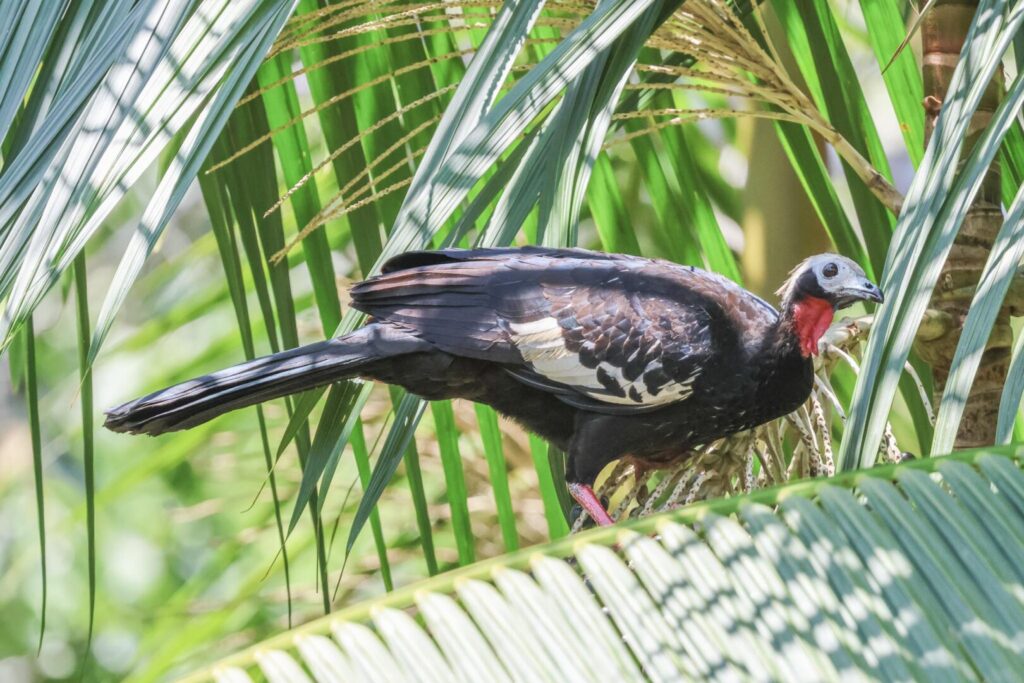
It was quickly warming up too and activity levels dropped rapidly. Back to the boat, we headed back to the lodge about 11am. We then had a chance for some much needed downtime after a hectic few days, with a break for lunch. There didn’t seem to be many places to walk without a guide and a look round the bungalows and restaurant area didn’t produce much. Lots of Santarem Parakeets in palms, a pair of Long-billed Gnatwrens and a couple of Red-throated Piping Guans down by the docks.
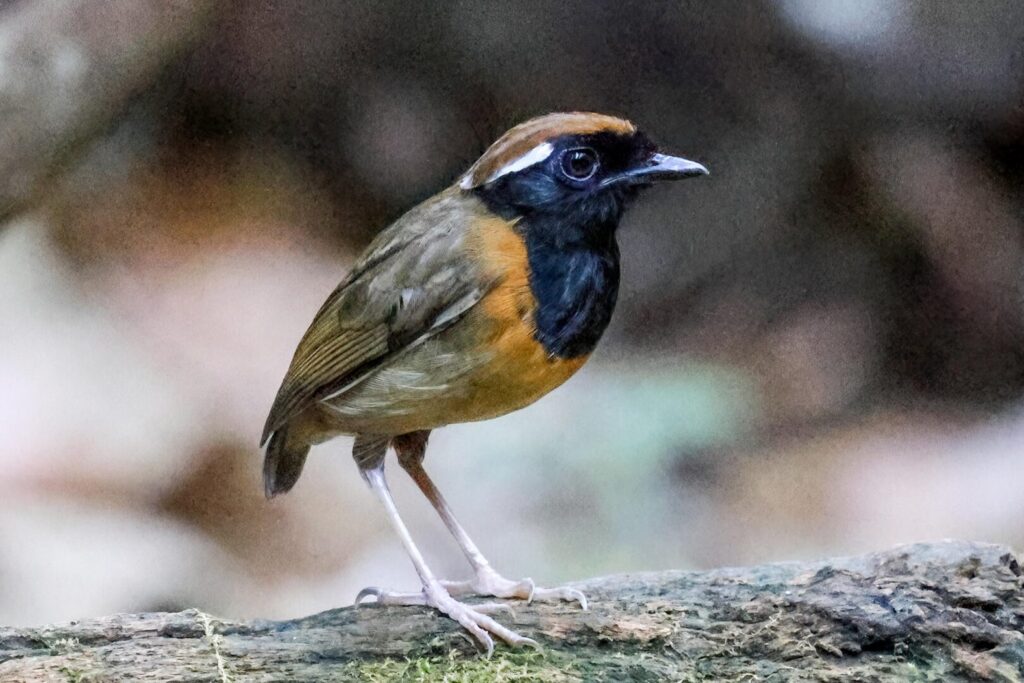
Thankfully, we were out with one of the birding guides, Priscilla, this afternoon. We met at 3.30pm and took the boat a short distance upstream. A short walk along the trail led to a hide. On the way, there was lots of rustling in the undergrowth ahead of us. Unfortunately we just caught the back end of the Dark-winged Trumpeters as they scuttled off away from us.
The hide was a revelation. Finally, birds everywhere, as they came in to drink or to eat the mealworms put out. The undoubted highlight was the pair of Black-breasted Gnateaters which showed fantastically right in front of the hide.
There was a fantastic selection of antbirds. Great to see them close and out in the open too, rather than skulking deep in cover. These included several Spot-winged Antshrikes,

plus both Saturnine and Cinereous Antshrikes,
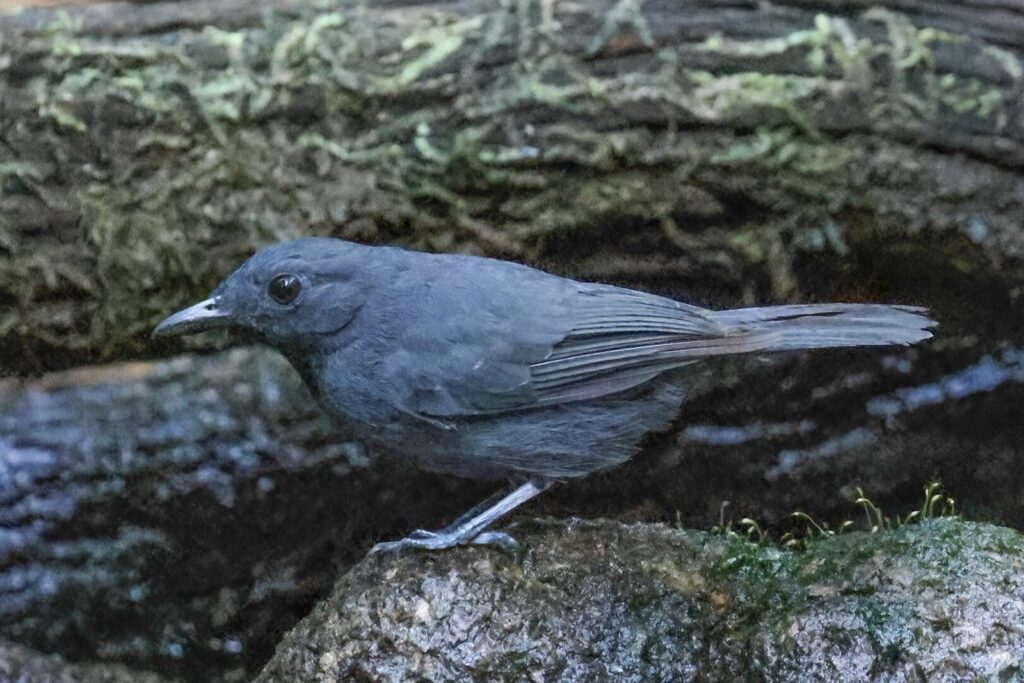
a White-eyed Stipplethroat, Long-winged and Plain-throated Antwrens,
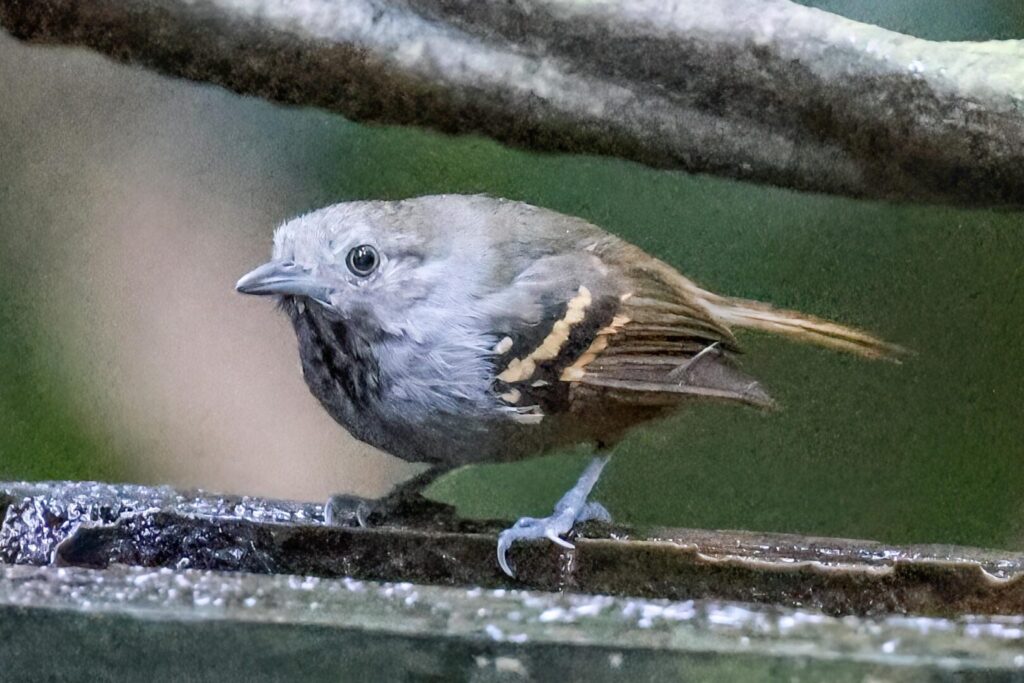
Xingu Scale-backed Antbirds, Spix’s Warbling Antbird, and pairs of both Black-spotted Bare-eye and Bare-eyed Antbirds.

There was a good selection of Foliage-gleaners which came in to bathe, including Rufous-rumped, Rufous-tailed and Ochre-throated Foliage-gleaners and a Chestnut-winged Hookbill.

Other highlights included Brown-winged Schiffornis and Whiskered Myiobius,
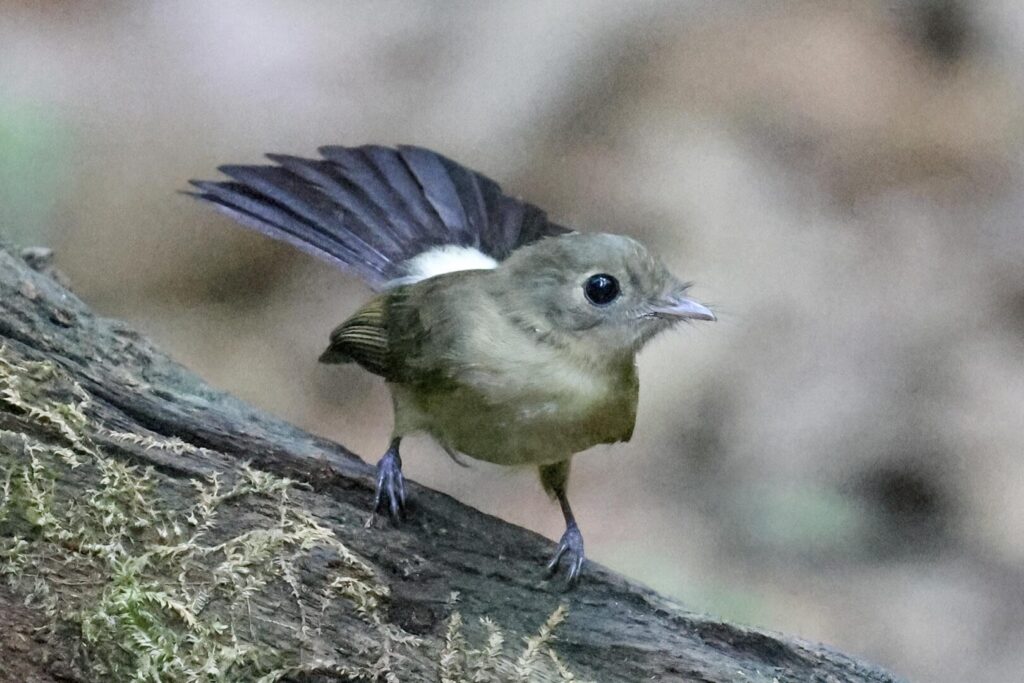
Rose-breasted Chat, Red-crowned Ant Tanager, Flame-crested and White-shouldered Tanagers.
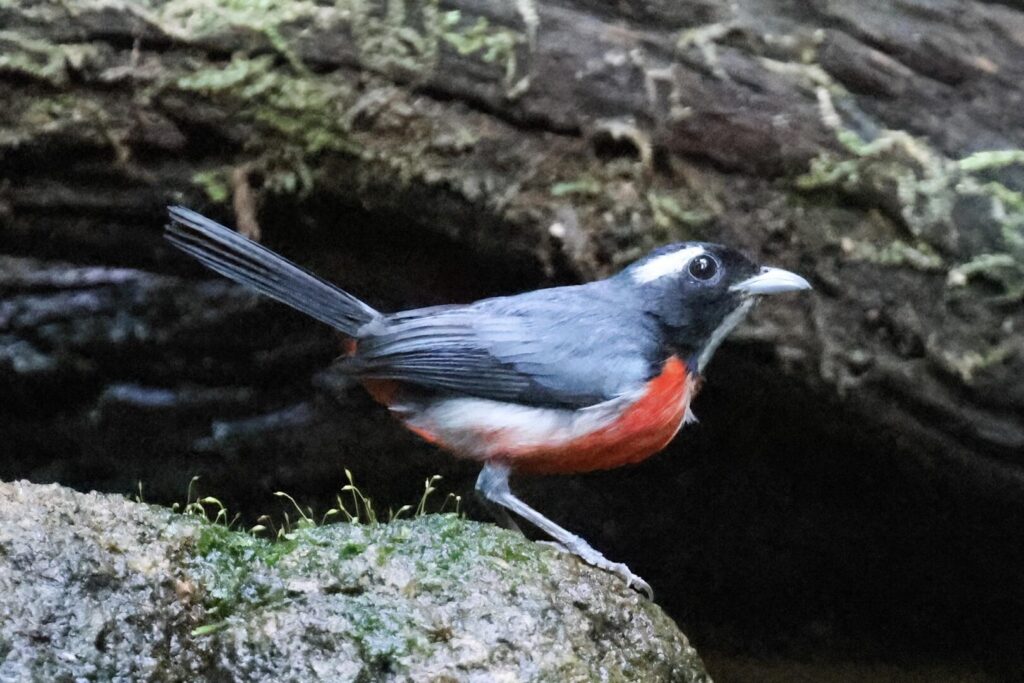
We saw males of both Snow-capped Manakin…
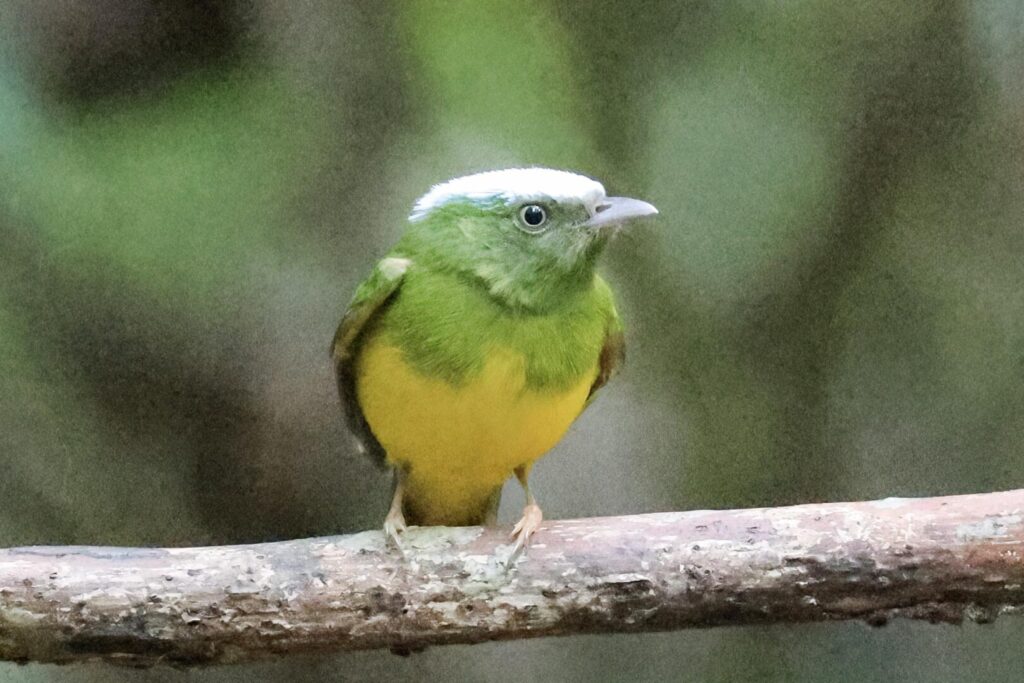
and Band-tailed Manakin. A Black-eared Fairy came in to bathe. We heard both Great and Variegated Tinamous calling.
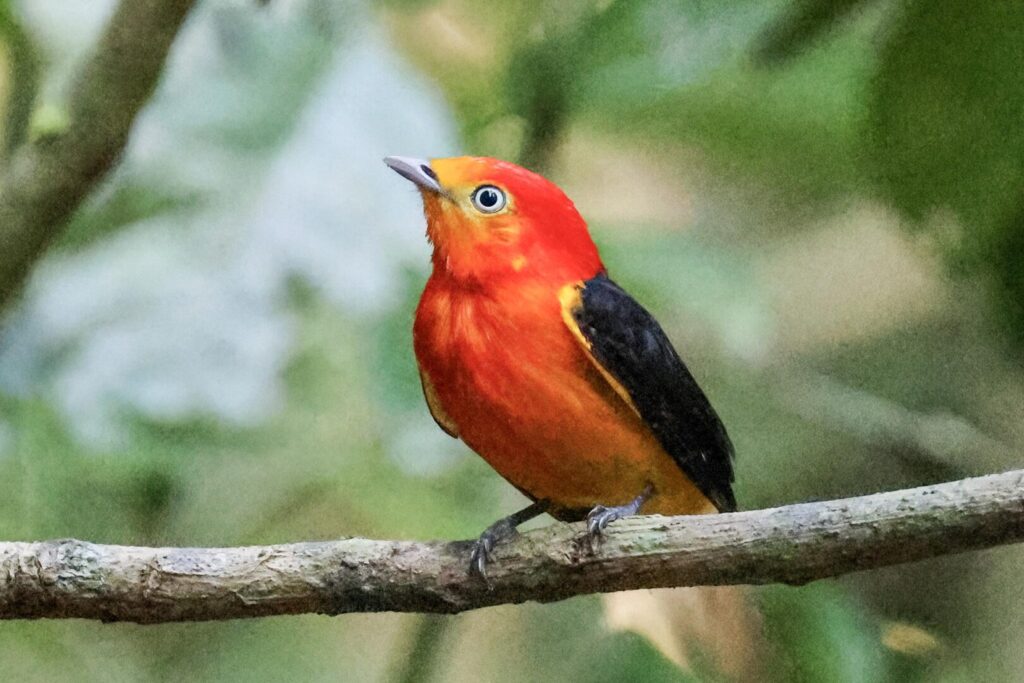
The birds just kept coming and coming. A fantastic afternoon, we eventually left the hide as it was getting dark. After walking back to the boat, it was just a short ride back to the lodge. Rafael met us on the dock. He would be guiding us the next couple of days and he told us the plans for tomorrow. Time for a shower before dinner. On our way up to the restaurant, we heard a Crested Owl calling.
Early breakfast today, we left at 5.30am with Rafael to the Chip Haven Tower. We went right up to the top first and there was a fantastic view over the surrounding rainforest. A great place to watch the sunrise. It wasn’t too bad when we arrived but the wind picked up fairly quickly, so we retreated a bit lower down. There were several Spix’s Guans in the trees. Good views of Lettered and Red-necked Aracaris.

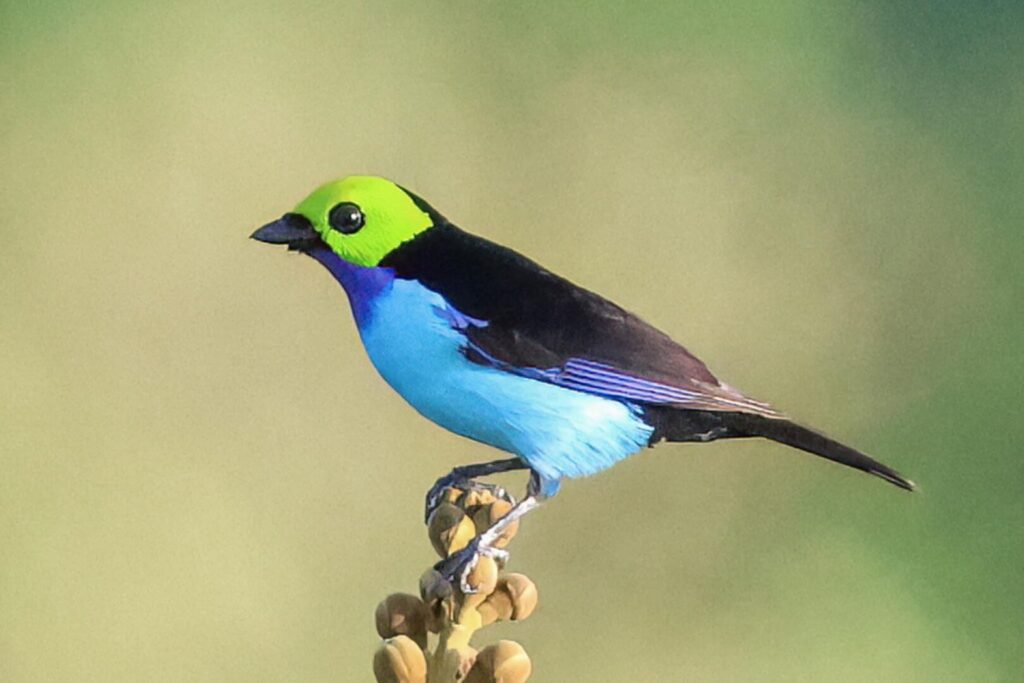
We also saw a pair of Spangled Cotinga, Yellow-browed Tody-Flycatcher and Paradise Tanager.
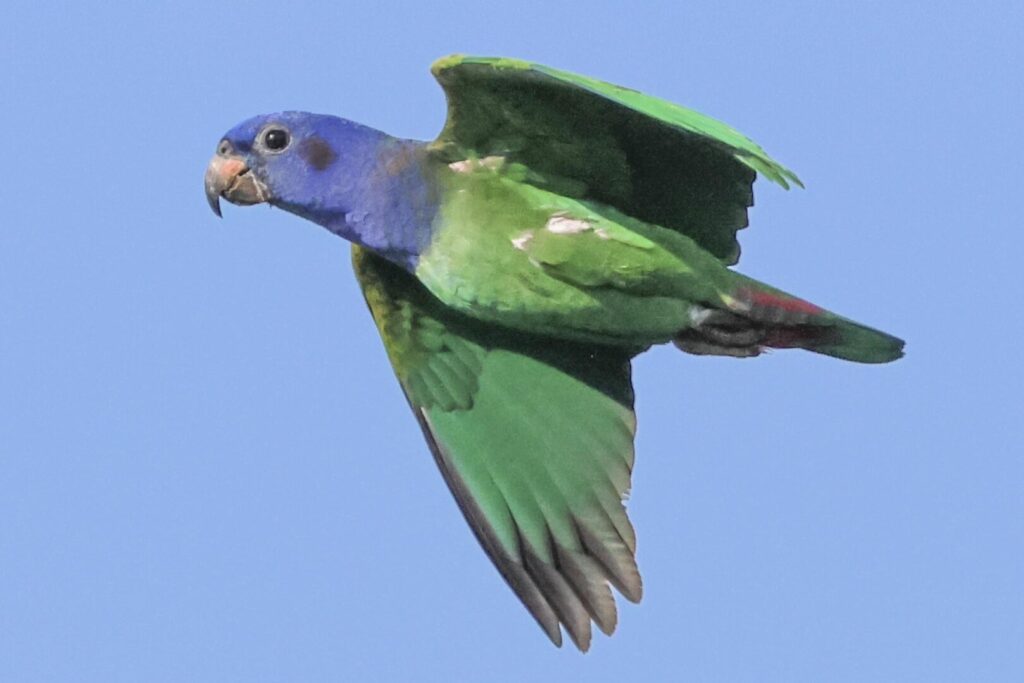
There were plenty of parrots. Several White-bellied Parrots and lots of Blue-headed Parrots flying past.
Lots of White-eyed Parakeets, with good views of several feeding in the tops of the trees.

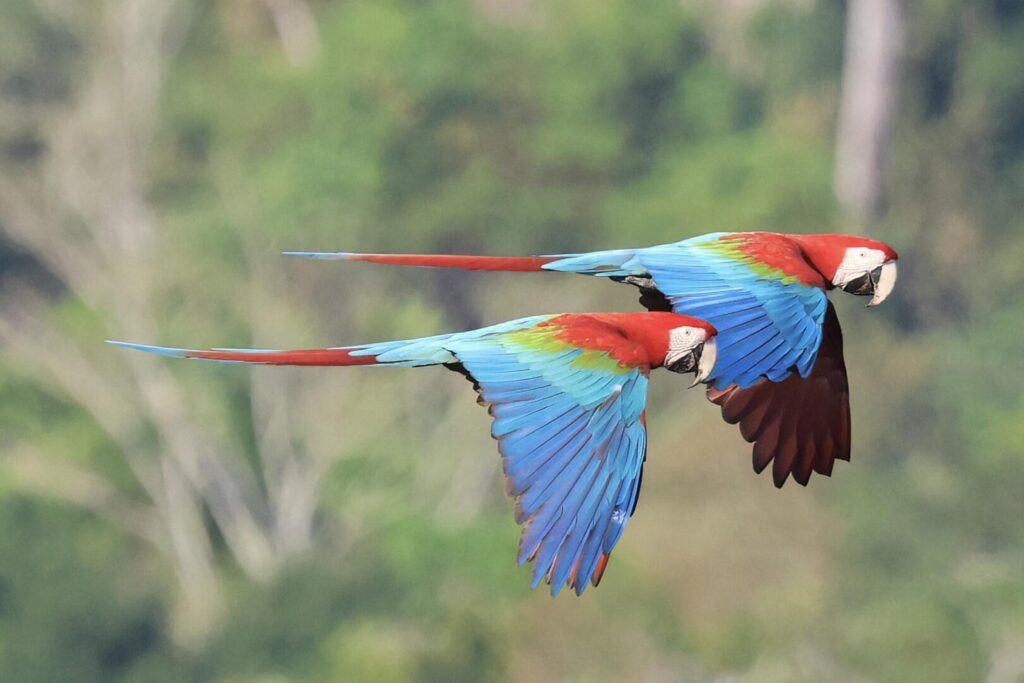
And a variety of macaws flying past including Blue-winged, Chestnut-fronted, Blue-and-yellow, Scarlet and Red-and-green Macaws.
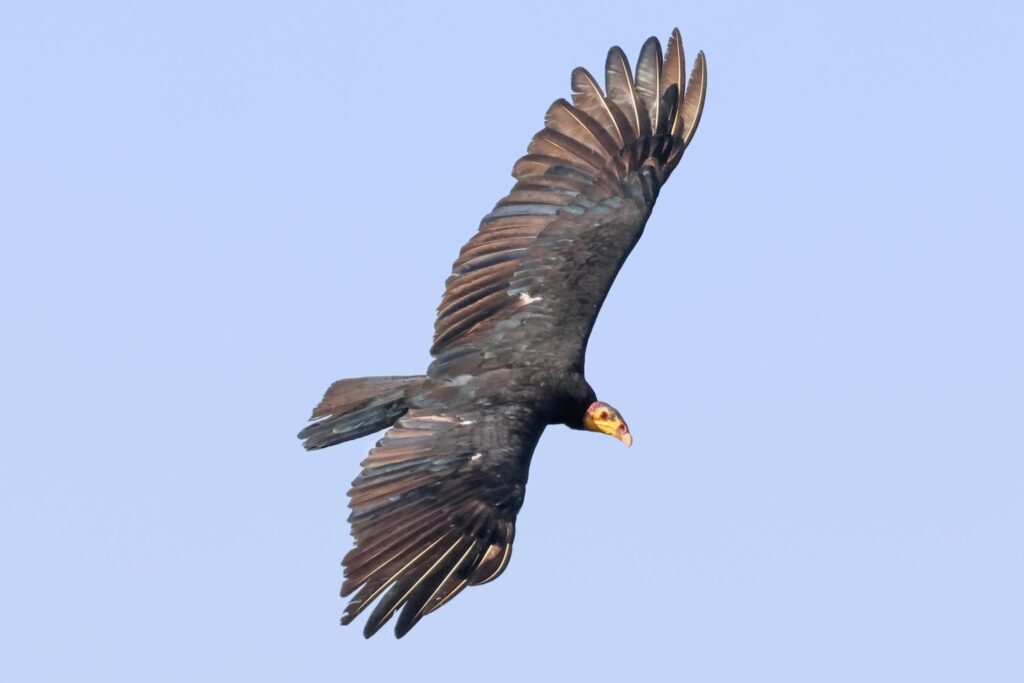
A Greater Yellow-headed Vulture circled at eye level right in front of us.
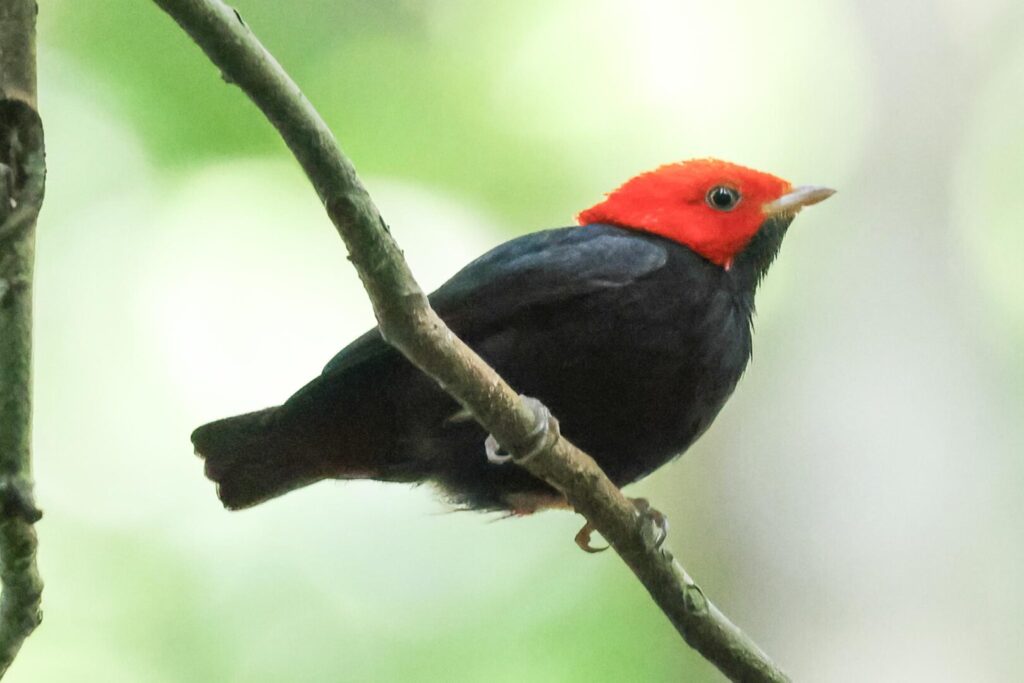
There was plenty to see but not the variety of species we had hoped for this morning, possibly due to the wind. We descended back down to the ground and had a short walk along the trail beyond. There were several Red-headed Manakins in the trees…
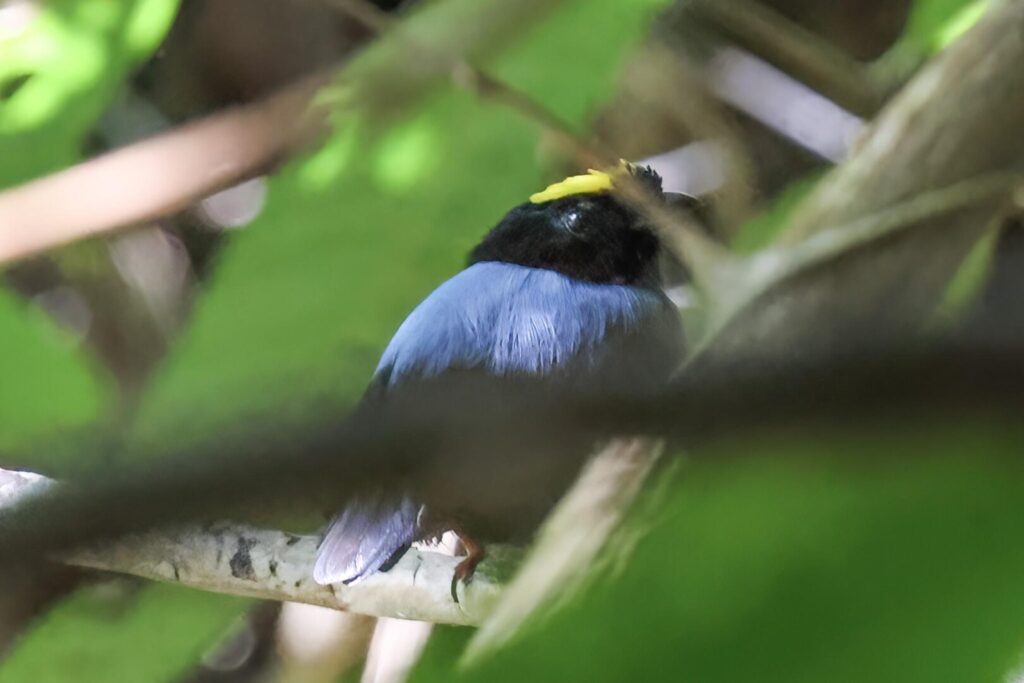
and a single male Blue-backed Manakin. We heard Red-billed Pied Tanager calling but couldn’t see them in the trees.
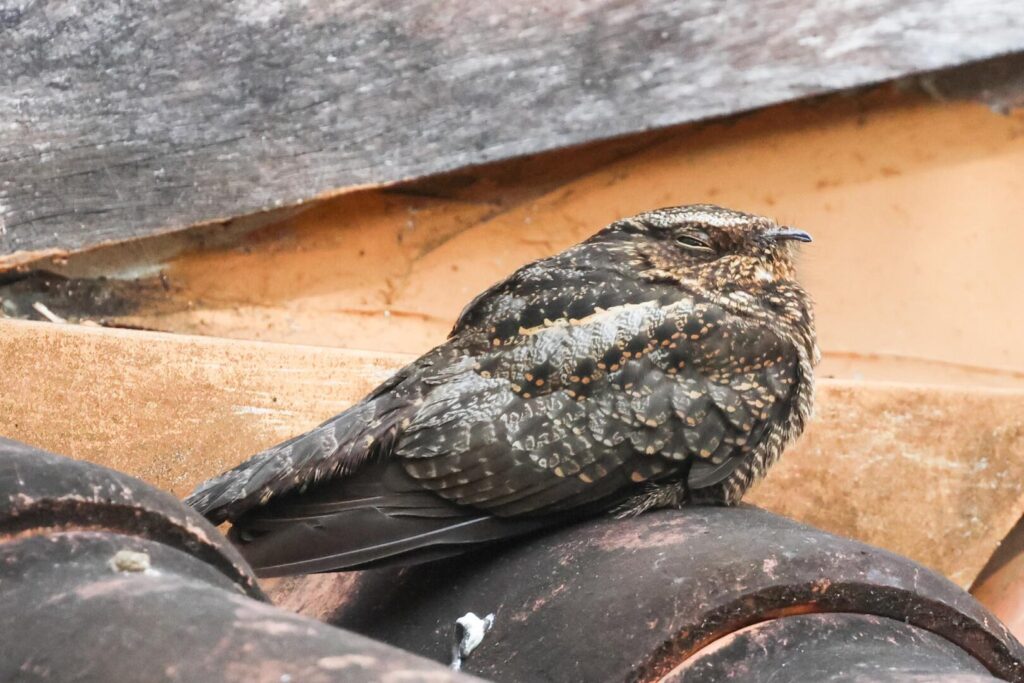
Back past the lodge, Rafa took us to see several Blackish Nightjars which were roosting on the roof of the restaurant block.
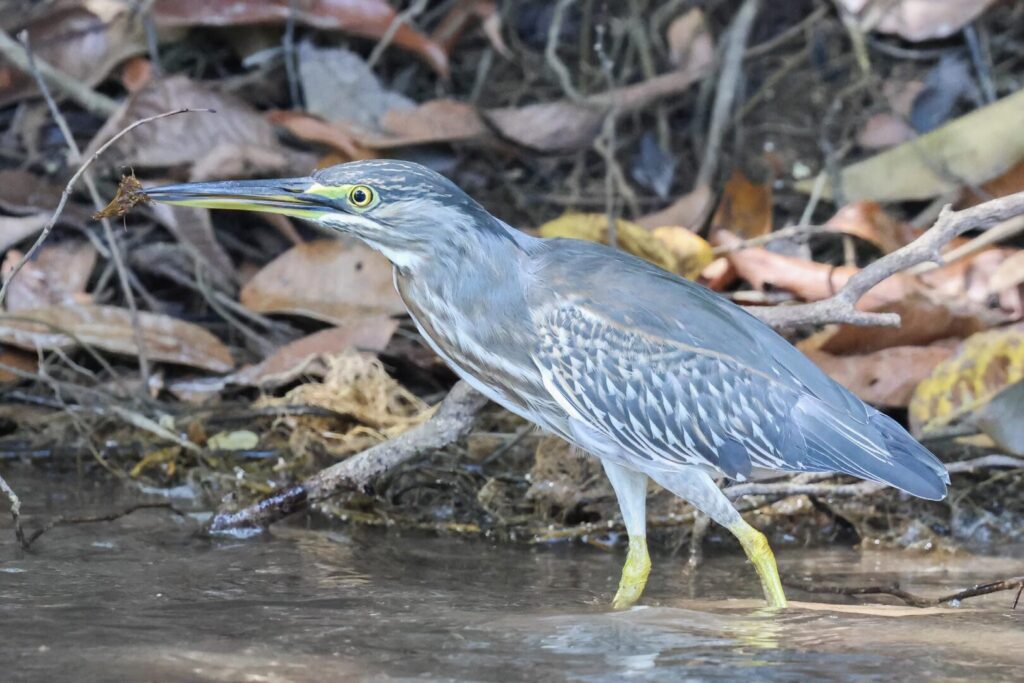
We continued on down to the river and took the boat a short way upstream. We saw another Green-and-rufous Kingfisher and a Grey-cowled Wood Rail and Striated Heron stalking along the bank. The latter was using a small piece of vegetation it was carrying in its bill as fishing bait – great to watch.
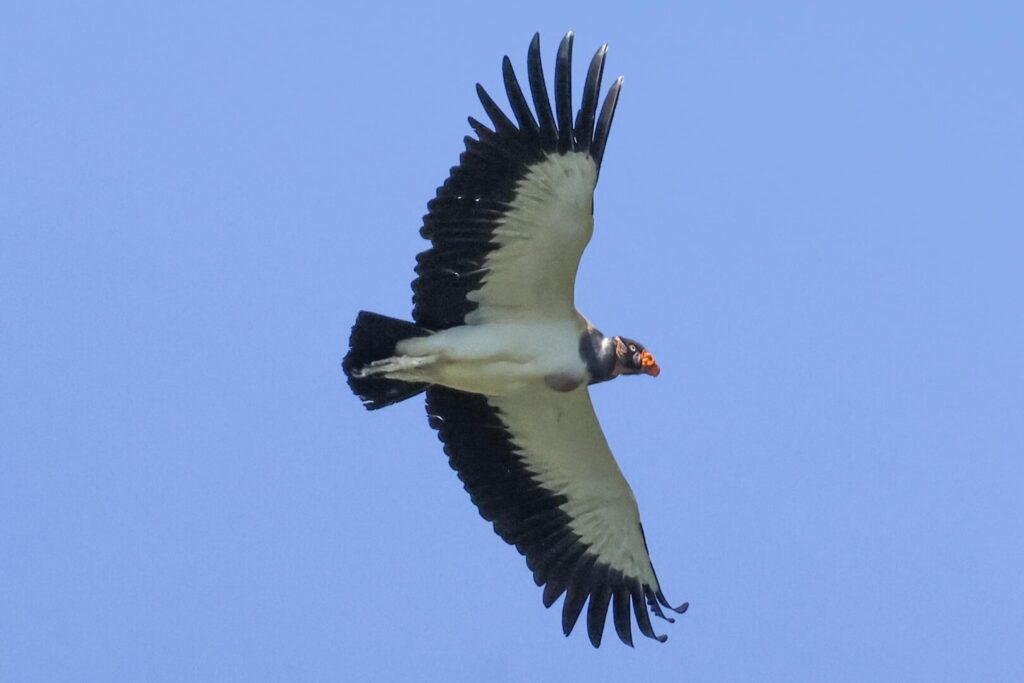
A couple of King Vultures circled over.
Rafa took us to an area which is good for Glossy Antshrike and managed to call a couple out of the dense riverside vegetation into view. A Geoffroy’s Side-necked Turtle was on the rocks in the middle of the river.
Disembarking onto the bank, we had a quick walk along a short trail to a clay lick, looking for Crimson-bellied Parakeets. There was no sign of the parakeets but we did find a couple of male Flame-crested Manakins in the trees along the trail.
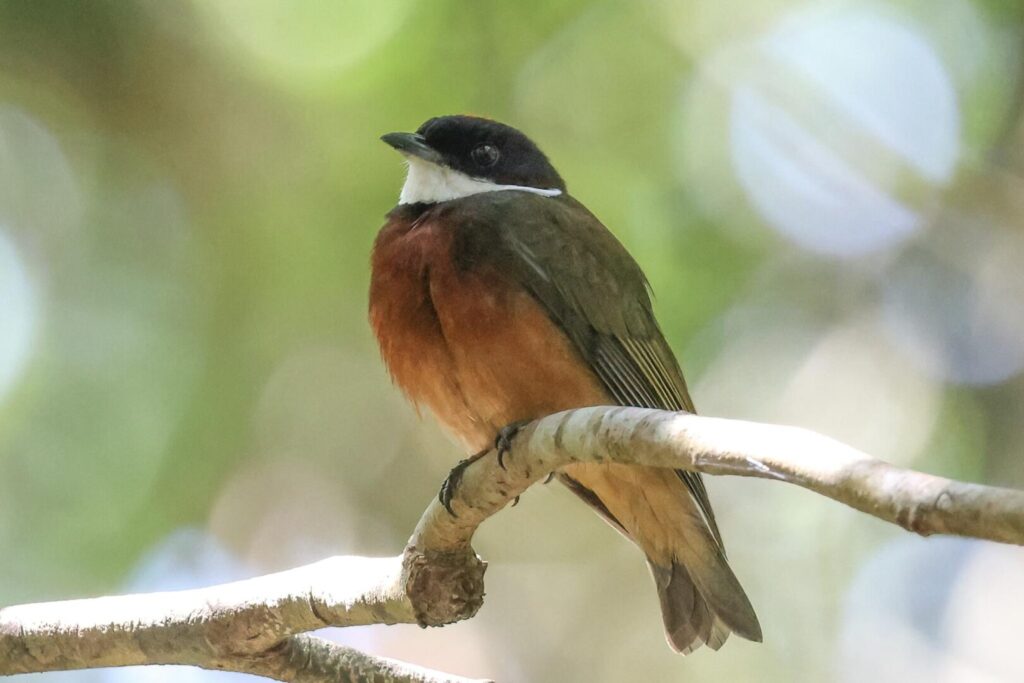
Plus a Plain-winged Antshrike and best of all, a Long-billed Woodcreeper which flew in and landed in the trees above us.

Back to the boat and we motored back to the lodge. Rafa took us for a walk in round the staff quarters, where there were lots of Golden-winged and Santarem Parakeets and Dusky-billed Parrotlets feeding on the ground on some food put out. They flew up into some nearby trees.

A Yellow-bellied Seedeater was feeding in the grass with a couple of Blue-black Grassquits.

We had a short break before an early lunch. Then we met again at 1pm. We were hoping for Scaled Ground-Cuckoo, which has been coming in to one of the hides in the early afternoons recently. It was only a quick boat ride and a short walk to the hide. Once we got inside, it was swelteringly hot and sticky. Rafael put lots of mealworms out on the branches in front and several birds quickly came in. First, a pair of White-browed Antbirds.
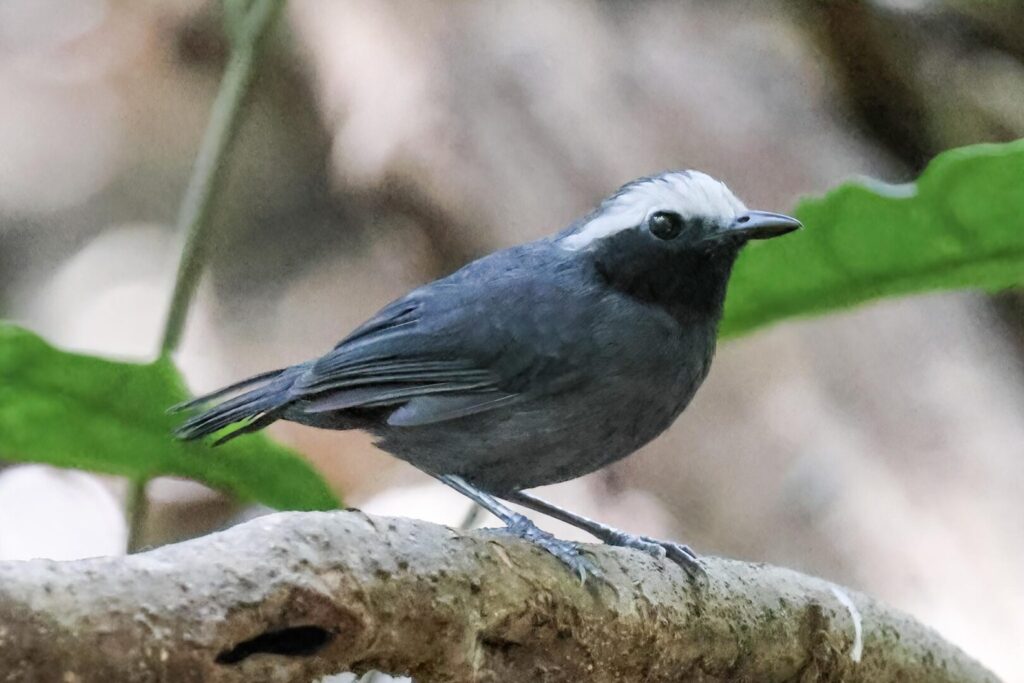
Followed by a female Tapajos Fire-eye. A recently split and very localised endemic, we had fantastic close views and, at the time, probably the only published photos of a female!
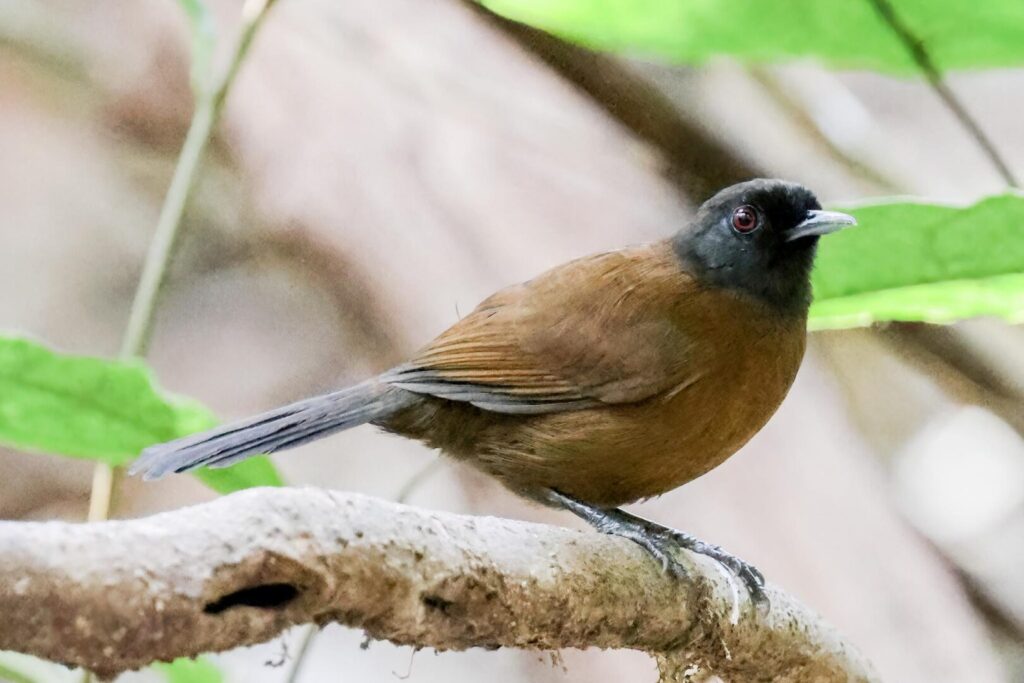
Despite it being the middle of the day, we also saw a brief Ruddy Spinetail, Trilling Gnatwren and a Rose-breasted Chat. But no sign of the Ground-Cuckoo.
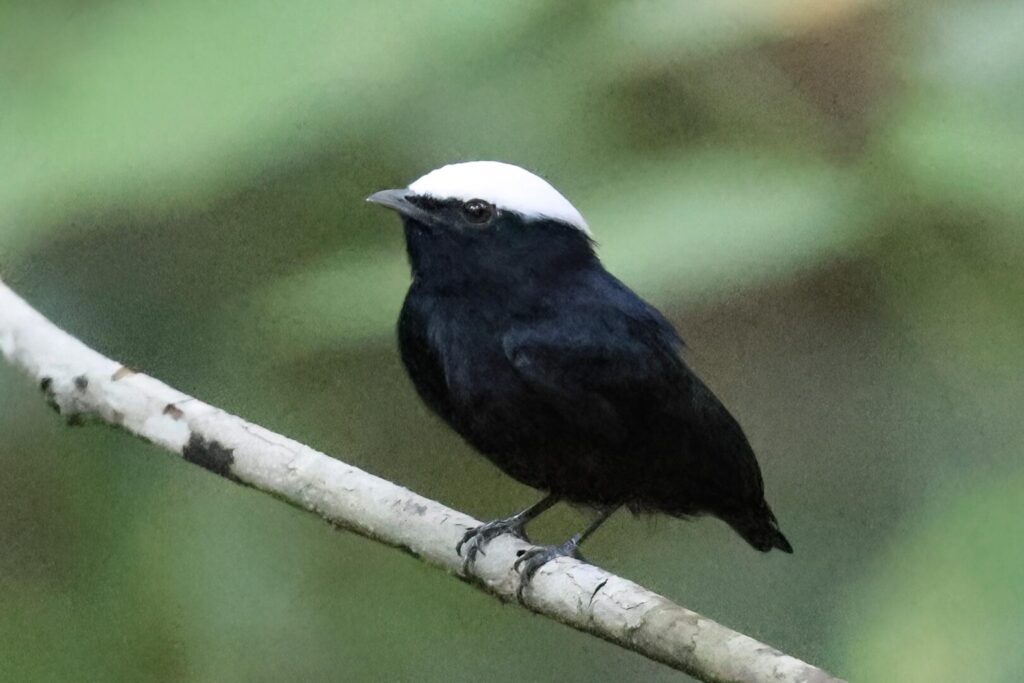
We gave up and headed back to the lodge briefly. Just to drop off camera batteries to charge, then back to the dock. Now we took the boat a short distance downstream and walked out to another hide. It was quiet initially, then a rush of manakins appeared. We estimated at least 5 Snow-capped Manakins, a Fiery-capped Manakin, and 4 White-crowned Manakins.
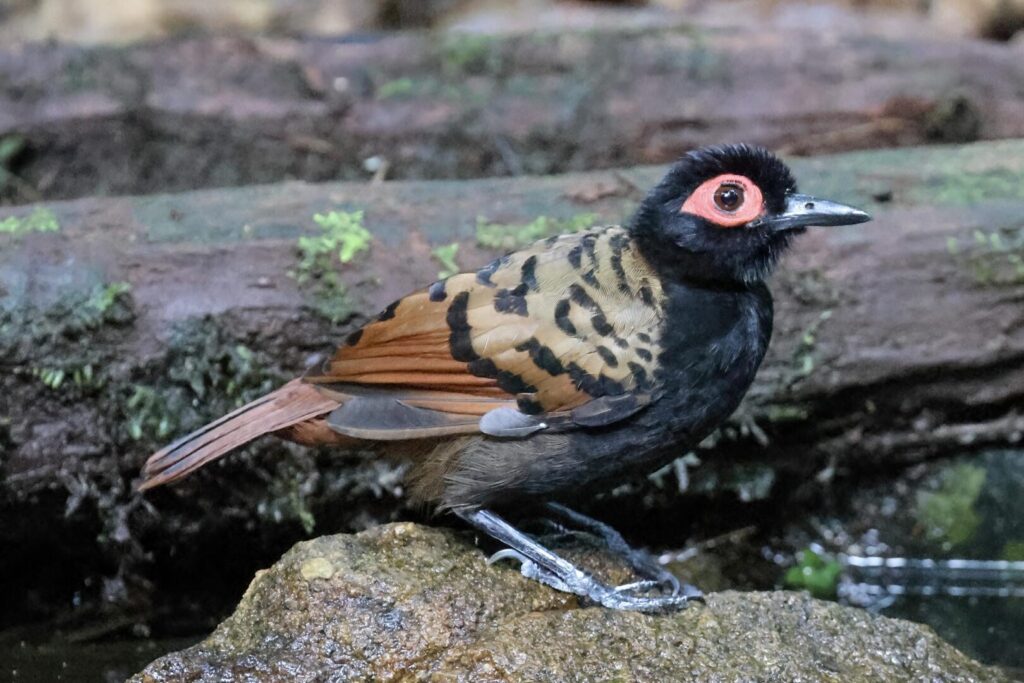
The manakins were followed by a stream of different antbirds from around 5pm until it started to get dark. Like yesterday, Spot-winged , Saturnine and Cinereous Antshrikes, Xingu Scale-backed and Spix’s Warbling Antbirds,
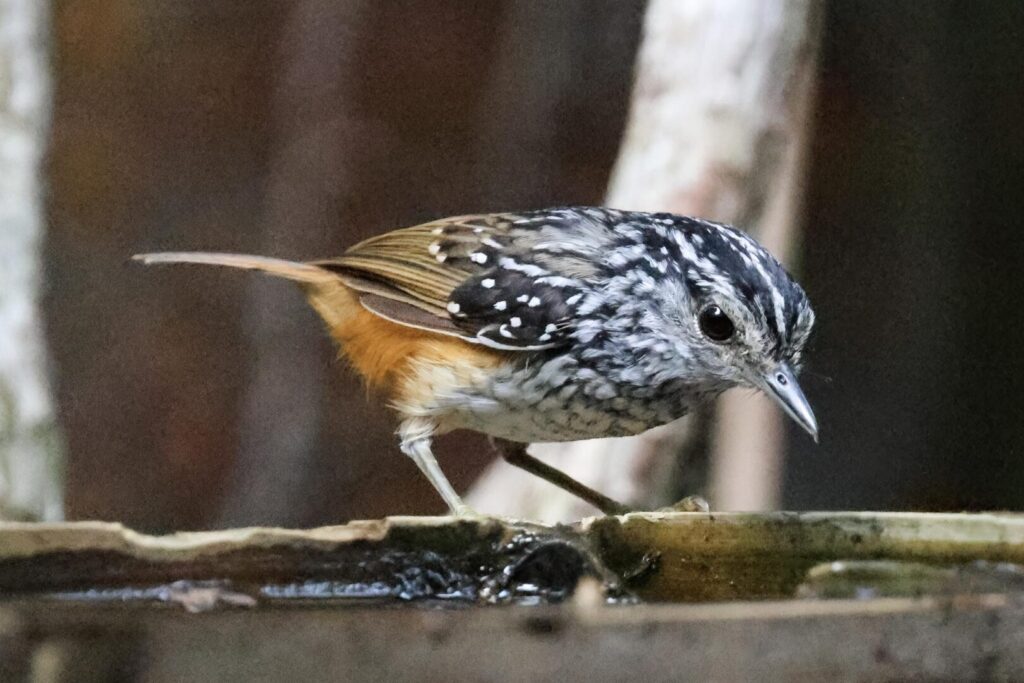
plus both Spot-backed and Dot-backed Antbirds this afternoon,
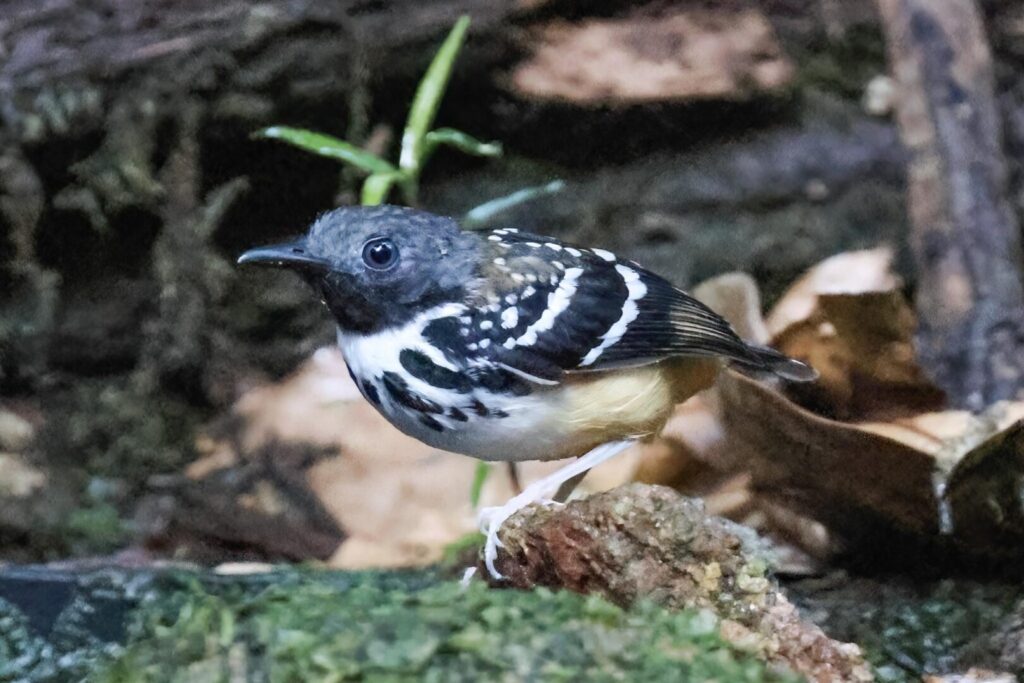
Black-spotted Bare-eyes and Bare-eyed Antbirds again, plus Rufous-faced Antbird and Plain-throated Antwren.
A very good selection of woodcreepers came in this afternoon, including Wedge-billed, White-chinned and Plain-brown Woodcreepers…
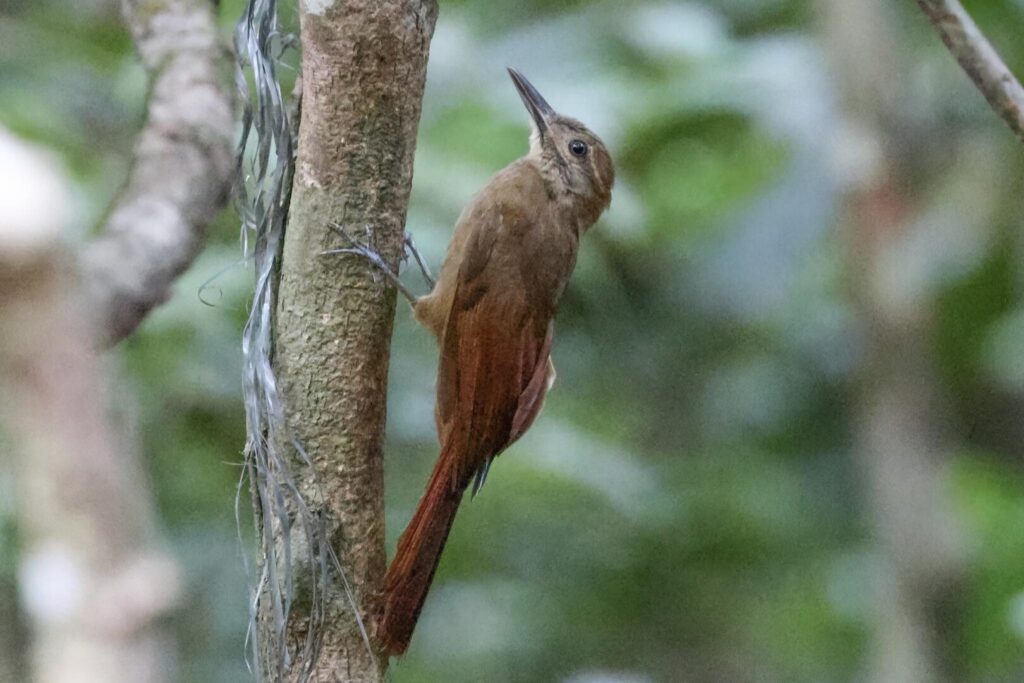
…plus one of two Striped Woodcreepers. And Rufous-rumped, Rufous-tailed and Ochre-throated Foliage-gleaners again.

Several White-winged Shrike-Tanagers came in to bathe too, another new species for the trip.
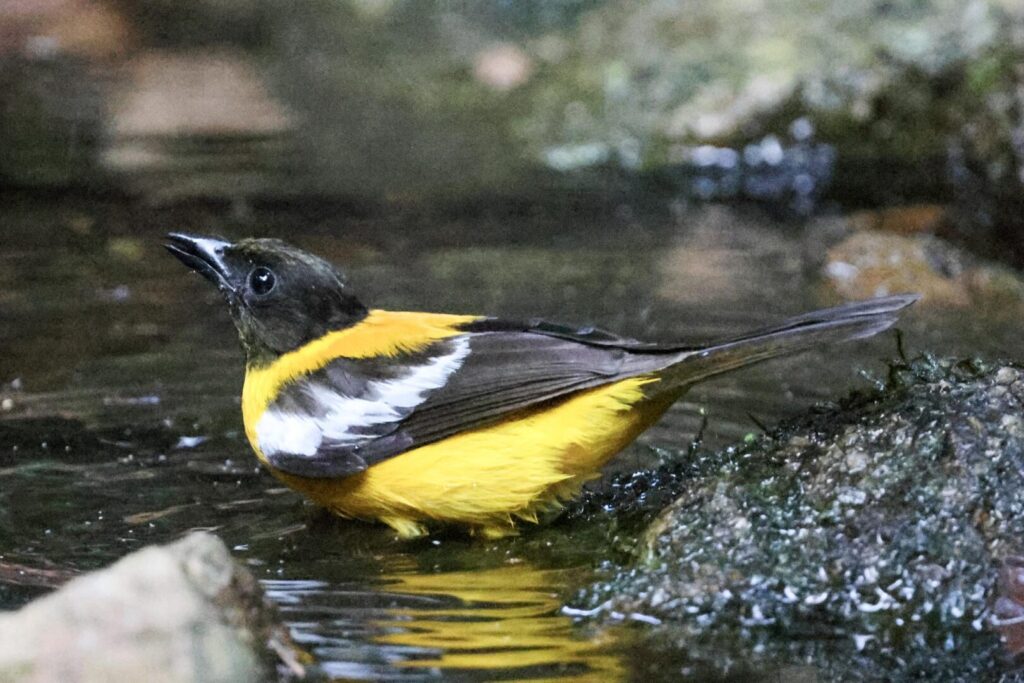
Once again, activity accelerated at dusk and we stayed until it started to get dark, when it dropped off again. We got back to the lodge at 6pm which meant we had a bit of time to freshen up before dinner at 7.30pm. We were tired today – it had been a full on day but with some great birds.
Up early again, we had breakfast at 5am and then set off in the boat up river at 5.30am. We stopped briefly to look at a Spectacled Caiman on the rocks. Disembarking at the start of Trilha da Serra Terra Firme, we walked up through the forest to the open rocks at the top. A couple of Eastern Striolated Puffbirds were in the bare deciduous trees on the rocky hillside.
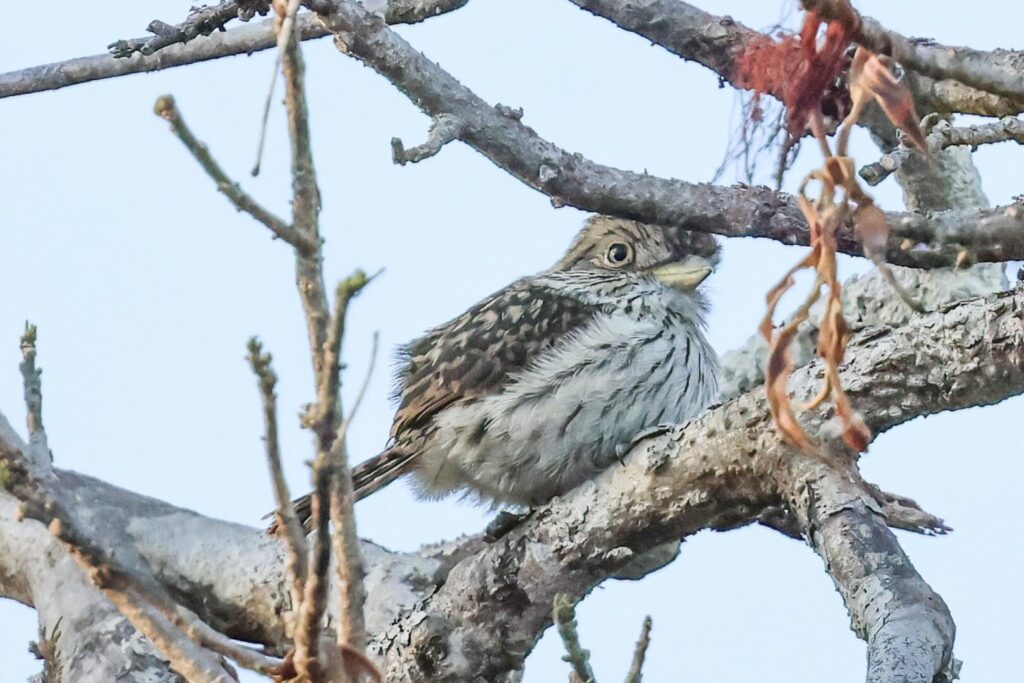
Rafa hung up his speaker out in the open on the rocks and played a mobbing recording. We were soon surrounded by hummingbirds. White-necked Jacobins, Black-throated Mangos, Black-eared Fairies, Fork-tailed Woodnymphs, White-chinned Sapphires, a Grey-breasted Sabrewing and a Versicoloured Emerald. A female Black-bellied Thorntail came in but didn’t stop but several Amethyst Woodstars hung around, including a male which landed in front of us in the early morning sunshine.

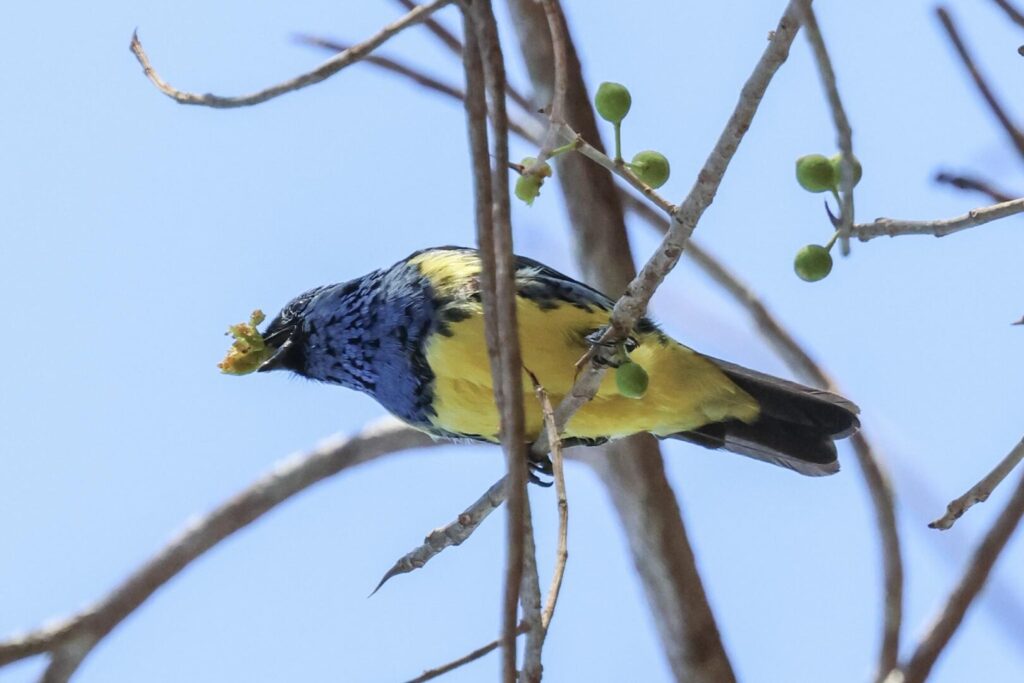
Walking on a short distance over the hillside, we came to the Mirante da Serra where we stopped to admire the view. A couple of Turquoise Tanagers appeared in the trees above our heads.
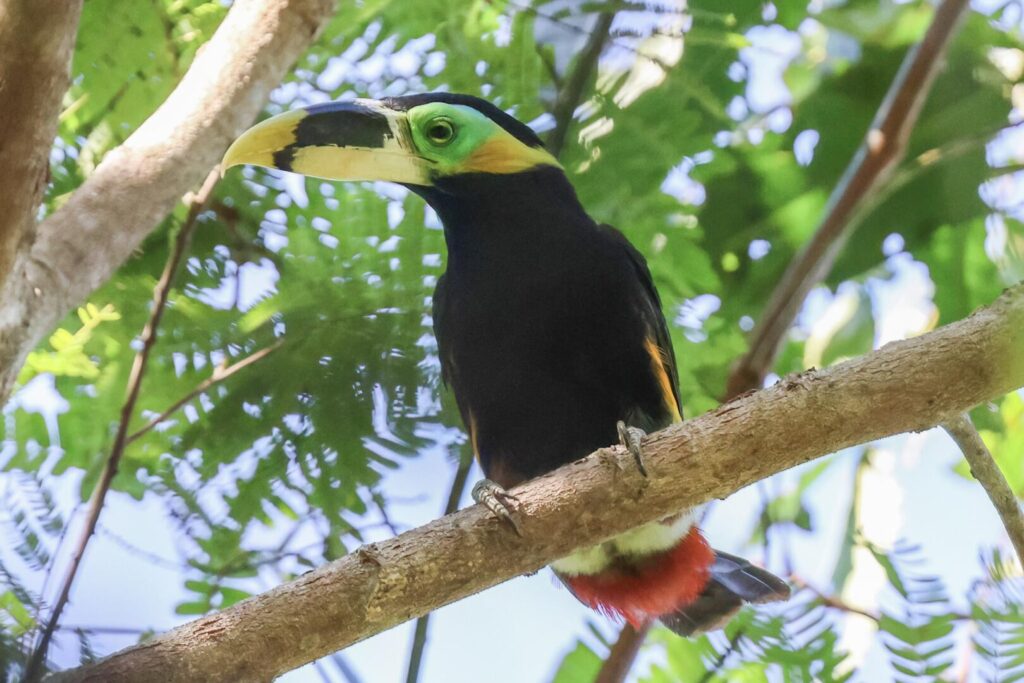
As we walked back along the path, we flushed a Blackish Nightjar from the leaves between the rocks. Back into the moist forest, we stopped to look at a Gould’s Toucanet in the trees. We heard Slate-coloured Grosbeaks calling and had some glimpses of them in the trees. A Great Tinamou was on the path. We had flushed something on our way up and we did in the same place on the way back. We managed to get a glimpse of it, a Rufous-capped Antthrush. So with a bit more persistence we eventually got better views.
Back on the boat, we motored further up to the Lime Tree Rapids. A couple of Red-throated Caracaras were calling in the trees and one eventually flew out. There were two different Spotted Sandpipers on the rocks now.
Turning back, we stopped at Trilha Castanheira, which we had visited with Bruno on our first day here. Walking in along the trail, we were looking for Crimson-bellied Parakeets again. They often come in to the trees by the clay lick here in the morning. We thought that we might have to wait a while for them to arrive but as we walked up we looked across into the trees the other side and there they were. We counted at least eight.

Mission accomplished, we walked back to the boat and then headed back to the lodge. We had time to go back to the room and regroup before lunch.
After lunch, we met Rafa again at the boat deck at 1pm. We were going across to the hide to try for Scaled Ground-Cuckoo again. There was a fresher breeze this afternoon and we could smell the smoke in the air as we set off in the boat. Spealing to Rafa, people were clearing the forest about 35km away. A stark reminder that deforestation continues apace in the Amazon.
It was hot again the hide but not quite as sticky as yesterday, probably due to the breeze. We spent about 1h45 here today, but again the Ground Cuckoo failed to put in an appearance. The male Tapajos Fire-eye was in today, pretty much constantly, and no sign of the female. No idea why they had swapped round but great to see the male too. It was interesting to watch it flashing the concealed white patch on its mantle when it was alarmed or aggressive to any of the other visitors.
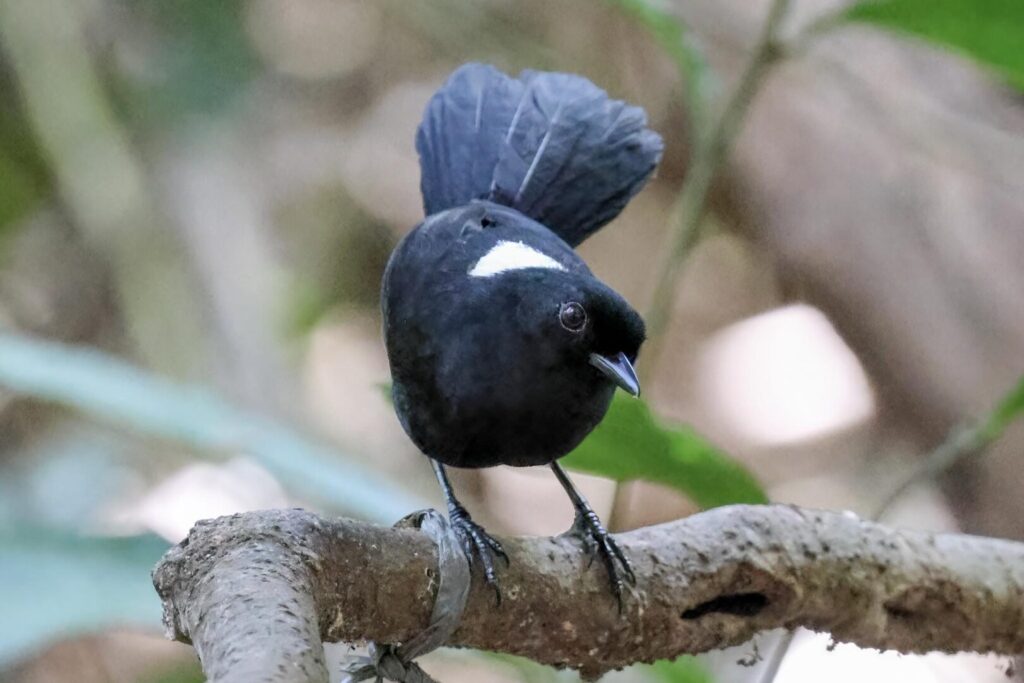
Three White-browed Antbirds today and great views of a male Dot-backed Antbird.

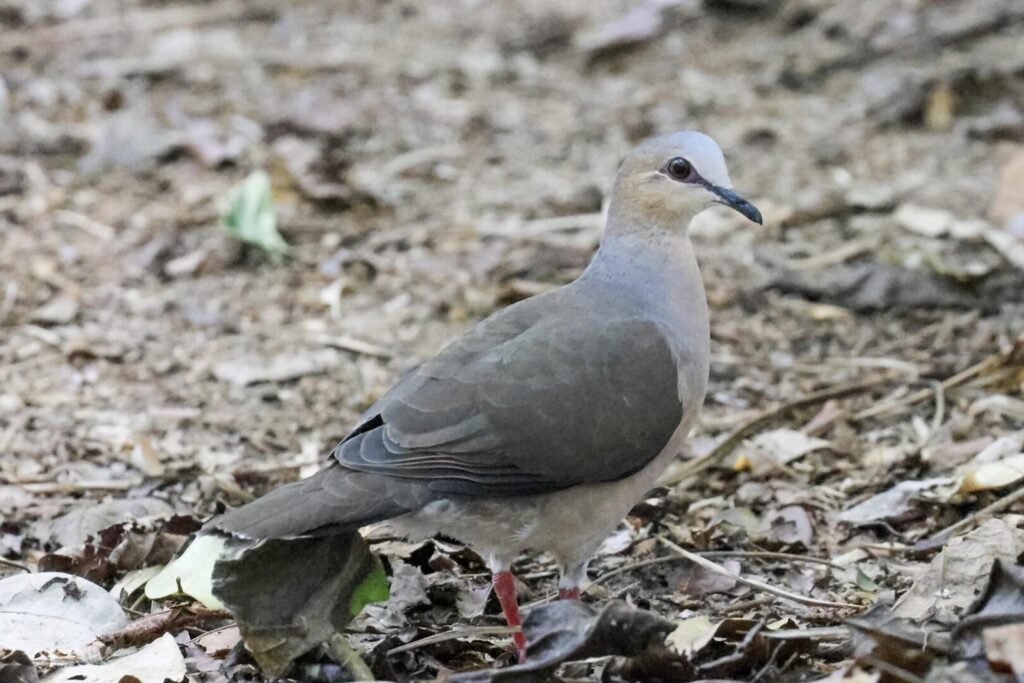
A Grey-fronted Dove walked around on the ground in front of the hide.
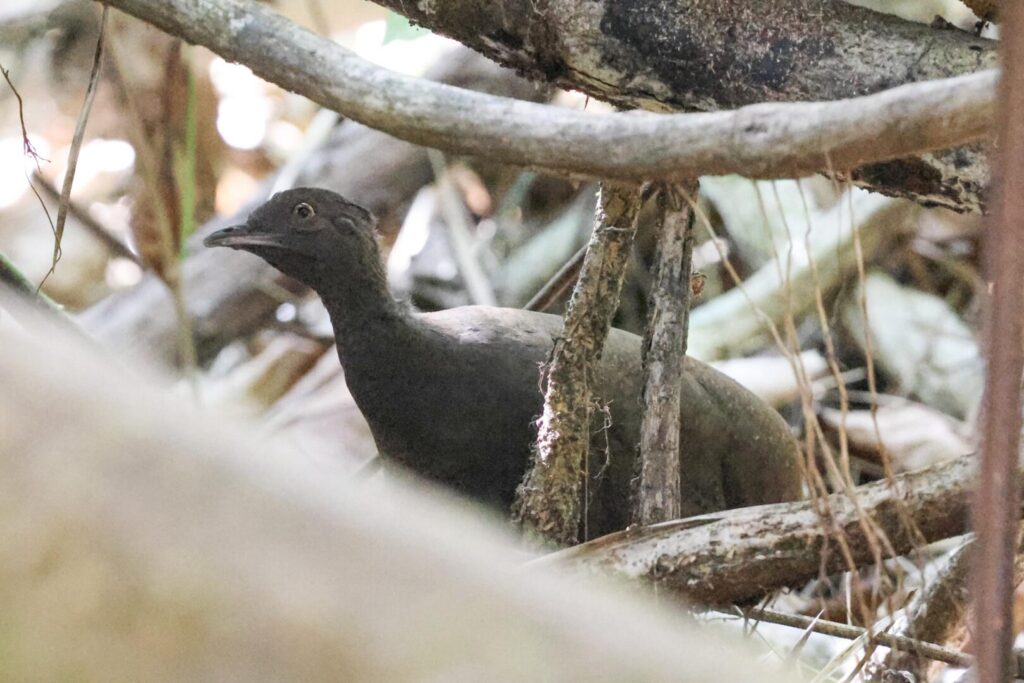
A Cinereous Tinamou walked through and lurked for a while in the undergrowth further back.
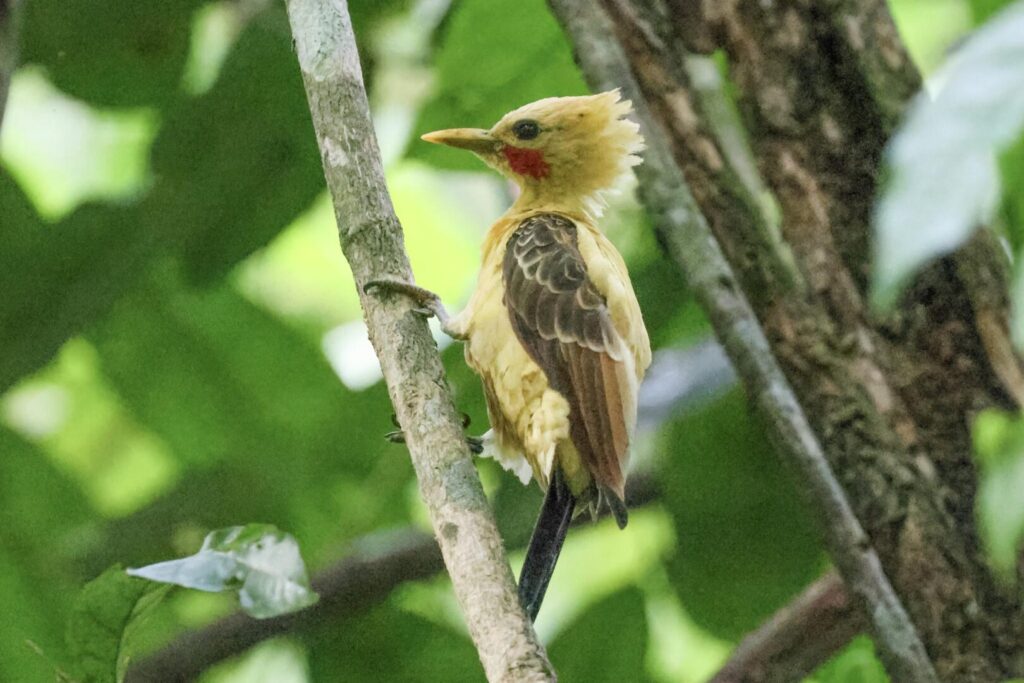
We went back to the boat and round to try another different hide for the remainder of the afternoon. It was rather quiet at first. A pair of Band-tailed Manakins hung around in the trees. A pair of White-shouldered Tanagers came in to bathe. The highlight was a Cream-coloured Woodpecker which appeared in the trees.
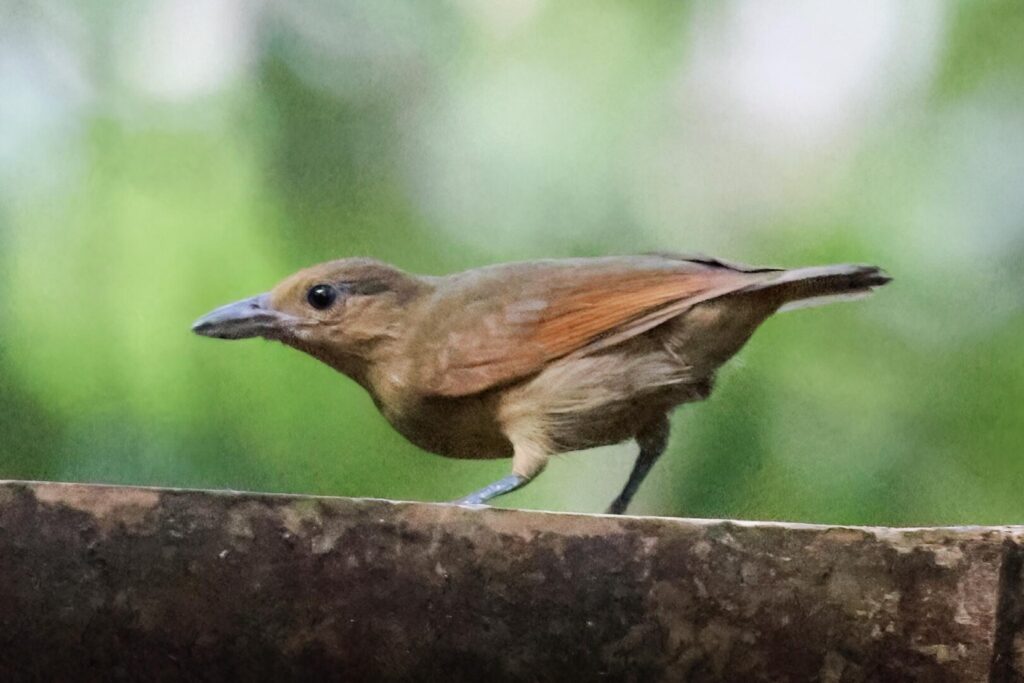
Closer to 5pm, the other birds started to arrive and for the next half an hour we didn’t know which way to look again. Many of the same species as yesterday. A female Spot-winged Antshrike and a pair of Cinereous Antshrikes.
A pair of Xingu Scale-backed Antbirds, a Black-spotted Bare-eye and several Bare-eyed Antbirds.
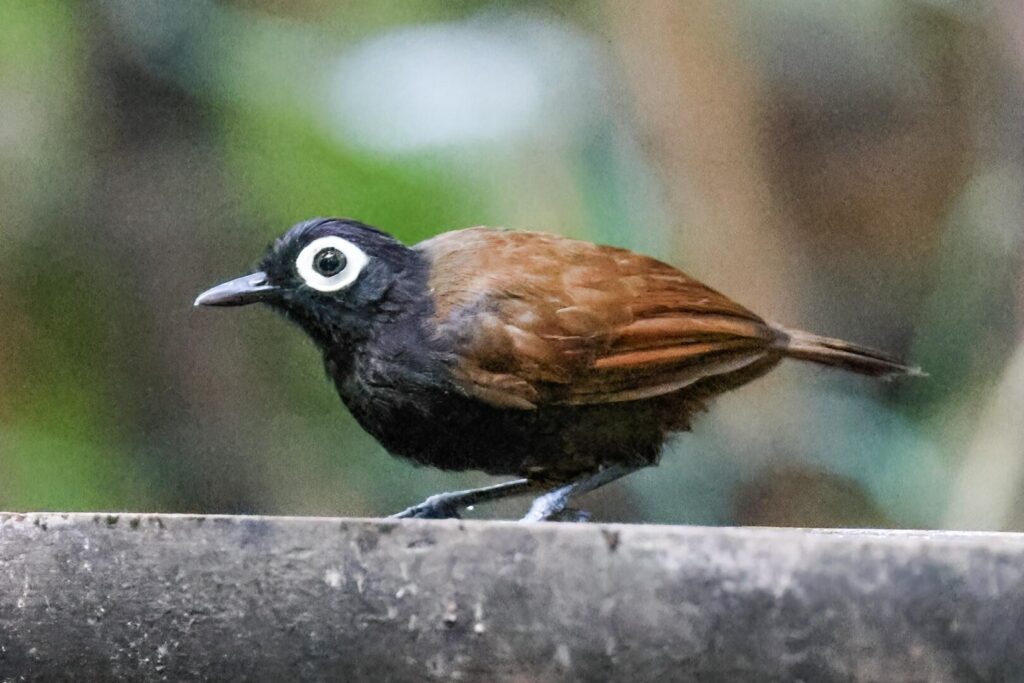
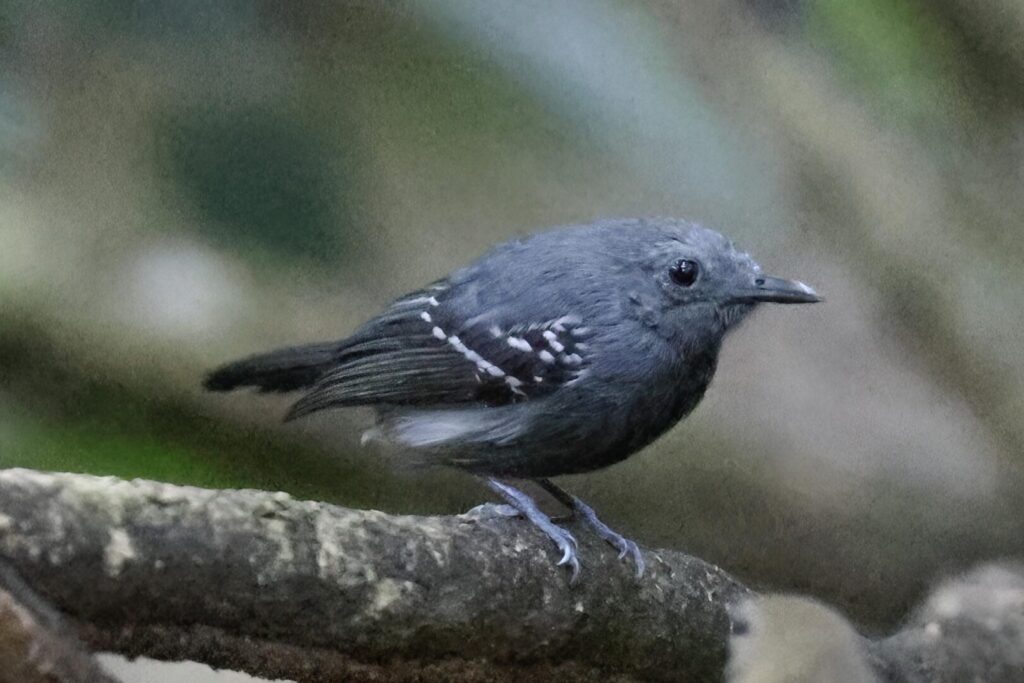
A couple each of White-flanked and Plain-throated Antwrens.
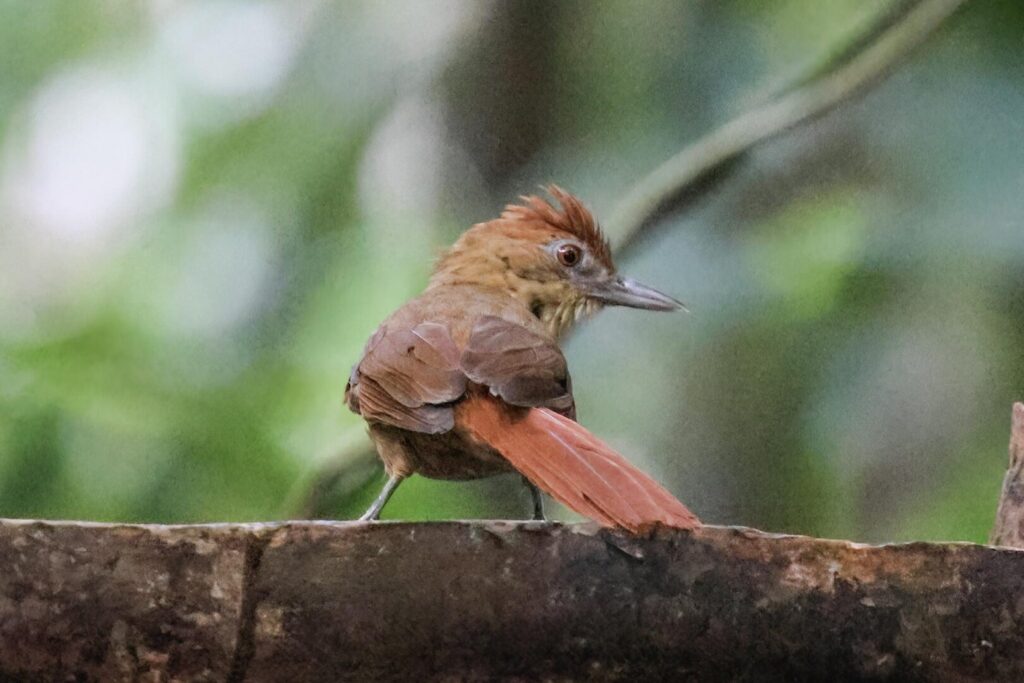
Striped Woodcreeper, Rufous-rumped, Rufous-tailed and a Chestnut-crowned Foliage-gleaner. The latter was a new species for the trip.
As it started to get dark, we headed back to the lodge. After dinner, as we walked back to our room, we heard the Crested Owl again. By the time we got back with torches it had gone quiet again.
After an early breakfast again, we took the boat across the river. It was just a short walk along the trail to the Ted Parker tower. It was less windy than the other morning on the Chip Haven Tower and there were lots more birds. Again, we went straight up to the top level first until it started to warm up. Then we dropped down to the lower level.
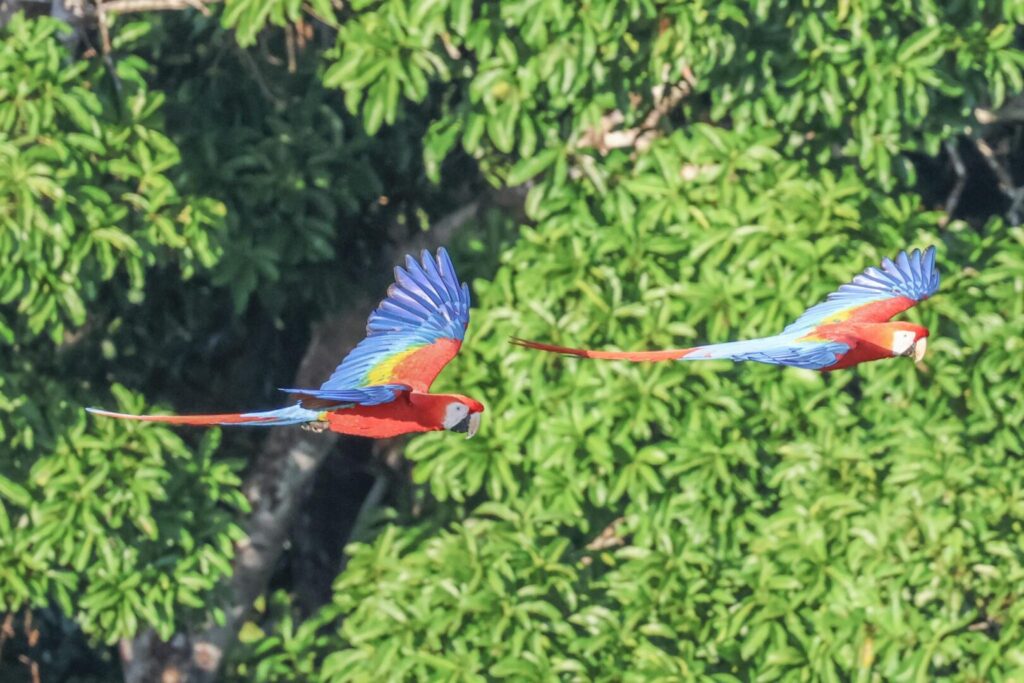
There were the usual parrots and macaws flying round and some landing in the trees. But today we also saw at least three Crimson-bellied Parakeets from the tower, as well as two Mealy Amazons and a single Kawall’s Amazon. The latter was rather distant but we managed to get a couple of shots of it when it landed briefly which showed the distinctive red in the base of the tail.
We saw Red-necked and Little Woodpeckers, White-throated Toucan and several Red-necked Aracaris in the trees. A pair of Black-girdled Barbets appeared briefly too.
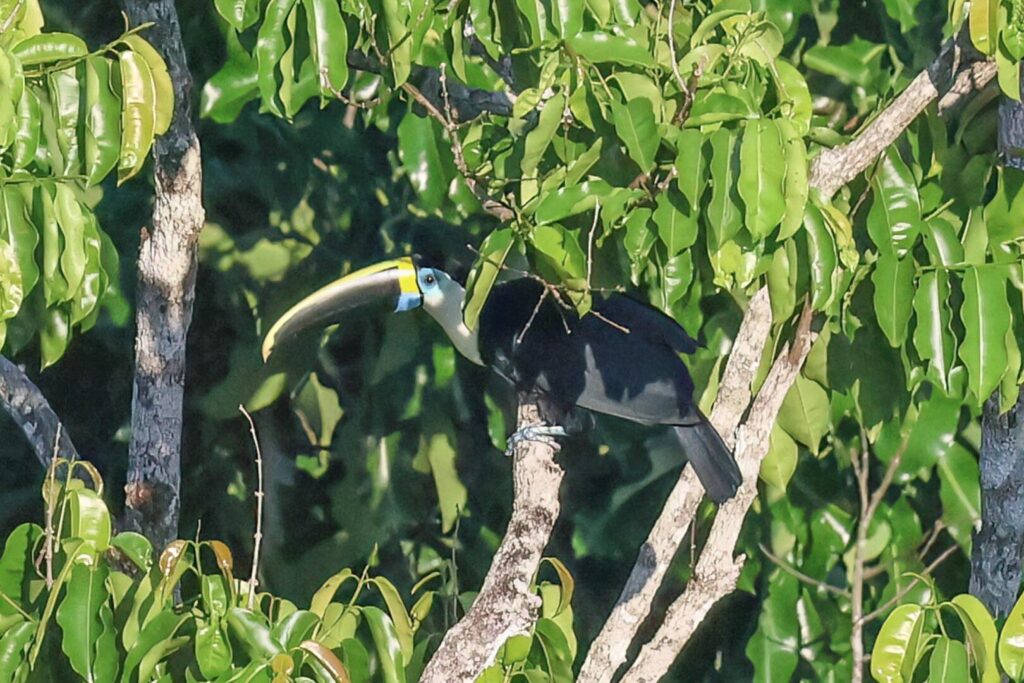
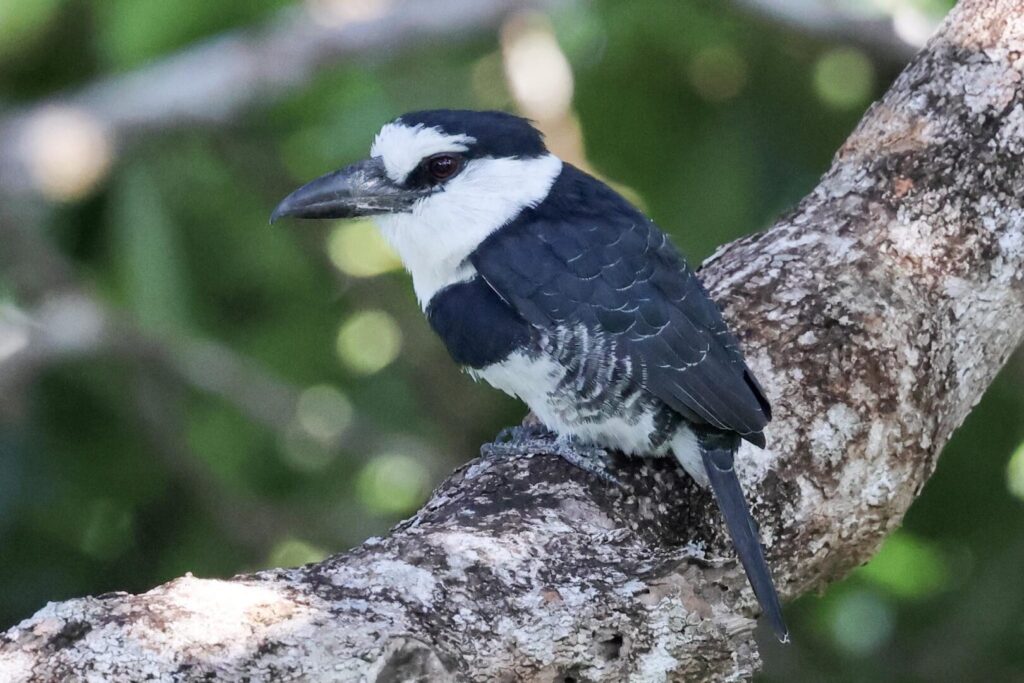
A White-necked Puffbird landed in the canopy of the tree right next to us at one point.
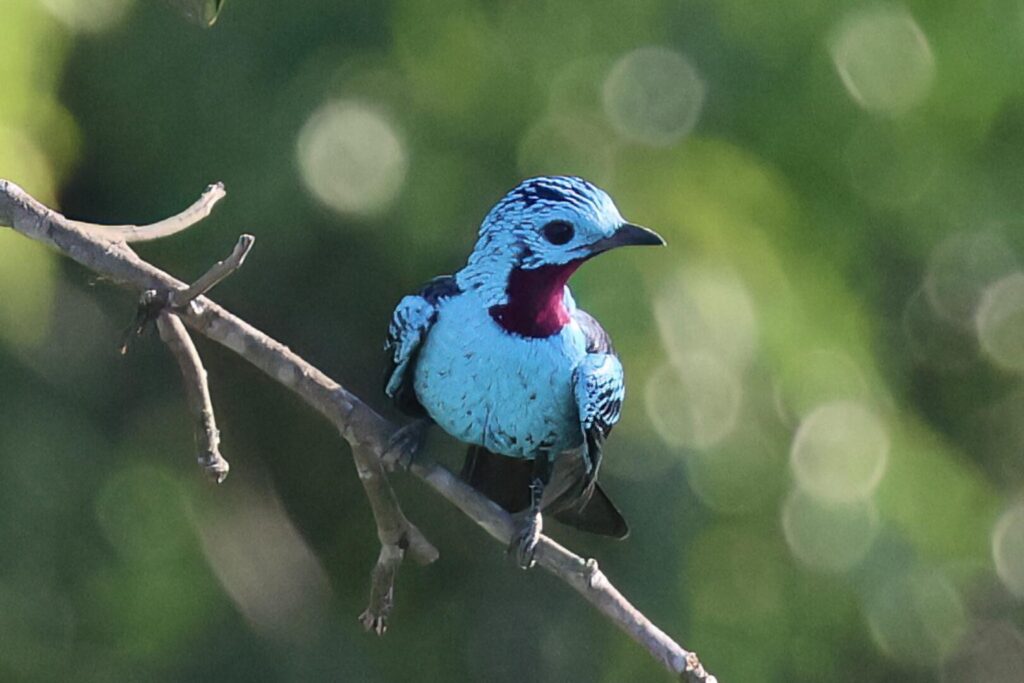
We counted at least five different Spangled Cotingas and three White-browed Purpletufts. A Long-tailed Tyrant was rather distant, Tooth-billed Wren and a male White-lored Euphonia were a little closer.
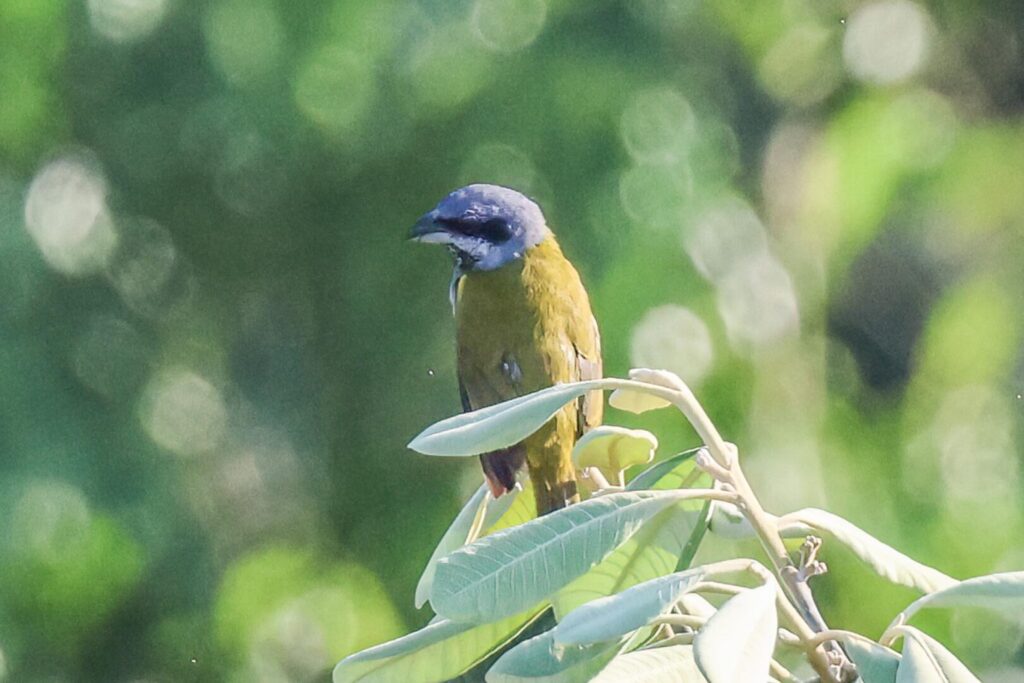
There were lots of tanagers in the canopy, including Yellow-backed, Paradise, Opal-rumped and Bay-headed Tanagers as well as the regular Blue-grey and Palm Tanagers. We picked up a single Yellow-shouldered Grosbeak in the top of a nearby tree too.
One of the species we hoped to see here was White-browed Hawk. When Rafael heard one calling we scanned and eventually picked it up flying out away from us over the treetops. We heard an Alta Floresta Antpitta calling too, but it was very distant.
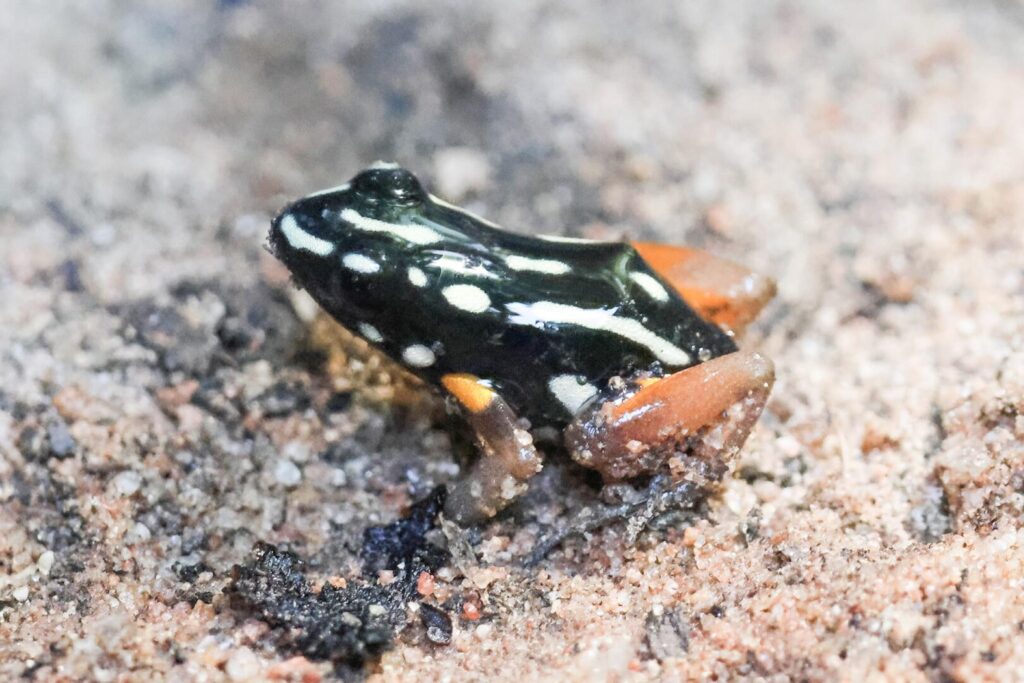
Activity started to drop so we came back down. There had been a Banded Antbird around the base of the tower recently but there was no sign of it now. We had a short walk up to the new hide where we tried for Cryptic Forest Falcon but nothing was answering. As we walked back towards the river, we saw a Cinereous Tinamou and two Little Tinamous on the trail. We stopped to admire a tiny Brazil Nut Poison Dart Frog in the middle of the path.
We took the boat and motored slowly upriver as usual, this time stopping at another short trail. There was meant to still be some water under the trees but it looked to have mostly dried out. There was nothing more than a bit of mud now. Still, somebody was enjoying it – there were lots of White-lipped Peccaries! Rafa tried again for Cryptic Forest Falcon here but there was no response. It was late morning now and hot.
As we arrived back at the lodge, a Green Anaconda swam out in the shallow water from under the dock. After a break and early lunch, we met Rafa again at the boat deck at 1pm. Gluttons for punishment, we had decided to go back to the hide to try for Scaled Ground-Cuckoo again. Who said insanity is doing the same thing over and over again and expecting different results? At least there it is hard to find much else in the heat of the early afternoon.
It was very hot and sticky in the hide. There had obviously been some White-lipped Peccaries in the area as we could see their tracks. Thankfully they hadn’t found the water as they apparently will wreck the whole set up and hide if they do. There were the usual birds which came in for the water and meal worms. Both the male and female Tapajos Fire-eyes were here today, the White-browed Antbirds and the Dot-backed Antbird again. A pair of Blackish Antbirds came in today too.
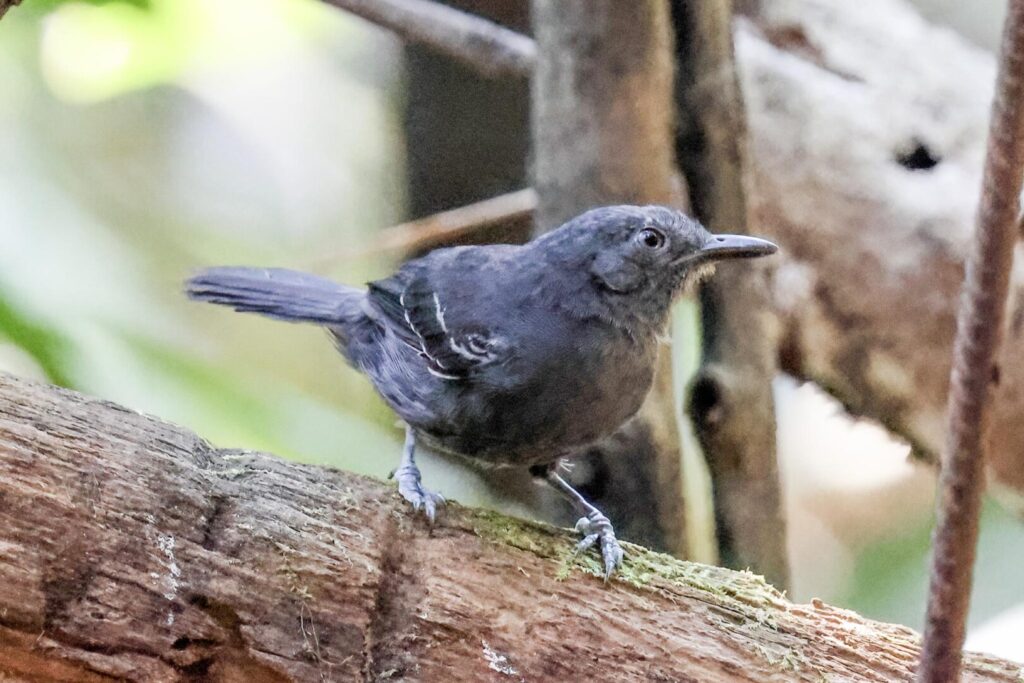
Then the White-lipped Peccaries returned. We could hear them walking up and down the path they had made, right behind the hide. We were worried they might come in at one point and they could easily make a mess of everything. But the Merlin description contains an interesting comment. Apparently, as well as attending army-ant swarms, “also often follows herds of peccaries”. The peccaries moved on but nothing seemed to be following.
Then we heard something coming along the peccary path behind the hide. It was clearly bigger than the doves we had seen here. We sat quietly and waited. It walked round the side of the hide, then there it was. A Scaled Ground-Cuckoo and barely a couple of feet away. It was very nervous so we held our breath. Slowly it walked out to the branches and trunks where the mealworms were and began to feed. Wow!
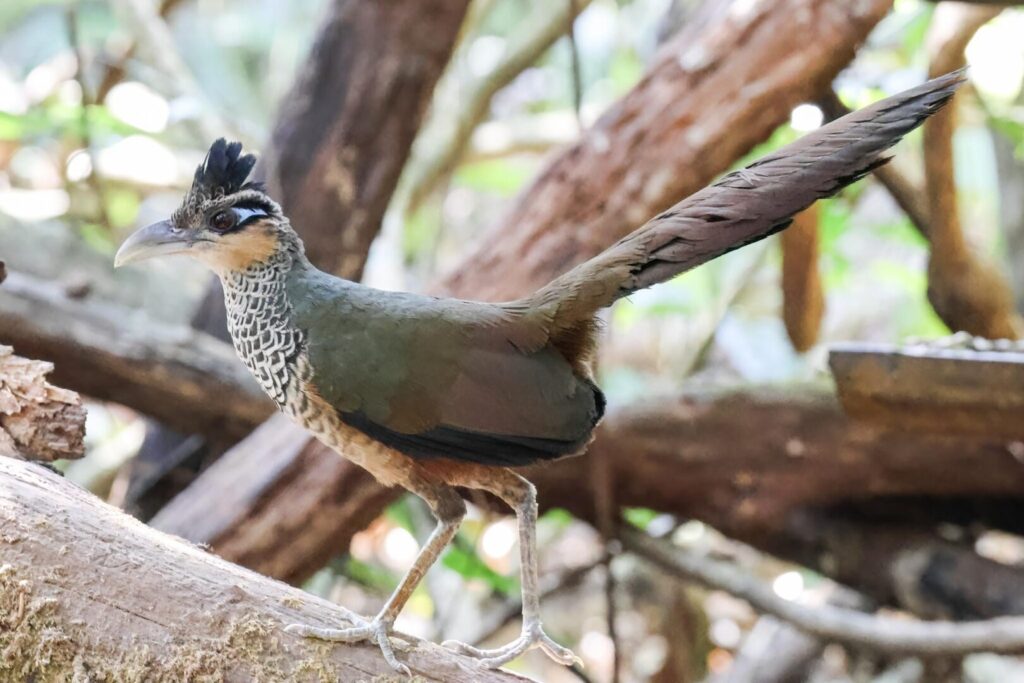
The Scaled Ground-Cuckoo fed for a while, gulping down the mealworms. Then it walked back into the vegetation beyond. It climbed up and stood for a while on a branch a metre or so off the ground in the trees, then came back in and fed some more before finally running off deeper in and we lost sight of it. We presumed that was it, but what views we had enjoyed.

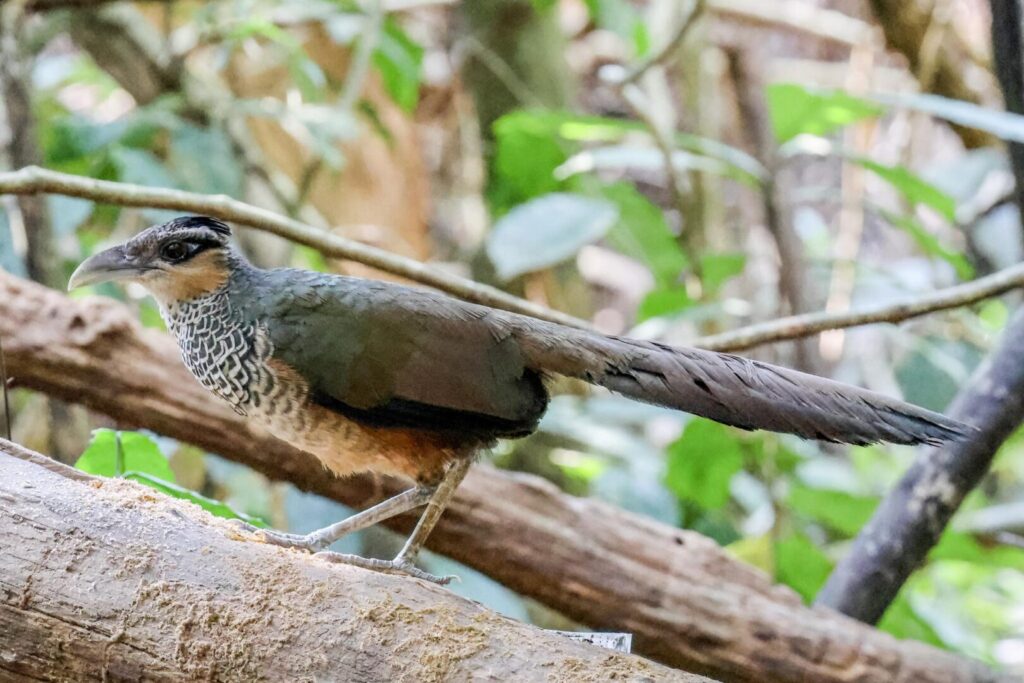
But it wasn’t all over yet. After about 15 minutes, the Scaled Ground-Cuckoo walked back in and started to feed again. It was still nervous and quickly ran off back into cover. It came in a third time 20 minutes after that. Endemic to a very small area of Brazilian Amazon basin, it is rare and always hard to find. Well worth all the wait in a sweltering hide! Bird of the whole trip.
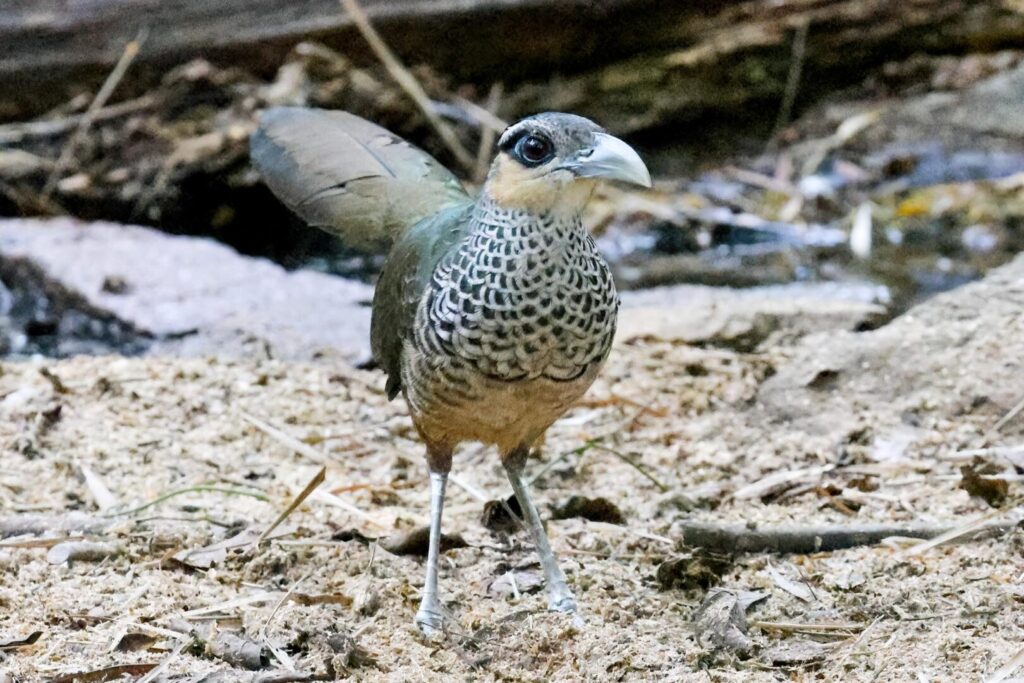
In between the visits from the Scaled Ground-Cuckoo, there were some other really good birds which came in as well. First of all, a very smart Rufous-necked Puffbird.
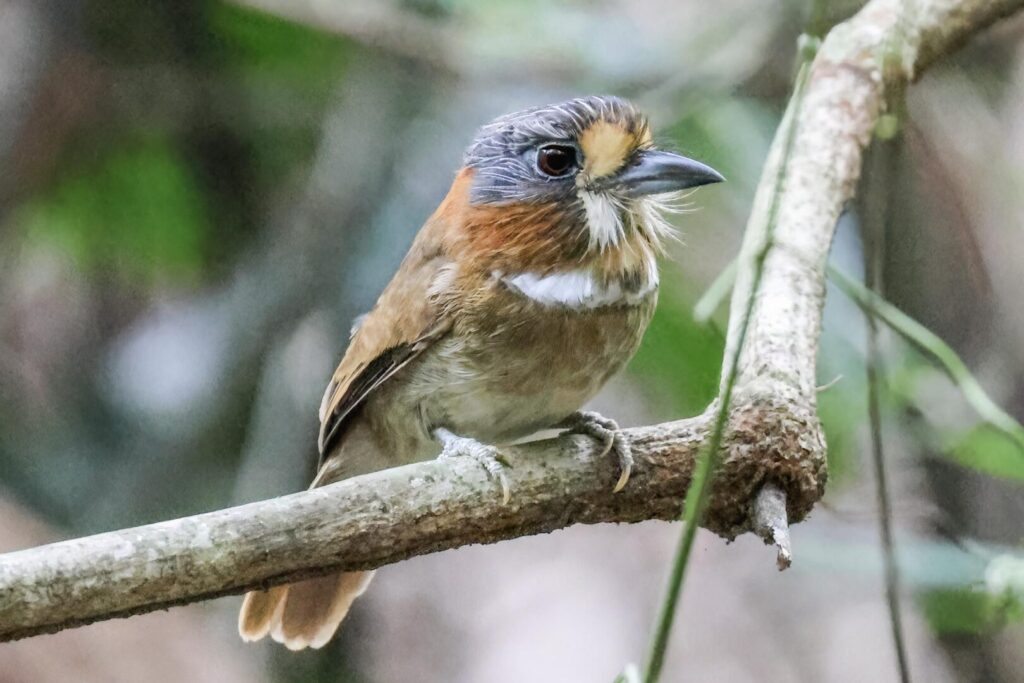
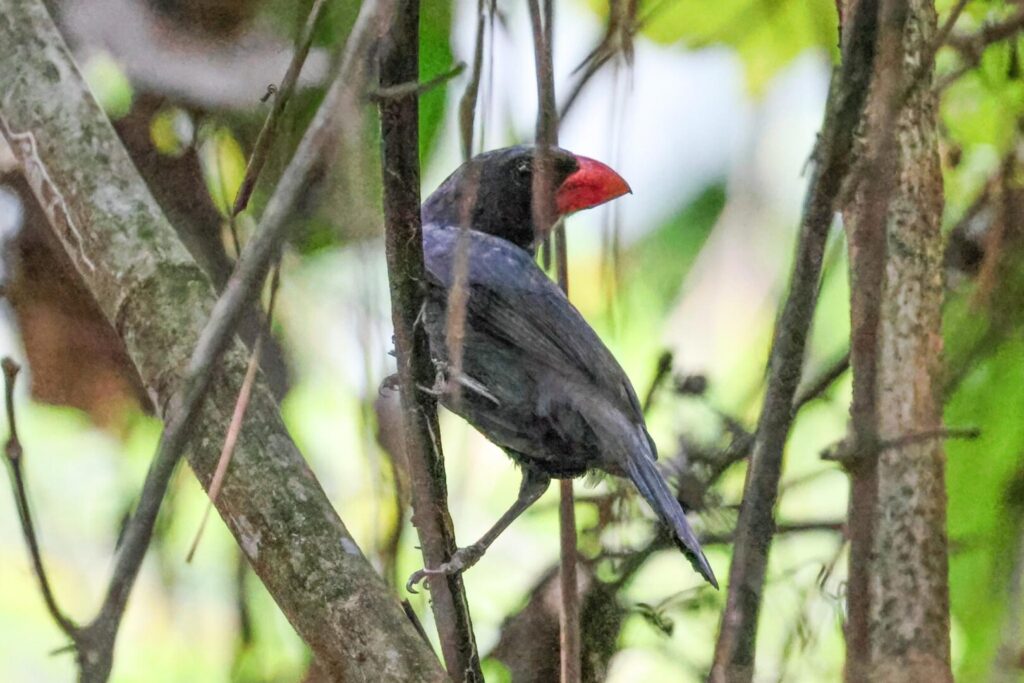
This was followed by a Slate-coloured Grosbeak. Even though it stayed in the tangle of branches above, it was a much better views than we had yesterday.
Just before 5pm, the usual small rush of antbirds came in again to drink and bathe, much the same species as the last couple of days. Mainly in the space of about 20 minutes, we saw three Spot-winged Antshrikes, Cinereous and Fasciated Antshrikes again, a pair of Plain-throated Antwrens, Xingu Scale-backed Antbirds and two Black-spotted Bare-eyes.
As well as Chestnut-crowned and Ochre-throated Foliage-gleaners this afternoon, a Dusky-cheeked Foliage-gleaner came in to bathe too.

As it started to get dark, we made our way back to the boat. Rather than head back to the lodge straight away tonight, this time we motored further up river. Scanning the banks with a torch and a bit of perseverance, Rafa succeeded in finding us our target – a young Agami Heron.

Then as we made our way slowly back downstream to the lodge, Rafa managed to pick up a Ladder-tailed Nightjar with the torch too. What a great afternoon to end our last full day here.
As we would not be leaving until later in the morning, we still had time to squeeze in a bit more birding first thing. Once again, we had an early breakfast and then went out with Rafa. We took the boat upriver again – counting an amazing 13 Razor-billed Curassows and 2 Bare-faced Curassows, plus a Grey Tinamou on the banks on our way.

We took a different trail in through the forest and up into the dry deciduous woodland again. A few hummingbirds came in to the mobbing recording again, including a pair of Black-eared Fairies and a female Black-bellied Thorntail.
There were lots of parrots in the trees and flying round, including 3 Red-fan Parrots and good views of Chestnut-fronted Macaws. Two Kawall’s Amazons flew past.
We got the set of the larger woodpeckers just here – a pair of Red-necked Woodpeckers, a female Crimson-crested Woodpecker and a pair of Lineated Woodpeckers. Strangely, these were the first Lineated Woodpeckers we had seen on the whole trip.
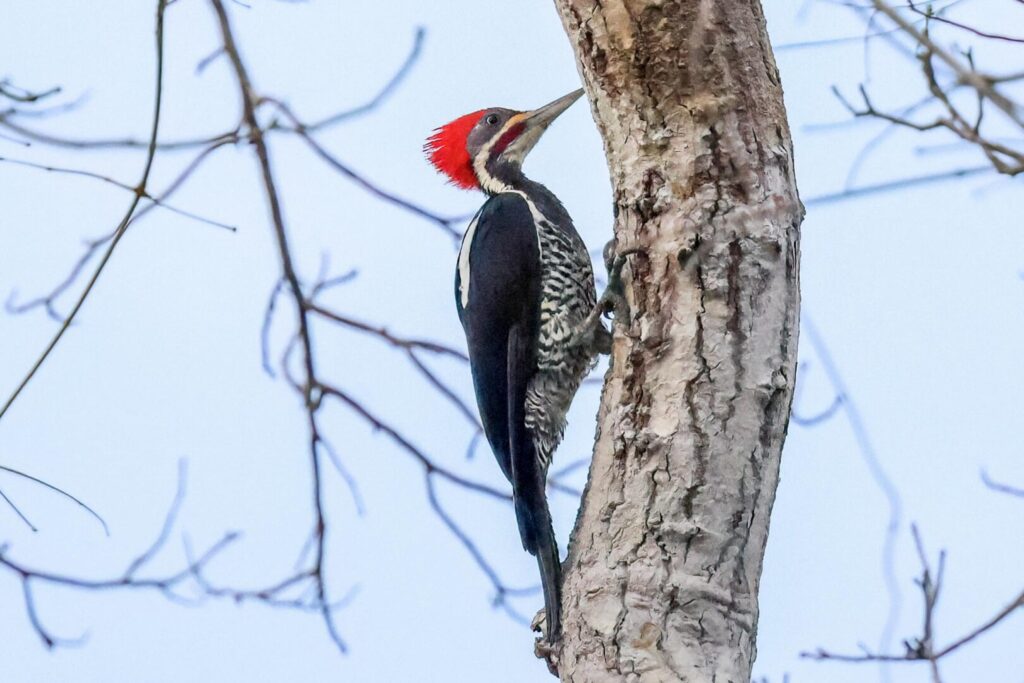
There were a few tanagers and euphonias feeding in the trees, Epaulet Oriole, flycatchers including Crowned Slaty Flycatcher, plus a couple of puffbirds. Pied Puffbird was our last new species for the trip.

It started to go quiet as the temperature increased so we headed back to the boat and returned to the lodge before 9am. We got everything sorted out for our long journeys ahead and packed our bags. Our boat left at 11am to take us back to the jetty on the Teles Pires river where we the minibus was waiting for us. We said our goodbyes and thanks to Rafa for all his help and then drove back to Alta Floresta.
After dropping Luke at Alta Floresta airport (he would be heading on to the Atlantic Rainforest to volunteer at REGUA for the next two months), I went on to the bus station. Since Azul Airlines had cancelled our internal flights back to Cuiaba, it meant a much longer and more complicated journey home. My bus left at 6.30pm for the 14-hour overnight journey to Cuiaba. I took a taxi to the airport and had nearly a 7 hour wait there until I could check in for my flight to Sao Paulo and onward to London Heathrow.
I finally made it home on the evening of 30th, over 51 hours since I left Cristalino. It was worth it though – a fantastic trip, 523 species of birds seen and heard and some fantastic species of mammals seen too. I can’t wait to go back.