Day 1 of a 4-day Winter Wildfowl, Cranes & Owls tour. Overnight, it was clear and cold with a hard frost. It was a nice morning with light winds and some bright, sunny spells before clouding over in the afternoon. The calm before the storm? We tried to make as much of today before the weather deteriorated tomorrow.
On our way to the coast, we stuck to the main roads as it was rather icy this morning. There were lots of Red Kites up already, flying over the fields, and some distant high skeins of Pink-footed Geese.
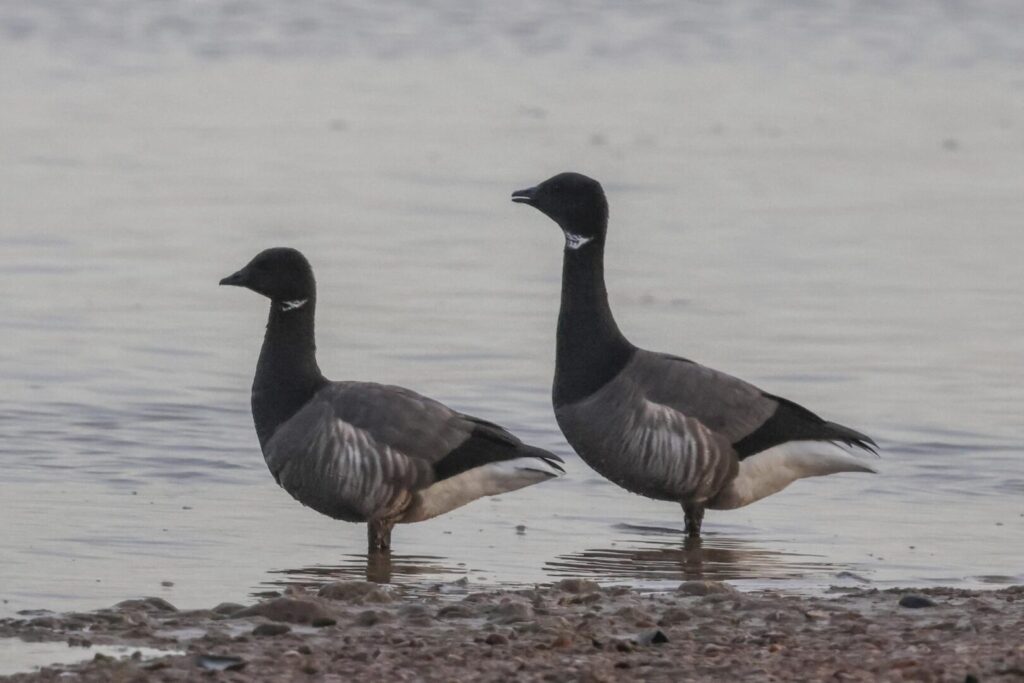
It was just before high tide so we called in at Brancaster Staithe for a quick look in the harbour. There were several Turnstones feeding on the gravel in the car park and some Brent Geese on the edge of the water. As we got out, more Brent Geese came up from the saltmarsh and flew across in front of us. There were a few Wigeon, Teal and Shelduck around the edges of the channel.
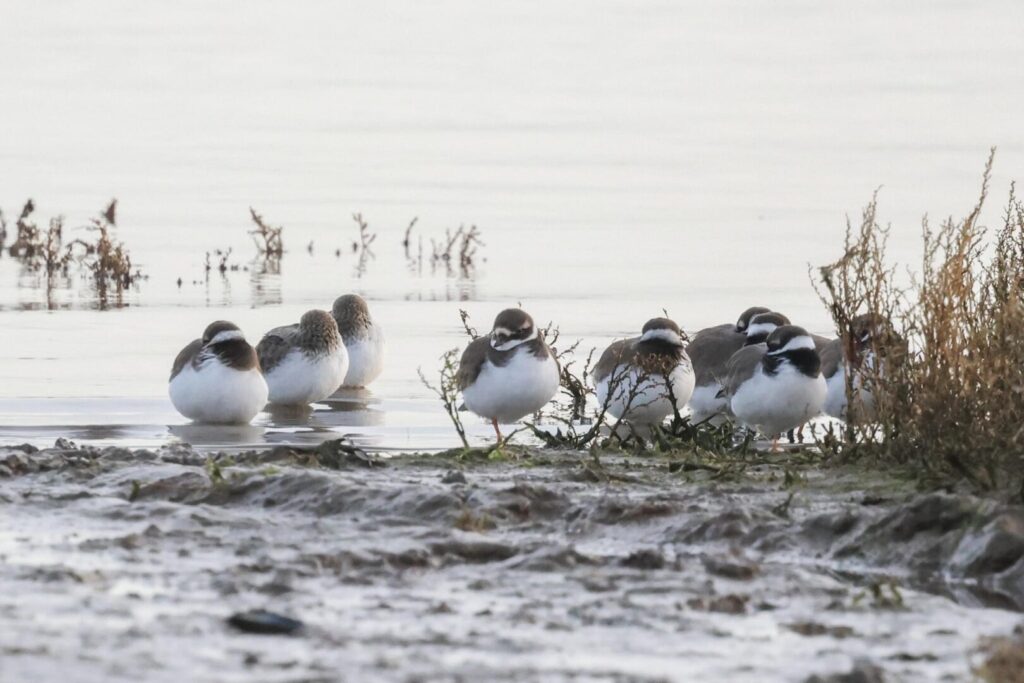
A small group of Ringed Plover had gathered to roost on the edge of the water at the far end of the car park, with a few Dunlin and Turnstones in with them. Several Skylarks flew in and landed on the shore in front. Further back, some Oystercatchers and more Dunlin were feeding on the shore where they had been sorting the mussels. A few Black-tailed and Bar-tailed Godwits were roosting on the far edge of the channel, nice to compare them side by side through the scopes. A single Grey Plover was with them.
Scanning up and down the channel, all we could find out on the water was a single distant Red-breasted Merganser, which flew off east. A small boat pushed out from the shore and motored out towards Scolt Head. As it disappeared round the corner, it flushed a thousand or so Pink-footed Geese which were roosting out on the sands.
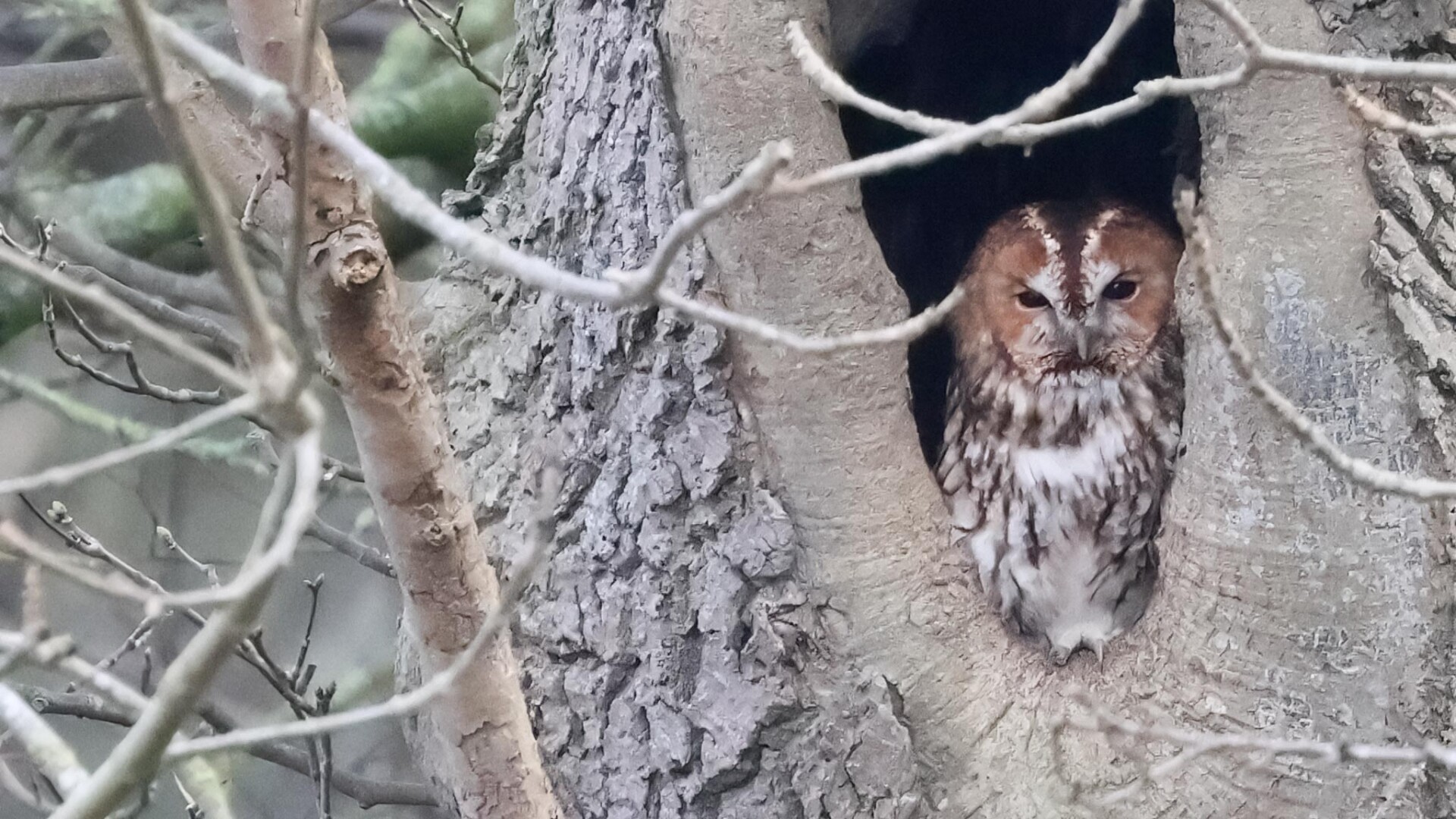
On to Titchwell and it was very icy in the car park. When we got down to the Visitor Centre, we found that the Fen & Meadow Trails were both closed due to the ice. The Fen Trail had been open at least to the Tawny Owl earlier in the week but now we couldn’t even get to that. We couldn’t try to find the Woodcock either. We had a quick look round the Centre but all we could find were a few tits coming to the feeders, and a few Chaffinches and Goldfinches in trees.
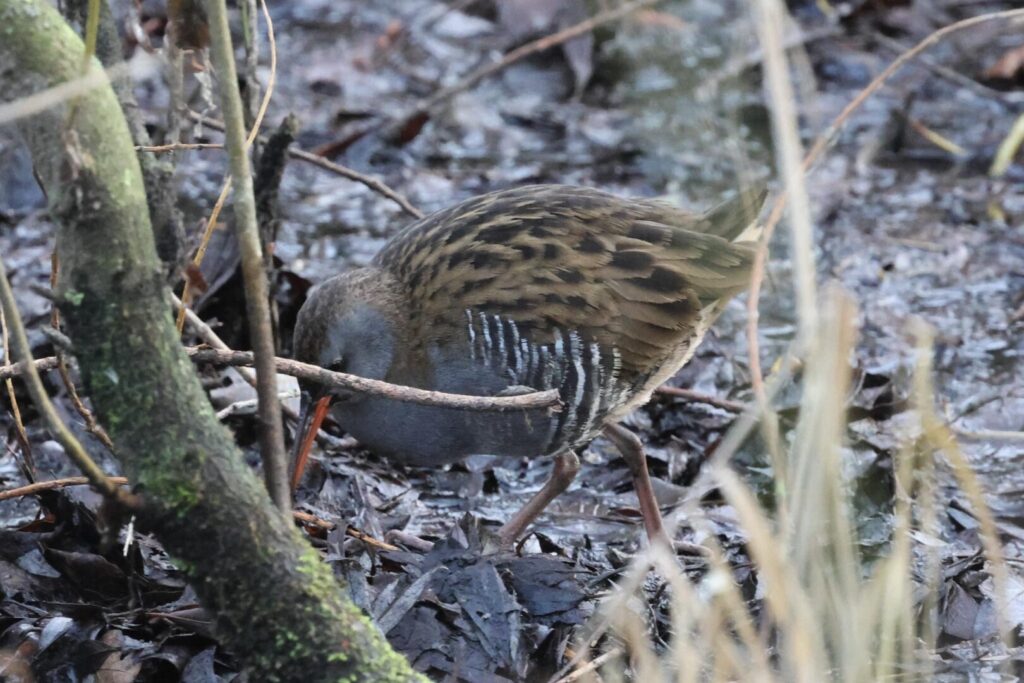
Out on the main path, it was even icier. This one can’t be closed though, as it is a public right of way. We quickly found a Water Rail in the ditch on the left but it was partly obscured by all the vegetation in front. Another Water Rail the other side was out in the open, until it ran back under the sallows.
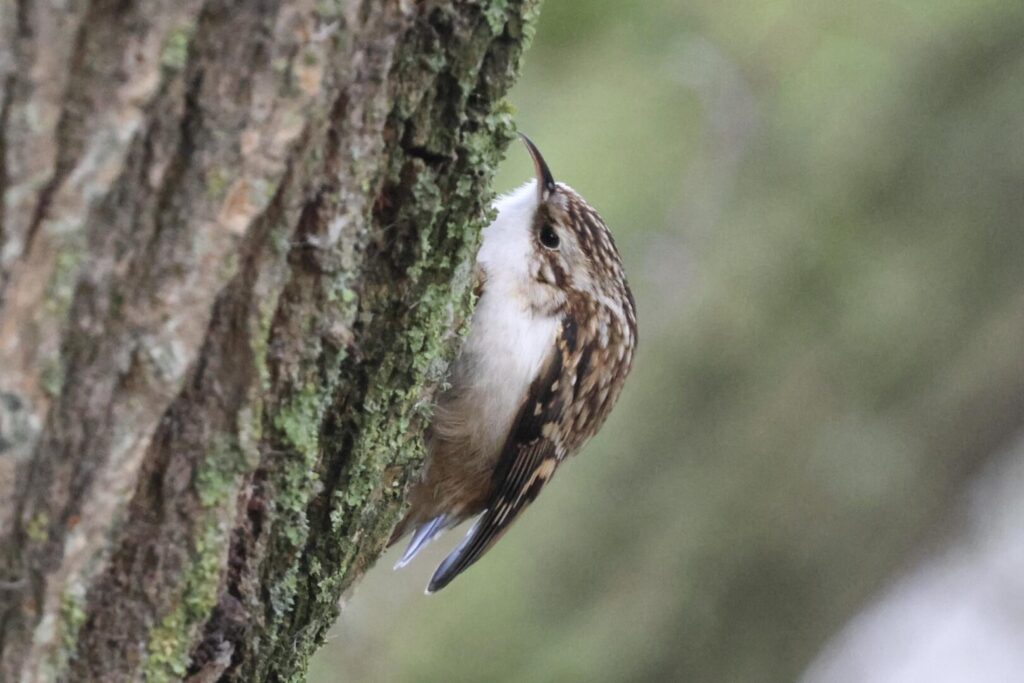
A flock of Long-tailed Tits made its way through the trees above the ditch. Two Treecreepers appeared on the trunks of one of the willows right in front of us, right above the path.
Scanning the Thornham grazing marsh, there was no sign of the Canada Geese today but we spotted a Marsh Harrier on the top of a bush over the far side which we got in the scope. Another Marsh Harrier flew across over the reedbed. All the pools and ditches were frozen solid and there was no sign of any ducks on the Reedbed Pool today.
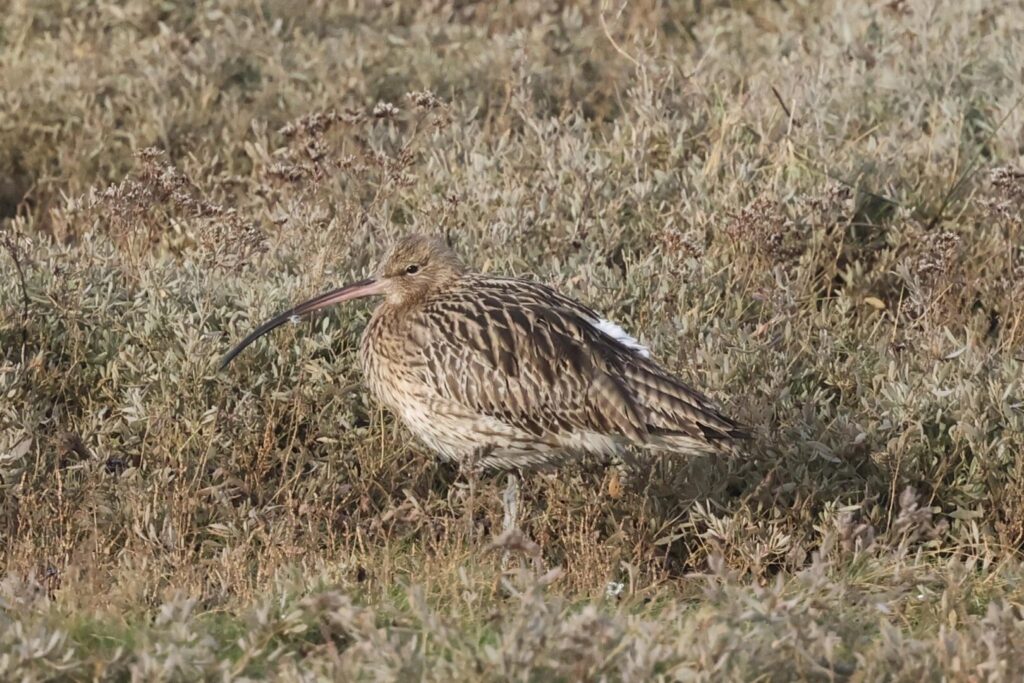
A Chinese Water Deer was out on the saltmarsh. A Common Buzzard was perched on the concrete bunker out in the middle. There were several Curlews, Redshanks and Little Egrets this side too. We had a brief glimpse of a Stonechat on the bushes close to the path but it disappeared out of view. A couple of Scandinavian Rock Pipits flew round chasing each other.
The Freshmarsh was pretty much frozen over too. A small group of Brent Geese had dropped in on the only remaining small area of open water in the first compartment. There were a few Mallard and Gadwall in the water with them, and several Shoveler asleep on the bank beyond.
As we walked on past Island Hide, a Cetti’s Warbler flew from the cut reed below the path and disappeared in to the standing reed by the hide. Several Coot were gathered on the edge of the reeds in the NW compartment, where there was some more unfrozen water.
The tide was in on Volunteer Marsh, so we continued on straight past to the Tidal Pool. Looking very pale, a Greenshank roosting towards the back of the first section stood out. A Kingfisher landed on the Suaeda on the edge of the water opposite. Another Water Rail picked its way along the edge below but we couldn’t find any Little Grebes on here again today.
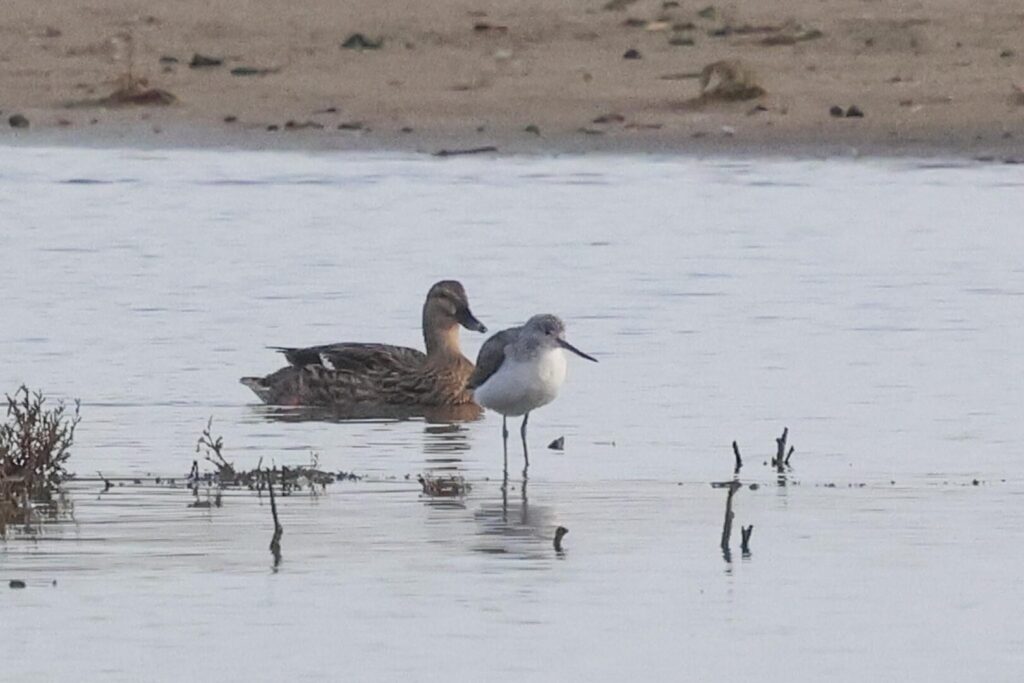
There were lots of commoner ducks on the Tidal Pool today, Wigeon, Shoveler and Teal but no sign of any Pintail today. Four Red-breasted Mergansers were diving continually. Two Avocets were roosting on one of the spits with a few mixed Godwits and a Grey Plover.
On our way out to the beach, we were told the Long-tailed Ducks had gone off west. Scanning from the edge of the dunes, we quickly picked up a Great Northern Diver and a Great Crested Grebe flying past. Followed by another Great Northern Diver on the sea off in the distance towards the tip of Scolt Head. We could see some distant Goldeneye, more Red-breasted Mergansers, and a single Common Scoter but no sign of the Long-tailed Ducks.
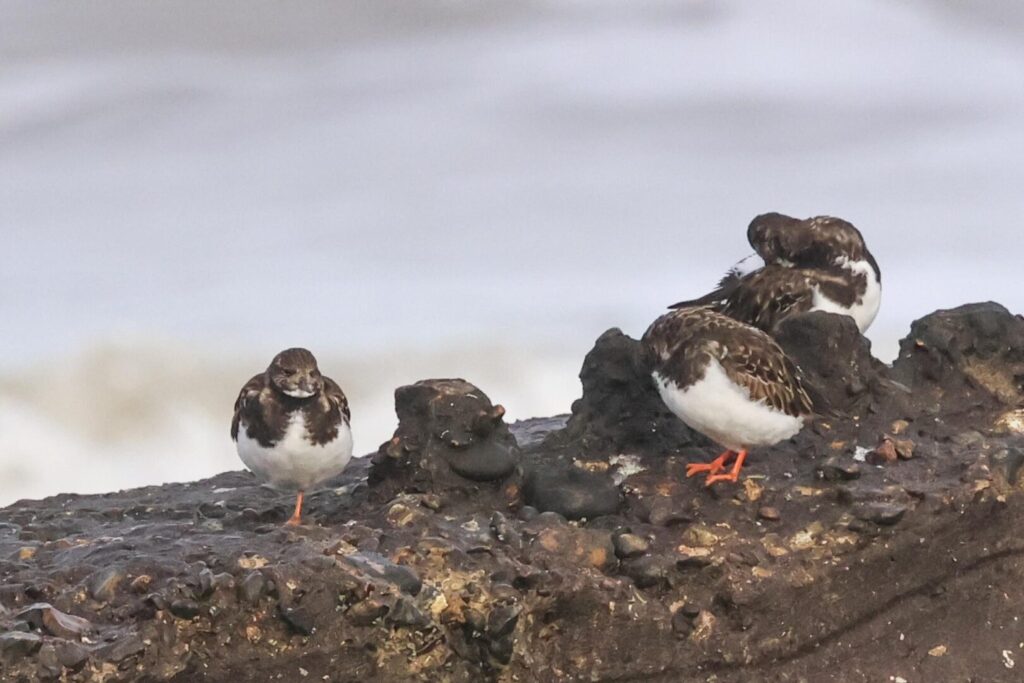
The tide was in but there were still quite a few waders on the beach. Several Turnstones flew in and landing on the watchtower ruins in front of us. A small group of Sanderling flew past. Off towards Brancaster, we could see lots of Oystercatchers roosting on the sand, along with a few Bar-tailed Godwits, Grey and Ringed Plovers, more Sanderling and Dunlin.
Just as we were about to leave, one of the group found the three Long-tailed Ducks had reappeared back on the sea off to the east. Nice views in the scopes now.
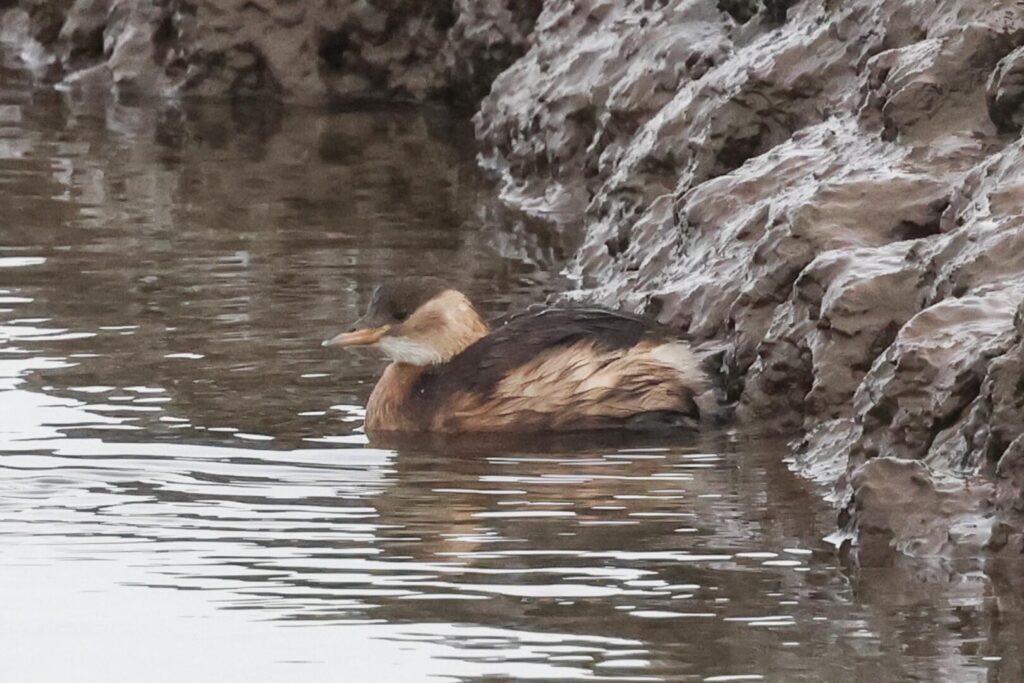
Walking back past the Tidal Pool, there was no sign of the Greenshank now. The tide was going out and a Little Grebe was lurking in the channel on the Volunteer Marsh. There were more waders on the muddy edges here too now, but nothing new.
Back at the Freshmarsh, a pipit dropped into the reeds right over in the far corner. We scanned along the edge with the scope but couldn’t see it. A single Pied Wagtail was out on the frozen islands. A lone Common Snipe was hunkered down by a pile of cut reed. The Stonechat had reappeared and was now out in front of Parrinder Hide. Back to the Visitor Centre, we decided to stop for an early lunch.
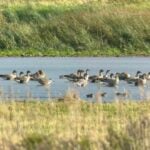
After lunch, we set off back east along the coast road, although we had to divert inland as it was closed at Burnham Norton. We stopped again at Holkham. Scanning the grazing marshes, we quickly found several White-fronted Geese distantly out in the middle, with the Greylags. There was a larger group of Pink-footed Geese, and more flying over calling. The pools here were all frozen too so not much else to see beyond a Grey Heron and a few Mute Swans.
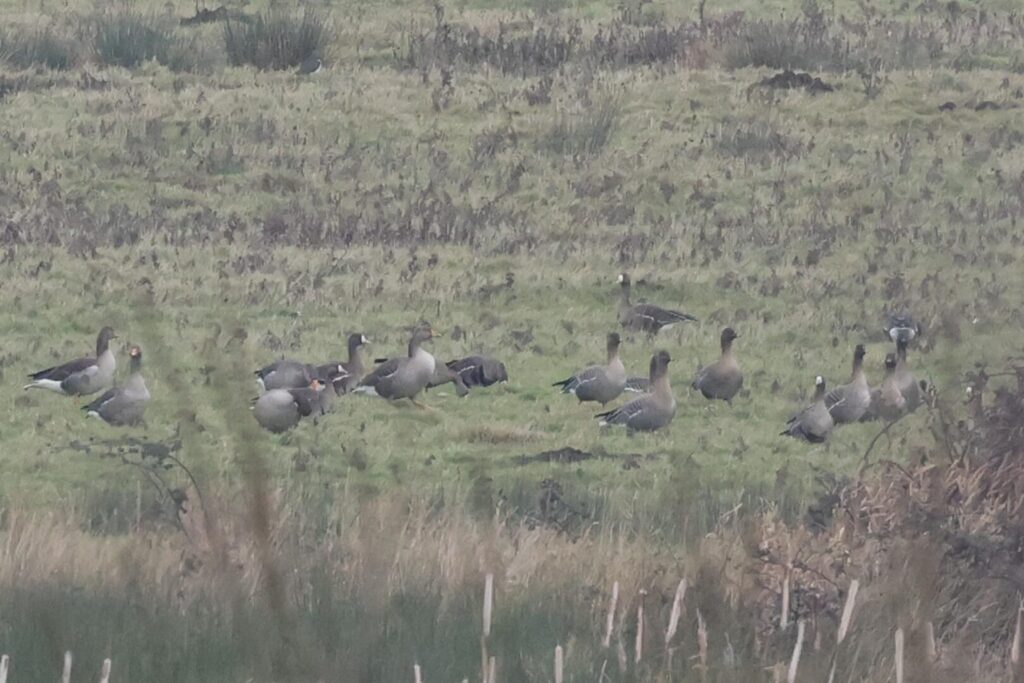
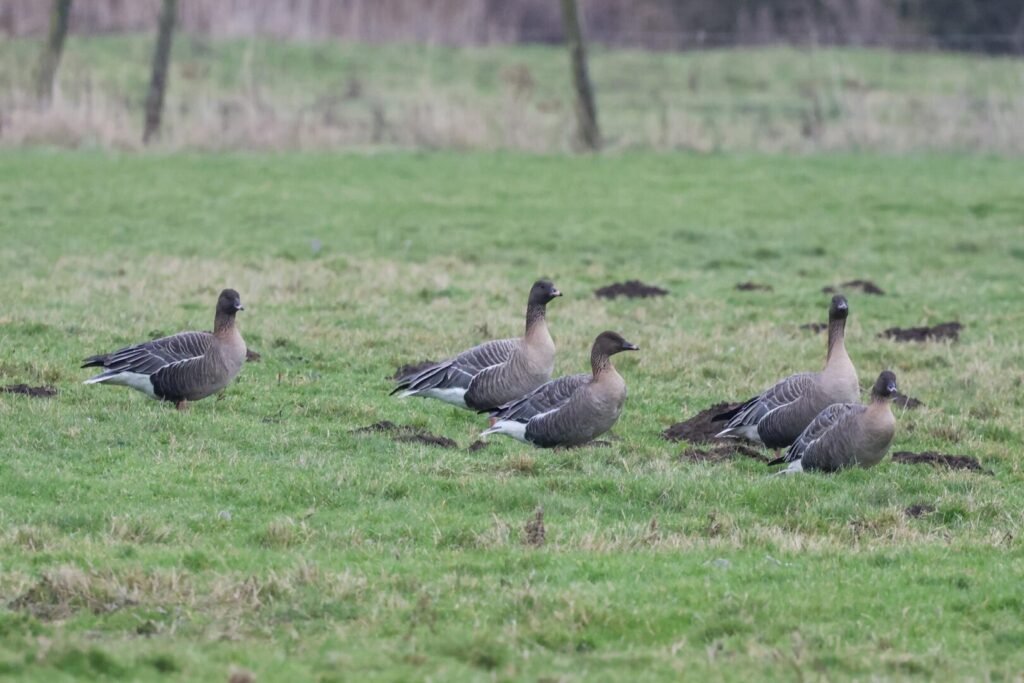
We stopped again at the top of Lady Anne’s Drive. Lots of Pink-footed Geese were coming up off Quarles marsh further back and flying off inland to feed. A small group was out on the grass close to the Drive and we got a good view of them in the scope now. A big feature of winter here in Norfolk, we see plenty of big flocks but it is nice sometimes to get a chance to study them a bit more closely.
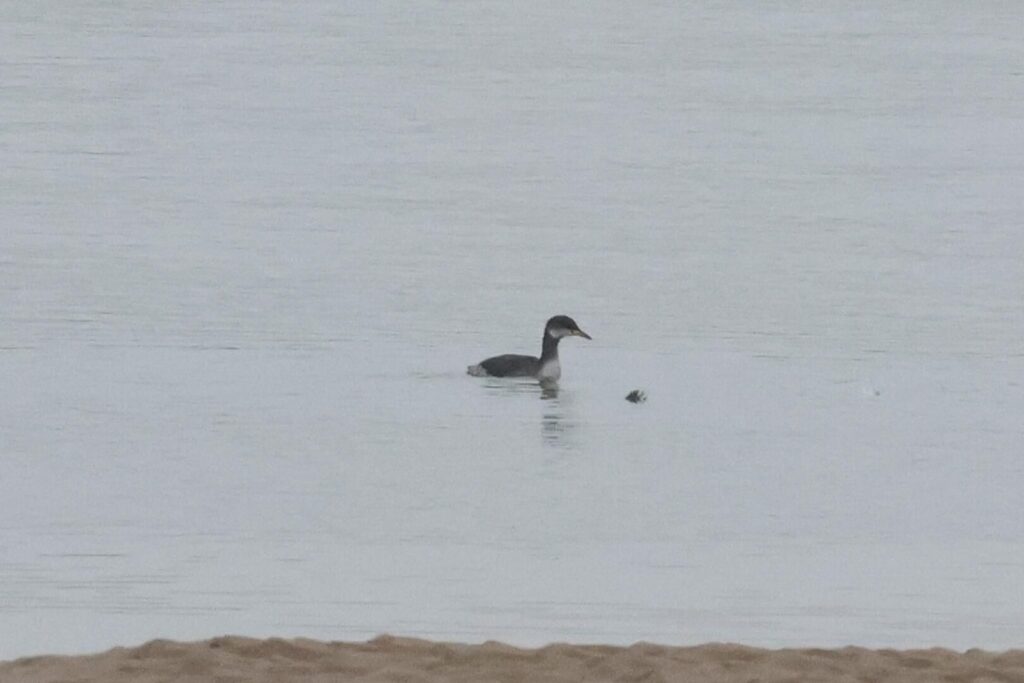
Round to Wells beach car park, we walked up to look out at the harbour. First, we walked back along the harbour wall towards town. The lingering Red-necked Grebe was diving in the channel just beyond the Outer Harbour. Good views in the scope. There were a few waders here too – Curlew, Grey Plover, Ringed Plover and Redshank.
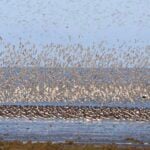
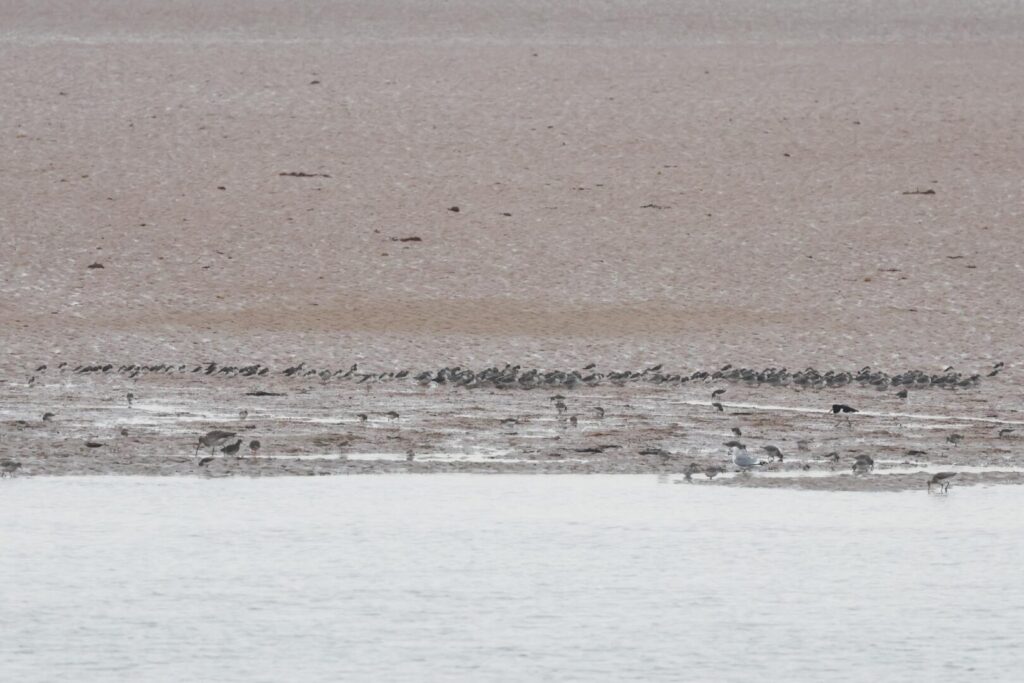
Back past the new RNLI station, we looked out from the ramp to the edge of the channel beyond. All we could find in the water was just a single Red-breasted Merganser further up, diving. There was a good selection of waders roosting on the sand beyond and feeding on the edge of the water. Lots of Oystercatchers, a large mixed group of Knot and Dunlin, several Bar-tailed Godwits, Grey Plovers, Ringed Plovers, and lots of Redshanks. A line of Cormorants were standing on the sand out towards the sea in the distance.
There have been several Great Northern Divers in the channel in recent weeks but we couldn’t see one at first. Someone told us there had been one in the Outer Harbour earlier, so we walked round along the side of the channel. There was not sign of anything now though, just a single Little Grebe.
It was looking like we might be out of luck, but we have not failed to see at least one here recently. We walked back out to the edge of the channel and scanned further up. Another drake Red-breasted Merganser was tucked in below the mud bank on the far side, feeding. Scanning across we found one of the Great Northern Divers there too. We watched it diving for small crabs in the scope.
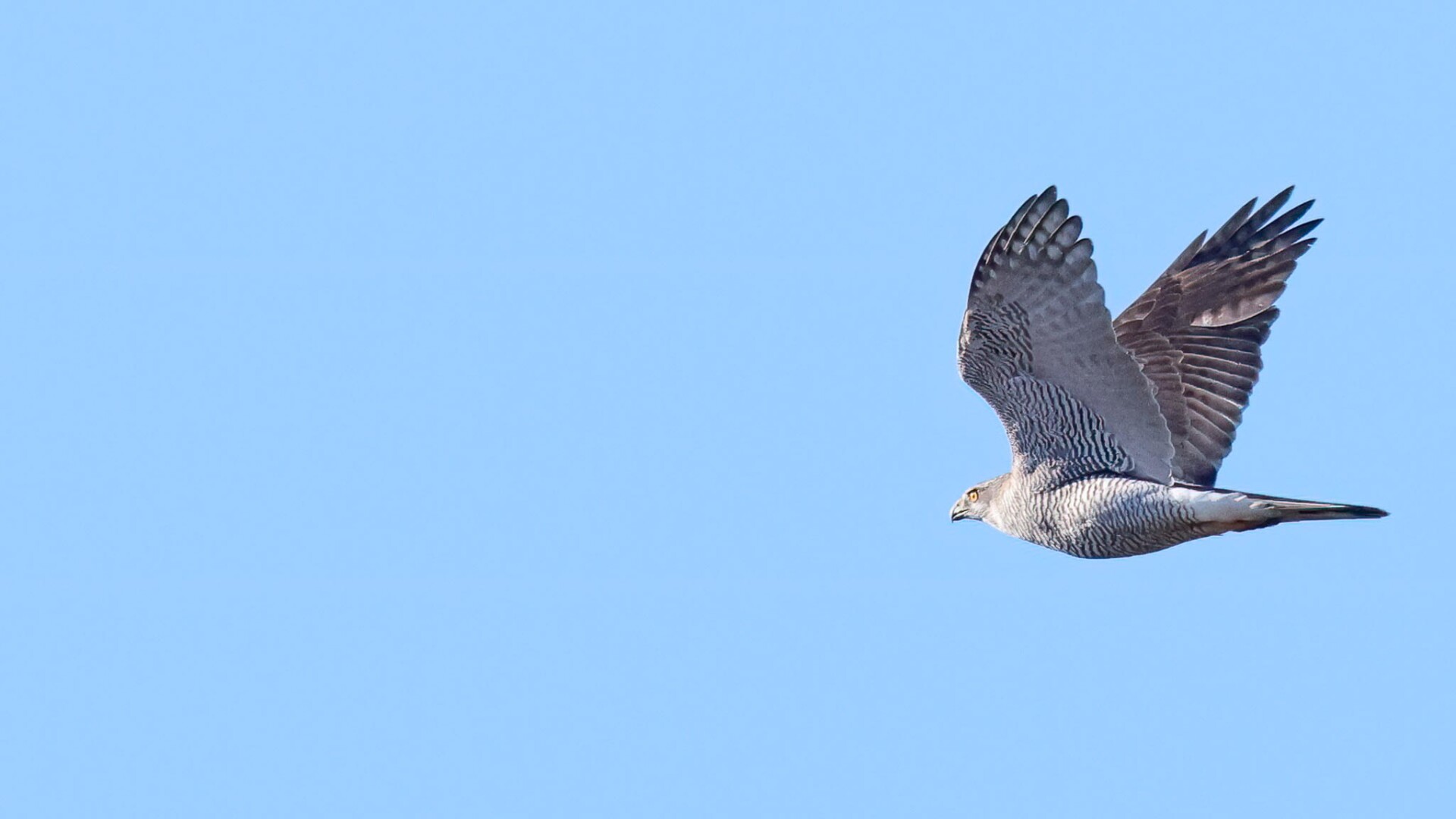
Further east, we turned inland. Having been unable to get to the Tawny Owl at Titchwell earlier, we decided to have a quick go for another regular one. Late afternoon is not an ideal time and it was grey and cool here now but given the forecast for tomorrow it was probably our best chance now. As we pulled up, a Sparrowhawk flew low across the field in front. It surprised some Lapwings in the stubble and managed to catch one unawares. It was still standing with it in its talons when a Carrion Crow decided to have a go, and chased it off. The Lapwing flew off, hopefully unscathed.
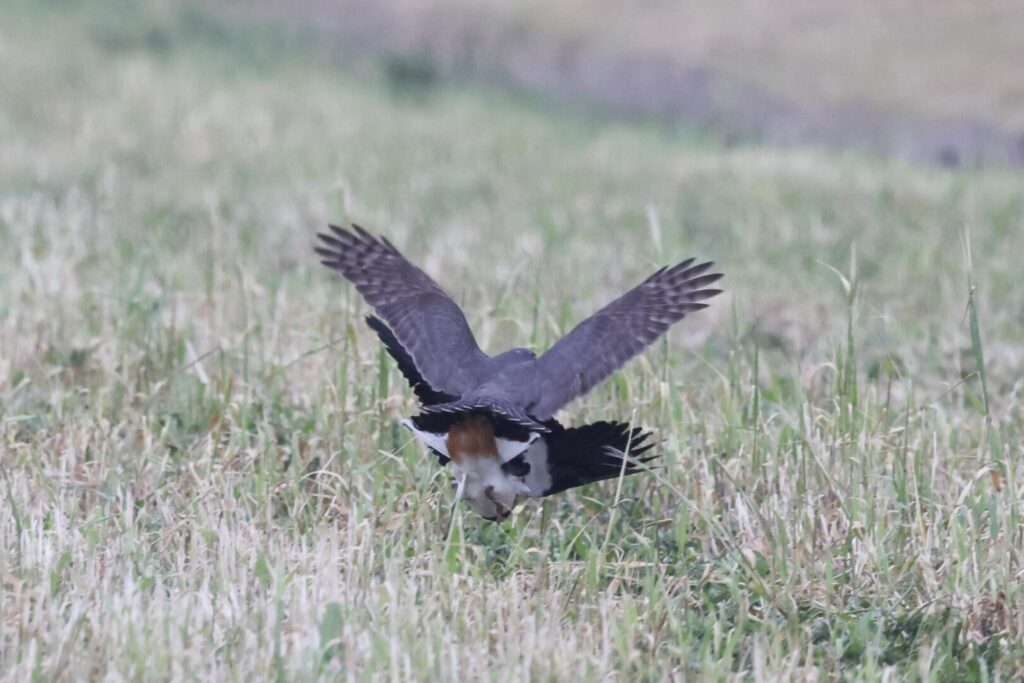
As we walked along the footpath round the edge of the fields, a succession of skeins of Pink-footed Geese flew over calling. When we got to the tree where the Tawny Owl should have been, there was nothing in the hole. We turned and walked back.
There was still time for one last stop. The flock of scoter has been off Kelling all winter but it was too late now to walk all the way out to the Hard. The sea would be too rough tomorrow. We noticed a message that they were off Weybourne beach car park this afternoon, we decided to have quick look from there. When we got up onto the shingle, we could see that the Scoter flock was still off Kelling Hard. Very distant from here and the light was going fast now. Still we scanned through them.
The main raft was mostly Common Scoters and it was very hard to pick anything out in amongst them now. We were just about to give up, when we found two scoters separate from the main flock. They were even further off to the west and impossible to make out any detail now but from their shape we could see they were two Velvet Scoters. These two are often separate from the raft.
It was time to head back. Tea and cake were calling back in Hindolveston for anyone who wanted them. It had been a very productive first day of Winter birding, in difficult conditions, with everything frozen. More tomorrow.