Day 3 of a 3-day Late Autumn tour. It was foggy first thing but had already cleared on the coast by the time we arrived. A beautiful sunny autumn day followed, with lots of blue sky, before it clouded over progressively through the afternoon. We spent the day on the North Norfolk coast.
Our destination for the morning was Holkham. We wondered whether migrants might have dropped in with the fog or had there been a clearout overnight with clear skies? As we drove up Lady Anne’s Drive, we could see that the grazing marshes are still very dry. They desperately need rain, and lots of it. There were a few Teal on one of the remaining, deeper pools. A large flock of Pink-footed Geese was out on the grass off to the east.
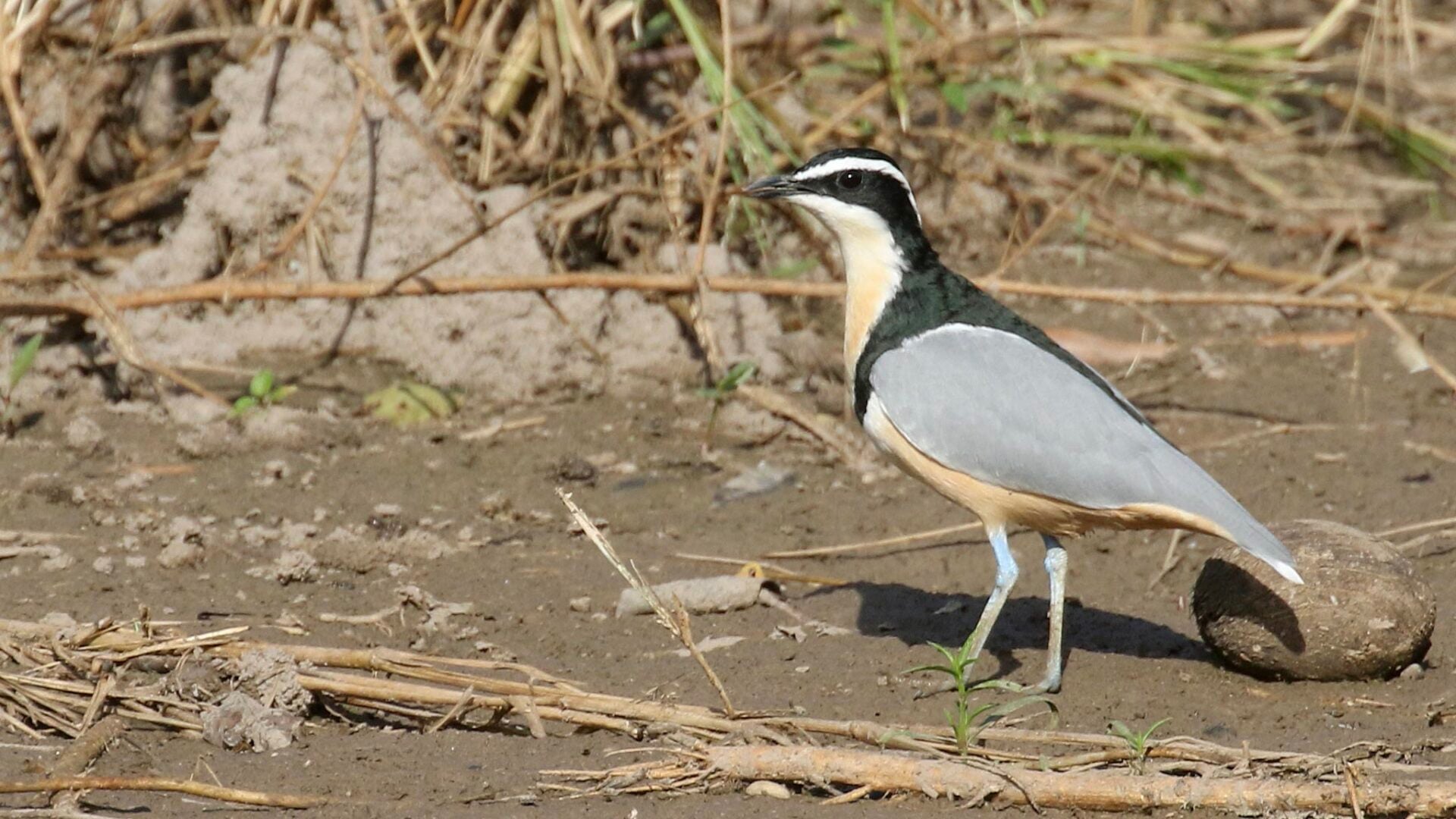
We parked at the far end and got out. As we were getting our stuff out of the back, two Goosander flew in over the trees. We watched as they headed on inland. Several more small groups of Pinkfeet flew over calling, and yet more came up out of the grass further back on Quarles Marsh. Several Egyptian Geese were flying round calling noisily too and a pair landed on the grazing marsh.

A couple of Blackbirds came out of the bushes by the Drive, but the first impression was that not many were left here today and there didn’t seem to have been another big arrival overnight. There were just lots of Woodpigeons and a couple of Moorhens in the grass below the hedge. The head of a Grey Heron appeared from a ditch behind a pair of Greylag Geese. A flock of Goldfinches was feeding in thistles and a pair of Stonechats flicked up and down from the fence.
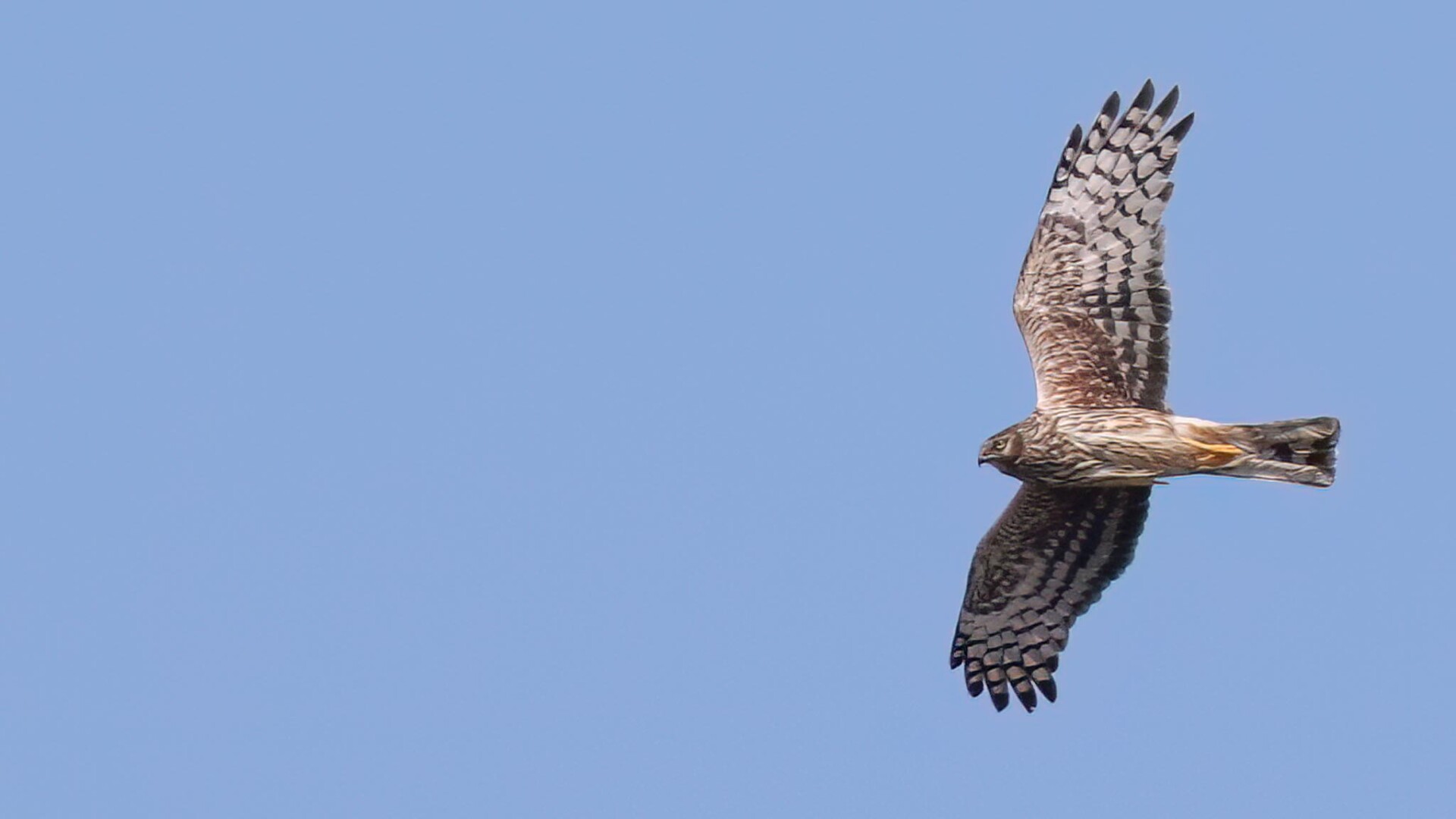
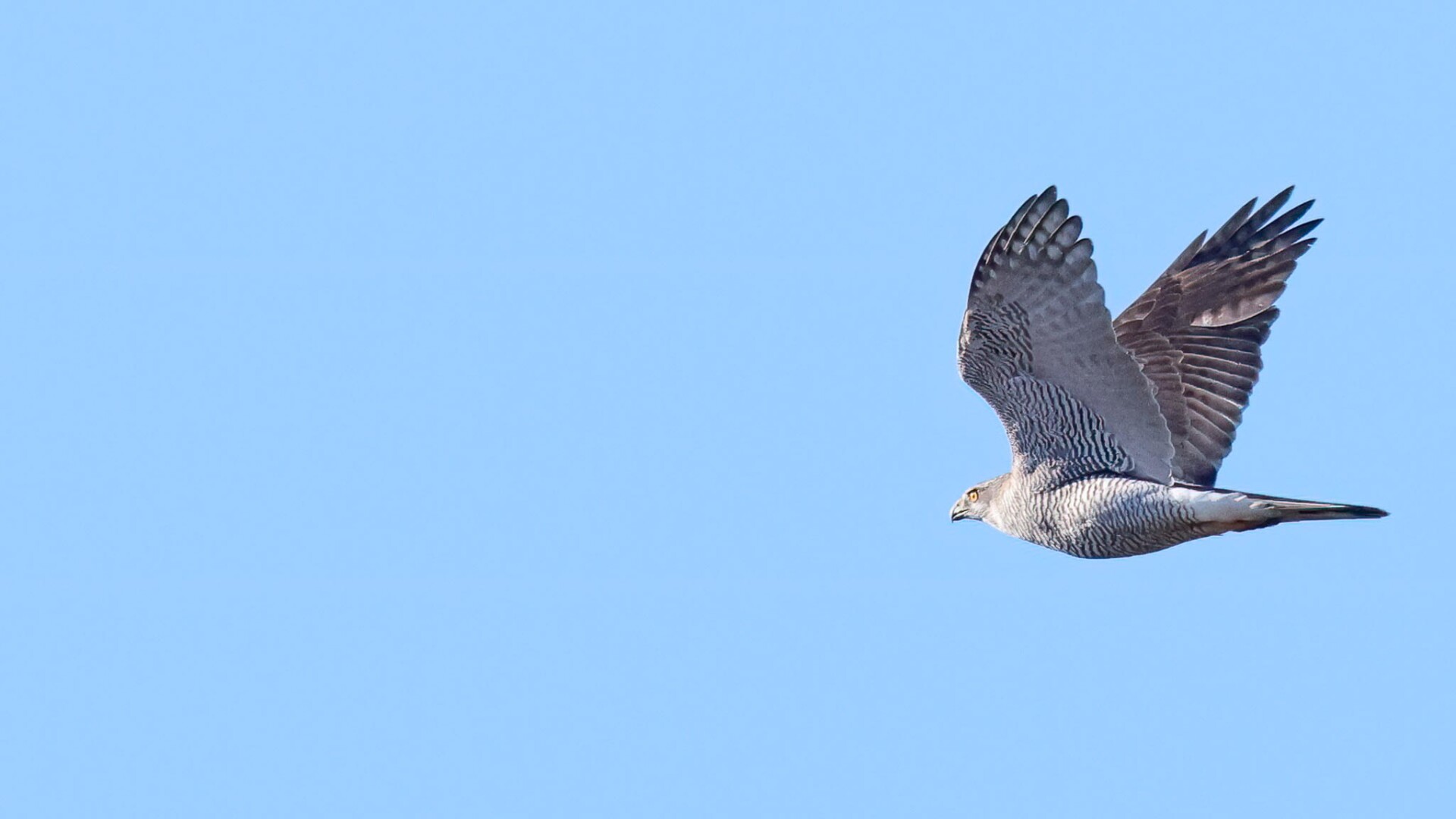
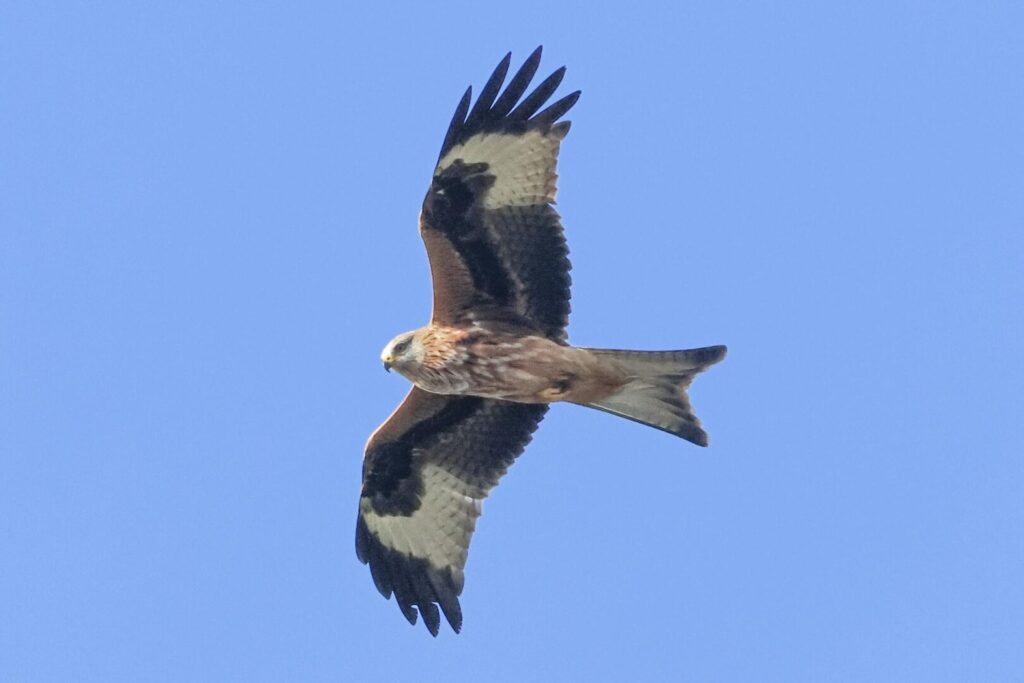
There were a few raptors enjoying the early morning sunshine. A Kestrel was perched on the nearer brambles and the regular very pale Common Buzzard was on the bushes further back. We could see a couple of Marsh Harrier flying over the marshes and a distant Red Kite over pines. A Sparrowhawk flew in and landed in the bare poplars where we got it in the scope.
We set off west along the track before the pines. Not too far along, we found our first tit flock. Several Long-tailed Tits flew in towards us first, followed by nice views of a Coal Tit. There were a few Goldcrests too, but we couldn’t see anything more unusual with them. The flock moved swiftly through. We heard a Great Spotted Woodpecker calling just beyond and looked up to see if fly out of the trees and over our heads.

As we walked on, we heard a Little Grebe laughing. There are lots of ducks on Salt’s Hole now, as there usually are through the winter. We could see a good number of Gadwall, several Mallard and a few Teal. The Wigeon were mostly feeding in the grass beyond. A Kingfisher flashed across but disappeared behind the trees. We found a single Little Grebe on the edge of the reeds over the far side, which than swam out into the middle and caught a small stickleback. A distant flock of Skylarks came in over the pines, 10 or so, but it was hard to tell if they were migrants arriving or just flushed off the beach.
Continuing on west, several Jays flew out of trees. We stopped again to scan the grazing marshes from the gate. There was very little in the bushes on the edge of the reeds this morning. Again, it looked like most of the thrushes and Blackbirds had moved on. A Muntjac was out on the grassy bank and a Great White Egret came up briefly from beyond the reedbed. Another Red Kite drifted over and a Kestrel flew out of the pines. We heard a Siskin calling as it flew over the pines.
The sycamores by the boardwalk have mostly lost their leaves now. We couldn’t see anything in them so we walked past and on to the far end to scan the beach. There were lots of Great Crested Grebes offshore and several Red-throated Divers. Even though they were distant, they were catching the sunlight. Scanning across, following one of the divers, we picked up a single Velvet Scoter closer in. It was drifting quickly east with the tide and unfortunately disappeared behind the dunes before everyone had a chance to see it.
We hoped the Velvet Scoter might emerge again from behind the dunes a bit further on. While we waited, we continued to scan. An adult Little Gull was feeding just offshore with two Black-headed Gulls just offshore. We watched it repeatedly dipping down to the sea. A good size comparison next to the Black-headed Gulls, we could also see the Little Gull’s very dark, blackish underwings.
There was no further sign of the Velvet Scoter from here so we decided to walk out a short way onto the beach to see if we could see it from the front edge of the dunes. We couldn’t find it again but did see several Common Scoter, a pair of females closer in and a larger raft further back.
A Razorbill was diving just offshore too and we had a better view of the Red-throated Divers and Great Crested Grebes from here. A Red-breasted Merganser flew past, as more unexpectedly did a female Common Pochard. Perhaps the latter was a migrant arriving. There was no sign of anything else coming in off the sea today though.

There were lots of Skylarks and a large flock of Linnets around the area of emerging saltmarsh on the beach. A few waders were trying to roost on the sand further up but the number of dogs had steadily increased and sure enough they got flushed now. They flew off past us, largely Knot, Dunlin and Ringed Plovers.
Back over the boardwalk, there were several Common Darter dragonflies out in the sunshine and a Red Admiral flew over. We stopped briefly by Washington Hide. Most of the cattle have been put away for the winter but there are still a few Belted Galloways out on the grazing marsh. Two Cattle Egrets were walking round between them and a Grey Heron was standing in among them too. The Great White Egret came up from beyond the reeds again briefly.

We could see a few geese out on the grazing marsh but they were mainly Greylags with just a few Pink-footed Geese mixed in with them. There is nothing at all on the pool in front of the hide at the moment.
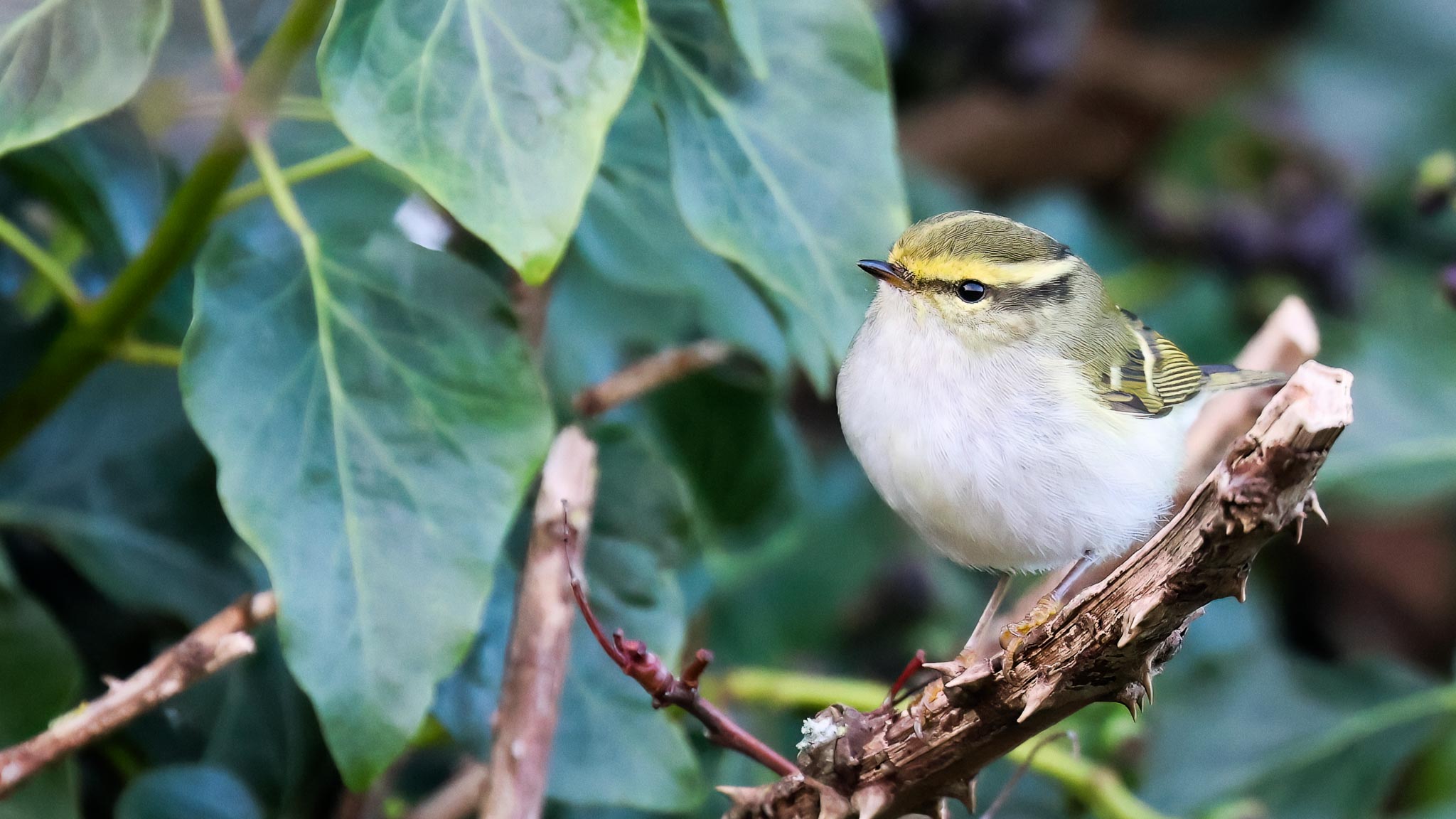
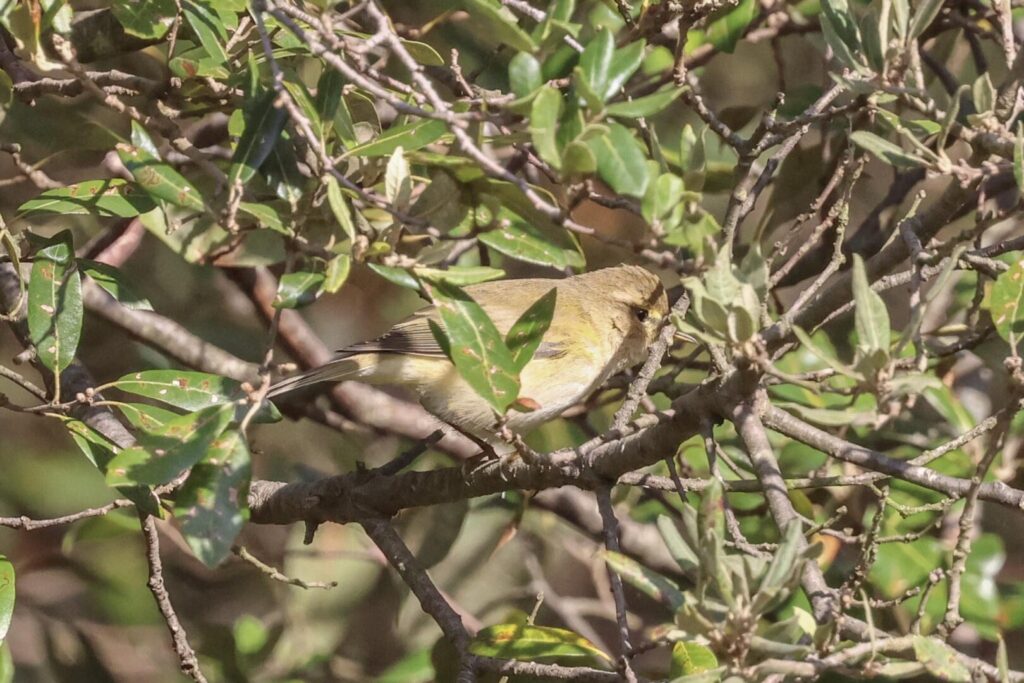
Back on the main track, we continued on further west. We could hear Long-tailed Tits in the trees as we walked up to Meals House and we found lots of activity where the sun was on the holm oaks just behind. A couple of Chiffchaffs were flycatching out from the leaves. Then a Firecrest stuck its head out, a lovely view. We watched it flicking around in the leaves for a couple of minutes before it moved off east with the rest of the flock. The Chiffchaffs stayed behind.
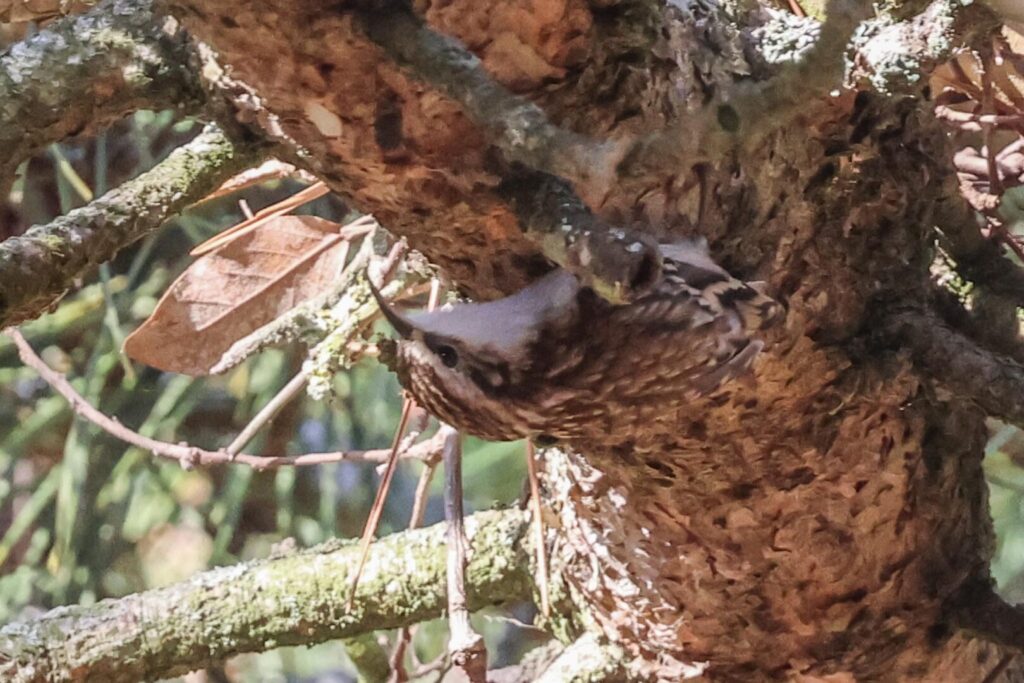
Further on, we found another larger flock in the trees just before the crosstracks. Mainly a mixture of tits and Goldcrests. We stopped to watch and found a couple of Treecreepers with them too. The flock never really came out into the open though, so we couldn’t be sure nothing else was with them. Then they moved back up into the pines behind and disappeared.
A few Blackbirds and a single Redwing flew up out from under the sallows opposite. Still a few were lingering to feed before moving on south. A Mistle Thrush flew out over the pines, circled round and disappeared back in. This one most likely a local bird and not a migrant.
We bumped into one of the wardens and a friend at the crosstracks and they told us they hadn’t seen anything more exciting further on. So we went in to Joe Jordan Hide for a rest. The grazing marsh here is very dry too at the moment and most of the shallow pools are empty. A large flock of Lapwings and a smaller group of Golden Plover came up from the marshes beyond Decoy Wood. A single Barnacle Goose looked rather lonely, on its own out on the grass.
There were more geese further over, again largely a mix of Greylags and a few Pinkfeet. No Russian White-fronted Geese have been reported here yet this winter so it was a surprise when two geese put their heads up and we had a flash of their white fronts catching the sun. On closer inspection, we realised there were another two White-fronted Geese feeding there too, with their heads down. We messaged the warden, who confirmed they were the first of the autumn to return here for the winter. Nice!

After a short rest, we set off to walk back. There seemed to be fewer tits by the path now, the flocks seemed to have melted back into the pines. A Grey Wagtail was flitting around on the roof of Meals House as we passed.
It was time for lunch when we got back to Lady Anne’s Drive. Unexpectedly for November, it was lovely sitting outside in the sunshine. After lunch, as we walked back to the minibus, a Great White Egret flew over the Drive in front of us.
We drove further west along the coast to Holme now. There had been several divers and grebes on the sea in the last couple of days, over the high tide. It was low tide now but we figured there still might be something offshore. A Shorelark had also been reported on the beach first thing. We thought that might have been disturbed by now, given the number of people out in the nice weather, so it was a nice surprise to see a message when we arrived that it was still present.
It was clouding over again now and there were not many birds as we walked out through the dunes. We stopped briefly to watch a Little Egret fishing in one of the channels, its neck stretched out horizontally in front of it.

When we got out onto the beach, we had a quick scan of the sea first. Three Red-breasted Mergansers were just offshore, so we got those in the scope. We were not sure initially which way the Shorelark was. Two people with binoculars were off to our left, looking at something. As they walked back, they told us they had just seen it in that direction. We set off to look for it, but our hearts sank as we saw a woman walking with a loose dog right up to where it had been.
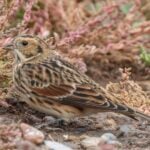
There was no sign of the Shorelark initially but thankfully it had only moved a short way further down. We quickly relocated it on the high tide line again with two Pied Wagtails. The Shorelark kept getting chased by the wagtails, hiding behind the logs on the beach and perching on top of them. Nice views now in the scope.

While watching the Shorelark, we stopped to scan the sea again. The couple had also told us they had seen one of the Great Northern Divers still offshore earlier but we couldn’t find it now. All we could see were several Red-throated Divers and lots of Great Crested Grebes.
There were lots of Brent Geese feeding along the shore and a good selection of waders on the beach too. We scanned across and found Oystercatchers, Curlews, Redshanks, several Grey Plovers and Turnstones, one or two Bar-tailed Godwits. A single Knot was on the edge of one of the wet channels in front of us.
The Shorelark was gradually working its way towards us along the tide line. Then it ran up to the top of the sand behind and stood there looking round. A lovely view now. It flew round past us to join the wagtails and a flock of Linnets the other side, but was promptly chased off by the wagtails again. So it flew back to where it had been by its favourite log.

It was time for us to head back. Walking along the coast path, towards the car park, we found a couple looking out over the grazing marsh through a scope. They told us there was a Barn Owl down in the grass. After a couple of minutes it came up again and we watched it hunting distantly back and forth over the grazing marshes, over towards The Firs. It has been another very poor breeding season for them, this year, so it is very nice to see one now.
A nice way to end our three days birding on the coast, with some amazing Autumn Migration. If we headed back now, there might still be time for tea and cake before the long drive home.