Day 1 of a 3-day Early Winter Tour in Norfolk. After a sharp frost first thing, it was a chilly but bright and sunny day, with light winds. Nice birding weather. We spent it mostly around the Wells-Holkham area of the North Norfolk coast.
On our way to the coast this morning, one of the group asked whether we might see Grey Partridge this weekend. We replied that they have been very difficult to find this year. Then we hadn’t gone much further when we drove past a covey of partridges in the field by the road, on the cut edge of some sugar beet. The minibus windows were still defrosting, but we thought we caught a glimpse of orange faces. We had to reverse to confirm but they were indeed nine Grey Partridge. They looked at us for a minute and then flew off, landing out in the middle in the taller uncut sugar beet. A great start!
Continuing on to Wells, we drove down and parked in the beach car park. Getting out, we walked up round past the RNLI and looked out across the harbour. The tide was just going out but a small group of Brent Geese was feeding on the near shore, along with a single Curlew.

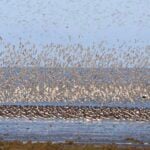
There were more waders over on the sand on the far side of the channel. Lots of Oystercatchers, with several Bar-tailed Godwits and Curlews on the edge of the water. A large group of Knot was feeding on the sand just behind, with a few smaller Dunlin and one or two Grey Plover. Further back, we could see a group of Sanderling, very pale in the sunshine. Just in front of them were several Ringed Plover. A Marsh Harrier flew over and everything flew up, but they quickly settled back down again.
There were a couple of Red-breasted Mergansers in the channel – one over the far side, the other in the middle. The latter swam over to where the sandbank was just appearing out of the water and pulled itself out to preen. As we walked further down along the shore, we found more Red-breasted Mergansers, another five, including three males. One of the males started displaying briefly, then they chased each other, flapping their wings and splashing with their legs. We had a good view of them as we walked past.

Stopping to scan again, we could see lots more waders over the far side, on the mussel beds. There were lots of Oystercatchers and a large group of Knot asleep just behind. Several Turnstones were picking around the stones.
A succession of skeins of Pink-footed Geese came in over the sands opposite calling, in several very large waves. They could have been late coming off the roost, but it was a full moon last night and clear. Probably they had been feeding overnight by moonlight and were now coming to the coast to roost by day.

We walked on round towards the back of the lifeboat station. Looking over into the outer harbour, we spotted a Red-throated Diver with a Little Grebe on the water by the edge. We got the diver in the scopes. It didn’t look well, swimming up to the mud bank and sitting there with its head drooped.
Back to the car park, we drove round to Holkham next. As we turned onto Lady Anne’s Drive, we could see large groups of Pink-footed Geese out on the grass either side. Again they were day roosting here too after the full moon last night. We stopped to look, and noticed two Barnacle Geese in with them. Further back, we could see a much larger group of Barnacles now too.

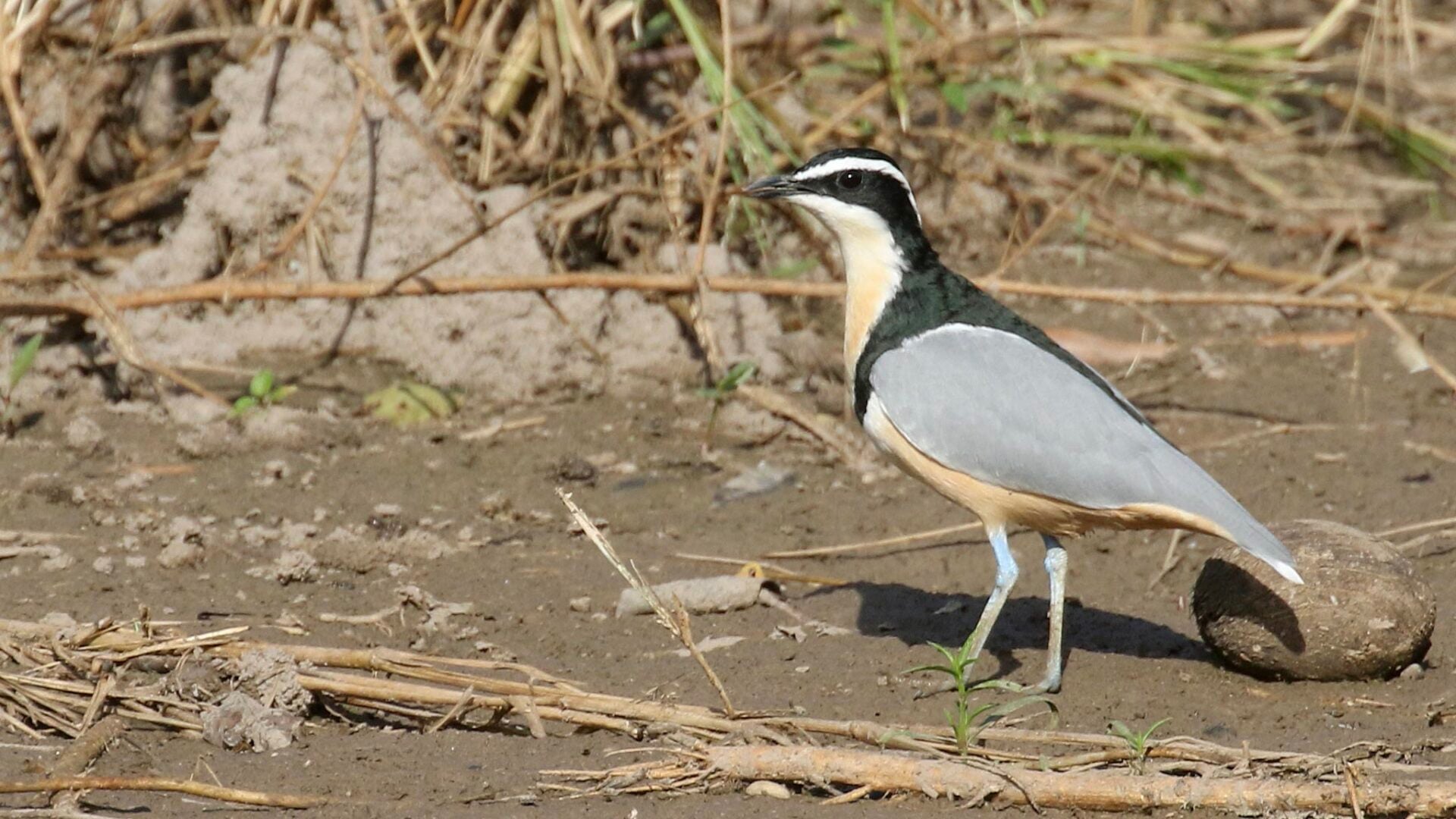
As we drove down to the far end, it was good to see some water in the pools now. They were very dry even a couple of weeks ago. Lots of Wigeon were feeding out on the grazing marshes, and a smaller number of Teal in with them. There were a few Greylag Geese and a single Egyptian Goose too. All the Lapwing had possibly fed overnight too. Several Moorhens were out on the grass over by the hedge.

Further back, there were more Pinkfeet and Barnacle Geese. Groups of Barnacles flew in from back by the road to join them. A Great White Egret was feeding in one of the ditches on the edge of the reeds. Lots of Lapwings came up in the distance and we could see a flock of Golden Plover circling round above them.

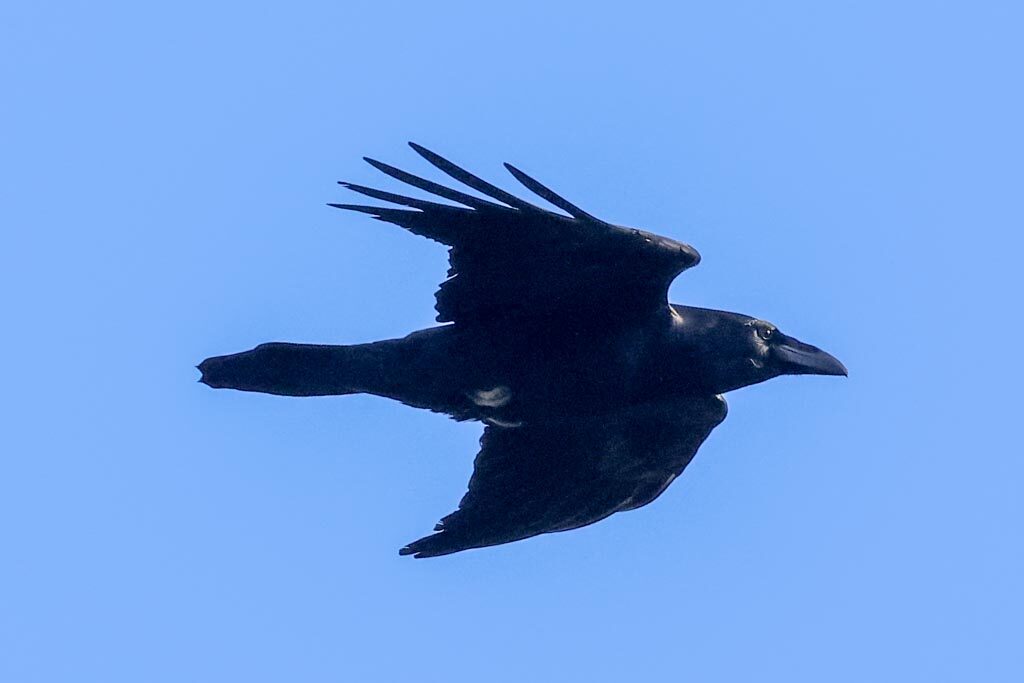
The usual very pale Common Buzzard was perched on the top of a bush in the middle of the marshes. A couple of Red Kites were in the large dead tree the other side and another one was hanging in the air over the pines. A Marsh Harrier drifted in too. Two Ravens flew out of the pines and off south over the Drive.
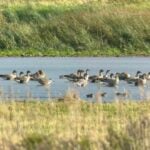
As we walked west to Salt’s Hole, the trees were fairly quiet today. There were lots of Gadwall on the pool, along with Mallard, Wigeon and a few Shoveler. We found a single Pintail half-hidden, asleep in reeds over on far side. There were a couple of Little Grebes as usual too.

While we were standing scanning the pool, a flock of Long-tailed Tits came out of the trees and flew across above us. There were Coal Tits, Blue Tits and Goldcrests with them. One Goldcrest stopped to feed in the holm oak above our heads.
Further west, we stopped again briefly to scan from the gate. The bushes here were quiet today, just a single Blackbird. So we continued on to the boardwalk and walked up to the far end, where we looked out over the beach to the sea.
There were lots of Great Crested Grebes offshore, their white necks and faces catching the morning sun, and a couple of Red-throated Divers. We picked up a Great Northern Diver on the sea too but it was diving all the time and moving quickly west. Eventually we lost sight of it behind the dunes. A large raft of Wigeon was out on the sea but no sign of any scoter from here today. Several Skylarks were feeding on the new emerging saltmarsh on the beach in front.
Back along the boardwalk, more Long-tailed Tits came out of the pines and stopped to feed in the sycamores. We had a quick can through but couldn’t see anything different with them. Down on the main track, we continued on west. A couple of Jays flew across the track ahead of us.
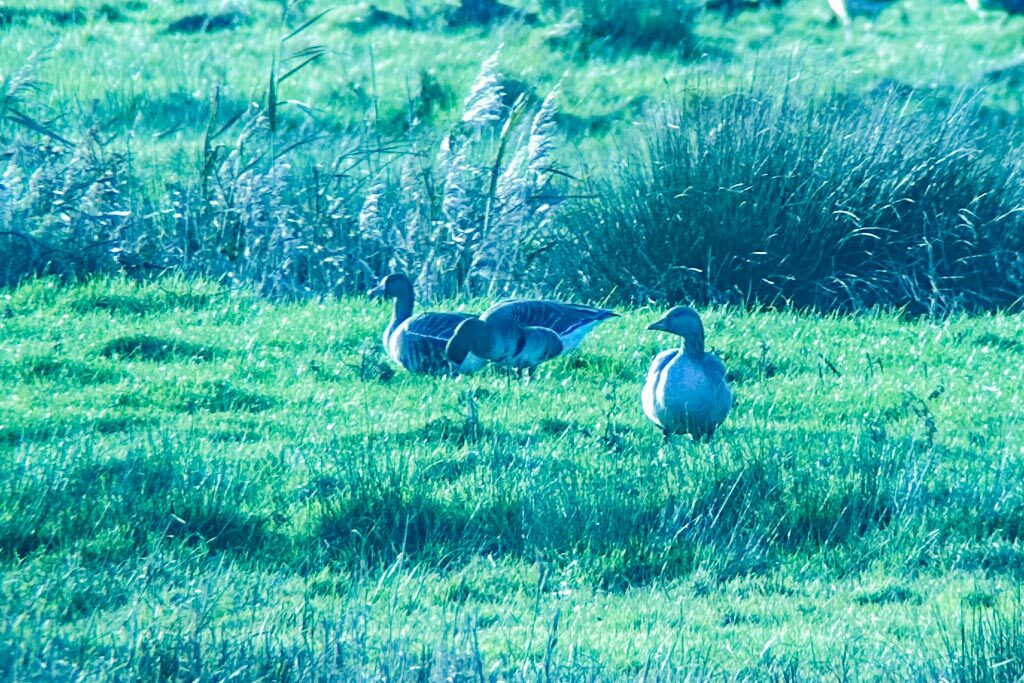
Just past the crosstracks, we heard White-fronted Geese calling. Looking through the trees out to the grazing marshes beyond, we could see four flying round. Then ten or so dropped in down by a small pool where some Greylags feeding. We got them in the scopes. While we were watching them, one of the wardens was driving past and stopped for a quick chat.
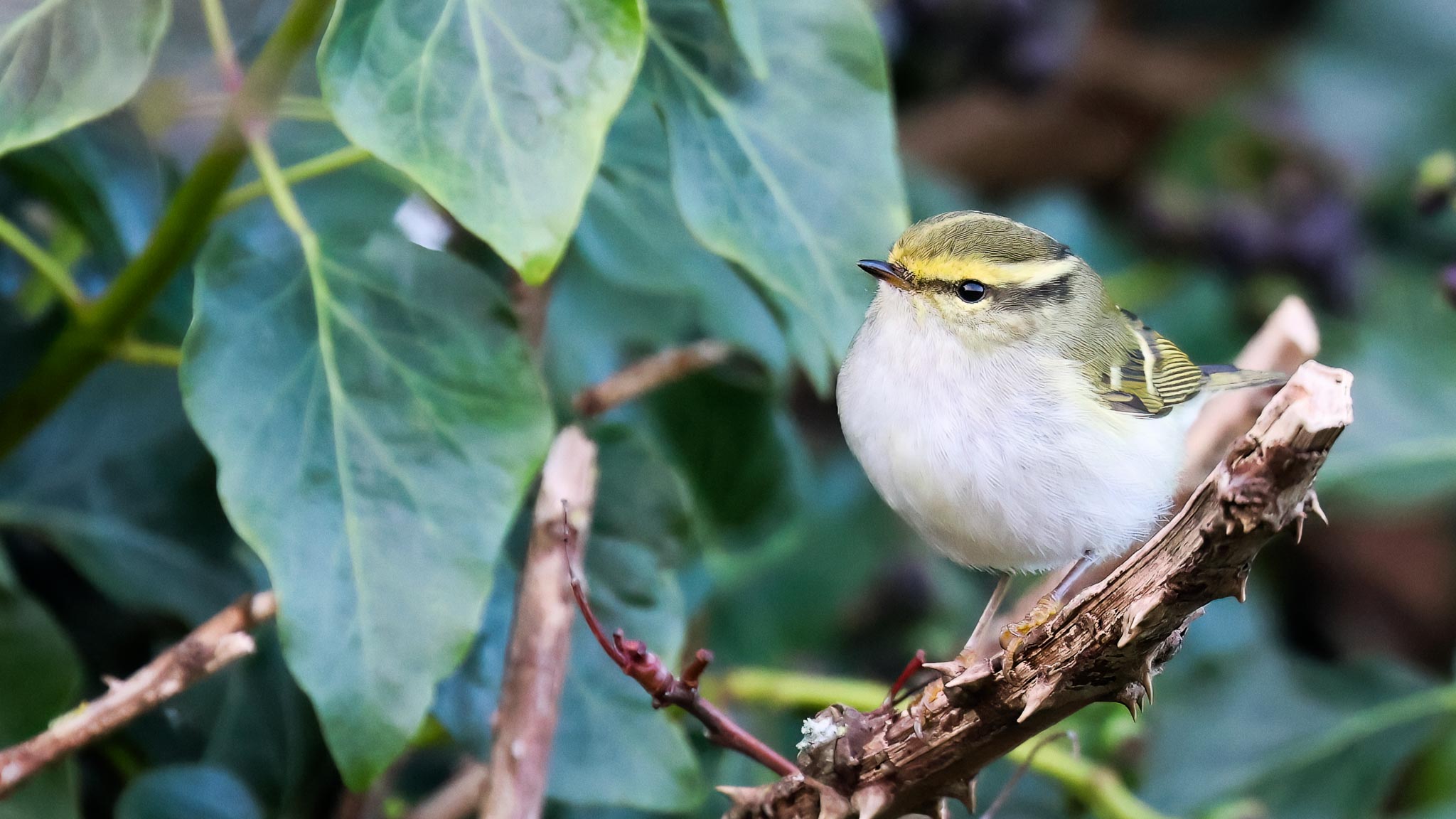
We were hoping to find one of the lingering Hume’s Warblers, which were still here a few days ago. They have been here for about three weeks now and may well stay the winter, if it remains mild. A little further on, we caught up with the warden again by the sallows, where one of the Hume’s Warblers had been. He had just seen a Firecrest so we stopped to look. We had a quick glimpse of the Firecrest as it dropped down into the brambles right in front of us but it disappeared into the vegetation.
There was no immediate sign of the Hume’s Warbler, so we decided to walk in along the Bluetail Trail path and check out the far corner, where it had apparently been seen a couple of days ago. We hadn’t gone far though when it called in the middle of the sallows and the warden then shouted to say he could see it from back on the main path. Hurrying back round, we arrived just in time to see it drop down into the brambles out of view.
We waited and scanned and after a while the Hume’s Warbler flew up out of the brambles right in front of us – it must have worked its way through low down. Unfortunately it quickly disappeared in again. We tried out the other side on the Bluetail path, where we had a couple more quick glimpses. The Firecrest appeared again briefly too. Then when we lost track of it we walked back out to the main track and the Hume’s Warbler appeared in the sallows in the middle but only briefly again. It was not playing ball.

It was time to be heading back, especially if we wanted to call in at the hide on the way, and at least everyone had a glimpse of the Hume’s Warbler. As we walked back towards the crosstracks, a second Hume’s Warbler started calling in the sallows. This one was more obliging and we had much better views of this one feeding in the top of the bushes briefly.
Back from Joe Jordan Hide, there was no sign of any White-fronted Geese at first. Lots of Pink-footed Geese were now out on the grazing marshes from here too, loafing. There were several groups of Greylags scattered around too and after a while, two White-fronted Geese appeared from behind the rushes with one of them. We got them in the scope. A couple of Stonechats were flitting around the closest pool.
By the time we got back to The Lookout, we were ready for lunch. We sat outside on the picnic tables and, despite it being early December, it was nice out of the wind in the sunshine today.
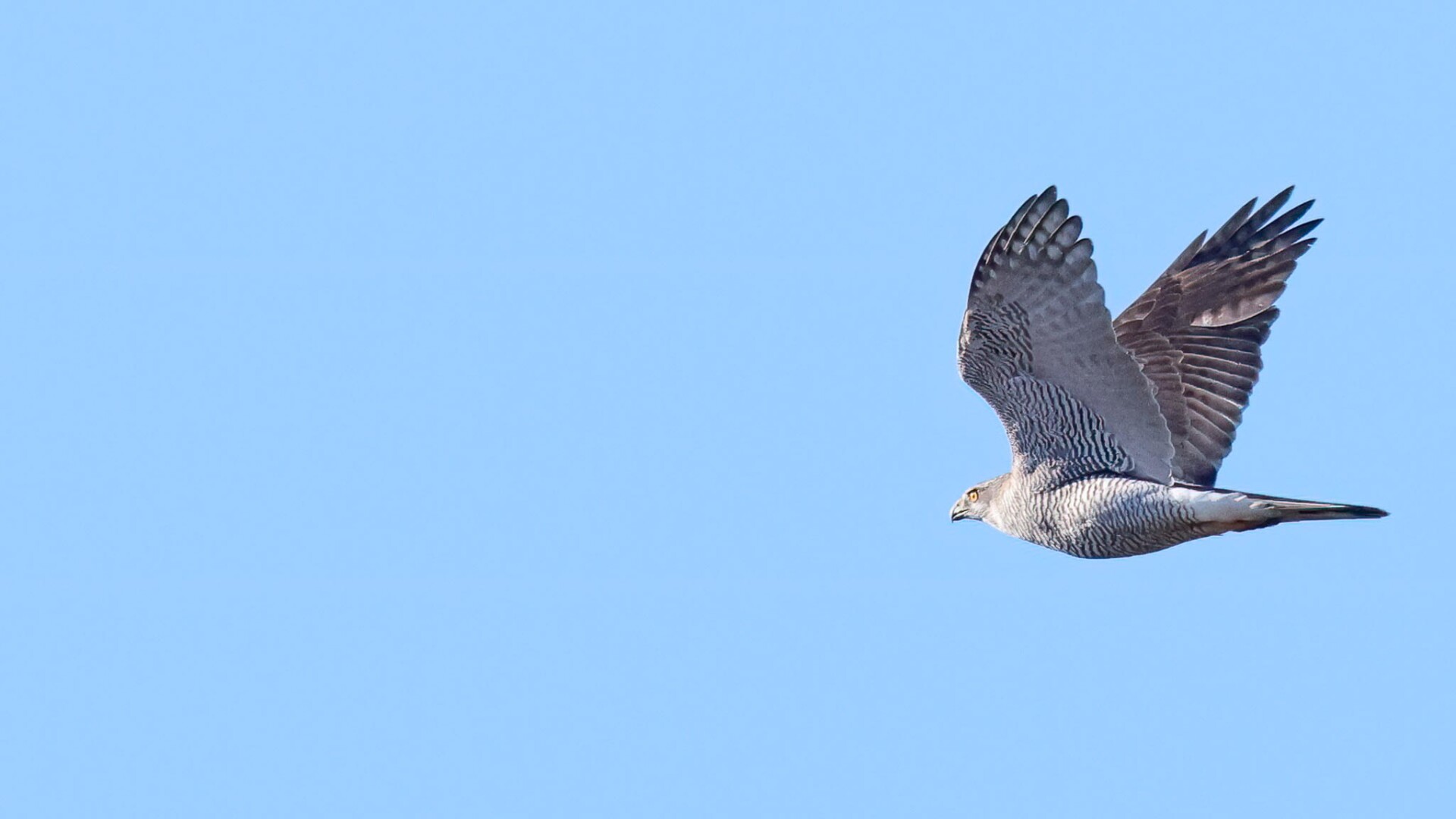
After lunch, we drove east. A Sparrowhawk was perched in a bush in one of the gardens as we drove through Wells. We stopped at North Point for a quick scan. A Marsh Harrier flew over, flushing all the Teal. There were several Shoveler on the water too, and a single Aylesbury Duck with the wild Mallards. We checked through the gulls but could only see Black-headed, Common and Herring Gulls. Another Sparrowhawk flew across, following the hedgeline at the back.
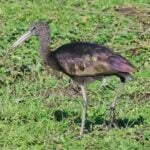
We continued on to Garden Drove for the last hour of the day. There are very few Hen Harriers here so far this winter but we thought we would try our luck. None are roosting regularly but one or two individuals have been seen here briefly. There has been a Glossy Ibis here recently, but we got a message now to say it was further along the coast on the saltmarsh at Stiffkey this afternoon.
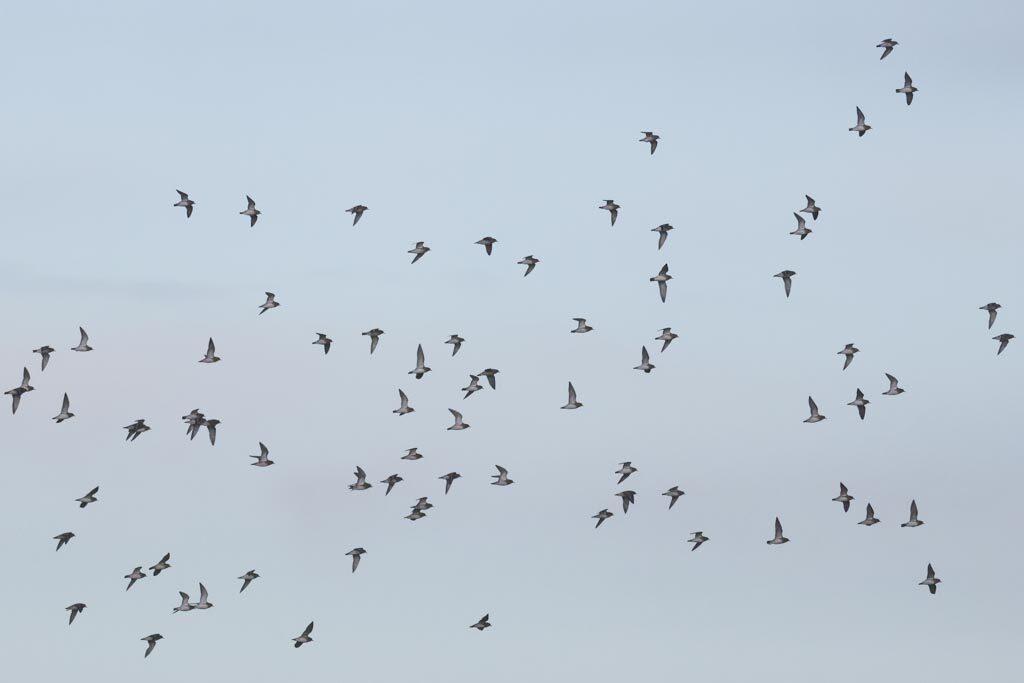
When we got down to the edge of the saltmarsh at Warham Greens, we could see a male Marsh Harrier flying up and down. There were lots of Lapwings around the small pools and a flock of Golden Plover came in, landing down with them.
As we stood and scanned, a couple more Marsh Harriers flew in over the saltmarsh and we picked up a Common Buzzard on a post out on the sands beyond. We were watching a distant Marsh Harrier fly across in front of East Hills when a Merlin flew up past it chasing a pipit. It turned and dropped vertically down into the bushes below and lost to view, too quick to get the group onto it. Unfortunately it didn’t reappear.

The moon came up out over the beach and saltamrsh. It was a full moon yesterday, a supermoon, but still 99% tonight. Still very impressive to watch. Then with the light starting to go, we decided it was time to call it a night and head back for tea and cake.