Day 1 of a 3-day Late Autumn tour. It was a grey and rather misty morning, but dry and with light winds. There were some nice sunny spells in the afternoon though the wind picked up a little too. We spent the day on the North Norfolk coast.
We started the day at Wells. As we got out of the minibus in the beach car park, there were several Chaffinches in the trees at the far end. Presumably birds which had arrived overnight from Scandinavia.
Walking in past the boating lake, we could see several Little Grebes on the water. A female Goldeneye was diving out in the middle. A couple of Blackbirds flew across over the water, a taste of things to come.
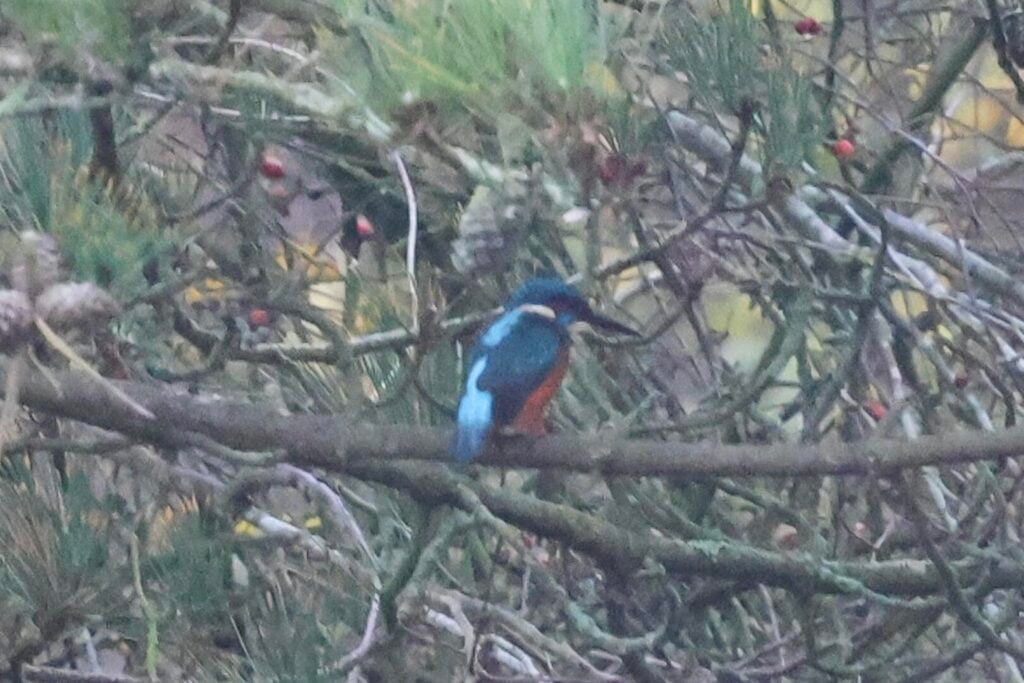
A Kingfisher flashed across the entrance to the small channel on the far side. From a little further up we could see it perched in the branches of its favourite pine tree, so we got it in the scopes. It flew down and plunged into the water, then back up to the tree with a fish in its bill. It was harder to see now and after eating what it had caught, it flew off.
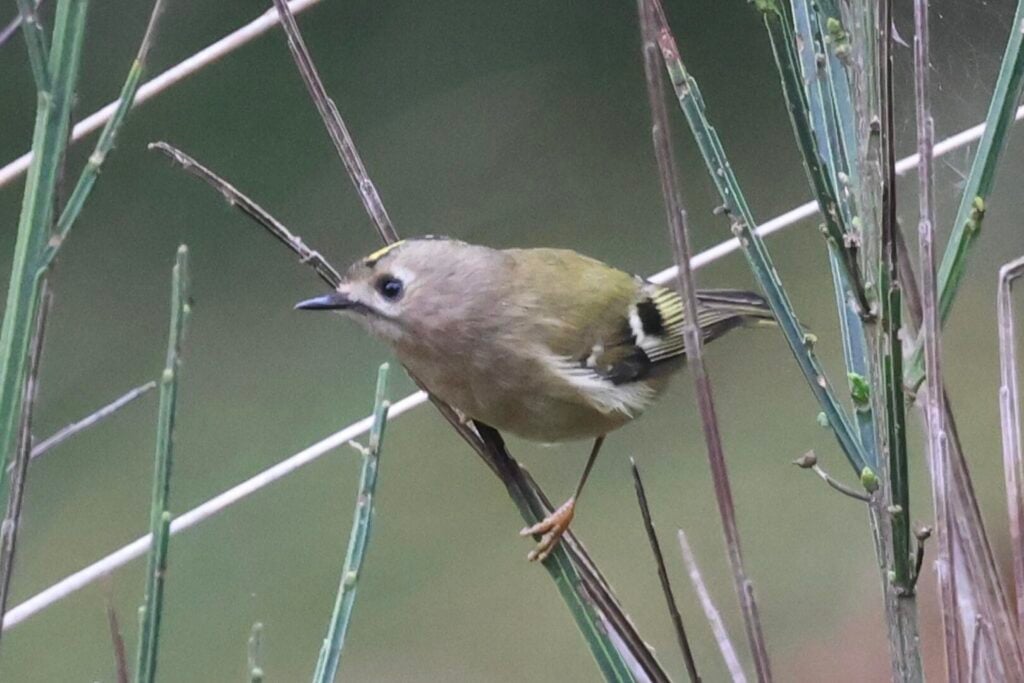
Cutting in through the birches, the tree were very quiet. Despite it still being early, there were several dogwalkers though, lots of disturbance. Once we got round to the east side of the Dell, we could hear Blackbirds calling and a Brambling wheezed overhead. A Redwing was perched in a hawthorn briefly. We stopped to watch a Goldcrest feeding busily in the birch trees.
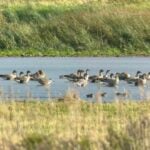
Out onto the main track, we could hear Pink-footed Geese calling. A pair of Long-tailed Tits flew across in front of us but seemed to be on their own. We were hoping we might have found a mixed flock but there was nothing else with them. There were more Blackbirds here, and a brief Fieldfare in the top of the poplars. The bushes beyond, on the other side of the track, seemed to be full of thrushes. So we made our way over there.
As we walked in through the trees, a Firecrest flicked across in front of us and into a nearby pine. We stood and watched it flitting around in the branches for a minute or so before it disappeared deeper in. Sometimes Firecrests do breed in the woods here, but this was most likely a migrant from the Continent. It has been a good autumn for them here.
There were huge numbers of Blackbirds in the trees and bushes. At the far side, we stood by one of the larger pines and watched them pouring out and off over the fields ahead of us. We realised many of them were coming out of the pine above our heads. Even after we eventually started counting, there must have been 50-60 which flew out from that one tree alone.
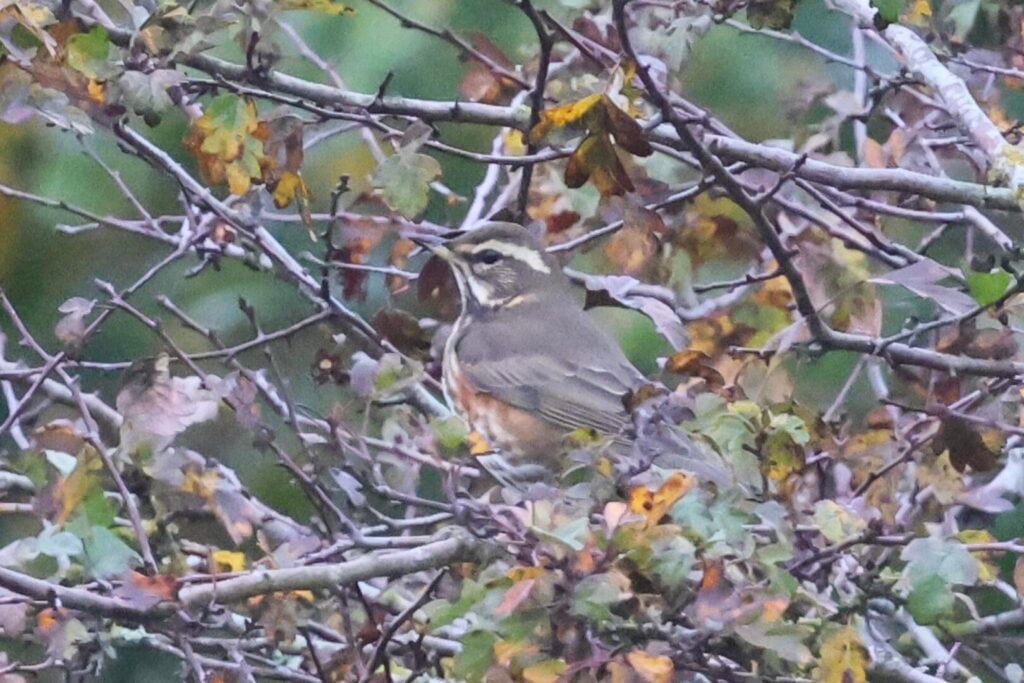
There were more Redwings too, with some small groups flying off over the fields. All the Blackbirds and thrushes had probably arrived overnight, and dropped in to the Woods due to the mist. As we watched them fly out now, most were gaining height and carrying on inland.
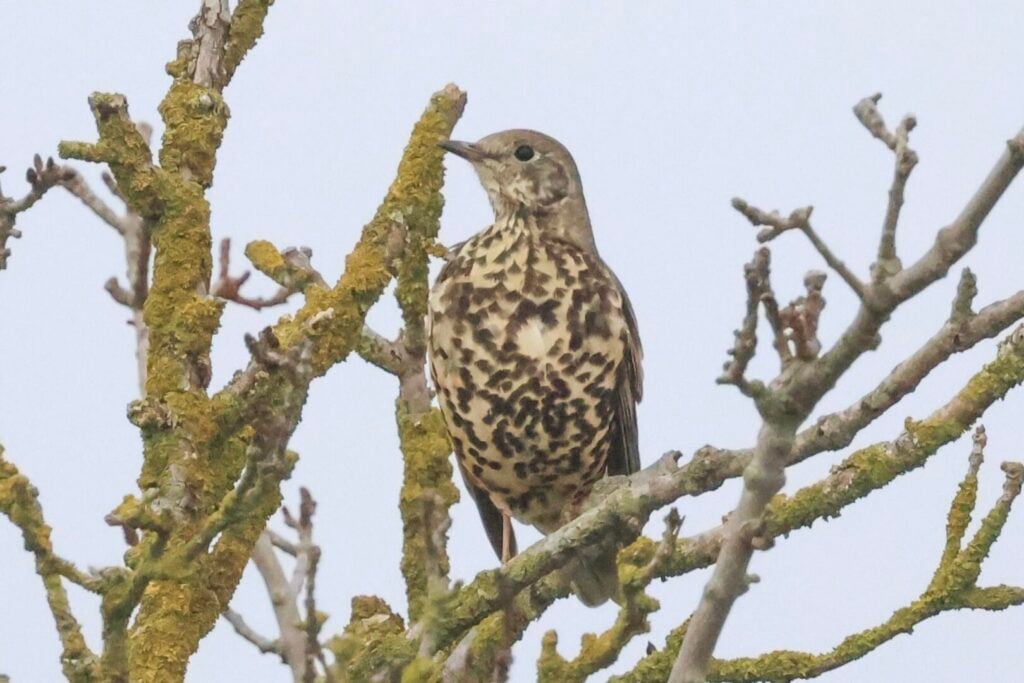
Continuing on round through the bushes, we flushed more and more Blackbirds and thrushes. A Mistle Thrush perched in the top of a bare tree, where it was joined by a Song Thrush, a grey-backed bird of the European subspecies. There were a couple of Redwings in there too.
More were gathered in the bushes further back, including several Fieldfares now. We could see a couple up in the tops of the trees. At least twenty Blackbirds were perched in the bushes over on the far edge. The number of Blackbirds and thrushes all around us was just amazing to see – real migration in action.
We cut back out on the main path and then into the pines on the other side, round to the Drinking Pool. There is a bit of water in the bottom now but it was still very quiet in here. It just looked like there should be something rare hiding in the bushes though.
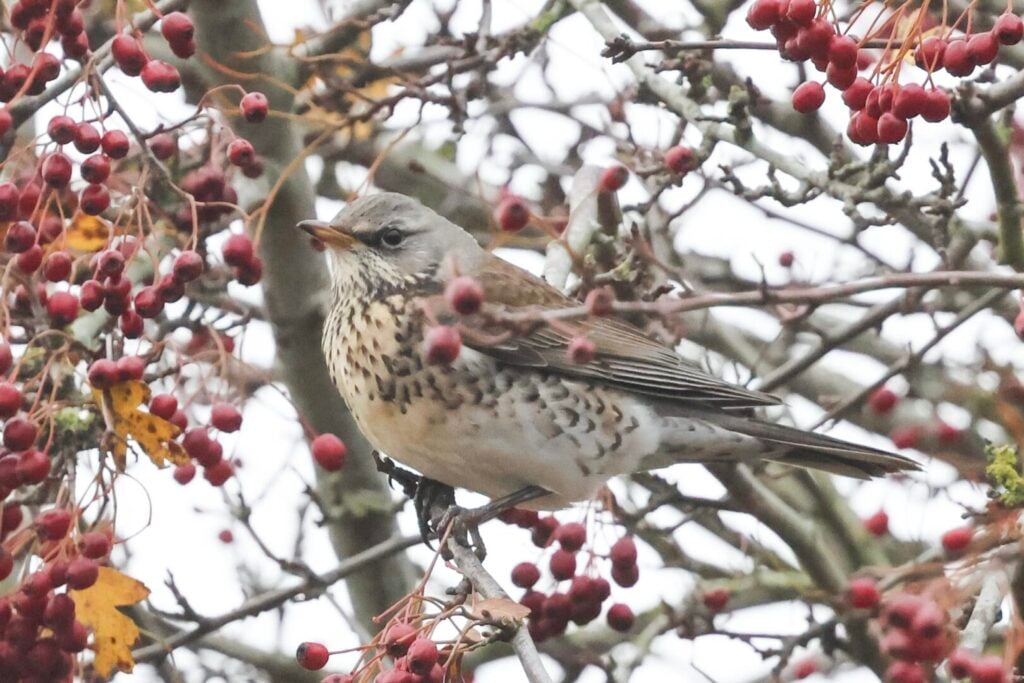
Continuing on further west, it was a recurring theme. The bushes by the track were full of Blackbirds, Redwings and more Fieldfares now. They had stopped to feed up on the hawthorn berries, refuelling after the journey from Scandinavia, before continuing on further south. Several Jays flew out of the pines and past us.
There was a distinct lack of tits and smaller birds this morning. They tend to go around mostly in large mixed flocks and perhaps they were all up deeper in the mines given it was damp and misty on the edge. We finally found a couple of Blue Tits and two Goldcrests in the oak trees. We watched the Goldcrests feeding busily, one down almost on the ground at one point. Perhaps migrants from the continent too. There was nothing else with them though.
More Pink-footed Geese came up off the fields beyond now and flew round calling. Always nice to see our first of the tour, but a sight and sound that would very much be with us all weekend. A flock of about a dozen Curlews flew in over the track too, before turning and dropping back down to the fields.
We decided to turn round and walk back now. A flock of Long-tailed Tits finally appeared now but moved off very quickly, the opposite way. We watched them go but only saw a couple of Blue Tits and Goldcrests following behind.
Back towards the Dell, we could see more Blackbirds still piling in over the pines, dropping down in to the trees where the others had flown out earlier. We made our way in round the north side of the Dell and found another tit flock in the birshes. This one hung around a little longer, feeding. Again, there were lots of Long-tailed Tits and several Goldcrests, plus a few Coal Tits and a brief Treecreeper with this group. Again, we couldn’t find anything rarer with them.
As we made our way back out through the birches, a Woodcock flew up from our feet, right next to the path. It wasn’t there earlier, as we had come past on our way in. Probably fresh in? Passing the boating lake, the Kingfisher flew across again. This time it landed on a post on the other side, by the caravan park. We stopped for another look through the scopes.
We walked across to the cafe now for a coffee break. The sun even came out briefly. Several more skeins of Pink-footed Geese flew over and we could still see Blackbirds coming in high over the trees.
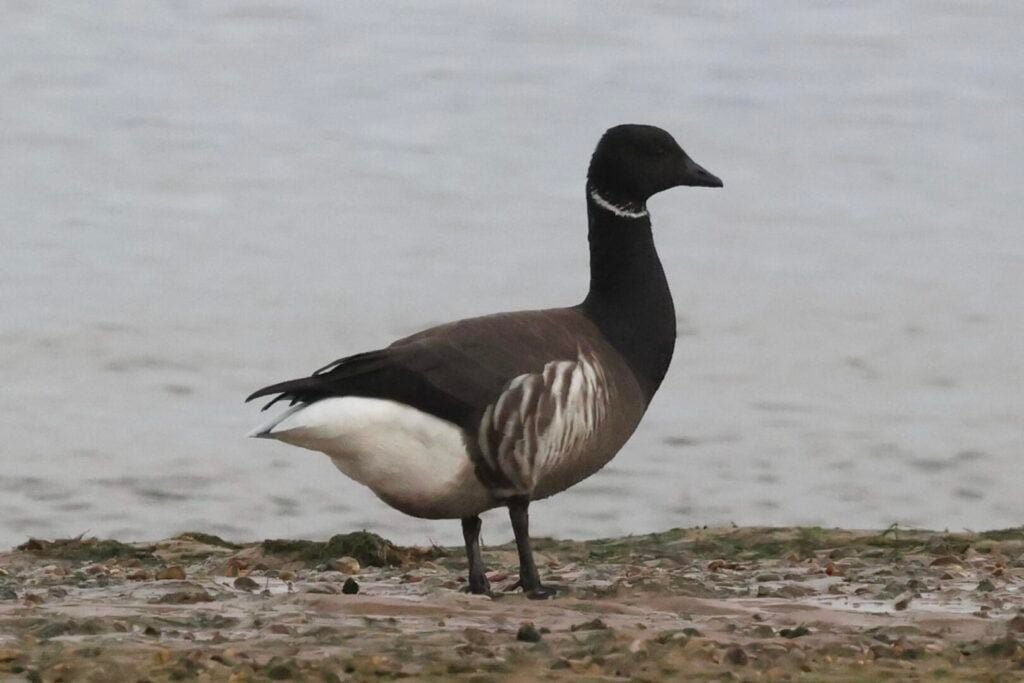
We decided to have a quick look in the harbour next, so walked up past the lifeboat station. Several groups of Brent Geese were feeding on the edge of the channel. One individual looked to have more strongly marked chalky-white barring on its flanks. Possibly a bird with Black Brant genes – there always used to be a couple of Black Brant hybrids with the Brent Goose flock here.
Looking out across the channel to the sands beyond, we picked up a Woodcock coming in. It flew low over the harbour channel, up the beach and across in front of the beach huts, continuing straight up and disappearing into the pines. This one was definitely fresh in – just arriving from the continent as we watched, coming here for the winter. Amazing to think how far it may have come. Many Woodcock come here from way over into Russia. A small flock of Starlings flew in over the beach too.
We turned our attention to the waders now. On the edge of the water opposite, we could see several Bar-tailed Godwits, Grey Plovers, Redshanks and Curlew. A large flock of Knot was feeding up on the wet sand further back. There were a few more Knot and some Dunlin were on the water’s edge much closer, a little further along. A Turnstone was picking around on the beach on the near side of the channel. We could see a Common Gull with a couple of Herring Gulls too.
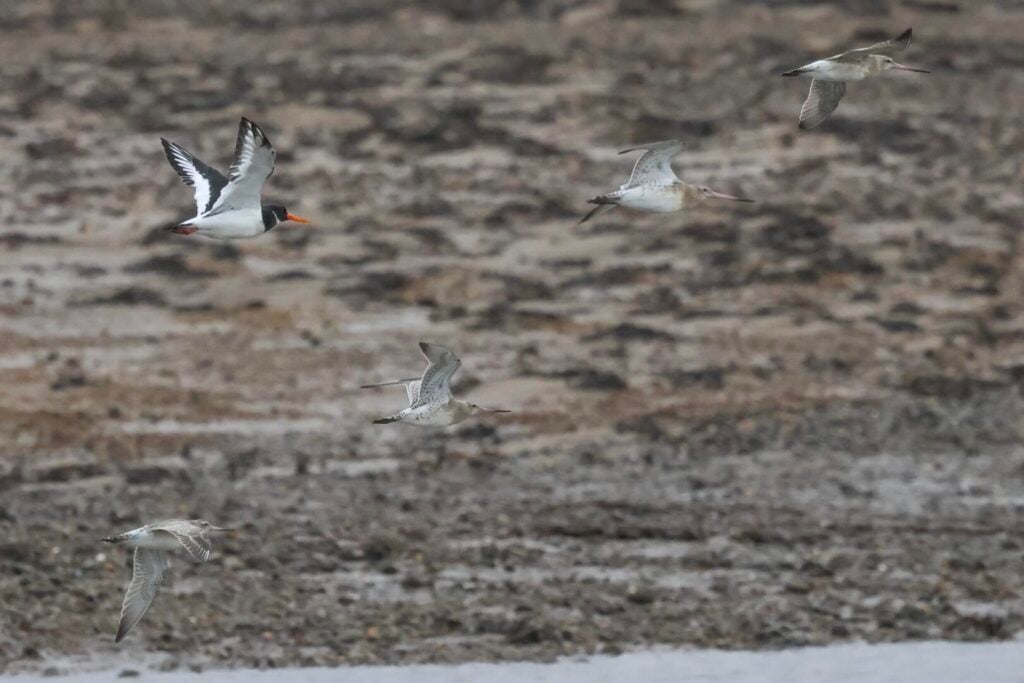
Walking further round, we found three Cormorants in channel but nothing else today. There were lots of Oystercatchers on the mussel beds. Another tight group of Knot was roosting behind with a small group of Golden Plover in front. Two men rowed over the channel with forks – possibly to collect mussels, or dig for bait. A lot of the closer waders flew off, so we carried on back round to the car park.
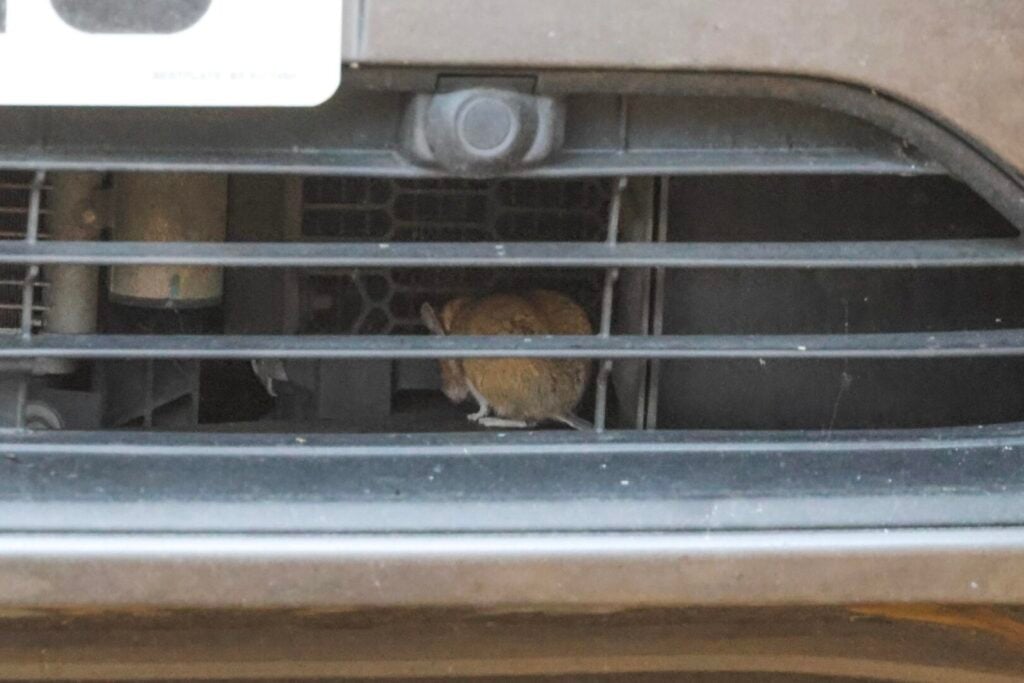
As we drove west to Titchwell along the coast road, we could still see more groups of Blackbirds flying over. Just incredible numbers arriving here today. When we arrived it was time for lunch. The old picnic tables have not been put back and there are just a couple of new benches – hopefully more will be replaced soon! We spread out and rearranged the benches. The resident Robin and Blackbird appeared on cue, looking for crumbs. A mouse living in the grille in one of the cars in the car park was a bit of a surprise!
After lunch, we walked out onto the reserve. Two Stonechats were perched on the top of the brambles out on the Thornham Grazing Marsh. A Chinese Water Deer was feeding in the grass beyond.
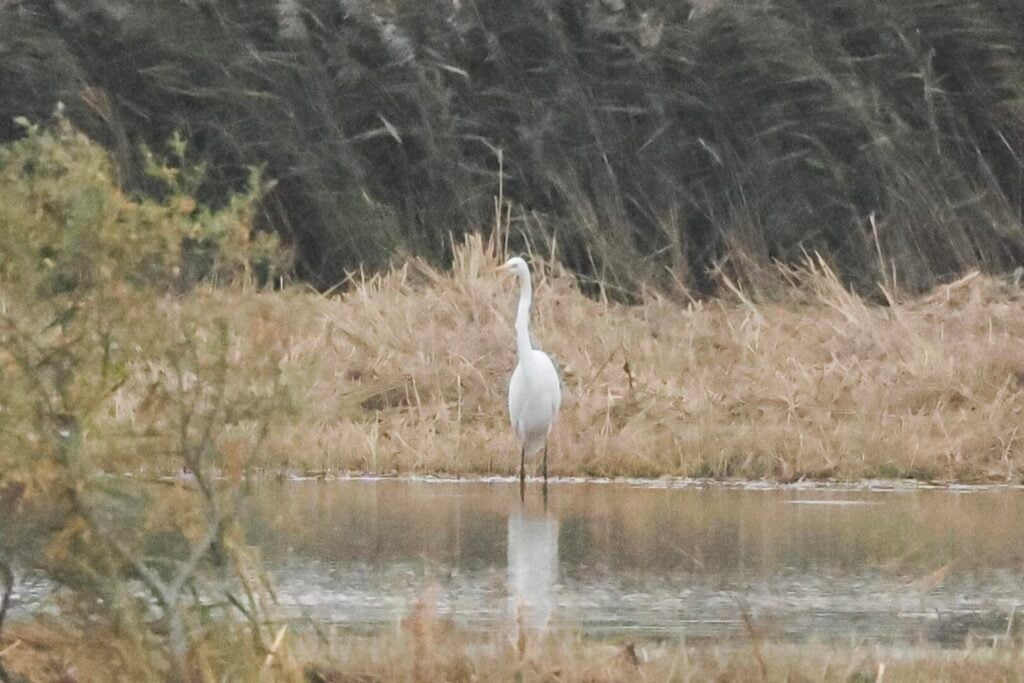
There were lots of ducks and geese on the Reedbed Pool, so we stopped to look through them. There were lots of Greylags and the regular selection of dabbling ducks, Mallard, Gadwall, Teal and Shoveler. Several Tufted Ducks and two female Common Pochard were a bonus, particularly having not seen the former on the boating lake earlier. A Great White Egret was walked along the back edge and a Little Egret was standing on a willow stump a bit closer.
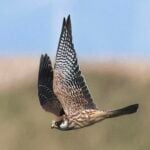
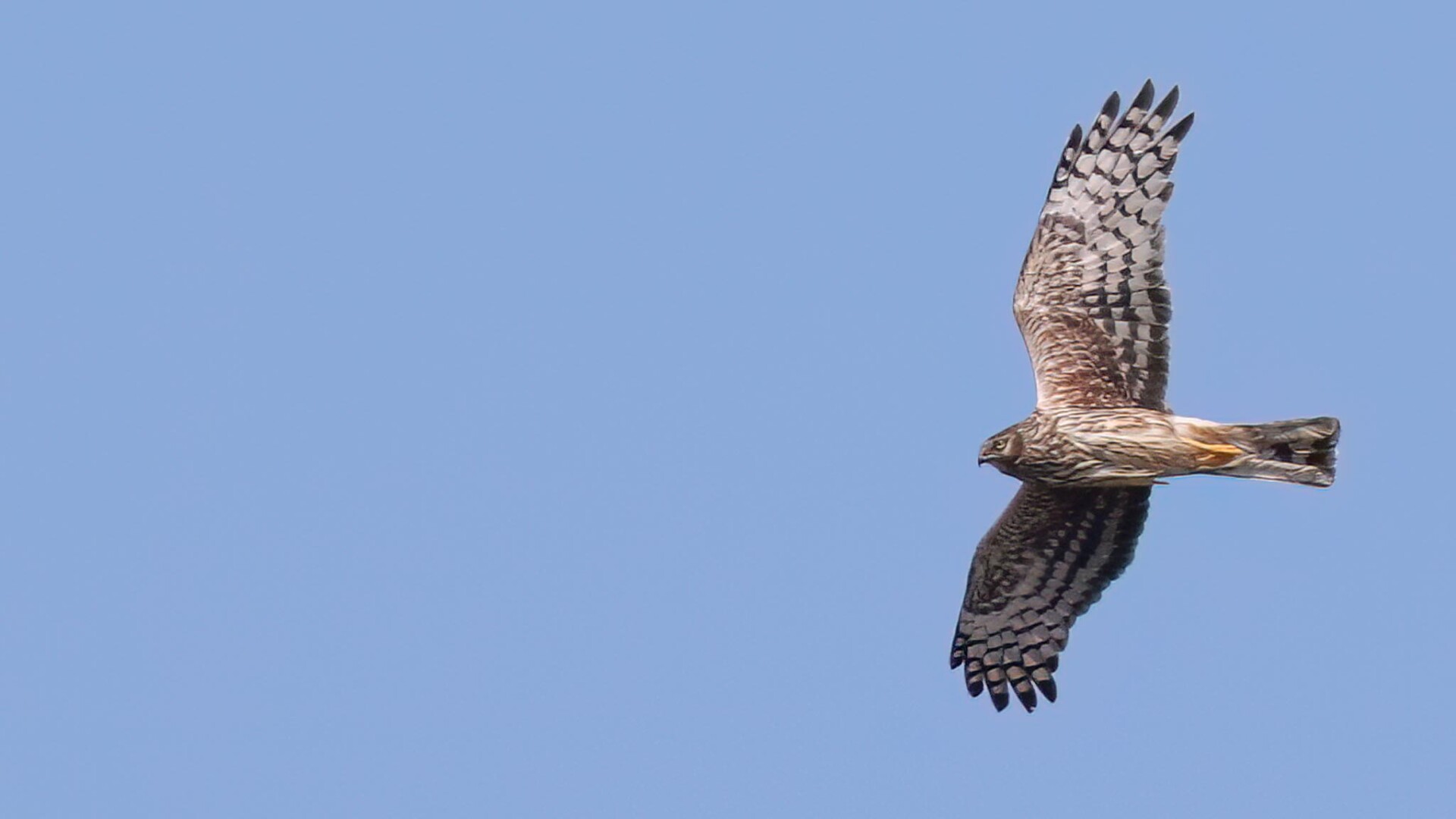
A Marsh Harrier circled over the back of the reedbed and then drifted across over the Freshmarsh. Everything flushed but quickly settled back down. A little later, when everything went up again, we looked up to see a Peregrine flying heading high off inland. An impressive flock of 25 Common Snipe flew round. The large group of Golden Plovers came up again from the back of the Freshmarsh but thankfully circled and dropped down again. We didn’t want them to fly off!
On past Island Hide, we could see several more Common Snipe on the flooded island in front. Further over, there were several Ruff, Lapwings and a few Golden Plover on the other islands. The water level is steadily being raised, so it will probably be flooded here for the winter now (and possibly most of the spring too). A small group of Brent Geese dropped down in the middle. The water level is still down on the next compartment, where we could see a couple of Black-tailed Godwit, more Ruff and several Dunlin.
The reason we wanted to catch up with the Golden Plover flock here is that there has been a juvenile American Golden Plover with the regular Eurasian Golden Plovers here for the last couple of days. One person walking back had told us earlier that the American Golden Plover had disappeared, but now we bumped into one of the locals leaving who told us that it was showing well again from Parrinder Hide. We walked straight round there before it got disturbed again.
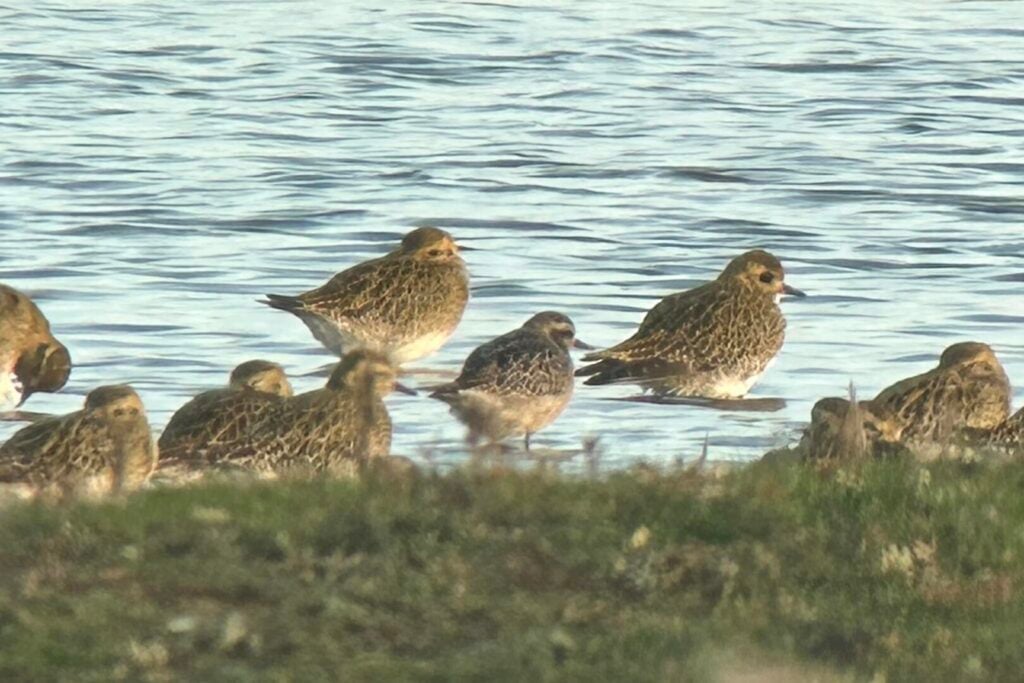
Sure enough, the American Golden Plover was on the back compartment of the Freshmarsh with the other Golden Plovers. We quickly got it in the scope and could see it was noticeably smaller and much greyer, with a noticeable white brow. It was asleep at first, but after the flock spooked and had a quick fly round, it landed again a little closer, awake. American Golden Plover is a scarce visitor to the UK and juveniles are particularly rare here in Norfolk, so an interesting bird to see.
There was a small group of Avocets and lots of Lapwing roosting at the back too. The long-staying Curlew Sandpiper reappeared on the edge of one of the islands too. Sadly it has a badly broken leg, which is probably why it hasn’t moved on already. It is also an adult which has not completed its moult (it should have done some time ago). It feels like it might not be getting quite enough food, but has survived so far.
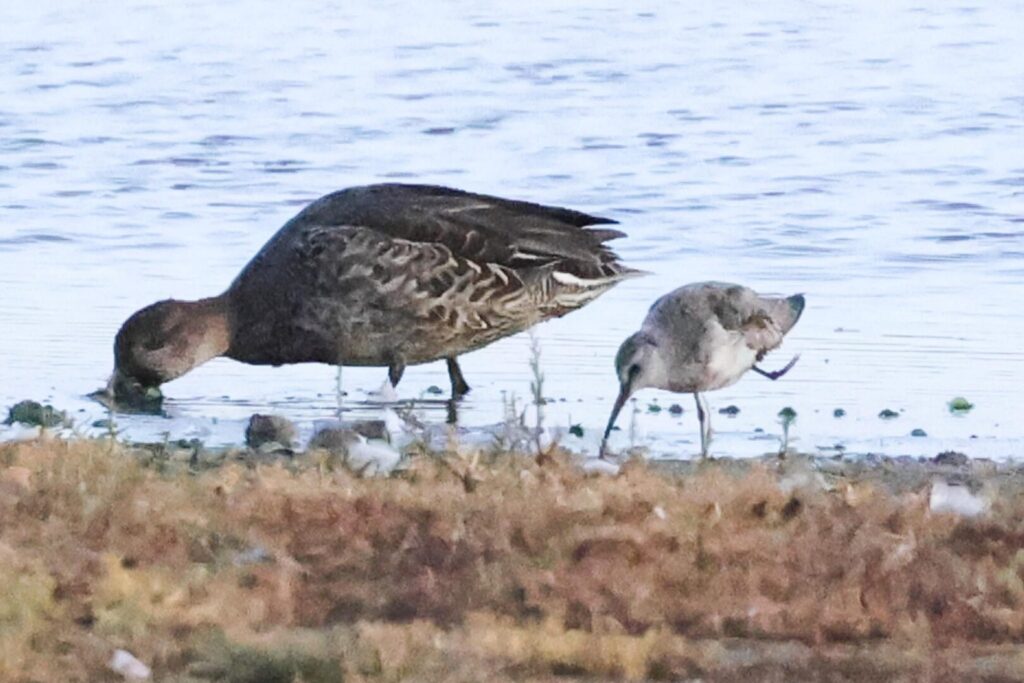
One of the locals pointed out a Grey Wagtail over the far side, feeding along the edge of the reeds, and then we noticed a Water Pipit nearby. Two or three Scandinavian Rock Pipits came in to bathe closer to the hide too, and then showed well as they dried out on the bricks afterwards. A Skylark walked down to drink in front of one of the islands. A Kingfisher appeared on a post at the back.
The sun came out again now, so we decided to walk on out to the beach. There were just a few Curlews and Redshanks, and a single Little Egret on Volunteer Marsh. We couldn’t see many birds on the Tidal Pool either, although we did pick out a female Pintail asleep at the back, which was then joined by another. As we walked on, three more Pintail flew over with a small group of Wigeon.
Out on the beach, we could see more waders on the mussel beds, including several Bar-tailed Godwits and Grey Plover. At least 20 Ringed Plover were up on the top of the beach, feeding on the wet sand. Along the shore to the west, we picked out several Sanderling. A Bar-tailed Godwit with a limp walked up to the high tide line just to our right, but quickly changed its mind and flew back to the mussel beds.
There were a couple of Red-throated Divers on the sea, two distant Great Crested Grebes, and a group of five even more distant Red-breasted Mergansers. We watched a Starling coming in over the water, exhausted. It kept flapping in bursts followed by long glides, it seemed to be running out of the energy to fly. Thankfully it made it in, and not far up the beach dropped down onto the seaweed to try to feed. A little later, a Blackbird flew right past between us, fresh in. Birds had been pouring in all day.
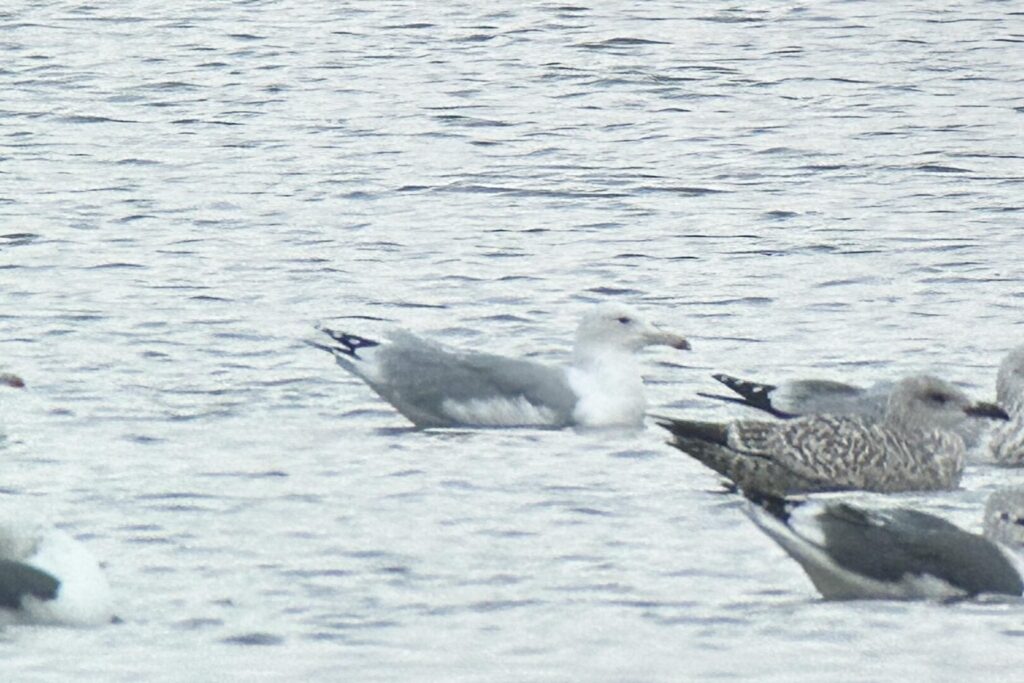
The light was starting to go now, so we walked back. There were lots of gulls father on the Freshmarsh and we stopped to look through. They were mainly Lesser Black-backed Gulls and a few Herring Gulls, but we quickly picked up an adult Caspian Gull in with them. With its clean, unstreaked white head, and beady dark eye it immediately stood out. Its mantle was also a little darker grey than the nearby Herring Gulls too.
Thousands of Starlings had gathered over the reedbed, and we watched them now as they flew round, back and forth low over the reeds. The estimate from last night was 20-30,000 and that seemed about right for tonight too. Incredible to watch.
The Marsh Harriers were starting to gather too. We counted five over the reeds out towards Thornham village and another ten or so over the back of the reedbed. More were coming in all the time, two flew over the path behind us, then two ahead of us.
We kept getting distracted and we had just got to the bushes when we heard Pink-footed Geese calling behind us now. We turned to see skein after skein coming in over the beach. There looked to be at least 3-4,000 geese. It was an amazing sound as they all circled over the Freshmarsh, calling. It looked like they might come in to land, but then they turned back and headed on east. There is a regular roost nearby on Scolt, but we wondered whether these might be fresh arrivals, coming in from further north for the sugar beet harvest season.
As we got back to the car park, more Pink-footed Geese flew in calling from the fields inland. These were birds which had been feeding here today, and they flew straight over us heading towards the Scolt roost.
Everything was heading in to roost – that was our cue to head home now too. More tomorrow.