Day 1 of an Autumn Weekend tour. It was a mostly bright and sunny day, with just a little more cloud later afternoon. It felt warm out of the wind, but there was a rather blustery westerly all day. We spent the day between Cley and Kelling on the North Norfolk coast.
Our first destination for the morning was Cley. As we parked in the car park and got out, a Chiffchaff was calling in the trees and a Cetti’s Warbler shouted from the brambles. A Pectoral Sandpiper had been seen here yesterday and was reported as still present on Pat’s Pool this morning. So we headed straight out to Bishop Hide. On the way, several Ruff flew over the road and off towards the field behind the Visitor Centre and some House Sparrows were feeding on the path ahead of us.
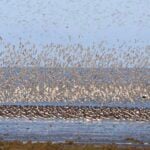
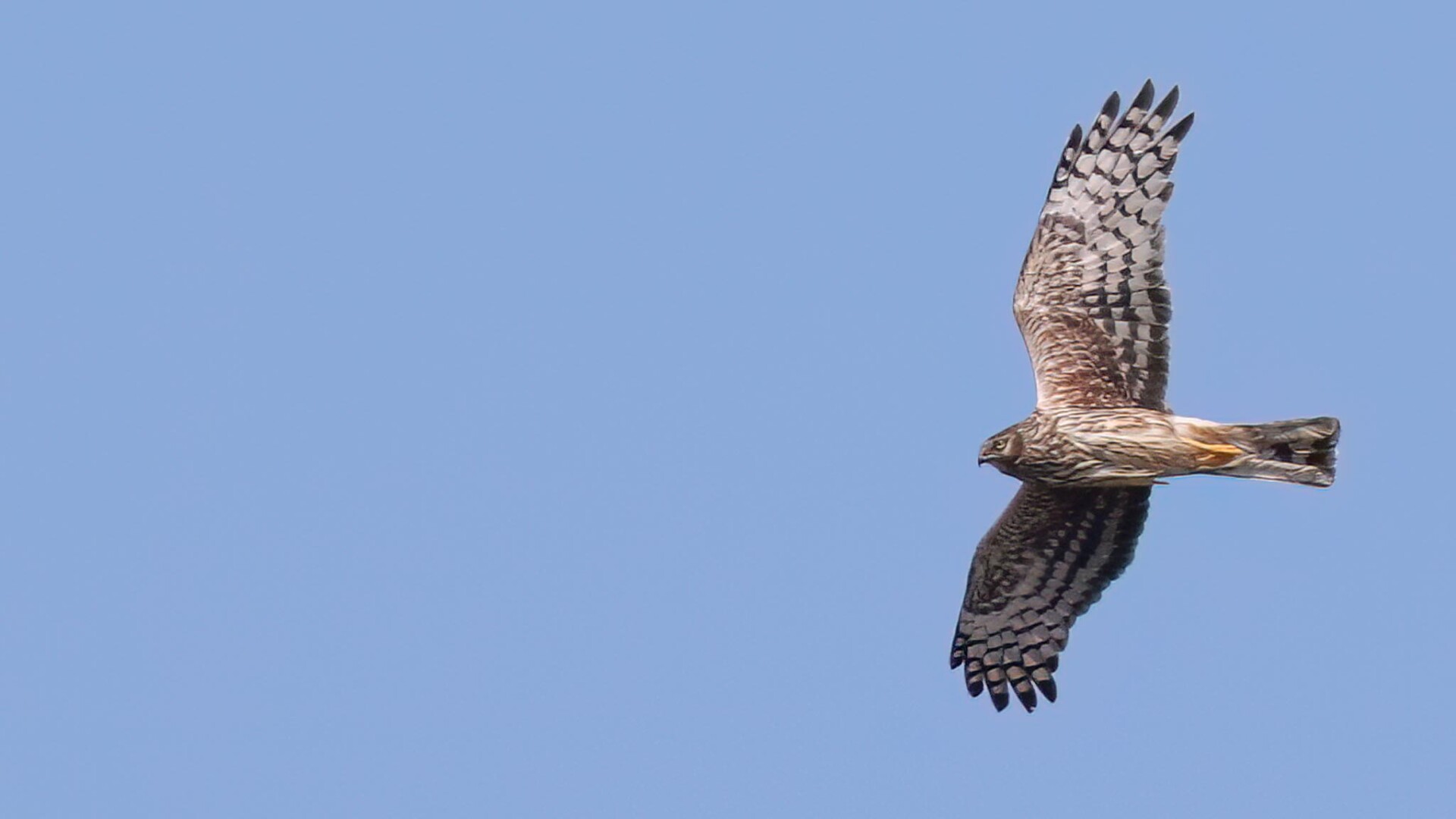
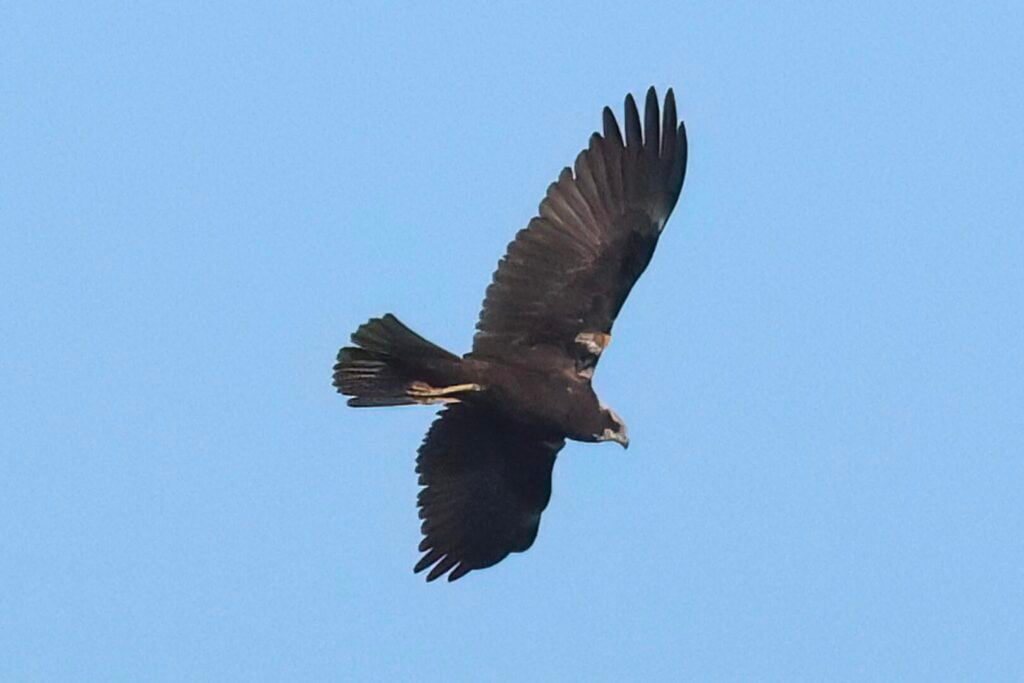
As we turned down towards the hide, we could see a couple of Marsh Harriers over the reeds. One drifted over the scrape and everything flushed. Lots of Lapwings, Black-tailed Godwits and Avocets took to the skies and whirled round. As things settled down again, someone came out of the hide to say the Pectoral Sandpiper had just flown off.
We carried on into the hide anyway and it was good that we did. The Pectoral Sandpiper had just landed back again on the island. We got it in the scope and had a nice view of it walking around on the grass with a Ruff. It disappeared round behind the back of the island out of view and then everything flushed again. This time, we watched the Pectoral Sandpiper fly off strongly towards the East Bank. We had got here just in time!
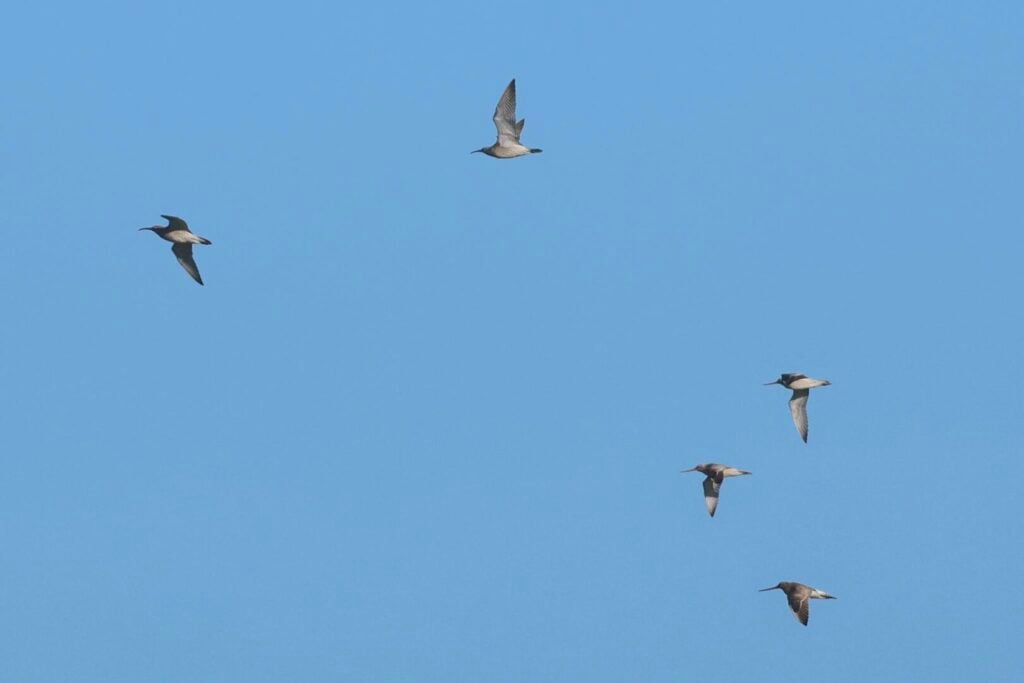
When everything else settled down again, we had a chance to look at some of the other waders – Avocets, Lapwings and Black-tailed Godwits, several Ruff and a couple of Dunlin. No sign of any Little Stints now though. We heard Whimbrel calling and looked over to see seven birds flying west over the back of the scrape. Checking the photos later, there were actually three Bar-tailed Godwits with four Whimbrel.
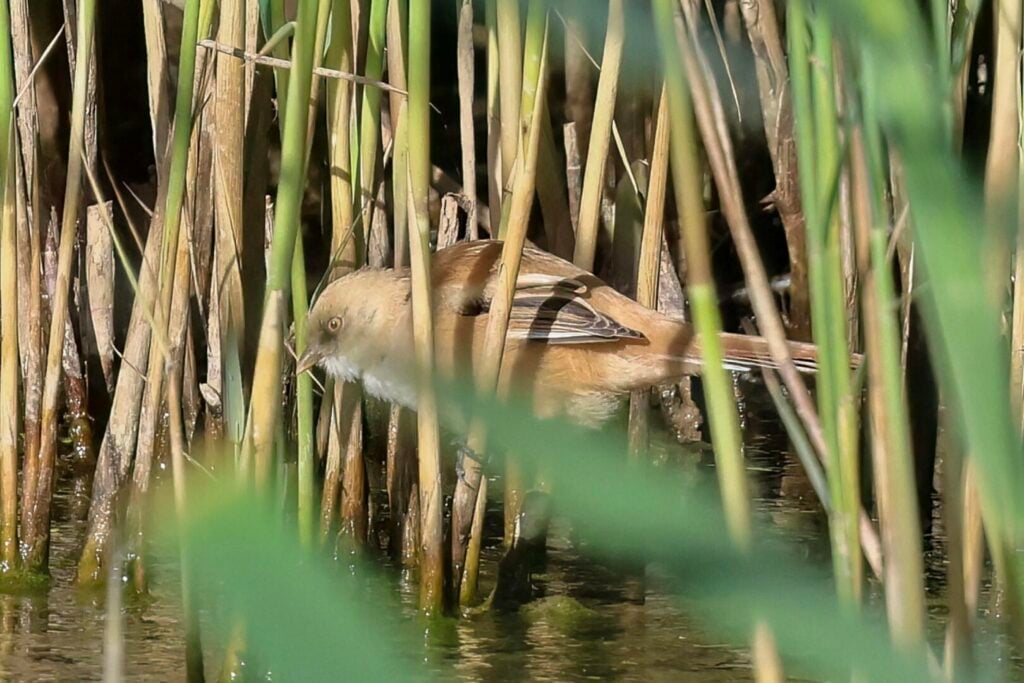
There were lots of Teal and a few Shoveler and Mallard out on the scrape, the drakes all still in their dull eclipse plumage. Groups of Greylag and Canada Geese flew in and out. Someone spotted a Bearded Tit low down in the reeds in the ditch to the left of the hide. It was hard to see at first, but we eventually got some nice views as it worked its way round the edge of the water.
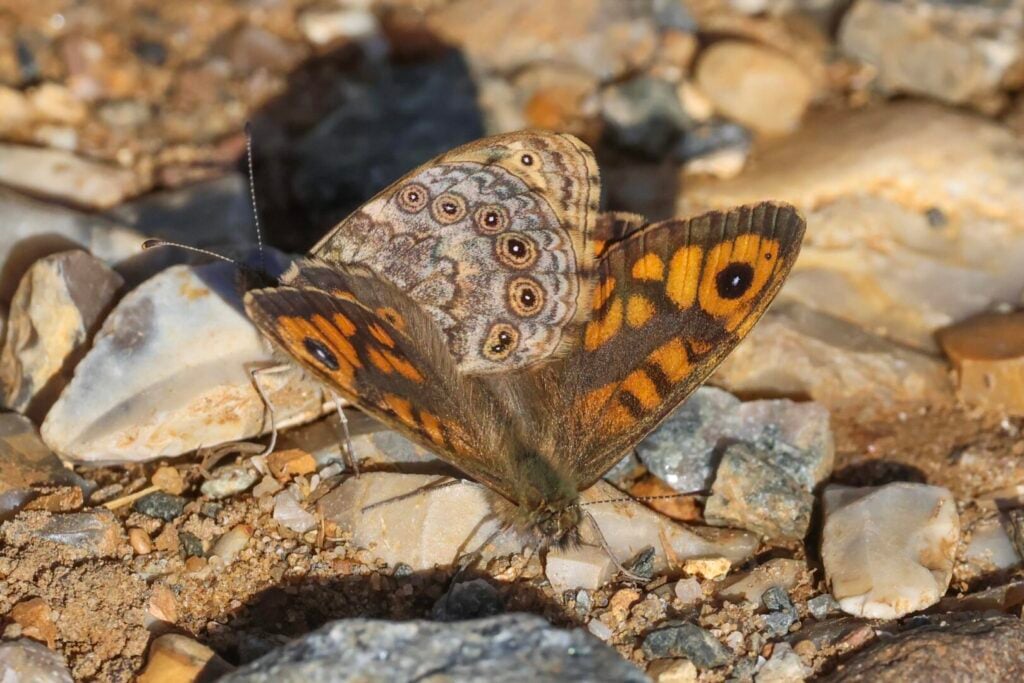
We decided to move on and head round to the beach. On our way back to the car park, we looked back to see four Spoonbills flying in and dropping down towards the scrape. We would have a chance to catch up with those later. A Great Spotted Woodpecker flew over the Skirts, heading towards the village. An unusual sight out here, so this was probably a bird on the move, dispersing. A pair of Wall Brown butterflies were mating on the path.
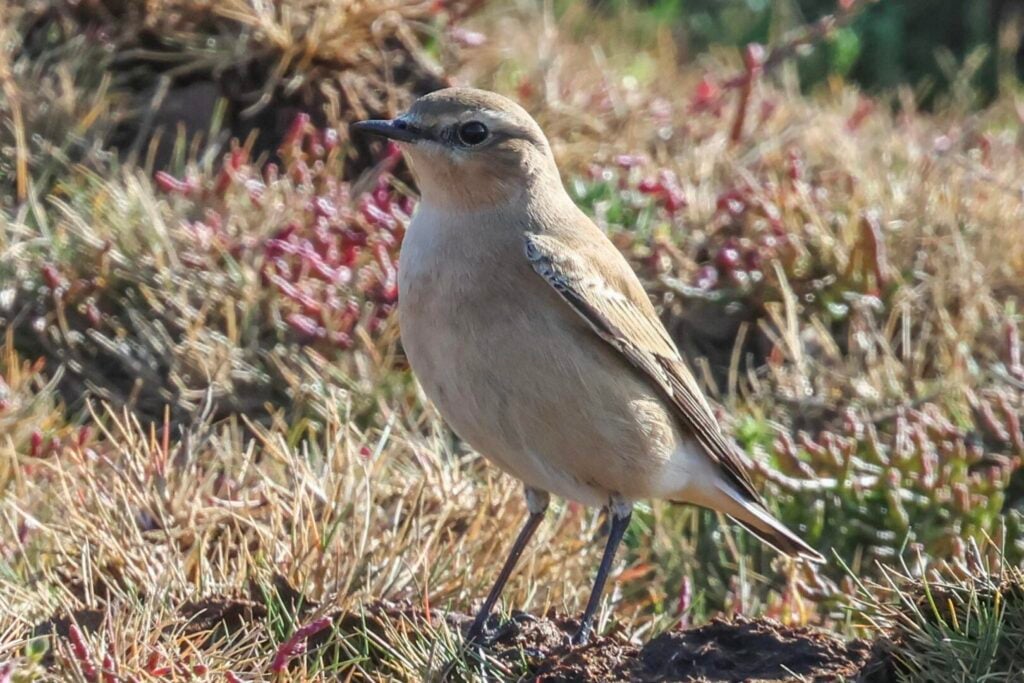
Back to the car park, we drove out along Beach Road. There were lots of Curlew feeding on Cricket Marsh and a single Bar-tailed Godwit in with them. A couple of Wheatears were flitting round and landing on the fence posts by the cattle pen, so we pulled up briefly to watch them.
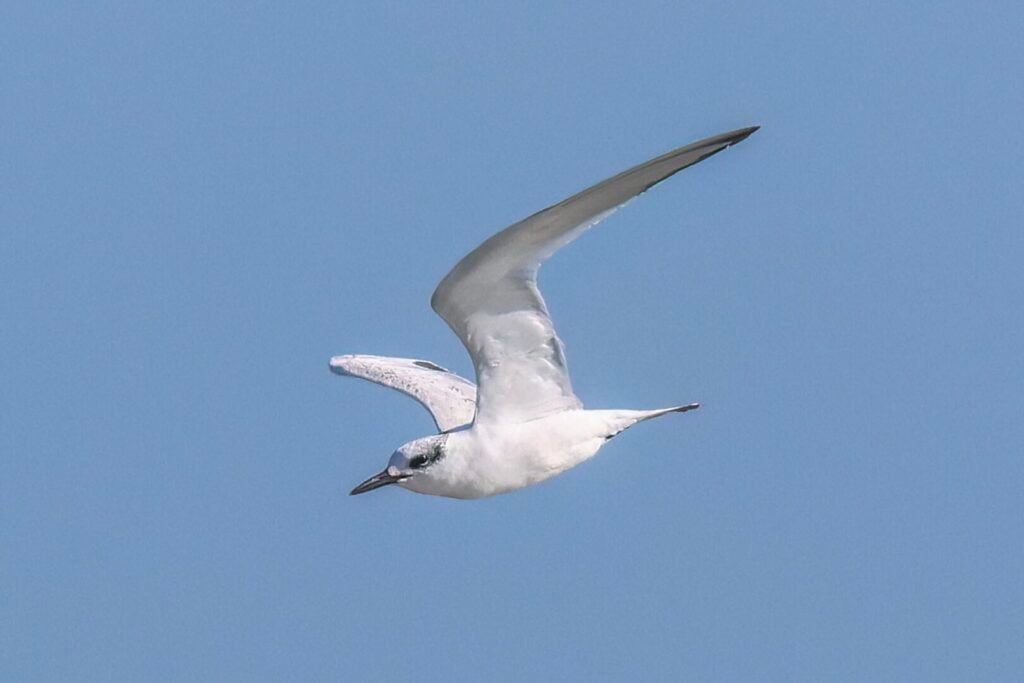
We stopped by the old beach shelter for a quick look at the sea. There were several Sandwich Terns feeding offshore and a couple of Common Terns and a juvenile Arctic Tern flew past. We picked up two or three Arctic Skuas, which started to chase after the Sandwich Terns, trying to steal their catch, but they were rather distant. A few Gannets drifted past offshore too.
There was a steady trickle of waders on the move over the sea this morning, despite the strong wind. A couple of Grey Plover, a small flock of about a dozen Knot, two Bar-tailed Godwits with a Common Redshank, and three Sanderling. All most likely migrants, just arriving here from the Continent. Always great to watch migration in action.
We picked up a single Manx Shearwater off to the east, which then turned and headed straight back out to sea. There was a report of a Leach’s Petrel flying towards us past the East Bank, so we hung on for a bit to see if we could see it. It never got to us, unfortunately. As activity offshore dropped into a lull, we decided to walk out towards North Scrape.
A little further down, we found a couple of Whinchats on the wires. They kept dropping down to the ground out of view and flying back up briefly further along. It was probably a bit too windy for them perched up on the fence here. Two Wheatears flicked in and out of the vegetation on the shingle, flashing their white rumps. Several Swallows flew through, heading strongly west. Migrants leaving us, heading off on their long journey to Africa.
Continuing on, we found at least four more Whinchats along the fence line and managed some better views now. Two Skylarks were in the grass in the edge of the Eye Field and flew up as we approached.
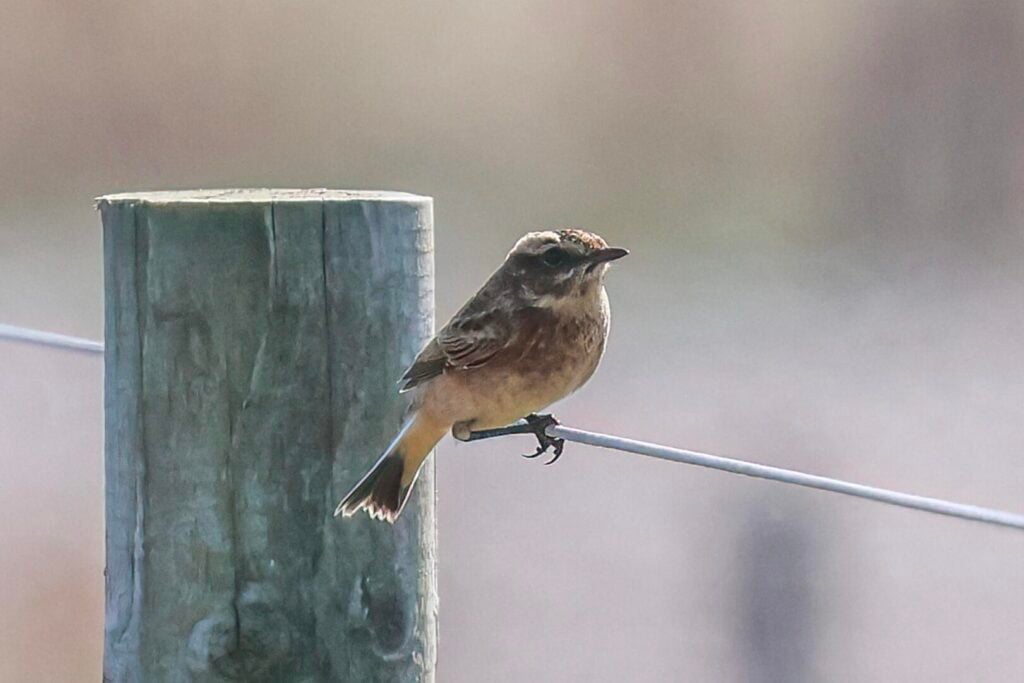
Dropping down towards North Screen, five Yellow Wagtails flew up from the shingle with several Linnets. They landed again and we could see them on the stones before they were flushed again by two people walking along the top of the beach. They flew round and landed in the grass behind us, along with the four Whinchats and two Wheatears which now perched in a line along the top of the fence.
Apparently, the three Little Stints had been on North Scrape but when we got to the screen we couldn’t see them. We did find the Pectoral Sandpiper again though, out in the middle, and a Wood Sandpiper in the near corner. Two Ringed Plovers were asleep on one of the islands but then everything flushed again and flew off.
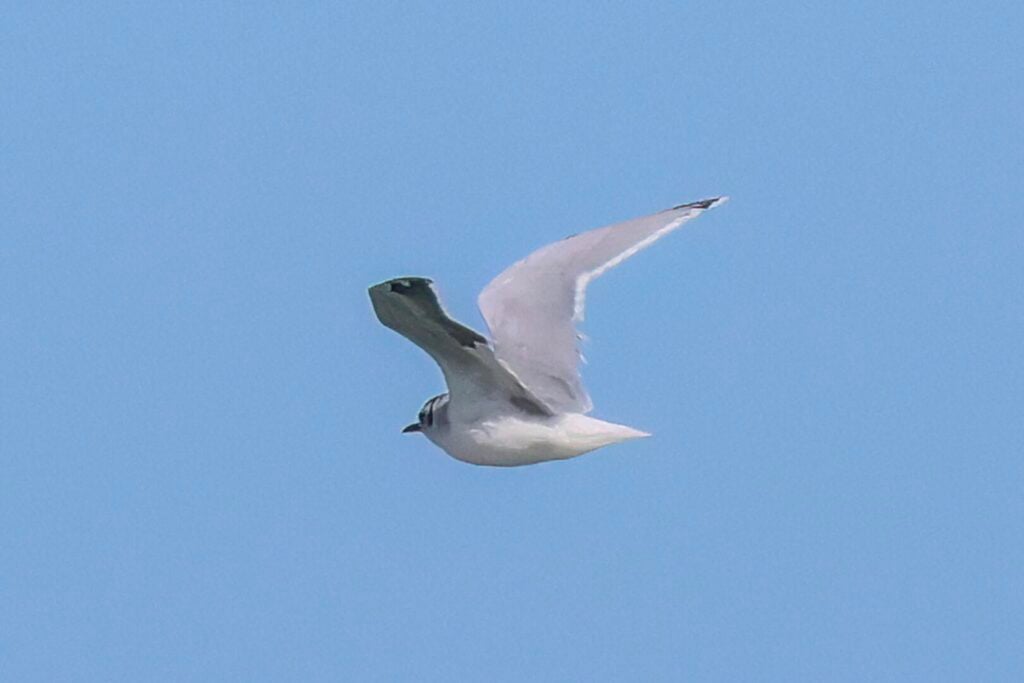
As we walked back, a Little Gull flew right past us low over the shingle. It turned and headed back out to sea and a second Little Gull flew past just offshore. We stopped for another quick scan. There were still lots of Sandwich Terns offshore, and better views of an Arctic Skua, now much closer in. A Great Crested Grebe was on the sea, but hard to see in the waves. Then it took off and flew past us, rather ungainly looking in flight, heading off west.
Returning to the car park, we drove back round to the Visitor Centre. We needed to make a loo stop so we decided to stop for an early lunch. A couple of Common Darter dragonflies were basking on the picnic tables in the sunshine.
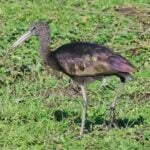
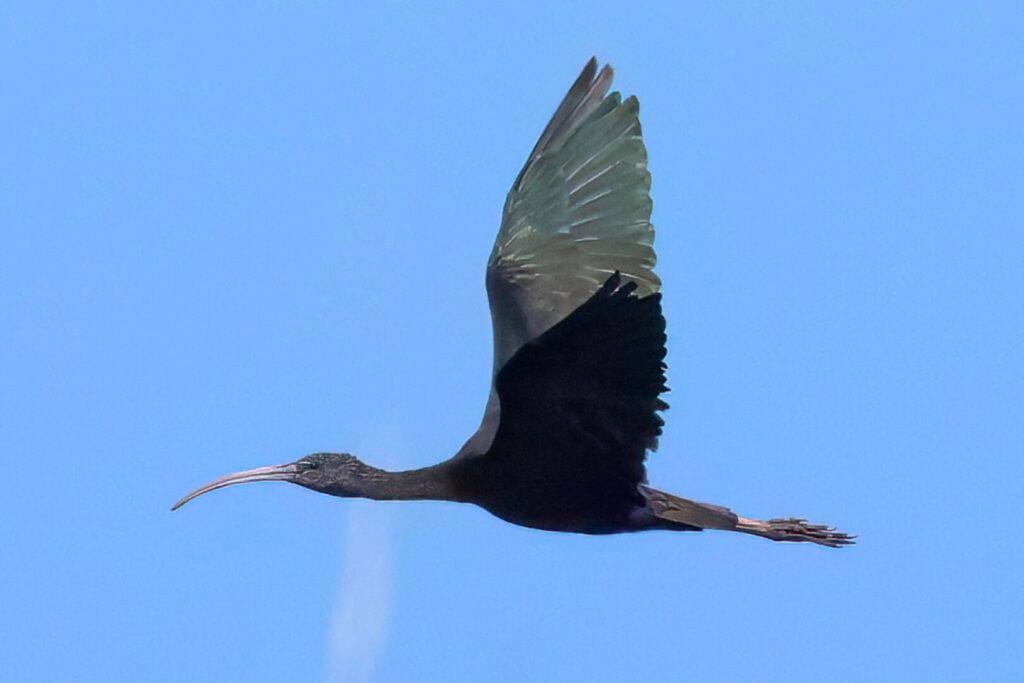
From the picnic area, we could see about twenty Spoonbills now out on Pat’s Pool, asleep. While we were eating our sandwiches, we looked up to see two Glossy Ibis flying in from the east just across the road. They turned and circled over Pat’s Pool before dropping down into the water.
After lunch, we drove down to Iron Road. The big pool here is now completely dry, just a Mute Swan was in the field opposite. We walked down along Attenborough Walk, where a Cetti’s Warbler shouted from the brambles and several Migrant Hawkers flew round beside the ditch. Several Rooks were out on the grazing marsh.
Out to Babcock Hide, and it looked disappointingly empty when we opened the flaps. No sign of the two Spotted Redshanks which had been here yesterday, just a single Lapwing. There were several Teal and Mallard, including one smart drake already out of eclipse, and a few Greylags. No sign of any Garganey today either. Two Whinchats were flicking around perching on the posts and dead thistle heads over the far side.
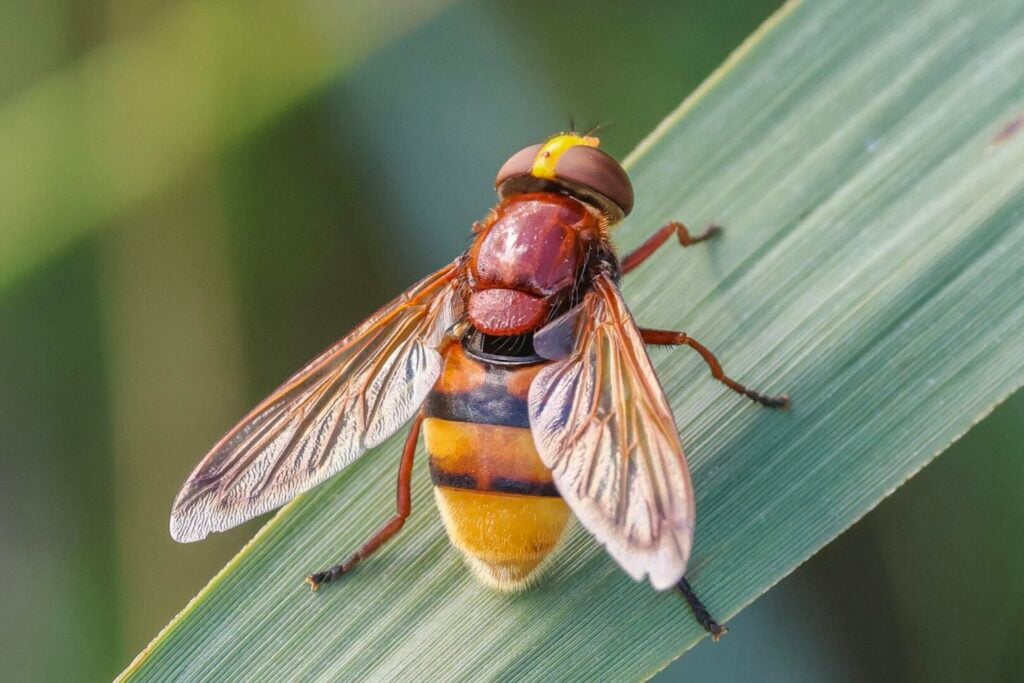
Cutting our losses, we walked back to Iron Road. There were lots of dragonflies along the path. A Hornet Hoverfly (Volucella zonaria) was trying to bask on the vegetation on one side but we kept flushing it ahead of us.
We drove on to Kelling. A few House Martins were still flying around over the Reading Room, along with several Swallows too. Into the start of Meadow Lane, we heard Long-tailed Tits calling and found a mixed flock of tits in the trees. Several Chaffinches flew in and out of the hedge, up into the tall fir tree by the school.
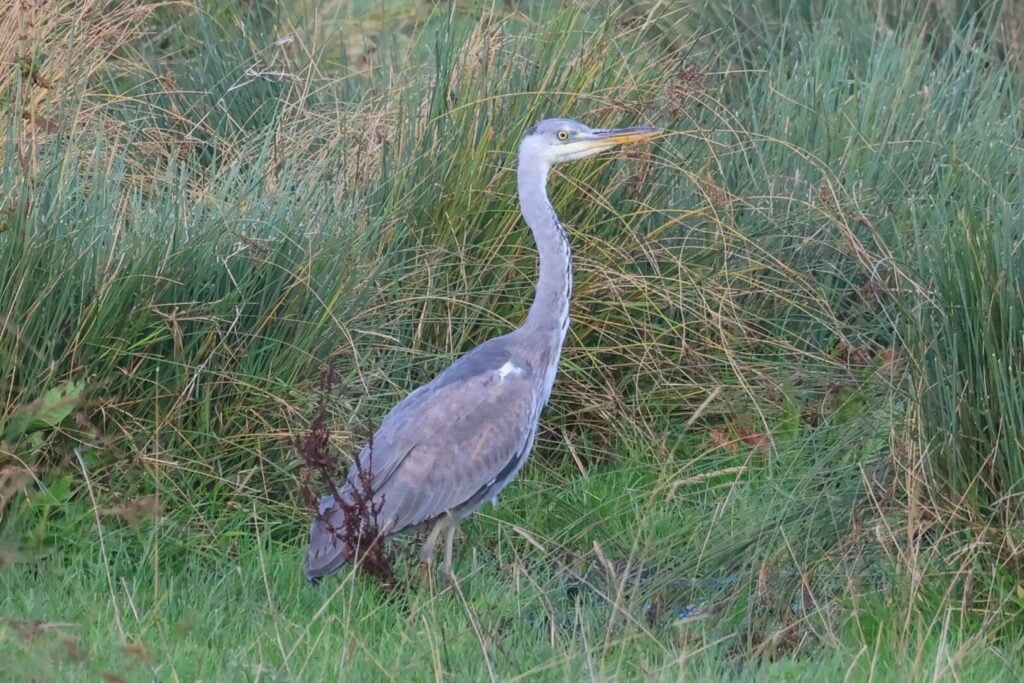
Down the lane, we heard one or two Chiffchaff calling. A Red Admiral basked in the sunshine on the path and lots of Ivy Bees were busy gathering nectar and pollen from the ivy flowers. From the metal gates, we could see a single Grey Heron and a Mute Swan out on the wet meadow. The Glossy Ibis were here earlier but were the birds we had seen at Cley over lunch.
Down to the corner of the Water Meadow, there were a couple of people looking for the Wryneck which had been seen briefly earlier. It had apparently disappeared over the hedge into the field opposite and hadn’t been seen again. Lots of Linnets were flying round. Scanning the pool, all we could find were just a few of the regular ducks and a couple of Moorhen.
As we continued on, round to the Hard, a Common Snipe flew over and dropped down into the ditch in the middle of the Quags. A female Stonechat was perched in the brambles on the corner further down. Two Whinchat then flew out from behind the brambles, out over the Quags, and landed on the fence in the middle. Better light here than earlier, so we got them in the scope. It had been a good day for Whinchat.
Up to the gun emplacements, a single Curlew followed by a Bar-tailed Godwit flew over. Waders still arriving from the Continent. A Stock Dove flew round. Scanning from the top, all we could see were a couple of Stonechats beyond the guns. Several more Sandwich Terns were offshore, chased by two more Arctic Skuas.
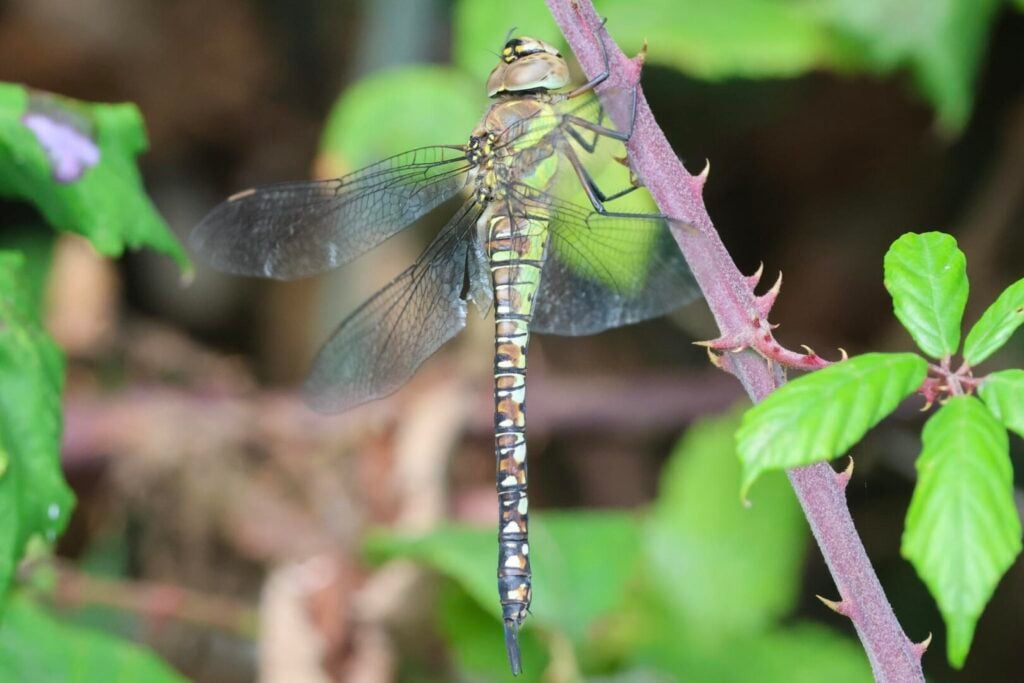
As we walked back, a Migrant Hawker dragonfly landed on the brambles next to the track. There were two different people now waiting for the Wryneck to reappear. Still no further sign of it.
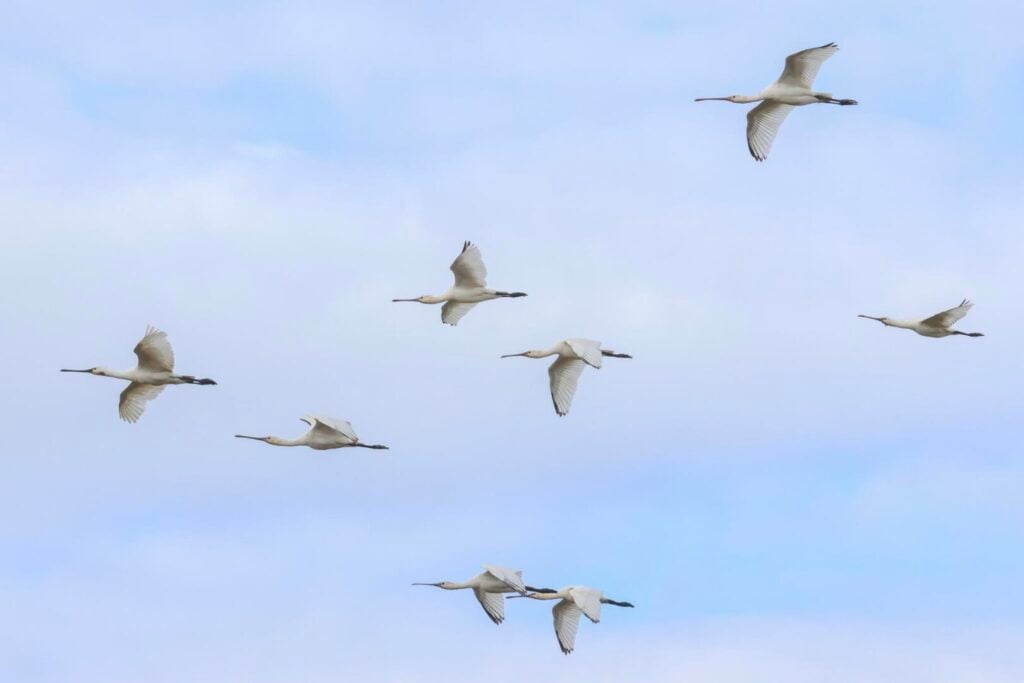
We had time for one last stop, so we drove back to Cley and walked out to the Central Hides. The Spoonbills were waking up and starting to fly off. As we walked out along the boardwalk, ten flew past us and headed out towards Blakeney Harbour.
Into Daukes Hide, the Pec(toral Sandpiper) was apparently lurking at the back, out of view in the reeds. We could see a Wood Sandpiper, a Dunlin and a Turnstone on the spit where the Pec had been. A Common Snipe was feeding in the grass a little further back. Eventually the Pectoral Sandpiper showed briefly. We were hoping for a Little Stint, as we had just missed them all day, but the one on here a few minutes earlier had disappeared again.
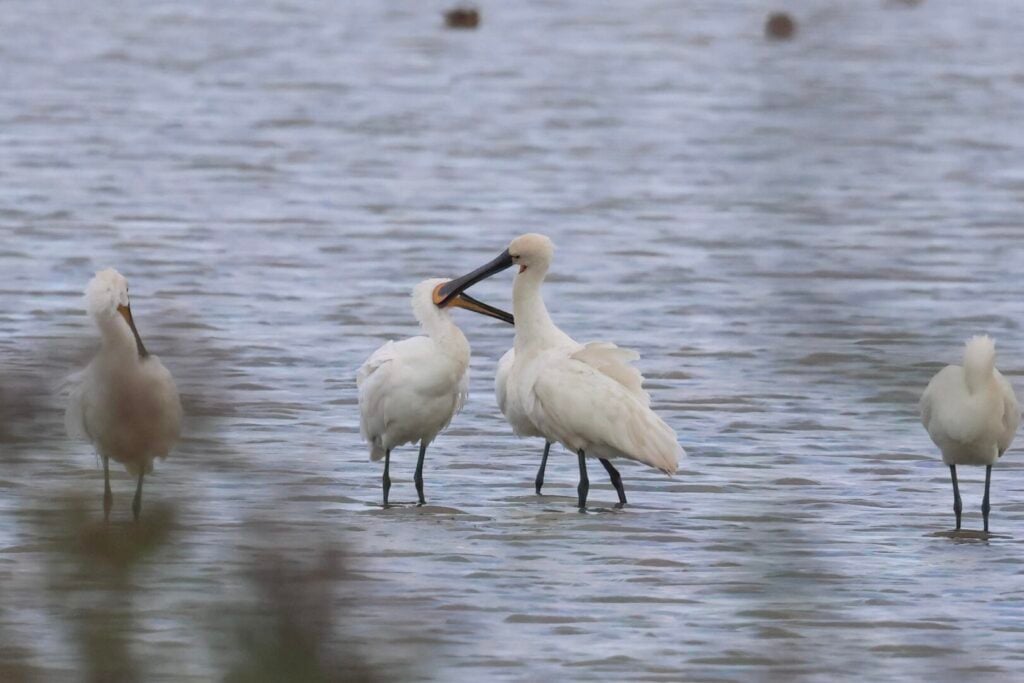
There were still ten Spoonbills on Pat’s Pool, awake now. We could see the yellow-tipped black bills of the adults. Interesting to watch two Spoonbills mutual preening. It is impossible to preen your own head and neck with a long, spoon-shaped bill like that! There were plenty more ducks on here, several Gadwall including a couple of drakes.
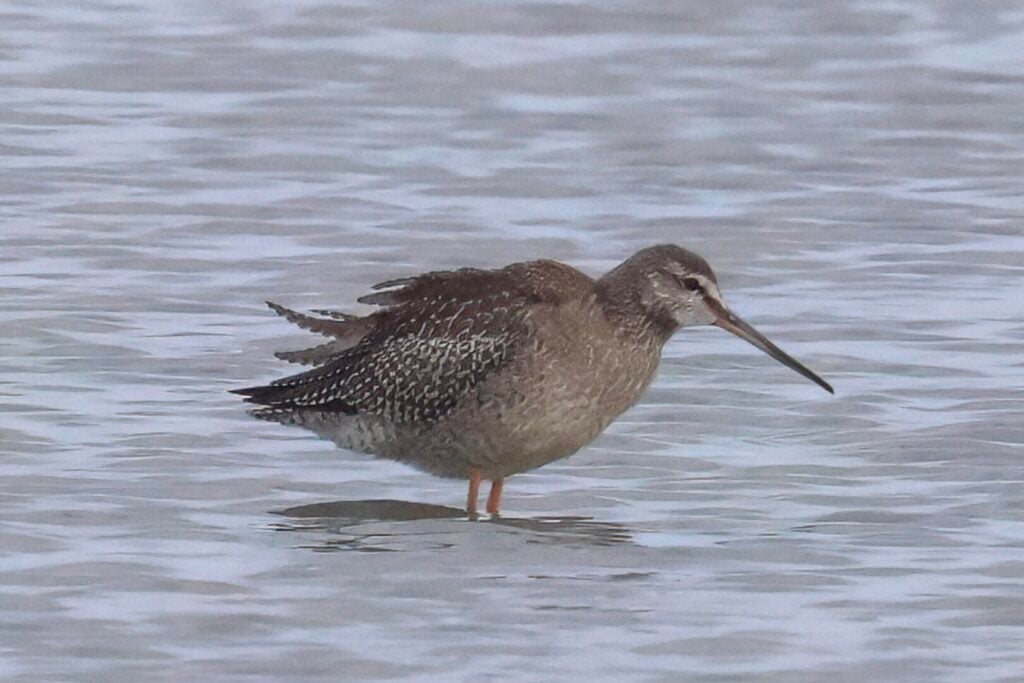
A Spotted Redshank called and we turned to see it drop down on Pat’s Pool, out of view behind the bank at the front. Thankfully, after a few minutes it walked out into view. A dusky juvenile, we could see its long and needle-fine bill.
It was time for us to head back. As we drove inland, there were lots of Red-legged Partridges and Pheasants standing in the middle of the road and in the fields. They have all just been hand reared and released for shooting and are consequently very tame. A Jay flew across the road. Back to Hindolveston, and there was still just about time for tea and cake before dinner for those who could manage it. More tomorrow.