A single day Wader Spectacular tour, we spent the morning watching the whirling flocks of waders on the Wash at Snettisham, then moved on to Titchwell afterwards. It was a rather cloudy and grey start but stayed dry, before the sun came out later.
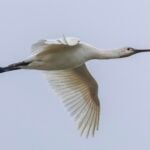
It was an early start this morning, to get up to the Wash ahead of the rising tide. When we got up onto the seawall, we could see a large gathering of waders away to our tight. Thousands of Knot and Bar-tailed Godwit were gathered with a smaller number of Oysterctachers on the mud up towards the sailing club. Looking the other way, a much bigger flock of Oystercatchers was spread out in the middle of the mud. A group of Spoonbills was walking across the mud, in and out of the small pools.
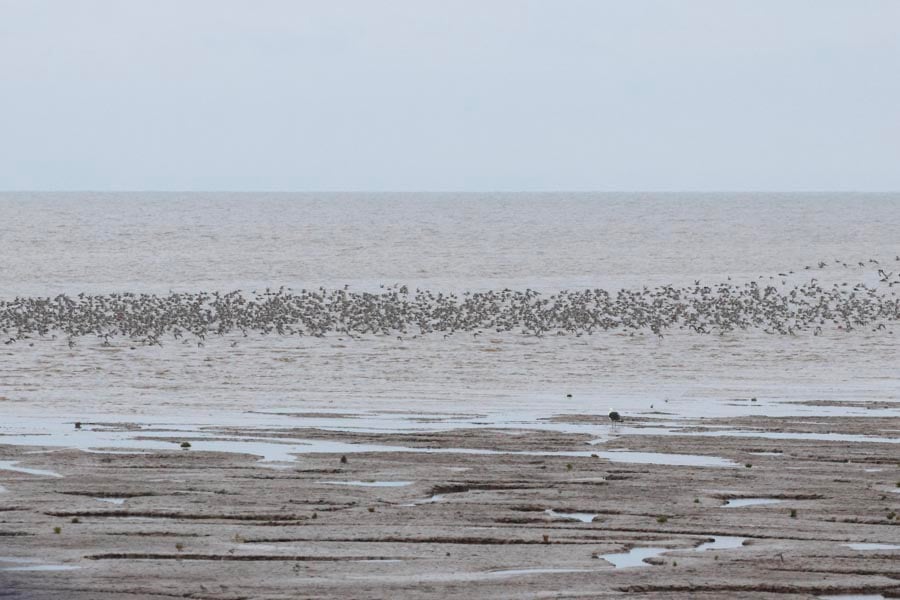
The tide was already coming in fast and the water very quickly started to lap around the flocks by the sailing club. They took off in waves and flew past us, before landing with the Oystercatchers on the drier mud further up.
There were not so many waders small waders on the nearer mud, in front of the chalets, today. We could see a few Ringed Plover, Dunlin, Turnstone and Common Redshanks. Some larger groups of Ringed Plover flew past. It wasn’t long before all the mud was quickly covered.
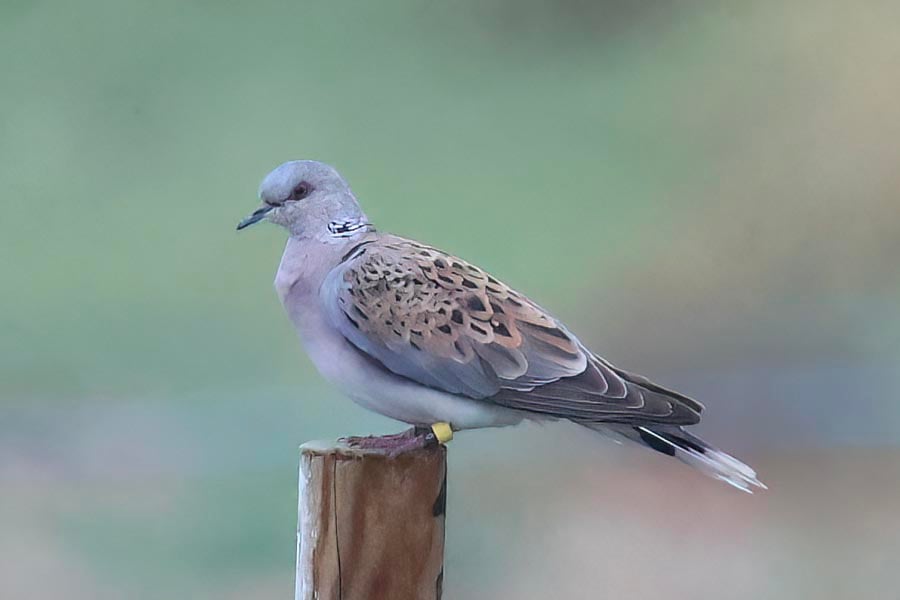
As we continued down further along the seawall, two Turtle Doves flew up from the bank ahead of us. They dropped down again on the shore but out of view behind the weeds growing on top of the beach. Just before Rotary Hide, two more Turtle Doves flew in behind us. One landed on the track but quickly walked in between the brambles. Looking back up the shore, we could see the other Turtle Dove perched on a post. Nice views. From photos we could see it was colour-ringed – perhaps a bird from one of the reintroduction schemes.
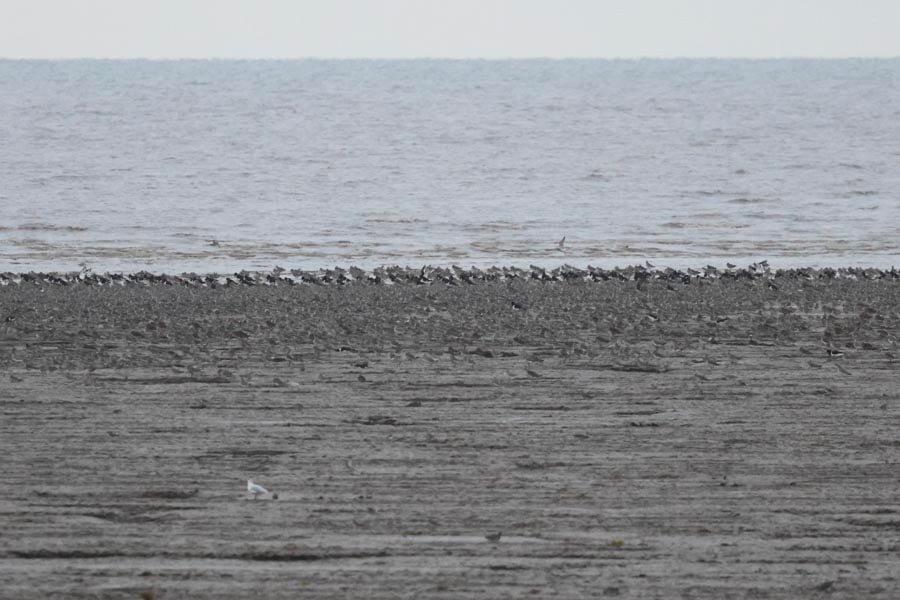
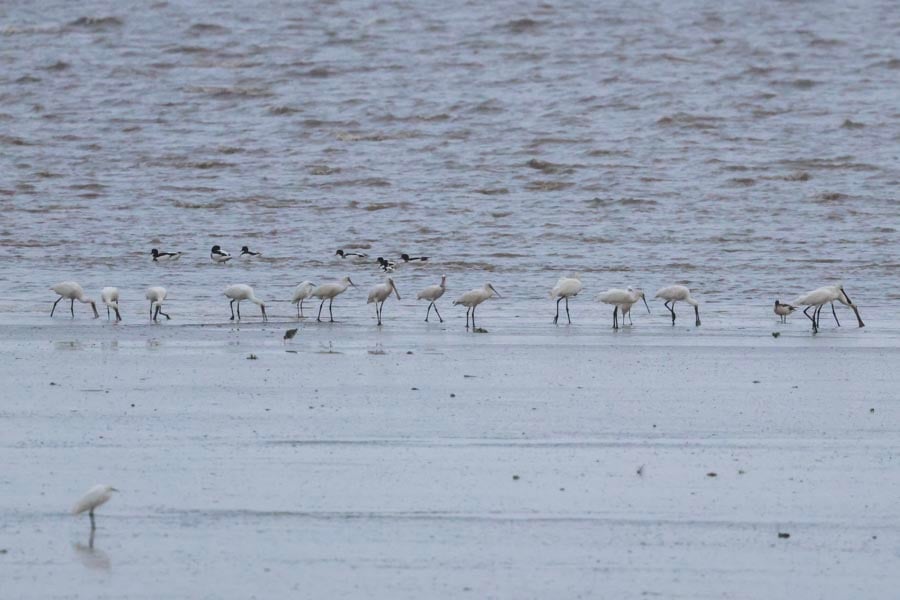
In the dull light, the large flocks of waders disappeared against the mud. They looked just like a darker smear across the surface. Through the scope, they resolved into the thousands and thousands of Oystercatchers and tens of thousands of Knot. As the tide was continuing to come in quickly, the Spoonbills were much closer now. We counted at least fifteen now, gathered on the edge of the water.
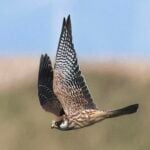
A juvenile Peregrine flew across right in front of us, over the near side of the channel. It suddenly turned sharpy and stooped at something a couple of times before flying off further back.
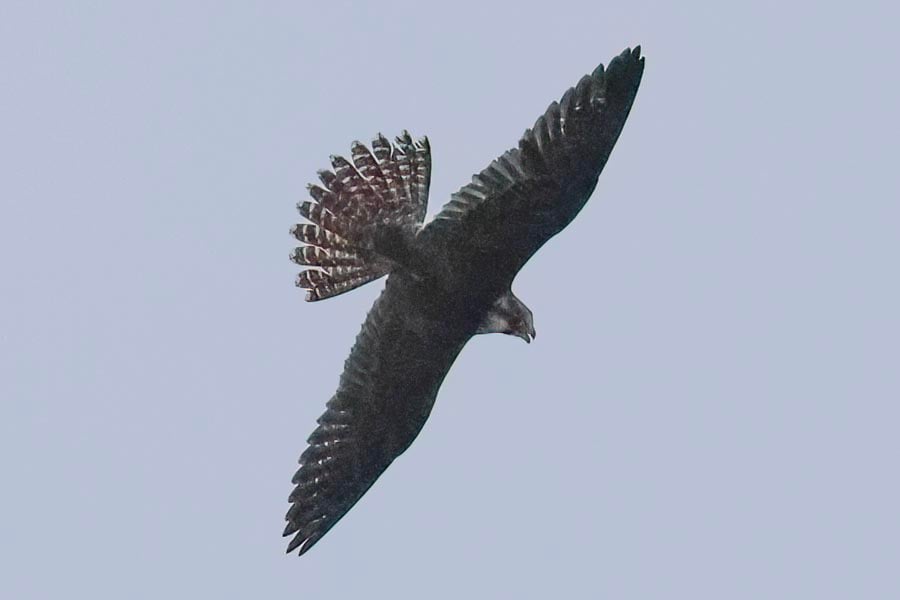
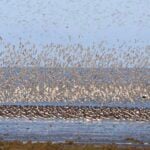
All the Knot then started to flush out in the middle and tens of thousands of them took to the air. Strangely the Peregrine seemed only to want to stoop at birds still on the ground, it showed no interest in chasing after the whirling flocks. The Knot seemed to realise the risk was low and quickly settled back down again.
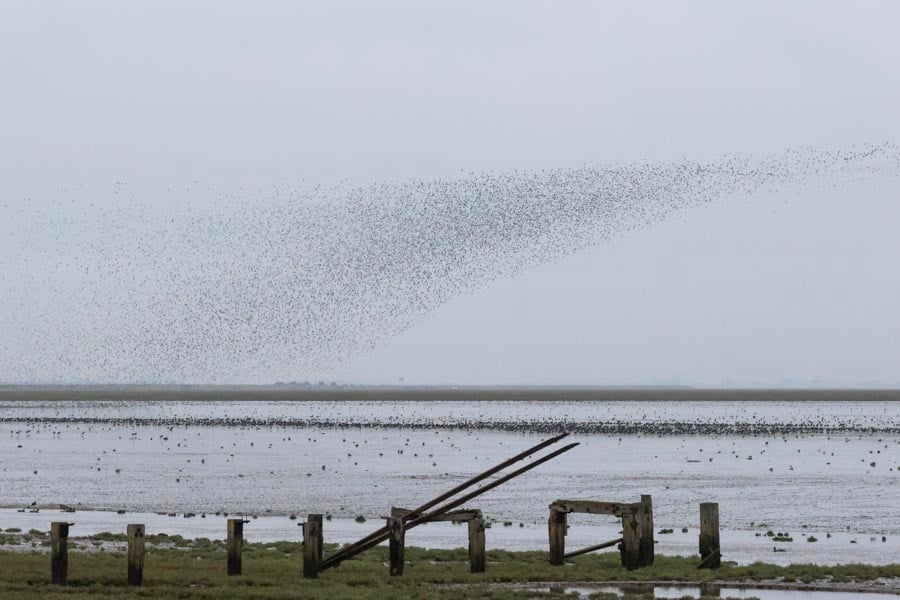
The tide seemed to be coming in extra fast today, so we had to keep walking on to try to stay ahead it. The Oystercatchers were now marching away from the rising water, so we stopped further down for a closer look. Always great to watch. A couple of Common Sandpipers were feeding along the near shore and one perched up on the old jetty.
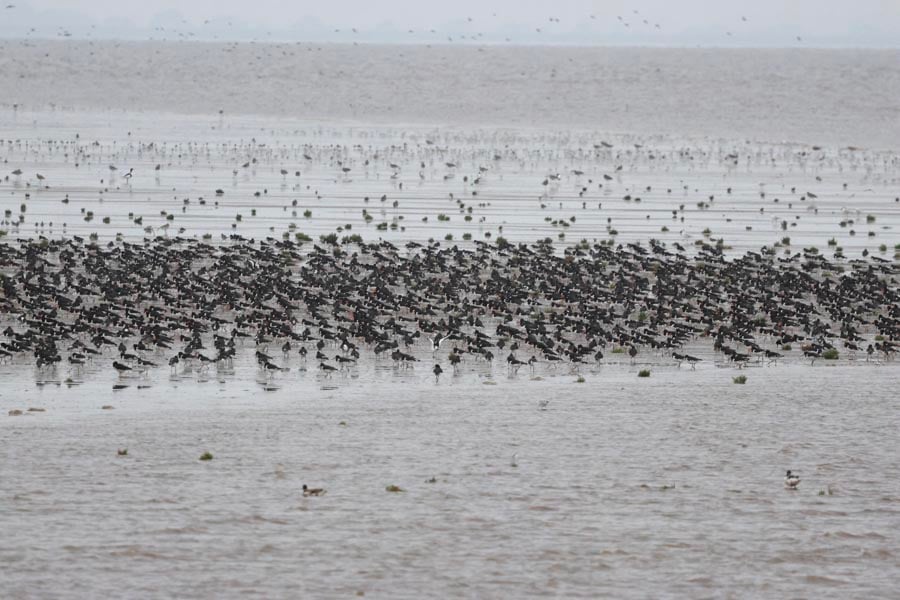
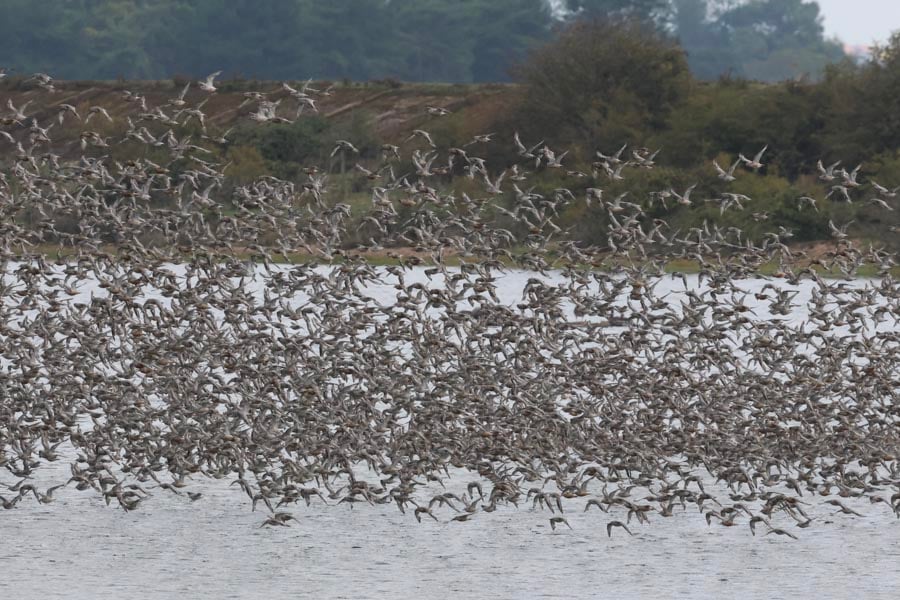
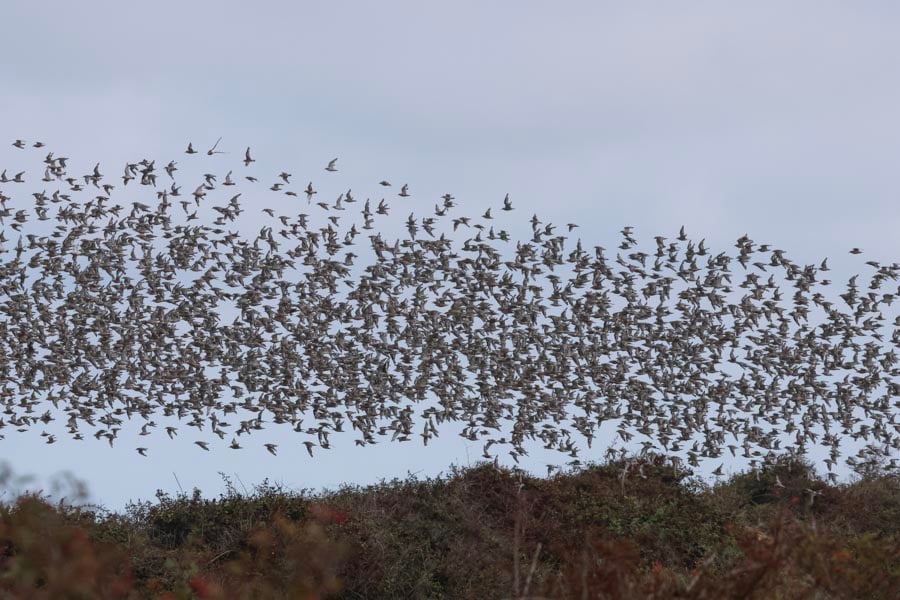
The Knot then all went up again. Amazing to see them all erupt, tens of thousands of them taking to the air.
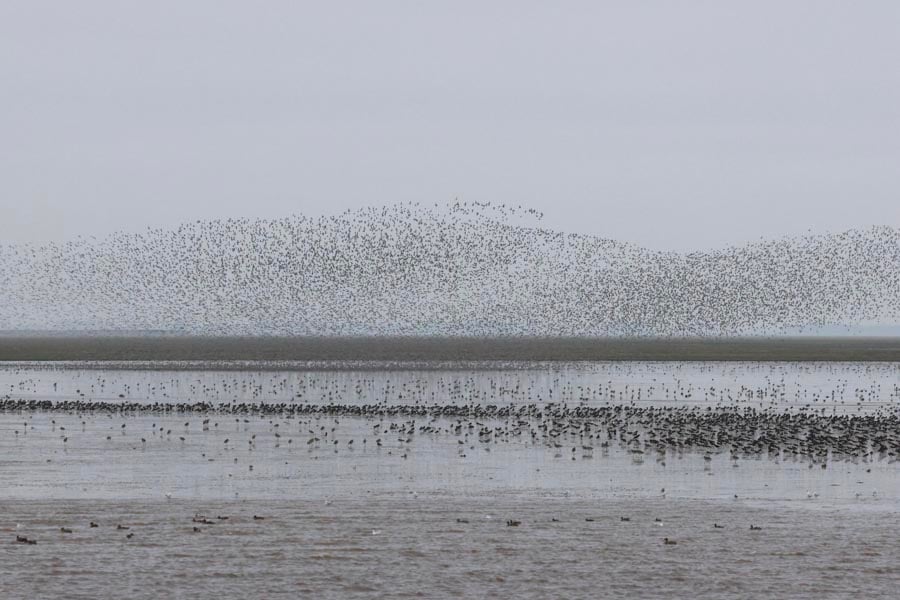
The flocks of Knot headed out over the Wash, twisting and turning now, making shifting shapes out over the water. Some worked their way back and forth, higher and higher, clearly planning to spend the high tide up above. Sky roosting. But others circled round and eventually landed again.
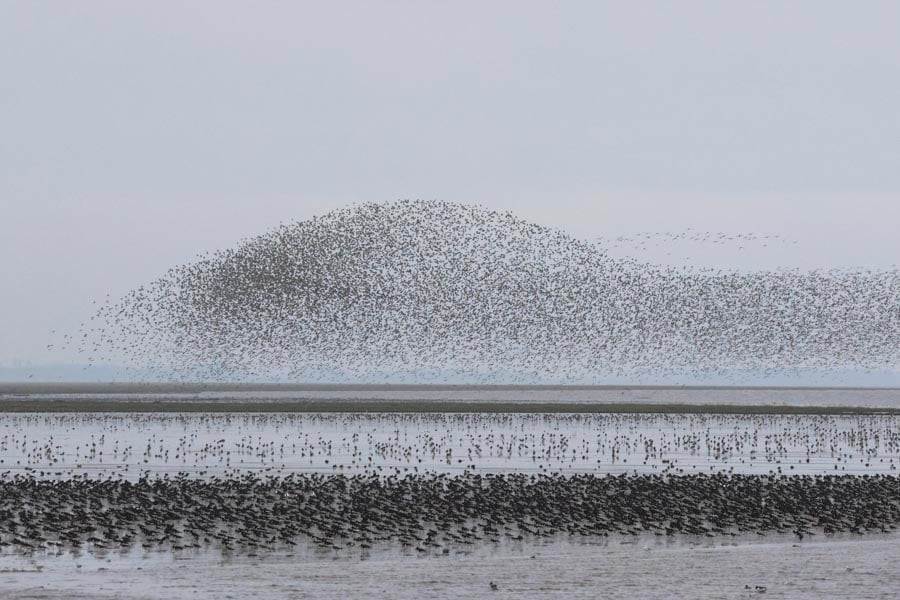
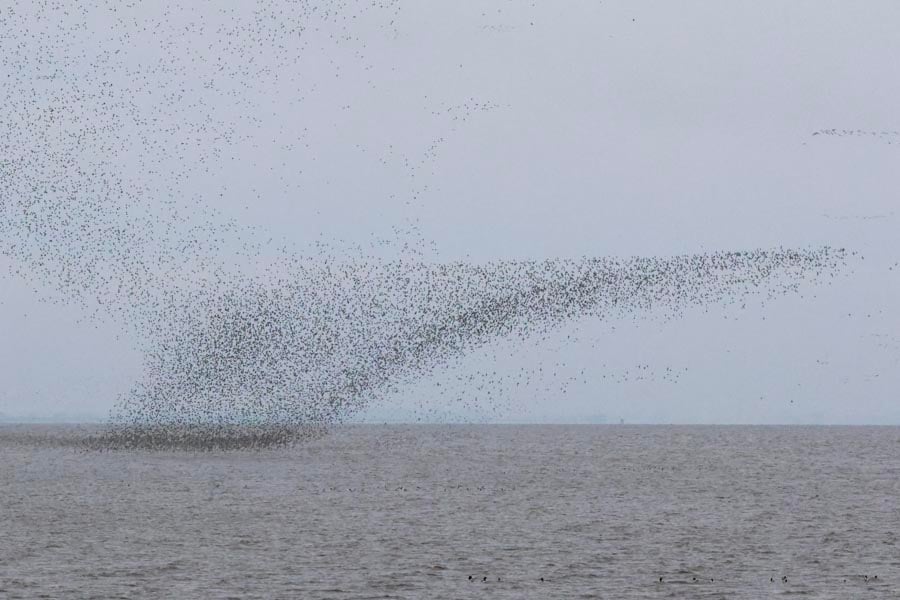
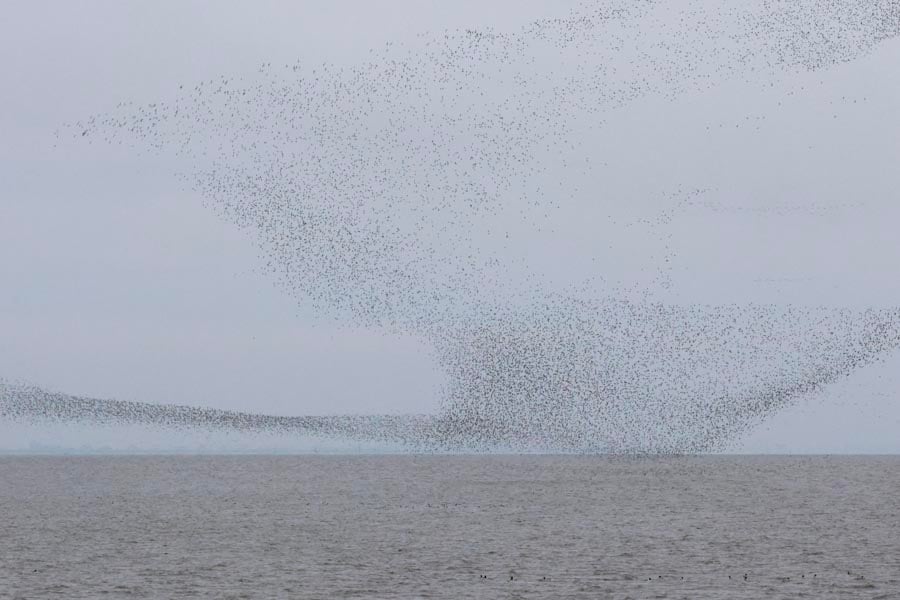
The waders were all increasingly being concentrated into the very last corner of the mud, the only part which was still not covered with water. Through the scope, we could see them arranged in layers. The Oystercatchers in the front; the mass of Knot packed in tight, shoulder-to-shoulder, separately just behind; the Bar-tailed Godwits and then Curlews further back still.
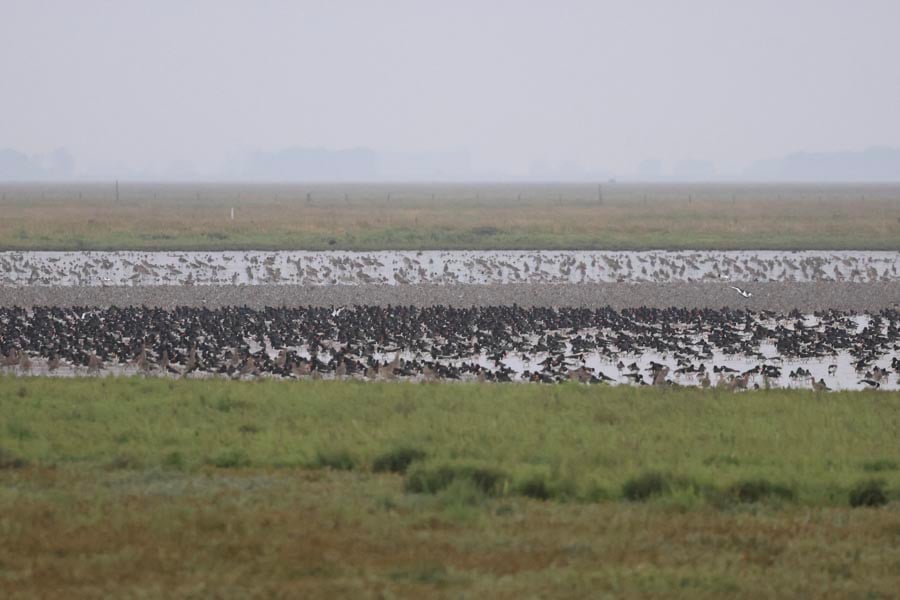
The Oystercatchers now started peeling off in lines, calling noisily, flying in over our heads. We turned to watch them dropping down to the Pit behind to roost. Most of remaining Knot then took to the air too. They flew higher and some huge flocks circled in and started to funnel down into the Pit as well. It looked like an enormous vacuum cleaner was sucking the birds from the bottom of the flock in a spiral. Like a water spout.
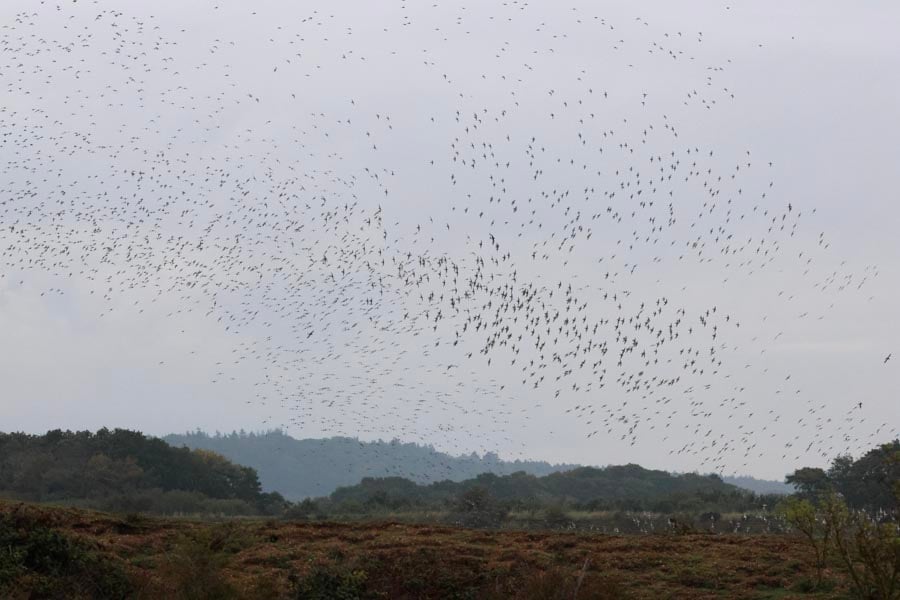
The pattern was full now, the airspace too congested above the Pit. Some huge flocks of Knot flew back out over the Wash. Other flocks were already out there, gaining height and yet more birds were still much higher in the sky, forming into skeins. It was mesmerising to stand and watch the flocks criss-crossing at different heights above us.
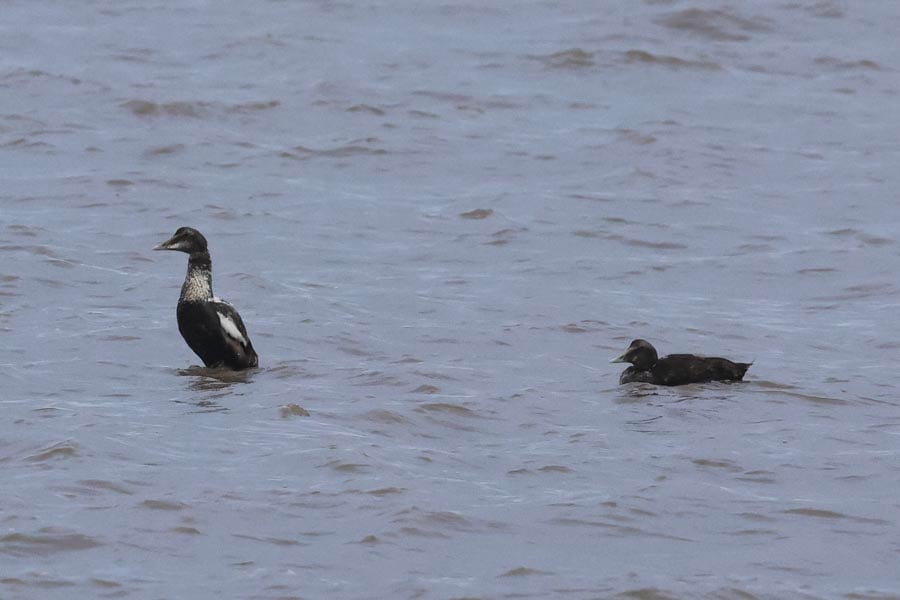
Two Eider were bobbing on the water on the Wash, just offshore now. Two moulting immature drakes. A Curlew Sandpiper flew in and circled round over the saltmarsh in front of us, so we could see its white rump.
The last corner of the mud was covered now and most of the birds had flown. The Curlews and Bar-tailed Godwits had retreated into the saltmarsh. We walked over towards Shore Hide. The water level on the Pit has gone up significantly after the recent rain, the islands reduced in size. We could see lots of Black-tailed Godwits and Knot on the islands to the north. Several Spotted Redshanks were asleep in their usual spot on the rocks, surrounded by Cormorants and about sixty Spoonbills.
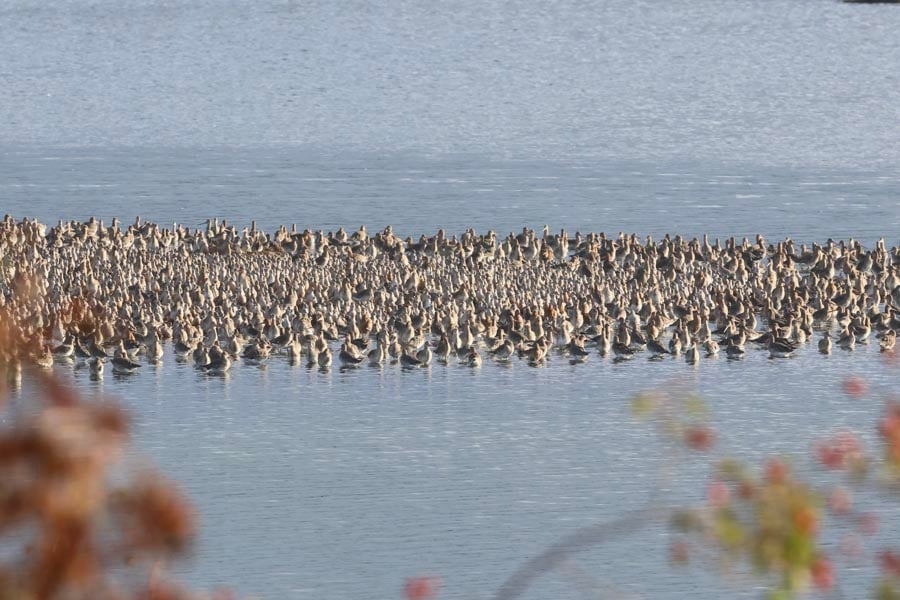
Into the hide, we had a better view of the Knot. Several were still in orange breeding plumage, others already moulted into grey non-breeding plumage. A couple of juvenile Curlew Sandpipers were in with Knot but hard to see. The flocks were nervous, still shifting, and the Curlew Sandpipers kept moving in and out of view between the others.
The Peregrine reappeared, flying in over the Pit, and most of Knot erupted. Again, the Peregrine seemed to focus on stooping at birds on the ground and largely ignore those in the air. Many of the Black-tailed Godwits and the remaining Knot just stayed put, probably knowing that the Peregrine would struggle to catch them on the ground.
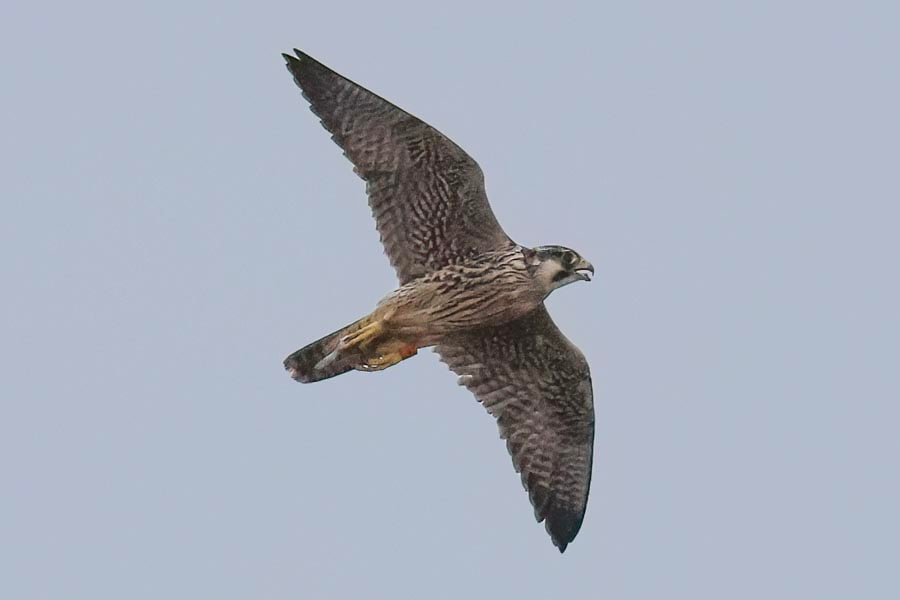
Lots of the Knot flew off over the bank and back out towards Wash. The Peregrine circled repeatedly round and round but didn’t catch anything and eventually gave up. At least it woke the Spotted Redshanks up. We could now see their longer, needle-fine bills.
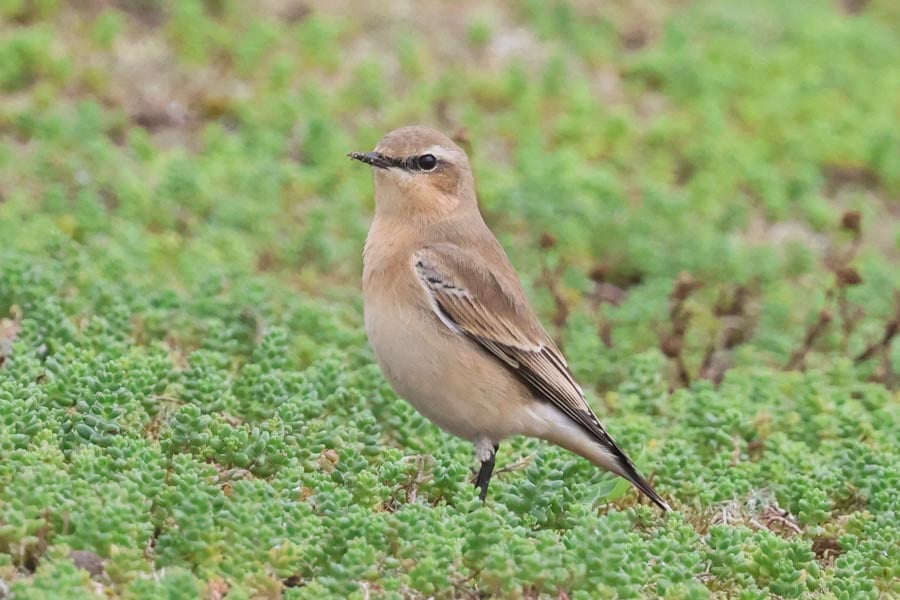
Things eventually settled down again but there were not so many waders left on the islands now. There didn’t seem to be much at the south end of the Pit apart from roosting Oystercatchers, but we decided to walk down for a look anyway. Several Wheatears were running about on the short grass on the way there. Migrants on their way south to Africa, stopping off to feed.
We called in at South Screen first. There were lots of Oystercatchers roosting on the bank still and a few Common Redshanks on the islands. A single Dunlin was wading in the water on the pool in front and a second was on the shingle just behind. The latter looked to be sick or injured, struggling to stand. A Common Sandpiper was on the back of the small pool just behind.
Several juvenile Common Terns were on the island still further back and we found a single Ruff in the vegetation there too. A Green Sandpiper flew round but disappeared round the back of one of the other islands.
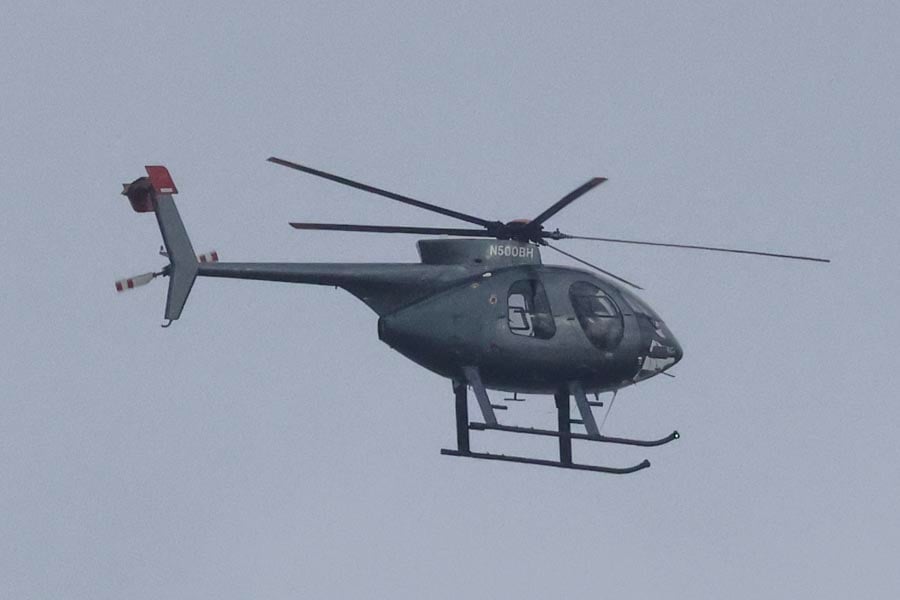
We heard helicopters approaching and looked out to see two flying low north over the Wash. They flew right over where the remaining waders were trying to roost, flushing everything. Irresponsible. We noted their registration numbers, N500BH and N163L, so we could report them to the RSPB later.
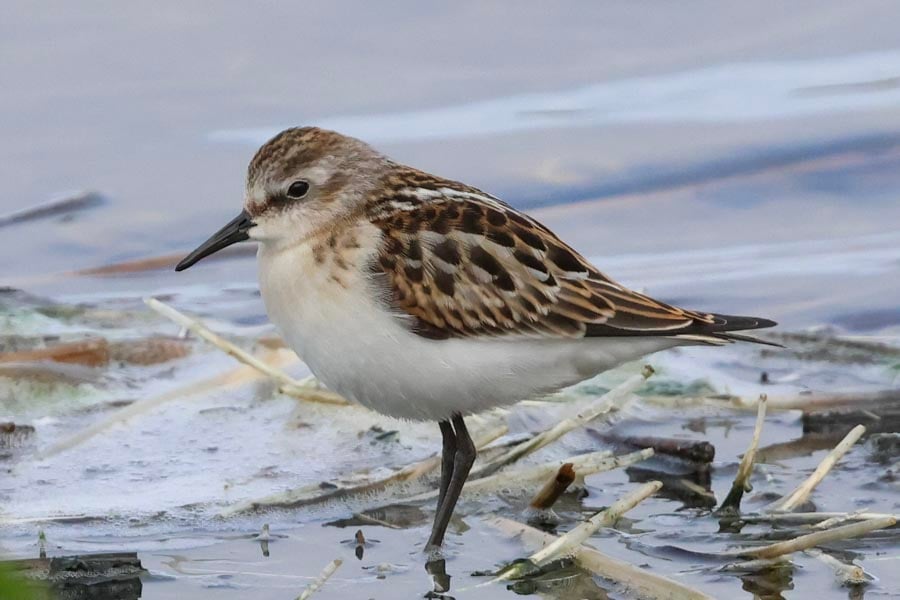
A juvenile Little Stint was feeding along the shore at base of the shingle on the other side of Knot’s Landing hide, along with another Common Sandpiper. The Little Stint appeared to be working its way along towards the front of the hide so we walked round for a closer look. A Greenshank flew over calling.
From the hide, we had some great close views of the Little Stint right in front. A fresh juvenile, we watched it picking its way along the shoreline. A Common Snipe was a nice bonus too, feeding in the taller vegetation on one of the islands.
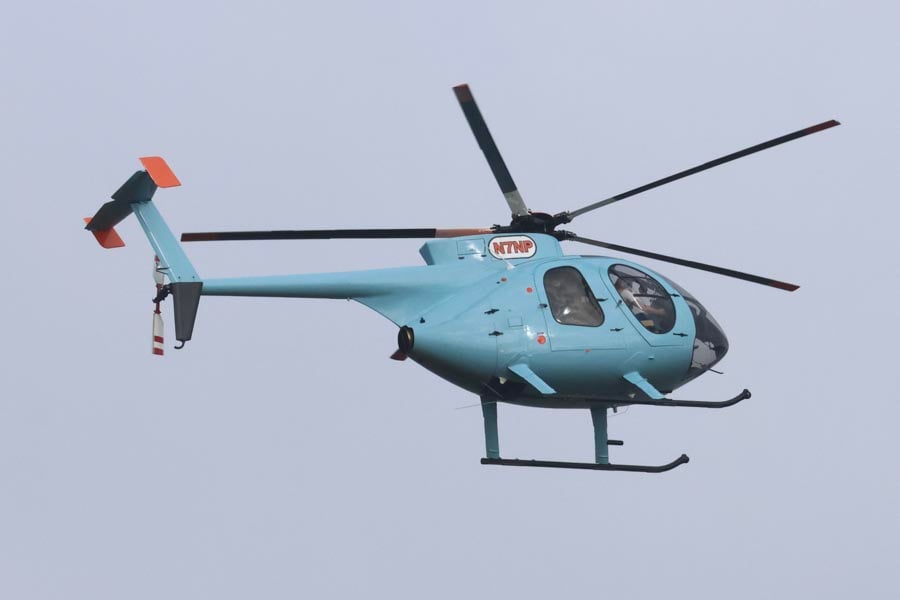
As we made our way back out, another helicopter (N7NP) flew in low over the Wash. This time it came in from the west, low over the wader roost. Then it turned sharply and headed away north. It looked like it was deliberately targeting the roosting birds. There should really be some more protection for birds here, and restrictions on low flying over the core roost area.
A couple of the Wheatears flicked ahead of us now, over the path, flashing their white rumps. The tide was already well out again. A large group of Oystercatchers was gathered out on the mud. The huge slick of Knot had returned too, further back, all asleep. Several Grey Plover, had appeared, some still in very smart breeding plumage. A few Golden Plover were hiding in amongst the Oystercatchers.
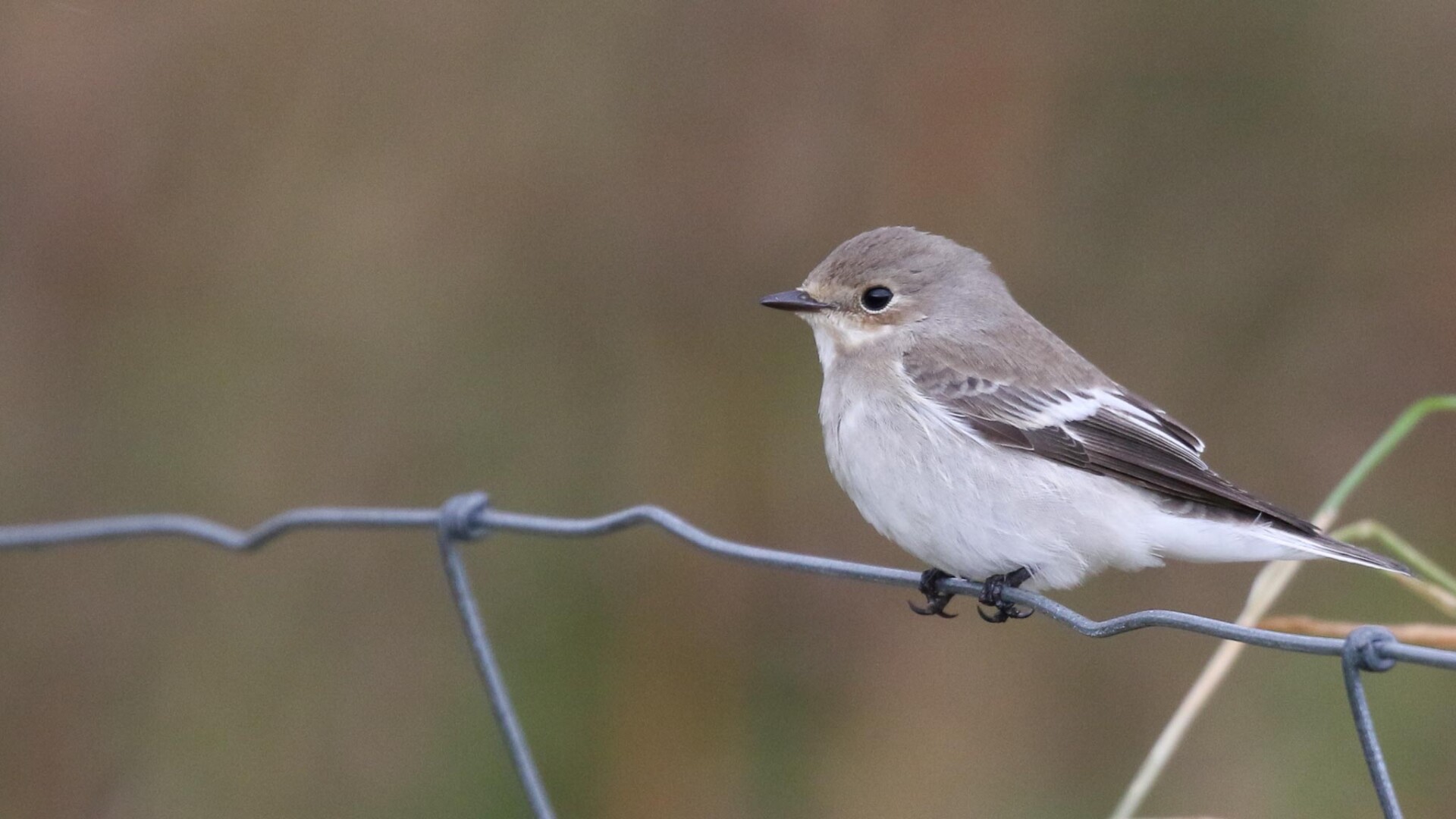
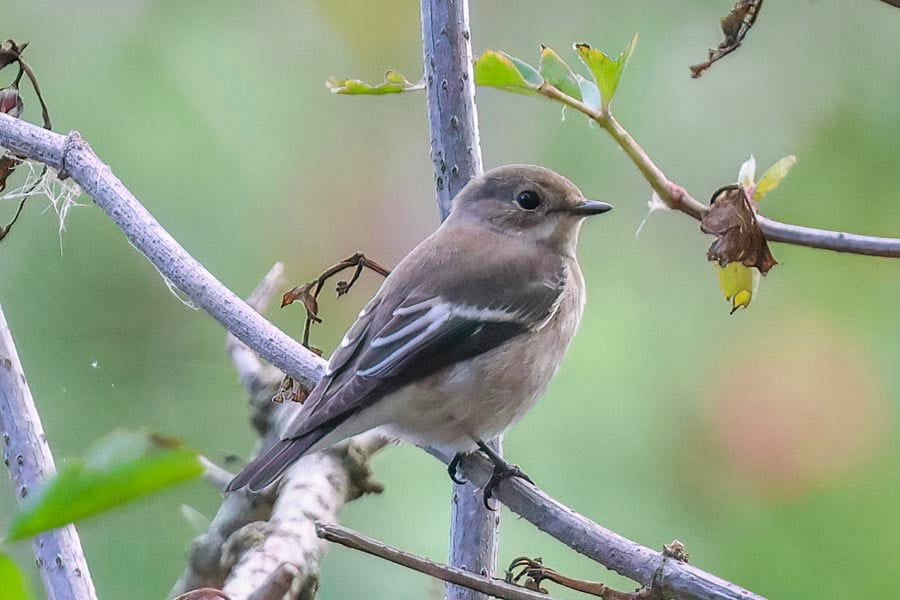
Things seemed to have settled down so we decided to walk back. We drove round to Titchwell next and when we arrived, it was time for an early lunch. Several of the group wanted coffees from the cafe so we ate by the Visitor Centre. Afterwards, as we walked back out to the car park to drop off the lunch bags, we found several people watching a Pied Flycatcher in the trees. We stopped and joined them, eventually getting good views. Another migrant from Scandinavia stopping off on its journey.
A Treecreeper climbed up the edge of an oak tree right in front of us while we were watching the Pied Flycatcher too. Two female Blackcaps and a Garden Warbler flew in and out of the elderberry bushes, and a couple of Chiffchaffs were flicking around in the trees.
We walked out for a quick look on the reserve. Stopping briefly by Thornham grazing meadow, there was no sign of any Whinchats on the hedge now. A group of Long-tailed Tits were in the bushes by the main path.
We stopped again for a look at the Reedbed Pool. Several Common Pochard were out on the water, along with a selection of Teal and Gadwall mostly still in dull eclipse plumage. A Great White Egret appeared from the reeds at the back. A couple of Chinese Water Deer were out on the saltmarsh the other side. We could see a very distant Marsh Harrier tousling with a Common Buzzard out at Thornham Point.
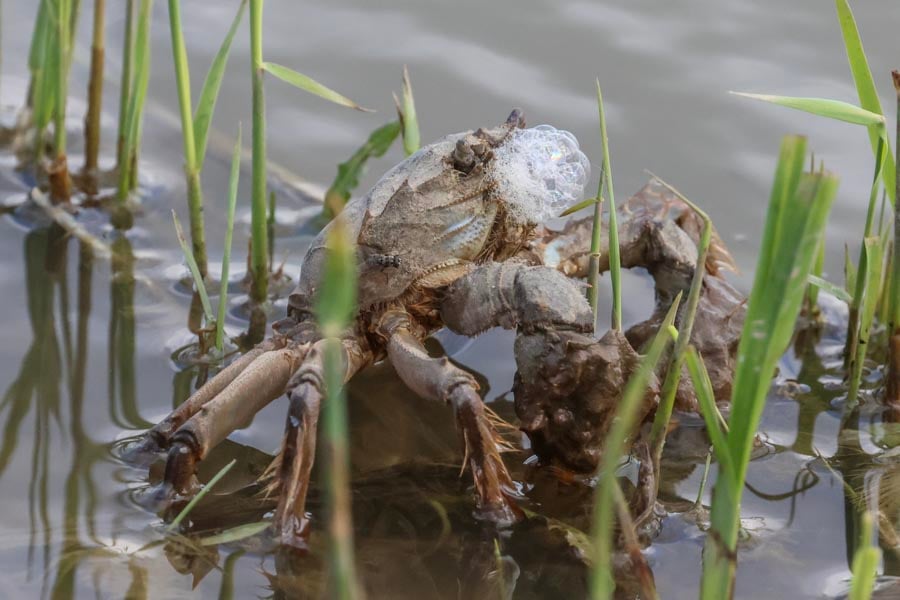
On to Island Hide, lots of people were over in the corner looking for the Spotted Crake. Apparently it had not been seen for at least three hours. The water level on the Freshmarsh has gone up after the recent heavy rain, and it has been feeding much deeper in the reeds. We had a quick scan but would not be hanging around for hours to try to see it. A Reed Warbler flicked across on the edge of the reeds. An invasive Chinese Mitten Crab was on the edge of the water right in front of the hide, blowing bubbles.
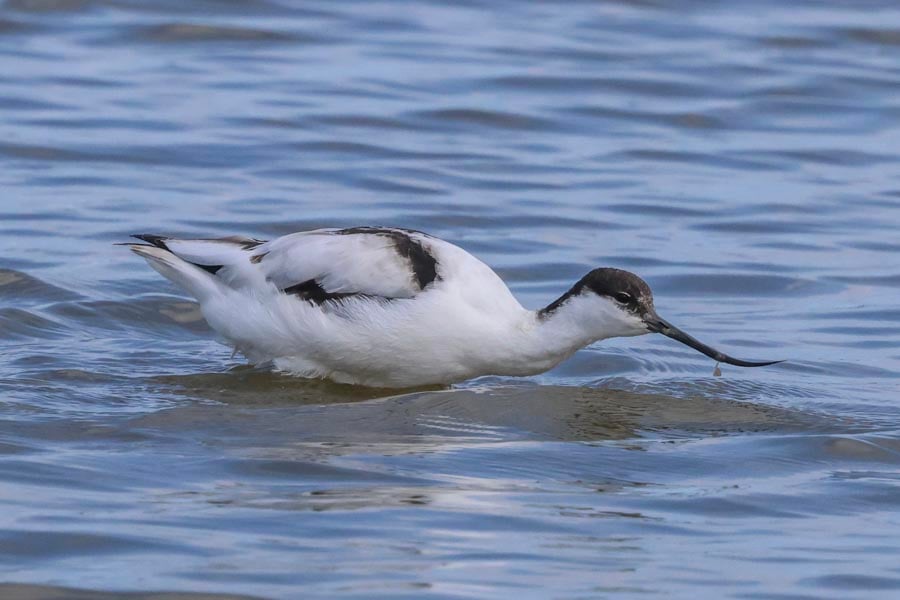
There were lots of Avocets and Black-tailed Godwits on the Freshmarsh, loafing on the islands or feeding in the deep water. Several Ruff were around the islands, a mixture of paler winter adults and browner juveniles. Three juvenile Little Stints dropped in on the edge of one of the islands. They looked tiny next to the Ruff before they flew off again.
Back out to the main path, there wasn’t much to see on the next compartment up. It looks a little better now, after the recent rain, but had almost dried out a few days ago. The three Little Stints were back on here now, along with a couple more Ruff. We watched the Teal feeding on the mud.
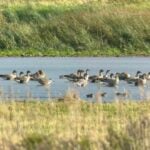
Round to Parrinder Hide, the water level on the eastern compartment is still rather high too. There were lots of geese on the islands, mainly Greylags and Canada Geese, with a single Greylag x Canada Goose hybrid and a couple of Egyptian Geese too. There were disappointingly few waders, though we did find a distant single Common Sandpiper on the bricks over the far side.
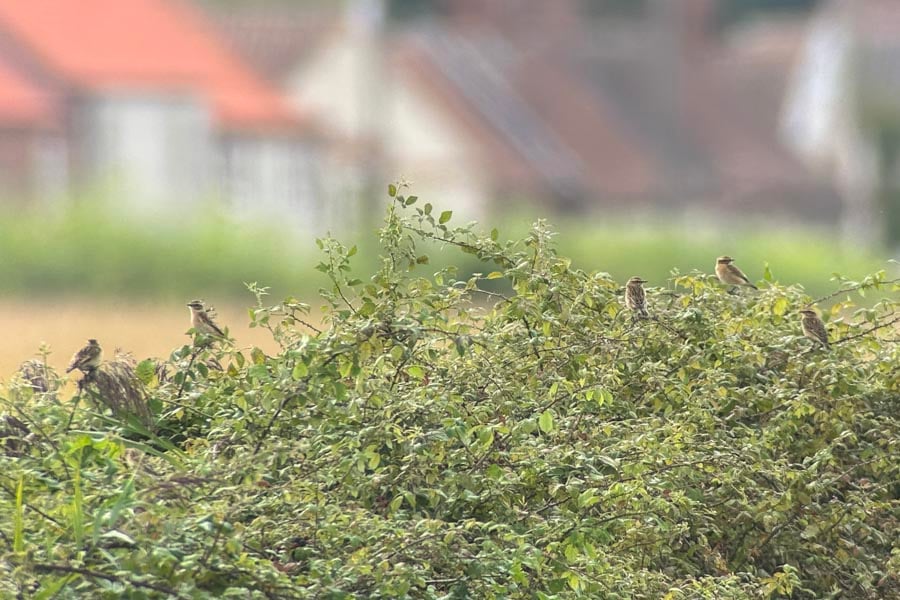
Back out, it was time to start slowly walking back. We stopped for another quick look at the Thornham grazing marsh, and we could see a Whinchat on the top of the reeds in the hedge now. Then a couple more appeared on some nearby brambles. More and more seemed to pop up out of nowhere, it was hard to tell exactly how many there were. At one point, we counted seven Whinchats all together on the same bush. Nice views in the scope. More Scandinavian migrants, a recurring theme at this time of year.
Back to the car park, the Pied Flycatcher was still showing in the trees, so we stopped for a quick look and a chance to use the facilities. It had been a very early start this morning, in order to catch the tide. So an early finish too today, it was time to head for home.
It had been a great day – the waders were as spectacular as ever, and a nice selection of autumn migrants and other birds too.