Day 2 of an Autumn Weekend tour. Grey cloud and a couple of light rain showers first thing quickly cleared through. The rest of the day was bright and sunny, getting up to a pleasant 25C in the afternoon. We spent the day in NW Norfolk.
Our first destination was Titchwell. Cutting across inland via Choseley, once again we found a large group of Red-legged Partridges in the road and dozens more in the fields. The farm here releases ridiculous numbers each year for shooting and they seem to like standing around in the middle of the road! There was some rain on the drive over, but by the time we reached our destination it had stopped.
The car park at Titchwell was not very busy when we arrived. The bushes here can be good for migrants before too many cars arrive, so we walked down for a quick look in the overflow car park first. There was not much from the gate overlooking the paddocks, just a few Swallows out over the grass and on the large barn roof.
There were more birds in the overflow car park itself. Lots of Blue Tits and Great Tits were working their way through the bushes and as we stood and scanned, we found several Chiffchaffs and Blackcaps with them. A single Lesser Whitethroat flew out and landed in one of the apple trees too briefly. There were a few Robins and Blackbirds too. No obvious fresh migrants but a nice selection nonetheless.
Making our way out onto the reserve itself, a Great Spotted Woodpecker flew over our heads calling as we got out of the trees. It looked like it was going to fly straight out over the grazing marsh towards Thornham but changed its mind and turned back, before dropping into the last of the sallows west of the path. Like yesterday, this was presumably a bird dispersing, making its way west.
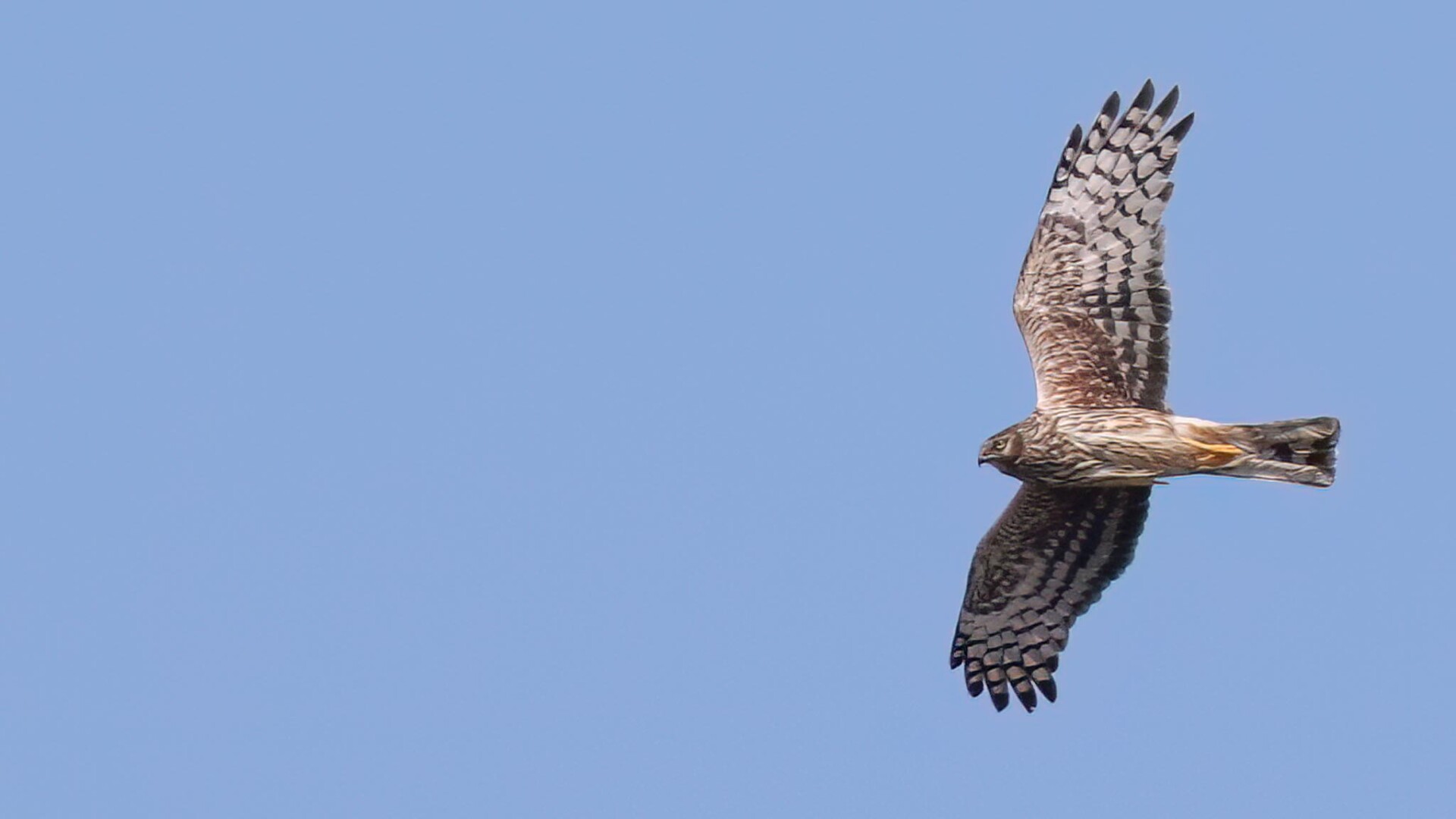
We could hear Bearded Tits calling in the reeds but they kept down out of view. A Marsh Harrier was out over the reeds distantly towards Thornham and a Chinese Water Deer was feeding on the saltmarsh. A couple of Common Pochard flew over west with a single Tufted Duck in between them.
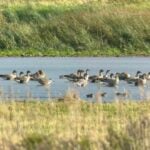
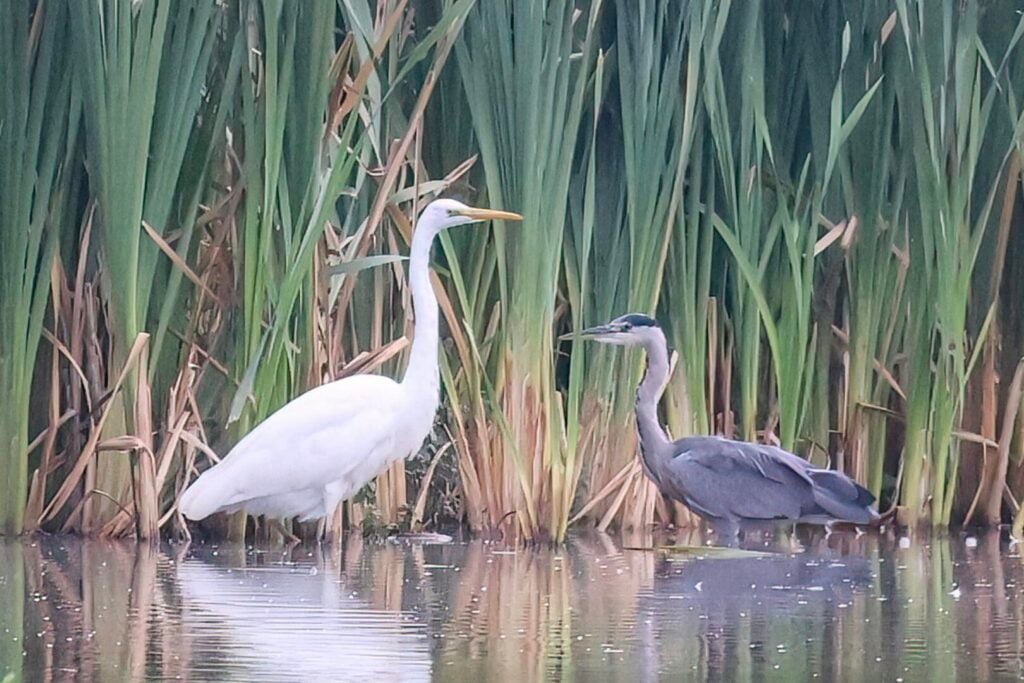
As we walked up towards the Reedbed Pool, we could see a Great White Egret against the reeds on the far edge. A Grey Heron was standing right next to it for comparison and the Great White Egret was noticeably larger. Another Great White Egret flew in high from the west over the north side of the saltmarsh and continued off east. Perhaps a migrant? Two Little Grebes were over towards the back of the Reedbed Pool. There were also lots of the ducks out on the water, mostly in drab eclipse plumage, including two Wigeon.
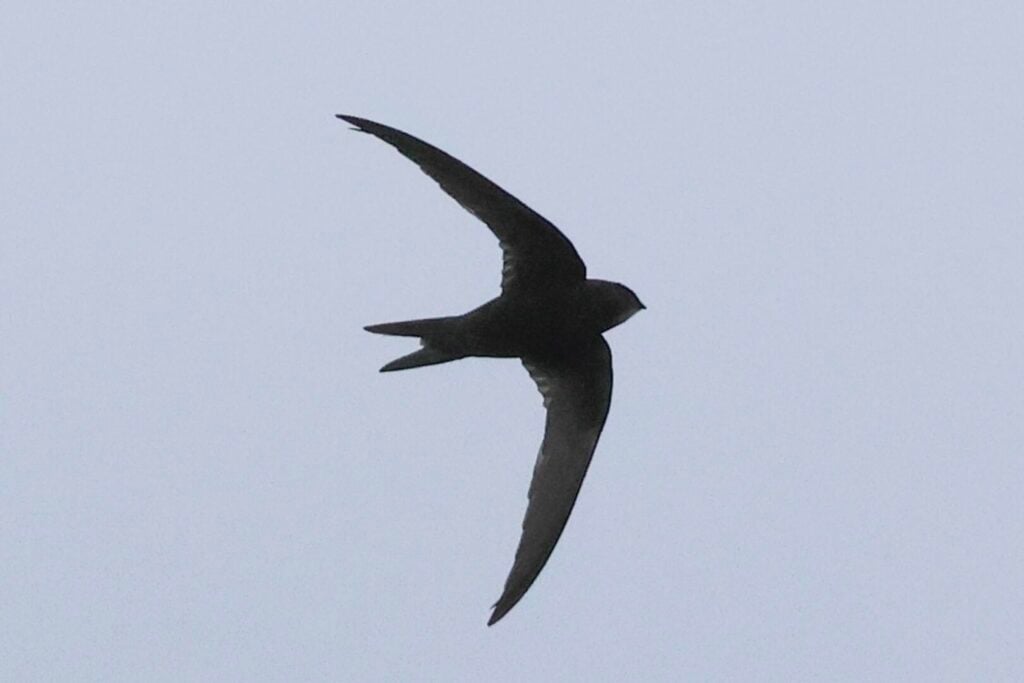
There were quite a few Swallows and House Martins hawking for insects over the reedbed and we picked up a single Common Swift too. They circled round and gradually drifted off west. As we stood and watched, it quickly became apparent that they were on the move today and more hirundines appeared, including a single Sand Martin, and two more Common Swifts. All heading off on the long journey down to Africa for our winter, we would see them streaming through all day.
It started to rain again now. Only light, but we decided to head for the shelter of Island Hide. There were lots of people in there looking for the Spotted Crake, which had reappeared a couple of days ago, after going missing. It was over on the east/west bund north of the hide now but hadn’t been seen for at least half an hour though.
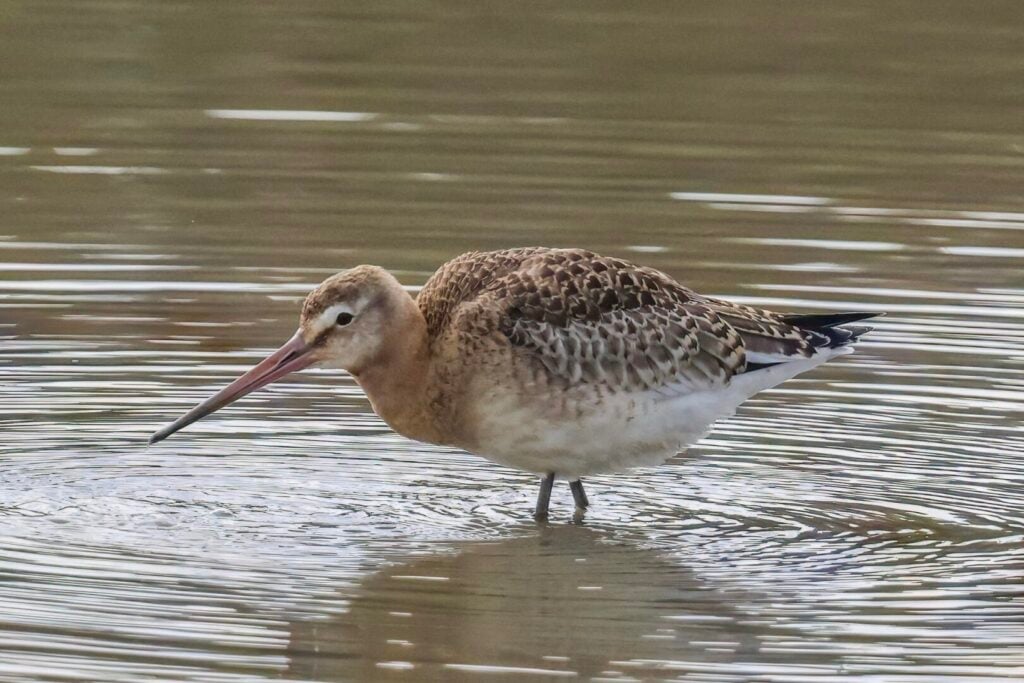
We focused our attention on the other birds out on the Freshmarsh. There were lots of Black-tailed Godwits. A large group was roosting on the island in front of the hide and more were feeding in the deep water.
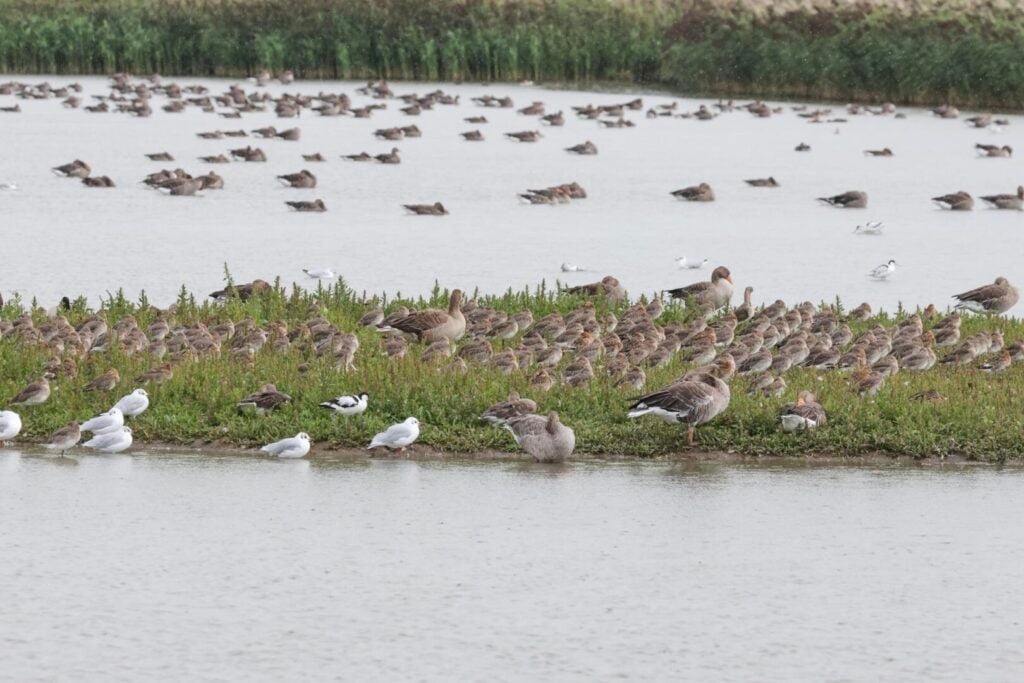
Four were close to the hide, including a couple of smart juvenile Icelandic Black-tailed Godwits, an adult moulting out of breeding plumage and a grey non-breeding bird. There were several Ruff around the islands too and lots of Avocets.
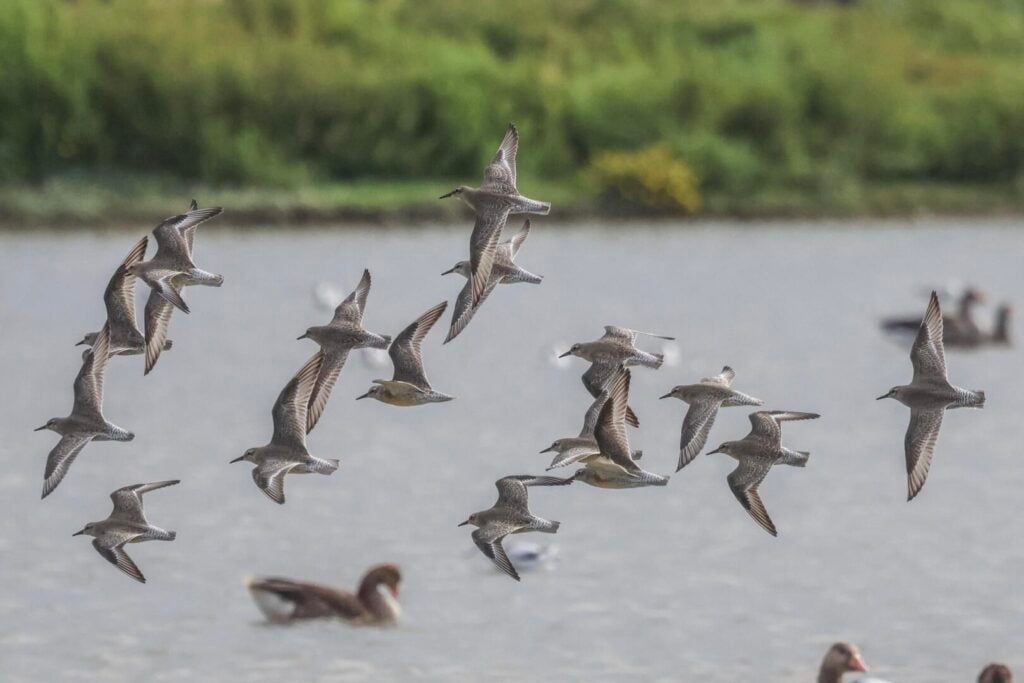
A small group of seventeen Knot flew in and round over the water, but it is probably too deep for them here at the moment. They circled the island where the Godwits were roosting but probably didn’t like the height of the vegetation, so they flew off west. Perhaps they had just arrived in over the sea and were looking for somewhere to sleep it off. We heard a Greenshank calling and saw it flying in with a Redshank, but it too flew straight through and off west.
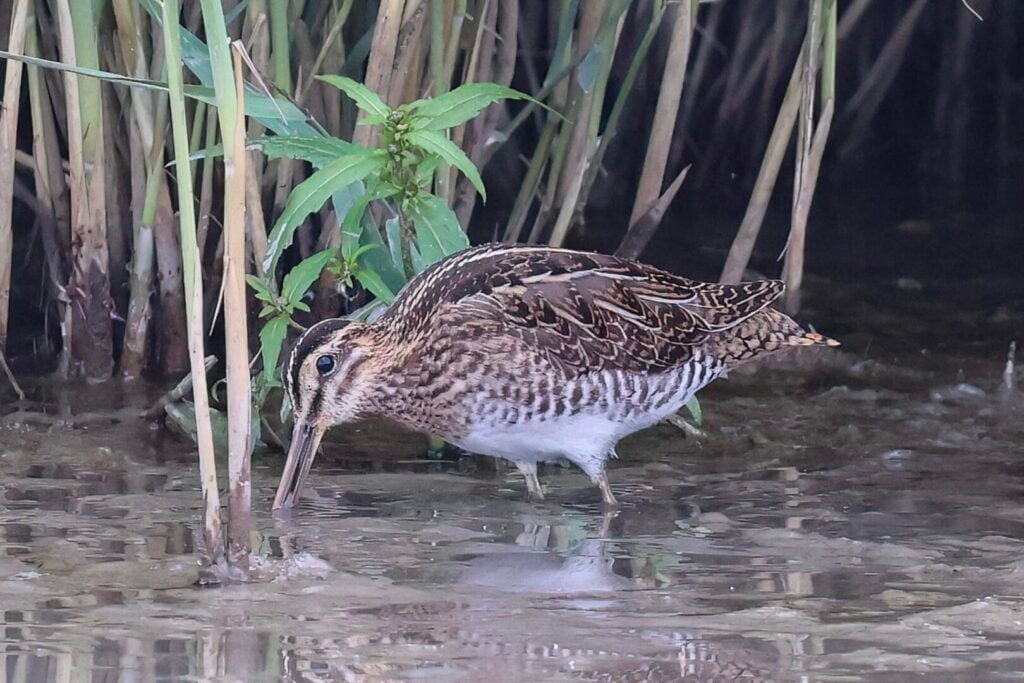
A Common Snipe was busy feeding on the edge of the reeds not far out to the right of the hide. It did disappear in at times but when it came out we had a very good view of it. Smart birds.
Scanning across the edges of the bunds, looking for the Spotted Crake, we found a Bearded Tit feeding in the cut reeds right over the back. It was very distant though and hard to see. Then another Bearded Tit appeared much closer, behind the Common Snipe. A much better view of that one as it worked its way in and out of the base of the reeds. A couple of Reed Warblers then did the same thing.
There was still no sign of the Spotted Crake, and we started to wonder whether it might have crossed the bund to the next compartment. We decided to move on – we could call in on the way back and see if the Spotted Crake had reappeared. We made our way back out onto the West Bank path.
Looking out over the saltmarsh, we could see a couple of raptors out over Thornham Point – a Red Kite and a Common Buzzard. A third was even more distant, higher and out over the sea behind, but that turned out to be just a Common Buzzard too on closer inspection. A very large flock of Golden Plover came up from the harbour, in the distance.
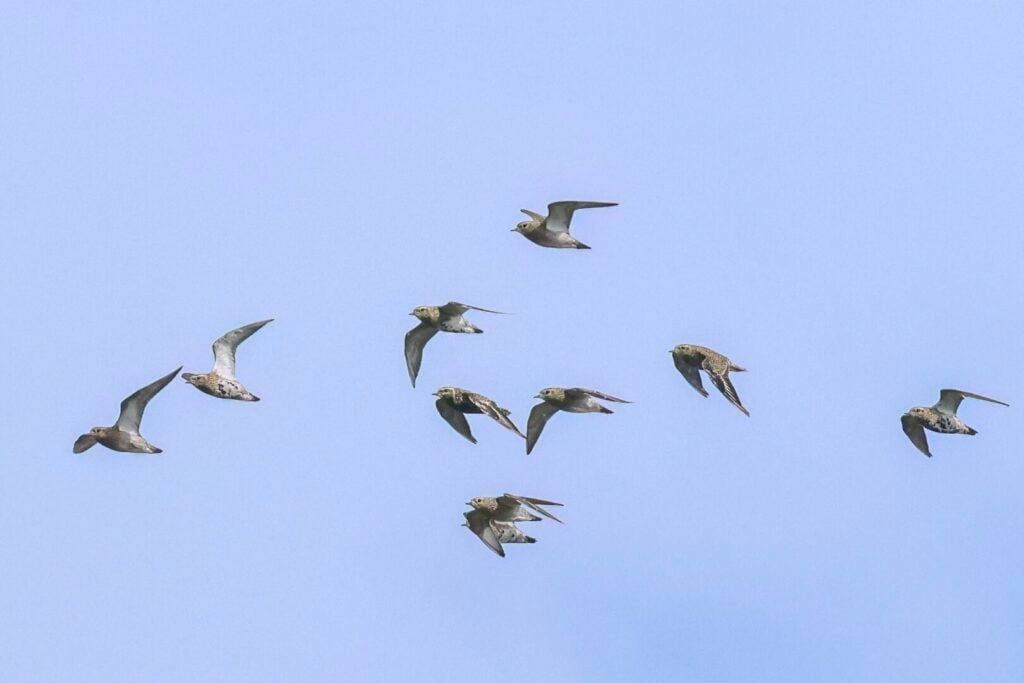
Further up, the next compartment of the Freshmarsh is nearly dry again now and there seemed to be very little on here. We managed to find a single Little Ringed Plover right at the back, a juvenile. Five Dunlin flew in and landed in the small area of remaining water where a couple of Ruff were feeding. More Golden Plover came up over Brancaster and some small groups flew in and circled over the Freshmarsh calling.
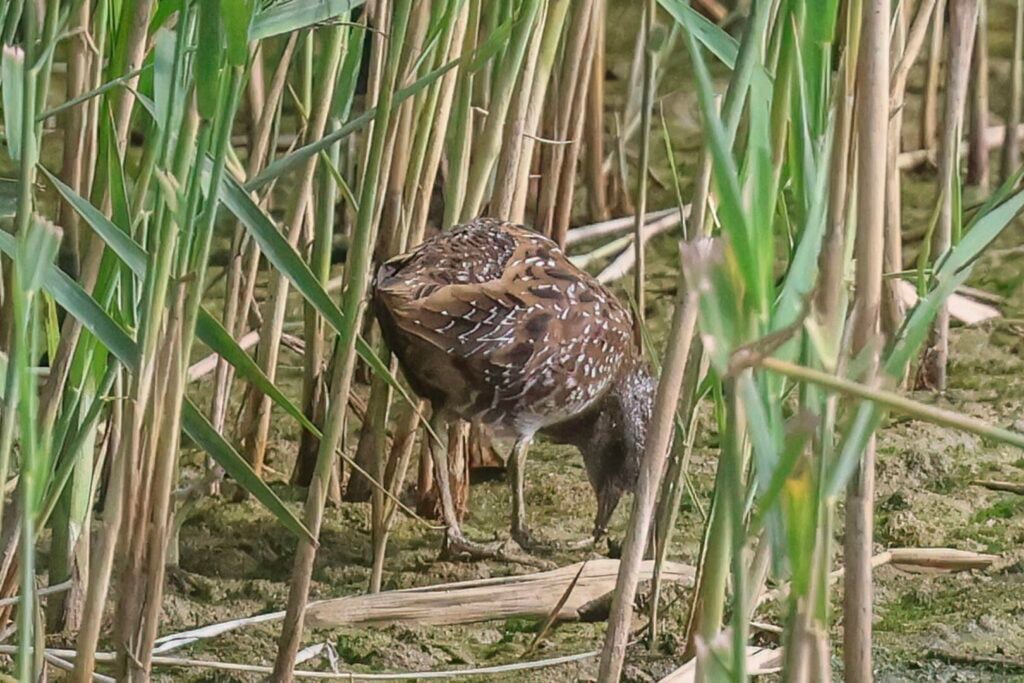
We were just looking at the waders when someone walked down from further up to tell us the Spotted Crake was showing. We hurried over and there it was, on the edge of the reeds, fairly out in the open (for a Spotted Crake). Lovely views in the scopes as it worked its way in and out, before it ran further back and disappeared. It quickly became apparent that the people back in Island Hide were watching the original Spotted Crake back there at the same time as we were watching the one further up. There were actually two Spotted Crakes!
While we stood and watched the Spotted Crake, there were lots of Linnets flying in and out, dropping down to one of the small pools to drink. Several Meadow Pipits and Pied Wagtails were scattered around and a Reed Bunting came out onto the mud. More surprising was a Lesser Whitethroat which flew in over the Parrinder bund and shot straight past in front of us over the reeds. Presumably a migrant, freshly arrived and looking for more suitable habitat to feed up.
When the Spotted Crake eventually disappeared, we walked on out towards the beach. As we passed the Volunteer Marsh, another Greenshank flew across behind us and disappeared out over the saltmarsh. A Common Sandpiper flew over the wide channel at the far side, but disappeared into the thick vegetation out of view.
There were lots of Oystercatchers roosting on the island on the Tidal Pool and a single Knot with them. A couple of Turnstones flew over with a Ringed Plover and then several more Turnstones flew up from the saltmarsh further back.
Out at the beach, the first thing that became apparent was that the Swallows were piling through in even bigger numbers out here. Some flew over the beach but large numbers were moving west offshore. Impressive stuff – mass migration in action!
Scanning the sea, we found three Eider offshore, all immature drakes, and a single female Common Scoter. There were at least three Great Crested Grebes out on the water too. A couple of Gannets flew past further out and a juvenile and adult Common Tern were closer in.
Scanning up along the shore, there were lots of Oystercatchers feeding out on the wet mud half way to Thornham Point. Through the scope, we could see lots of Sanderling running in and out of the waves between them. Just beyond, a couple of Grey Seals were hauled out on the sand.
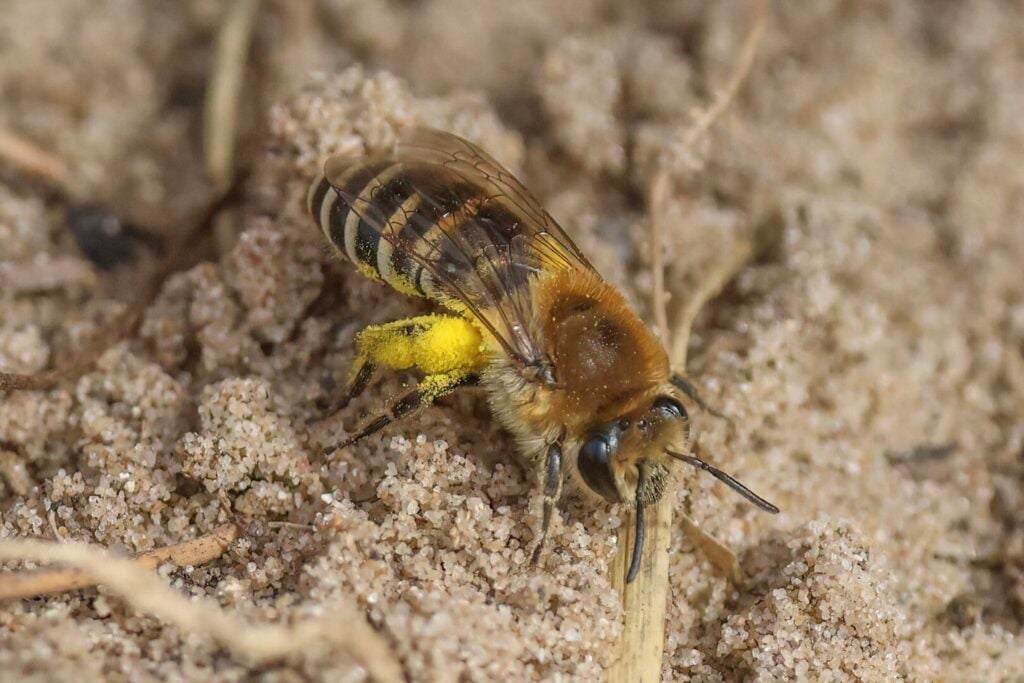
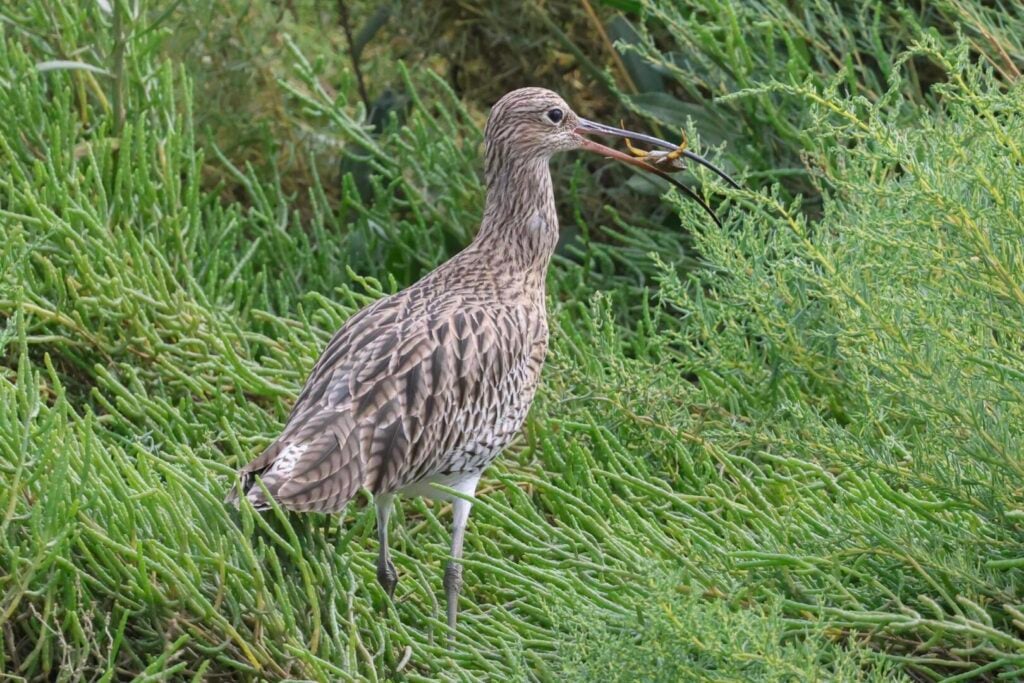
It was already time for lunch, so we set off back. On the way, we stopped to look at the Sea Aster Bees (Colletes halophilus) which nest in the side of the path. On the Volunteer Marsh, a Curlew was wrestling with a Shore Crab it had caught and which was a little too big for it to swallow.
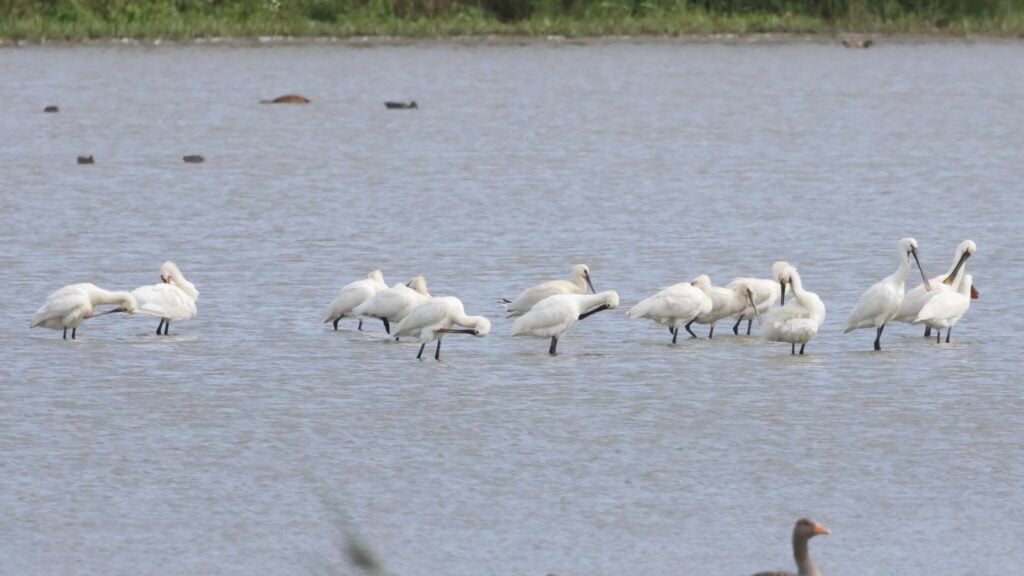
Looking out over the saltmarsh, we saw seventeen Spoonbills come up from Thornham Harbour. They flew in and circled over the Freshmarsh before dropping down on the edge of the reeds out from island hide.
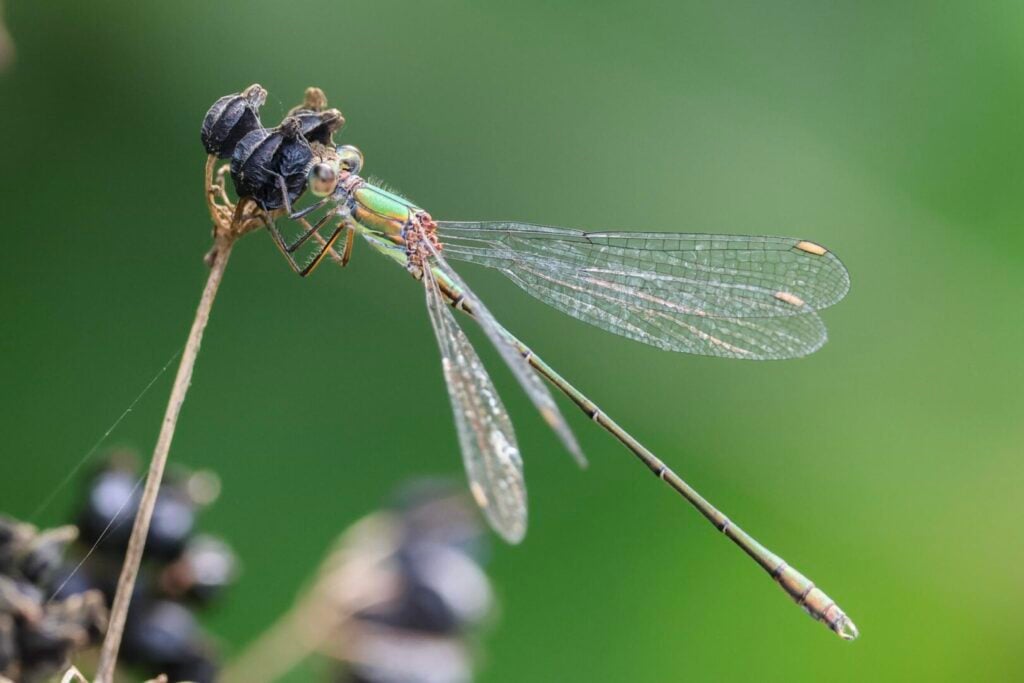
The reserve was very busy now, the car park chock full, and a large coach party had arrived. There was no room in the picnic area so we managed to find somewhere to perch on one of the benches outside the Centre to eat our lunch. Several Willow Emerald damselflies were flying around the bushes, along with lots of Common Darters.
We still hadn’t managed to find a Little Stint this weekend – not helped by the high water levels everywhere. There are often some on the Wash but it wasn’t a big high tide today, so the waders would mostly be distant. However, someone had seen some still by the sailing club yesterday and it was around high tide now, so we decided to try our luck.
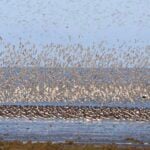
We drove round to Snettisham and parked in the RSPB car park. Starting down the usual path, we cut across between the Pits to the spit in front of the sailing club. When we got there, most of the birds were very distant, as expected on a small neap tide. Some large smoky clouds of Knot, thousands strong, whirled round in the distance out over the Wash. There were lots of waders on the sandbars out in the middle, more Knot and lots of Oystercatchers.
The mud along the near shore all looked very dry. There were just a couple of Sanderling and a Ringed Plover along the edge of the water. Another Sanderling and a Turnstone flew in.
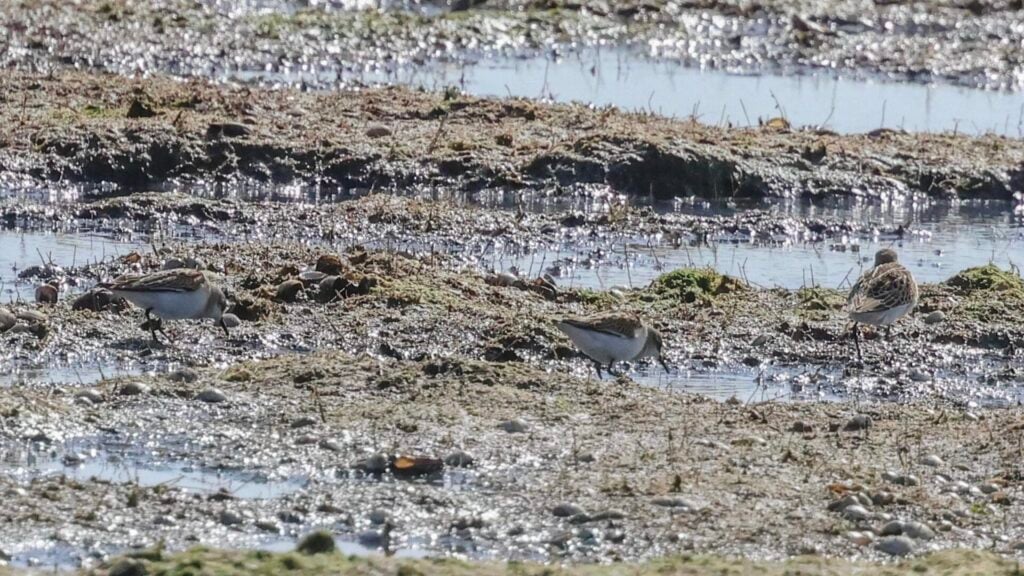
We decided to walk further down towards the chalets. We hadn’t gone more than a few metres though when we noticed some small waders on a shallow pool out on the dry mud and seaweed. A quick check through the scope and we confirmed that they were four juvenile Little Stints. We could see how small they were and noted their short black bills. Thankfully we all had a chance to get a look at them before they flew and landed much further back along the shore. The next time we looked back they had disappeared completely, so we had been lucky to catch them just in time.
Continuing on a little further, there was a large group of gulls roosting on the mud. Checking through them, we found several Mediterranean Gulls with the Black-headed, Common and Herring Gulls and a few Sandwich Terns. There were lots of Oystercatchers roosting on the mud too and, scanning across, we found a large number of Redshanks. Hunkered down in the dips in the mud, they were amazingly well camouflaged.
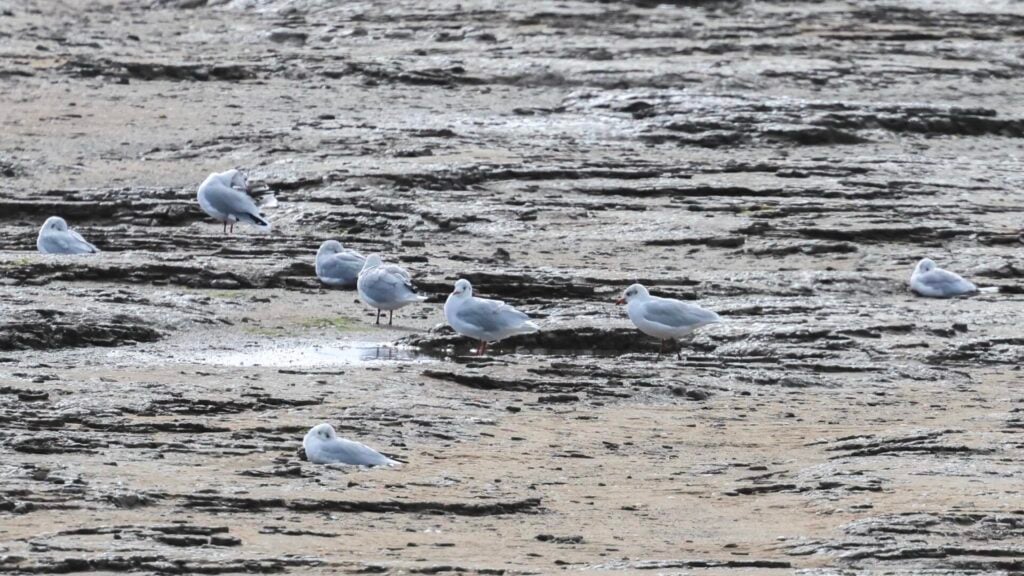
From up on the seawall in front of the chalets, we had a better view of the Mediterranean Gulls and Sandwich Terns side on. We could see the yellow tip to the black bill of one of the latter. The Mediterranean Gulls started to take off and fly in, presumably to bathe on the Pit. We could see their translucent white wing tips as they flew past. There was a large group of Golden Plover out on the mud a little further down, again like the Redshanks remarkably well camouflaged on the ground here.
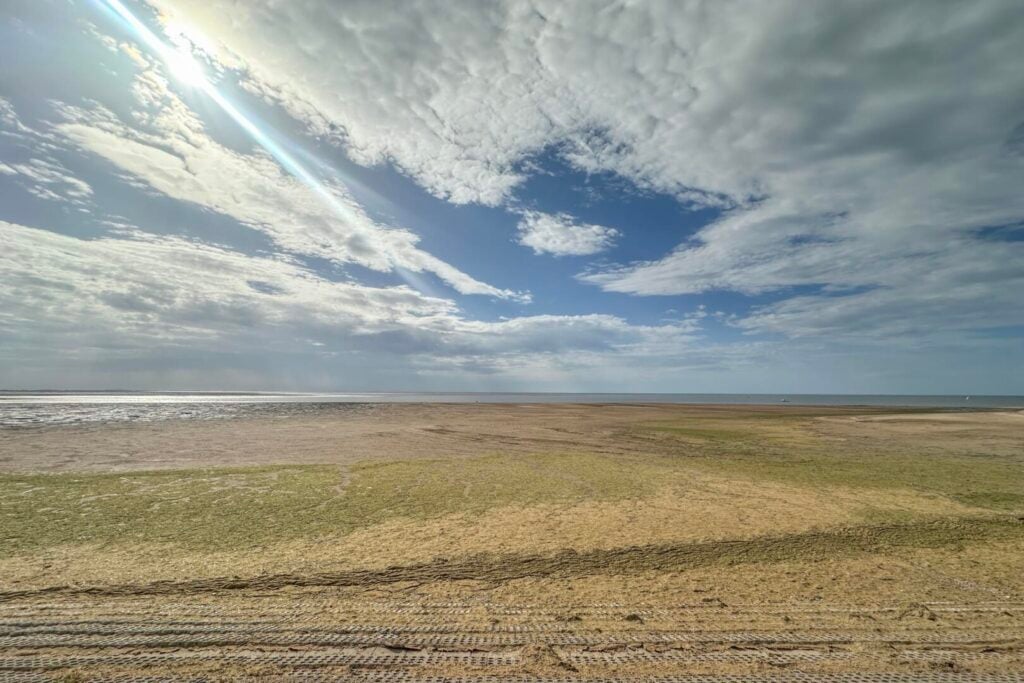
We sat for a couple of minutes, admiring the amazing view looking out across the mudflats and the Wash. We could see the Lincolnshire coast over the other side and just make out Boston Stump. It looked like it might be raining over in Lincolnshire but is was lovely and warm in the sunshine in Norfolk! Then it was time to start making our way back.
As we got back to the Sailing Club, a Turtle Dove flew up from the spit in front, probably flushed by a couple of dog walkers trying to get through the middle of the Suaeda. In flew in right past us and disappeared off over the chalets. We had hoped we might find one here but thought we were going to be out of luck. An excellent bird to end the weekend.
We walked back to the car park, sampling some of the delicious blackberries (of which there are a lot this year) on the way. Then we drove back to Hindolveston – still time for tea and cake, for those who wanted it, before the drive home.
It had been a lovely weekend birding, with some interesting birds – autumn migrants and migration in action.