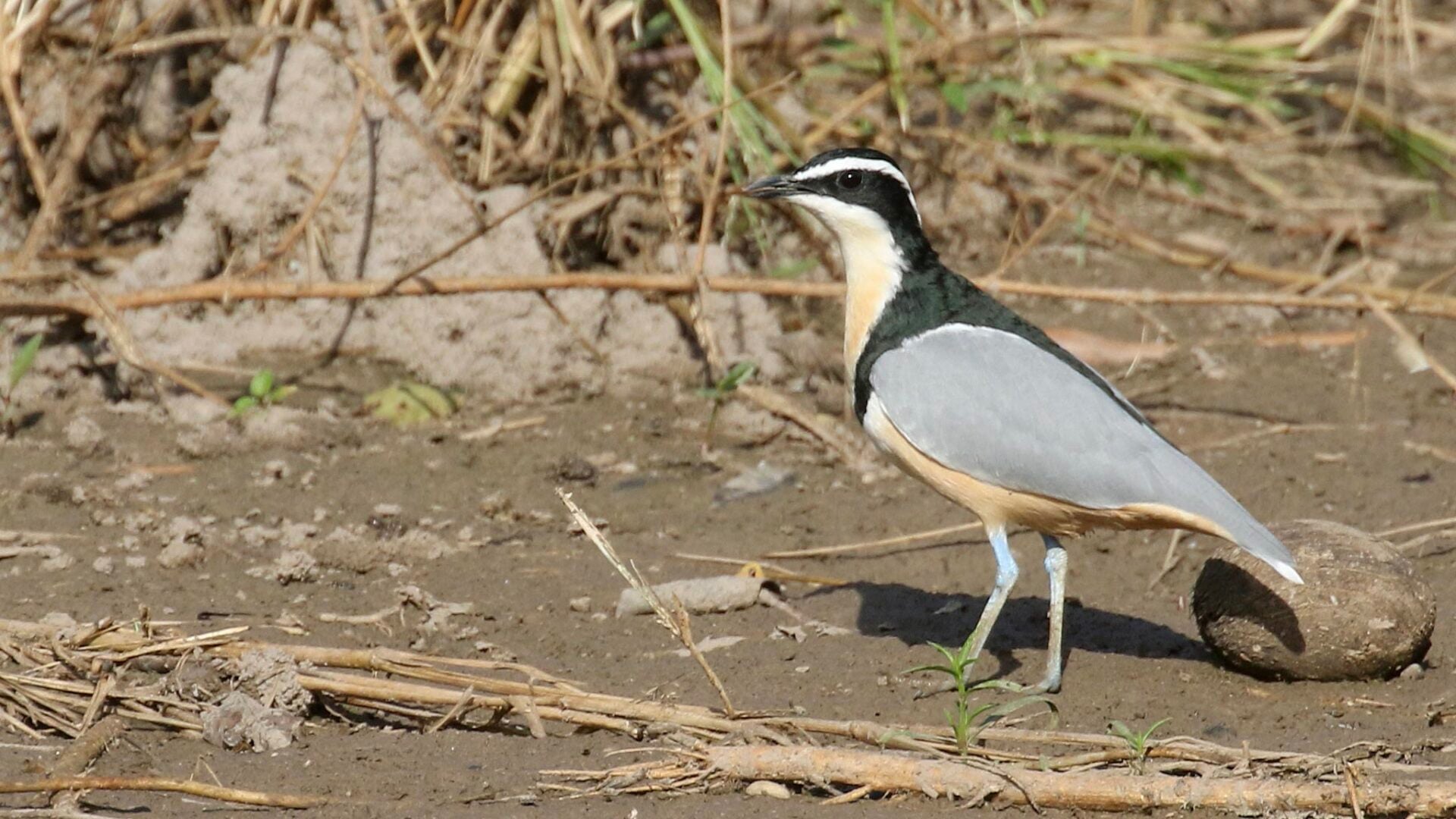
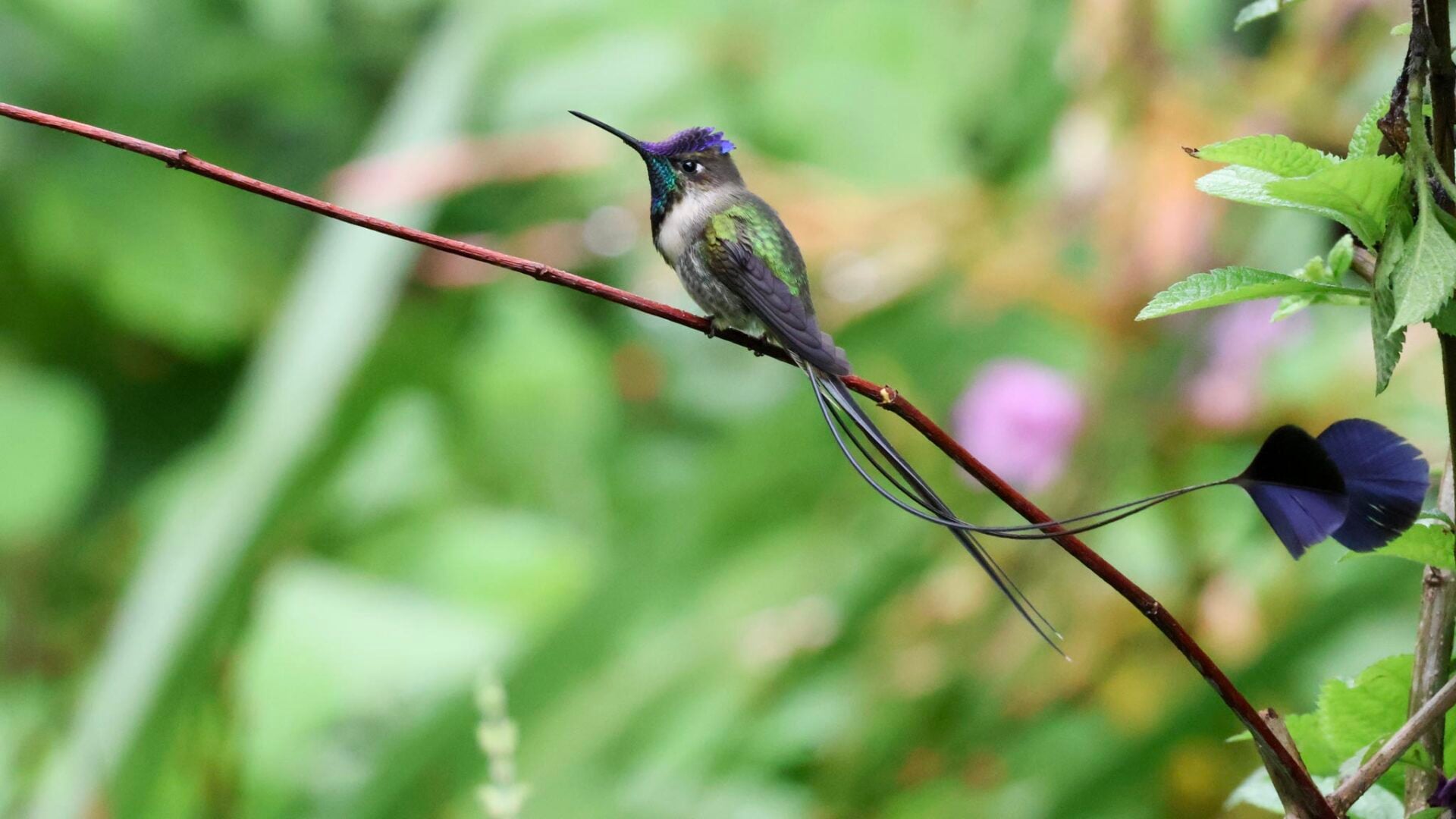
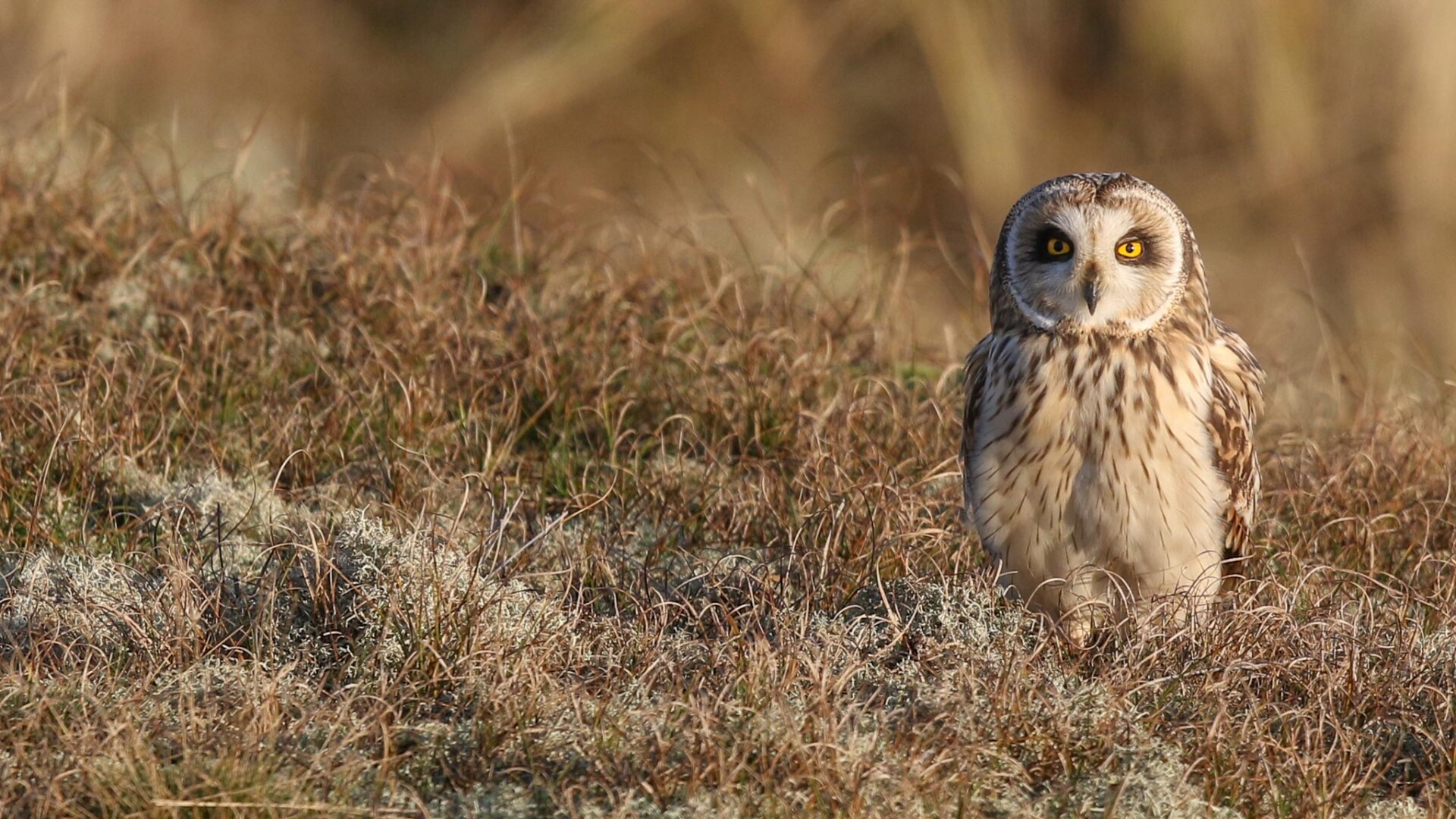
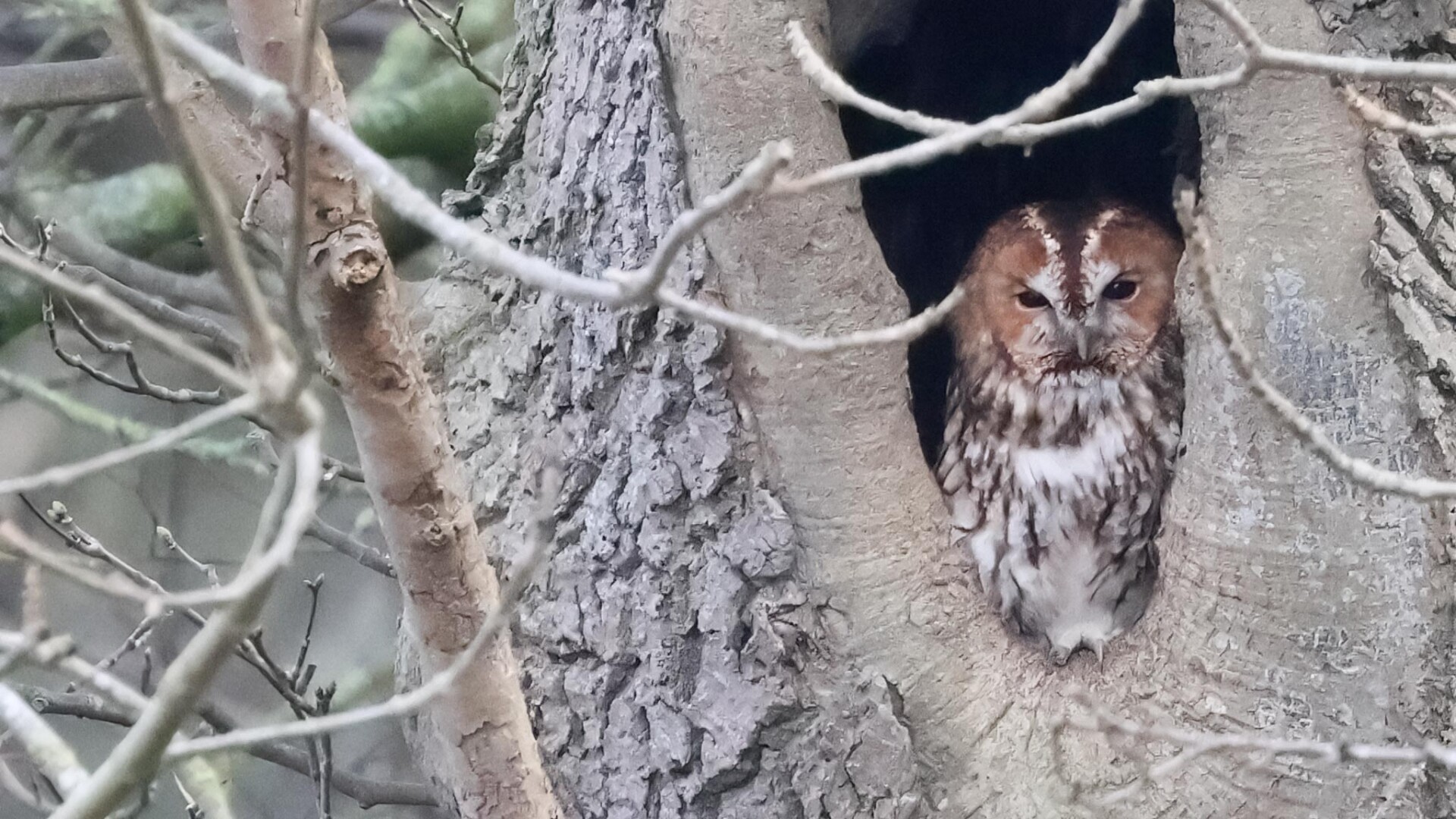
Our annual week-long tour to Scotland, based in the Highlands with a visit up to the Aberdeenshire coast, as well as the chance to catch up with a few additional birds on the journey. If you like the sound of what we got up to, we just sorting out the dates for a tour to Scotland again in 2027 – you would be very welcome to join us!
Sunday 29th March
A travel day today. After meeting up with the first two members of the group in Hindolveston, we set off in the minibus for the long drive up to Scotland. We picked up another of the group on the outskirts of King’s Lynn. Thankfully it was an uneventful journey across to the A1M and up to the Premier Inn in Darlington, where we met the rest of the group.
We had just enough time to get checked in before we headed into town. There were House Sparrows in the car park and a couple of Herring Gulls flew over calling. We had an early booking for dinner at a local pub. Ordering proved a bit more chaotic than usual but eventually all the food arrived. Then it was back to the Premier Inn for an early night.
Monday 30th March
We set off at 6am to drive up to Scotland. There was already a bit of traffic building up around Durham and Washington but we got through that and managed to get round Gateshead and Newcastle too without any hold ups. Then it was a beautiful journey up through Northumberland, with views to the coast and Holy Island, before we crossed the border.
Just over the new Firth of Forth road bridge, we turned off. The small road wound up over the headland then down through houses towards Carlingnose Point. The small car park just had space for two cars but thankfully no one else was there. A narrow path led down from there to the coast path and as we walked down we added Robin, Dunnock and Blackbird to the trip list.
We stopped at the corner above the beach to scan the bay. We quickly found a distant Eider and a Red-throated Diver – not the diver we were looking for! There was a better view of the bay from a little further down the path. Six Eiders were swimming around the jetty just offshore, cooing. Further back, we found a few Razorbills on the sea, and a couple of Guillemots too. Several Red-breasted Mergansers flew back and forth.
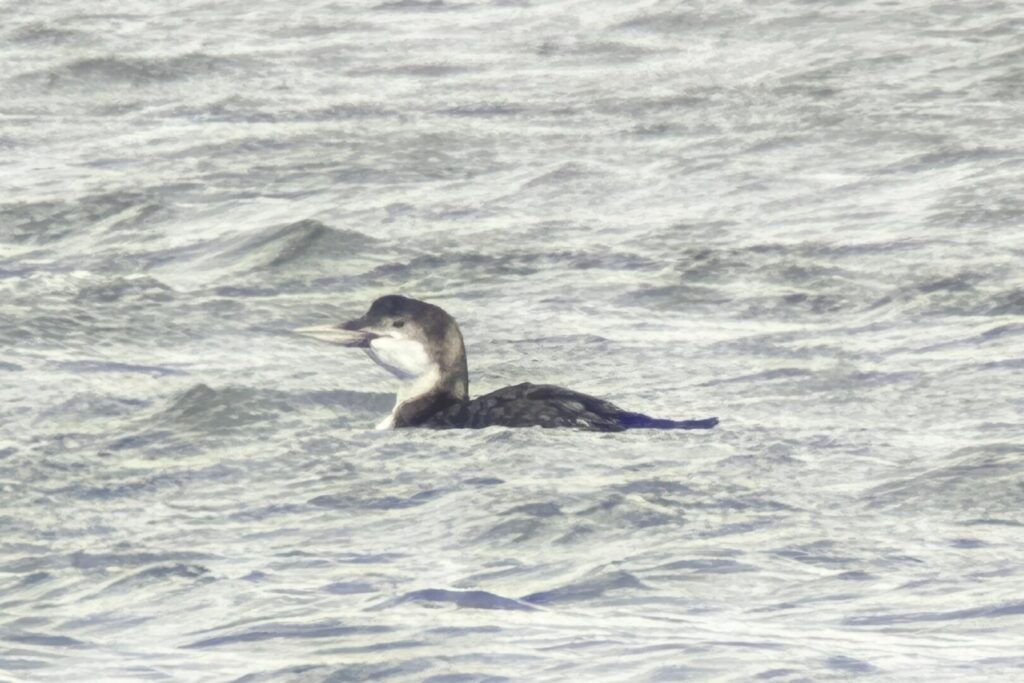
It didn’t take too long scanning to find one of the White-billed Divers. It was distant at first, over on the far side of the bay, diving and moving up and down in front of the far shore. Then it turned and gradually moved closer, diving and surfacing each time a little nearer. Much better views now, we could see its pale bill, more ivory than white. The second White-billed Diver appeared nearby too and at one point we had the two of them on the sea together. Both moulting adults.
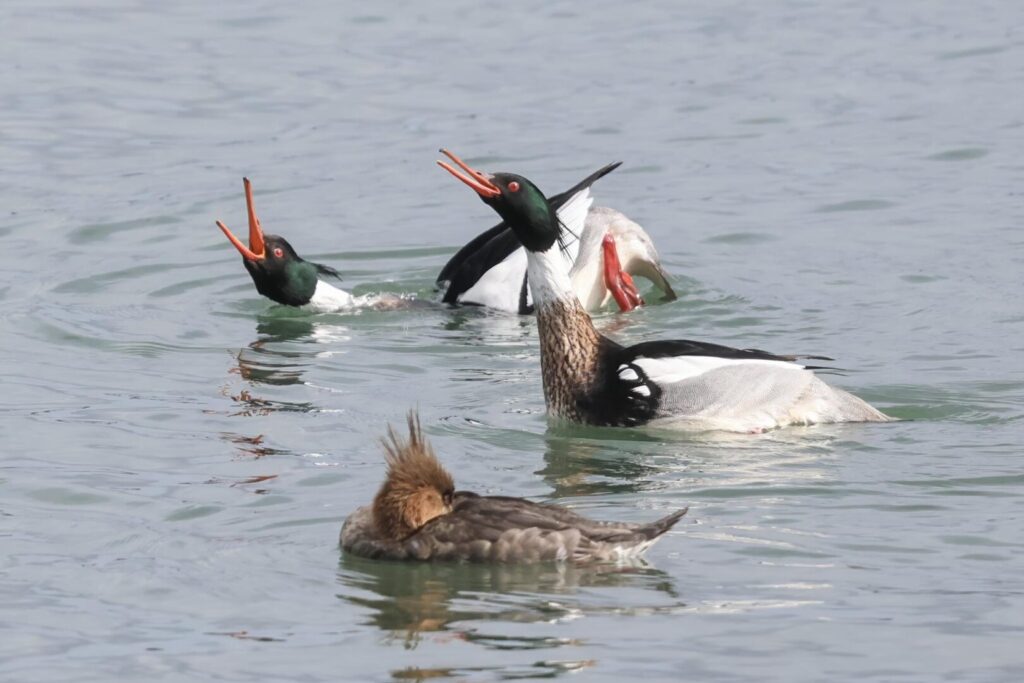
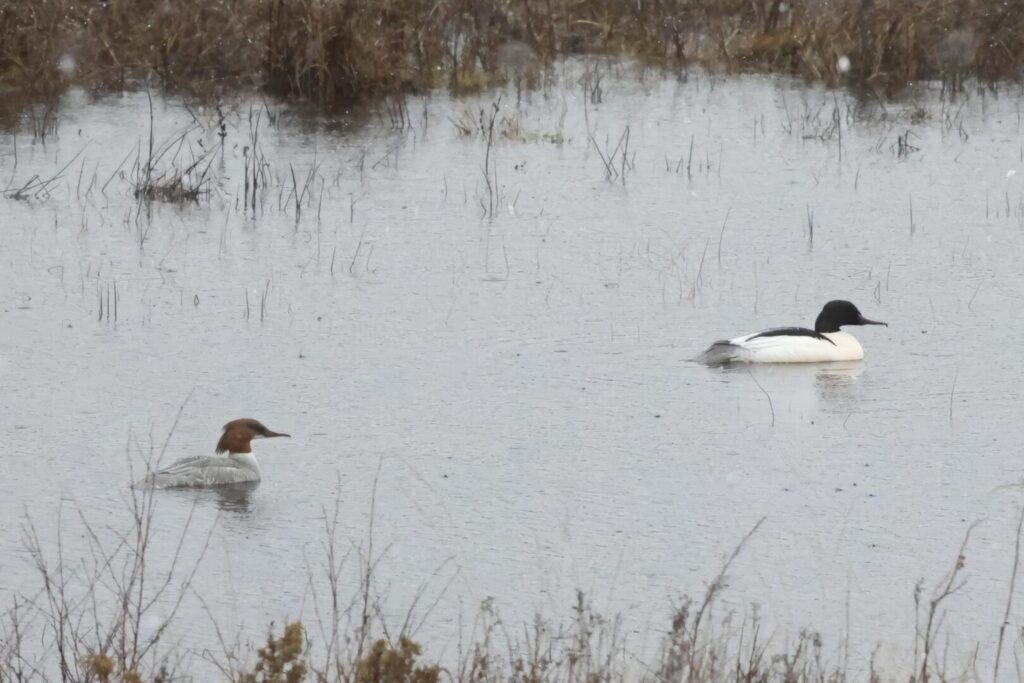
As we walked back round, we stopped to watch a group of fourteen Red-breasted Mergansers gathered on the sea together just offshore. Several of the males were displaying, throwing their heads back. Great to watch. As we walked back up the path, two Coal Tits were in the bushes and we could head a Chiffchaff singing.
We drove out further through Fife next and down to the beach at East Wemyss. There were lots of Eiders offshore here, just beyond the seawall in front of the car park. One was hauled out on a small rock. Lovely close views.

We could see a couple of other birders further along so we walked down the path past the caves. As we got closer, we realised that one was someone we knew, a birder from Norwich! He told us that the Stejneger’s Scoter had apparently been there five minutes before, quite close in, but he didn’t know where it was now. We could see several Velvet Scoters offshore, where it had been, and a Long-tailed Duck.
Then, scanning back across, we picked up the Stejneger’s Scoter – it had gone back the other way. We got it in the scope and could see the angular bump on its bill. Most of the group got a quick look before it took off. It circled round with a female Velvet-type Scoter and then we watched them fly round and out over the Firth. They landed again but way out in the distance. Just in time!
Looking back to the other ducks, we had good views of the Velvet Scoters and there were at least three Long-tailed Ducks now, plus more Eider. We could see several small groups of Razorbills and one or two Shags on the water. A few Gannets circled round offshore, as did a Kittiwake. We could hear a Yellowhammer calling from the bushes up on the rocks behind.
It was lunchtime now, so we drove up to the shop in the village to get sandwich. We were hoping to find toilets somewhere but the person on the till didn’t seem to know of any nearby. We tried further east, but there were none at the CoOp and those at the Shell garage were out of order. In the end, we had to go on to Sainsbury’s in Leven to find one open. After all of that, we had lost a bit of time. Still we decided to call in briefly at Methil.
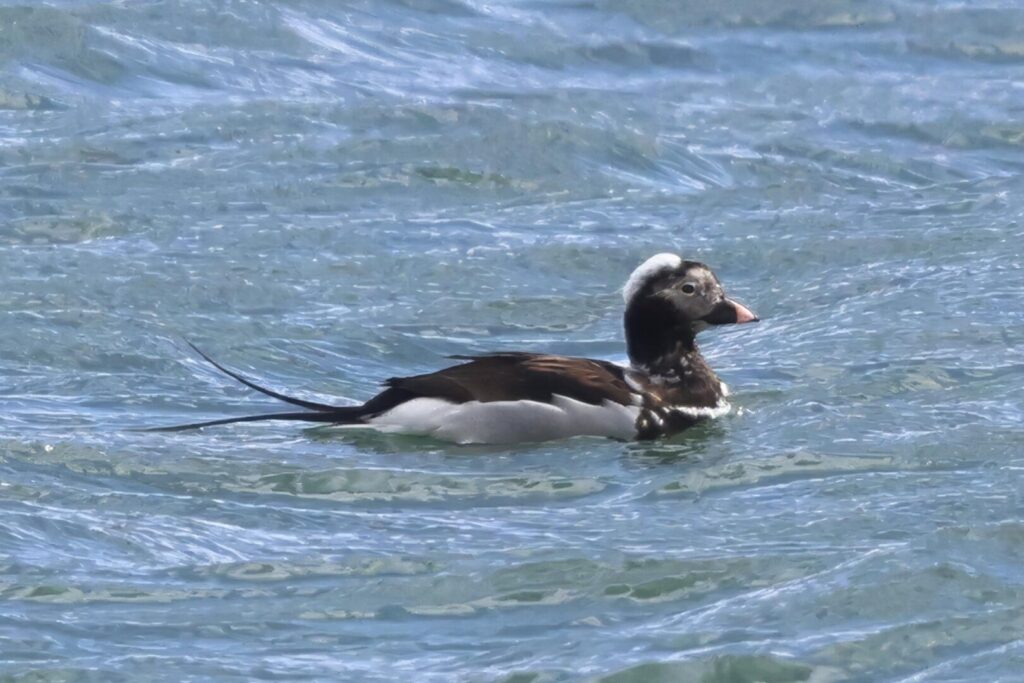
It was more exposed and windy here. We settled in down on the bank to try to find a bit of shelter and started scanning through the ducks. There were lots of Scoter on the sea, including some larger groups of Common Scoter. More great views of Velvet Scoters too. There had been a drake White-winged Scoter here but we couldn’t find at first. There were some lovely close Long-tailed Ducks, five or six, some of the drakes moulting to darker breeding plumage now.
When we heard an ice cream van somewhere behind us, we looked at the time. The schools were out, it was three o’clock. We still had a long drive ahead of us so we had to be leaving. Just one last scan and finally we found the White-winged Scoter just as we were about to pack up. It was a bit further out, diving continually and staying under for a long time, but eventually managed to get everyone on it. Then we really had to leave.
It was a nice scenic route form here, across Fife and Perthshire. Briefly only the M90 and then straight onto the A9. The weather had been OK until we got to the Highlands. We could see lots of fresh snow on the hilltops, and as we got higher we drove into lower cloud where it started spitting with rain. We finally got to our guest house in Carrbridge at 5.50pm. Time to settle in before dinner. As usual, Christine served us a delicious three course meal – we would not be going hungry here this week!
Tuesday 31st March
The forecast was decidedly mixed for the next few days (as ever, it would turn out to be too pessimistic!). As this morning was meant to be one of the better ones, we decided to make an early start today to check out the local Black Grouse lek. It was just starting to get light when we arrived and pulled up on the side of the road. We watched from the minibus at first and could just make out three birds lekking on the hillside opposite, before the windows started to mist up.
As the light improved, we got out carefully, making sure we moved slowly and stayed within the outline of the bus. It was still rather gloomy, the sun behind some low clouds. There was just one Black Grouse left in view, and it was not displaying now. Still, we managed some nice views through the scope.

We had to be back for breakfast but we decided to drive round to Lochindorb and have a quickly look there. On the way down, we scanned the moors and managed to pick up a single Red Grouse tucked down in the heather. We could just see its head and neck. It was some way back from the road, so we could get out and get it in the scope.
Continuing on, we stopped for a quick look at the loch from the road and could see lots of Goldeneye out on the water. Down at the far end, the surface was choppier but we found more Goldeneye. We got out and had a scan with the scope, but couldn’t see any divers. There were a few Wigeon on the far shore, along with Lapwings and Oystercatchers, and a brief Black Grouse.
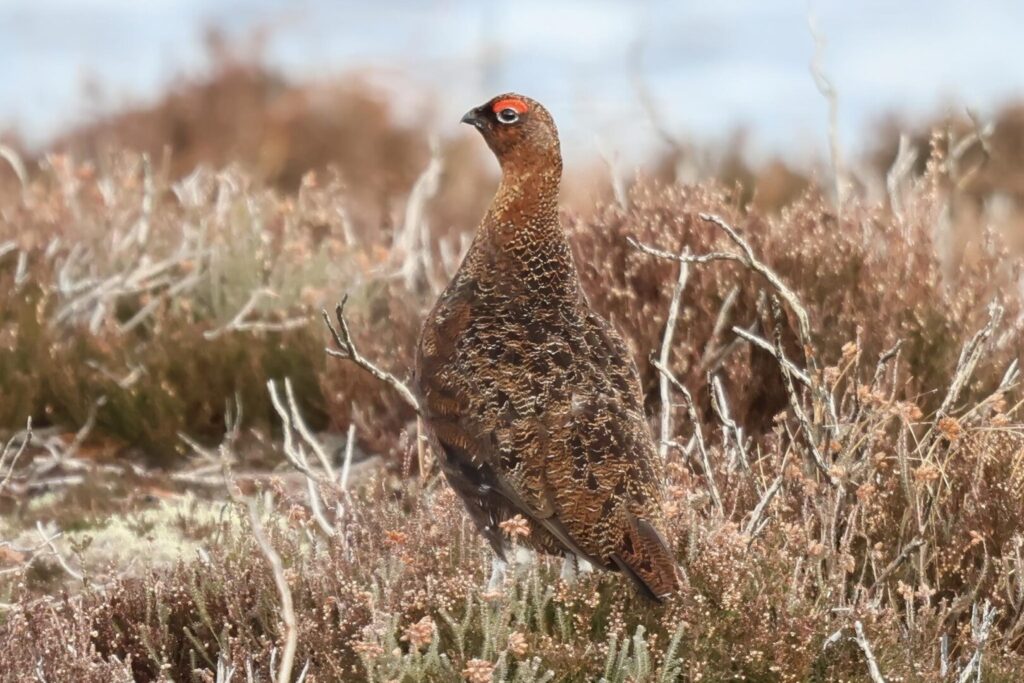
It was time to head back for breakfast now. As we drove back round, a Red Grouse flew across the road in front of us and landed in the heather just below.
Passing the Black Grouse lek again, the sun was catching the hillside now. Looking across, we could see four Black Grouse displaying now. We pulled up and had another quick look from the minibus, but we were out of time so couldn’t linger. We were five minutes late back for breakfast!

After breakfast, we went out again, driving over to a nearby area of forest. As usual, we would not go in to the woods early in the morning on this trip and we would not go looking for Capercaillie. Numbers are so low now that it is important not to disturb them in potential lekking sites. Lots of people and dogwalkers were in the woods already and had no such restraints.
As we pulled up, a Red Squirrel was briefly in the pines by the parking area. Walking in, a Mistle Thrush flew off through the trees. As ever in the pines, it was quiet at first. A Crossbill and some Siskins flew over calling.
Deeper in, we heard a Crested Tit calling. It seemed to be moving quickly through the trees so we tried to follow the sound. Typically, just at that moment a couple of dogwalkers stopped to ask us what we were looking at and we didn’t see it cross the track behind us. When we heard it again, it was calling the other side now. By the time we finally found it, it had moved further back from the path and was harder to see. It stopped to feed in the branches of a pine for a few seconds, then disappeared in.
Continuing on, we heard more Crossbills calling. This time the sound seemed to be coming from the trees but we couldn’t see any perched in view. We had a couple of glimpses of birds but they were moving deeper through the pines.
There was a side track ahead, so we walked a short way along that, trying to cut them off. It worked, as we now found a male perched in the very top of a pine. The flight calls were consistent with Parrot/Scottish Crossbill and looking at it now, its bill looked too small for Parrot (and large for Common). A good fit for Scottish Crossbill.

We continued on a little further along the main track. Another Crested Tit was calling somewhere in the trees but we couldn’t see it. We were distracted by a brief glimpse of a bird disappearing behind the peeling bark of a dead tree which turned out to be a Coal Tit. Possibly nest building, it flew in and out several times.
It was a lovely bright morning now, with a fresh breeze blowing. It felt like good conditions for raptors, so we decided to make the most of it and turned to head out. We hadn’t gone far when we heard another Crossbill calling. Again, the male was perched in the top of a nearby pine. It was slightly bigger-billed than the one we had seen earlier – presumably another Scottish Crossbill, it still looked a bit too small-billed for a Parrot.
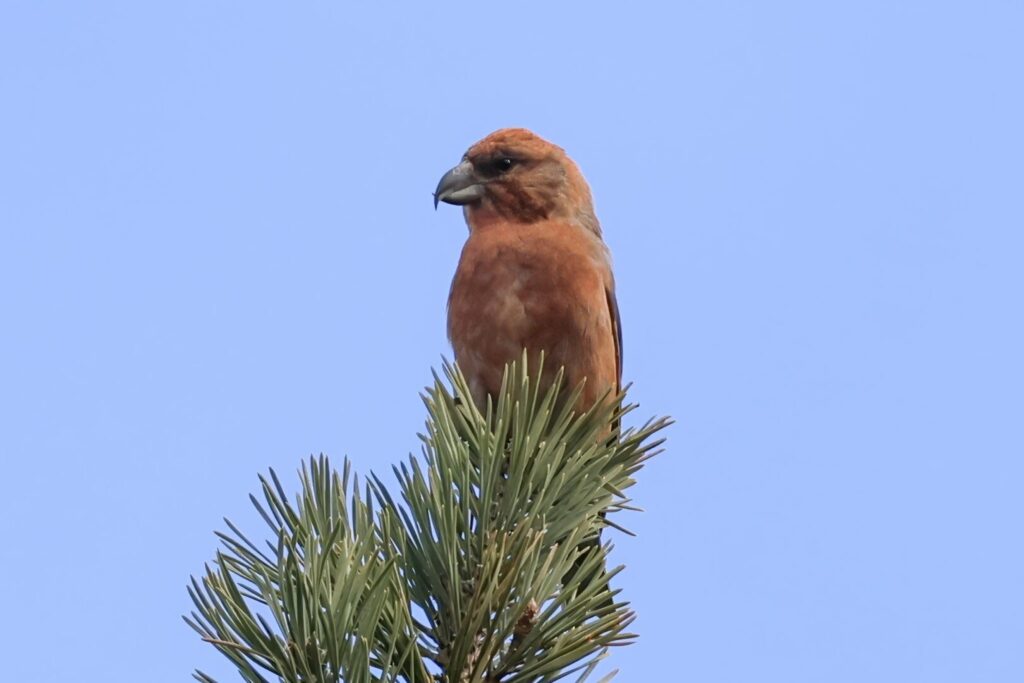
It flew across the path and landed in another tree above a nearby puddle but wouldn’t come down to drink while we were standing there. We backed off but couldn’t see the puddle now. Sure enough, the male and a female we hadn’t seen dropped down. Three Siskins were in the trees nearby too now. We were almost back to the car park when a leucistic Chaffinch flew threw the pines.
We had a quick stop in Nethy Bridge to use the facilities, then continued on out into the Dorback valley. Parking on the verge, we got out, set up the scopes and started scanning. We had been there less than five minutes, when we picked up our first Golden Eagle circling over the ridge opposite. It was distant but OK views in the scopes. As we tracked it across the hillside, a second Golden Eagle circled up with it.
It was time for coffee. Our coffee break was disturbed though when we noticed a juvenile Golden Eagle over the hill behind us, much closer. We could see its golden head and white-based tail. It flew back and forth a couple of times, drifting a bit closer at one point before climbing high into the sky.

We were right, it was a good morning for raptors. There were lots of Common Buzzards up and a Sparrowhawk flew across behind us with its undertail coverts puffed out. As well as birds of prey, there were Curlews bubbling and Skylarks fluttering up. A Stonechat appeared briefly, singing on a small pine tree behind us.
Another Golden Eagle flew across the valley a bit further up, moving very quickly with the wind behind, before it disappeared behind the hill. Hard to tell if it was one of the first two we had seen or a different bird. One of the group picked up another raptor over the ridge opposite. It was moving quickly across and dropped in front of the trees which made it hard to get on, but we could see it was an adult White-tailed Eagle. Unfortunately it dropped quickly down out of view.
Activity eventually dropped and it was time for lunch. We drove back to Nethy Bridge and ate our sandwiches on the picnic tables in the sunshine. Two Red Kites drifted over and an unidentified bat circled briefly over the trees behind.
After lunch, we went for a walk by the river. It was lovely along here in the sunshine, but quiet this afternoon. It probably didn’t help that there had been several people up and down the path while we were eating. We were hoping to find a Dipper but no sign now.
Cutting up on the path to the road, there were several Greenfinches in the gardens. On our way back towards the minibus, we diverted in on the track between the houses. There were more Greenfinches here, and a Goldcrest calling. Into the edge of the forest, several Great Tits and Chaffinches were on the feeders. One or two Coal Tits flew in and out.
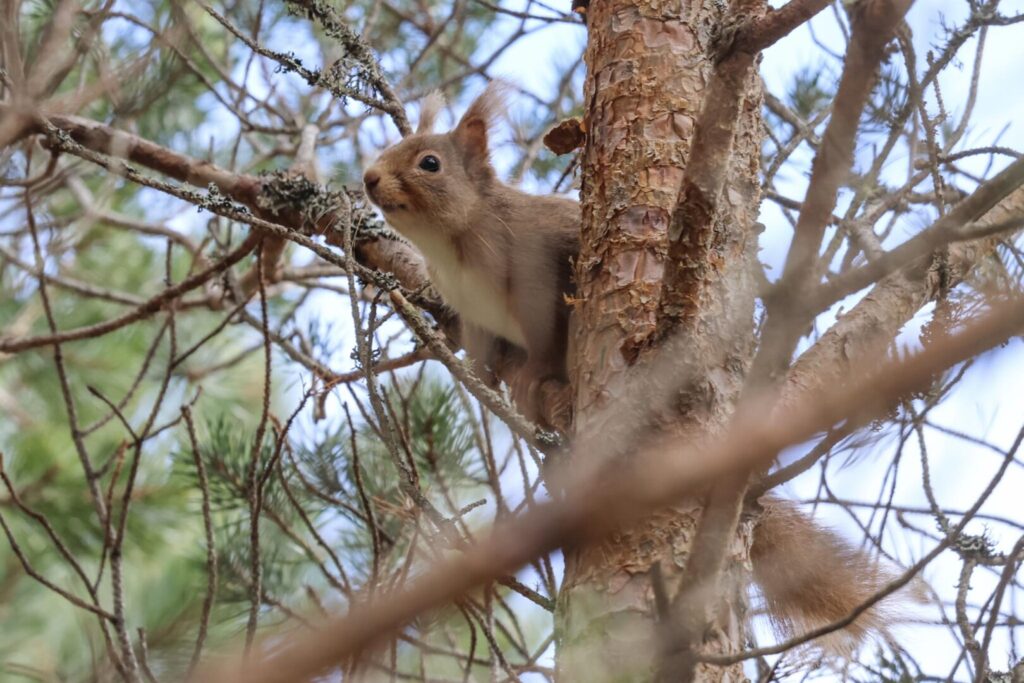
We noticed a Red Squirrel in one of the trees behind. While some sat down on bench, others walked over to a small side path where it was a bit closer. A second appeared and the two Red Squirrels chased each other round through the pines.
Back to the road, we were almost back to the minibus when we heard a Dipper calling. It flew in along the river and we could see it now, on the rocks a bit further upstream. We walked slowly up and had great close views now.
There was a pair of Dippers and they stood on the rocks preening, completely unphased by our presence. They started feeding, and we watched them diving under the water. As we left them in peace and walked back, they flew past us calling and disappeared back off downstream.

We still had time for another short walk, so we drove round to Loch Garten and parked at the start of the Two Lochs Trail. It was unusually busy in the car park and we soon found out why. A wedding party was here, having their photos taken in amongst the trees.
As we walked down along the path, one of the group spotted a Red-throated Diver on Loch Garten, so we stopped to look. Through the scopes, we could see it was in full breeding plumage, with a full red throat. Smart! Several Teal were asleep on the far side of the loch too.

Continuing on along the trail, the trees were quiet now. The sun had gone in and we were a bit late in the day. We found a single Common Toad crossing the path. Loch Mallachie was much windier and all we could find were a few Greylags, a lone Goldeneye at the back, and a Grey Heron in the reeds.
Turning the far corner, a Treecreeper was calling in the trees. It flew in and landed round the back of a pine right in front of us. From the other side, we could see it going quickly up the trunk.
Back to the minibus, it was time to head back to Carrbridge. It had been a long day and we had time to freshen up before dinner. We certainly felt like we had earned it tonight.
Wednesday 1st April
It was forecast to rain all day, light this morning but turning heavy from 11am. There looked to be a weather window first thing, so we decided to have a quick look on Cairngorm before breakfast. We needed to fill up with diesel (we were concerned about the potential for shortages due to the Iran War), so we stopped in Aviemore on the way.
It was just getting light as we drove up the mountain road and stopped first in Coire na Ciste car park. It was very windy and cold when we got out and perhaps unsurprisingly we didn’t find anything of note. We were hoping to find Ring Ouzel here but all we could manage were two Pied Wagtails by the building, along with a Dunnock and a couple of Meadow Pipits. The Cairngorm herd of Reindeer was feeding out on the moorland down below.

So we drove on, further up to the Coire Cas car park. It was a bit more sheltered here but still very quiet. There were no birds around the car park and just a single Chaffinch singing in the mountain garden. Scanning the ski slopes, all we could find were a few more Meadow Pipits. There was no sign of any Ring Ouzel here either so we figured they might be late arriving this year.
We drove back to the guest house for breakfast. Afterwards, there was still no sign of any rain and there were even some patches of brighter sky between the clouds. We decided to try another site for Crested Tit, for those that missed it yesterday. As we packed up the minibus outside, thirteen Pink-footed Geese flew over calling.
We drove over to an area of forest where we had seen several Crested Tits last year. On the way, we saw several Brown Hares feeding out on the grass. There were lots of Pinkfeet in the fields here too, so we stopped for a quick look. A single Barnacle Goose was in with them. As we continued on, we had a brief glimpse of a Sand Martin above the river valley by the road.

We parked at the start of a forest track and a Goldcrest was flicking around low in the vegetation by the gate in front. As we got out, we could hear a Scottish/Parrot-type Crossbill calling in the trees nearby.
Walking in along the track, it was very quiet in the pines. We heard a couple of Siskins and more Crossbills flying over and one or two Coal Tits calling, but no sign of any Crested Tits this morning. It was rather cool and breezy in the trees and it flet like everything was back in winter mode today.
Back to the minibus, we decided to go for a walk in another area of forest and drove over to Anagach. It was a bit more sheltered here but busier with people. Along the Old Military Road, there were more birds in the trees but just Chaffinches, Coal Tits, Blue Tits and Great Tits.
We walked round on a short circuit through the lovely old growth forest, with thick moss on the ground and lichens on the trees. Another Crossbill flew over calling. On our way back, we stopped to watch the comings and goings at a feeder hung in the trees. There were several Chaffinches again, and Coal Tits and Great Tits in and out.
We heard the excitement ‘toop’ calls of Crossbills nearby so walked out of the trees to a nearby open area. Looking back, we could see four Crossbills chasing through a bare deciduous tree. They looked like Common Crossbills – the males redder with contrasting darker wings. We got a female in the scope, and could see its smaller bill. They started to give flight calls just before they flew off and that confirmed our suspicions – the ‘glipping’ calls of Common Crossbill.
There was still no sign of any Crested Tits here either. It is a bit late in the year for them to be coming to feeders but we wondered if they might be doing that now, given how cold it is this year and everything seems to be a bit behind.
Back to the minibus, there was still no sign of any rain and it was 12.30pm now. We drove round to Loch Garten for lunch. Several Common Toads were in the water in the pool in the middle of the car park. As we stopped to eat our sandwiches, it started spitting with rain and quickly got heavier. Our luck had run out.
We donned our waterproofs, and walked through to the Visitor Centre. At least we could get out of the rain and in the warm and have a look at the feeders. We knew that the pair of Ospreys were not back here yet, this pair always seems to return later than some others. It turned out there had been an interloper in briefly early this morning but there was no sign of it now.
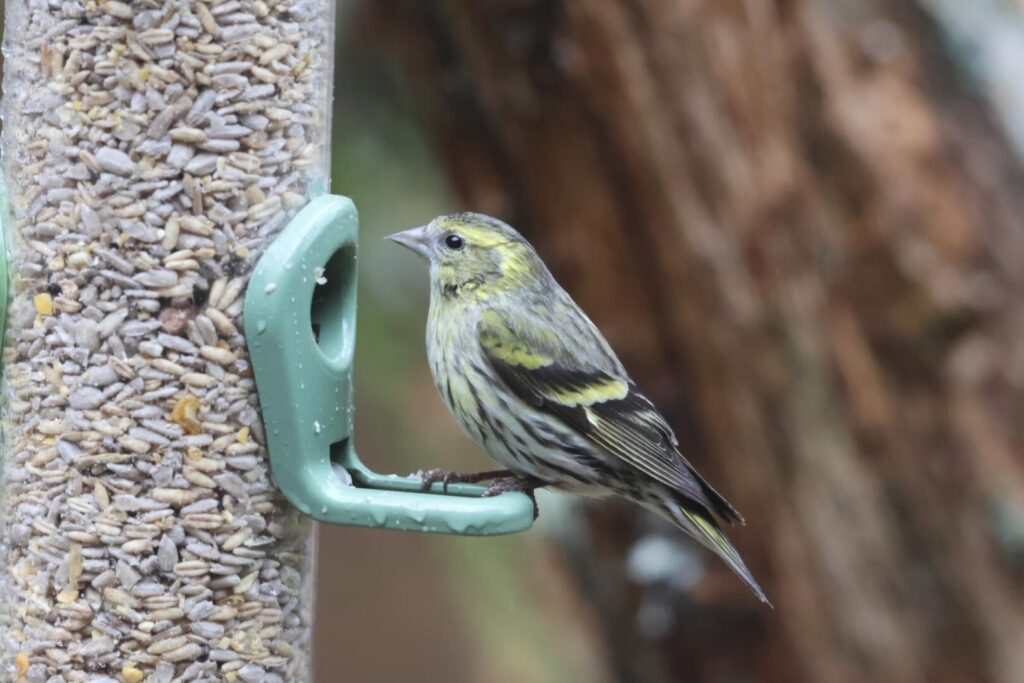
There were lots of Chaffinches, Coal Tits and Great Tits coming to the feeder by the path. A couple of Siskins too. The feeders by the centre were a little quieter, but more of same. A Great Spotted Woodpecker was perched on a pine trunk outside.
Another couple of birders we had met yesterday were also sheltering from the rain in here and we stopped for a chat. We were planning to try for another pair of Ospreys which are normally in a bit earlier, but they told us they had been to look twice over the last few days and they were still not back either. So we decided not to go over there this afternoon.
After a while, we decided to brave the conditions and walk back to the minibus. The rain had turned to sleet now and we could feel the temperature had dropped significantly. We drove over to Insh Marshes, where we figured we could get into one of the hides. On the way, it started snowing.
As we walked out, we saw a couple of Long-tailed Tits in the trees. Looking out from the hide, it was snowing heavily now but not settling at the moment. There were plenty of Curlews, Redshank and Lapwings out on the marshes. It took a bit more time to find a couple of Common Snipe – they were well camouflaged anyway and even harder to see through the falling snowflakes.
A pair of Goosander and a pair of Goldeneye were on one of the pools in front of the hide. A pair of Canada Geese were on the small hill further back. We could see at least ten Whooper Swans on the water behind, including several juveniles. There were lots of Wigeon on the grass at the back along with a large group of Oystercatchers. Several Teal were around the pools too. A Grey Heron flew in and landed on the pool in front.
We could see lost of Pink-footed Geese distantly in a field off to the right. Several Golden Plovers were on the grass in front of them, a few in summer plumage already with black bellies. It made them slightly easier to see against the similar coloured vegetation.
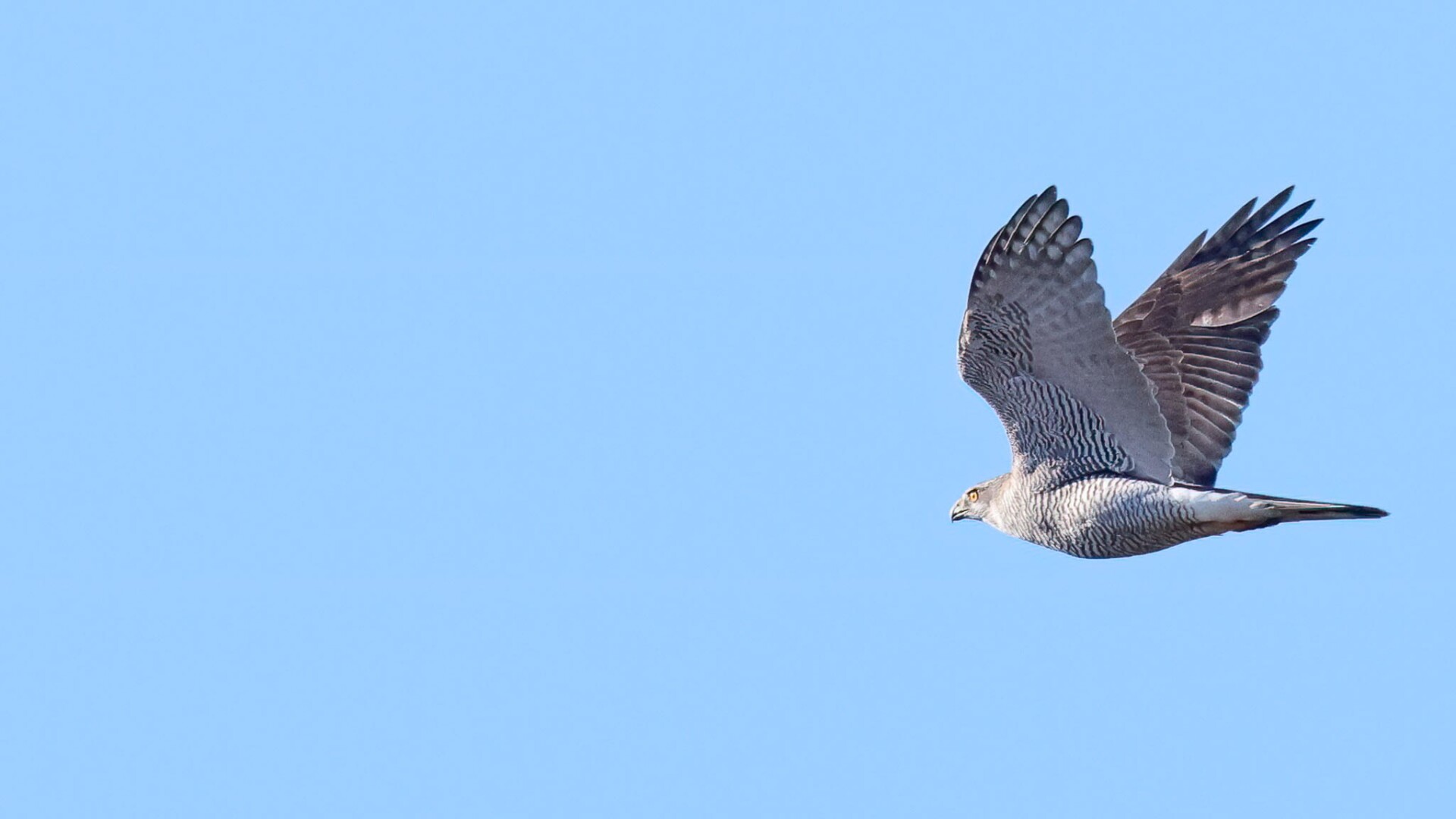
Scanning across, we picked up a large raptor flying in low over the marshes at the back. It looked very pale grey and as it turned we could see it was an adult Goshawk. It landed in the centre of a small bush out in the middle. If you hadn’t seen it land, it was tricky to pick out with the snow falling in front but we all managed to get onto it. We could see its finely barred belly, flared white supercilium and orange eye. When it eventually took off again, it was chased by a Curlew. It flew towards us, then turned and away round the side of the hill in the middle.
A nice bird to end the day. The snow eased briefly, so we took advantage and walked back to the minibus. As we drove back to Carrbridge, it was snowing heavily again and started settling by the side of the road. Given the forecast this morning, we had enjoyed a remarkably successful day.
Thursday 2nd April
Normally go for a walk around Carrbridge before breakfast on our first morning but we had moved things around due to the weather forecast. The snow had obviously stopped quickly last night but there was a hard frost this morning. It was a rather grey and cloudy start now too.
As we walked down to the old bridge, we could hear the Dipper singing above the sound of the raging water. We found it perched on a rock just beyond one of the old bridge piers. We stood and watched it for a couple of minutes. The water was noticeably higher after the rain yesterday.
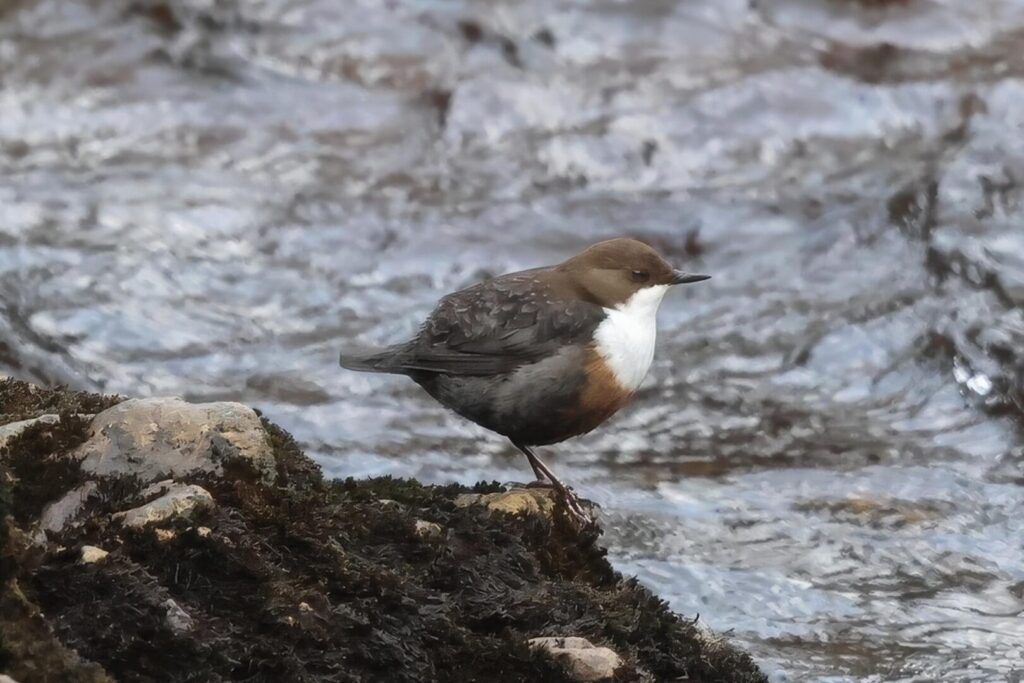
We took the path down beside the river. Several Siskins, Chaffinches and a Goldfinch were coming down to the feeders in one of the gardens. A Goldcrest was flitting in the trees above the path. There were not so many exposed rocks in the river today but a pair of Oystercatchers was standing on an area of stones by the near bank. Further on, from the wobbly bridge, we could just see a drake Mallard asleep on the rocks on the corner.
The horse in the paddock on the far side of the bridge came over to see if we had anything to feed it. We walked past and up to the road. There were lots of tits in the trees in the gardens and a Song Thrush singing. We stopped to watch a Red Squirrel clambering through the tops of the pines on other side of the road.
Then we made our way back for breakfast. While we sat inside eating, looking out of the window, the cloud cleared and then the sun came out. We were heading for the coast today. As we drove across towards Grantown, we had a great view of the Cairngorms covered in snow, the tops clear now this morning.
It was a long drive up into Aberdeenshire and over to the old harbour at Portsoy. Scanning from the rocks by the dolphin statue, there didn’t look to be much on the sea at first. We could see several Eider closer in and a few Long-tailed Ducks more distant. There were small groups of Razorbills on the water and a few Gannets flying past. One of the group had a Fulmar too.
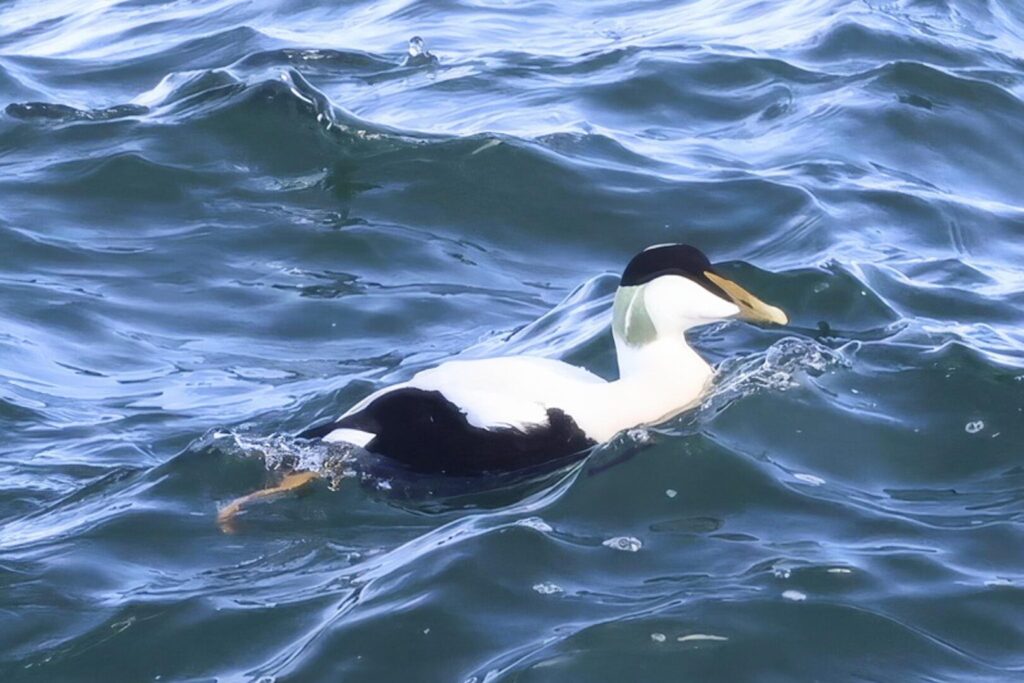
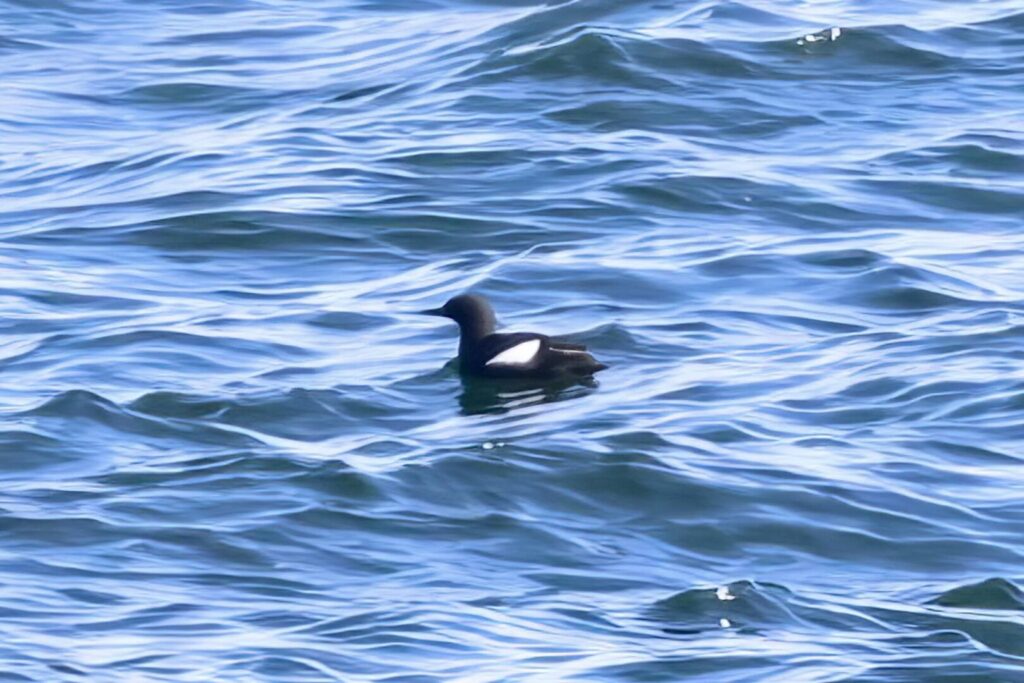
Further west, we could see lots of Kittiwakes around the headland at Redhythe Point. A couple of distant Black Guillemots were on the sea too, along with a few Shags.
Scanning the sea out from the harbour, we found just a single diver on the water. And that was a White-billed Diver! There had been up to three reported here about a week ago but nothing since. It was not as close as the two the other day, but nice to see another. Again, it was a moulting adult. Ironically, what we really wanted here today was Great Northern Diver but despite scanning repeatedly we couldn’t see any other divers on the sea at all today.
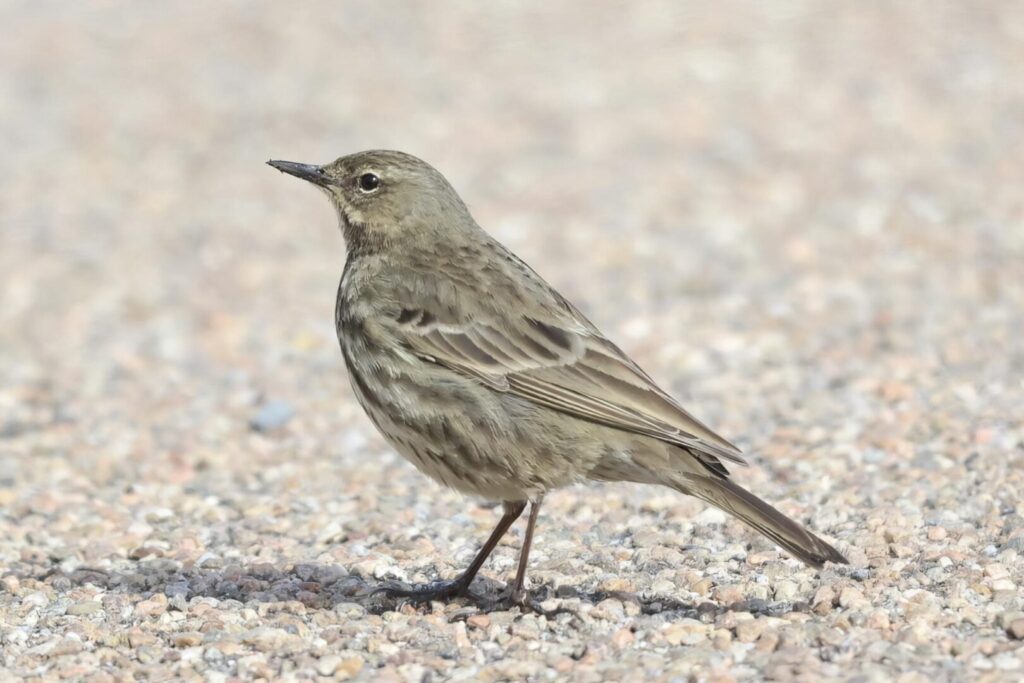
A couple of Rock Pipits were chasing around the rocks and the edge of the harbour. A closer Black Guillemot was on the sea, diving just offshore in front of us, before it flew off.
It was lovely here in the sunshine, if a little cold despite very light winds. We were hoping to walk out to the headland to the west, but we weren’t sure we had enough time now. High tide was at 1pm today and we wanted to get to Lossiemouth before then, so we decided to head straight over there next.
When we got to Lossiemouth, it was time for lunch. While everyone ate their sandwiches, we scanned the harbour walls for roosting waders. We quickly found a large group gathered on the seawall behind the Marina. Looking through the scope from the viewpoint in front of the car park, they were distant but we could see there were lots of Purple Sandpipers in with the Turnstones. Several Rock Pipits were chasing around the ornamental gardens and seawall, one singing at one point overhead.
After we had finished lunch, we walked up to the Marina for a closer view of the waders. We counted at least 85 Purple Sandpipers roosting on the wall, along with lots of Turnstones and a couple of Sanderling.

Some of the Turnstones were starting to moult into breeding plumage, with rusty feathers in their upperparts and whiter faces. Occasionally the Purple Sandpipers would get spooked by one of the gulls calling overhead and drop down onto the other side of the wall. But they were quickly pushed back up by the waves crashing on the wall below.

One of the group spotted a Sandwich Tern flying over, cutting the corner over the outer harbour to the sea beyond. But we quickly lost sight of it behind the buildings. A line of Pink-footed Geese flew past over the sea too, probably on their way back north to Iceland.
Having enjoyed great views of the waders, we walked round the Marina to the outer seawall and stopped to scan the sea. There were more Eiders offshore and good views of Long-tailed Ducks. A few gulls and Kittiwakes flew past. We were hoping for another view of the Sandwich Tern or for more divers but we found neither. Most of the Purple Sandpipers flew past out over the water.
We walked back to the minibus and drove round to have a look over the nearby estuary. A small group of Bar-tailed Godwits was roosting on the far side, one largely in rusty breeding plumage already. Six Ringed Plovers and a couple of Dunlin were feeding on the small area of saltmarsh too, plus the usual Oystercatchers and Redshanks. There were lots of Wigeon and a few Teal. We scanned through the loafing gulls but couldn’t find anything out of the ordinary with them today.
It felt colder here now, the wind had picked up a little and gone round to the east. We still had an hour or so before we had to be heading back, so we drove inland to Loch Spynie where would be more sheltered.
As we arrived in the car park, there were lots of birds around the feeders. A Tree Sparrow was in the bushes right in front of us as we parked. Something spooked everything, and they all disappeared into the vegetation. But as we got out, quickly the birds came back out.
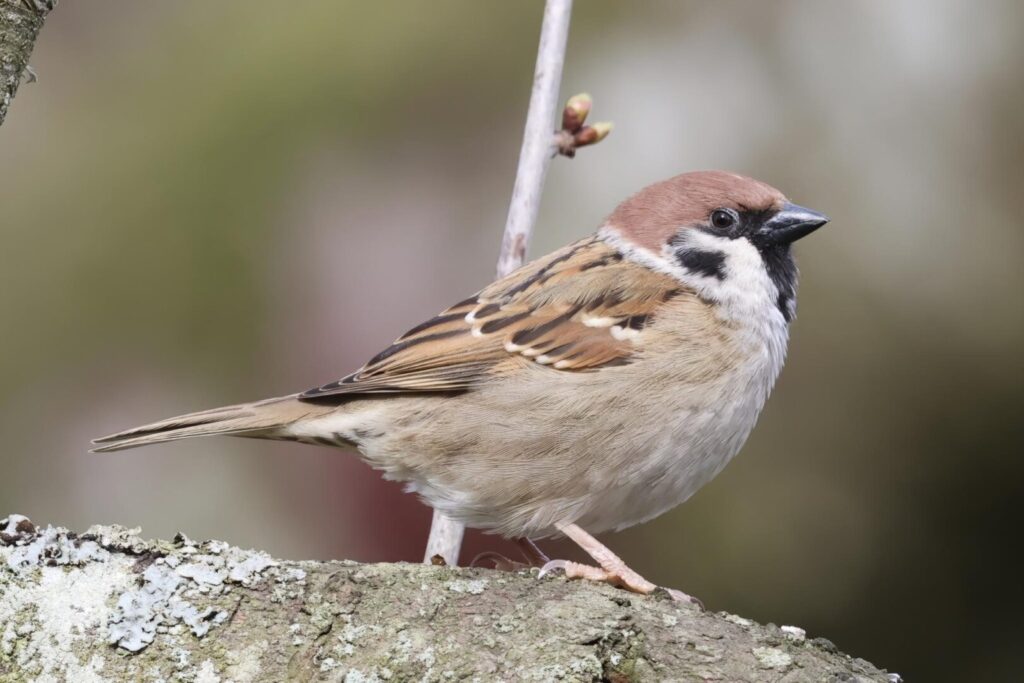
We could see several Tree Sparrows around the feeders now and Yellowhammers feeding on the ground below. There were lots of Chaffinches and a few Greenfinches, and several Coal Tits.

A pair of Great Spotted Woodpeckers seemed to like the fatballs. A large group of Curlews was feeding in the bare field behind.
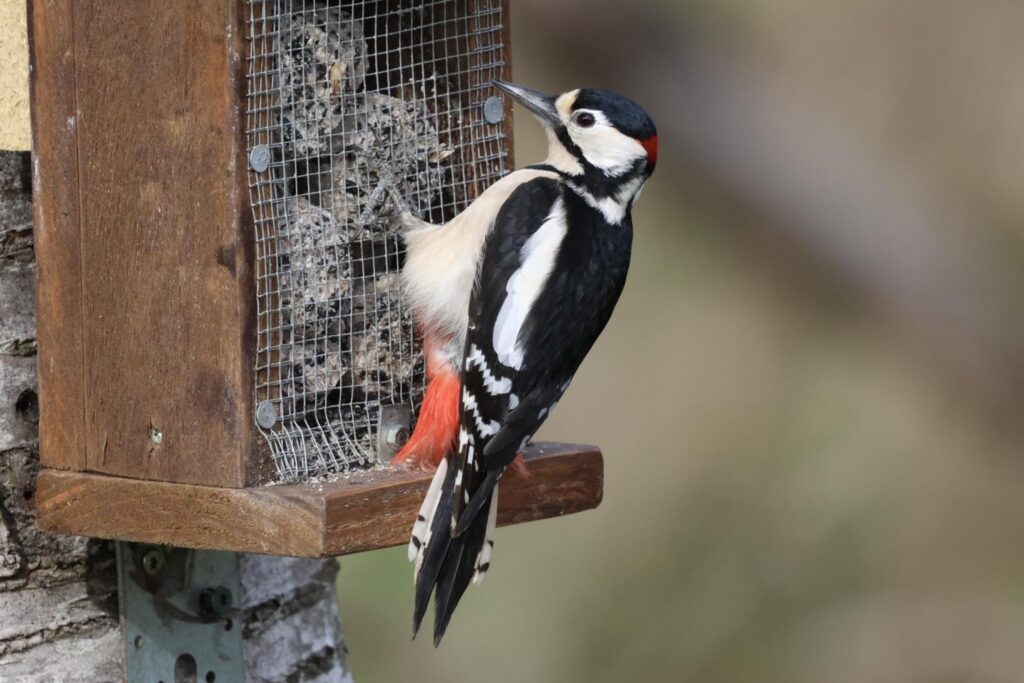
We had to tear ourselves away from all the action at the feeders and walk down to the hide. A Chiffchaff was singing in the birches as we passed and we could hear a Little Grebe laughing out on the loch. As we got to the hide, a Coot was on the water in front, a new bird for trip!
There were several Mute Swans, Tufted Ducks and Goldeneyes, a pair of the latter mating by the reeds. We could see lots of Mallard and a few Teal, and eventually found three Gadwall which we had seen mentioned in the sightings book.
A few Greylags were out on the water, with more flying in and out from the fields behind. A couple of skeins of Pink-footed Geese flew over in the distance beyond, then a group came up from the fields too. They circled round and landed on the loch for a few minutes before flying back out.

Scanning round the edge of the reeds, we found several Moorhens and Little Grebes. Lots of Reed Buntings flew in and out. We picked up a Bearded Tit low in the reeds over the far side.
When several Woodpigeons came up out of the trees at the back, we looked across to see a young Goshawk flying over the reeds. It came out over the water chasing a pigeon, then turned and flew further back, circling up with a Buzzard.
One of the group had a brief Sand Martin but it had gone through before anyone else could get onto it. Walking back to the minibus, a Treecreeper was in the trees behind the hide. The Chiffchaff was now perched in view in the birches.
A lovely stop here, it was time for us to head back now. As we drove back to the road, a hybrid Hooded Crow was in the field by the entrance track with the Carrion Crows. Another two hybrids were in the next field down the road too. Hooded Crow has been lumped back in with Carrion Crow now, largely because they freely interbreed where they overlap, as they do here.
It took about an hour to drive back to Carrbridge and we arrived in good time for dinner.
Friday 3rd April
By popular demand, we had another pre-breakfast outing today, back to where we had been on the first morning. We called in to have a look at the Black Grouse lek first but there were none in view at the moment. It was rather grey with low cloud again and they were probably still round the back of the hill. So we continued on to Lochindorb. On the way, we stopped briefly as a Mountain Hare was on the side of the moor by the road. It was a bit patchy, moulting out of its white winter coat.
We were still a bit early and the light was not great for scanning the loch. Lots of Common Gulls were gathered in the middle of the south end. We continued on to the far end and turned round. There was some light drizzle now, so we couldn’t see clearly to the far side. We had to wait for it to clear through. Eventually it improved a little and we set up a scope to scan.
The water was quite choppy in the breeze which didn’t help. All we could find were several Greylags and a pair of Wigeon in the middle. The Goldeneye were all in the shelter of the trees on the near shore today.
No sign of any divers again, perhaps not a surprise given the amount of disturbance. Half a dozen cars were parked on the verge further along, with a gathering of tents on the side of the road. It looked like there might have been a party last night! Another car was parked opposite the castle, and a paddleboard pulled out on the shore of the island across the water. We were not sure if he had been out there all night, but we then saw someone come back to paddleboard with lots of gear.
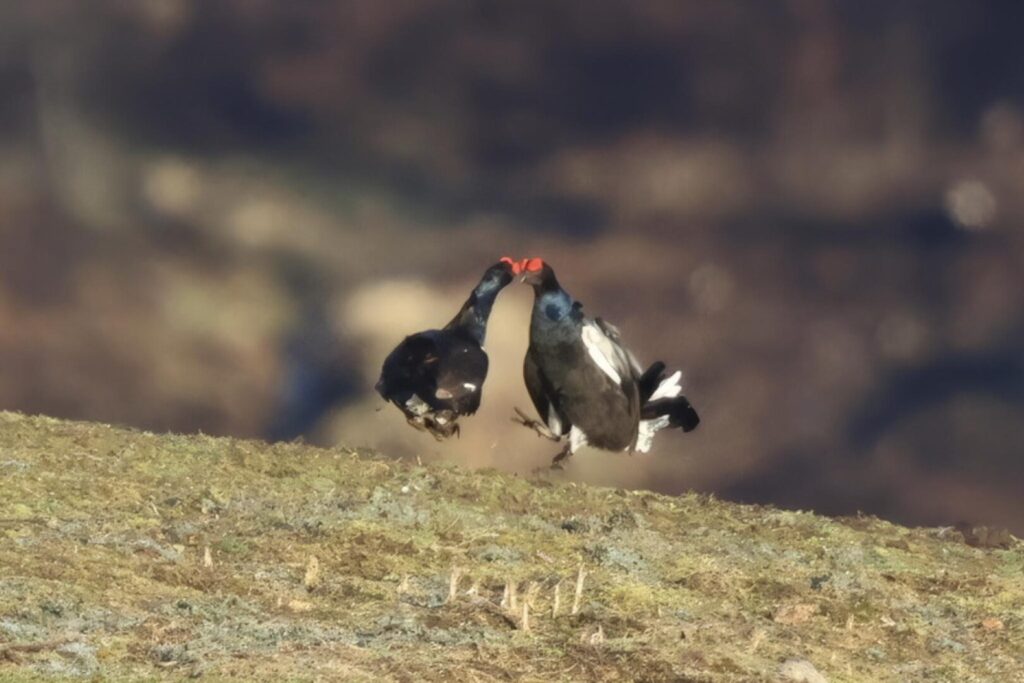
We drove back to check on the Black Grouse again. It had brightened up a bit now and three were out on the top of the hill, displaying. Nice to watch through the scope. A fourth appeared over the top of the ridge nearby. Then it was time to head back for breakfast.
Afterwards, we headed out again. We popped down to Aviemore first to fill up the minibus, but arrived just as they had closed the forecourt for a fuel delivery. So we turned around and drove up to the start of the Findhorn valley. As we crossed over the valley on the bridge, a Red-legged Partridge was in the field below.
We followed the narrow road which winds up the valley, above the river. Just before the Farr turn, we stopped to watch a Mistle Thrush collecting nest material in the field by the road.
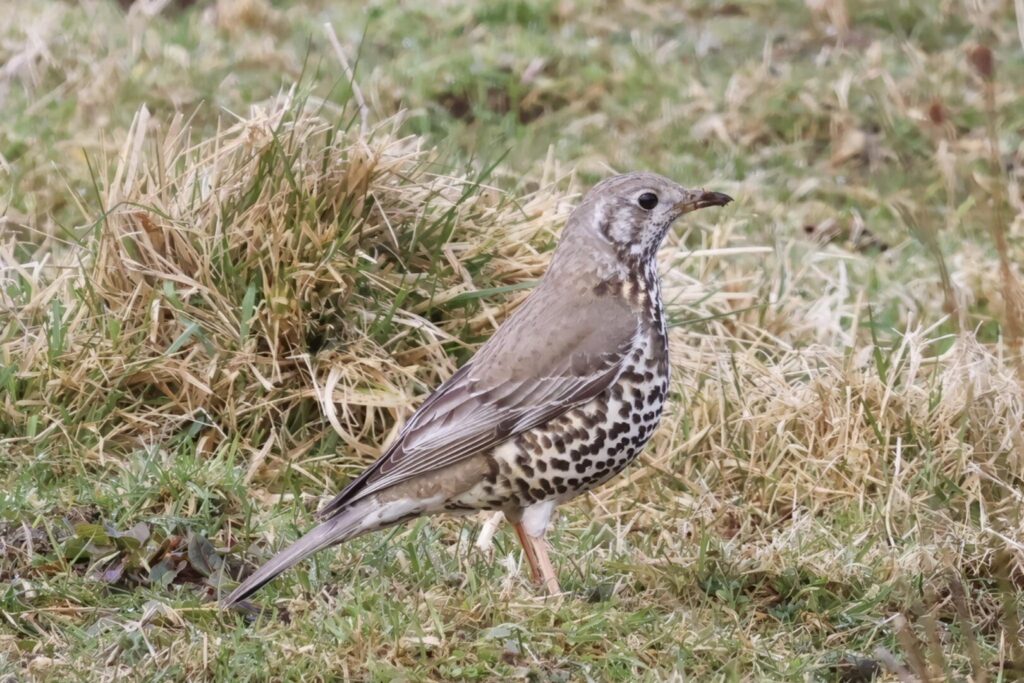
Just beyond, there were lots of finches around some farm buildings, coming to feed on some feeders in the garden. Mainly Chaffinches, with a few Greenfinches and a couple of Siskins. Four Sika Deer were on the slope below the trees on the other side.

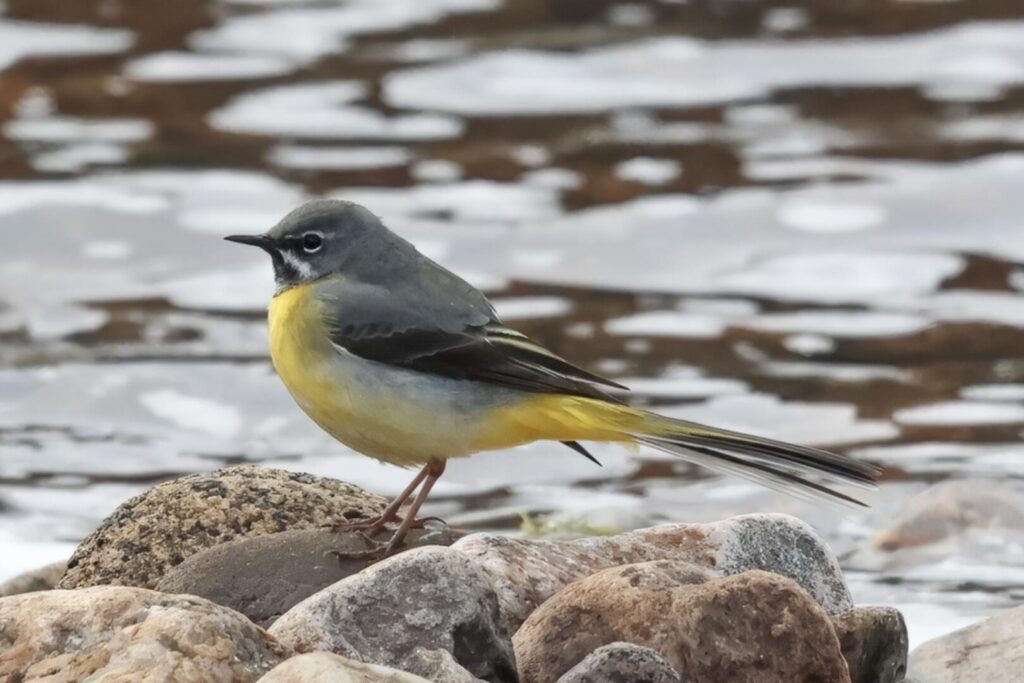
Further on, we stopped by a small bridge over a side stream. We quickly found a Grey Wagtail feeding on the shingle at the junction with the main river. It flew off downstream but then came back in and landed briefly on the wires before dropping down to the rocks in the stream. We could see a pair of Pied Wagtails on the rocks too. A Red Squirrel ran along the verge a bit further up then up into the trees.
Scanning the tops, we could see several deer high up on the ridge. We presumed initially they would be Red Deer but when we got them in the scopes, it looked like they might have some Sika influence in them. Possibly Red x Sika Deer hybrids.
It was getting time for raptors and a Sparrowhawk flew across the valley before circling up over the conifers the other side. It was joined by Common Buzzard. Two Kestrels were further up, almost on the top of the hillside. Two Golden Eagles appeared from behind the ridge briefly but quickly dropped back behind. They did that several times, so we thought we would drive on a little further to see if we could get a better view from another angle.
Another car was parked in the next passing place, and we could see someone looking up with binoculars. A Golden Eagle was directly overhead but we had nowhere to stop here. By the time we found somewhere we could pull in, it had disappeared.
It was time for coffee so we stood and scanned from here. The two Golden Eagles were back around the ridge opposite, slightly longer views now than earlier. One flew over the valley but we lost sight of it behind some trees. When it eventually reappeared, it shot straight back over. Two or three Ravens flew over calling.

We drove on again to the far end of the road and stopped in the car park. What was presumably another couple of Golden Eagles were on view, distantly over the ridge opposite here. They were showing on and off fairly constantly while we were there. At one point, one crossed over and circled around the crags further back along the road but flew then straight back over the valley. What may have been a different bird came along the ridge behind us but dropped behind before it got level with us.

There were a couple of Kestrels up over the ridge behind and another pair of Ravens. Several Common Buzzards were enjoying the breeze up and down the valley. The Golden Eagles had now gone further up the valley and we could see them high in the sky. One started displaying, folding its wings back repeatedly and stooping down. Impressive – it looked like fun in the wind. Eventually it dropped down behind the hilltops.
It was time for lunch but it was a bit chilly in the breeze here. We decided to drive back to where we had stopped for coffee. Eagle activity had dropped off noticeably and it started to cloud over too. A pair of Bullfinches appeared in the trees opposite and flew across the road. A pair of Long-tailed Tits followed too. A Common Toad crossed the road.
After lunch, we drove back and took the Farr road. It started to drizzle now, so it was no surprise that it was quiet up over the moor now. By the time we got to the far side, the rain had stopped and a single Buzzard circled up ahead of us. As we dropped down into the valley, a Red Kite flew in over the trees.
We drove over to Loch Ruthven. As we set off to walk to the hide, it started to rain again. Scanning the east end of the loch on the way, we could see a couple of Slavonian Grebes out on the water in the middle. We stopped on the small beach and set up the scopes. They were looking smart, mostly in breeding plumage now. There was a pair of Little Grebes out here too and several Goldeneye.

Continuing on to the hide, one of the Slavonian Grebes was off here now. But it was diving all the time and quickly made its way back over to the far side. Scanning the loch, we couldn’t see much else on here today. When the rain eased off, we walked back to the minibus. A pair of Stonechat were on the fence by the car park.
We drove round to try another loch. On the way, three Pink-footed Geese flew over. Several Fieldfares flew up from a sheep field by the side of the road and landed again briefly in the grass. Further along, a small group of Reed Buntings and Chaffinches came up from the verge by a small cover strip. A Hooded Crow hybrid was perched on a telegraph post.
We tried first from the south end of the loch. Scanning with binoculars, we could see a bird on the water in the distance, right up the far end. It looked promising, so we got the scopes out and set them up. Just a Cormorant there now, the initial excitement deflated. But scanning across, we quickly found what we were looking for, two Black-throated Divers in breeding plumage. They were a bit distant from here, but lovely in the sunshine. Lots of Sand Martins were hawking low over the water.
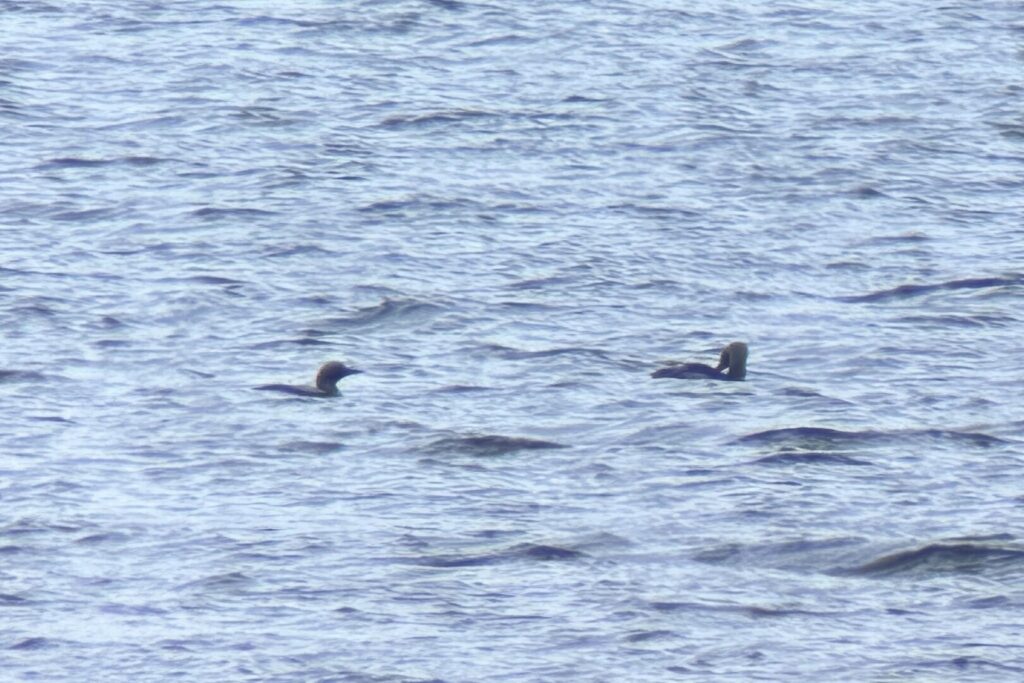
We drove round to the other end of the loch, but when we found somewhere we could see the water we were looking back into the sun. So we came back halfway along the road to where we could see down to the side of the loch. The Black-throated Divers were still diving out in middle. Still some distance away and the sun had gone in now, but good views in the scopes. We counted at least 50 Sand Martins here now too.
The sun had gone in because dark clouds were approaching. It quickly started to rain and then turned to hail. We decided to beat a retreat. On our way back to Carrbridge it turned to snow again. Perfect timing. Our last dinner at the guest house tonight and Christine had cooked haggis and neeps for those who wanted.
Saturday 4th April
Today we would be heading back south. We had time to pack up before breakfast. Afterwards, we loaded up the minibus and said our goodbyes and thanks to Christine. The filling station in Aviemore had been closed again before but was open now, so we stopped to fill up. It was a lovely sunny morning so we called in to see if the Ospreys were finally in yet. We had made alternative plans to divert to look for one on our way south if necessary.
So it was a nice surprise to come round the corner and see two Ospreys on the nest across the loch. We parked further round and walked through the trees to where we had a clear view of the nest. Both birds were perched on the nest platform, calling to each other. Great views through the scopes.
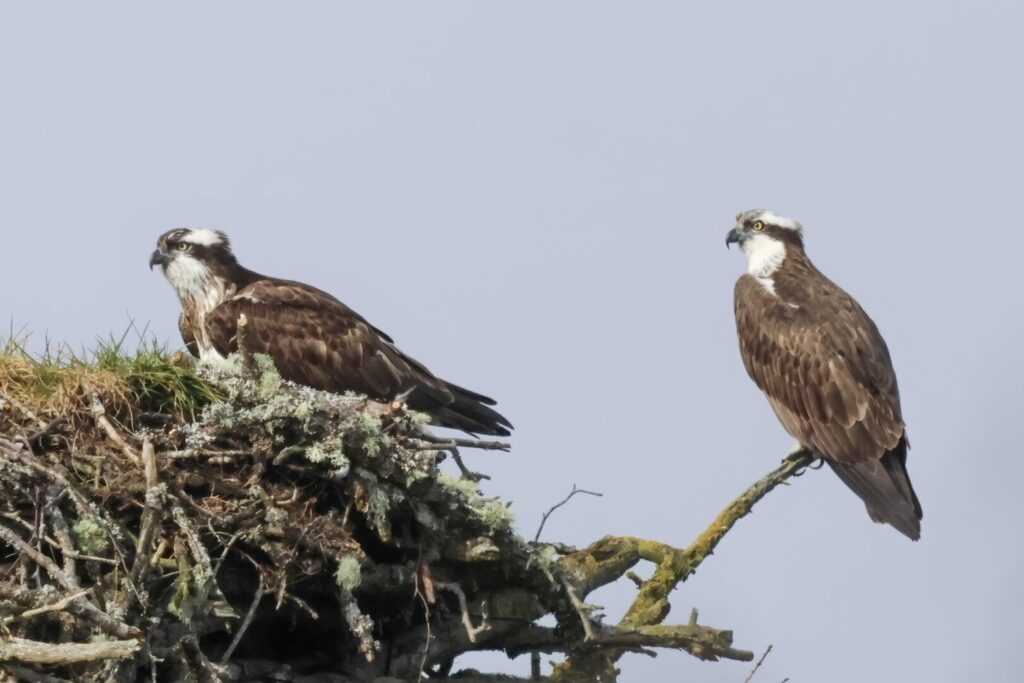
Several times, the male Osprey took off and flew round, came back again. Then, after a while, it seemed to disappear off. Either it was perched out of view or had gone off to fish.
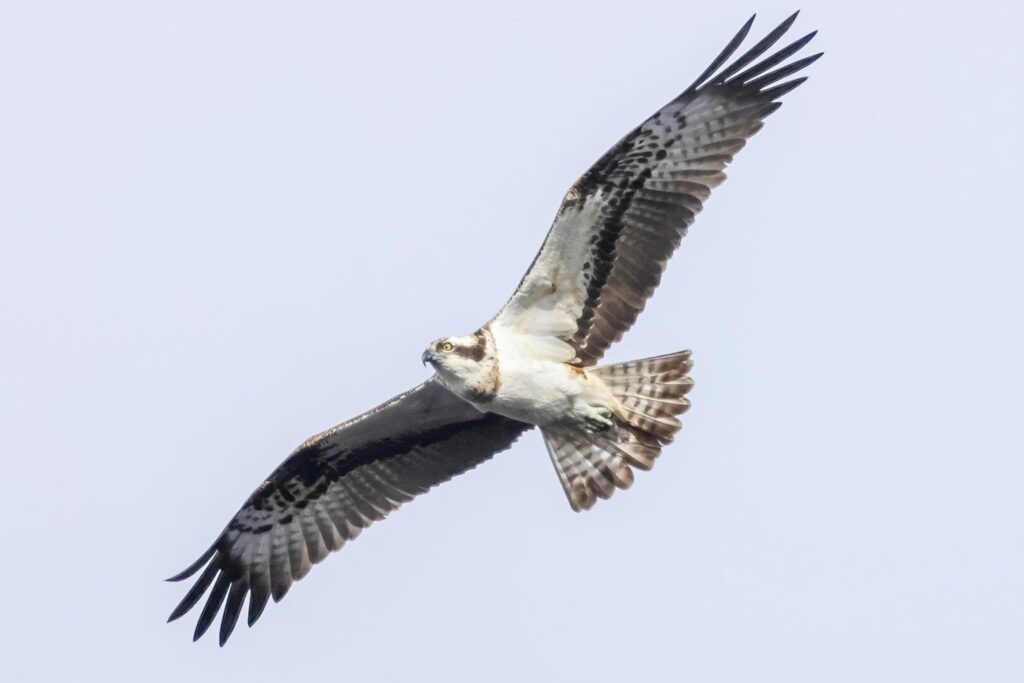
There were lots of small birds in the trees in the sunshine. A pair of Treecreepers chased round through the birches, landing on the trunks. At one point, they were joined briefly by a third. A single Nuthatch appeared briefly too, along with a Goldcrest and several Coal Tits. A Goldeneye and a couple of Teal were out on the water.
We heard Pink-footed Geese calling and could just see a huge flock through the trees. They must have lifted up from the grass somewhere nearby, at least a thousand of them. They didn’t come past but circled back and presumably landed back in the fields where they were feeding. Two Barnacle Geese flew over our heads too.
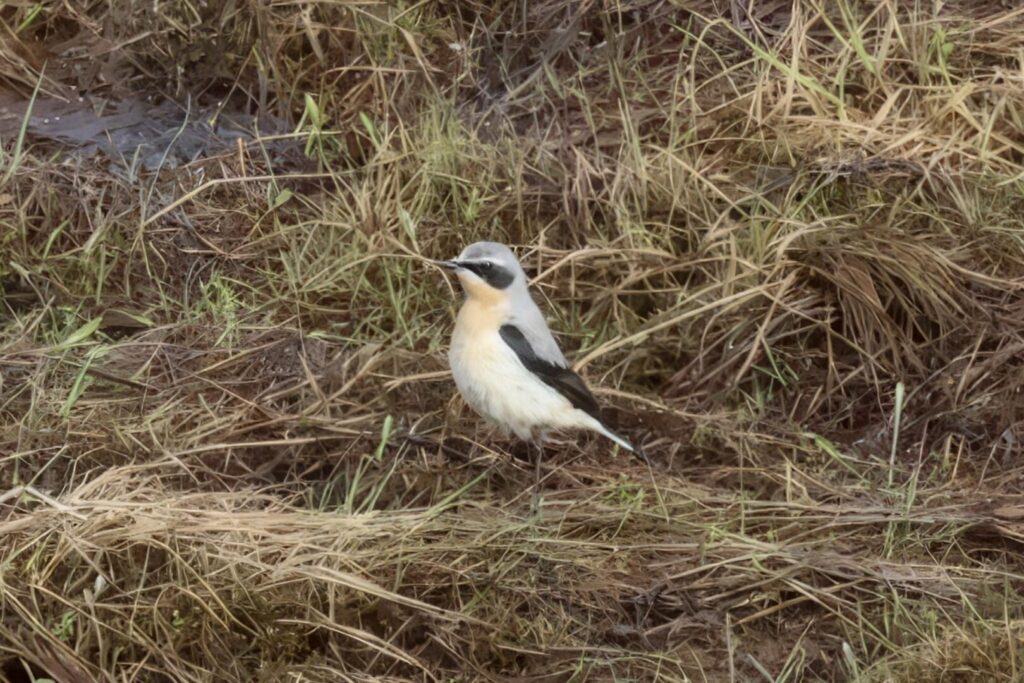
With no need to go searching for Ospreys on our way south now, we had a little more time to play with. We decided to head on to Ruthven Barracks to scan for raptors. Unfortunately it had started to cloud over by the time we got there. We walked up to the ruins and tried to find shelter from the wind behind the walls. One of the group found two male Wheatears down in the wet grass below. Presumably freshly returned.
There were the usual birds on Insh Marshes. Lots of Lapwing, Redshank, Curlew and Oystercatcher. We could hear Snipe calling but they were not displaying today. On the pools, there were Wigeon, Teal and Mallard. Several Whooper Swans were further back, asleep.
There were plenty of Common Buzzards still up over the hills around, and several Red Kites too. A Sparrowhawk circled up over the middle of the marshes. We were hoping for a White-tailed Eagle in particular, but there was no sign of any eagles from here now.
A couple of Ravens hung in the wind high over the crags across the A9. At one point, another Raven flew in low over the marshes. It turned and dropped down, grabbing an egg from a nest in the grass. Presumably a Greylag, as one was calling loudly as it did so. The Raven flew off with the egg in its bill.
We picked up several skeins of Pink-footed Geese flying over the surrounding hills. Presumably birds migrating back north, making their way slowly back to Iceland. So when we saw two very high skeins over the top of the snowy peaks distantly to the north-east we initially assumed they would be more of the same. Then we picked up a line of about 30 Whooper Swans as they flew high over across the valley and we could see what they were now. They were making their way back to Iceland too.
It was time for lunch, so we drove back the short way to Insh Marshes car park, and walked up to the viewpoint to eat our sandwiches. It was a lovely view looking out across the marshes. Much the same birds as before, but we could see several hundred Pinkfeet in the fields on the edge of the marshes. Scanning through, we could see a single Barnacle Goose in with them again. Another Raven flew across below us, calling.

After lunch, it was time to continue on our way. After a quick stop to use the facilities in Kingussie, we set off on the long journey back to Darlington. Once again, our timing was perfect as it started to rain and quickly turned to sleet. Up through the Pass of Drumochter it started to snow.
We had just started to drop down again the other side and the snow had stopped briefly, when we noticed two raptors circling up over the valley beside the road. Two White-tailed Eagles! Unfortunately there was nowhere to stop, particularly with roadworks here at the moment and down to one lane. We could see them drifting off over the valley as we passed.
It was a wet journey all the way down until we crossed back into England, where it brightened up and there was blue sky. Storm Dave was forecast to arrive later and it got increasingly blustery as we drove on down to Darlington. We were pleased finally to arrive.
We had our last dinner together in the restaurant here. Afterwards, we talked about everyone’s bird(s) of the trip. There was no clear winner this time, lots of different highlights. We would be going our separate ways in the morning. Three of the group would be heading home straight from here so we said our goodbyes tonight. The rest of us would set off early in the morning for the drive on back down to Norfolk. We were looking forward already to be coming back again next year.