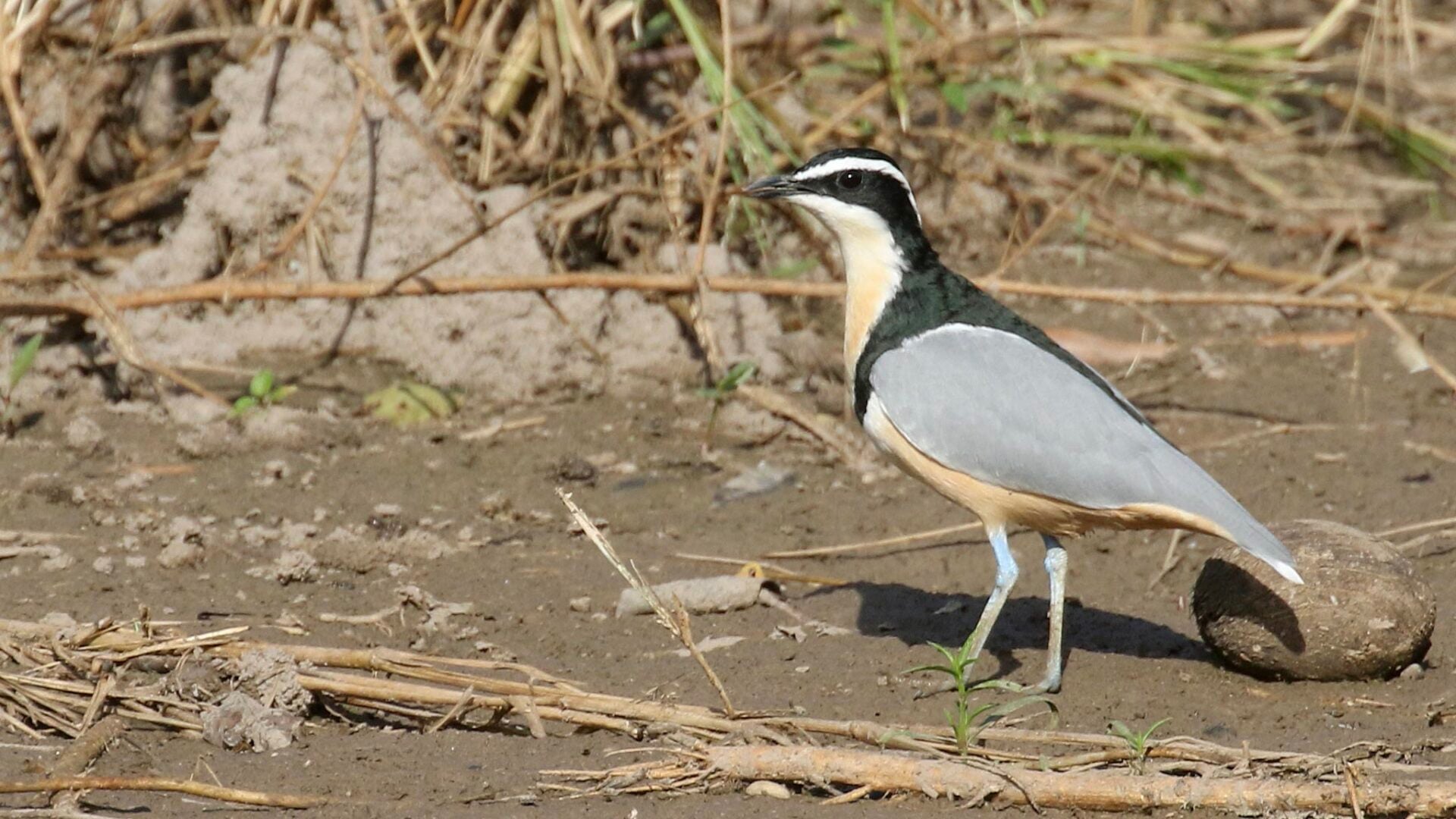
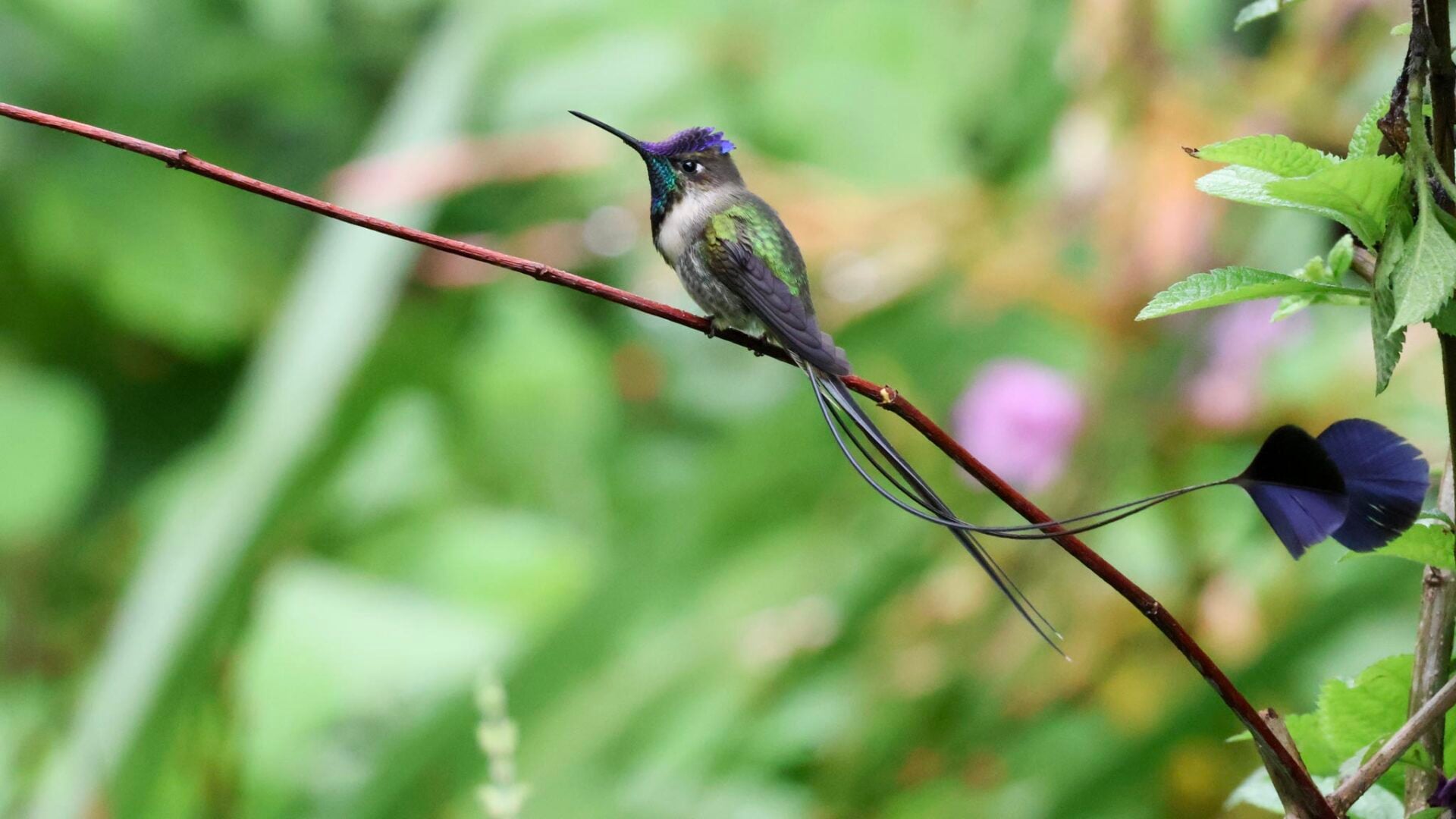
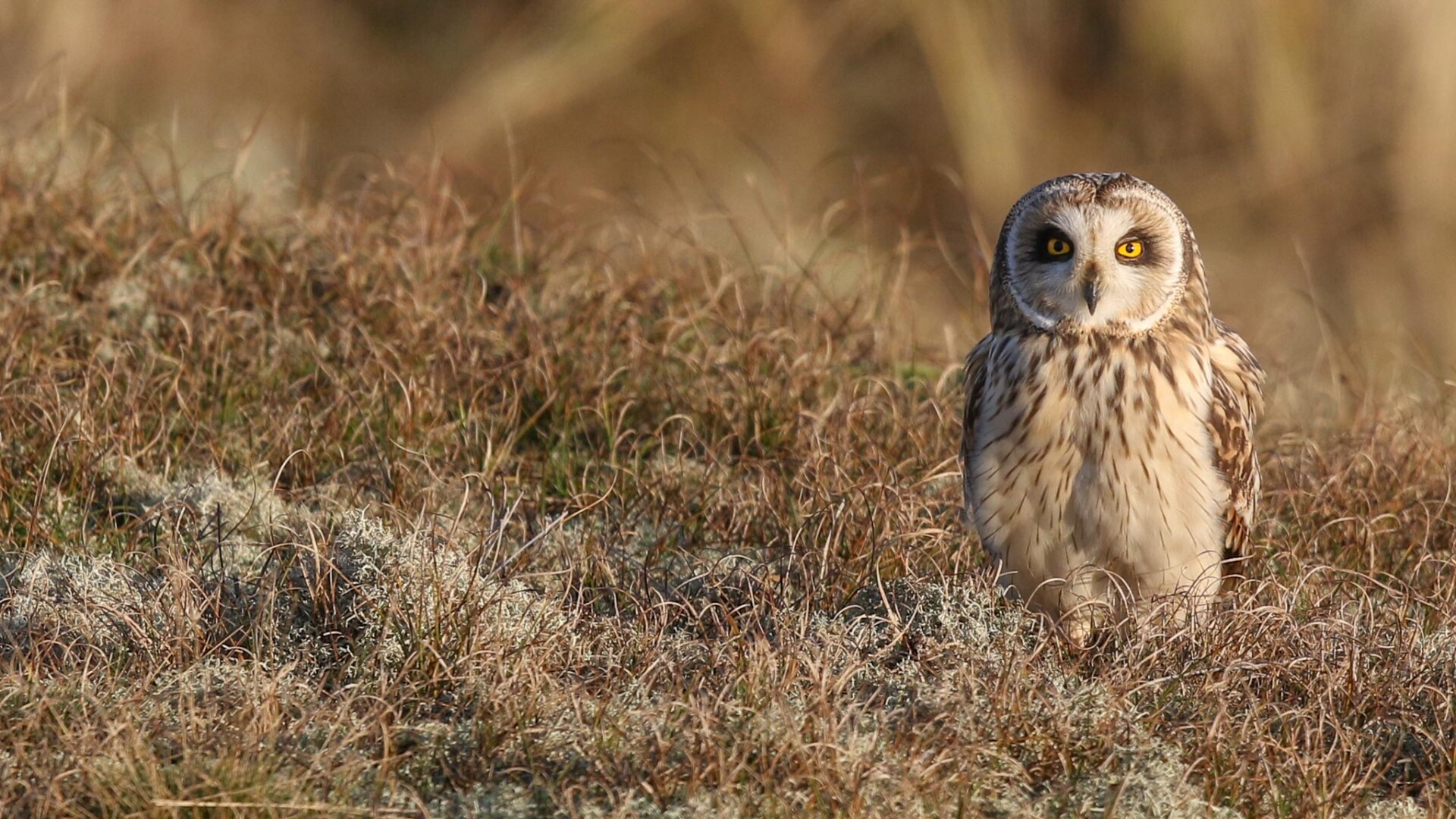
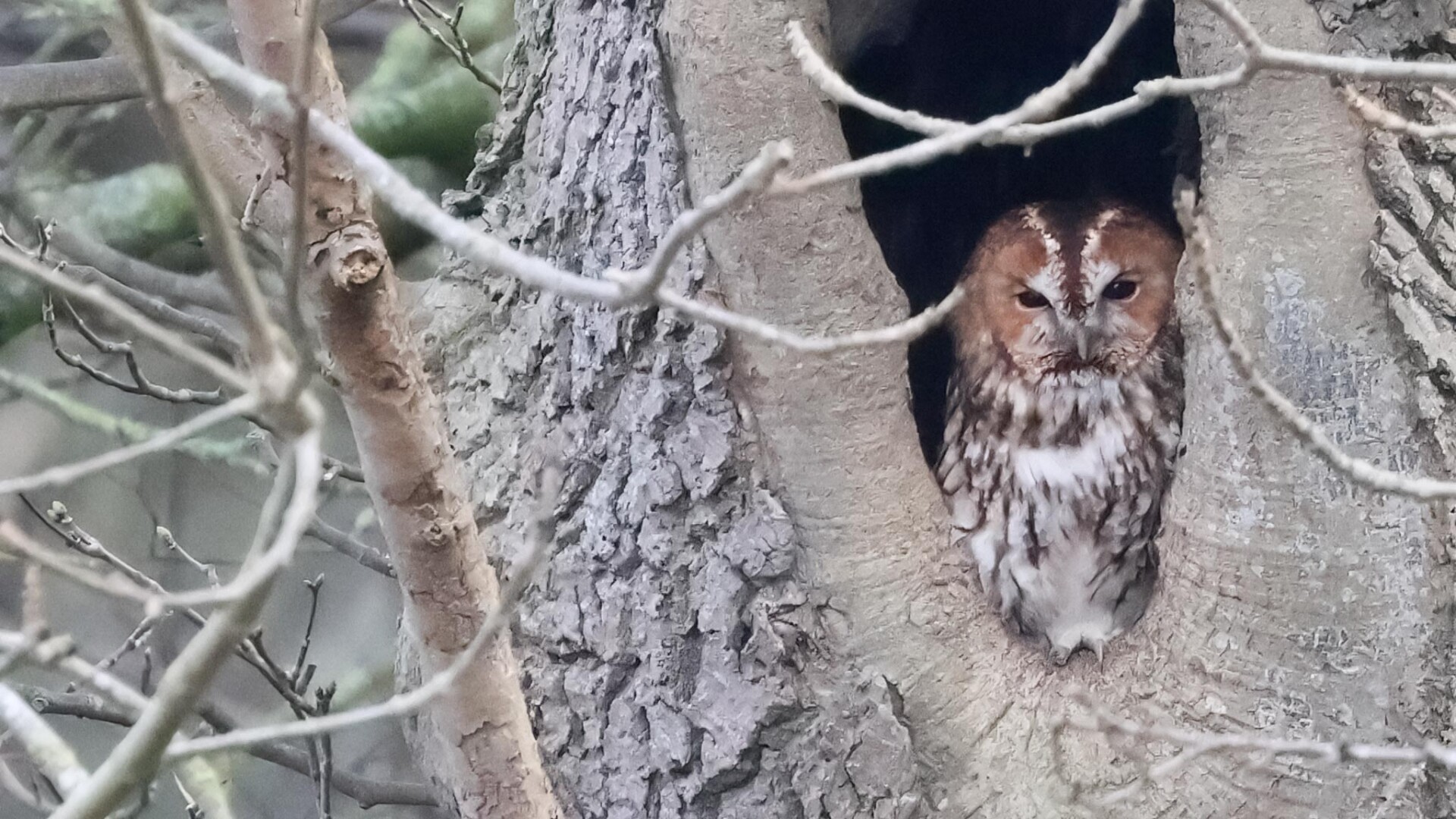
An International Tour organised in conjunction with our friends at Oriole Birding. In 18 days, just in north and central Thailand, we recorded 426 species of bird and a great selection of other wildlife too. We already have dates for 2027 – you would be very welcome to join us next year! You can find all the details here.
This blog has been split into two parts. The first, covering North Thailand, you can read here. Part 2, about our time in Central Thailand, follows below.
Saturday 14th February
After spending the morning on Doi Inthanon, we were booked on a late morning flight from Chiang Mai to Bangkok. It was due to leave at 11.15 but there were problems with another flight in Chiang Mai and they had to close the runway for a while. The incoming plane didn’t make it on to the stand until 12.10. They managed to turn it around fairly quickly and we eventually pushed back at 12.54.
Thai Air provides a snack on this flight and we were hoping for a nice wrap again, just like we had on the way up. Instead, we just got some rather odd pink jelly in a small pot. Apparently it was meant to be a special treat for Valentine’s Day. We landed in Bangkok at 2pm but rather than taxiing to a stand we parked out on the tarmac. Presumably we had missed our slot. We had to take a bus to the terminal and our bus driver even seemed to get lost on the way there!
Through to baggage reclaim, we thought our bags would already be there, given all the messing around. Just one bag was going round on the carousel, which did belong to one lucky member of the group, but no sign of any other bags at all (not just the rest of ours). Were they trying to fiddle the metrics on the timing of first bag delivery?! Finally the rest of the bags appeared and we met Dteng again, who had taken a different flight. Outside, there was the usual chaos in the pick-up area but our buses managed to find us.
It was after 3pm by the time we finally got away. If we were driving all the way to Pak Thale straight away, there would not be any time for birding by the time we got there after all the delays. Thankfully Dteng had arranged for us to go to Khok Kham first instead, much closer. It was only about an hour and a half’s drive, even in Bangkok traffic. On the way, flocks of Germain’s Swiftlets were hawking by the road. As we got out towards the coast, driving through the fish ponds, we saw lots of Whiskered Terns and egrets.
Mr Tee was waiting to meet us by the saltpans at Khok Kham. As we got out of the minibus, he whisked us straight out. The tide was apparently going out on the Gulf of Thailand and the birds might fly off to feed. We hurried over between the saltpans to an area where a large mixed group of waders were feeding.
There, Mr Tee got us straight onto a Spoon-billed Sandpiper in amongst them. We had a quick look from further back, then walked closer. Great views of it now, feeding in the corner of a small shallow evaporation pool. The mean population estimate for Spoon-billed Sandpiper is now just 443 mature individuals. And with ongoing declines of around 5%pa it is still perilously close to extinction. So a real privilege to be able to watch one here.

With the pressure off, we could then take a more leisurely look through the other waders. There were lots of Red-necked Stints, the commonest species here. A small number of Broad-billed Sandpipers and Curlew Sandpipers were in with them and we found a couple of Long-toed Stints too.
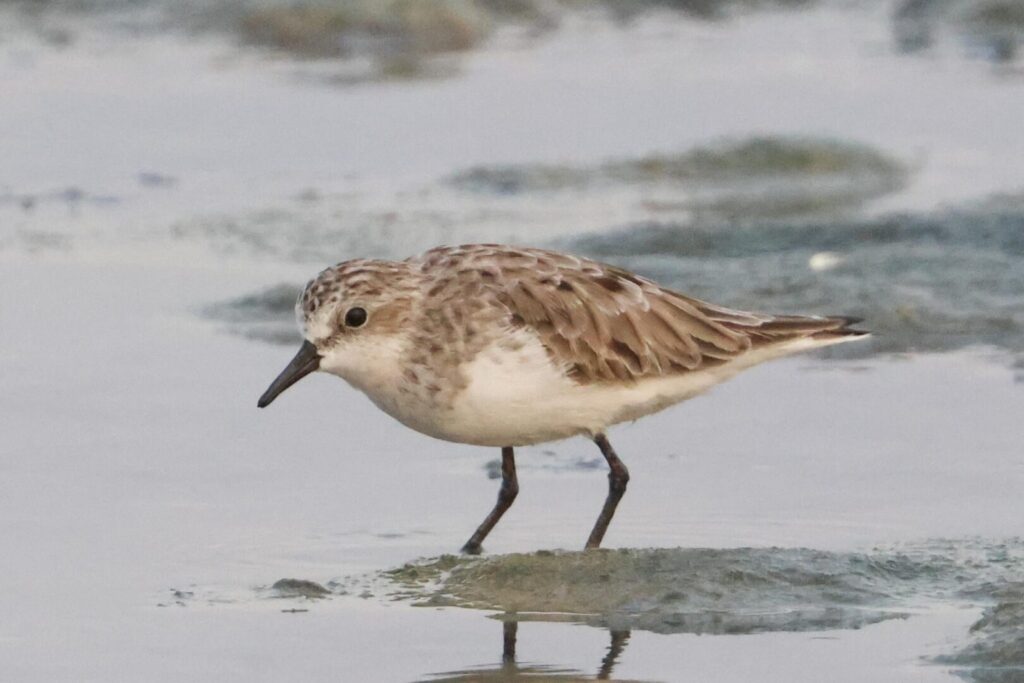
There were good numbers of Tibetan Sand-Plovers and Mr Tee found us a Greater Sand-Plover which suddenly appeared in with the Red-necked Stints in the middle. We also found a few Kentish Plovers on the drier mud further back, plus singles of Grey Plover and Pacific Golden Plover too. Several smart Marsh Sandpipers were feeding on the pools with their super-sharp bills. There were a couple of Common Redshank and one Greenshank, a few Black-tailed Godwits and Black-winged Stilts as well.

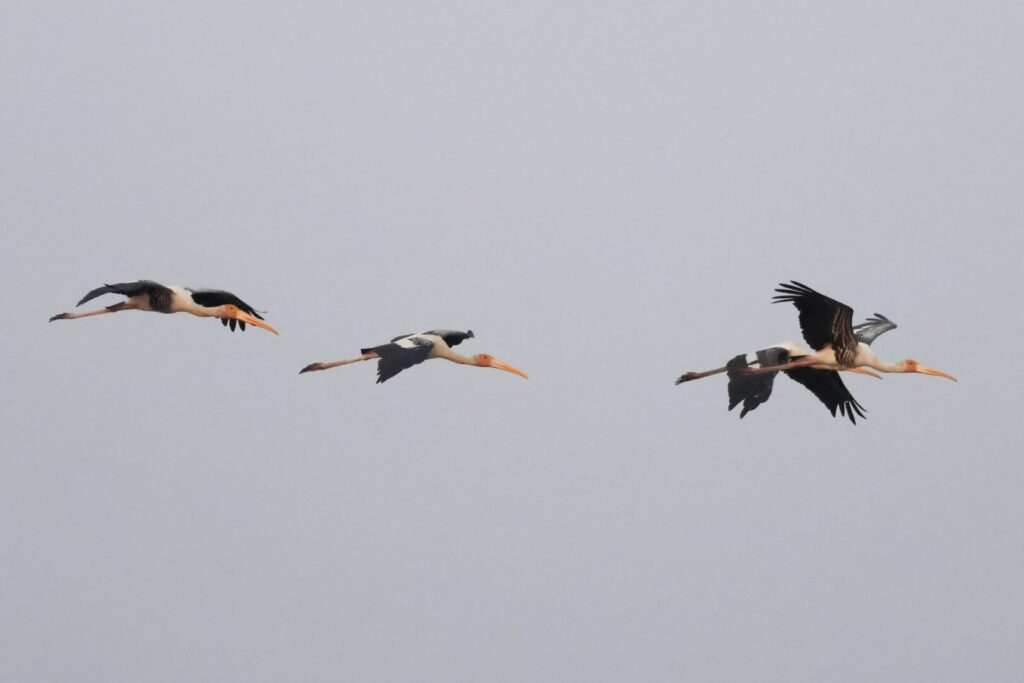
Several Little Terns were flying round and landing on the bunds. A succession of Caspian Terns and Brown-headed Gulls flew over, heading off to roost. There were lots of cormorants too including several Indian Cormorants and Oriental Darters. A flock of Painted Storks dropped down in the distance, and a couple of Brahminy Kites drifted over.
We had a lovely hour and forty minutes watching the waders here with Mr Tee before the light started to go. We said our goodbye and thanks, and Mr Tee even gave his t-shirt to one of the group. We still had to drive to our hotel in Phetchaburi tonight, but first Dteng took us to a local restaurant for dinner. Here everyone could celebrate seeing Spoon-billed Sandpiper, a new bird for all the group and always one of the most wanted on this tour.
After dinner, it took a little over an hour to get to Phetchaburi, and it was 9pm by the time we arrived. Checking into the hotel, there was very loud music coming from over the road. Apparently there was a Valentine’s Party but thankfully as soon as we got up to the rooms it quickly stopped. We were ready for a good night’s sleep.
Sunday 15th February
We met outside at 6am this morning and drove over to the 7-Eleven in Pak Thale for coffee and breakfast. It meant we could be straight out onto the saltpans as it started to get light. There were just a couple of Red-necked Stints and Tibetan Sand-Plovers on the first pools by the parking area. A couple of Germain’s Swiftlets were zooming back and forth low over our heads and groups of Painted Storks and Indian Cormorants were flying over in the distance. We could see more waders on the pools further out, so we walked on.
A single Great Knot was in with a small group of Grey Plover on the next pools. Further back behind, lots more Great Knot were roosting on one of the bunds. A Spotted Redshank called and we managed to find it in the corner of one of the pools. A couple of Pacific Swallows were flying round over the track now and one landed on a post out in the middle briefly.

We could see a large group of Caspian Terns and Brown-headed Gulls on one of the larger pans out in the middle. Looking through the scopes, we could see more waders in with them. More Grey Plovers, Marsh Sandpipers, Common Redshanks and Greenshanks, and Sand-Plovers.
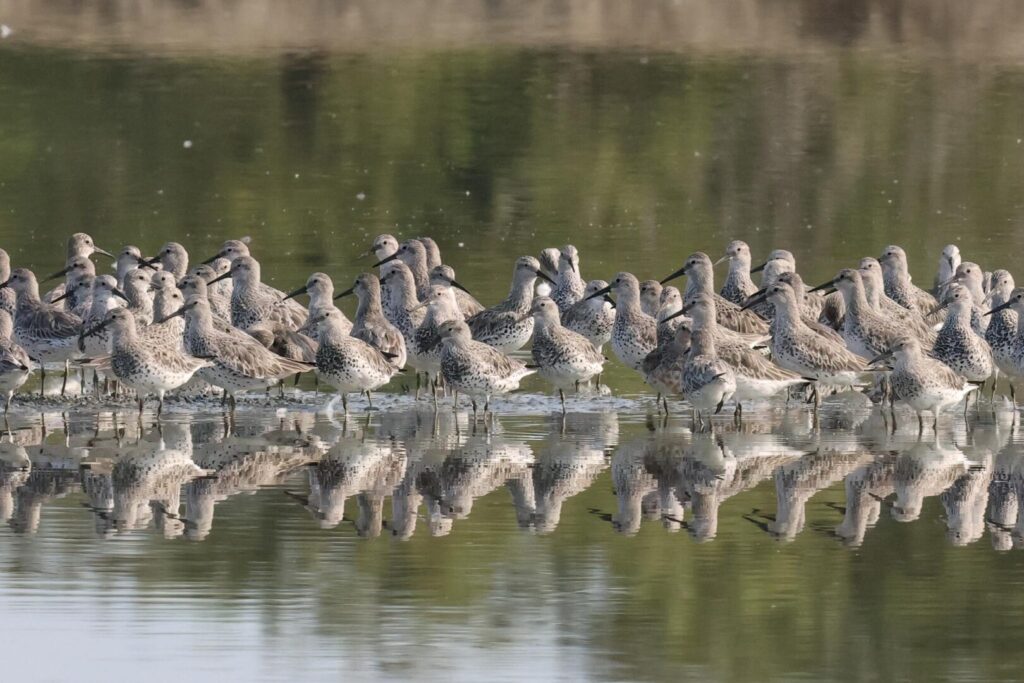
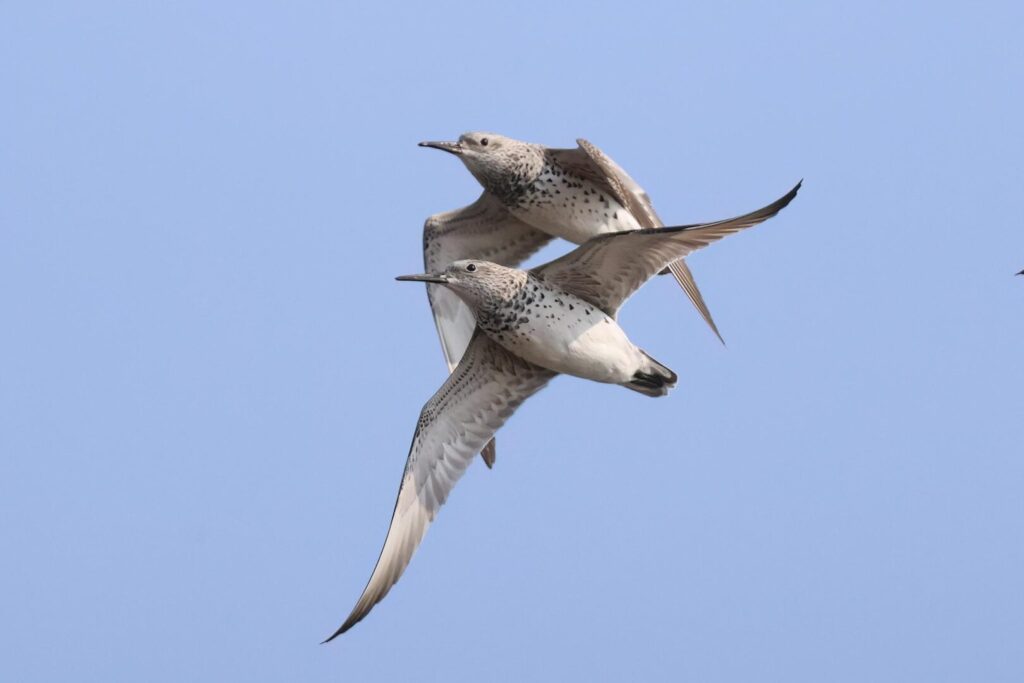
Something spooked the Great Knot from the other side and they whirled round in a huge flock. A large group landed much closer, so we could get a much better view of them. The light was improving all the time too. We could see several Red Knot in with them now, some already starting to get small patches of their orange-red breeding plumage.
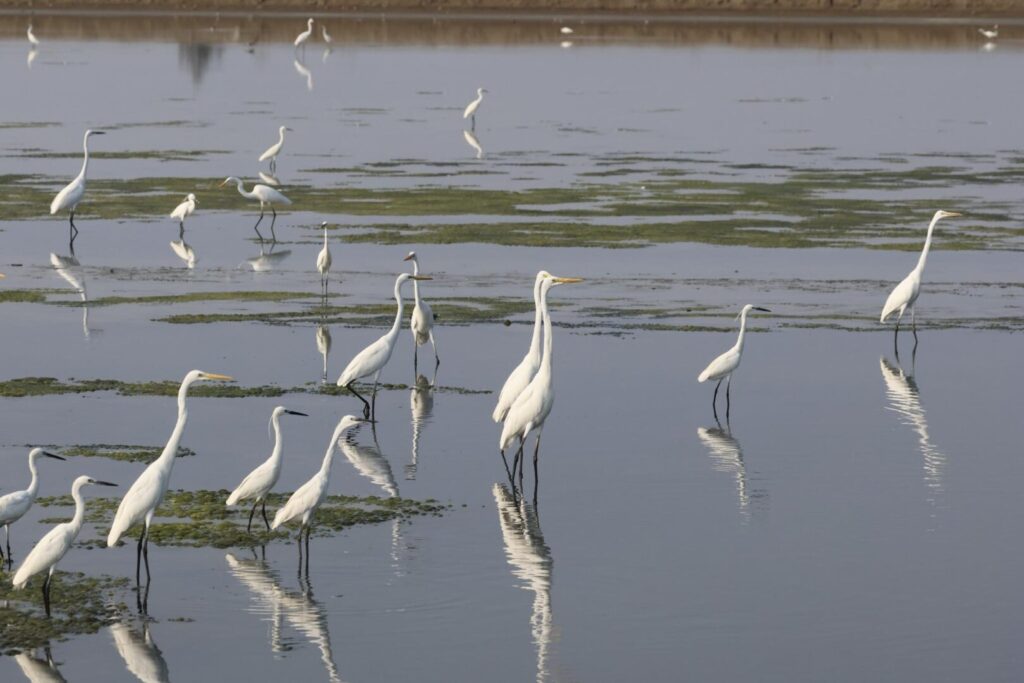
Continuing on to the far end, there were lots of Whiskered Terns flying round over the pool opposite and lots of egrets fishing too. We quickly picked up a Chinese Egret over the far side, we could see its scruffy crest, very different from the two plumes on the Little Egrets.

From up on the bund, a dark morph Pacific Reef Egret was very well camouflaged against the mud under the far bank. There were several Pond Herons too, presumably Javan Pond Herons out here on the salt water. We could see several Spotted Redshanks around the edges as well.
Scanning out to the Gulf of Thailand beyond, we found the Terek Sandpipers roosting out on the fishing net posts. Very distant from here, but we could have another look again from a little closer later.
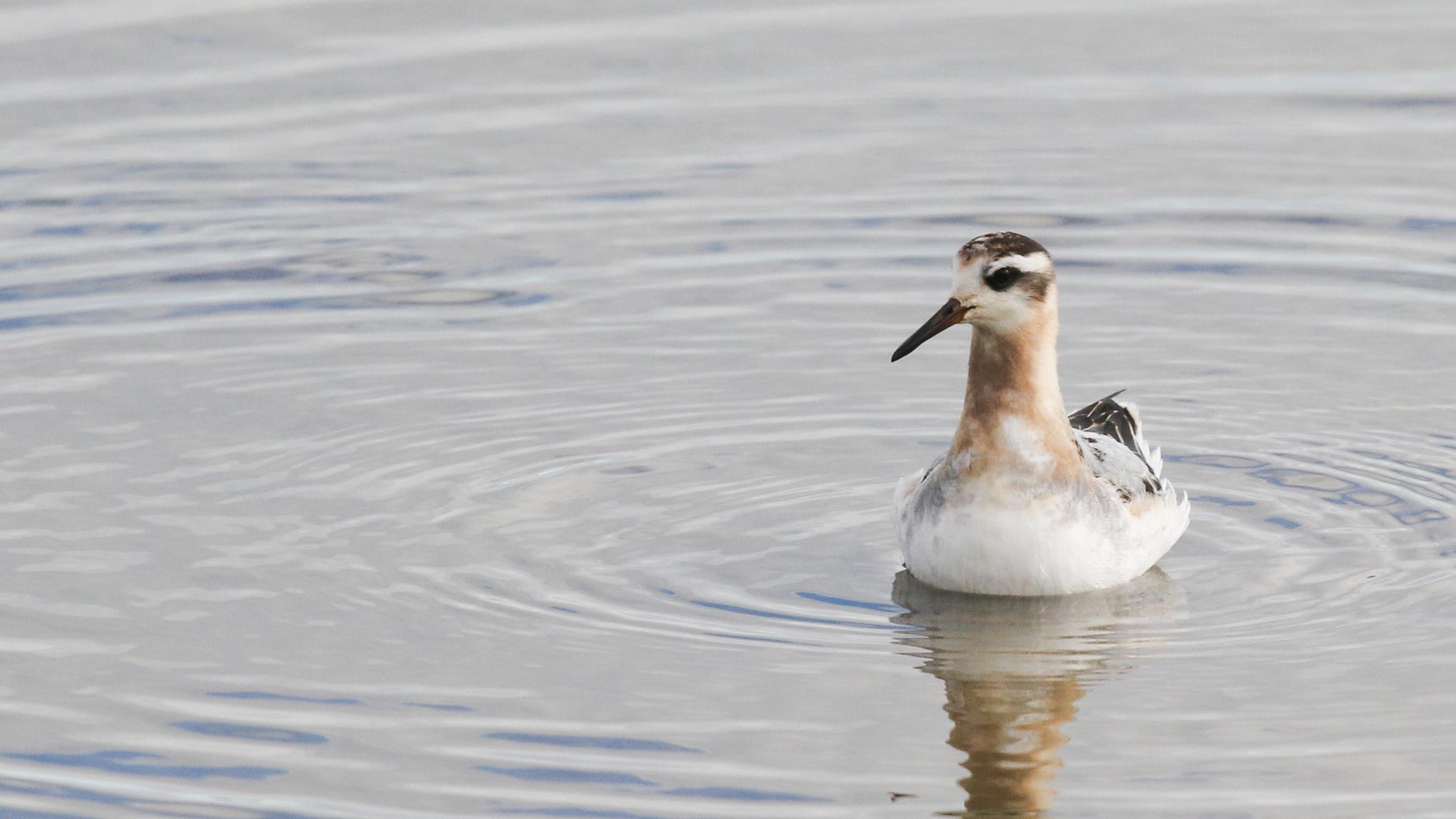
As we turned right and walked down along the bund, a Common Sandpiper flew off ahead of us below the bank. Further along, we could see a small group of roosting waders on a stony spit on the next pan, including a few Turnstone and Sanderling. As we got closer, four Red-necked Phalaropes swam out into view too.
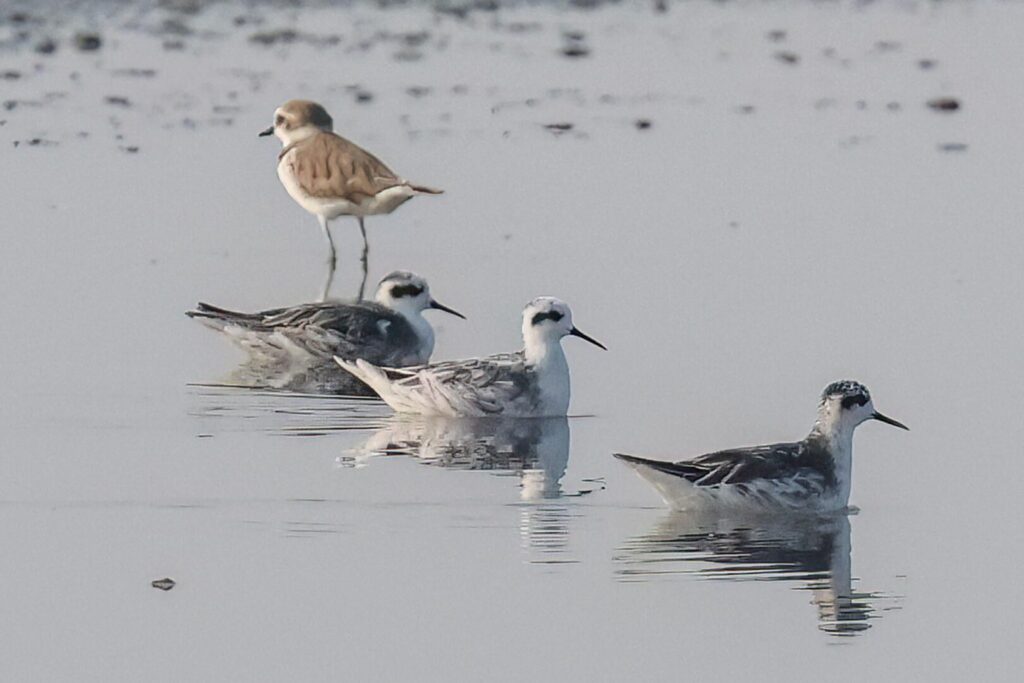
Scanning through the gulls and terns again, we had a much better view from here. There were more Little Terns now and a couple of Common Terns in with them. There was a flock of roosting Sand-Plovers on the bund beyond, and one stood out in summer plumage, with a bold white forehead. It didn’t look particularly big or large-billed but presumably was a Greater Sand-Plover. Then something flushed them and they all flew off.
We walked back and carried on further towards the far corner. There was a slightly better view of the Terek Sandpipers from here though still distant. Several Whimbrel were in with them and we found three Great Crested Terns on the net posts now as well. We turned to walk back on another small bund between the saltpans.
There was a group of Black-tailed Godwits here but nothing with them today. We passed all the Great Knot now – several thousand gathered here and even closer views than earlier. A very impressive sight of what is also classified as an endangered species because of recent rapid population declines.
One of the last pools had more small waders. They were mostly Red-necked Stints again, with several Curlew Sandpipers and Broad-billed Sandpipers, and Tibetan Sand-Plovers. Looking through, we managed to find a single Dunlin in with them. A Brown-headed Gull flew past.
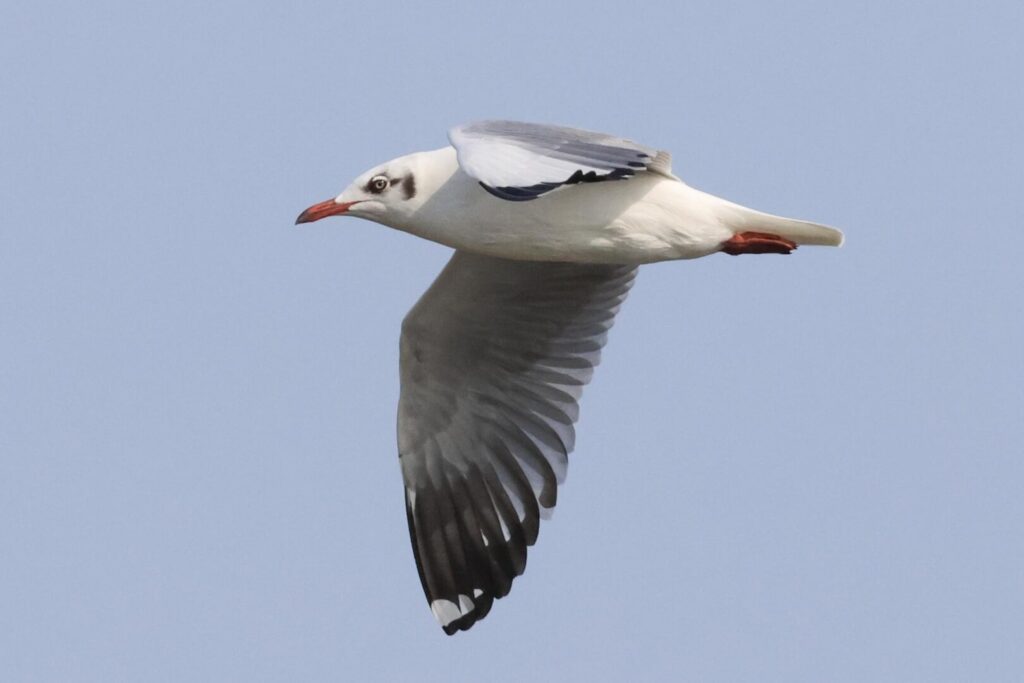
Back to the shelter, we had a sit down in the shade. A small group of Pacific Golden Plovers was roosting on the bund in front. The Great Knot all flushed and flew round in front of us again. Then we walked back to the minibuses which were waiting for us back on the main track.
We still had not seen either Asian Dowitcher or Nordmann’s Greenshank, so those would be our next targets. Dteng had some up to date information about the former, so he took us back out and further down along the main road, before turning off onto a side street. Sure enough, here we found an impressive flock of at least 500 Asian Dowitchers roosting with Black-tailed Godwits.

With one of our two remaining wader targets in the bag, we stopped for coffee at a nearby café. We had to wait to be served as a Dutch birding group were already there ahead of us. Lots of Whiskered Terns were flying round over the pools behind and lined up perched on the wires above. Always an odd thing to see. There were some waders on the pools further back and even though we were looking into the sun, through the scope we could see several Bar-tailed Godwits in with a good number of Whimbrels.
After coffee we drove on further and pulled off the road. Scanning from the verge, we could see several Nordmann’s Greenshanks in with a large mixed flock of waders out in the middle. A bit distant from here but we could walk out on one of the larger bunds for a closer look. The Dutch group was just coming back and said there were around 80 Nordmann’s Greenshanks in the flock.
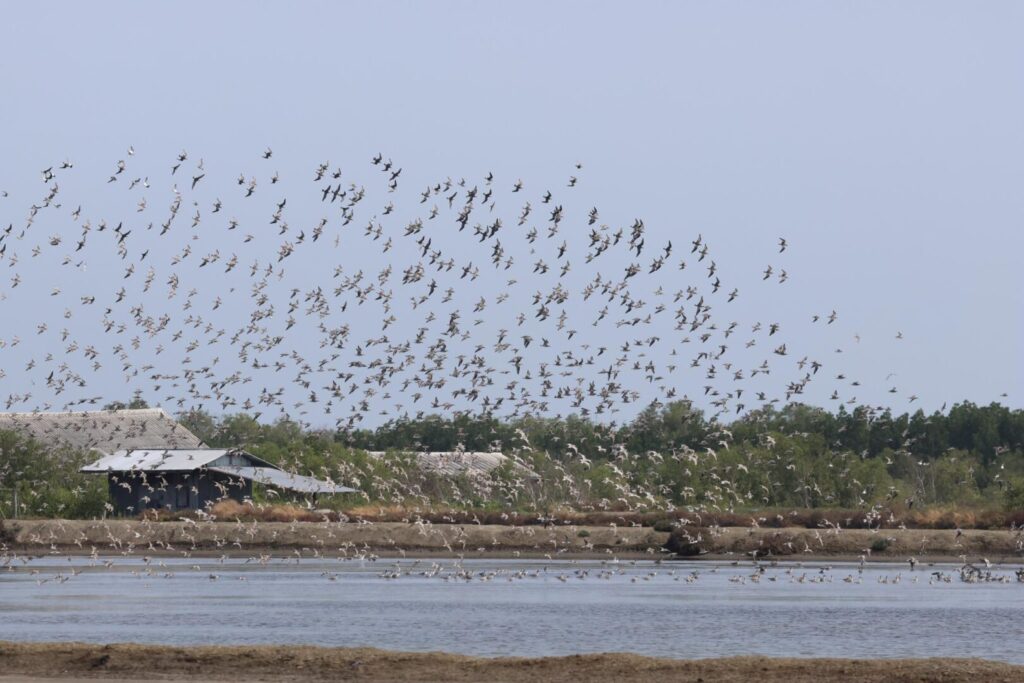
Just as we were walking out, first all the small waders went up just as a Peregrine whistled past our heads. Then the flock with the Nordmann’s Greenshanks went up too. We had nice view of them flying round in front of us and it looked like we would have to try to find them again when most seemed to fly off.
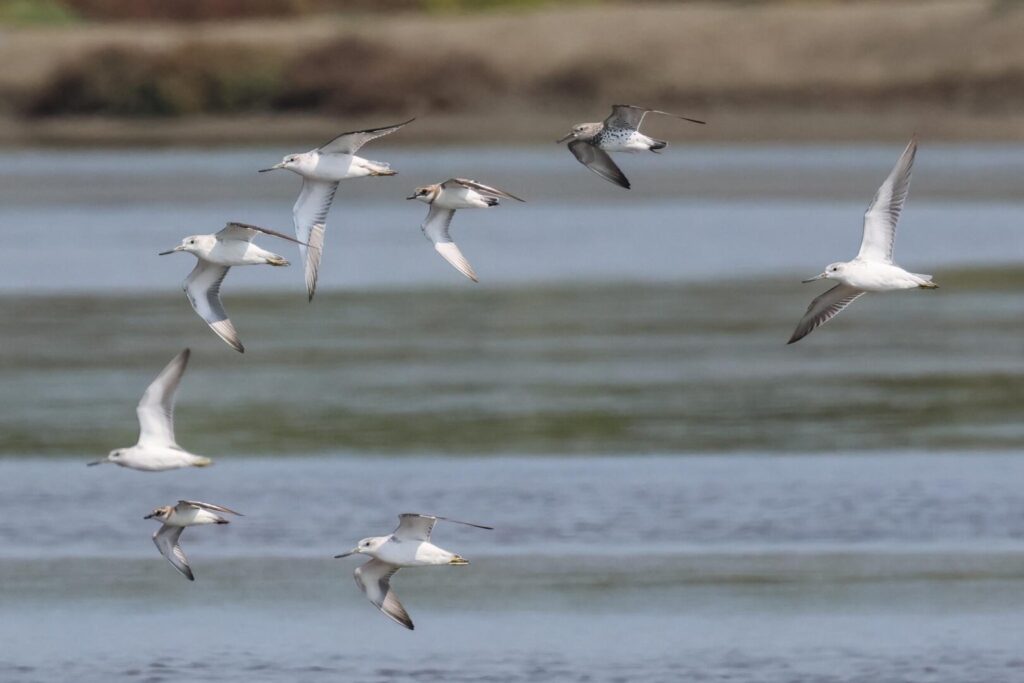
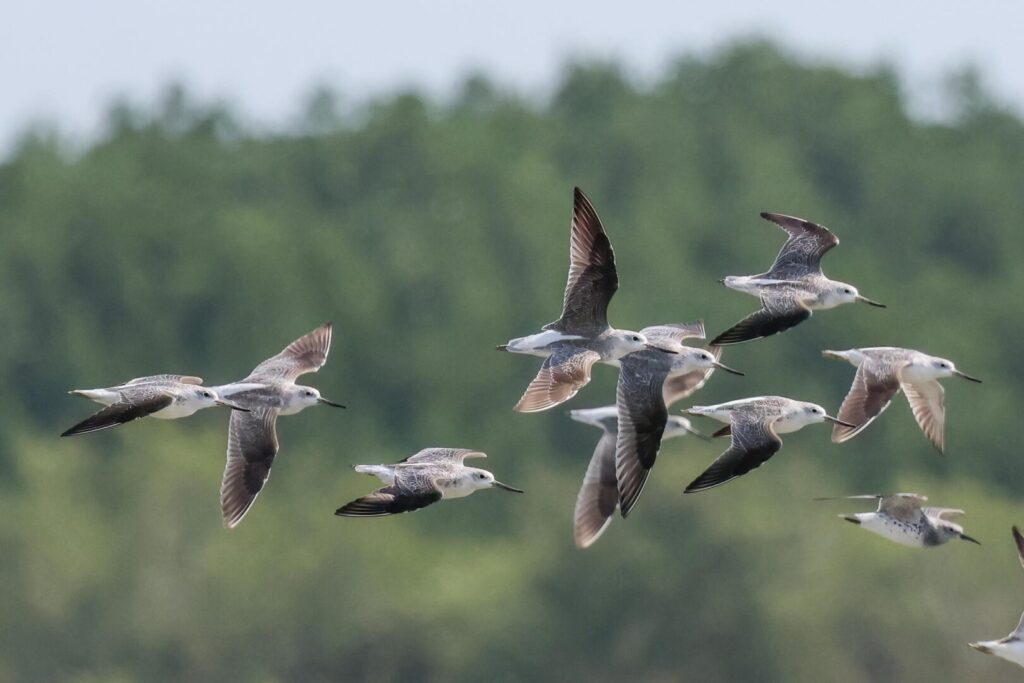
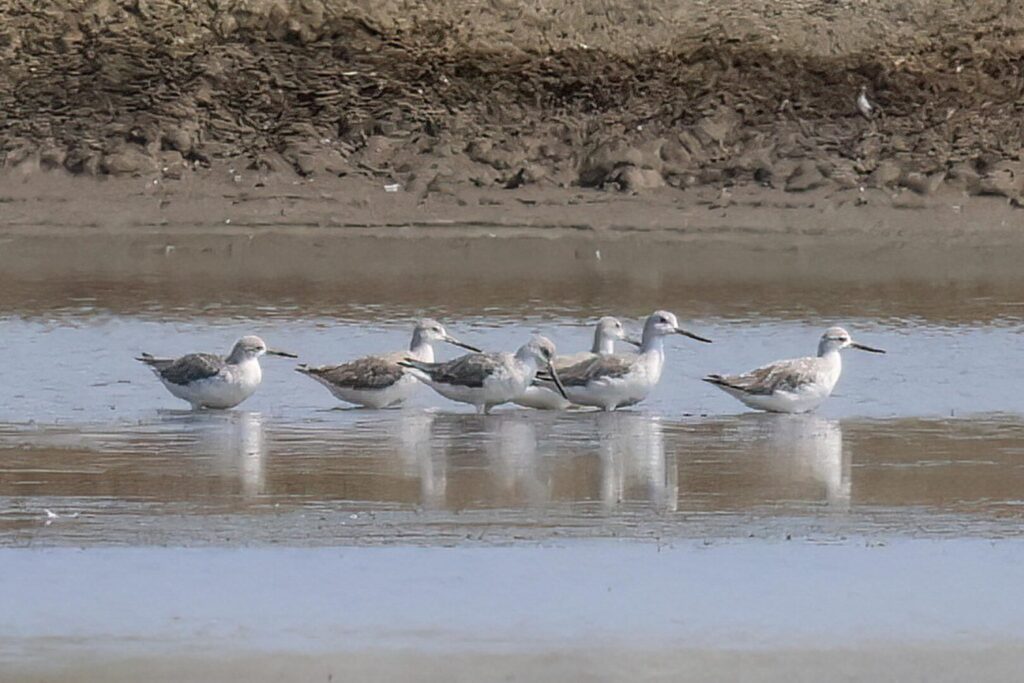
Thankfully a small group of six Nordmann’s Greenshanks landed back where they had been so we could get them in the scopes and get a proper look at them now. A few Common Greenshanks were in the corner, closest to us, for comparison.
A few Gull-billed Terns flew in and landed back on one of the bunds, joining a larger group which was already there, along with a Caspian Tern and several Little Terns. Three sizes of terns together. An Osprey circled over.
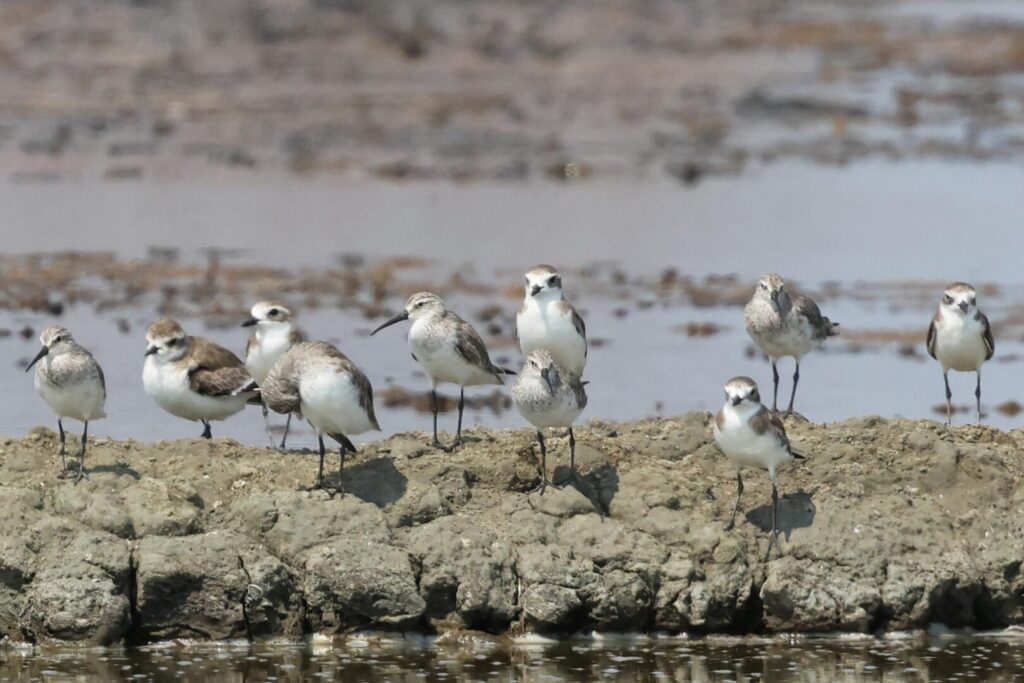
Some of the small waders had come back in and were lined up on the bund behind us. Lovely light now. A few of the Curlew Sandpipers were just showing a little bit of red breeding plumage up close, and there were several Broad-billed Sandpipers, lots of Sand-Plovers and Red-necked Stints.
With our wader target list here now complete, we drove round to the Laem Pak Bia Royal Project. While we made use of the restrooms, a Malaysian Pied Fantail was flitting around in the trees just outside. Then we walked in round the side of the pools beyond. There were lots of Indian and Little Cormorants loafing on the posts.

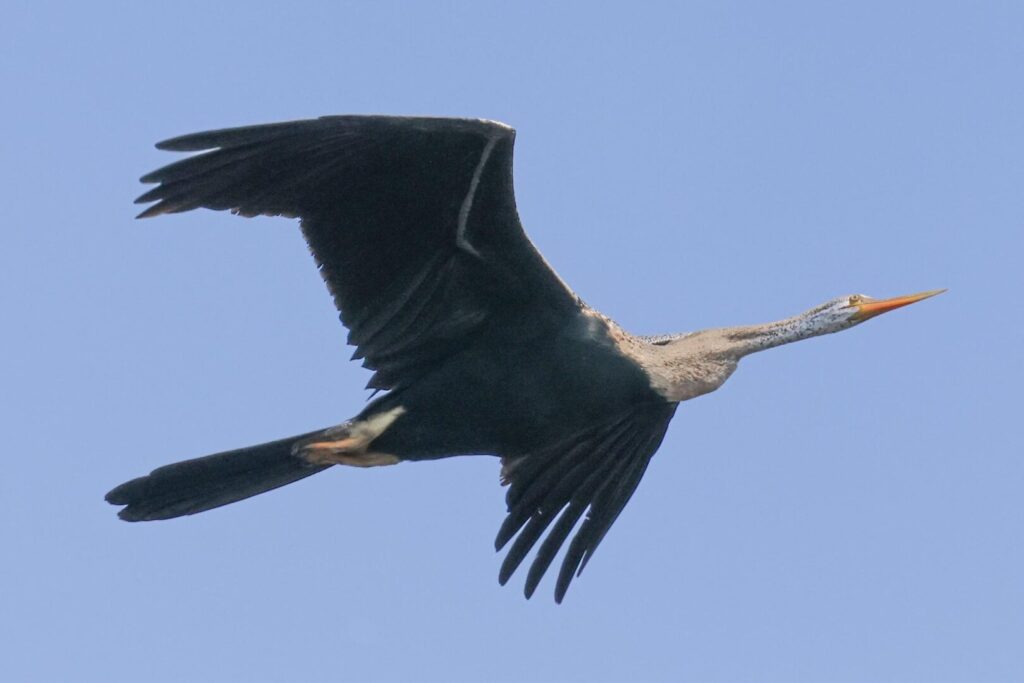
Several Oriental Darters flew low overhead.
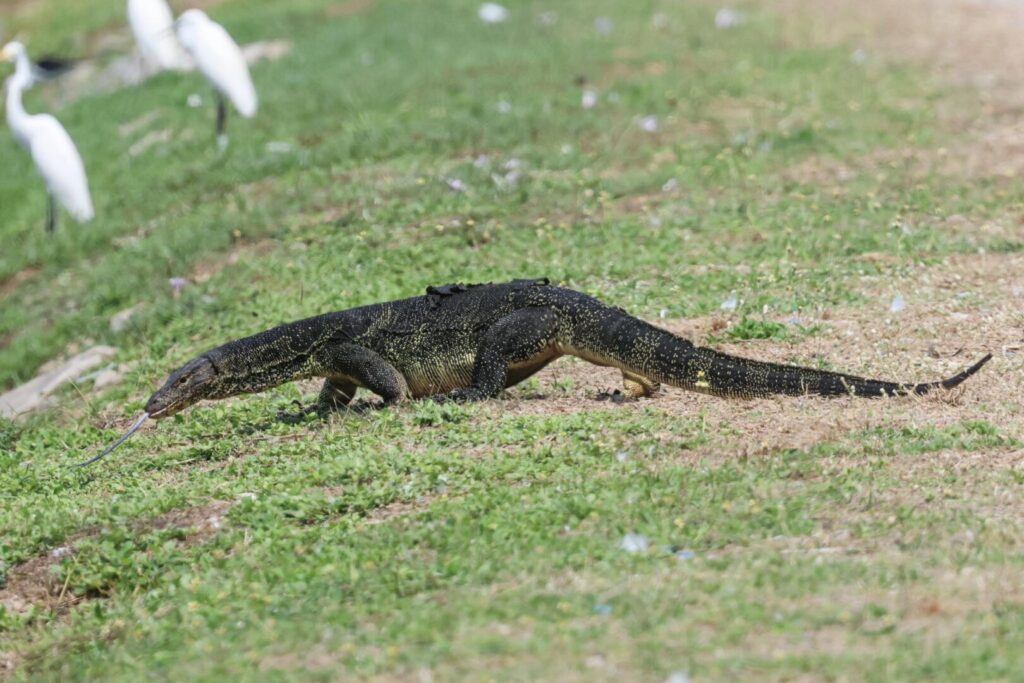
A large Water Monitor walked across the track on the bund through the middle.
Lots of Painted Storks were perched up on the tops of the trees but we couldn’t get past on the track without disturbing them. An impressive sight as they all took off and circled round over the pools, before landing again.

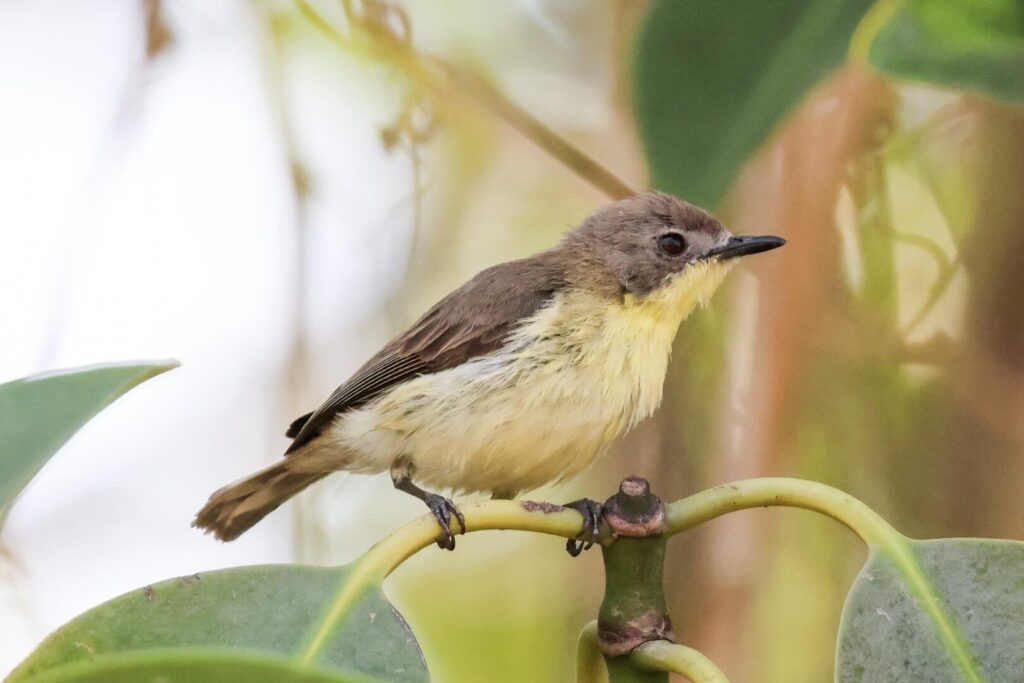
Down at the far end, we could hear Golden-bellied Gerygones calling in the mangroves. We quickly picked up two which came out and showed very well right above our heads.
It was hot now and time for lunch. We had a long drive in the minibuses – the restaurant was directly across the road from the Royal Project car park, almost not worth getting in! The restaurant even had staff waiting outside with umbrellas to shade you from the sun on the walk in from your vehicle if you wanted.
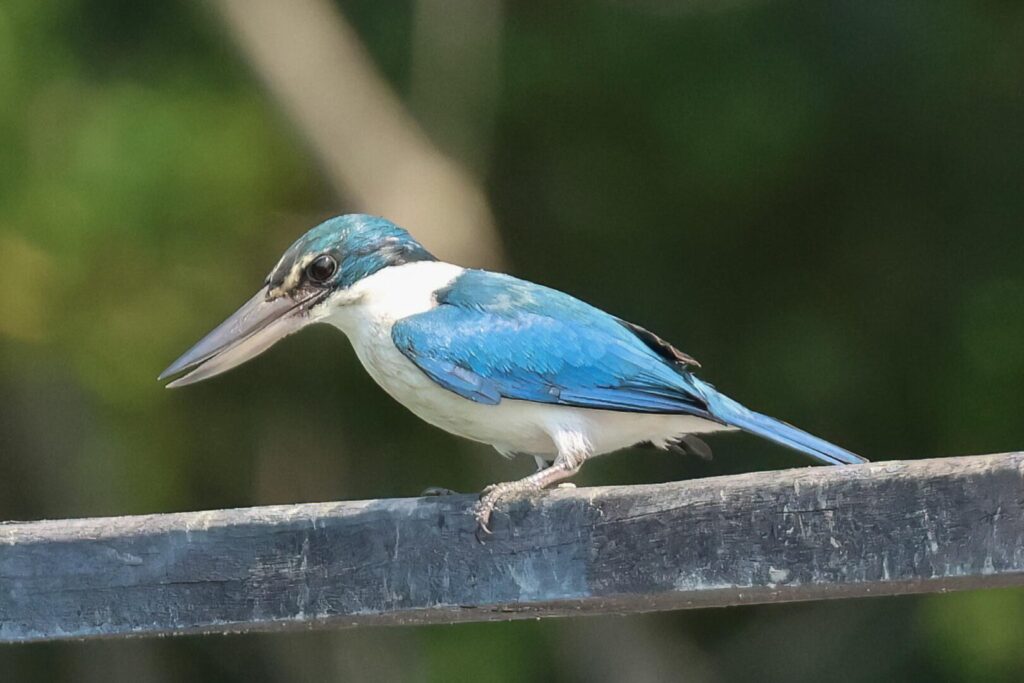
After lunch we drove round to Mr Daeng’s. We took off our shoes and socks and boarded two boats, setting out up the channel towards the sea. There were several Collared Kingfishers in the mangroves on the way out, Common Sandpipers around the base of the old boardwalk and Little Cormorants fishing in the channel.
Out into the start of the Gulf of Thailand, we sailed over to the small sandbar opposite first. Lots of Brown-headed Gulls had gathered to roost here, and in with them we found a few Great Crested Terns and a couple of Caspian Terns. Several Sand-Plovers were on the sand too. We turned and motored back to the main sandspit next.

Landing on the beach, there were more Tibetan Sand-Plovers, Kentish Plovers and Little Terns on the sand off to our right. As we started to walk the other way, we found another Kentish and another Tibetan Sand-Plover, then nearby came across a male Malaysian Plover. The first of the waders we wanted to find here, we got it in the scopes and had lovely close views of it.
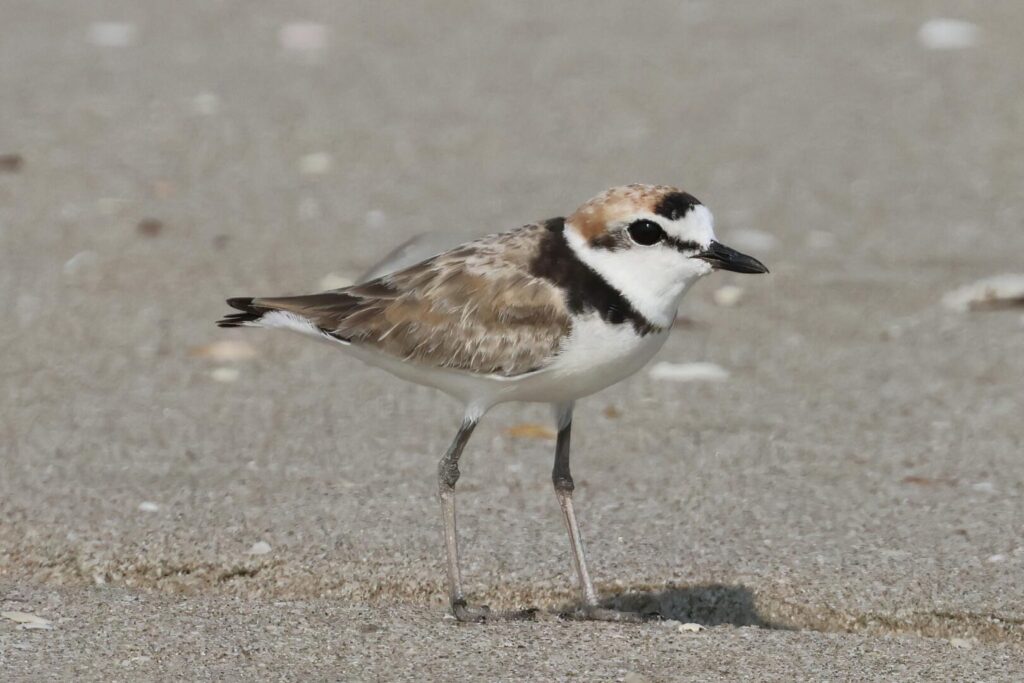
Up to the corner, there were more Kentish Plovers here, plus several Sanderling and another Malaysian Plover. Further down, round the corner, we found a small group of terns roosting on the beach. Mostly Little Terns but one Whiskered and a single White-winged Black Tern were in with them.
The Dutch group appeared here too now, lots of pairs of eyes scanning. Eventually, someone located a single White-faced Plover on the beach behind, the other wader we had come to find. Helpfully, it then flew in and landed much closer to us on the sand. Two Terek Sandpipers were feeding on the beach beyond now too. Walking back to the boats, we had one last scan of the small sandbar offshore. A single Lesser Crested Tern was now in with the other gulls and terns.

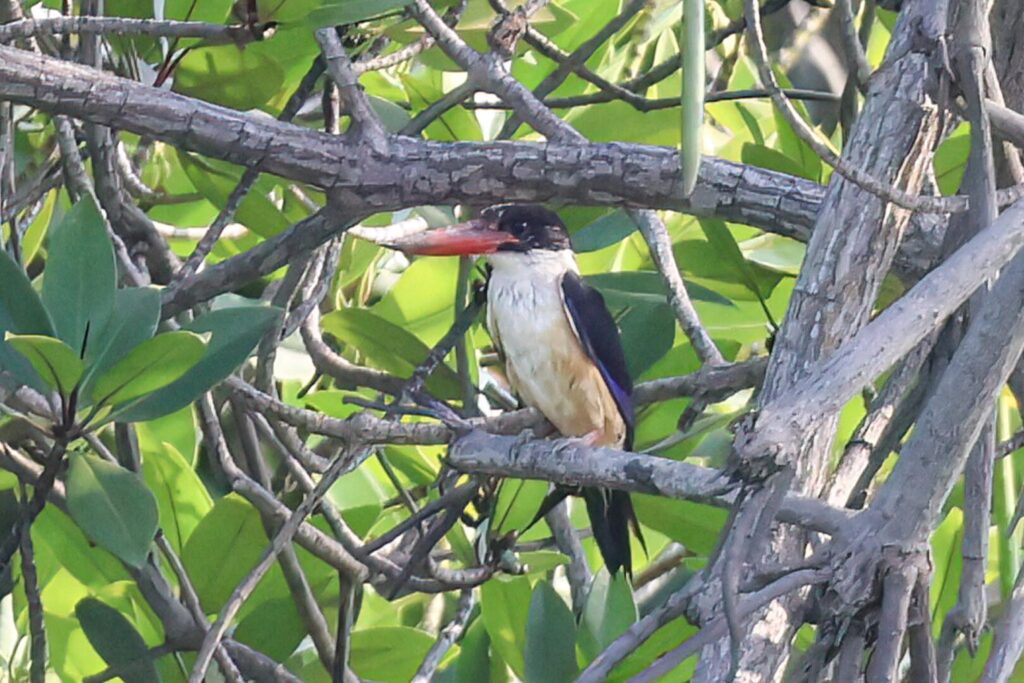
Mission accomplished here, we set off back. We picked up a distant Black-capped Kingfisher on the top of the mangroves before we got back into the channel, and then another one on the old boardwalk a bit closer. Back at Mr Daeng’s, we put our shoes and socks back on, said our thanks to Mr Daeng and his family and got back in the minibuses which were waiting outside.
There had been a single Black-faced Spoonbill on the pools inland for several weeks, but wandering over a big area, much of it inaccessible. It seemed to go missing for days on end. After no reports for a week, it was seen again a couple of days ago and then reported twice this morning. We had a bit of time so decided to go for a look now.
Driving in on the track between the fish pools, we could see lots of egrets, herons and pond herons. We stopped at the first place it had been seen earlier, but there was no sign. A Common Kingfisher flew across. The second site was a bit further on, but it was not there either now. A distant Blue-tailed Bee-eater was hawking from a dead tree, a Pied Kingfisher was hovering over some pools, and we flushed three Pin-tailed Snipe.
We tried one last location where it had been seen on a previous day. Walking in along a track, but couldn’t find a way to get to the pools from here. While looking, one of the group saw a Ruddy-breasted Crake fly across the ditch and disappear into the reeds. Some of the group were tired and decided to wait by the minibuses while a few of us went round to try to see the pools from the other side. We found a few Swamphens and Moorhens, waders and herons, but no Spoonbill.
We were just about to give up, when one of the group came running over from the minibuses. Someone else had stopped to water the bushes back where we had been earlier and had apparently just seen the Black-faced Spoonbill flying over. Based on the description, it seemed to be heading in the direction of the first pools we had checked earlier. We drove back round for one last go but there was still no sign of it here. It was time to call it a day.
Dteng took us to a local restaurant on the beach for dinner, overlooking the sea. Unsurprisingly, the seafood here was particularly good. Afterwards, we went back to the hotel and found somewhere to sit outside in front to go through the list. Two days to do tonight. A Tokay Gecko was calling nearby.
Monday 16th February
We met outside this morning at 6am again with our bags backed. Another 7-Eleven for breakfast today, this time in Laem Pak Bia. Checking previous sightings, we could see that the Black-faced Spoonbill appeared to be mostly seen in the mornings. So we wanted to do a quick circuit of its favourite pools again first thing today, just in case.
As we got out of the minibuses at the first site again, a Little Heron (formerly Striated) was on the edge of one of the pools in front. Several Marsh Sandpipers, Spotted Redshanks and Black-tailed Godwits and one or two Common Sandpipers were on the pool behind. A Pacific Golden Plover flew off from the bund. As we started to walk further up along the track, we could hear several Dusky Warblers calling by the ditch beside. A Chestnut Munia flew up and perched up on a bare stem on the bushes beside the track ahead of us.
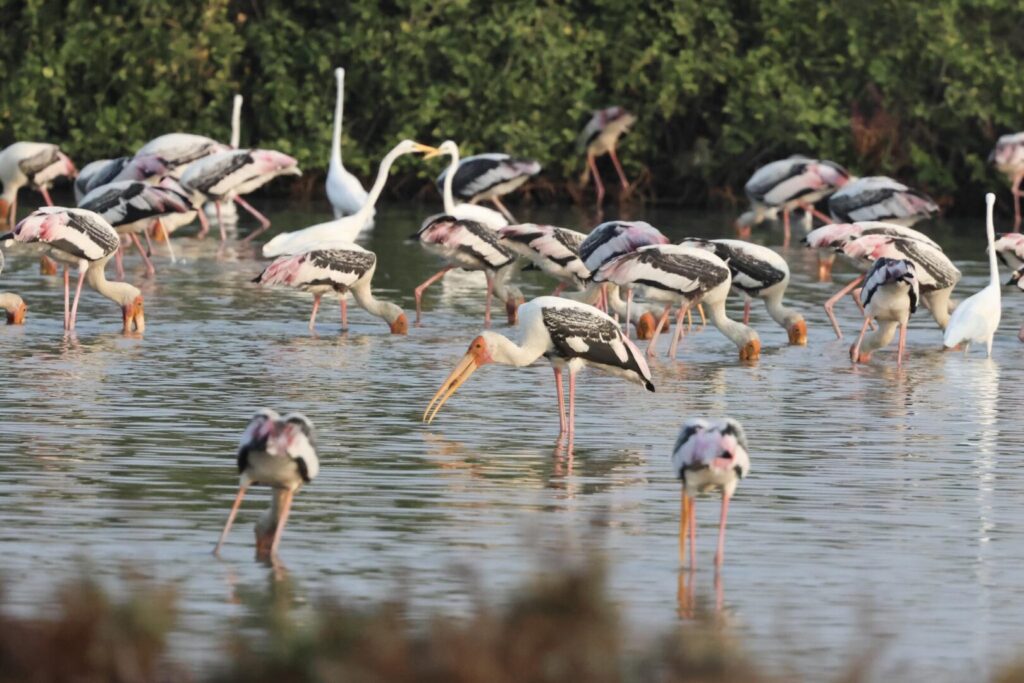
We could see lots of egrets were flying up and round over one of the pools further up. Now a succession of small groups of Painted Storks started flying in over the track ahead of us and dropping down in the same area. Clearly this was where everything was feeding this morning. Walking further up along the track, it became clear that hundreds of birds were all gathered on this one small fish pond.
It was a couple of pools back from the track but still we approached carefully, making sure we didn’t spook everything. Looking through the throng, we could see the Black-faced Spoonbill now, feeding in with them. It was hard to see in amongst all the other legs, mostly feeding with its head down and walking round in amongst the larger Painted Storks. We kept losing sight behind the vegetation on the bank in front.
We managed to find a way round and onto the bund the other side of the ditch. The Black-faced Spoonbill was a bit easier to see now. We watched it walking around feeding, occasionally lifting its head and showing off its black face.

A conservation success story, the Black-faced Spoonbill population had recovered from a low of around 400 in 1995 to around 7000 in 2024. It breeds mainly on the Korean peninsula and most spend the winter in Taiwan. It is only a rare winter visitor to Thailand, with between 0-3 per year, so we were very pleased to eventually be able to catch up with this one.
It was amazing just to watch the frenzy feeding, even without the Spoonbill. We counted at least 130 Painted Storks, plus big numbers of Great White and Little Egrets. Lots of Whiskered Terns were flying round over the water, dip feeding. Several Spotted Redshanks looked to be swimming around the edge, presumably picking up food disturbed by the other birds.
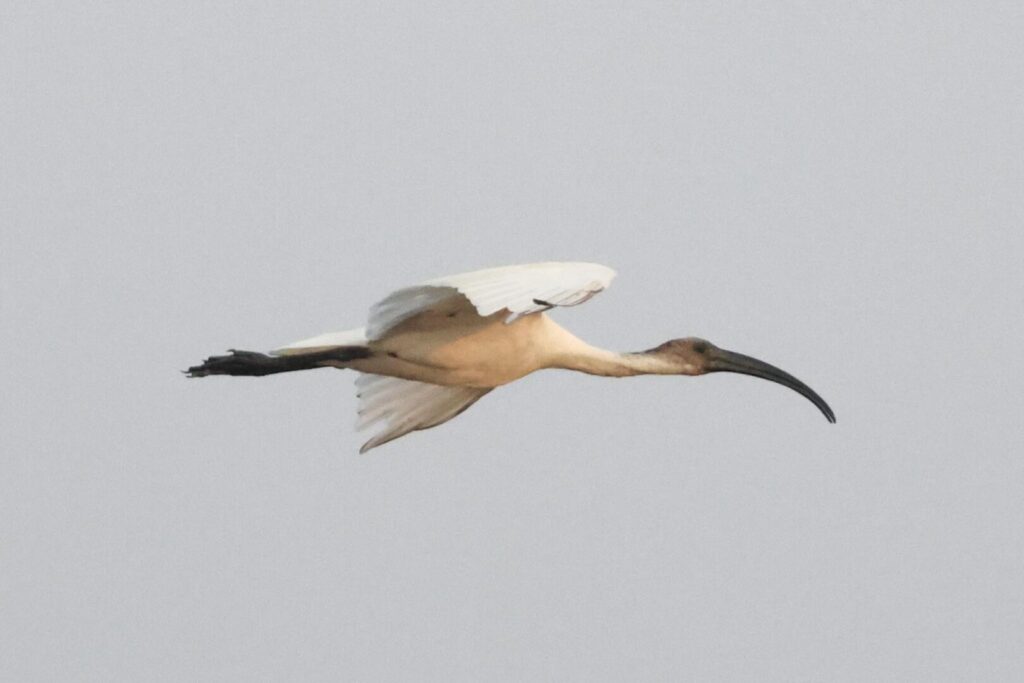
A Black-headed Ibis flew in and dropped down into the pool too. Unfortunately it landed out of view in the near corner, behind the bank.
After a while the Black-faced Spoonbill suddenly took off on its own and flew off south.

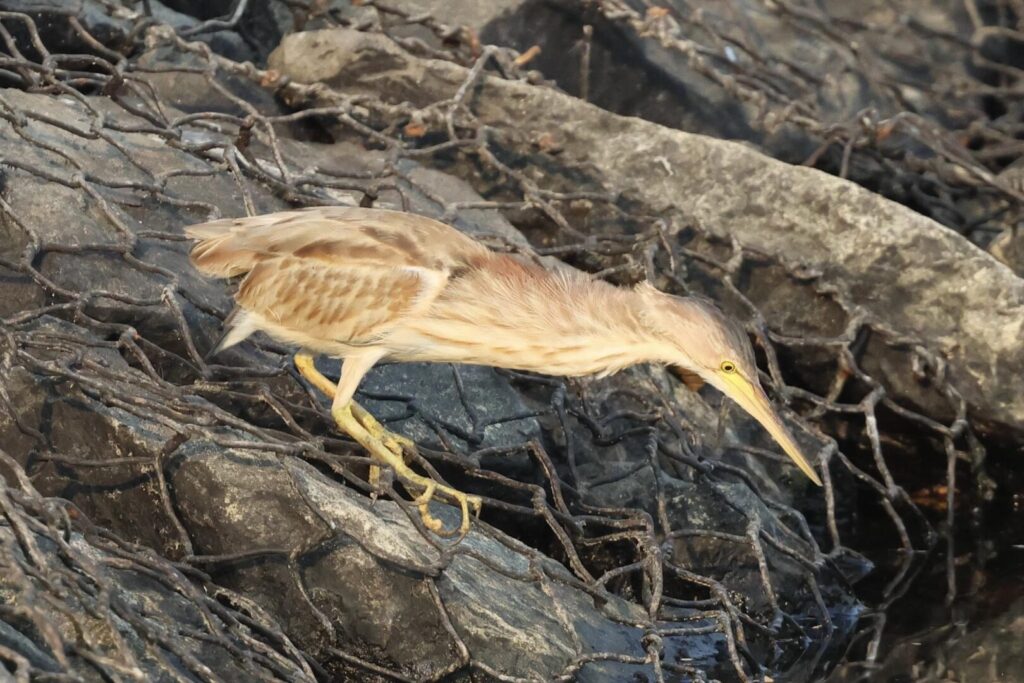
As we walked back out to the track, a Black-headed Kingfisher was perched on a bush. A small flock of Garganey flew over. From the bridge over the channel, we could see a Yellow Bittern on the water’s edge below. We watched it walking along over the rocks. It kept stopping to look for food, pumping its tail and flicking one wing up.
Mission accomplished, we drove back out and stopped to use the restrooms at the same café where we had coffee yesterday morning. We thought the café was closed (Chinese New Year today) but then the barista rode up on his moped. Sadly, our hopes of coffee were dashed again when he said it would take 15 minutes for the coffee machine to warm up! A couple of people had missed the Bar-tailed Godwits yesterday so we had a quick look at the pans behind.
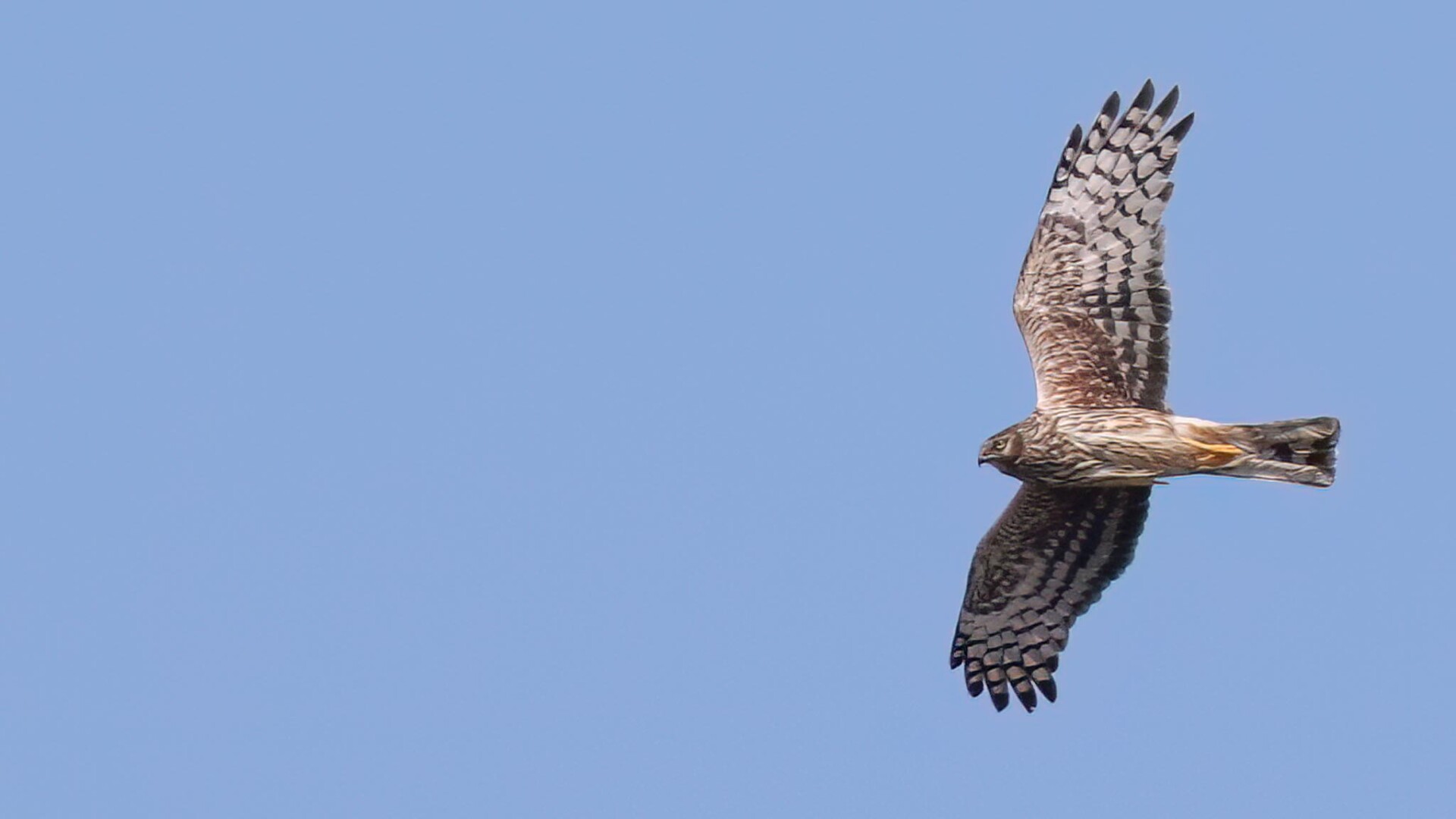
We drove out into the ricefields next and got out to scan on a quiet road by the start of a track. A juvenile Pied Harrier flew across over the fields the other side of the road. Another raptor was perched in the shade in a tree further down the track, but hard to see. As we walked down for a closer look, we found lots of Baya Weavers in the bushes and a brief Yellow-breasted Bunting with them.

A Brown Shrike perched up in front of us. We hadn’t got far when a truck came past us down the track and raptor took off – a Black Kite of the eastern race lineatus. An Indochinese Roller was in the trees here too. A male Amur Stonechat flew out and landed in the rice stubble.

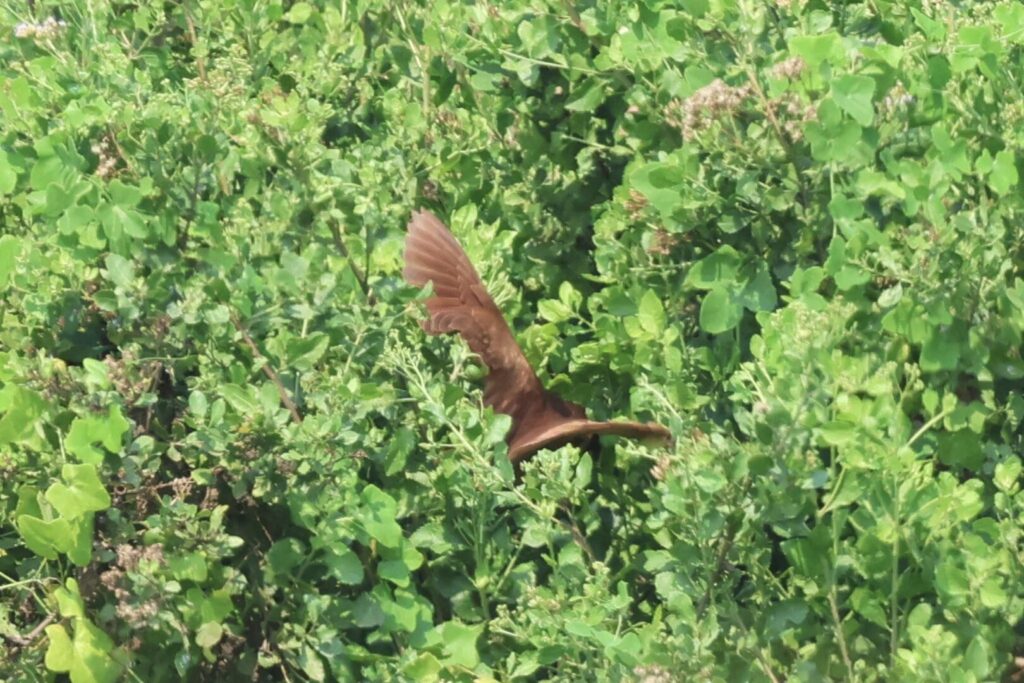
Back to the road, we walked further along. A Malaysian Pied-Fantail was singing from the ditch beside the road and two Oriental Reed Warblers chased round in and out of the reeds. Then a Cinnamon Bittern flew up out of the ditch and landed again just a short distance further on. We walked up slowly to see if we could refind it but it flew again and we lost sight of it behind the bushes.
At the end of the ditch, we stood in the entrance to the fields and stopped to scan the rice stubble. There were several Eastern Yellow Wagtails feeding here and we managed to find a couple of Red-throated Pipits with them. We would see lots of both all the way along here.
It was warming up now and the Asian Openbills started circling up all around. More Black Kites flew round out over the fields. A Greater Spotted Eagle circled low over our heads and then landed further back in one of the fields, where it was mobbed by a couple of Large-billed Crows.

At the next track, we walked in past the bushes and stopped to scan the fields again. There were lots of Eastern Cattle Egrets in the stubble and a nice, close Medium Egret, plus a couple of Purple Herons. An odd-looking domesticated duck was down in the ditch.
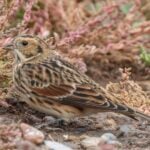
Back out onto the road, several more Yellow-breasted Buntings flew up out of the bushes with the Baya Weavers as we walked along. Another Cinnamon Bittern flushed from the ditch, and this one flew back, out across the field in the open before crash landed into a bush in the next ditch back. We could hear Black-browed Reed Warblers calling and a couple of the group glimpsed them, but they were mostly remaining pretty well hidden. A couple of Oriental Skylarks flew up singing.
There wasn’t much shade here and it was starting to get too hot. The minibuses had come to meet us so we decided to move on. We drove round for a quick look in an area for Pink-necked Pigeon next. There was nothing on the wires as we drove round, so we stopped and got out where we had seen them last year. Lots of Red Collared Doves but no pigeons. A brief Oriental Reed Warbler came up out of the reeds. A Yellow Bittern flew across and landed at back of one of the fish ponds. Several Little Grebes were out on the water the other side.
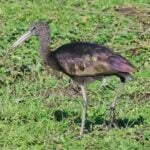
A male Asian Golden Weaver, moulting to breeding plumage, came up out of the grass, followed by a second. A little further up, we found one or two females in the reeds as well. A few Yellow-vented Bulbuls were in the bushes here too. We walked a little further up the road, and found that all the banks around the next large pool had been cleared. There were still lots of Whiskered Terns on the island. We found a single Lesser Whistling Duck and a Glossy Ibis further back.

It was time to be heading on inland now, as we had a long drive up to Kaeng Krachan. Most places seemed to be closed for Chinese New Year but Dteng managed to find a restaurant which was open for lunch. Dteng ordered our usual selection of dishes but also some Vietnamese summer rolls, a speciality of the house which the staff were making out on the side of the street at the front.
After lunch, we drove on, stopping briefly again at a filling station (the iced latte was good too!). We finally arrived at Baan Maka at 2.30pm, where we would be staying for the next four nights. It was still hot so we took a break to get checked in, and get everything sorted. Drinking tea outside one of the bungalows, a Grey-headed Canary-Flycatcher kept returning to the same perch by the terrace. A brief Hainan Blue Flycatcher appeared in the trees above too.
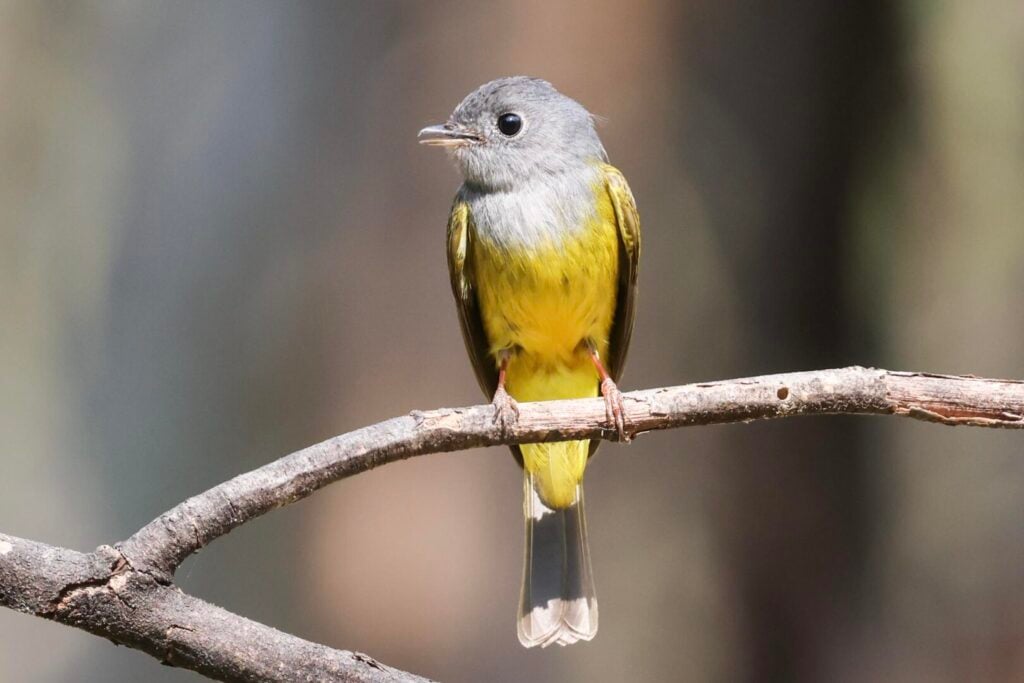
We met again at 4pm down at reception for a walk round the grounds. Several Stripe-throated Bulbuls were high in the trees by the parking area. An Asian Brown Flycatcher was flycatching from the branches in the grounds beyond. Down by the lake, we found another Grey-headed Canary-Flycatcher for those who hadn’t seen the one earlier.

There were a couple of Moorhen out on the water and scanning the edge of the reeds we found a Yellow Bittern frozen on a reed stem. Three Oriental Pied Hornbills chased through the trees then perched up nicely where we could get them in the scopes. There were lots of Barn Swallows, a few Eastern Red-rumped Swallows and Germain’s Swiftlets further back up in the sky. A Shikra circled up in the distance over the hill beyond, but quickly broke off and set off on a long glide across.
Round the edge of the channel on the far side, we flushed a Ruddy-breasted Crake which typically flew out from the near edge and disappeared straight back into cover on the far side of the water. A Dusky Warbler flew across too. A little further round, another Yellow Bittern was stalking along the bank under the trees.
Cutting across to the other side, for a closer look at the Canary-Flycatcher, we found several Hair-crested Drongos up in a flower tree. They kept disappearing down out of view but eventually we got one in the scope and could even see its hair crest. A female Black-naped Monarch was flycatching in the trees too.
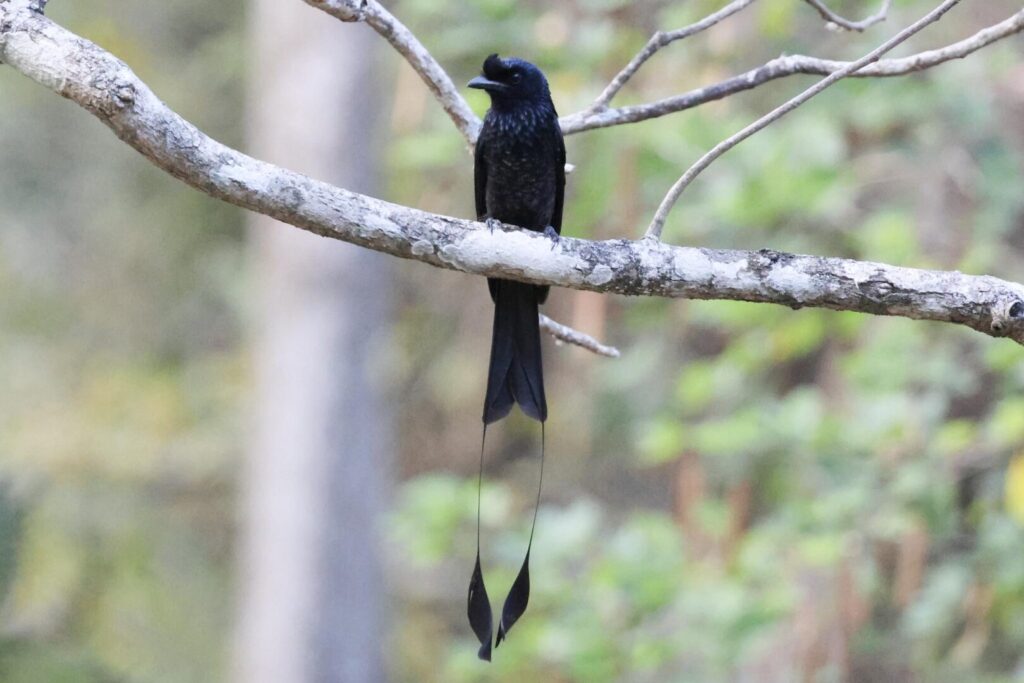
We walked back to the restaurant and took the Nature Trail. We couldn’t see anything coming in to the new hide, so we carried on. A couple of Malaysian Pied Fantails were in the bushes by the stream and we found several more Stripe-throated Bulbuls in the trees. In the more open dry forest on the rocky hillside, we found a Verditer Flycatcher, a couple of Lineated Barbets, Common Iora and Greater Racket-tailed Drongo in the trees. Several Grey-bellied Squirrels too.
We stopped to look at an Ashy Drongo of the Chinese race, paler grey with a distinctive white cheek patch. A Vernal Hanging-Parrot landed in the crown of a tree ahead of us, just long enough to get a quick look at it before it flew off over our heads. A White-rumped Shama flew up off the path and disappeared into the bushes. When we came back out by the bungalows at the far end, a pair of Common Flamebacks were in the trees.
While some of the group went off for a shower now, others went back down for a quick look by the lake. There was no further sign of the crake though, despite it getting towards dusk now. A Taiga Flycatcher was perched out on a stick in the water. A Blue Whistling Thrush appeared on a wooden seat nearby. A Water Monitor swam out from between the reeds.
We met up again at the Tingky Bar in the kitchen garden at 6pm. On the way there, one of the group disturbed three Scaly-breasted Partridge from the edge of the ditch by the bridge and we could just see them still feeding on the bank a little further down.
It was a bit too cloudy to see the sun go down (and we might have missed it anyway), but it was great to sit out on the hillside by the bar and watch the light slowly fade. On cue, a Large-tailed Nightjar started calling and then we sat and watched a couple flying round over the banana palms in front of us. As it started to get dark, we could hear an Indian Thick-Knee calling.
We walked back in the dark to the restaurant for dinner. After going through the list, it was time for bed. An early start tomorrow.
Tuesday 17th February
An early breakfast was arranged for 5am today, as we were heading in to Kaeng Krachan National Park today and trying to get up to the top as early as possible. We set off in the minibuses in the dark and it was just getting light as we arrived at Ban Krang campsite. Several Oriental Pied Hornbills flew over. The minibuses can’t drive up further from here so we transferred to two 4x4s, accompanied by a couple of local drivers who doubled as bird guides.
Driving down to the first stream, we could see lots of fresh elephant dung in the road, and branches broken off – an Asian Elephant had been through here very recently. Ascending the rough track up the hillside, we disturbed a pair of Red Junglefowl from the road and an Asian Emerald Dove. A Crested Serpent Eagle was perched in a tree.
We stopped a few kilometres below the top as one of the drivers knew the location of a Long-tailed Broadbill nest under construction. As we stood and waited for the birds to come in, a flock of Collared Babblers passed through quickly. After a while, the pair of Long-tailed Broadbills came in with nest material and perched in the trees nearby, presumably waiting for us to move off. A Greater Green Leafbird appeared briefly, high above our heads. We could hear the haunting calls of the Lar Gibbons in the forest.
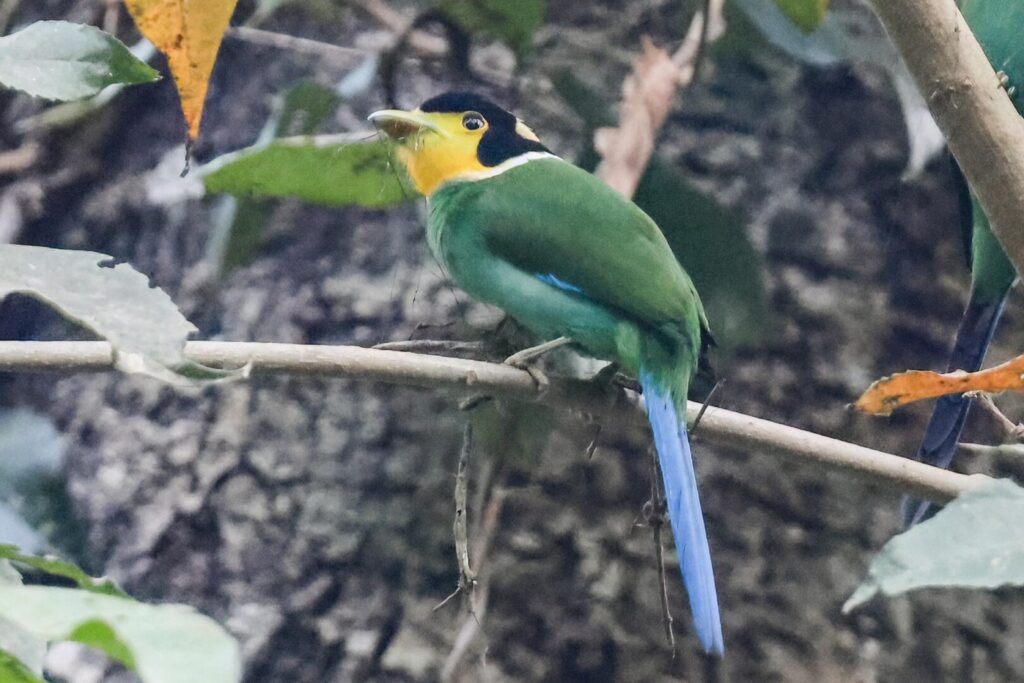
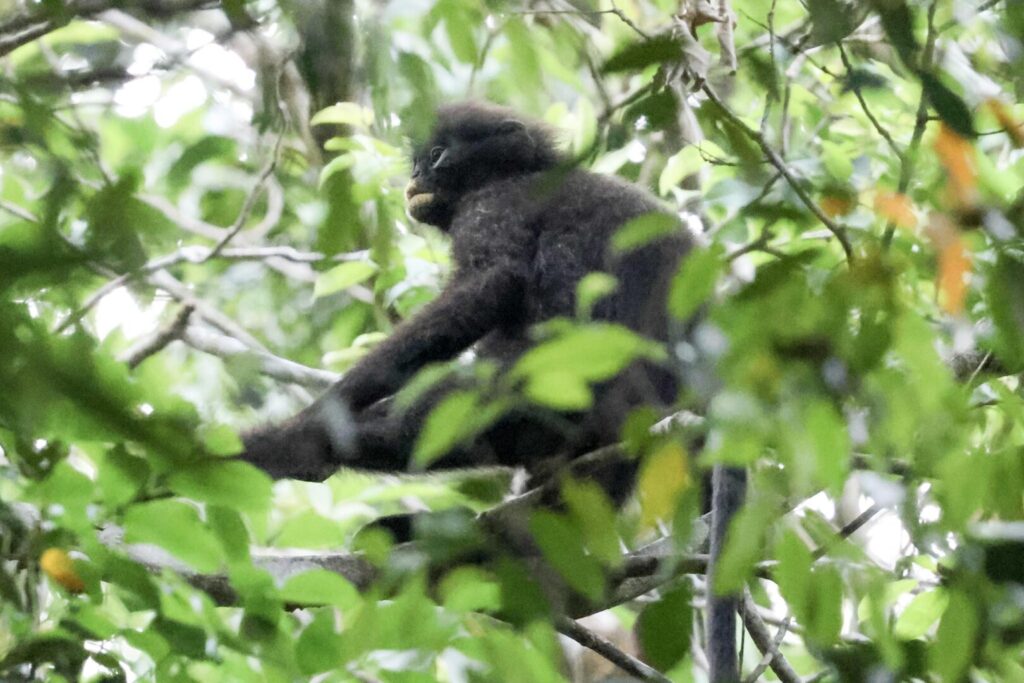
Driving on, we stopped again a couple of kilometres further on and got out for a walk. Dteng had a brief Trogon in the trees but it disappeared before anyone else could see much more than a shape flying off. Another Long-tailed Broadbill flew in and out of a nest it was building above the track here. A Robinson’s Banded Langur was in the trees. We found a small mixed flock above the track, and we managed to see a couple of Sulphur-breasted Warblers and a Grey-headed Canary-Flycatcher before it moved quickly deeper in.
A little further on, we heard a White-browed Piculet calling and drumming in bamboo and managed a couple of brief glimpses. We were hoping to look for Silver Oriole along here but we didn’t manage to get to the best place before we had to drive on. The traffic on the road here alternates one way and then the other. At 9am it was going to switch to downward travel only, so we had to get to the top before then.
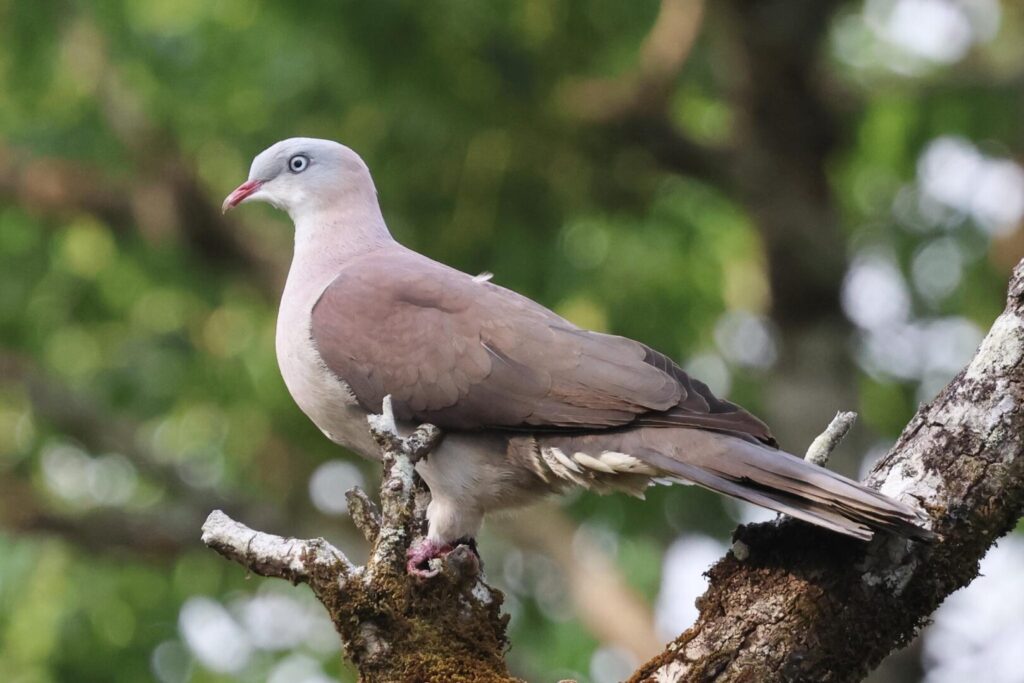
Up at the top, we found a Dark-sided Flycatcher flycatching from a dead branch in front of the parking area. Lots of birds were coming and going here, feeding in a big fruiting tree. As we stood and watched, we found Blue-eared and Blue-throated Barbets, several Eye-browed Thrushes and a single Grey-sided Thrush and lots of bulbuls. We had some great views of Mountain Imperial Pigeons perched obligingly out in the open.
A Vernal Hanging Parrot landed in the top of the tree and stayed there preening. An Ashy Drongo of the white-faced form flew in and out.

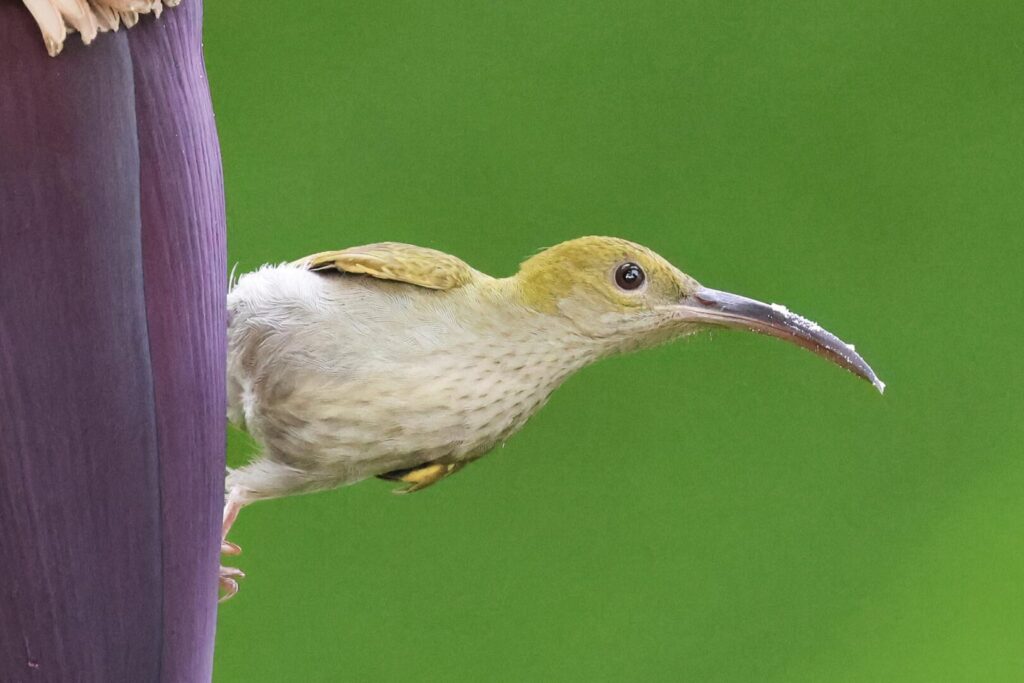
There were some banana flowers on the low trees right in front of us and a Grey-breasted Spiderhunter came in several times to feed on one, but a Streaked Spiderhunter was less bold.
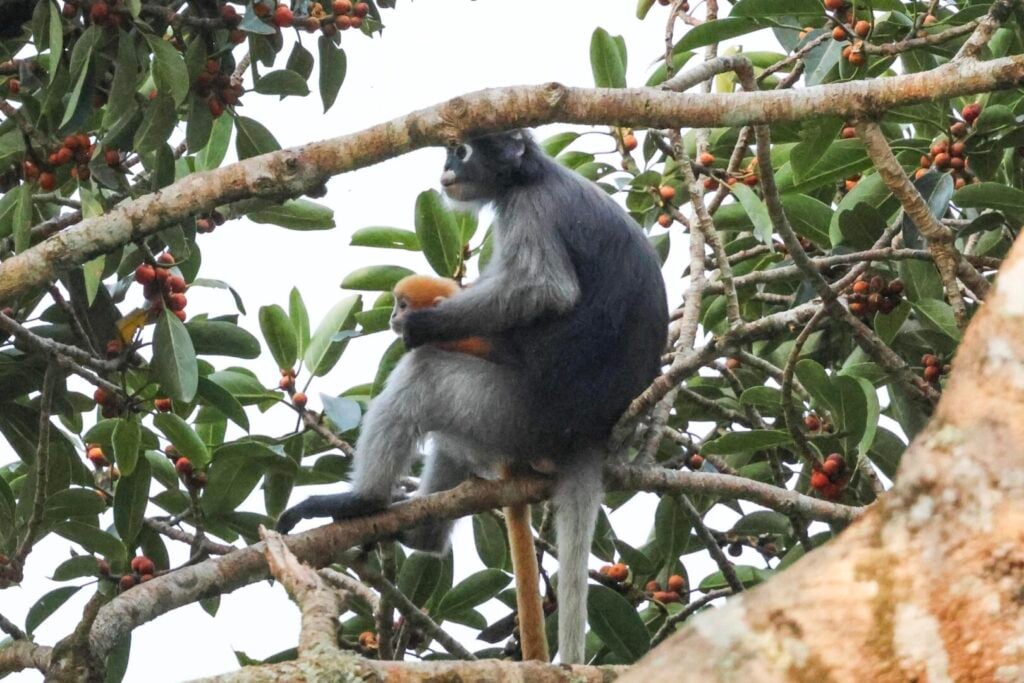
There were several Dusky Leaf Monkeys in the trees too, including one female with a small, rusty coloured baby.
Our minibus drivers had come up with us and set up to make coffee outside the park office. They had brought snacks too. As we drank our coffee, we could see some very distant Asian House Martins and Eastern Red-rumped Swallows with the Swiftlets over the hillside opposite. Several Hume’s White-eyes were calling in the trees and flew up towards the campsite. After coffee, we followed them up.
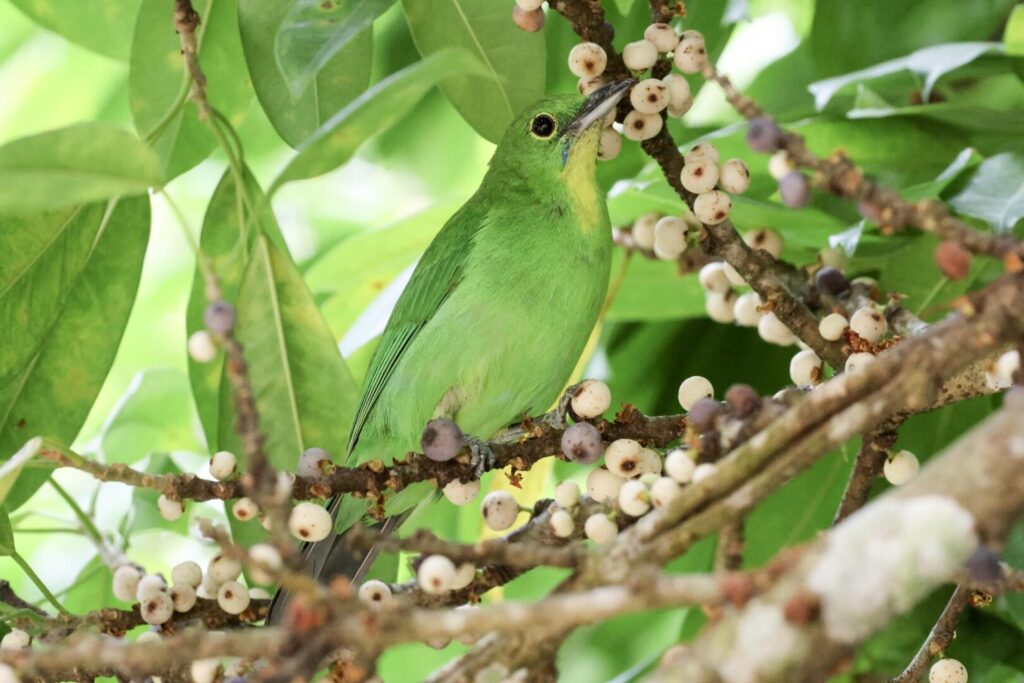
Standing under the fig tree by the campsite, lots of birds were coming and going to feed on the fruit. We had great views of the Hume’s White-eyes now, just above our heads.
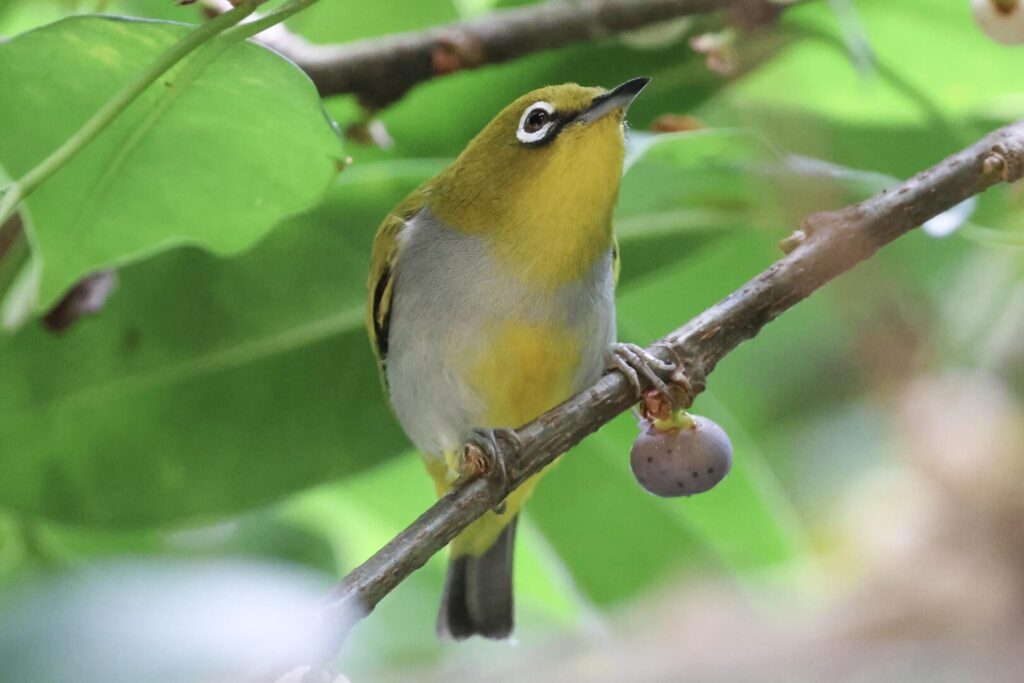
There were several Greater Green and single Orange-bellied Leafbirds,…
…a pair of Wedge-tailed Pigeons, more bulbuls including Ochraceous and Olive, Ashy and Mountain too now.

A Yellow-vented Flowerpecker appeared briefly, plus a stunning male Asian Fairy Bluebird.

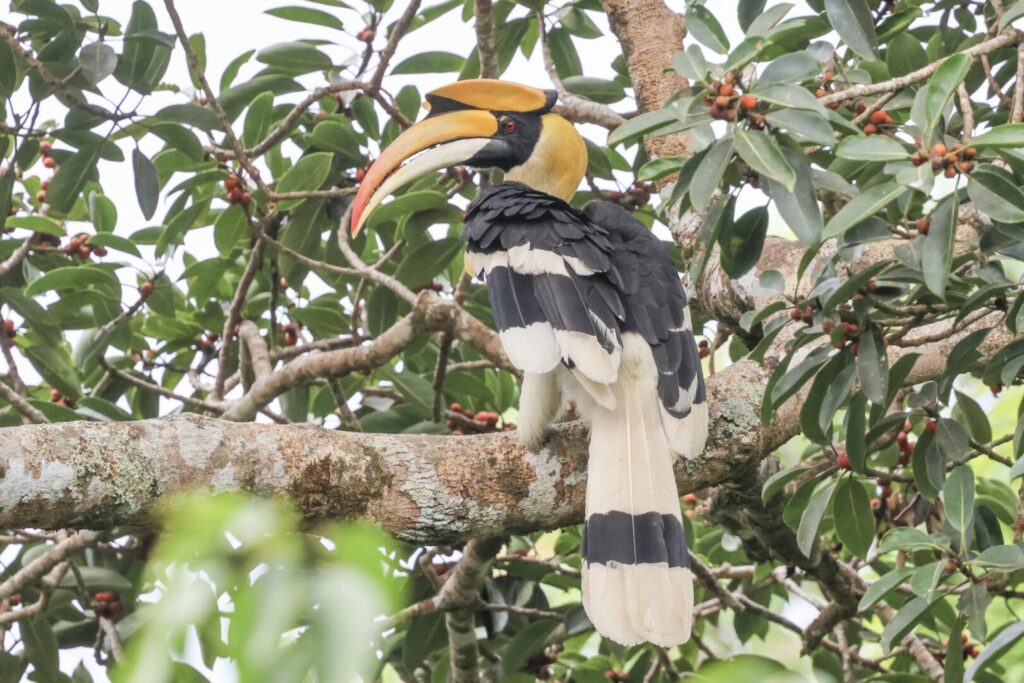
A Great Hornbill flew in to the trees below the restaurant so we went back down to try to find it. It flew across the road and then up into the fruiting tree by the parking area. We watched it gulping down fruits, picking them off and throwing back its head to swallow them.
A pair of Asian Fairy Bluebirds was in the fruiting tree too now. A Red-billed Malkoha appeared in the trees right above our heads.

We had originally thought we might spend the whole day up here but we had booked into a hide tomorrow morning to try to see a Blue Pitta which had been come in. If we wanted to spend the afternoon around the streams, we needed to get back down before 1pm. Back in the trucks, we had only just got past the barrier when we stopped and got out again. One of the drivers knew where a Grey Nightjar was roosting and, sure enough, there it was high up in a tree.
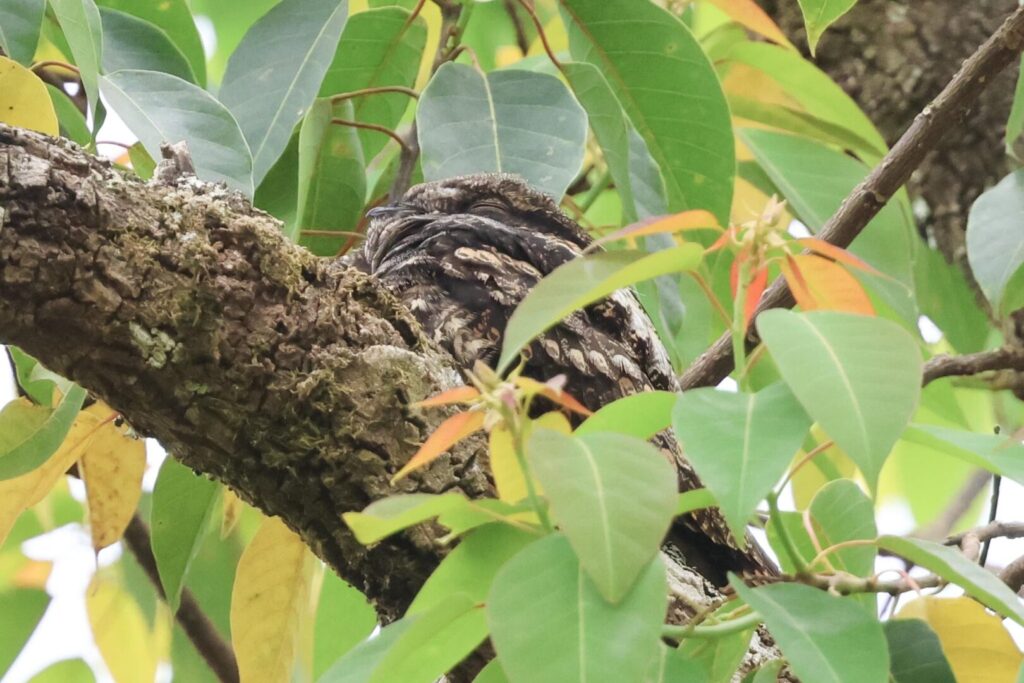
Setting off once more, we found a Lar Gibbon feeding in the top of a tree below the track just a few metres further on.

Then a Blue-throated Barbet excavating a nest hole right beside us.
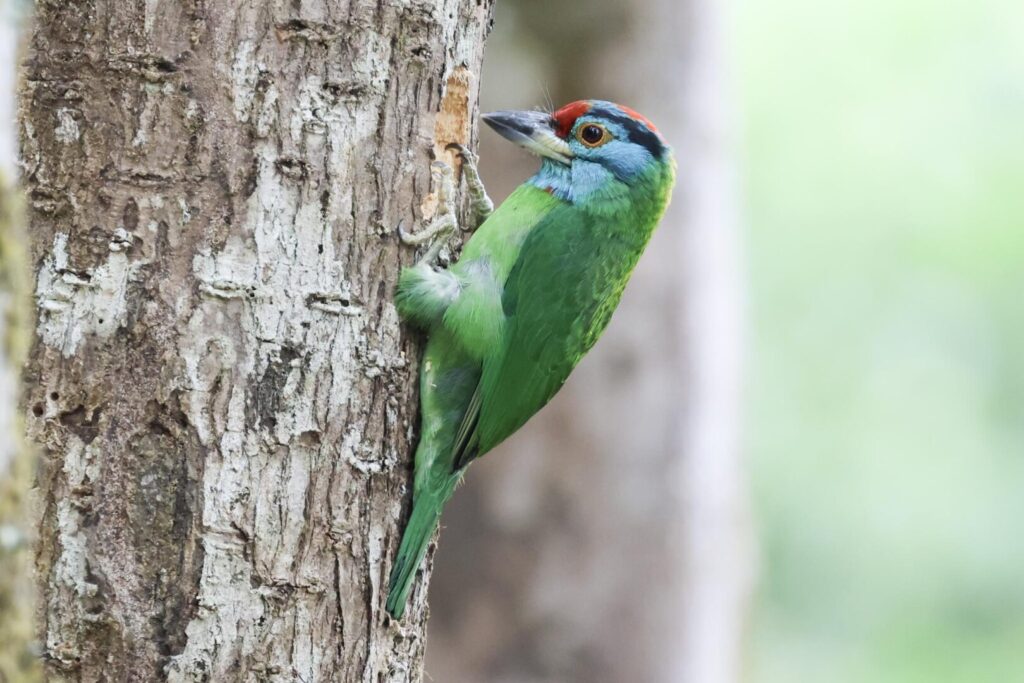
We stopped again a few kilometres below the top and got out to walk down along the track. This is the best area to try for Silver Oriole but it sounded like they have been much more erratic in their appearances this winter. Late morning now too, it all felt rather quiet at first. There were a few bulbuls and another Blue-throated Barbet coming to a fruit tree where we hoped the Orioles might be.
Further along, we eventually came across a good mixed flock too – lots of Sulphur-breasted Warblers, an Eastern Crowned Warbler, Yellow-bellied Warbler, and both Speckled and White-browed Piculets. A couple of Grey-rumped Treeswifts were flying back and forth over the hillside, occasionally visible over the track. A Black Giant Squirrel was in the trees. But no sign of any Orioles. Then we had to continue on the way back down.
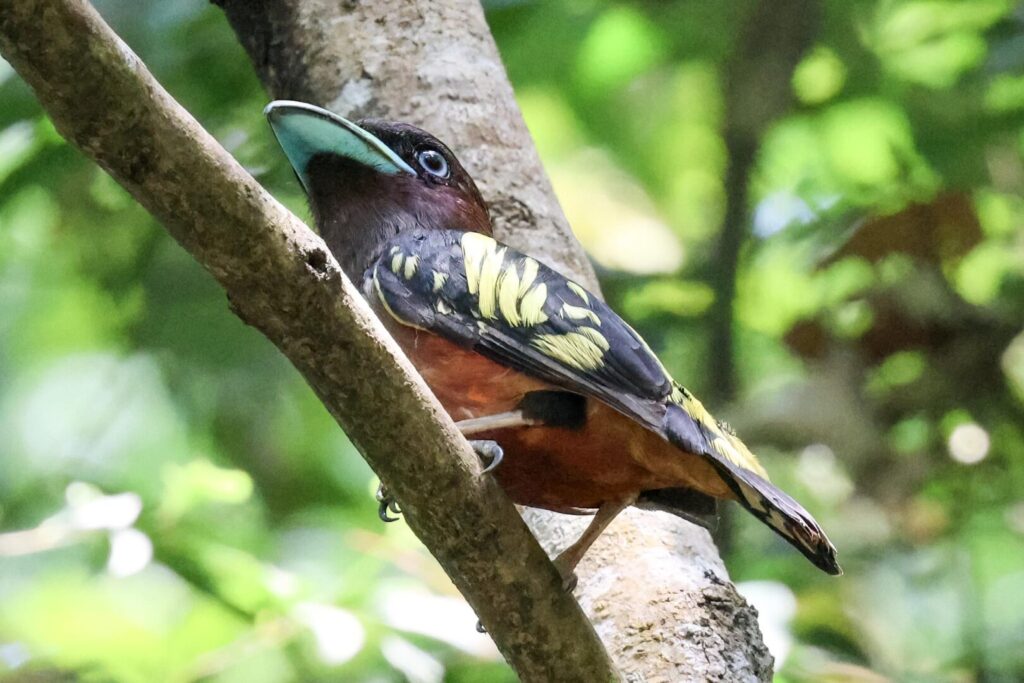
Dteng spotted a Banded Broadbill perched beside the track as we drove past so we stopped to look. There were at least two, maybe three of them, and we got some nice views in the trees here. After that, we just managed to make it through the barrier at the bottom before the 1pm deadline, when the traffic shifted back to uphill only.
We stopped for lunch at the restaurant by Ban Krang campsite. Afterwards, we had half an hour to get a coffee or have a rest. Looking round the campsite we found a Blue-winged Leafbird and several Ornate Sunbirds in the flowering trees.
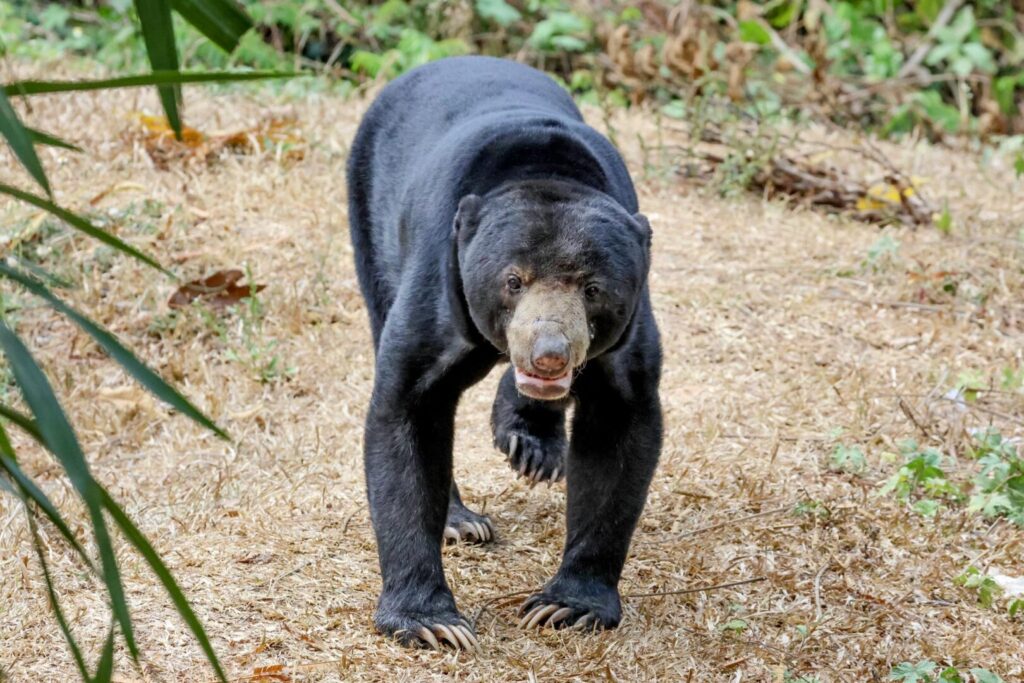
Dteng called us back because a Sun Bear had appeared behind the restaurant. It walked round the buildings behind for a bit, then tried to come in to the back of the kitchen. It wouldn’t retreat even when a woman came out and threatened it with a broom, even tapping it on the nose. When the woman then threw a bowl of water over it, that worked and it finally walked off.
Two of the group had seen a Forest Wagtail in the campsite before we were distracted by the Sun Bear but we couldn’t refind it now. The Blue-winged Leafbird was still there, along with a Bar-winged Flycatcher Shrike and lots of Dusky Leaf Monkeys.
Back into the 4x4s, we set off to drive to the streams. We didn’t get far before we found the Forest Wagtail now on the road. We stopped to look as it walked down and into the trees, where we watched it creeping around in the dry leaves. Three Sultan Tits appeared too, in the trees above the turning circle.

Over the three streams, we stopped and got out again. Dteng showed us a Rusty-cheeked Hornbill hole high in a tree nearby. While we stood and waited for them to come in, we watched the clouds of butterflies coming down to drink by the stream.
We didn’t have to wait long. The Rusty-cheeked Hornbills called as they came in to feed the female walled up in the hole. We watched at least three different birds come in to the nest hole in turn, with different food items. A fourth was still in the trees nearby. Interesting to watch the extended family all helping to feed the nesting female. A good example of cooperative breeding.

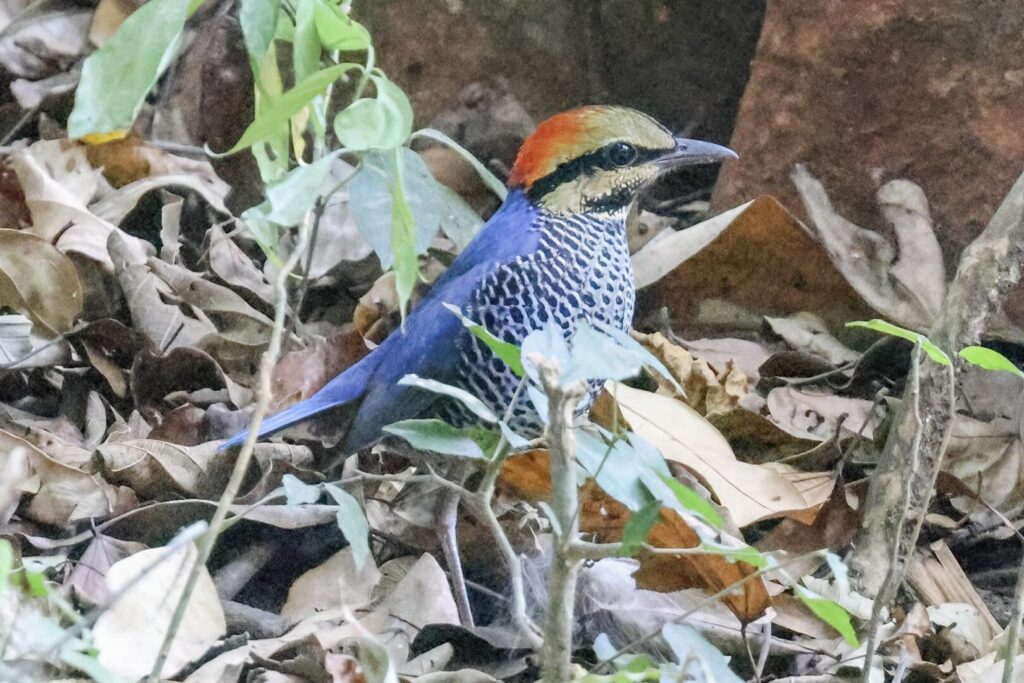
The jeep drivers now heard a Blue Pitta calling just beyond. We could see it moving in the trees and had brief glimpses before after a while, it came out onto the side of the road in the open. Excellent views now, a bright blue male. It flew across the road and disappeared back into the trees. We thought it had gone but then reappeared on a log before flying back to the other side. Great to see one here, we didn’t need to go to the hide tomorrow morning now.
Back over the last stream, we stopped again to walk. We found a mixed flock here and followed it for a while. There were several Rufous-fronted Babblers, a couple of White-browed Scimitar-Babblers and brief Pin-striped Tit Babbler. We managed to see two Blyth’s Paradise Flycatchers, a Yellow-bellied Warbler and a couple of Black-naped Monarchs before we lost track of the flock.
Further on, we heard another Banded Broadbill calling and when we stopped to look, a Hainan Blue Flycatcher appeared. The drivers had found a Black-and-Buff Woodpecker in the trees ahead but it proved hard to see, most of the group managed a glimpse of flight views.
Over the next stream, we stopped to look at White-bellied Erpornis nest in a low tree by the track but there was no sign of the adults. As we walked on, we heard a Collared Owlet calling. It seemed to respond to a whistled imitation of its call but went quiet when Dteng tried playback to tempt it out. A male Greater Flameback was up in the trees above the track.
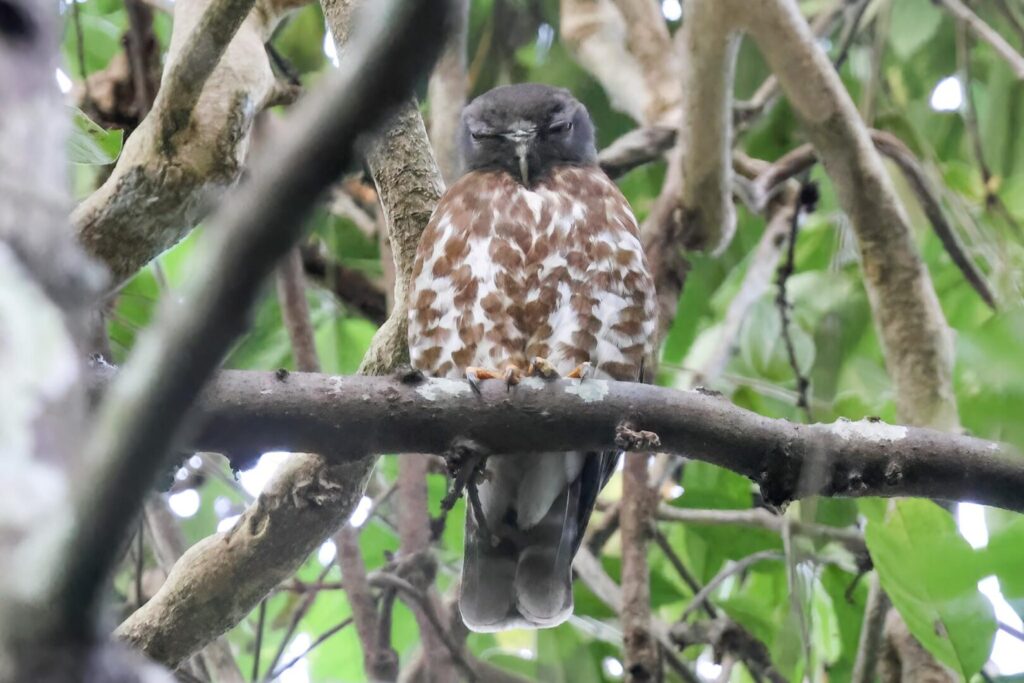
There had apparently been a Brown Boobook in the trees by the first stream earlier, but there was no sign of it there now. One of the drivers walked back slowly along the road and then called us over. Amazingly he had found it again, despite it being incredibly well hidden in the trees. It was hard to see even when you knew where it was! We had a better view of it from inside the forest, looking back.
Back in the 4x4s, we set off again back to the campsite. Another Great Hornbill was perched in a tree by the track on the way. We said goodbye to the jeep drivers and transferred back to the minibuses. On our way out of the park, we stopped again to see if we could find the resident pair of Black-thighed Falconets. Scanning the trees, there was no sign, just a couple of Oriental Pied Hornbills. Perhaps we were just a bit too late? It was almost dark by the time we got back to Baan Maka. Still, time for a shower before dinner.
Wednesday 18th February
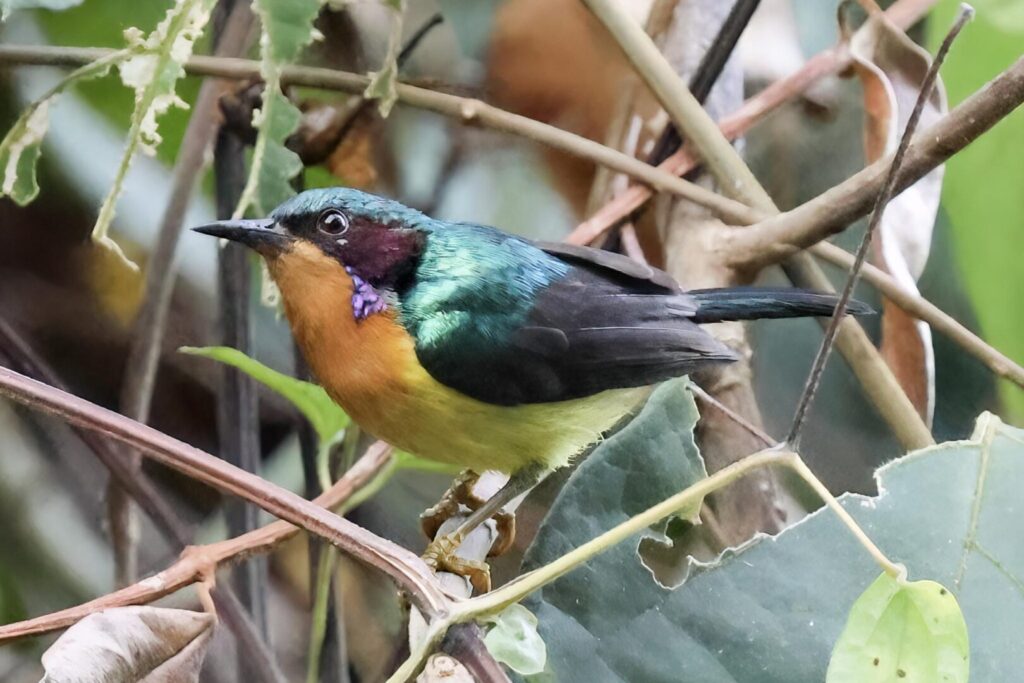
A Large-tailed Nightjar was calling over breakfast this morning. We left just after 6am and drove up into the National Park again in the minibuses. We would be exploring the lower part of the park today, so we stopped and got out at Km 9. The sun wasn’t up yet. Lots of bulbuls were chattering in the trees and we found our first Green-eared Barbet with them. We stopped to watch a pair of Blue-winged Leafbirds, and found three Ruby-cheeked Sunbirds feeding on the flowers here.
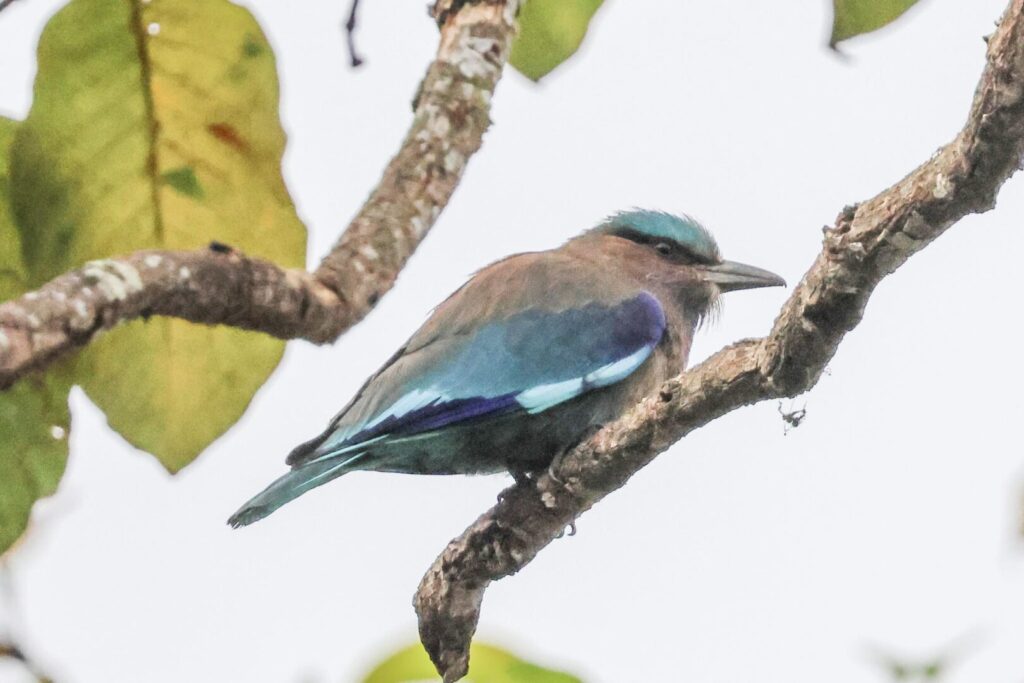
Finally everyone managed to see a couple of Pin-striped Tit-Babblers in the trees above too. A couple of Greater Racket-tailed Drongos were in the trees behind the marshy area and a male Asian Fairy Bluebird flew in. It landed in a tree and we got in the scopes. Not to be outdone, an Indochinese Roller then landed on a low branch right above us.
A pair of Common Hill Mynas were in the trees further down, flying in and out of their nest site. There were several Hair-crested Drongos here too, through the scopes we could see their hairy crests.

Three Sultan Tits appeared. They were feeding unusually low down, in the bushes right next to the road today, great views. We found a pair of Dark-necked Tailorbirds in a tangle and had a good look at a Blue-eared Barbet singing from the top of a tree. There were plenty of bulbuls here too, including two Yellow-vented Bulbuls which moved through with some Streak-eared Bulbuls.
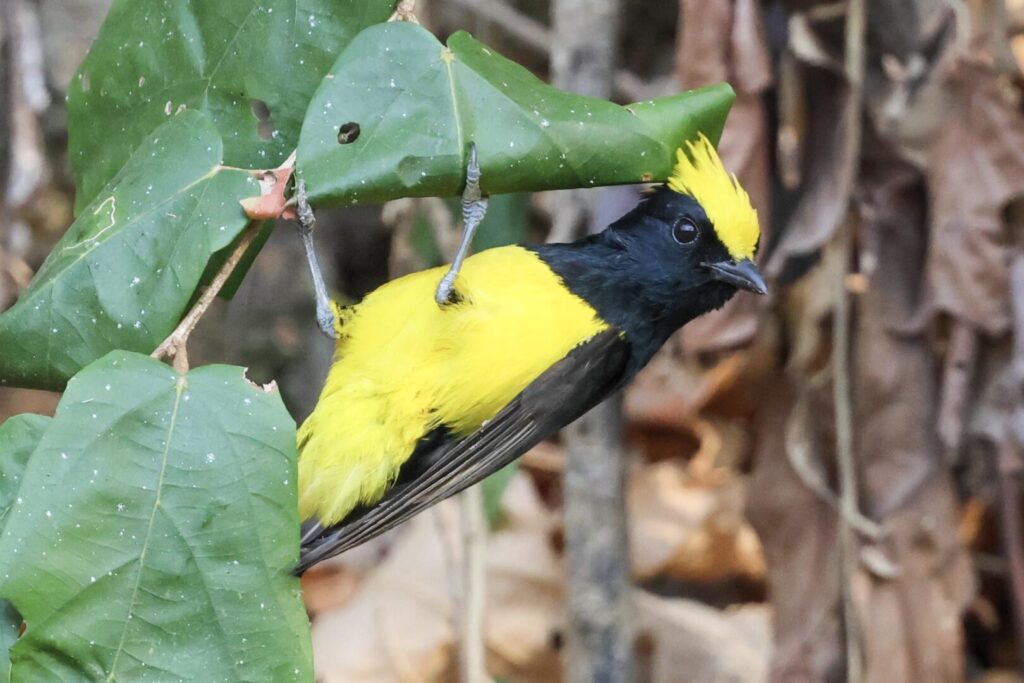
A couple of Oriental Pied Hornbills came in to feed on a fruit tree right above the road. Dteng picked up a group of nine Wreathed Hornbills flying off in the distance. Later, a group of ten flew over our heads. Nine initially so we thought they might be the same but followed by one straggler which caught up with them. They were coming from a different direction too – a different group?
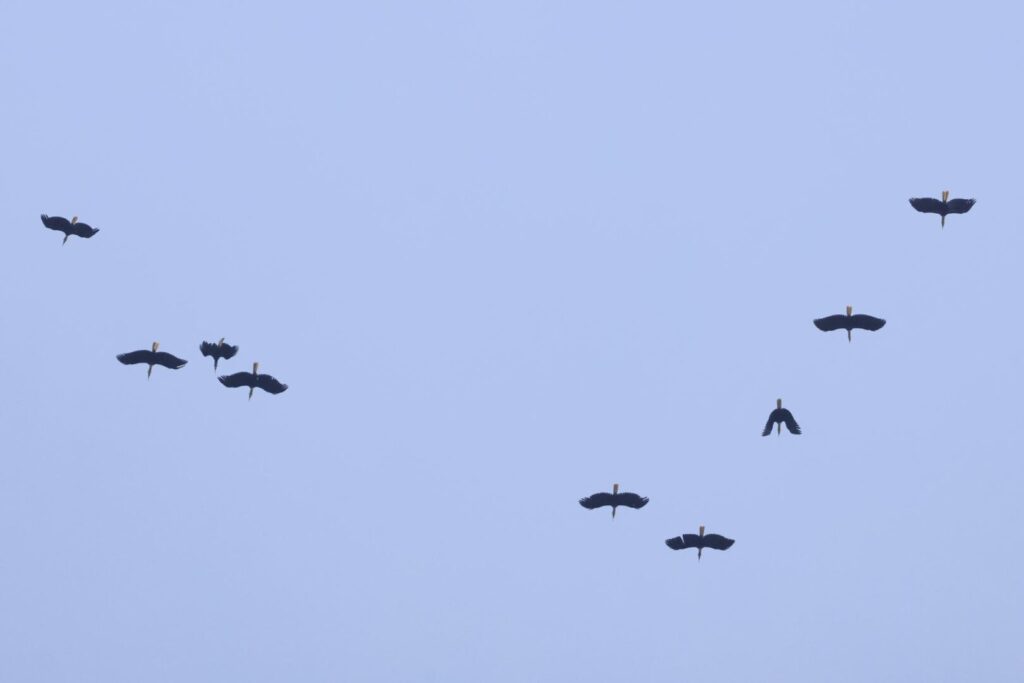
Several Green Pigeons flew over but we didn’t manage to see one when it landed. A few Black-naped Orioles flew back and forth too. A Yellow-vented Flowerpecker was feeding in the trees and four Velvet-fronted Nuthatches appeared above us. We were just about to leave, when a Black-thighed Falconet appeared. It was a bit distant, but perched up in the top of a bare tree and OK views in the scopes.
Continuing on along the road, we stopped again at the bridge. A small flock of Thick-billed Pigeons flew in just as we arrived and landed in the trees. Finally!
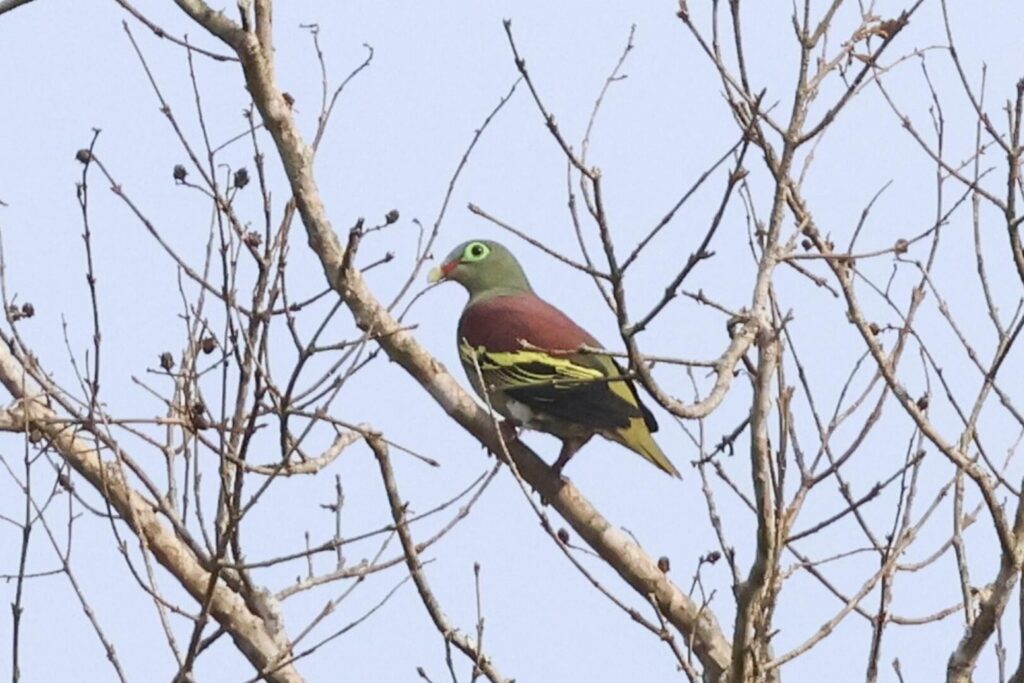
There were a few birds on the pools here. A Little Egret in a tree, a Chinese Pond Heron down by the water and a pair of Red-wattled Lapwings on the mud at the back. A White-breasted Waterhen came out of the vegetation at the front and gave good views. A Little Cormorant was diving on the deeper pool the other side of the road. The drivers had brewed up the coffee so we had a break now.
Walking on again, a couple of Taiga Flycatchers flicked ahead of us along the verges. More Black-naped Orioles flew over. Dteng heard a Great Slaty Woodpecker calling and we had a brief glimpse of one as it flew across through the trees. Another was still calling from very low down in trees and mostly out of view. A couple of times it just came up a short way on to a trunk. We could see it, but it was nervous and remained mostly round the back of the tree.
It was warming up now, and raptors started to circle up. From the open area a little further on, we saw several Crested Honey Buzzards and a Crested Serpent Eagle. A Shikra was very high in the sky displaying. We were hoping to find Banded Kingfisher or Black-and-Red Broadbill here but there was no sign of either. We heard an Orange-breasted Trogon calling in some dense undergrowth by the road, but could not see it. The minibuses were waiting for us here so we drove on further and then stopped again.
With the temperature rising steadily, the early activity levels had dropped. We found a Greater Flameback in a tree ahead of us. Lots of Black-headed Bulbuls were coming in to a fruit tree but we couldn’t see anything else with them. As it clouded over a little, cicadas started calling in the trees either side of us. More and more joined in, building up to a crescendo so loud it could give you a headache. An amazing noise, it continued on and off all the way along this section of road.
Eventually, we got past the worst of the cicadas and we heard a Black-and-Yellow Broadbill call in the trees by the road. With a bit of perseverance, we managed to find two or three in the branches and eventually got very good views of them. Smart birds.
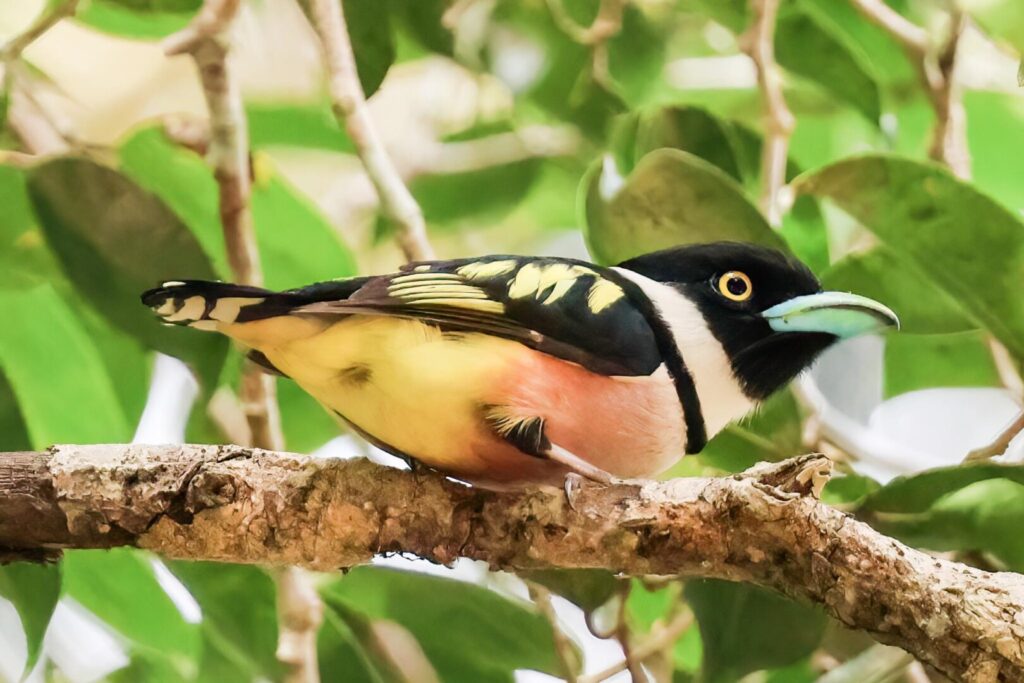
We walked on and it wasn’t far from here to Ban Krang. A Grey Wagtail was down on the weir and a Spotted Flying Dragon was on a tree in the campsite. We could hear a Banded Bay Cuckoo calling. There were not many birds in the trees by the stream now, just a couple of Oriental Pied Hornbills.
The Forest Wagtail was feeding in the leaves again, where we had eventually seen it yesterday. The cloud had thickened just enough for a few light spits of rain now. It didn’t come to anything though, and quickly brightened up again.

The minibuses were waiting for us in the car park and we set off back along the road. A large troop of Stump-tailed Macaques was in the road just beyond the barrier and we had to wait for them to cross first. We drove back to Baan Maka for lunch today. No time for a rest today, we left again straight after lunch and headed over to Mr Bird’s Hide.
Sitting down in the hide, a pair of Puff-throated Babblers were hanging around Mr Bird’s feet as he put out the food. A pair of Racket-tailed Treepies came back in straight away after he left, feeding on mealworms stuffed into holes in the trees, as did a pair of White-rumped Shamas.
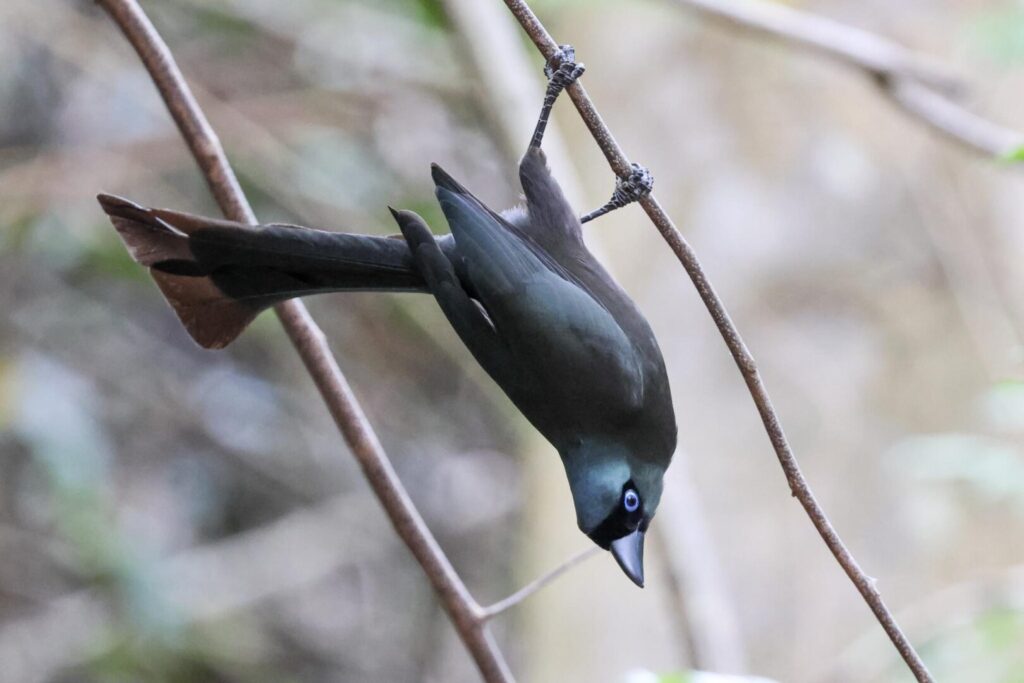
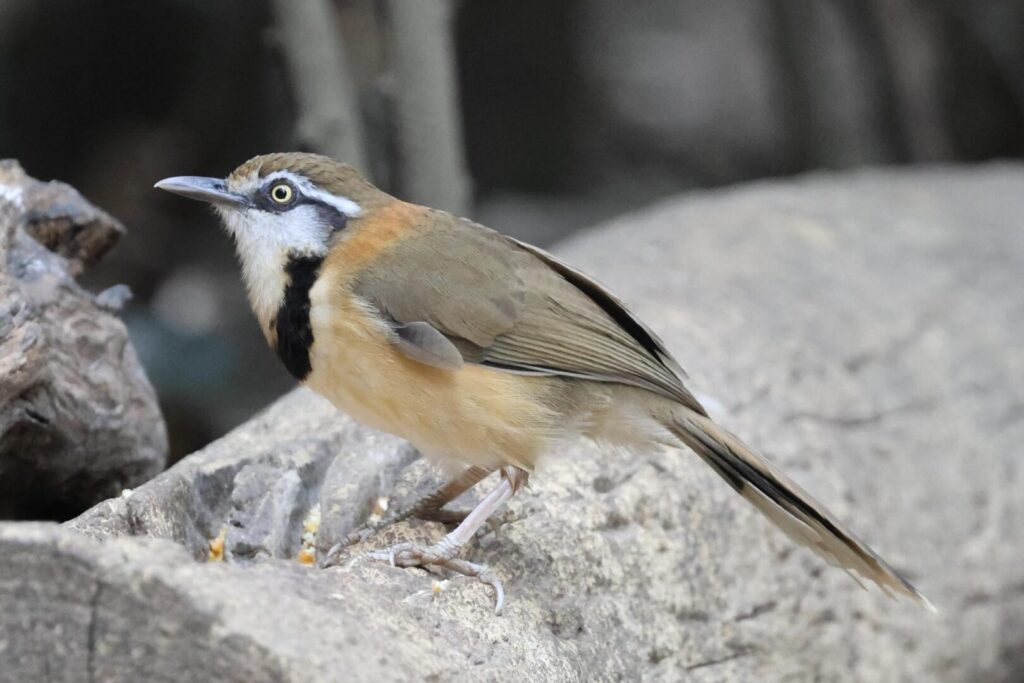
They were quickly followed by a group of Greater and Lesser-necklaced Laughingthrushes which then seemed to hang around most of the time we were there.

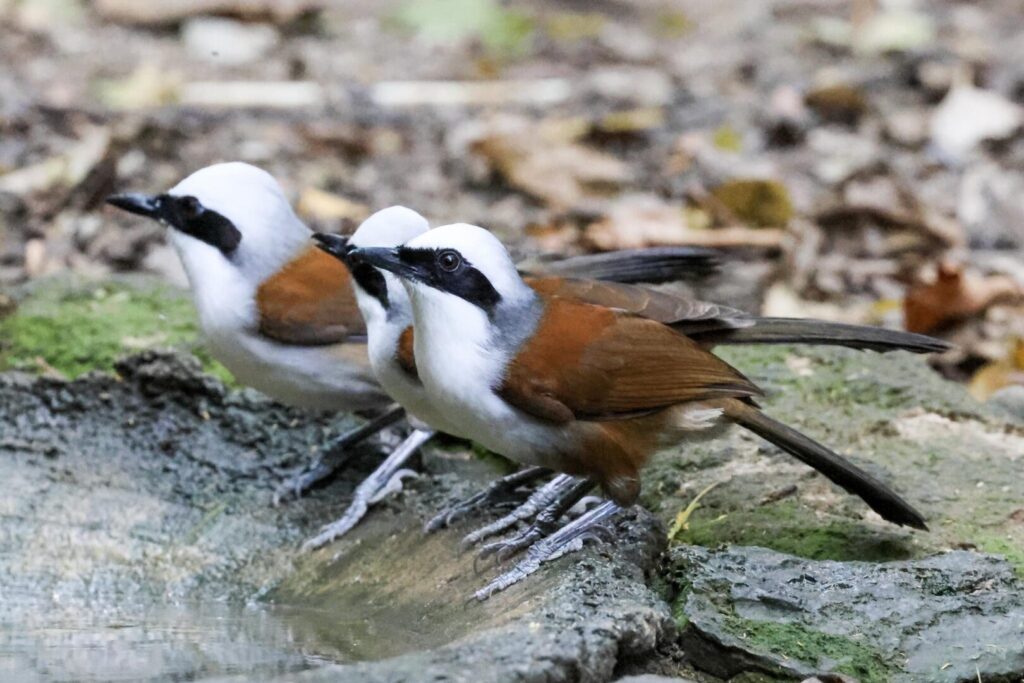
A group of White-crested Laughingthrushes came in and out a couple of times too.
Two Asian Emerald Doves would be around much of the time as well.

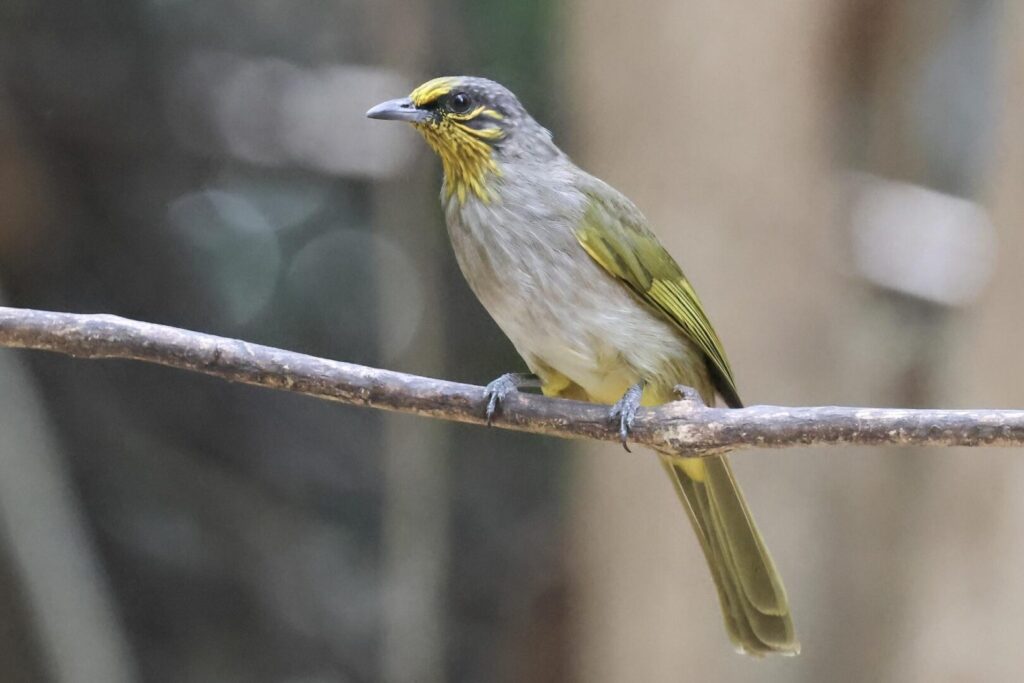
A succession of bulbuls included several Stripe-throated Bulbuls.
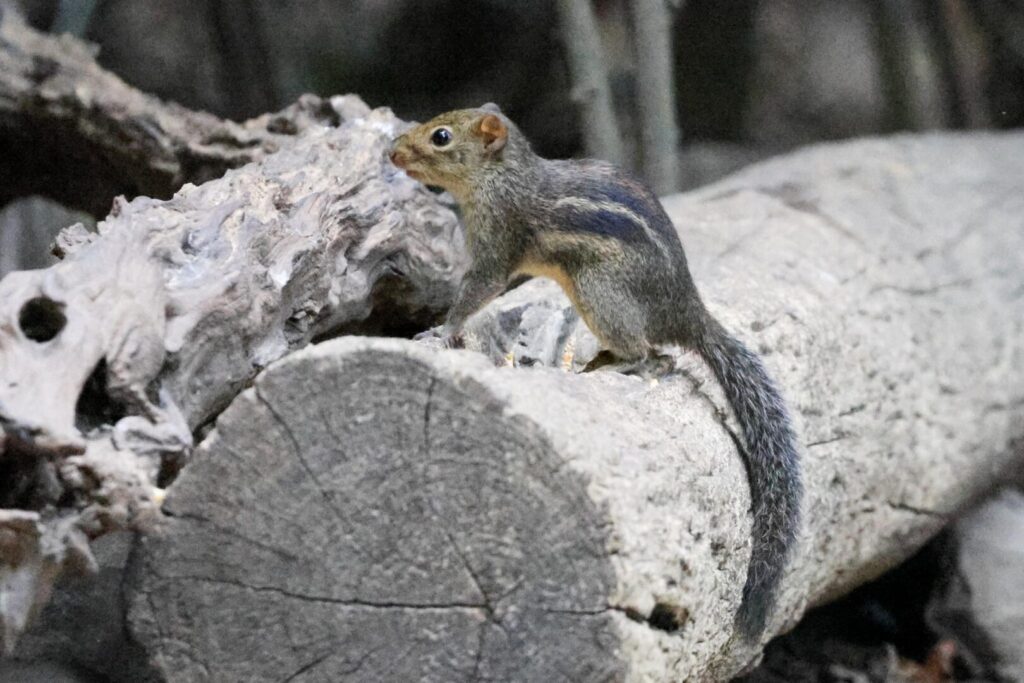
There were lots of squirrels of several different species. Mostly Grey-bellied and Himalayan Striped Squirrels, plus a few Indochinese Ground Squirrels and Northern Treeshrews.
A couple of Lesser Mouse Deer always come in here but a Northern Red Muntjac was more of a surprise. It hung around in te trees for a while before it eventually worked up the courage to come in to drink.

This is always a good hide for galliformes. After a while, a male Grey Peacock-Pheasant appeared. The main attraction here, but it waited nervously under the trees off to one side for a long time. It was almost scared off by the Muntjac early on, but eventually came out to drink. No sooner had it done so though, when the Muntjac decided it wanted to drink too and the Grey Peacock-Pheasant ran off back in to cover. Thankfully, it did come back out again later, once the Muntjac had gone.

A female Kalij Pheasant came out of the trees to feed but the male remained very nervous and never emerged. We could see it standing under the trees, watching.

Several Red Junglefowl came in, a dominant male and a male with a half-grown tail, plus at least 6 females.

Two Bar-backed Partridge showed well too.

A Large Scimitar-Babbler came in a couple of times to drink in the pool and could be seen feeding in the leaves under the trees on and off in between.

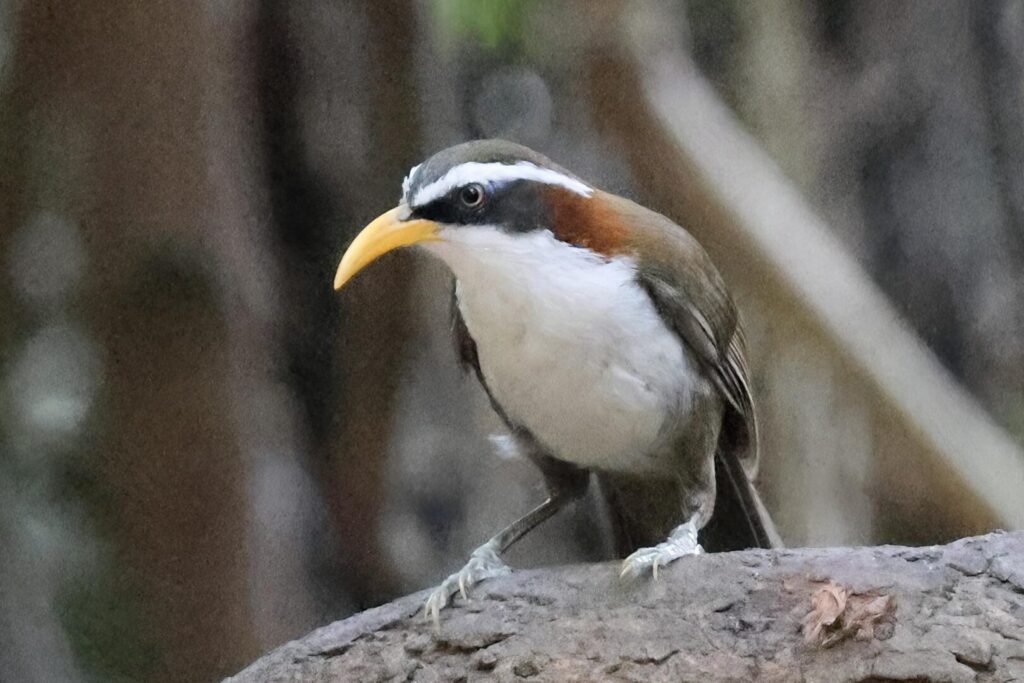
Later on, at least two White-browed Scimitar-Babblers came in to drink and bathe too. We had good views of several Pin-striped Tit-Babblers from the hide.
A few Black-naped Monarchs appeared as did a Malaysian Pied Fantail. A Blue-winged Leafbird came down to drink. We could hear a Common Flameback calling in the trees several times but it did not come in for the mealworms today.

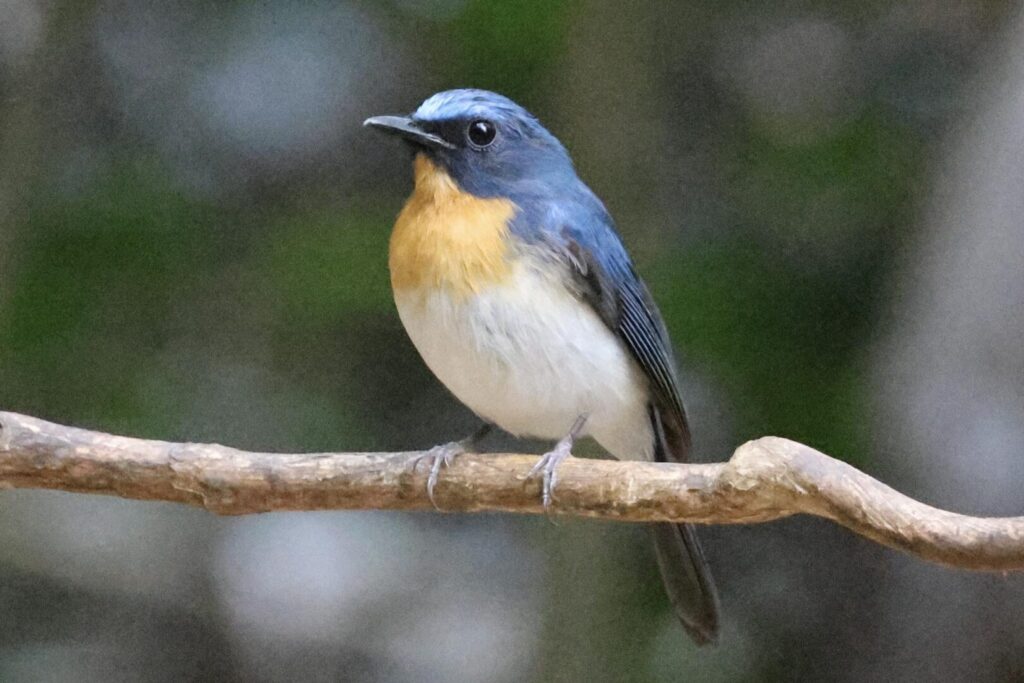
The flycatchers always come in late to bathe, and suddenly they all arrived in a rush. A good chance to compare Indochinese and Chinese Blue Flycatcher males and females.

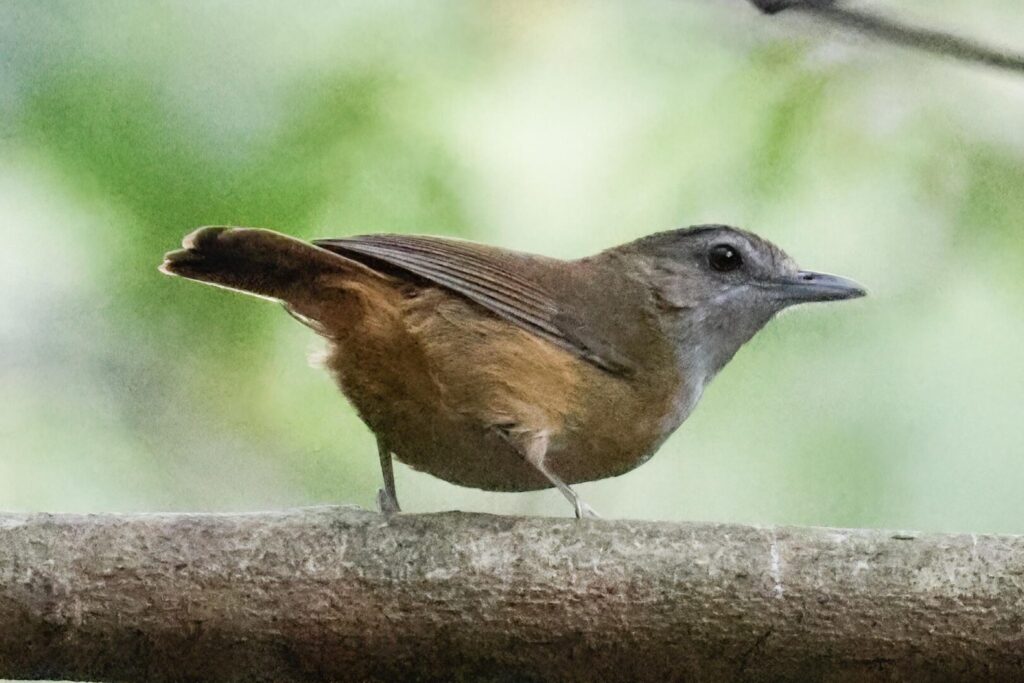
An Abbott’s Babbler was the last bird to arrive, a nice way to finish in the hide.
On our way back out, we stopped above a reservoir and quickly located several Indian Thick-knees. We counted at least 10, but more could have been hidden behind the bushes. We could see several Chestnut-headed Bee-eaters gathering on some trees distantly, getting ready to go to roost.

When we got back to Baan Maka, we had half an hour for a break and a shower before dinner. A Large-tailed Nightjar was calling again, neatly book-ending another long day.
Thursday 19th February
The Large-tailed Nightjar was calling again over breakfast this morning. We left at 6.15am and drove up into the National Park once more. We stopped to try for Banded Kingfisher again, at a spot where a pair had apparently been seen recently. One or two Black-naped Orioles flew in and out of the trees and a pair of Dark-necked Tailorbirds were in the bushes by the road.
We managed to find a pair of Greater Flamebacks and a Greater Yellownape in the trees further back. A Great Iora flew in to the bushes. It was hard to see at first, keeping deep in the tangles. There was no sign of any Kingfishers though, so we moved on.
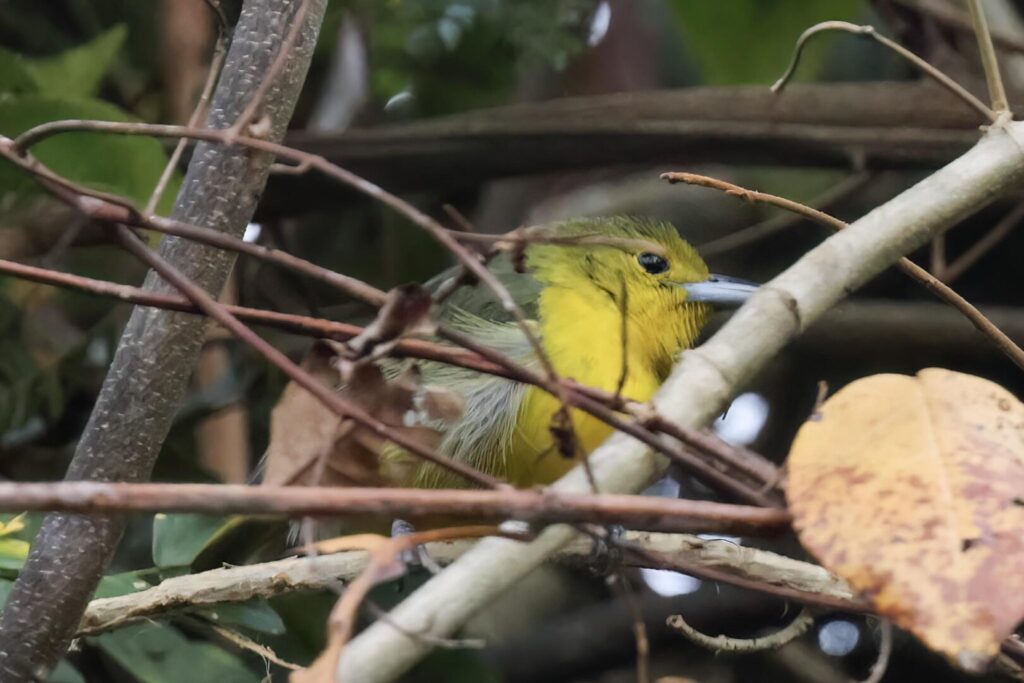
At the next stop, Dteng was hoping to find Black-and-Red Broadbill. Instead, we heard a couple of Banded Kingfishers calling. The first was distant but the second replied, a bit closer. Neither showed any sign of either coming in thought. A Blue-bearded Bee-eater was perched up in the trees in the distance. An Indochinese Blue Flycatcher was down in the bushes by the pool in front. Looking up, a Grey-rumped Treeswift flew over.
We made another quick stop to try for the Broadbill again. Scanning the treetops, we found a very distant Grey-headed Woodpecker perched up in the morning sun. Another Great Iora was in the trees. Continuing on to the campsite, we transferred to two 4x4s (different drivers this time). We drove over the first stream and got out to walk, as the trucks drove on.
We hadn’t gone far, when we heard an Orange-breasted Trogon and stopped to listen. It was a bit too far in to see but then Dteng got a message on the radio that there was a Crested Jayshrike the other side of the second stream. They have been very hard to see here in recent years, so we walked quickly over.
When we arrived, we found a large flock of birds in the trees but no further sign of the Jayshrike. We stopped to watch. Several Sulphur-breasted Warblers were in the trees and a single Eastern Crowned Warbler with them, plus a couple of Blyth’s Paradise Flycatchers and a pair of Pin-striped Tit-Babblers. A male Red Junglefowl flew up from the ground and out across the road. Several Asian Emerald Doves flew in and out. A couple of the group saw a Raffle’s Malkoha in the trees.
The minibus drivers had made our morning coffee. While we drank it, we continued to scan the trees. Another small flock of birds in the branches higher up above the trucks included a Black-winged Cuckooshrike, several Rosy Minivets and a Brown-rumped Minivet, and a Square-tailed Drongo-Cuckoo.
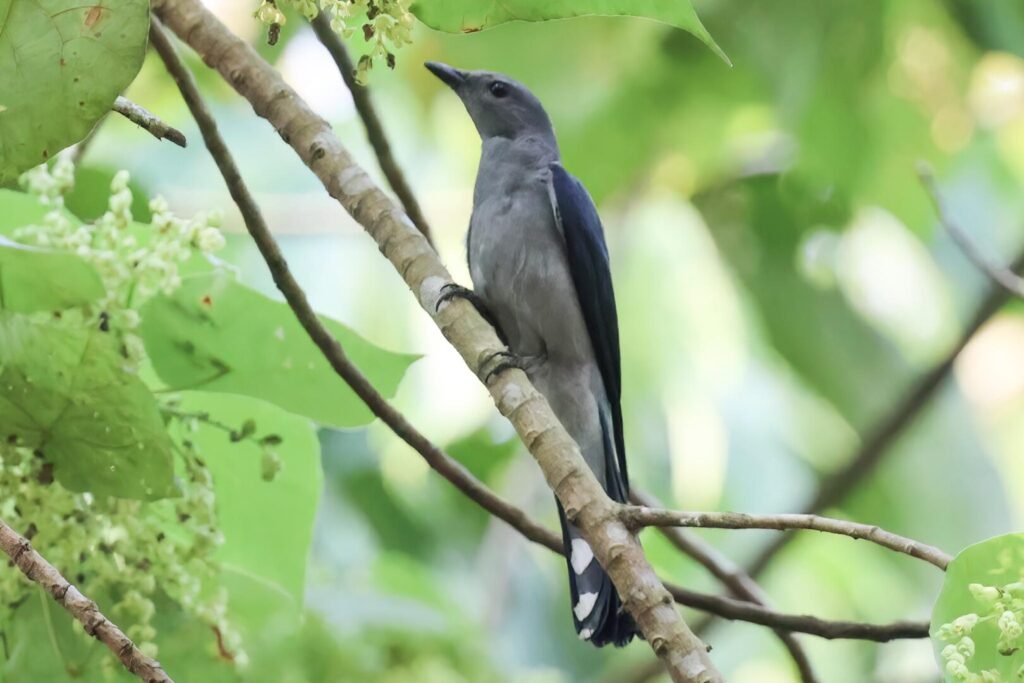
After coffee, we walked on to the final stream. It seemed rather quiet here now but we did hear another Orange-breasted Trogon. Lots of Red Junglefowl were calling agitatedly under the trees and we just managed to get glimpses of them walking through. We couldn’t see what was upsetting them though.
Walking back again, a Banded Kingfisher called, quite close to the track. We couldn’t see it though and then it or another called much more distantly. Frustrating. A Common Flameback was up in the trees above the track along with three Sultan Tits. An Asian Barred Owlet was perched under the bamboo nearby. We heard a Silver-breasted Broadbill call but couldn’t locate it and it didn’t call again.

As we got back to stream two, Dteng came out of the trees to say he had found a group of Crested Jayshrikes. We walked in along a small path, down to the edge of the stream. The birds were hard to see at first, moving through the dense trees, calling. We clambered around over the rocks and across the stream. Eventually everyone managed to get onto them.
We tried to follow the Jayshrikes, which seemed to be heading towards the main track. Back out and across the stream, we could still hear them but they were deeper in the trees and moving quickly. Then we lost them. Not helped by the Lar Gibbons in the trees which started calling. Nice to watch them though, up in the trees, swinging on the branches. Funky Gibbons!
We went back to check the White-bellied Erpornis nest again. On this occasion our timing was better and we found one of the adults in the trees nearby. It was coming in with food, young in the nest apparently.
As we walked back towards stream one, finally we heard an Orange-breasted Trogon close to the track and managed to find it in the trees. We ended up treated to some great closer views of it. Worth the wait. The Sultan Tits were above our heads again and Dteng heard a woodpecker call. We looked up to see a Greater Flameback above us. That wasn’t what he heard though, and then two Greater Yellownapes appeared too. Closer views than the one we had seen earlier.

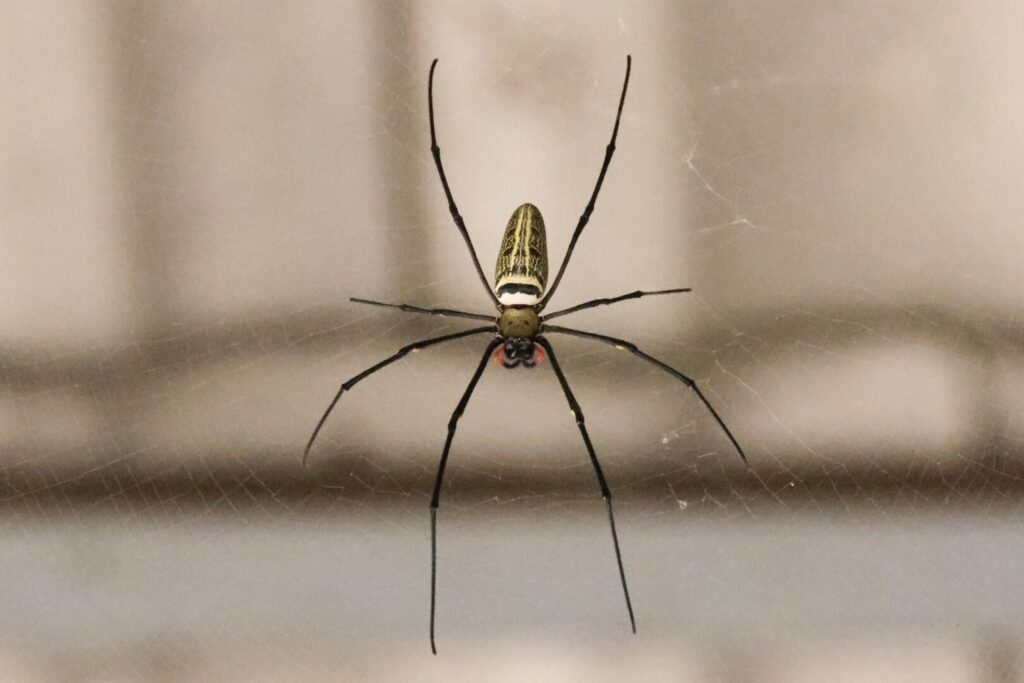
We went back for lunch at the restaurant at Ban Krang campsite. A Giant Golden Orbweaver spider was in its web above the tables.
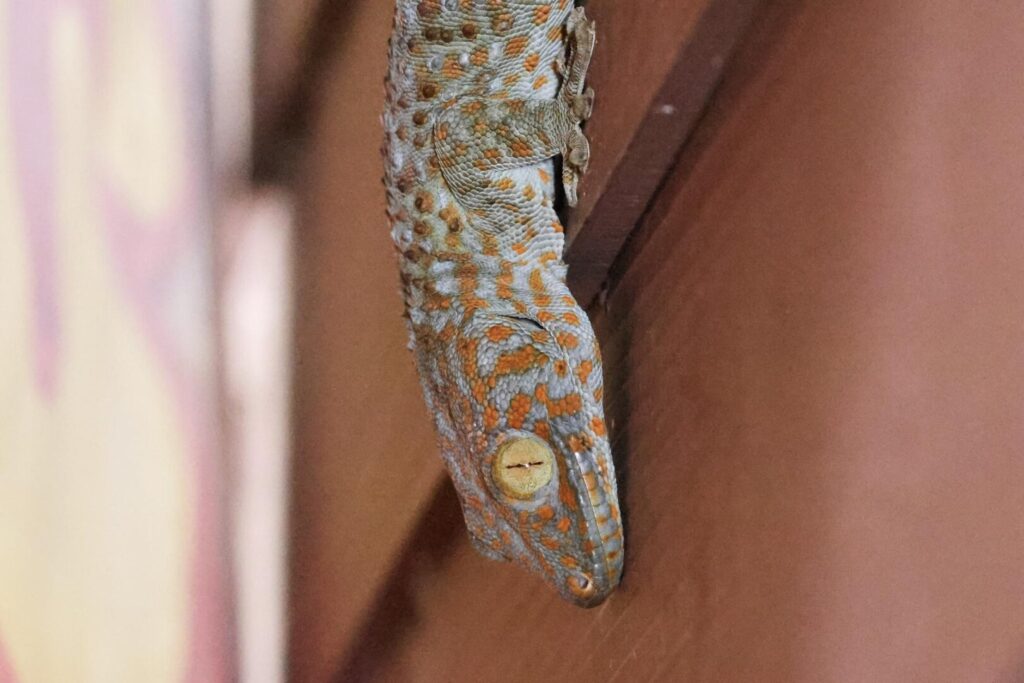
A Common Tokay Gecko was hiding behind a poster on the wall behind the counter.
Apparently there had been an Asian Elephant seen by the first stream while we were eating, so we set off again as soon as we had finished. No sign now though. We continued on past the barrier and set off up the dirt track up the hill beyond. On the way up, we stopped briefly to check another site for Banded Kingfisher but all quiet so we pressed on further.
We stopped again in the area where we had looked for Silver Orioles yesterday. As we got out of the trucks, a Rusty-browed Flycatcher was calling in the bamboo nearby. It was hard to see in the shady undergrowth but with a bit of perseverance we all got good views. There didn’t seem to have been any reports of the Orioles for a couple of days now but the plan was to have a quick look on the way up, and try again on the way down when it was cooler.
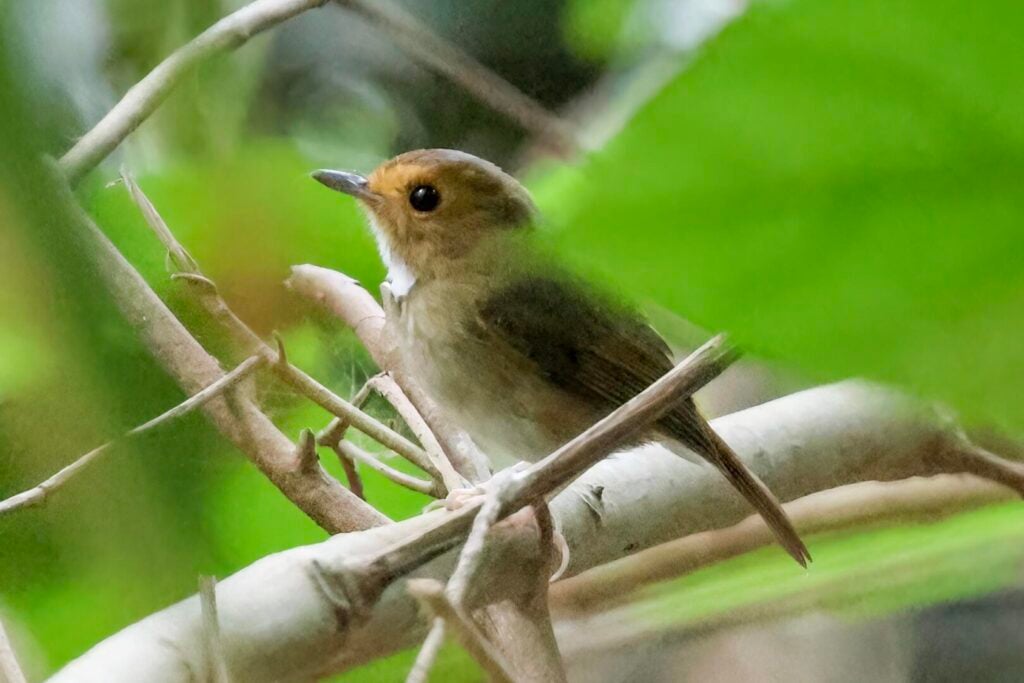
We walked up along the track, listening. A Martens’s Warbler flew across in front of us calling, but disappeared straight into the bamboo the other side. A Chinese Flycatcher was lurking in the bamboo too. It was rather quiet now, but we did find a Blue-throated Barbet, a couple of Mountain Bulbuls, and a Yellow-vented Flowerpecker in one fruiting tree.
As we turned to walk back to the trucks, a Speckled Piculet was in the bushes but moving quickly through the tangled branches. There was a small mixed flock here, which included the Martens’s Warbler we had seen earlier, a Claudia’s Leaf Warbler, Plain Sunbird, Grey-headed Canary-Flycatcher and several Scarlet Minivets.
We drove on to the top before the track switched to downward traffic only. There were lots of Asian Palm Swifts low over the trees. A couple of Robinson’s Banded Langurs were eating leaves in the trees by the parking area and one or two Mountain Imperial Pigeons were still in the fruiting tree behind. The Great Hornbill flew in too.
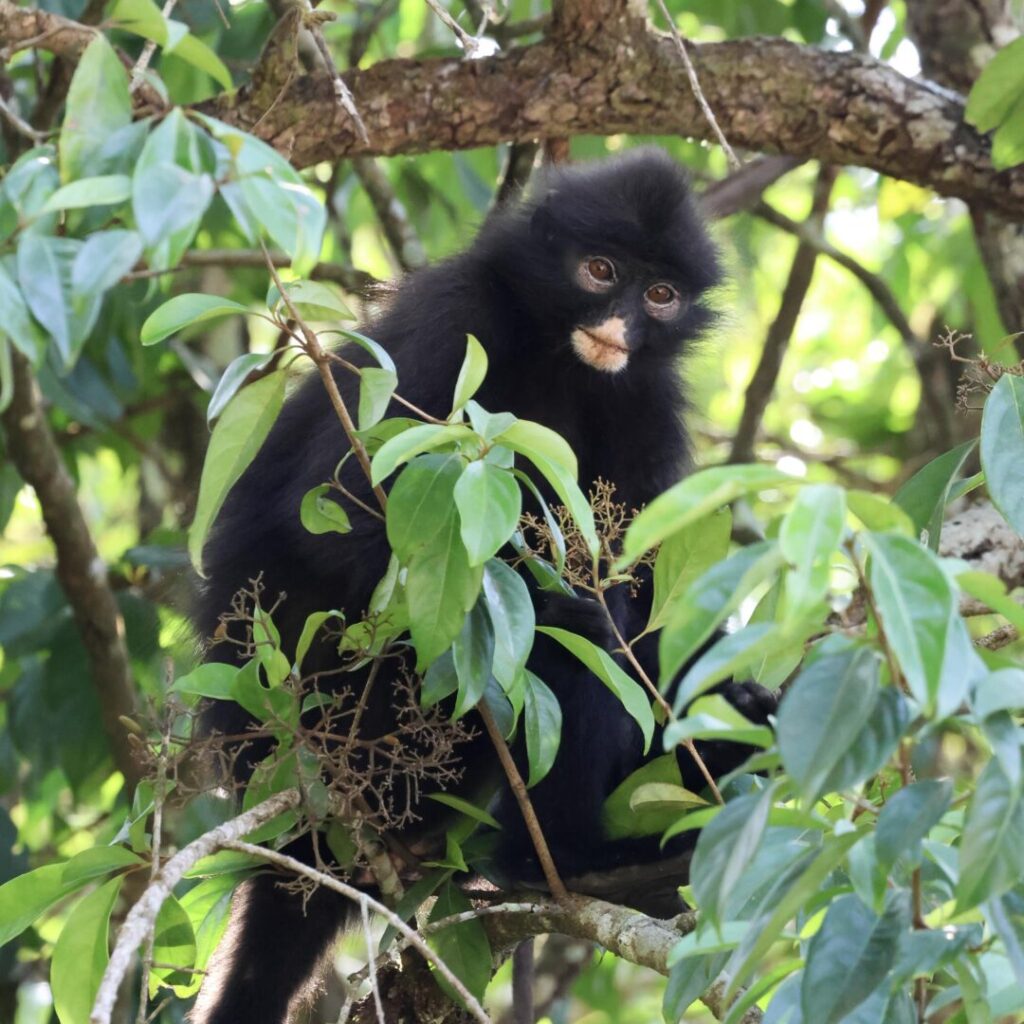
A few birds were still coming in and out of the fig tree up by the campsite, much the same as a couple of days ago, including Greater Green Leafbird, Wedge-tailed Green Pigeon, Blue-eared Barbet and lots of bulbuls.
We started to walk back down a short way just before 4pm. The Grey Nightjar was still in the same tree and the Blue-throated Barbet was still excavating its nest hole. It had made impressive progress in just a couple of days. Several Hume’s White-Eyes called from the trees and a small group of Scarlet Minivets came through.
A little further down, several White-browed Scimitar-Babblers came out of the bamboo and flew across the road. Another Mountain Imperial Pigeon was whooping in the trees. Dteng was hoping we might get lucky and find Ratchet-tailed Treepie here but there was no sign. The trucks came down to pick us up now and we drove back to where we had walked earlier.
Back through the area where we thought the Silver Orioles were last seen a few days ago (and where we saw one last year), all we could find was an Ashy Bulbul which flew in to a flowering tree by the track. Just beyond, a large mixed flock moved quickly through the trees on the slope above. A flash of something black looked promising briefly but when it reappeared was just a Lesser Racket-tailed Drongo. A bit further down, we found an Ashy Drongo flycatching from the trees too.
Several bulbuls were going in and out of another fruiting tree and some movement in a flowering tree nearby turned out to be a pair of Black-winged Cuckooshrikes which eventually flew out. We were out of luck with the Orioles but we did find a couple of Red-headed Trogons in the trees by the track. They were rather shy but we got decent views of the as they moved off ahead of us.
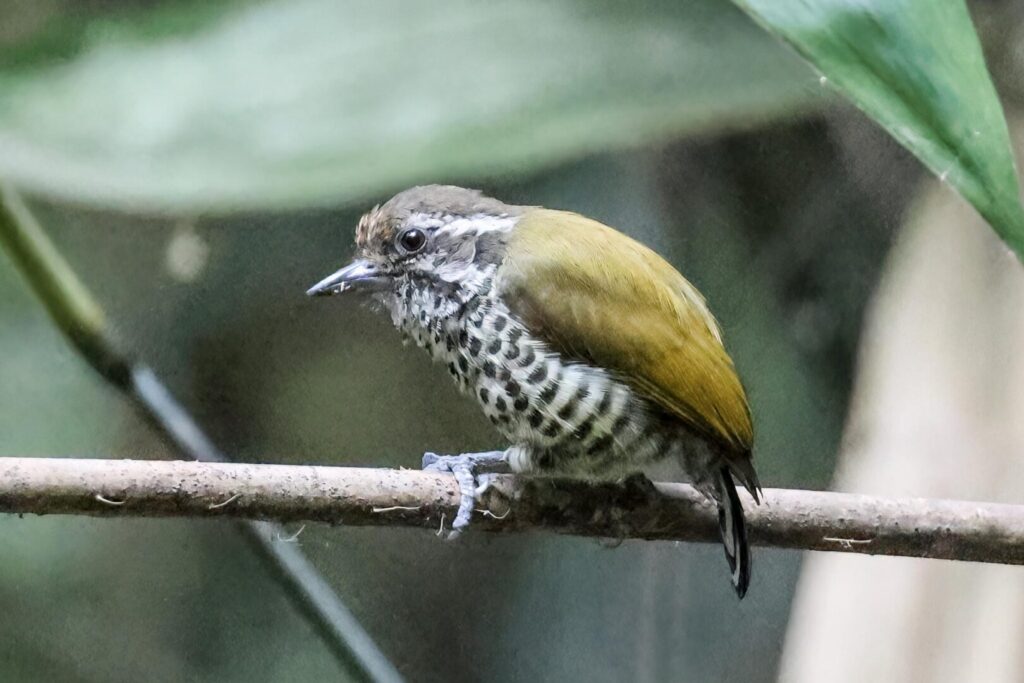
The trucks had driven on ahead and we had almost got to them when one of the drivers spotted a Speckled Piculet in the bamboo right next to the track. It was trying to get something out of one of the stems which meant that unusually it stayed in the same place for a while, allowing us to get great views.
Unfortunately, we were out of time and had to be getting back down. We had a quick stop to look at three male Kalij Pheasants which had come out onto the edge of the track. A little further on, the Red Junglefowl ran down the track ahead of us. We were a little after the cut off time of 6pm getting through the bottom barrier but thankfully no-one was checking.

Back at the campsite, we said our goodbyes and thanks to the truck drivers and transferred back to the minibuses. We had to hurry as they were just about to close the barrier below the campsite and we didn’t want to be stuck here for the night! It was getting dark as we drove back out of the park. The lead minibus had a couple of Large-tailed Nightjars on the road and an Asian Palm Civet which ran across.
Back to Baan Maka and we had time for quick shower before dinner. We probably needed it, as it had been a rather dusty drive back down today!
Friday 20th February
We would be heading back to Bangkok today but we had time for one quick last visit to the Park this morning. After breakfast, we met by reception at 6am with our bags packed. We drove up into the Park and stopped at km 9 again. Several birds were in the trees waiting for the sun to rise – an Indochinese Roller, Great Racket-tailed Drongo, Black-naped Oriole, Black-winged Cuckooshrike and several Barbets. A Plain Flowerpecker appeared briefly and we managed to get it in the scope.
We could hear a Grey-headed Woodpecker drumming and found it on a dead tree as we walked on a little further up to the corner. Better views than yesterday.

A brief Orange-breasted Trogon flew out of the trees too. Continuing on down to the bridge, a Crested Goshawk was perched in the top of one of the trees behind the pool. We watched it for a while in the scopes before it flew off. A smart male Thick-billed Pigeon was in another tree here too. Three Red-wattled Lapwings were on the pool on the other side of the road today.
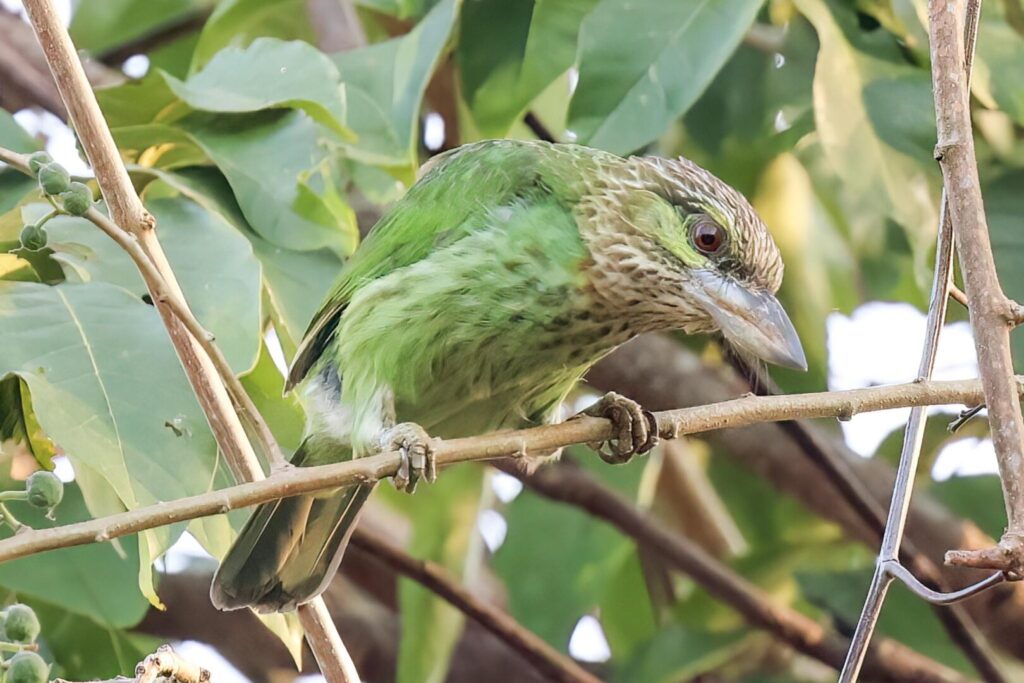
Walking on, we found several Ruby-cheeked Sunbirds in trees. There were lots of bulbuls as usual, including Black-headed, Black-crested, Streak-eared and Stripe-throated. A Green-eared Barbet showed very well, picking fruits off a tangle just above the side of the road. A Black naped Oriole perched up nicely in a bare tree and a couple of Oriental Pied Hornbills flew in and landed in the trees.
The minibuses had driven on and were waiting for us. We drove on to the small pool further up, where we had stopped yesterday. Two Asian Barred Owlets were in trees, along with a brief Greater Yellownape and a couple of Pin-striped Tit-Babblers. We couldn’t even hear the Banded Kingfishers today though.
After a quick break to use the restrooms at the campsite, we continued on as far as the first stream. We had to walk across on the stepping stones as the minibuses couldn’t drive any further. We could hear Gibbons calling and a female Stream Glory damselfly was perched on a leaf over the stream.
Another Orange-breasted Trogon was calling in the trees just beyond and we found a noisy mixed flock mobbing an Asian Barred Owlet, including Ochraceous Bulbuls, Pin-striped Tit-Babblers and Rufous-fronted Babblers. Further on, we heard a Collared Owlet calling again but it was very distant.

A bigger mixed flock was in the trees opposite the Erpornis nest. Looking up into the canopy, we could see Sulphur-breasted and Eastern Crowned Warblers, Rosy Minivets and Square-tailed Drongo-Cuckoo, both male and female Blyth’s Paradise Flycatchers, Grey-headed Canary-Flycatchers and Black-naped Monarchs.
The pair of White-bellied Erpornis came in a couple of times to the nest behind us with food.
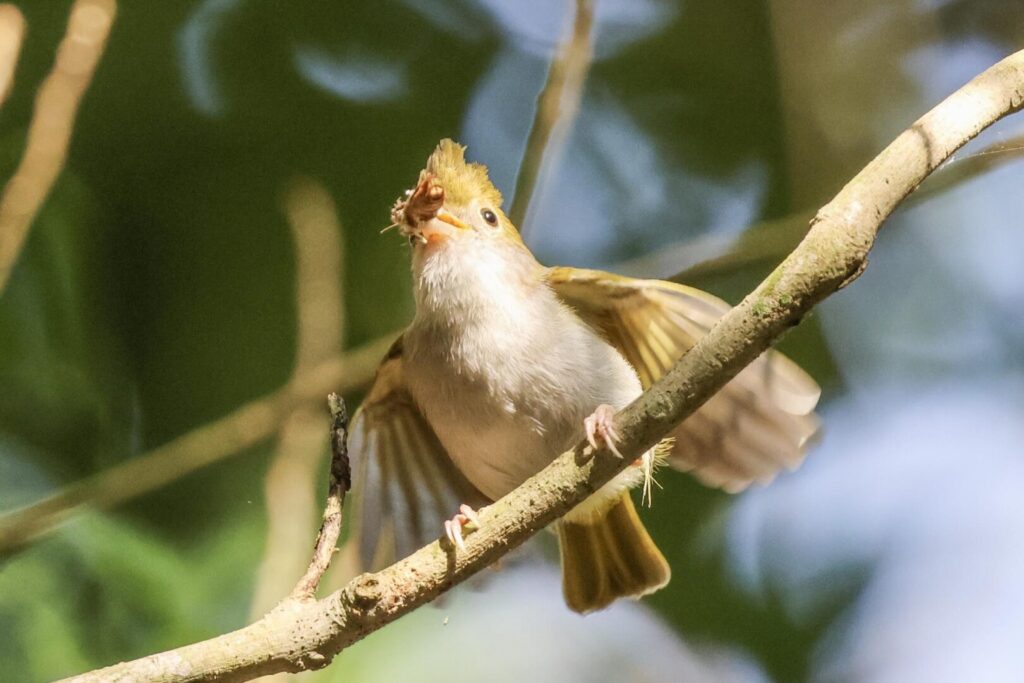
Over the stream, we could see a couple of people a little further up looking into the trees. They were watching the Crested Jayshrikes again. They seemed to move deeper in as we arrived and were hard to see but still we managed to get more views of this tricky species. We could see their unusual tall crests.
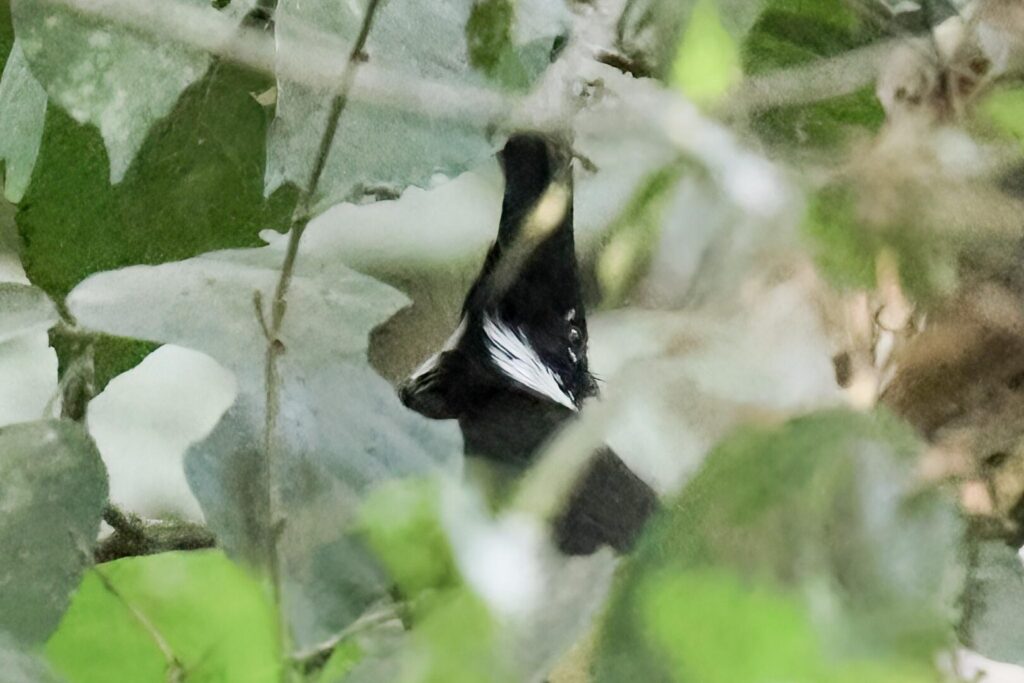
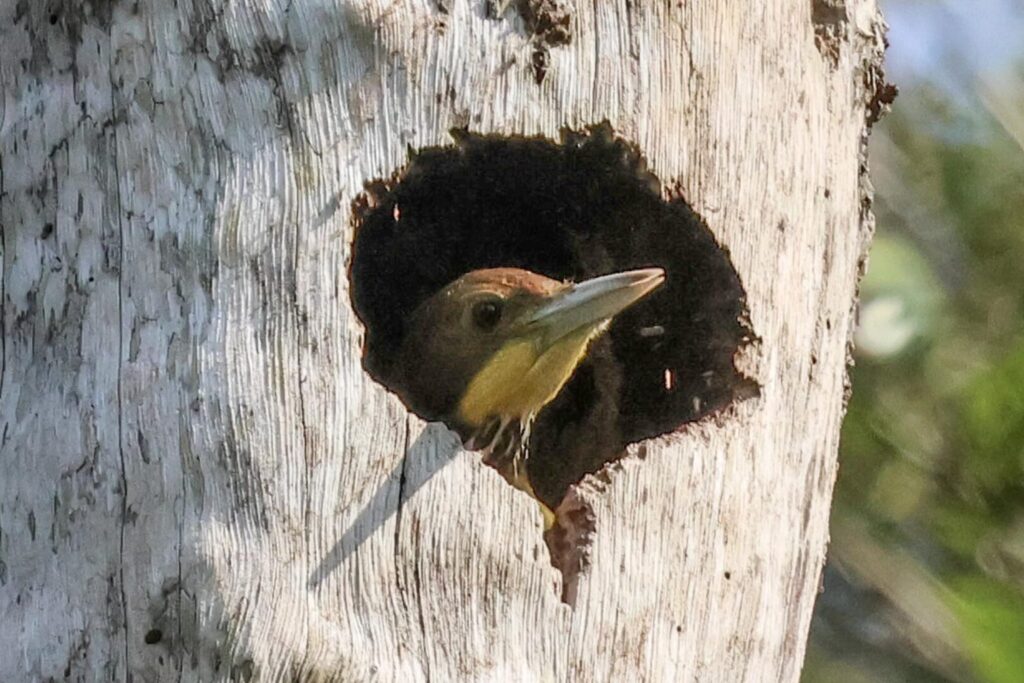
One of the group found a Buff-rumped Woodpecker in the trees opposite, feeding in the foliage. A Greater Yellownape was looking out of its nest hole above.
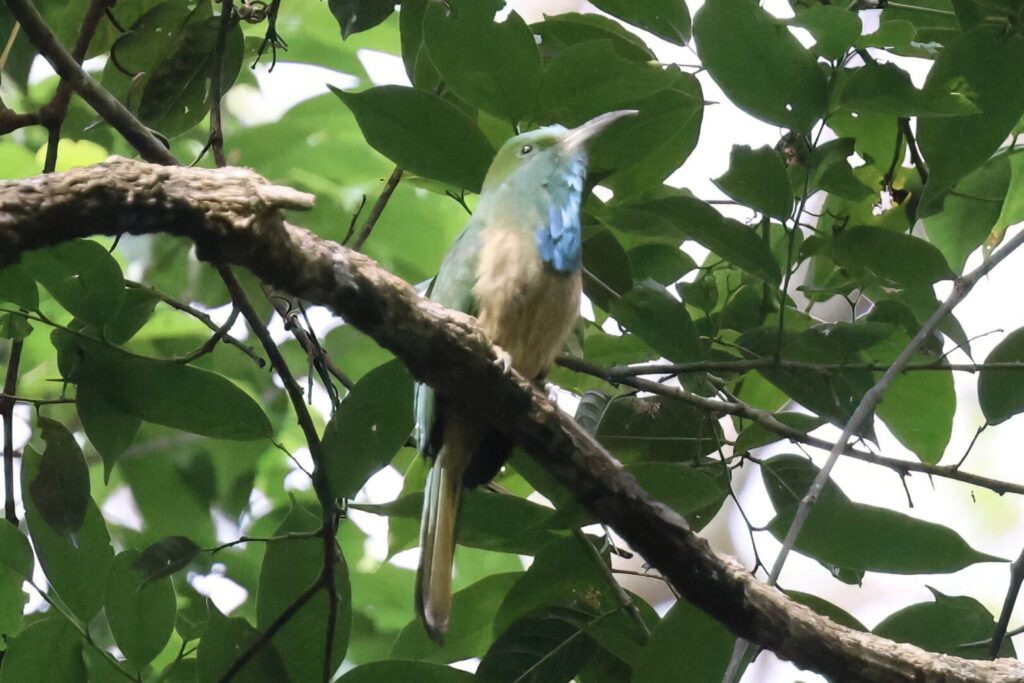
Back to stream one and Dteng heard a Blue bearded Bee-eater calling. We could see a big bees’ nest up in the top of the trees nearby and then found the Bee-eater perched on a branch beside it. The minibuses were waiting the other side of the stream and took us back to the campsite for coffee. The Sun Bear was back out behind the restaurant again.
It was 11am and time to leave. We thought the two minibuses were together but it turned out the second had left without waiting. When it couldn’t find the other one out along the entrance road, the first minibus turned back to check again at the campsite. Then as it drove back out a black Leopard ran across the road in front.
Only when the second driver stopped at a filling station and asked the group if they wanted to buy lunch did he realise his mistake. After some hurried phone calls, we all met up again at another filling station a bit further up. We stopped for lunch at nearby restaurant. There had obviously been a wedding recently, as we found ourselves sat at a table with green and white drapes around the roof and fake white flowers all around us. The fresh flowers lining the path looked a little bit sad and crusty now.
After lunch, we set off to drive back to Bangkok. The traffic was bad – not only was it Friday afternoon, but there were major roadworks causing huge congestion and an accident too. It normally takes around three hours to drive all the way from Baan Maka but it took the best part of four today even from where we stopped for lunch. We finally got to our airport hotel just before 5pm.
We said our goodbyes and our many thanks to Dteng and the minibus drivers for all they had done for us over the last couple of weeks. Then we checked in and went up to our rooms.
There is always still time for some last birding. The parks around this side of Bangkok are good for Pink-necked Pigeons but we didn’t have time (or the minibuses any more) to get to them now. However, with a bit of detective work online we found some areas within walking distance of the hotel which looked promising.
As we set off to check them out, we were only about five minutes’ away when two Pink-necked Pigeons flew past. We managed to follow the way they had flown down an access road to the back of the buildings and found three now feeding in a fruiting tree.

Back at the hotel, a couple of the group had also gone out exploring and we met them outside. It was getting late but we had another walk round quickly to see if the Pink-necked Pigeons were still there. One flew off past us as we arrived but the light had just gone off the trees and there was no further sign. It didn’t help that a man was tending to his fighting cocks in cages under the fruiting tree now too. Thankfully we had some spare time in the morning so we figured we could all come back then.
We had dinner in the hotel restaurant. It was a bit chaotic, the food arrived all out of order and we had to ask as a couple of things didn’t arrive at all at first. Afterwards, we went through everyone’s favourite bird of trip. Rather surprisingly, pretty much everyone chose something different one. The Blue Pitta was the only bird which received more than one vote so won by default. But it highlighted just what a great trip it had been that there were so many standout moments.
Saturday 21st February
For those that woke early, there were plenty of birds around the hotel. Common and Great Mynas, sparrows, doves and Yellow-vented Bulbuls. A few Germain’s Swiftlets hawked overhead. An Asian Openbill and a Painted Stork both flew over. We met in reception at 7am for our little expedition to look for Pigeons.
As we walked out to the main road, a Grey Heron flew over, followed by a Great White Egret. Scanning the trees, we managed to find a female Pink-necked Pigeon straight away, in the top of a low tree on the other side of the six lane highway.
Turning into the access road we had been along yesterday, a couple of Malaysian Pied Fantails flew up and landed on the wires above our heads. Scanning the reeds by the overgrown channel on one side, an Oriental Reed Warbler appeared a couple of times briefly. Two White-rumped Munias flew in and landed on the reed stems in front of us. Surprisingly a new bird for the trip – we didn’t quite know how we had missed them until now. Two Yellow-bellied Prinias were in the reeds too.
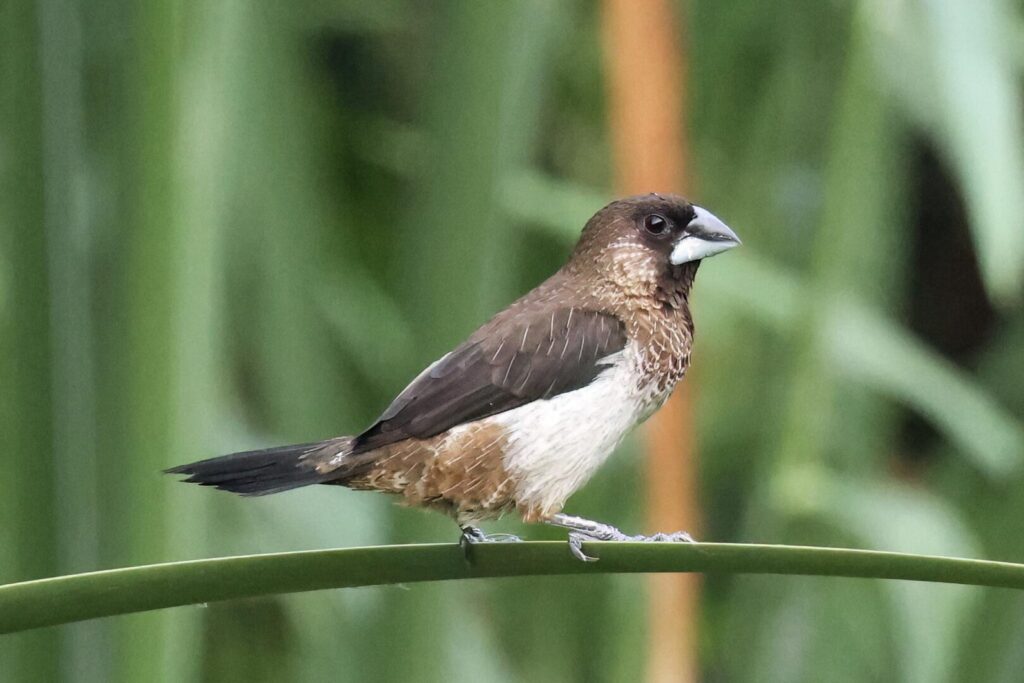
Down to the far end, the man was fiddling around under the fruiting tree again. However, we did manage to find a male Pink-necked Pigeon in one of the trees further back. Mission accomplished, we made our way back to the hotel for breakfast. Afterwards, we had plenty of time to pack and get everything sorted out before we had to check out. The shuttle bus took us on the very short drive to the airport.
On the way, still birding, we saw a few Black-winged Stilts in one of the wide drainage channels, two Red-wattled Lapwings in the shade under some trees and an Indochinese Roller which flew over. There were lots of Red Collared Doves around the terminal when we arrived. All very exciting only just over two weeks ago but they didn’t raise the same level of interest now!
It took no time at all to check in, then get through security and immigration. We had lots of time to kill. We walked down past all the luxury goods shops and eventually found some seats where we could all sit down. Eventually the plane started boarding and we took off on time.
It was an uneventful flight. Thirteen hours later, we landed at Heathrow at 7.18pm, a little ahead of schedule. We met up again at baggage reclaim. It took a while for all our bags to appear, as it always does here. Then we said our goodbyes and set off out into the cold and drizzling London evening. It had been a great tour to Thailand again and we can’t wait to go back.