Day 1 of a 3-day Spring Migration tour in Norfolk. It was a lovely sunny day but feeling rather chilly in the fresh wind, which started off in the NW and finished round to the E/SE. We spent the day along the eastern end of the North Norfolk coast.
Our destination for the morning was Cley. We parked in front of Walsey Hills and as we got out of the minibus, we could hear a Sedge Warbler singing across the road. It was keeping well down out of the cool breeze but we managed to see it a couple of times through the reeds. Several Little Egrets were out on the grazing marsh beyond and a single Grey Heron was by the side of the ditch.
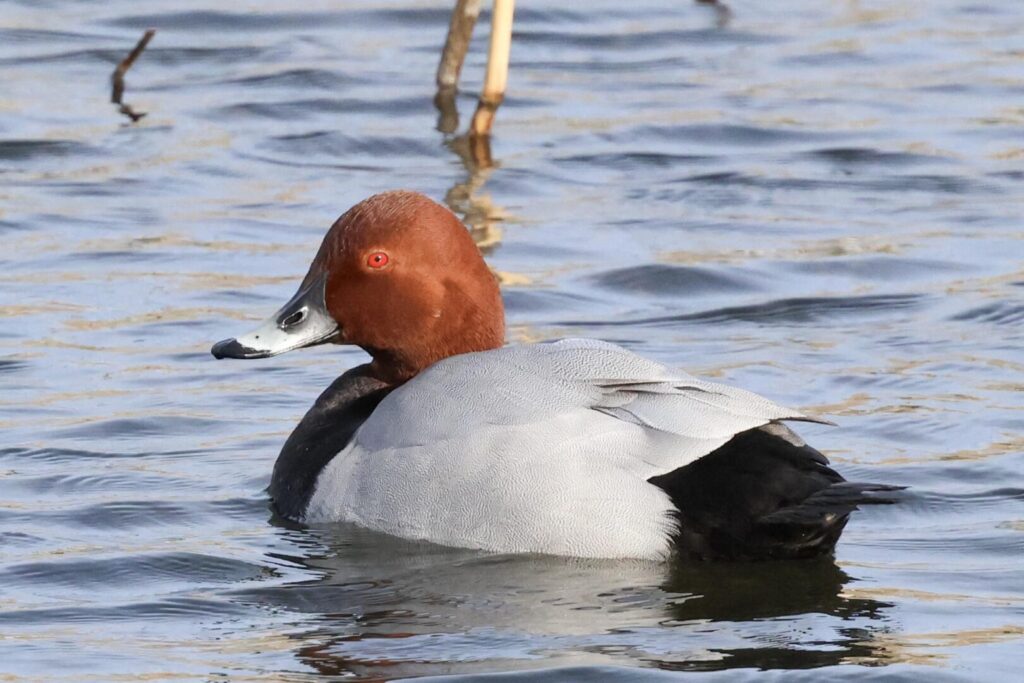
As we walked up the road to the East Bank, we could hear a Blackcap and a Chiffchaff singing in the trees. From up on the bank, we could see a drake Common Pochard on Don’s Pool. As we got further up, the female emerged from the near edge, behind the reeds.
A pair of Greylag Geese were standing on the bank above the pool. A Canada Goose was patrolling up and down on the water below. We would see just why on the way back.
A Sedge Warbler was singing in the brambles the other side of the path and it sat up in the top briefly. We could hear Bearded Tits calling from time to time too and managed some brief flight views as they skimmed quickly over the reeds.
Further on, we stopped to scan the grazing marshes. There was a nice mix of common ducks around the pools, Shoveler, Gadwall and Teal. We got the first pair of Avocets of the trip in the scope. A few Lapwings and Redshanks were displaying out over the grass.
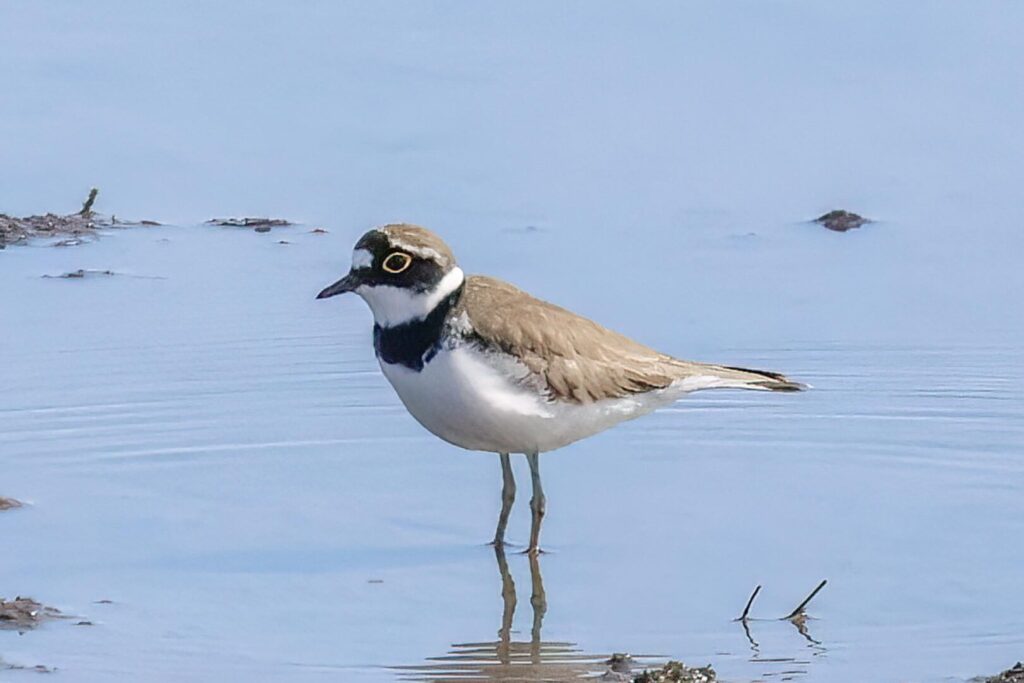
Up by the Serpentine, we found at least four Little Ringed Plovers out on the muddy edges of the water. Through the scope, we could see their golden yellow eye-rings. Several Black-tailed Godwits were feeding in the Serpentine, some in bright rusty breeding plumage now. A few Ruff were scattered around, one with a white head. They are undergoing their first body moult into breeding plumage now but are yet to start getting their ornate ruffs. A small group of Dunlin were out here too.
A Swallow flew in over the marshes and continued on over the bank and straight off over the reedbed. A migrant on its way, the first of several we would see flying west this morning. A Skylark fluttered up singing. Out over the reedbed, two Great White Egrets came up and flew round but there were surprisingly no Marsh Harriers up yet.
We stopped again to look over Arnold’s Marsh. One of the first birds we found was a lone Bar-tailed Godwit, never a common bird here. There were also more Dunlin and Redshank, a few Oystercatchers and several Curlew. The other side, we could see a pair of Pintail still on the Brackish Lagoon. Further back, there was a Ringed Plover, a Black-tailed Godwit and a Turnstone.
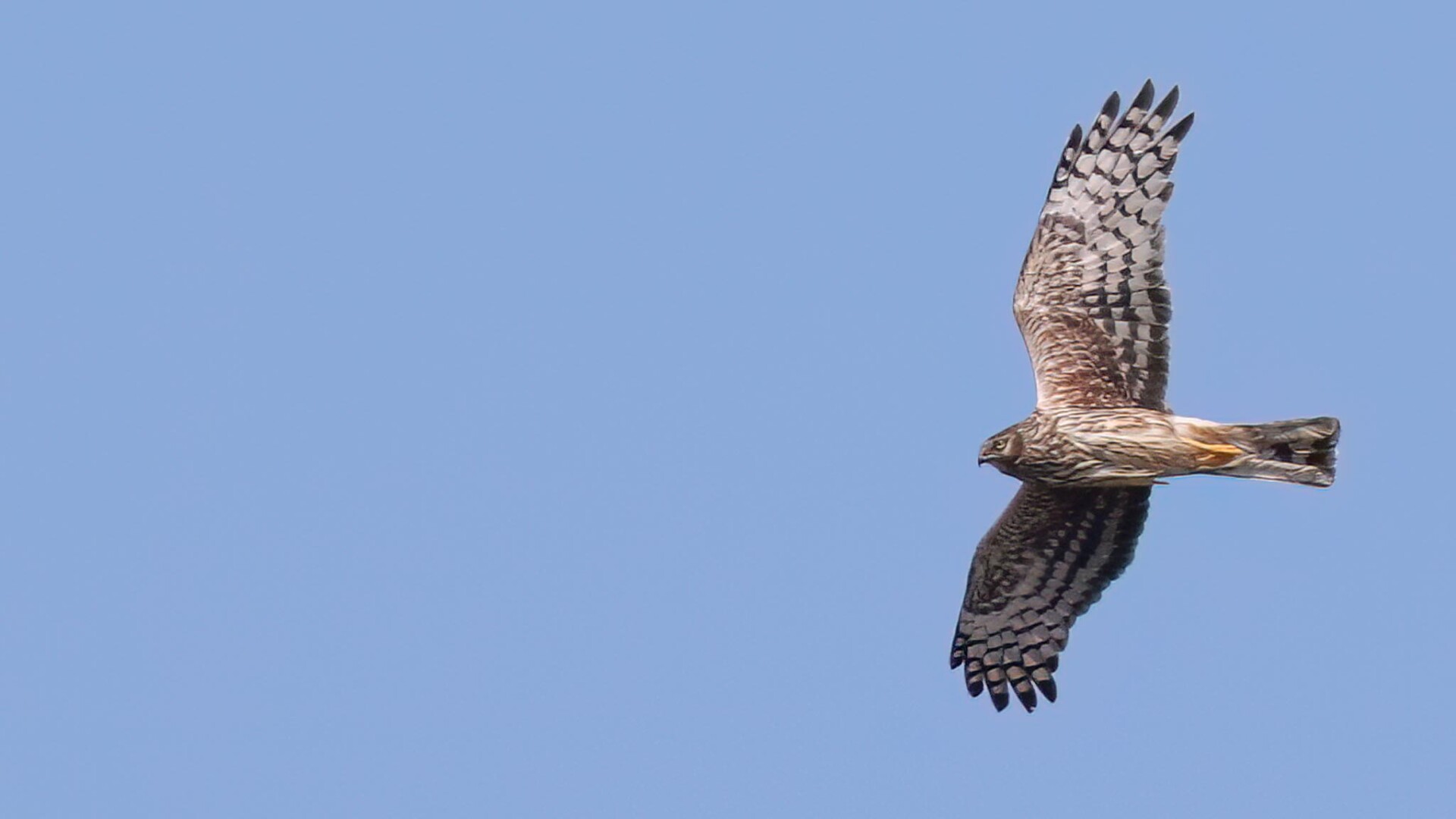
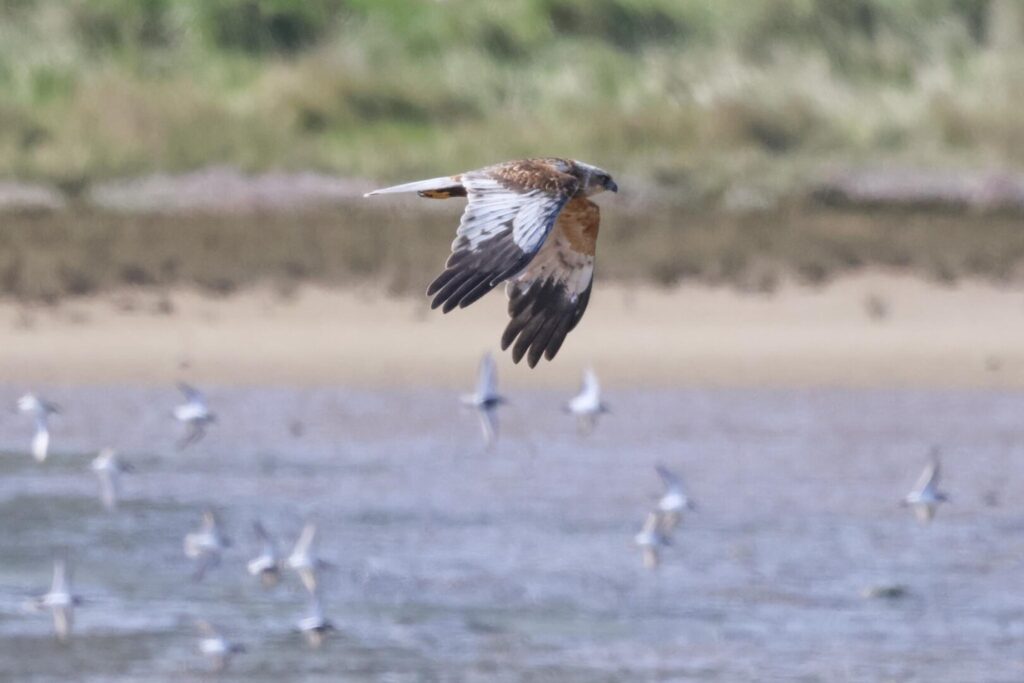
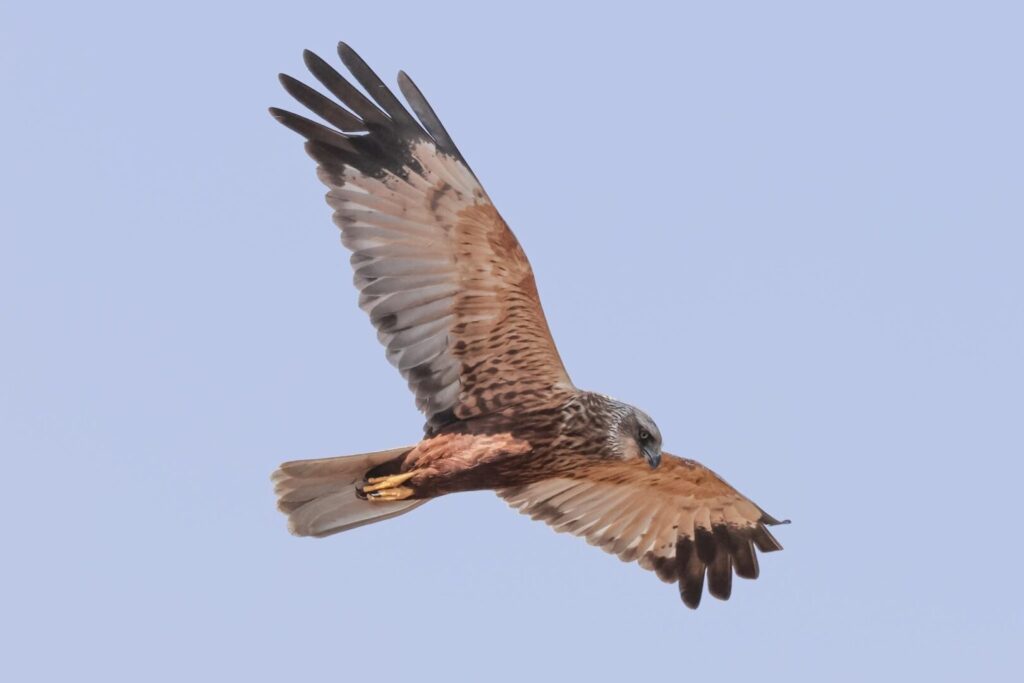
On at the beach, we couldn’t see anything moving out to sea. Five wagtails flew over, possibly migrant White Wagtails but they disappeared off east along the shingle. We walked on in that direction. The views of the waders on Arnold’s are better from the shingle ridge, as you are not looking into the morning light. At least until a male Marsh Harrier flew over flushing everything and then over the shingle right in front of us.
On to the end and we stopped to scan the grass out on Wigeon Marsh. We quickly found three Wheatears, which we had hoped to see here, though they were right at the back and rather distant from here. Migrants here, stopping off to refuel on their way from Africa to Scandinavia. A pair of Ringed Plover flew up from the shingle ahead of us.
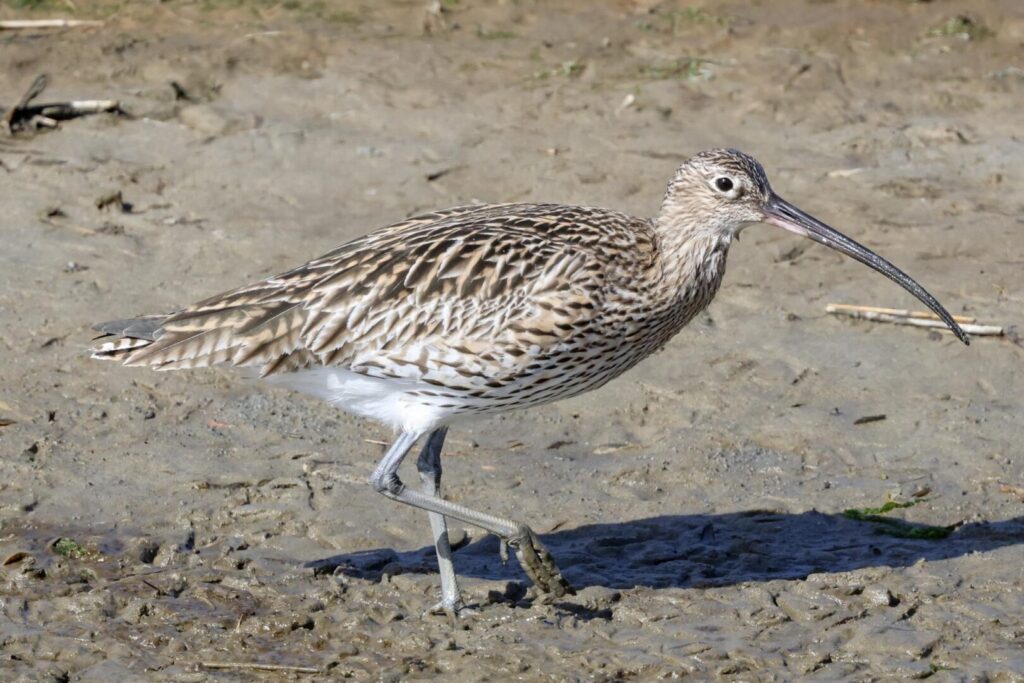
As we walked back, a Curlew was now on the small pools at the front of the Brackish Lagoon. We watched it feeding, probing in the mud at the base of the vegetation at the edge of the water, pulling out worms. Lovely close views.
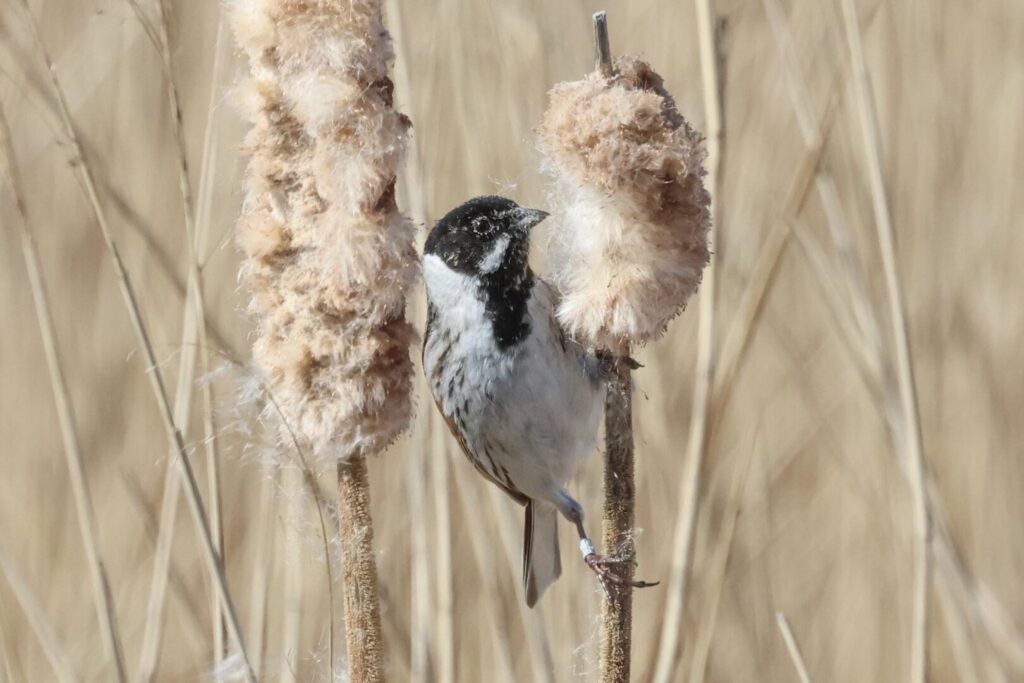
The sun was higher in the sky and warmer now, and the wind had dropped a little too. The reedbed seemed to have come back to life. We stopped to watch a Reed Bunting pulling apart a bulrush seedhead. We thought at first it might be after the fluff for its nest but it seemed to be throwing that away. Presumably it was trying to get to the seeds.
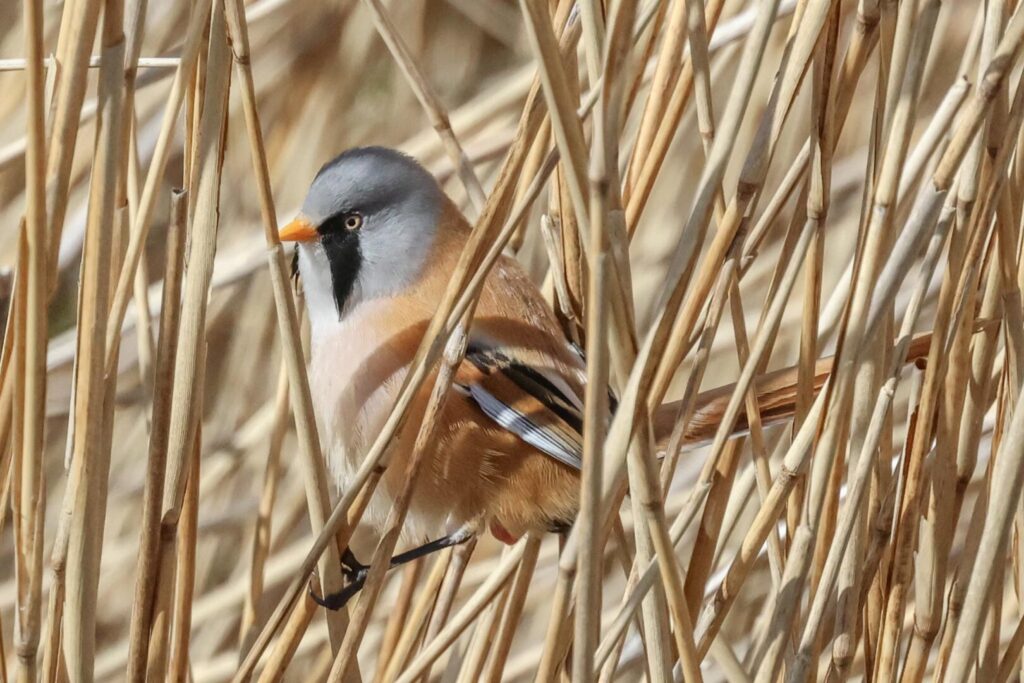
The Bearded Tits were much more obliging as well. We heard a couple calling again and now were treated to some lovely close views of a male Bearded Tit as it fed in the reeds just across the ditch. As we walked back, we saw several more now too. A Sedge Warbler perched in the top of an elder bush in the edge of the reeds singing.
Three Spoonbills flew across over the other side of the reedbed and dropped down on to Billy’s Wash. A little later, they came back up and flew over to North Foreland plantation. They circled over the trees several times before flying off back to the scrapes. Hopefully they are prospecting for breeding sites. Three Buzzards circled up over North Foreland too. The Marsh Harriers had come out now and a male flew across over the reeds right in front of us.
We hadn’t seen any Wigeon on the grazing marshes on the walk out but now we found two on the grass in front of Pope’s Pool. A Common Snipe was busy probing in the mud on one of the small pools now too.
One of the Greylags was on its nest in the reeds when we got back to Pope’s Pool. As we watched, the Canada Goose swam calmly across and chased it off. The Greylag stood on the bank for a while with its mate, while the Canada Goose swam back to the other corner. When the Greylag flew back to its nest, the Canada Goose swam straight out again, but this time changed its mind. We could see its mate was on a nest in its favoured corner. No room for two pairs of geese on the pool!
Back at the minibus, we heard a Little Grebe laughing and looked over to see one on the water on Snipe’s Marsh. It was time for lunch and we needed a break to use the facilities, so we drove round to the Visitor Centre.
After lunch, we drove east to Kelling. Three Swallows were flying round over the houses as we got out of the minibus, arrived back already for the summer. Looking up towards the ridge behind, we could see a Common Buzzard, Red Kite and Kestrel all sharing a thermal, circling together.
Crossing over and into the start of the lane, several Goldfinches were in the trees. Further on, we stopped to watch a male Blackcap and a pair of Chaffinches in a hawthorn. A Chiffchaff started singing in the branches of a bare tree above us.
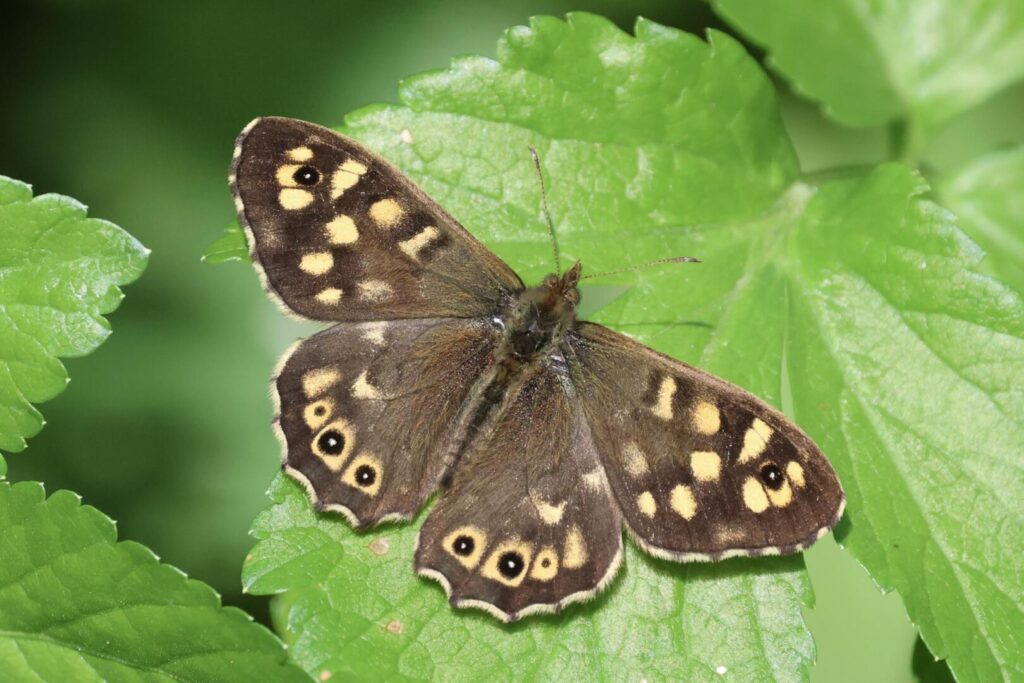
It is always more sheltered here and it was warm out of the wind, in the sunshine. Within a very short stretch, we saw an excellent selection of butterflies out. Several Holly Blues, Orange-tips and Green-veined Whites. A box fresh Speckled Wood basking in sunshine. Comma, Peacock and a rather tatty and worn Red Admiral.
Several Red-legged Partridges were in the fields – never a surprise here, as the Kelling Estate is a big shooting estate and releases large quantities. Further down, we stopped to scan from the gate and could see several Brown Hares on the grassy hillside beyond the Water Meadow. There were lots of Rooks and Jackdaws too.
Down to the pool, we looked over the hedge so see several Gadwall, Shoveler and Teal. A pair of Coot were up in the corner and a pair of Oystercatchers were on the grass. The pair of Egyptian Geese were on the edge of the water with their 12 small goslings.
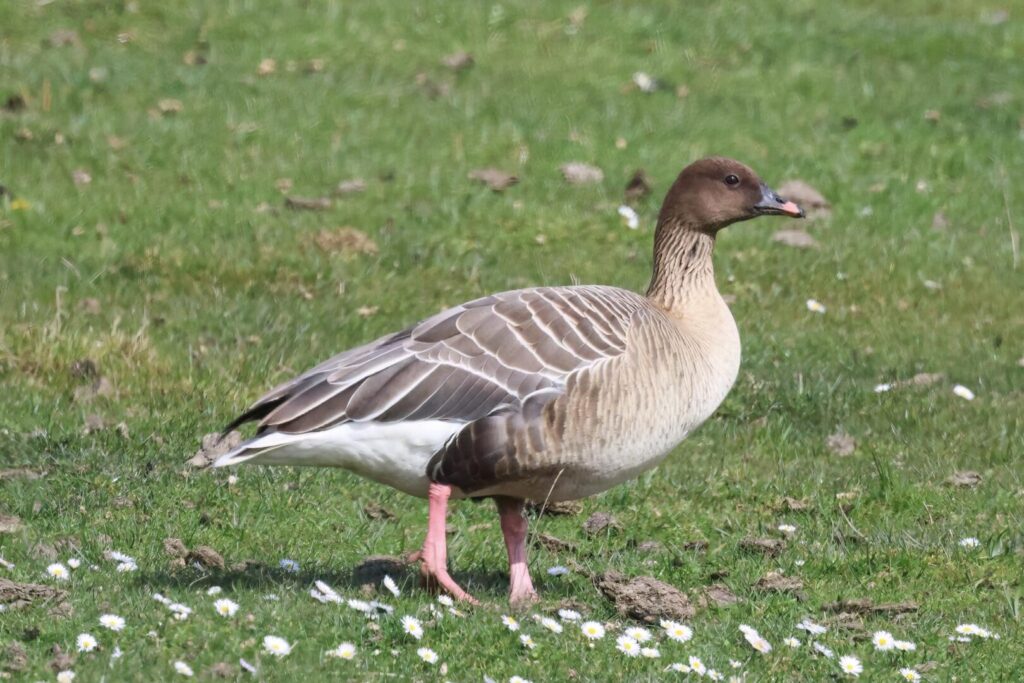
A single Pink-footed Goose walked into view from behind the hedge. It was chased out by one of the Greylags, giving a good side by side comparison. Most of the Pink-footed Geese have long since left us, heading to Iceland for the breeding season. This one is late, and possibly sick, old or injured/shot and unable to make the long journey back to the breeding grounds.
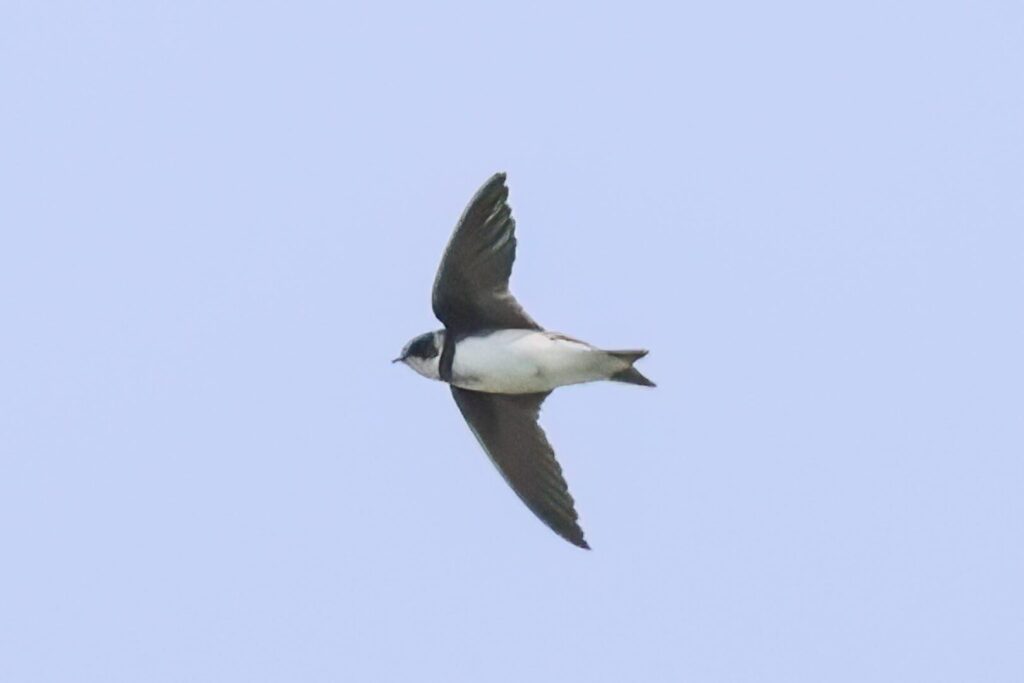
Lots of Sand Martins were hawking round over the water. Good views as they flew overhead, we could see their brown breastbands. A few Swallows were in with them. Most of them were probably local breeding birds but we did get the sense that some of the Swallows might just be pausing briefly to feed on their journey.
A Common Whitethroat was calling from the top of the brambles on the corner. It then flew up, songflighting. Another Sedge Warbler was singing in the reeds by the crosstrack. More migrants back for the breeding season.
Continuing on down towards the Hard, there were lots of Linnets in the bushes. Several Stock Doves flew round. Just before the beach, we found two male Stonechats in the brambles, then one with a female.
We managed to find a Wheatear out on a fence post on the Quags. Very distant and in the heathaze, not much better views than we had this morning. Then we found another Wheatear much closer on the shingle ridge, a male this time.
As we walked back, we could hear a Mistle Thrush singing in the distance. We looked over towards Muckleburgh Hill and could see it perched right in the top of an oak tree on the top.
We drove back to Cley and down Beach Road for a quick look in the Eye Field. A single Brent Goose was out on the grass, along with four Golden Plovers. They were flushed by a passing Marsh Harrier and flew round. When they landed again we could see one was already moulting into breeding plumage, with a black belly. Two more Wheatears were flitting around the pillbox further up on the beach. It was a good day for them today.
We still had time for one last stop. There had been three Ring Ouzels at Blakeney the last couple of days. Given no reports today, it seemed like they most likely might have moved on, but we wondered if no one had been to look. We went to look just in case.
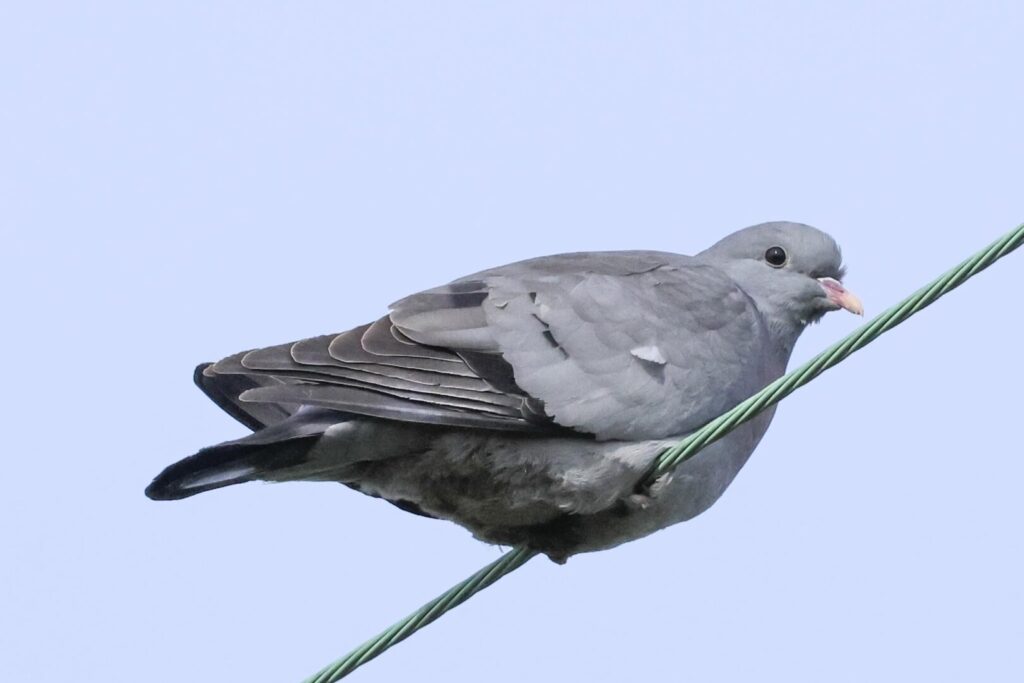
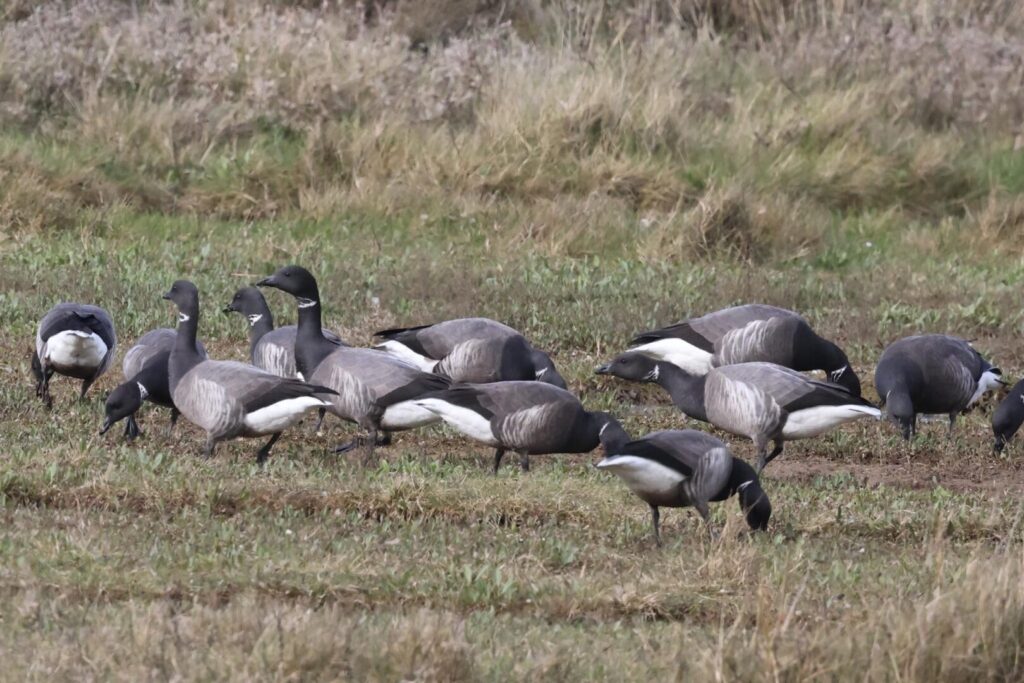
As we got out of the minibus, we could see a large flock of Brent Geese in the middle of the winter wheat field opposite. Crossing the road, a Stock Dove was perched on the wires at the start of the footpath. It seemed reluctant to fly off, even as we approached.
We walked down and came out on the coast path. Scanning the first field where the Ring Ouzels had been, there was no sign of them. There were lots more Brent Geese flying back and forth over the saltmarsh the other side of the path. A Spoonbill was standing by one of the pools. It was having a quick preen but promptly went back to sleep. Typical Spoonbill!
Checking the next field, we could see nothing but rabbits in there either. Our suspicions were confirmed, the Ring Ouzels must have moved on overnight. A small group of Brent Geese were feeding on the saltmarsh opposite.
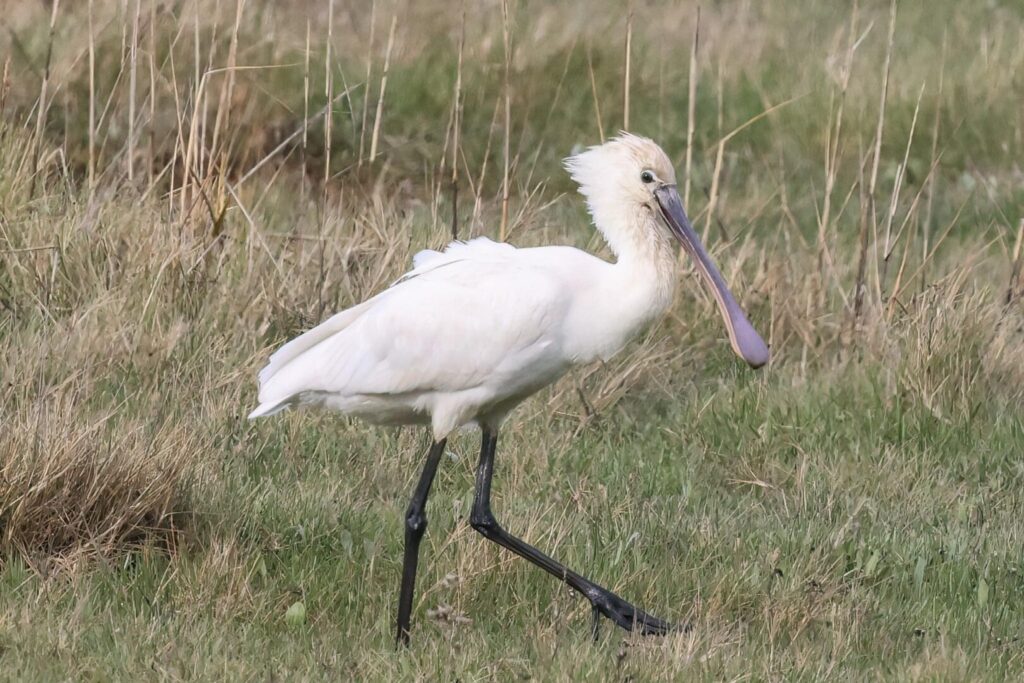
Another Spoonbill flew in and landed on the saltmarsh by the Brent Geese. A young bird with a brownish bill, one of last year’s. It walked across right in front of us and the stepped down into one of the small pools. We watched it fishing, walking around with its head down. Occasionally it would catch something, throwing its head back. Another adult Spoonbill flew past and circled over briefly to check out the others before continuing on.
We walked back up to the minibus. One of the group needed a quick stop to use the facilities, so we popped round to Morston Harbour. As we were there, we had a quick check of the harbour channel – more Brent Geese, several Redshanks. We had hoped we might get a bonus Greenshank but no sign now.
After a quick stop to use the loos, then it was time to head back to base for tea & cake.