A single day Late Spring Group Tour. It was a bright and sunny day with only patchy cloud at times. Warm out off the wind, hitting 21C in the afternoon, but with a rather blustery SW wind which was not in the forecast! We spent the day on the North Norfolk coast.
Our destination for the morning was Cley. Parking in front of Walsey Hills, we could hear a Reed Warbler singing across the road. There were just a few Mallard, females with ducklings, and a Mute Swan on Snipe’s Marsh. A Chaffinch and a Chiffchaff were singing in North Foreland Plantation as we passed.
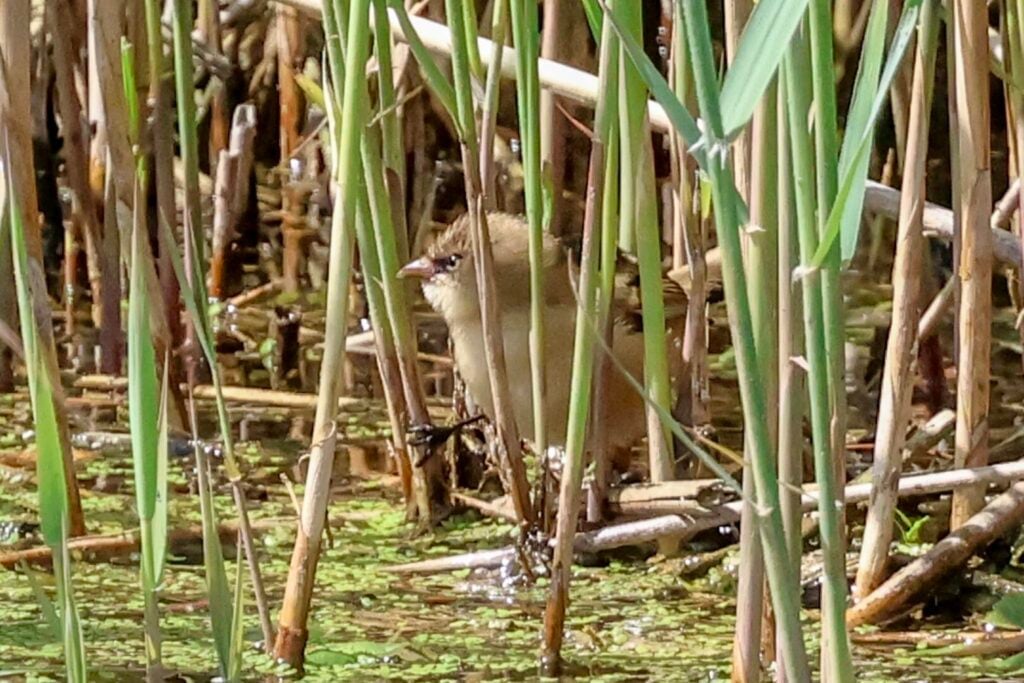
As we got to the start of the East Bank, a Great White Egret flew away over the reeds. We could hear more Reed Warblers singing and a brief Sedge Warbler so we stopped to listen to them, noting the more metronomic rhythm of the Reed Warbler. A Bearded Tit called and we turned to see one fly up from the edge of Don’s Pool and disappear off away over the reeds. It was already rather windy here – not ideal conditions for looking for Bearded Tits.
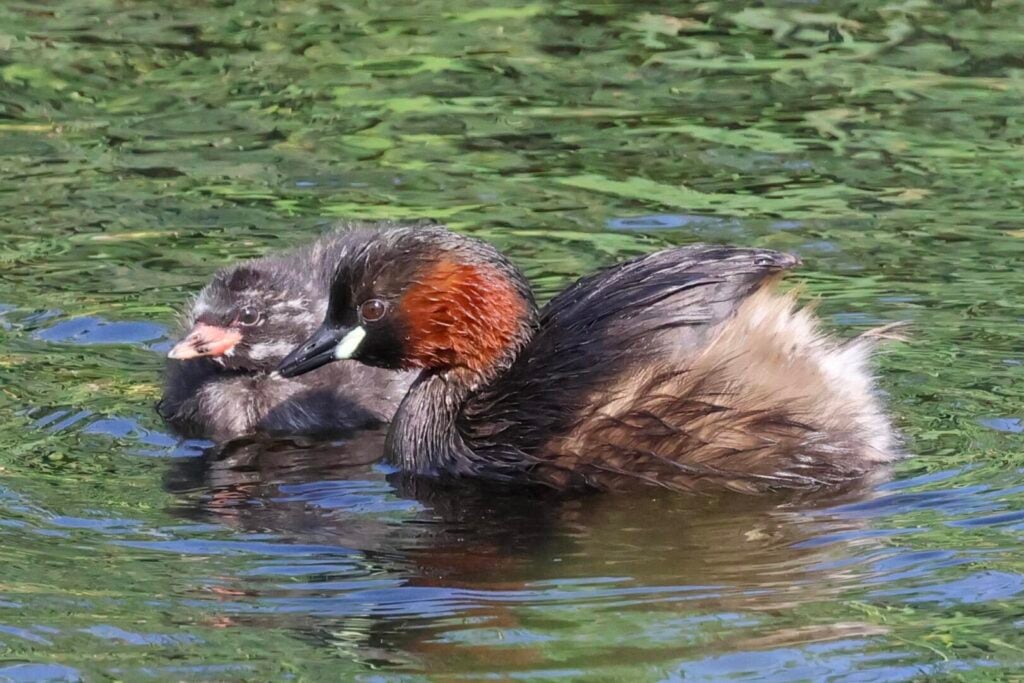
A pair of Little Grebes were out on Don’s Pool with their two half-grown juveniles. We watched the two adults diving repeatedly and resurfacing with food items which they fed to the youngsters. One of the adults came up with some weed at one point and took it into the bulrushes at the back. Maybe nest building for a second brood.
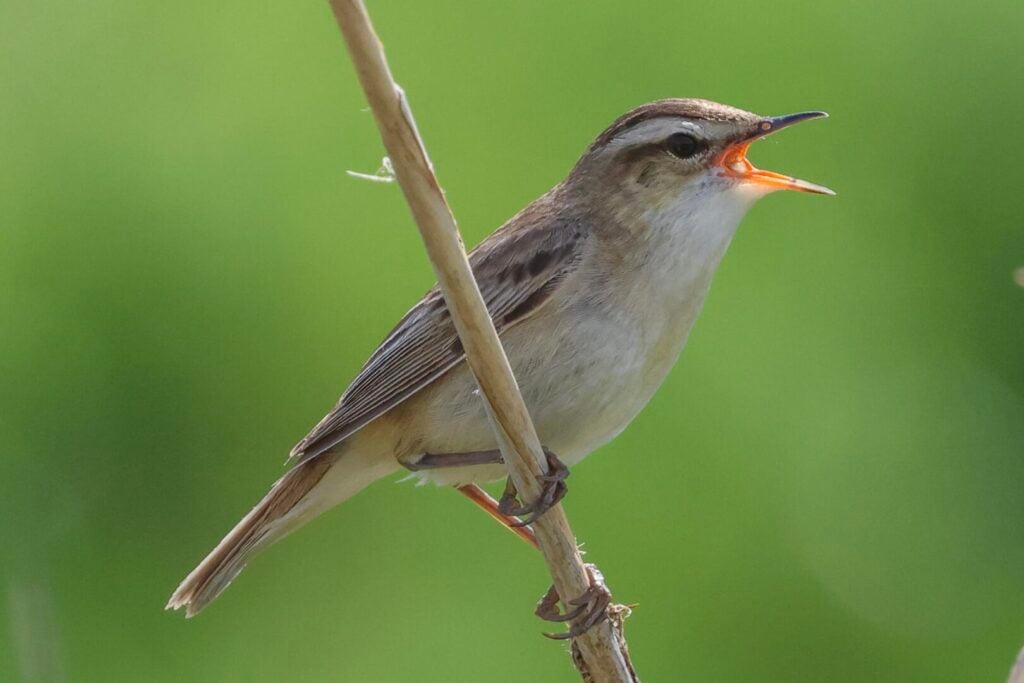
Continuing on up the bank, we heard another Sedge Warbler singing its mad buzzy song from the ditch below. It flew up in song flight and descended town to the top of the reeds. It clung on to a reed stem swinging in the breeze, singing, giving us great views. We watched it fly up and land again several times before it eventually dropped back down into the reeds.
A Lapwing out on the grazing marshes had a single fluffy juvenile. The adults’ idea of childcare is to chase off any predators, so it spent most of its time flying round after various Rooks and Jackdaws. A couple of Skylarks fluttered up singing. There were three Little Egrets in the ditch in the middle of the grass and a small gaggle of Greylags with a single Canada Goose behind. A few Avocets and Shelduck were further back on Pope’s Pool.
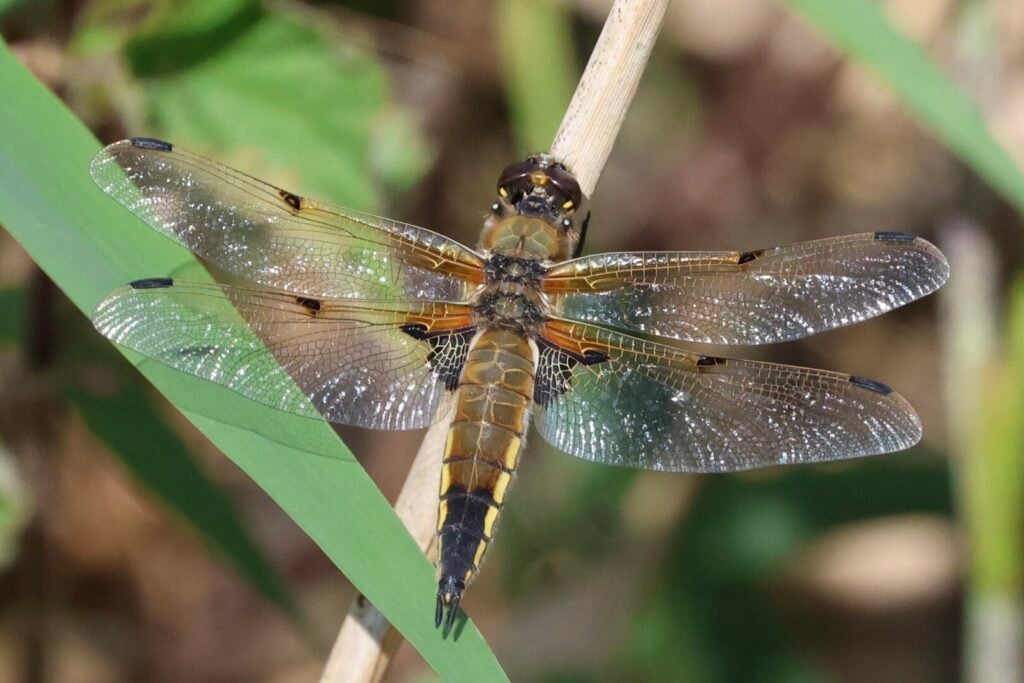
There didn’t seem to be much Marsh Harrier activity this morning. We eventually saw one distantly out towards North Scrape and another out over Pope’s Reedbed. A Four-spotted Chaser dragonfly was resting on a reed stem below the bank.
Up on the Serpentine, there were more Avocets and a couple of Redshanks. One of the Avocets had a single fluffy chick, about half grown which was feeding actively on its own. We got the scope first on a Little Ringed Plover on the mud on the edge of the water, then on a Ringed Plover for comparison. A couple of juvenile Pied Wagtails were feeding on the mud.
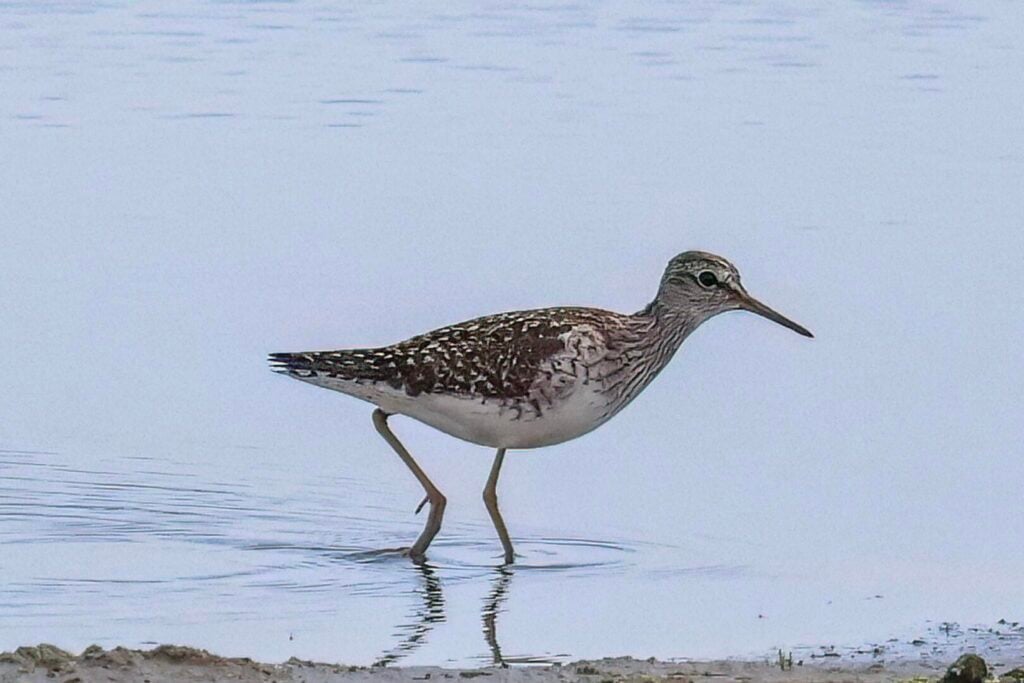
Looking further up, we noticed a small wader in the top corner. Surprisingly, it was a Wood Sandpiper. A passage migrant here, most of the spring birds go through earlier in May on their way up to Scandinavia to breed. So hard to tell if this was a late migrant heading north or an early returnee, possibly a failed breeder on its way back south already. Typically, either could be the case in early June! Anyway, a nice bonus to find one here today.
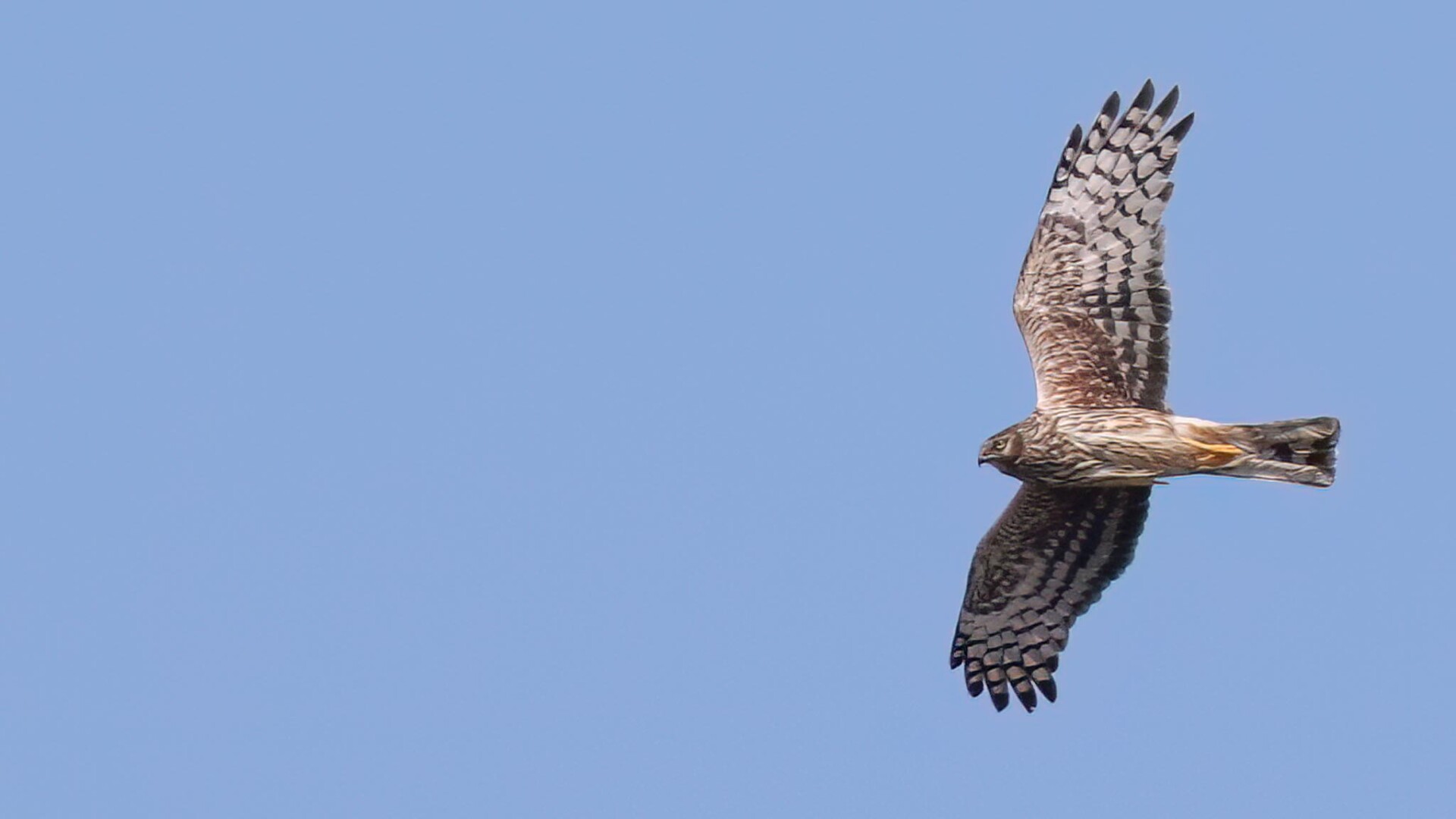
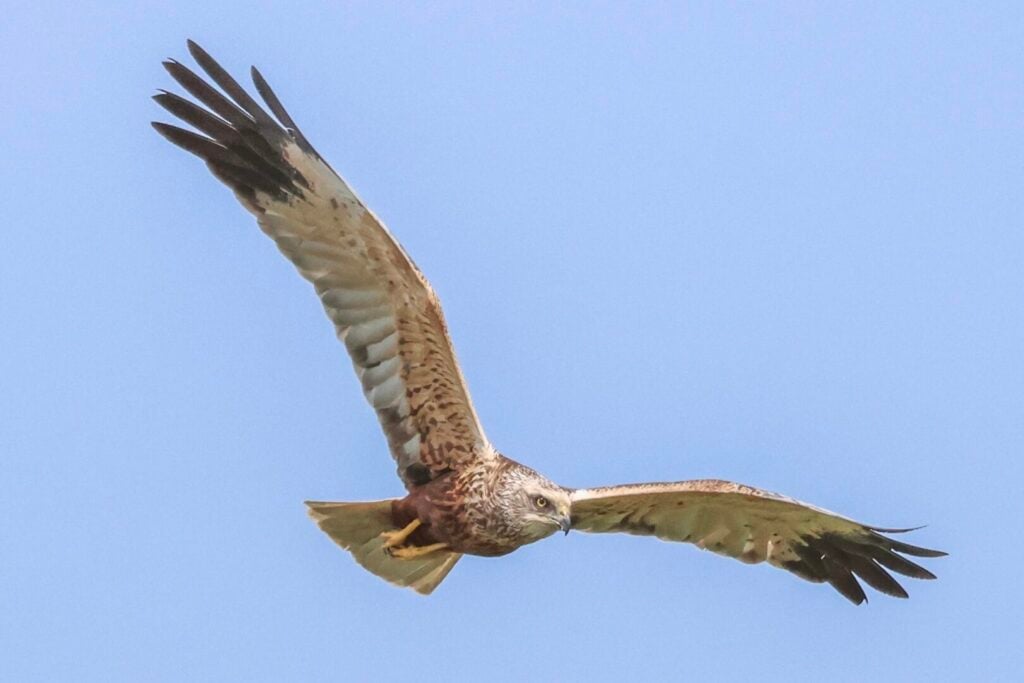
As we got to the main drain, a male Marsh Harrier flew over. It gained height over the main reedbed and started displaying, tumbling and calling. It seems a bit late for it to be trying to breed now – most pairs have well grown young now. A Kestrel was hovering out over the back of the beach.
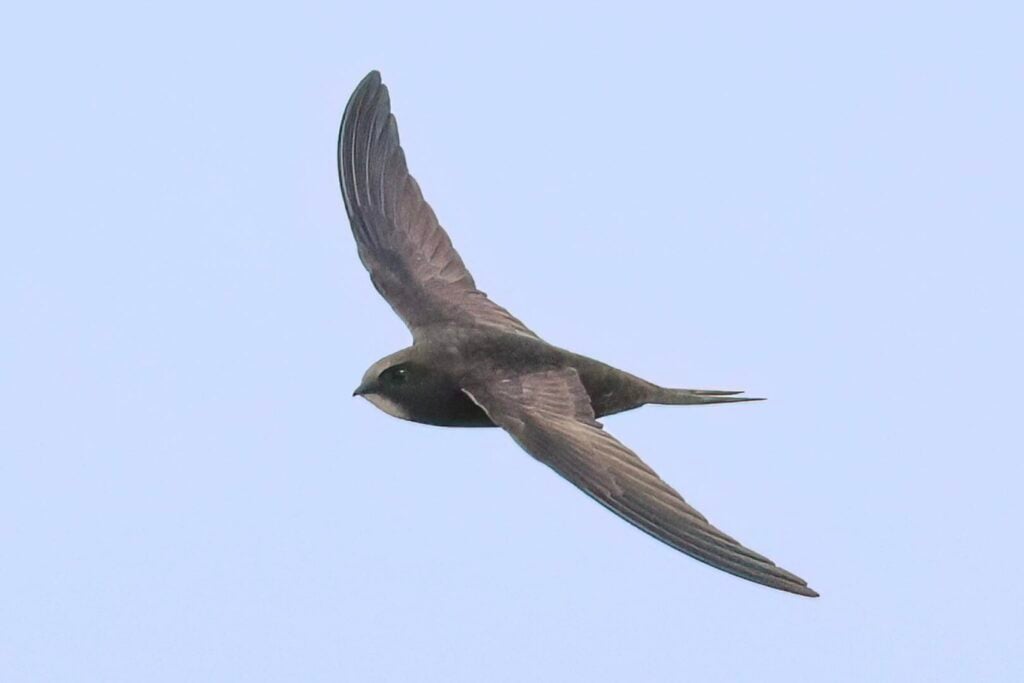
There seemed to be a steady passage of Common Swifts west this morning. In the breezy conditions, some were feeding quite low over the reedbed and gradually quite a significant number gathered over the north side of the reserve. Probably at least 100 birds at its peak. Great to watch them passing low in front of us over the East Bank. A few Sand Martins flew in too.
There were a few Cormorants on Arnold’s Marsh and a single immature Great Black-backed Gull. A few waders were scattered round, Avocets, Redshanks and a single Oystercatcher. The Brackish Lagoon held more of the same, plus a Little Ringed Plover and a couple of Ringed Plovers.
A Sandwich Tern flew round over Arnold’s and then back out over the shingle ridge to the sea. We could see more terns over the water beyond the ridge so we walked out to the beach for a closer look. A closer Little Egret was feeding on the pools by the bank. It walked out onto the mud as we approached, showing off its yellow feet.
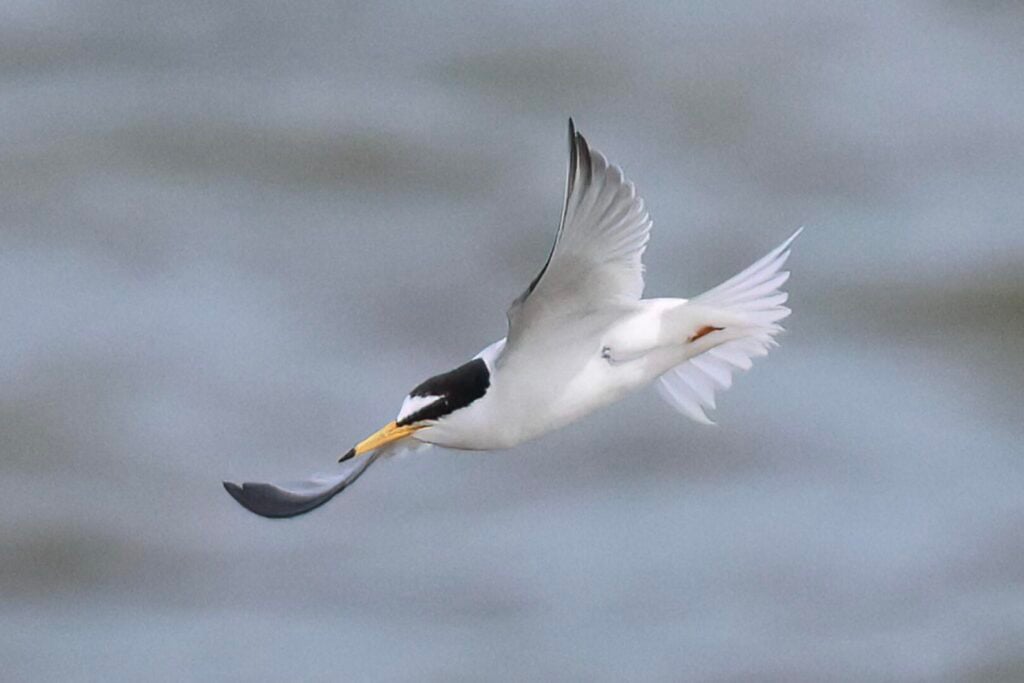
Out at the beach, a few Little Terns were feeding offshore, hovering over the water and then plunge diving. Eventually we got good views of them right in front of us. A steady stream of Sandwich Terns flew past, some carrying fish, along with more Little Terns and a couple of Common Terns. A good chance for comparison of sizes and respective bill colours.
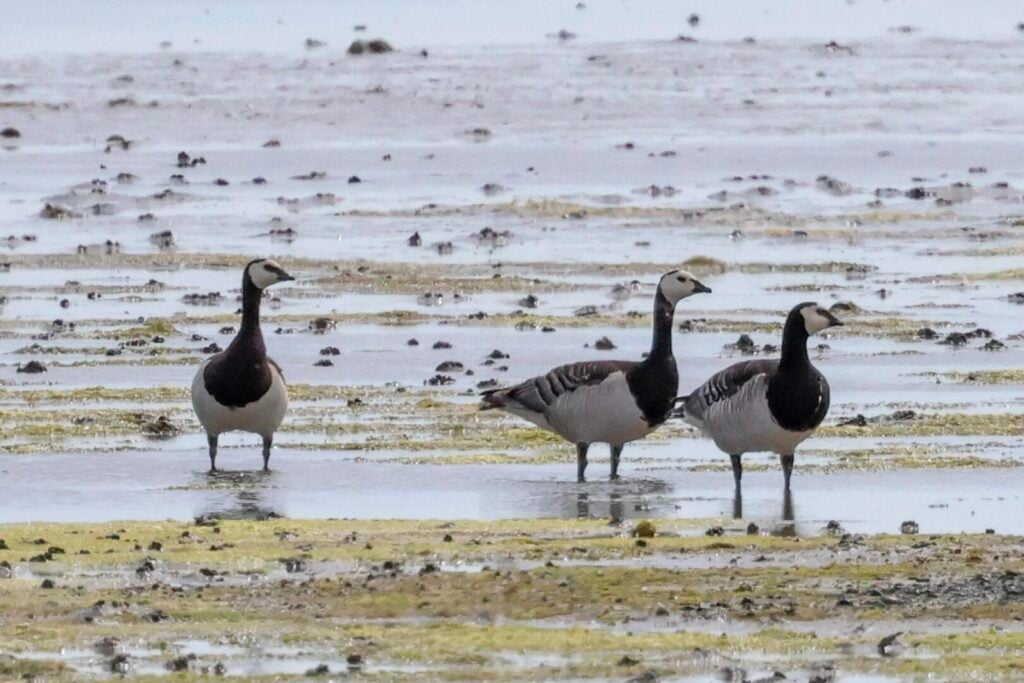
As we made our way back, it was a surprise to find three Barnacle Geese now on Arnold’s Marsh. Presumably birds from one of the feral breeding populations either here or on the Continent, it is an unusual time of year for them to be on the move. After resting for a while, they took off and flew off west, presumably continuing their journey.
As we walked back past the Serpentine, two Spoonbills flew across in front of us and dropped down onto the grazing marsh behind the reeds grown in the ditch in the middle. From further along, we could see one preening through a gap in the reeds before it went to sleep. Then the two birds chased a third Spoonbill out from behind the reeds until it flew off east.
It was warming up nicely now and there were more butterflies and dragonflies out. We saw a couple of Red Admirals and Painted Ladys. A Norfolk Hawker was hunting over the ditch on the edge of the reedbed and a Hairy Dragonfly landed on the reeds below the bank. Back at Don’s Pool, there were lots more Four-spotted Chasers patrolling low over the water now.
Scanning round the edge of Don’s Pool, we saw two or three Reed Warblers flicking round in the base of the reeds. Then we spotted a Bearded Tit over in one corner. It was feeding just above the water’s surface but disappeared out of view. A couple of minutes later it reappeared and we got it in the scope, a juvenile with black back and lores.
Back to the minibus, we drove round to the Visitor Centre to use the facilities and get permits for the hides. A Blackcap was singing in the car park. We still had a little time before lunch, so we headed out to Bishop Hide. On the way, there were more Sedge Warblers in the reeds by the Skirts and more Four-spotted Chasers and Hairy Dragonflies in the Catchwater Drain.
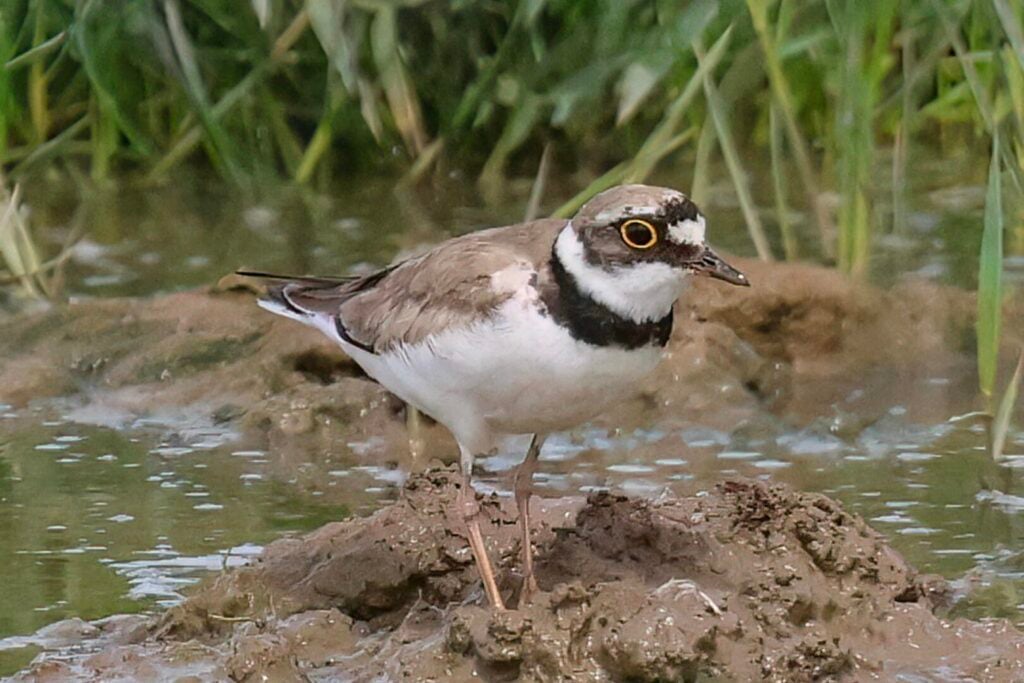
Looking out from the hide, a Little Ringed Plover was feeding on the mud in front of the nearest island. A lovely close up, we could really see its golden yellow eye ring now. There were several Avocets feeding in the shallow water and lots of Black-tailed Godwits sleeping on the left hand island. Another couple of Little Ringed Plovers landed in front of them and the male tried displaying. The female didn’t look impressed!
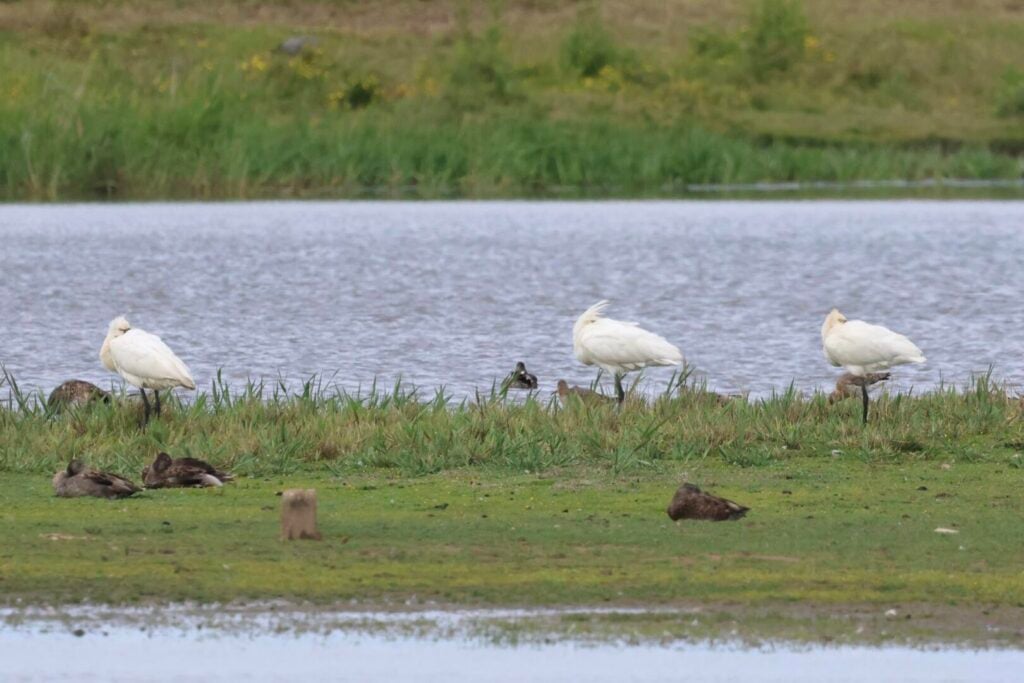
There were three Spoonbills on the same island too, doing what they like to do best – sleeping! We located the Greenshank feeding in the water right over towards the back of the scrape. Another migrant wader species which perhaps is more likely to be an early returning failed breeder.
There were lots of ducks on here today too. Numbers of Gadwall have gone up significantly in recent weeks. Not clear where they have come from, but the drakes are already starting to moult. A drake Wigeon was right over the back and a couple of Teal dropped in briefly. They could be non-breeding birds which have stayed here but once again, are perhaps more likely to be early returnees from further north. A couple of Tufted Ducks were asleep with the gathering of Shelduck.
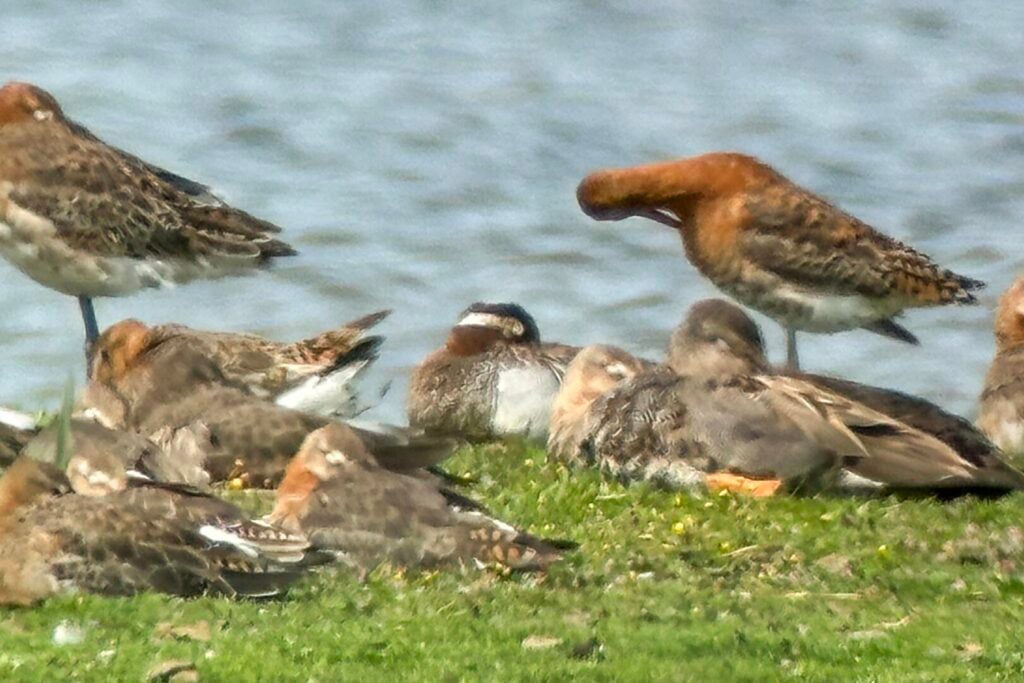
There had been a drake Garganey on here earlier but we couldn’t see it when we arrived. When the Black-tailed Godwits shuffled round, someone spotted it sat down in amongst them. Hopefully the female Garganey is still here somewhere, breeding out of site nearby. The drake is already starting to moult into eclipse plumage but still sporting its well-marked white head stripe. Two Shoveler appeared from behind the Godwits too.
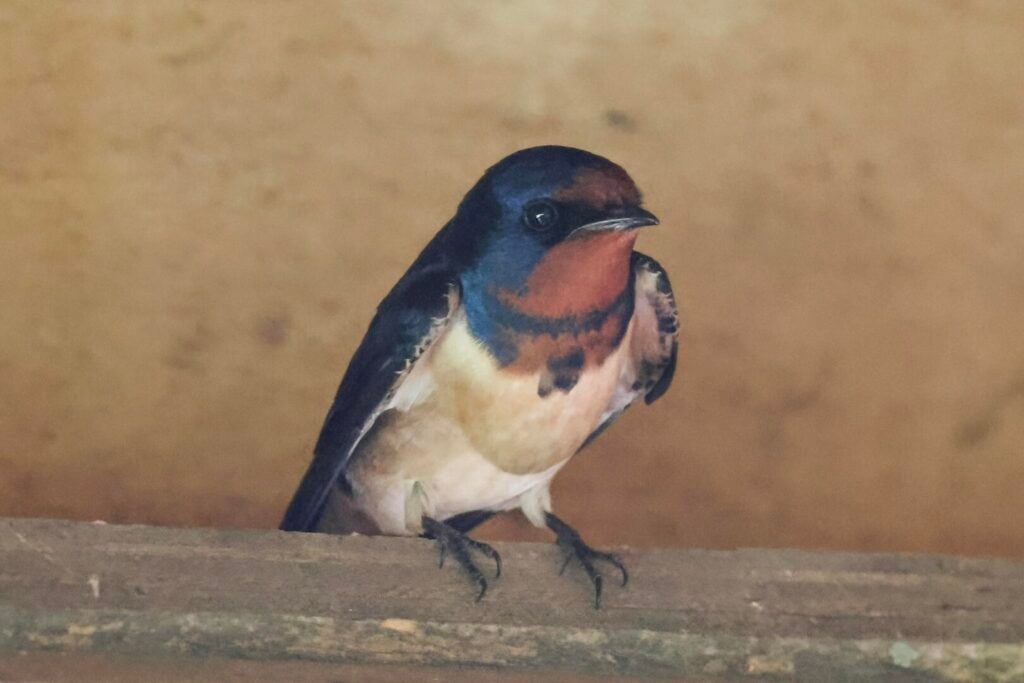
A couple of Bearded Tits flew out from the low reed island in front, past the front of the hide before disappearing behind the reeds towards Richardson Scrape. Several Swallows flew in and out of the hide through the open windows, despite the number of people inside. One landed on the window flap over by the corner and we could see what was presumably its partner on a nest below the roof nearby.
It was time for lunch now, so we made our way back to the Visitor Centre. On the way back along the Skirts, a couple of House Sparrows on the path ahead of us, feeding on large Peacock caterpillars they had found in the vegetation.
It was nice, out of the wind in the picnic area, looking out over the reserve. A Common Whitethroat came up out of the brambles by the path. A male Marsh Harrier flew in over the reeds across the road, straight towards us before heading off over the car park. A Red-legged Partridge was feeding in the Ox-eye Daisies down at the far end and walked out onto the grass in the open briefly. A family of Blue Tits came through the bushes and one of the juveniles landed on a picnic table.
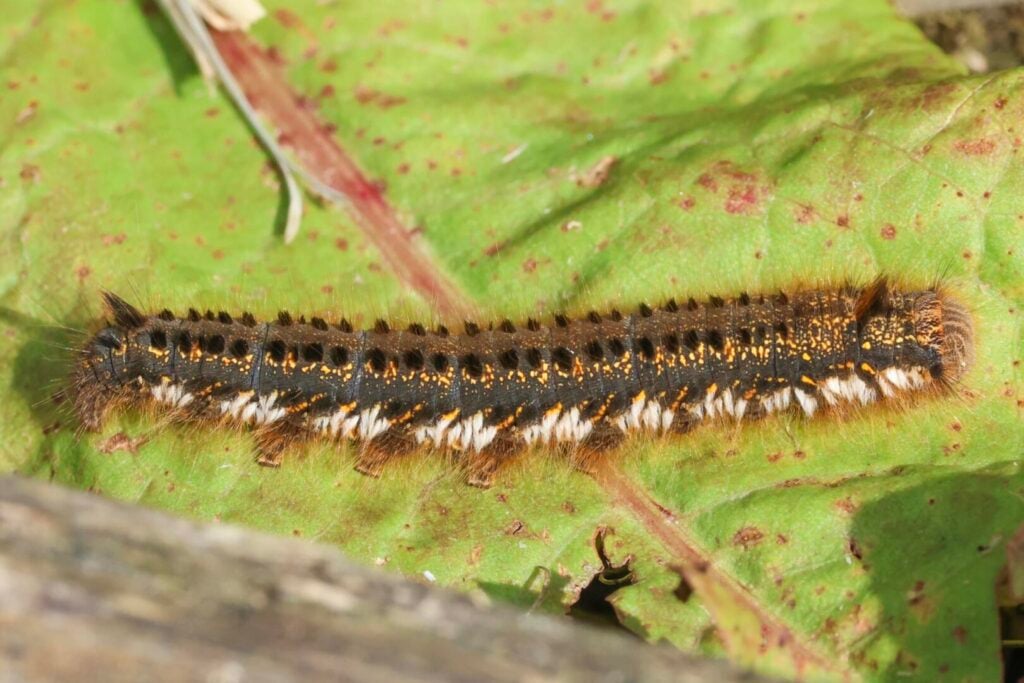
After lunch, we walked out to the central hides to check the other scrapes. Several House Martins were flying in and out from the eaves of the warden’s house across the road. Along the boardwalk, we found lots of Drinker moth caterpillars on the boards, posts and reeds.
We went into Daukes’ Hide to have a look at Simmond’s Scrape. There were much the same birds on here that we had seen on Pat’s Pool earlier – Avocets, Little Ringed Plovers, the same or another drake Wigeon. Three large gulls were sleeping on one of the islands. One had a noticeably darker grey back than the nearby Herring Gull and when it lifted its head we could see its heavy bill and red orbital ring round its eye. A Yellow-legged Gull.
There had been a Cattle Egret out on here earlier but there was no sign of it now. Some of the cows were feeding round the edge of the scrape but more were out on Billy’s Marsh. Someone came into the hide and said they had seen it earlier from the beach side with the further cows. A Lapwing landed down at the front of Whitwell Scrape.
Looking across to Pat’s Pool, we had a better view of the Greenshank from here. Several House Martins were coming down to collect mud for their nests from the island. A Marsh Harrier flew in and landed where they had been, before getting seen off by an angry mob of Avocets. As it flew off over the scrape, it flushed everything. The waders, ducks and Spoonbills all flew round and eventually landed again.
When the Black-tailed Godwits landed again they started to feed now. We got the scope on them. Quite a few were sporting a bit of orange breeding plumage, but were possibly non-breeding first summers. One very smart adult was in full breeding plumage though, again perhaps an early returnee from the breeding grounds in Iceland.
We made our way back to the car park again. A Dunnock was singing in the brambles as we walked across the road. We could hear Cetti’s Warblers calling in the bushes next to where we had parked and realised there were juveniles begging to be fed. The adult flew out and across to the brambles by the road.
We drove along the Coast Road to Salthouse now and turned inland. There had been a Quail singing in a barley field here this morning and after a couple of stops by different barley fields we managed to work out which one it was in. We got out and could hear it singing loudly from the edge of the crop, its distinctive ‘wet-my-lips’ song. Impossible to see in the thick barley but nice to hear.
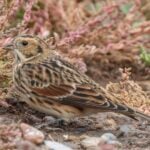
Moving on again, we drove a short way out onto a nearby heath. It was rather blustery when we arrived and we thought we might struggle. We could hear a Yellowhammer calling so we walked a short way out from the car park and got the scope on it, a nice male. It was perched in a the branches of a bare dead gorse bush and then another bird appeared in the same bush. A Woodlark!
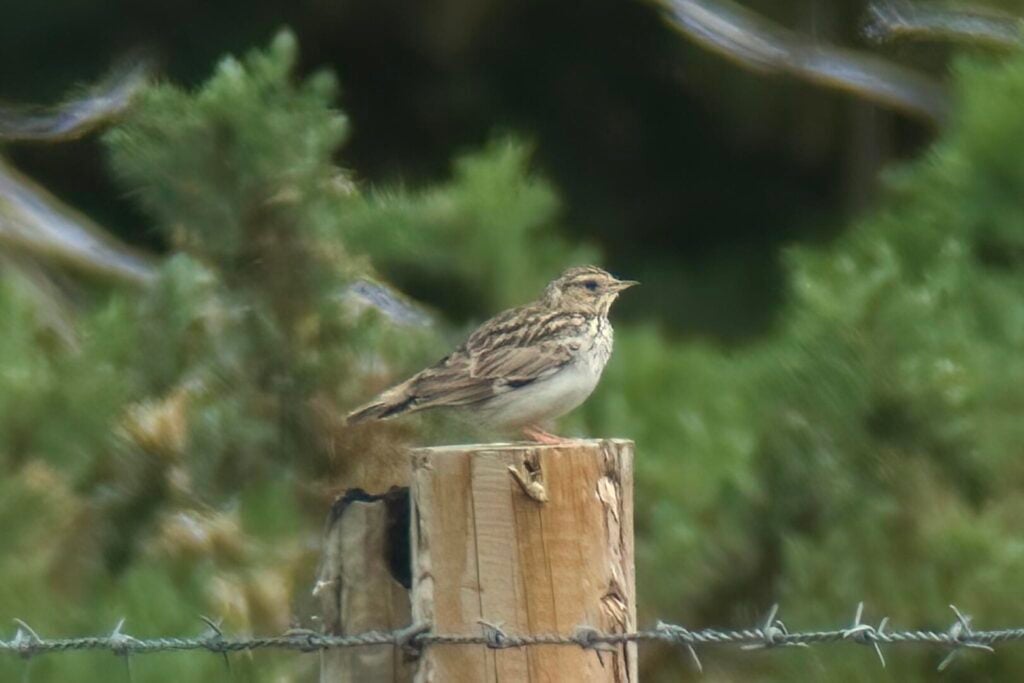
The Woodlark and Yellowhammer chased each other off and the Woodlark landed on a fence post while the Yellowhammer dropped down to feed. A little later, they were both back in the same dead gorse bush but had swapped places.
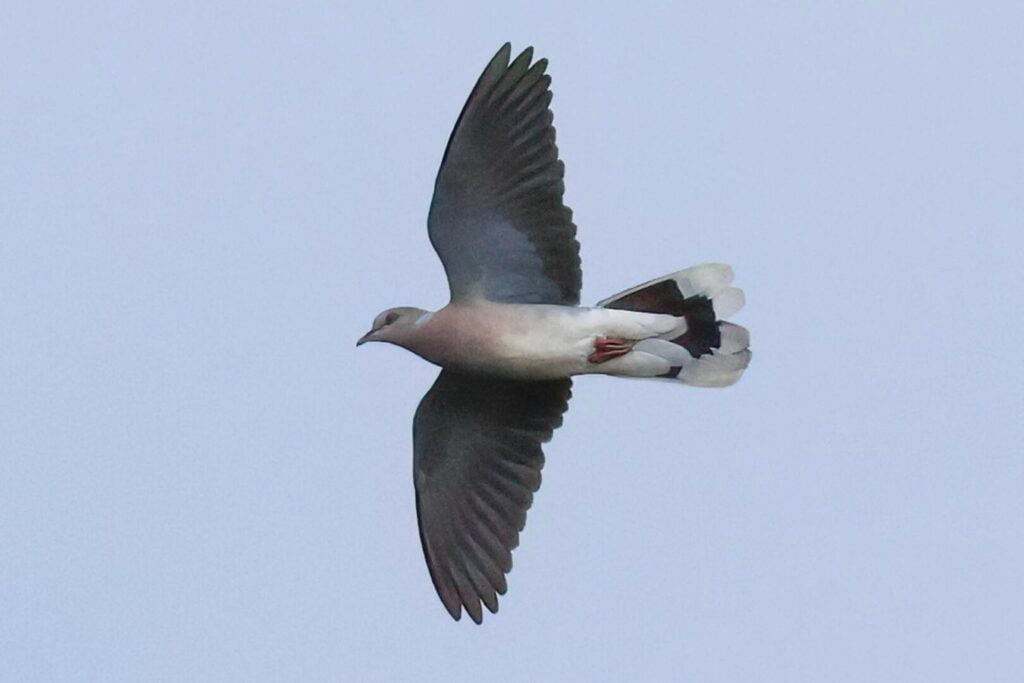
We were hoping to find a Turtle Dove here but couldn’t hear one this afternoon. Then we looked up to see one flying out from behind the trees beside us. It looked like it would fly straight off but helpfully turned and flew round in front of us, showing off its rusty-fringed back. It did a short display flight, then flew off away behind the trees ahead of us. Very nice of it! A couple of Stock Doves flew round too.
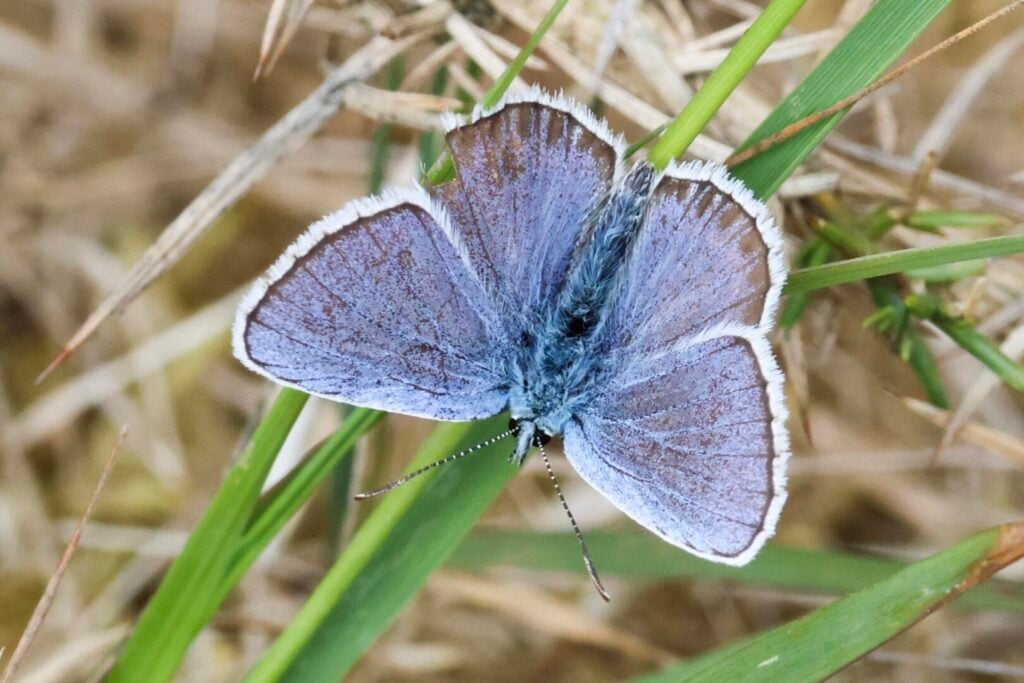
Mission accomplished, we moved over to another area of heath. We didn’t have to walk too far here before we heard a Dartford Warbler singing out in the middle of the heather. Looking over, we couldn’t see it but we did find a male Stonechat instead. A Silver-studded Blue butterfly flew past and landed briefly.
There is a path which looks round behind where we had heard the song so we decided to try looking from the other side. We could hear a Woodlark singing now too. As we got to where we thought the Dartford Warbler might be, the Stonechat was perched on the top of some dead branches. The Woodlark flew out from the same branches calling, followed by the Dartford Warbler!
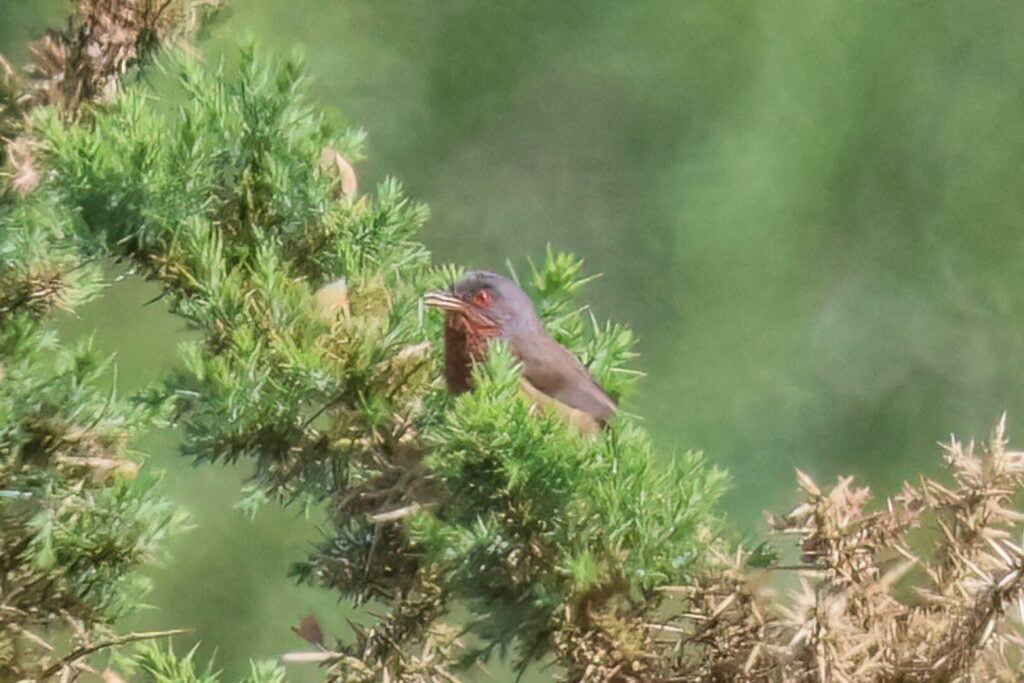
We could still hear the Dartford Warbler singing intermittently and had a couple of glimpses of it low in the heather and flying across. Then it flew over to a large gorse clump nearby and sang first from the base and then from the top, so we could all get a good look at it. A male Linnet perched in the same branches where we had seen everything earlier now.
As we walked back round, we could hear a Turtle Dove purring in the distance now. We made a quick diversion to a nearby area of short cut heath where we found several Silver-studded Blues sunning themselves. Good views and we could see the silver studs in the black spots in the underside of the hindwing of one male.
Then sadly it was time to head back to the minibus. It had been a lovely late spring day out and we had been lucky with the weather and the birds.