Day 2 of a 3-day Early Winter Tour in Norfolk. A much ‘milder’ day. First thing, ‘mild’ meant rain. Thankfully it cleared through quickly and then sun came out for the rest of the morning. Although it clouded over more in the afternoon, we had no more than a few spits of rain for the rest of the day. We spent it mostly around the Cley area on the North Norfolk coast.
It was drizzling steadily when we got to Cley this morning. After donning our waterproofs, we walked quickly out to Bishop Hide. Small groups of Pink-footed Geese were coming up off the reserve calling, some heading off inland, others dropping down onto the marshes over by Beach Road.
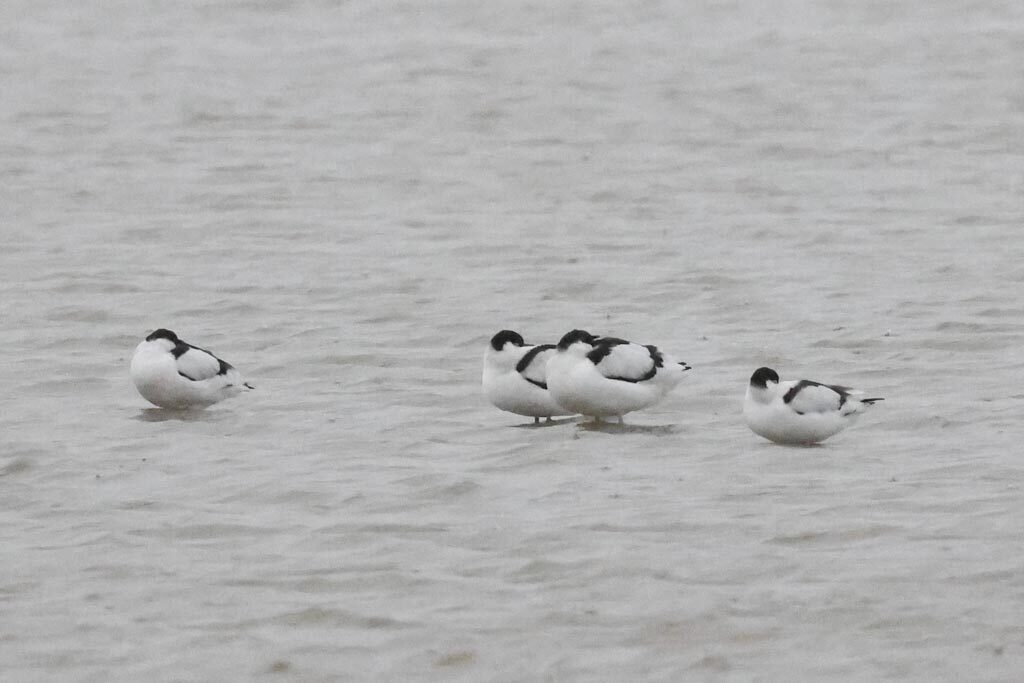
In to the hide, there were lots of Lapwings out on the scrape and a few Black-tailed Godwits in with them. Four Avocets were asleep, standing in the shallow water. Most have left us for the depths of the winter but a harder few will stay on right the way through, unless it freezes. A small number of Dunlin were feeding on the grassy islands.
There were good numbers of Teal on Pat’s Pool and a few Shelduck. A single Pink-footed Goose was on the water over the far side with two Mute Swans. We could see more Pinkfeet on the fields beyond the central hides, where they had been landing earlier.
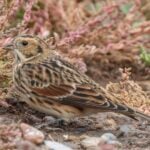
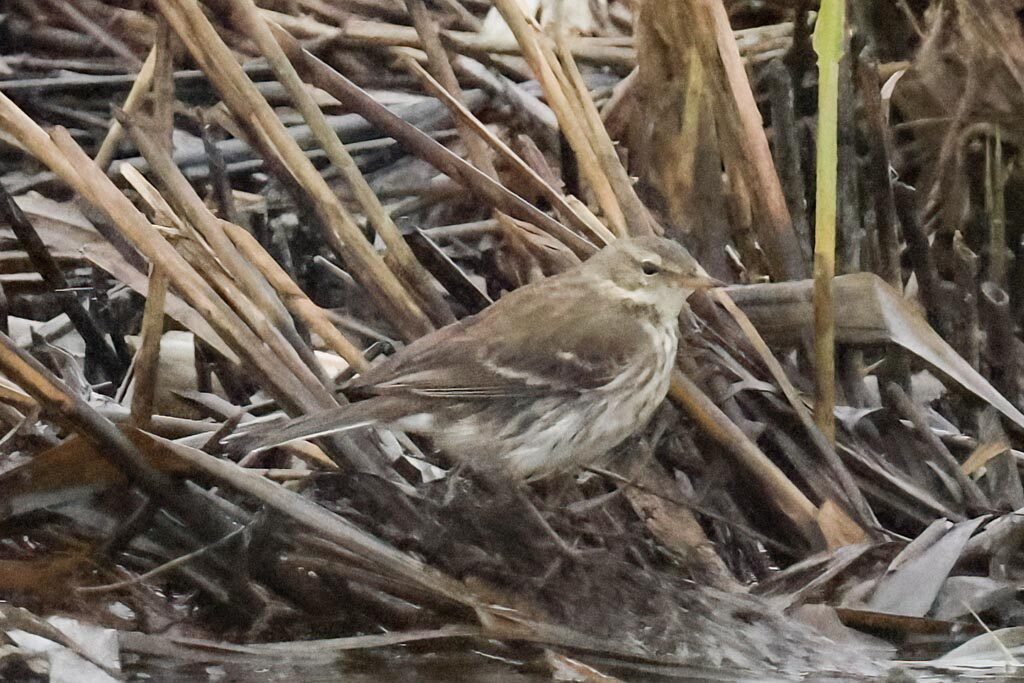
A Water Pipit appeared on the cut reed in front of the hide. It was very well camouflaged and hard to pick out at first, not helped by the very grey weather, easier to see when it moved. It picked its way along the near edge of the muddy strip, then worked its way back through the reed stems. Eventually it disappeared behind the taller reeds further back. One we wanted to see here this morning.
It was raining more steadily now, but we could see from the rainfall radar that the weather front was going to clear through by about 9.45am. We decided to stay in the hide until the rain stopped. The skies were very dark grey at first and misty, but gradually started to look a fraction brighter off to the west.
There was no sign of any snipe on the cut reeds in front of the hide today. Then a Common Snipe appeared further back, feeding in the grass bank on the bank. We got it in the scopes before it ran down over the top of the bank. Two more Common Snipe then walked up onto the bank closer to the hide. A Little Egret dropped down on the grass too, then flew back to feed on Richardson Scrape.

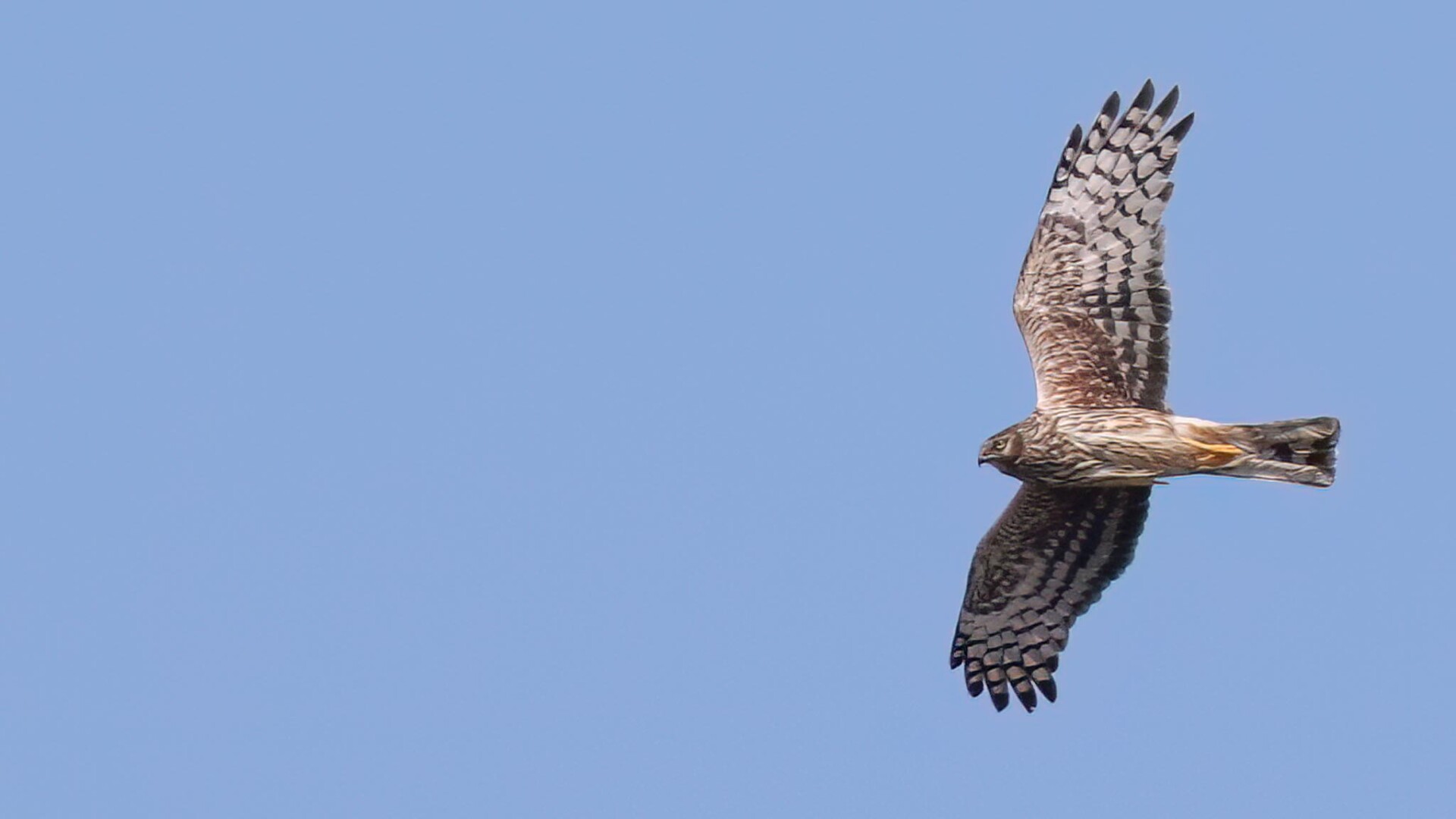
A Marsh Harrier appeared on a bush in the reeds at the back and another flew round briefly. They were probably waiting for the rain to stop too. One flew across over the scrape, flushing all the ducks, and then dropped down on a dead goose on the far bank. A Carrion Crow looked on hungrily as the Marsh Harrier started pulling at the goose, feathers flying. As the rain started to ease off, more Marsh Harriers came up out of the reeds.
On time, the rain stopped at 9.45am. As we walked back to the Visitor Centre, we could hear Bearded Tits calling close to the path, but they were keeping down in the reeds out of view.
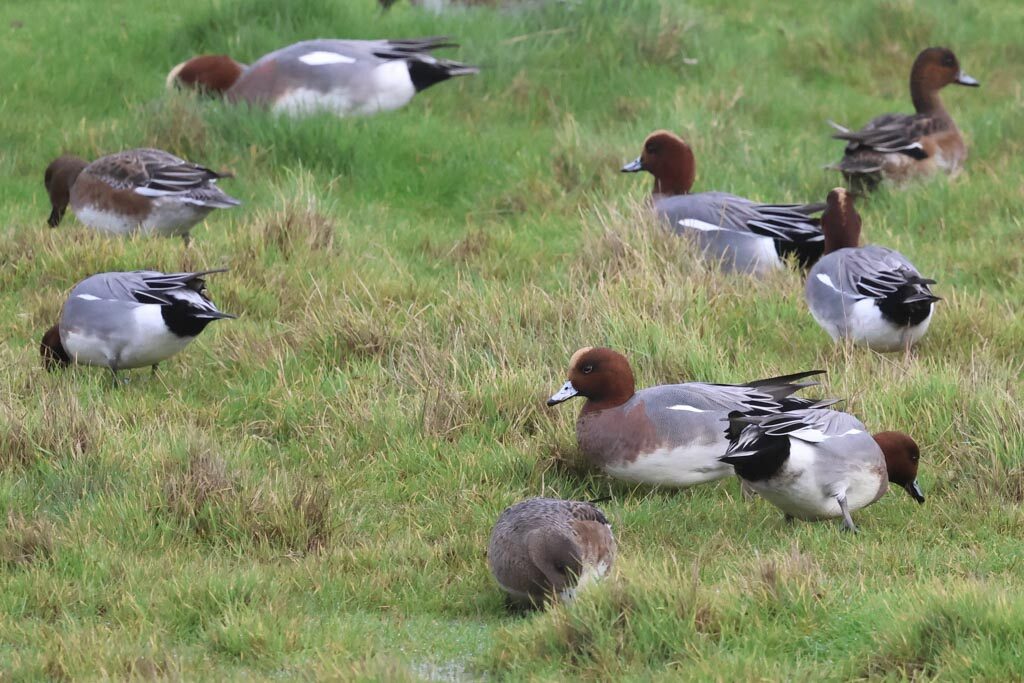
We drove down to the East Bank now and the skies were brightening nicely. As we got out of the minibus, a flock of Skylarks came up over Walsey Hills, dropping back down towards the field behind. We set off along the bank. There were lots of Wigeon feeding on the grass on the grazing marsh, occasionally whistling noisily. More ducks were on Pope’s Pool further back – mainly Teal and Shoveler.
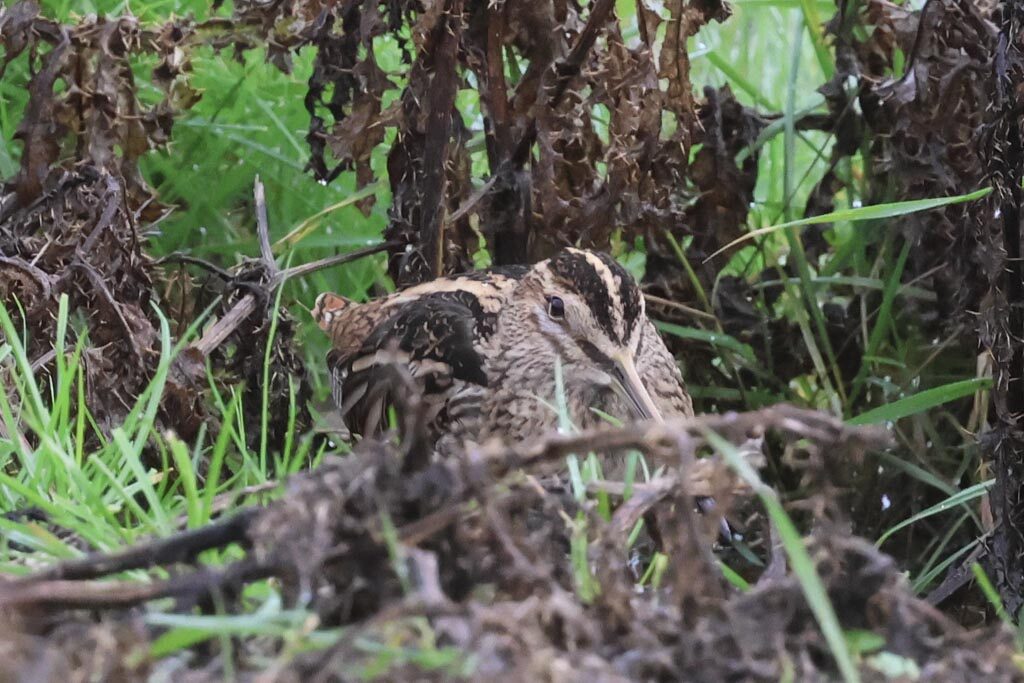
As we walked on, we found a couple of Common Snipe on the near edge of the grazing marsh, just beyond the reeds. They were very well camouflaged in the dead thistles, so we stopped for a closer look and got them in the scopes. Several Water Rails squealed and a couple of Cetti’s Warbler called from where they were hiding in the reeds.
One of the group had walked on a little further and managed to see a small group of Bearded Tits moving through the reeds, as they crossed a small channel. They had gone quiet by the time the rest of the group walked up.
We continued on. There were several more Common Snipe and a few Meadow Pipits on the grazing marshes. Another Water Pipit flew up calling and off away over the reedbed. There were more ducks on the Serpentine.
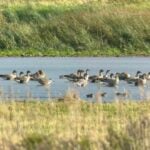
As we crossed the main drain, we could see several Little Grebes in the channel either side. There is lots of water on Arnold’s Marsh at the moment, after recent high tides and rain. We could see lots of Lapwings roosting on there, and a single Curlew, but no other waders today. There were plenty of ducks though, including a line of Pintail asleep towards the back.
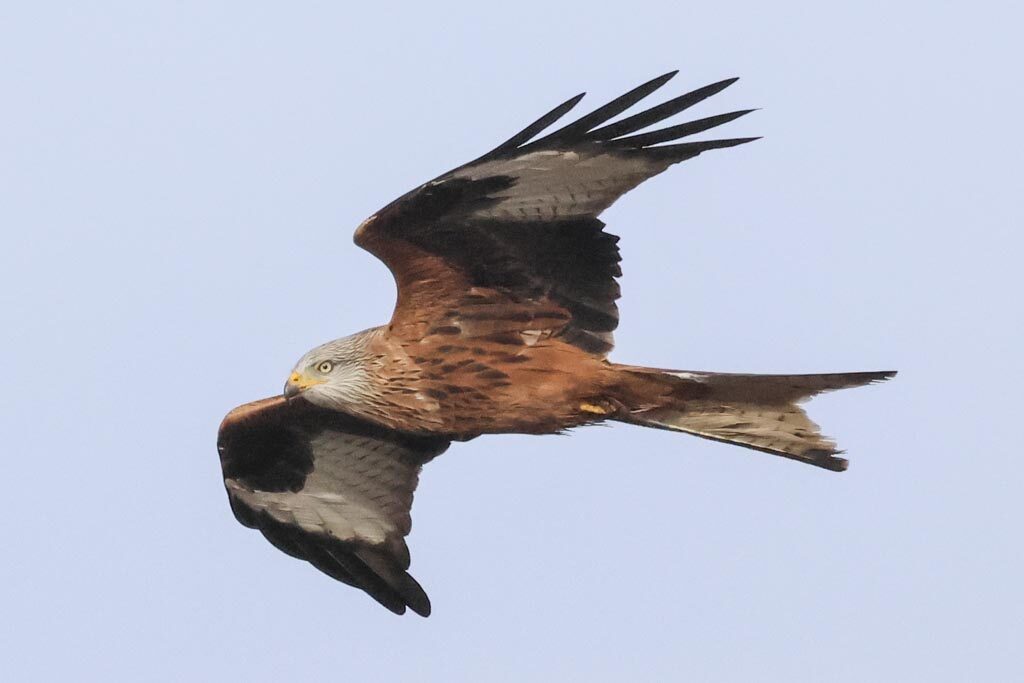
There were yet more ducks on the Brackish Pools, including a couple of Gadwall. A Kingfisher shot over and dropped down into one of the small reedy pools ahead of us out of view. We walked on towards where it had gone but it flew off before we got there, and disappeared away back to the main drain. A couple of Red Kites drifted over.
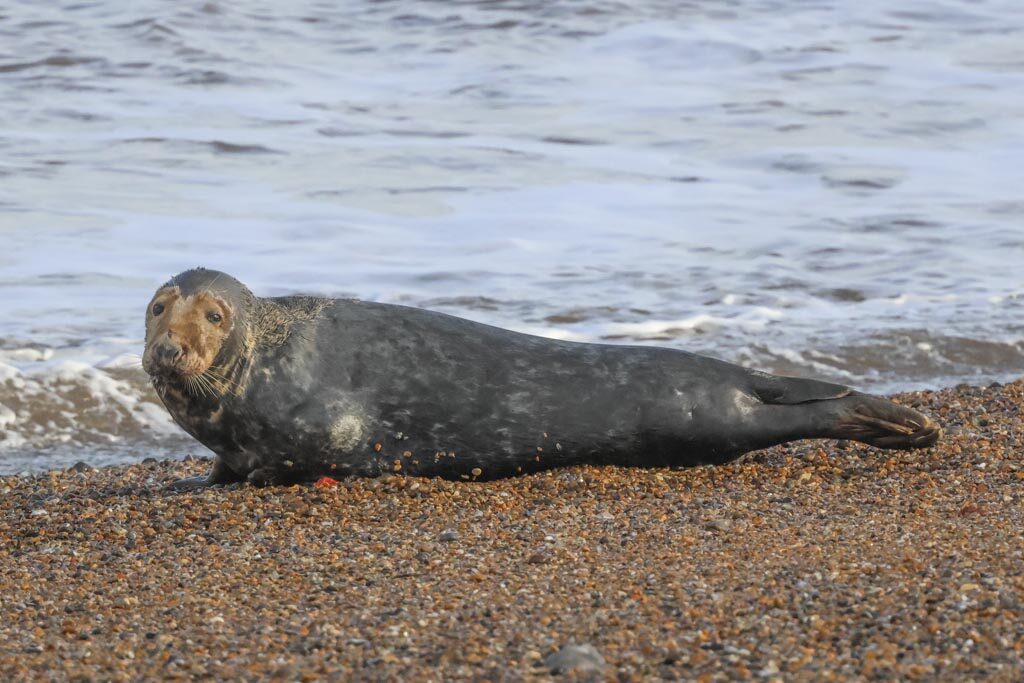
From the top of the beach, the first thing we saw was a Grey Seal hauled out on the shingle on the shore. A big bull was in the water alongside it. Looking west up along Blakeney Point, we could see lots more Grey Seals distantly on beach. It is pupping season and this is the biggest Grey Seal colony in England.
The sea looked rather quiet this morning at first. A Red-throated Diver flew past, then we picked up one or two distantly on the water, further out. There was a Great Crested Grebe out there too. A Guillemot flew across and dropped onto the sea, where we could see it in the scopes before it dived. Two Common Eider flew past, along with a single Gannet and a distant Kittiwake. Not huge numbers, but a good selection in the end.
A pair of Stonechats were working their way along the rope fence on the north side of Arnold’s, dropping down to the gravel to find food. Another bird appeared from behind the grass on the path below, probably a Reed Bunting. We turned around to get the scope and when we looked back it had disappeared.
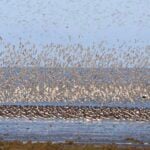
As we walked back, the Lapwing all flew up off Arnold’s and whirled round. We couldn’t see what had spooked them but we could see a small flock of Golden Plover with them too now. At the Serpentine, three Ruff flew in and landed on the mud. One had a striking white head, a ‘satellite male’. We stopped for a look in the scopes.
Back to the coast road, we walked across to Snipe’s Marsh. A Grey Wagtail was feeding on the mud at the back, with three Reed Buntings just behind on the edge of the reeds. A single Redshank was in the shallow water. There was a shoot underway on the fields behind and a lot of banging. We could see the beaters waving their flags in the game cover towards the top of the Hangs beyond.
We continued on to Walsey Hills, in along the footpath. There was a succession of Blue Tits, Great Tits and Goldfinches coming in to the feeders. Out the back, we walked up round the edge of the field. A Goldcrest flitted through the bushes on the corner, ahead of us.
Looking out of the field at the top, a large flock of Linnets came up out of the seed crop and flew round bouncing. The Skylarks we had seen earlier came up again too, along with several Reed Buntings and a small number of Chaffinches. We couldn’t see anything else obviously different in with them. A Kestrel was hovering over the field and then landed on the hedge at the back.
Back to the minibus, we returned to the Visitor Centre for lunch. The weather had improved so much, we could eat outside in the picnic area now. It was quite pleasant out of the wind here. After lunch, we drove east to Kelling. As we set off up along the lane, there were lots of tits and Goldfinches in the bushes at the start. Just beyond, we heard a Bullfinch calling. It was round on the other side of the hedge, and we couldn’t see it at first. It flew out as we walked past and across the lane ahead of us, a smart pink male.
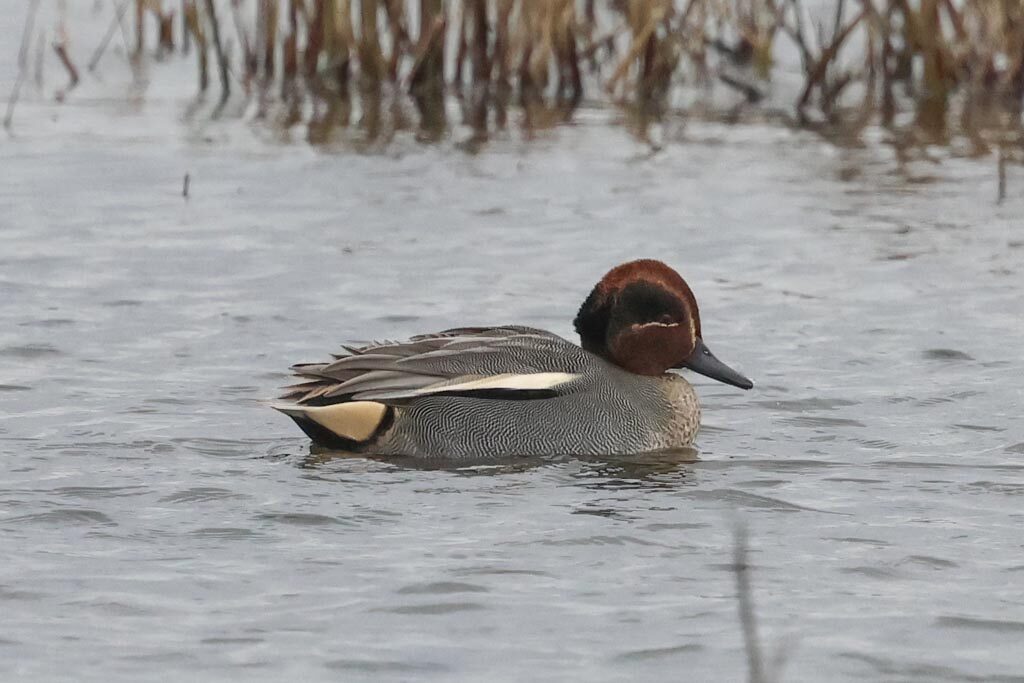
There was not much in the hedges further along. We could hear Red-legged Partridges calling in the field above – it is a big shooting estate here. One dead Partridge was lying, half-eaten on the track. There was nothing much to see from the gate, so we carried on down to the pool. A flock of Linnets circled round over the field to the west. There were a few Teal and Mallard on the water, and a single Redshank on the muddy edge. Some of the drake Teal were displaying.
We continued on down to the Hard and up onto the shingle ridge to look out at the sea. There have been several Velvet Scoter offshore here in recent days which we were keen to catch up with. We could immediately see a large raft of around 500 scoter offshore, but they were distant, far out and off to the east. The cloud had rolled in again and descended, so it was rather misty offshore now too. It started to spit with rain briefly, and there was even a rainbow.
We could see one or two Velvet Scoters in the flock but they were hard to pick out at that distance in with then Common Scoter. There had been 7+ Velvet Scoters here recently. A lone Common Scoter in front of the main flock took off and flew towards the beach. It landed with a smaller group closer in, just offshore. We hoped there might be a Velvet Scoter in with those, which would be much easier to see, but there were only about a dozen Common Scoter.
Just as we were wondering how we were all going to see a Velvet Scoter in the distant group, we noticed a small group of five ducks on the sea straight out from us, in with a few Cormorants. We turned the scope on those and were delighted to see they were all Velvet Scoters. We could see the smaller, double white spots on their faces. Not only were they much closer, but we also didn’t have to try to pick them out from the middle of a larger group.
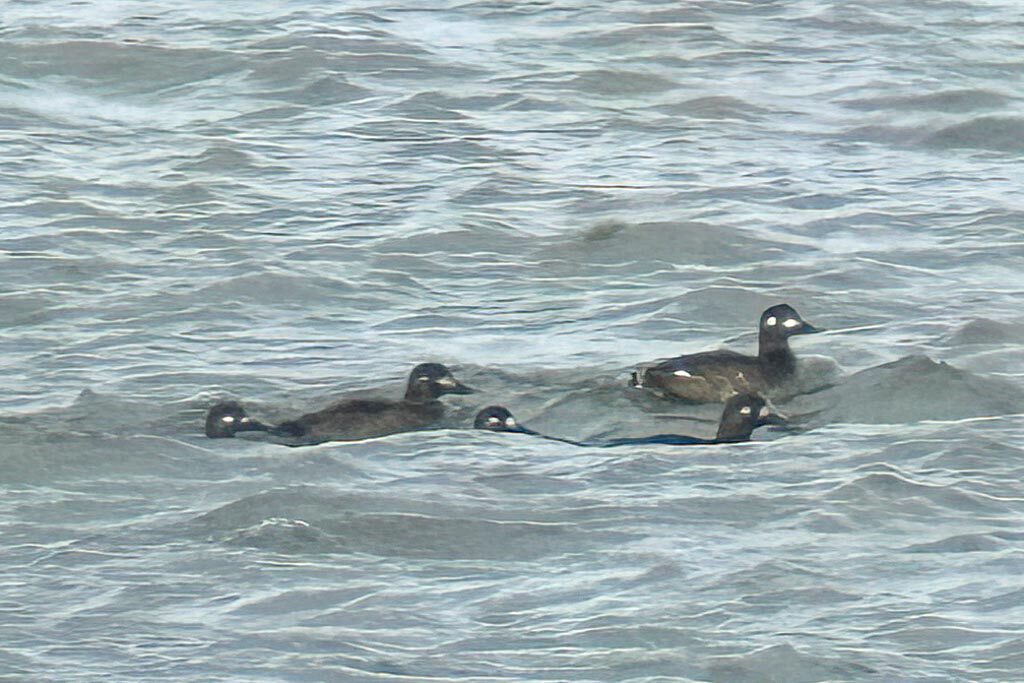
The cloud lifted again and we had a good view of the Velvet Scoters when the sun even came out again briefly. We switched the scope between the separate groups of Velvet Scoters and Common Scoters to compare the two. A couple of Red-throated Divers flew past, but there was not much else offshore now. Mission accomplished, we walked back.
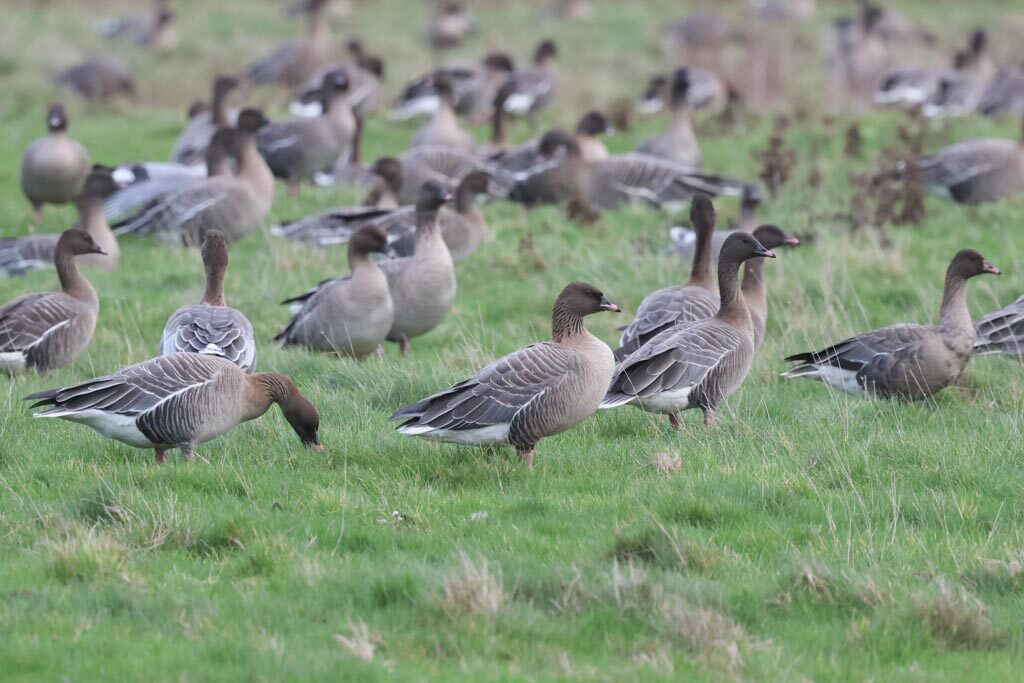
There was time for one last stop this afternoon. We drove back to Cley and down Beach Road. Lots of Pink-footed Geese were still loafing on Bull Marsh and Cricket Marsh. Presumably they had fed overnight last night again and were roosting through the day.
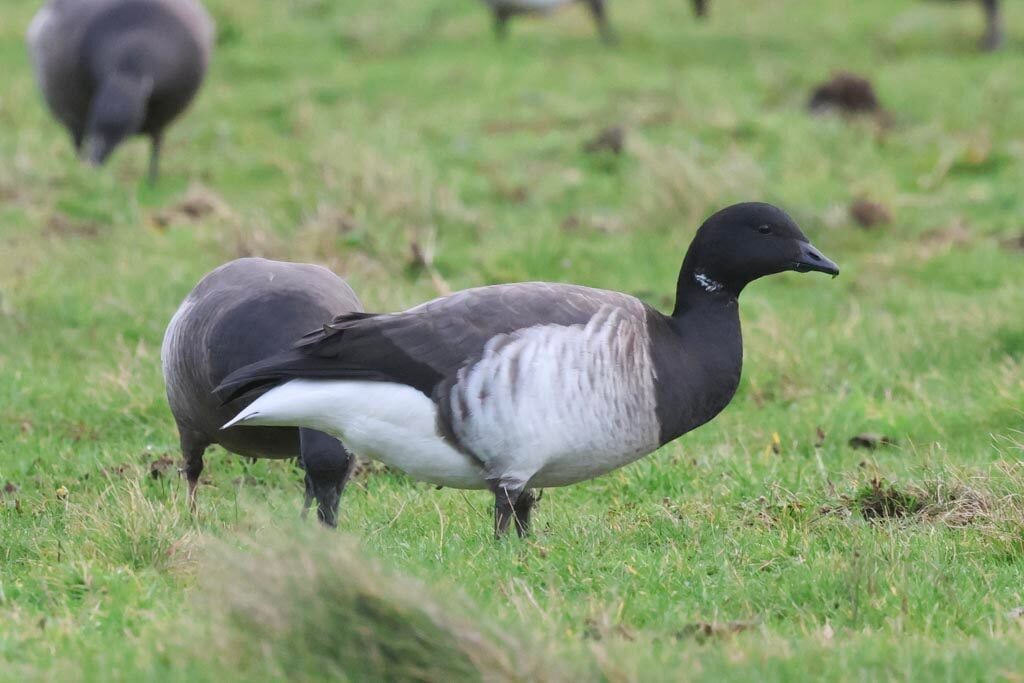
There were lots of Brent Geese further on in the Eye Field. We pulled up to scan through them quickly and noticed that the closest bird was a Pale-bellied Brent Goose. Its belly was noticeably much paler than the Dark-bellied Brents it was with.
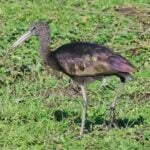
We parked in the beach car park and set off over the shingle to North Scrape. We thought we would make use of the new Gillmor Hide tonight. Three Glossy Ibis have been coming in to North Scrape before roost for some time now, recently often at about 3.20pm. We thought we could watch the gulls gathering to roost too and see what was coming in, hoping for a Caspian Gull.
The gulls had started to come in already, and quickly numbers increased. They were mainly Great Black-backed Gulls and Herring Gulls at first. A few Lesser Black-backed Gulls dropped in too. There was no sign of any Glossy Ibis though, and their normal arrival time came and went. Still, it was a nice afternoon and perhaps they were making the most of it.
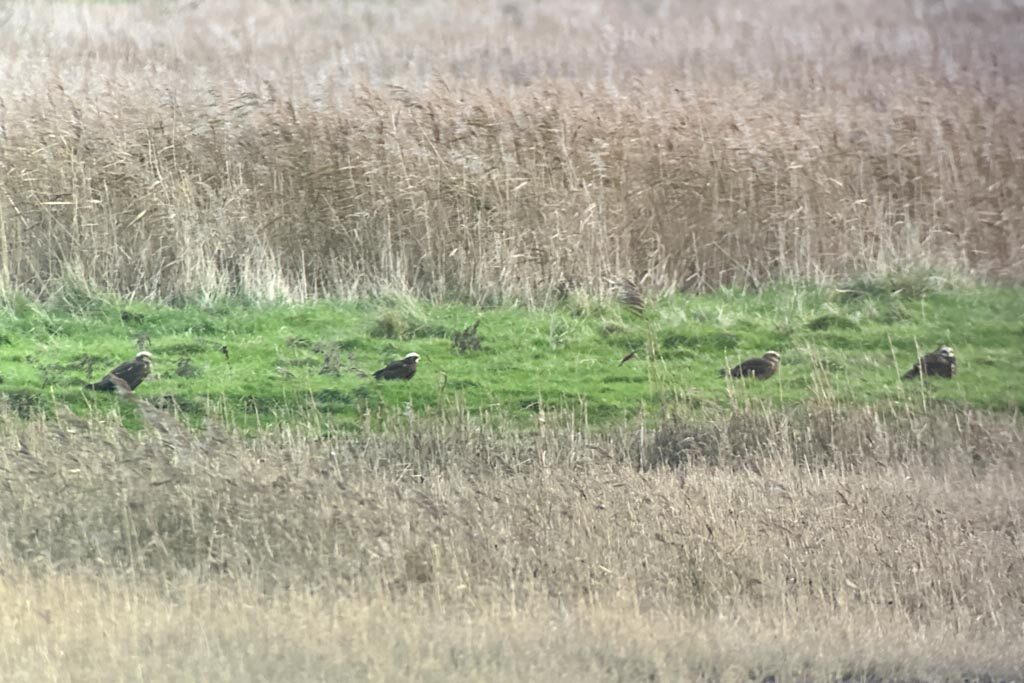
The Marsh Harriers were gathering to roost over the reedbed. Several dropped down onto the grassy bank at the back of the scrape and at one point there were nine there standing in a row. Two or three more were still circling over the reeds beyond.
We were just about to give up, when the three Glossy Ibis flew in. They landed on the grass in the far corner, so we got them in the scopes. A Little Egret chased them off but they landed again nearby. There was still no sign of any Caspian Gulls though, but the light was going now and it was getting harder to pick anything out on the water in the throng of gulls. We decided to call it a day.
As we walked back towards the car park, we heard the Pink-footed Geese coming. Looking into the gloom, with the last of the sun setting behind streaks of cloud, we started to see them coming. Several huge skeins flew past, a couple of thousand geese in total. They turned over the reserve and dropped down towards the scrapes. Great to watch and a perfect way to end the day. And there was still time for tea and cake back at base.