Day 3 of a 3-day Early Winter Tour in Norfolk. It was a nice morning, bright with just hazy cloud and some sunny spells. The cloud thickened from midday and the rain finally arrived mid afternoon. Considering it had originally been forecast to rain non-stop all three days earlier in the week, we had been remarkably fortunate with the weather! We spent the day today in NW Norfolk.
With the forecast for the weather to deteriorate in the afternoon, we headed for Snettisham first. We figured it wouldn’t be so nice out here in the rain later. There were a few birds which we saw on the drive over. Not far from Hindolveston, we flushed a large group of mixed thrushes out of the hedge, Fieldfares and a few Redwings with them. On the way into Sedgeford, two Grey Partridges flew across in front of the minibus. Then on Snettisham Beach Road, it was a surprise to see a Great Spotted Woodpecker balancing on the wires next to the road.
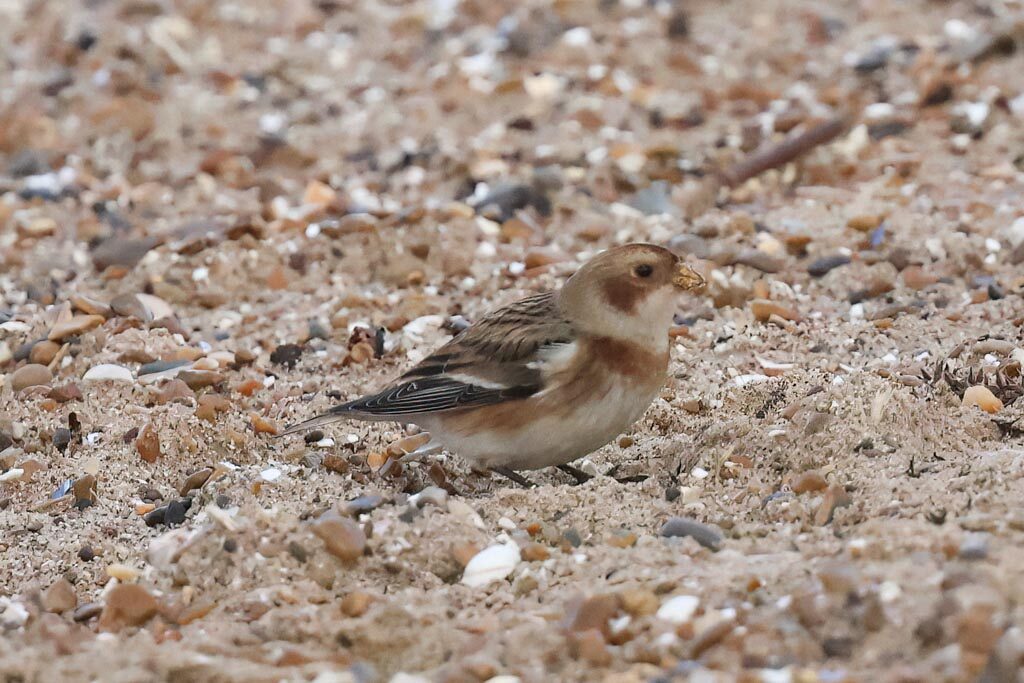
We parked at the far end of Beach Road and walked on down to the beach. Numbers of Snow Buntings still seem rather low so far this winter and the most reliable and accessible group at the moment has been here. Still, they can wander quite a distance up and down the beach. As we got out onto the sand and started scanning, one of the group asked what are these small birds right in front of us and there were the Snow Buntings!
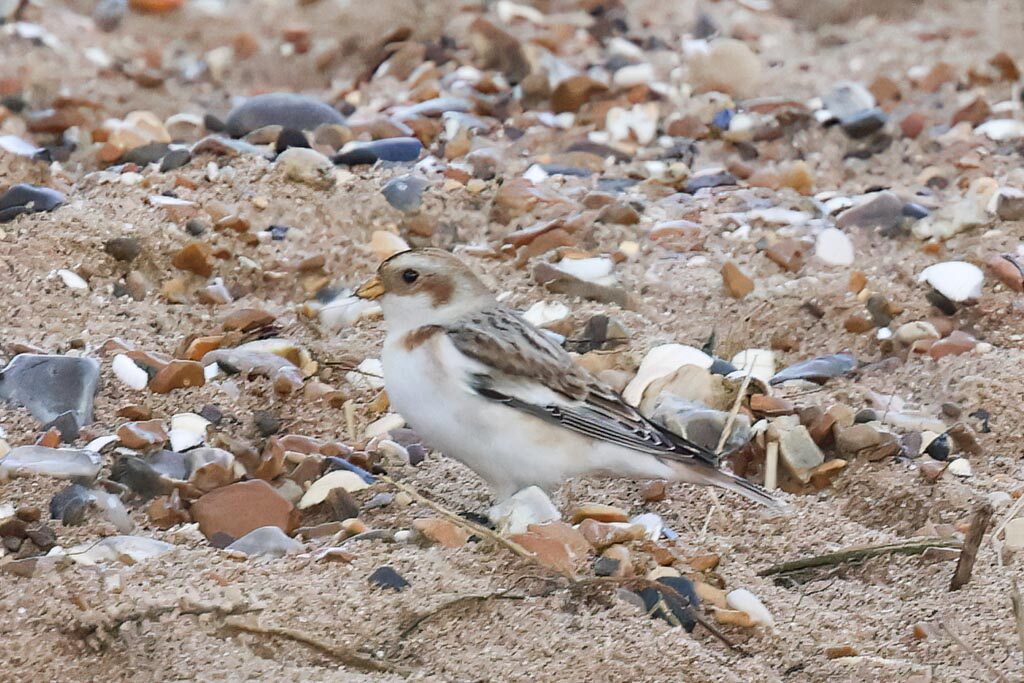
They were on the tideline a short distance away to our right. We could only see three Snow Buntings at first. Then more started to appear from behind the low ridge of shingle and piles of seaweed on the high tideline. In the end we counted a total of eleven of them. They worked their way gradually closer towards us and three came right past in front of us at one point. Then they flew back to join the others. Lovely views.
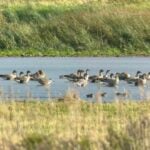
There were lots of ducks out on the Wash, which on closer inspection turned out to be mainly Wigeon. We found a couple of Pintail in with them and two Great Crested Grebes in front which then flew off south. A small group of about a dozen Common Scoter was further out. A single Goldeneye flew past.
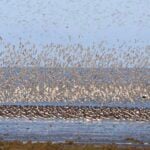
The Snow Buntings seemed very settled and didn’t even flush when a couple of loose dogs walked past further down the beach. Then some people with a larger dog appeared from the cars behind us and they flew off down the beach. Looking south over the Wash, we could see some large flocks of Knot whirling round over the mud now. A small group of Golden Plover flew past in front of us.
We wanted to try to pack as much in this morning before the rain arrived later. So we decided to walk straight back to the minibus and head over to Titchwell. Walking back along Beach Road, four Greenfinches flew round calling and disappeared into the Coastal Park. The first we had seen this weekend.
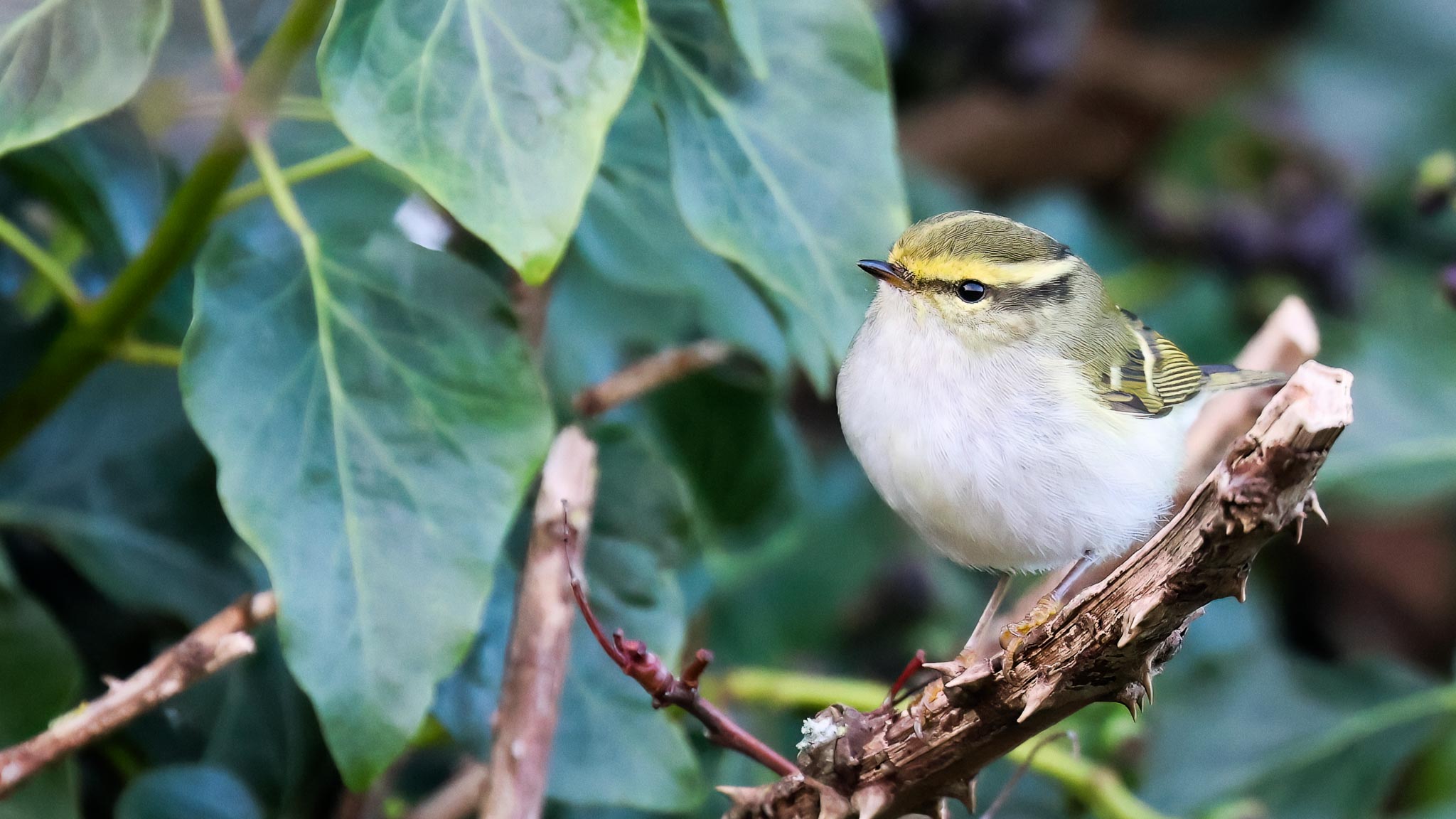
Round at Titchwell, as we walked down towards the Visitor Centre, there were several Goldcrests in the sallows. Some of the group, who had walked on ahead, saw what was possibly the Siberian Chiffchaff but it had disappeared by the time the rest of us got there.
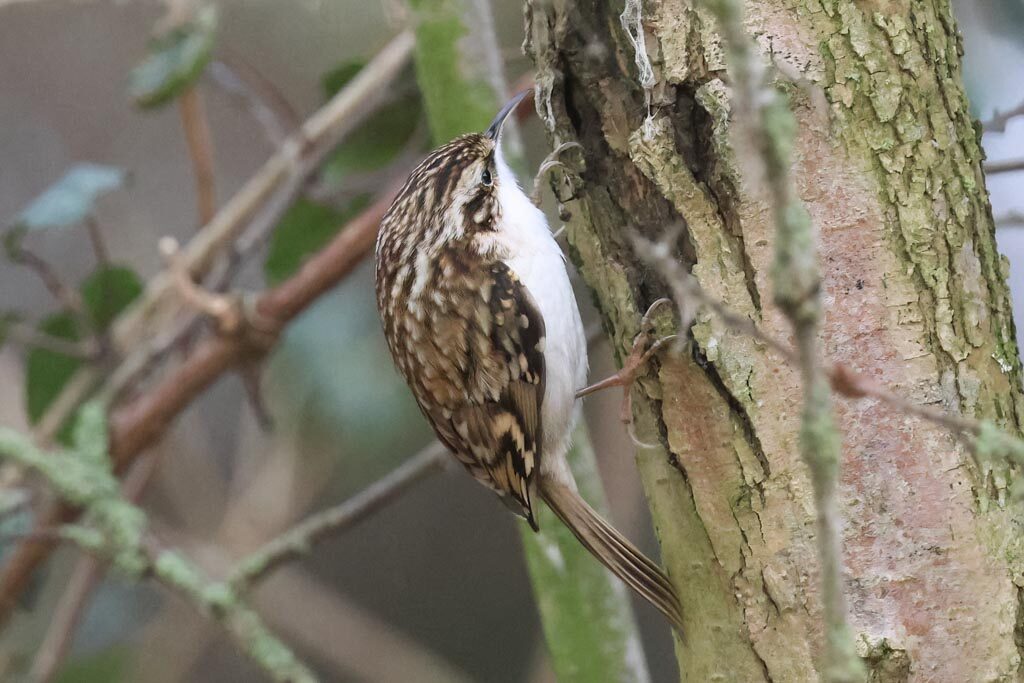
As we came back outside after checking in at the Visitor Centre quickly, a small bird flicked across. It landed low down in the small hawthorns right by one of the signs. A Treecreeper, we had some lovely views of it as it worked its way up one trunk. Then it flew down and did the same on another. A flock of Goldfinches flew round and landed in the top of the alders and we heard a Siskin call but couldn’t see it with them.
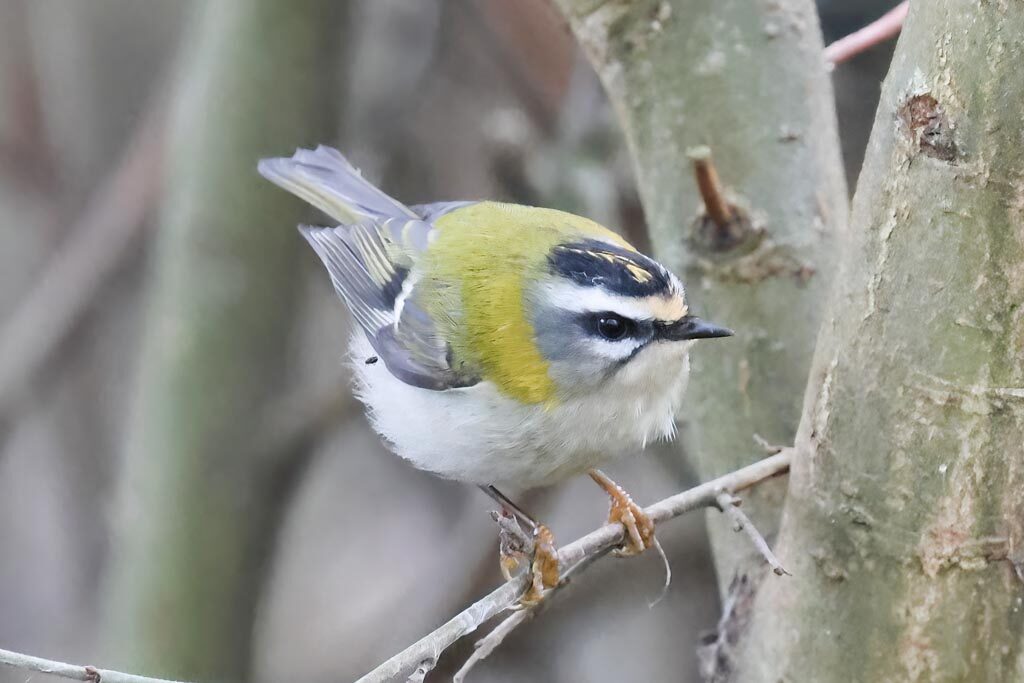
There were a few Chaffinches and tits on the feeders behind the Visitor Centre. Just beyond, at the start of Fen Trail, we noticed a Firecrest low down in the sallows. When it seemed to disappear further back, we found a second in the branches right next to the Centre and then possibly a third in the sallows right above our heads. For a couple of minutes there seemed to be Firecrests everywhere we looked!
One of the Firecrests flew across to the small ‘garden’ by the back of the Centre. It disappeared into a large clump of Pendulous Sedge for a while, presumably looking for food down in the knot of leaves. When it came out again, it landed right in front of us only a couple of feet off the ground and stayed there flicking its wings for a minute or so. Amazing views.
Moving on along Fen Trail, we stopped to look at a Chiffchaff in the top of a sallows and realised there were at least three of them together here. No sign of the Siberian Chiffchaff with them though. We were planning to have a look for the Tawny Owl first, but having seen the Firecrests now decided to head straight out to the beach and make the most of the weather.
We hadn’t gone very far though when we noticed a Woodcock in the leaves under the sallows. It was very close to the path but they are so well camouflaged, none of the group could see it through the branches, or realised they were probably looking straight past it! There was no obvious reference point to give more precise directions. We knew it wouldn’t stay for long as it was so close, and after a minute or so it ran deeper in out of view. We would try again later.
Back round to the main path, we headed on out to the beach. We stopped briefly to scan the reedbed pool as we passed. There were several Tufted Ducks out on the water and a single female Common Pochard asleep in with them. A Scandinavian Rock Pipit flew up calling and off out over the saltmarsh the other side. Looking out over the saltmarsh the other side, some large skeins of Pink-footed Geese flew in. We speculated, based on the direction they were flying, that they might be just arriving in off the sea.
Further up, all three compartments of the Freshmarsh are flooded now so not much space left for birds, apart from wildfowl. There were a few Brent Geese out on the first compartment. We had a quick scan, and there were lots of Golden Plover and Lapwings on one of the bunds. Most of the Avocets have left now, but there was a single one still left behind.

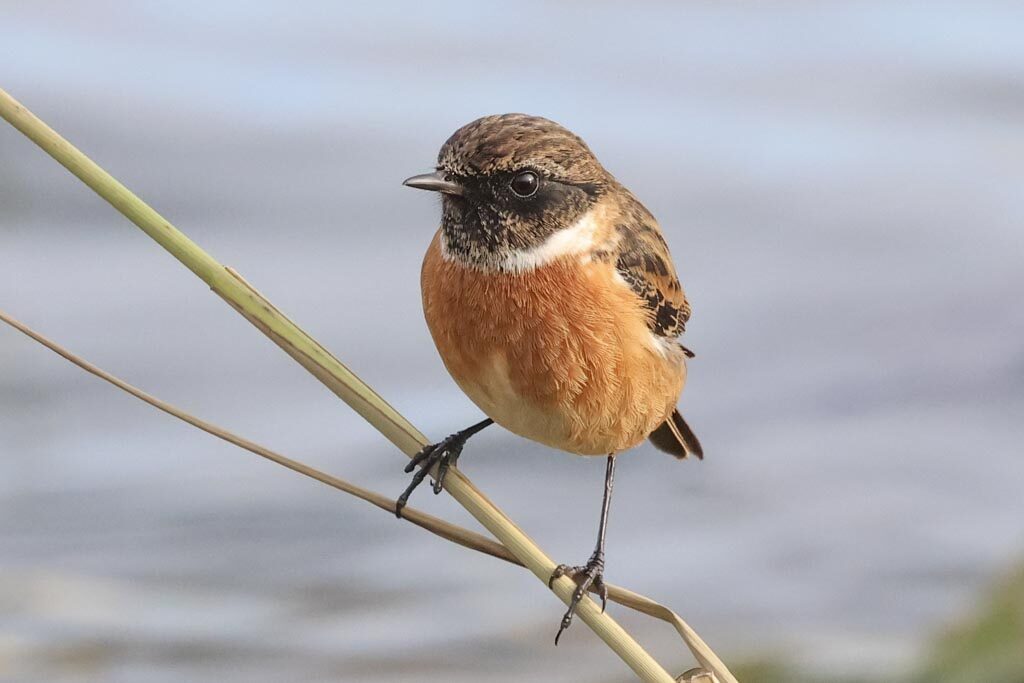
A pair of Stonechats were flitting around the cut reed just below the bank. Work is apparently due to start shortly, hopefully to improve the Volunteer Marsh. A single Little Egret was hiding in the narrow part of the channel at the start but we could only see a few Common Redshanks and a single Black-tailed Godwit in the wider channel on the far side.
We pressed on quickly to the beach. There had been several divers and grebes reported earlier, after high tide, so we wanted to have a scan before the tide got too far out. Looking out to see, the first bird we got on to was a Great Northern Diver. Then we noticed a second Great Northern Diver much closer in, diving just off the beach. By the end, we counted a minimum of six offshore here. We couldn’t see the Black-throated Diver which had been reported earlier but we did see a couple of Red-throated Divers.
There had been a Slavonian Grebe earlier but one of the volunteers found a Red-necked Grebe on the sea now. We had a look at that through the scopes, a nice comparison when it was alongside one of several Great Crested Grebes at one point. Then we located a very distant smaller grebe, off towards the tip of Scolt. We assumed it would be a Slavonian Grebe but when we got a better look at it we realised it was actually a Black-necked Grebe. The first Slavonian Grebe was way off to the west now, but then we found a second with the Great Crested Grebes off to our right. Quite an impressive grebe collection!
There were the usual waders on the beach. Oystercatchers, Bar-tailed Godwits and Grey Plovers scattered along the water’s edge. Several Sanderling and Ringed Plover, small groups of Turnstone and Dunlin on the wet sand and tidelines.
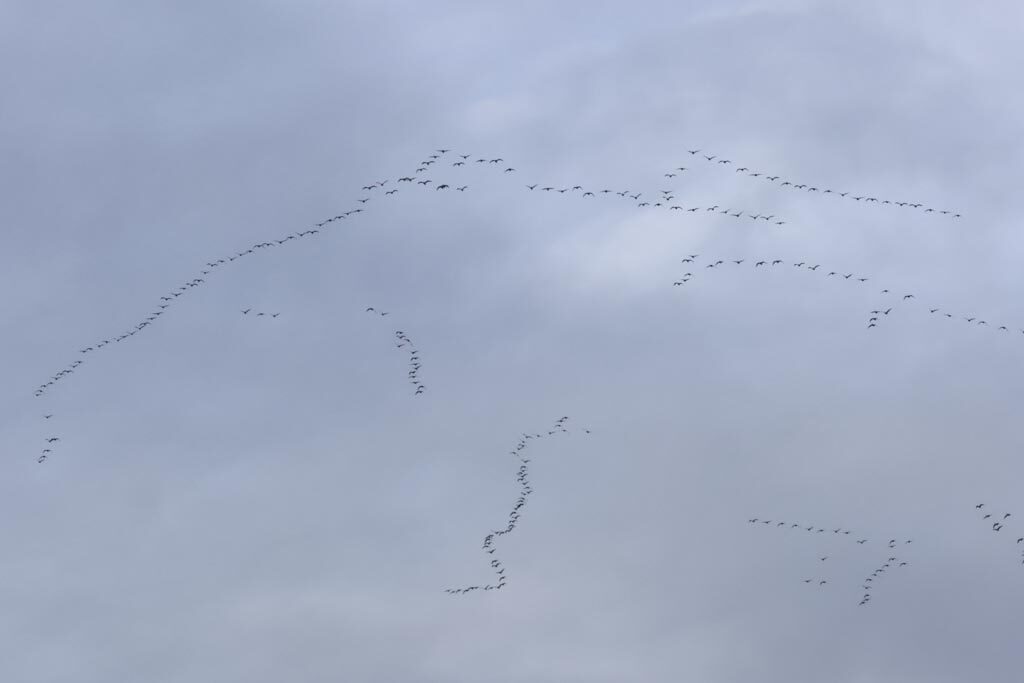
Several times, we looked off to the north west and noticed more skeins of Pink-footed Geese out over the sea, heading in. Eventually they made it to the land and flew over behind us calling. There were definitely geese arriving today, probably coming in from northern England or Scotland. They will be looking for some harvested sugar beet fields to feed in over the hardest part of the winter. Hopefully they won’t all get ploughed in before they can make use of them!
The cloud gradually thickened. It got increasingly misty offshore at one point and there was even some light drizzle though it didn’t last. We decided to head back. A couple of Pintail were dozing with the Wigeon on the Tidal Pool now.
On the way, we called in at Parrinder Hide to check the eastern compartment of the Freshmarsh. There were a few more birds on the islands but the water level is high here too now. All we could see were the usual ducks, mainly Wigeon and Teal. There were some groups of Lapwings and more Golden Plover dropped in. A Grey Heron was staking the channel in front of the hide.

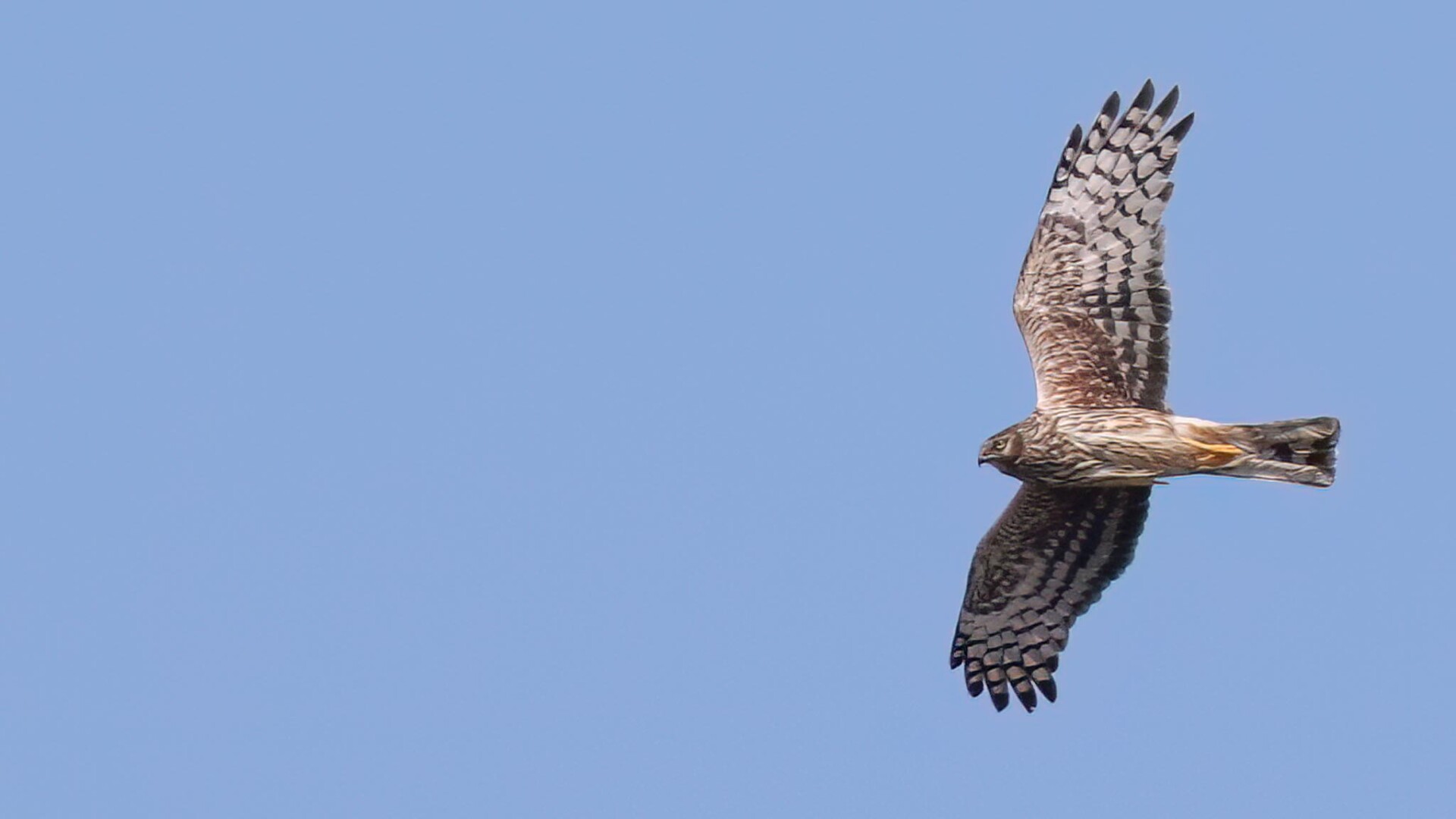
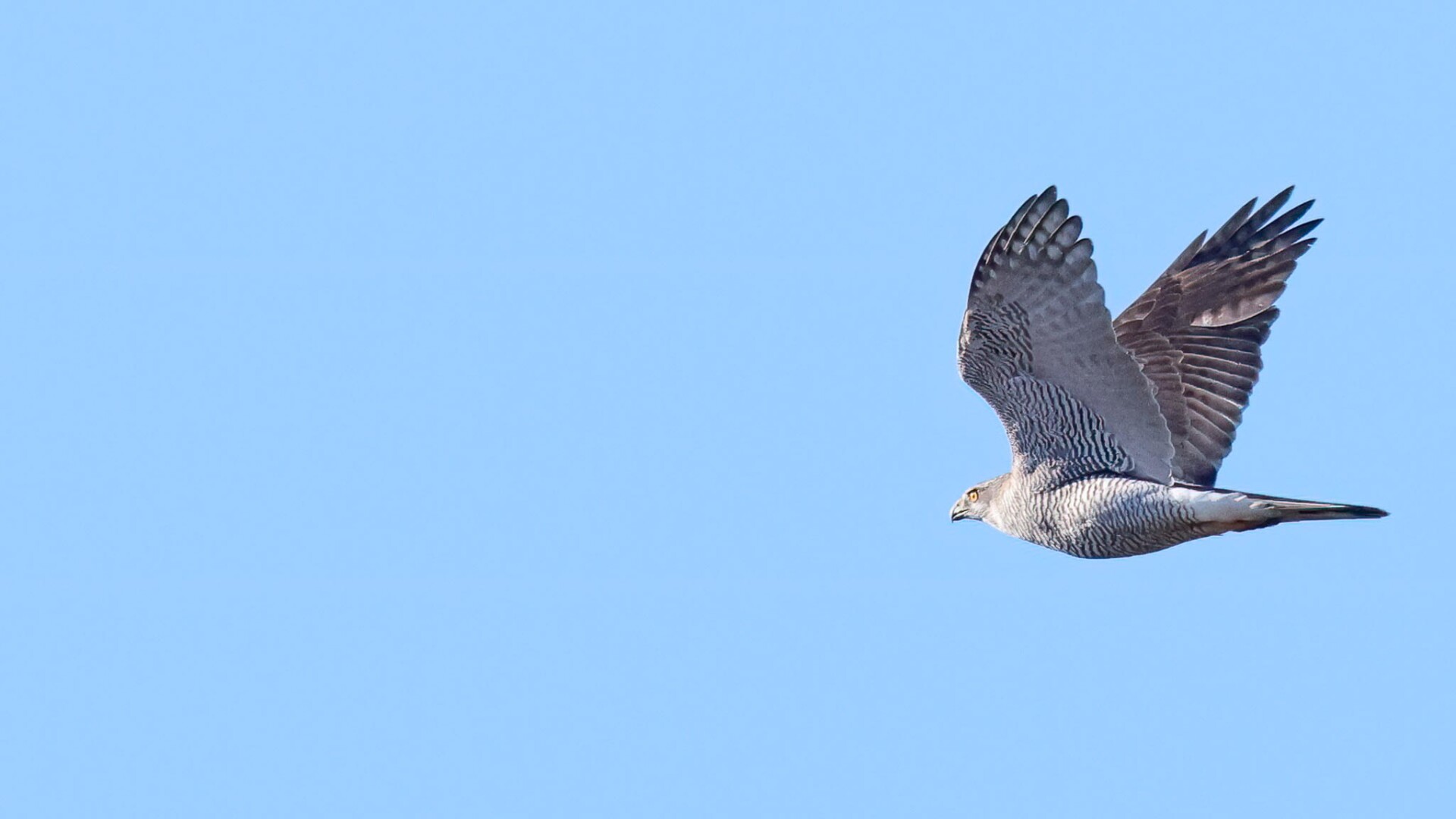
A Sparrowhawk flew through and landed on a pile of cut reed over in the far corner, where it hid for a while. There were a couple of Marsh Harriers over the reedbed and one hanging in the air over the bund. After a while, it flew out across the scrape, spooking lots of the ducks below.
Back out on the main path, a couple of Cetti’s Warblers shouted from the reeds. As we made our way back to the Visitor Centre, we stopped to watch a mixed flock of Long-tailed Tits, Blue Tits and Goldcrests in the sallows in the reeds by the path. At least three Chiffchaffs were with them, possibly the ones we had seen earlier.
The picnic tables by the Visitor Centre were a little wet, but they had just been cleaned. It wasn’t raining when we sat down, but by the time we had finished up it had finally caught up with us. It wasn’t too hard though, so we donned our waterproofs and headed back out onto the reserve.
We had checked the ditches as we came back, but one of the volunteers told us now that a Water Rail had been reported there earlier, so we walked back out for another quick look. Still nothing. Cutting back in along Meadow Trail, two birders ahead of us had just seen the Siberian Chiffchaff but it had disappeared again by the time we walked up.
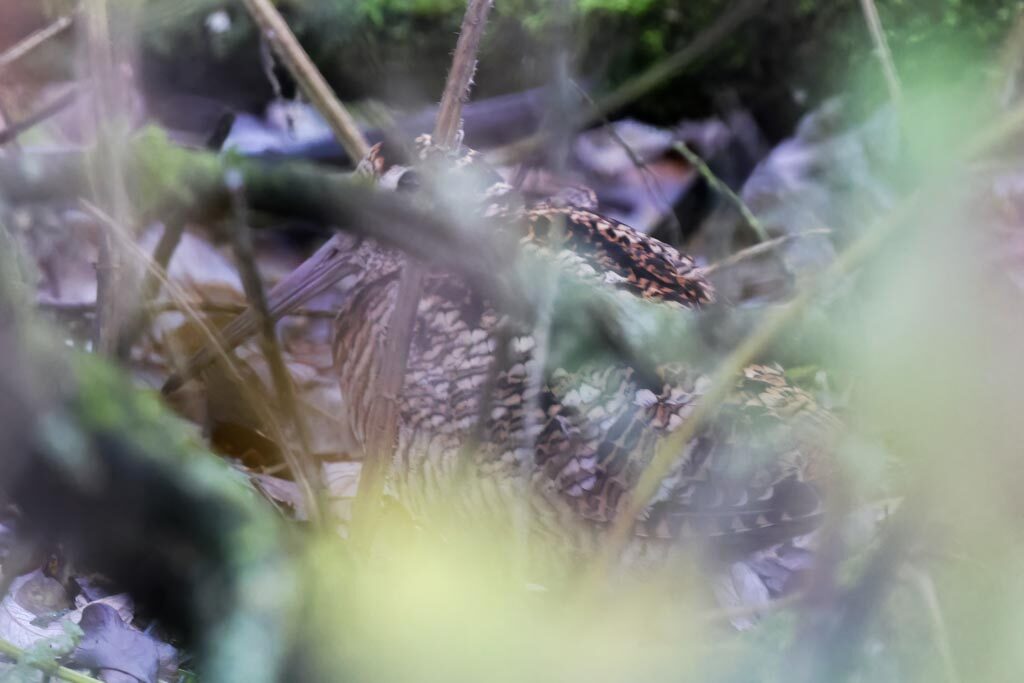
As we made our way back round, we had a quick look where we had seen the Woodcock earlier. It was still there, just a bit further in than it had been this morning. It was standing next to a big, moss-covered trunk, but only one of the group managed to see it before it ran further back. Unlike this morning, this time it stopped where we could still see it. With quite a bit of manoeuvring and adjustments, we managed to get it in the scope now and everyone got a look at it. We could see its beady eye staring back at us.
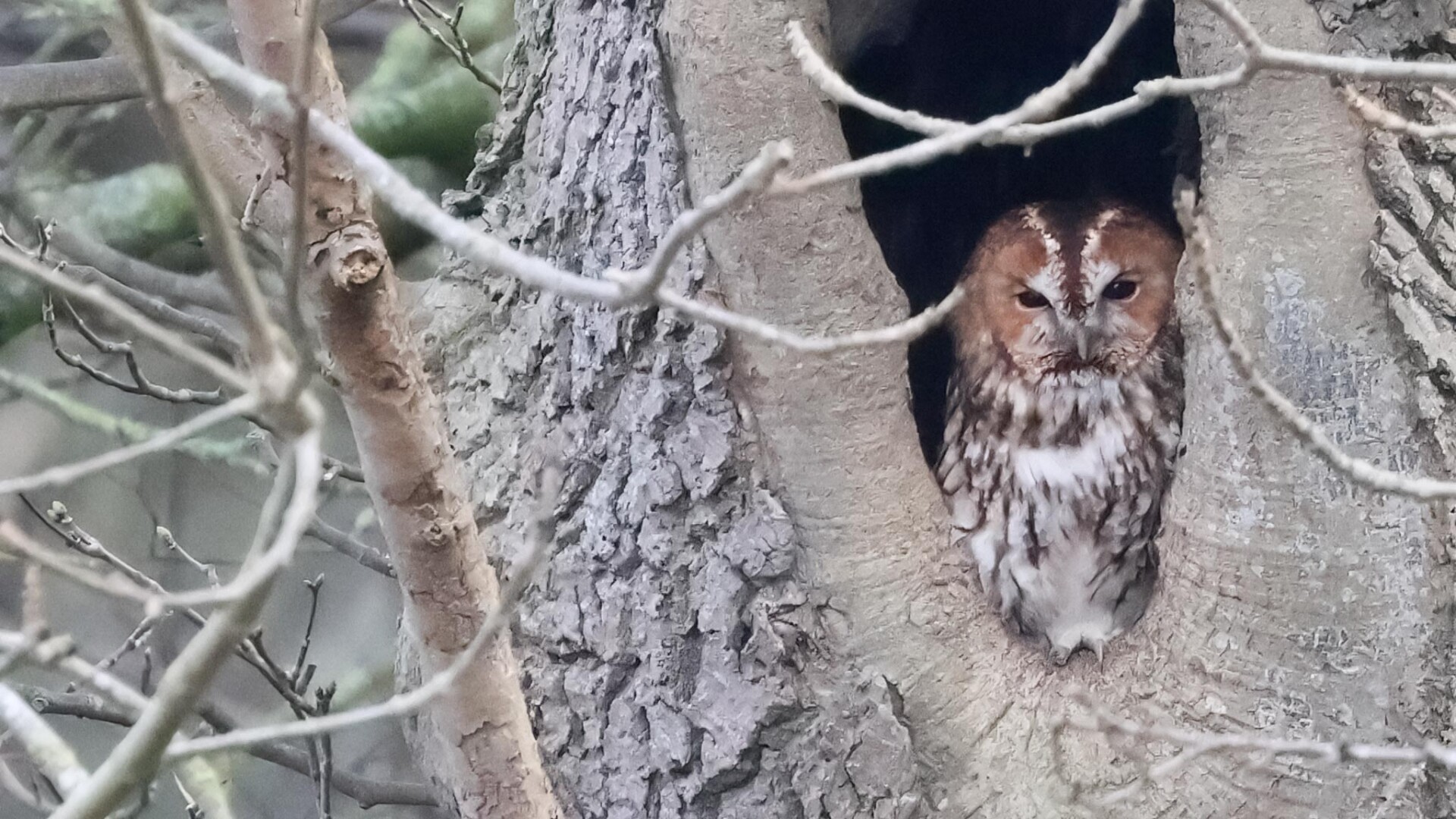
That one in the bag, we moved on to look for the Tawny Owl now. It was in its regular tree and relatively easy to see today. We got it in the scope and could see most of it. While we were doing that, one of the group moved a little further down the path and, looking back, realised there was a second Tawny Owl in the same tree, above the first. It was better hidden in the ivy though and harder to see, particularly given it was raining steadily now.

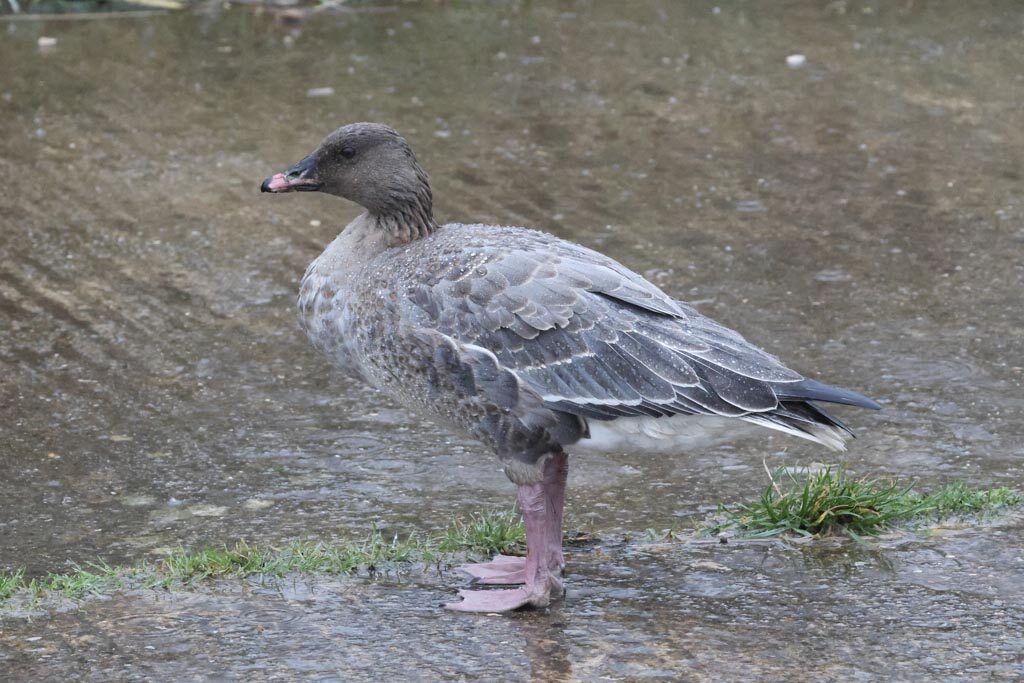
We stopped to shelter in Fen Hide briefly. The same volunteer we had spoken to earlier had just come back from Patsy’s Reedbed and hadn’t seen anything. We thought about heading straight back but decided to have a quick look, mainly to see if there were any snipe on the cut reeds. A young Pink-footed Goose was feeding on the tufts of grass growing through the concrete of the Tank Road. It let us walk right past and sadly did not look well, or perhaps it was just lost without its parents.
Scanning Patsy’s from the screen, there were just a couple of Mute Swans and two Little Grebes on the water. We managed to find a single Common Snipe down on the cut reed in front. It was crouched down and very well camouflaged at first, and next to impossible to make out until you knew where it was. We got it in the scope. After a while, it started to bounce up and down – it is not just Jack Snipe which bounce, but Common Snipe do occasionally too! Then it started to move around and feed.
A Red Kite was perched in the dead trees looking very soggy and a single Marsh Harrier was on a stump out in the reedbed. The rain was easing now and first the Red Kite flew off, then a couple of Marsh Harriers flew round. A last flight before roost. A Great White Egret came up out of the reeds briefly too. The light was going now so we decided to head back. A couple more Marsh Harriers flew in over the reeds as we walked back along the boardwalk, gathering to roost.
It had been an interesting three days of Early Winter birding and the weather had generally been very kind to us. Still time for tea and cake back at base one last time before heading for home.