Day 4 of a 4-day Autumn Migration tour in Norfolk. It was another nice morning and the sun even came out at times. It had originally been meant to rain all day but the forecast had changed and now the front arrived early afternoon as expected. We spent the morning on the North Norfolk coast and made a quick visit down into the Brecks in the afternoon.
As we often do at this time of year, we paid a quick visit to Wells Woods first thing, to see if any birds might have arrived overnight. Walking in past the boating lake, we could see a single Tufted Duck out in the middle and several Little Grebes along the edge of the reeds. A Blackbird flew over, along with a couple of Jays.
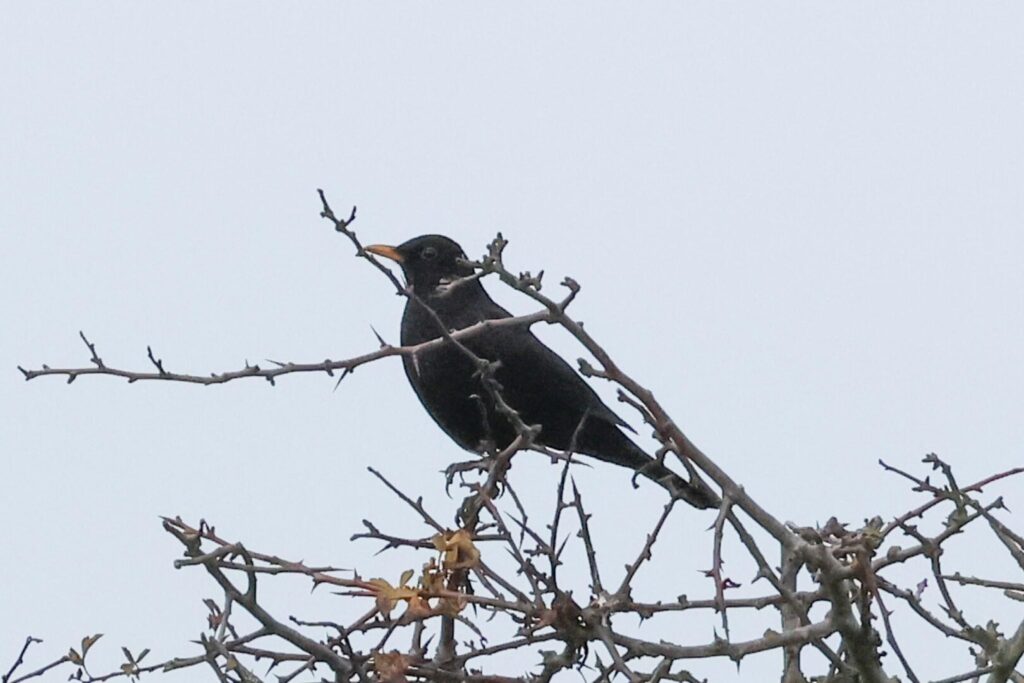
Cutting in through the birches, it was rather quiet. We could hear a couple of Chaffinches high in the pines beyond but not much else. Walking round the east edge of the Dell, a Redwing called in the trees and a couple more Blackbirds flew out. Out onto the main track, another Blackbird flew out of the bushes and a Song Thrush flew up into the lower branches of a nearby hawthorn. It seemed like some Blackbirds and thrushes had come in overnight at least.
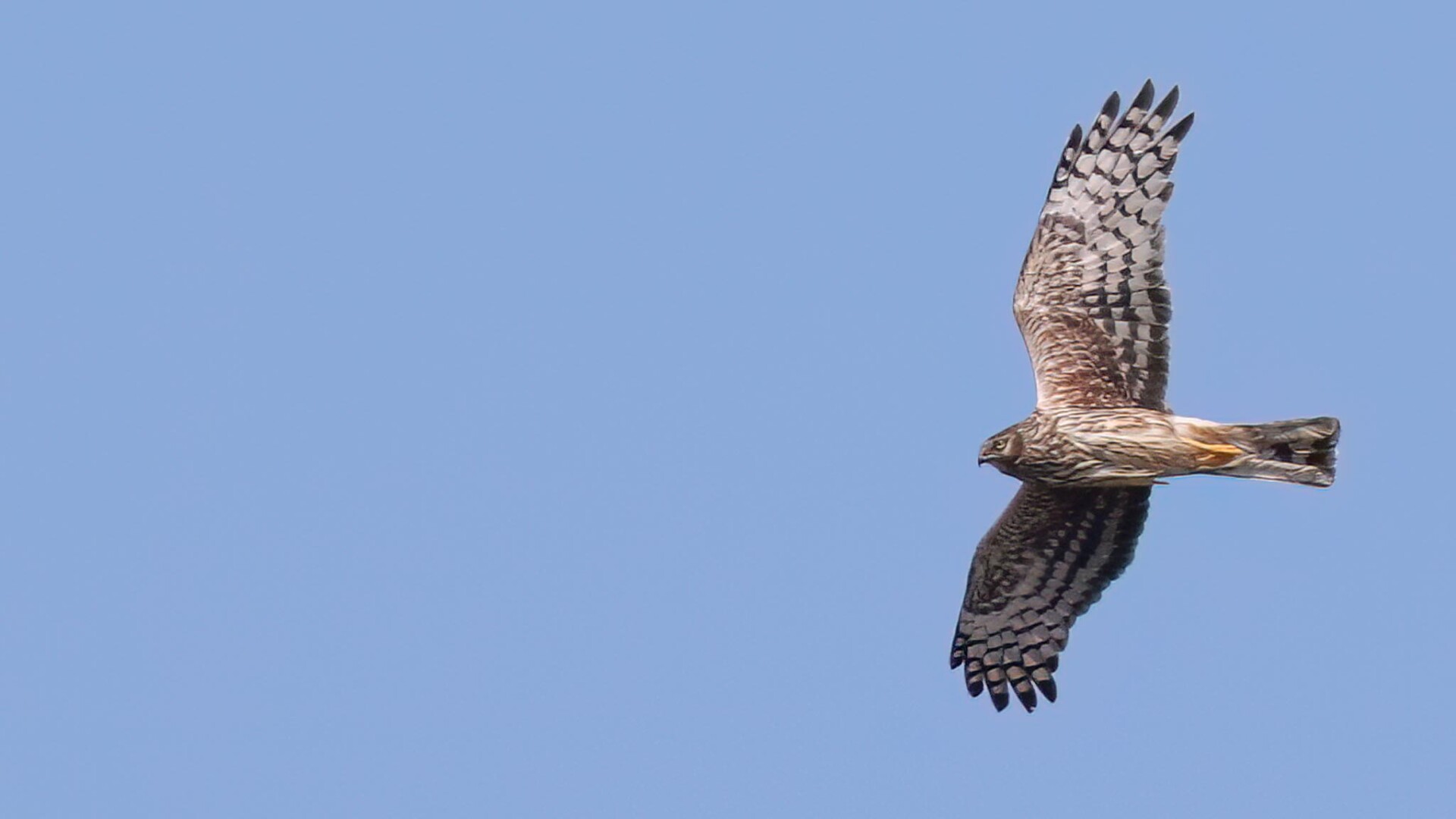
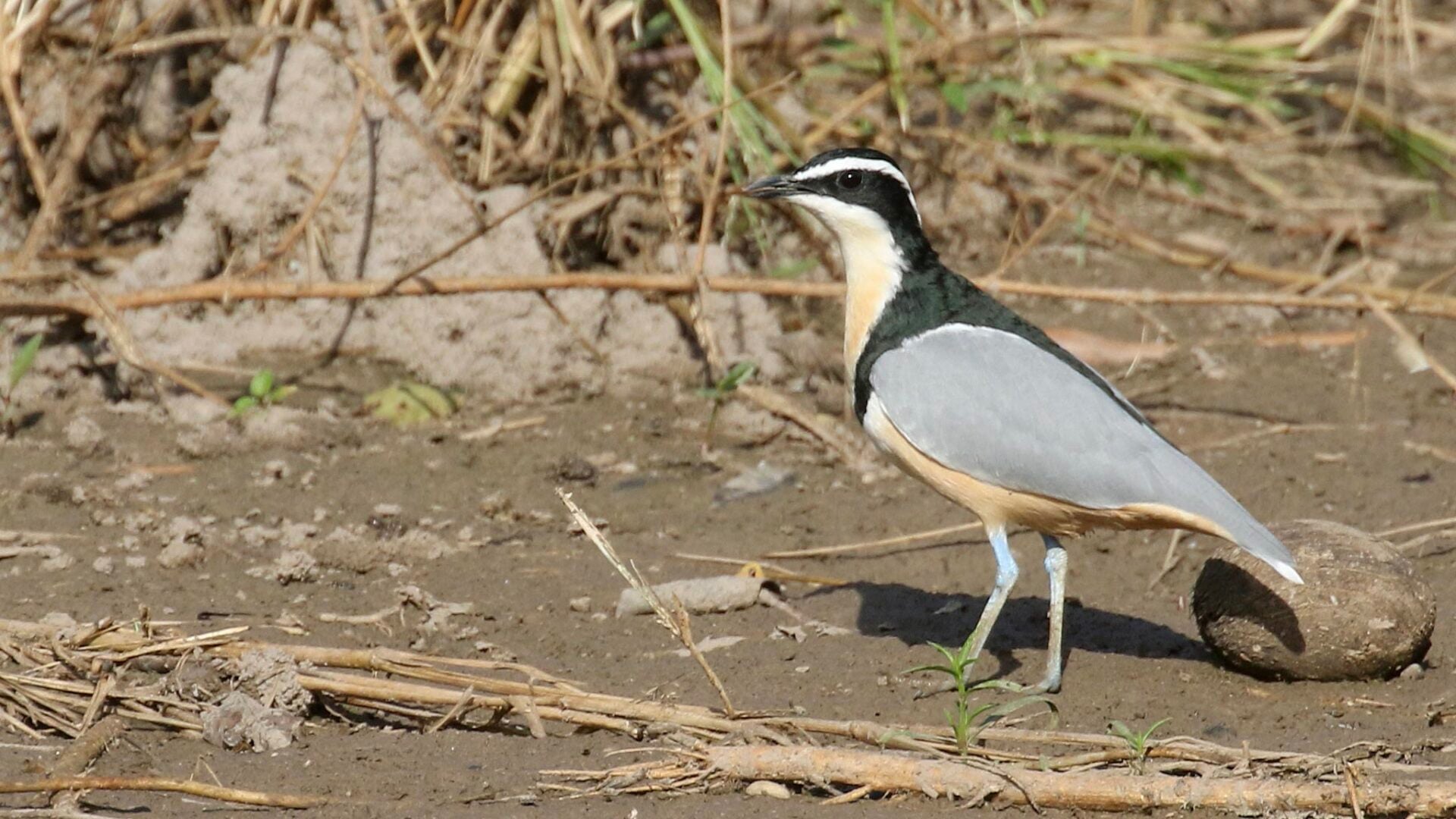
Four Redpolls flew over and looked like they were going to land in the hedge by the ditch south of the track so we walked in through the bushes. Someone else was already in there and the Redpolls had already flown on but we arrived just as a large group of Redwings flew up and off across the marshes beyond. There were just a couple of Egyptian Geese out on the grass and a distant Marsh Harrier quartering.
This is always a good area for thrushes early in the morning at this time of year, when they are arriving. We walked on round but with a couple of people having probably gone through ahead of us it looked like everything had been flushed. There were just a few more Blackbirds in the bushes over the far side.
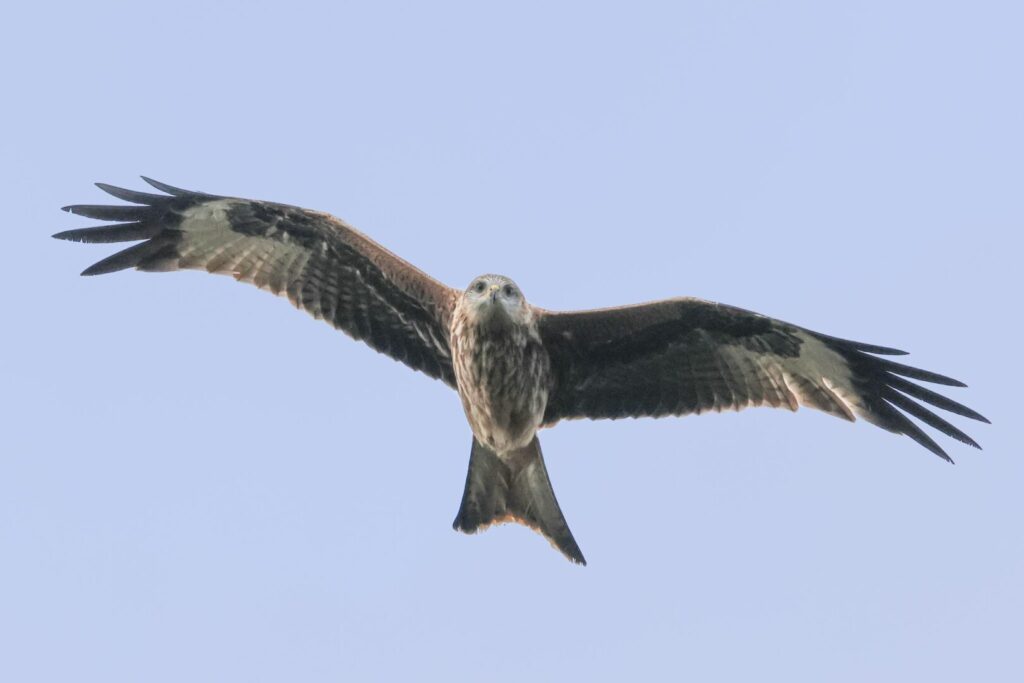
There had been some Crossbills in the pines here yesterday so we made our way back round on the north side of the Dell. The trees were quiet today though – perhaps they had moved on or they could just be further down towards Holkham. A Red Kite drifted low overhead. With no obvious arrival of other fresh migrants overnight, we cut back out through the birches to the car park.
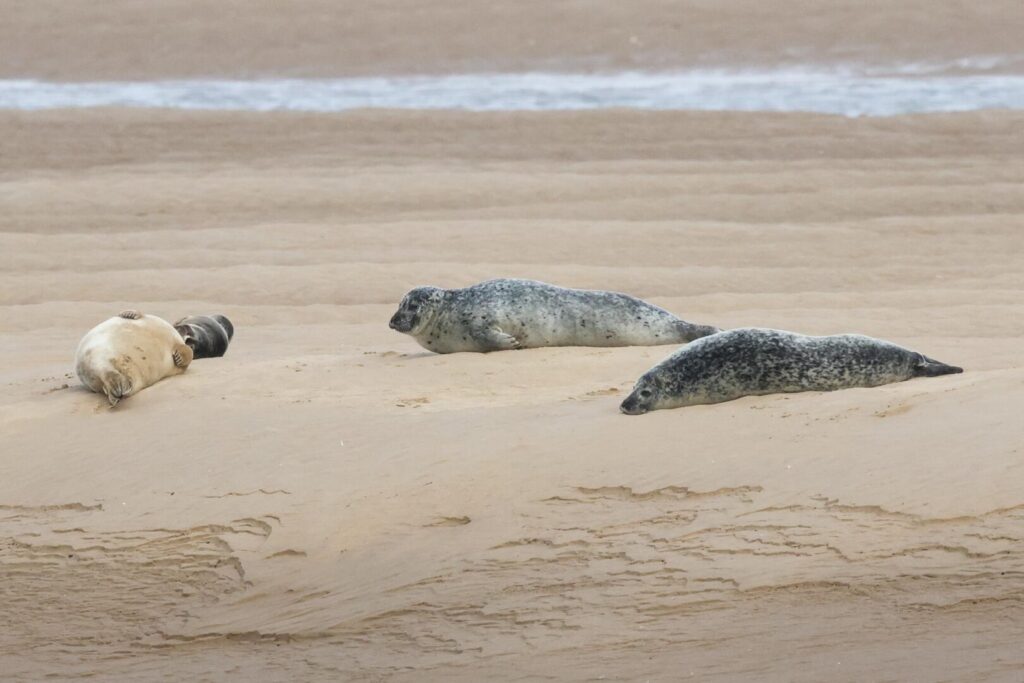
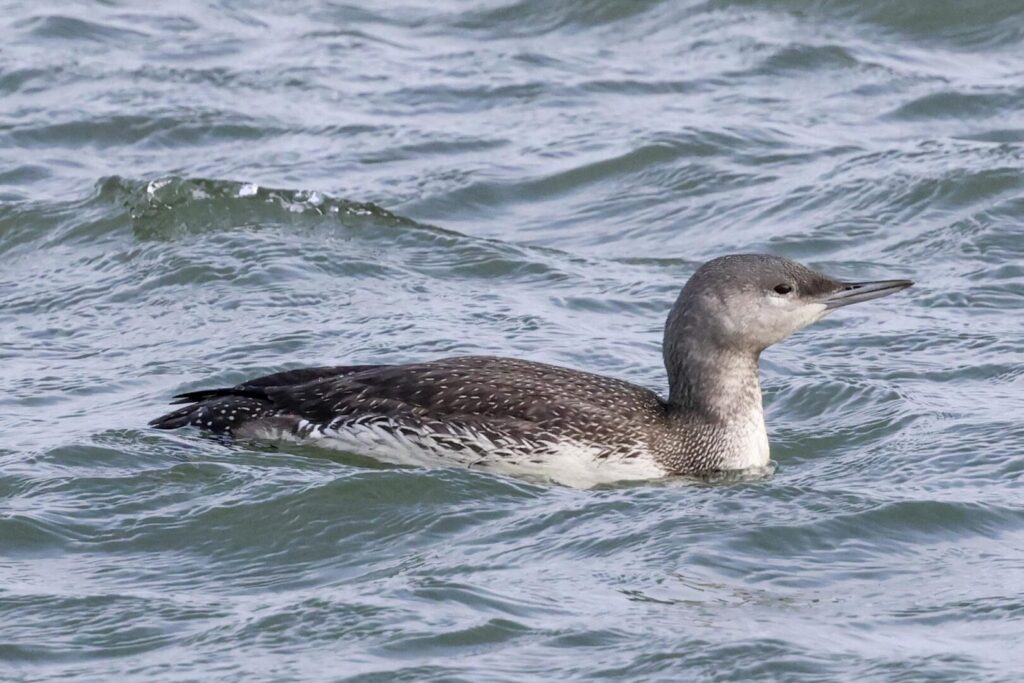
We walked over to the far side of the car park and up past the lifeboat station beyond. From the old slipway, we scanned the harbour. There were several small groups of Brent Geese feeding along the edge of the channel and we quickly picked up a single Red-throated Diver in the water just beyond. We got the scope on it but it was diving all the time. Fortunately it was resurfacing closer to us and eventually came right down past us. Four Common Seals were hauled out on the sand beyond.
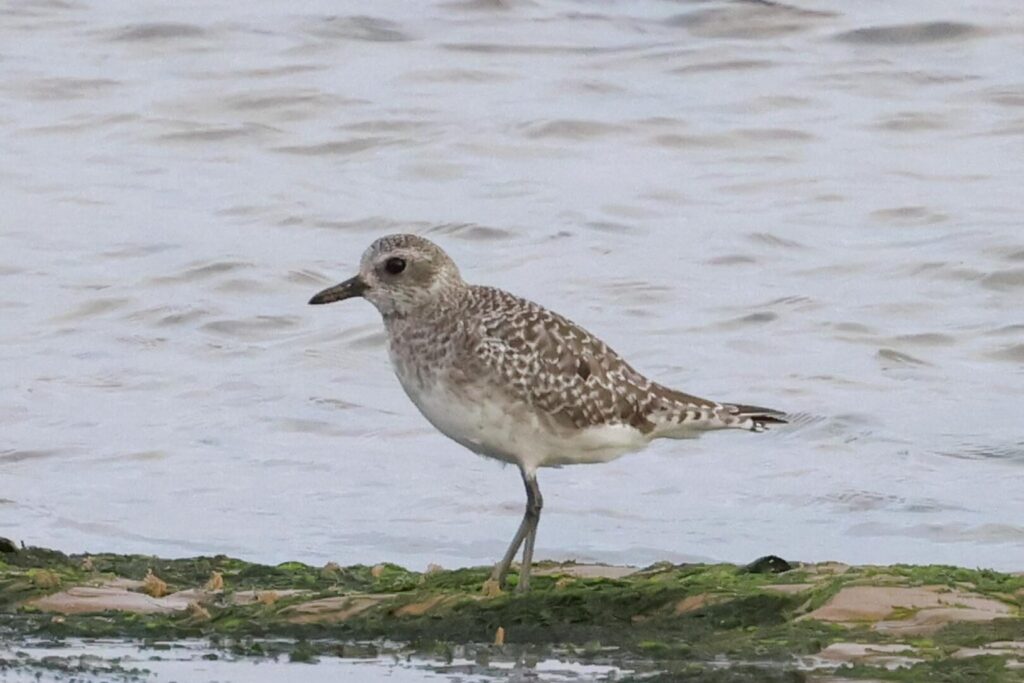
We could see a Bar-tailed Godwit and a Grey Plover feeding on the mud on the corner further up, which we got in the scope. There were several Oystercatchers here too. Another Grey Plover flew in and landed on the edge of the channel in front of us.
Scanning out over the sandflats opposite, we could see lots more Oystercatchers, as well as plenty of Redshanks, a couple more Bar-tailed Godwits and a few Curlews. A small group of Knot were asleep on the edge of a pool, in their grey non-breeding plumage. There were several Ringed Plovers out there too. A Turnstone on the shingle just across the channel walked over to where a Herring Gull was eating a mussel. It had just flown up and dropped it several times onto the stones to crack it open. The Turnstone was presumably looking for any scraps.
We noticed a very distant Red Kite out on the far side of the beach, just before the sea, standing on the sand. After a while, it flew off. Another Red Kite appeared much closer and through the scope it was feeding on something it had found out on the sand. After several very still days, the breeze had started to pick up this morning. Several more Red Kites were hanging in the wind over East Hills.
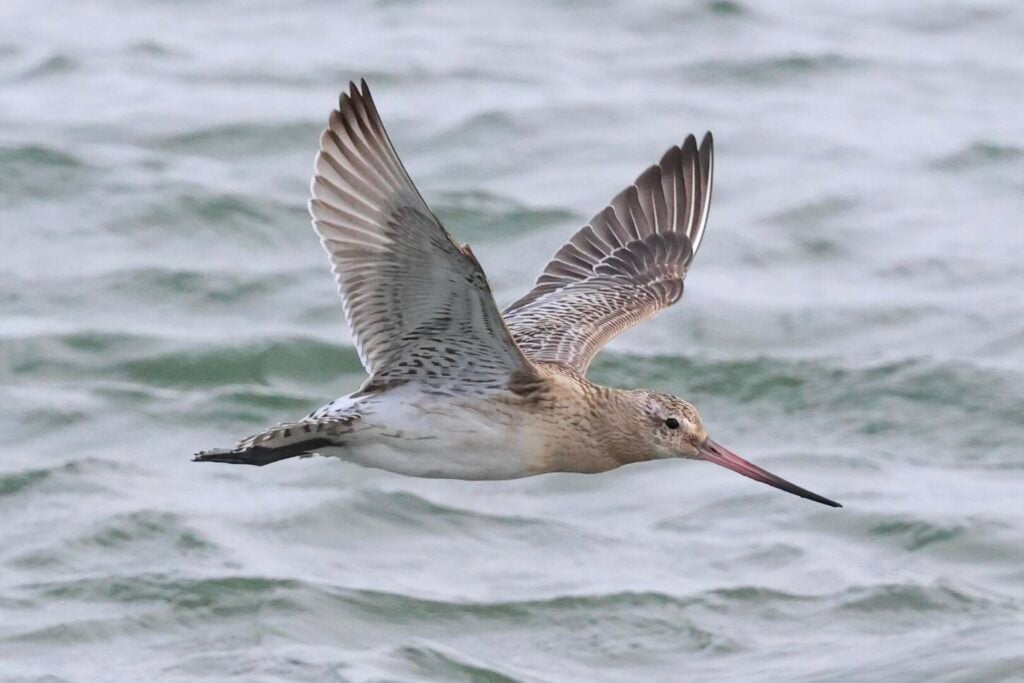
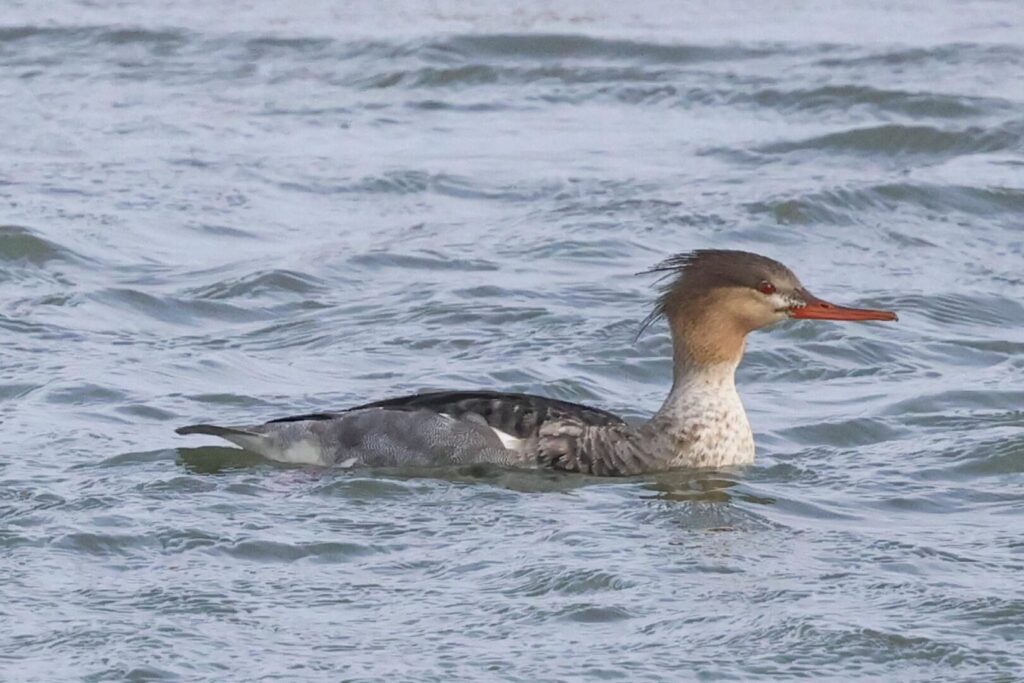
There were a few birds coming in from the continent here again. We saw several small groups of Starlings fly in over the sand and a couple of Fieldfare in and over East Hills. As we walked further round the edge of the channel on the sand, a Bar-tailed Godwit flew up from the water’s edge. A Great Crested Grebe was in the middle of the channel now, so we stopped to look at that. A little further up, a single Red-breasted Merganser was diving out on the water on the far side.
We stopped by the slipway for the old lifeboat station and scanned the mussel beds opposite. There were more waders out here, particularly Oystercatchers. In amongst them we found several Golden Plover, not a species we normally see here (they usually prefer the saltmarsh beyond). There were lots more Knot and Dunlin feeding on the mud beyond, in front of East Hills.
The Red-throated Diver reappeared, out from the channel into the outer harbour. It swam quickly away from us, out to the middle of the channel where it joined the Great Crested Grebe. The two of them drifted past us on the tide. Then the Red-throated Diver seemed to relax and gradually swam back upstream towards us and right past in front of us. Lovely close views now.
We made our way back towards the car park, stopping by the cafe to use the facilities and for those that wanted to get a quick coffee. There was still a bit of time before lunch so we drove along the coast to Kelling. We figured it would be nice and sheltered for a short walk in the lane here. The sun was out now and lots of dog walkers had obviously had the same idea. It is often very quiet here at this time of year but it was surprisingly busy today.
Walking up the lane, we flushed a couple of Blackbirds from the bushes but there were not many left now, with all the disturbance. We counted at least four Chiffchaffs calling in the hedge and glimpsed a couple of them flitting around in the tops of flycatching out over the lane.
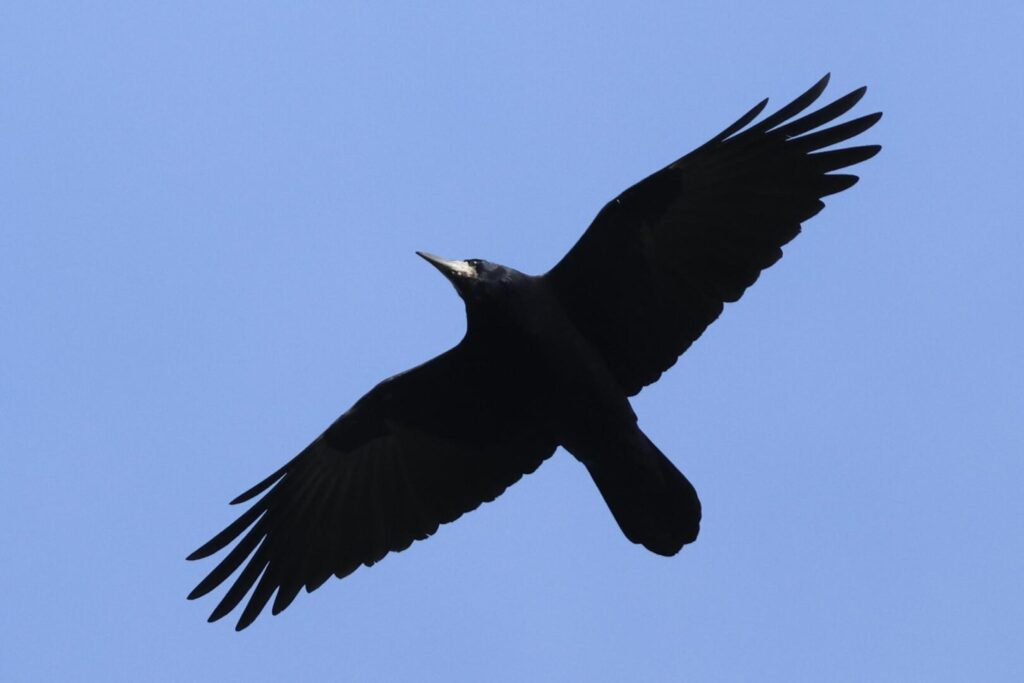
Scanning from the gate by the copse, we could see lots of Rooks on the hillside opposite, along with a few Jackdaws. More Rooks drifted overhead calling. We couldn’t see anything beyond a Moorhen and a few Red-legged Partridges on the water meadow. There were lots of late dragonflies out enjoying the warmth in the sun now, Migrants Hawkers and Common Darters.
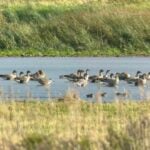
Continuing on down, there was a nice selection of regular ducks on the pool, Mallard, Gadwall and Teal. Several Shovelers were swimming round with their heads down. A small flock of Wigeon were feeding on the grass in front. The resident pair of Egyptian Geese was standing on the grass too.
As we turned the corner onto the crosstrack, we caught a glimpse of a small bird with a long tail as it flew very low into the brambles beside the path. It looked like a Sylvia-type warbler, most likely a Dartford Warbler. We walked slowly past and looked back along the far side of the bushes from the gate but there was no sign of it now. We didn’t have the time to wait for it to come out so we had to press on.
A small flock of Linnets kept flying up and whirling round as we walked on to the corner. We heard a Brambling call, presumably coming out of the bushes, and we looked up to see it flying off away from us. Unhelpfully it went straight into the sun. One of the drawbacks of the sun coming out! Along the track to the Hard, we scanned the brambles. A couple of Stonechats were flitting around right at the far end of the fence. A rather grey-backed Robin was perched on the top of the brambles closer to us, presumably a migrant from the Continent arrived for the winter.
We had time for a quick look at the sea from the track up towards the gun emplacements. There didn’t appear to be much moving offshore today and all we picked up was a single very distant Gannet. But then we heard a Snow Bunting call and looked down to see it flying along the line of the beach below us. It landed on the shingle and we could just see it from where we were before it ran behind some brambles out of view.
We walked on a little further up the hill and now the Snow Bunting flew out and landed briefly in the short grass in front of the fence, with several Meadow Pipits. Unfortunately it didn’t stay long here either and just as we got it in the scope, it flew back to the shingle and landed behind the brambles again. Sadly we didn’t have time to walk round today to try to find it. We had to be heading back for lunch.
We drove back to the Visitor Centre at Cley for lunch and it was really rather pleasant sitting there in the sunshine today. A few small groups of Pink-footed Geese circled round over the marshes in front of us and one came in over our heads calling.
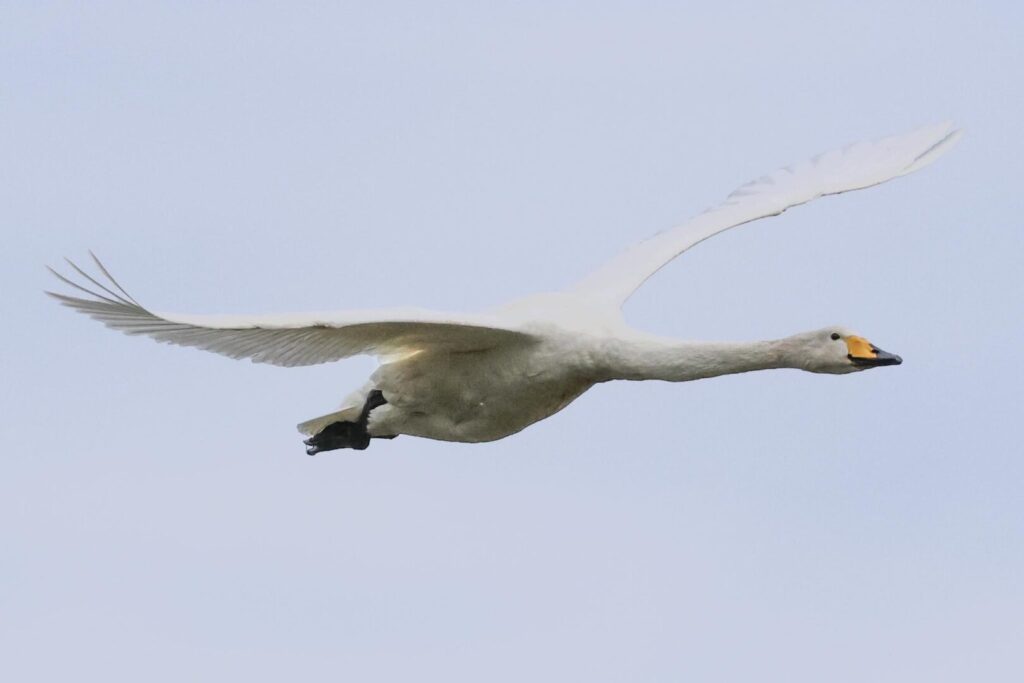
There had been six Whooper Swans reported here today and while we were eating our lunch six swans flew up off the scrapes and in towards us. The five adult Whooper Swans flew straight past us and dropped down into the fields behind the Centre. The juvenile turned back and circled round before eventually deciding not to join the others. It was actually a juvenile Mute Swan which had presumably been separated from its parents and was associating with the next best thing.
The cloud was already starting to increase now and it looked noticeably greyer to the west as we walked back to the minibus. With the forecast of rain this afternoon, we had planned to drive inland, down to the Brecks to try to see some Stone Curlews. The rain was forecast to arrive at around 3pm and at 3.10pm it duly started to spit on the windscreen. The highlight of the drive was two Red Deer running alongside at one point in a field by the road, a young stag chasing a hind.
When we arrived in the Brecks it was already raining steadily but thankfully it eased off so we didn’t have to get too wet. We quickly found several Stone Curlews in the field (we had been tipped off where they were a couple of days ago). We set up the scopes for a closer look. They were very well camouflaged against the bare stony ground and the more we looked the more we could see. Eventually we counted at least 23 Stone Curlews, but there were probably more hidden behind the hedge further along.
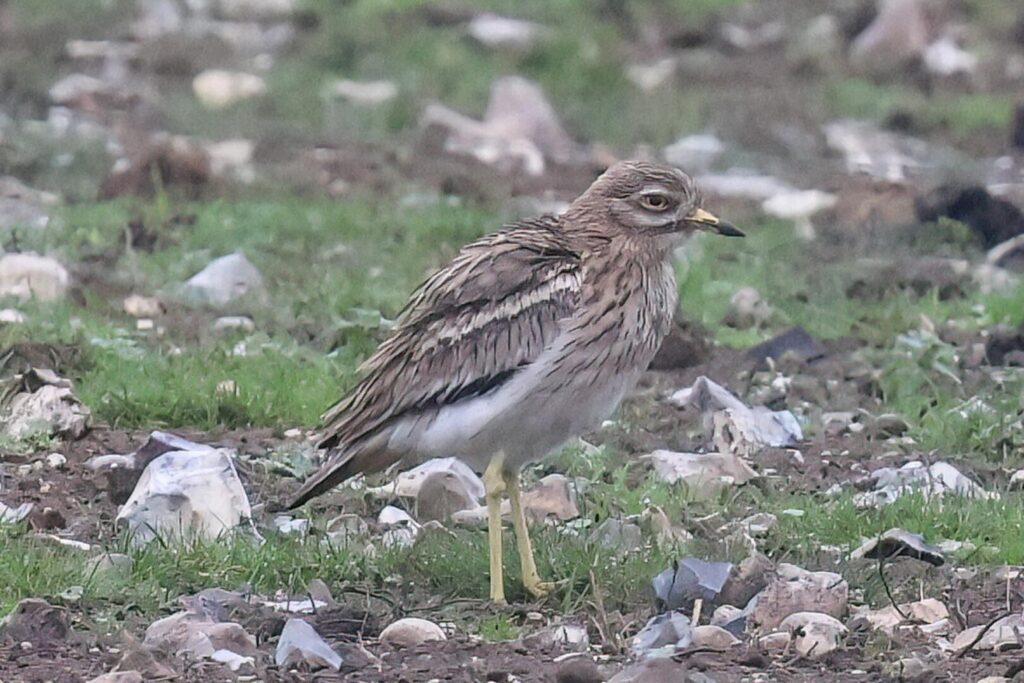
The Stone Curlews gather in flocks at the end of the breeding season, before setting off to migrate to Spain for the winter. Numbers already seem to be dropping slowly here but some may linger here well into November if it remains mild. Always a highlight of this time of year and often much easier to see, much better views than in the breeding season. A great way to finish off the tour.
We drove back through the rain to Hindolveston, where we said our goodbyes. Another interesting four days of Autumn Migration in Norfolk comes to close.