Day 3 of a 4-day Autumn Migration tour in Norfolk. It was cloudy all day again but less misty and grey than yesterday. It stayed dry and there was virtually no wind today. We spent most of the day at Titchwell.
On our way to the coast this morning, once more we could see several small groups of Pink-footed Geese flying over. We took the back roads down towards Choseley and stopped to look at some Red-legged Partridges in a field (though we needn’t have worried – see below). A couple of Stock Doves were in the winter wheat just behind.
Further on, there were a few small birds on the wires, Meadow Pipits and Reed Buntings, and more flying in and out of the hedge behind. We stopped at the corner and got out. There were more Reed Buntings in the hedge and lots of Chaffinches. A flock of Long-tailed Tits was working its way down through the dead umbellifers below.
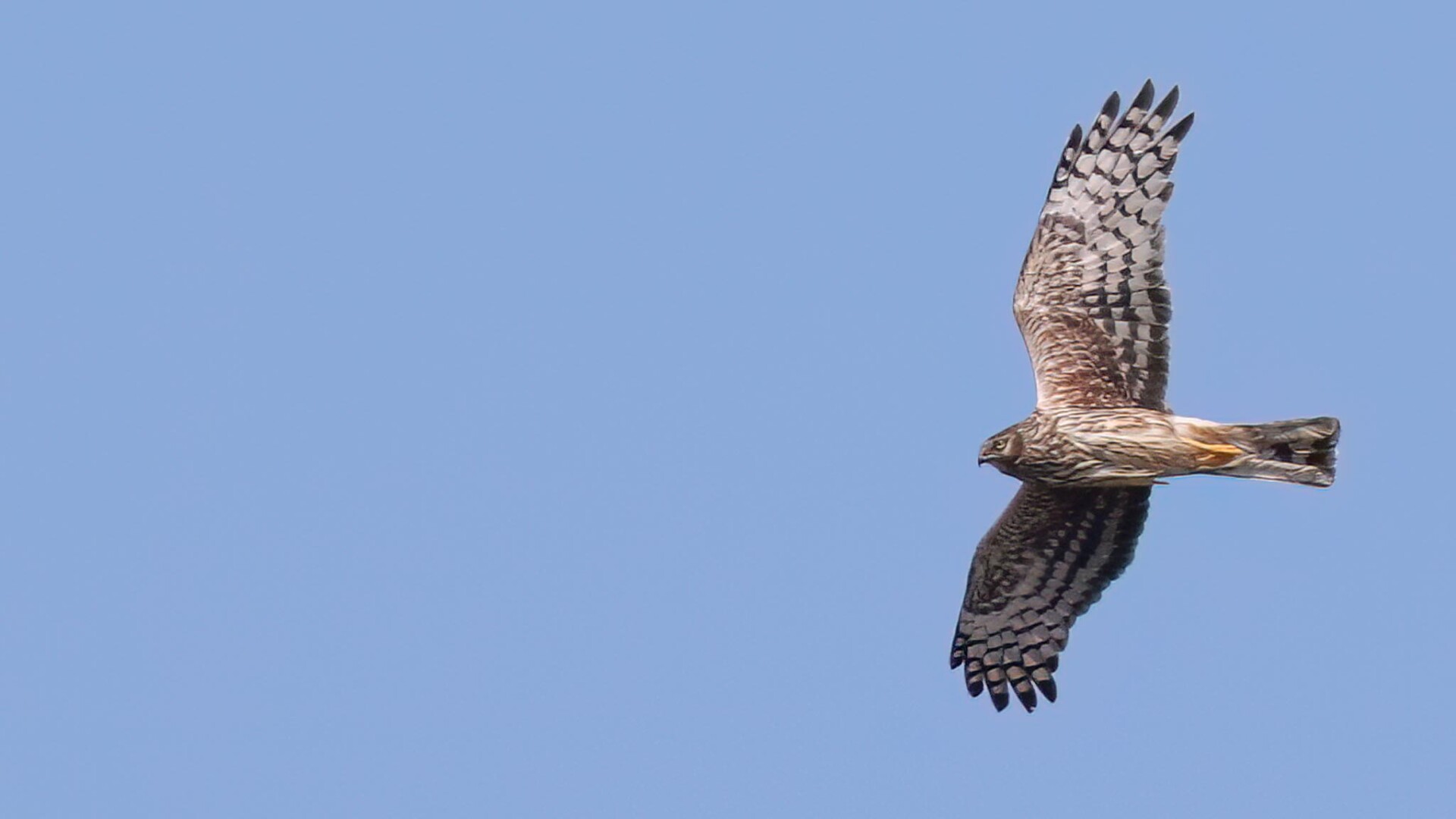
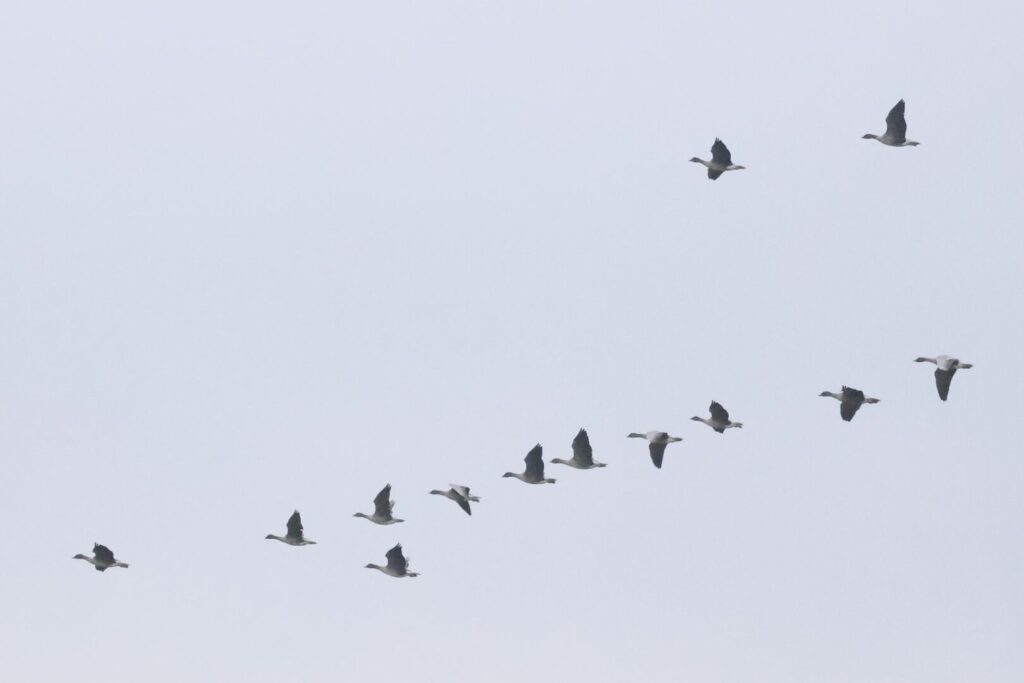
A couple of Brown Hares were down along the edge of one of the fields and one ran down across the winter wheat towards us. A small group of Common Gulls were in the back of the field. A Marsh Harrier drifted across. Several small groups of Pink-footed Geese flew overhead calling looking for a suitable field to feed in.
Looking around now, we realised there were vast numbers of Red-legged Partridges everywhere. They have all just been released, ready to be shot, no thought to the environmental impact of releasing such a huge quantity. No wonder there are so few Grey Partridges (and Corn Buntings, etc) around Choseley Farm any more these days.
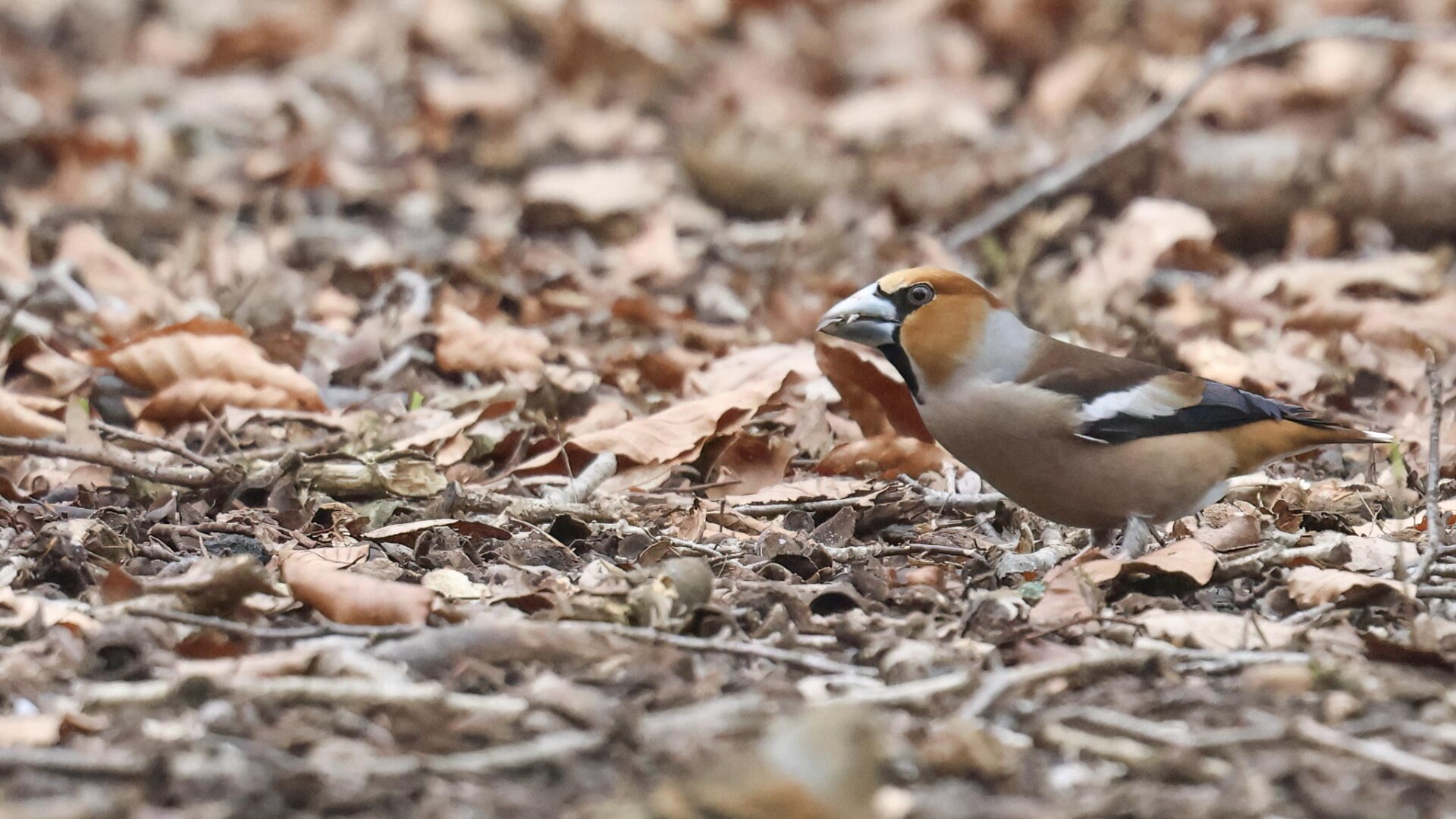
The gamekeeper drove past and came back down through the cover strip alongside the hedge. Everything flew out. We managed to see a single Yellowhammer as it disappeared off – sadly gone are the days of flocks of hundreds of them here. We picked up a couple of Bramblings in with the Chaffinches too.
As we got back into the minibus and continued on down to Titchwell, there were more flocks of Red-legged Partridges all along the road. We had to slow right down and wait for them to move aside or we would simply have mown them all down, they are so tame.
At Titchwell, as we drove round and into the overflow car park, lots of Blackbirds flew up from the ground and out of the apple trees. Probably freshly arrived overnight and stopping here to feed up on all the fruit. As we got out, several more flew in very high and circled over. More new arrivals.
We had a quick scan from the gate at the far end of the car park. All we could see were just a few Pied Wagtails in the paddocks. A Chiffchaff flew in over the grass and landed in the hedge above us. It seemed to be on the move, possibly another migrant just come in from Scandinavia. As we made our way round past the Visitor Centre, we could hear Siskins calling in the alders. A flock of Long-tailed Tits made its way quickly along the hedge on the edge of Thornham Grazing Marsh towards us.
Out by the reedbed, we could see a single Coot in one of the channels, the first of the tour. We stopped by the Reedbed Pool to scan. There were lots of Gadwall on the water, plus a few Shoveler and a single Little Grebe. Several Cetti’s Warblers were calling from the reeds but there was no sign of any Bearded Tits. A large flock of Long-tailed Tits kept flying up from the reedbed, zooming across, landing again. At one point they landed in the bulrushes in front of us briefly. Maybe they were on the move too today.
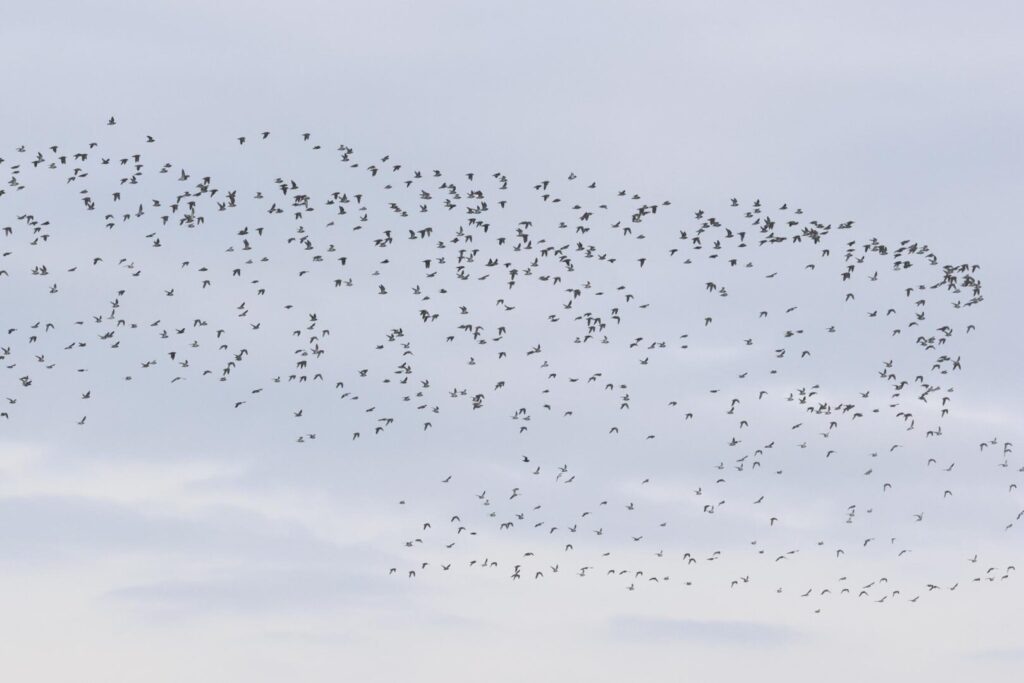
A large flock of Golden Plover kept flushing up from the Freshmarsh further up, whirling round calling, then settling back down again. A Mediterranean Gull flew up off the Freshmarsh too, circled over the reeds and drifted off west. A winter adult, with black bandit mask and translucent white wingtips, it is not always easy to catch up with this time of year (unlike the summer these days).

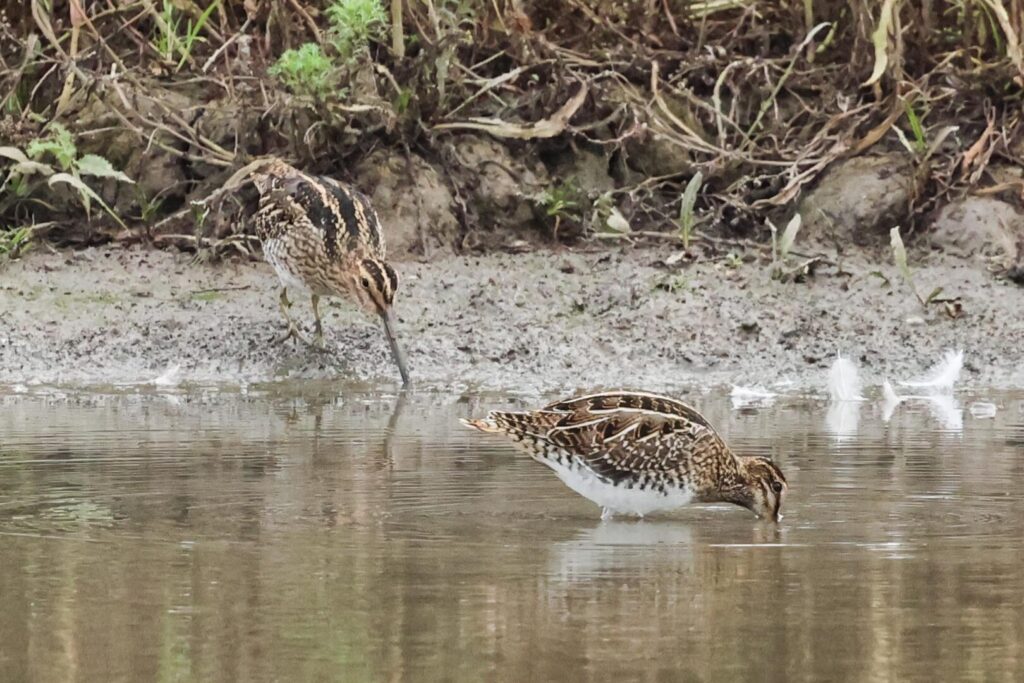
A colour-ringed, headstarted Curlew was out on the Lavender Marsh pool as we passed. We walked on down to Island Hide. Looking out of the window, a Chinese Water Deer was walking along the edge of the reeds. There were lots of Common Snipe scattered all round the scrape, including three on the front edge of the nearest island. Good views of these in the scope.
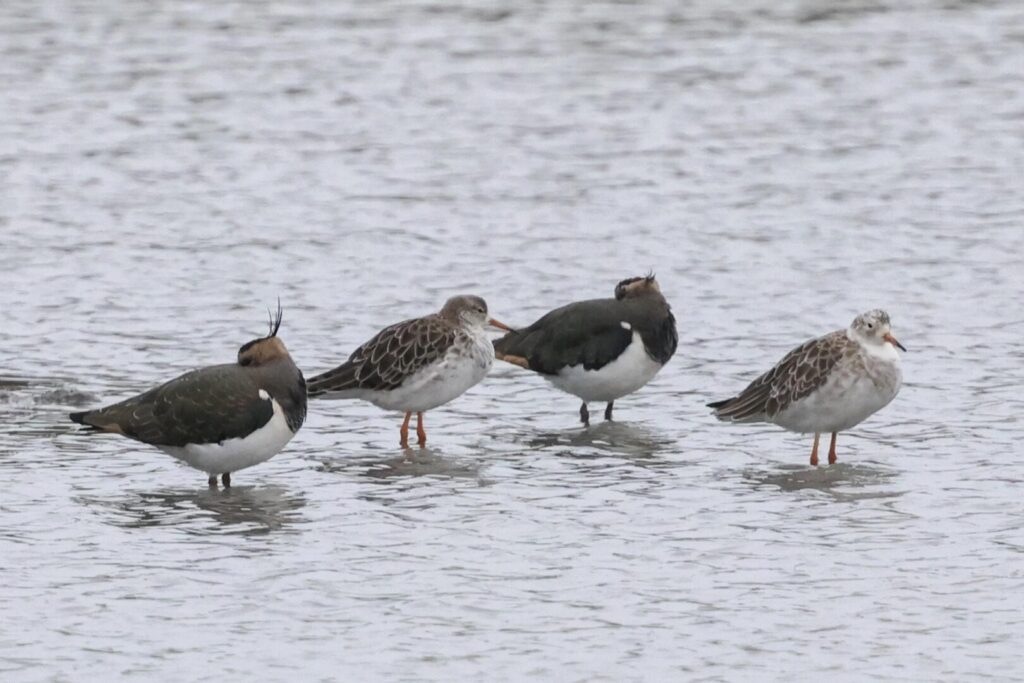
Several Ruff were gathered around the islands further over, including a distinctive white-headed ‘satellite’ male. A few Avocets are lingering still, although most have gone south for the winter already. There were good numbers of Lapwing and three Black-tailed Godwits towards the back corner. Four Grey Plovers flew in, circled round over the water, but disappeared off again. Possibly migrants just arriving.
A small flock of Brent Geese flew in chattering and dropped down onto the water for a drink and a bath. Two Great White Egrets chased each other round over the reedbed briefly. A couple of Water Rails appeared on the edge of the reeds. We watched them as they worked their way quickly along, before they disappeared back in.
Back out to main path, we continued on. A single Dunlin dropped in on the next compartment, but otherwise there was not much different of here to what we had seen from the hide. We decided to head out to the beach.
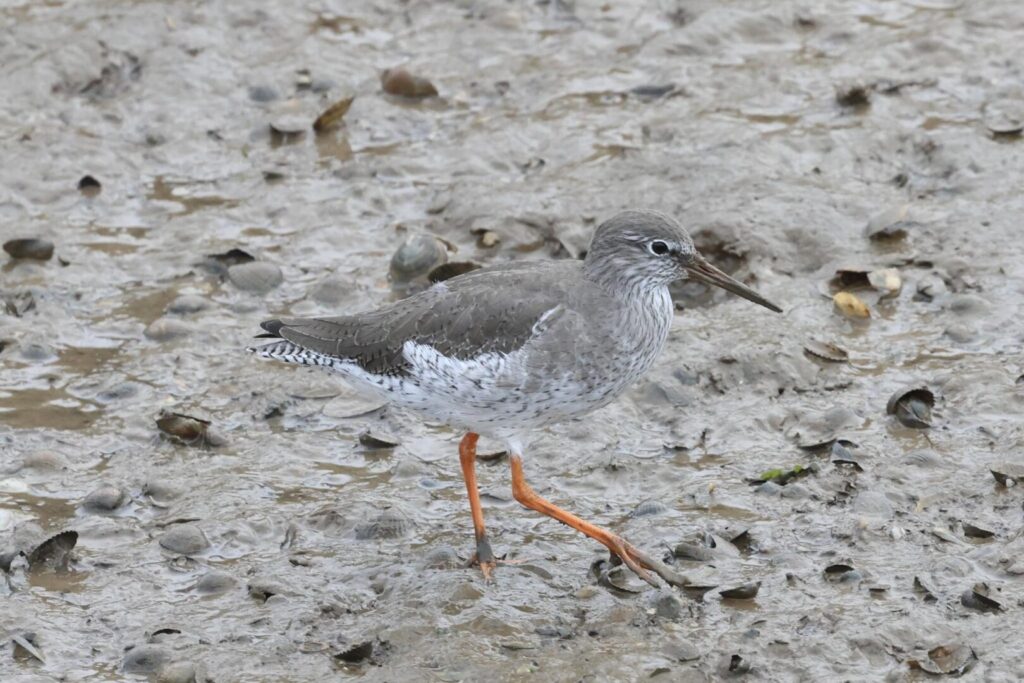
The Volunteer Marsh was quiet. All we could see were a couple of Curlew and a Little Egret in the bottom of the channel at the far end. A single Redshank was on the mud close to the path too. Hopefully works will start next month to rework parts of the Volunteer Marsh and make it more attractive for birds. The Tidal Pool was fairly empty too but with the tide out, most of the birds would be feeding out on the beach now.
When we got over the dunes, we could see a Bar-tailed Godwit out on the sand in front of us. We got that in the scope first for a closer look. There were more waders on the mussel beds, including several Turnstones and Ringed Plovers. A small flock of Knot dropped in. A single Sanderling was hard to see but another was out in th open further west, on the beach in with all the Oystercatchers.
There were quite a few Red-throated Divers on the sea, along with one or two Great Crested Grebes and a single Guillemot. It was flat calm and although that meant it was easier to see things on the water, most were quite a good way out today. We spotted a couple of Grey Seals too. A distant Sandwich Tern was diving over towards Scolt Head. The breeding colony is now empty and most have long since departed for West Africa.
It was a good day for watching migration in action here. We saw some distant lines of Brent Geese coming in over the sea from the Continent, one with a few Wigeon mixed in. We also watched a Marsh Harrier coming in across the Wash. A Goldcrest flew in low over the beach towards us and up over the dunes beside us. Amazing to to think such a tiny bird had just made it all the way from Scandinavia as we stood and watched. A Redwing flew in low past us too.
A poor Blackbird was less fortunate. We noticed it first flying in over the sea. It was clearly exhausted and landed on the water. We thought that might have been it, as they can struggle to get airborne again, but after a minute or so it managed to take off. It flew a bit closer in but ditched in the water again. Several times it did the same thing but just as it looked like it might make it in to shore, a Great Black-backed Gull took off from the beach and straight for it. It grabbed the Blackbird as it landed on the water, drowned it and swallowed it whole. Nature in the raw.
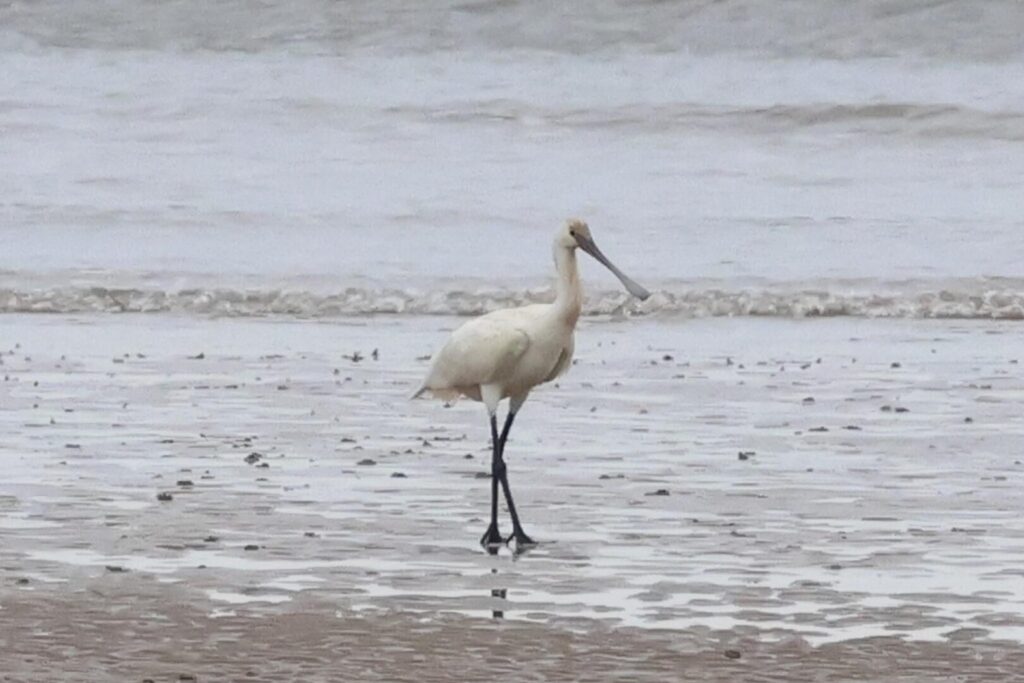
We were just about to leave when one of the group thought he saw a Spoonbill briefly. It seemed to have disappeared behind the mussel beds again but all we saw come out at first were two Little Egrets. He was just starting to wonder if he was mistaken when a photographer walked down to the edge to photograph the waders and flushed it out. The Spoonbill landed on the beach briefly, so we could see it was a juvenile with a dull brown bill. Then it flew off east.
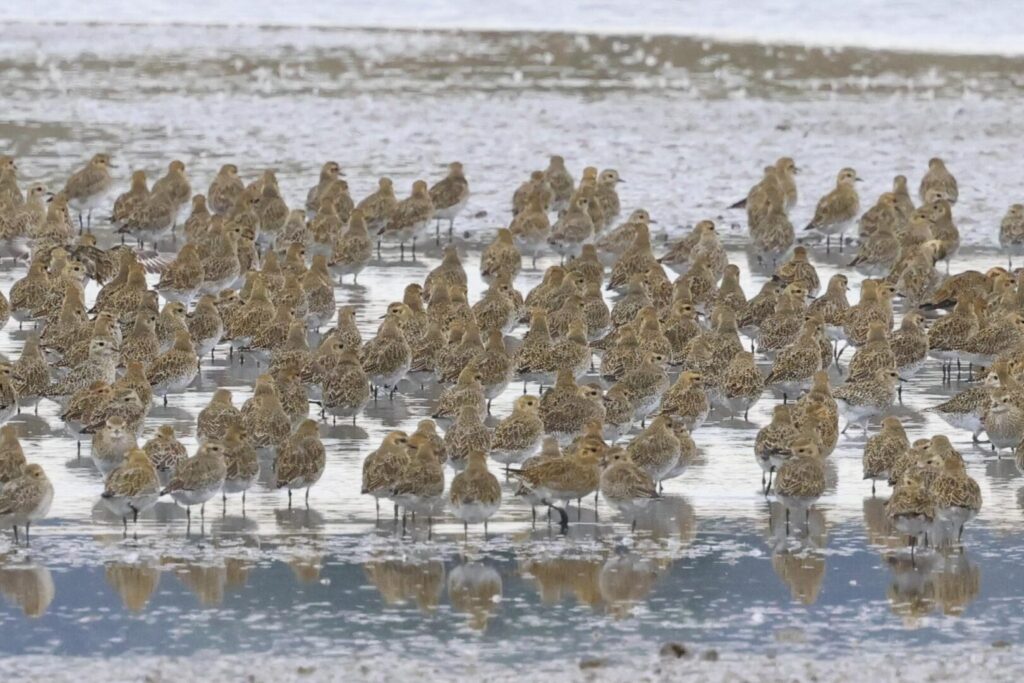
It was time to start heading back for lunch. On the way, we called in at Parrinder Hide briefly. All the Golden Plover were gathered on the scrape here now, a massive flock, very impressive. We had good views in the scope. There had been a lingering Curlew Sandpiper on here recently but we couldn’t find any sign from this side. We could see a small flock of Dunlin at the back, in front of the reeds. Several Meadow Pipits were feeding with the Pied Wagtails on the short grass on the first island.
Back on the main path, as we passed the reedbed again we heard Bearded Tits calling. Four flew out of the reeds on the Thornham side, over the path in front of us and landed not far into the reedbed. We could see the reeds moving and with a bit of persistence managed to get some quick views of them. Four flew out and there seemed to be several more already in there, as the reeds were still moving. One was left behind on the Thornham side and still calling. After a while, it flew over the bank too and out to join them.
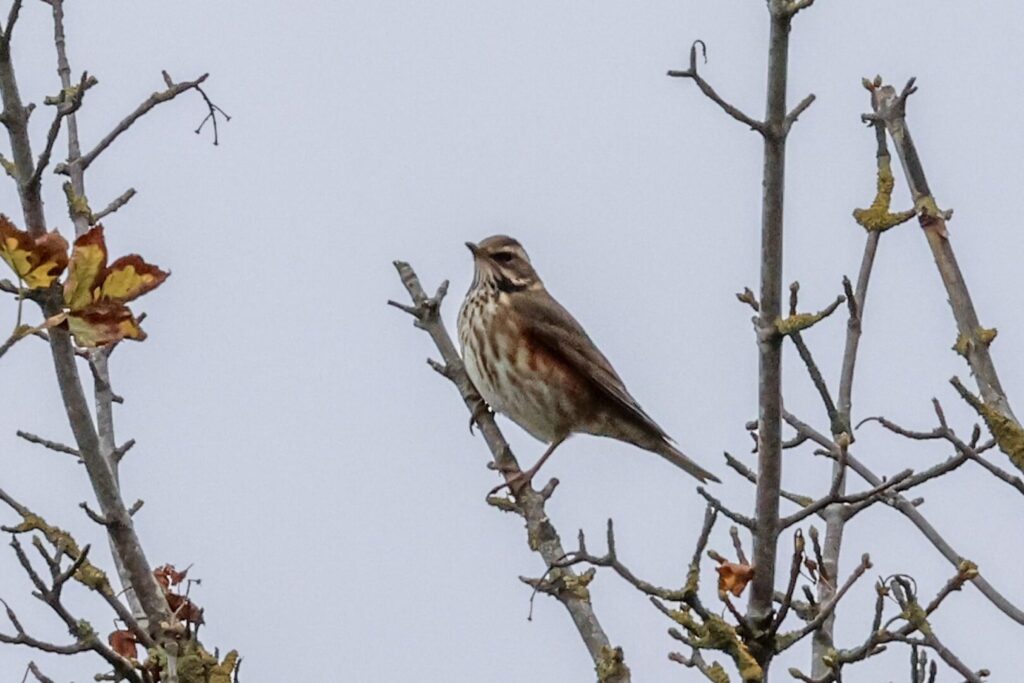
It was a bit of a surprise to find there were no tables in the picnic area at the moment. Apparently they had been removed for a big Titchwell event last weekend. So we had to have lunch on the tables up by the Visitor Centre today. After lunch, we made our way out along Fen Trail. A Brambling was calling in the sycamores but we couldn’t see it. A Redwing was perched out in the open in the trees on the Tank Road.
We had a quick look from the screen at Patsy’s Reedbed. A few ducks out on the water included a single Tufted Duck. A Great Spotted Woodpecker which flew in over the middle of the reedbed could possibly have been a migrant.
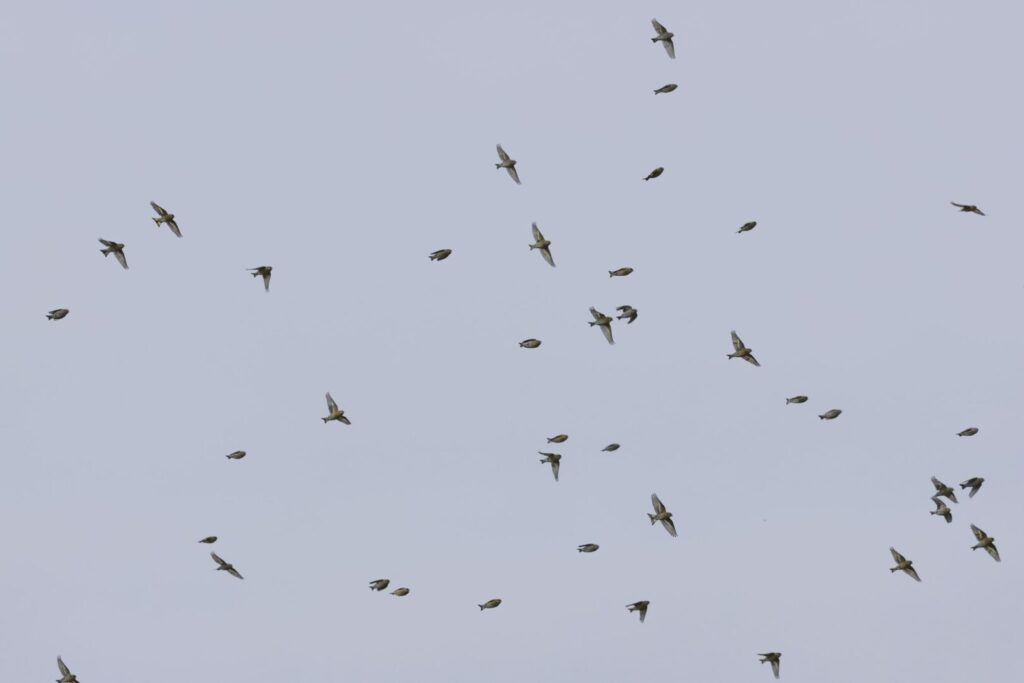
A flock of about thirty Siskins flew past, heading towards the trees by the Visitor Centre. When a rather pale Common Buzzard drifted over Willow Wood, it flushed a load more from the trees. Another much bigger flock flew past. As we walked on along the Autumn Trail, there were yet more Siskins in the wood and still more dropping in. All just arrived from Scandinavia for the winter.
There were several Migrant Hawker dragonflies around the edge of the trees, out of the wind. We walked up on to the top of the bank for a quick look out over Brancaster reedbed. It is only open at this time of year and an interesting different view of the area.
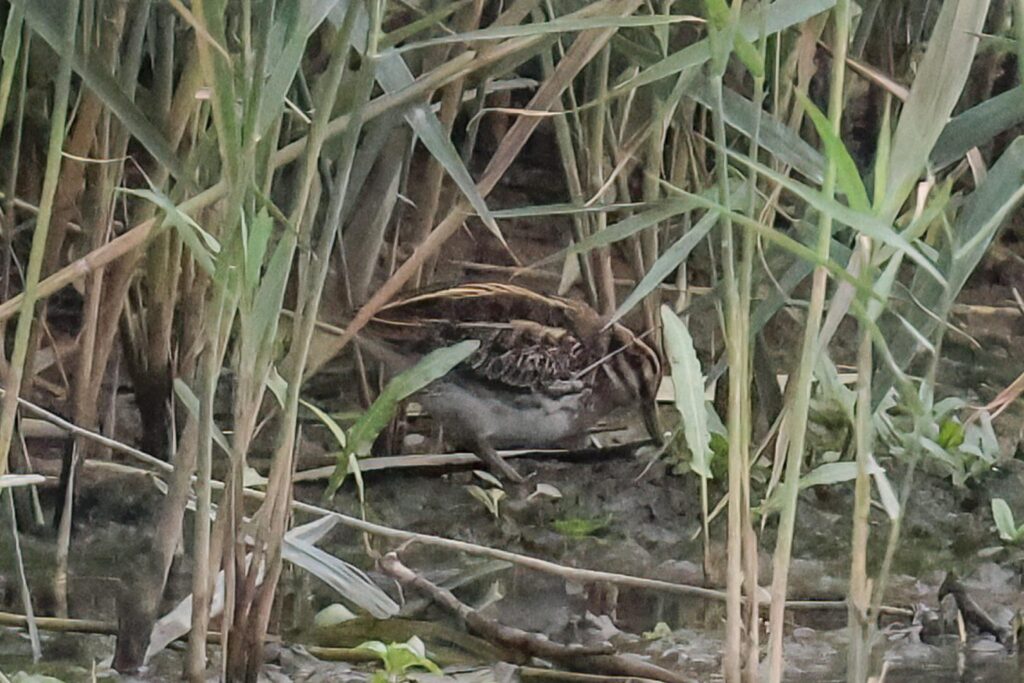
We walked on to the end of the path, overlooking the back corner of the Freshmarsh. Several Dunlin were feeding on the mud in front of the viewpoint but flew off as we walked up. We were scanning for the Curlew Sandpiper but couldn’t see it at first. Then one of the group spotted a Jack Snipe on the edge of the reeds opposite. It disappeared in but we could still just see it feeding inside the reeds. Eventually it came out to the edge where the reeds were more open and we had a much better view. The Jack Snipe are just arriving now for the winter.
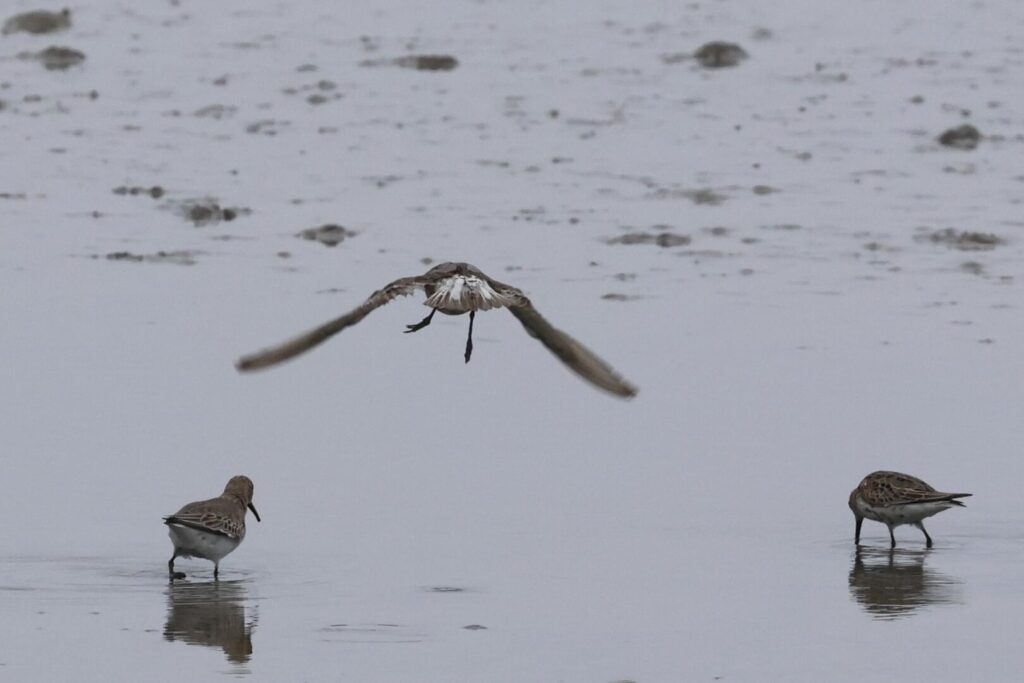
After a while, the Curlew Sandpiper appeared from behind the reeds in front with some more Dunlin. Unusually it was a moutling adult – juveniles are much more common at this time of year. It was easy to pick out, as it had a badly broken leg. Possibly why it was still hanging around and it had still not completed its moult to non-breeding plumage. It flew further back, but we got it in the scope for a closer look.
As we started to walk back, we noticed two Cetti’s Warblers in a dead bush in the edge of the reedbed. We stopped to watch them creeping around in the tangle of branches at the base. A Swallow flew over too – another late migrant just on its way to Africa.
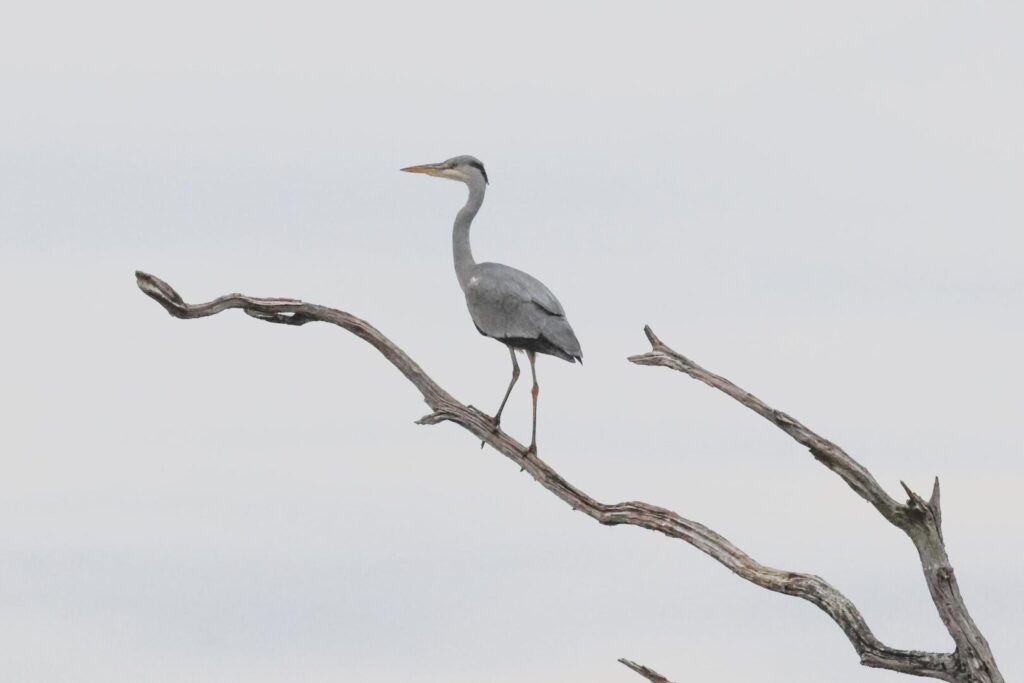
A Grey Heron was perched in the dead trees in the back of the reedbed, along with a couple of Cormorants now. More Cormorants were flying in, starting to gather to roost. Several Stock Doves flew over and three landed in some dead trees on the edge of Willow Wood, where we got them in the scope.
Looking over the reeds at the back of Patsy’s, there were lots of gulls gathering on the water now. They drop in here to drink and bathe, on their way from the fields inland to roost. They were mainly Lesser Black-backed Gulls but after a quick scan through we picked out a single adult Yellow-legged Gull with them.
There were still skeins of Pink-footed Geese coming in over the back of the beach. It was hard to tell, but based on the direction they were coming from it looked like they might be fresh arrivals, having flown in over the Wash.
We carried on back round to the Visitor Centre, and it was time to call it a day and head for home. Another very interesting day on the Norfolk coast, with lots of Autumn Migration action today.