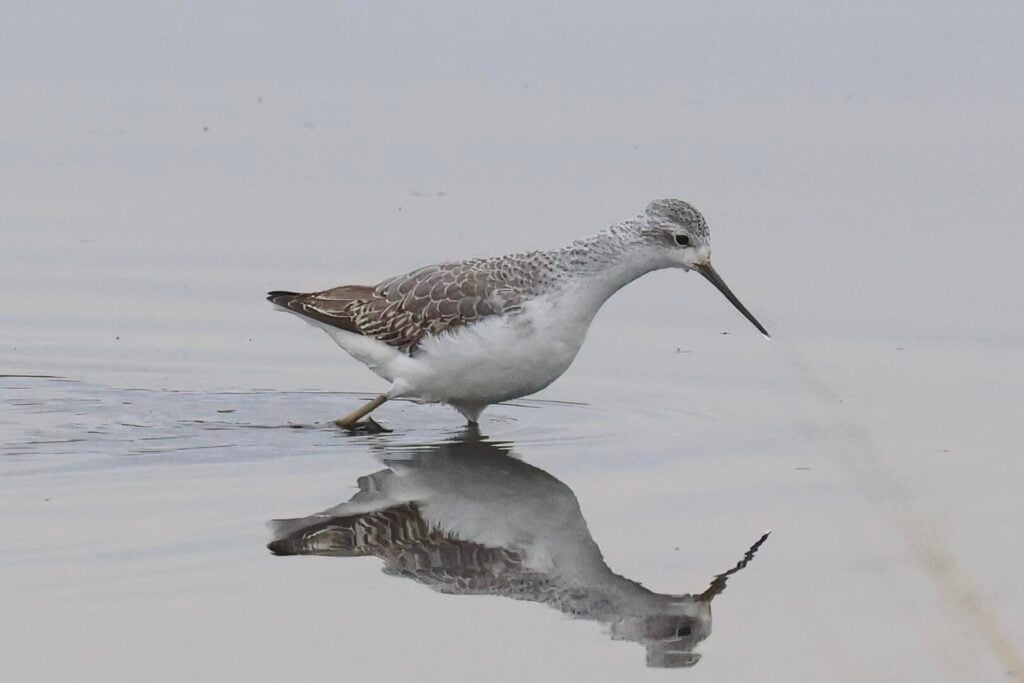
Not a tour but a visit to Shetland to explore the islands and spend some time birding there. On the way up from Norfolk, I stopped off at Musselburgh for a couple of hours. The long-staying first winter Marsh Sandpiper was showing very well on the old lagoons, in front of the hides. There was a Curlew Sandpiper and a Spotted Redshank on here too.
There are usually some scoter on the sea off Musselburgh and the last couple of days a White-winged Scoter had been reported here. I walked out to the seawall and quickly bumped into a couple of people watching a small group of Velvet Scoters. The White-winged Scoter was in with them, but very difficult to see at first as they were not especially close (though not as distant as they can be here!) and it seemed to be mostly asleep. After a while, it woke up and started preening. At which point, it became a little easier to locate in the raft.
The White-winged Scoter was a 2nd winter drake, with reduced white ‘tick’ mark around the eye and not as bright a bill as an adult. Still, the pinky-orange colour was more restricted than the yellow on the sides of the bills of the drake Velvet Scoters alongside it. It looked rather large-headed, without such a ‘step’ in the bill profile as some.
After an overnight ferry from Aberdeen to Lerwick, I couldn’t check in until mid afternoon, so spent some time birding around southern Mainland on 28th. I managed to catch up with the long-staying eclipse drake Blue-winged Teal at Loch of Spiggie in the rain early morning. There seemed to be a few interesting birds turning up. The best I managed to stumble upon was a Wryneck which flew past me at Quendale, having been seen earlier up the road at Brake.
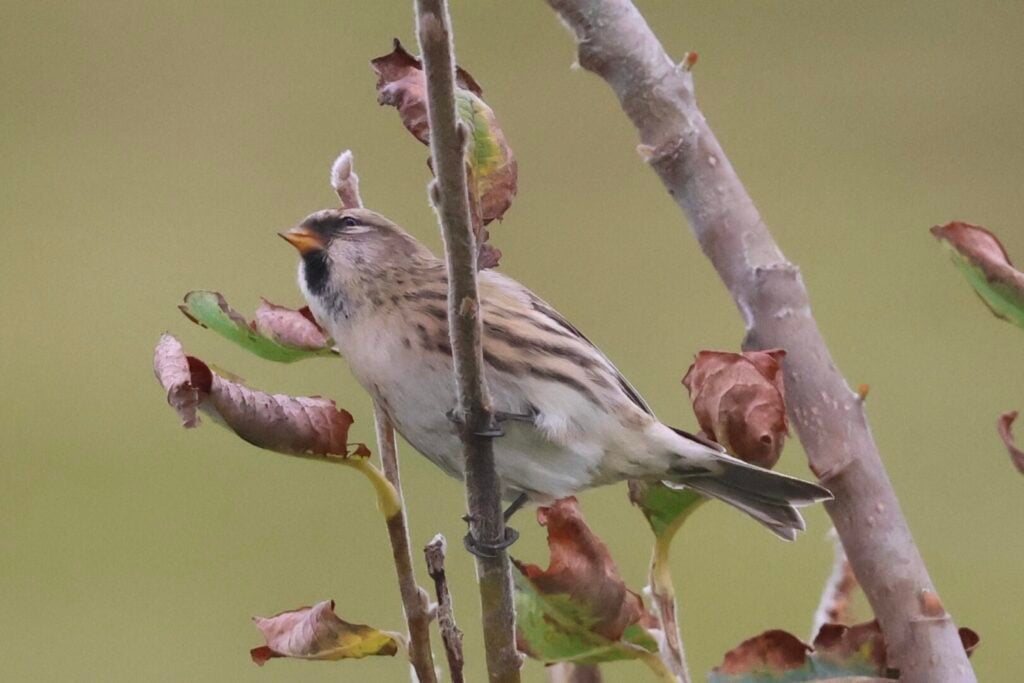
In the afternoon, I drove up to Maywick to twitch a Rustic Bunting which had been found there. It was very mobile and mostly distant but I did manage to see it well a couple of times. There were some Redpolls in the trees there briefly too – it would prove to be a good autumn for them on here, with a number of Northwestern-types (Icelandic/Greenland).
Once I had checked in to my accommodation now, I had a choice. There was a Little Bunting reported only 10 minutes away and a Bluethroat at Geosetter. But I also needed to go up to Lerwick to stock up on food in Tesco, or I would have nothing to eat tonight. I decided on the latter, which also gave me time to pop in and see a Barred Warbler at Clickimin while I was there.
It was only when I got back from Tesco that I picked up a message that the Little Bunting was actually a Black-faced Bunting. Someone else had gone to see it and had realised the mistaken identification. Unfortunately, by now it was just too late for me to get there before it went to roost. Unsurprisingly, after a fairly clear night, there was no sign of it the following morning. One that got away!
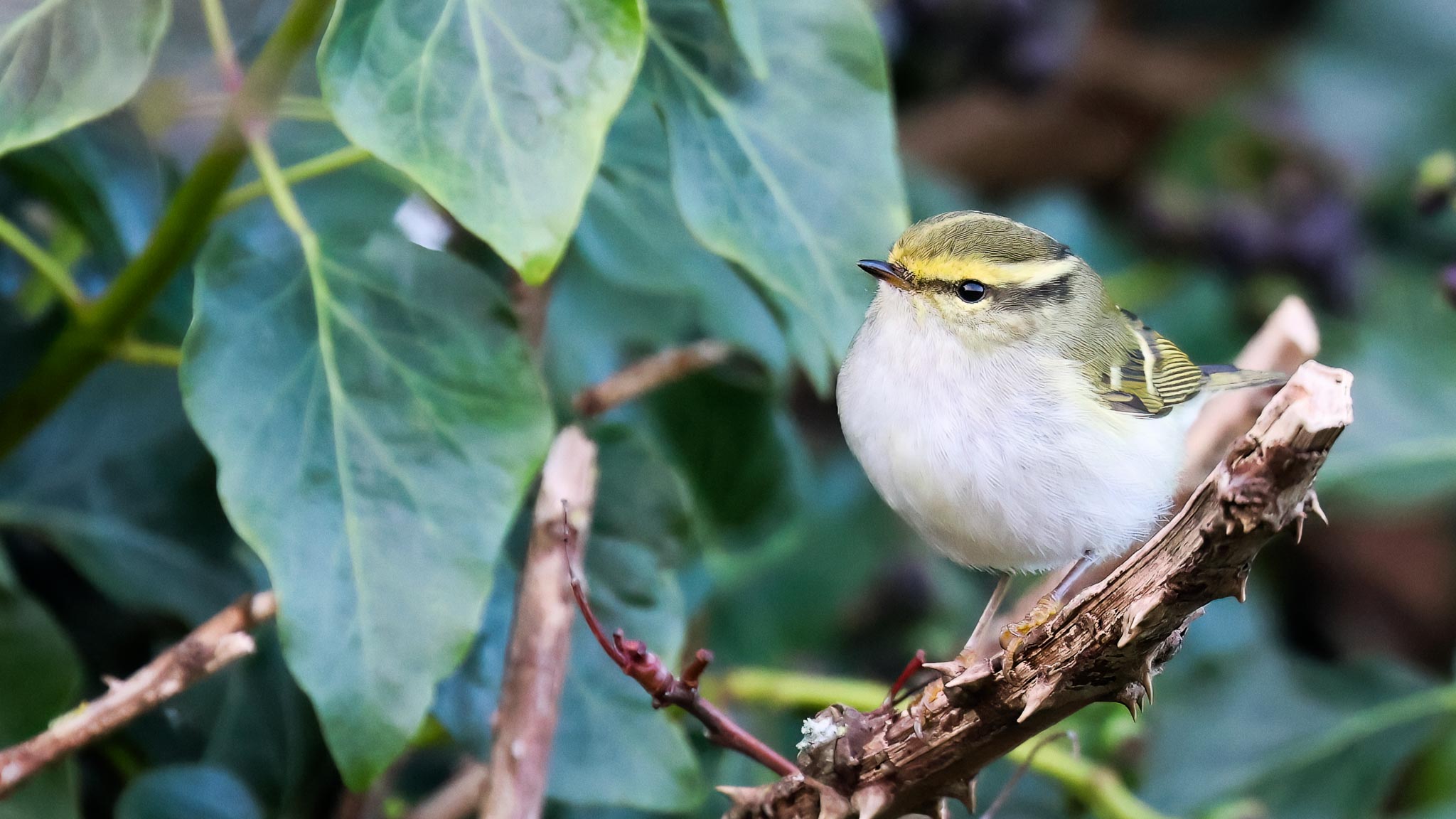
The following day, after no show from the Bunting, I spent some time exploring some sites around South Mainland again. The best I could find were 3 Yellow-browed Warblers. There seemed to be a few Blackbirds, Song Thrushes and Blackcaps in, but otherwise it was all a bit quieter than it usually is at this time of year. But this being Shetland, you can never write it off!
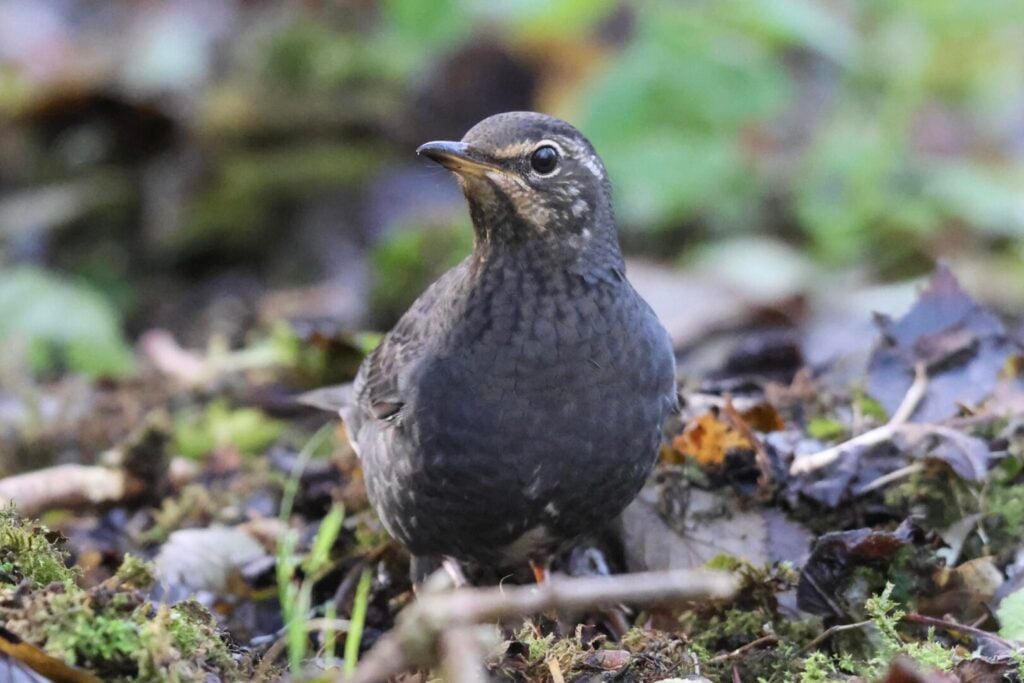
Mid afternoon, a message came through that a 1st winter male Siberian Thrush had just been found up at Scatsta. It was only about 45 minutes drive away, so I set off. When I arrived, I parked off the road and walked down to the entrance track. By that stage, it had only been seen in flight briefly once more after the initial finding.
The crowd was gathered round on the far side of the plantation but as I turned in along the track I caught a brief glimpse of a grey-backed thrush which flew up from the verge just ahead of me and disappeared into some trees the other side. That was the Siberian Thrush! I met some people coming the other way and told them what I had seen, but they said that the thrush was still in the main plantation the other side of the pools. Could I have been mistaken?
We stood scanning for about half an hour by the fence. While they were looking right, over to the back of the main plantation, I continued to look left, over towards the back of the smaller group of trees where the bird I had seen went. Then the Siberian Thrush flew out of a dense clump of rugosa exactly where I had seen it go. I was right all along! It flew across right in front of us, giving us a great view, then up and over the main plantation.
It flew again briefly into the gardens round the other side, then disappeared back into another large block of trees. We were lucky. It wasn’t seen again and lots of people who were standing by the main plantation didn’t even see it. The following morning, there was no sign of it.
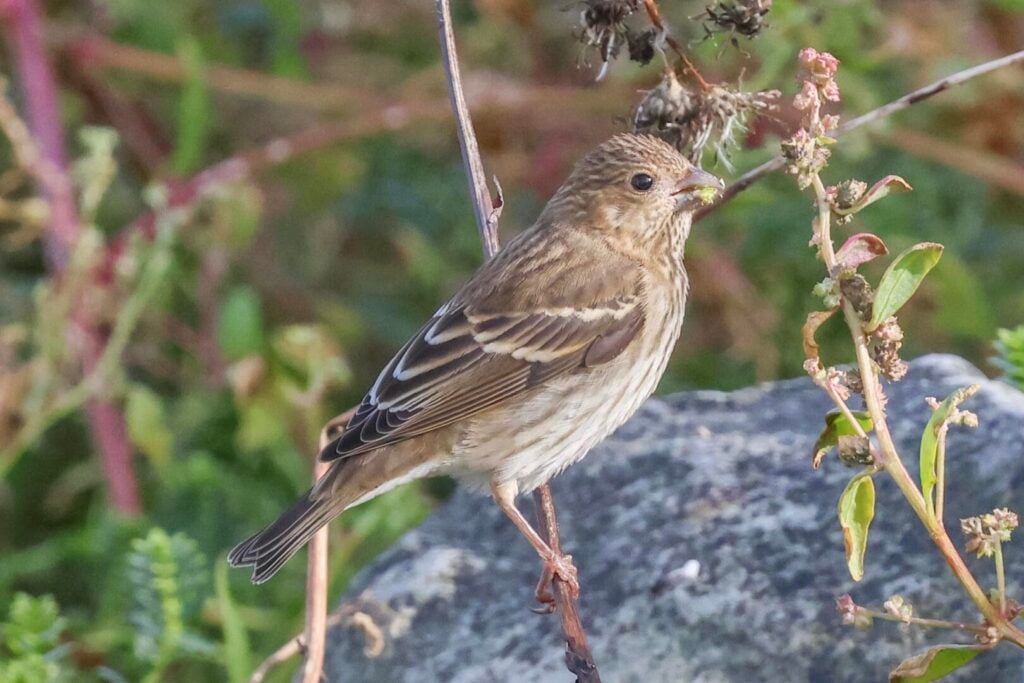
On 30th, I explored some different sites around South Mainland again in the morning, failing again to find anything of great note. Early afternoon, I called in to see a long-staying 1st winter Common Rosefinch at Grutness. It was commuting between the gardens and the beach, and showed well at times in the weedy vegetation above the high tide line. The afternoon was more of the same – confirming my earlier view that common migrants were in short supply this year.
The weather turned on 1st October and it was wet and windy, gusting up to 45mph in the morning. After some birding locally in the morning, I took advantage to catch up with some work in the afternoon.
The wind had dropped a bit on 2nd October so I headed out again. Checking Wester Quarff, I found a single Yellow-browed Warbler there still. There seemed to be a big arrival of Goldcrests though. The highlight was watching a group of 12 moving quickly up the valley, trying to fly between the gardens and isolated bushes, then some changing their minds and flying back to the trees which they had just left. I had a glimpse of the lingering Redstart too, possibly a few more Blackcaps and a Willow Warbler.
Thinking birds might have sought shelter in the wind yesterday, I thought I would drive up to Kergord and have a look in the plantations. As I drove along the road past Loch of Asta, I saw a couple of birders in the road looking down into some trees and another small group down by the loch below. It looked like they might be on to something. I drove past because I hate it when people stop and ask me if I am looking at something when I am just looking but it continued to nag. So I diverted to Veensgarth not far beyond and decided to have a walk there, just in case.
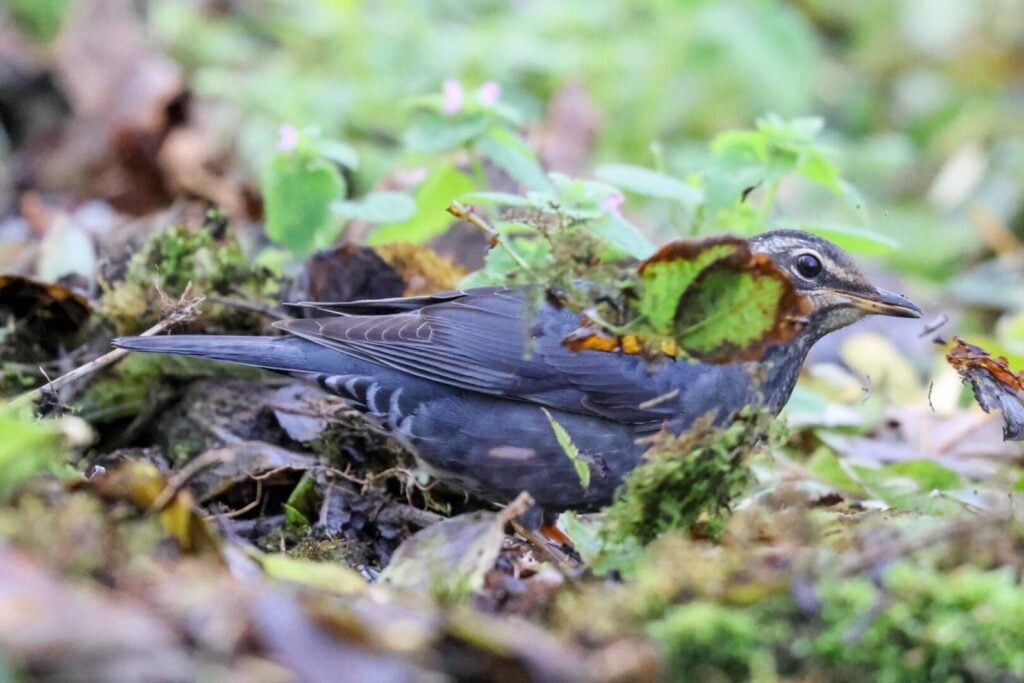
It was a good call. Just twenty five minutes later, a message came out to say that there was a Siberian Thrush at Loch of Asta! I was quickly back on site. It was very elusive at first, feeding in a thick clump of elder bushes. After some brief views, the best in flight, it took several hours before we finally got a good look at it, when it came up through the leaves to feed on some elderberries.
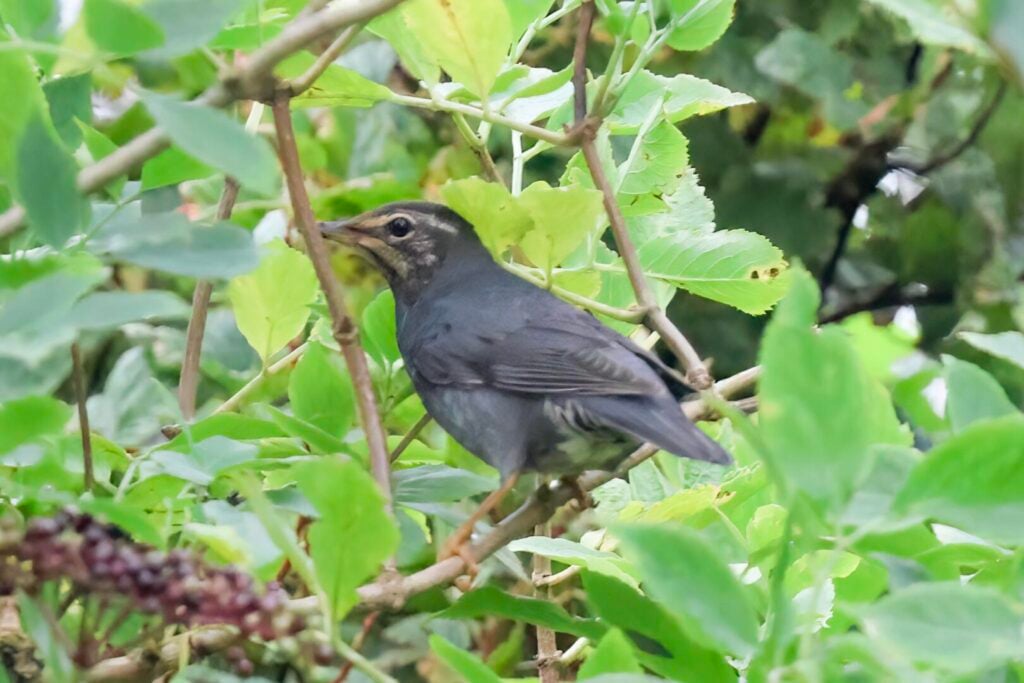
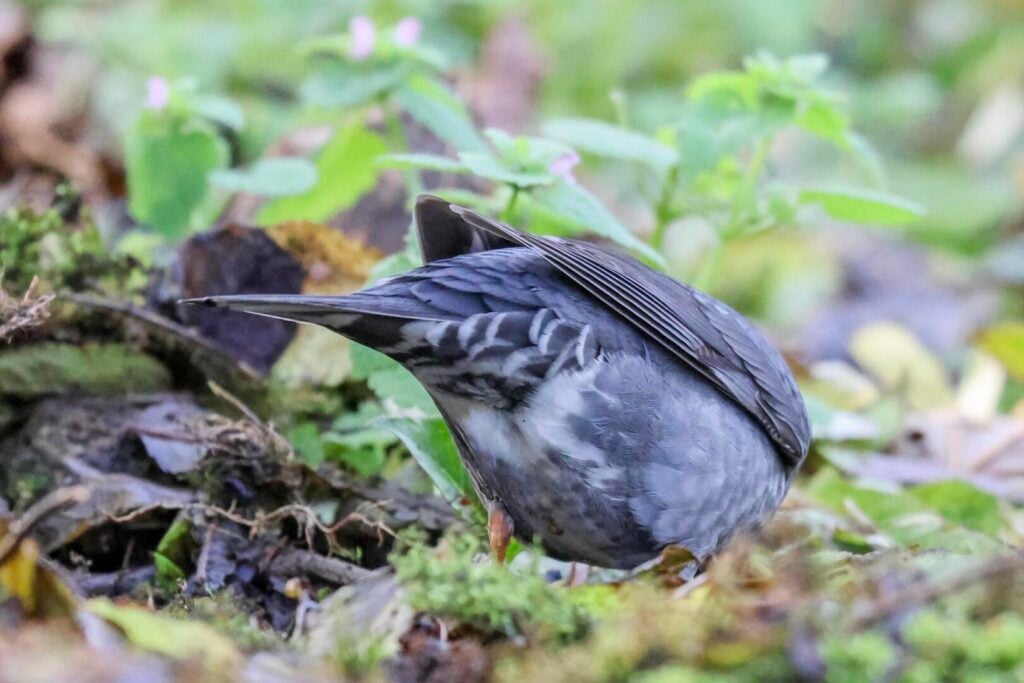
There was some debate as to whether this was the same 1st winter Siberian Thrush as the one at Scatsta a few days ago. I initially assumed it was most likely the same but having had the chance to study it over subsequent days, I think it was probably a different individual. I am sure I saw brown spots at the tips of the greater coverts on the bird which flew across the track in front of me at Scatsta.
Another windy day on 3rd, although it eased a bit during the day allowing me at least to get out. Checking the local sites again suggested nothing new in and some things had moved on since yesterday. The best I managed to dig out was a Garden Warbler. Then Storm Amy arrived on 4th. With winds gusting up to 60mph, I decided to catch up with work again.
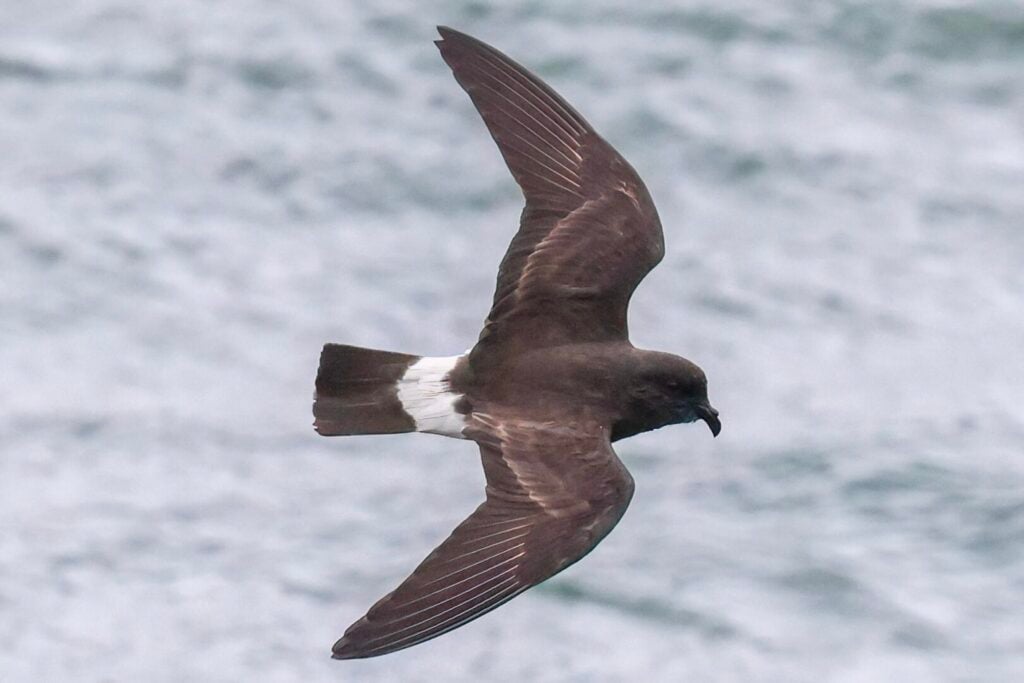
It was still very windy initially on 5th, so with a report of up to 4 European Storm Petrels in Scalloway Harbour, I drove round there to have a look. There were only a couple left now, presumably the others having moved back out to sea. One seemed to be making circuits and several times it passed by just a couple of metres off the quay, even over it at one point! The best views of Storm Petrel I have ever had in daylight hours from land.
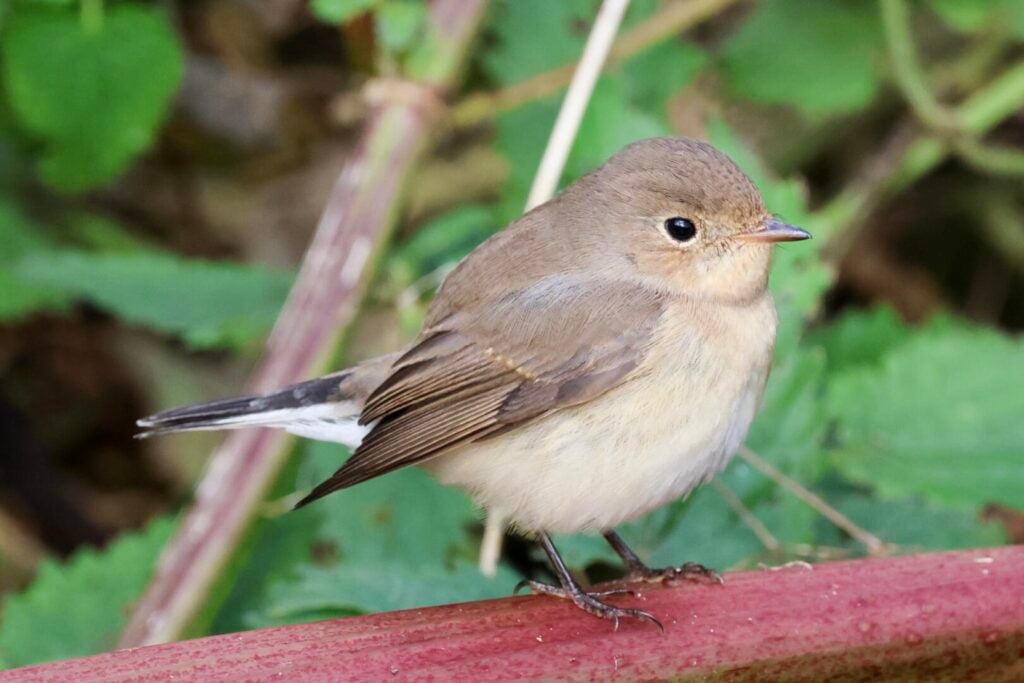
The rest of the day was taken up with a bit of shameless twitching. A 1st winter Red-breasted Flycatcher in the sycamores by the mill at Quendale showed very well, feeding mostly on or near the ground around the remains of the rhubarb. The wind presumably made finding food more challenging in the trees. The presumed Western Subalpine Warbler at North Levenwick was not as obliging but I did manage to catch up with that too.
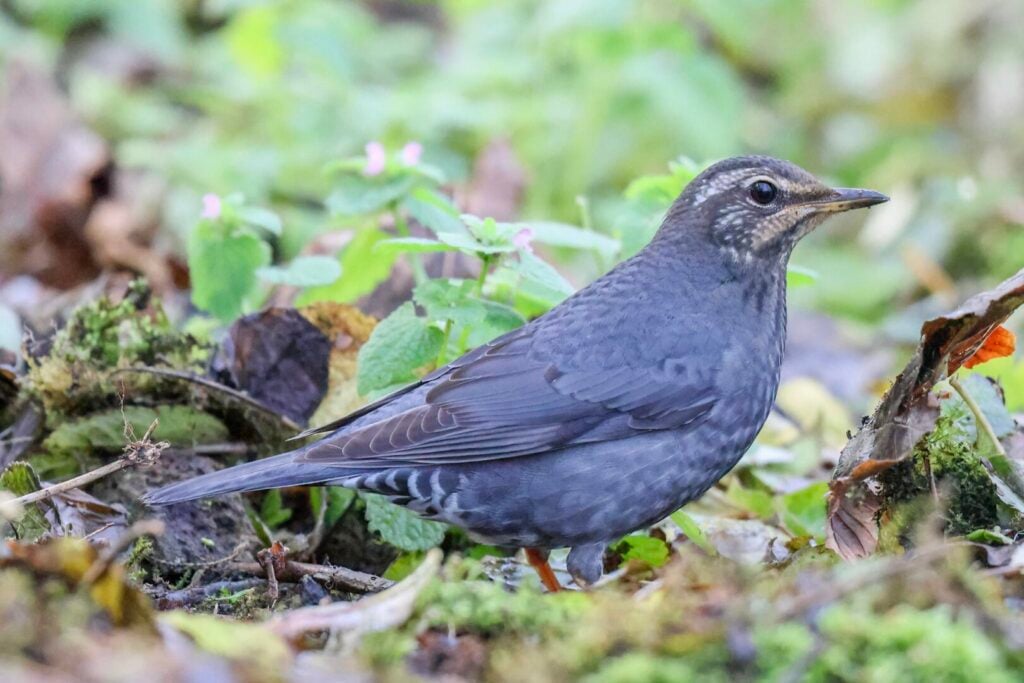
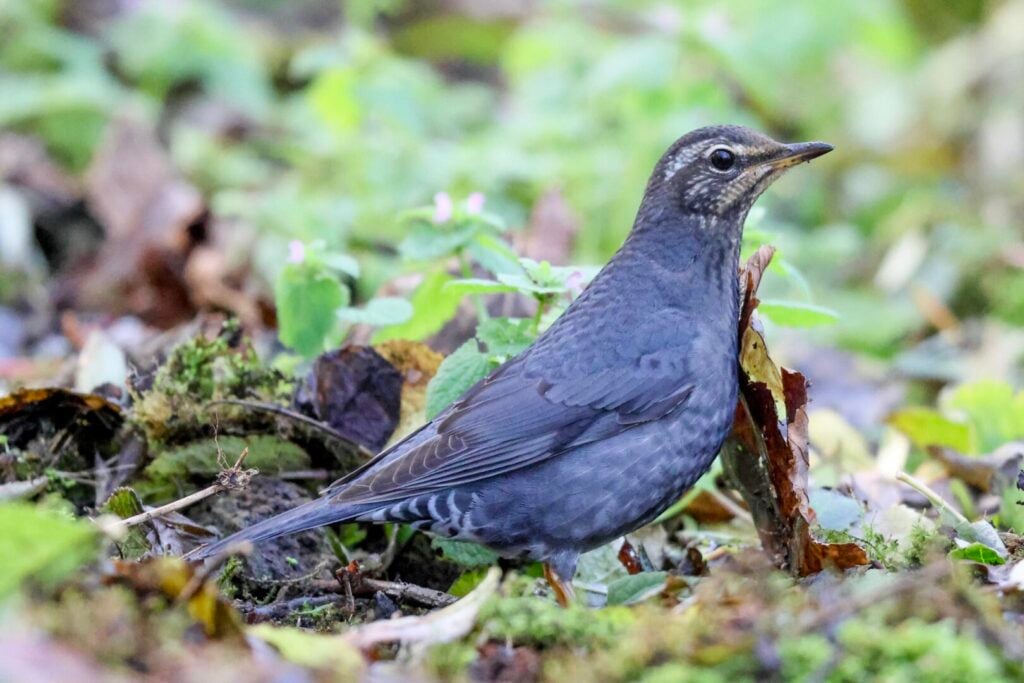
After Storm Amy had blown through, there were not many leaves left on the elder trees where the Siberian Thrush had been feeding at Loch of Asta. The bird seemed to shift to feeding more in the gardens across the road, where views were much better. At times, it could be found throwing up leaves in the leaf litter, sometimes very close to the hedge. The flying vegetation often gave up where it was. I went back a couple of times over the next two afternoons and the views were now amazing.
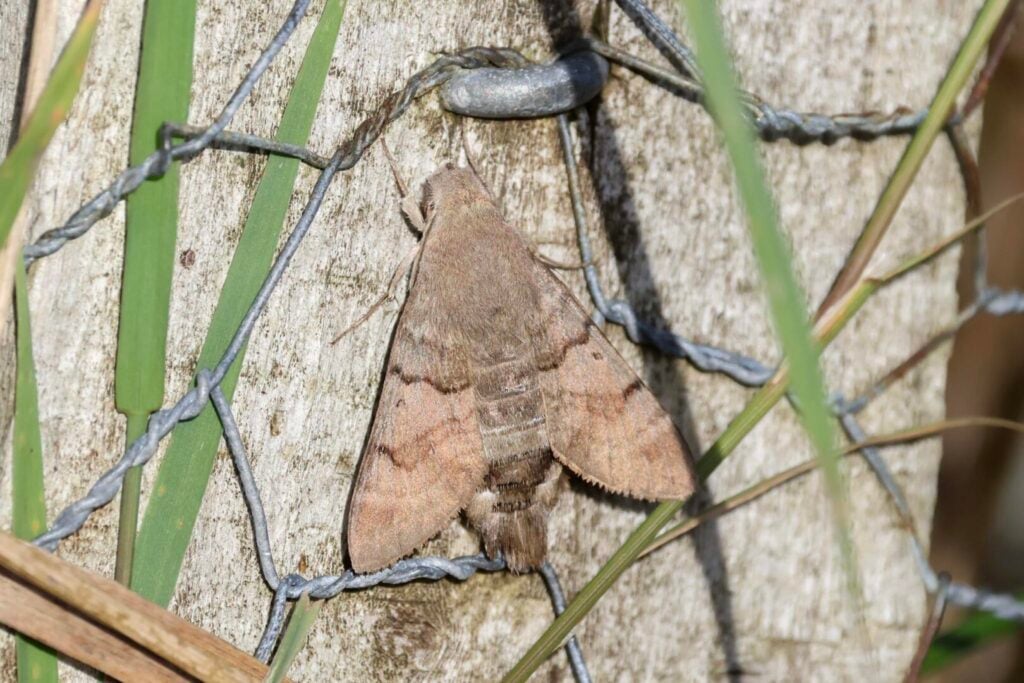
On a non-bird note, it seemed a particularly good year for Hummingbird Hawkmoths on Shetland this autumn. I saw one or two on several days, particularly when the sun came out on 7th. Strangely, I think I saw more in Shetland than I did in Norfolk all summer! This one was sunning itself on a fence post at Easter Quarff.
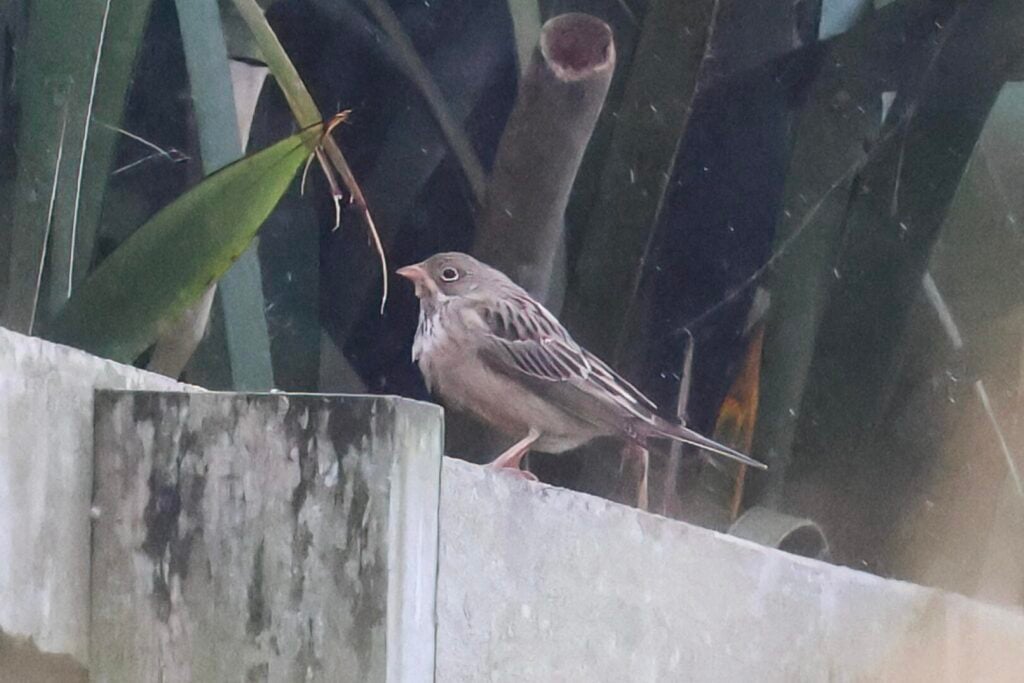
The wind never really seemed to go away and it was very windy again on 8th, with heavy squally showers. It was hard going as birds were seeking shelter. After failing to find anything beyond another Yellow-browed Warbler again in the morning, I went over to see the Ortolan Bunting at Maywick early afternoon. In driving rain, it was showing well on the fence with the House Sparrows when I arrived, before disappearing back into the oat crop.
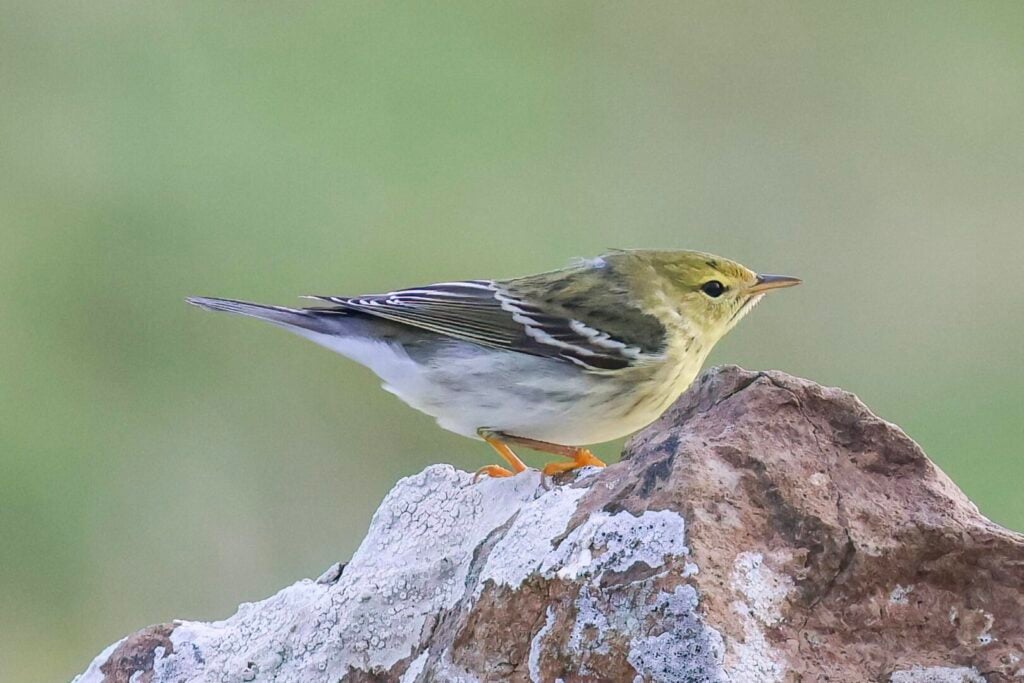
Storm Amy had brought in lots of North American birds across the Atlantic. Late afternoon, a Blackpoll Warbler was found on Unst but it was too late to get over there today. I booked the ferries for early afternoon the following day, thinking I could wait for news first. It was still there in the morning on 9th, so I duly headed over.
When I arrived, the Blackpoll Warbler had apparently been showing well very intermittently, feeding on the seaweed on the beach earlier. But it had then flown off back towards the nearby houses and not come out again. It was still very windy which hampered efforts to locate it and it was clearly very elusive. There was no sign of it returning to the beach, there were just a few Wheatears there now.
I spent some time trying to find it in the nearby fields, in the direction it had gone. Eventually, we had a few glimpses of it and then the Blackpoll Warbler showed well briefly around some walls behind the houses. It seemed to fly off back towards the beach and the photographers still camped there thought it had gone over and landed by the shore further on. There was no sign of it there but in the farmyard beyond we found the Willow Warbler which had been in the fields too earlier. Presumably that was what had flown over.
Most people seemed to lose interest now and leave. I walked back to the fields and got lucky when the Blackpoll Warbler suddenly hopped up onto a rock in front of me. Then it completely disappeared again.
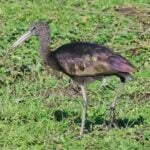
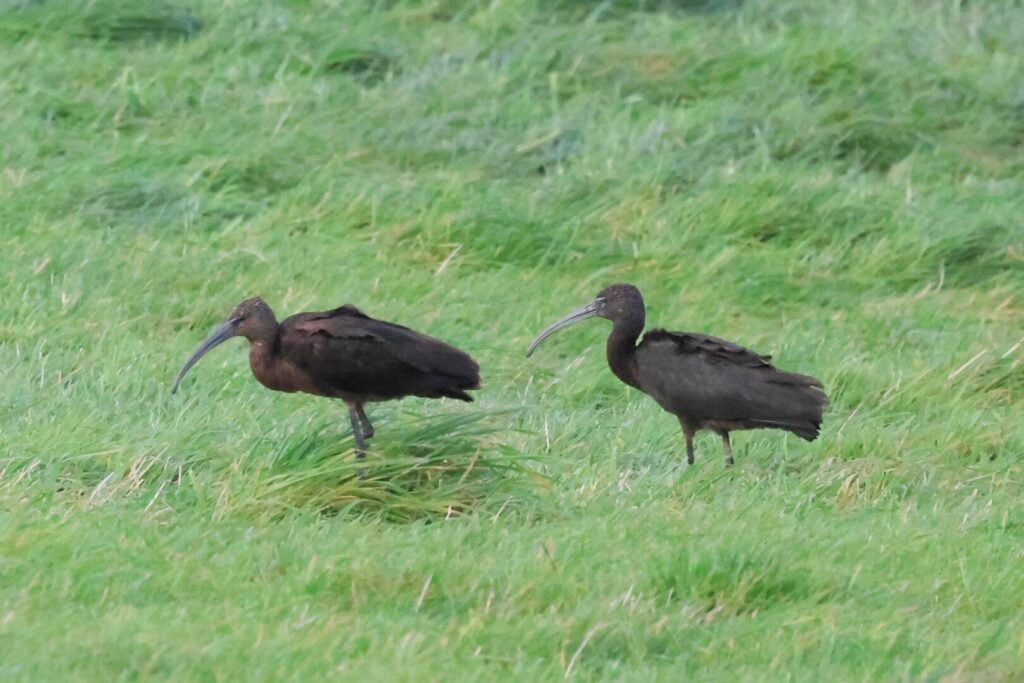
After spending so much time trying to see the Blackpoll Warbler, I had left it a bit late in the day to see the Short-toed Lark at Burrafirth. It was not a great surprise when there was no sign of it there now. I did then call in briefly at Norwick to see the three Glossy Ibises. While there have been plenty of Glossy Ibises in the UK this year, I liked the idea of seeing them at just about the most northerly point in the UK. It said something to me about how they are spreading rapidly north within Europe. After that, I had to catch the ferries back to Mainland.
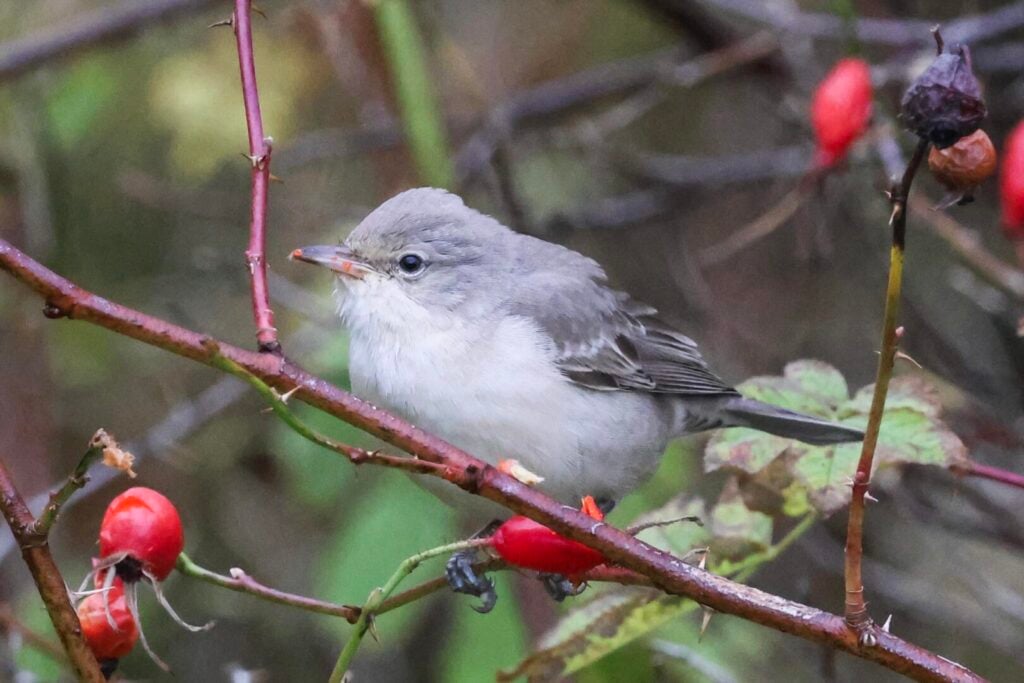
The 10th was my last day on Shetland. I had to check out in the morning and it was wet and windy again, so I didn’t try to get out beforehand. After I had packed up, I tried the local spots I had visited regularly. There seemed to be very little left here now. As I was due to sail on the ferry from Lerwick later, I spent my last couple of hours there. The Burn of Sound was quiet. I did manage to get some nice views of one of the two Barred Warblers now at Clickimin, as it fed on rosehips.
I called in briefly at the Fjara cafe, where at least five Purple Sandpipers were still on the rocks. Then it was time to board the ferry and say goodbye to Shetland for another year.
Even in a relatively quiet autumn, Shetland turns up some amazing and unexpected birds!