Day 2 of a 4-day Autumn Migration tour in Norfolk. It was cloudy and grey all day again but also thankfully dry and still once more. We spent most of the day at Holkham and a couple of hours in the afternoon at Warham Greens.
As we loaded up the minibus in Hindolveston this morning, we heard Fieldfares calling. We looked up to see a couple of small flocks flying over. Just arriving from the Continent from the winter, they had probably flown over the North Sea overnight and were heading straight on inland.
On the drive up towards the coast, we could see a large skein of Pink-footed Geese in the sky, heading inland to feed. Our destination for this morning was Holkham and we parked at Lady Anne’s Drive. The grazing marshes are all dry still, so there are not many birds out on them at the moment. We picked up a small group of Pinkfeet distantly over Decoy Wood. A Red Kite was perched in a distant dead tree and a Common Buzzard was on a bush in front of the bank. A Jay flew past and we found another hopping around on the grass.
Up to the far end of the Drive, we looked out towards the ditch line opposite. Several Blackbirds were in the brambles. A single Fieldfare was perched in the top of one bush, which we got in the scope. It was then joined by a single Song Thrush. All these thrushes were probably fresh arrivals from the Continent overnight. There had apparently been lots of finches moving along the coast this morning too, and now we picked up a large flock of mostly Chaffinches very distantly over the far edge of the Pines, heading west. Several flocks of Starlings flew over too, more birds coming in for the winter.
We took the track west on the sheltered edge of the pines. The trees were very quiet this morning, it is all or nothing at this time of year. You need to find the tit flocks and it seemed like they were all deep in the pines and not out on the open edge first thing. There was no obvious sign of anything else having dropped in overnight.
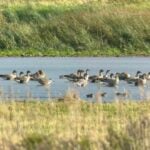
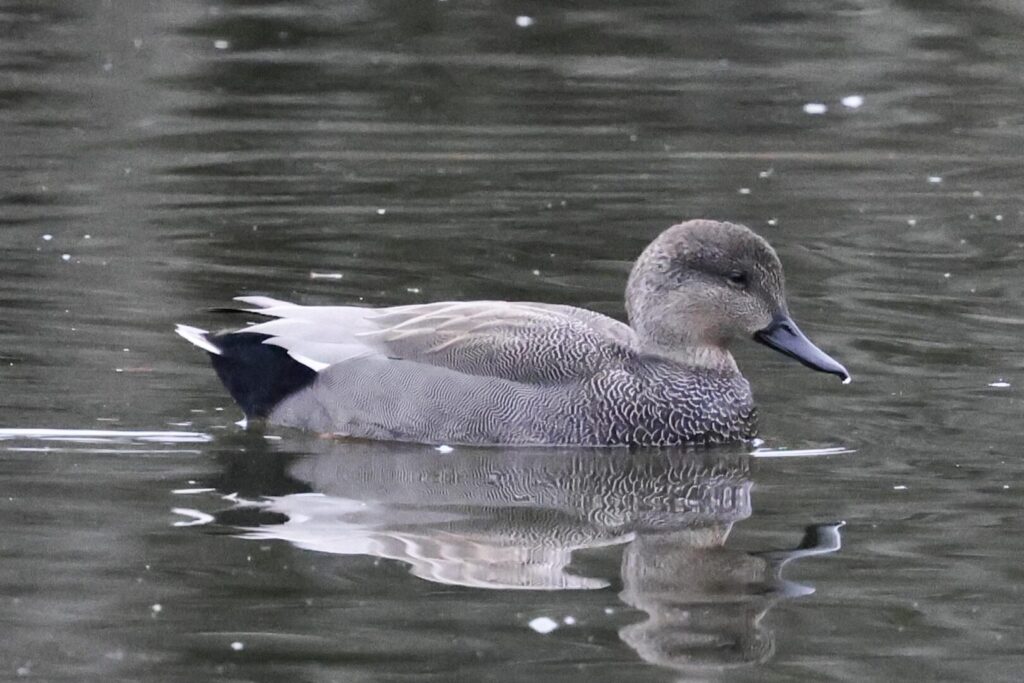
We stopped at Salt’s Hole. There were lots of Gadwall and Mallard, and a few Wigeon out on the water. The first two are already emerging from their drab eclipse plumage. A very smart drake Mallard swam across and we got the scope on a drake Gadwall to admire the detailed patterning of its breeding plumage.
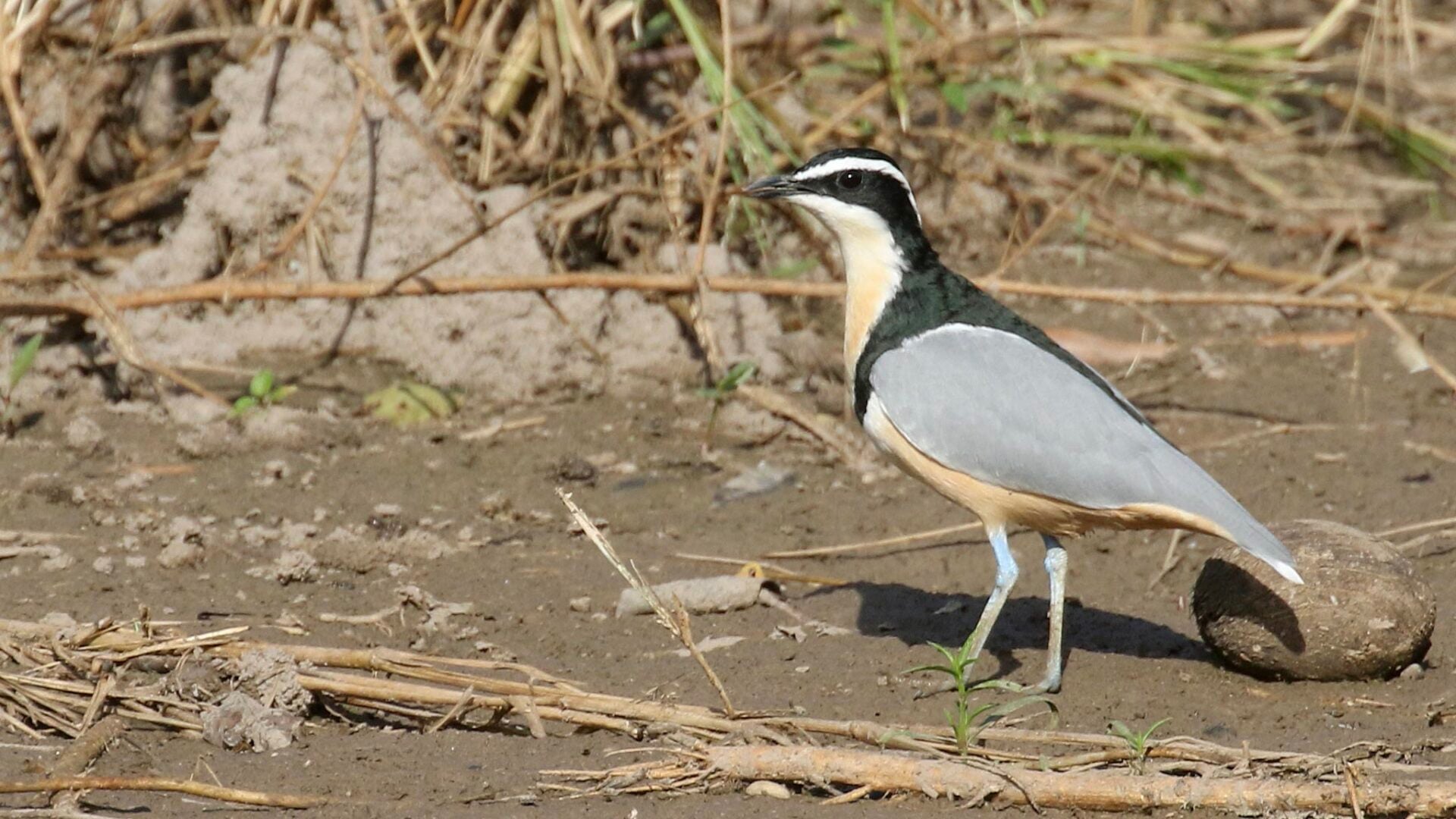
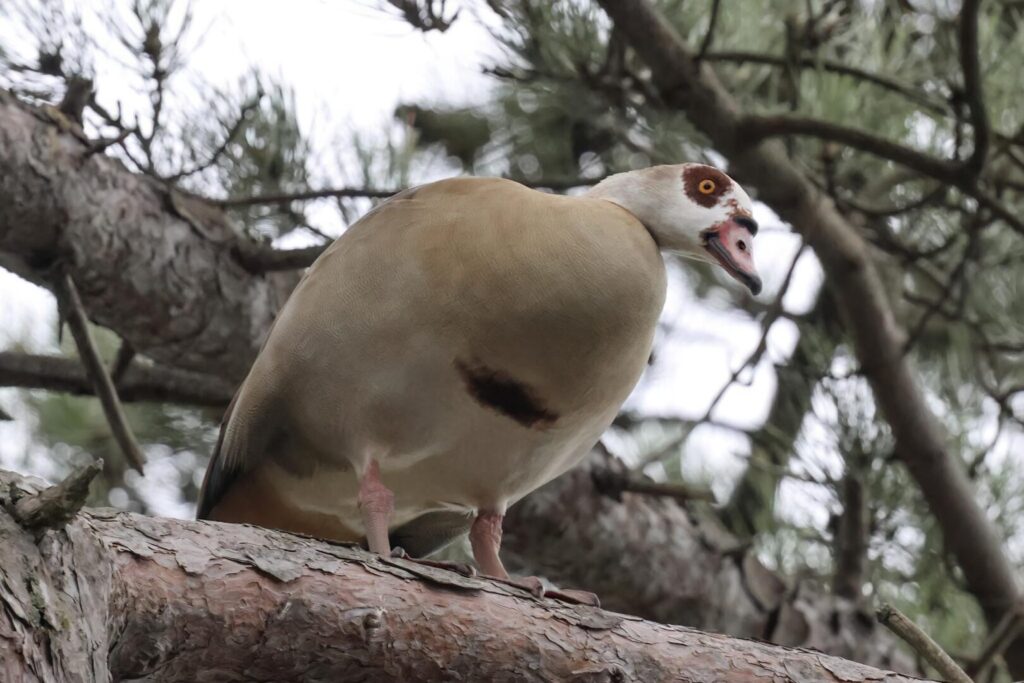
A couple of Little Grebes were diving on edge of reeds. An Egyptian Goose started calling noisily above our heads, so we stepped back and looked up to see it standing half way up in a tall pine. They are tree nesters and like to perch in trees!
We heard Long-tailed Tits calling, and a flock came quickly out of the trees beside the pool and over our heads. We tried to follow them, to see if anything interested might be with then, but they disappeared off quickly west through the holm oaks.
Continuing on west, we stopped at the gate overlooking the grazing marshes. There were lots more thrushes in the bushes here, mainly Blackbirds and Redwings. A Song Thrush flew out and landed in the brambles in the middle of the grass. A pair of Stonechats flitted in and out of the reeds in the ditch. More Jays were further back in the grass, possibly burying more acorns. At least two Swallows hawked up and down along the edge of the pines, overhead.
As we got to the boardwalk by Washington Hide, a flock of tits started to come out of the trees ahead of us. A Goldcrest was flitting around in a small tree on one side and, as we were watching it, another small bird flew up into the sycamores opposite. A Firecrest. It spent a minute or so feeding in the tree above out heads before moving quickly on.
The tit flock had now moved on to the trees just beyond the boardwalk. We stood and watched for a while. There were lots of Long-tailed Tits and Blue Tits, several Goldcrests, and a brief Treecreeper working its way up the top of a dead tree.

After a while, the tit flock disappeared into the pines and we walked on to the far end of the boardwalk to have a quick look out over the beach. We could see a raft of Common Scoter very distantly on sea. Through the scope, we couldn’t see anything obviously different in with them. A couple of Skylarks flew over the dunes. A flock of Linnets whirled round over the beach and landed on the saltmarsh.
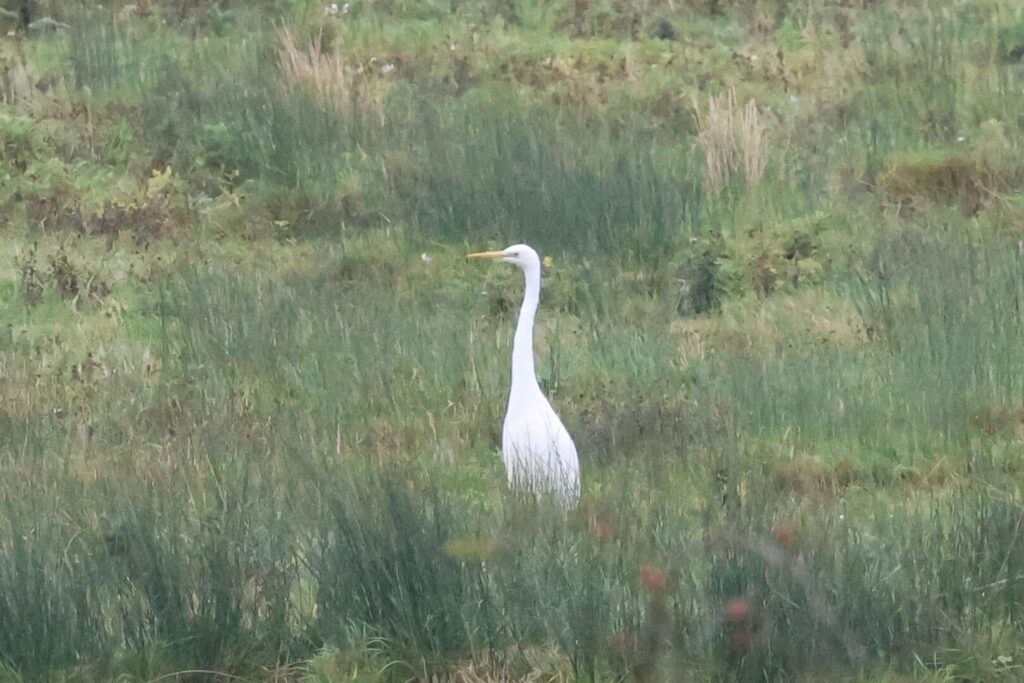
Back to Washington Hide, we had a quick scan of the grazing marshes from boardwalk. There was nothing at all on the pool today. Seven very distant Cattle Egrets were standing around in the field with the Belted Galloways. A Great White Egret flew past in front of the trees at the back. A pale Common Buzzard was perched on top of a bush. A regular here, it is a pitfall for the unwary and often gets misidentified as something rarer.
Back to the main track again, we continued our walk west. There seemed at first to be surprisingly little moving now, but we just caught sight of a few small groups of Chaffinches going over very high above the pines, so we were probably missing the activity down where we were.
The deciduous trees by the track were very quiet again, and we saw no more sign of any tit-flocks now for a while. We were almost to the crosstracks before we found some more Long-tailed Tits and Goldcrests. They stopped to feed in a sycamore further in to the pines and we had a brief glimpse of a Yellow-browed Warbler with them. We thought the flock was about to come out to the trees by the track, where we could get a better look at them, but then they melted back into the pines and disappeared.
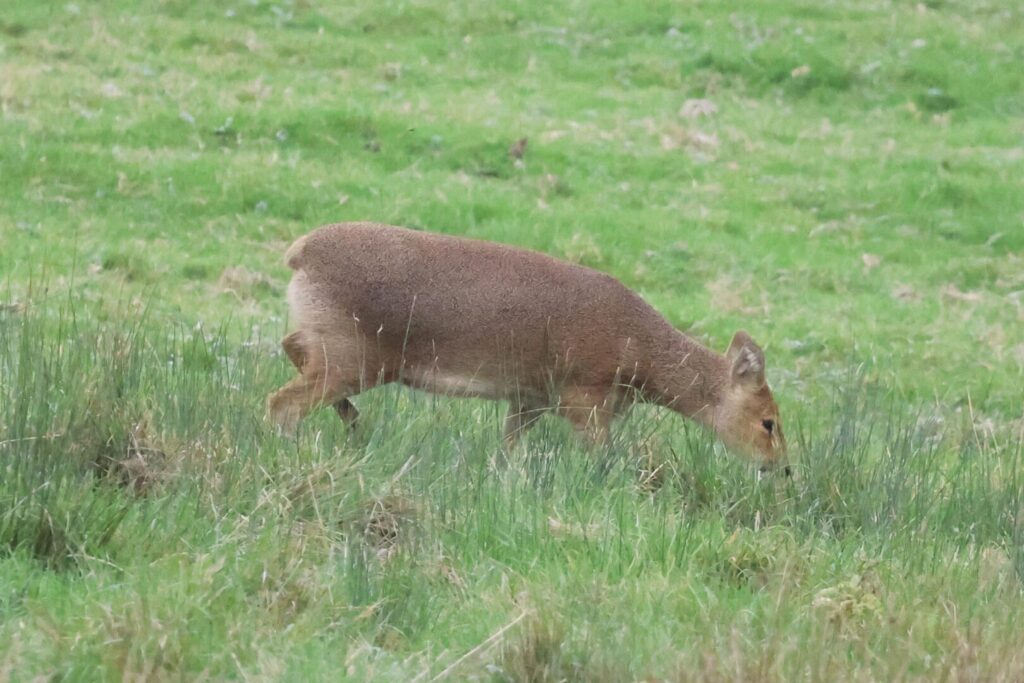
We walked on to Joe Jordan Hide for a rest. The grazing marshes are very dry here too still at the moment, only the bigger pool by Decoy Wood has any water. All we could were three Shelducks and three Egyptian Geese. A single Grey Heron was perched on a distant gate out in the grass. A couple of Chinese Water Deer were out on the grass too.
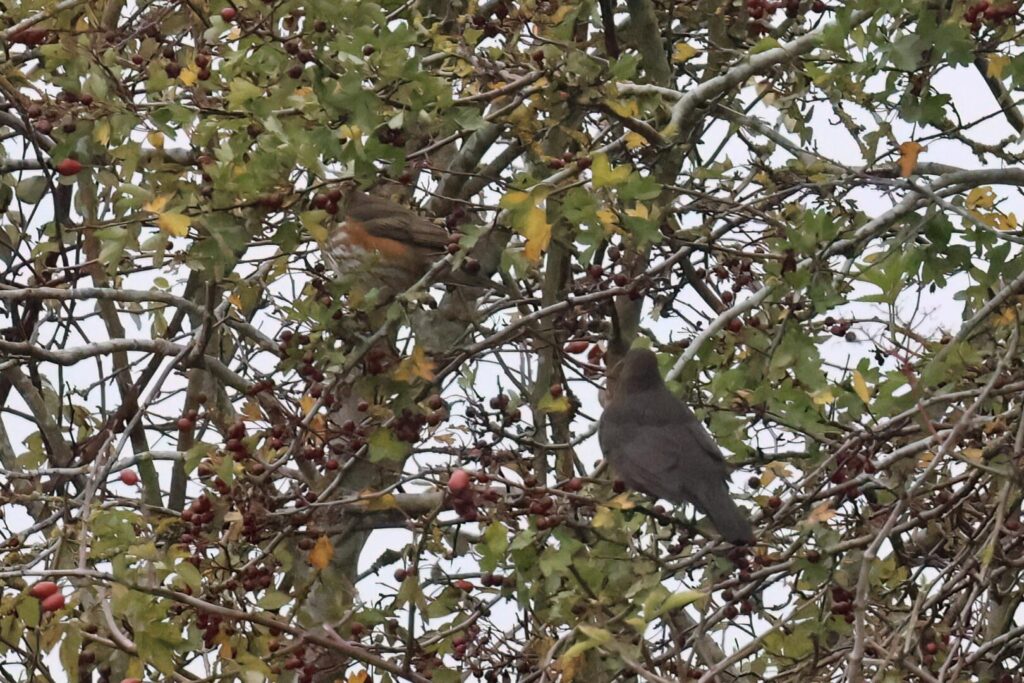
A flock of about thirty Fieldfares flew out of the pines, circled round over the grass and landed in the bushes off to the right of the hide. It looked like they were after all the hawthorn berries. We had some nice views of some perched in the top but they were rather jumpy and kept flying round. Eventually they disappeared back into the trees.

Someone else came in to the hide, and said he had seen lots of tits and Goldcrests further west, so we decided to continue on a little further. Unfortunately they had all disappeared by the time we got there, although there were still lots of Blackbirds in the bushes here.
When we got to the west end of the pines, we stopped to scan from the gate looking out over the grazing marshes. A Great Spotted Woodpecker was calling in the pines behind us and someone looked up to see a Crossbill land in the top of one of the trees. Unfortunately it only stayed briefly, before it was chased off by Woodpecker which seemed to be feeding on the cones. Back from the gate, we could see a single Mistle Thrush and a Stonechat perched in the Natterjack Pool bushes.
As we walked round through the end of the pines, we heard Crossbills calling. Presumably they flew off as there was no sign of them when we got out into the open and scanned the tops of the trees. We had a quick look in the sycamores and then in the first dell but there was nothing moving here.
From up on the top at the start of the dunes, we looked out over the marshes. A Great White Egret was standing in the field with the cattle.
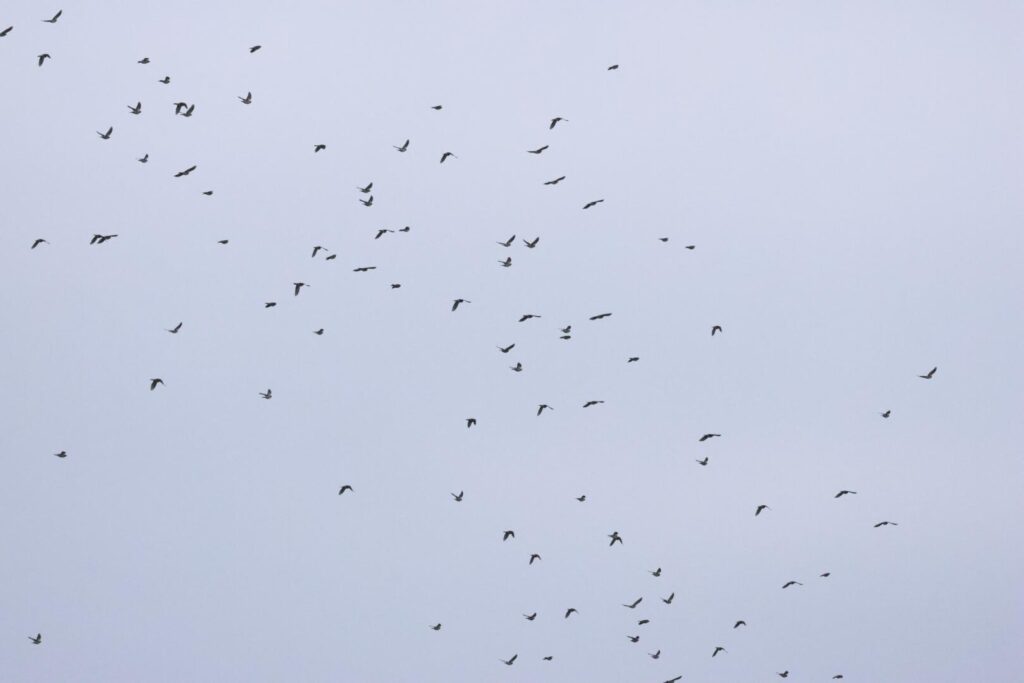
A better vantage point now, we started to see more flocks of birds heading off west. A couple of large flocks of Fieldfares, about 50 in one, over 100 in another, flew over. Some large flocks of Siskins did too, and some smaller groups of Chaffinches. Impressive to watch, migration in action.
There was no further sign of any Crossbills, so we set off to walk back. There had been some more seen in the pines back by Salt’s Hole this morning, so we stopped briefly there. They seemed to have moved on too. So we carried on back to The Lookout for a late lunch.
After lunch, we drove a short way along the coast to Warham Greens. We managed to park on Garden Drove, and as we got out of the minibus, we could see lots of people standing on the grassy edge of the field in front of us. They had apparently been watching the Hume’s Warbler there 10 minutes earlier, along with a Yellow-browed Warbler and a Chiffchaff. By the time we had walked down though, they seemed to be staring at empty tree! We heard Crossbills calling and looked up to see a group of around 10 flying over very high. More migrants on their way.
A couple of birds were now in the trees on the other side of the track a bit further down. We could just see from where we were but we looking through all the vegetation to opposite side of the Drove. Cutting in through the trees, we got on to the path just as they started to flit quickly further on along the hedge. We tried to follow them, as we were keen to try to keep track of the Hume’s Warbler, but all we got were brief views of Yellow-browed Warblers.
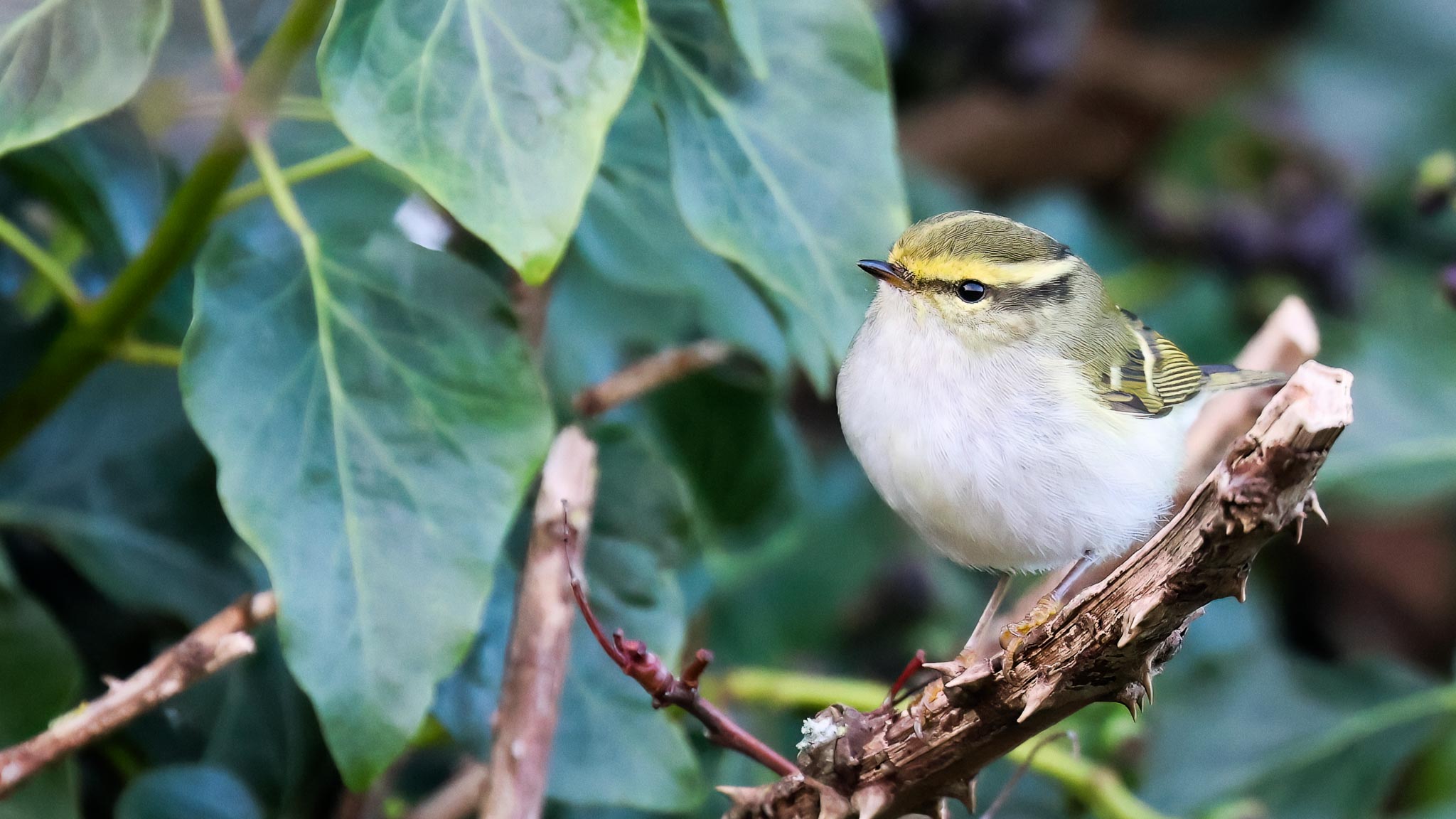
Eventually the birds got to the small copse at the far end of the drove. We did get some nice views of three Yellow-browed Warblers now, flitting around in the sycamores on the edge of the copse. We could see their bright creamy-yellow supercilia and double wingbars, very smart and crisp. They should be on their way from the Urals to SE Asia for the winter, but these days more seem to come west and turn up here more regularly at this time of year. An amazing journey for such a small bird.

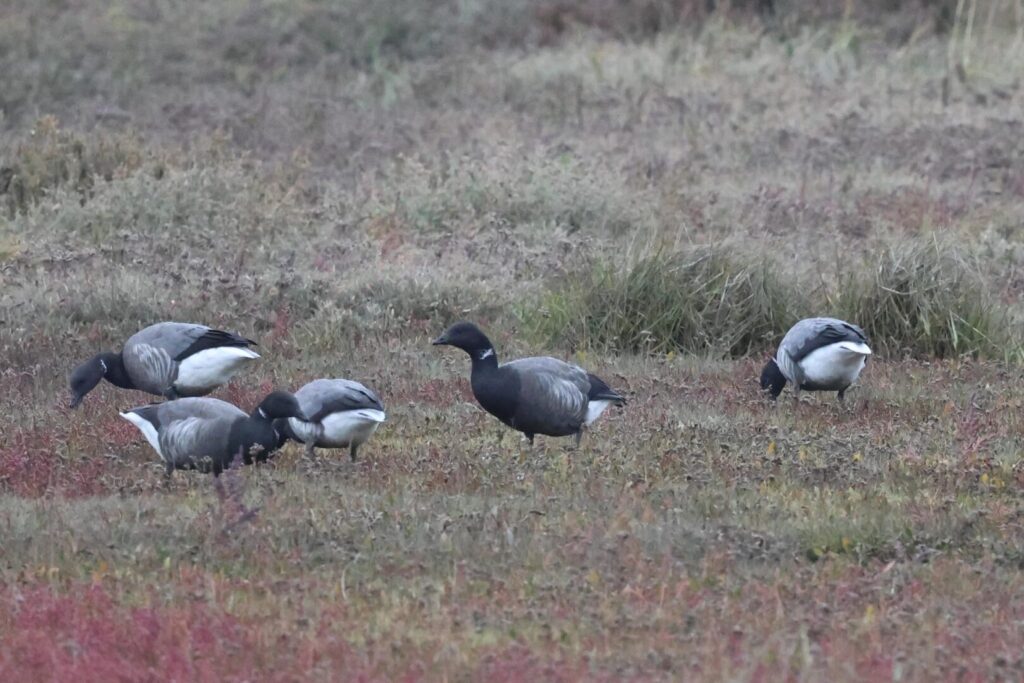
A few Brent Geese came up cackling from the saltmarsh beyond and a couple of flocks of Golden Plover flew over. After a while, the Yellow-browed Warblers melted back into the copse but there was still no sign of the Hume’s Warbler with them. We decided to have a quick look back up the track, to see if it was still where it had been seen earlier. The hedges seemed to be quiet though, and we met a couple of locals coming the other way who said they had only seen another Yellow-browed Warbler on their way down.
The other bird we were hoping we might be able to see here was a Long-eared Owl. It had been found roosting in one of the old sand pits three days ago. When there was no sign the following day, we presumed it had moved on, as they usually do. Then it was seen again back roosting in the same place late yesterday. Asking someone we knew on site, it seemed like there was no sign of it again today, but it clearly seemed to be hanging around in the area somewhere.
We walked back down to the end of the Drove and along the coast path to the pit to have a quick check, just in case. The bushes here were all quiet, but we had a quick scan with a thermal imager just in case. Someone had apparently already checked further down along the hedge and it was not there either, so it felt like the trail had gone cold. There were just a few Brent Geese out on the saltmarsh, here now for the winter from Central Siberia.
Unfortunately, it was time for us to be heading back now (as we suspected it might, the owl eventually emerged from where it was roosting later). We were half way back up the Drove when we came across a couple looking at something in the hedge. They weren’t sure initially whether it was a Yellow-browed Warbler of the Hume’s Warbler, though they thought the latter. We managed to get a glimpse and could confirm it was indeed the Hume’s Warbler. It then flew across the track and called, noticeably different to the Yellow-browed Warblers we had heard earlier.
The Hume’s Warbler was hard to see in the bushes initially, not feeding as actively as the Yellow-browed Warblers had been earlier. Those that wanted to eventually managed to get some decent views of it, looking up into the trees from out on the edge of the field. Like a duller, greyer version of a Yellow-browed Warbler. It breeds in the mountains of western China and Central Asia and winters mainly in the Indian subcontinent, a rare visitor here.
A nice bonus at the end of the day, just when we had given up. But after the distraction of the Hume’s Warbler we were a little later than planned now. There might just be time for tea and cake. More interesting Autumn Migration in action today and another day tomorrow.