Day 1 of a 4-day Autumn Migration tour in Norfolk. It was cloudy and grey all day but thankfully remained dry with light winds. We spent the day around the Cley area looking for autumn migrants.
As we drove along the coast road, past the Visitor Centre at Cley, we looked across to see three swans in the field next to it. There wasn’t any other traffic so we managed to stop briefly and confirm they were Whooper Swans. We could see the yellow wedge on their bills and they have been here for a couple of days now.
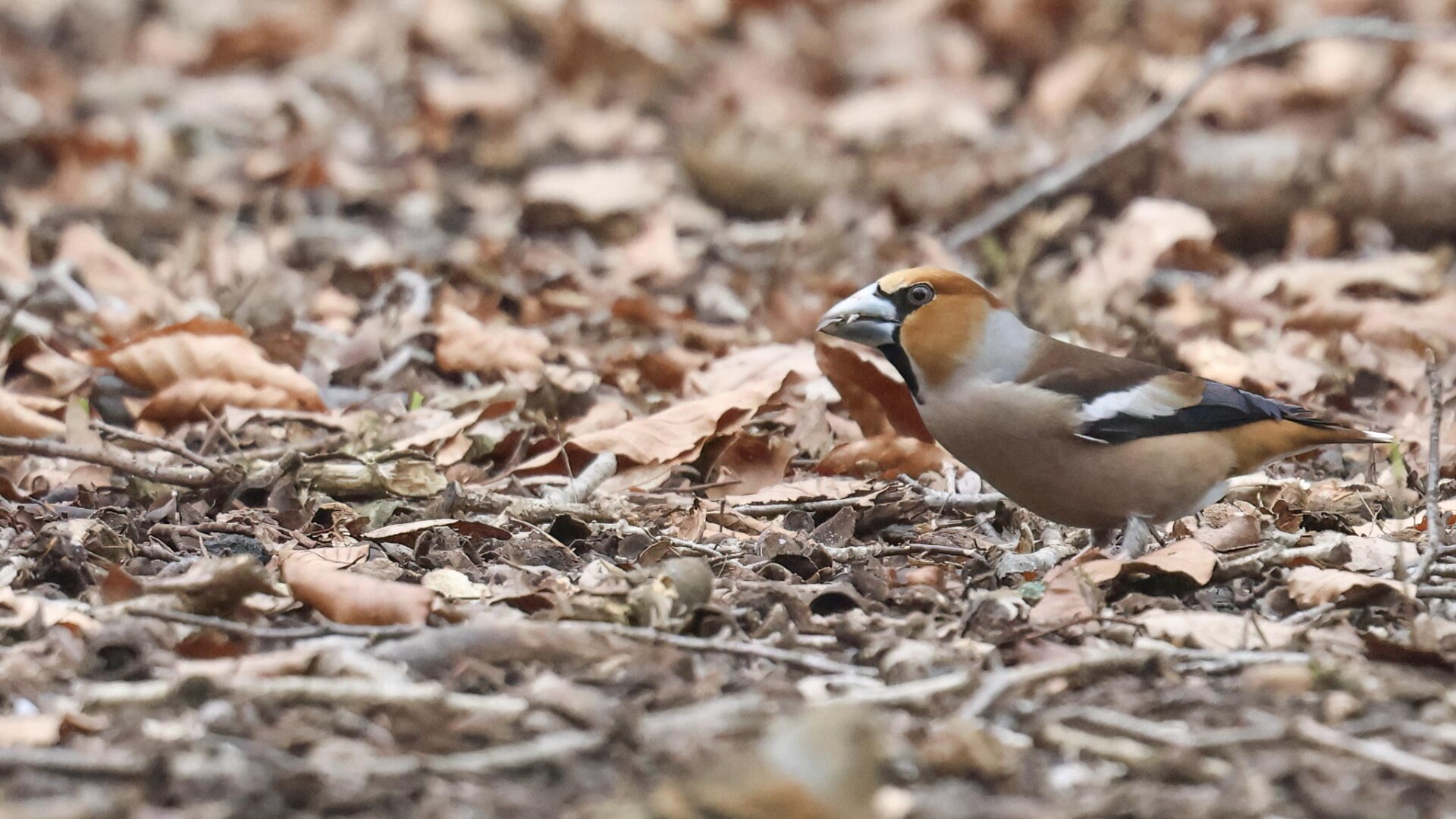
We drove on and parked in front of Walsey Hills. As we got out of the minibus, a Red Kite drifted over the hill behind us and we looked over to see a Marsh Harrier fly across the grazing marshes the other side of the road. Several Skylarks came up from the field beyond calling. A couple of Chaffinches flew out of the trees, followed by a larger flock. As they flew away from us over North Foreland, we could see one or two Bramblings in with them.
As we passed Snipe’s Marsh, a Grey Wagtail called and we looked across to see it on the back of the mud. It flew over to the far side and we noticed a Cetti’s Warbler in the base of the reeds too. Making our way out along the East Bank, we noticed a flock of about a dozen Cattle Egrets come up in the distance beyond the reedbed and circle round. They appeared to drop down over towards the Eye Field.

A succession of groups of Pink-footed Geese kept coming up from the reserve and Eye Field calling. They flew over the road and down into the fields the other side of the main road, beyond North Foreland plantation. We could hear them calling constantly as they flew, their yelping calls the sound of winter here.

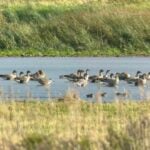
There were not so many ducks on the grazing marsh today as there had been yesterday. Maybe they had been flushed by the Marsh Harrier. More Wigeon started to fly in and dropped down further up by the Serpentine, so we walked on for a closer look. Mostly the drakes are in rusty eclipse plumage still – this is never the time of year to see ducks at their best. There were a few Teal and Shoveler further back. Two Greylags were stood on the mud, with their big, orange, carrot-like bills.
A Common Snipe flew across and landed on the back of the Serpentine. Nice views in the scope, hiding in the grass on the edge of the water. Two Swallows flew in low over the Serpentine and carried on west. Most have left us already, off to Africa for the winter, but some late ones are still on their way now. There were lots of Cormorants loafing on the islands on Pope’s Pool today and a Great Black-backed Gull. A few Shelduck and more ducks were on the water and several Lapwings on the near edge.
We heard Bearded Tits calling behind us and turned just in time to glimpse one dropping down into the reeds. We stood and scanned for a couple of minutes but it had gone quiet. There was no sign of any coming back up, so we walked on. A pair of Stonechats were flycatching from the reeds on the edge of the newly cleared ditch. A single Little Grebe was further up in the main drain.
There seemed to be fewer waders on Arnold’s Marsh today. While we were scanning, a Bar-tailed Godwit flew in and circled round. It dropped down and landed in the water so we got it in the scope first. At one point, it was in same view as a Curlew, several Dunlin and Redshanks and a single Grey Plover. There was no sign of the Curlew Sandpiper which was here yesterday though, or any Ruff here today.
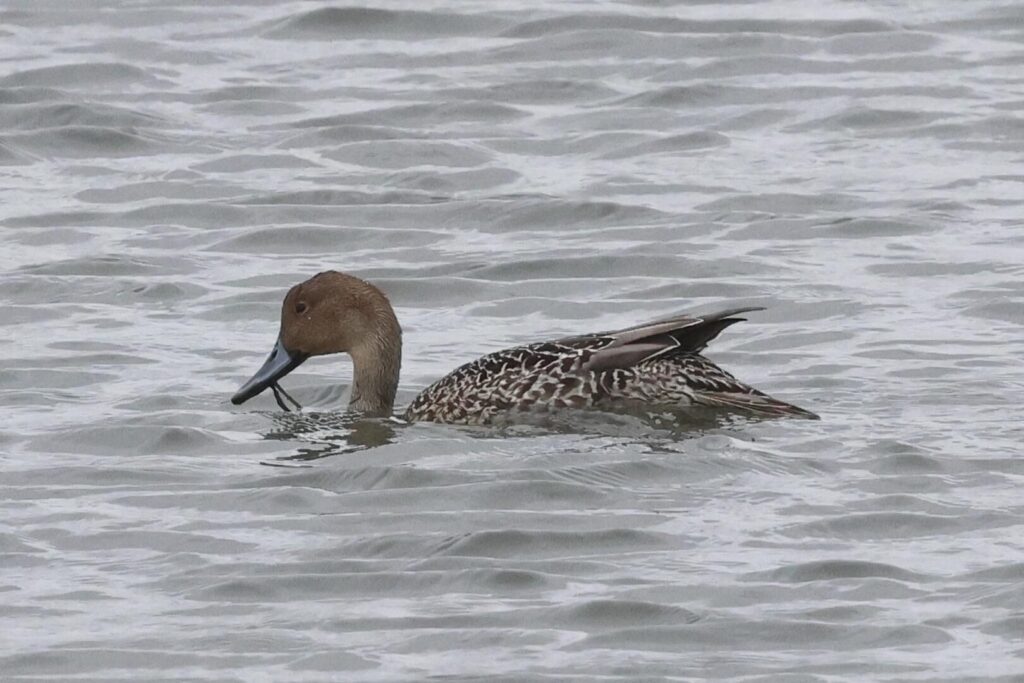
Two more Swallows flew in over Arnold’s and carried on west. Two Pintail were right in the back corner. Looking across at the Brackish Pool the other side, we could see another two Pintail on there too.
Continuing on to the beach, there didn’t seem to be much moving today. Two Shelduck flew past out over the sea, presumably coming back to us for the winter after their moult migration to the continent. A small group of Common Scoter was bobbing out on the water, so we got those in the scope.
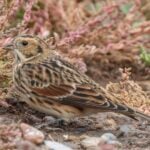
We were hoping to find the Lapland Buntings again today, but we could see lots of people out along the shingle to the east this morning. Too much disturbance. We went for a quick look anyway. Several Skylarks flew round but unsurprisingly there was no sign of any Lapland Buntings. We did get closer views of the waders from out here, several Black-tailed Godwits now too. Closer views of the Pintail too.
As we made our way back along the shingle bank, we stopped to have another quick scan over the sea. There seemed to be slightly more activity now. A few Brent Geese flew past, fresh arrivals from Siberia for the winter. Two small groups of Eider (a three and a four) flew west, along with five Wigeon. We picked up a distant Gannet and two Common Terns, an adult and a juvenile. As well as the Common Scoters still, there was a Red-throated Diver on the sea and a single Razorbill. A Guillemot flew past.

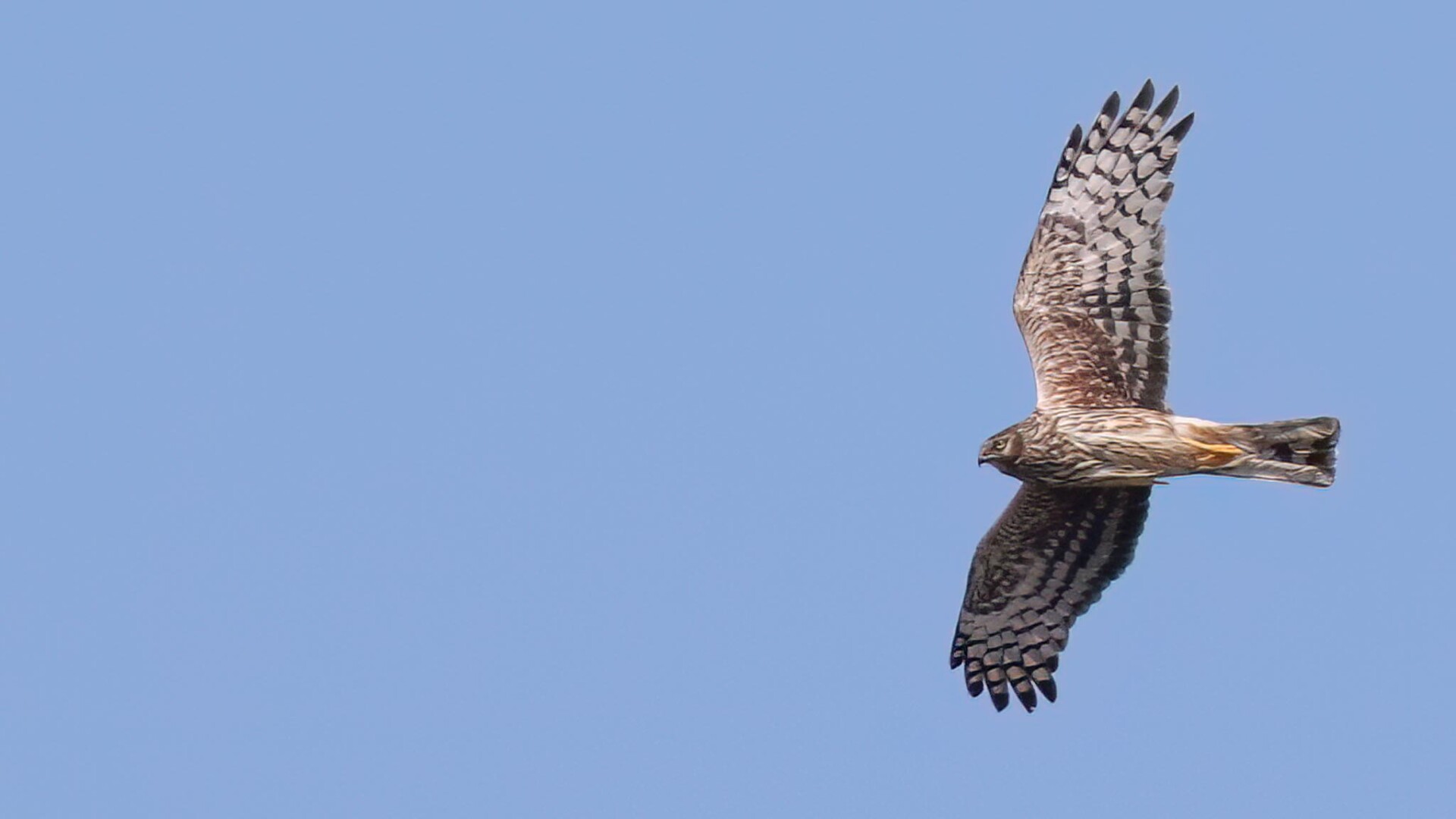
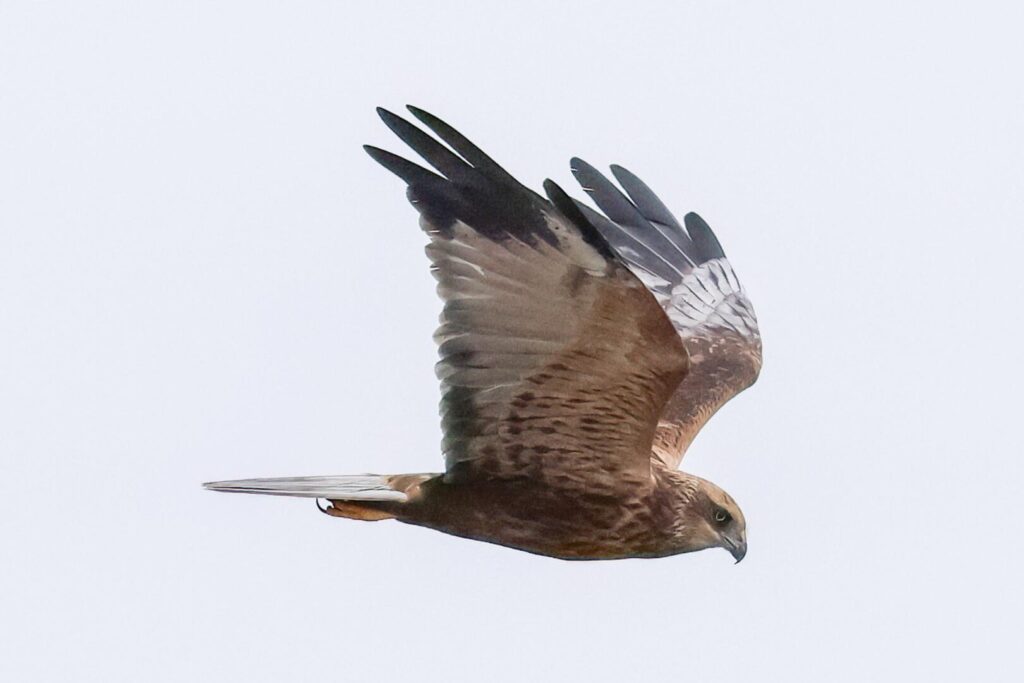
Resuming the walk back, a male Marsh Harrier flew in over the reedbed at the top of the East Bank. It flew across over the Brackish Pool, past us very close giving great views. Then it flew over the path behind us and off over Arnold’s.
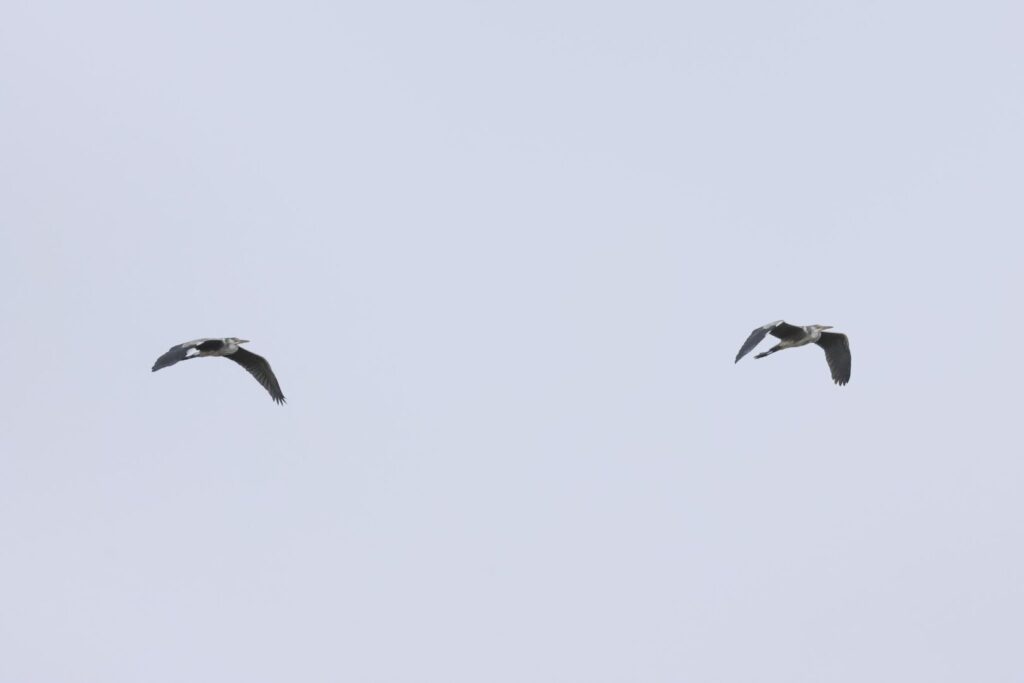
We had been two Grey Herons earlier, flying east high, presumably migrants. Another two now came in high east over the reedbed and continued on past us. All sorts of things are migrating now and we get quite a good arrival of Grey Herons from the continent at this time of year. Birds which come in to spend the winter here, alongside our resident Grey Herons. Almost back to the road, three Grey Wagtails flew past, presumably coming up off Snipe’s Marsh where we had seen the one earlier.
We needed to head back to the Visitor Centre to use the facilities now, so we decided to stop for an early lunch. As we wat in the picnic area eating our sandwiches, we had an amazing show from the Pink-footed Geese. A thousand or so came up out of the fields behind the Centre and flew round calling. They tried to settle again in the fields but something obviously kept flushing them as they then flew out in skeins over our heads. Some dropped down onto the marshes beyond the hides but most headed over to Blakeney Freshes.
After lunch, we made our way out to the central hides. A Water Rail was squealing in the reeds along the Catchwater Drain but we couldn’t see it before it disappeared in. We could see the three Whooper Swans in the field behind the Visitor Centre now. Having only seen them from the minibus earlier, we stopped to get the in the scope now.

From Teal Hide, we scanned Pat’s Pool first. At first, we could see several Dunlin but no sign of the Little Stint which was meant to be here. Several Avocets are still lingering, down to five at the moment, as most have already left us for the winter. Most probably now winter on estuaries on the south coast, though some may still head to the continent. There were quite a few more Black-tailed Godwits out here too.

The Little Stint reappeared on the mud in the middle of the large island in front of the hide. It worked its way along the edge of the grass and reeds, at one point with a Dunlin alongside for convenient size comparison. The Little Stint was about two thirds the size! A juvenile, making its way from its breeding grounds in north Scandinavia or Siberia possibly all the way to West Africa for the winter. An amazing journey and no sat nav to guide it.

More birds started to fly in front fields. Lots of Lapwing dropped in first, followed by a large group of Ruff. One of the male Ruff had a very white head, a ‘satellite male’. There were a couple of much smaller females with the larger males. A Greenshank flew in calling and landed too. It ran across with its bill in the water, feeding or drinking? Then stopped and had a bath.
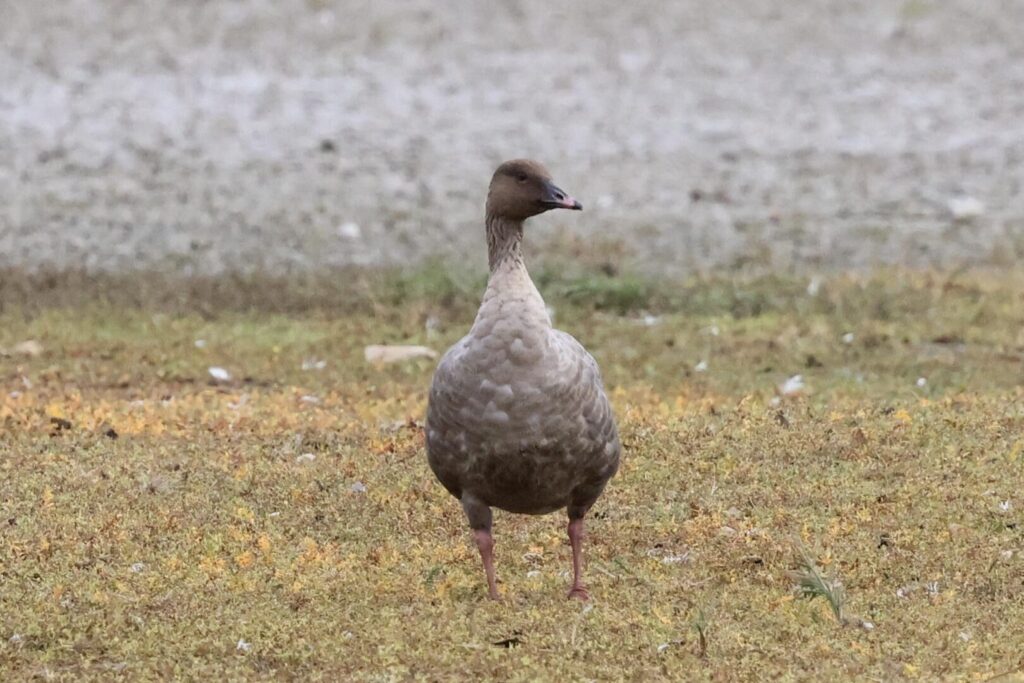
A single Pink-footed Goose was walking around in the reeds on the island and came out for a closer view at one point. We could see its dark head and smaller bill, blackish with a pink band, compared to the Greylags earlier.
Several Wigeon came out of the water to feed on the bank right in front of the hide. One drake was already noticeably more advanced in its moult back to breeding plumage from eclipse. It already had the yellow stripe up its forecrown and mostly grey flanks and pink breast.

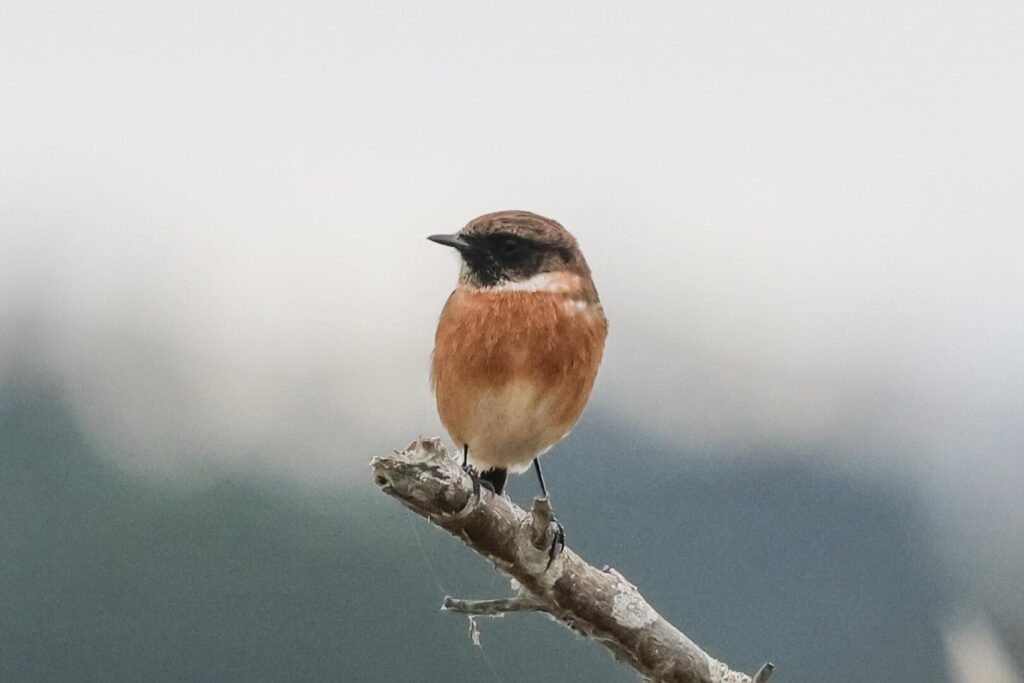
We had a quick scan of Simmond’s Scrape from Teal Hide but there didn’t appear to be anything of note on there today. We decided to head back and try something else. There were lots of cows on the grazing marshes from the boardwalk but no sign of the Cattle Egrets out here now. A male Stonechat posed nicely on a dead branch in the reeds, as they like to do.
Back to the Visitor Centre, we drove back to Walsey Hills. We thought we would try our luck with the warblers here, the Dusky Warbler and Yellow-browed Warblers we had seen yesterday. To stand the best chance, if you want to see the Dusky Warbler in particular, you need to put in the time but we knew we wouldn’t really be able to wait for long enough today. Then you just need a lot of good fortune!
We stopped to look at the feeders first. There had been lots of Chaffinches in here this morning but they seemed mostly to have moved on now. We saw mainly Goldfinches, plus one or two Greenfinches. A single Coal Tit flew in and out with the Blue and Great Tits.
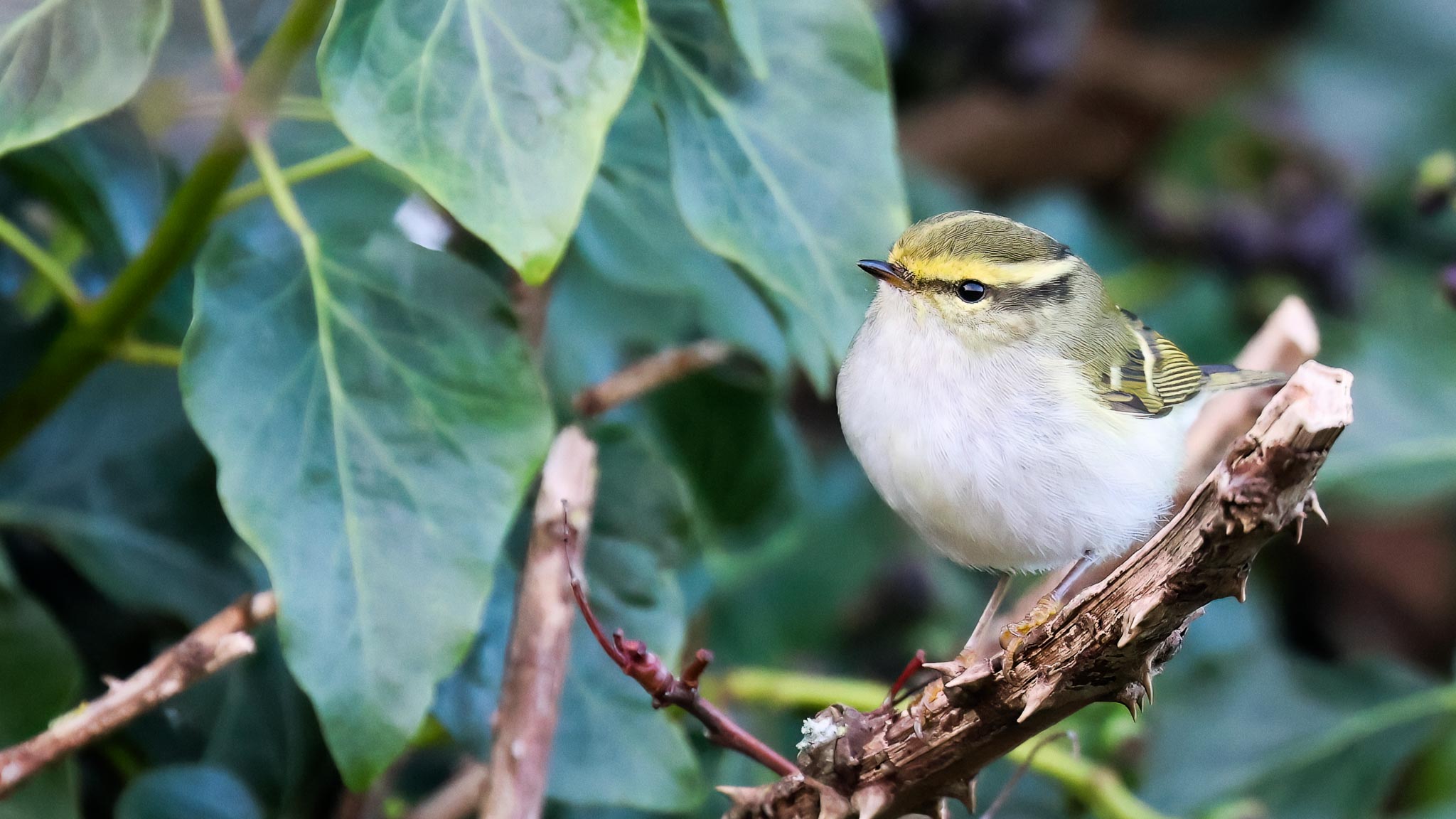
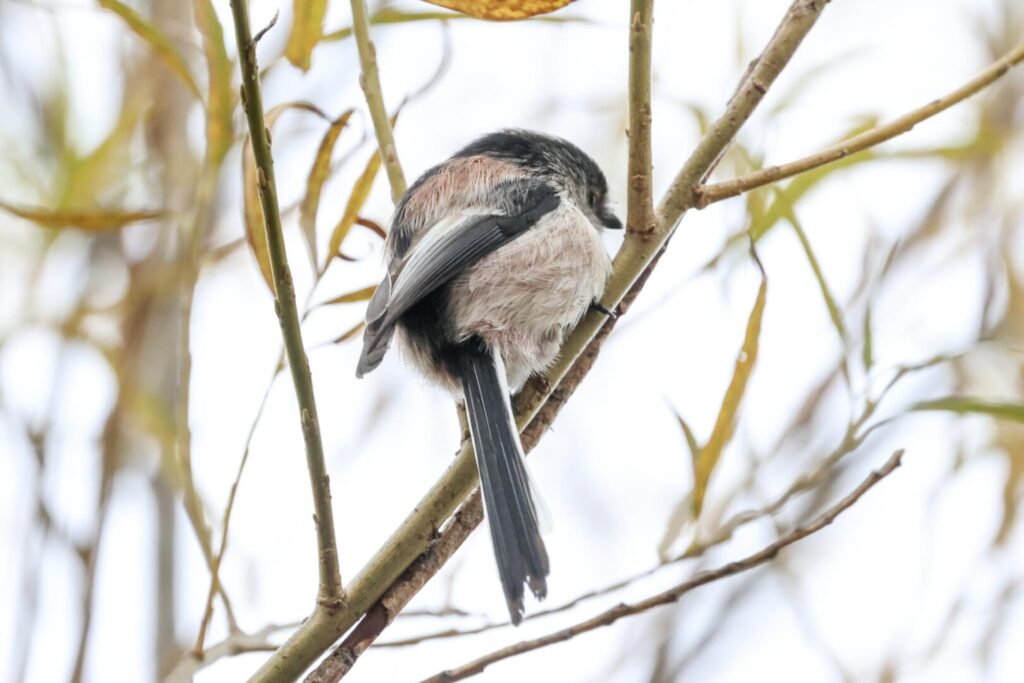
The crowd waiting in the willows at the back had thinned out now, making room for us. There was a tit flock in the trees when we arrived. Lots of Long-tailed Tits feeding right above our heads at time, plus a few other tits and several Goldcrests. After a while, a Yellow-browed Warbler appeared further back. We hoped it would come our way, but disappeared deeper in. It was only a very short stop here and not really enough today, but we couldn’t linger.
Four Glossy Ibis had been reported round on North Scrape again, so we decided to head round there for a look and see if anything else had dropped in round that side of the reserve this afternoon. As we drove along Beach Road, a flock of Golden Plover was circling over Eye Field. They eventually dropped down to the ground and from the car park, we could see them out on the grass. Remarkably well camouflaged.

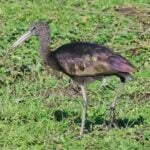
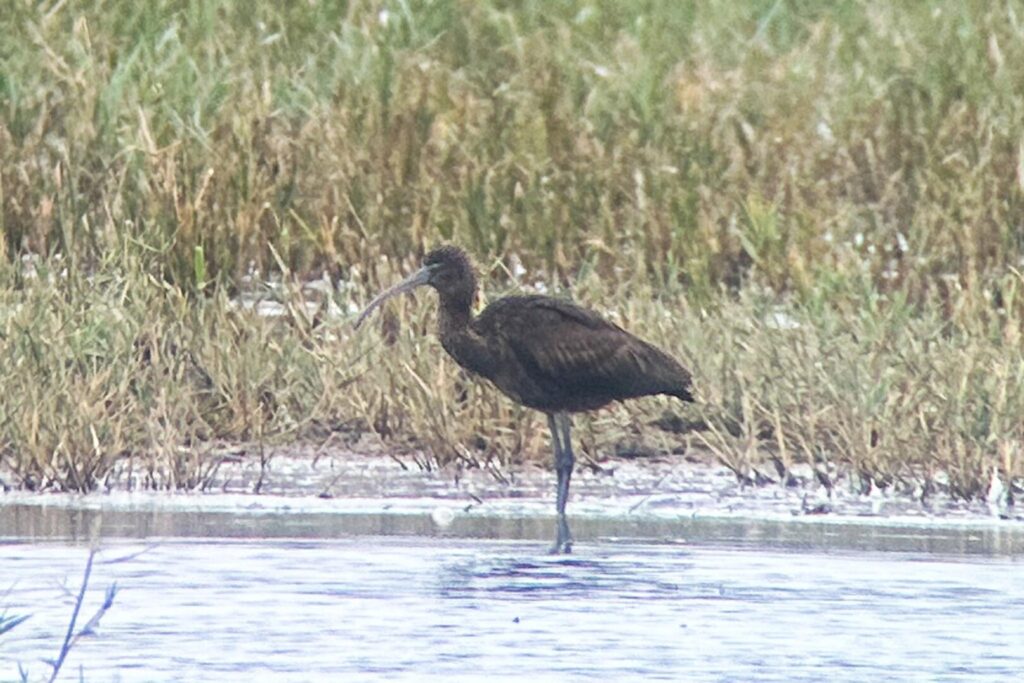
As we walked out on the shingle to North Scrape, several Canada Geese were with the Greylags in the Eye Field. From North Screen, we quickly found one Glossy Ibis asleep out on the scrape. A second appeared out of the reeds on the edge nearby, where it was feeding. The first woke up, giving us a better view and when we looked back the third and fourth Glossy Ibis had appeared too. Otherwise, there was a selection of the same ducks we had seen earlier out here. Not many waders either, just a few Black-tailed Godwits.
A message came through now that a Glaucous Gull was on the beach opposite North Hide, right where we were. We hurried back to the beach and up to the top of the shingle but even though we were there within a minute there was no sign of it. Scanning up and down the shore, we could only see a few Great Black-backed Gulls loafing further down.
It turned out it had probably flown off, somehow in the very short time it took us to get up to the beach. People waiting further up at the beach car park, scanning the sea, hadn’t seen it either. Three Teal flew past, accompanied by single Turnstone, as did another Red-throated Diver. Lots of gulls were heading in to roost now, flying past, but we couldn’t see anything interesting with them.
Time to head back and there might just still be time for tea and cake before dinner, if anyone was hungry. It had been an interesting first day with some bits and pieces of Autumn Migration in action. Hopefully more tomorrow.