Day 3 of a 3-day Autumn Migration & Wader Spectacular Tour. Patchy cloud first thing gradually broke up and then we were treated to some lovely sunny spells. It clouded over in the middle of the afternoon and there was some drizzle on and for a time before the sun came out again. We spent the morning up on the Wash for the Wader Spectacular and then drove over to Holkham in the afternoon.
It was an early start again, to get up to the Wash ahead of high tide. When we got out onto the seawall, there was still a lot of mud stretched out in front of us. We could see a large gathering of Knot and Bar-tailed Godwits up by the sailing club, catching the morning sun. A number of Oystercatchers were with them too.
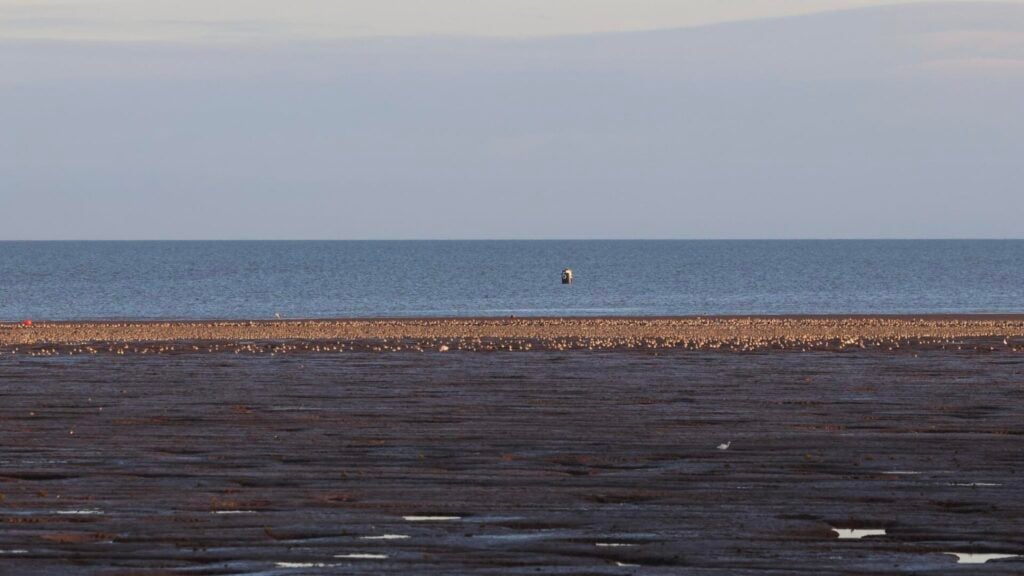
There were still lots of Black-tailed Godwits and Redshanks on the edge of the water, straight out in front of us. They have often already gone in to roost on the Pit by now. Unlike a lot of the other waders, they don’t stay out on the open mud until the last possible moment. Looking across to our left, most of the Oystercatchers were spread out on the dry mud higher up. They looked just like an oily smear until you looked more closely and realised they were thousands of birds.
The tide was already coming in fast and it started to lap around the feet of the birds up by the sailing club. The Knot and Bar-tailed Godwits started to fly up and across over water in front of us in lines. They landed over with the Oystercatchers in the middle. The Redshanks started to fly in past us, heading in to roost on the Pit already now.
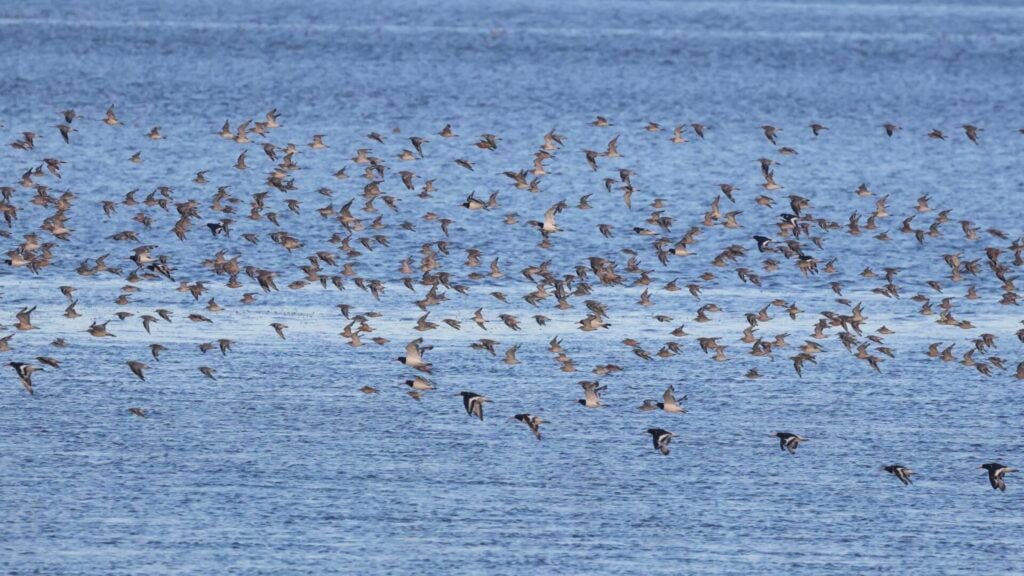
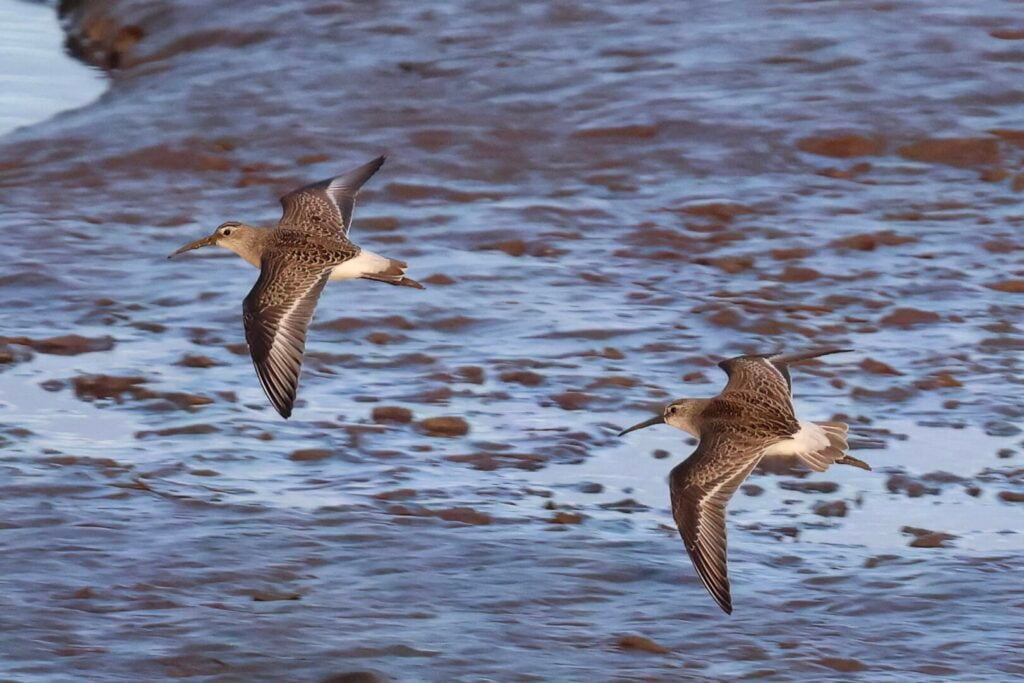
Scanning across, we managed to find a few Sanderling distantly up by the sailing club. Lots of Ringed Plover were still feeding on the mud in front of the chalets, along with several Dunlin. We found two juvenile Curlew Sandpipers on the mud too, but they were moving quickly around the small pools and channels. When we looked back a little later, we could see they had come much closer to the seawall. We walked up but some Ringed Plovers were flushed by two people coming the other way and they took the Curlew Sandpipers off with them.
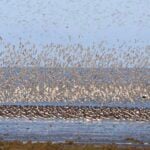
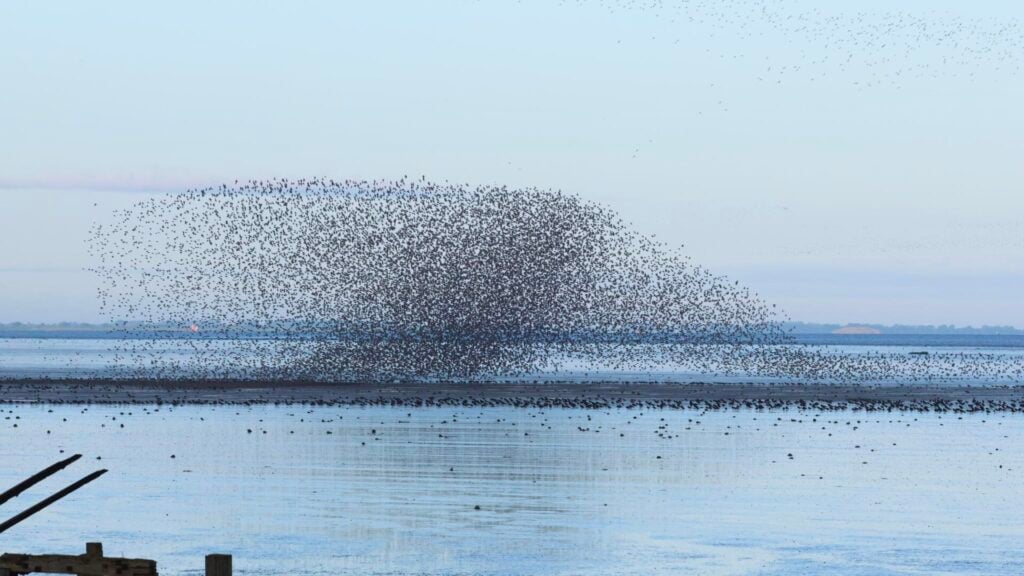
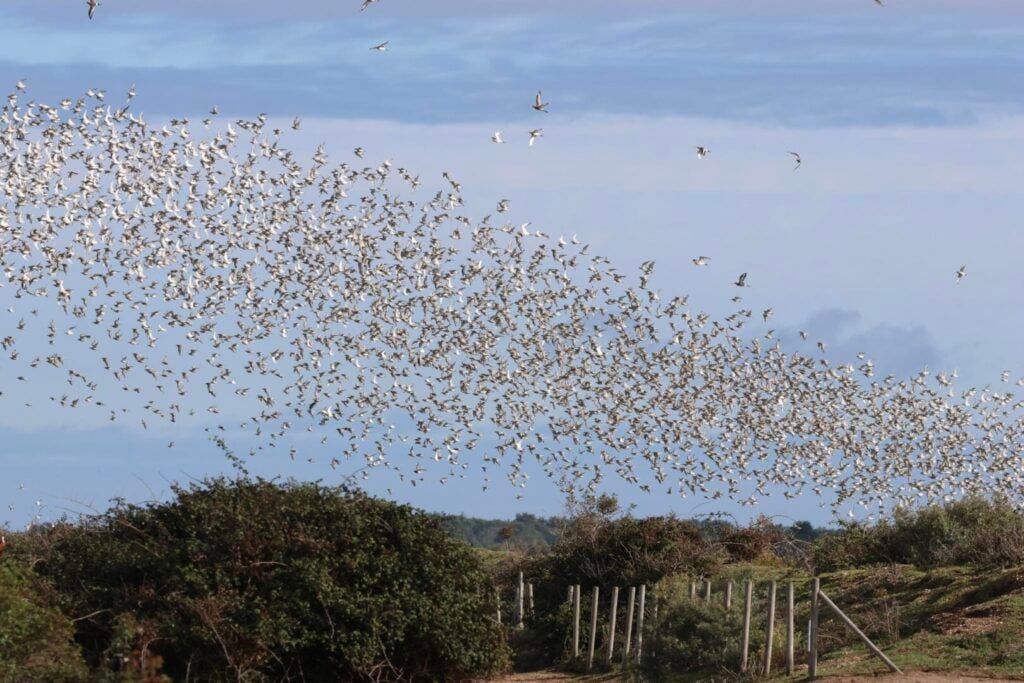
Pretty quickly, all the mud in front of us was covered by the tide. We moved on, and walked down to Rotary Hide. The Knot were all packed tightly in a large flock on the mud with the Oystercatchers now. Something spooked them and they all took off. For a minute or so the flock twisted and turned low in the air, making some cool shapes. It was a false alarm though, and they quickly settled back down. The Black-tailed Godwits finally flew in to roost past us, late today.
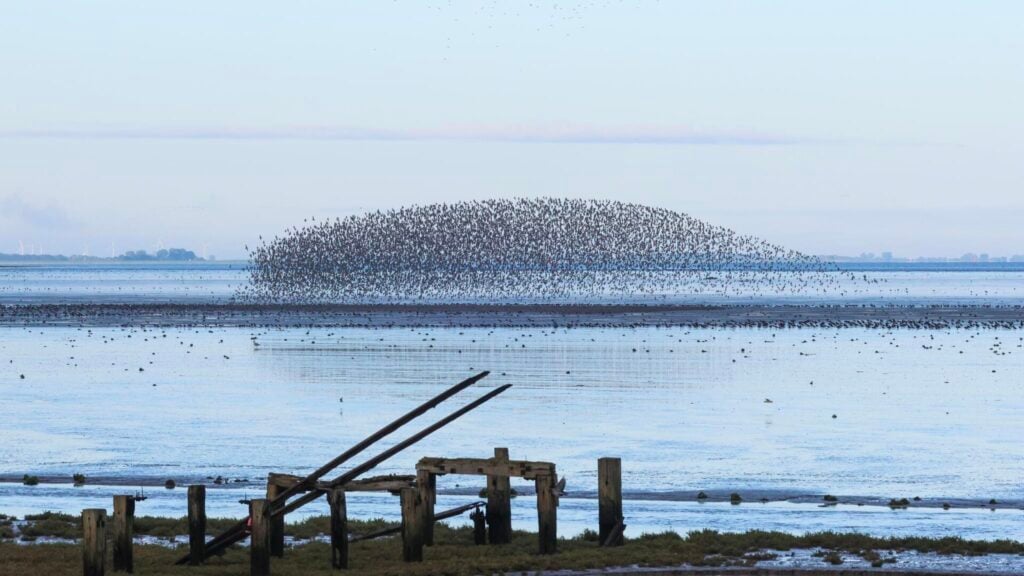
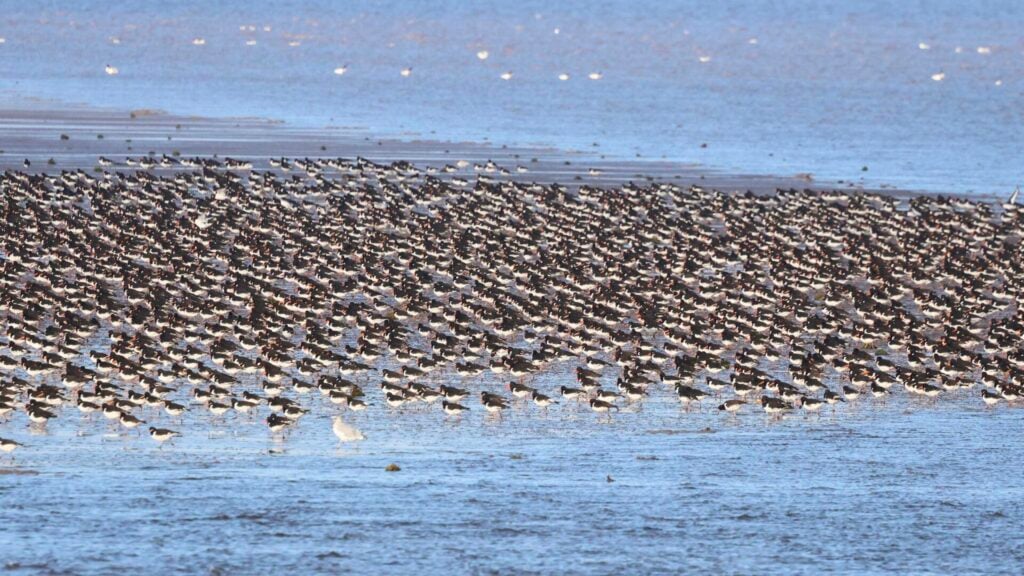
It is a challenge to stay ahead of the tide, it comes in so quickly. We continued a little further down and then stopped again to watch the March of the Oystercatchers. Always one of the highlights, watching them marching away from the rising tide like a massed army. Several Little Egrets had gathered to feed in the shallows on the edge of the channel. The Knot beyond were still nervous. They lifted again but resettled.
There was a steady trickle of Swallows moving south, small groups flying past over the beach or out over the water. Autumn migration in action, they are heading off to Africa for the winter. Two Yellow Wagtails flew south out over the water too.
Down to the far end, there were lots of people gathered for the Spectacular but we found somewhere to stand and watch. The tide was still coming in fast, the Oystercatchers still marching away from it. Some took off and flew back into the last corner of mud. Others started to peel off and fly in calling, over our heads to roost on the Pit behind.
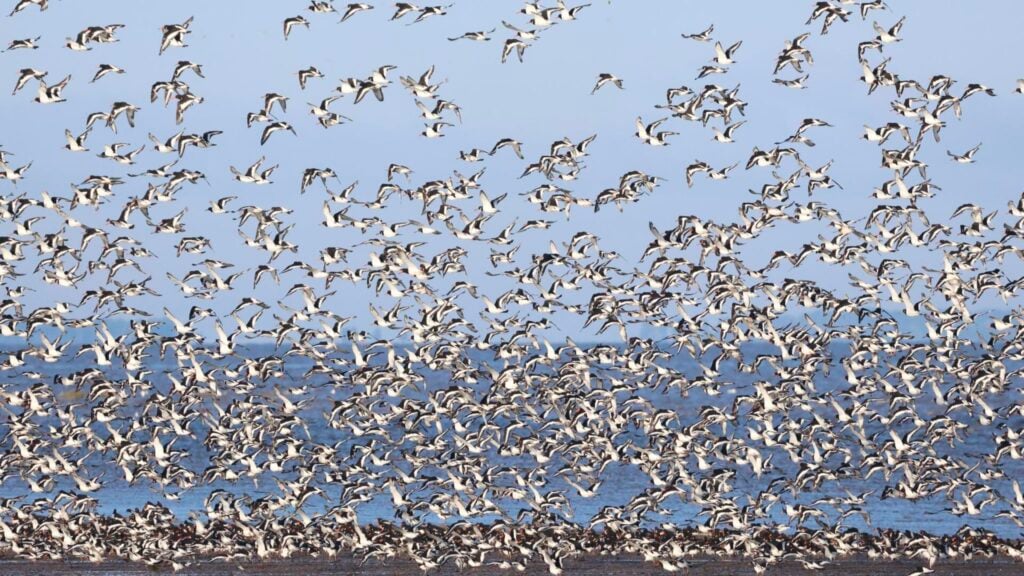
The Knot lifted again, and settled again.
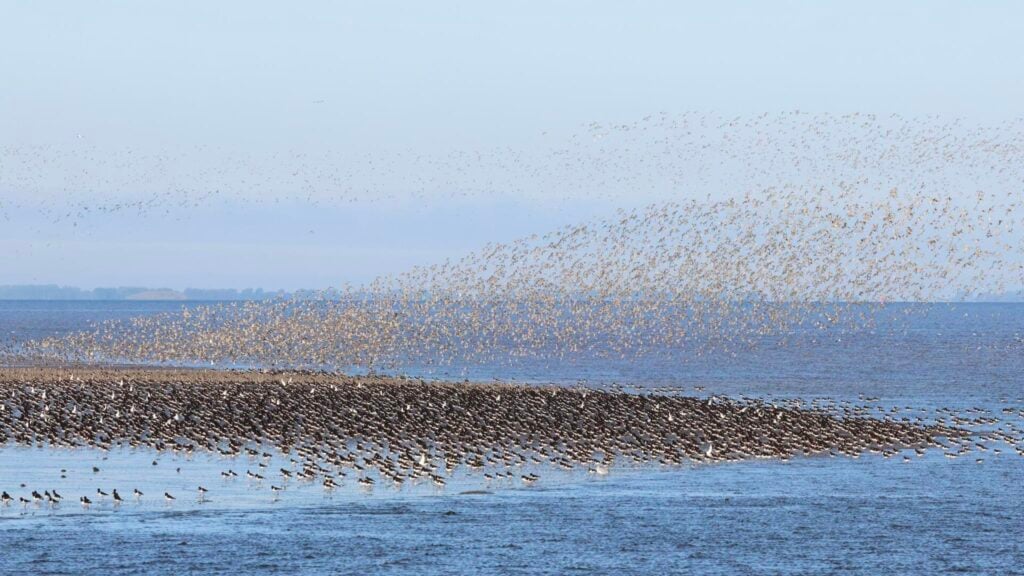
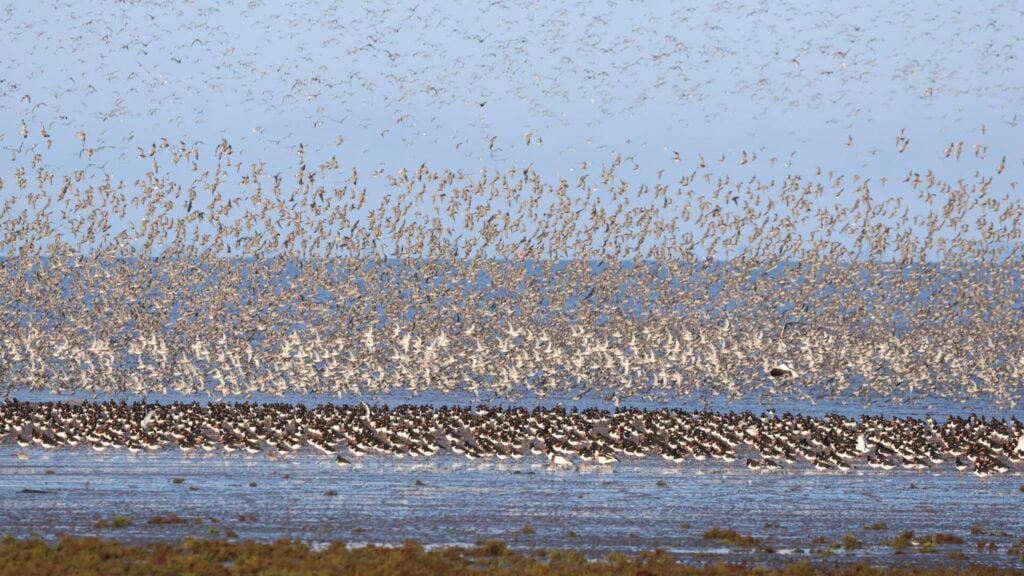
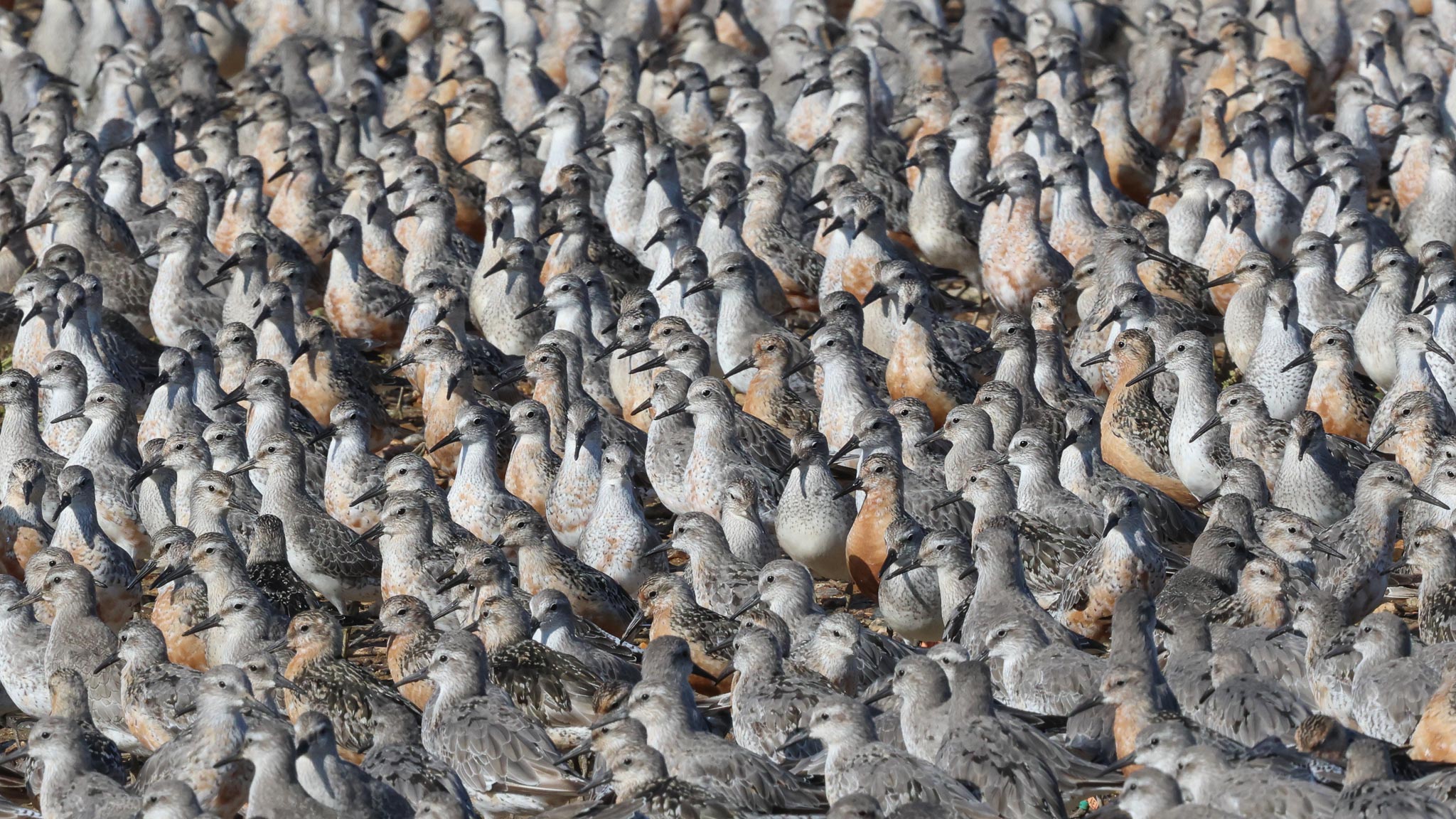
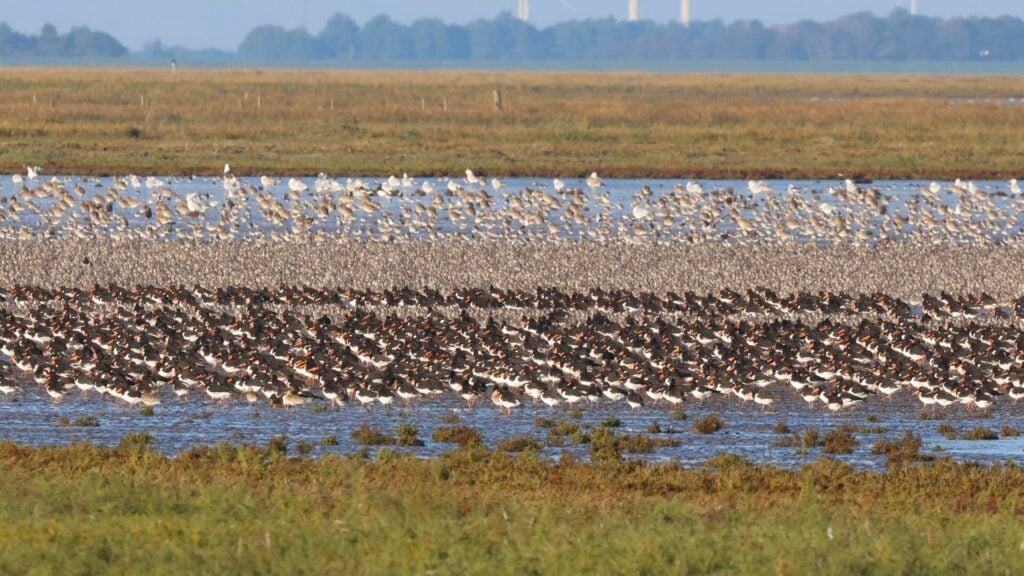
The waders were increasingly packed into the last of the mud. Arranged in layers, the Oystercatchers in front, Knot behind them packed in tight, then Bar-tailed Godwits and Grey Plover a little more widely spaced just behind. Hundreds of Curlew were all further up in the bay, on the drier mud.
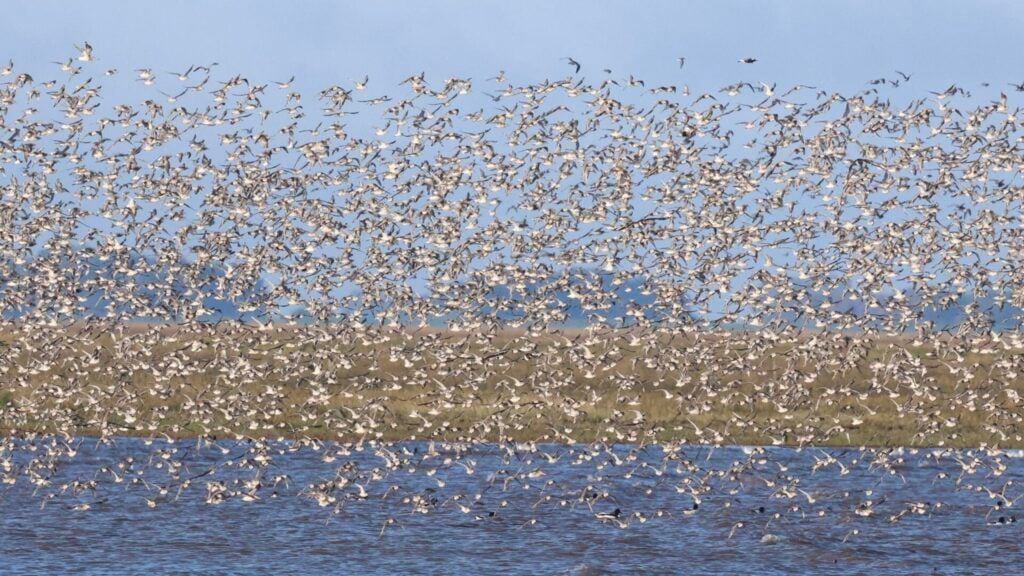
It was getting a bit congested on the mud now. Half of the Knot took off and circled out over water. They flew in towards us and came right over our heads. An amazing sound, thousands of pairs of wings bearing in unison. We turned to watch them as they spiralled down into the Pit behind us.
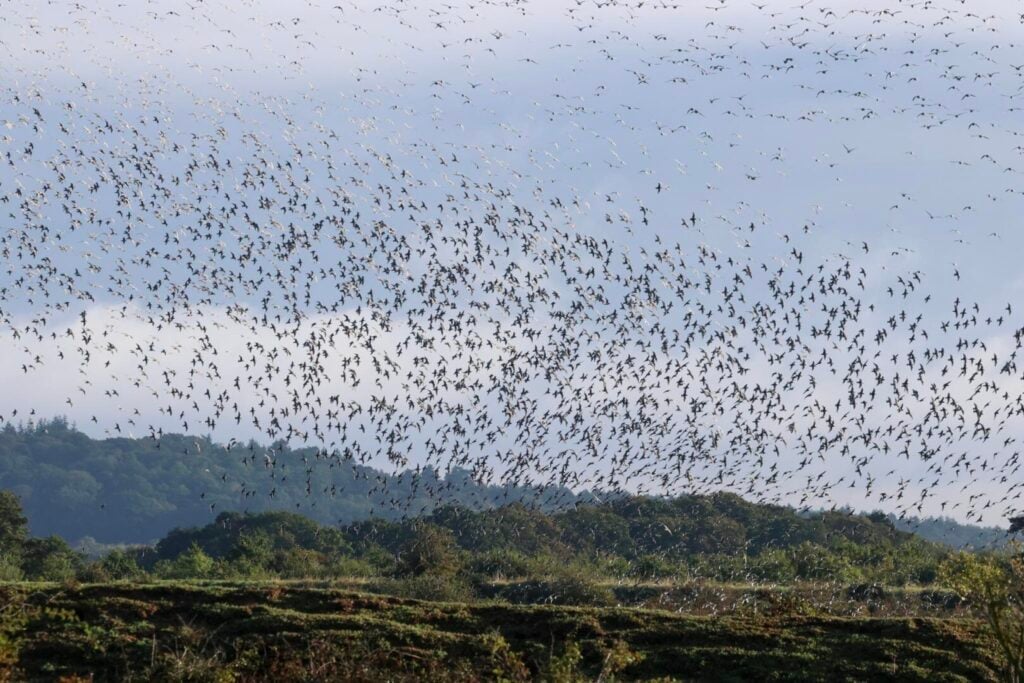
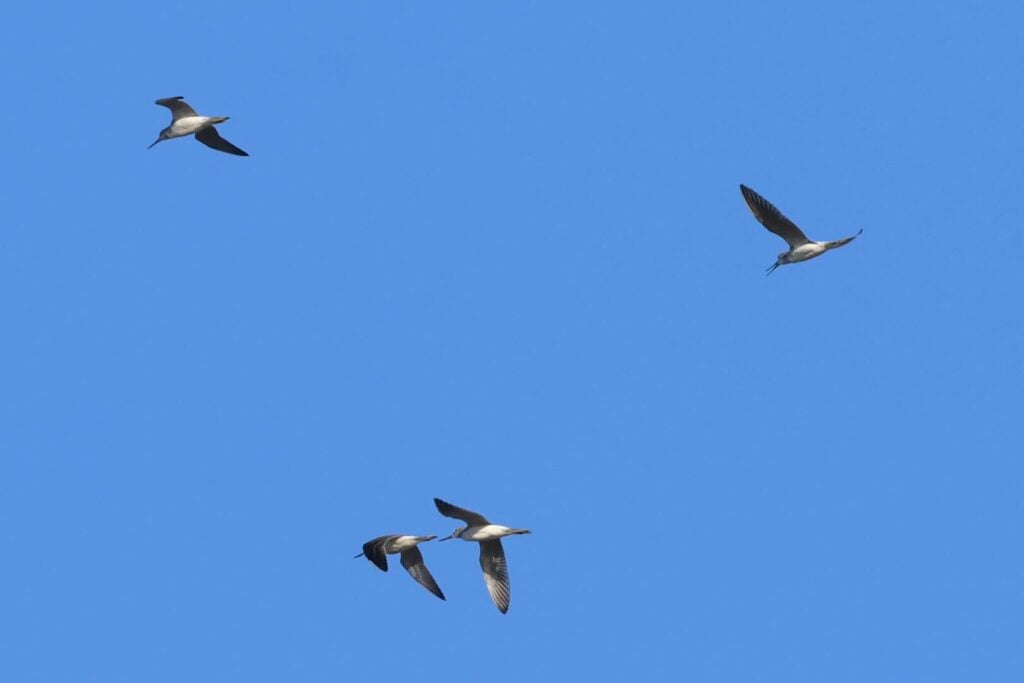
We heard Greenshanks calling and looked up to see four flying towards us from behind. They came over our heads and headed out over the Wash. They obviously didn’t fancy slumming it on the Pit with all the commoner waders!
There were still a few terns offshore. A very young juvenile Common Tern, still not fully grown, flew round calling. Then an adult came in off the Wash over us with a fish, then back out still with it in its bill. Presumably it was looking for its youngster to feed it. There were several Sandwich Terns too. A single adult Little Tern flew in over the Wash, and we watched it fly up and land with waders in the corner.
The waders looked like they were going to spook a couple of times but quickly settled. The tide didn’t come in quite as high as expected this morning, possibly due to the SW breeze holding it back. There was still a small corner of mud remaining, just enough to allow the rest of the Knot to stay out, along with the other waders. More Grey Plover were still flying in all the time, presumably from further round the Wash.
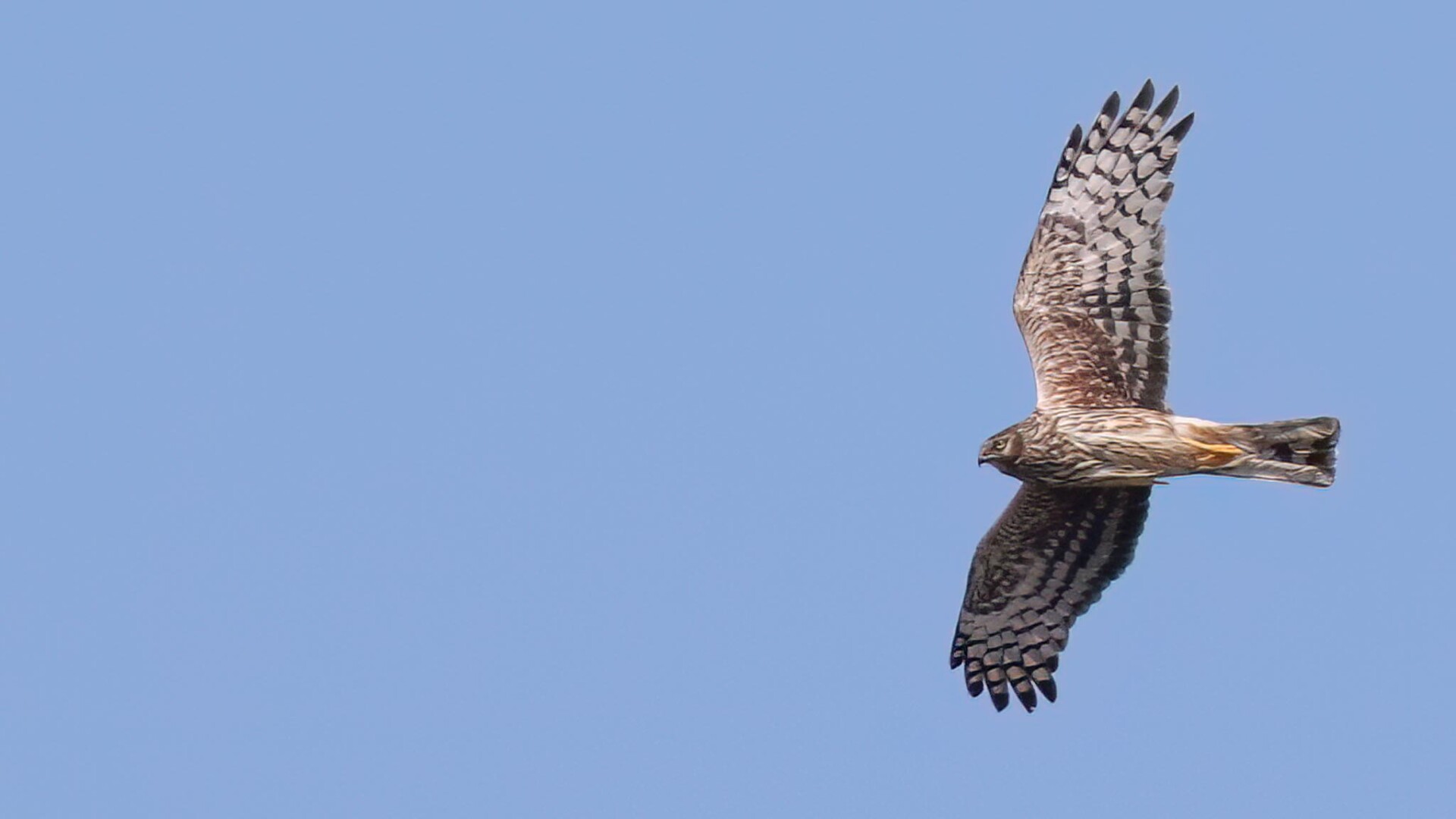
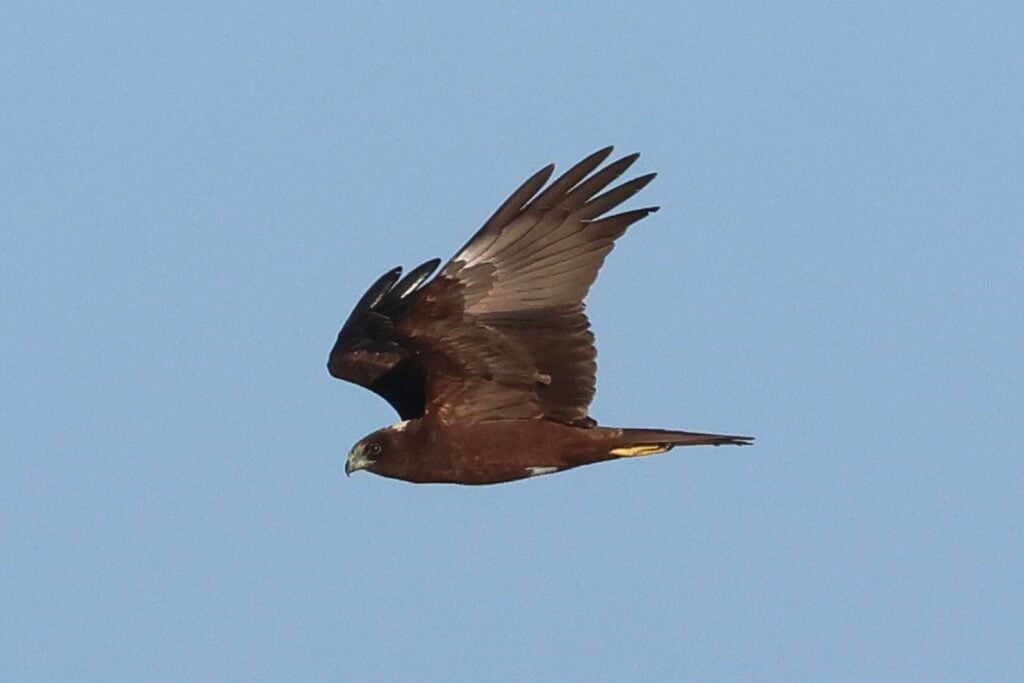
There were a couple of distant Marsh Harriers over the saltmarsh beyond, but they never really spook the waders. Then we noticed a dark juvenile Marsh Harrier flying down over the near edge of the Wash. Perhaps a migrant on the move. It flew straight past us and headed out towards where the waders gathered. But just when we thought it might flush everything, it turned and steered round the massed flock. We were hoping one of the Peregrine might appear but there was no sign of them this morning.
Things had settled down out on the Wash, so we walked across and into Shore Hide. There were lots of Knot packed onto the islands further up the Pit, along with lots of Black-tailed Godwits. We got them in the scope. The islands closer to the hide were largely empty today though, with more of the birds staying out.
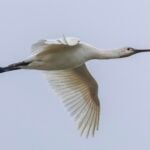
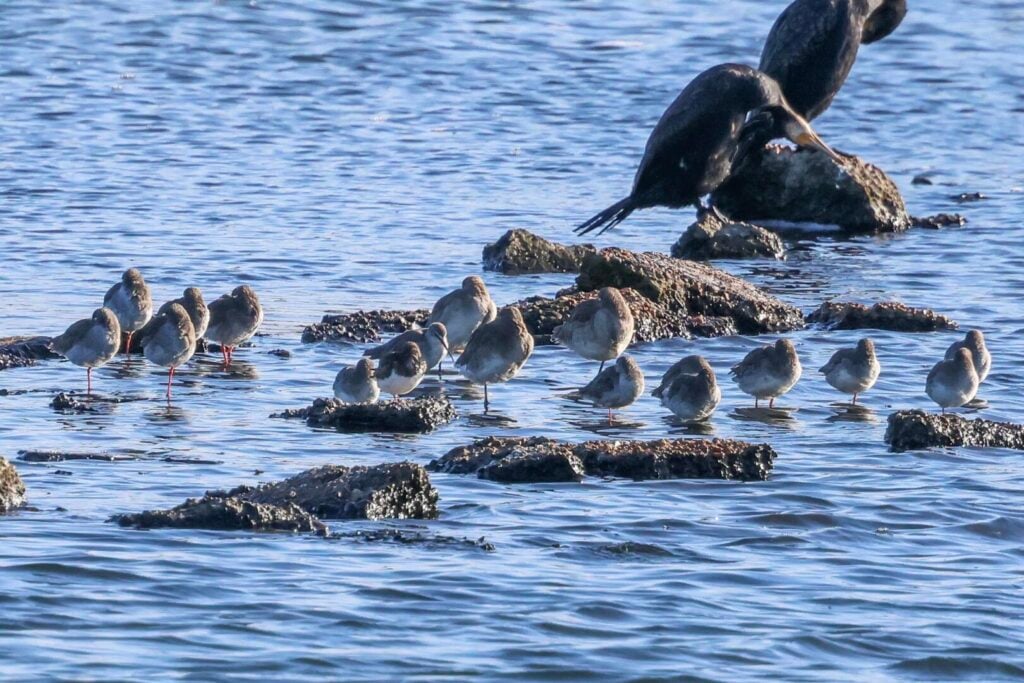
Six Spotted Redshanks were in their usual place on the rocks, roosting with several Common Redshank. They were mostly asleep, and hard to tell apart until one of the Spotted Redshanks woke occasionally and flashed its longer needle-fine bill. There were lots of Spoonbills roosting on the Pit too. We were looking straight into the sun, but counted at least 55 still today.
The Oystercatchers were roosting on the shingle banks either side towards the south end but we couldn’t see much on the islands down there today. A single Common Sandpiper was feeding along the shore in front of Knot’s Landing. Given that, we decided not to walk all the way down there.
Back out to the edge of the Wash, the tide was already starting to go out. The waders were starting to spread out a little already, which meant we could get slightly better views of the Grey Plovers now. Small flocks of Sanderling were still flying in down the Wash, presumably flushed from where they were roosting. Scanning out over the water, we picked up three Common Scoter flying south. A couple of Eider were on the water very distantly off to the north.
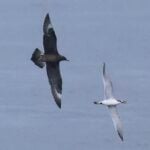
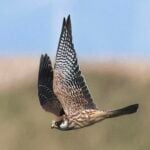
It was more of a surprise to see a Hobby out over the water in the middle of the Wash. It looked to be flying steadily south at first, presumably migrating. Then it stopped to chase round after a tern. Perhaps it had ambitions to be a skua?! Two Great White Egrets flew high overhead from behind us and we watched them head out over the Wash and then turn south. Most likely migrants too. With the good weather and moderate SW wind, it seemed to be a day for things on the move. Always great to see visible migration.
As the water receded further, there was more mud. The Oystercatchers started marching back out. Second helpings today! The first small group of Knot flew out from the Pit. Then suddenly everything erupted behind and most of the Knot came out in one go, along with the Black-tailed Godwits and half the Oystercatchers too. Quite a sight to see them pouring out over the bank. Then we noticed Sparrowhawk flying very low north over the saltmarsh in front of us. Could it have come from the Pit and spooked them?
We scanned through the waders out on the mud now. A few of the Knot were still in orange-red breeding plumage, living up to their full name, Red Knot. There were a couple of smart juvenile Bar-tailed Godwits closer too, which we got in the scope. Lots of Dunlin had appeared from the Pit too. Scanning through everything carefully, we found a single juvenile Curlew Sandpiper in with the Knot. We admired its smart scaly-edged upperparts and peachy orange wash across it s breast. A Common Sandpiper walked in and out of the vegetation on the far bank of the channel in front of us.
Things settled down, and there was still no sign of any Peregrines, nothing to stir things up. We decided to start walking back. We looked back down the Pit from the causeway. There were still plenty of Common Redshank and Black-tailed Godwits roosting. The Spoonbills had moved over onto the far bank, and as we walked on, a large group of them flew over the bank and north out over the edge of the Wash.
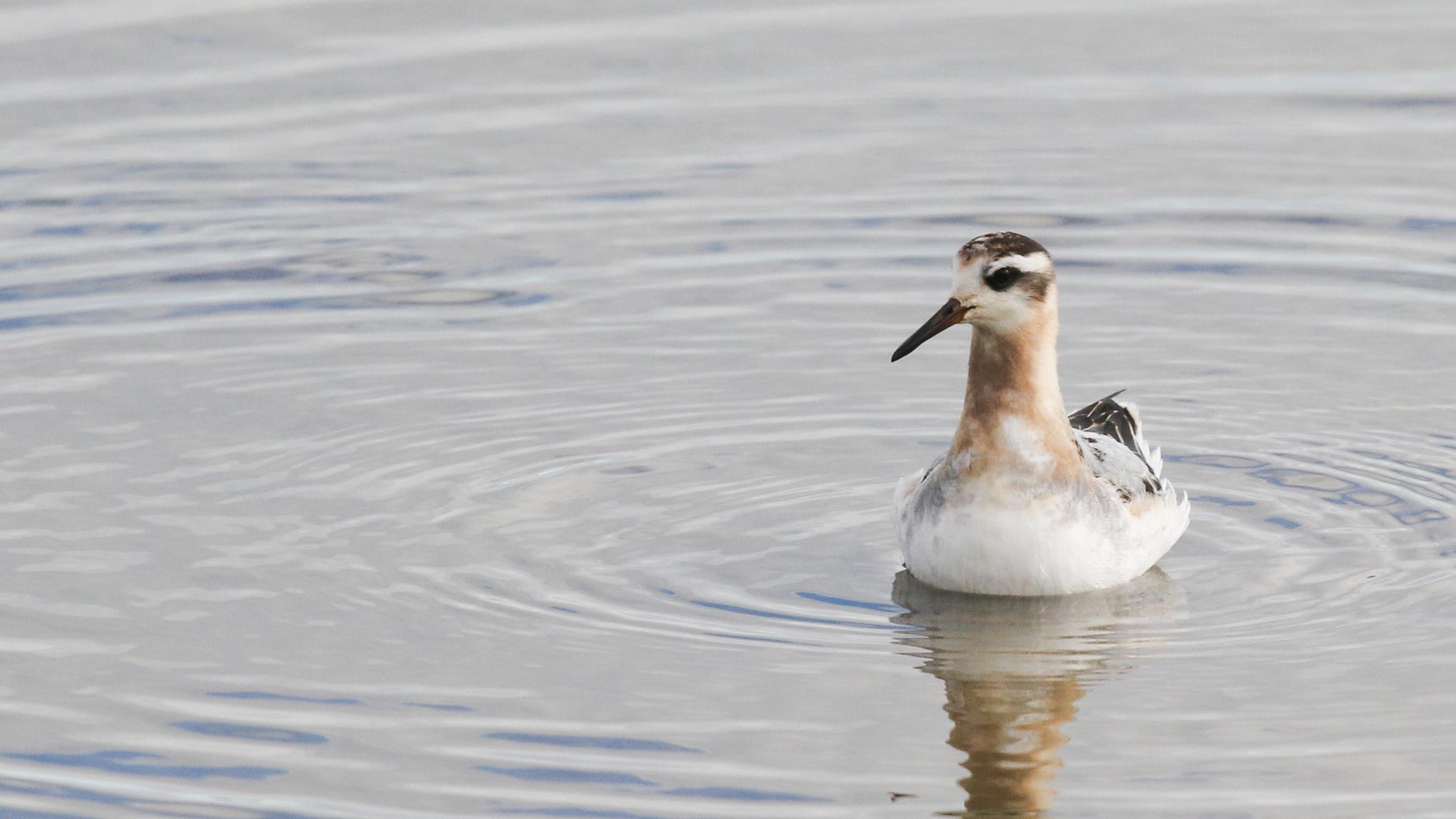
There had been a Red-necked Phalarope at Holkham yesterday, but there had been no news of it all morning. Then we got message to confirm that it was still present so we decided to head over there next. It was a slow drive over, more traffic than expected, and Lady Anne’s Drive was also surprisingly busy for a Monday in mid September. It was time for an early lunch when we arrived, so we walked up to The Lookout.
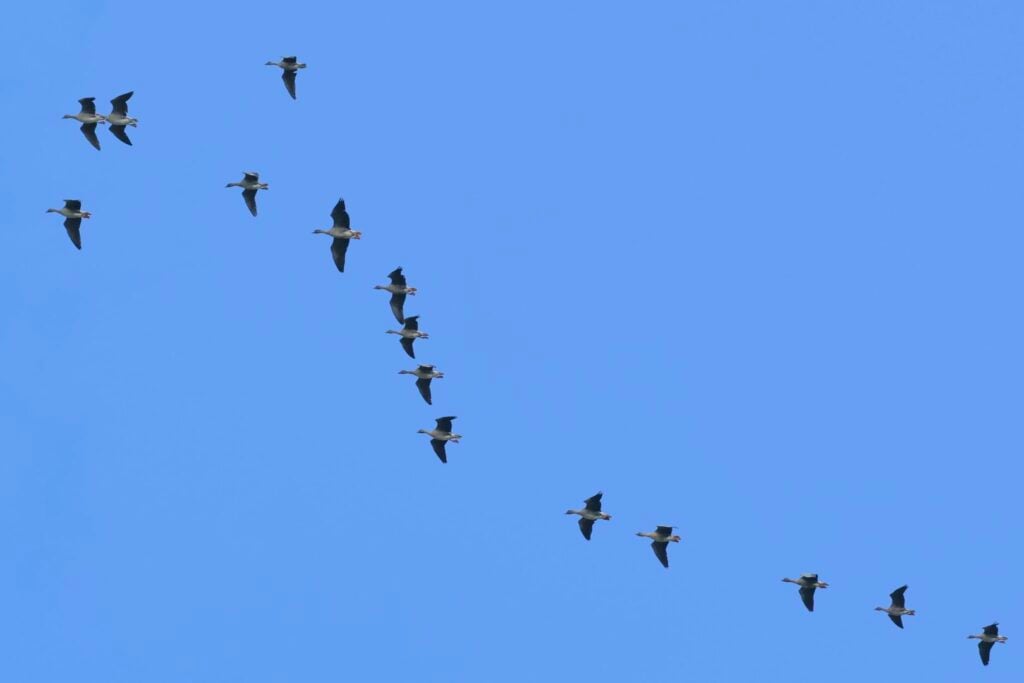
Sat on the picnic tables in the sunshine, a succession of small flocks and skeins of Pink-footed Geese flew over calling. Some looked like they might be just arriving in off the sea, others came up from Quarles Marsh towards Wells. Most of the people on the other picnic tables were oblivious, looking at their phones, as the geese returning all the way from Iceland flew over their heads. It was hard to hear the yelping calls of the geese at times for the yelping of various of the many dogs.
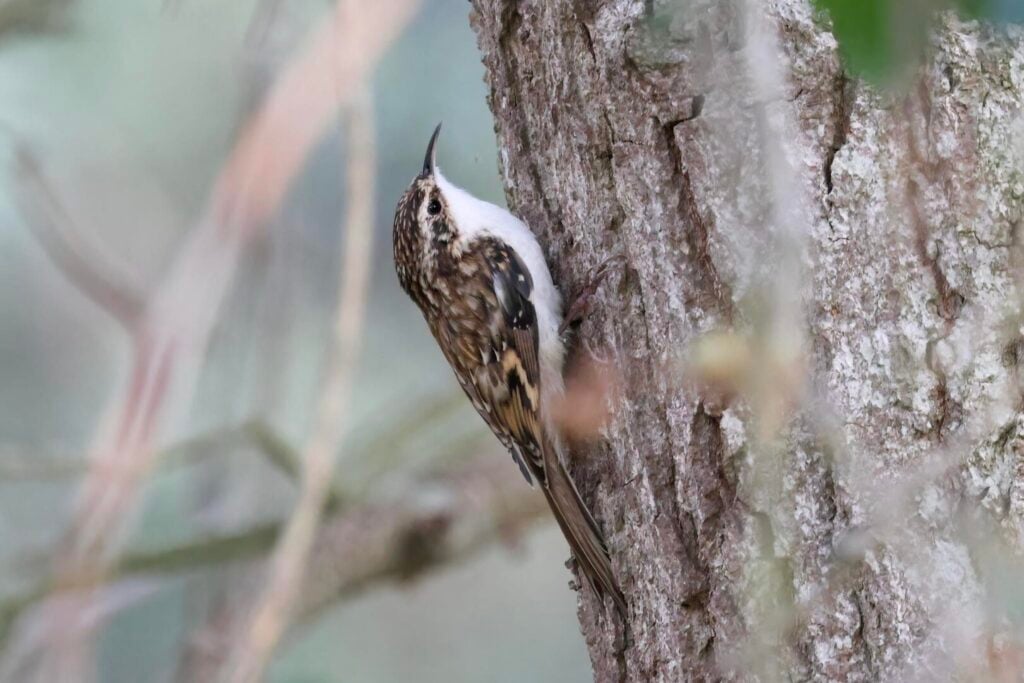
After lunch, we walked west. A couple of young Common Buzzards were mewing in the pines and circling up in the sunshine. Several Chiffchaffs were calling in the trees by the track. A Treecreeper flew in and landed on a trunk right in front of us. It performed very well for us, climbing up the bottom of a couple of trees. Otherwise, the trees were rather quiet today.
There were lots of Common Darters flying round still, along with a few Speckled Woods and a couple of Wall Browns. We stopped for a quick scan of Salts Hole. Several Little Grebes, Gadwall and Mallard were dozing on the edge of the reeds. As we walked on, a Little Grebe laughed at us.
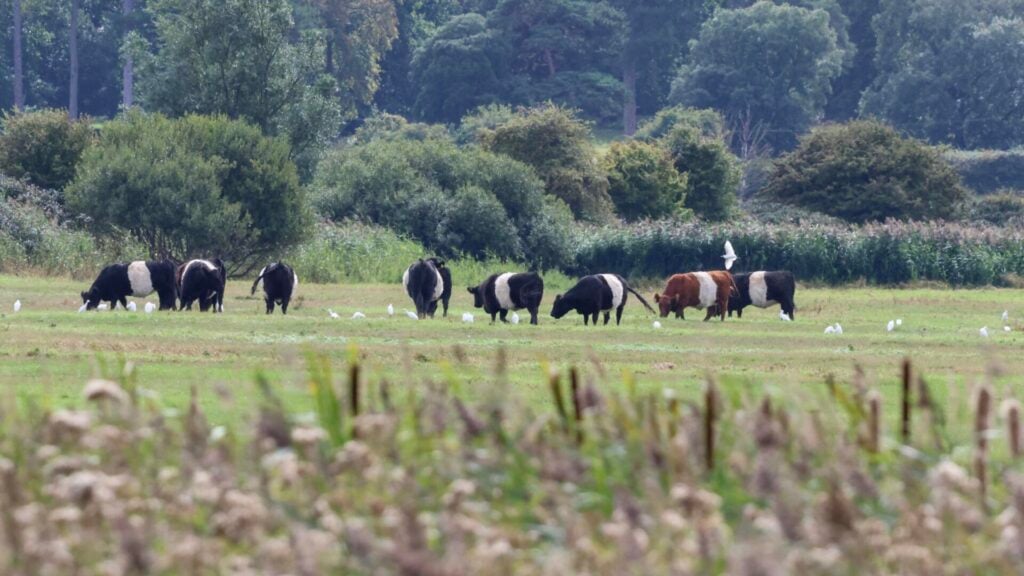
Behind Meals House, we could see lots of Cattle Egrets around the feet of the Belted Galloways. We counted at least 35. It sounds like they have had a successful breeding season here this year.
On to Joe Jordan Hide, there were a couple of Chiffchaffs calling their ‘swee-oo’ calls in the ivy covered trees by the crosstracks. Into the hide, we could hear lots of Pink-footed Geese were calling. Small groups flew in and out from the pool by Decoy Wood.
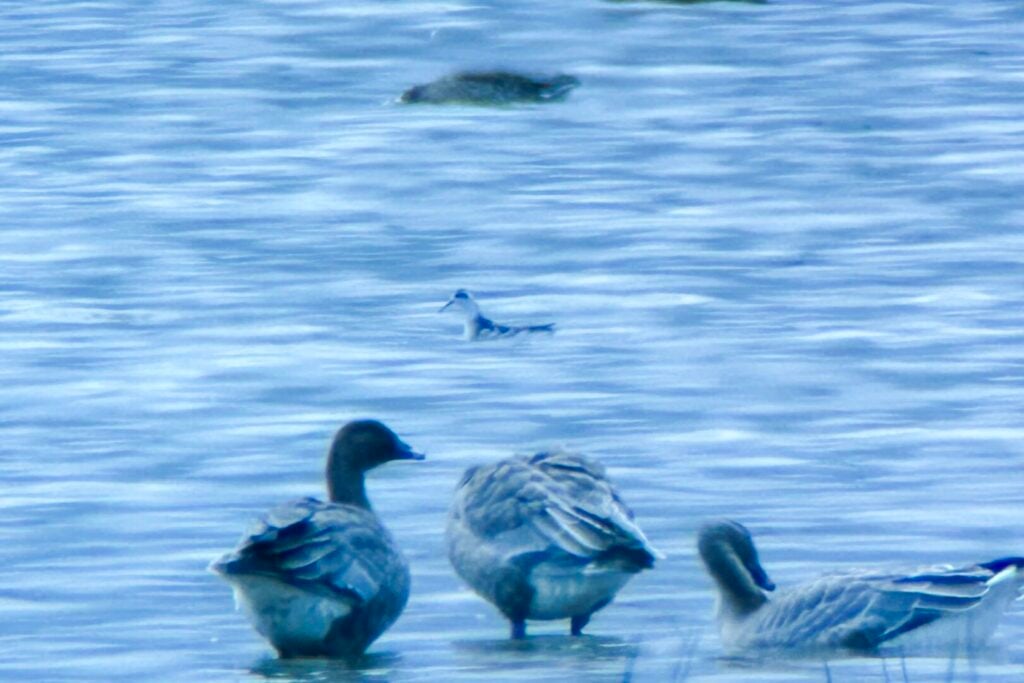
The Red-necked Phalarope swam out from behind the reeds at the front of the pool briefly. Then it disappeared back in again before anyone could get onto it. Thankfully we didn’t have to wait too long before it appeared again, spinning round in circles between the Pinkfeet.
A Chinese Water Deer was hiding in the vegetation in front of the hide. A Painted Lady and lots of Ivy Bees were buzzing around the ivy on a nearby tree. There were a few Marsh Harriers and Common Buzzards up, and a Hobby hawking for dragonflies below Decoy Wood. A Great White Egret flew over.
We could see cloud and rain approaching from the west so we waited in the hide. It drizzled for a short time, but it was lovely just to sit here and listen to the geese in and out. There was a bonus too. When the sun went in, the heat haze disappeared and we had much better views of the Red-necked Phalarope. We could see its very fine, pointed bill now.
The skies seemed to be clearing from the west, so we set off to walk back. We were a little bit premature, as there was still a brief last burst of drizzle which caught us up. Thankfully it didn’t last long and wasn’t heavy, so we didn’t get wet. Back to Lady Anne’s Drive, it was time to head for home.
It had been a lovely morning up on the Wash watching the Wader Spectacular and an enjoyable afternoon, with an interesting selection of autumn migrants. A nice way to round off our three days of Autumn Migration. Now it was time to head back home.