Day 2 of a 3-day Spring Migration tour in Norfolk. It was a grey and cloudy start with some light misty drizzle for about half an hour late morning (which we managed to sit out in the hide). Then the front cleared through and the sun came out in the afternoon, although there was a fresh and chilly breeze all day. We spent the day on the coast in NW Norfolk.
Our destination for the morning was Titchwell. Unusually, there were next to no cars in the car park yet when we arrived. A Song Thrush was singing in the corner and our first Mediterranean Gull of the day flew over calling. That sound would accompany us most of the morning, as the gulls commuted in and out of the Freshmarsh.
We walked down to check the paddocks first. Someone was already out there tending to the stables, so there were not many birds. Just a couple of Pied Wagtails, a Linnet and two Stock Doves out on the grass. Walking back round through the overflow car park, a Blackcap was singing and hopping around up in a tree. A Willow Warbler flew in and landed below it, possibly a migrant stopping off on its way to Scandinavia.

On our way from the car park to the Welcome Hub, we stopped to watch two Song Thrushes feeding on the ground in the picnic area. A Goldcrest was singing in the ivy right above our heads.
Further on, we found several more Blackcaps in the sallows. Two or three males, all seeking the attention of a single female. They have returned in good numbers now for the breeding season. A pair of Treecreepers appeared, and we had some great close views of them as they climbed up several of the narrow trunks in turn.

The Visitor Centre was not open yet, so we continued on round onto Fen Trail. There were more Blackcaps and Chiffchaffs in the sallows here and a Willow Warbler singing higher up in one of the trees.
Lots of hirundines were hawking round and round over the Dragonfly Pool. They were mainly Swallows but we could see several House Martins with them. Their white rumps and shorter forked tails gave them away. Migrants stopping off, they had probably roosted on the reserve overnight and were now feeding up before continuing their journey. A pair of Tufted Ducks was on the pool too.
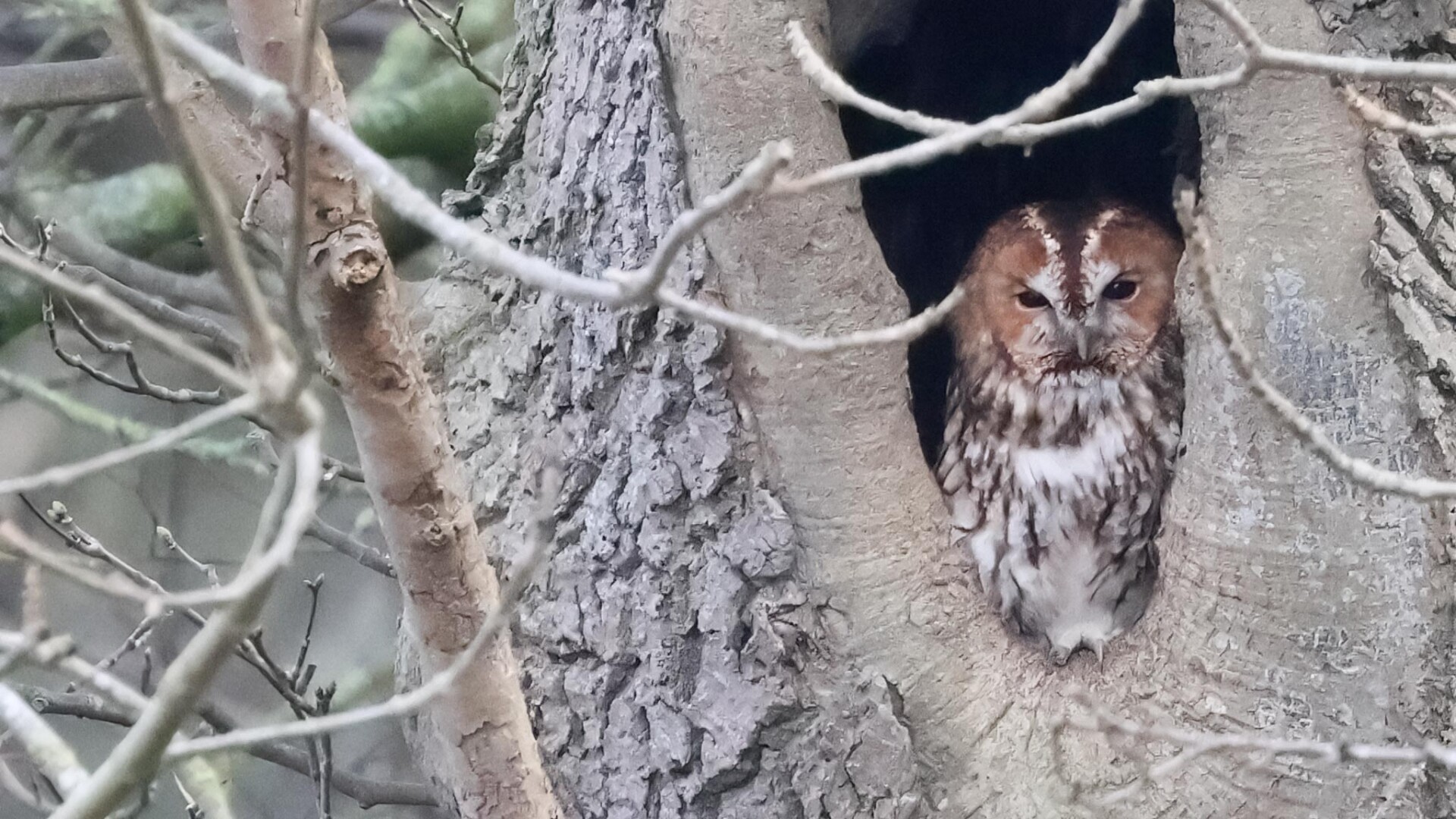
There was no sign of the Tawny Owl in its usual tree today. Perhaps it had moved somewhere due to the fresh breeze overnight. We could just hear a Reed Warbler singing from the reeds behind Fen Hide but it promptly went quiet when we stopped to listen. Helpful! A Little Grebe was on the pool in front of the hide.
Continuing on to Patsy’s Reedbed, there were several Tufted Ducks here, as well as a few Coot and a pair of Little Grebes. One or two Marsh Harriers were quartering over the reedbed beyond or perched in the dead trees. We had just commented that their didn’t appear to be any visible migration yet this morning when a group of about a dozen Swallows flew through.
There had been a Redstart on the start of East Trail yesterday but we couldn’t find any sign today. The wardens had looked too earlier without success. We walked back and cut across on Meadow Trail, back to the main path. Then we headed further out onto the reserve.
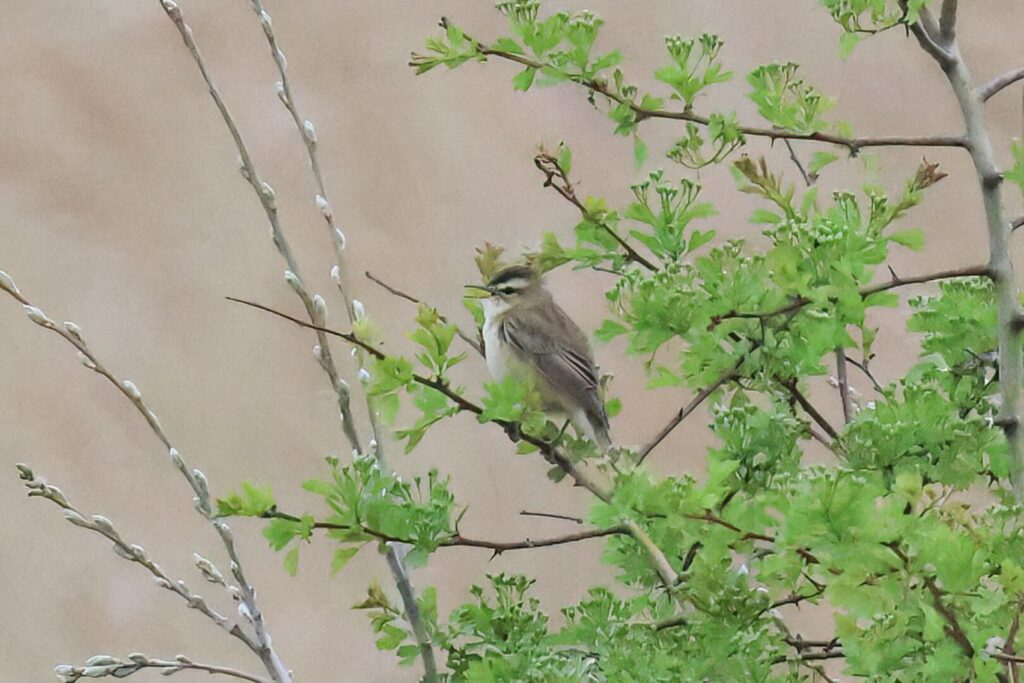
We stopped to scan the Reedbed Pool. There were several Common Pochard, Coot, Teal and Greylags. Nothing out of the ordinary. A Sedge Warbler was singing in a small hawthorn in the reedbed nearby.
Further on, we could see a pair of Canada Geese and a couple of small groups of Brent Geese out on the saltmarsh, the other side. The water level is still very high on the first compartment of the Freshmarsh, so we continued on past Island Hide. There were several more Brent Geese out on the water, and we stopped to watch as they started flying back out to the saltmarsh past us.

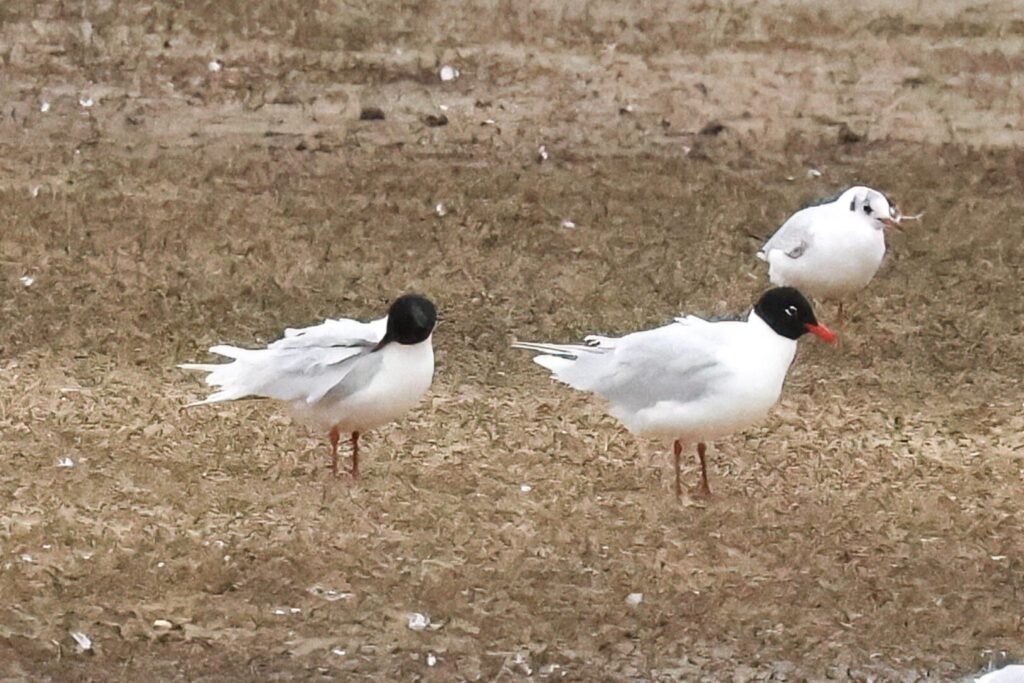
On the next compartment, the water was a bit lower and that meant there were a few waders. Plenty of Avocets, several Little Ringed Plovers and a Ruff on the most distant spit. Lots of Black-headed Gulls were loafing on the islands along with a pair of Mediterranean Gulls. We got the latter in the scope for a closer view of their jet black hoods, brighter red bills and white wingtips.
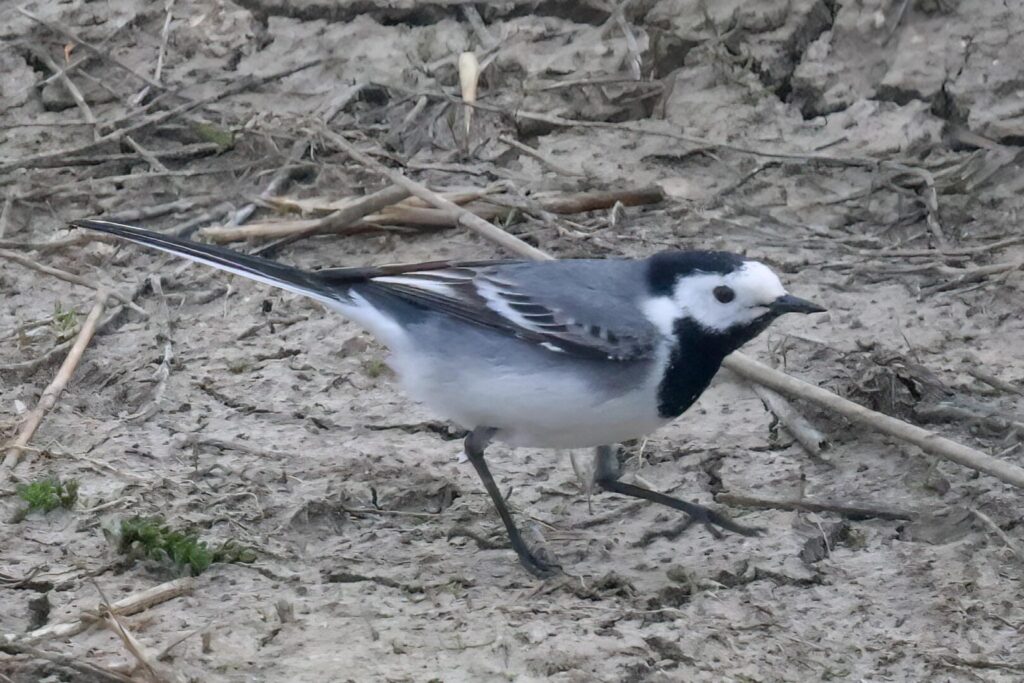
There were several wagtails further back in front of the hide. Looking more closely, we could see there were 2-3 White Wagtails with the Pied Wagtails. The latter is the British subspecies of the former, the White Wagtails just migrants here on their way further up north on the Continent.
Most of the gulls and terns were on the far compartment, so we walked round to Parrinder Hide for a closer look. There were lots of Sandwich Terns (someone counted 200 this morning). We got some in the scope, to admire their shaggy black crests and yellow-tipped black bills. A single Common Tern was in with them.

There were lots more Mediterranean Gulls on here too, more great close views of those. We had seen the cloud thickening and now it started to rain. It didn’t seem to be much, more misty drizzle – we couldn’t see raindrops hitting the water. But we decided to sit it out in the shelter of the hide.
A Little Ringed Plover flew in and landed on the mud at the base of the bund in front of the hide. It walked closer, feeding in the near corner, giving lovely views. Even with binoculars, we could see its golden eye-ring now.
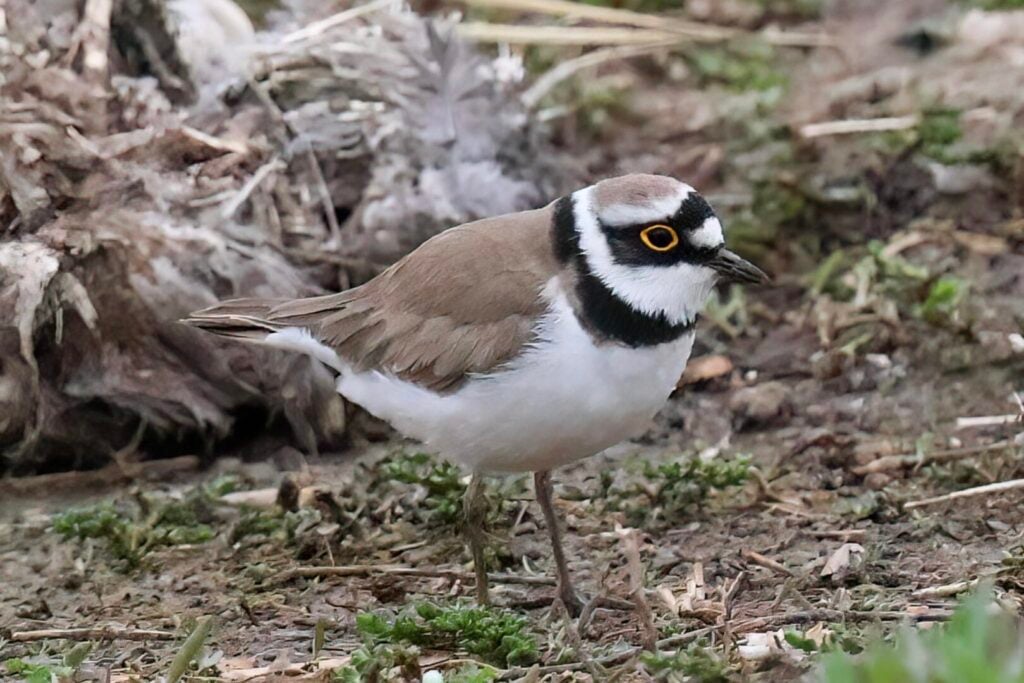
Two Ringed Plovers then flew in and landed out of sight behind the bund. We had a couple of brief glimpses and could see they were walking down towards the corner before they came out into full view. One chased after the Little Ringed Plover and at one point we had the two of them together briefly, a nice side by side comparison.

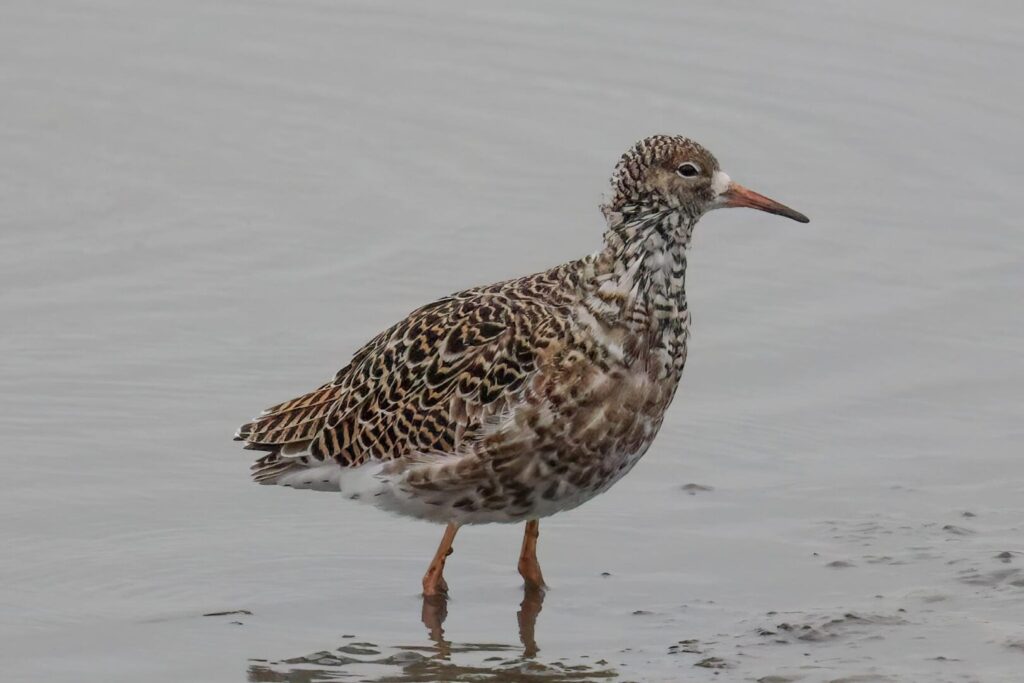
There were a couple of Redshank and a Ruff down in the near corner too. It was probably more sheltered down here. The Ruff was already moulting to breeding plumage, but yet to start getting its ornamental ruff.
A single Dunlin flew in with a Turnstone. The Dunlin was moulting to breeding plumage too, already sporting a black belly patch. Then the Turnstone chased it and the two of them flew off.
The rain stopped so we decided to venture out again. Outside the hide, the ground was barely damp. Back out to the main path, it was noticeable breezy now but not too bad. The skies seemed to be brightening up from the west. We decided to walk out and brave the beach.
There was not much to see on Volunteer Marsh. A few Black-tailed Godwits, Curlews and Oystercatchers were feeding in the muddy channel at the far side. The Tidal Pool was quiet too. A few Pochard were diving out on the water. A handful of waders included a couple more Avocets and Black-tailed Godwits, several Redshanks, and a little group of roosting Oystercatchers.

Out on the beach, the tide was coming in and the mussel beds were already covered. We scanned up and down the shore, and found several Sanderling running in and out of waves. A distant Gannet flew past, along with a couple of Cormorants.
As we walked back, there seemed to be a steady but constant passage of Swallows now, all flying west. A few House Martins were in with them. A Common Snipe flew up from the cut reed on the near edge of the Freshmarsh.
There had been a report of two Garganey on the reserve but we didn’t know exactly where. We checked the Freshmarsh again but they were not on there. Scanning the Reedbed Pool, all we could find were several Teal down at the front. Two Chinese Water Deer were out on the saltmarsh opposite now.
We checked in back at the Visitor Centre and were told that two female Garganey had been reported apparently, on the Reedbed Pool. That would be a little unusual, and all we had seen were a couple of female Teal there when we walked past. We stopped for lunch on the picnic tables by the Visitor Centre.
After lunch, we drove round to Holme. We checked in at the Firs, then set off to walk out into the dunes. Almost immediately, we came across several Wheatears feeding on the short grass. There seemed to have been a small fall of them this morning.

There had been two or three Ring Ouzels and a couple of Redstarts reported here this morning, both scarce migrants here and nice birds to see. We didn’t have to venture too much further before we found a male Ring Ouzel. Nice views in the scope out in the short grass.
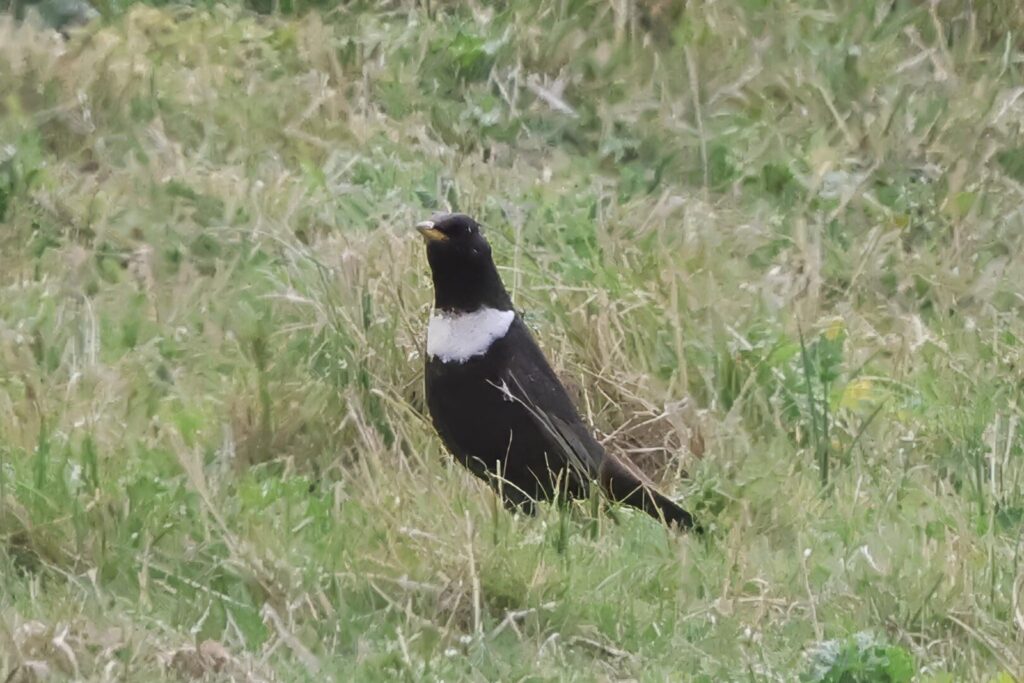
Some other local birders had found one of the Redstarts and called us over. A smart male, it was very mobile. It perched in one bush, dropped to the ground, then flew and appeared somewhere else. It was hard to keep track of at times but eventually we all got a good look at it through the scope. A Willow Warbler appeared in the same bush too at one point. We could see two male Ring Ouzels together now, further back.
Lots of hirundines were hawking out over the grazing marshes to the south. There was a steady movement of Swallows again, through the dunes. It would go on all afternoon, singles or small groups constantly flying past, on their way west.

We walked on further into the dunes. There were lots of Linnets and Meadow Pipits everywhere. Several Stonechats perched on the bushes. A Mistle Thrush flew up from the short grass ahead of us and landed in a nearby bush. Probably a resident but not impossible that it could be a migrant as well. We also saw a rather grey Song Thrush in the bushes which looked like it might be a continental bird. Several Chiffchaffs were probably migrants too.
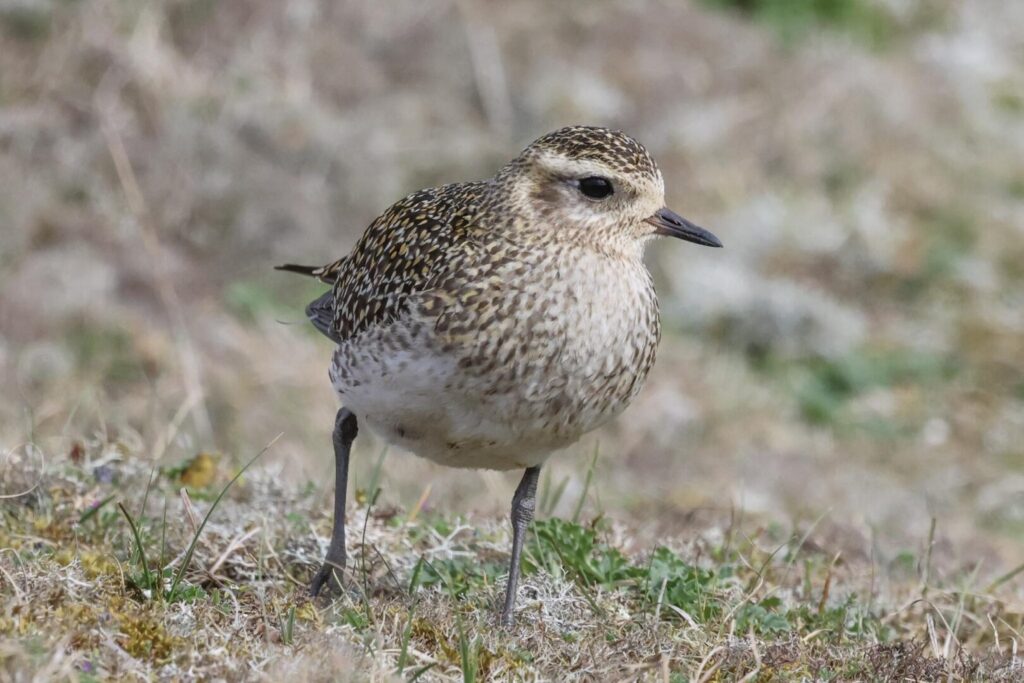
As we walked back, a Golden Plover suddenly flew up out of the dunes ahead of us. It circled round and landed again. It seemed to have a limp as it moved out of view. As we walked on, we couldn’t see it at first. Then suddenly it stood up from the grass right in front of us. It was clearly struggling with a bad leg but could still fly. It flew off round behind us.
A Common Whitethroat was singing in the bushes but wouldn’t come out. There were more Wheatears and Stonechats and at least one Ring Ouzel still. Back to the Firs, there was not much time left now and we still wanted to squeeze in one last stop. We decided to move on and drove round to Thornham Harbour.
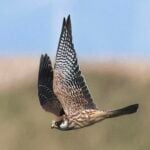
As we got out of the minibus and walked up onto the bank, a Peregrine shot over. A Chinese Water Deer was out on the grazing marsh the other side along with a single Wheatear. Walking up along the bank, there was still a steady trickle of Swallows and House Martins through.
Checking the first pools, there were just a few Teal. Further on, a Common Snipe was tucked down in the grass the other side of the water. There were several Ruff too, two differently coloured males with two smaller females.
On the corner, we stopped to check the harbour channel. We found a single Grey Plover, still in grey non-breeding plumage, and a couple of Curlew. Lots of Brent Geese were out on the saltmarsh beyond, along with a large roost of gulls and a few Shelduck.
We continued on a short distance to check the far end of the flash on the grazing marsh. We could see a group of about a dozen Ruff in the middle of the water, all females. There were several Teal, Shoveler and three Wigeon around the edge. A pair of Pintail was on the next pool further back.
It had been an enjoyable day with a great selection of spring migrants. Now it was time to head back to Hindolveston. Still a chance for tea and cake before dinner! And another day to come tomorrow.