Day 2 of a 2-day Winter Weekend in Norfolk. It was a rather grey and cloudy day, in contrast to yesterday, and a bit colder in the E wind. But it remained dry – another good winter’s day to be out birding. We spent the day exploring the North Norfolk coast.
On our way up to the coast this morning, we drove round for a quick check of the fields. No great surprise that there was no sign of any Barn Owls out hunting now. As well as the population being down due to several poor breeding seasons, those birds which are here seem to more nocturnal these days.
Our first destination this morning was Cley. As we got out of the minibus in the car park at the visitor centre, a large flock of Lapwings flew up out of the field beside. Looking out across the reserve, we could see a small group of Brent Geese flying off east.
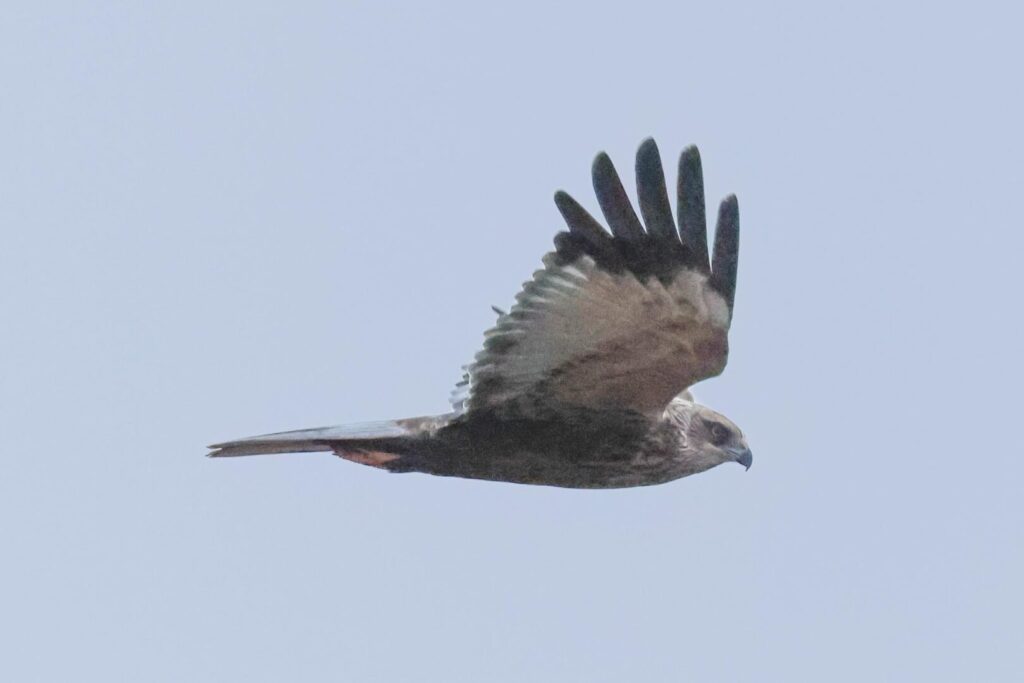
We walked out along the path to Bishop Hide. Scanning from the bridge, a Little Grebe was diving again in the Catchwater Drain. A male Marsh Harrier flew across over the reeds right in front of us.
Into the hide, a couple of the locals were already there. They hadn’t found the Jack Snipe, just one or two Common Snipe. A quick scan with the thermal imager, and we could see that the Jack Snipe was in its favoured roosting place. Regular readers will know it can be completely impossible to see when it is here, but we managed to get it in the scope today. Or at least bits of it! We could see it moving a little, its golden stripes contrasting with the more contrasting blacker bits in between.
When everyone had managed to see it, we turned the scope onto the Common Snipe further back. It was also asleep and hiding in the cut reeds, but nowhere near as well hidden as the Jack Snipe.
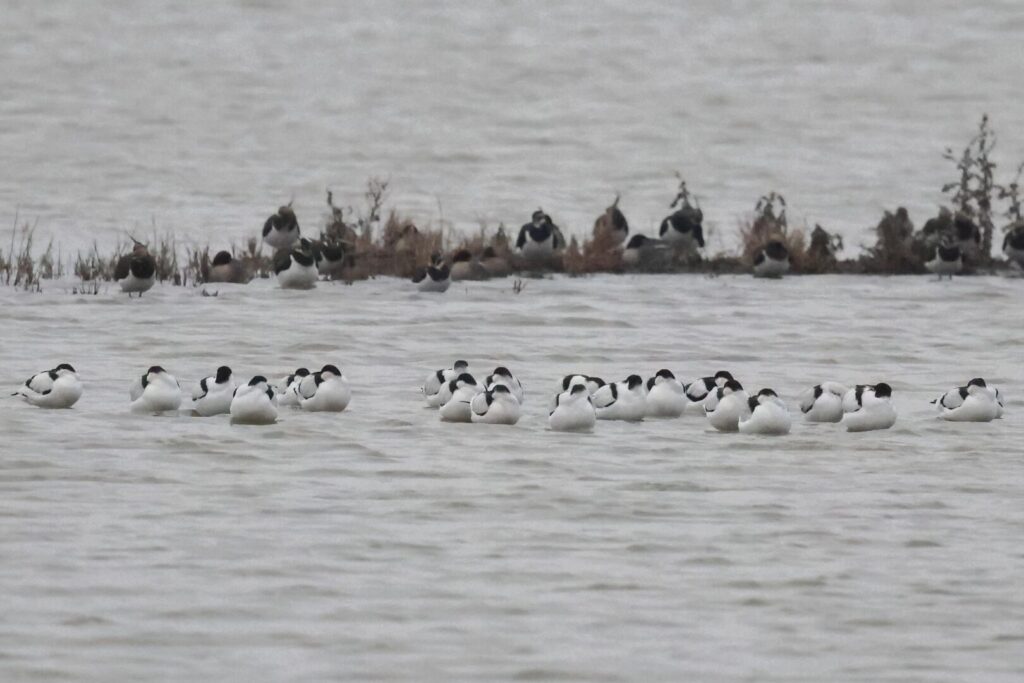
Looking out over the rest of the scrape, we could see a large group of Avocets mostly asleep out in the middle. Numbers are gradually increasing now, well over 20 today, as birds start to come back ahead of the spring. Nearby, several Black-tailed Godwits were asleep too. Occasionally one stirred and flashed its long, straight bill. There were more Lapwings on the islands further back too.
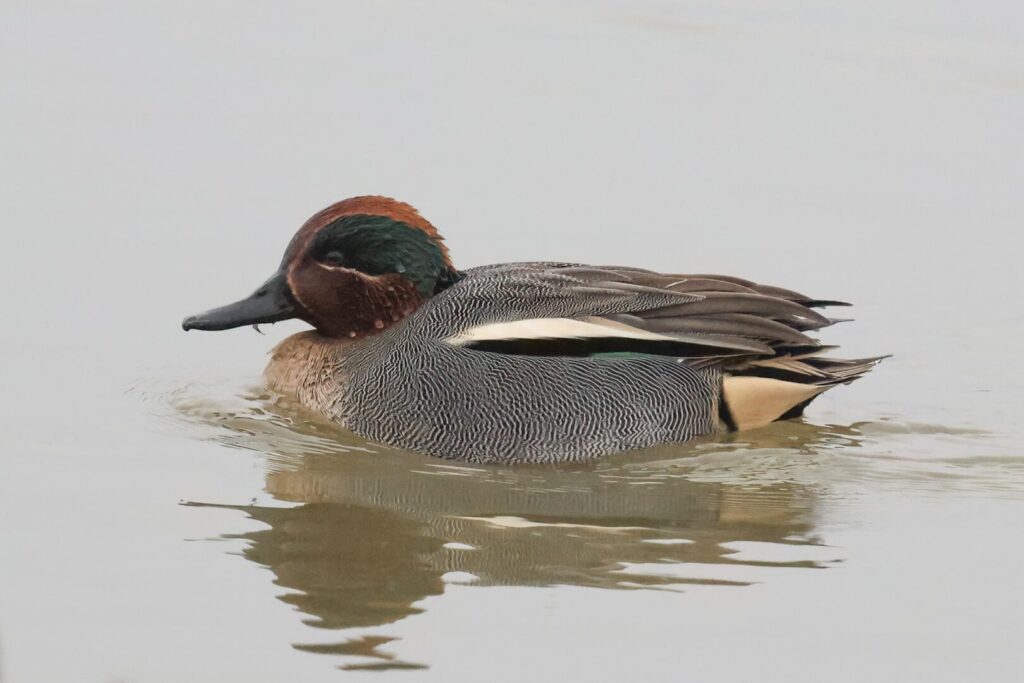
There was a nice selection of wildfowl too. Lots of Teal included several in front of the hide. One drake was displaying to two females. There were also several Shoveler, Shelduck and a few Wigeon.
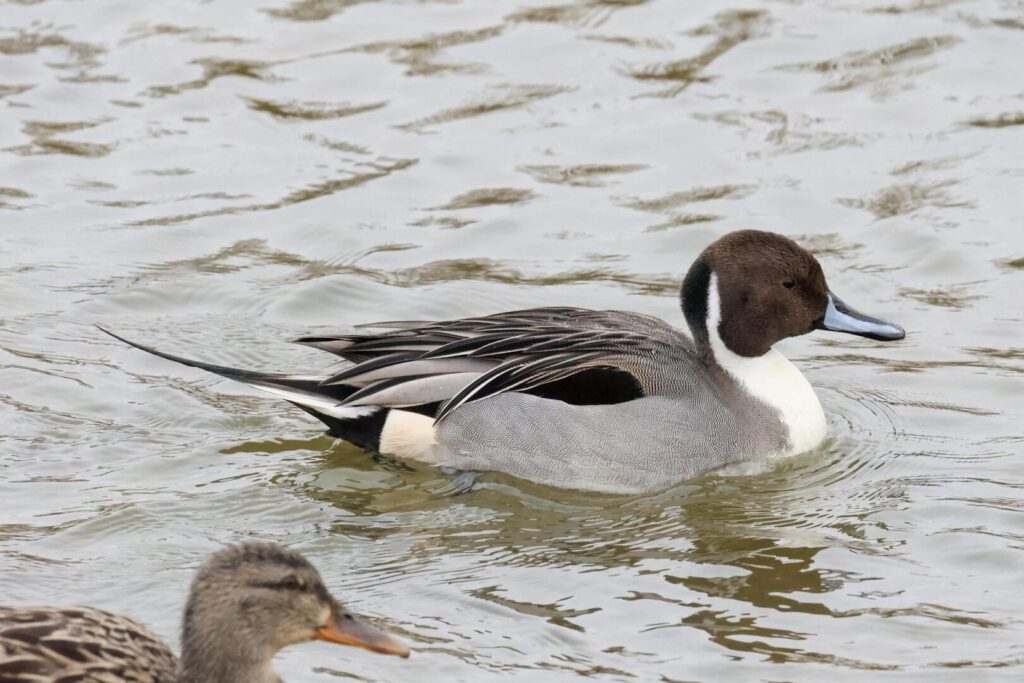
Time to move on, we had a lot to try to do today. Back to the minibus, we drove east. As we passed, we noticed that the drake Pintail was back on the old duck pond at Salthouse, so we stopped to look. Great to see one up close like this, though slightly odd with the tame Mallards. It seemed disappointed to see we didn’t have any bread with us.
There had been some Twite reported yesterday down by the beach at Salthouse. From here, we could see people over on the shingle ridge but they didn’t seem to be looking at anything. The Twite hadn’t been reported yet this morning either so we decided to move on and see if they reappeared later.
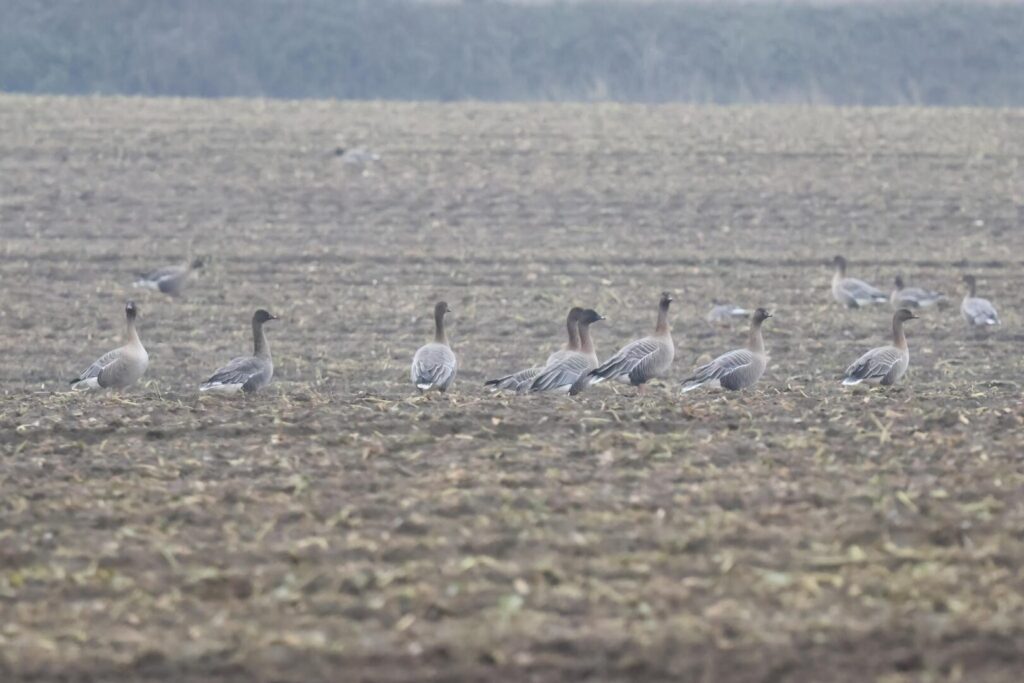
We continued east along the coast to Sheringham. On the way, we could see some Pink-footed Geese in one of the fields, behind the hedge on the other side of the road. We could try to see them on our way back.
When we got to Sheringham, we drove down to the Leas. The Eastern Black Redstart can be elusive at times so it was nice to see several photographers gathered by the ornamental lawn on the clifftop as we pulled up, their lenses all pointed in the same direction. Before we even got out of the minibus, we could see the Eastern Black Redstart on the path on the far side of the grass.
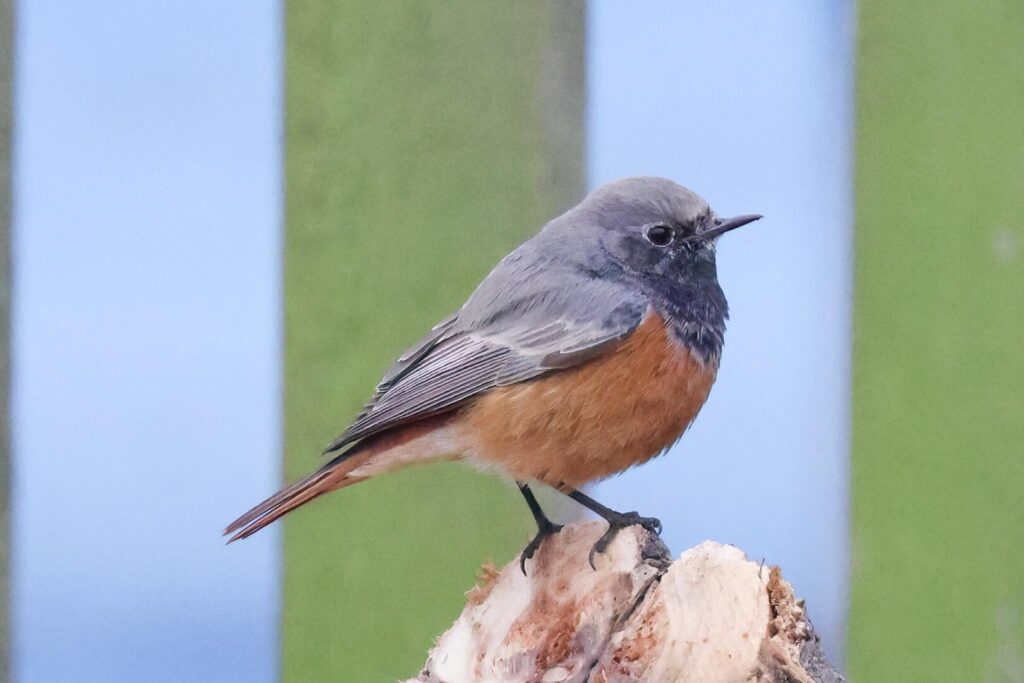
Before we could get the scope set up, someone walked along the path right in front of everyone, despite seeing lots of people watching. The Eastern Black Redstart flicked up and dropped down over the lip of the cliff beyond. We walked round but it was very mobile now, constantly moving. It showed well on the wall for a few seconds, then flew back up over the clifftop to the ornamental gardens. Two Stonechats were now flicking up and down in the bushes on the cliff face.
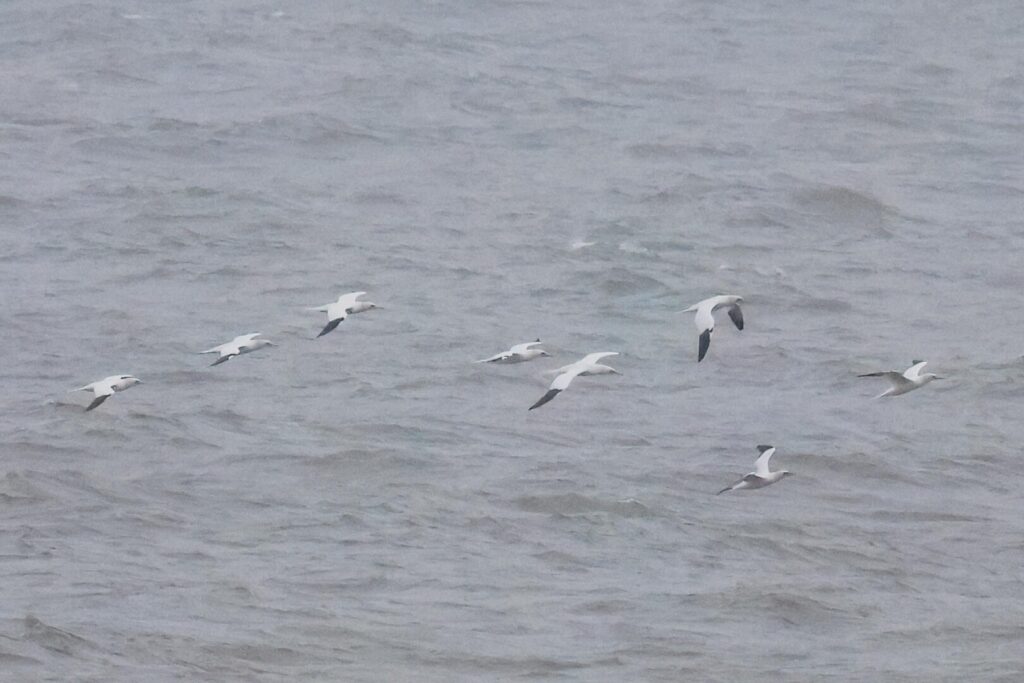
Scanning the sea, we could see a succession of small flocks of Gannets passing offshore. Just as we had seen yesterday in East Norfolk. A few Kittiwakes flew past too, along with a couple of Red-throated Divers and Guillemots.
Back up to the top, the Eastern Black Redstart was more settled now. It was back on the path on the clifftop at first, then flew over into the pruned bushes by the children’s playground, right next to us. Very tame, very close. A rare visitor here from Central Asia, we could see its distinctive orange underparts. Having enjoyed great views of the Redstart, we made our way back west.
Heading the other way, we could pull up in the layby at the entrance to the harvested sugar beet field where we had seen the Pink-footed Geese earlier. Their heads went up at first, so we waited until they settled before we got out. Good views in the scope now, we counted up to around 1,000 geese here. Despite scanning through, we couldn’t find anything with them although it looked like there were more over a ridge in the field out of view.
Back to Salthouse, we drove down to the end of Beach Road this time. We couldn’t see anyone looking now and we had a message to say the Twite had not been seen all morning. A couple of Meadow Pipits flew over and landed on the fence. We turned around and continued along the Coast Road.
As we drove along, we noticed a Merlin out over the marshes behind the beach, chasing a pipit round and round in the sky. Almost immediately they both plummeted down towards the ground and we lost sight of them. We stopped briefly just beyond to look at a nice flock of Brent Geese on the grazing marshes by the road. Back at Cley, we had a quick look down along Beach Road but there was no sign of any Golden Plover in the Eye Field today.
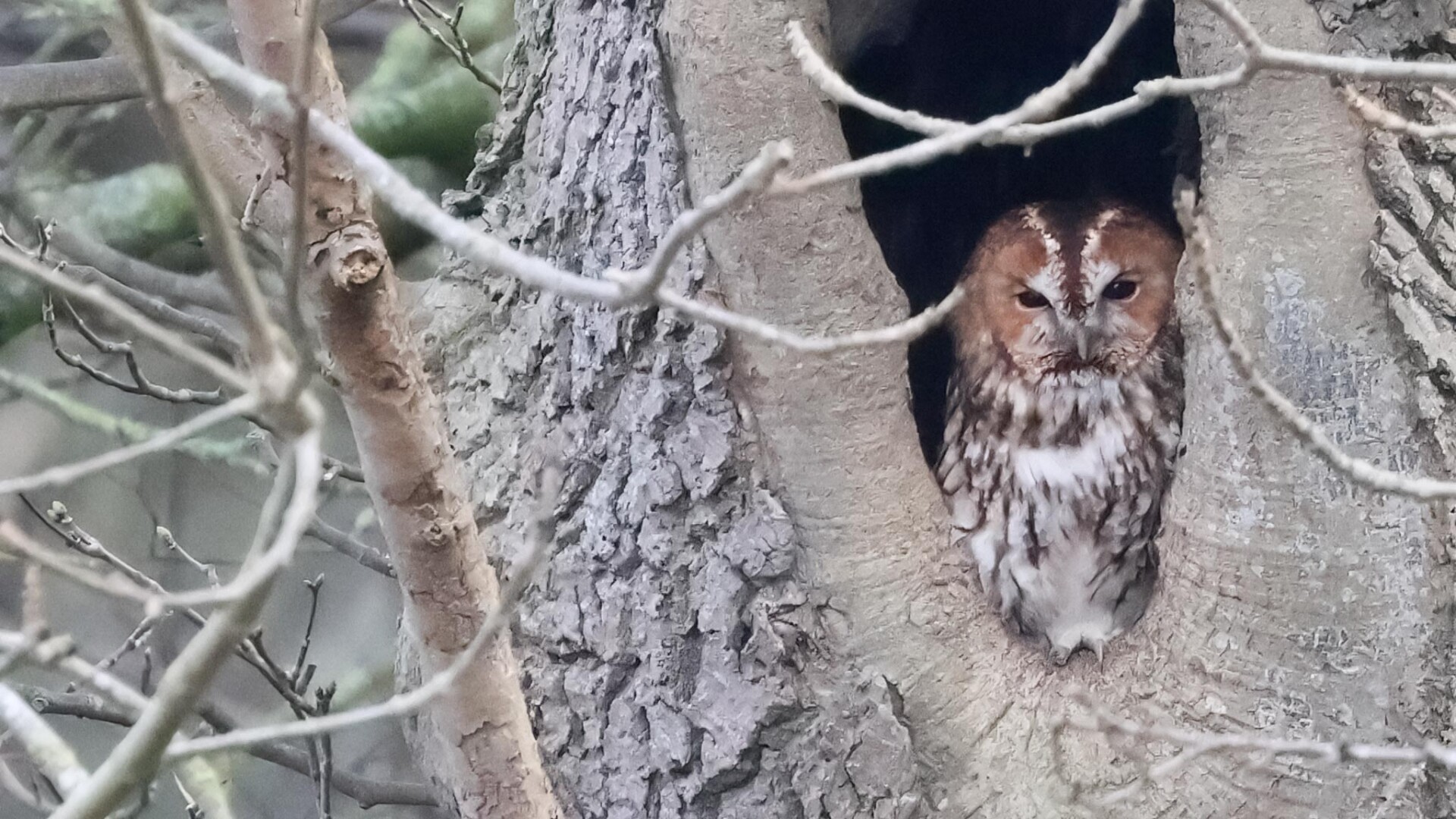
We wanted to have a quick look to see if the regular Tawny Owl was in its usual tree hole, so we drove inland next. As we walked in along the footpath, there was clearly quite a bit of disturbance today. A dog walker came the other day with four dogs running around out in the middle of the field. We immediately feared the worst. There were no birds at all in the cover crop and we were not especially surprised when we came round the corner and found the Tawny Owl’s hole empty.
Back down to the coast, we continued on west. The Glossy Ibis had not been reported from the flood east of Stiffkey this morning, but we stopped for a look anyway. They had apparently been flushed by a shoot yesterday and gone out onto the saltmarsh, so we hoped they had come back onto here today.
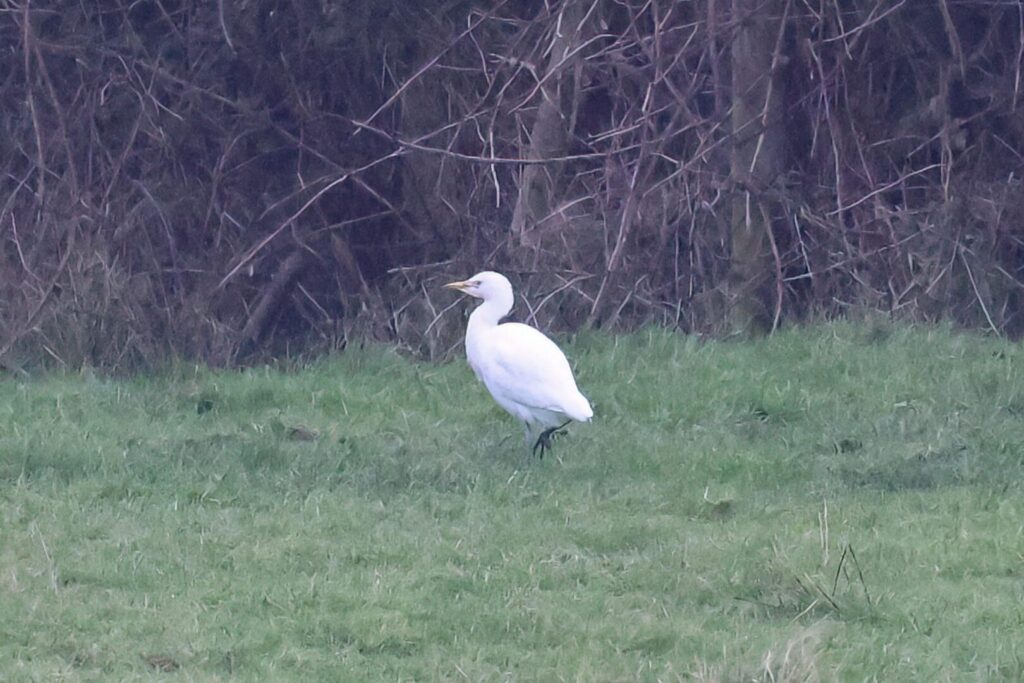
We walked down along the permissive path and when we got to the corner overlooking the flood, we could see lots of birds but no sign of the Glossy Ibis. A single Cattle Egret walking around on the grass by the cattle feeder was nice to see instead. A Little Egret flew in and landed nearby at one point for comparison.
There were several Black-tailed Godwits feeding in the wet grass around the pools with the Wigeon. Nice to see some awake, so we got them in the scope. A couple of Common Snipe appeared feeding too, another better view than earlier. There were lots of Teal and a few Shoveler again, but no sign of any Pintail today. Plenty of Greylags but no other geese. As we walked back, a pair of Marsh Harriers drifted across over the grassy field beside the road.
Driving through the village, we noticed that the flood the other side looked good and there were quite a few birds on it. The Glossy Ibis haven’t been seen there this winter yet, but we tried to pull up to check just in case. Unfortunately, despite having pulled up just before the village to let a car past, we had another car right up close behind us now. Several vehicles then came the other way just at the wrong moment. There was no way we could stop and had to make do with trying to look down as we drove on past.
When we got to Wells, it was time for lunch. We sat at the table outside the cafe, so anyone who wanted to could get a hot(tish) drink. After lunch, we walked up past the new lifeboat station to look at the harbour. The tide was going out but still quite high. Even so, the first bird we noticed as a Great Northern Diver in the channel. It was still a bit further out but as we watched it seemed so be making its way up the channel towards us.
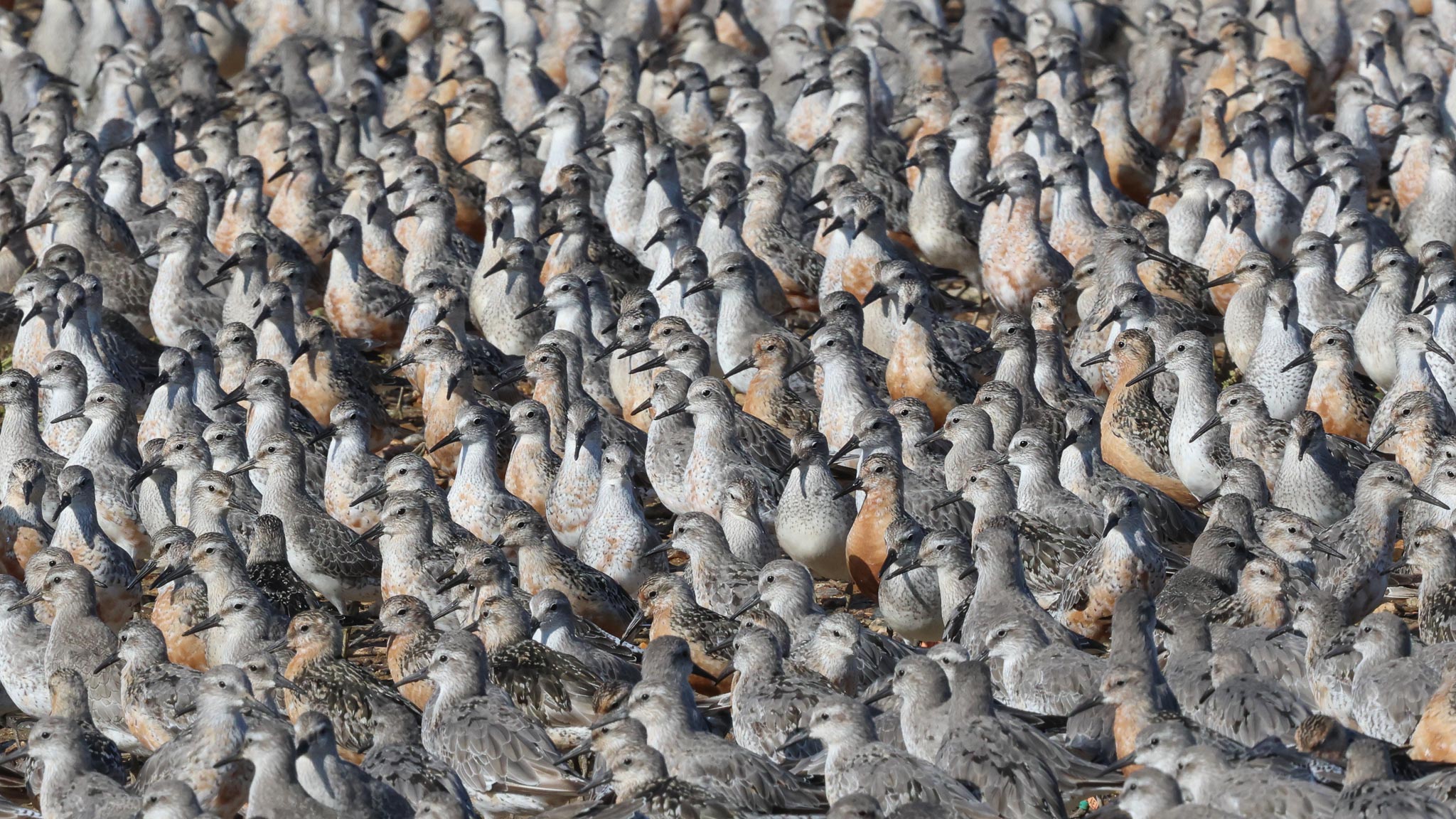
We set up the scopes and scanned through the waders on the sand opposite. There were quite a few Oystercatchers on the shore, and a Grey Plover just behind. Two Knot were in with them, along with a Bar-tailed Godwit. A Common Seal was out on the sandbank but dropped back into the water as it started to recede.
The Great Northern Diver was diving continually and resurfacing further up each time. As it made its way past us, we walked down onto the sand. Several times it surfaced right in front of us with small crabs in its bill which it quickly swallowed whole. As it was successful, it stopped moving up the channel and stayed in the same place diving.
We walked a little further on and got in behind the groynes out of the wind. There were lots more waders out on the mudflats and mussel beds opposite. Lots of Dunlin, several Redshanks, Curlews, Grey Plovers and Ringed Plovers. More Knot now too. A couple of Common Gulls were trying to crack mussels, flying up and dropping them on the stones. An adult Little Gull came in briefly over the channel, flashing its black underwings, but turned and headed straight back out to sea.
Scanning the outer channel we picked up three very distant Red-breasted Mergansers. We got them in the scopes, but it wasn’t a great view and they were diving all the time. Then, as if they had heard our complaints, the two redheads took off and flew in over the channel, right past in front of us. They disappeared round the corner but only a little later, three flew back out. This time, a smart drake was with them. They landed again and we watched them diving in the channel further back.
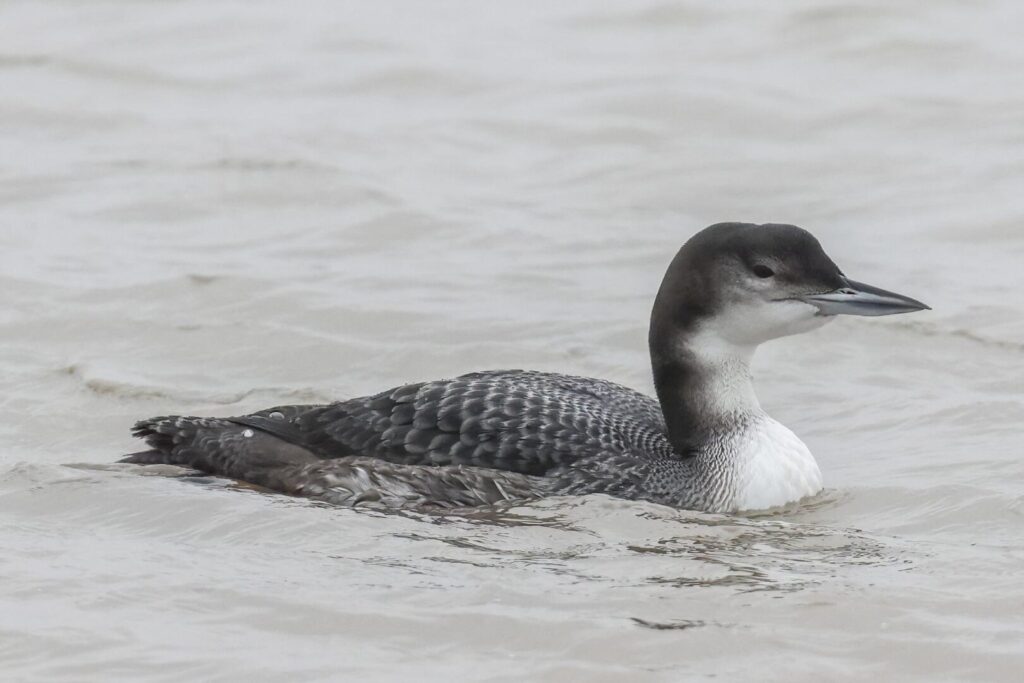
The Great Northern Diver had obviously eaten enough crabs and swam right in until it was almost on the shore. It bobbed on the water right in front of us preening, then seemed to have a short doze. At one point it almost came out of the water, but then pushed back off the beach with its feet. Incredible views and amazing to think it was probably born last summer in the high Arctic. Probably it had never seen people before it arrived here.
While we were watching the Great Northern Diver, we kept scanning through the waders opposite to see if the Greenshank might appear as the tide dropped. We didn’t see where it came from, but then one of group spotted in on the back of the sandbar further out along the channel. It was not always easy to see, feeding in the shallow pools left behind in the sand.
It was chilly out here, even though we were out of the worst of the wind, so with our mission accomplished we walked back round to the car park. We had a message now to say that the three Glossy Ibis were on the flood west of Stiffkey. Just where we hadn’t been able to stop and look for them earlier! We drove back and parked on Greenway. As we walked over the road and down the foot path, we could hear a Great Spotted Woodpecker tapping. Two then chased each other off through the trees.
As we got to the top of the steps, we could see one Glossy Ibis on the flood below, feeding in the wet grass with the Wigeon. As we started to go down, we were very careful not to flush them. Now we could see the other two Glossy Ibis a bit further round. A Red Kite drifted over and they flew across to the other side. A better view of all three together in the open now.
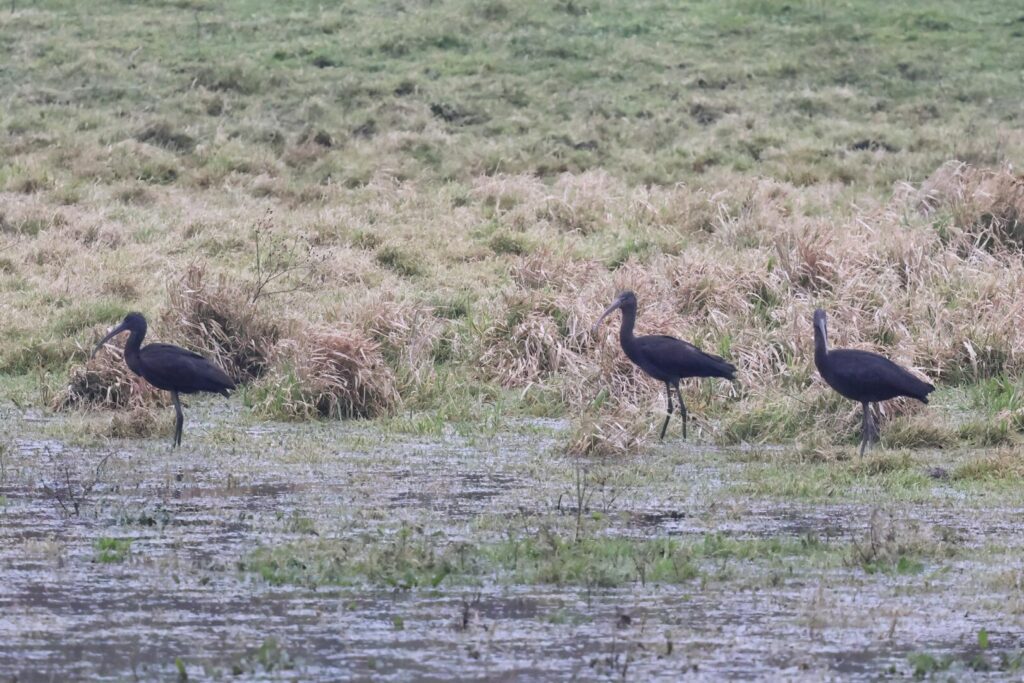
When a male Marsh Harrier flew across low over the back of the flood, all the Wigeon and Teal panicked and flushed. The Glossy Ibis all took off too, circled round with the ducks a couple of times, then flew off towards the village. Most of the ducks eventually settled back down. One of the Glossy Ibis then flew back in but there was no sign of the other two. A winter adult, we had a nice view of it, admiring its colours in scope.
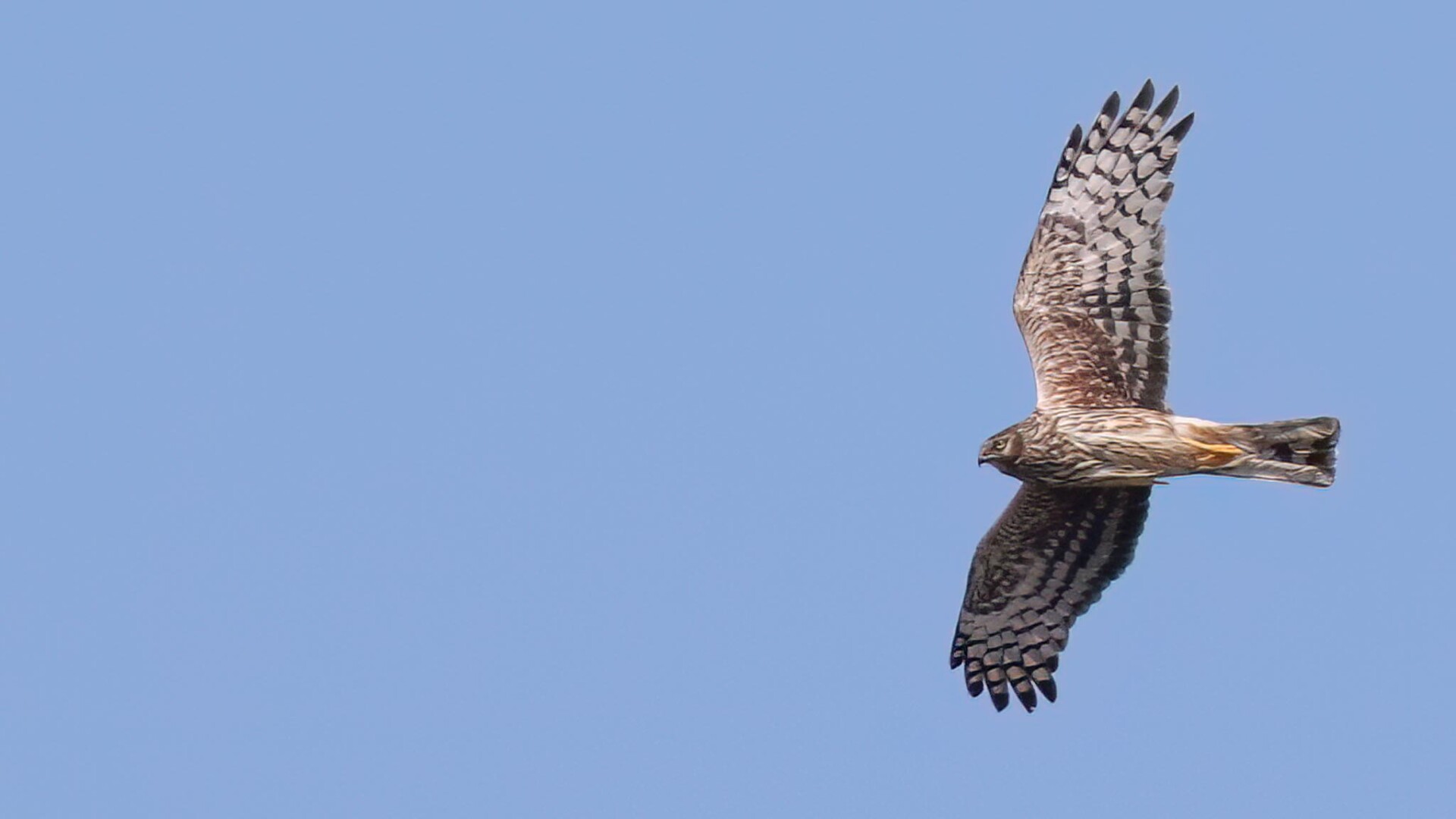
Back at the minibus, we drove down to the far end of the Greenway. A couple of other people were looking out over the saltmarsh beyond and told us apparently there had been a male Hen Harrier out here earlier. We didn’t have to wait too long before we picked it up again, flying off west. The mist was starting to descend again now and it was a bit more distant. We watched it land out on saltmarsh out of view.
The Hen Harriers have been going off east to roost, so we hoped it might yet fly round again and even come back past us. As we stood and scanned, we could see a few Brent Geese, Curlews and Little Egrets out on saltmarsh. A couple of flocks of Golden Plover flew past. A flock of Linnets flew over the car park.
We picked up a Merlin perched distantly on a post away to the west. After a while it flew off low over the saltmarsh, then we spotted again chasing a pipit round and round up into the sky. Great to watch the acrobatics as the dogfight played out, the pipit alternately climbing frantically higher, then turning and plunging down again, the Merlin constantly on its tail. Eventually we lost sight of them behind the hedge. Later was was presumably the same Merlin flew across out in front.
When we heard Pink-footed Geese calling behind us, we turned to see several skeins coming over from the fields inland. It seemed a bit early for them to be going out to roost already, but they flew out across the saltmarsh and dropped down onto the sand below. A large flock of Brent Geese flew in the other way, off the saltmarsh and inland heading back to the fields.
The mist was gradually getting worse and the light was starting to go. Before we all got too cold, we decided to call it a night and head back. It had been great to be out for a couple of days of winter birding in Norfolk, with a nice selection of our special winter birds seen.