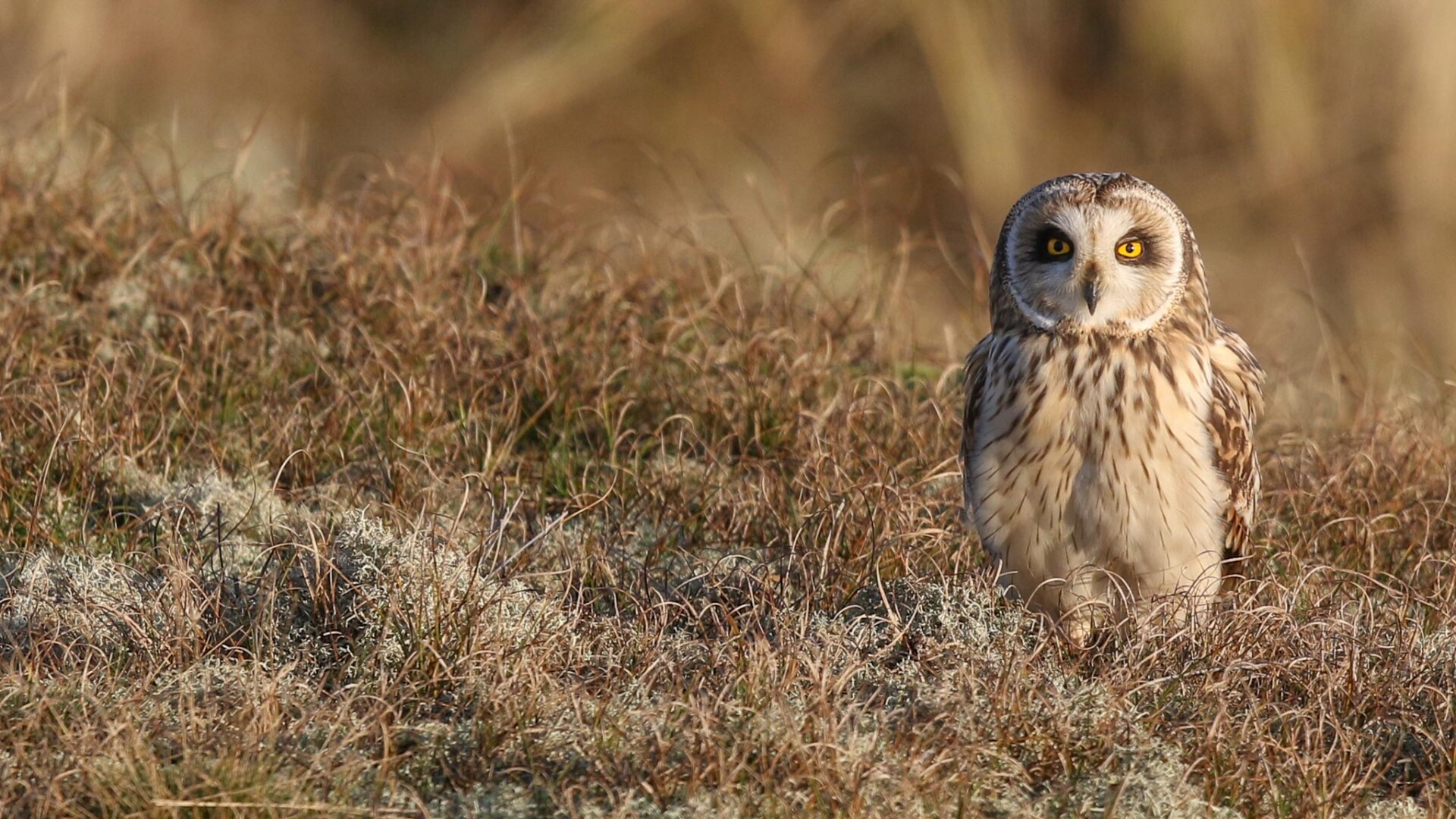
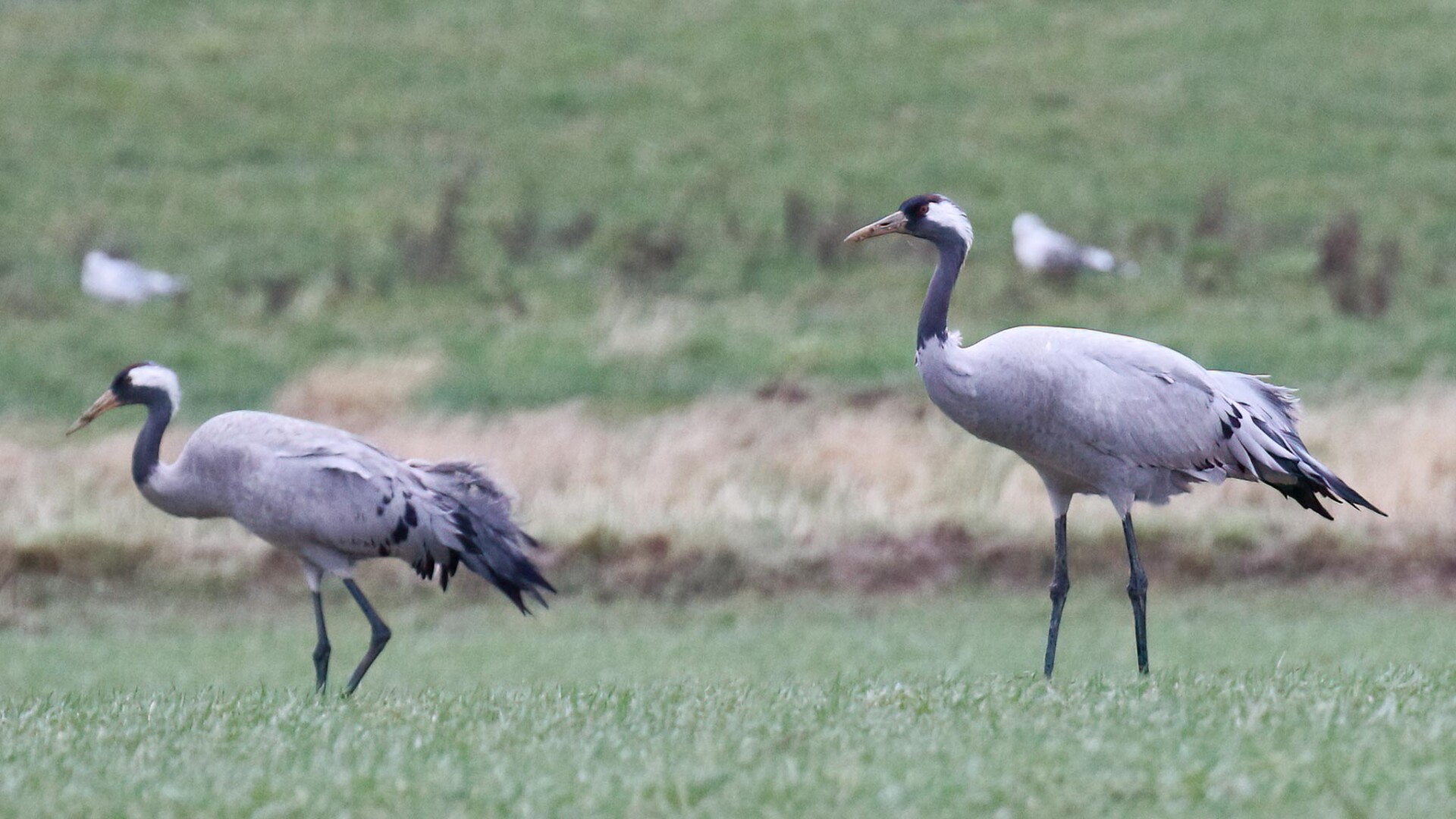
The first of two Winter Birds & Owls single day tours in North Norfolk. After rain overnight, it was a misty start. The mist lifted and it brightened up nicely by mid morning. There were even some pleasant sunny spells, although the mist continued to come and go at times. It was milder than of late too and stayed dry. All in all, pleasant winter birding weather.
It was an early start this morning to try to catch a Barn Owl or two out hunting before it went in to roost. The weather was not ideal for them this morning, but it is always worth trying. As we got out of the minibus we could hear Pink-footed Geese calling. Some smaller groups were flying west in the fog or low cloud overhead, hard to see. Further out, we could see some huge skeins out over the beach. Presumably they were coming up from the roost at Wells and flying along to feed in the harvested beet fields at Weybourne.
Several Little Egrets flew back and forth, briefly looking like they might be something more owl-like in the half light. A succession of small groups of Reed Buntings came up out of the reedbed, flying off inland to feed. There were several Curlews feeding out on the grazing marshes which became easier to see as the light improved.
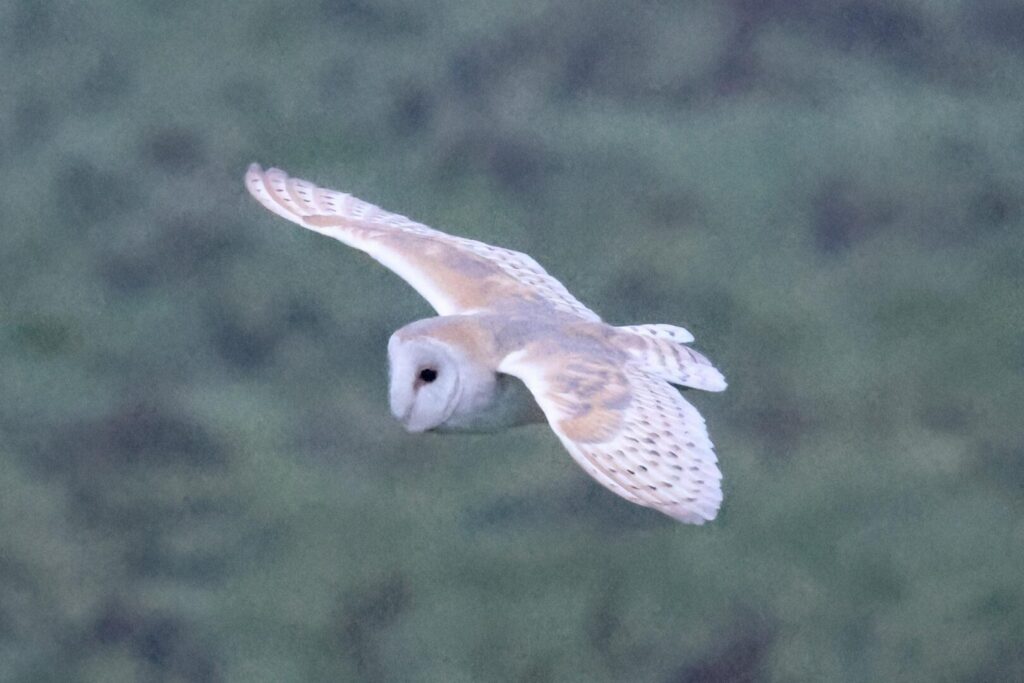
It was a pleasant surprise when we picked up a Barn Owl flying low over the sheep field across the road. As we watched, it turned dropped down into the grass, where we could just see its head. It looked like it had caught something. We just got it in the scope but it was off again, flying round over the field. It dropped into the grass over the back again briefly, then flew up and over the hedge into the next field beyond.
Almost immediately, a second Barn Owl flew in along the bank behind us. It continued straight past us, over the road and out to the sheep field. After several circuits of the field, during which it didn’t catch anything, it turned and flew back towards the far corner. We watched it disappear into the trees, presumably heading in to roost.
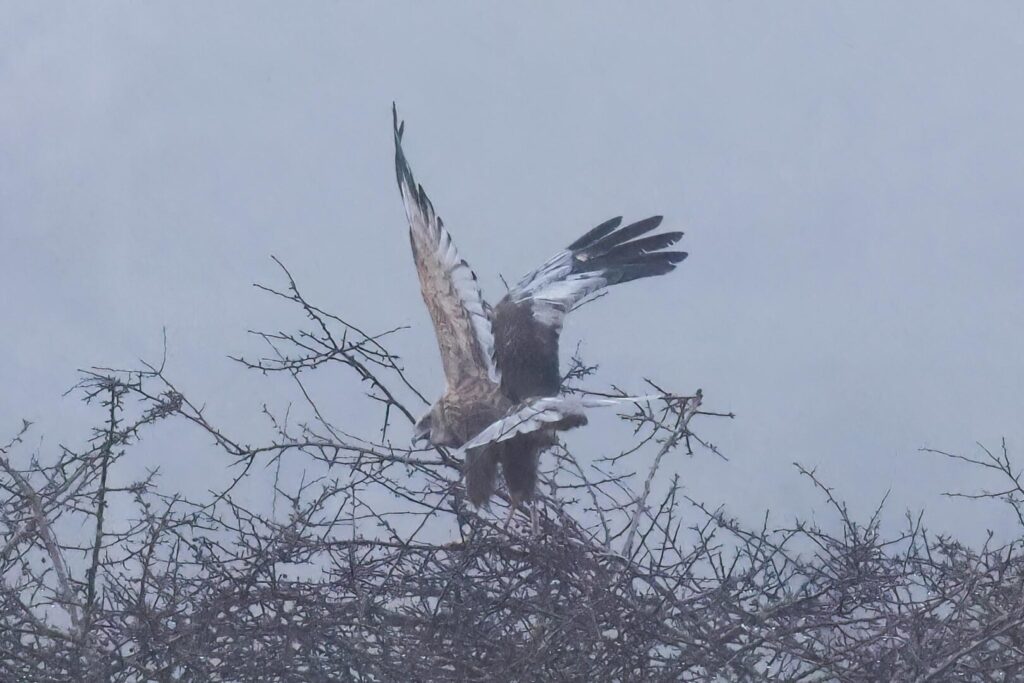
A few Marsh Harriers came up over the reedbed in the middle of the grazing marsh, emerging from their roost site. One male flew up with exaggerated, deep wingbeats, and seemed to be displaying. It had a quick swoop at another male, then flew in the over reeds in front of us. Across the road, it landed on a bush, where we got it in the scope. We could hear it calling.
Another male Marsh Harrier flew over (this one wing-tagged). As it did so, the first lifted its wings and started calling again. It seemed a bit early in the year and not the weather for it, but perhaps it was getting ready for spring already?
Some of the Pink-footed Geese looked to have dropped down towards the reserve at Cley. We were heading that way next anyway, so we made a quick diversion down along Beach Road. The Pinkfeet sometimes like to loaf on Bull Marsh or Cricket Marsh, but there was no sign of any geese there now. There was nothing in the Eye Field yet either. A few Brent Geese flew over but didn’t land.
As we parked at the Visitor Centre, a large flock of Lapwings flew over, heading inland to feed in the fields. More unexpectedly, as we looked up a group of Redwings circled round with them. We walked out for a quick look in Bishop Hide. Something spooked them and the Avocets flew up from the scrape and circled round. We could see them over the reeds. A Little Grebe was diving on the edge of the reeds in the main Catchwater Drain from the bridge.
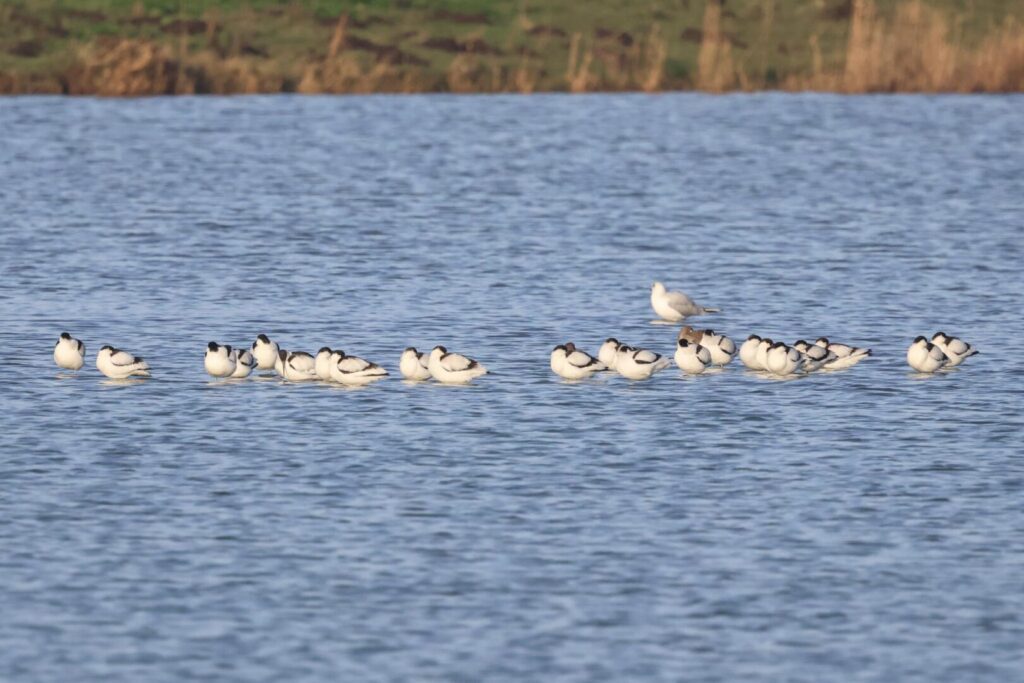
Once we got in the hide, we could see the Avocets again, back down standing in the water. We counted 22, up from 15 the other day. Hard to tell at this stage whether they are just moving round locally after the freeze last week or whether the first ones are returning already. A couple of Black-tailed Godwits were sleeping in with them. When we arrived, they were out in the grey but then the mist cleared and the sun came out.
There were lots of Teal and Shelduck scattered around Pat’s Pool. A small group of Wigeon was feeding on the grass on the far side, in front of the central hides. When a Marsh Harrier over the back spooked everything, the Wigeon flew out onto the water.
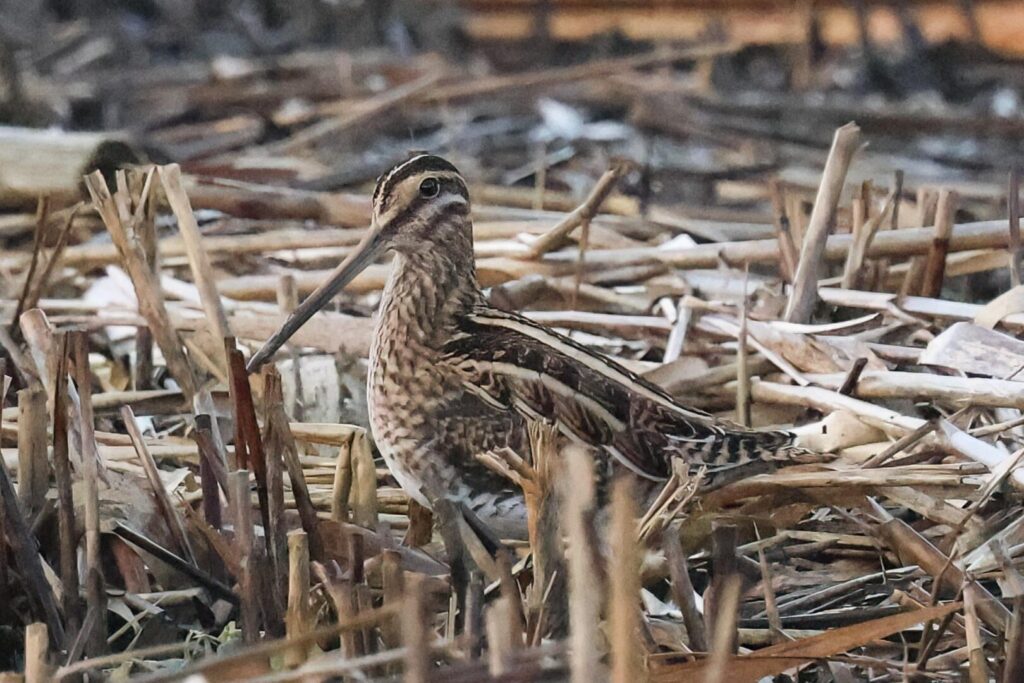
A Common Snipe was standing out in the middle of the cut reed to left of hide. A nice view in the scope before a Redshank ran out of the reeds and spooked it. The Common Snipe ran further over behind the reeds. We thought we might be also to see the Jack Snipe through the thermal imager but by the time we turned the scope to it, the heat source had disappeared and we couldn’t see anything now.
There was not much else happening out here at the moment so we decided to move on. As we walked back to the car park, a Cetti’s Warbler shouted at us from the brambles by the path.
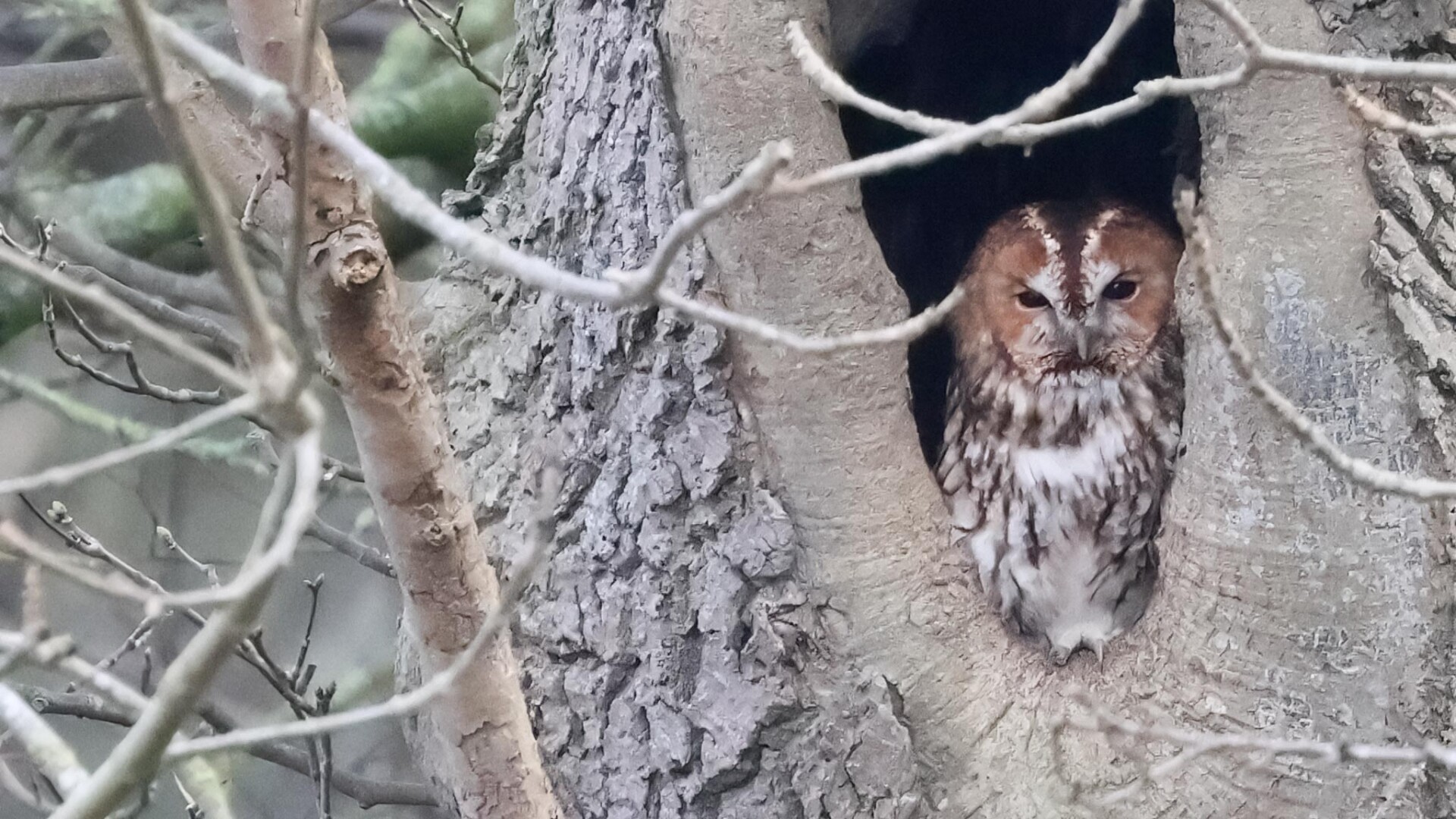
We drove inland to look for a Tawny Owl next. As we parked at the start of the footpath, several Red-legged Partridges ran off across the field in front. As we walked down along the path, several Linnets, Greenfinches and Chaffinches flew up and landed in the hedge. A lone Fieldfare was perched on the top further along, preening.
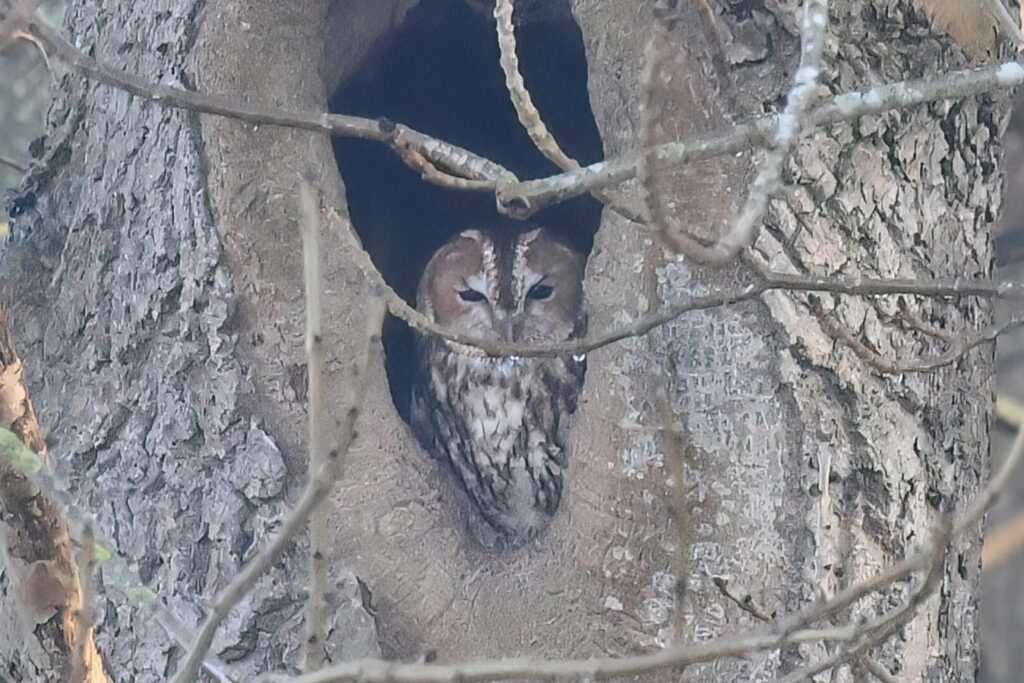
Round to the far side of the wood, we looked back to see the Tawny Owl at the entrance to its tree hole. It seemed settled and we had some nice views in the scope. Then suddenly it turned and dropped back into the hole out of view.
As we walked back round on the path, a couple of Song Thrushes flew up from the grass into the hedge. Driving back down to the coast, we called in at Blakeney for a loo stop and a coffee break. Looking across the road, we could see a Great Crested Grebe in the harbour channel opposite and an Oystercatcher on one of the sandbars. A couple of Red Kites were perched out on posts on the saltmarsh. One of the Kites was eating something, which the other then flew across and tried to snatch. It was unsuccessful and disappeared off inland.
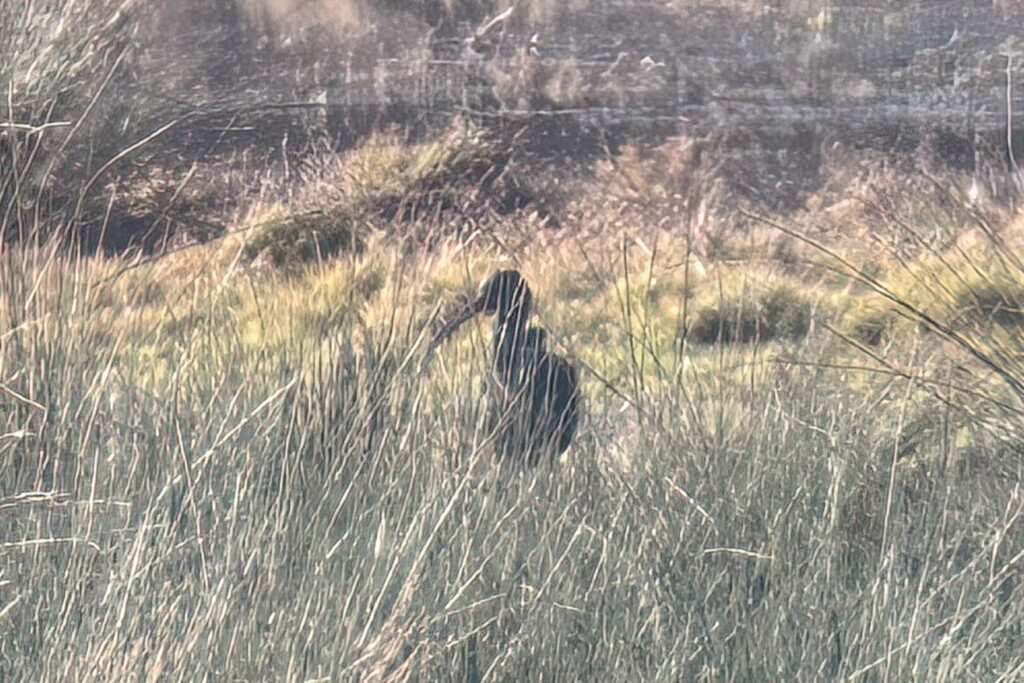
After our coffee break, we made our way on west to Stiffkey. As we stopped in the layby by the road before the village, several Skylarks fluttered up. One even started singing. First we took the permissive path down to view the flood. We came out of the trees just to see the three Glossy Ibises flying up and away. Apparently they had been flushed from the corner by a passing Marsh Harrier. Thankfully they circled round and landed again out in the middle.
We got the Glossy Ibises in the scopes but they quickly walked into the rushes. They were much harder to see now, as they stood in the vegetation preening. Occasionally we could see a head come up with a long downcurved bill.
Scanning around the rest of the flood, there were lots of Greylags on here, and a nice selection of ducks including several smart Pintail. A large group of Lapwings was resting on one side of the pool and a small group of Black-tailed Godwits on the other. Several Common Snipe were feeding in the wet grass. Looking down at the riverbank in front of us, a Water Rail appeared walking along the edge of the water. Then it saw us and hurried back into the vegetation.
Someone else walked up to the side of the road and realised you could get a slightly better view of the Glossy Ibises from there. We went over for a look too. Then they disappeared into the rushes again.
We walked back along the path and continued on past the layby now. A Raven flew over calling, still a fairly scarce bird in Norfolk. Crossing the road and taking the footpath down by the river, we heard a Bullfinch calling. Looking through the trees on the far bank, we could see the pink male Bullfinch feeding on the buds of a small tree. A Coal Tit appeared in the trees too and started singing. Continuing down alongside the Fen, a couple of small flocks of Fieldfares flew over high calling. It seemed like there were thrushes on the move today.
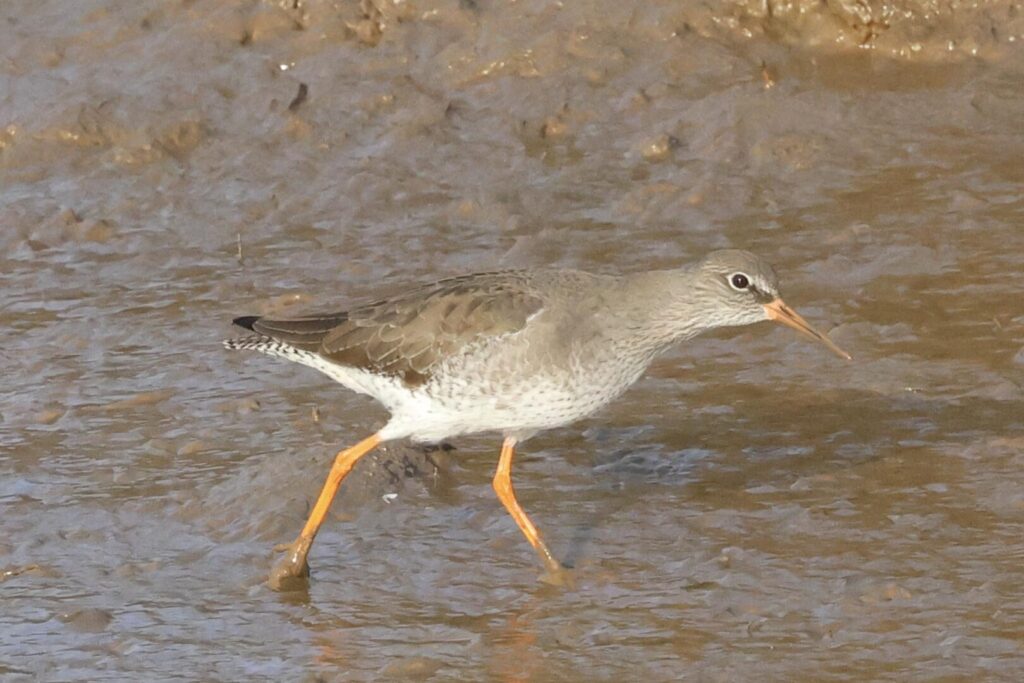
At the far end of the footpath, we climbed up the steps and came up onto the seawall. Looking down into the creek beyond, we could see several Redshanks and a single Grey Plover out on the mud. A young Marsh Harrier flew across over the saltmarsh behind. The other side of the seawall, there were lots of Lapwings on Stiffkey Fen.
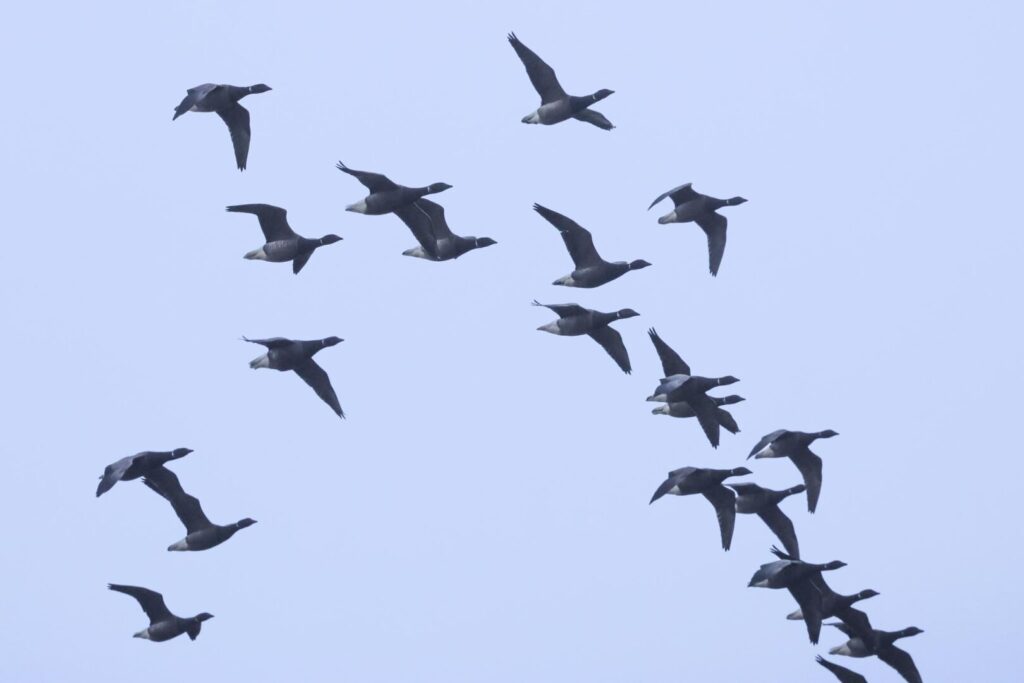
Walking down along the seawall, a Grey Wagtail flew over. A succession of small groups of Brent Geese flew up out of the harbour, over our heads calling, and disappeared off inland. Further on, a couple of Bar-tailed Godwits were down on the mud on the far side of the creek too.
We continued on round and out to the edge of the harbour. There were several people already there scanning with scopes. They had found a Long-tailed Duck out in Blakeney Pit but it was very distant. It was diving continually too and hard to see. There were several Red-breasted Mergansers and a Great Crested Grebe out there too.
There have been some other grebes out here but the tide was out now and we couldn’t see them in the bits of the harbour we could see. We did find a couple of closer Little Grebes in the channel in front of us – not the ones we were after. Scanning all the bits of the channels we could see, we did eventually manage to find another Long-tailed Duck a bit closer. This one was diving too but was a bit easier to see.
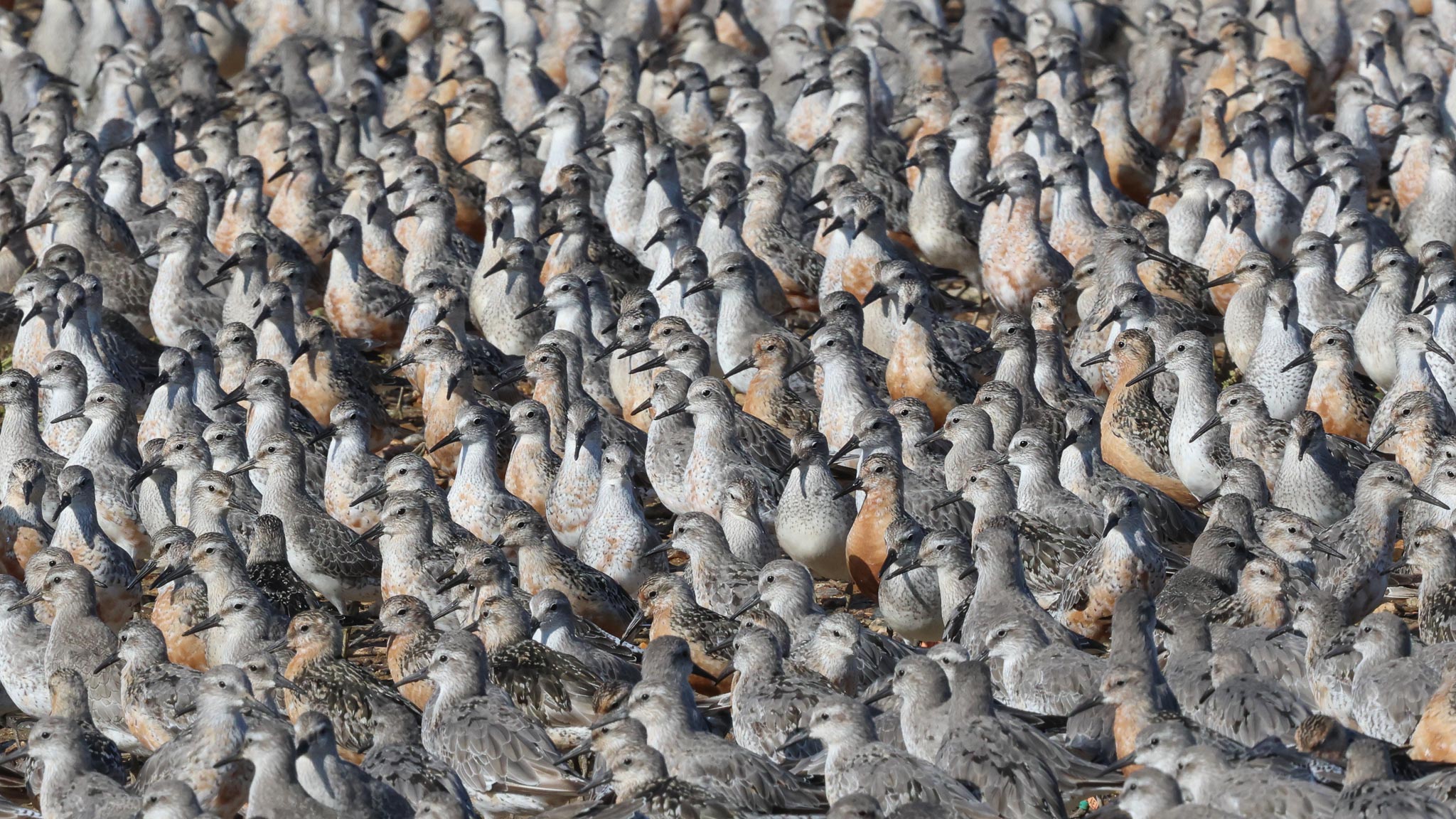
There were still a few Brent Geese out in the harbour and we got the scope on a couple of closer ones. Lots of gulls were loafing out on the mud, and we managed to find one or two Lesser Black-backed Gulls in with the Great Black-backeds and Herring Gulls. There was a nice selection of waders too – lots of Dunlin, Oystercatchers, Curlews and several Knot. A Rock Pipit flew up off the saltmarsh and over the channel. We could see some distant Grey Seals out on the Point.
Time had flown and it was already time for lunch. As we walked back down by the river, a Song Thrush was singing in the trees. Is spring on its way? We made our way on along the coast to Wells, stopping briefly to look at a couple of Cattle Egrets in a field as we passed. When we got to Wells beach car park, we found a picnic table at the cafe, where anyone who wanted could get a hot drink.
After lunch, we walked up past the RNLI station to look out across the harbour. The tide was coming in fast now and a couple of Common Seals were hauled out on the remains of a rapidly shrinking sandbar. Scanning the harbour channel further out, we found a Great Crested Grebe first, then a Great Northern Diver. The diver was fishing just off the seal fence, diving continually.
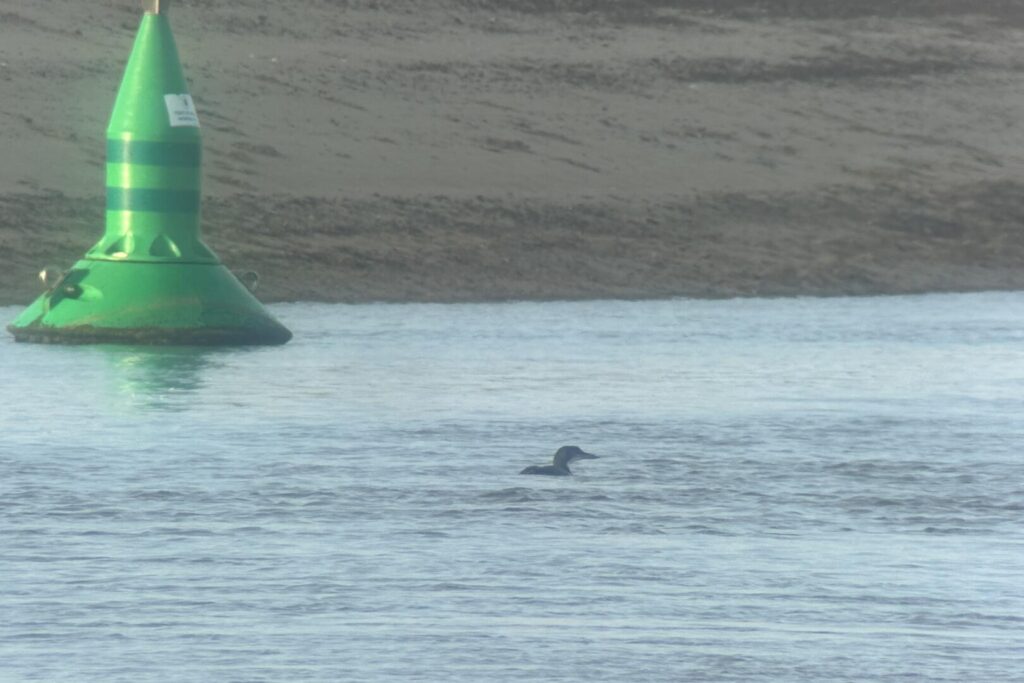
We had nice views of the Great Northern Diver in the scopes from here, but we were hoping it might swim up a bit closer with the tide. Then a fishing boat motored in off the sea and up the channel. It started to push the Great Northern Diver towards us, every time it resurfaced it was nearer. But the boat was going too fast and quickly passed the diver, which then swam back out to where it had been.
We walked down onto the sand and round the edge of the channel away from the sea. There were lots of waders on the shore opposite so we stopped to look through them. Several Oystercatchers and Bar-tailed Godwits were gathered on a sandbar and a single Sanderling was running round in between them. Further back on the sands, there were lots of Dunlin, several Grey Plover and Ringed Plover. We could see Turnstones on the mussel beds with more Oystercatchers, and plenty of Shelduck.
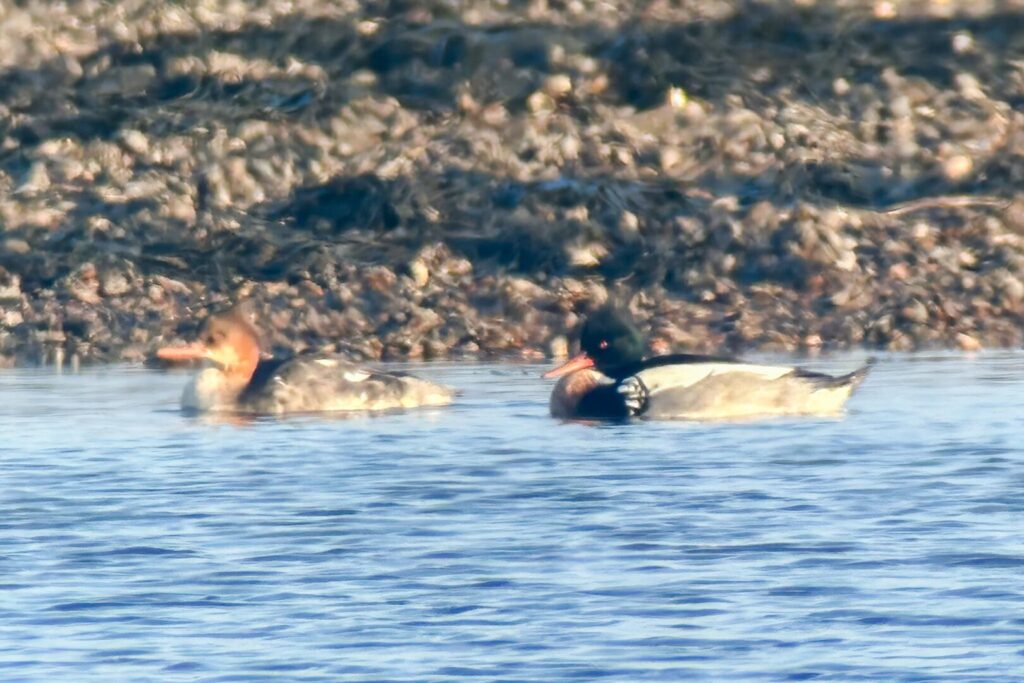
Three Red-breasted Mergansers were flushed from further up the channel by the fishing boat. They flew in our direction and landed across the far side of the channel, a drake and two redheads. We had good views of them in the scopes as they swam past, much better than the distant ones in Blakeney harbour earlier. One of the redheads walked up onto the sand opposite, while the drake went to sleep on the water in front of it.
Continuing on round to the car park, we drove back east along the coast road towards Cley. Dropping down the hill out of Blakeney, we could see huge skeins of Pink-footed Geese coming up off the marshes ahead of us. As we parked and got out, more skeins flew off overhead. It wasn’t quite time to go to bed yet, so presumably they were heading west first to gather in the fields before heading in to roost.
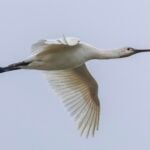
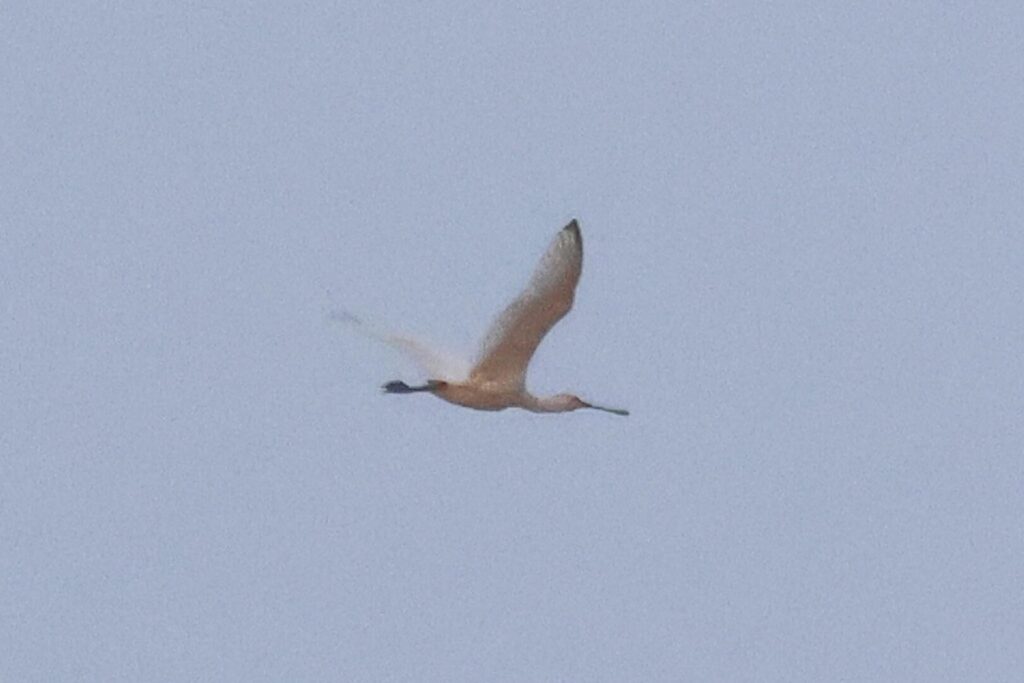
While we were watching the geese, we noticed a Spoonbill flying over. Most of the Spoonbills which spend the summer here head south for the winter. Normally we have one or two which stick it out, but they have been thin on the ground this winter. This is the first we have seen for a while. We watched it disappear off over the mill and drop down east over the village.
We walked out on the bank past the reedbed, as far as the first corner. We could see several Marsh Harriers starting to gather out over the Freshes, getting ready to go to roost. A Common Buzzard was perched in a tree out in the reeds by the decoy pool, waiting for darkness to fall, along with a Kestrel. We spotted a very distant Barn Owl briefly, right over on the far side by Blakeney Bank, but there was no sign of any owls our side this evening.
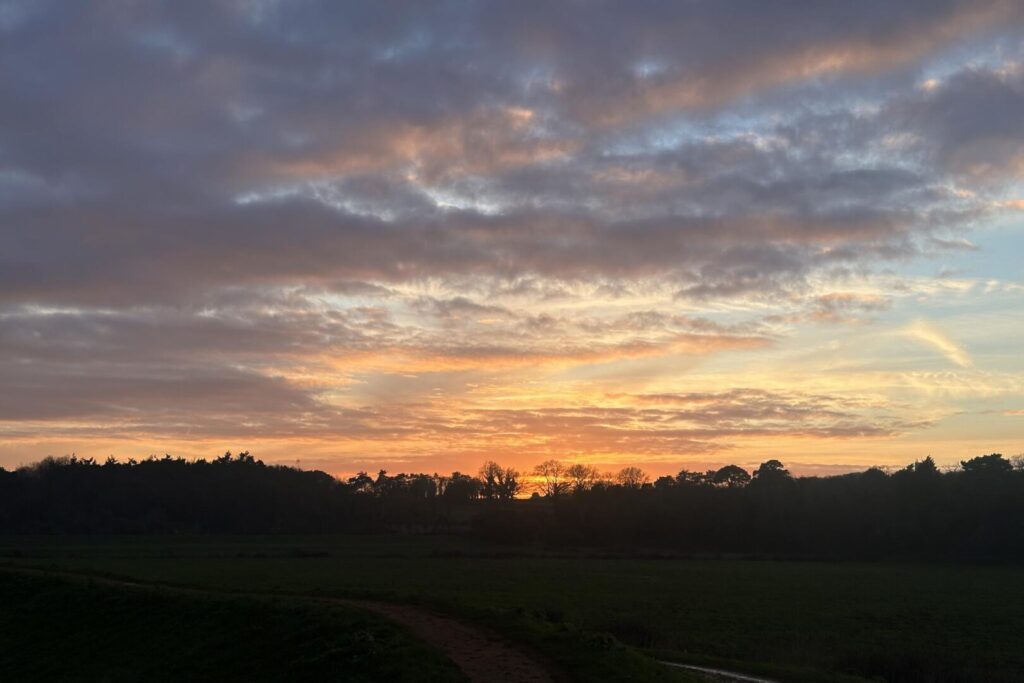
The last of the Pink-footed Geese came up off the grazing marshes and we watched them flying off behind Cley Mill. Looking back behind us now, we could see an impressive sunset over the trees.
As the light started to go, everything was heading in to roost. A Grey Heron walked up out of the ditch in front of us before flying off. A couple of Ravens came up off the Freshes kronking and dropping into the trees by Wiveton Hall. We could hear them in there for a while before they flew off again up the valley. The flock of Curlews came up from across the road and headed off out over the Freshes towards the harbour. A couple of flocks of Pied Wagtails flew in and dropped down into the reeds.
Looking out beyond Blakeney, way off to the west, we could see huge waves of Pink-footed Geese flying out to roost. We got them in the scope and watched as they circled down onto the sands just this side of Wells. Then it gradually seemed to go quiet. As we walked back towards the minibus, a Sparrowhawk flew across over the reedbed in front of us.
It was time to call it a night. It had been a very successful day out, with a few owls and a nice selection of other winter birds.