Not a tour but a 3-week birding trip to Brazil back in August. Part 2 of this blog covers the second part of our trip, to the Pantanal. You can find Part 1 here.
It is such a vast country, and with limited time available, we needed to focus on a small area. On this trip, we took in the famous Pantanal, Cerrado and up into the Amazon basin, mainly in Mato Grosso but briefly just into neighbouring Pará state. We were looking for some specific localised endemic birds, as well as the spectacular variety of mammals the area offers.
If you are interested in visiting Brazil, please let us know and we would be happy to see if we can arrange a tour there. In the meantime, we have introduced an exciting new itinerary for 2026 to Peru, which takes in many similar species to the Amazon basin which we saw in Brazil. You can read all about the Peru tour here.
14th-16th August – Pousada Piuval
Leaving Chapada dos Guimarães just after midday on 14th, we drove back round Cuiaba to Poconé. There are no filling stations in the Pantanal, so we made sure to fill up the car. We chose petrol this time as in theory we would get more mpg than with ethanol – our rental car could switch between the two automatically. Then out of town and we turned onto the famous Transpantaneira, the road which crosses the Pantanal. A dirt track 147km long, with 122 bridges to cross, down to the end at Porto Jofre.
We didn’t have to go far along the Transpantaneira today before we arrived at the entrance to Pousada Piuval, a 7,000 hectare cattle ranch and eco-lodge where we would be staying for the next couple of nights. The environment was already much wetter here, even though we had just entered the northern Pantanal. Even before we left the dirt highway, we stopped to photograph a couple of Plumbeous Ibis and Wood Storks which were in the ditch by the road.


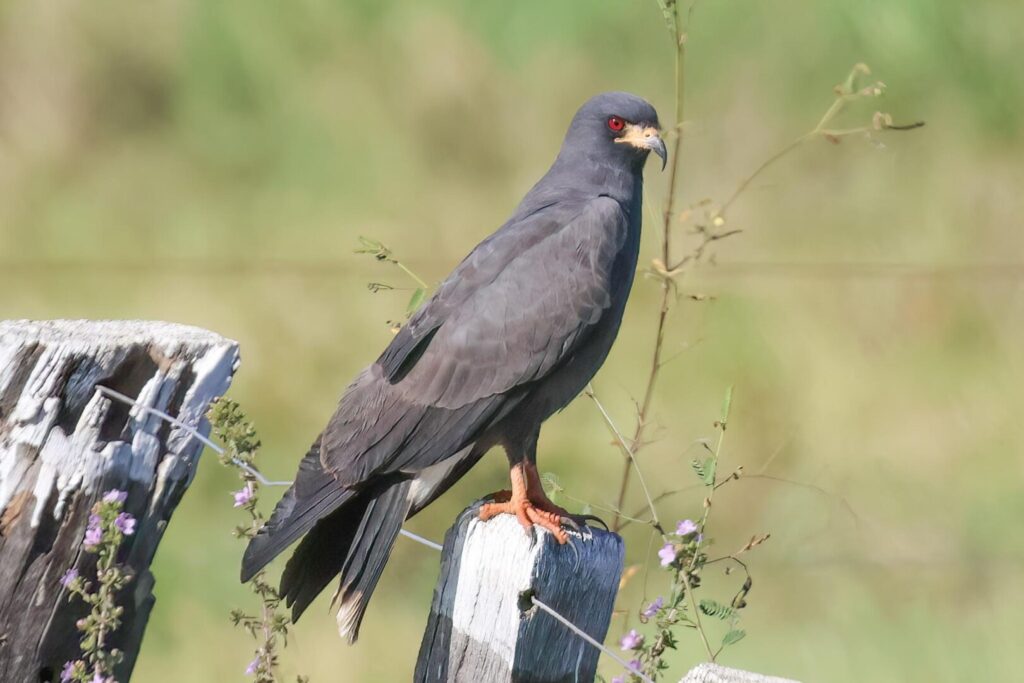
It took us the best part of an hour just to drive down the entrance track to the lodge. There were birds and other wildlife everywhere and we kept stopping. We watched a Snail Kite feeding on snails, flying down from a fence post by a marshy area. A flock of Greyish Baywings coming up out of the grass behind. Just beyond, a Bare-faced Ibis and a couple of Wattled Jacanas were in the wet grass by a pool right next to the track.
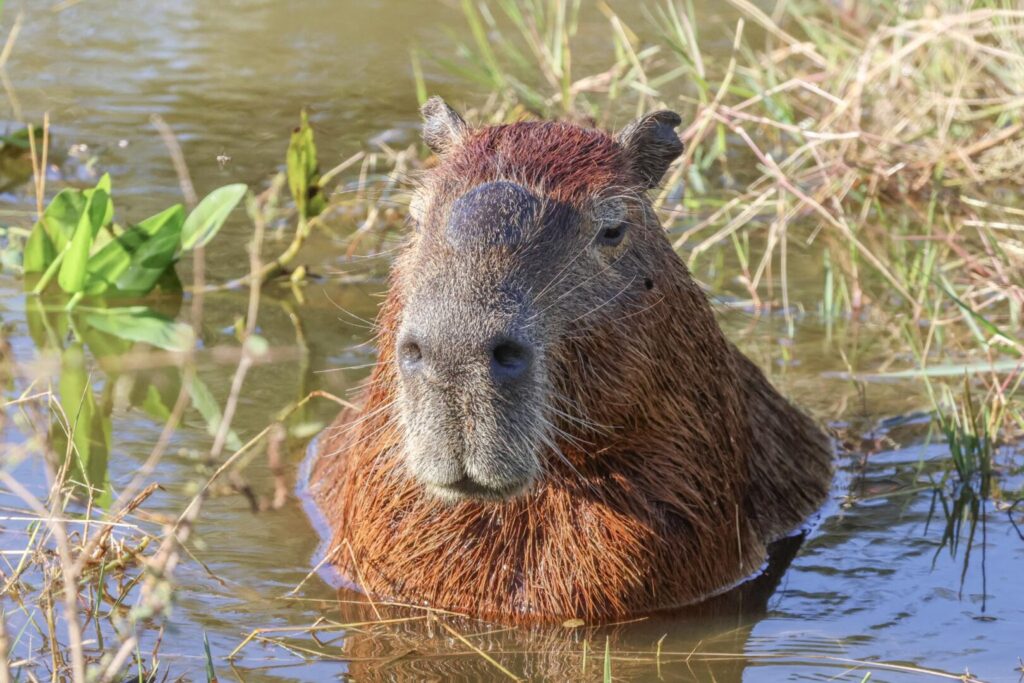
We had to tear ourselves away to drive on down to the lodge, although we had to stop again for the Capybaras which were standing in the middle of the road. They reluctantly walked down the bank and into the small pool beside.
Even once we reached the lodge, we just had to set up the scope as soon as we arrived. Scanning out to the marshy area in front, we could see Southern Screamers and Jabirus, huge flocks of Cattle Egrets, Buff-necked Ibis, Roseate Spoonbills, Little Blue and Cocoi Herons. Both Great Black and Savanna Hawks were perched on any suitable vantage points. A Solitary Sandpiper was on the edge of the nearest pool and a Lesser Yellowlegs flew up further back. A Black Skimmer flew over.
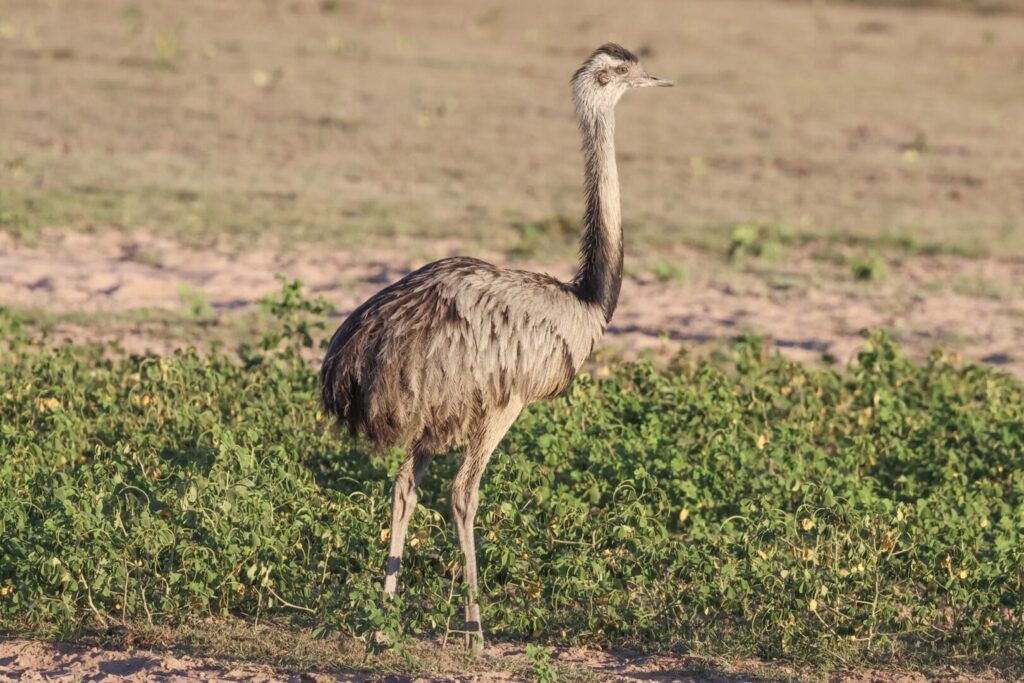
After checking in and putting our bags in our room, we went straight back out to scan again. A Greater Rhea walked past just beyond the fence. We had seen plenty driving round already but it was nice to get a good look at them now.
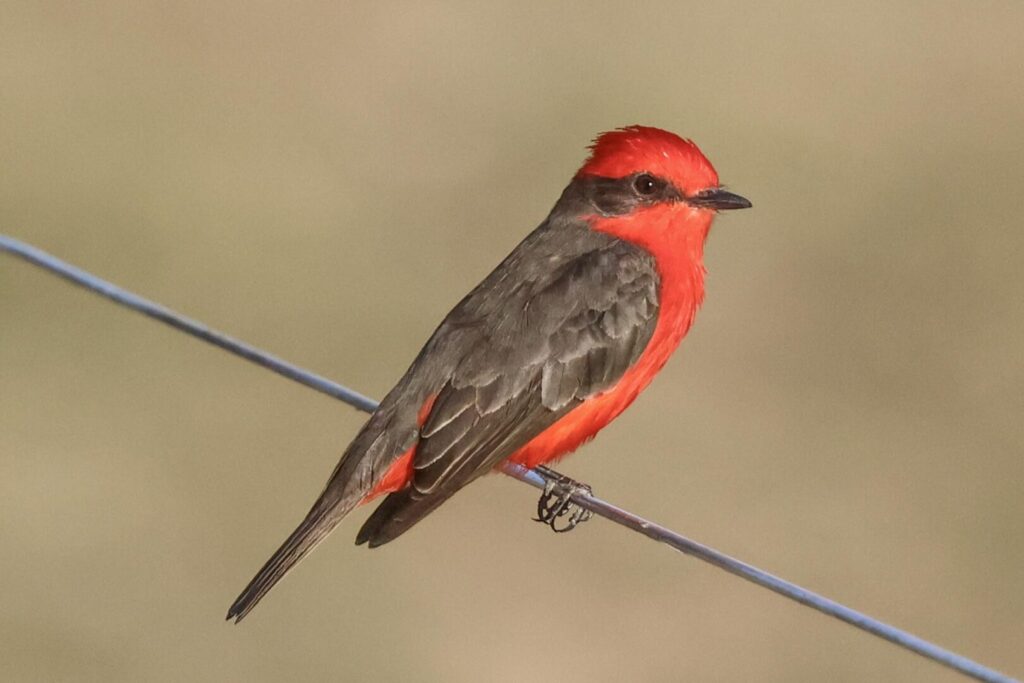
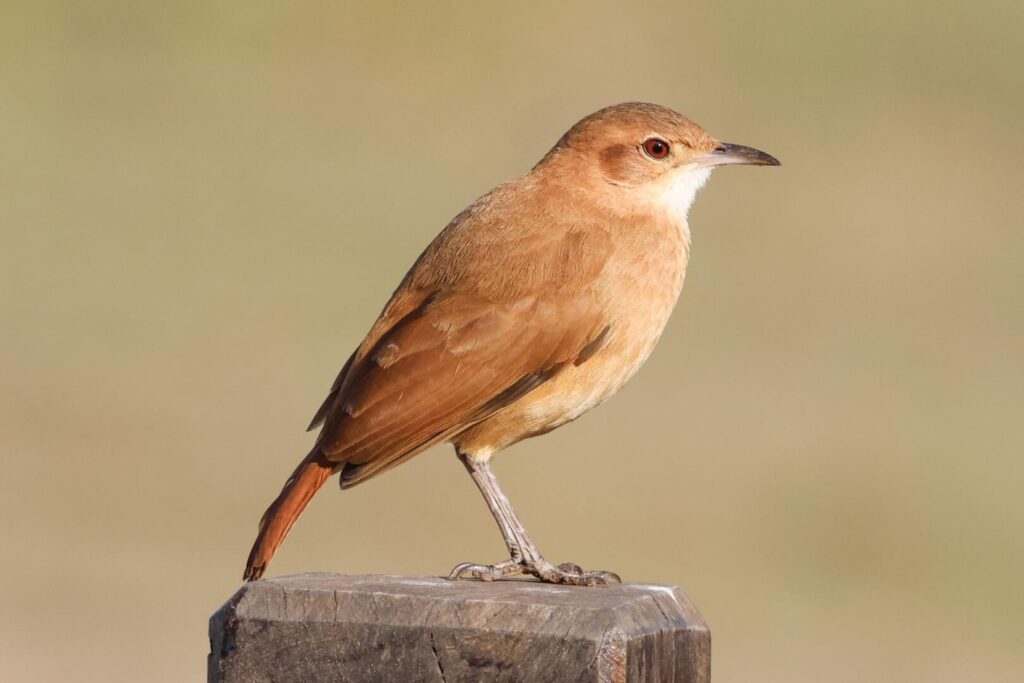
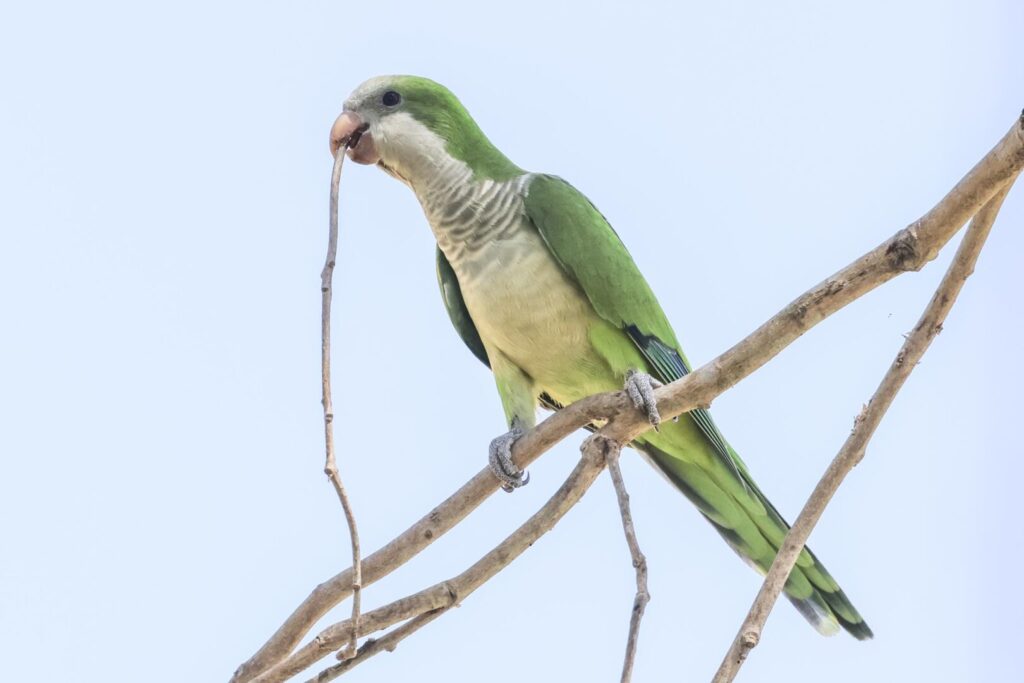
Around the lodge, there were lots of Cattle Tyrants and Rufous Horneros, Shiny and Giant Cowbirds. Lots of Monk Parakeets and a couple of Orange-winged Amazons flew over. A smart male Vermillion Flycatcher was hawking from the fence.
A Long-tailed Ground Dove landed on the fence, a species we were hoping to see here. Although it has a wide range in Brazil and Bolivia, it is patchily distributed and generally uncommon. We picked up a White-rumped Monjita out on the edge of the marsh.

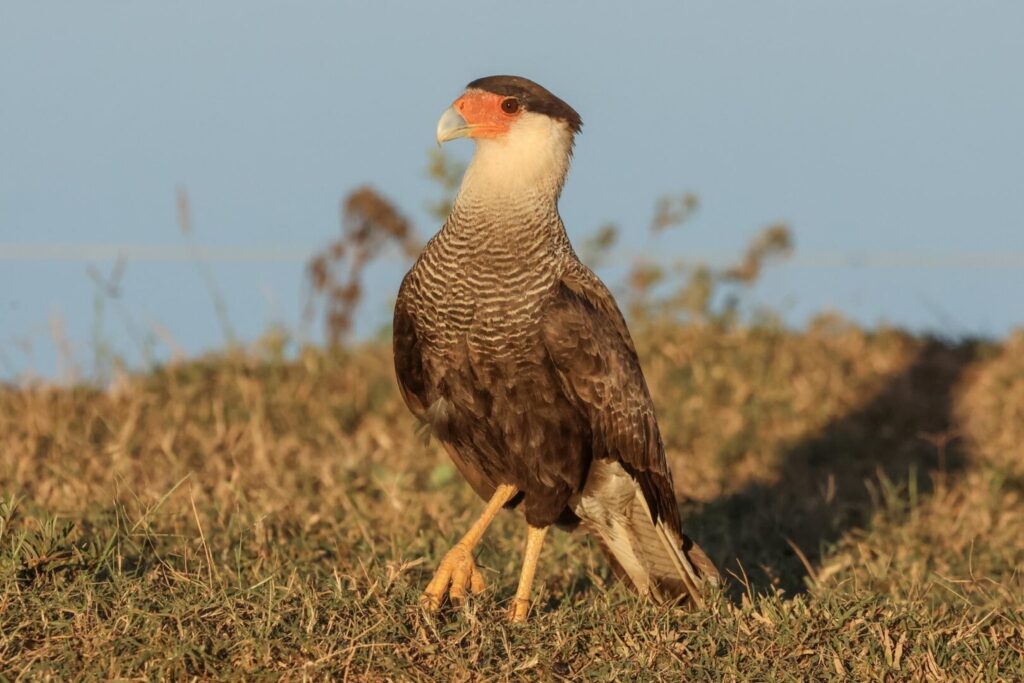
A Crested Caracara was walking around on the lawn by the buildings.
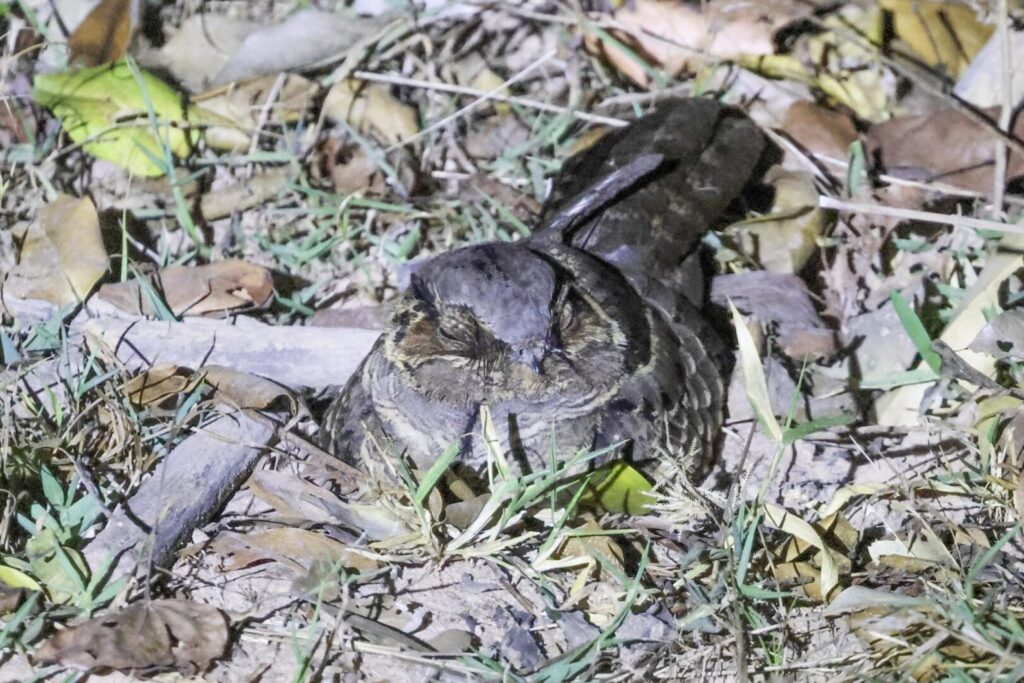
We hadn’t prearranged any safaris but we booked ourselves on one of the regular evening/night drives to start. It was rather frustrating, as the guide drove past a succession of nightjars and Nacunda Nighthawks. It quickly became clear that we were not really going to stop for any birds. He did turn the light on a Great Potoo as it flew off and one Common Pauraque on the ground.
We were here for the mammals as much as the birds and there were not many of those either. One Nine-banded Armadillo, a Red Brocket Deer and several Brazilian Rabbits, plus a couple of Crab-eating Foxes as we got back to the lodge. Then it was straight in to dinner when we got back and, with an early start tomorrow, we retired to bed.
The following morning, we rose early for a dawn safari, supposedly good for Giant Anteater, one of the things we most wanted to see here. We were immediately disappointed to find we were in a jeep with a French couple and their two young children. No surprise, they had no interest in looking at any birds either – it seemed like they only really wanted to see a Giant Anteater (and maybe a Jaguar, but not much else). We did stop to look at a South American (or Brazilian) Tapir.

And we got out of the jeep to look at a roosting Great Potoo. Fantastically well camouflaged in the branches. But no sign of any Anteaters.

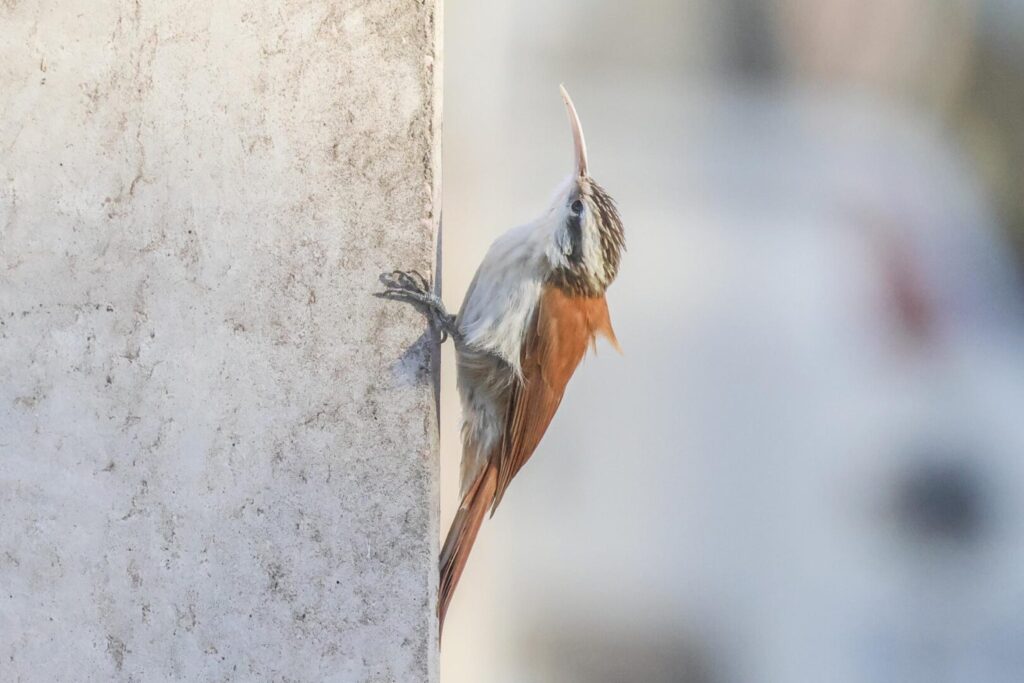
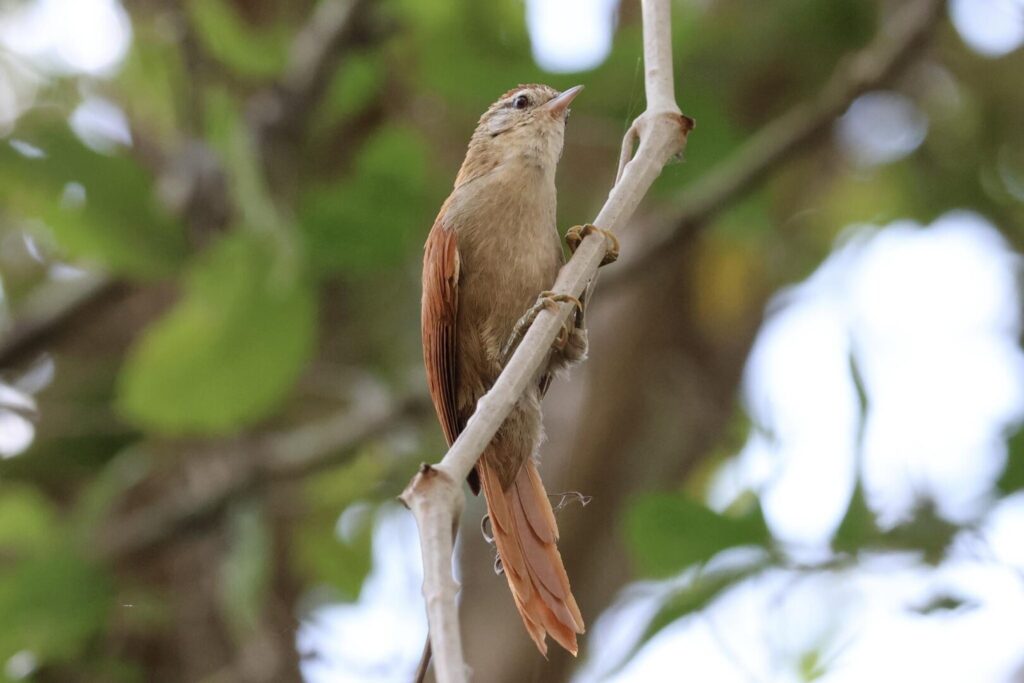
When we got back to the lodge, a Narrow-billed Woodcreeper was working its way round the concrete electricity pylon post in the middle of the parking area. More Concretecreeper than Woodcreeper!
Fortuitously, we had the same driver this morning who had been the guide on our night drive yesterday. Most of the guides and drivers don’t speak any English but Julio did. Sensing our frustration, he stopped to talk to us when we got back to the lodge. He suggested we try and book ourselves a private safari, where we might have more opportunities to stop for birds. But he also told us that the Giant Anteaters had been showing well in the paddocks recently in the afternoons. We should try to get on to one of the afternoon safaris which specifically went to the right area for those.
We spoke to the staff in reception and were told we couldn’t book a private safari now until tomorrow. With the benefit of hindsight, it is worth arranging those in advance, if you visit. However, with Julio’s help, we did manage to book ourselves on one of the right jeeps for the afternoon.
After breakfast, we didn’t have much time before the morning drive. Still, the light was perfect and the photo opportunities for some of the commoner species just around the lodge are plentiful.


We then went straight out on another morning safari. With Julio driving us again, this time he very kindly stopped for lots of birds too. We even managed to get the other people in the jeep enthused! Mostly large and colourful birds but we did manage to stop briefly to look at highlights including some Golden-collared Macaws and a couple of Red-billed Scythebills.
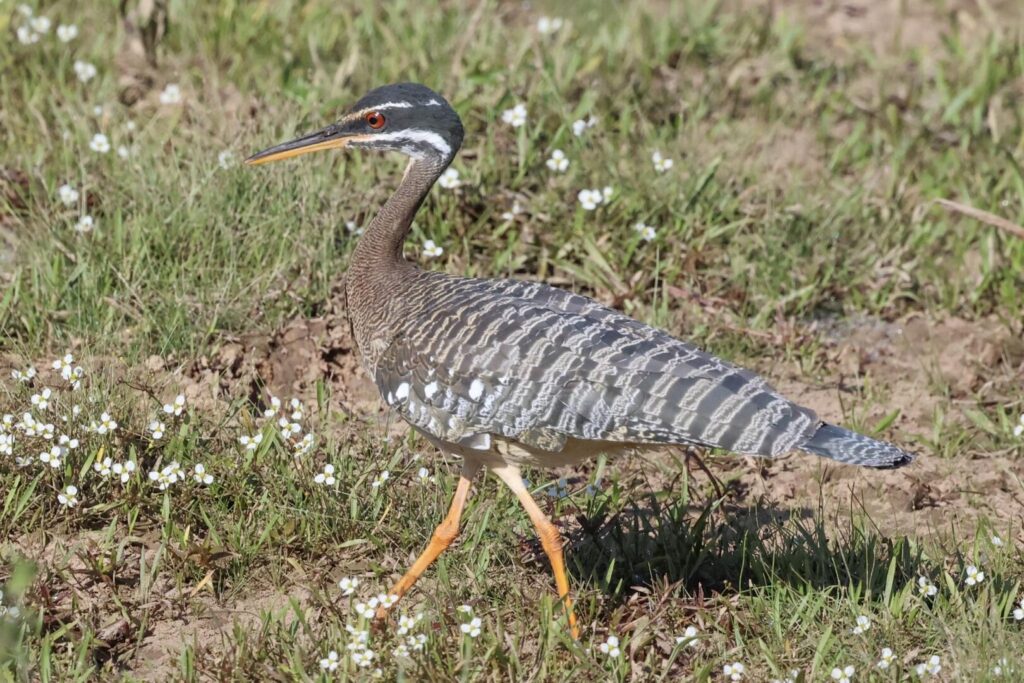
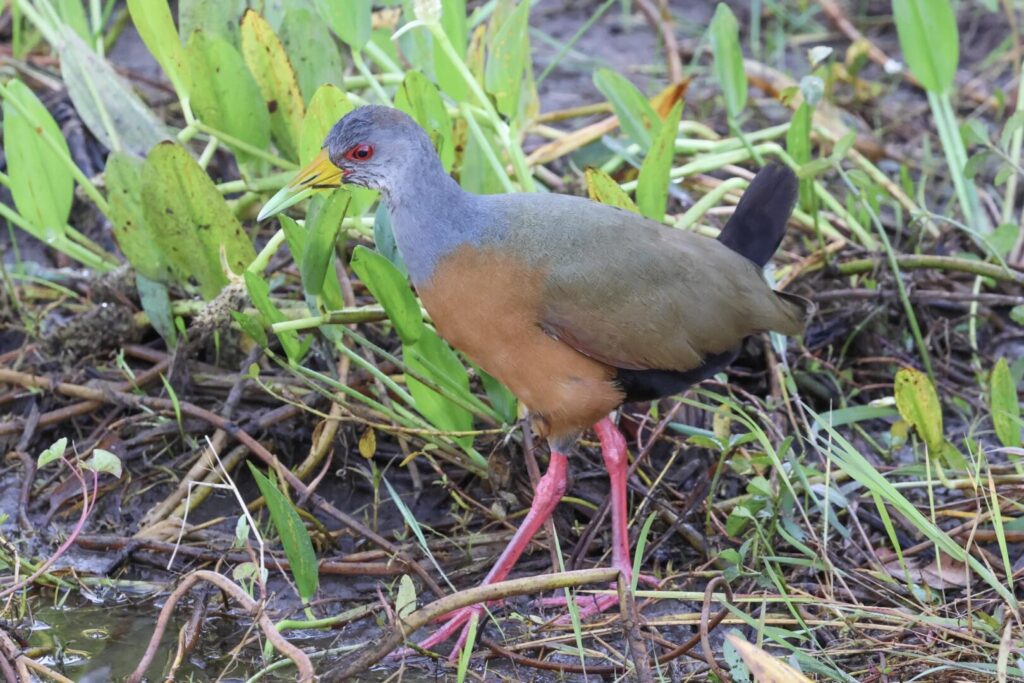

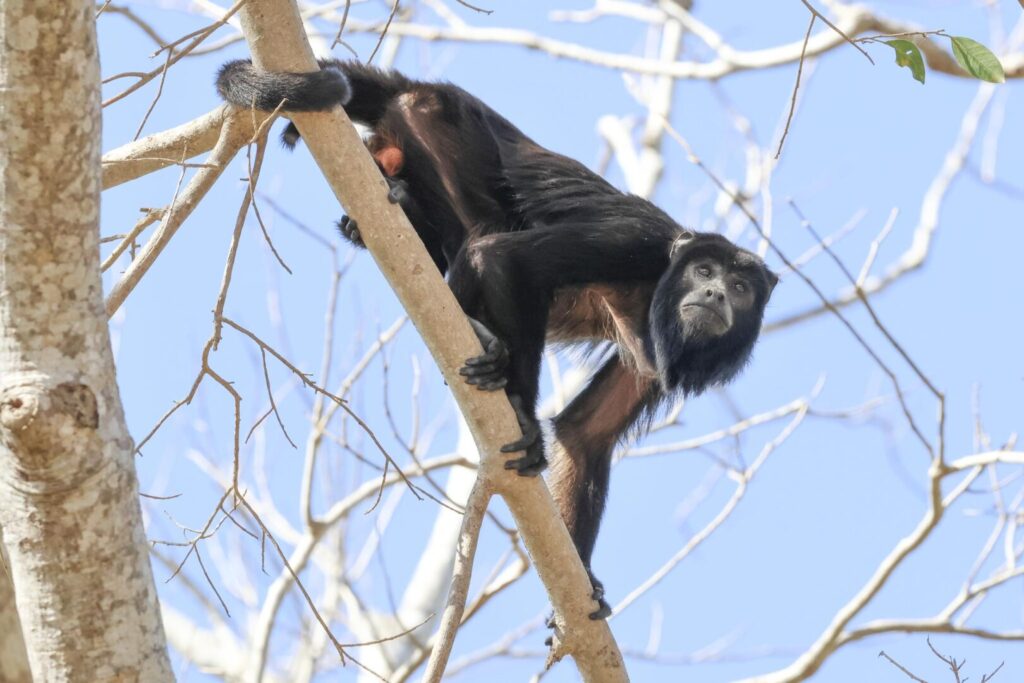
We stopped and got out for a walk at the ‘island’. Several Black-and-gold Howler Monkeys were in the trees, our first of the trip.
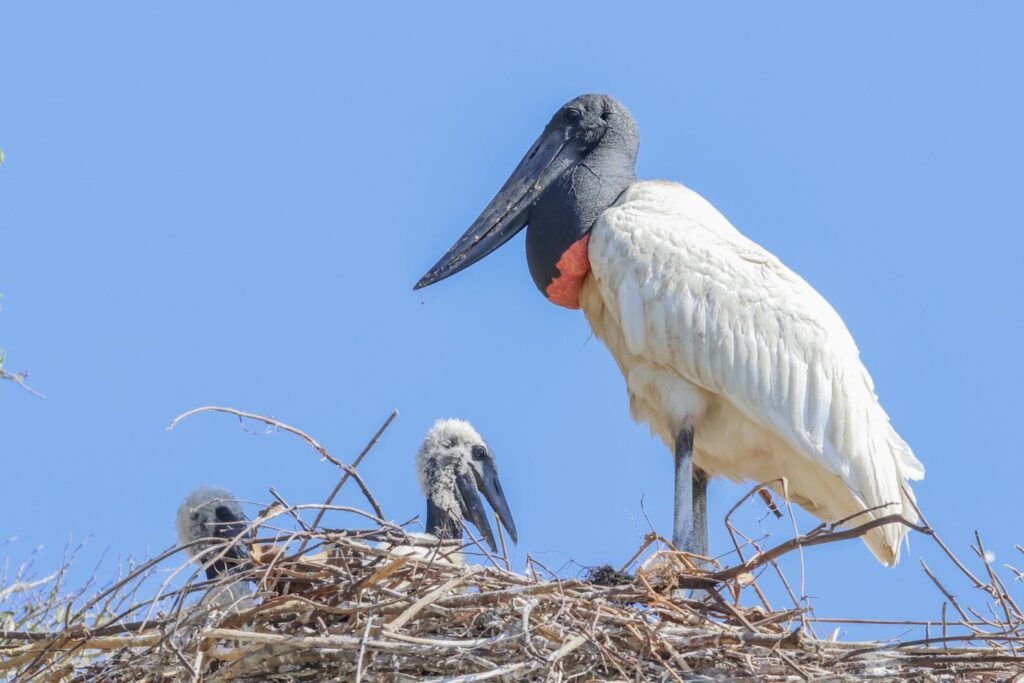
Another Great Potoo was roosting in the trees and a Jabiru nest was up in the branches on the edge overlooking the water.
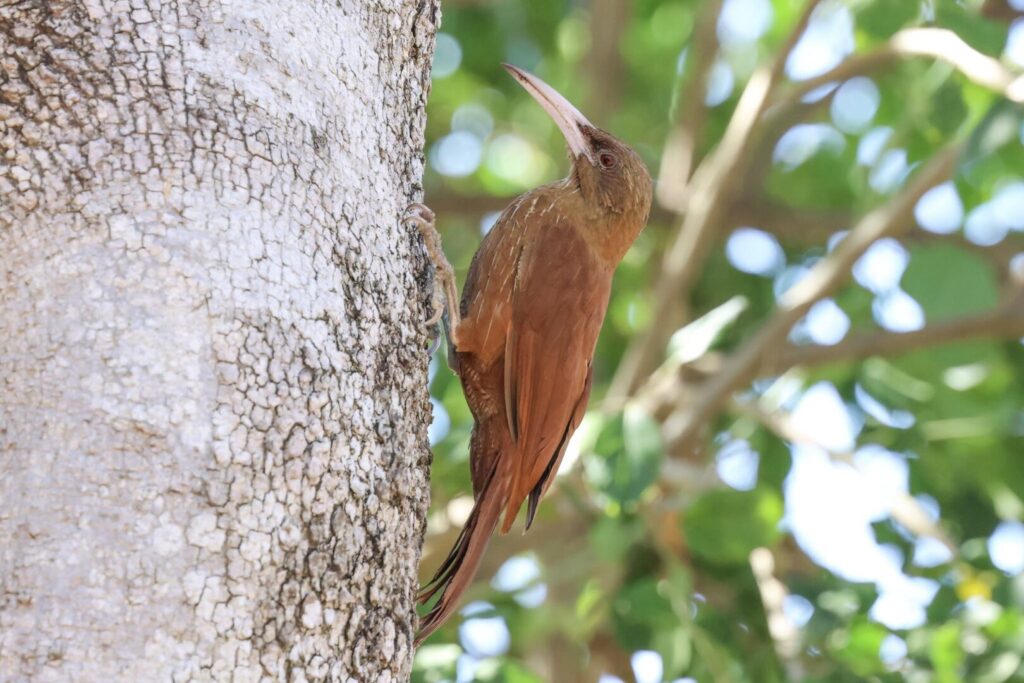
The birding highlight here was a pair of Great Rufous Woodcreepers in the trees around the picnic area.
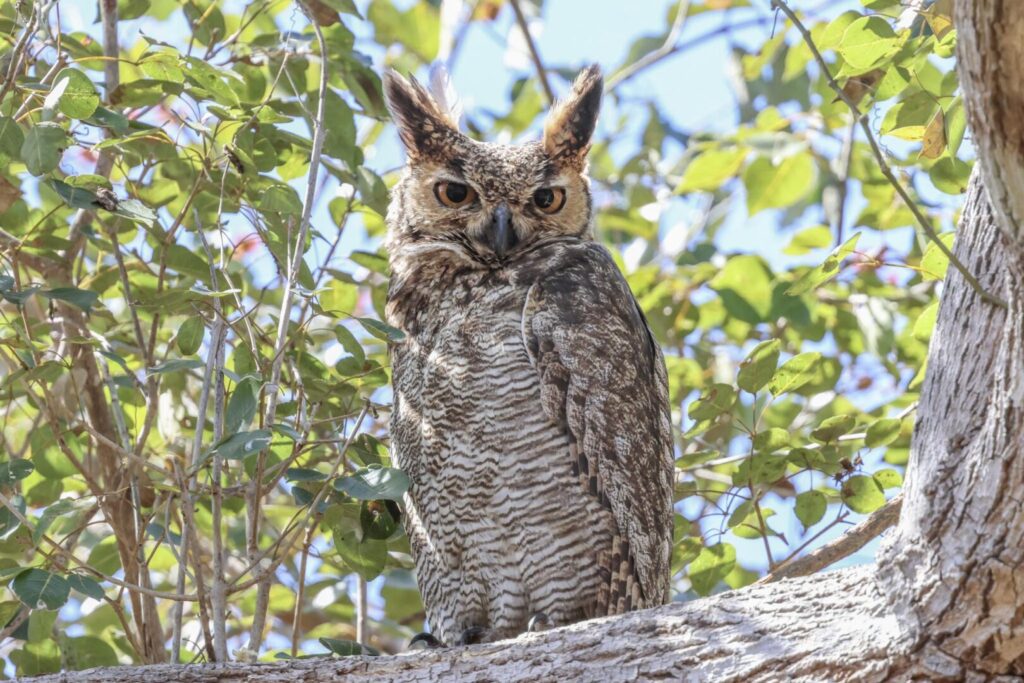
On the way back, Julio first took us to look at a pair of Great Horned Owls. One was on the nest while its partner was perched in a nearby tree.
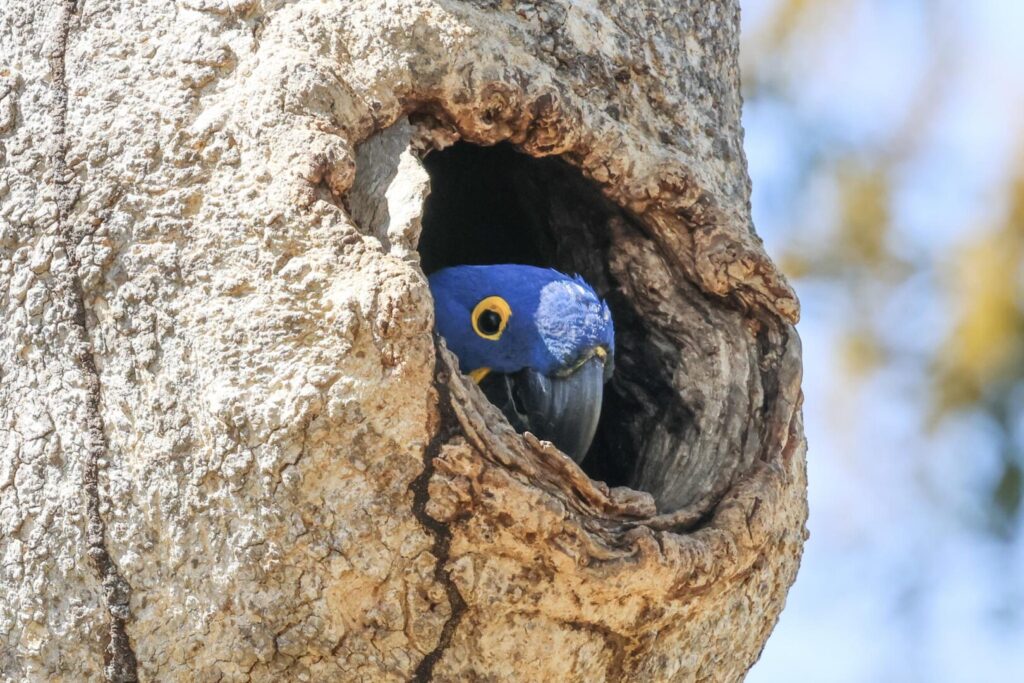
We stopped for a Hyacinth Macaw nest too. Our first of the trip, but all we could see was the head of one looking out from its hole in a tree. One to get better views of! On our way back to the lodge, we flushed a couple of Campo Flickers from the grass.
Back at the lodge, it was a bit of a surprise to find three Red-legged Seriemas walking around on the lawn between the rooms and the restaurant. Having seen several while driving, it was nice now to get a better look at them, though they were so used to humans that they were too close to photograph at times. We watched them picking up insects and catching a small frog. Stunning!


We had some downtime after lunch, a chance to catch up with admin. Most of it was taken up trying to wrestle with BT, who bizarrely think anytime anyone tries to use their email away from home it is fraudulent and they need to block the account! An unbelievably unhelpful, bureaucratic organisation. There was a bit more time for catching up with some common birds around the lodge again, although the light was not as good as earlier.
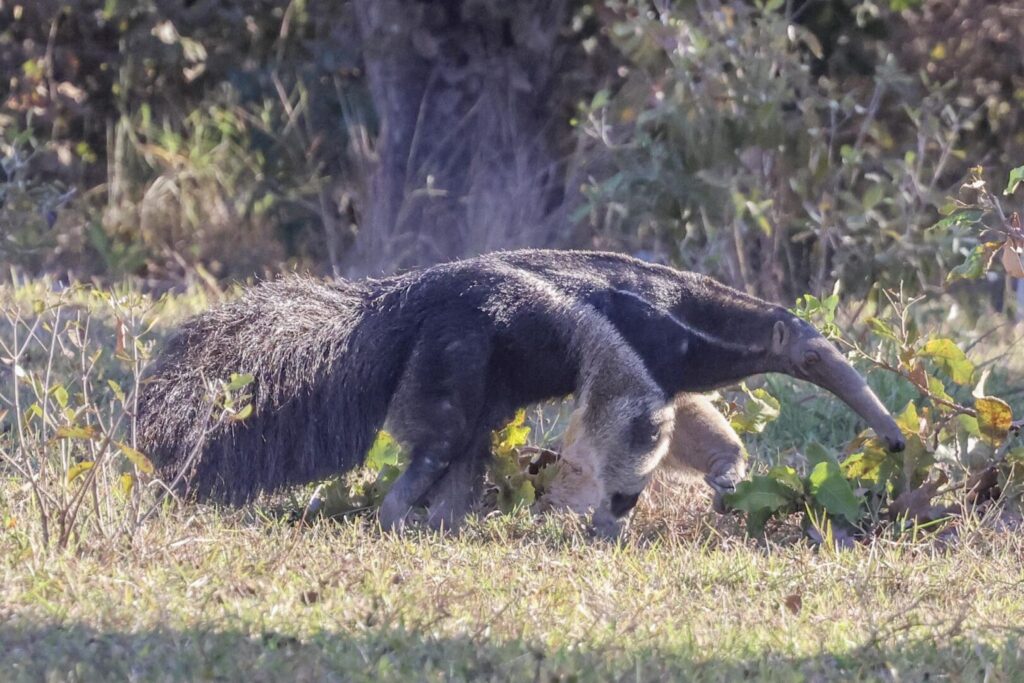
Our afternoon drive was all about looking for Giant Anteater. It turned out we had gone the wrong way, as two were found in the paddocks along the entrance track. We sped round and arrived just in time to see one walking around at the back of one of the fields and then disappearing into the trees beyond. Great to finally see one of these magnificent animals, our main target here, but a bit frustrating we had probably missed the best of it.
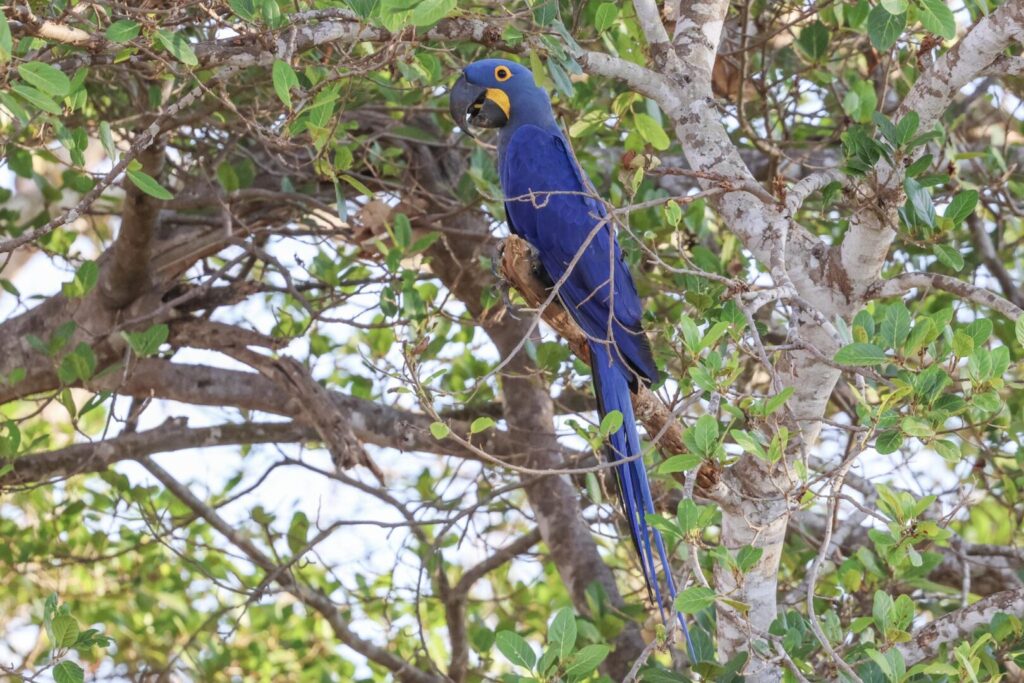
We drove back along the entrance track to a small group of trees where a Hyacinth Macaw was perched in the branches. Finally, one out in the open! Now we could really appreciate what a splendid bird they are, the largest macaw and the largest flying parrot.
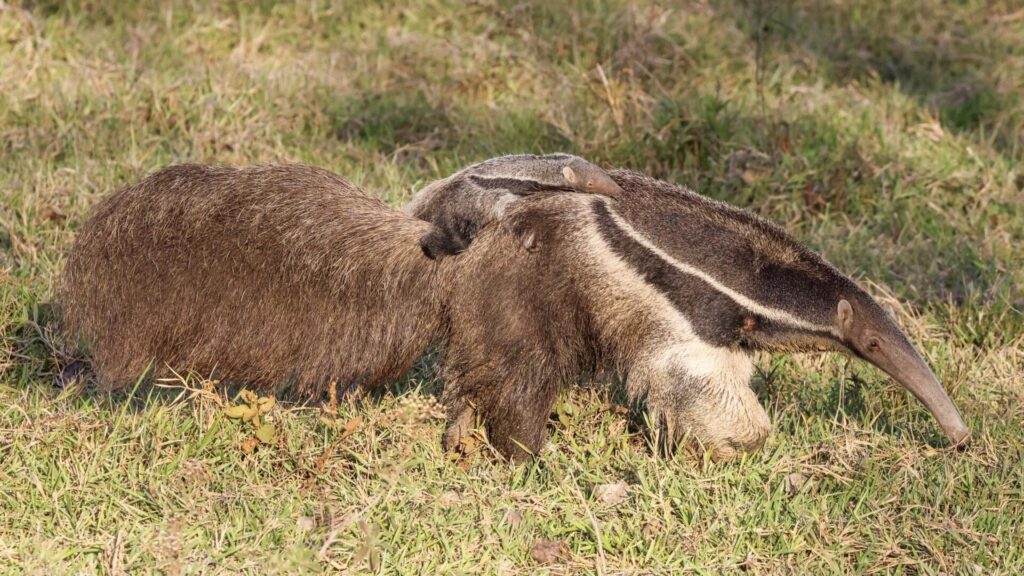
Moving on, we took another track down across the paddocks and hadn’t gone far when we chanced upon another Giant Anteater. It had come to drink down at a small waterhole right next to the track. Even better, we could see it was a female carrying a young juvenile on its back. Amazing views now, and as it walked a little further back we could get out of the jeep. We watched it walking around between the termite mounds as the sun started to go down. A great way to end the day.
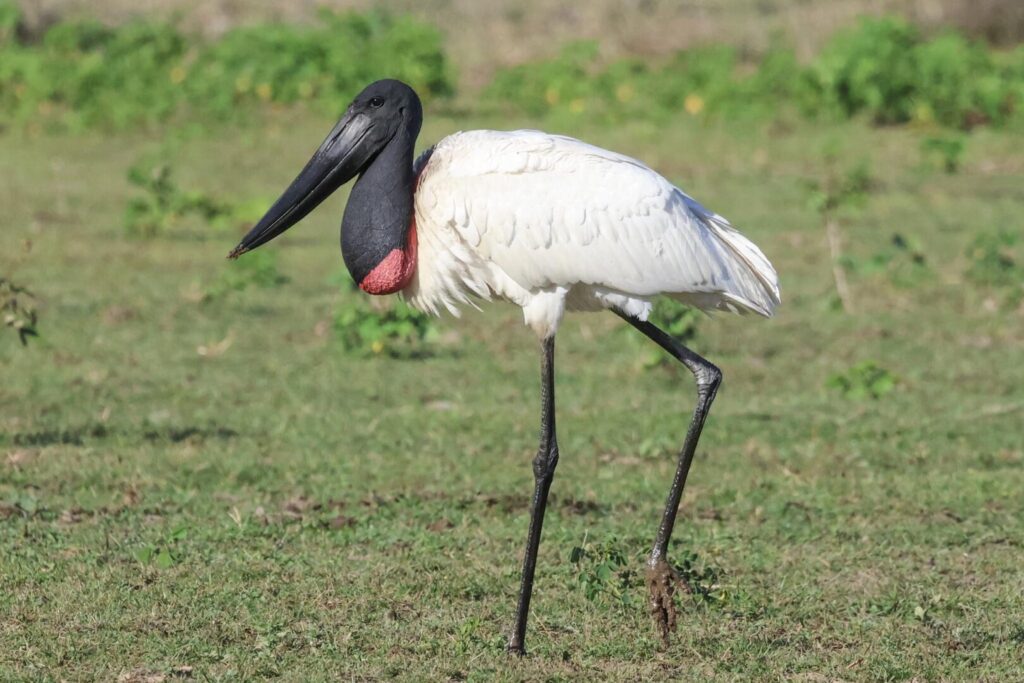
On 16th, we were moving on but we had managed to book a private safari at Pousada Piuval in the morning first. We didn’t leave until after breakfast, so there was some time for birding around the lodge again first thing. A Jabiru on the grass just beyond the fence was the best views yet. Scanning the marsh from the front of the lodge, we picked up our only Brazilian Teal of the trip flying over.
The benefit of the private safari was that we could keep stopping and getting out of the jeep. In the first likely looking patch of dry deciduous woodland, we quickly found our main target for the morning, a pair of Black-bellied Antwrens. We also saw Planalto Slaty Antshrike, Olivaceous and Straight-billed Woodcreepers, Yellow-chinned and White-lored Spinetails.
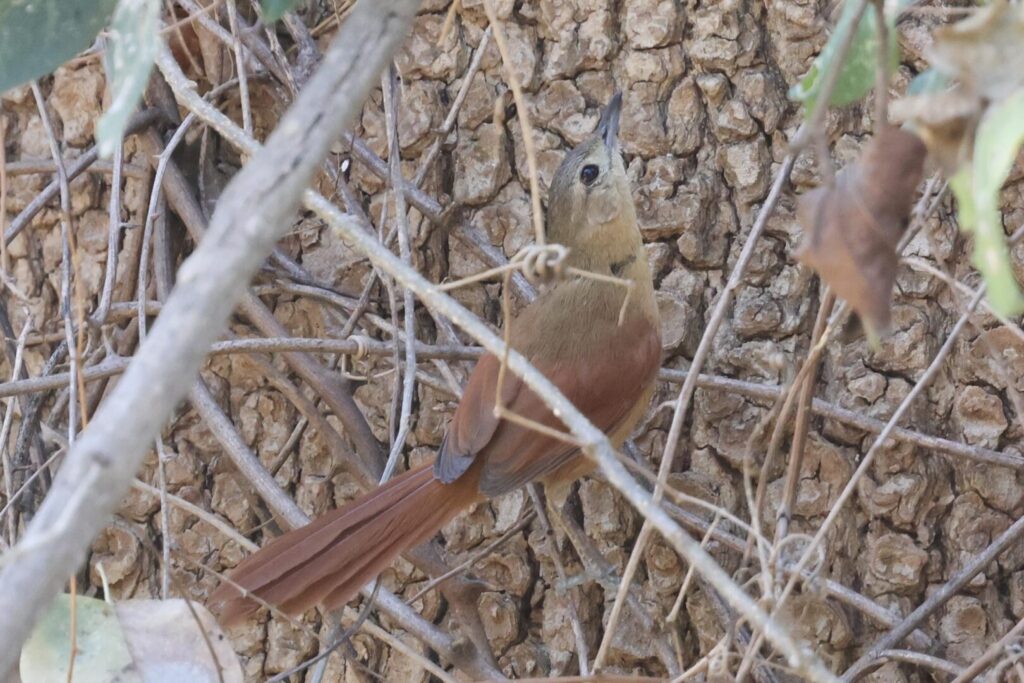
Arriving in an area of scrub on the edge of the marsh, we found a pair of Bare-faced Curassows. Another walk here produced a nice variety of smaller birds like Common Tody-Flycatcher and Pearly-vented Tody-Tyrant, Masked Gnatcatcher and Rufous Casiornis. We had heard lots of Striped Cuckoos but now we got to see one, calling from the top of a low tree.
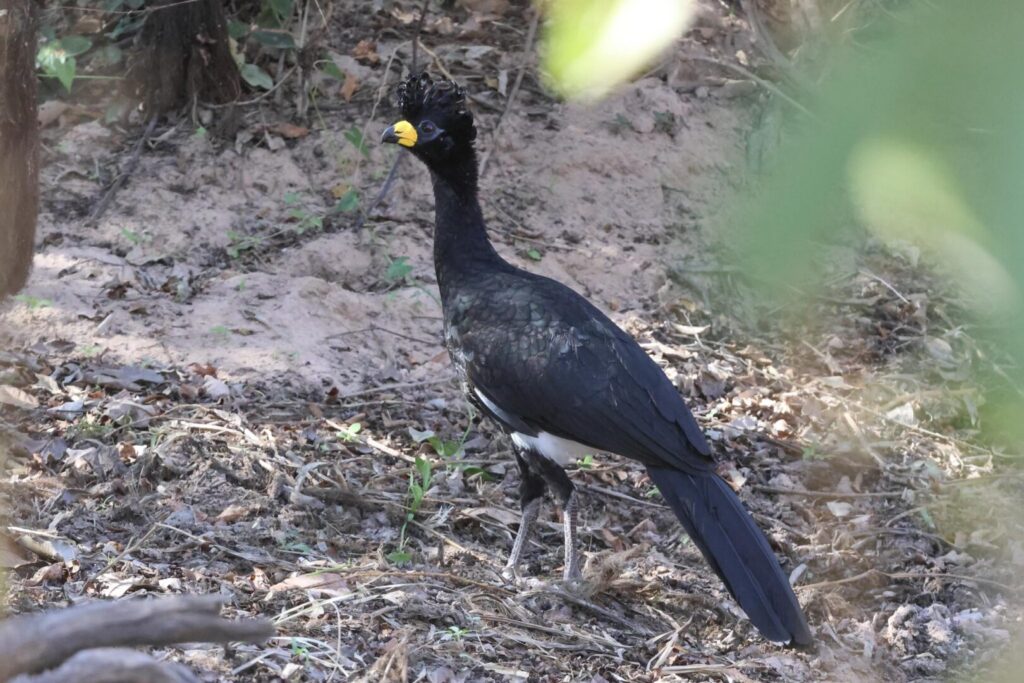
Continuing on, we had good views of Chaco Chachalacas in the trees.
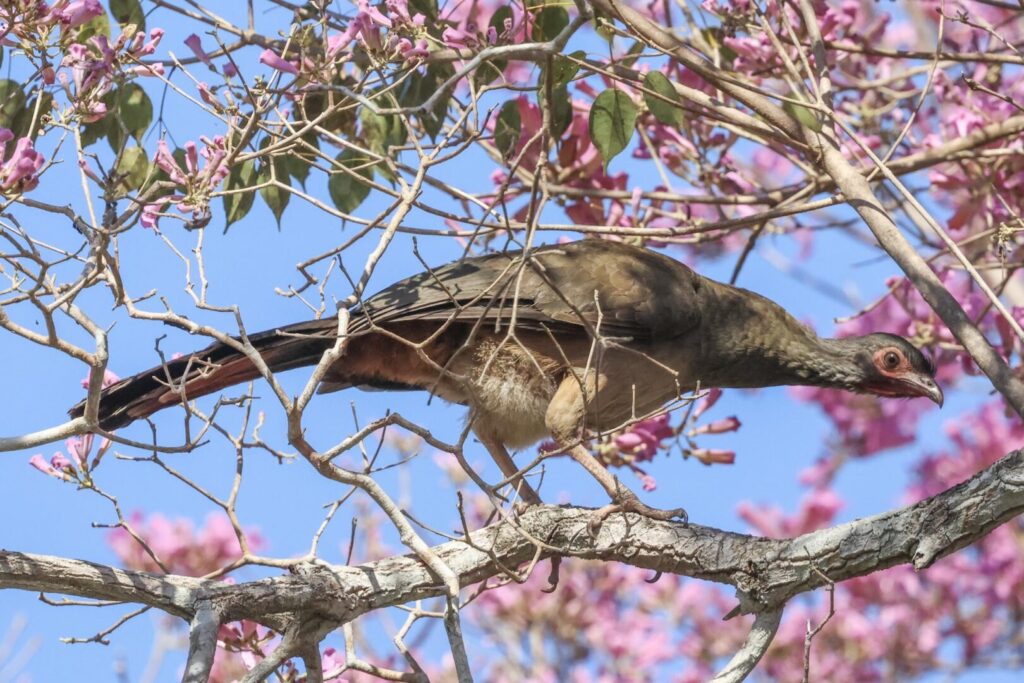
Playing the calls of Ferruginous Pygmy Owl and the mobbing recording pulled a variety of birds out, including Helmeted Manakin, Grey-headed Tanager and Little Woodpecker.

Back at the lodge, we had lunch and checked out. As we drove out along the access road, it was the heat of the day now but we had close views of a couple of Savanna Hawks in the trees by the track.

16th-19th August – the Transpantaneira, Porto Jofre & ‘Jaguarland’
Back out on the Transpantaneira, we made our way south. A marshy wonderland, there were birds everywhere. A variety of herons, egrets, storks, ibises, Roseate Spoonbills and waders. Good views of several Limpkins. We found our first Maguari Storks too, though a bit distant. Mammals too, as we found our only Coati of the trip by the side of the road. And lots of Yacare Caiman.
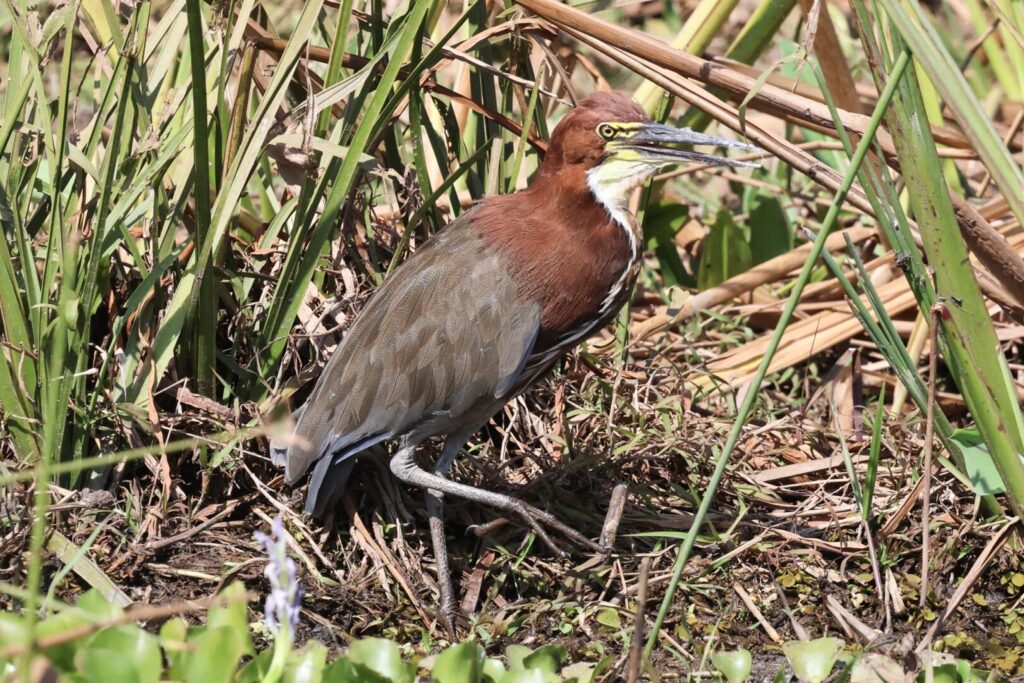
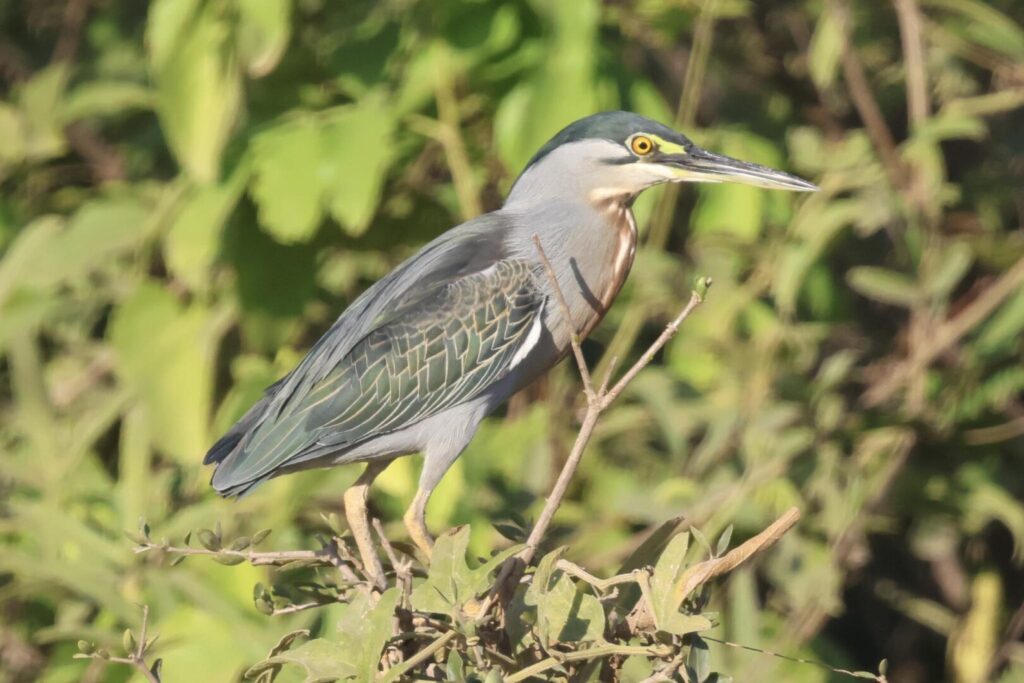
We thought we had plenty of time before we were due to check in at our next lodge so we made plenty of stops. Despite the heat of the afternoon, there were lots of small birds around the ditches by the road. Lots of Black-backed Water Tyrants and Yellow-billed Cardinals,
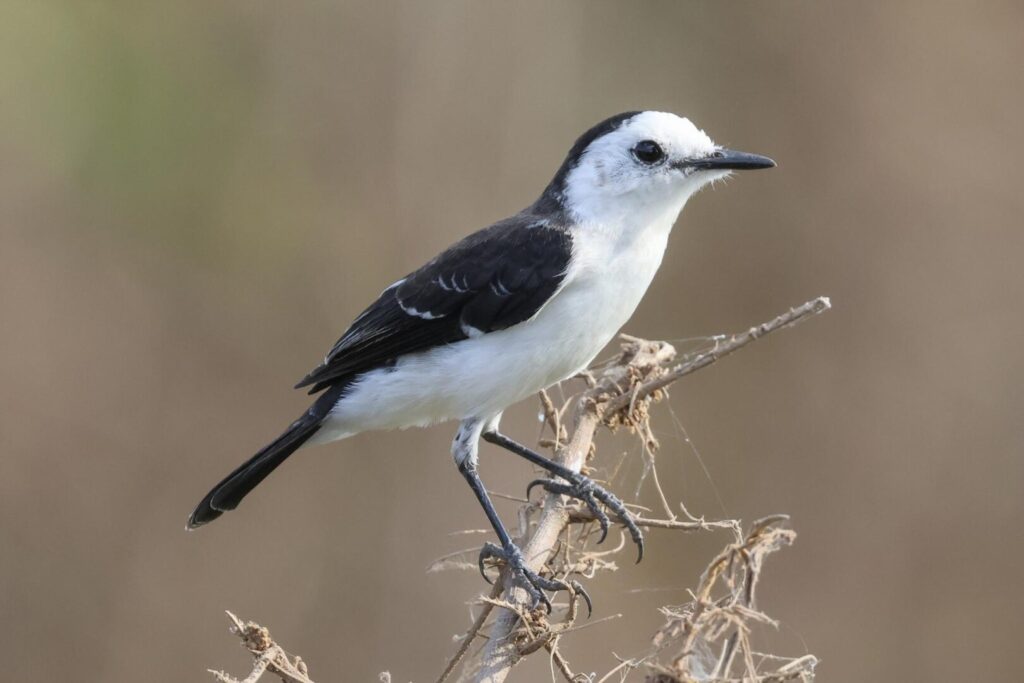
our first Pale-legged Hornero, several Greater Thornbirds and more Yellow-chinned Spinetails,

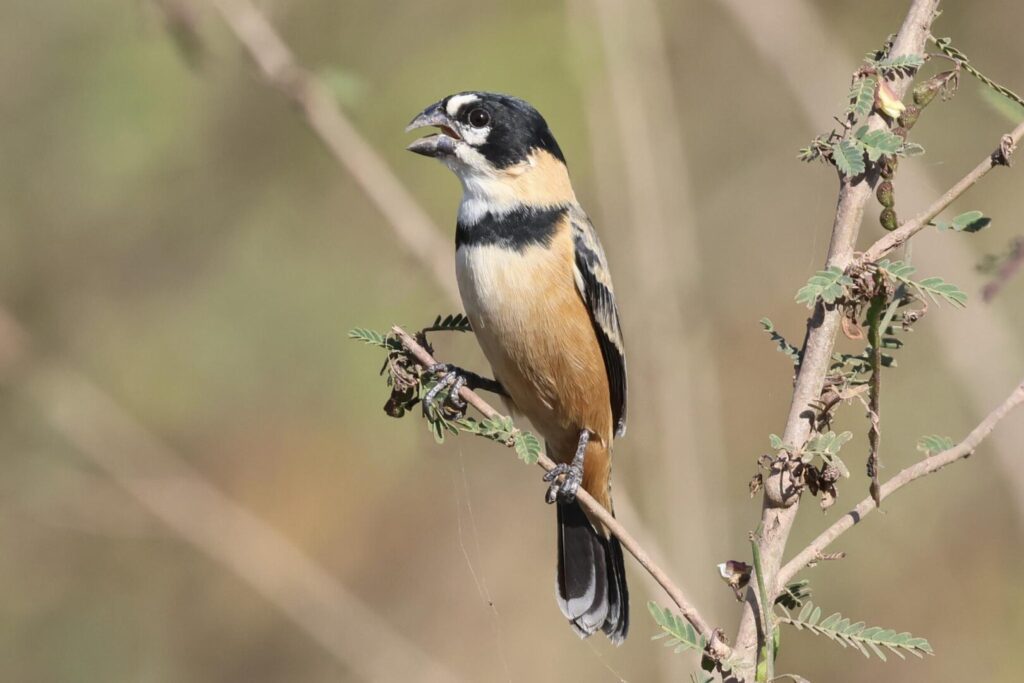
and flocks of Rusty-collared Seedeaters.
When we arrived at Southwild in Santa Tereza just after 3pm we were a little surprised that they were not expecting us. However, it turned out we had come to the wrong Southwild and we were actually booked into their lodge down in Porto Jofre! Another 85km to drive and we wanted to try to get there in daylight, so it meant the rest of the journey was a bit more of a rush.
Still, there were lots and lots of distractions. Thankfully we had time for some shorter stops on the way, particularly as the light improved and the activity increased as the afternoon wore on. There were lots more waterbirds, of course,
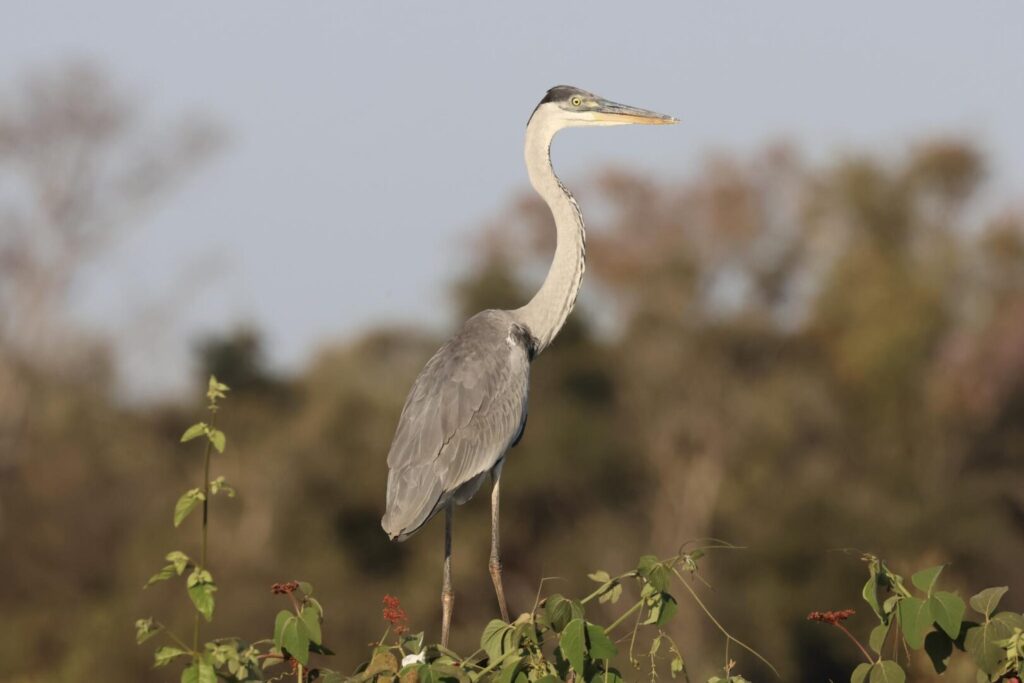
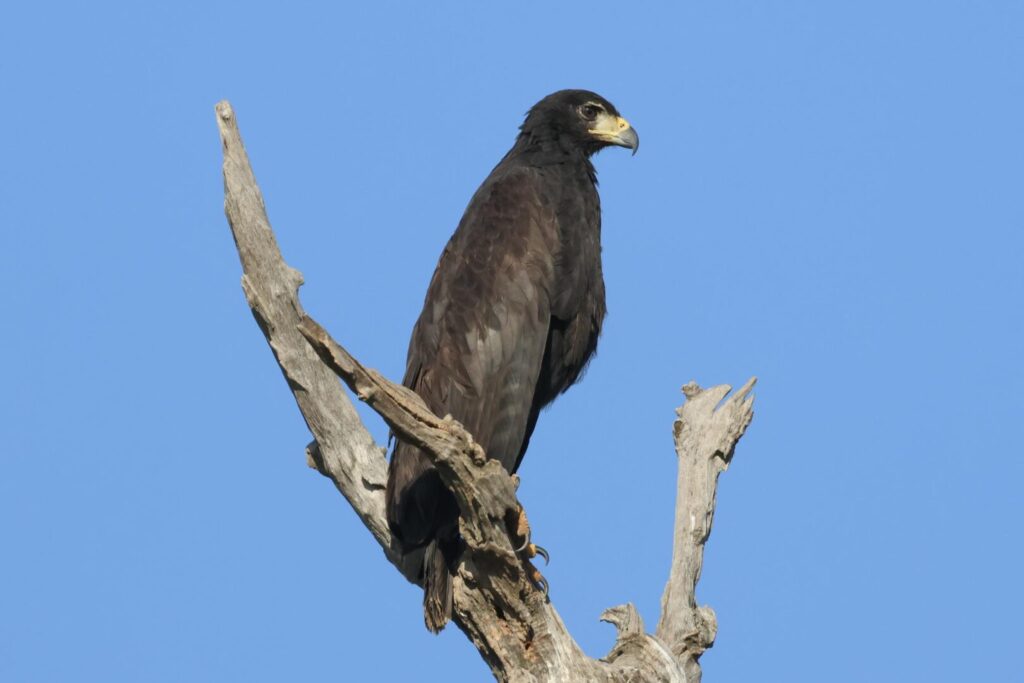
plus several Great Black Hawks were on the trees by the road.
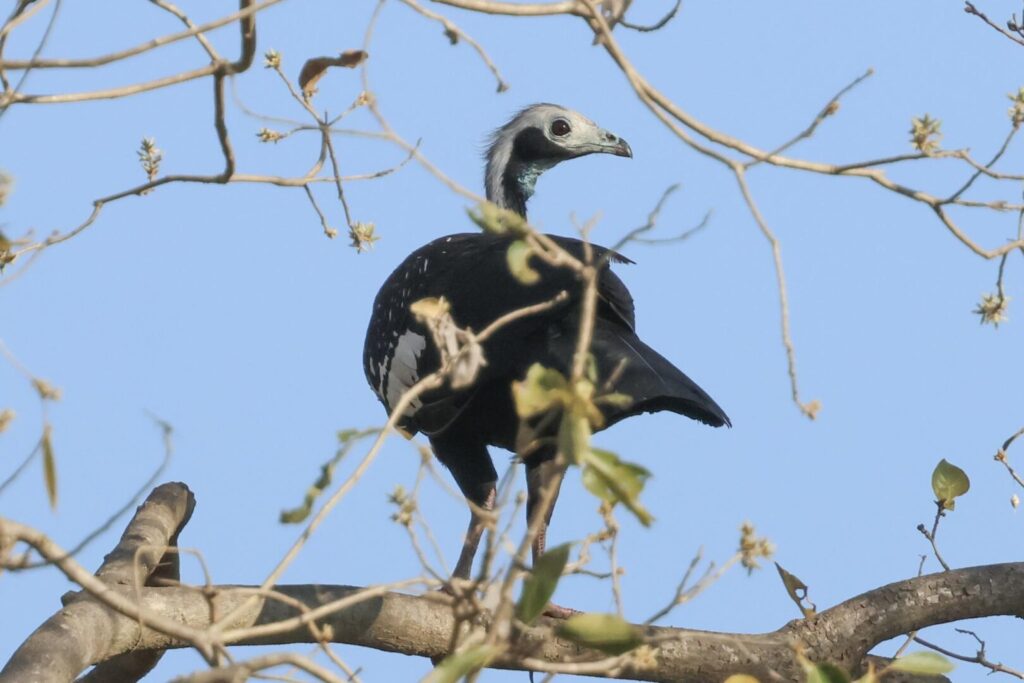
A White-throated Piping Guan flew across in front of us and landed in the trees the other side.
Further down, we found several Unicoloured Blackbirds and our first Bluish-grey Saltators. As the light started to go, we realised there were lots of Nacunda Nighthawks out on the marshes which started to fly round and out over the road.

Despite roadworks and the progressively deteriorating state of the road, we managed to make it down to Porto Jofre before it got dark. We only had time to check in and get everything sorted before dinner and bed.
The next morning, we set off early in a boat on the river. Our target was to see Jaguar and we had no real idea of what awaited us. There were a couple of Brazilian Giant Otters playing on the edge of the sandbank not far out from the hotel, but the boatman had obviously heard a Jaguar had been seen. If we knew how the day would pan out, we could have stopped to watch but not wanting to jeopardise our chances with the big cats we pressed on.
We passed lots of Large-billed and Yellow-billed Terns, Black Skimmers and Pied Plovers on the sandy beaches. A little further on, there was a huge gathering of Great White and Snowy Egrets in the shallows. We didn’t allow ourselves to get distracted.
It was obvious where the Jaguar was when we came round a corner and saw about forty small boats jostling for space on the side of the river. A bit of a scrum and not how we normally like to see our wildlife, but needs must. Apparently, there had been two Jaguars before we arrived but now we followed one as it worked its way in and out of the undergrowth along the river bank.
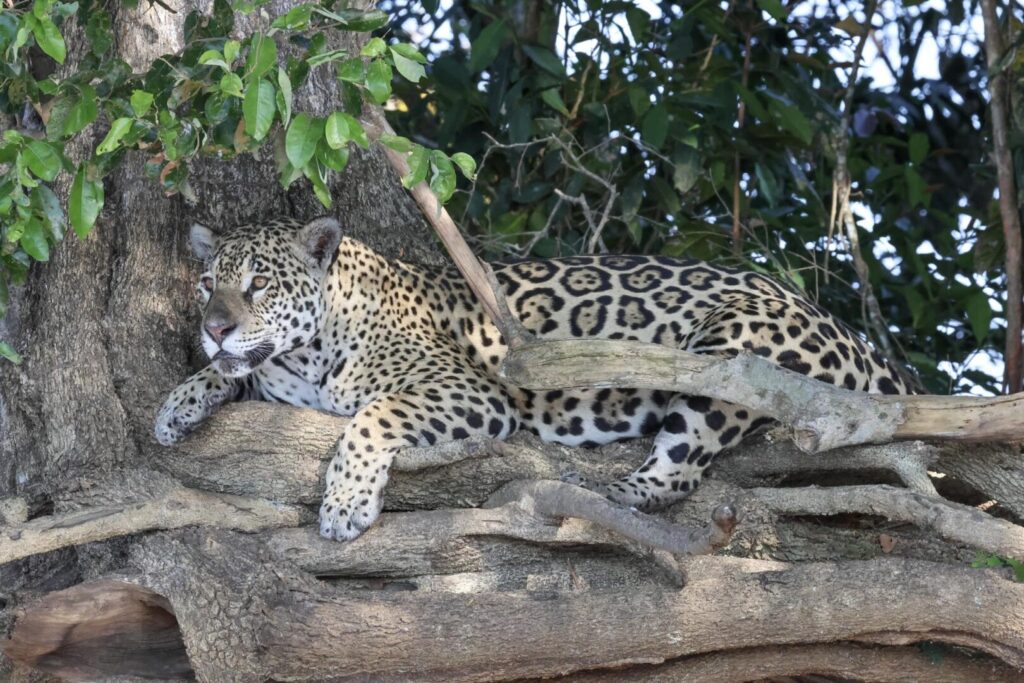
The boatmen obviously knew where it was headed and positioned themselves round a horizontal tree trunk which stretched out over the edge of the river. The Jaguar climbed up and walked out along the trunk. It sat down and had a wash, seemingly completely unconcerned by the mass of boats watching. We started at the back, but as others lost interest our boatman manoeuvred us until we were at the front. Great views.
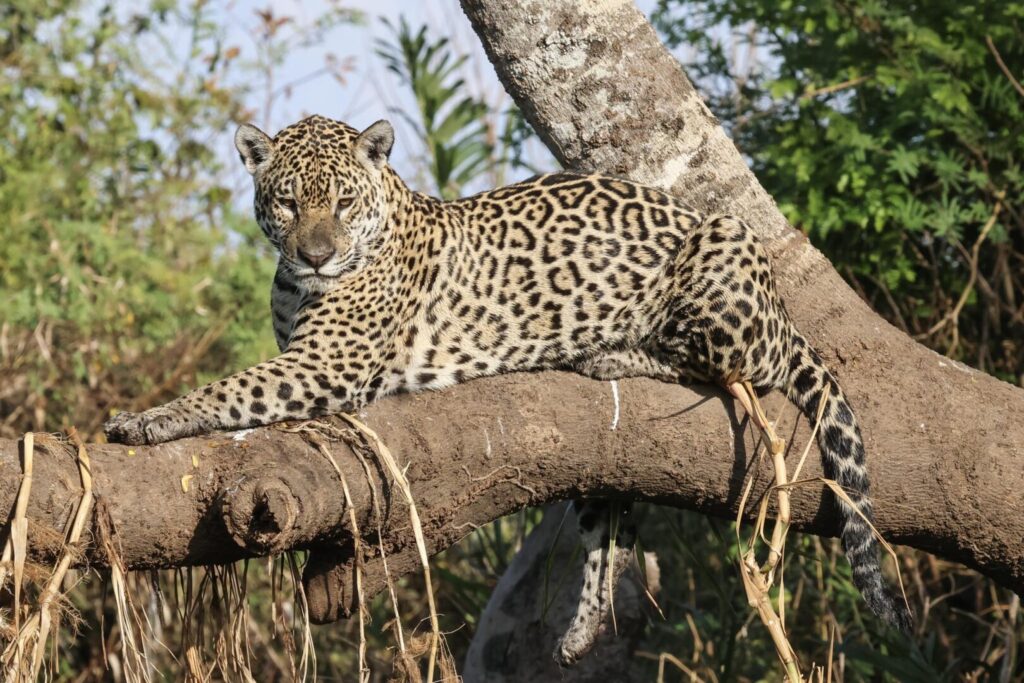
We stayed watching the Jaguar, hoping it might catch a caiman. It kept looking down at the water and at one point it saw something. It stood up, turned round and then leapt into the water. Sadly, it came up empty mouthed. It climbed back up and walked out along the trunk again.

The Jaguar walked a bit further out this time, before lying down by a fork in the trunk. It licked itself for a while, drying out. Then settled down and dozed.
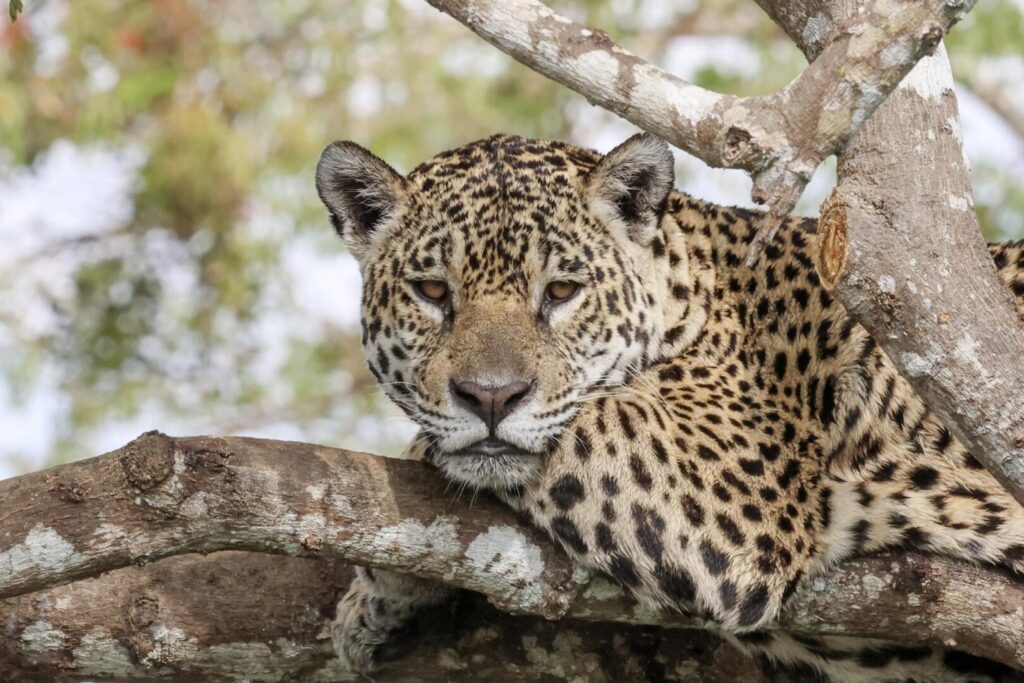
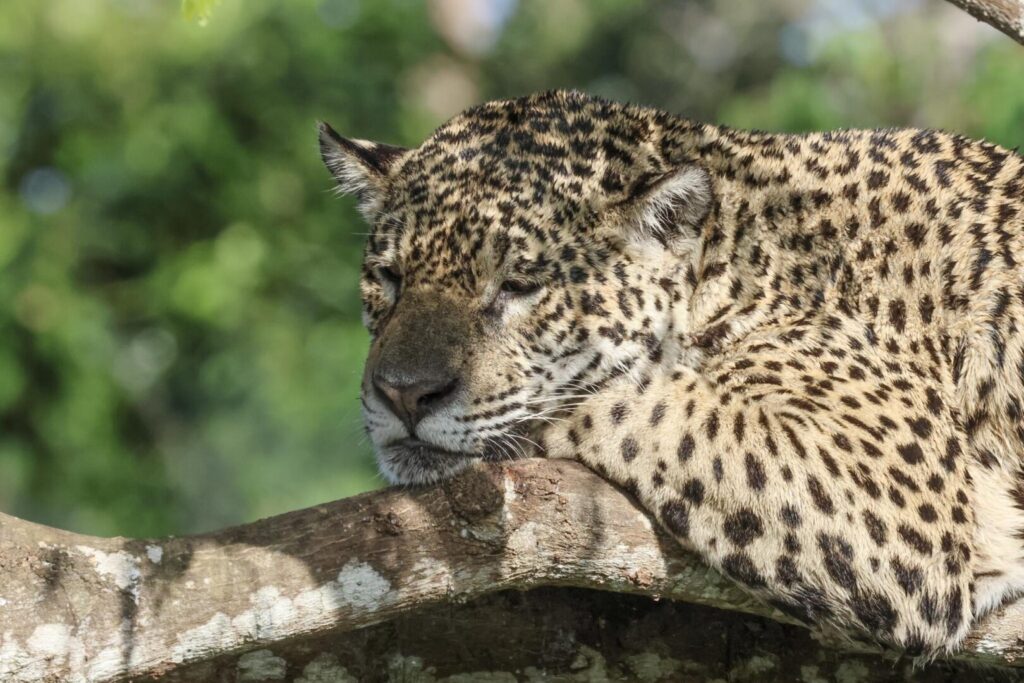
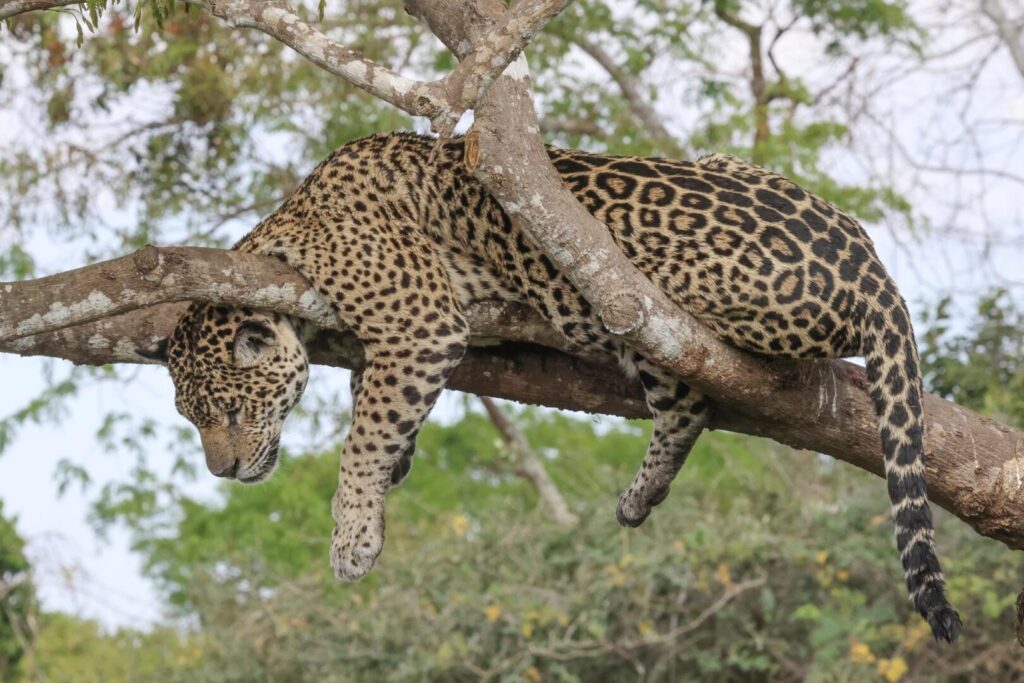
After a while, the Jaguar adjusted its position. It hung its head down between the fork in the trunk and seemed to be eyeing up the river below. Looking for caiman again.
There were a few birds to distract us, while we were watching the Jaguar. Several Large-billed Terns patrolled up and down the river. A Ringed Kingfisher hovered over the water beside us.

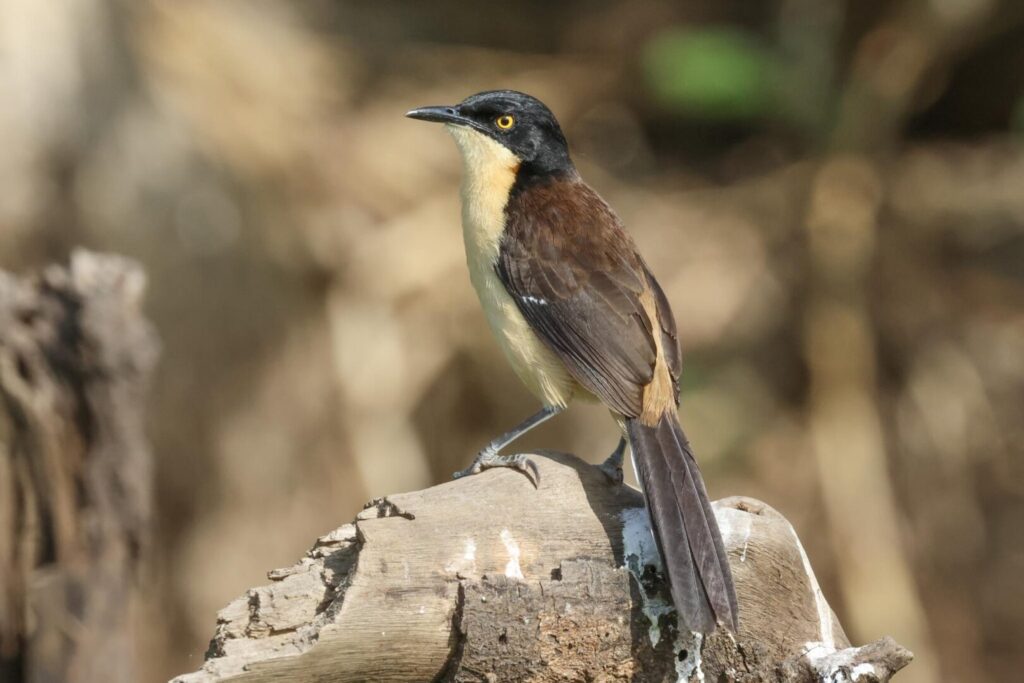
A small group of Black-capped Donacobius worked their way through the vegetation on the bank beside us.
Eventually, the Jaguar had obviously had enough. It stood up, turned round, and walked back along the trunk. Back down on the ground, it disappeared into a ‘cave’ on the bank formed by the overhanging tree roots and vegetation. Presumably getting out of the heat and into the shade.
We moved on but we hadn’t gone far when we found another Jaguar, out second of the morning. This one was actively hunting, walked along the bank and in and out of the shallows. We followed it for a while, but then the Jaguar headed up a shallower section of river which was choked with dense vegetation and we had to leave it in peace.
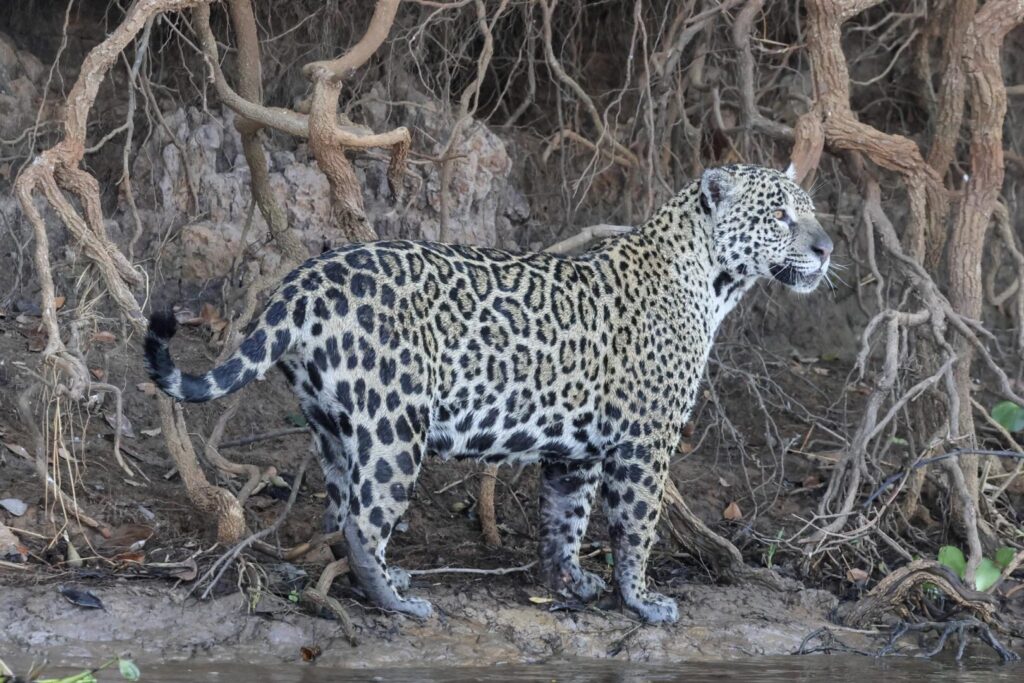
Our third Jaguar of the morning was hunting nearby too. Swimming along the edge of the channel, looking for caiman in the floating vegetation.
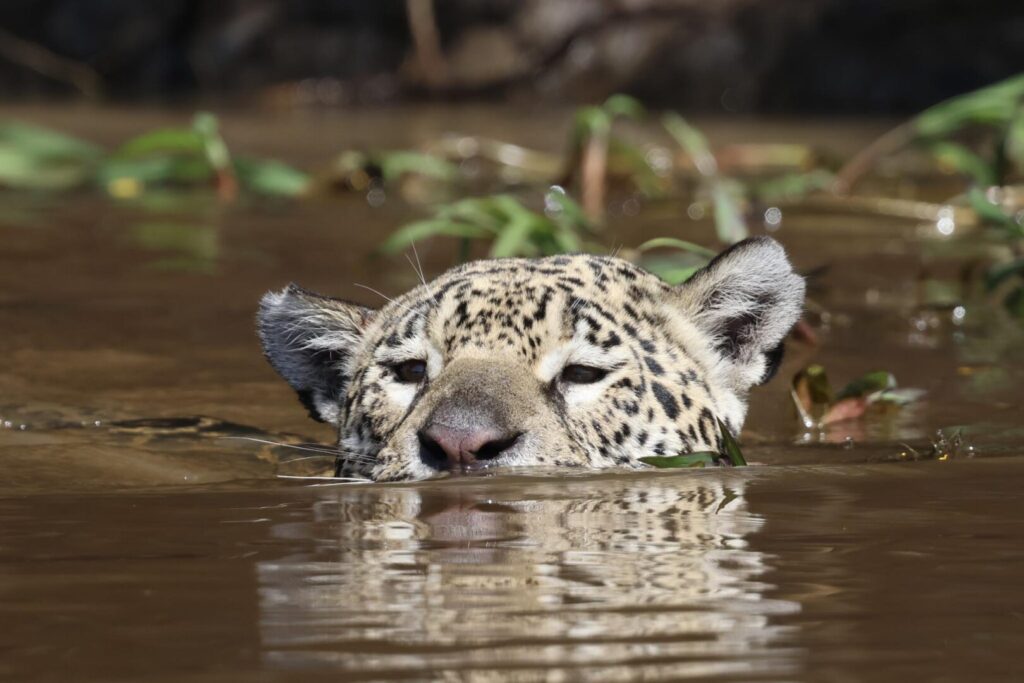
Our boatman was clearly very focused on finding Jaguars and kept racing from one to another. We saw at least four different individuals, and the same ones several times. In between, we did manage to get him to stop long enough to see some more birds.
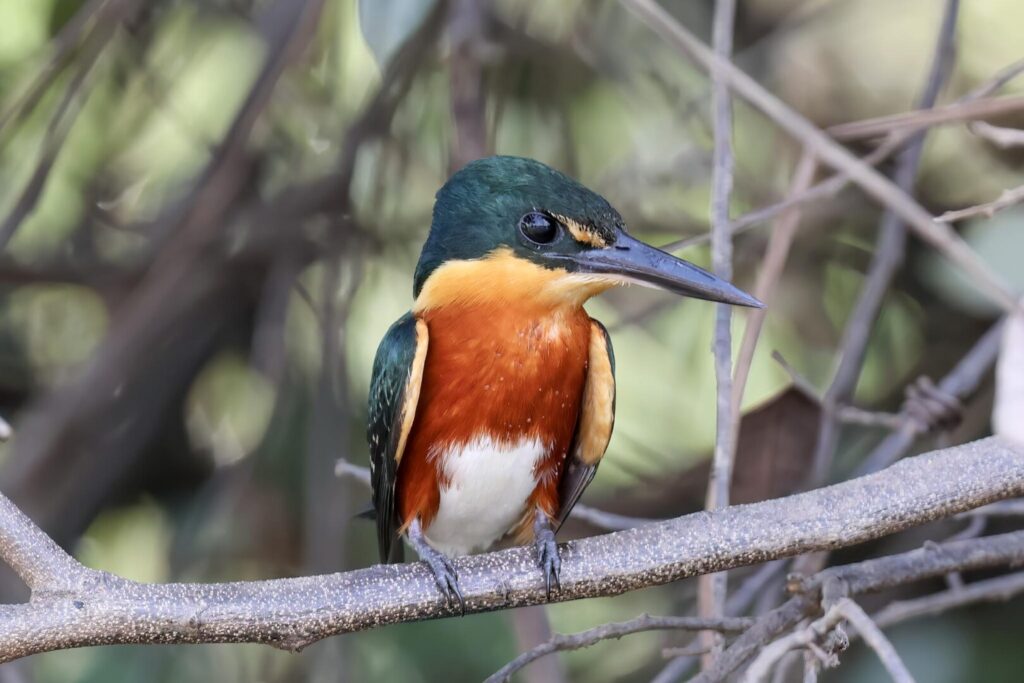
There were, of course, lots of Kingfishers. Four species – Ringed, Amazon, Green and American Pygmy Kingfishers. Great views of one of the latter, right beside the boat at one point. A couple of Golden-green Woodpeckers were new for the trip.
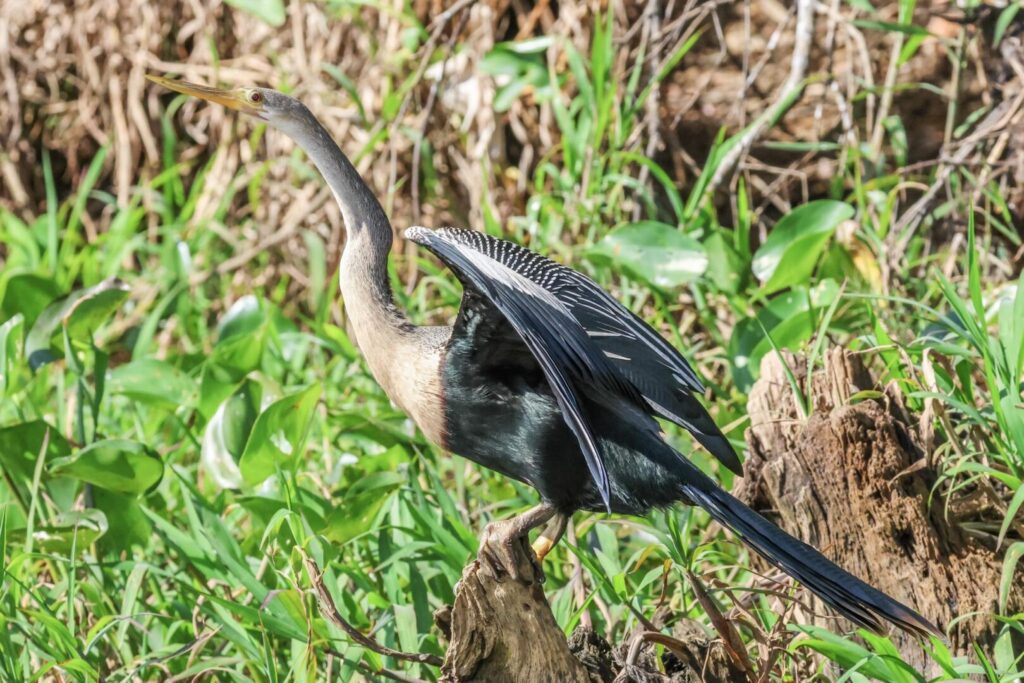
There were lots of herons, egrets, storks and ibises. Southern Screamers on the top of the trees beside the river. Several Anhingas and Neotropic Cormorants which mostly flew off ahead of us.
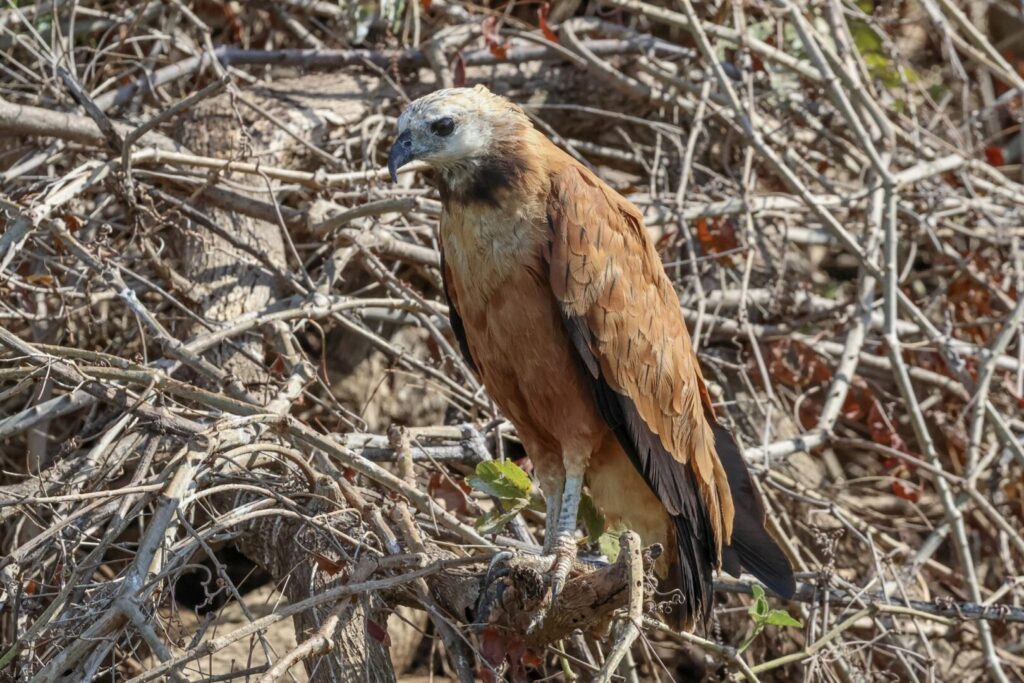
Raptors were well represented too. Black and Turkey Vultures circled overhead. We passed several Crane Hawks, lots of Snail Kites, Roadside Hawks, Great Black Hawks and Black-collared Hawks in the trees on the banks.
We stopped for a packed lunch on the side of the river, in the shade of some trees. A quick burst of the mobbing recording brought in several birds, including a pair of Rusty-backed Spinetails and a brief Chotoy Spinetail, a couple of Great Antshrikes and a pair of Common Tody-Flycatchers.
After lunch, it was back to Jaguars and more of the same, before we started to make our way back downstream. When we got back to the lodge, we had some time to potter around in the grounds.
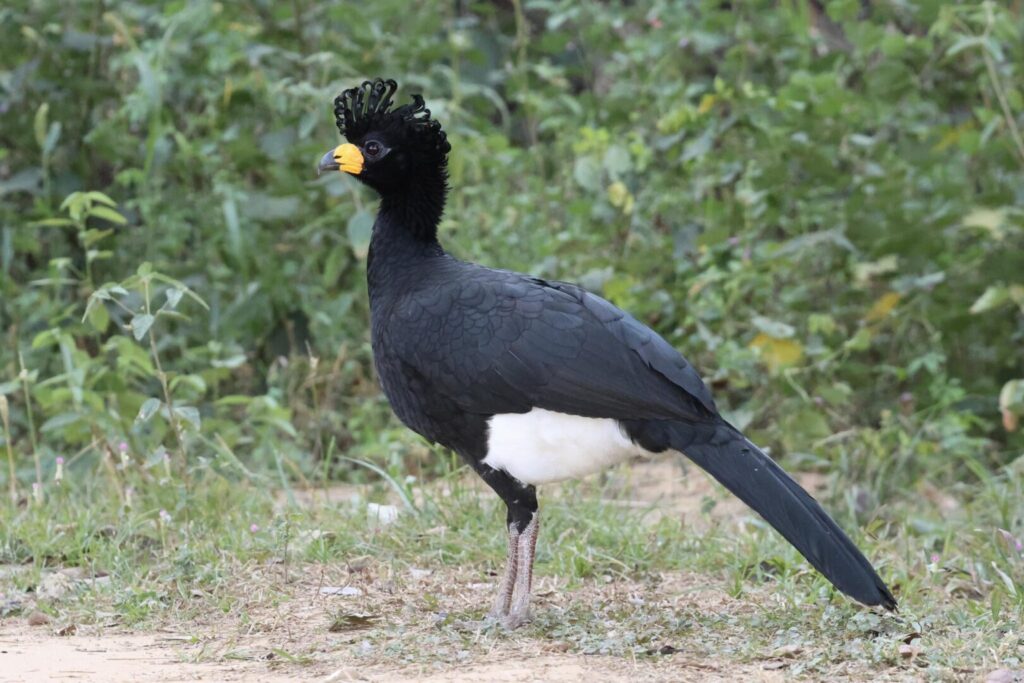
There were a couple of Hyacinth Macaws around but they were not the most obliging and were high in the trees across the road. We found a very approachable pair of Bare-faced Curassows on the edge of the track behind the lodge, with their crazy hairstyles.

A Chestnut-bellied Guan had come in to one of the feeders.

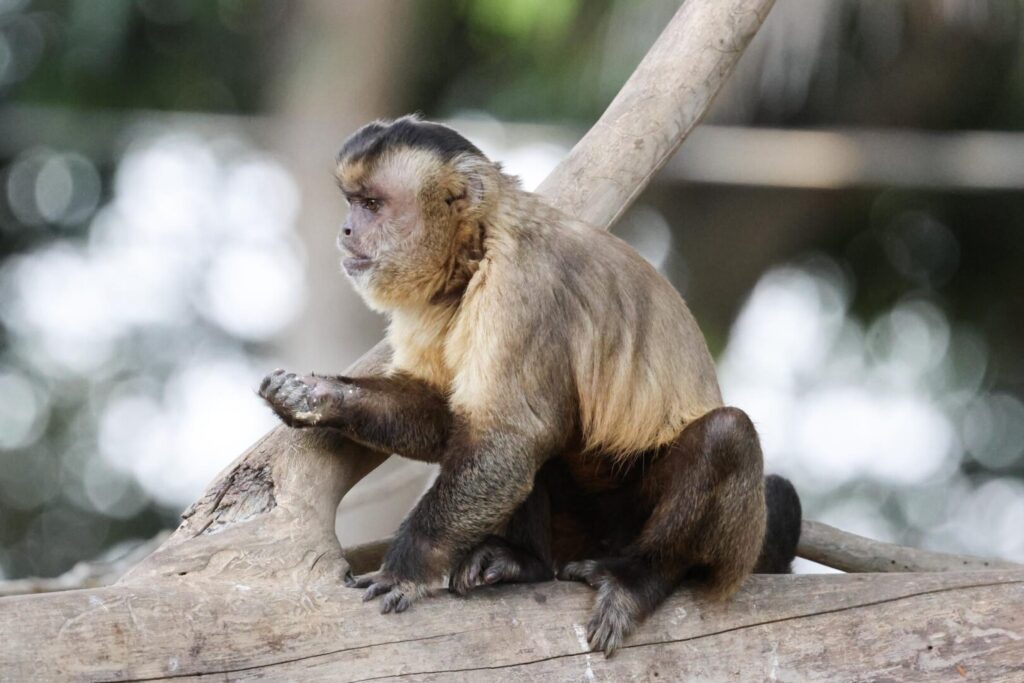
Several Azara’s Capuchins had come in to the food too.
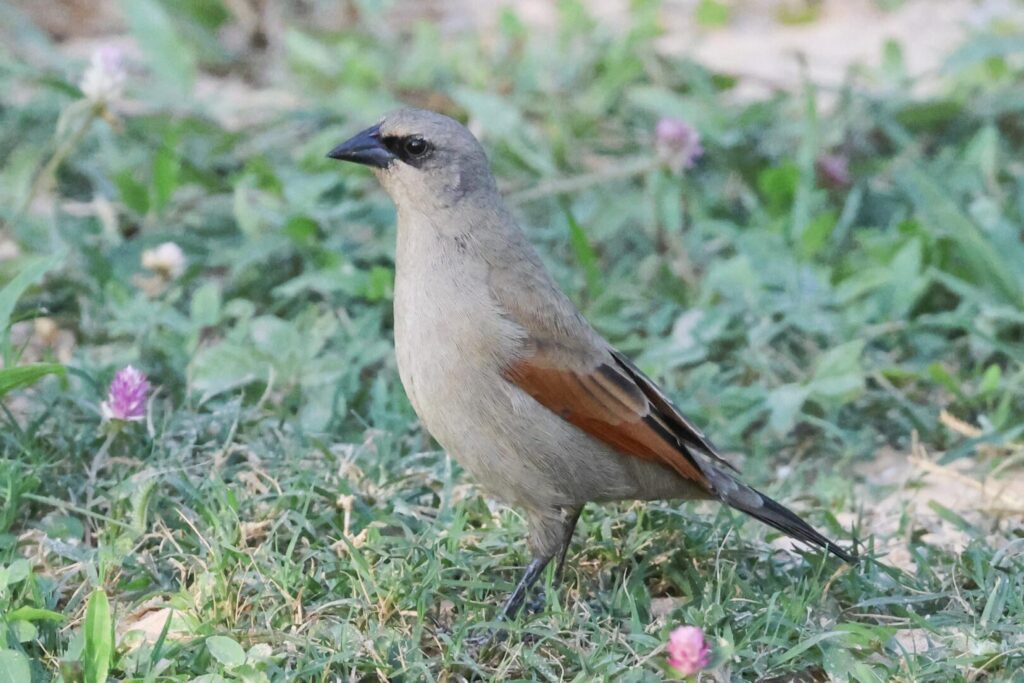
A small group of Greyish Baywings was feeding in the grass around the accommodation blocks.
There were a few Purplish Jays in the trees, although we struggled to see anything approaching purple!

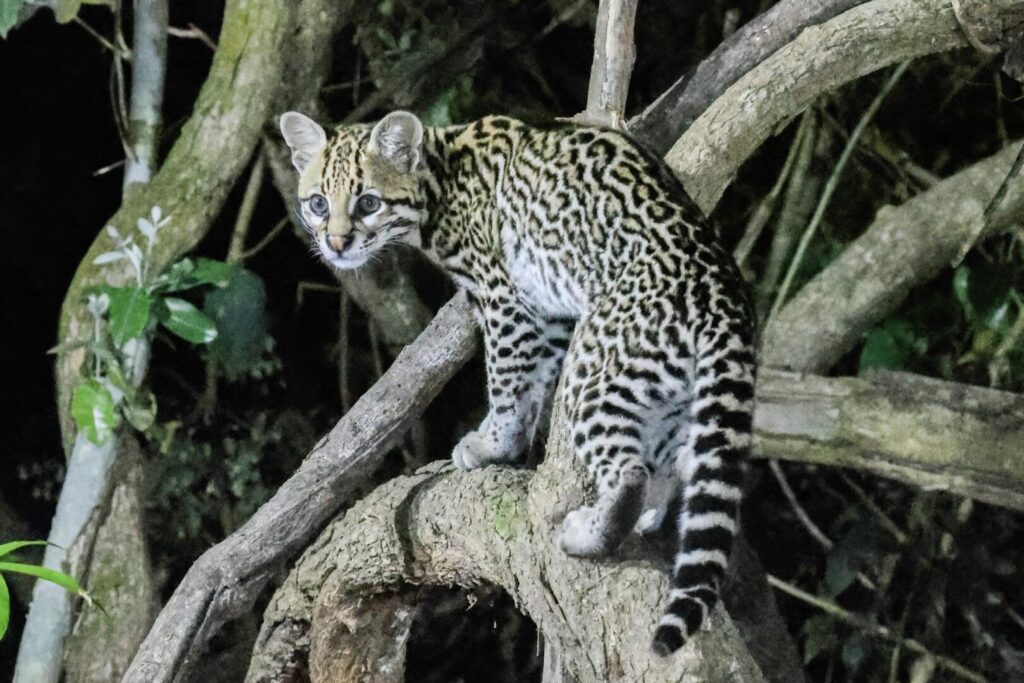
We had booked ourselves onto a session in an Ocelot hide, so we met up by the lodge before it started to get dark. We were led in through the trees to the hide and settled ourselves in, while pieces of chicken were placed on all the strategically arranged branches in front. There were several Common Pauraques calling and flying round through the lights. But sadly the Ocelot didn’t appear tonight.
The next day, we had booked ourselves on another boat trip but just for the morning this time. We set off after breakfast again. Scanning the sandbar just beyond the lodge, there was no sign of the Brazilian Giant Otters today. We were not in such a hurry this morning so we stopped to photograph the stunning Pied Plovers on the beach. There were several smaller Collared Plovers too.
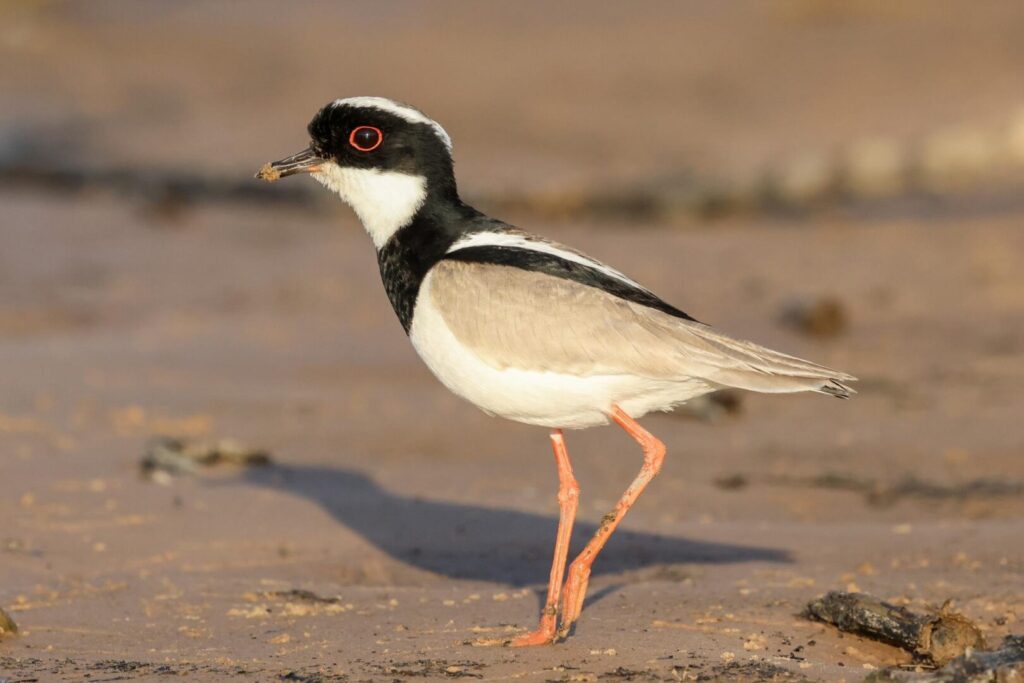
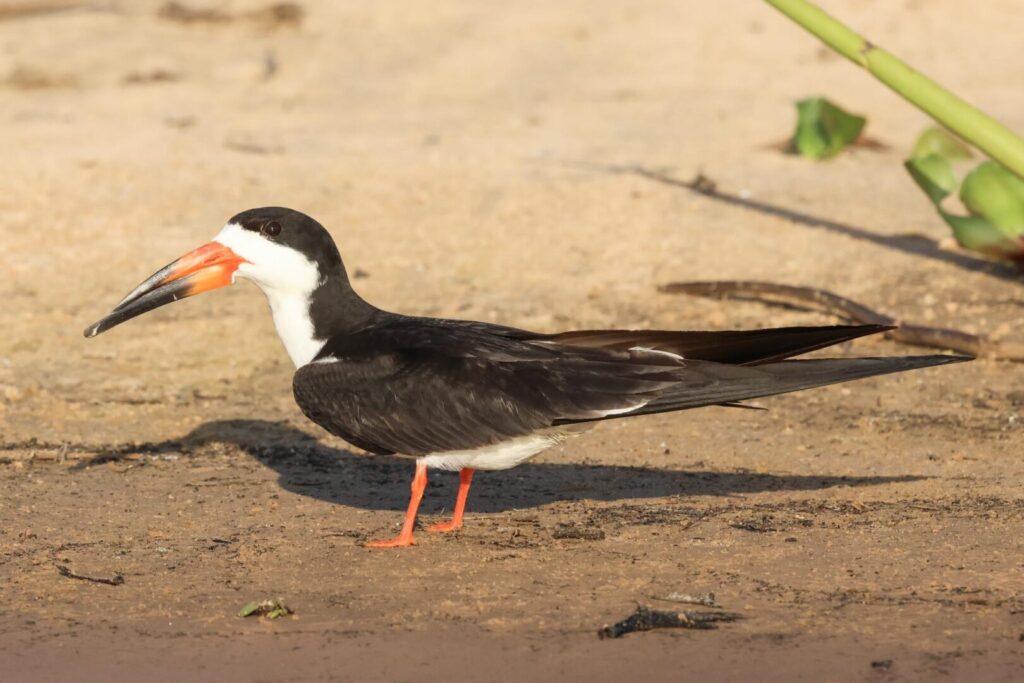
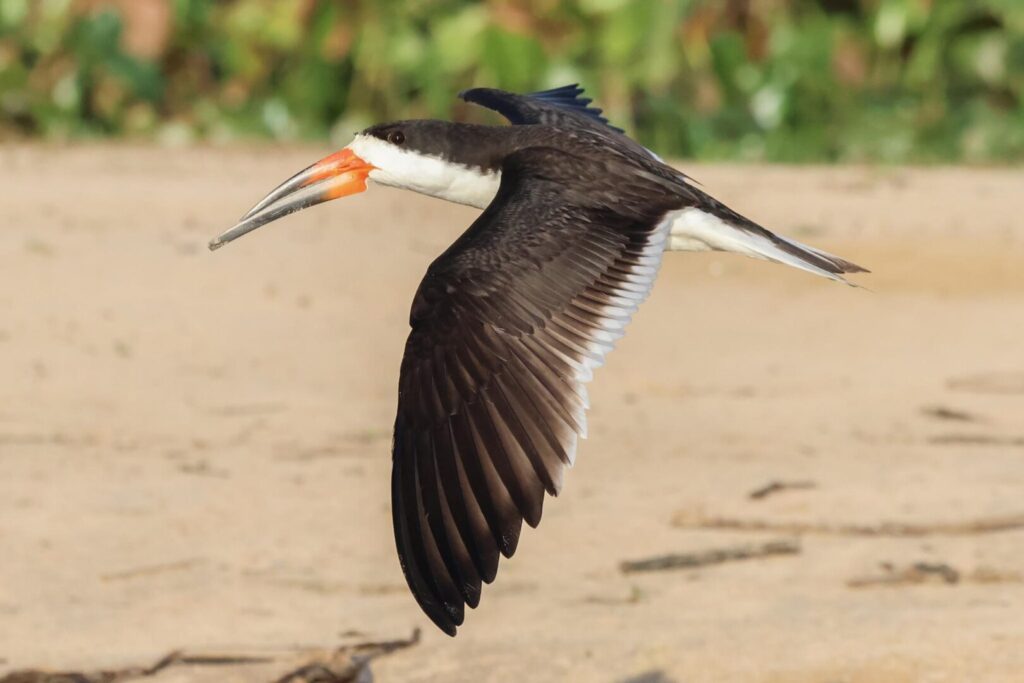
A little further on and there were lots of terns on the sandy shore. Again, we motored closer inshore. The Black Skimmers were nesting on the beach and we had great views of them standing on the shore and flying round.
Great views of the Large-billed Terns too, with their impressively large bills.
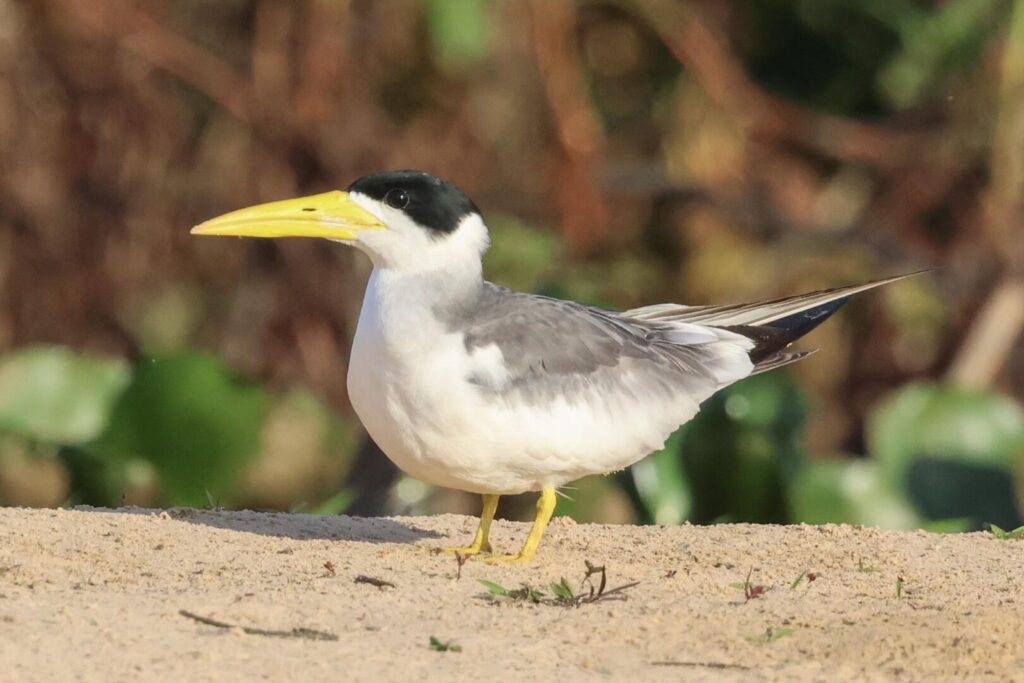
There were several smaller Yellow-billed Terns too.

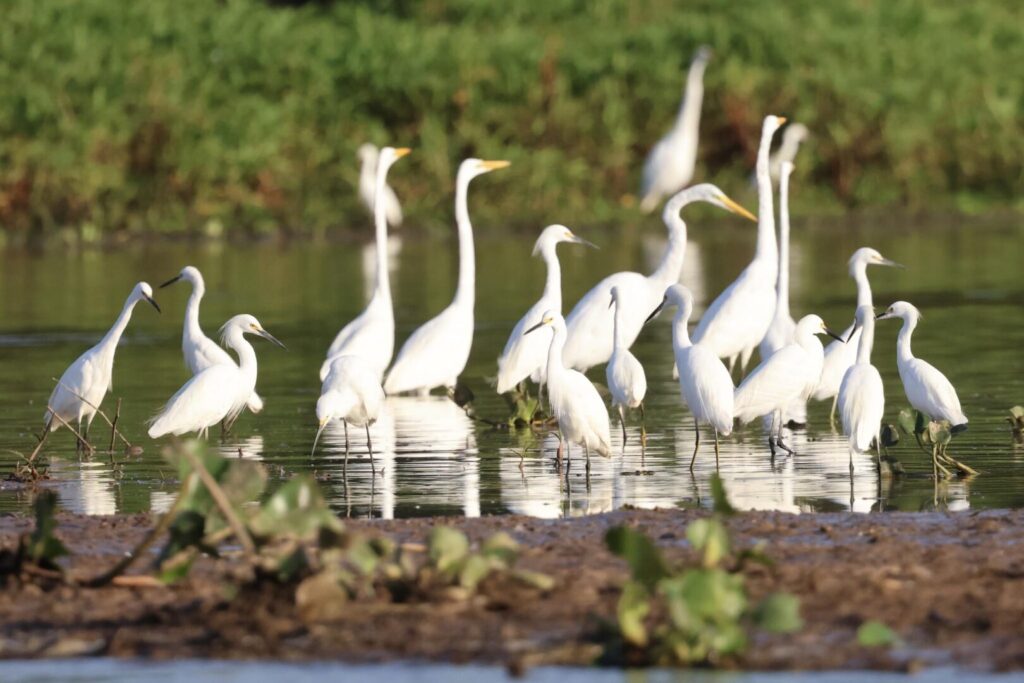
This time, we had a chance to stop and admire all the egrets too, the huge gathering in the shallows where we had seen them yesterday. As well as all the Great White and Snowy Egrets, there were several Neotropic Cormorants on the mud in front.
Again, the Jaguars were unavoidable. This time, we saw at least three individuals, one different to the ones we had seen yesterday.
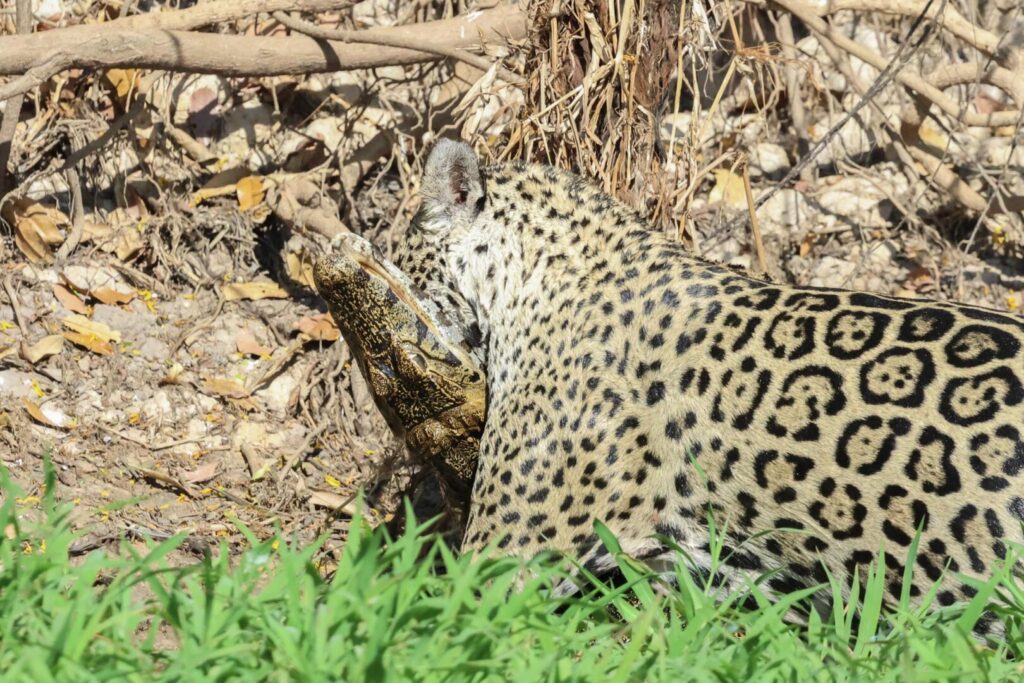
We watched one of the Jaguars catch a caiman. It was patrolling along the edge of the floating vegetation again and suddenly dived in. When it came out, it had a small caiman in its jaws. It swam across to the other side and hauled it up the bank before disappearing out of view into the trees beyond.
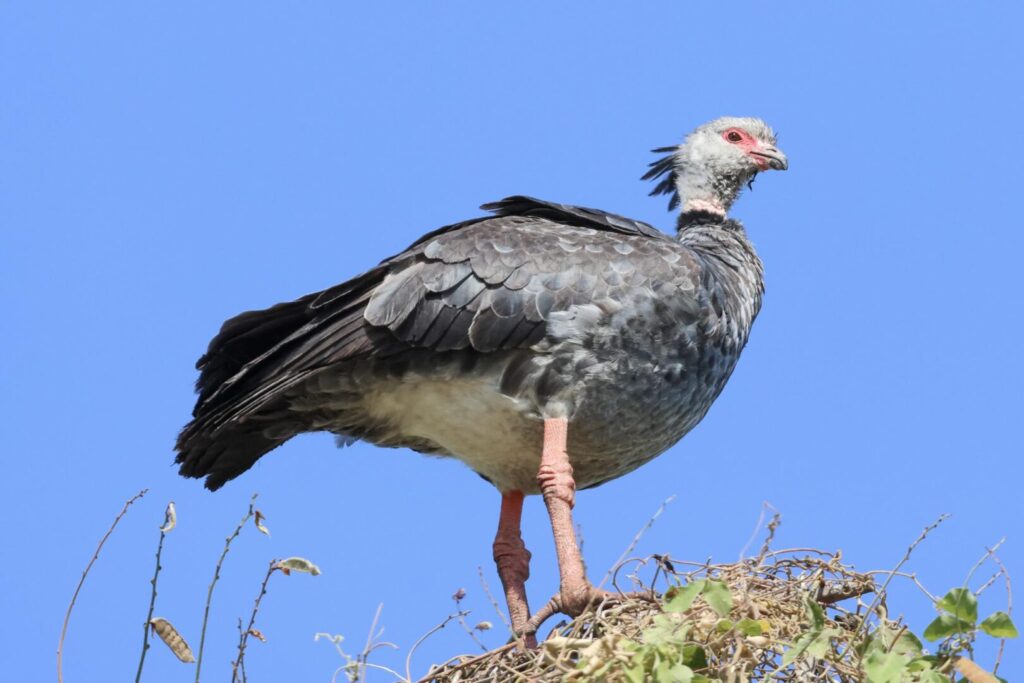
There was more time to look for birds between the Jaguars this morning. We had good views of Southern Screamers on the tops of trees by the river.
Better views of Golden-green Woodpecker today too.
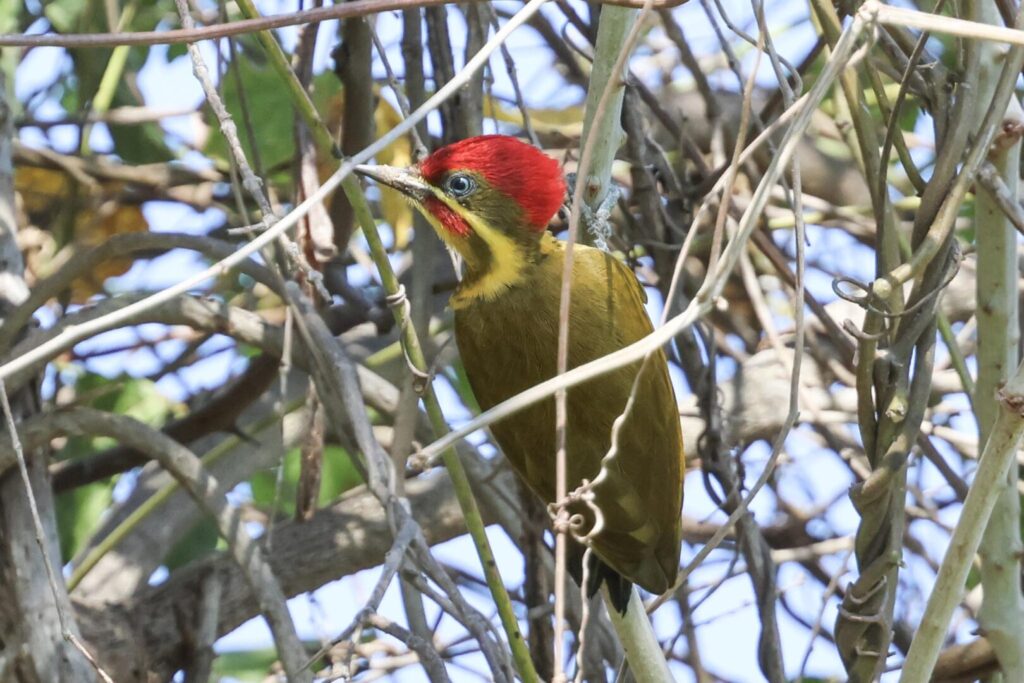
Lots of Kingfishers again.

A couple of Pale-legged Horneros feeding on the bank.

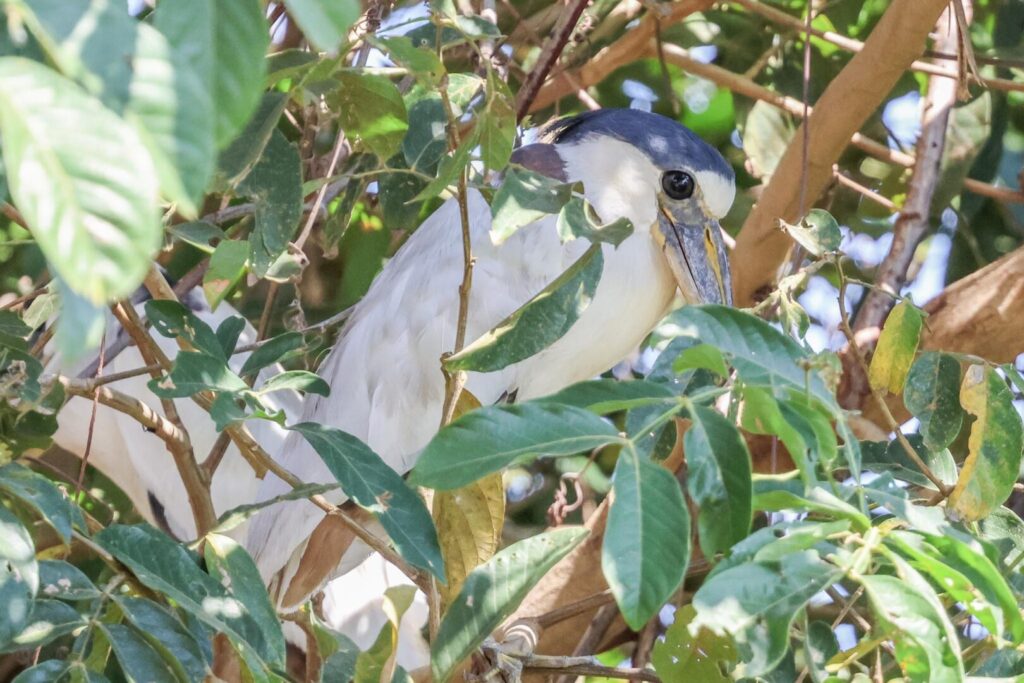
And we finally caught up with some Boat-billed Herons roosting in a tree by the side of the river.
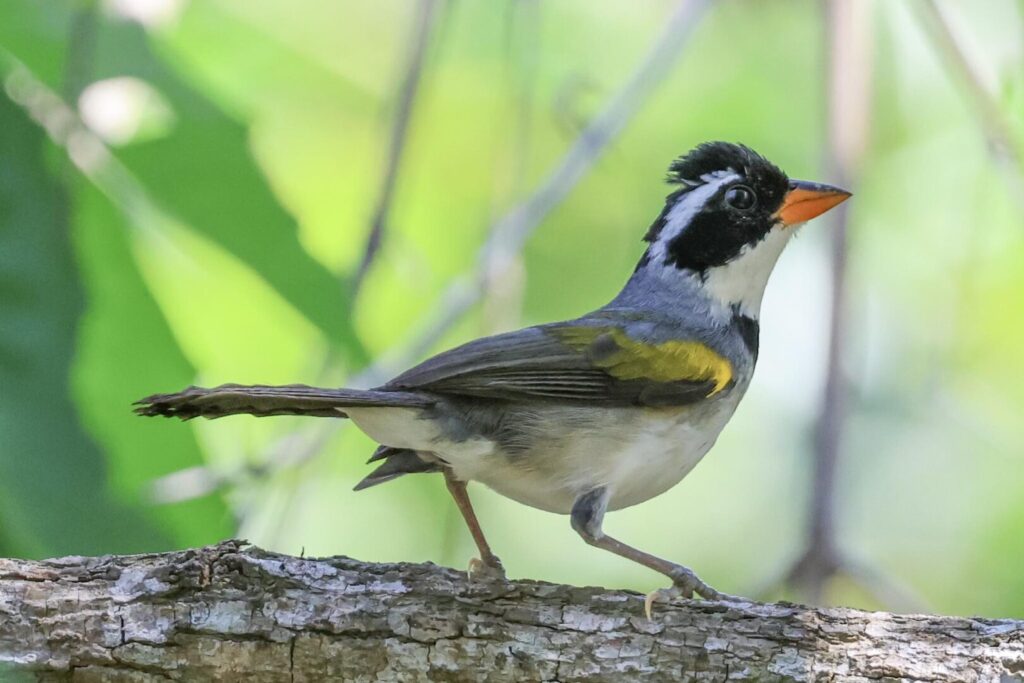
We got back to the lodge about 11.30am and had a little time before lunch. A quick walk into the trees behind the lodge produced a nice selection of birds, the highlights being a couple of Fawn-breasted Wrens and a Saffron-billed Sparrow, which were both new for the trip.
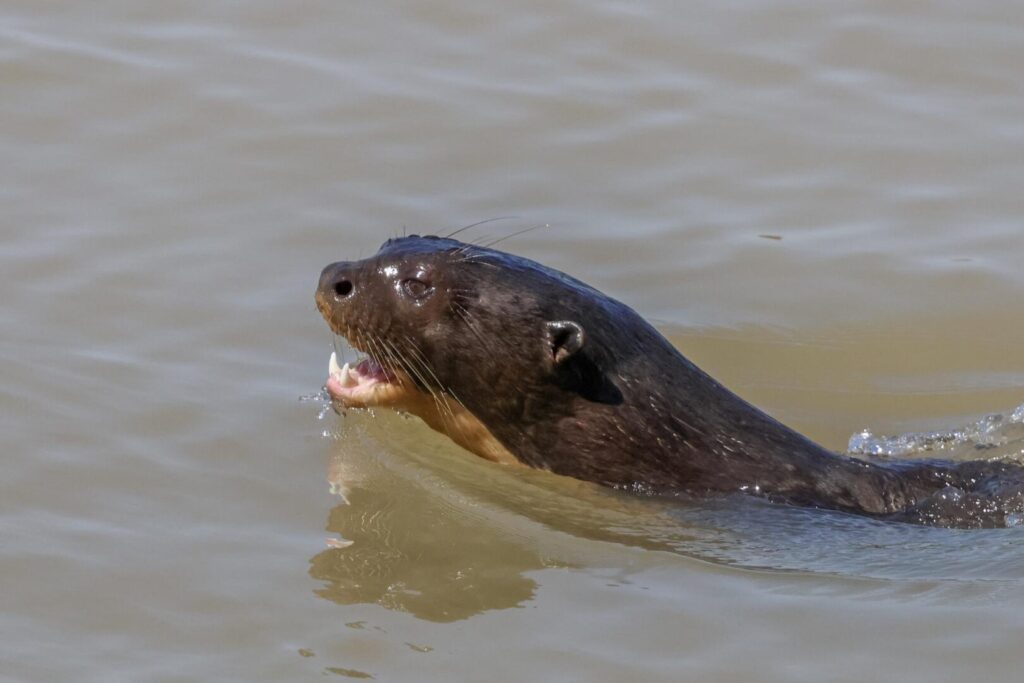
After lunch, we were standing on the river bank when three Brazilian Giant Otters swam past. We followed them a short distance upstream but when they disappeared behind some bushes we lost sight of them. They didn’t come out the other side and we eventually realised they had come out onto the bank under the bushes. Hard to see through all the branches but we watched them for a while. There were three Grey-crested Cacholotes in the bushes here too.
We wanted to have a look at the marshes north of Porto Jofre this afternoon. However, we had spoken to one of the other guides who had been at the Ocelot hide yesterday over breakfast. He had told us that the Ocelot has generally come in most nights recently. We figured it was worth another go tonight, so we booked ourselves in again now. That meant we had less time and had to go out earlier than we would otherwise have done. It was still very hot – the car showing 40C as we set off back up the Transpantaneira.
There were all the usual waterbirds. Lots of Southern Screamers now. Better views of Limpkins.
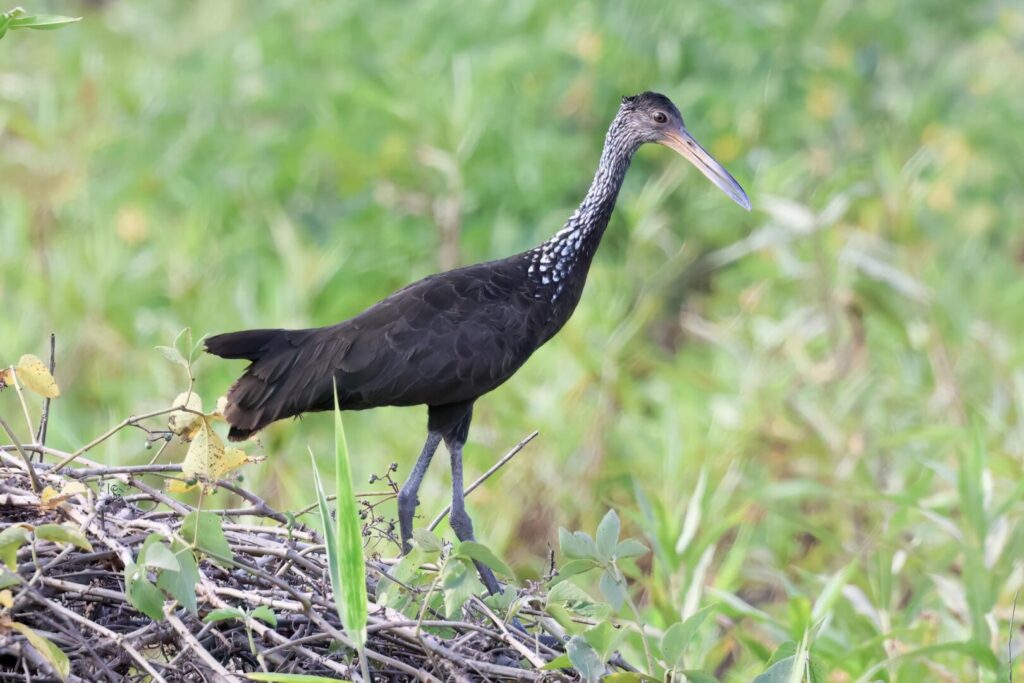
The Maguari Storks were closer to the road this afternoon too.

We were particularly hoping to come across Scarlet-headed Blackbird but small birds were harder to see in the heat. There were still lots of the usual Black-backed Water Tyrants and we managed to find White-headed Marsh Tyrant too. Plenty of Rusty-collared Seedeaters again, plus a few Masked Gnatcatchers and Common Tody-Flycatchers.

We found some White-browed Meadowlarks and Unicoloured Blackbirds but still no sign of a Scarlet-headed Blackbird. It was only when we turned round and started to make our way back that our luck changed. There were large flocks of Unicoloured Blackbirds gathering now, coming in to an area of tall reeds to roost. We figured our best chance of finding Scarlet-headed Blackbird was to check out the flocks so we stopped and started to scan. We were quickly rewarded with a couple coming in to roost.
A group of White Woodpeckers appeared too. Just as we were starting to think it was a species we might miss.
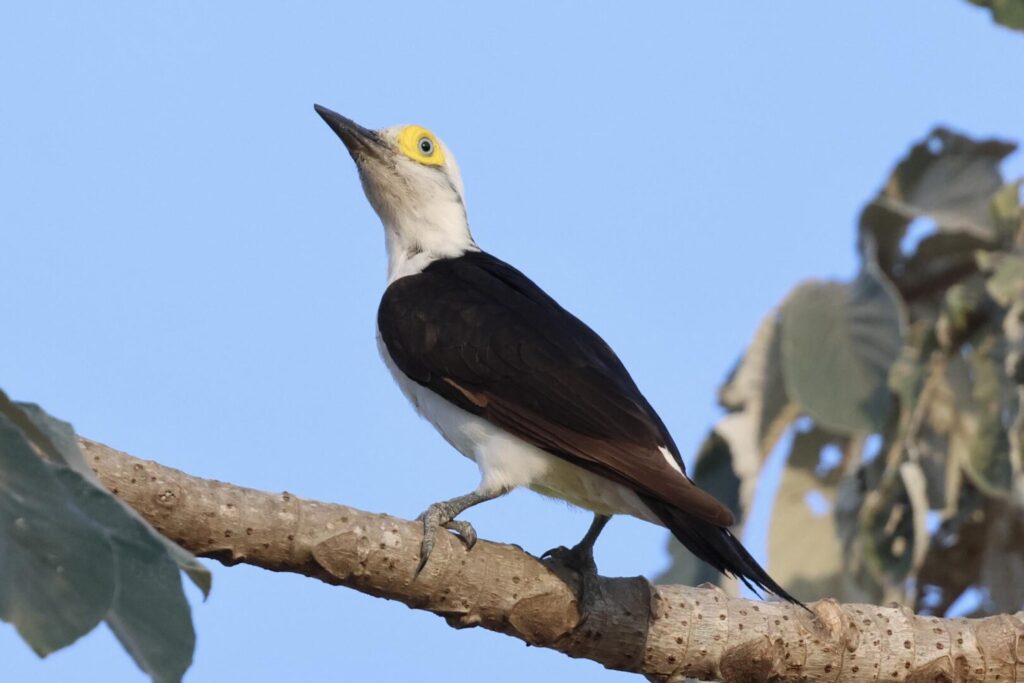
We had to hurry back now so we were in time to go out to the Ocelot hide. This time, we only had to wait about an hour before the Ocelot came in to feed on the chicken pieces put out for it. Great views climbing around on the branches. Second time lucky! Something spooked it and it ran off back into the trees. But it quickly came out again to finish off the chicken. We were very glad we had decided to try again tonight.
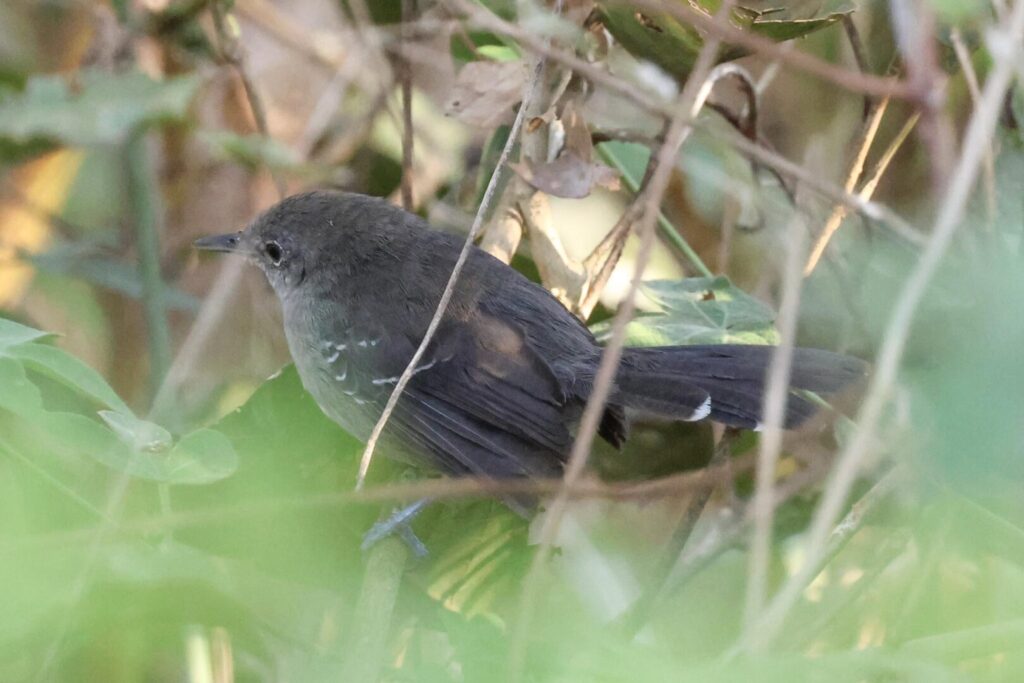
On 19th, we were moving on. After breakfast, we spent spent a couple of hours around the grounds of the lodge again. We had one main target here, Mato Grosso Antbird. Thankfully it didn’t take long to find a pair in the trees at the back of the lodge. A bit of a surprise we hadn’t found it previously! They did mostly stay rather well hidden in the dense undergrowth.
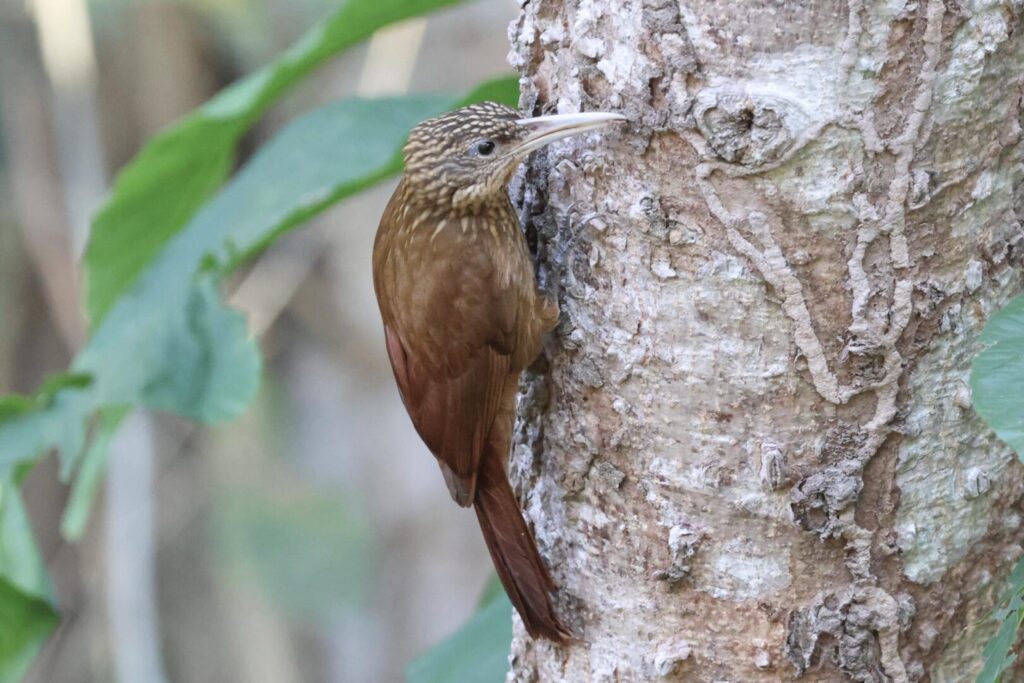
There were also Olivaceous and Buff-throated Woodcreepers in the trees and Purplish Jays.
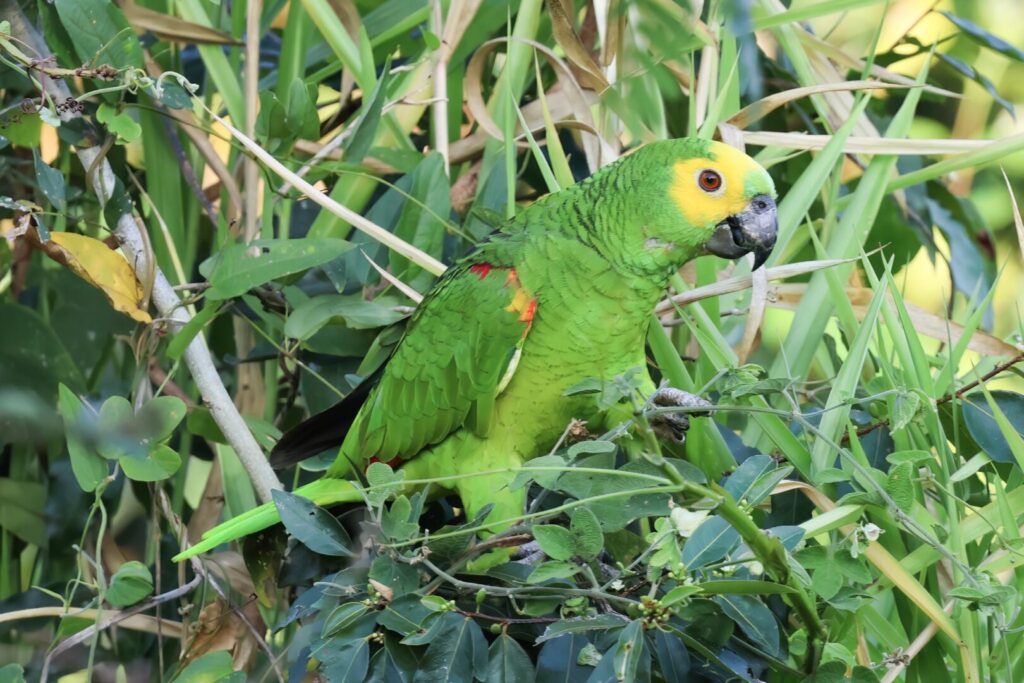
A Turquoise-fronted Amazon was clambering around, low down in the bushes.
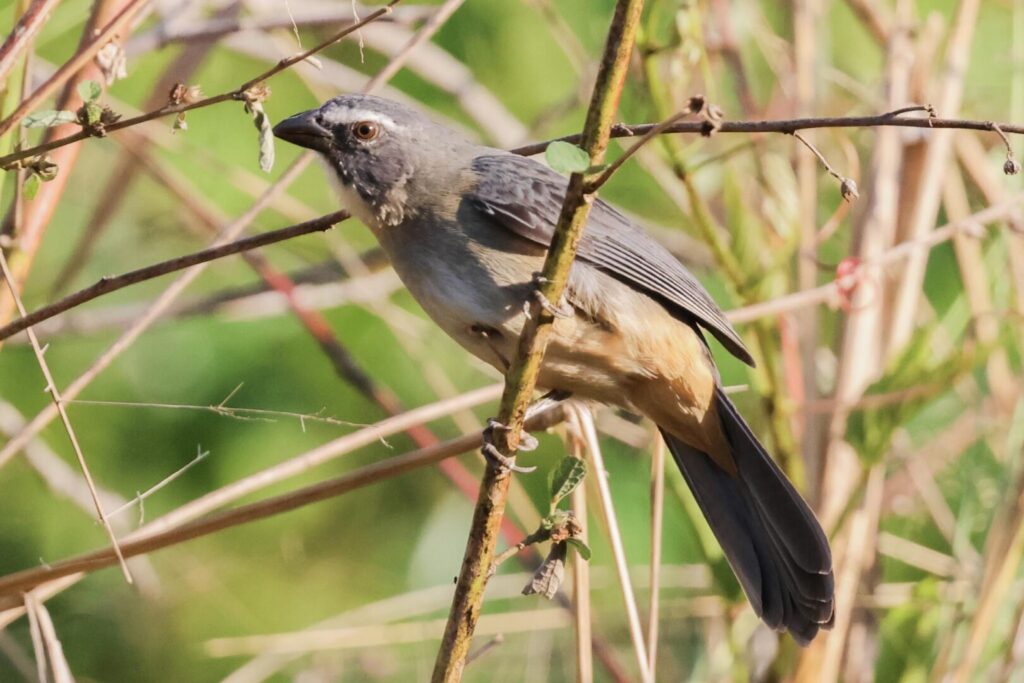
Good views of Bluish-grey Saltator in the bushes here too.
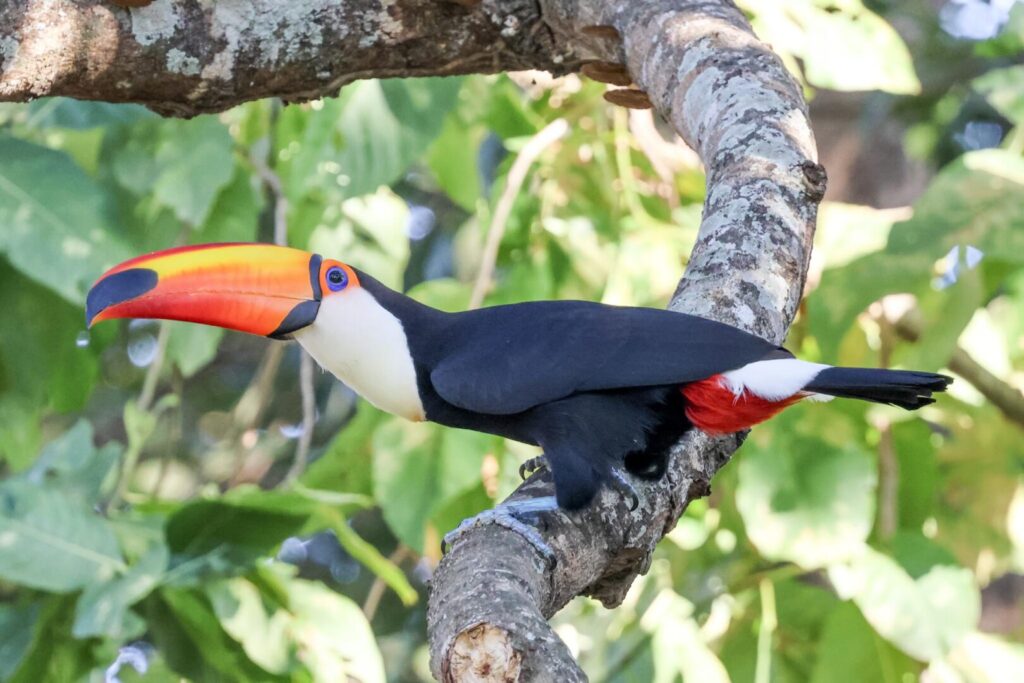
We had seen lots of Toco Toucans flying over or high in the trees. Now we spent some time watching one which came down to eat the fruit which had been put out in the feeding troughs. Then low in the trees just behind with a second Toco Toucan too.
With a bit more time and on closer inspection, we managed to pick out a few larger-billed Screaming Cowbirds in with the flocks of regular Shiny and Giant Cowbirds and Greyish Baywings coming in to the feeders.

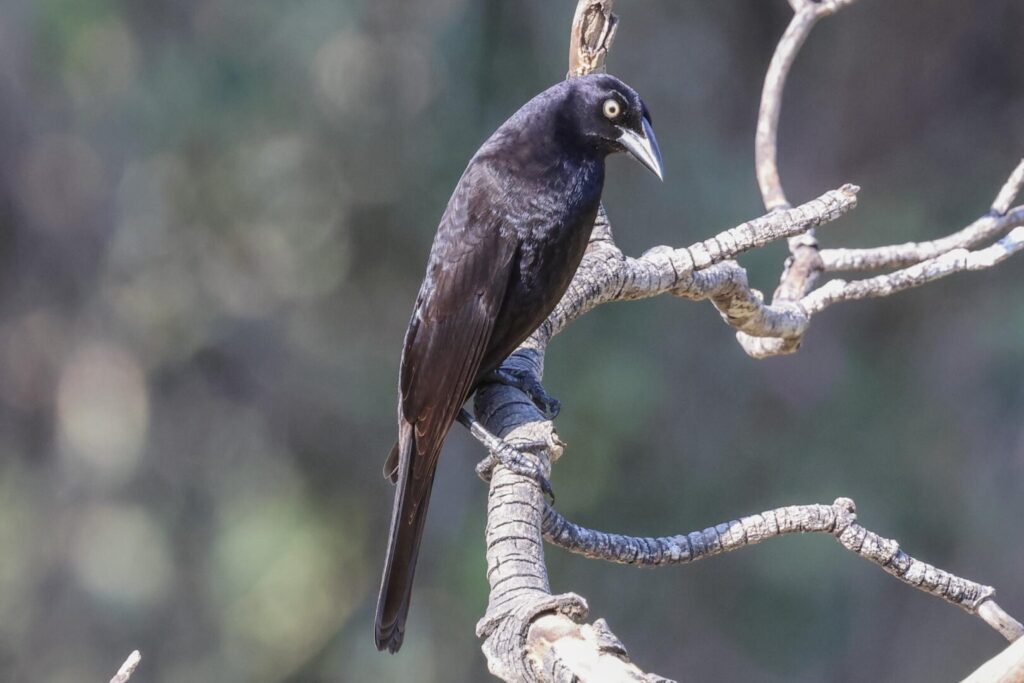
Into trees, we found a mixed flock. As well as the Fawn-breasted Wren & Saffron-billed Sparrow we had seen here before, we found Rufous Casiornis and Fuscous Flycatcher.
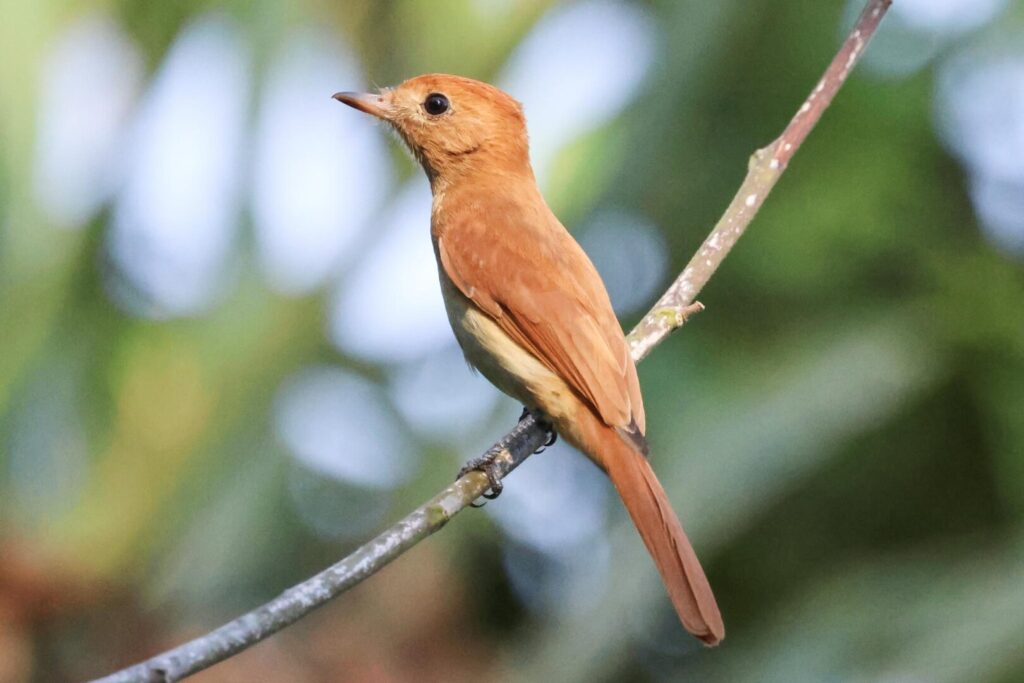
Variable Oriole was split from Epaulet Oriole in 2010. Those in the Pantanal are Variable, with their chestnut shoulder patches. In the Amazon further north we also saw the yellow-shouldered Epaulet.
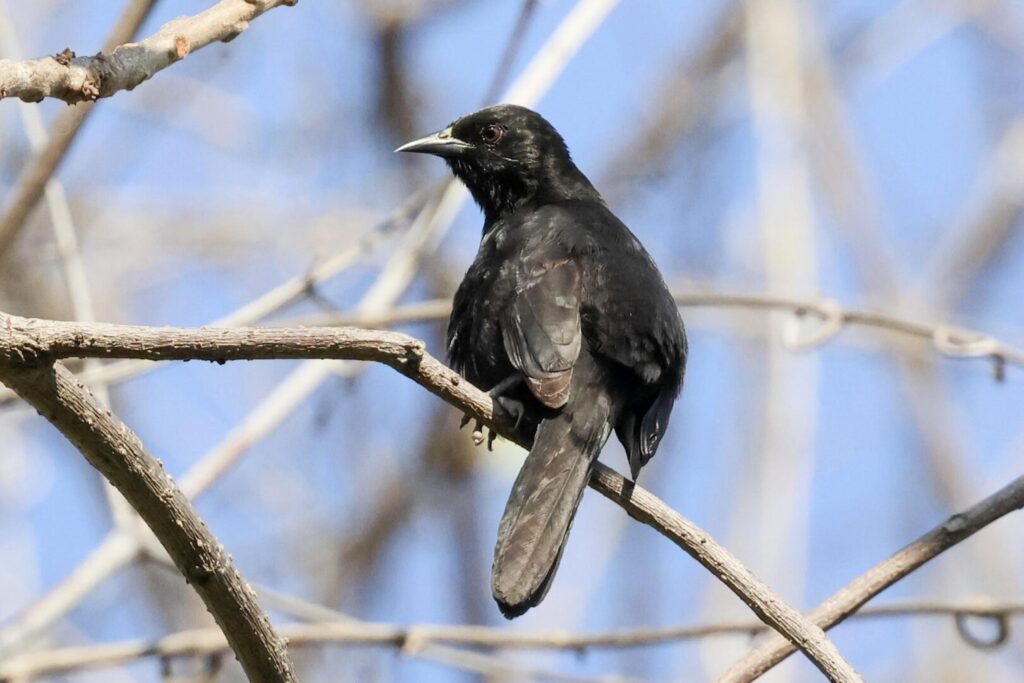
As well as all the regular Silver-beaked and Sayaca Tanagers, we found a Grey-headed Tanager.
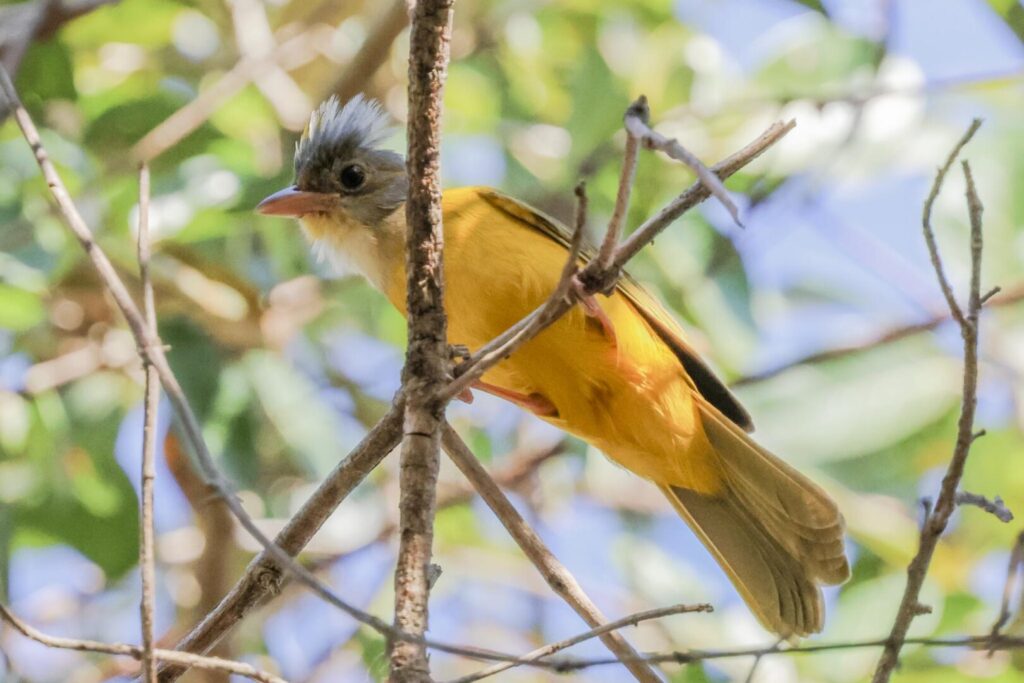
After checking out, we left just after 9am and headed back out onto the Transpantaneira. Once again, there were lots of birds and good photo opportunities, so we kept stopping as we made our way back north. Much closer views of Roseate Spoonbill on the small pools by the road.
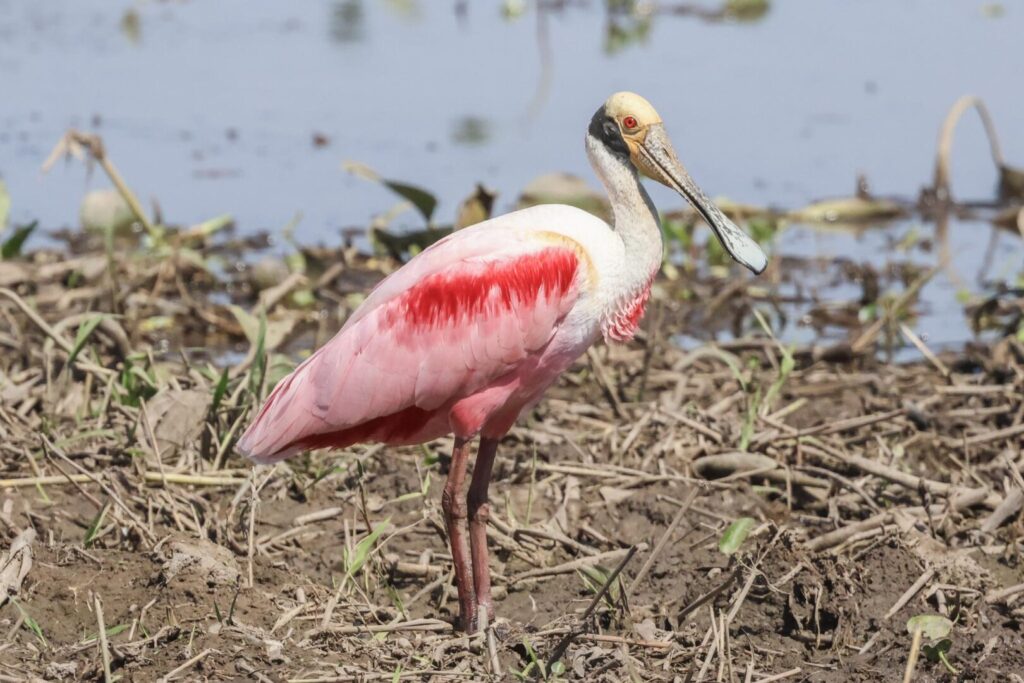
Some nice close views of Southern Screamers too, and lower down on the marshes rather than up in the tops of the trees, where we had seen them from the boat.

Plenty of raptors, including Snail Kites, Roadside Hawks, Great Black Hawks and Savanna Hawks.

It was rather windy this morning, so harder finding small birds today. We did manage to find one or two Cinereous-breasted Spinetails in the scrub by the road at one point, and better views of Chotoy Spinetail.
We wanted to make another longer stop further north, just off the Transpantaneira, at Rio Claro Lodge. There were a couple of parrots here that we wanted to see. We arrived at lunch time and enquiring at reception we were offered a package including access to the lodge grounds, lunch in the restaurant and a boat ride on the river for R$315 each. There were a few Red-crested Cardinals around the feeders as we pulled up but by the time we had checked in they had disappeared. There was no sign of any parrots either. We went straight into lunch first.
After lunch, we went for an hour-long boat ride on the Rio Claro. In theory, this is a site where it is possible to see Agami and Zigzag Heron but it quickly became clear we were not going to see much on a quick outing in the middle of the afternoon. The surprise of the trip was an Osprey in the trees by the river. Otherwise we saw a few monkeys and a Yacare Caiman which came in to a fish tied to a fishing rod, dangled over the side by the boatman.
When we got back from the boat trip, we were pleased to find first that the Nanday Parakeets had reappeared. Target number 1 here. There were several small groups in the trees in front of reception and more coming down to feed at the feeding station behind.
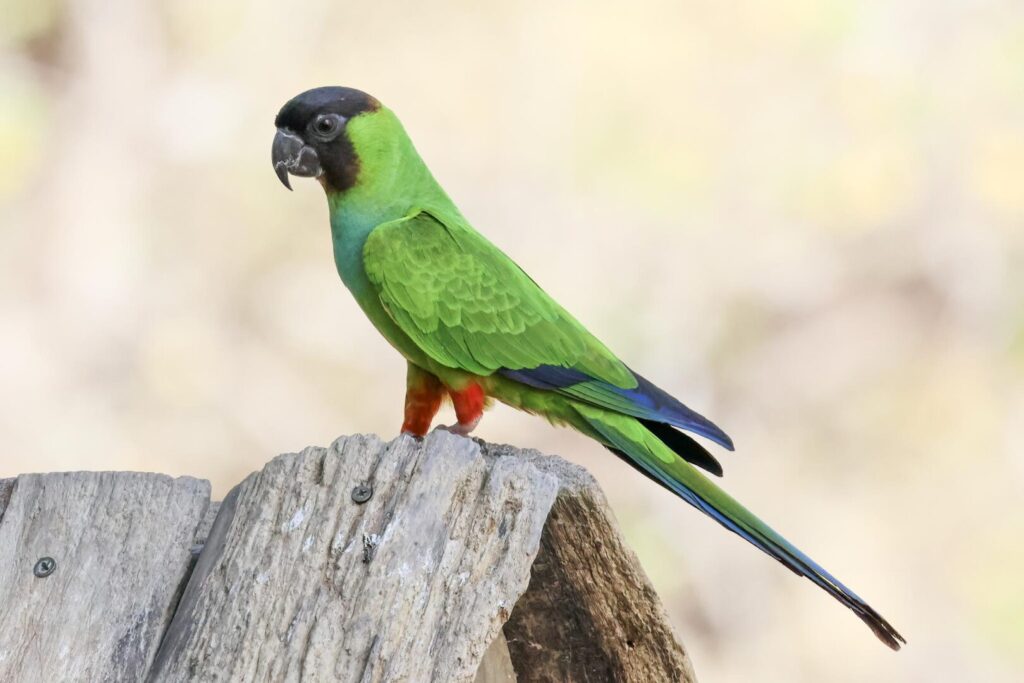
Then we found a Scaly-headed Parrot in the top of one of the trees in front of reception too. Target number 2. There were not many mangoes on the tree here. Round the back of the restaurant we found another mango tree with lots of fruit. Two more Scaly-headed Parrots were feasting on the mangoes lower down here.

There were also a couple of Hyacinth Macaws in the trees by the buildings in front of the lodge. They allowed us to walk over and get much closer, probably our best views of the whole trip of this iconic species of the Pantanal.

It had been a very productive last stop on our visit to the Pantanal, but now it was time to leave. We drove back up the Transpantaneira to Poconé where we filled up the car again. Then on to Cuiaba. We arrived after dark and dropped off the car back at the Localiza office at the airport.
We had originally booked to fly from Cuiaba up to Alta Floresta with Azul Airlines. Unbeknown to us until just before we left UK, Azul had cancelled all their flights to Alta Floresta earlier in the year. They had neglected to tell us and it was only when one of the lodges questioned our travel plans that we found out. The alternative they had offered (again without telling us) was to fly via Sao Paulo with a 9 hour stopover and getting back the day after our flight to the UK had left. Not very helpful. Apparently Azul Airlines are always unreliable and should be avoided at all costs!
None of the other options worked, so we had decided to take the overnight bus from Cuiaba to Alta Floresta direct. It would be a 14 hour journey but we could sleep on the bus and avoid losing a day or two. We caught a taxi to the bus station and had a very nice meal at the self service buffet in the terminal. Then boarded our bus just after 10pm.
The story continues in Part 3 here.