Not a tour, but a short family holiday for a few days on Tresco, Isles of Scilly. Of course, there was some time for birding too!
We were meant to be sailing over to the islands on the Scillonian III on 20th but it was cancelled due to the weather. The Isles of Scilly Steamship Company seems to cancel ferry services at the drop of a hat now. In the past, it always seemed like the Scillonian would sail almost whatever the weather. Certainly it didn’t seem that bad on 20th.
Still we finally got over a day late, on 21st. The journey over was a bit disappointing. Apart from a small pod of Common Dolphins just out of Penzance, we saw only a few Manx Shearwaters and a single Arctic Skua. The news from St Mary’s though was more exciting – an Eye-browed Thrush was found at Porthloo!
By the time we got to St Mary’s though, the news wasn’t so good. The Eye-browed Thrush had flown across the road and disappeared into an area of fields where it couldn’t be seen. I bumped into an old friend in Hugh Town who filled me in on the details. Still, I decided not to go over to Tresco straight away with the rest of the family. I headed up to Porthloo.
There were still a few people looking where the Eye-browed Thrush had been seen earlier, but still no further sign. I walked further round on the road looking in on the fields where I could. I did pop in briefly to see the Red-backed Shrike at the pumping station as I was passing, but it was rather distant and looking into the sun so I didn’t hang around.
Coming back down Telegraph Road, I had a look around Trewince, then cut down past Sunnyside and Rocky Hill back to Porthloo Lane. The Firethorn was leaving at 3.30pm so I decided to head back to the quay. It was a longer journey over to Tresco, as the boat was going via St Martin’s. There were 4 Common Scoter on the sea off Samson and I counted at least 35 Mediterranean Gulls in the Tresco channel.
The following day, the Sapphire was going out on a mini-pelagic from St Mary’s and I fancied going along. I managed to book myself on an early morning jetboat transfer from Tresco with Richard, another birder staying on the island. I also exchanged messages with Joe Pender. The pelagic was due to finish at 3.30pm and the Firethorn was scheduled to sail back to Tresco from St Mary’s at the same time. Joe assured me that he would get us back in time. A plan was made.
As I got ready to head off to St Mary’s on Wednesday morning, a message came through that the Eye-browed Thrush had been seen again at Porthloo. I couldn’t get over any earlier, so I had to wait for the 8.50am jet boat. By the time we got to St Mary’s it had disappeared again. I had a chat with Dick Filby, who was on site, and it didn’t sound good. It wasn’t worth sacking off the mini-pelagic so I decided to go ahead as planned and made a contingency plan just in case for later in the day.
The Sapphire set off at 9.30am. A Common Scoter was on the sea just off the quay. We motored out past the Western Rocks, stopping briefly to look at several Purple Sandpipers on the rocks.
A survey vessel, the CEFAS Endeavour, had reported finding thousands of Great Shearwaters SW of the islands yesterday so Joe took us off in that direction. It wasn’t long before we started to see Great Shearwaters moving on the horizon and when we got closer we could see there were big numbers flying round and rafting on the sea. Great Shearwaters, thousands of ’em! We sailed on and in amongst them, with birds flying all round the boat. Fabulous views!
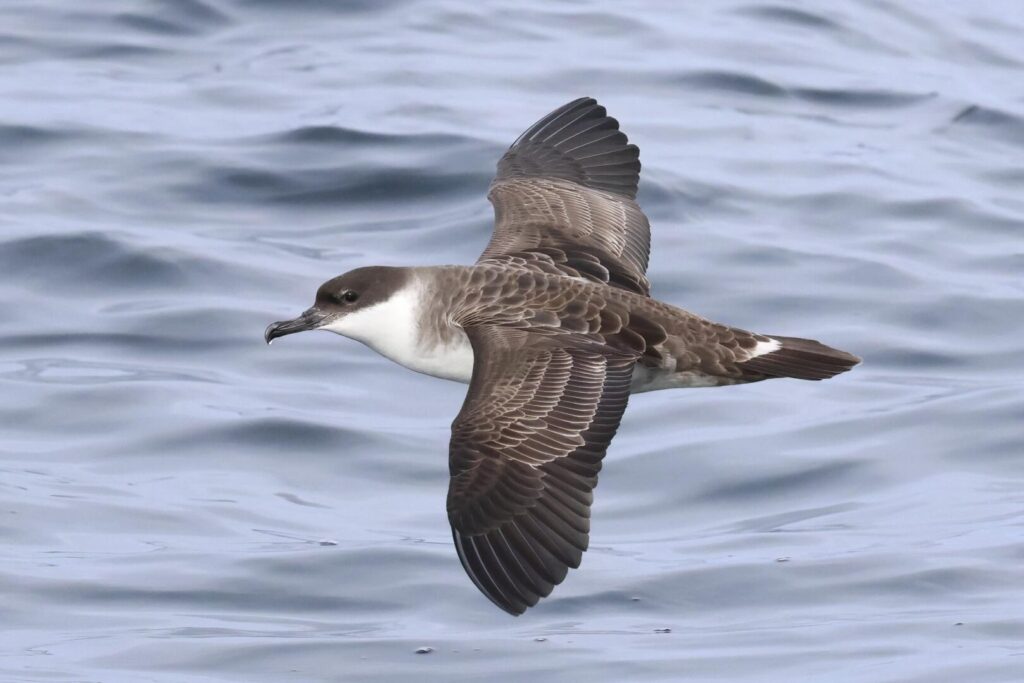
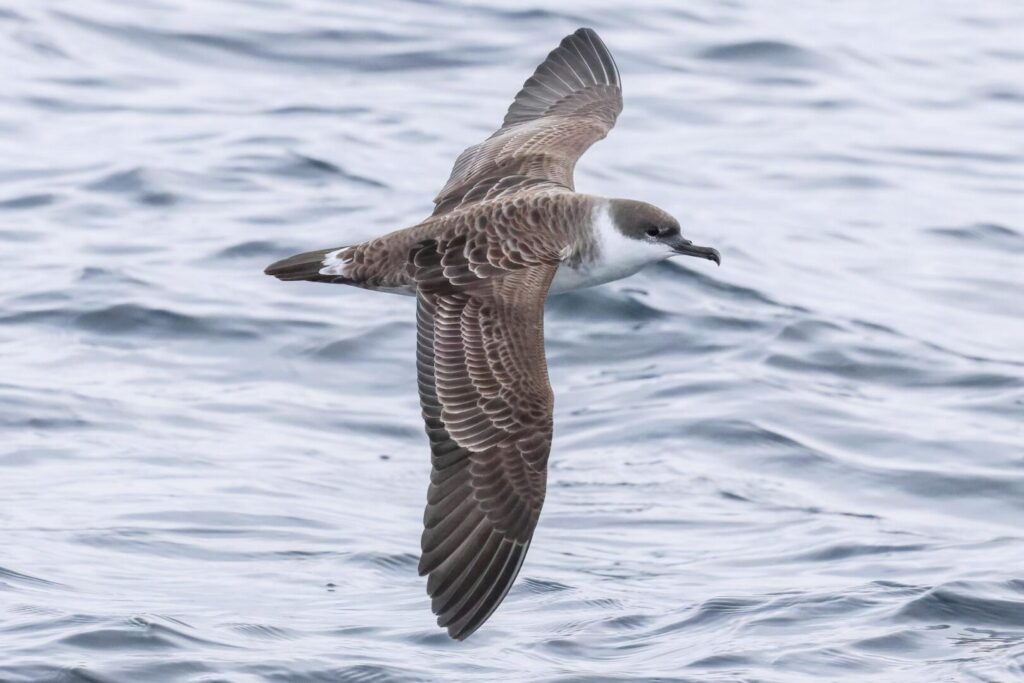
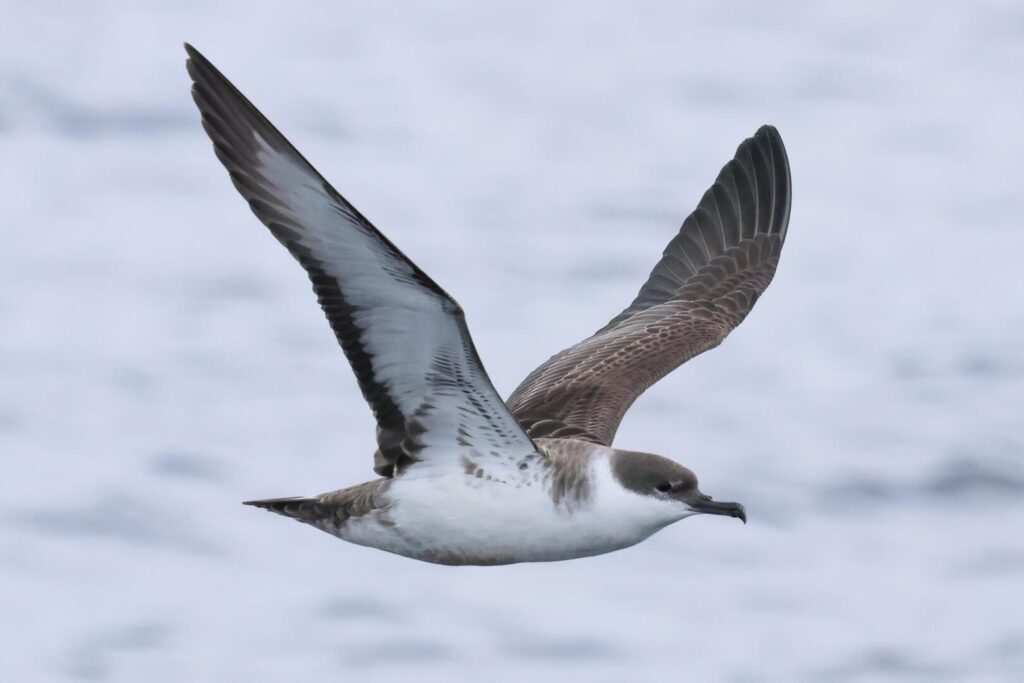
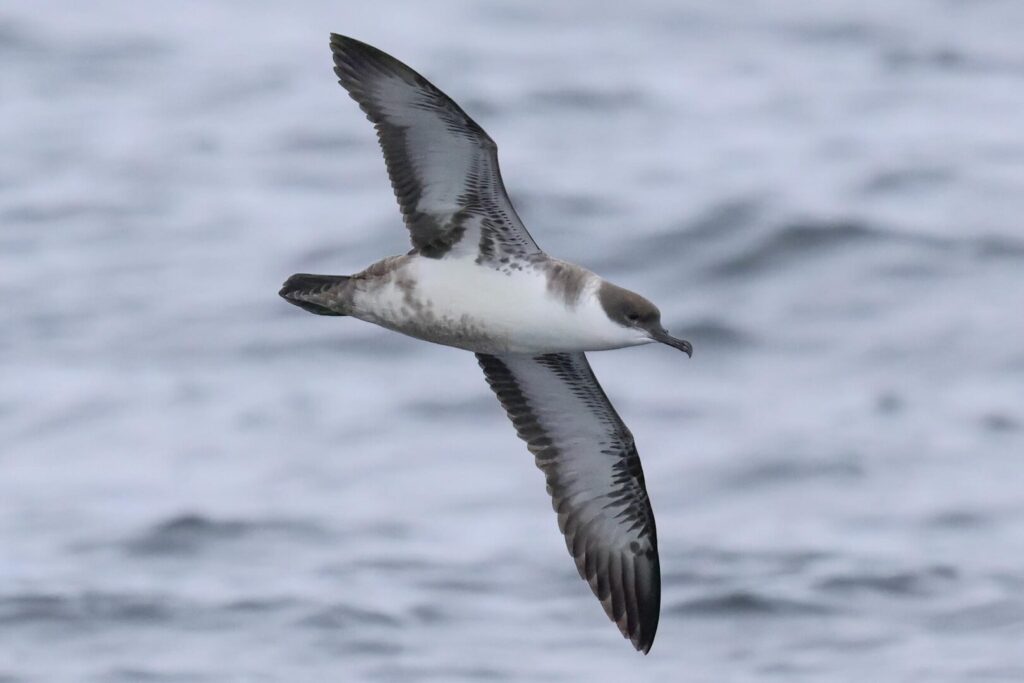
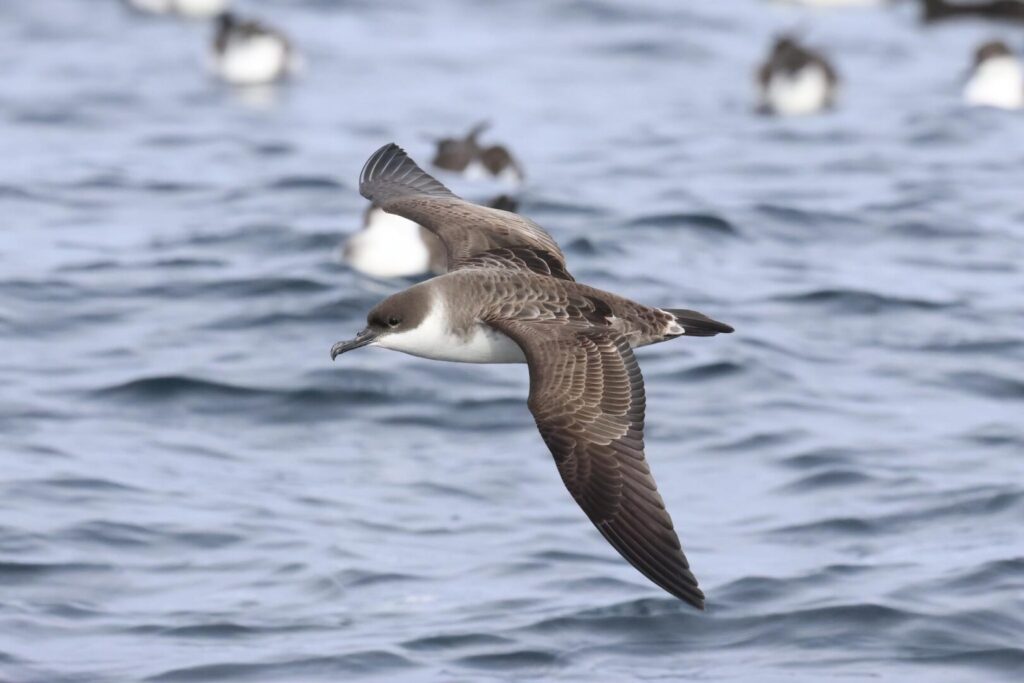
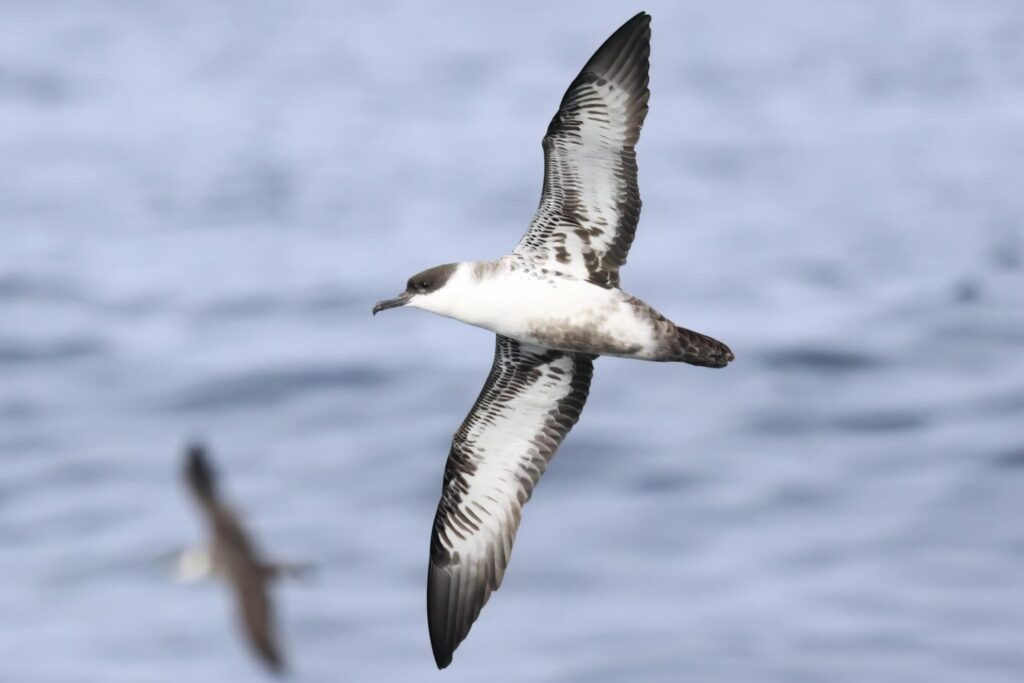
There were large numbers of Sooty Shearwaters mixed in with them too, and small number of Manx Shearwaters.
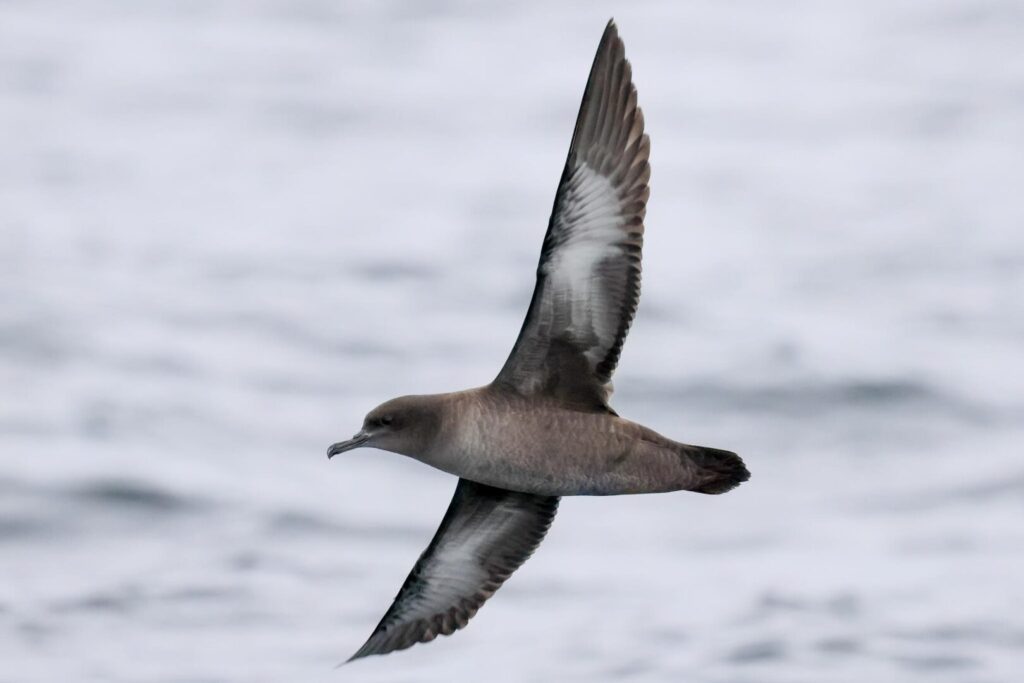
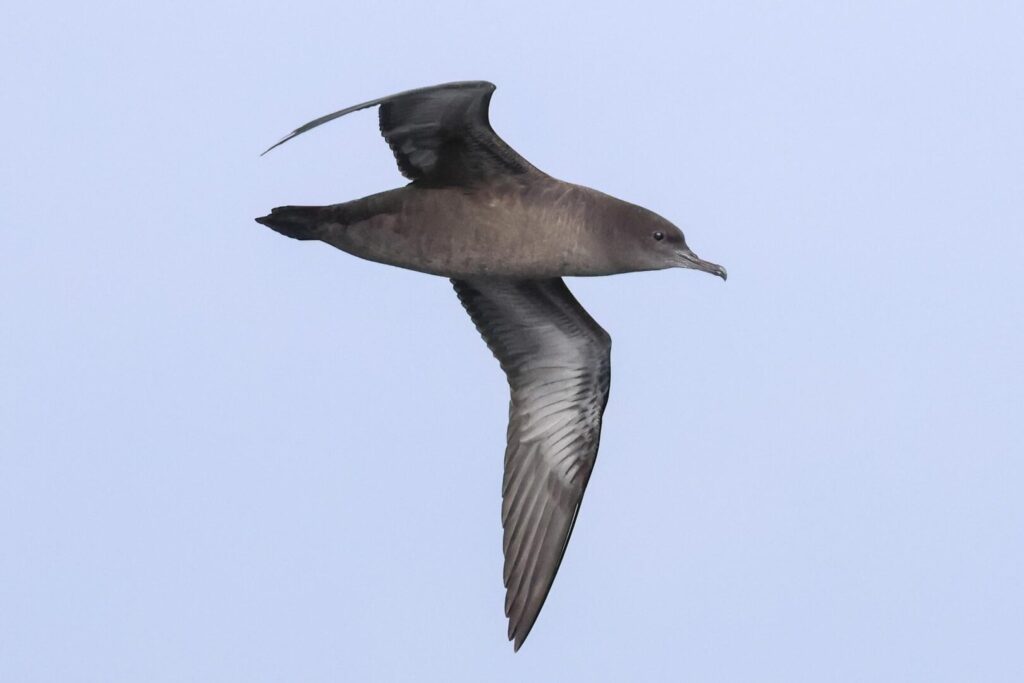
The rafts of birds on the sea were particularly impressive. At one point, we sailed up to one and eased off the engine. We could hear Great Shearwaters calling to each other. Amazing, not something I have ever heard before.
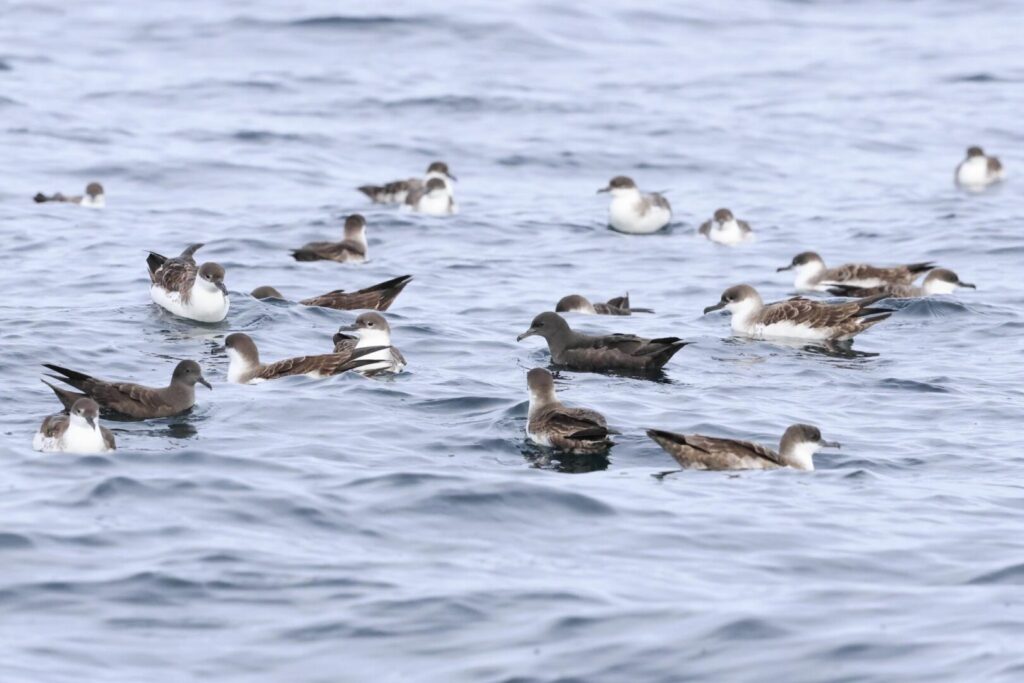
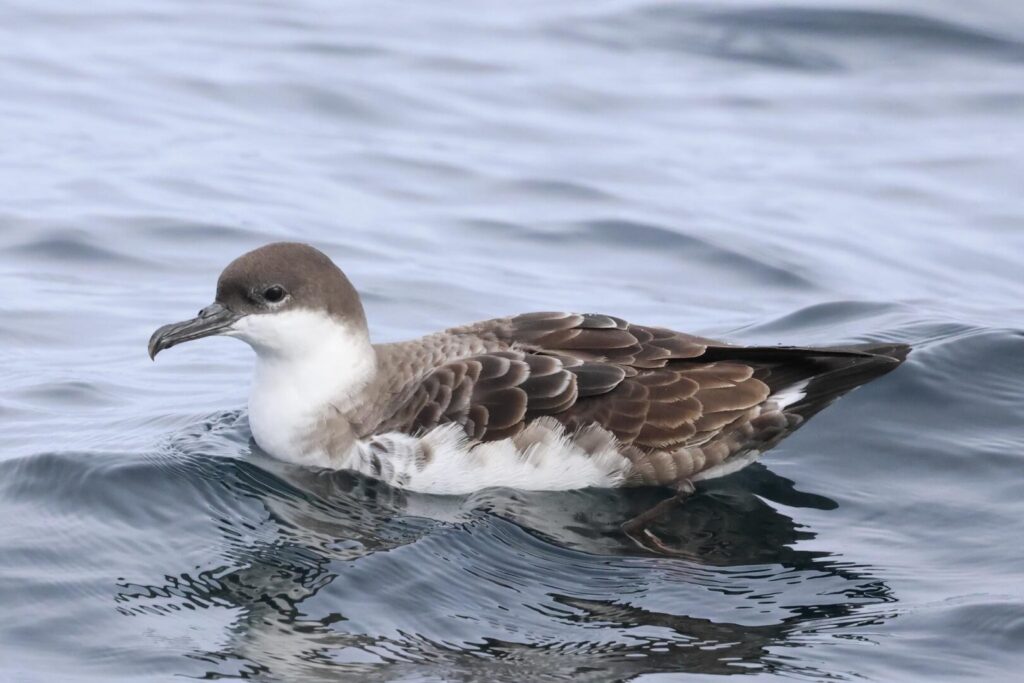
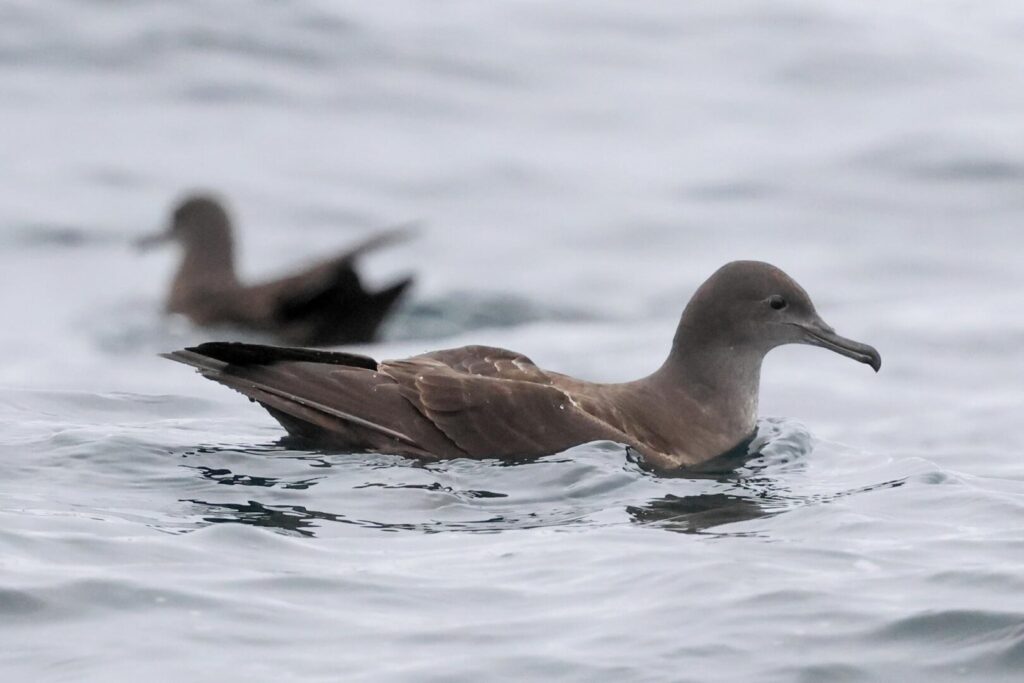
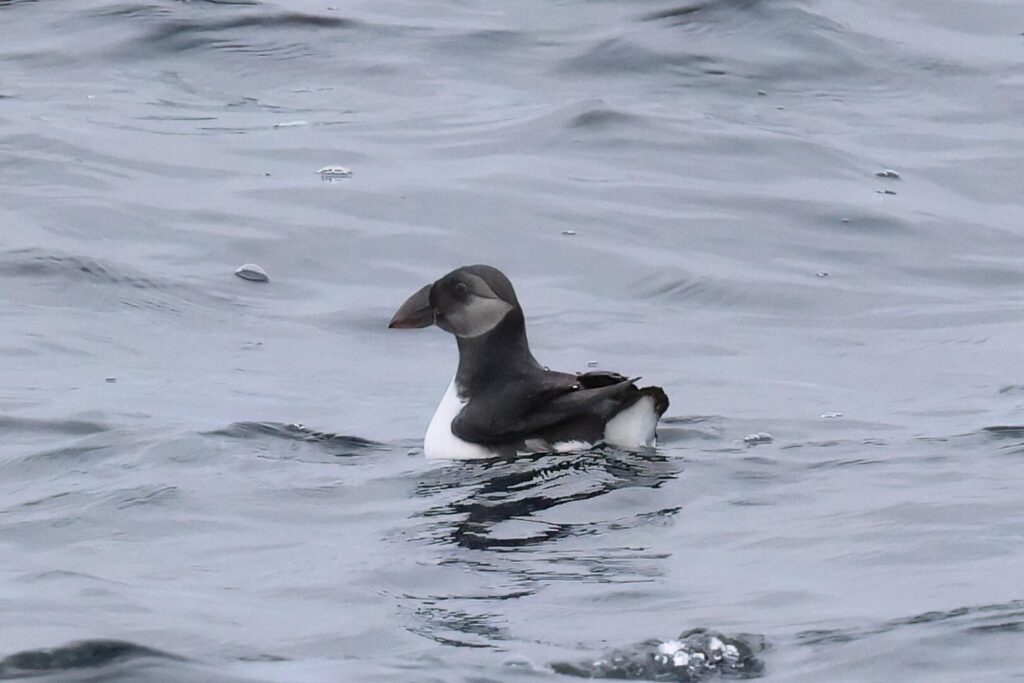
At one point, Joe picked up a darker-headed shearwater in with the Greats. It was mostly going away and I think most people failed to get on it. Joe thought it might be a melanistic Great but I had a good view of it’s head and would have had it as a Cory’s Shearwater myself. We picked up at least three different European Storm Petrels too and three Puffins.
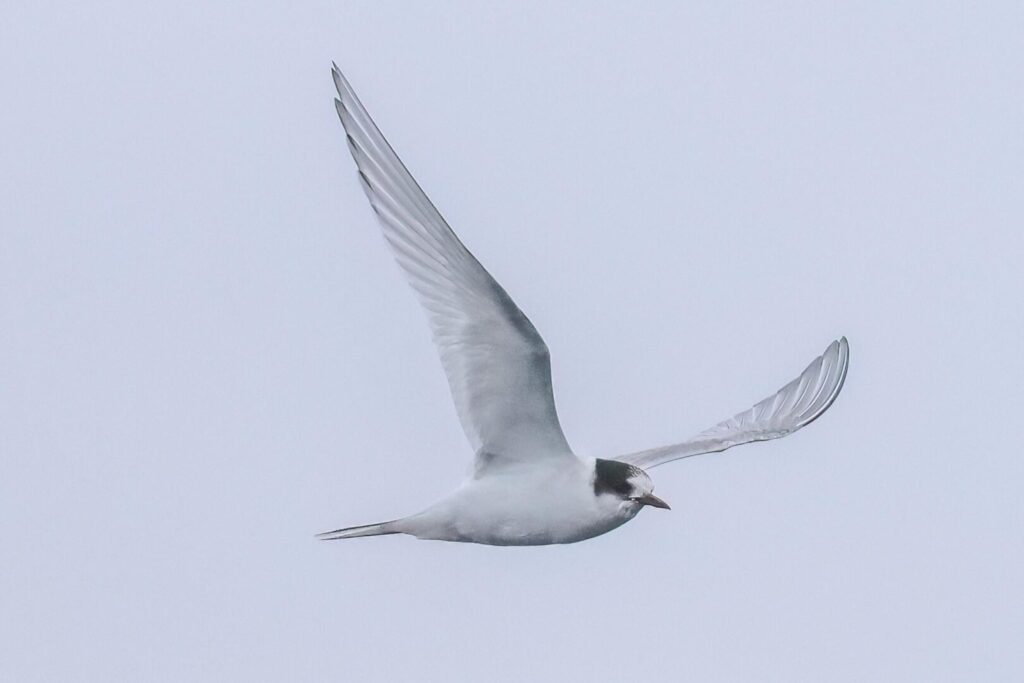
At one point, a juvenile Arctic Tern came in to investigate.
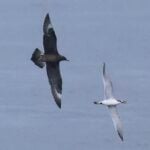
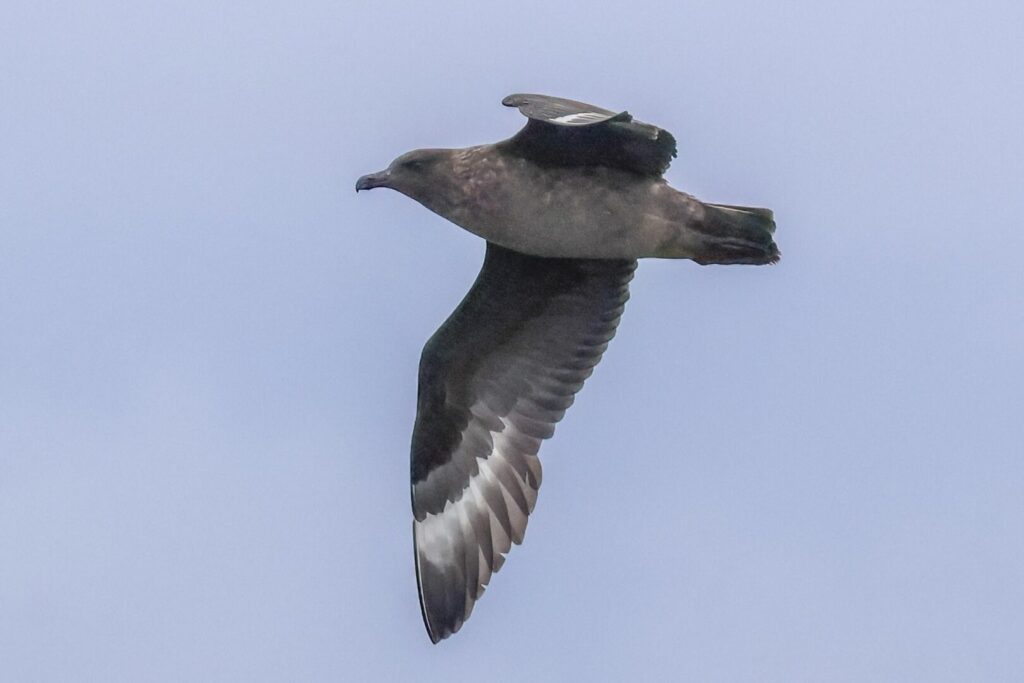
At least four different Great Skuas came in too, including a colour-ringed bird which had possibly been ringed in Orkney which circled round over the boat. A single Arctic Skua was only seen more distantly going away.
Eventually, we had to tear ourselves away from all the activity and we sailed back to Bishop Rock. There were a few more Gannets diving around the rocks here but nothing else. The rain was coming in fast now behind us, so Joe decided to head back to St Mary’s early. When we managed to pick up a mobile signal again, we could see that the Eye-browed Thrush had reappeared and was now showing at Porthloo.
It was raining steadily by the time we arrived back at the quay at 2pm. I only had a limited amount of time, if I wanted to catch the Firethorn back to Tresco at 3.30pm. Otherwise it would mean an expensive charter on the jet boat back later or stay the night on St Mary’s. I hurried round to Porthloo.
My luck was in. The Eye-browed Thrush was still feeding in the leaves under the trees at Sophie’s Walk. It was hard to see at times amongst the logs and tree trunks but came out into view from time to time. When something spooked it, the Eye-browed Thrush flew up to feed on the brambles in the nearby hedge in the open. Good views now. A rare bird here and only the second time I have ever seen one in the UK.
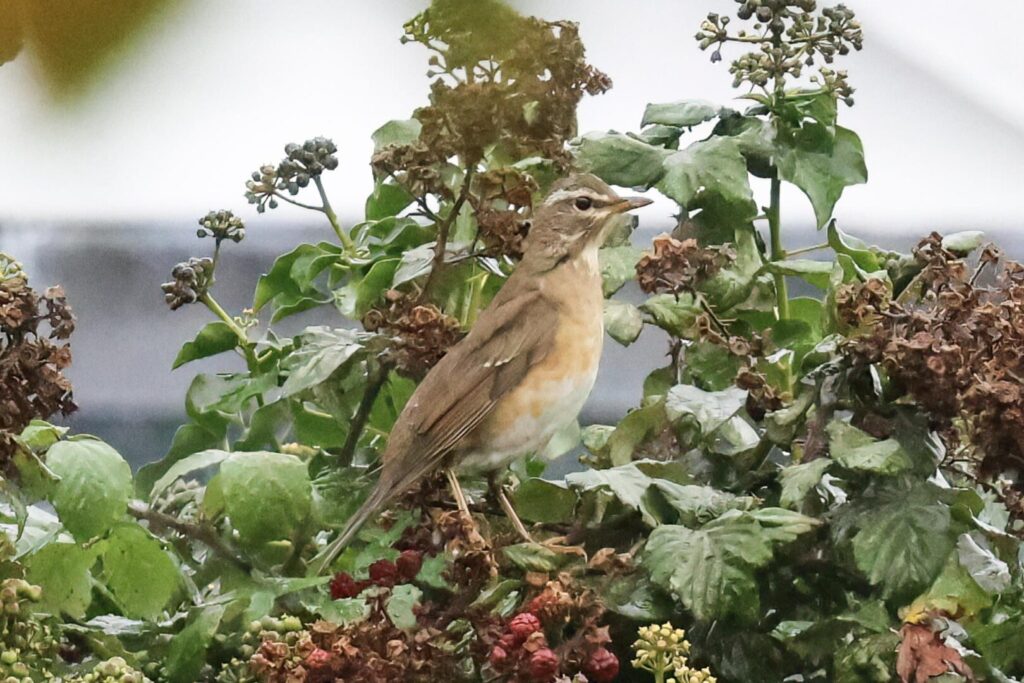
It dropped into the gardens beyond but then flew back out and resumed feeding under the trees. A Blackbird started to chase after the Eye-browed Thrush now. It had gone missing yesterday after the Blackbird had chased it off so it wasn’t a surprise when it flew up into the trees above. It didn’t seem fly out though and we all assumed it would come back out after a while.
I had to leave after a while to get back to the quay in time for the Firethorn. Surprisingly the Eye-browed Thrush wasn’t seen again – not the rest of that afternoon and not on subsequent days. How lucky had I been. If the pelagic had finished as scheduled, I would have missed it! Back to Tresco to dry to dry out.
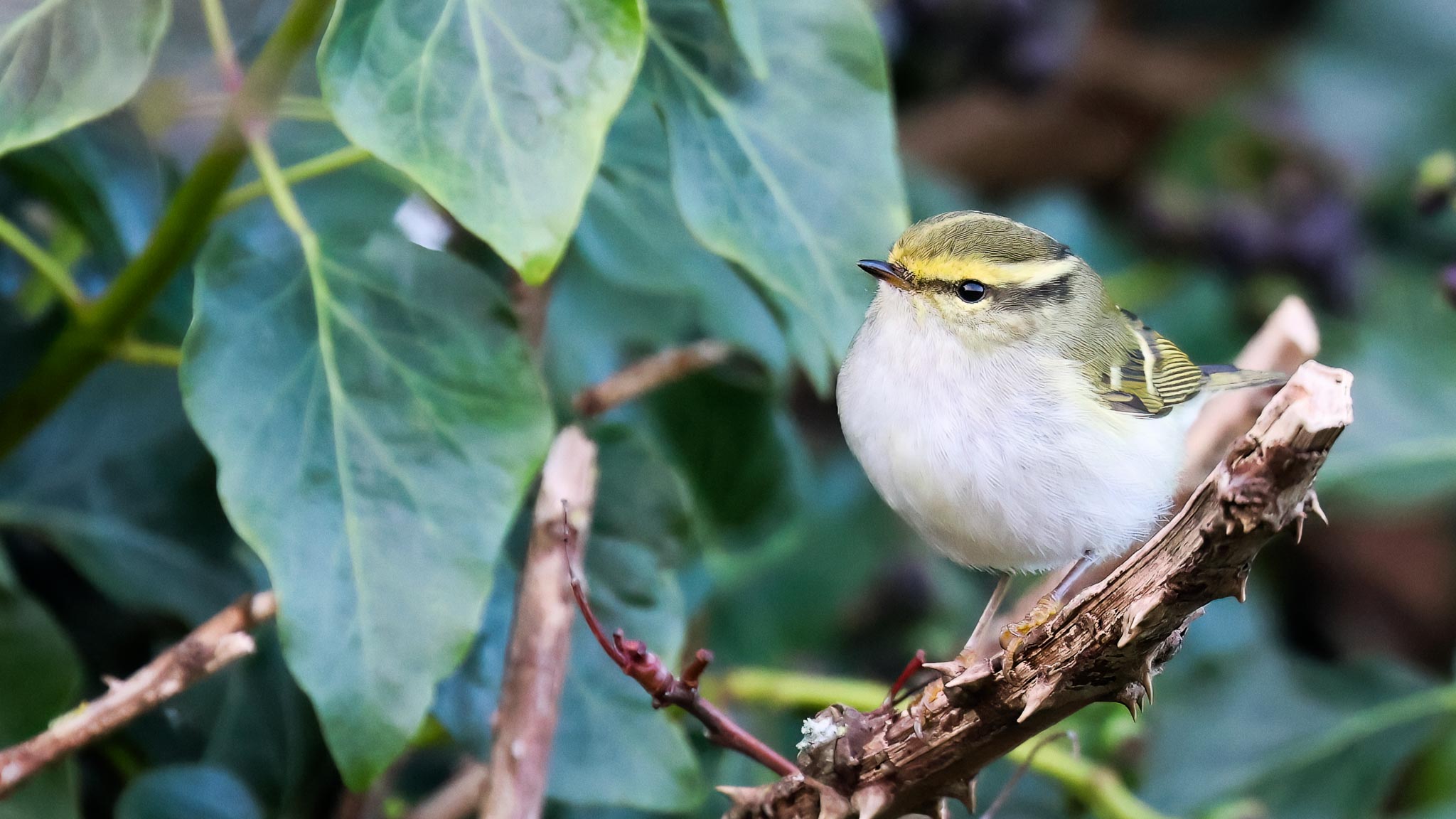
The following days were spent on Tresco. The weather wasn’t great, very windy and heavy squally rain at times. Still I managed to get out birding every morning. It seemed to be rather quiet on the islands this year, with much smaller numbers of common/scarce migrants. A recurring theme everywhere this year. Yellow-browed Warblers are normally easy to find but it took several days before I managed to track one down. There were more Firecrests this autumn than Yellow-browed Warblers.
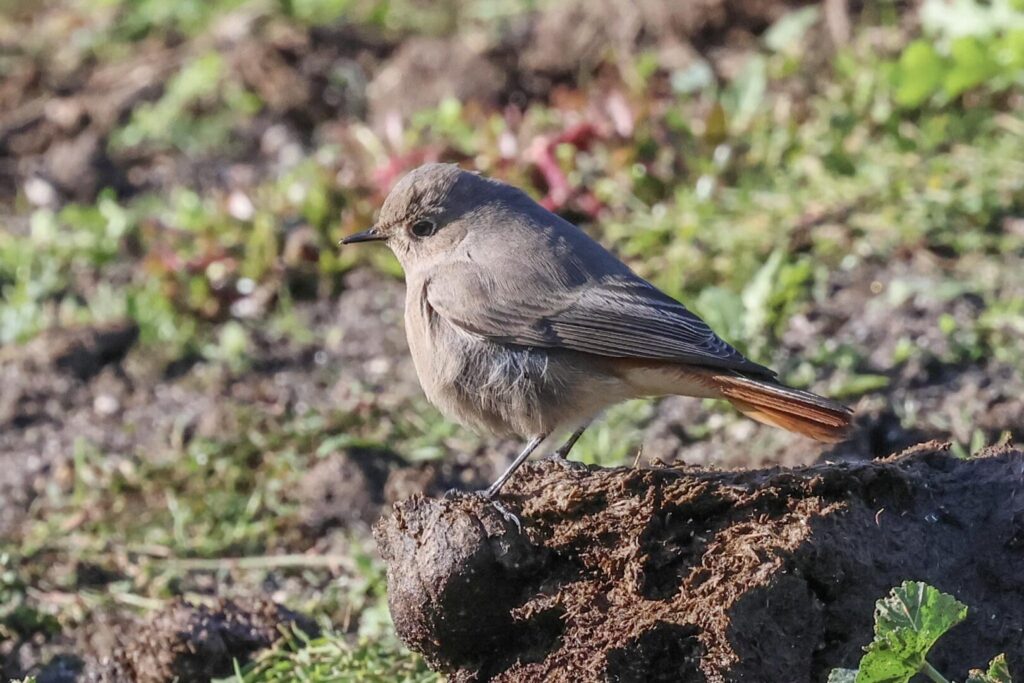
I did see a few Black Redstarts scattered around the island. A flock of 14 Greenland White-fronted Geese were seen flying round over St Mary’s on Saturday morning and I then managed to pick them up flying NW over the W end of the Great Pool. Sadly, rather distantly and always going away, as I was out beyond the E side of Abbey Pool at the time. I managed to flush a Jack Snipe from the cut reed on the edge of the Great Pool on Sunday.
Otherwise, with persistent strong westerlies coming in from nowhere there seemed to be little new arriving. But as I was reminded by the family, I couldn’t complain after the pelagic and the Eye-browed Thrush. Even in a quiet autumn, the Isles of Scilly can still produce the goods.
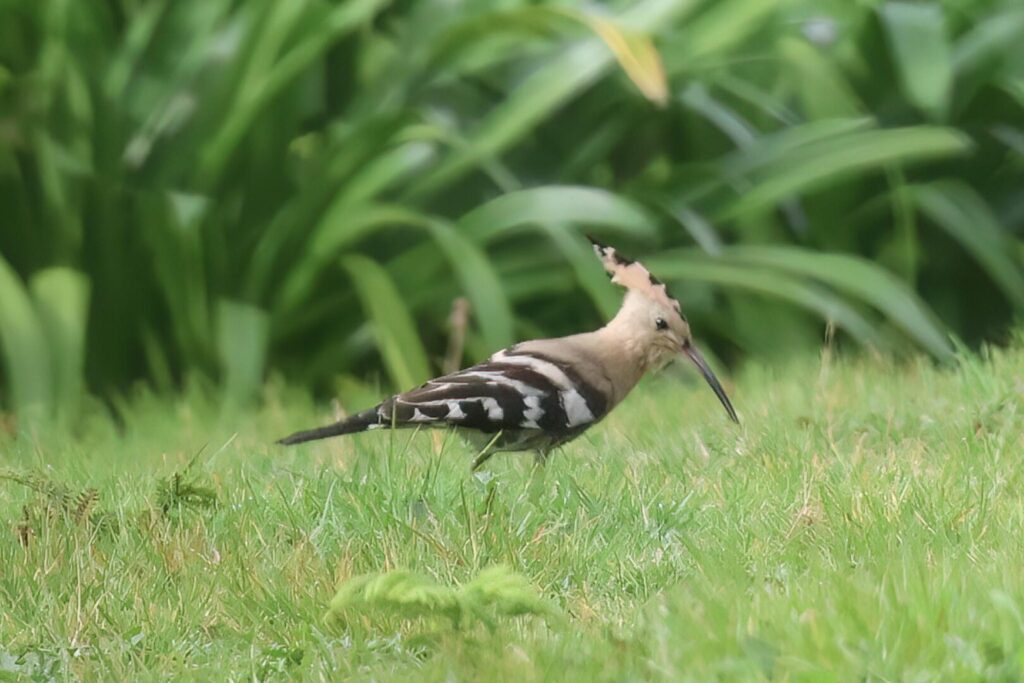
We were due to go back on the Scillonian on Monday afternoon. There was a weather warning and all day trips had been cancelled but thankfully it was still due to sail. As we had to check out early morning, we took the 10am Firethorn over to St Mary’s. Once again, it went via St Martin’s and seemed to be going extra slowly today! There had been a Hoopoe and a Bluethroat on St Mary’s yesterday and they were still there this morning. As the Hoopoe was just up on the Garrison, I headed up there first. If I saw it quickly, I had thought I might be able to have a shot at both.
Unfortunately the Hoopoe played hard to get at first. There was no sign of it where it had been first thing, not helped by some heavy showers driving in one the blustery wind. I figured it must be somewhere on the campsite but you can’t get in to most of it. Eventually someone found it in one of the fields. You could just see it looking through the hedge. By now, I didn’t have enough time to get over to Porthellick and back in time, so I wandered slowly down to the quay where a piping hot Cornish pasty was waiting with my name on it.
Then it was time to bid farewell to the Isles of Scilly. Once again, the crossing on the Scillonian was not as rough as I feared, given the weather warning. And the birds were much better this time. We saw at least a dozen Great Shearwaters, 7-8+ Sooty Shearwaters and more Manx Shearwaters. A single Great Skua was in range but two other smaller skuas were too distant to identify. There were some large feeding groups of Kittiwakes and lots of auks including three Puffins (bright-billed adults this time).
The highlight of the crossing was a Merlin which landed on the mast just east of Wolf Rock. It quickly flew off again, straight out to sea to the SW. Possibly it was making for the Wolf Rock lighthouse but what it was doing out in the Western Approaches I don’t know. Presumably on its way somewhere. Migration is always amazing.
(The long journey back from Norfolk was OK in the end, but no thanks to the National Highways agency. Who thought it would be a good idea to close the M5, M4, several bits of the M25, M42, A14 and the A47 at King’s Lynn, all on the same night? All in half term? Doh!)