Day 3 of a 3-day Summer Tour. The weather was much better today, the wind had finally died down and it felt much warmer. It was bright with patchy high cloud and some nice sunny spells, though the cloud did thicken a little later in the afternoon. We spent the day in the Brecks and Fens.
Our first stop this morning was at Weeting Heath. As we drove in, we could see a (Eurasian) Curlew out on the grass opposite. So, having disembarked from the minibus, we walked over to scan from the gate. We had a good view of the Curlew now. Then we spotted a Stone Curlew tucked down in the grass nearer to us. We got it in the scope and could see its staring eye and yellow iris looking back at us. A Mistle Thrush was hopping about further back on the grass.
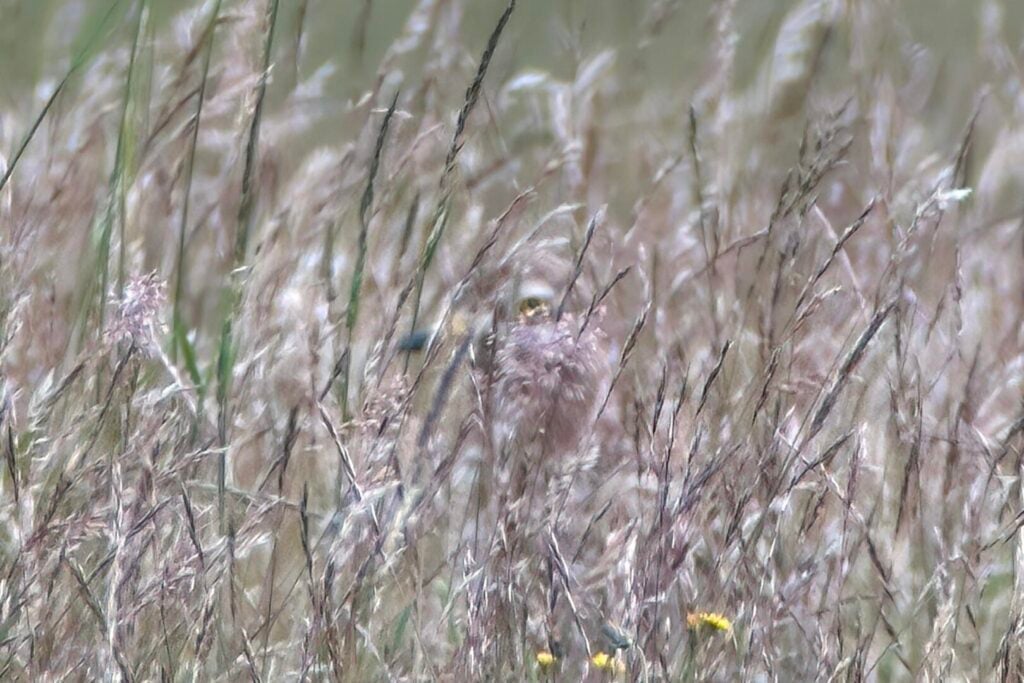
We decided to go and check out East Hide first. When we got to the hide, we could see a pair of Stone Curlews with two half-grown juveniles out on the short grass just behind the cultivated strip. They were separated at first, one adult each with a single juvenile. Then the family came together. We watched them walking around, the adults finding food to feed to the youngsters. Nice views through the scope.
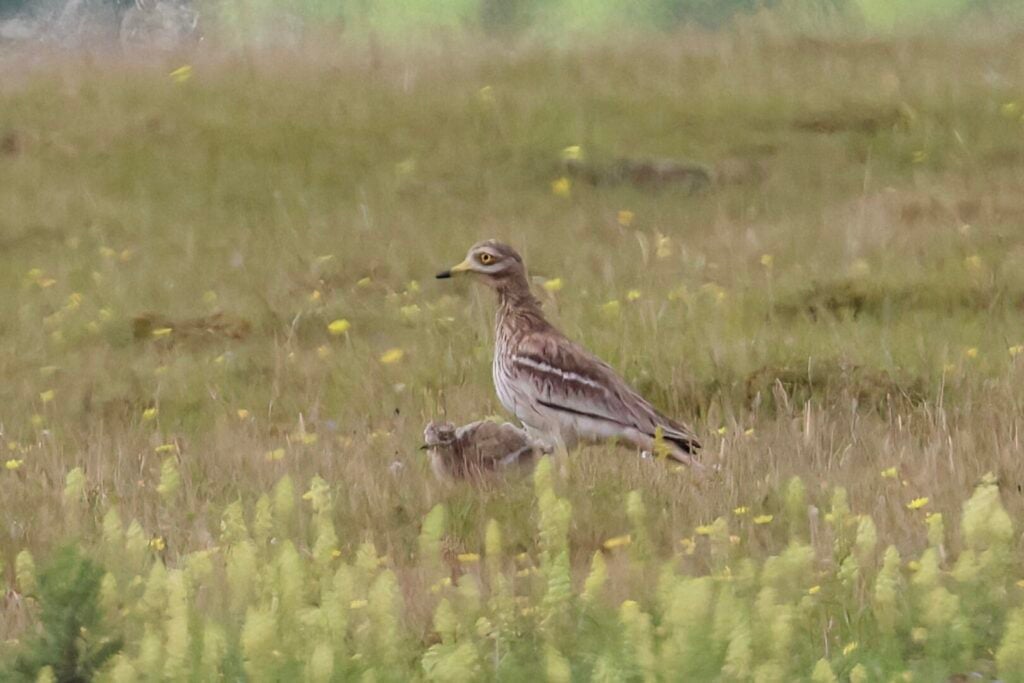
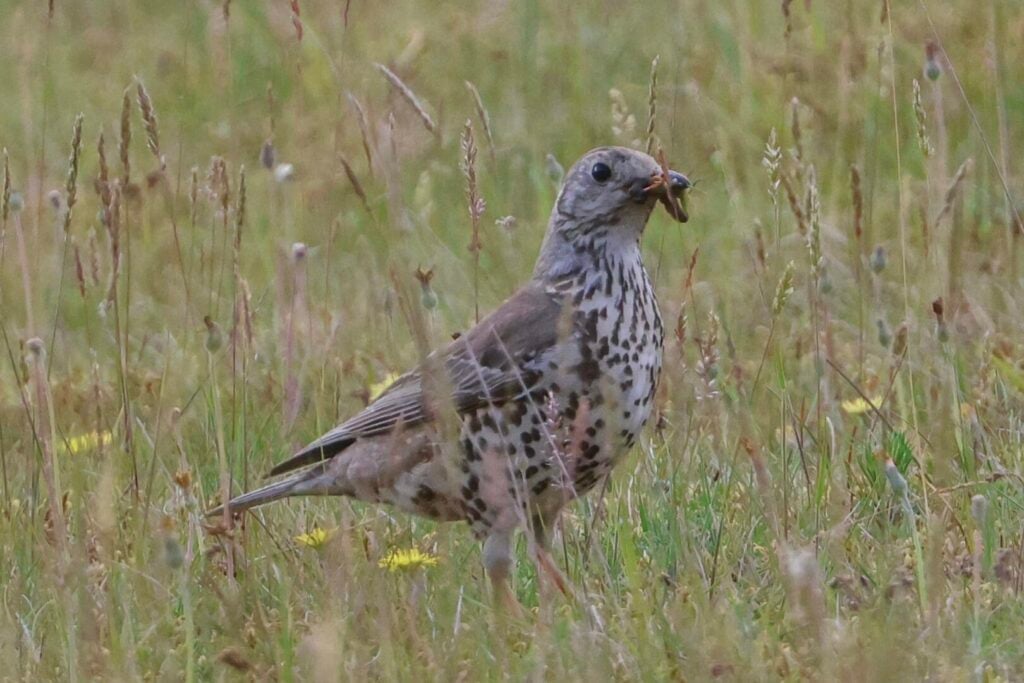
Another Stone Curlew was on the ground much further back. Two or three Mistle Thrushes were out on the grass, one collecting food quite close in front of the hide at one point. A distant Jay was flying up and down from the fence on the far side. A Robin hopped along the fence in front of the hide.
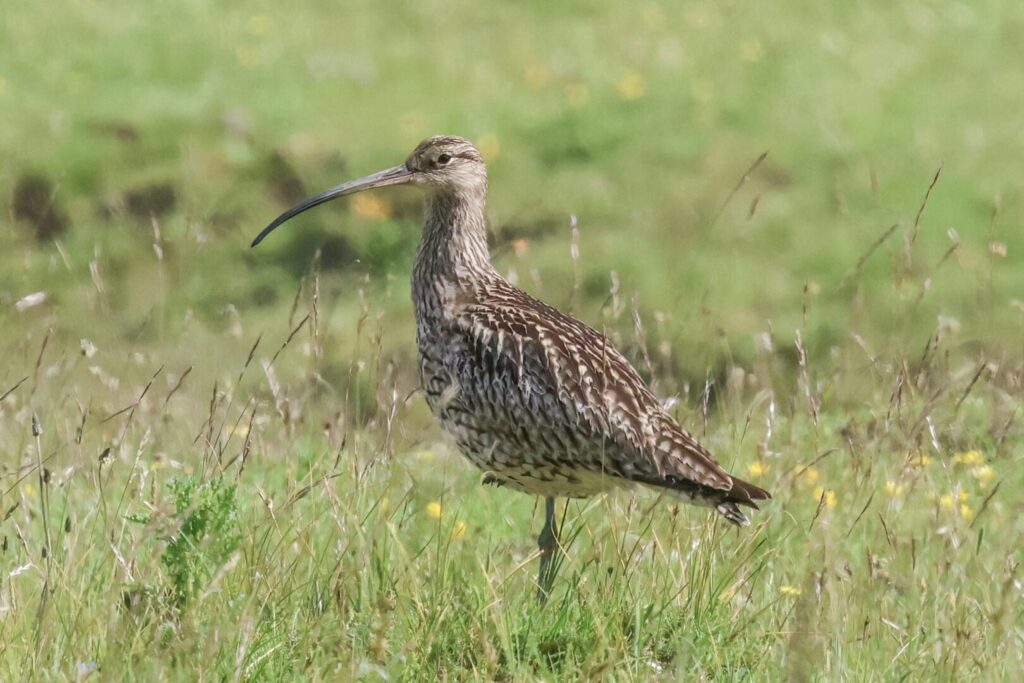
Back out of the hide, we could hear a Curlew calling. Looking across the road, we could see one on the grass directly opposite us now. Another Stone Curlew was a bit further over.
We walked round to check on West Hide next. Apparently there had been another four Stone Curlews here earlier and we thought we would check to see if any were closer. One was standing in the bugloss when we arrived but sat down and disappeared. An Oystercatcher looked to be on its nest in the cultivated strip. A Brown Hare stood up nearby. Further back, a small group of Shelducks was over by the fence.
We had seen people looking from the road verge at the west end when we arrived, so we carried on down to the gate. There was nothing on the grass here now, but looking back we could one of the Stone Curlews much further over. A pair of Goldfinches appeared to be nest building in a bush, dropping down to the cultivated strip and fence and coming back up with nest material.
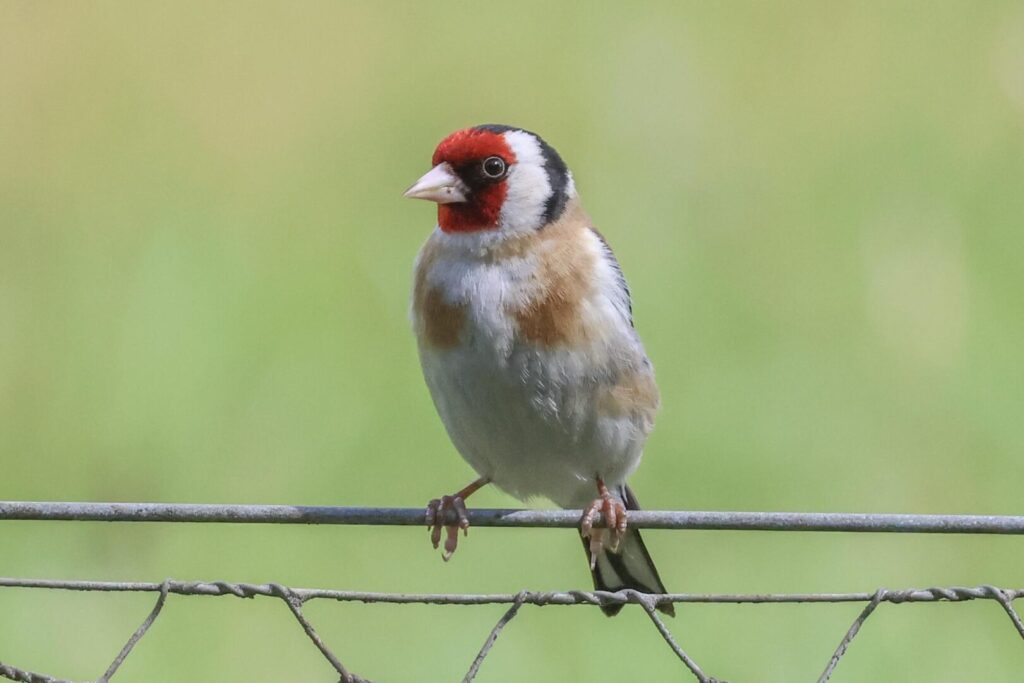
We stopped at the shelter for a quick look at the feeders. Lots of Blue Tits and Great Tits, Chaffinches and Goldfinches were coming in to feed.
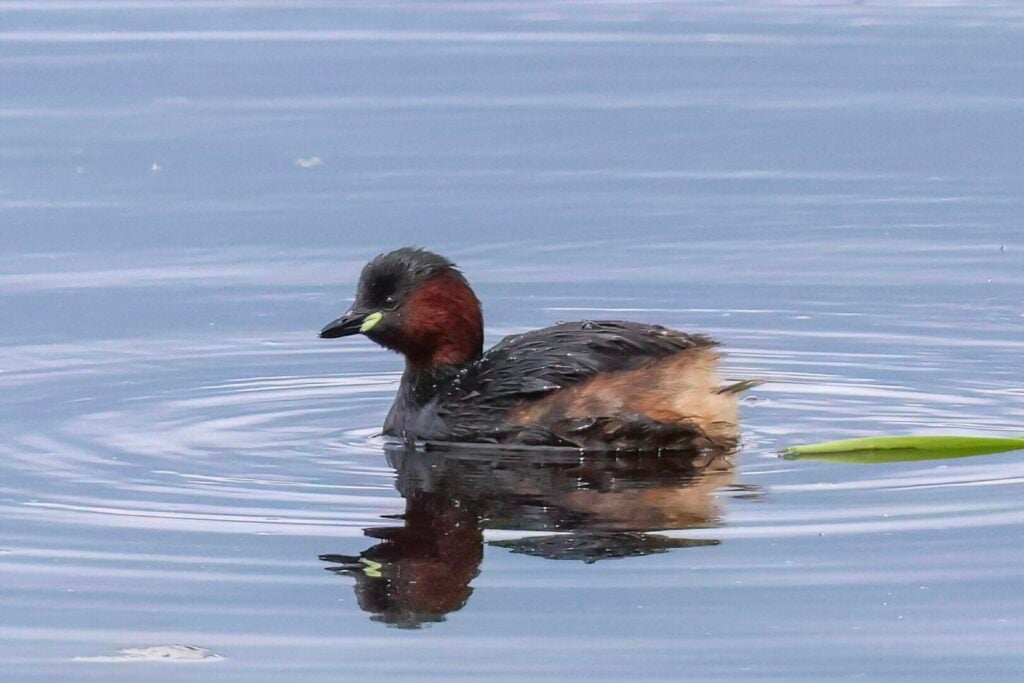
We decided to move on and drove round to Lakenheath Fen. After checking in at the Visitor Centre, we headed straight out to the New Fen Viewpoint. There were several Coot, adults with well grown juveniles, on the water. One of the adults was topping up its nest with weed, ready for the next brood. We could see a couple of Little Grebes too and a distant Hobby over by the river.
Several Reed Warblers flew back and forth low over the water, in and out of the reeds and the small island in the middle. A Bearded Tit shot across in front. It landed in the reeds, where it perched for a minute or so, a juvenile. Then it dropped down. We could still hear it calling on and off, and had another glimpse as it flew further back.
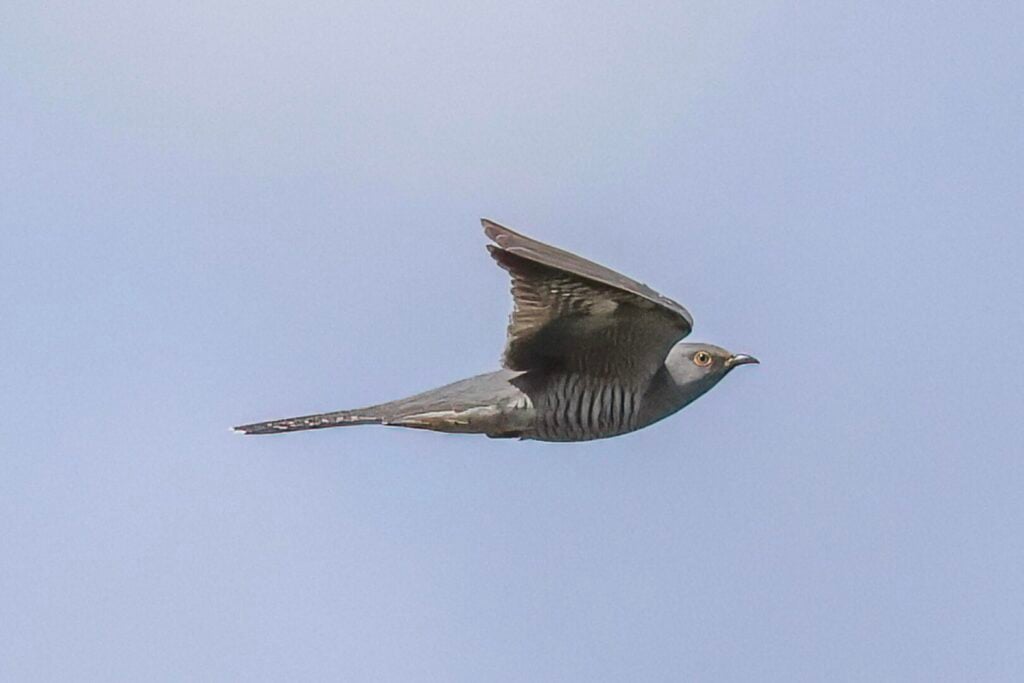
We could hear a Cuckoo calling distantly in Trial Wood. Then another started up in East Wood behind us. The one in Trial Wood called closer then flew out. Nice views as it flew across over the reedbed right in front of the viewpoint. A Great Spotted Woodpecker was calling in Trial Wood now.
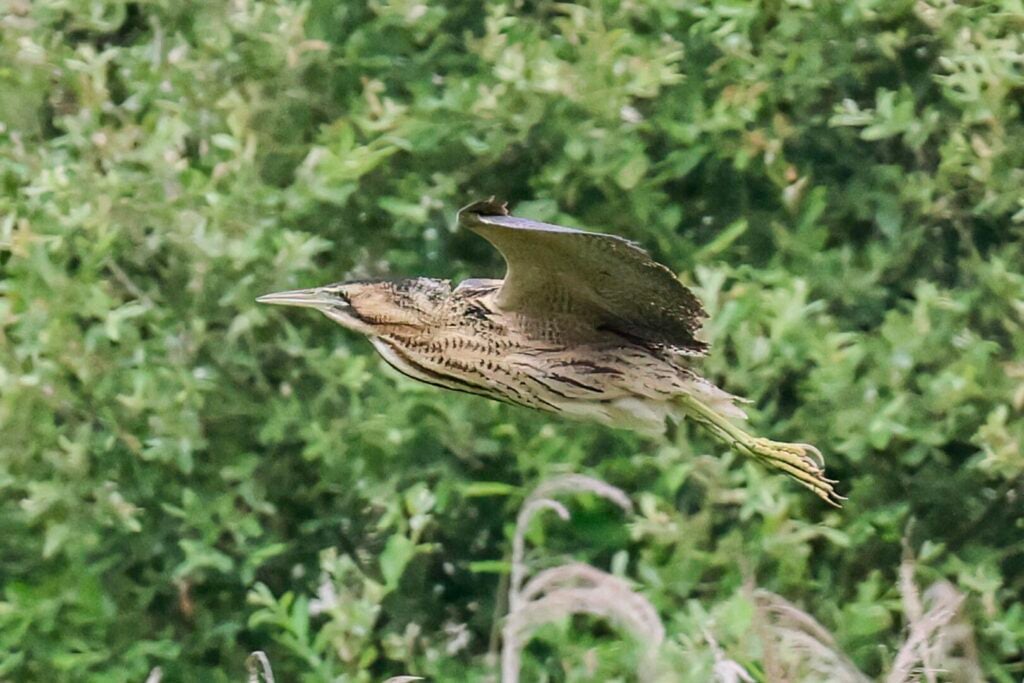
A Bittern flew across but we only got onto it just as it dropped back in and most of the group missed it. A couple of minutes later, possibly the same Bittern flew again, a much longer flight this time. It seemed to drop down opposite the pond dipping platform, so we walked quickly round to see if we could find it.
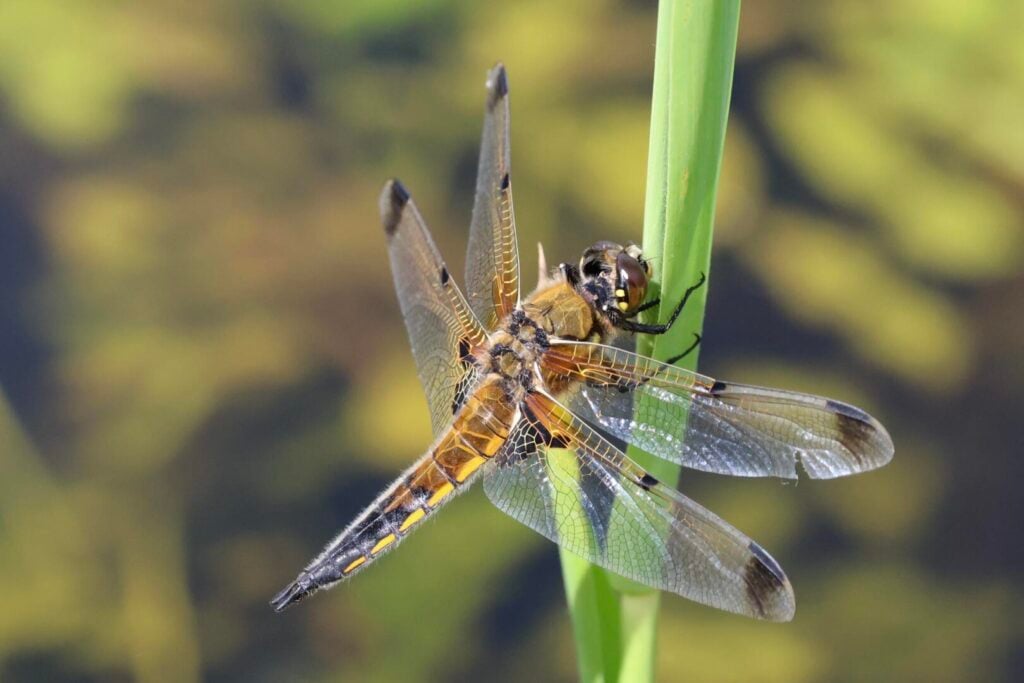
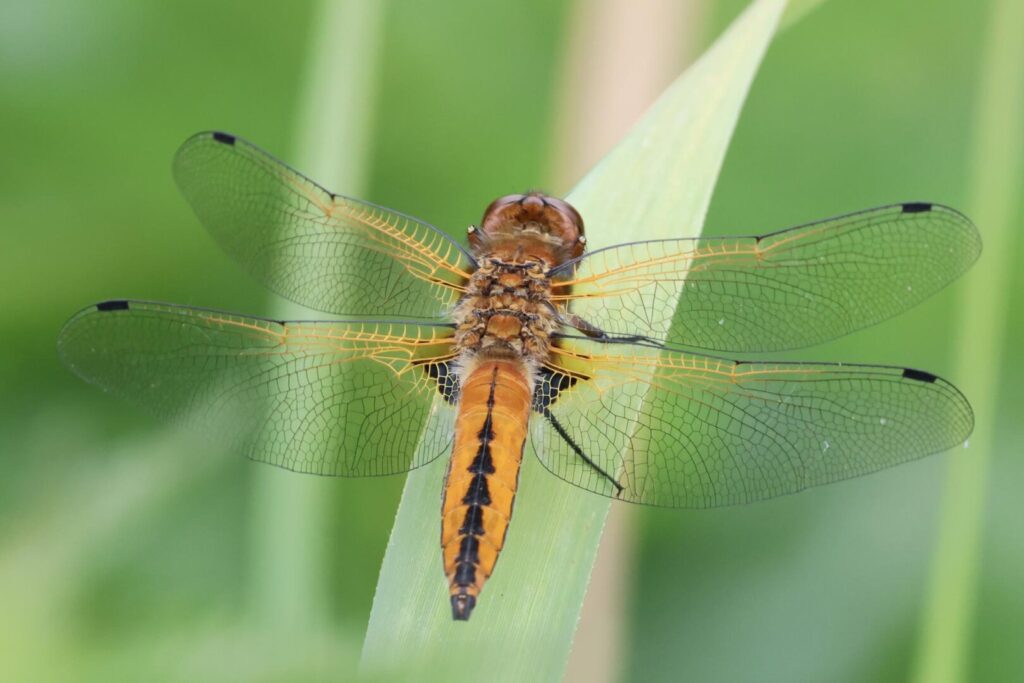
There was no sign of the Bittern, but we did find lots of dragonflies and damselflies on the pool. A Four-spotted Chaser was resting on a reed stem right below us, occasionally making little sallies out. Several different damselflies were landing on the lilypads – Azure, Variable and Red-eyed Damselflies. A Banded Demoiselle flew past.
There were more Coot on the water here and more Reed Warblers in the reeds. Another Bearded Tit shot past, followed by a Kingfisher. We decided to go back to the viewpoint to see if the Kingfisher was fishing in front of there.
It wasn’t but a male Reed Bunting was singing in the reeds. A male Marsh Harrier drifted back and forth at the back, in front of West Wood. No sign of it bringing in food. An Emperor Dragonfly was ovipositing in the water and several more Four-spotted Chasers and Black-tailed Skimmers flew round low over the edges.
Another Bittern made a long flight over at the back, in front of West Wood. Then probably the same one we had seen earlier flew out, across to the edge of the pool, and landed again. We scanned the edge hoping for it to come out but there was no further sign. We decided to walk on.
Walking along the main track, we scanned the vegetation either side. There were lots of ladybird larvae and click beetles in the reeds. A patch of nettles was covered in Peacock caterpillars. A Comma was nectaring on a thistle and a Scarce Chaser was perched on the reeds. We stopped to look at a Spotted Longhorn beetle (Rutpela maculata).
A male Marsh Harrier flew in with food in its talons but dropped straight down to the nest. We heard a Common Whitethroat singing and one or two Cetti’s Warblers shouting. A couple of male Reed Buntings were singing from the tops of the reeds up beyond West Wood.
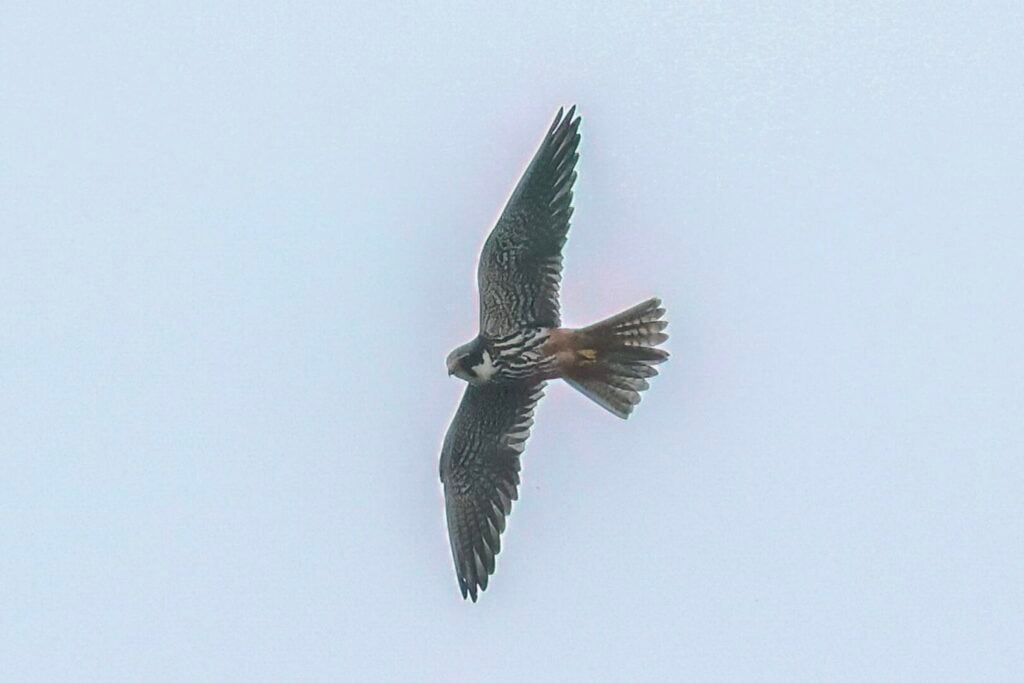
When we got out to Joist Fen Viewpoint, it was time for lunch. It was warming up steadily too and the Hobbys were coming up. Numbers steadily increased, and by the end we were up to a minimum of 12, all seen in sky at once. They were distant at first, but eventually one or two Hobbys came closer. A distant Kestrel was hovering over by the river bank.
Several Marsh Harriers flew back and forth out over the reedbed. A couple of Little Egrets and a Great White Egret flew over. A Common Pochard flew in. The male Blackcap flew in and out of the sallow to the right of the shelter, across in front.
We girded ourselves for the walk back with the promise of ice cream break at the Visitor Centre. A variety of flavours were chosen, as usual, but the Rhubarb & Ginger was particularly appreciated by this correspondent!
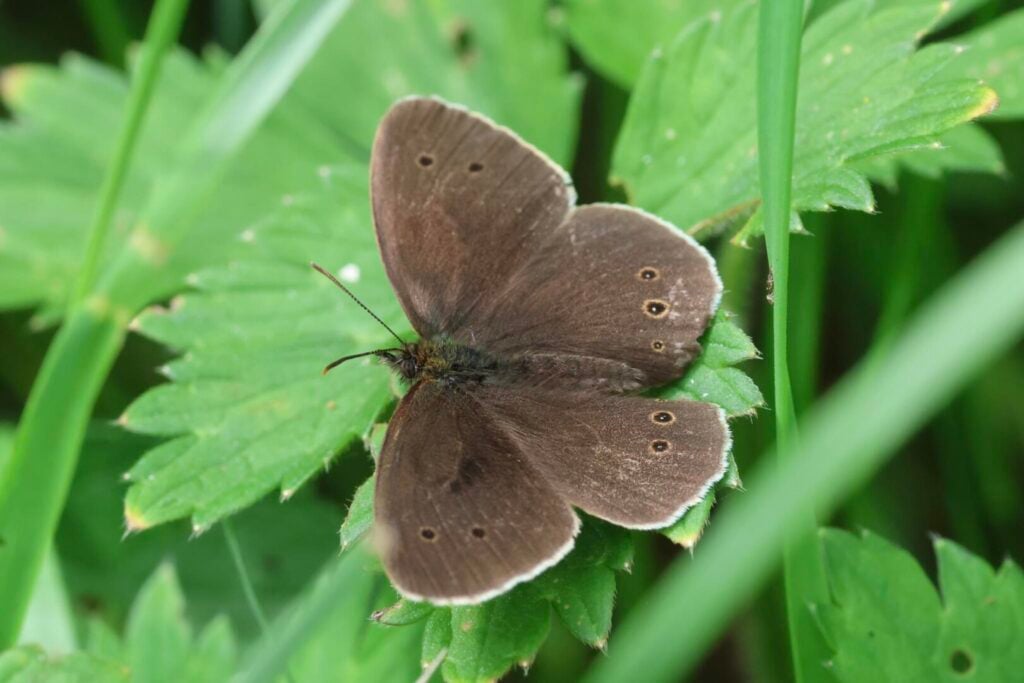
Refreshed, we moved on and headed into the forest. We parked at the head of a ride and walked in along the track. Several butterflies were fluttering around the flowers on the verge, including a couple of Ringlets, our first of the year. A bright pinky-red Cinnabar moth flew up out of the grass.
A Garden Warbler was singing in the trees but we couldn’t see it. A Common Whitethroat flicked up and down, in and out of the bracken. We heard a distant Tree Pipit singing but when we stopped to listen it went quiet.
When we got to the clearing, it seemed quiet at first. A distant Stonechat was perched high in the top of a tree out in the middle. Listening carefully, we heard another distant Tree Pipit, so we started to walk on down the track. Then one started singing much closer and flew out of the tree right beside us. It flew up into the top of another tree where we just got it in the scope before it flew up singing again.
The Tree Pipit was constantly moving between the trees singing. Eventually it settled down and stayed still long enough for everyone to get a look through the scope. We could see its pencil thin flank streaking.
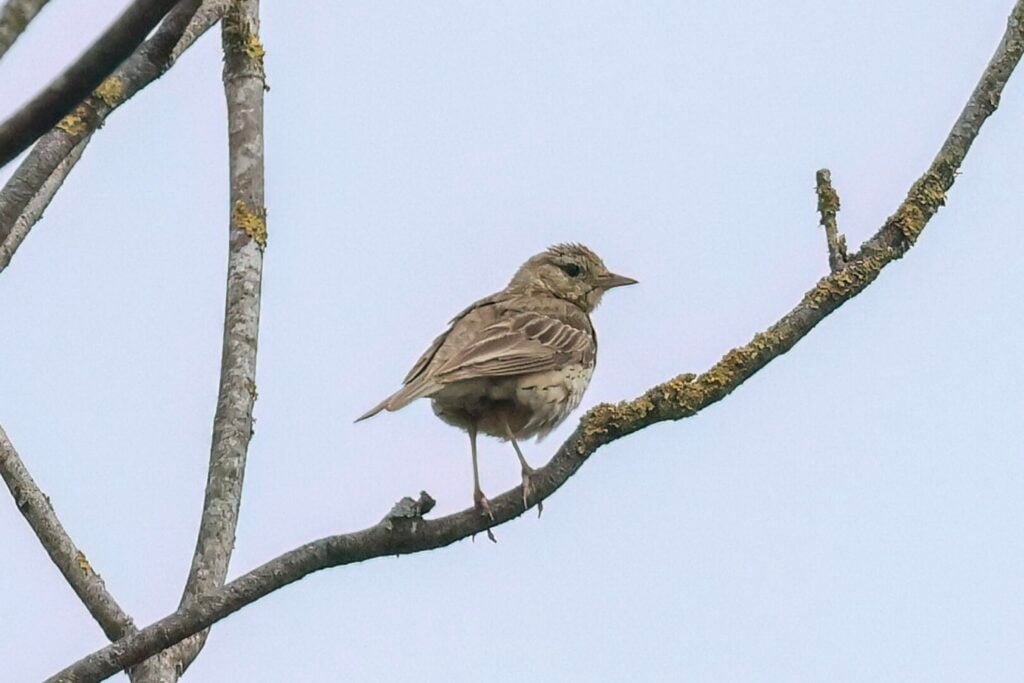
There seemed to be a bit more activity in the clearing now. A male Yellowhammer perched in a tree. Another couple of Tree Pipits were singing further over and a Woodlark flew up and landed in a tree. Two Song Thrushes flew in and out of the grass then across into the edge of the wood beyond. A couple of Common Blue butterflies fluttered around and a Coast Leafcutter Bee (Megachile maritima) was nectaring on some bramble flowers.
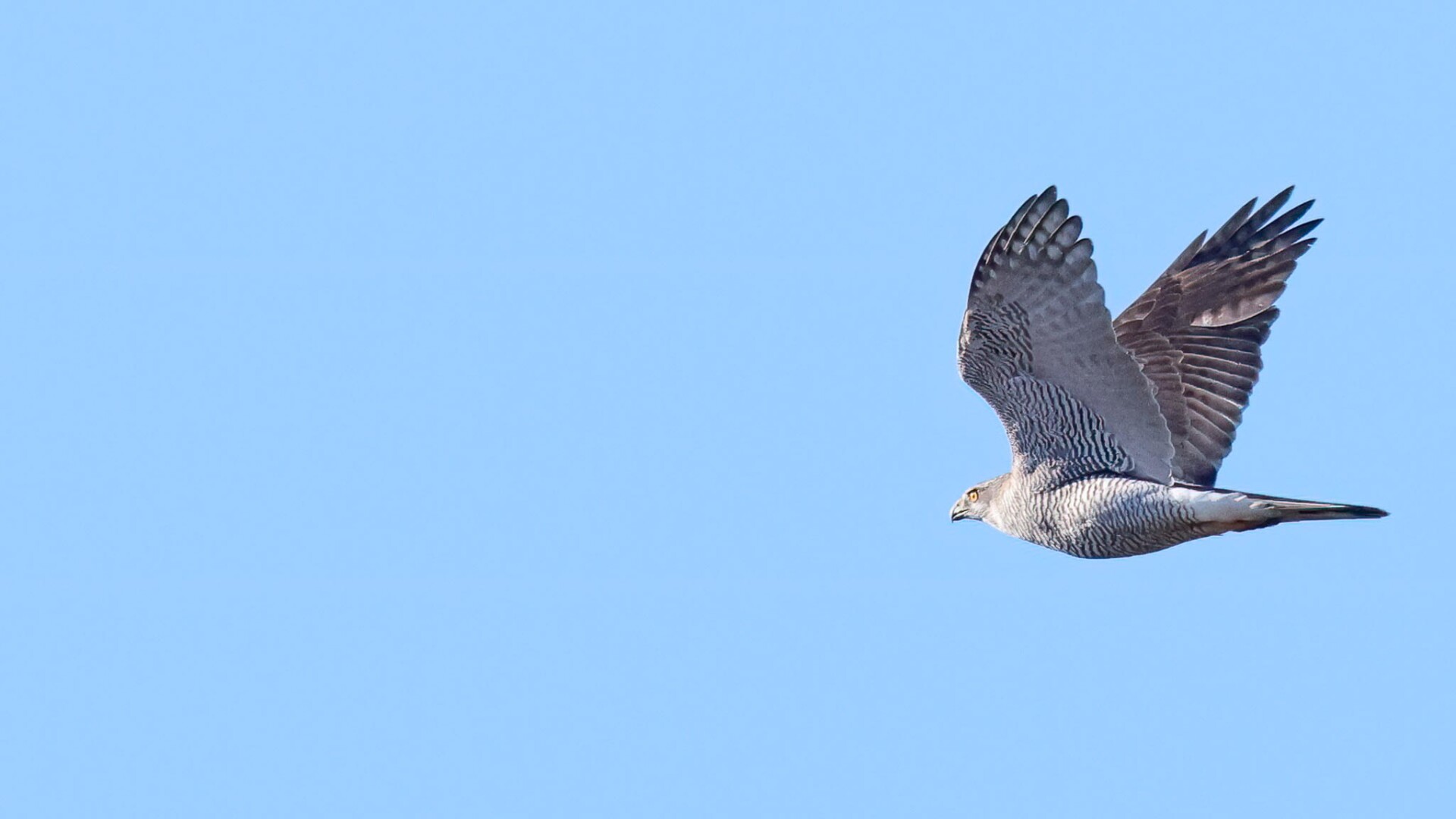
When all the Woodpigeons flew up from behind the clearing, we scanned across and found a large Accipiter circling. It was hard to judge the size at first but it looked like a Goshawk. As we watched, it circled with no flapping, and we could see its rounded tail, broad at the base. It was grey above and finely barred dark below, an immature male Goshawk. A very nice bird to end on.
It was time to head back. As we walked out of the clearing, a Cuckoo started calling in the trees. Back to Swaffham, we said goodbye to half the group. When we got to Hindolveston, there was tea and cake for those who wanted it. It had been a very enjoyable three days of summer birding in Norfolk (and Suffolk).