Day 3 of a 3-day Summer Tour. It was a cloudy start and although it brightened up the high cloud did remain for most of the day. The benefit of that is it didn’t get too hot again. Helped by a fresh westerly wind it only got as high as 24C around the time we finished up. We spent the day exploring the Brecks and the edge of the Fens on the Norfolk/Suffolk border.
It is about an hour’s drive down to our first stop. We drove in convoy so we could leave cars in Swaffham, saving an hour or so travel time for those heading south at the end of the day. We also met a couple more tour participants there, who would be joining us just for today.
From there, we headed on to Weeting Heath. A quick scan from the entrance to the car park and we could see a Stone Curlew on the other side of the road. We got the scopes out of the minibus and walked over to the gate at the far end.
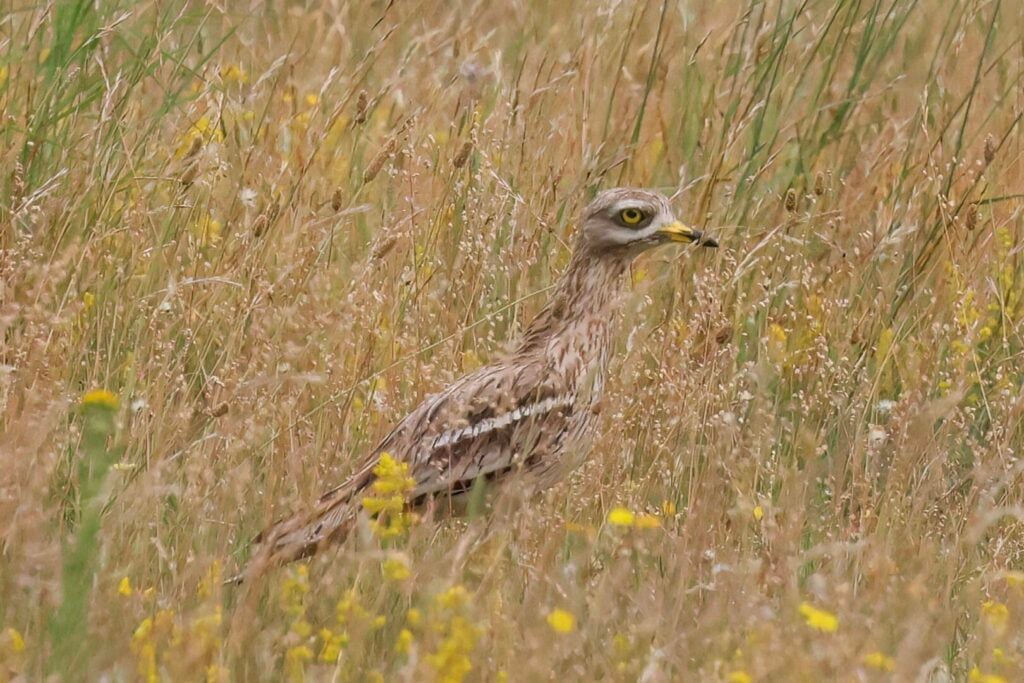
There were actually four Stone Curlews, a couple of which were very close to the road this morning. They saw us and walked quickly further back, so we stopped and waited for them to settle down a bit further away. Lovely views in the scopes now, we could see their large yellow eyes. A Mistle Thrush dropped down to feed in the grass too briefly. We could hear a Eurasian Curlew calling further down and at one point a Stone Curlew started calling behind us too.
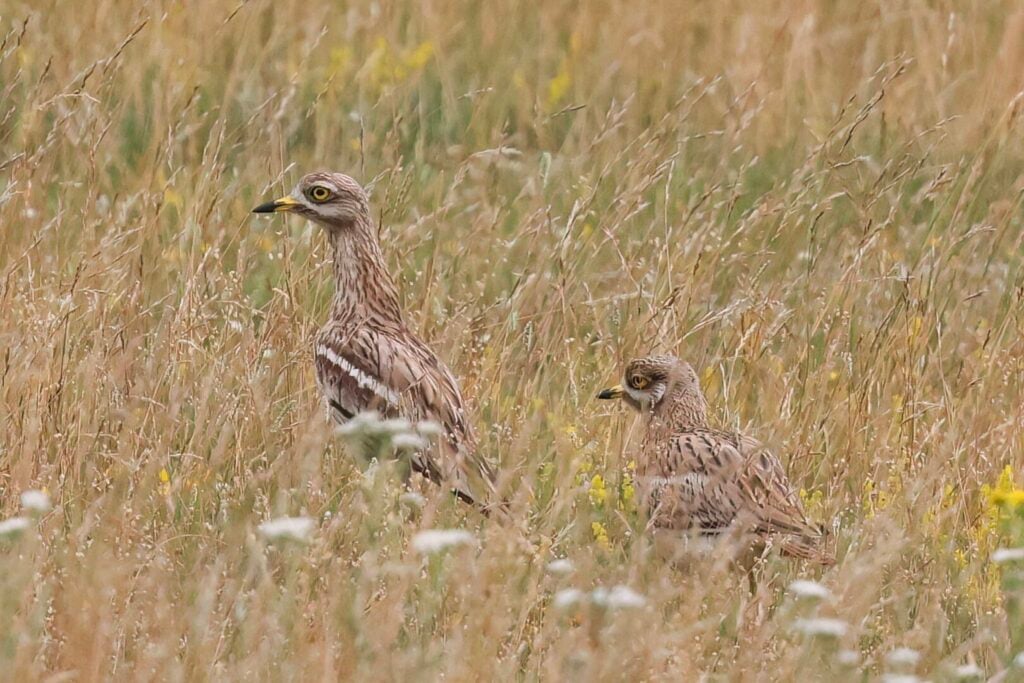
After we had been watching the Stone Curlews for a while, one took off and flew back, disappearing down behind the ridge. It was followed by two others but the fourth bird stayed on the top of the ridge. Eventually it sat down and disappeared in the long grass.
We walked round to East Hide next. There were a few birds in the pines just before the hide, Coal and Blue Tits and a couple of Robins. A Green Woodpecker called and we could hear a Mistle Thrush in the trees too. We heard Nuthatches calling deeper in the pines but only managed a couple of brief glimpses before they flew off.
This has been a good area for Spotted Flycatchers so we stopped briefly to look. One of the group noticed some movement in the pines above our heads and we realised there was a juvenile Spotted Flycatcher there. The adult flew in to feed it.
We stood and watched the Spotted Flycatchers for a while, eventually getting good views of the adults perched and making sallies after insects. They seemed to be feeding two juveniles. When they disappeared further back through the trees, we continued on. Outside the hide, a Wren was feeding in the gaps between the fence board and a yellow-faced juvenile Blue Tit was low down in the trees.
Looking out from East Hide, we could see the head and shoulders of one Stone Curlew standing in the flowers in the cultivated strip. There has been a family here and, when the second adult Stone Curlew appeared from further back with food in its bill, the two juveniles stood up next to the first adult to be fed. Good to see that they are both still doing well.
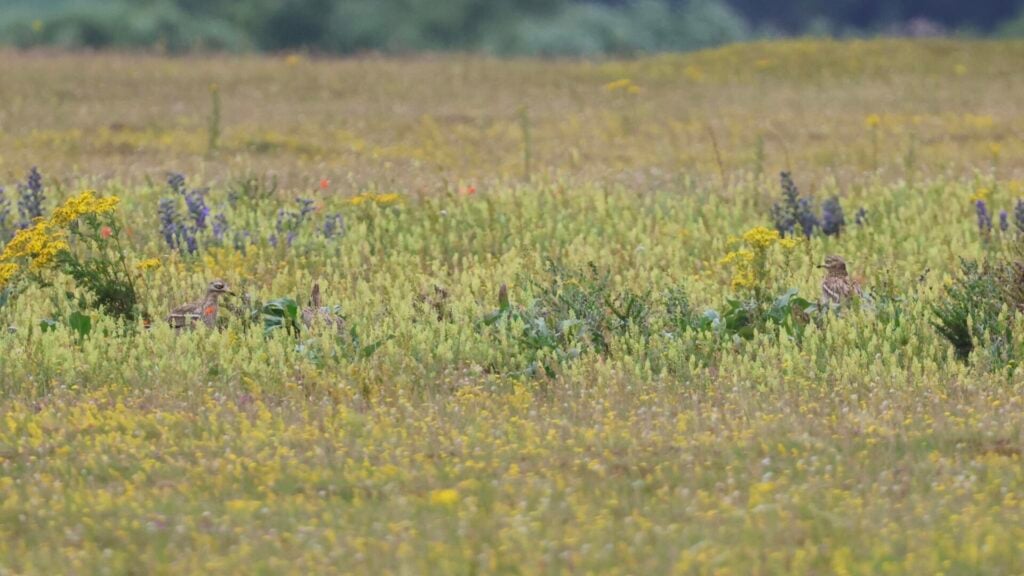
There were several more Mistle Thrushes feeding in the grass further back, plus a pair of Carrion Crows. Several Rooks flew round further back and chased after a couple of Red Kites. A few Lesser Black-backed Gulls flew in and out of the field next door, presumably making use of the farm reservoir there. Four Stock Doves flew in and landed in the flowers.
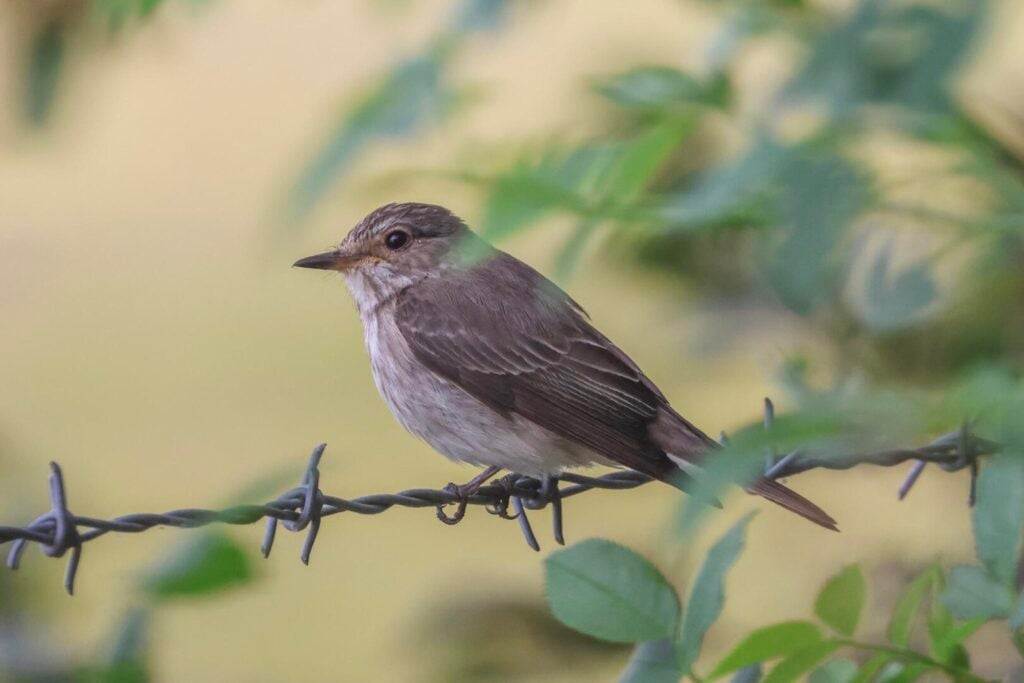
We noticed some movement in the bushes out to the right of the hide and realised one of the adult Spotted Flycatchers was now here. It was impossible to see though, until it made sallies out over the grass catching insects. We were just about to move on when it landed on the fence right in front of the hide. Lovely close views now.
Back along the path past the old Visitor Centre, we had a quick look in at West Hide. We could see a single adult Stone Curlew in the flowers in the cultivated strip here too. When it caught an insect, it walked over and another juvenile stood up. A bit of a surprise to see it here, as the pair which were here had not bred this year. Probably it had moved in from over the road.
A single Oystercatcher was standing out on the grass further back. Then a black head and shoulders appeared in the flowers in the strip and we realised its partner was on the nest there.
We decided to move on and drove round to Lakenheath Fen next. After checking in at the Visitor Centre, we headed straight out to New Fen Viewpoint. A Reed Warbler was basking in the sun in the bushes by the pool behind the Centre. A Common Whitethroat was singing in the trees by the main track. There were lots of Red Admirals and Peacocks on the brambles and one or two Painted Ladys too.
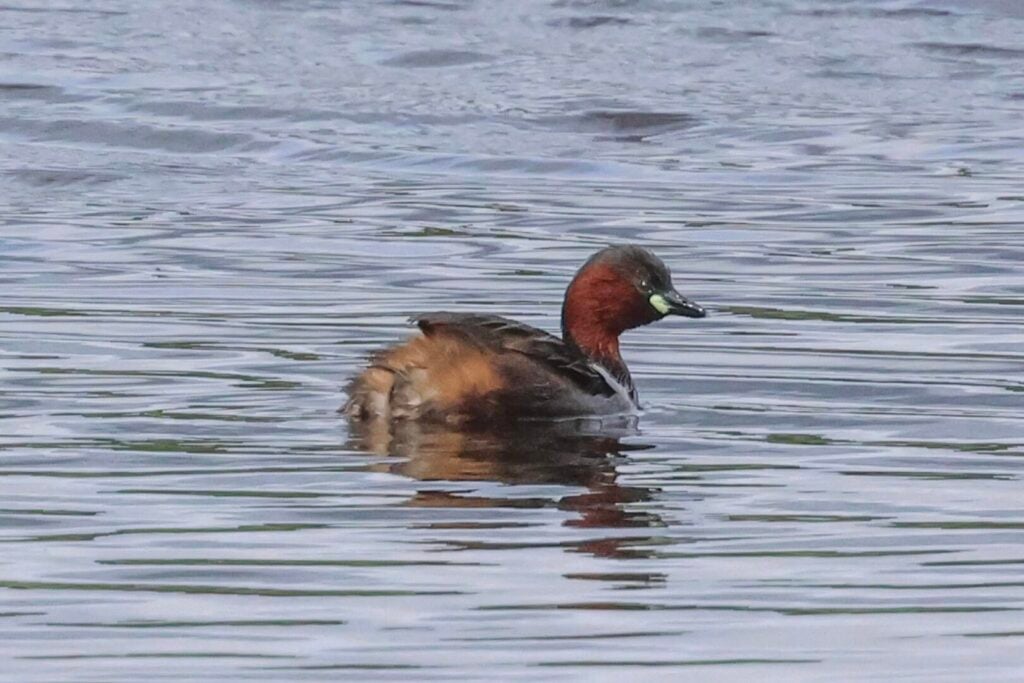
From the Viewpoint, there were the usual Coots on the pool in front. A family of Greylags moved from around the benches down to the edge of the water as we walked up. An adult Little Grebe was feeding a single stripy-headed juvenile on the edge of the reeds. A female Tufted Duck appeared out of the channel at the back with two well-grown juveniles in tow. Several Reed Warblers flew in and out.
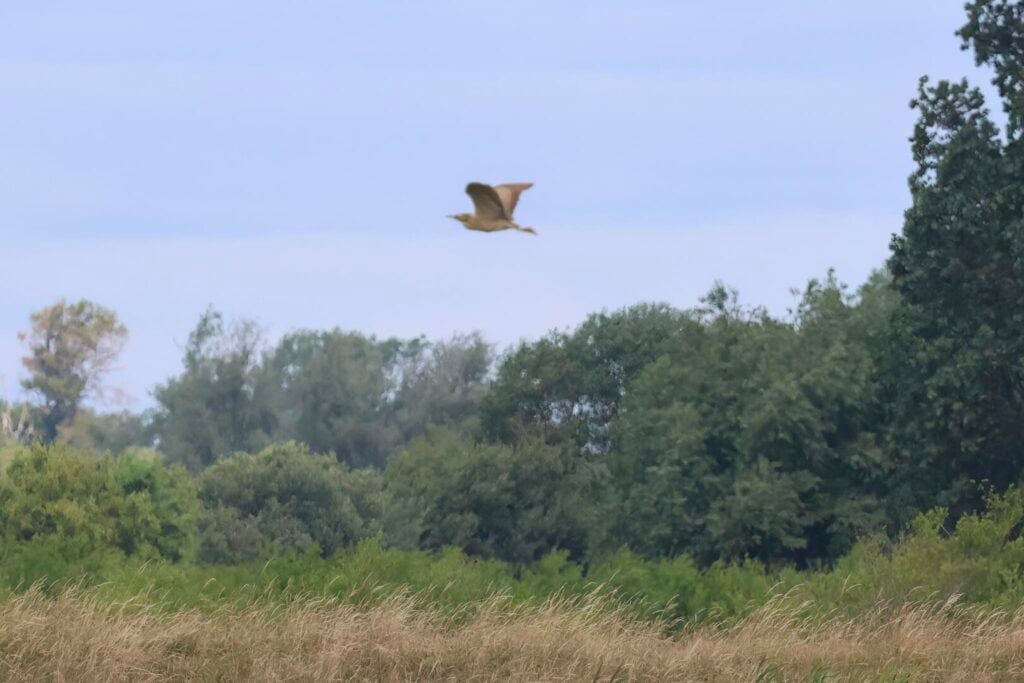
It is nice to sit here and admire the comings and goings but it seemed a bit quiet here this morning. A surprise not to even see a Marsh Harrier. The volunteer at the Visitor Centre had told us there was more Bittern activity out at Joist Fen now. We were just thinking of moving on when we spotted a Bittern flying round from behind the far end of East Wood.
The Bittern was in view for a long time. It made it way right across the length of the reedbed to the far side, then turned and flew in front of West Wood to the south west corner. There, it turned sharpy and dropped into the reeds out of view. Just what we wanted to see here. We decided to walk on to have a look at Joist Fen.
It was still rather cloudy and there wasn’t much dragonfly activity along the track this morning. We did see a few Ruddy Darters and a single Brown Hawker flew round in front of us, and a few Common Blue Damselflies. There were not many birds singing now, although we could hear a couple of Reed Buntings as we got past West Wood.
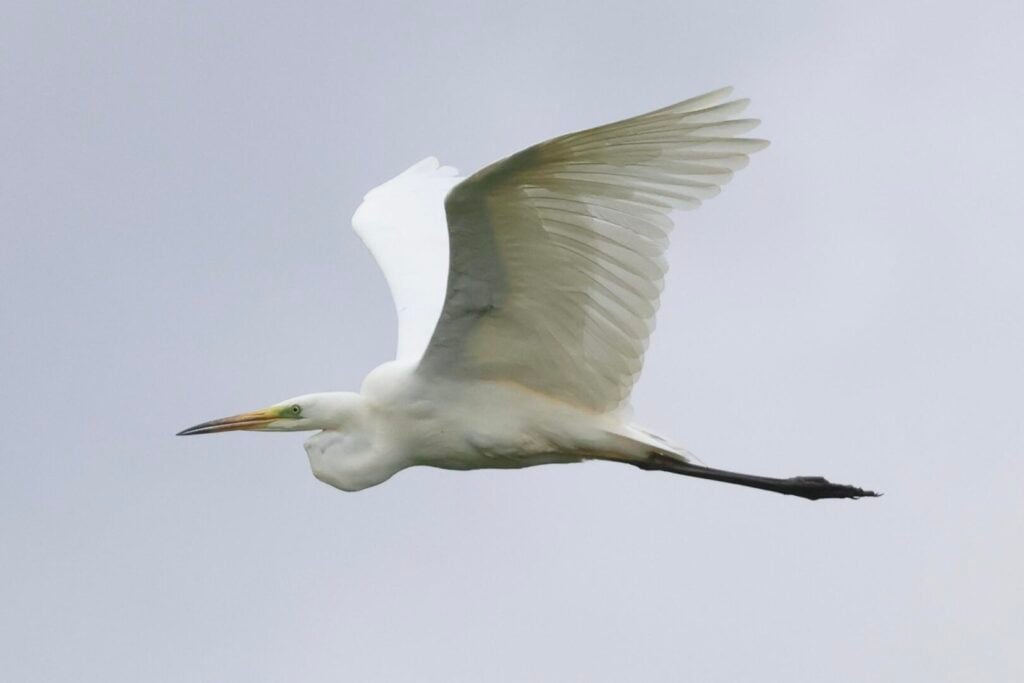
Out at Joist Fen Viewpoint, it seemed rather quiet at first too. It probably didn’t help that it was now the middle of the day. A couple of Great White Egrets flew up from time to time and two Little Egrets flew past. There were one or two Cormorants in and out and eventually one appeared in its usual loafing spot on the dead tree stump out in the middle.
Eventually a few Marsh Harrier appeared. One male came in with food and dropped into the reedbed. Good to see that they are still breeding. A recently fledged juvenile Marsh Harrier was perched in the top of a bush out in the middle. Through the scope we could see its tawny orange head contrasting with its dark chocolate body. The same or another juvenile then flew round over the reeds.
We had brought our packed lunches with us, so we sat out here to eat while enjoying the view. A couple of juvenile Bearded Tits appeared at the back of the pool in front of the viewpoint and one perched up on the top of the reeds. When it dropped down, we could then see the two of them working their way round in and out of the base of the reeds, just above the water.
We had a brief view of a Hobby, over the river off to the right, but we lost sight of it behind the bushes. One of the group picked up another Bittern in flight behind us but it was only in view for a couple of second before dropping down over towards Mere Hide. When we had finished lunch, we started to make our way back.
A Kestrel was hovering on the other side of the river and, when we stopped to look at it, a Hobby flew past too. The Hobby landed in a tree but it was not a great view, half hidden in the branches. A second Hobby appeared and the two of then flew round together, catching insects. One then landed back on the tree on a different branch, where we managed to get a slightly better view. A lone Curlew flew past while we were watching the Hobbys.
We decided to have a look in at Mere Hide, hoping the Bittern might reappear. A Bearded Tit landed on the handrail along the boardwalk briefly. No photographers packing out the hide here normally means nothing is showing regularly! We sat down and scanned round the edges of the reeds. One or two Reed Warblers flicked in and out and another was briefly in the flowers right below the hide. A Moorhen walked along the back edge.
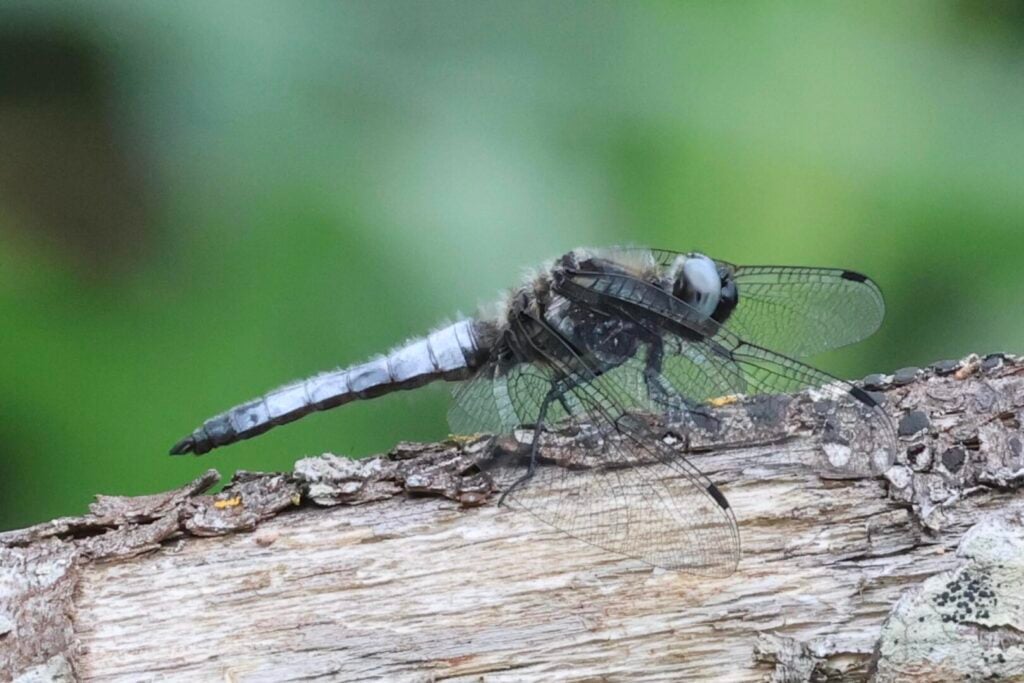
There was a good selection of dragonflies here. Lots of Four-spotted Chasers chasing round and one landing repeatedly on one of the Kingfisher perches. At one point, a male Scarce Chaser landed on the same branch. A female Emperor Dragonfly was ovipositing around the edge. Lots of damselflies were resting on the floating vegetation, mostly Small Red-eyed Damselflies.
A Great White Egret flew across right in front of us and a smart male Marsh Harrier flew past. But there was no sign of the Bittern putting in an appearance. We were just about to leave when a couple of the group at the far end of the hide had a Kingfisher flash across over the reeds. It appeared to land in the bushes out from the hide but despite waiting a few minutes more it didn’t reappear.
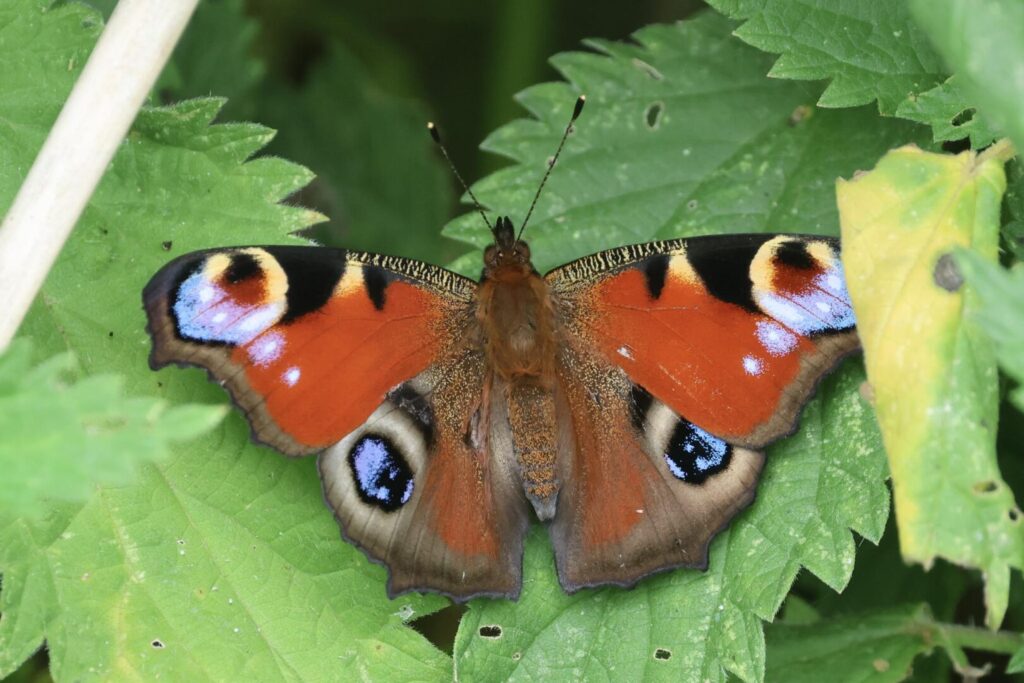
On the walk back, there were more dragonflies out with a bit more sunshine. Lots of Ruddy and Common Darters were buzzing around the vegetation by the track and a couple of Black-tailed Skimmers kept landing on the gravel ahead of us. There were more butterflies too. A smart Peacock was sunning itself in the nettles in pretty much the same place we saw lots of caterpillars earlier in the year.
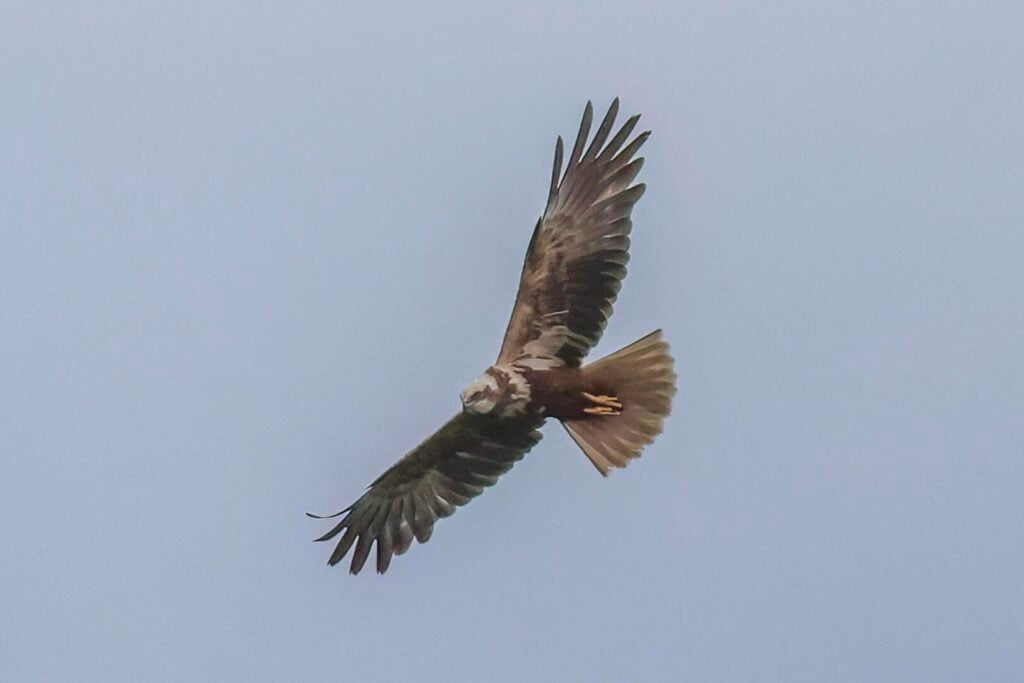
Back past New Fen North, a female Marsh Harrier circled up over the reeds. Nice to see the adults are still here, at least.
Back at the Visitor Centre, we stopped to get ice cream. We ate it as we walked out to the river bank and the Washland Viewpoint. The washes are drying out fast now but there were still lots of waders on here today. Mostly Black-tailed Godwits and Lapwings, plus several Avocets. But scanning round, we managed to find a Ruff and a Redshank too. A pair of Egyptian Geese were walking across the mud at the back.
We still had one last stop we wanted to make, so we walked back to the minibus. It was just a short drive back into the Brecks and Thetford Forest. We parked at the start of a ride and walked in along the track.
A Garden Warbler was singing from deep in the trees but we couldn’t see it there. Then it flew out across the track ahead of us and landed in an oak tree the other side. We had a brief view of it before it disappeared deeper into the trees. Further on, a Chiffchaff was singing from somewhere in the pines.
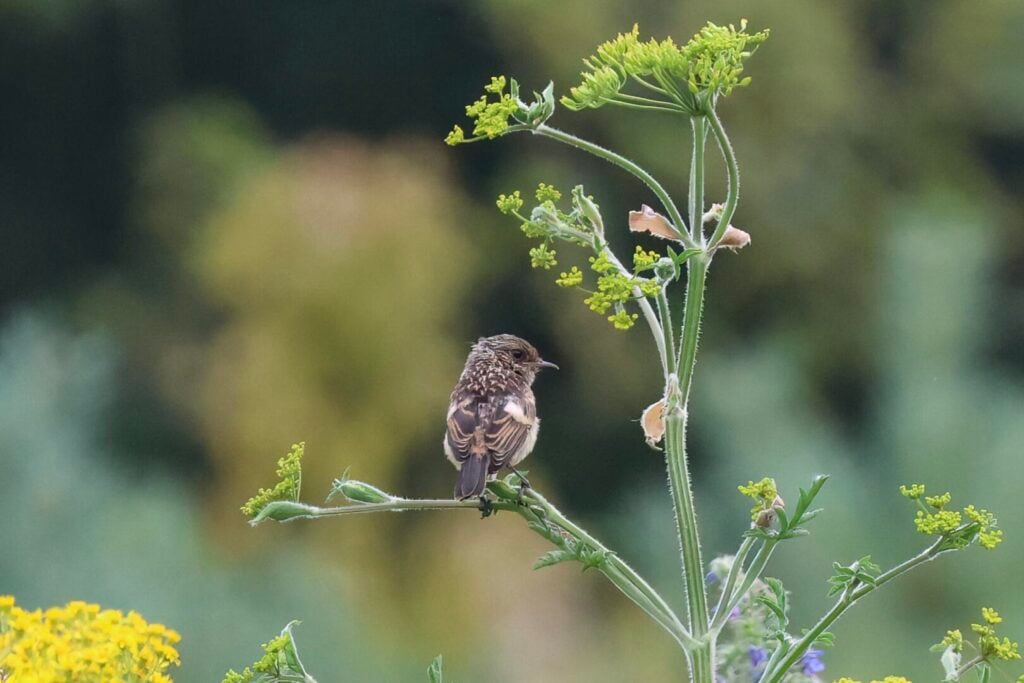
When we got to the clearing at the far end, it seemed quiet at first. As we stood and scanned, first we picked up a smart male Yellowhammer which flew up and landed on a tree stump. A couple of juvenile Stonechats flicked up onto the top of the flowers in front of us.
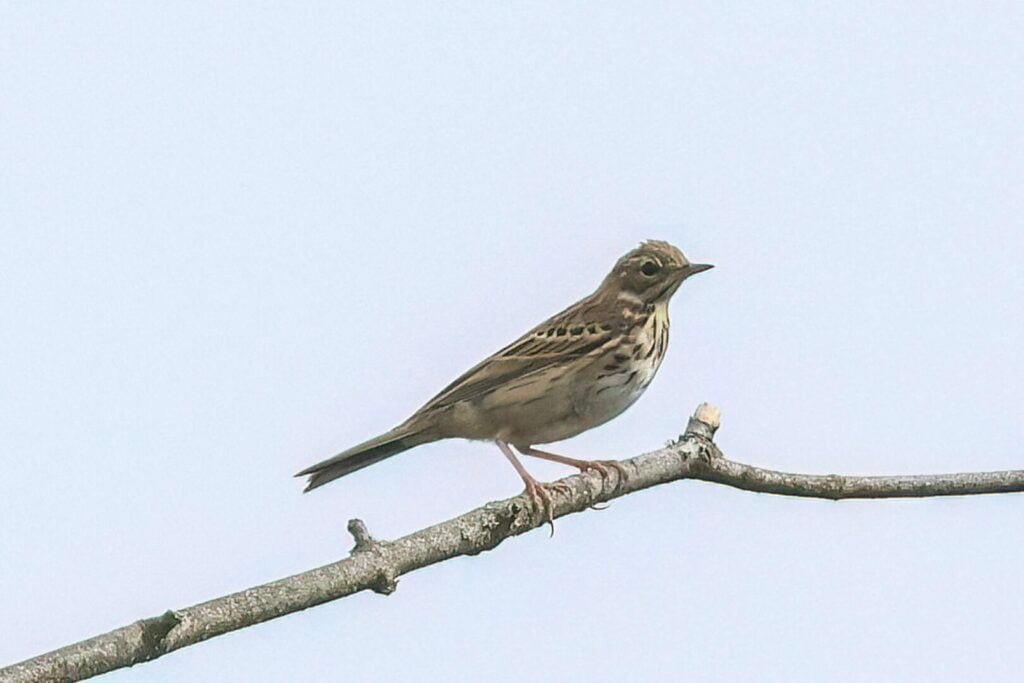
We were hoping to find Tree Pipit here. They weren’t singing now but it didn’t take too long to find one in one of the scattered trees. It dropped down to the ground and we lost sight of it but a short while later it came up again. We got it in the scope but it didn’t stay long. This time it flew across into some thicker trees. We walked down along a side track to see if we could find it again.
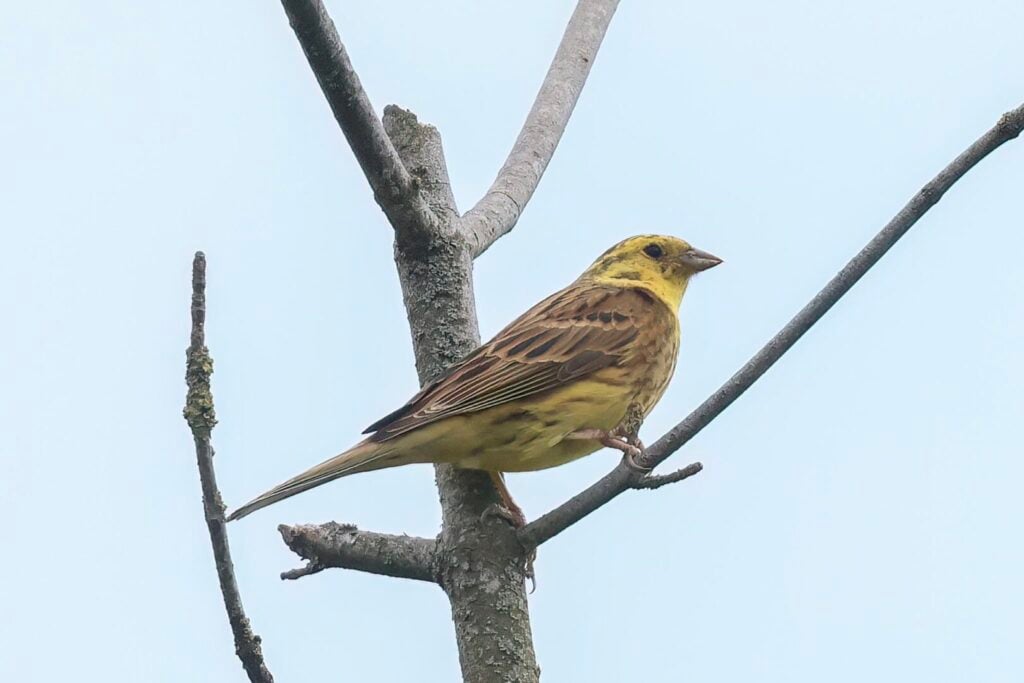
Another male Yellowhammer flew in and landed in the top of a bare tree in front of us. Lovely views in the scope. As we walked on, what was presumably a female flew up from the ground below and the two of them disappeared off through the trees.
There was no sign of any Tree Pipits here now though. But as we turned to walk back, two flew past us and landed in a nearby tree. They flicked over into another and we got them in the scope. When they flew back across they landed in a bare tree right in front of us.
Scanning the surrounding forest, we could see several Common Buzzards circling over the trees. Then we picked up two Woodlarks flying out of the clearing. They came across in front of us too before landing in briefly in the top of a tree.
A nice way to end, we walked back to the minibus. Back in Swaffham, we said our farewells. It had been a very enjoyable three days with some good birds and some nice surprises too.