Day 2 of a 3-day Summer Tour, including a Nightjar Evening. It was a lovely bright, sunny morning before clouding over a bit more in the afternoon. With a fresh westerly breeze the temperature remained very pleasant. We spent the morning up on the Wash and the afternoon at Titchwell on the North Norfolk coast. Then we went out again in the evening for Owls and Nightjars.
We headed over to Snettisham and the Wash coast this morning. It was a fairly big tide today, although not enough to cover all the mud. Still, we hoped some of the waders might be pushed close enough inshore. When we got out onto the seawall, the tide already well in.
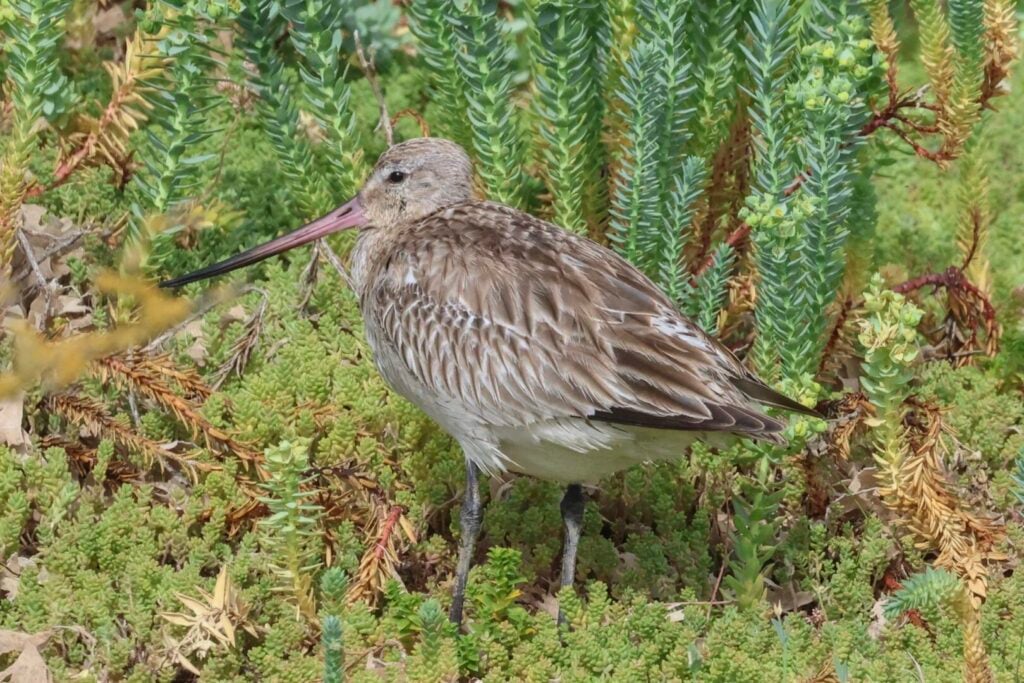
As we made our way down along the bank, we could see several Oystercatchers on the shore, some with young. A Dunlin and a few Ringed Plovers were roosting in the rocks. A lone Bar-tailed Godwit was asleep in the vegetation higher up on the bank. We were going to stop longer to scan but a car came down along the top of the back and we had to move.
Further down, there was still quite a bit of exposed mud. There were lots of waders along the water’s edge, mostly Bar-tailed Godwits and Knot, some still in rusty breeding plumage. A small group of Dunlin was still feeding on the near corner of the mud, along with a few Redshanks and a single Grey Plover. The tide was still coming in fast though and everything kept moving on.
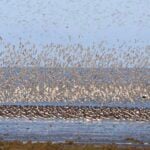
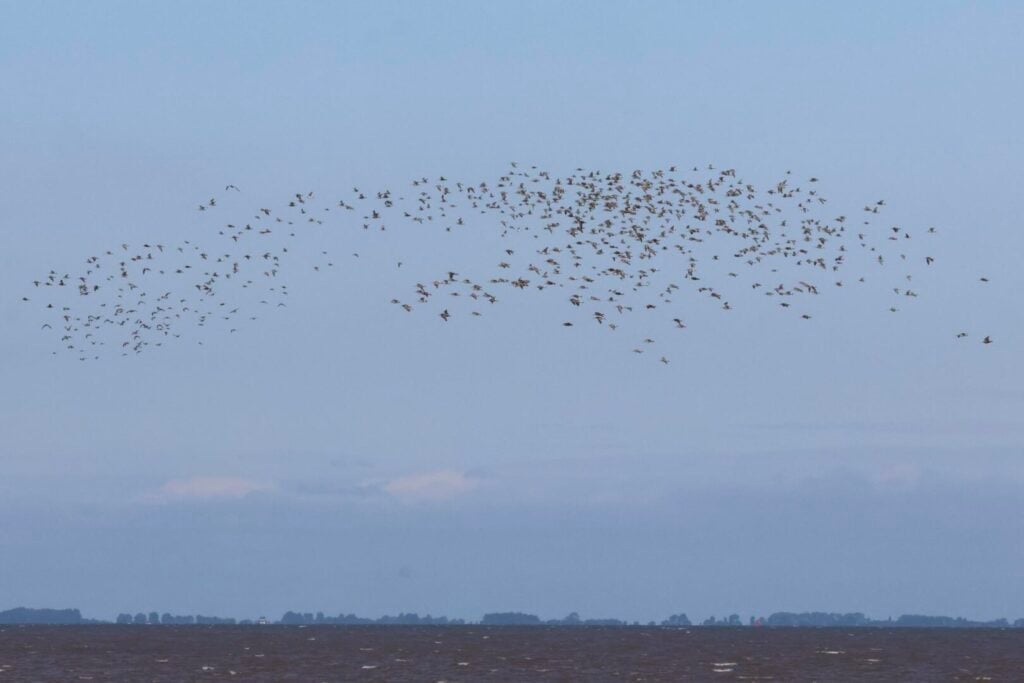
Something spooked all the waders and a large group took off and flew round over the water, twisting and turning. Great to watch. It was obviously a false alarm though, as they quickly gave up and landed back down on the edge of the water.
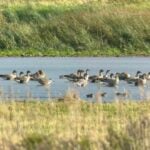
Further back, we could see lots of Oystercatchers standing out in the middle, spread across the dried mud. Closer to the bank, there were lots of gulls and a large group of Shelducks roosting. Presumably the latter had gathered here to moult.
We called in briefly at Rotary Hide. There were several Common Terns in with the Black-headed Gulls on the nearest island. On the next island back, the Common Terns were feeding several half-grown juveniles. Further back, there were lots of Redshanks roosting on the far shore and one or two Knot in with them.
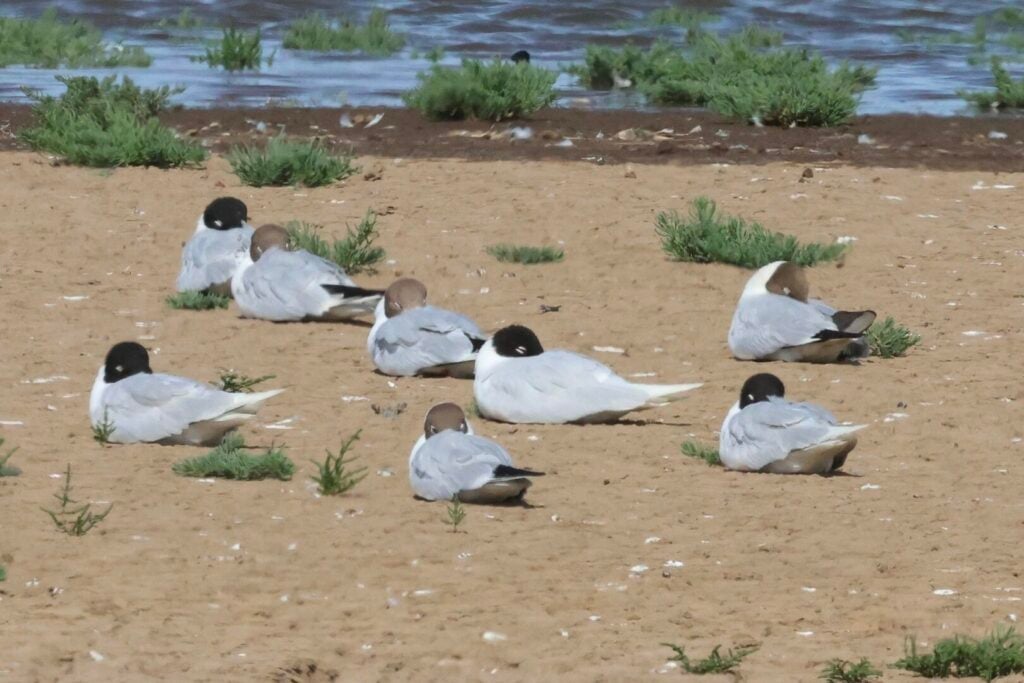
Back out onto the edge of the Wash, we continued on further down. A large group of mixed smaller gulls was gathered on the dry mud just beyond the channel. There were several adult Mediterranean Gulls in with the Black-headed Gulls. We got them in the scope and, even though they were asleep, we admired their jet black hoods and white wing tips. A single adult Common Gull was with them too.
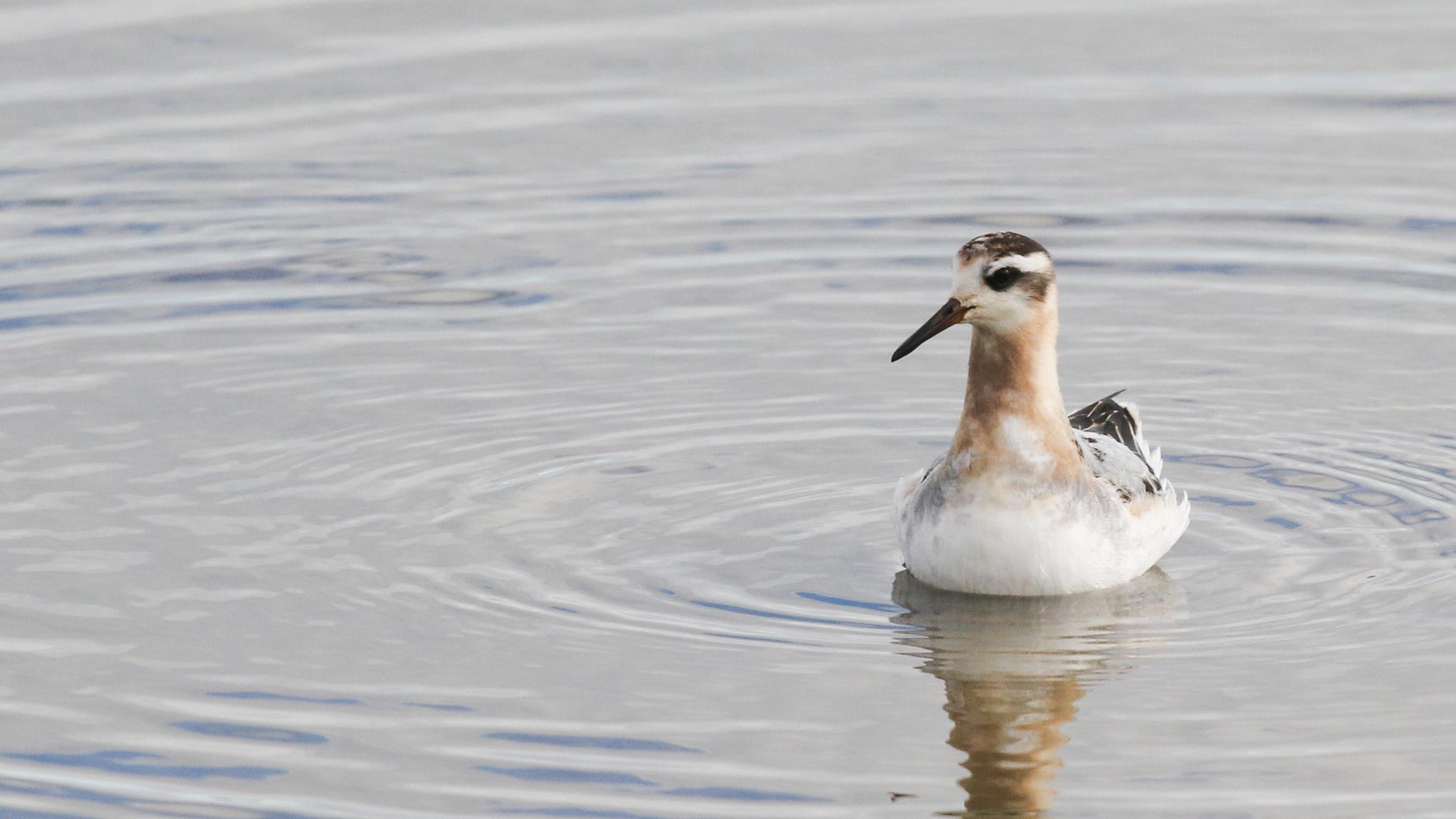
We diverted in to Shore Hide next. The Spotted Redshanks were in their usual spot, roosting on the rocks between the Cormorants and Greylags. One was still in full black summer plumage, though the others were just starting to moult and were spotted with white on the underparts. They were mostly asleep but occasionally woke up briefly and flashed their longer, needle-fine bills.
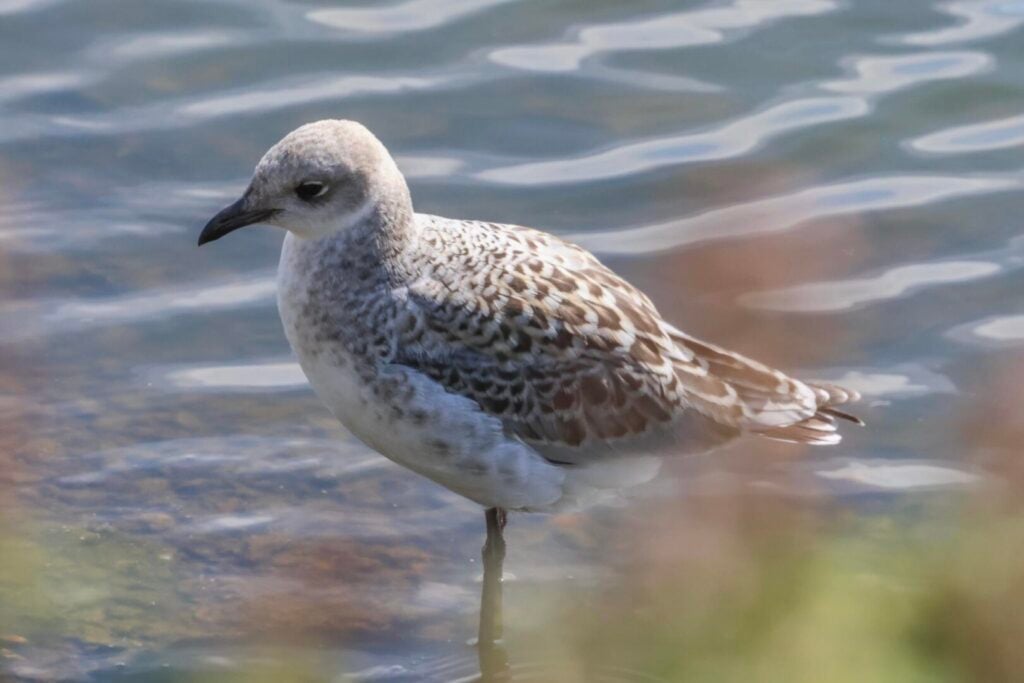
There were lots of Black-headed Gulls on the nearest island, including several brown juveniles. Most of the juvenile Mediterranean Gulls were on one of the islands further down but one juvenile was right in front of the hide. It kept disappearing behind the brambles but eventually we got a good look at it. Much scalier pattered than the juvenile Black-headed Gulls.
On the far shore, there were several Black-tailed Godwits roosting on the shingle bank. We could just see the top of a few Spoonbills but they were standing over the top of the bank, on the far side. Mostly asleep, of course! They were three Canada Geese on the bank too and a slightly odd looking presumed hybrid.
There were more waders roosting on the far end of the Pit was we carried on down to South Screen. There were several Linnets feeding on the short grass outside the hide. On the way, we wet a couple of people we knew coming the other way. They had been looking through all the Dunlin but had not managed to find anything rarer in with them.
From the Screen, we could see all the Dunlin scattered along the edge of the water. Three Knot were in with them, one still in rusty orange breeding plumage. Scanning through, we couldn’t see anything more unusual either. There were lots more Black-tailed Godwits higher up on the shingle, many still looking very smart in their breeding plumage.
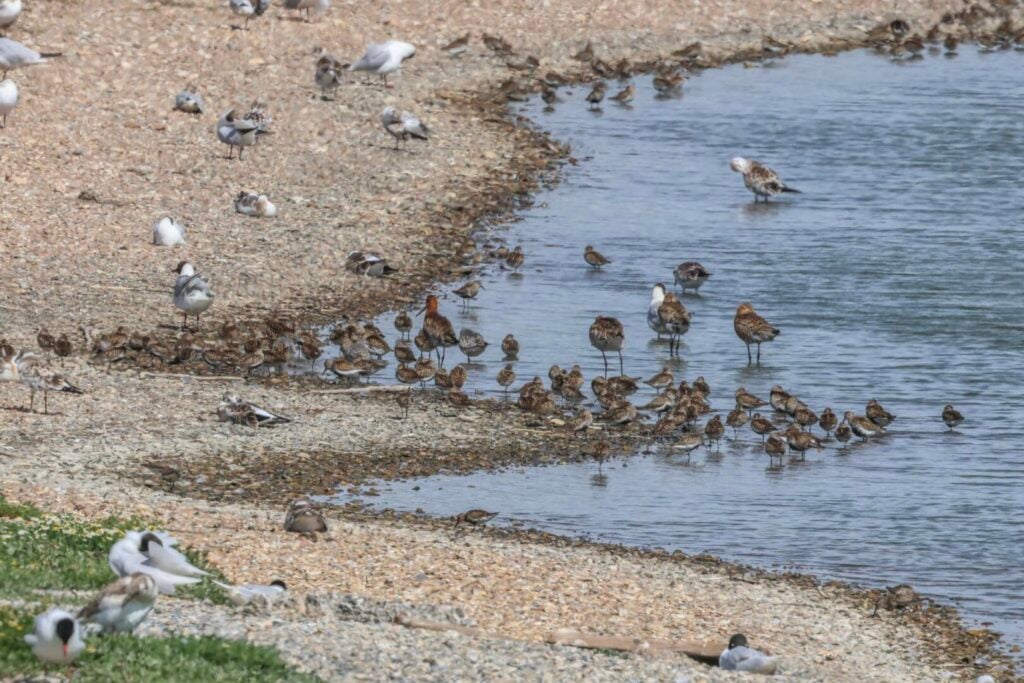
A Common Sandpiper flew in and landed on the shingle in front of the hide. We watched it picking its way along the edge of the water, before it turned and flew off again further back.
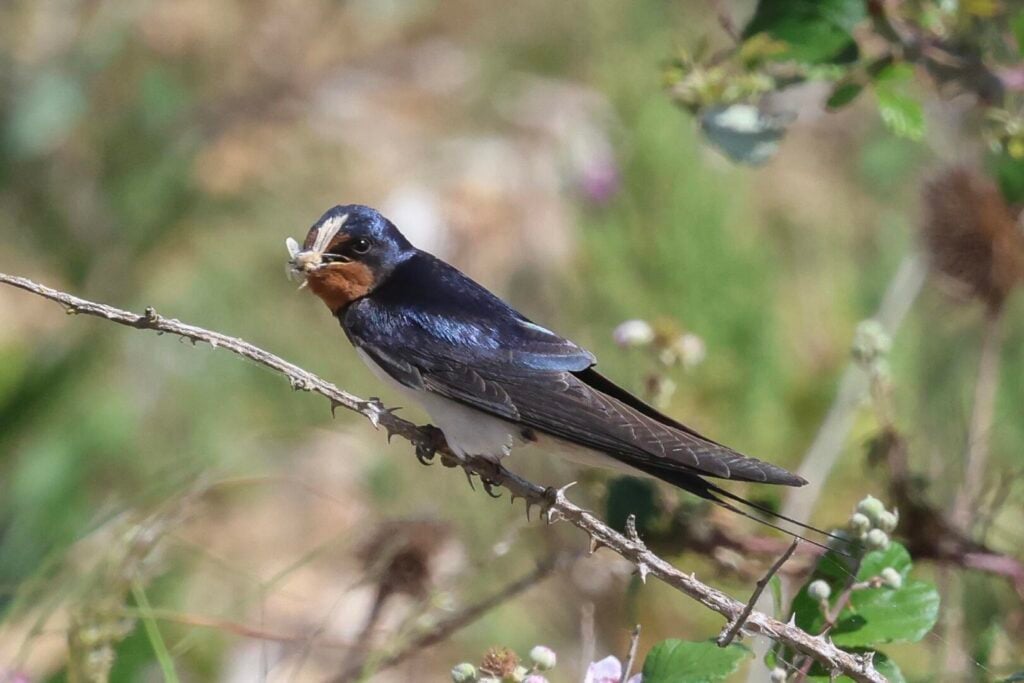
A couple of Swallows kept landing on the brambles in front of the hide. One of them had food in its bill. We realised they were waiting for us to leave so they could come in and feed their young, which were hiding up under the end of the roof. We decided to start making our way back.
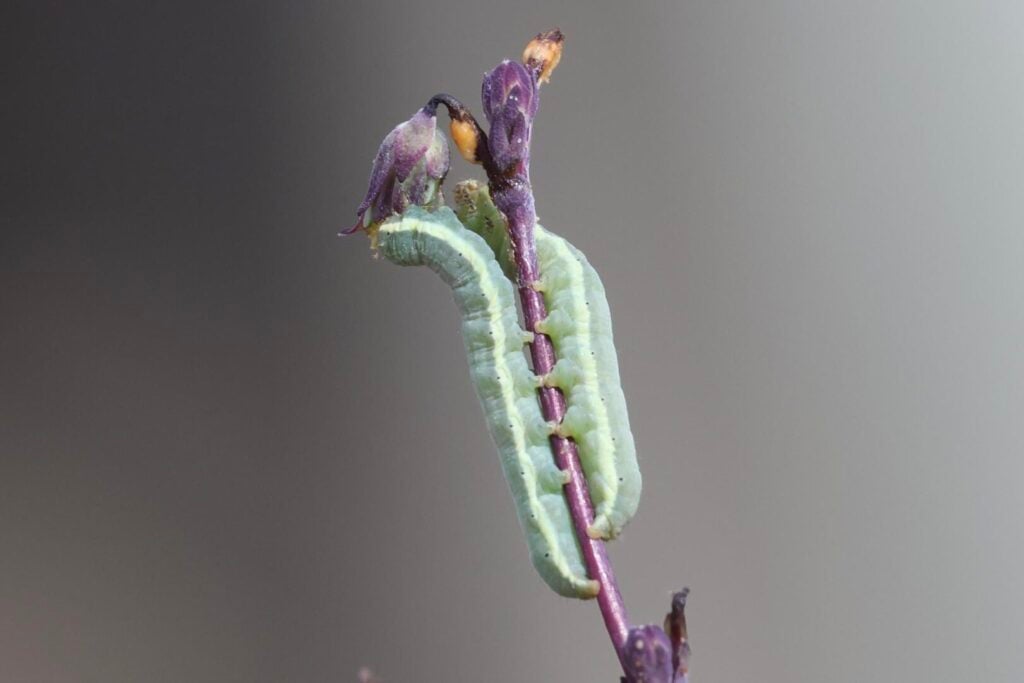
Outside the hide, we stopped to look at several caterpillars feeding on the flowerheads of a large Giant Lettuce plant. On further investigation, they turned out to be caterpillars of the Small Ranunculus moth, a specialist feeder on lettuces.
As we got back off the board walk we noticed a missed call from the people we had seen earlier. They had just found a Pectoral Sandpiper further up along the seawall as they were walking back to the car park. As we made our way up, several Mediterranean Gulls came up off the Pit and over our heads. We could really see their translucent white wingtips as they circled over in the sunshine.
When we got up to where the Pectoral Sandpiper was, several people were stood watching it, including the two who had first found it. Apparently it had been feeding on the tideline but had now gone to sleep in the rocks on the beach, with a couple of Dunlin. After a quick look through the others’ scopes to get our bearings, we were soon on it too.
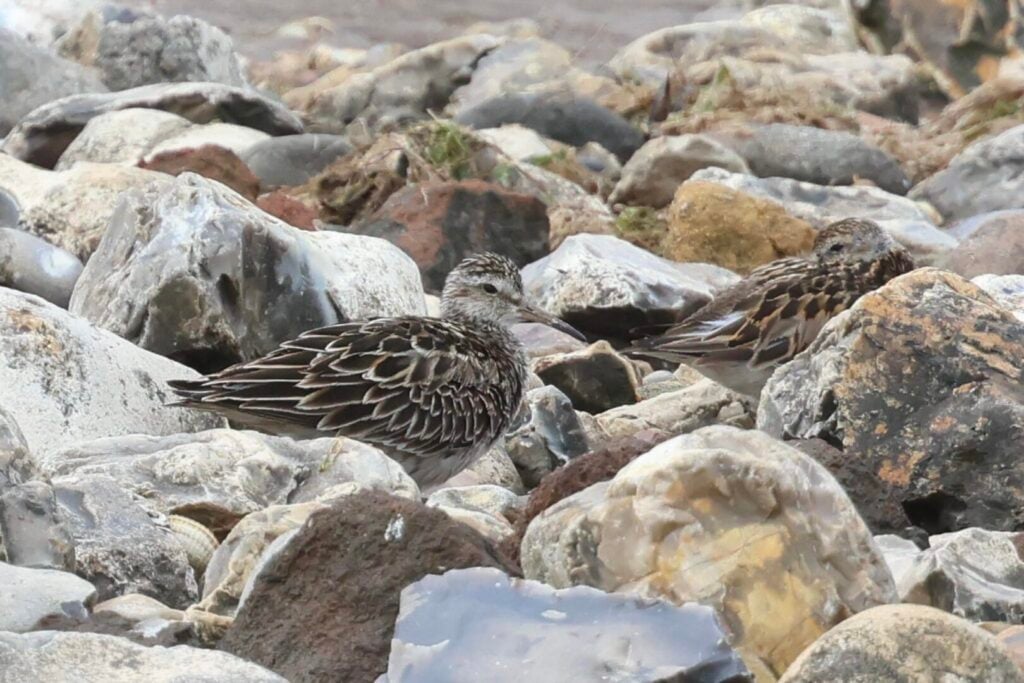
After a while, the Pectoral Sandpiper woke up and started preening. Now we could see its shorter bill and its streaked breast ending sharply in the pectoral band from which it gets its name. Then it walked out of the rocks and back onto the tideline to feed. It made its way down towards us, great close views now.
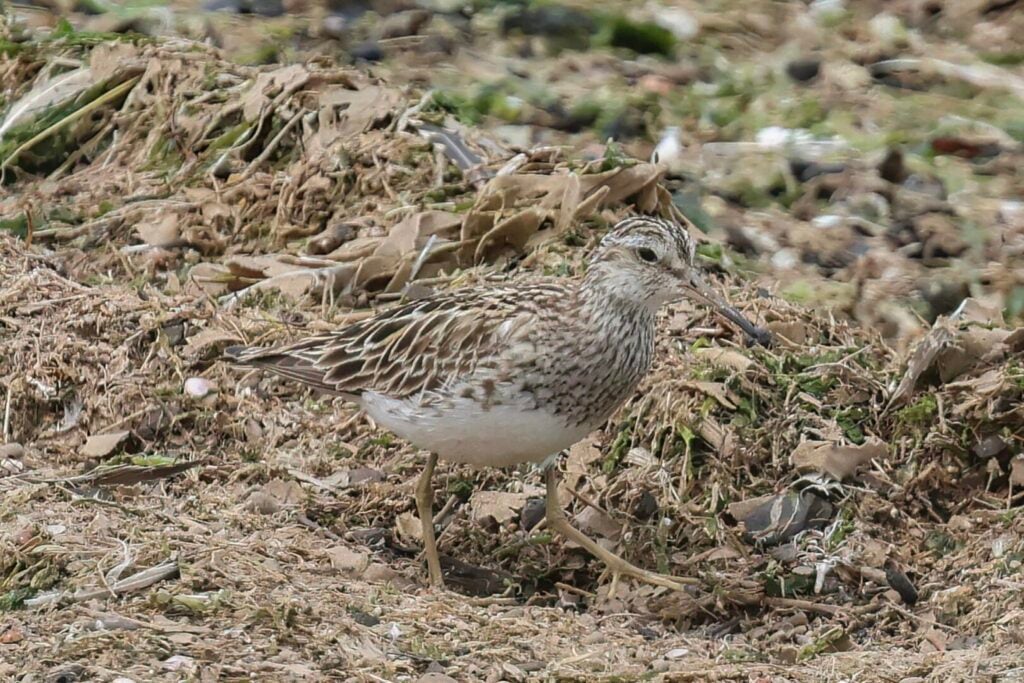
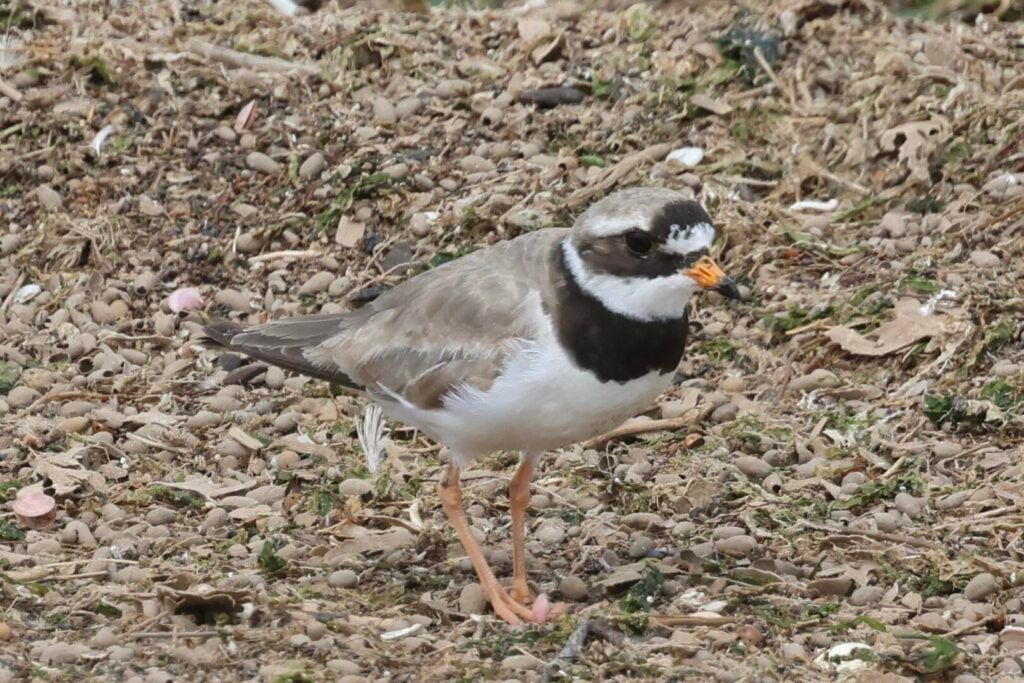
We watched the Pectoral Sandpiper feeding for a while then eventually had to tear ourselves away. There was a Ringed Plover feeding on the tideline too, so we turned the scopes on that. We were just packing up when we looked up to see a flock of four Turtle Doves flying up over the bank. They disappeared off over the chalets, a nice bonus.
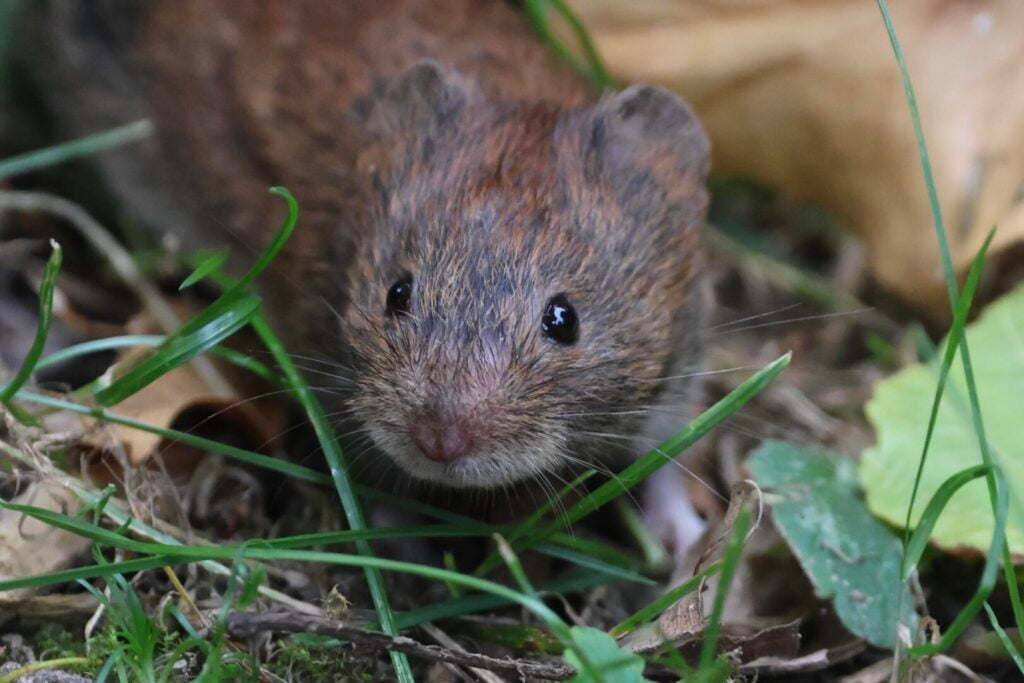
We drove round to Titchwell next. When we got there, it was time for lunch so we made use of the tables in the picnic area. As usual, a Robin was hanging around hoping for crumbs. More surprising, a Bank Vole came out of the nettles and in to the grass right beside us too. A Song Thrush was hopping about out in the grass and a Speckled Wood butterfly was basking on the bushes.
After lunch, we made our way out to explore the reserve. Walking along the main path, as we got out of the trees, a Bearded Tit flew over the path ahead of us.
We stopped by the Reedbed Pool to scan. A Great White Egret was stalking along the edge of the reeds at the back and then a second flew across through the trees back over by the Visitor Centre. There were several Coot on the water, the first we had seen and a scattering of Mallard but not much else today. A Marsh Harrier was hanging in the air over the bank at the back.
A Chinese Water Deer was feeding in the reeds at the back of the pool. As we started to walk on, we noticed a second Chinese Water Deer out on the saltmarsh, a little closer. As we made our way down the slope to Island Hide, a Common Toad crossed the path ahead of us.
From the hide, we had very good views of Avocets feeding right in front of us. There were lots of Black-tailed Godwits in the shallow water further back. On the islands, there were mostly breeding Black-headed Gulls with a few Common Terns in with them. A Little Ringed Plover flew in and landed on the edge of the island in front of the hide. A single Ruff was feeding right over along the base of the far bund.
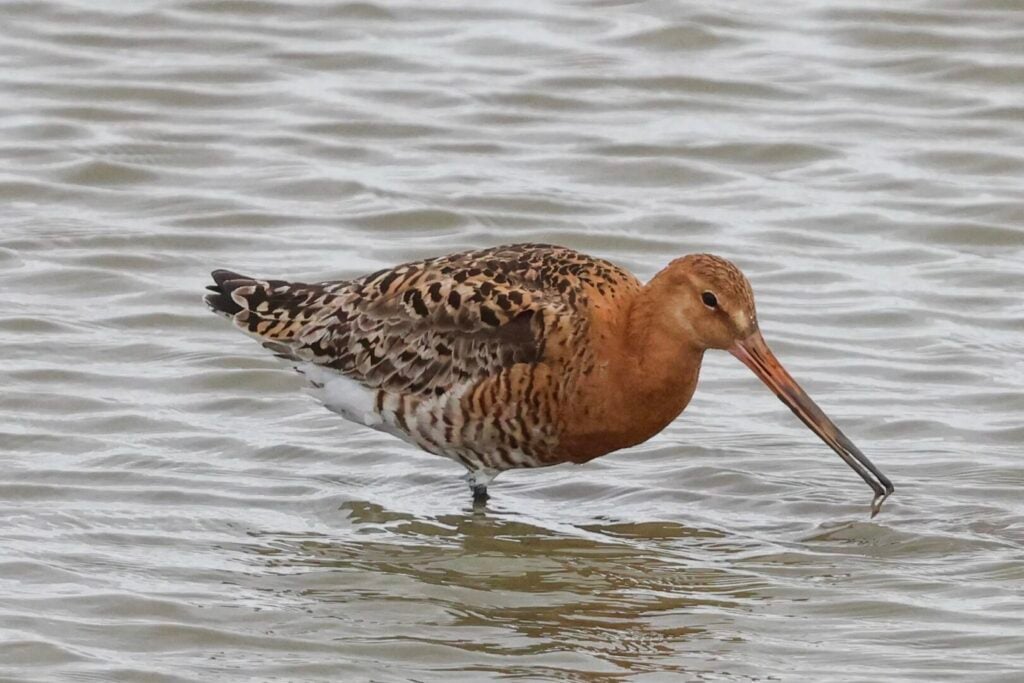
Back out on the main path, we stopped to watch a smart Black-tailed Godwit in breeding plumage which was feeding close to the bank.
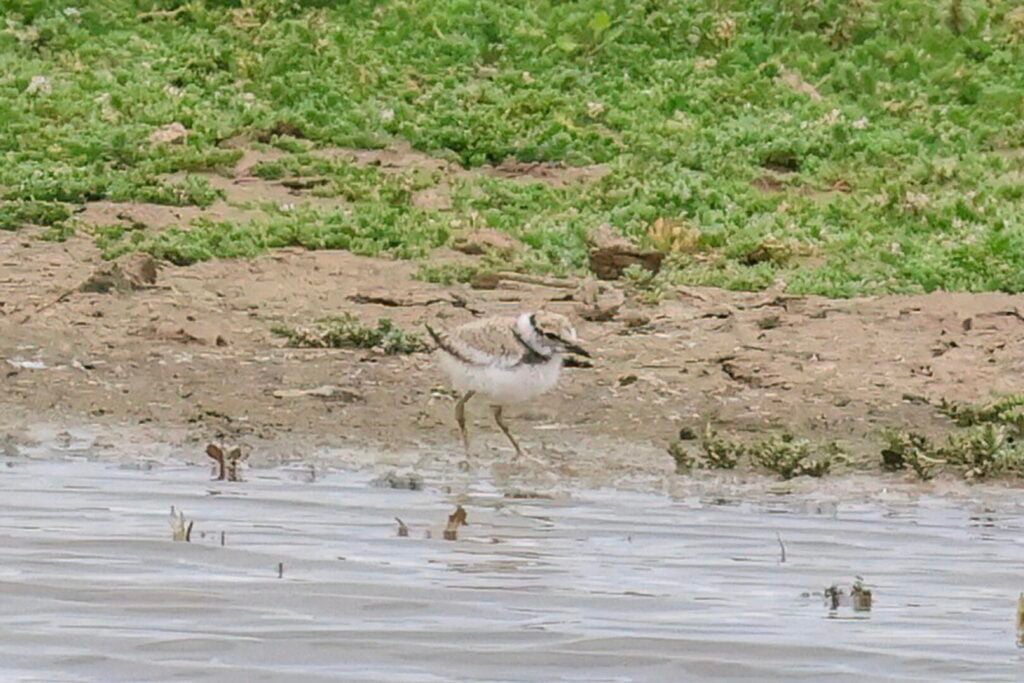
There were several more Ruff on the next compartment up. The males are all moulting quickly now and no two look the same. More Black-tailed Godwits on here too. The highlight though was a family of Little Ringed Plovers along the near edge of the island. The three juveniles were little more than balls of fluff on legs. Very cute! A close run contest in the cute stakes with the Redshank chicks we had seen yesterday.
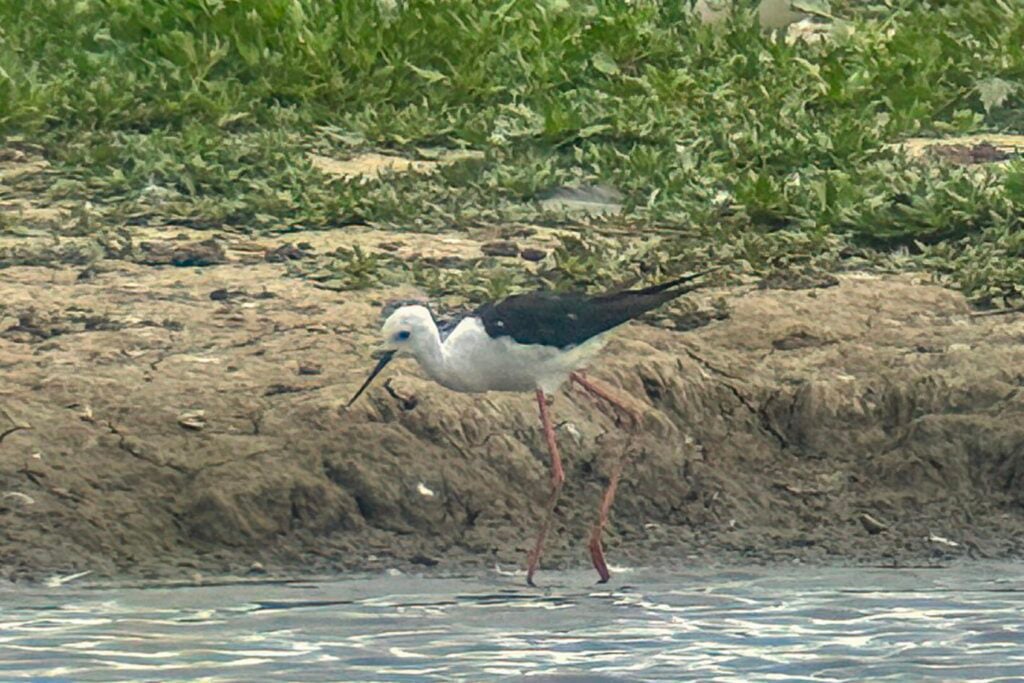
We carried on round to Parrinder Hide and stopped to scan from the terrace above first. There had been a couple of Black-winged Stilts on here for the last couple of days and we were quickly onto one now. We got it in the scope and watched it walking round on the back of the scrape on its improbably long pink legs. Still a rare visitor here, so a good bird to catch up with.
First mission here accomplished, we went into the hide now to sit down and have a more thorough scan. A Green Sandpiper was feeding in front of the hide but was chased off by one of the Avocets. A couple more Green Sandpipers were feeding on the mud in front of the reeds right over at the back. There had been a Wood Sandpiper reported here earlier but we couldn’t find any sign of it now.
There were more Black-tailed Godwits feeding on the scrape here. More surprisingly, there were around 30 Bar-tailed Godwits with them, all in non-breeding plumage. Unusual to see them feeding on the Freshmarsh but it meant we had some great views of the two species side by side. We could see the Bar-tailed Godwits‘ shorter legs, slightly upturned bill and more patterned upperparts, paler with fine dark shaft streaks to each feather.
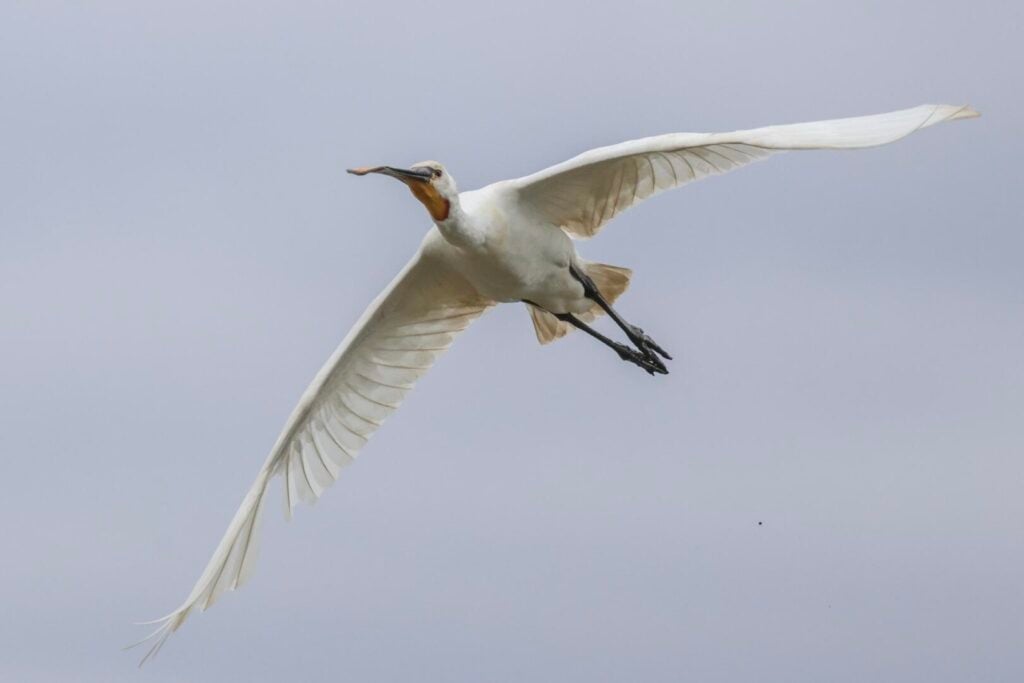
A Spoonbill dropped in to feed in the channel in front of the hide a couple of times. We watched it walking up and down with its head down, sweeping its bill from side to side in the water. It didn’t stay long though and flew off out towards the beach.
An adult Little Ringed Plover landed on the mud close to the hide too. We got a good view of its golden yellow eye ring. At least one Black-winged Stilt was on view most of the time, but they kept disappearing behind the islands. Eventually, we managed to see both Stilts out in the open at the same time.
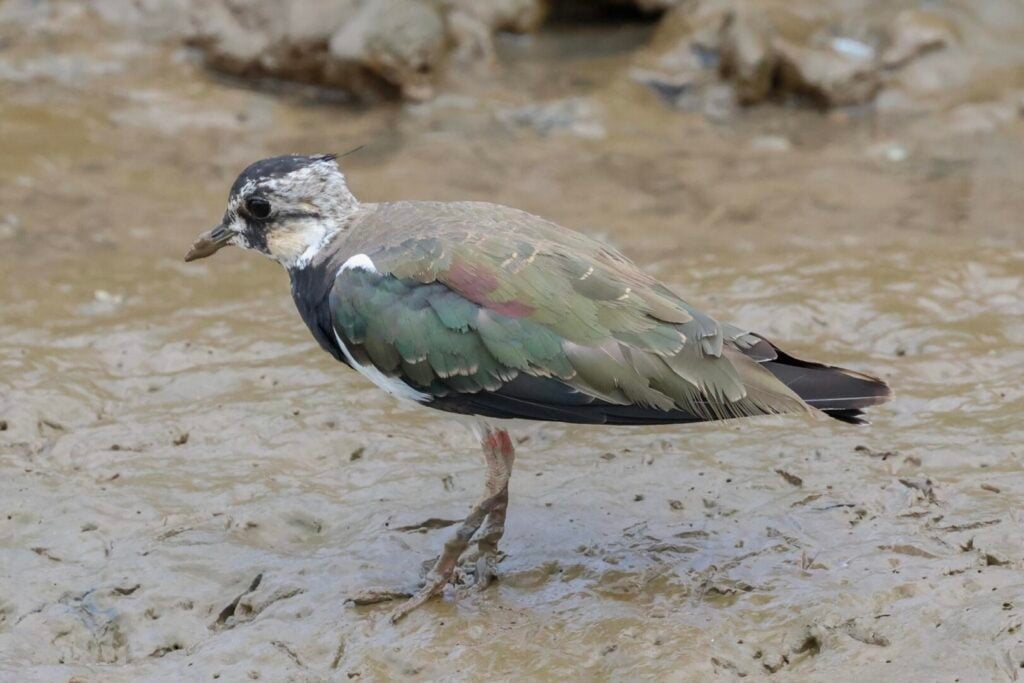
We decided to have a quick look out at the beach. As we walked past Volunteer Marsh, a single Lapwing was feeding on the mud in the bottom of the channel by the main path. Close up, we could see the purple and bronze colours in its green upperparts. A few Redshanks and three Oystercatchers were feeding in the wider channel over on the far side.
The water level was very low on the Tidal Pool and there was not much on here now, so we pressed on to the beach. The tide was out and we could see a Spoonbill in a pool in the mussel beds. Then more Spoonbills appeared from behind the mussel beds further along and walked out onto the beach. We could see one very young juvenile in with them with a half-grown bill, a ‘teaspoonbill’.
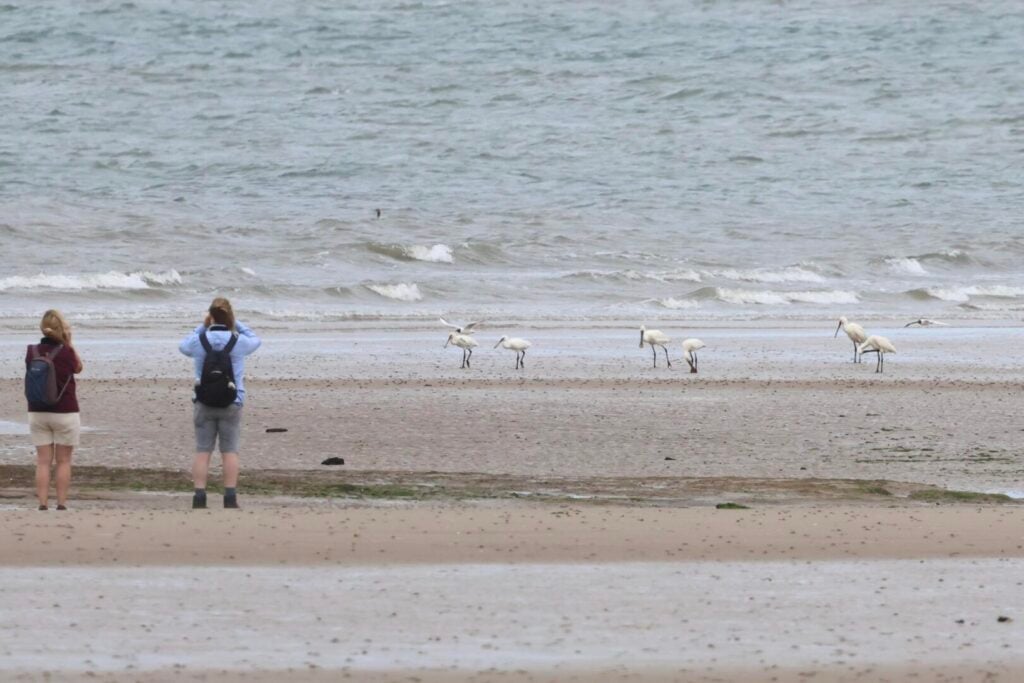
There were a few waders feeding on the mussel beds too. Mostly Black-tailed Godwits and Bar-tailed Godwits plus a few Oystercatchers and a Curlew. Nothing we hadn’t already seen well, so we decided against walking all the way out to the tideline for a closer look.
A few Sandwich Terns flew back and forth offshore. Through the scope, we could see the breeding colony on Scolt Head island, though the birds were little more than white dots from here.
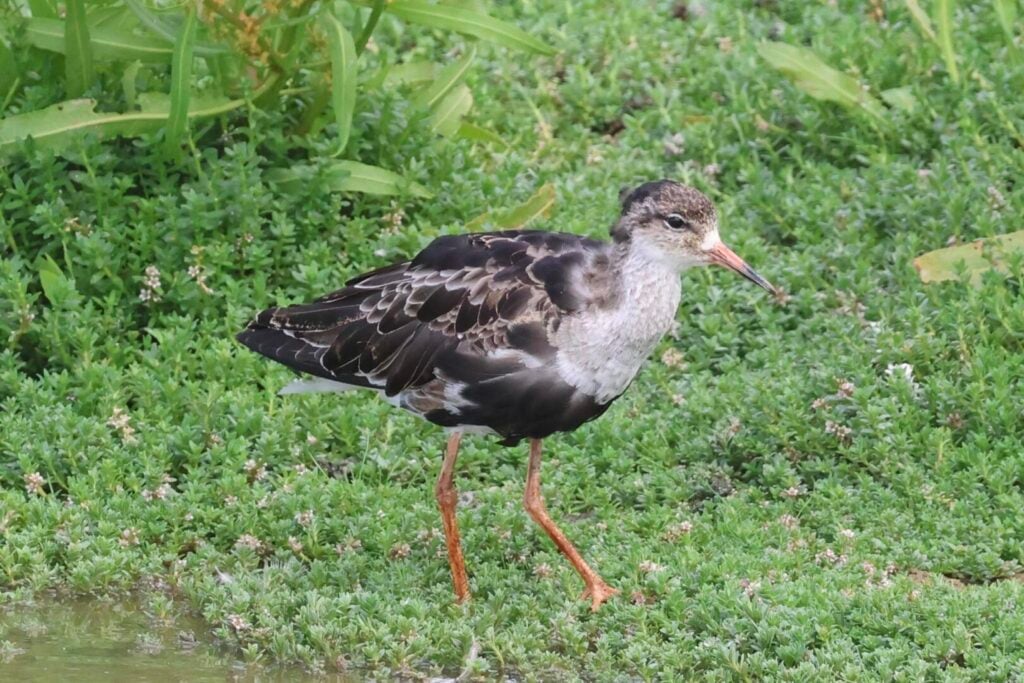
As we made our way back, we stopped briefly at the Freshmarsh to watch a male Ruff which was busy preening on the edge of the bund close to the path. As with all the others, it had already lost its ornate ruff. It had already moulted half of its head and neck to non-breeding plumage.
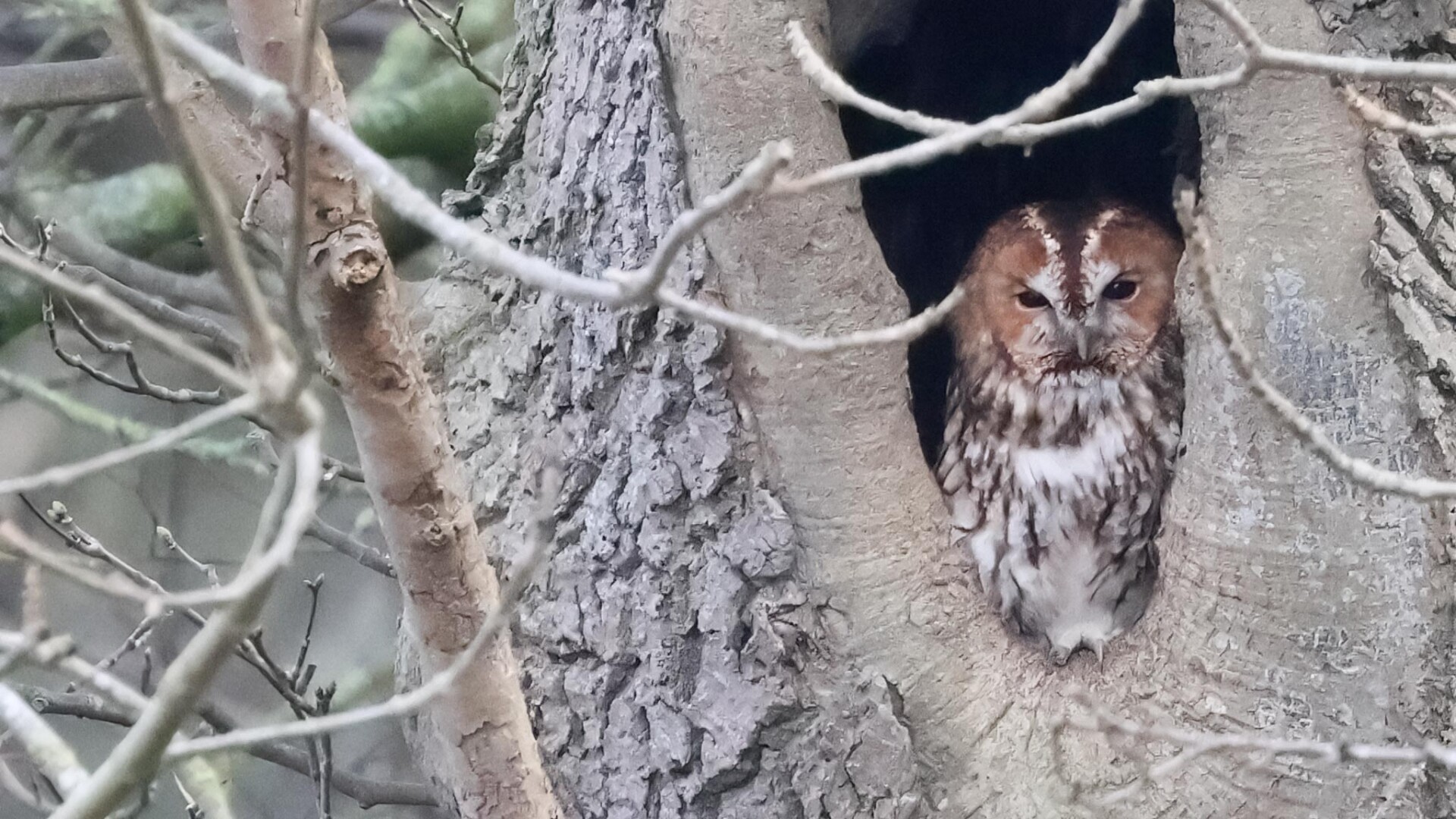
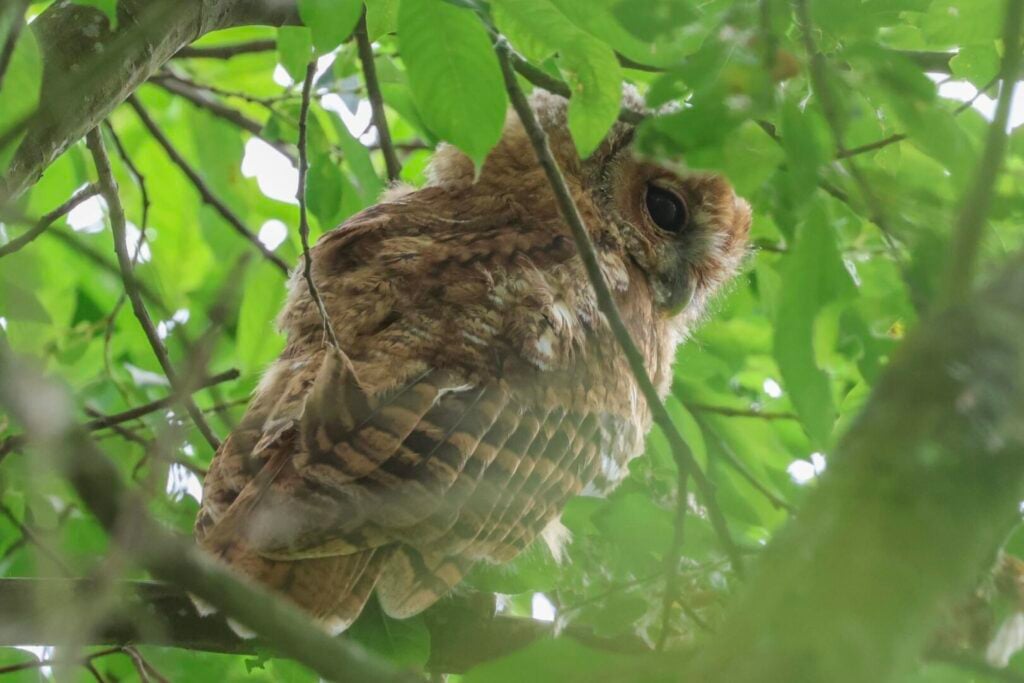
We called in briefly at the Visitor Centre to update the sightings board with anything we could add. Apparently someone had found a juvenile Tawny Owl in the sallows along the Fen Trail boardwalk so we were led out and shown where it was up in the branches. We would never have found it otherwise (thanks, Trev!). Great views in the scope. A nice way to end our visit here.
We drove back now over to Hindolveston. An early dinner tonight, as we would be going out again later.
Nightjar Evening
We met again after dinner. As we drove out of the village, a pair of Red-legged Partridges ran across the road ahead of us. Before the main event, we had a quick look for Barn Owls. Driving round past the fields where they have been hunting recently, we couldn’t see any tonight. It was still very light this evening, so perhaps we were a bit too early still.
We stopped and got out to scan the marshes. A couple of Brown Hares were chasing each other out on the grass. A Marsh Harrier flew up out of the reeds and another couple circled over further up the valley. Several Spoonbills flew over in the distance, heading in to roost. A small party of Swifts chased round over the reeds.
There was no sign of any of the Barn Owls we have seen regularly here either – perhaps the young have fledged already. We had another drive round to check the marshes again, still nothing yet. We couldn’t wait any longer unfortunately. It was time to head up to the heath.
It was already after sunset but still quite light when we arrived. As we walked out across the heath, a Stonechat was calling. We found it, a male, perched up on the gorse ahead of us.
We had to wait a while before the first Nightjar started churring tonight. Eventually, we heard one further over and it was quickly followed by a closer male. It was churring from inside the trees today, possibly from its roost site. No sign of it coming out. It churred from there for a while, on and off.
Eventually we heard the Nightjar call and saw it flying out of the trees. It came straight towards us and flew round over our heads, checking us out. We could see the flashes of white in its wings, a male. It flew out over the heath but quickly came back in again, circling round behind an oak tree just behind us. We couldn’t see where it landed, the leaves were too thick.
The male Nightjar churred more persistently now from the oak tree. Great to just stand and listen to it, an amazing sound. It flew out a couple of times but kept coming back. When the female appeared, the male flew out wing clapping. The two of them, chased round the oak together, the male flashing the white in its wings and the corner of its spread tail.
After a while, the close male went quiet. We could still see the pair of Nightjars flying round over the heath from time to time, hunting for insects. It was starting to get dark now, harder to see them against the vegetation, only when they broke the skyline. The more distant male was still churring on and off.
We started to walk back. There were more male Nightjars churring along here now, so we stopped to listen. One perched briefly in the bare branches in the top of an oak against the skyline. Another pair flew round a dead tree stump, but there was not enough light to pick them out in the scope when they landed now.
It had been a fantastic hour or so up on the heath with the Nightjars. Time to head back to bed now. We had another busy day ahead tomorrow.