A single-day group Wader Spectacular tour today. It was a rather grey and cloudy start but stayed dry apart from a shower late morning which we managed to avoid. It brightened up and the sun came out in the afternoon, although the wind picked up a bit too. Still, it was a lovely day to be out.
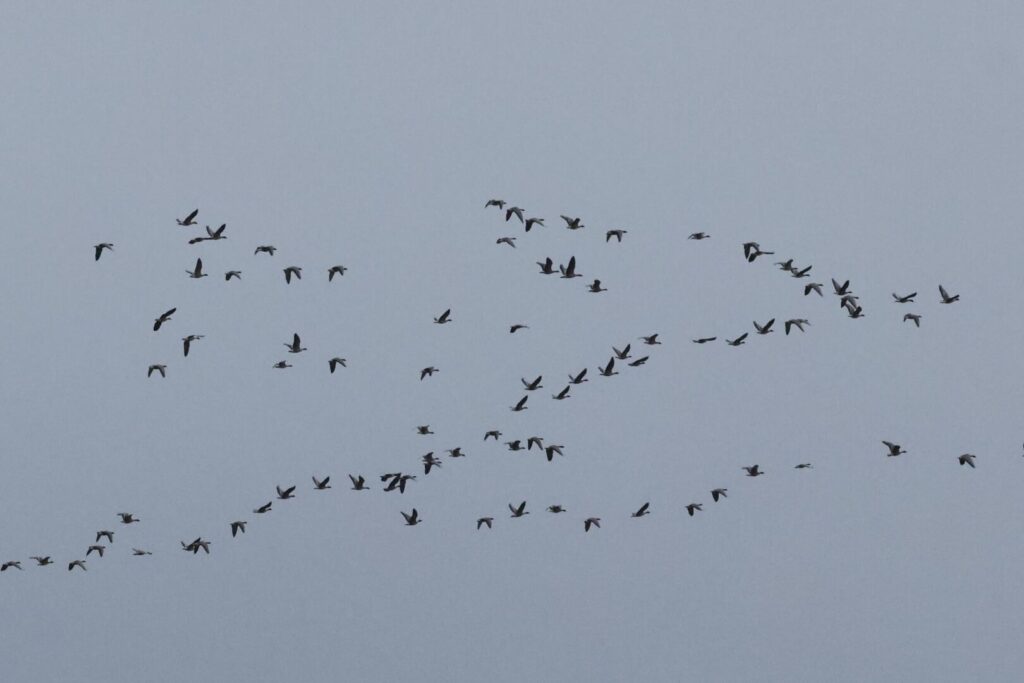
It was an early start. When we got up to the Wash at Snettisham, it was just getting light. A small skein of Greylags came in off the Wash first but we could hear the Pink-footed Geese still calling out on the Wash. One skein came in over the mud and disappeared off inland to feed. We watched another flock taking off from the water and flying in to the north of us. Low numbers here still at the moment, but more are arriving all the time. Not long until winter is upon us now!
There were not so many waders gathered on the mud up by the Sailing Club at first this morning. We could just see a large group of several hundred Oystercatchers. When something spooked the birds from further out on the mud, they flew out over the water and then circled round to join them, lots of Bar-tailed Godwits and more Oystercatchers. Now the flock here was up to strength, but the tide was coming in fast and the mud wouldn’t be there for long.
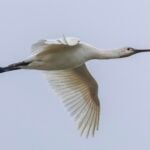
The Black-tailed Godwits were still out on the Wash too and a flock landed in front of us with the Redshank. They usually fly in to roost on the Pit early. A flock of ten Spoonbills flew round behind us and back out over the Wash.
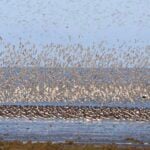
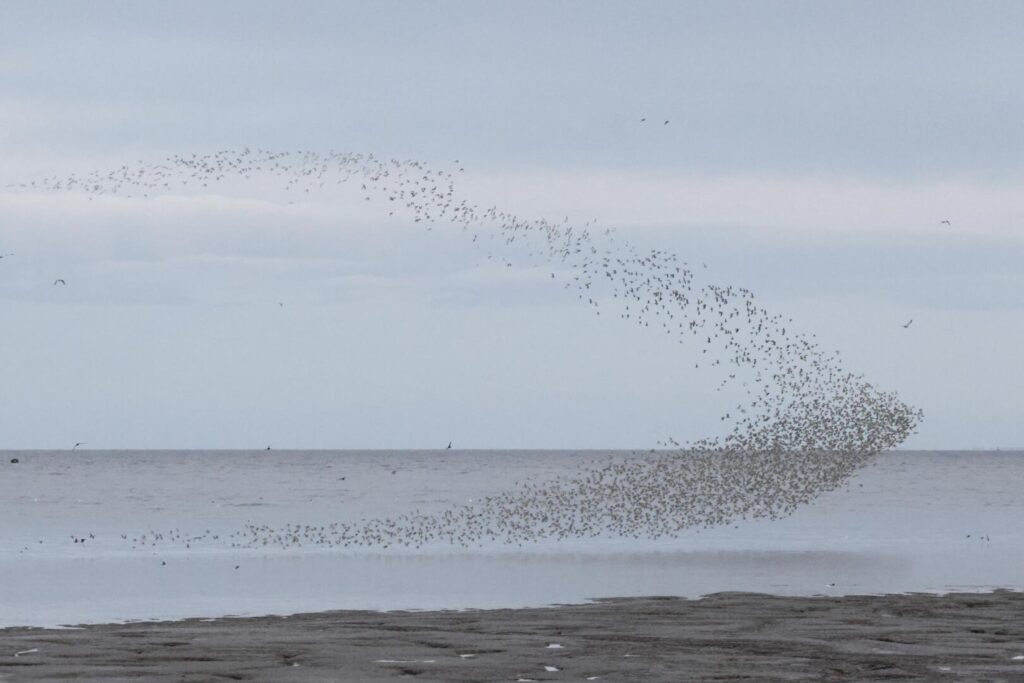
Suddenly all the Knot which were over this side went up. We looked over to see a Peregrine flying past. The waders put on a great display now, twisting and turning in large flocks. They made impressive shapes out over the water, as we stood and watched. The Peregrine didn’t hang around and the Knot eventually settled back down, quite a lot of them landing now with the Bar-tailed Godwits and Oystercatchers up towards the Sailing Club.


The tide was coming in fast now. The Common Redshanks gave up first and flew in past us. We heard a Spotted Redshank calling but couldn’t pick it up as it came in too. A couple of Golden Plover flew over, calling plaintively. Some small flocks of Dunlin, Ringed Plover and Sanderling flew in and dropped down on the mud in front of us. Time for one last feed before it was all covered.
It wasn’t long before the Knot and Bar-tailed Godwits started to get wet and flew up from the Sailing Club. The made their way across in front of us, quickly followed by the Oystercatchers, and everything settled further up on the drier mud off to our left. Soon, everything in front of us was covered with water.
We continued further down along the seawall and stopped again just past Rotary Hide. The battalions of Oystercatchers were marching across the mud, away from the rising water. The Knot initially kept flying up from the water’s edge, over the Oystercatchers, and landing again higher up at the drier end of the flock.
There were several rusty eclipse drake Wigeon with the Mallard in the vegetation just below the beach. A single Bar-tailed Godwit was feeding in between them, a good view in the scope. A Curlew Sandpiper flew past, with a flash of its white rump, and up over the bank into the Pit behind us. There were small flocks of Linnets flying round and Meadow Pipits chasing each other along the edge of the saltmarsh. A couple of Reed Buntings flew out of the bushes.
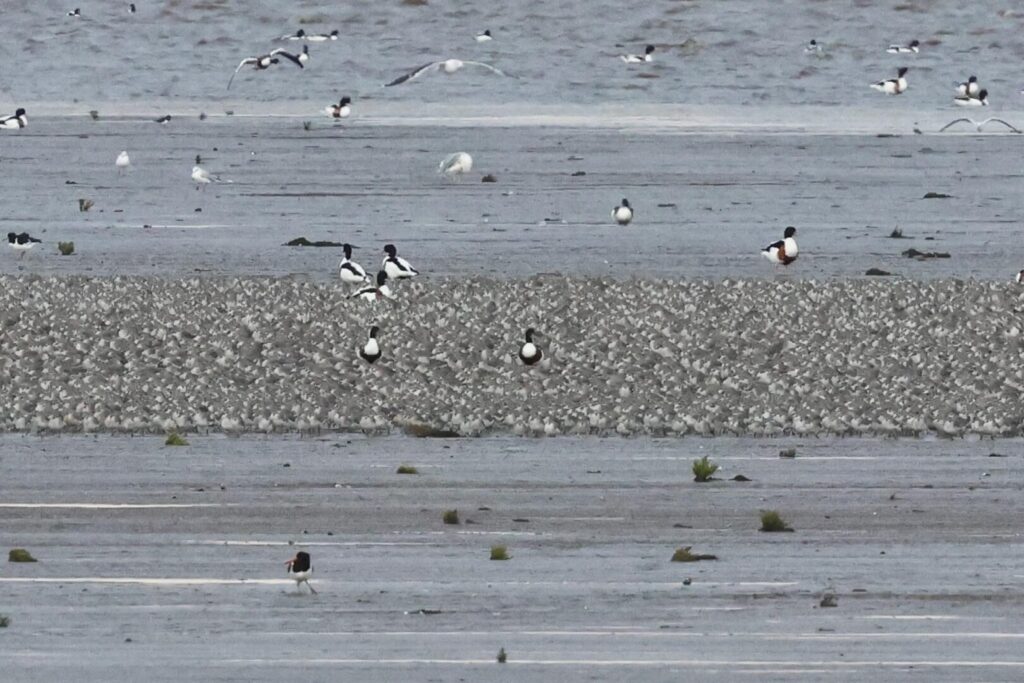
As we walked on, we tried to keep up with the tide but we kept stopping to watch. The Knot were packed in to tight flocks, grey like the colour of mud. We got the scope on and could see they were moving too now, walking higher up. It looked like the flock was flowing across the mud. Down towards the far end, the Oystercatchers started peeling off in lines, flying in over the bank and down into the Pit to roost. There were several hundred Shelducks bobbing on the water beyond the mud and we picked up two Brent Geese flying off north. They have just started to return for the winter too.
Thing seemed to settle down now. The waders were more and more squashed into the last corner of remaining mud. The Knot would fly up occasionally but they were just rearranging themselves, and quickly settled back down again. As the tide covered the last of the mud further round, more and more Knot flew in from further back and dropped down to join them. Through the scope, we could see the Curlews, Bar-tailed Godwits and Oystercatchers all in their different groups. We could see the black faces of several Grey Plovers still in breeding plumage in amongst the grey of the Knot.
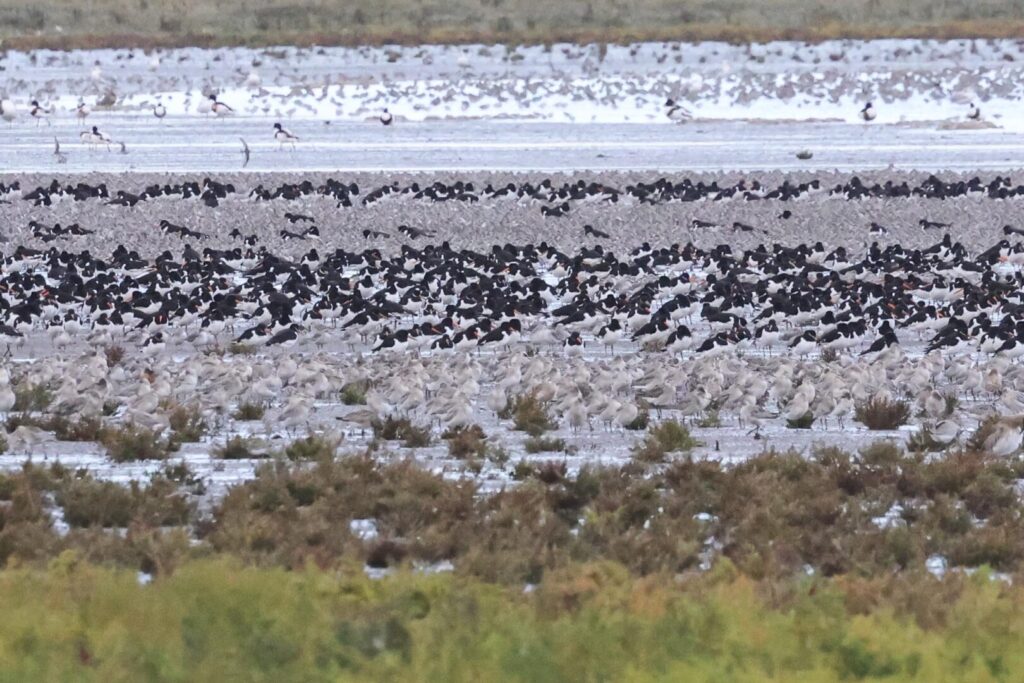
This is when the waders are most easily spooked be a passing bird of prey, but there was very little raptor activity this morning. Perhaps it was because there was no wind and it was very still here. Three or four Marsh Harriers and five Kestrels were all just perched on the posts in the saltmarsh beyond. The Peregrines were now conspicuous by their absence.
High tide came and it became clear the waders would stay out today. The tables suggested the tide should have been high enough to cover it all but the last sliver of mud in the corner of the saltmarsh remained stubbornly uncovered. Knot numbers seem to be down on where they should be by this stage of the autumn, and consequently they don’t need as much mud to pack in to. The lack of wind and raptors probably meant they were less disrupted than normal too.
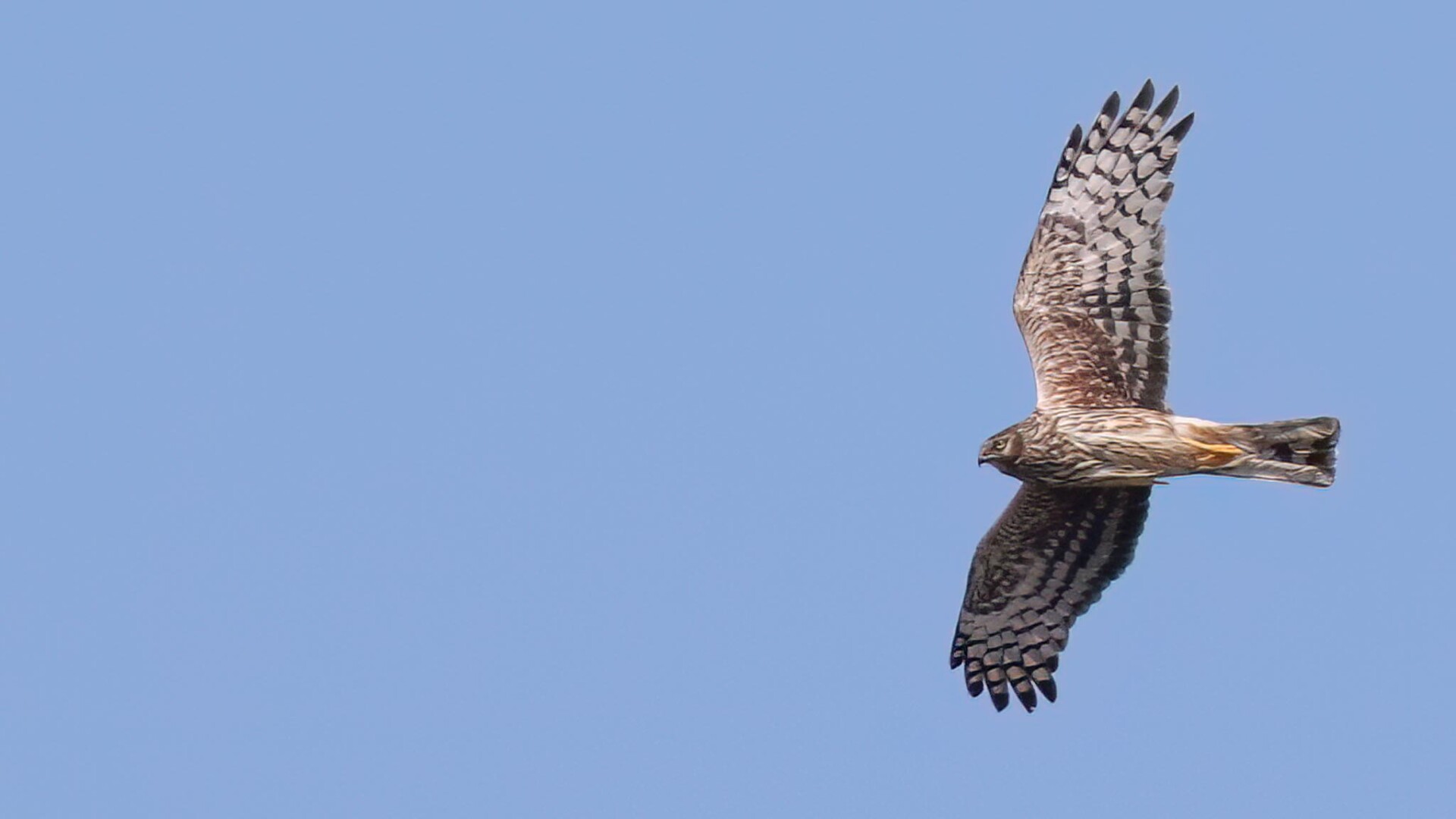
Eventually, a single Marsh Harrier flew up and drifted in over the saltmarsh at the back. When it got close enough, it spooked the gulls which were gathered on the edge of the vegetation and that was enough to put everything up. The Knot erupted and flew out over the water in a huge mass.

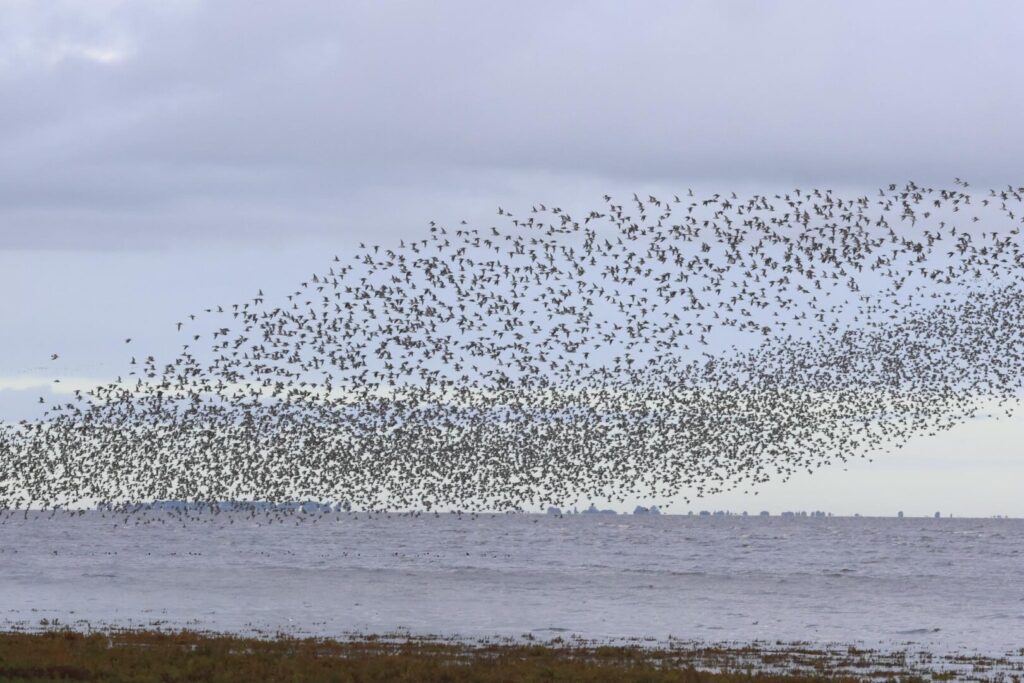


With nothing chasing them, the Knot seemed to quickly realise that the danger was passed. They gradually circled back round and started to drop back down. It took quite a while though, because they had to pack back down into the small remaining area of mud once they landed and the airspace was congested above.
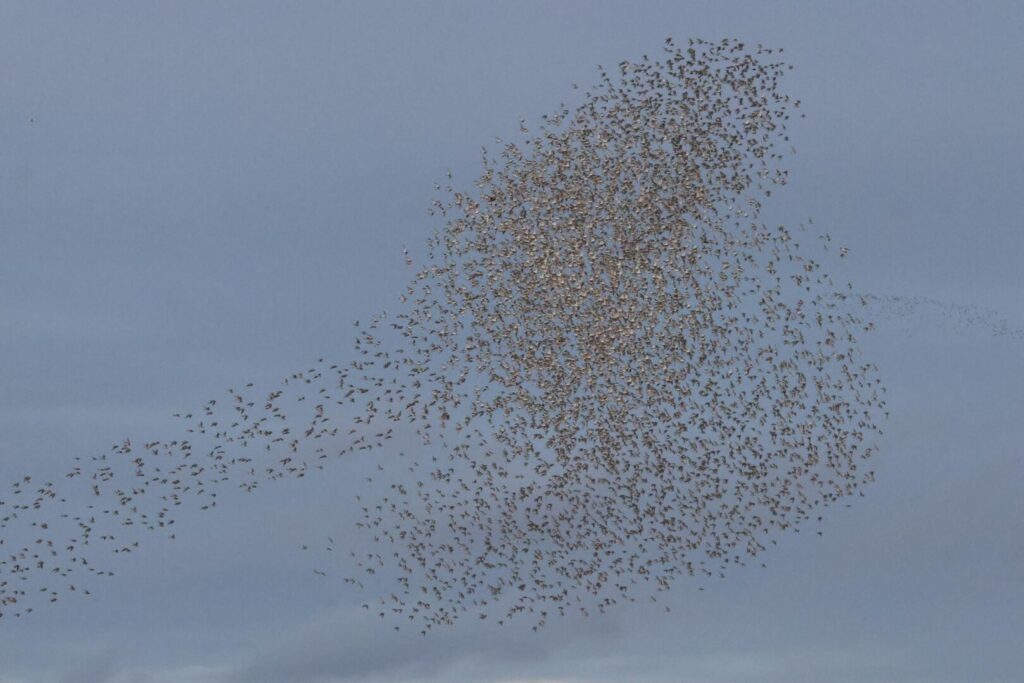
The tide was already starting to go out when the waders all erupted again. This time you could really sense the panic. The sound was incredible as the Knot flew out low over the water in front of us, thousands and thousands of pairs of wings beating as if their lives depended on it. Which they did – we looked up above them to see a Hobby powering over. We didn’t see it chase anything in particular and it quickly seemed to disappear, but just the presence of a Hobby was enough.
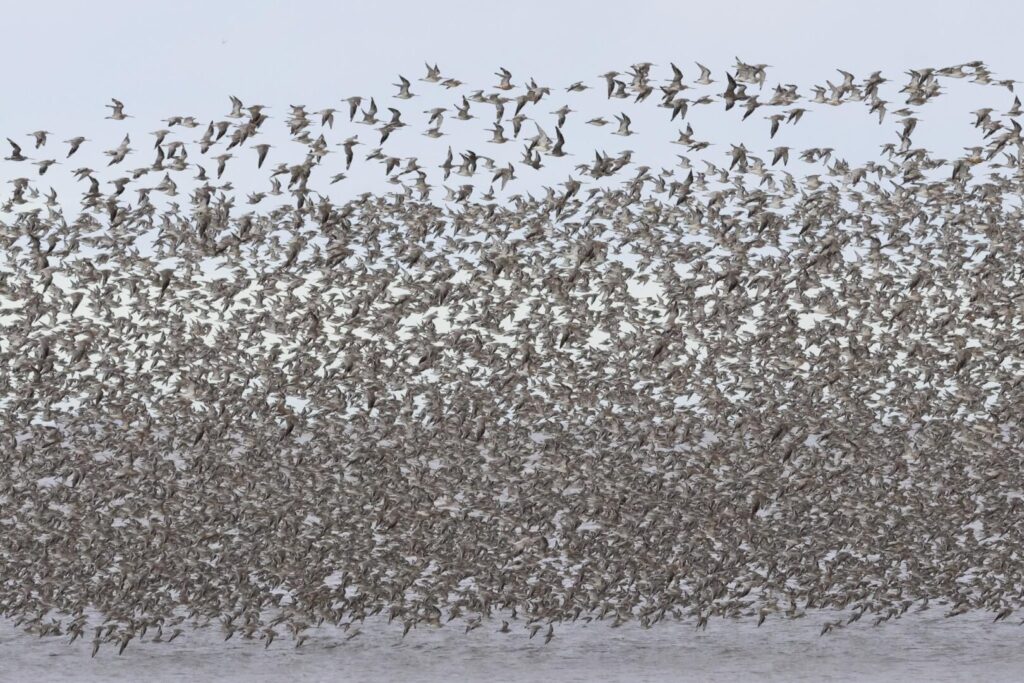
This time we were treating to a really impressive show, as the huge flocks of Knot swirled out over the Wash. As they twisted and turned, flashing dark and light, they made an ever changing variety of different shapes in the sky.
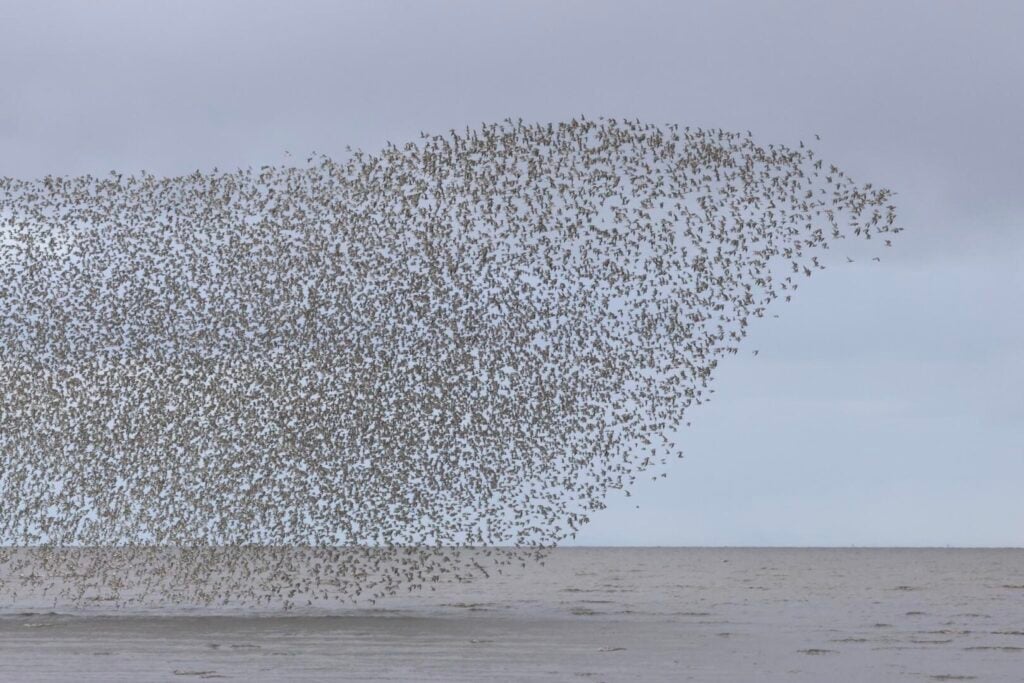


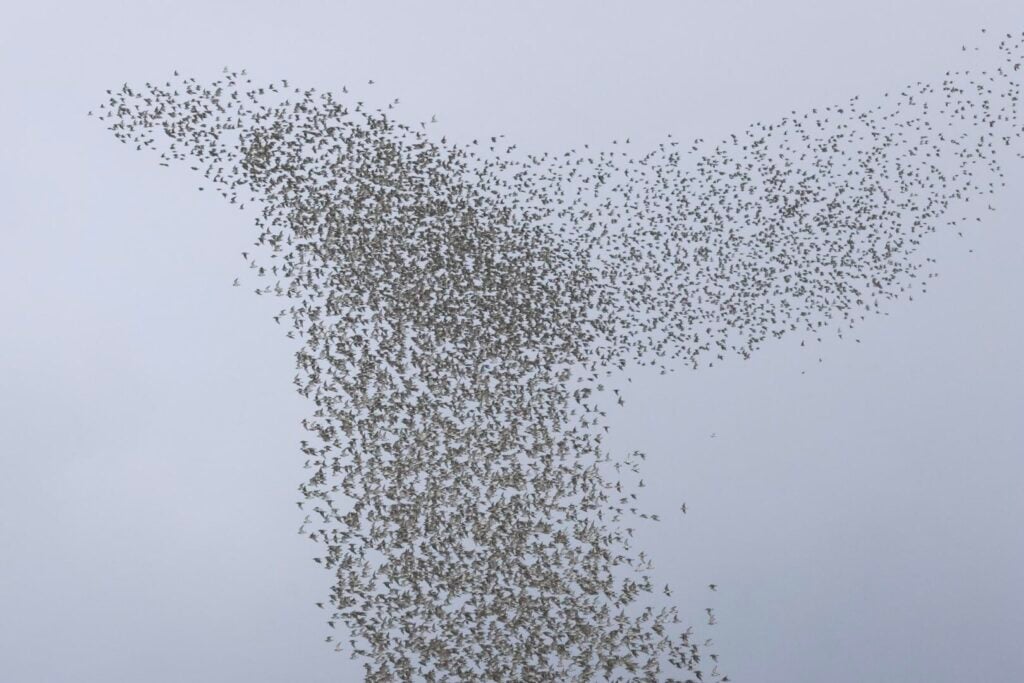
Eventually the panic seemed to subside. Some of the Knot already seemed to disappear back out round the edge of the Wash, looking for somewhere safer to land. As the tide was starting to recede, more mud would be reappearing further back. Others landed back down in the corner where they had been earlier.
We figured we had now seen the best of the show, so we walked over and in to Shore Hide. There were mostly Common Redshanks roosting on the rocks in the middle of the Pit today, where the Spotted Redshanks usually are. They were all facing away from us, into the wind, too. We did manage to find one Spotted Redshank on the island to the north of the hide with more Common Redshanks. It was asleep, and we couldn’t see its longer bill, but it was strikingly paler. A Little Stint was picking around on the shingle by the Redshanks too.
With the majority of the Knot staying out, there were not so many waders roosting on the Pit today. There were more on the island over the far side, further up. Scanning through, we found a couple of juvenile Curlew Sandpipers in with the Dunlin. They kept moving around though and were hard to get on, disappearing into the vegetation or into the groups of other waders. A few Turnstone were feeding in the vegetation too and there were several Ringed Plover here as well.
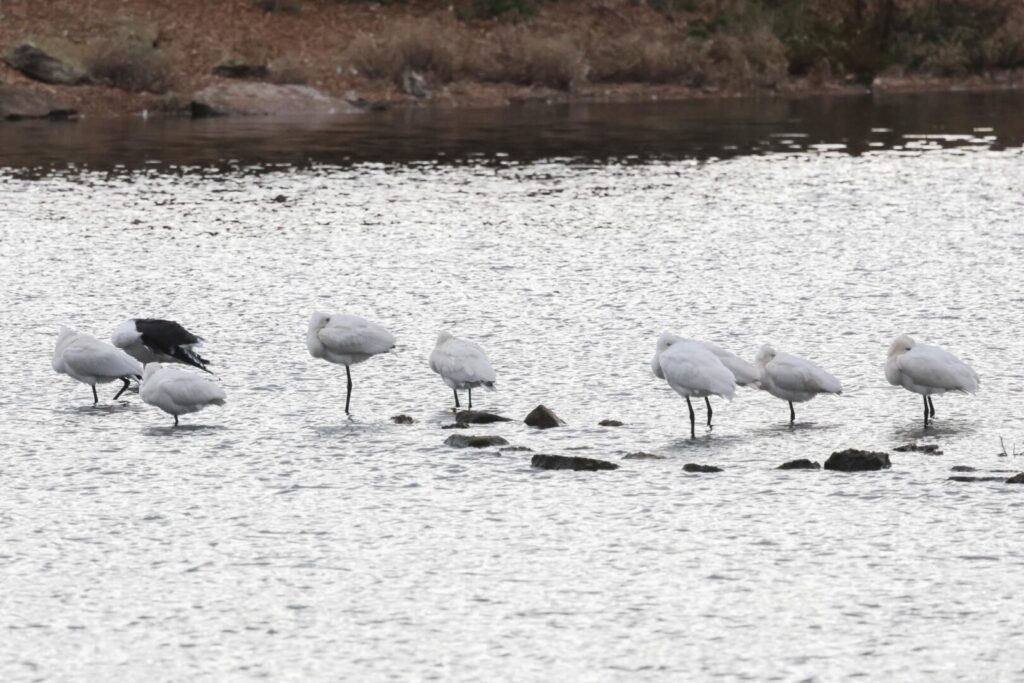
A group of Spoonbills, possibly the same ones we had seen flying out over the Wash earlier, were now roosting in the middle of the Pit. They were mostly asleep (which they usually are!) but several woke up at one point so we could actually see their bills.
The plan was to head round to the hides at the south end of the Pit next. When we got back outside we could see the tide had already gone out quite a long way. A quick glance over revealed a single Mediterranean Gull out on the mud with the other gulls, so we walked back over to the edge of the Wash instead. The Mediterranean Gull was in with several Black-headed Gulls and through the scope we could see its white wingtips. A Common Gull was in the same view too and a single Avocet was with the gulls. A couple of Sandwich Terns were much further out.
The waders had started to spread out across the bare mud now too. We looked through them and had good views of the various species. We found a couple of Bar-tailed Godwits still sporting some rusty breeding plumage and a couple of the Knot still had a hint of orange too. Again, the black faces of the Grey Plovers in summer plumage really stood out.
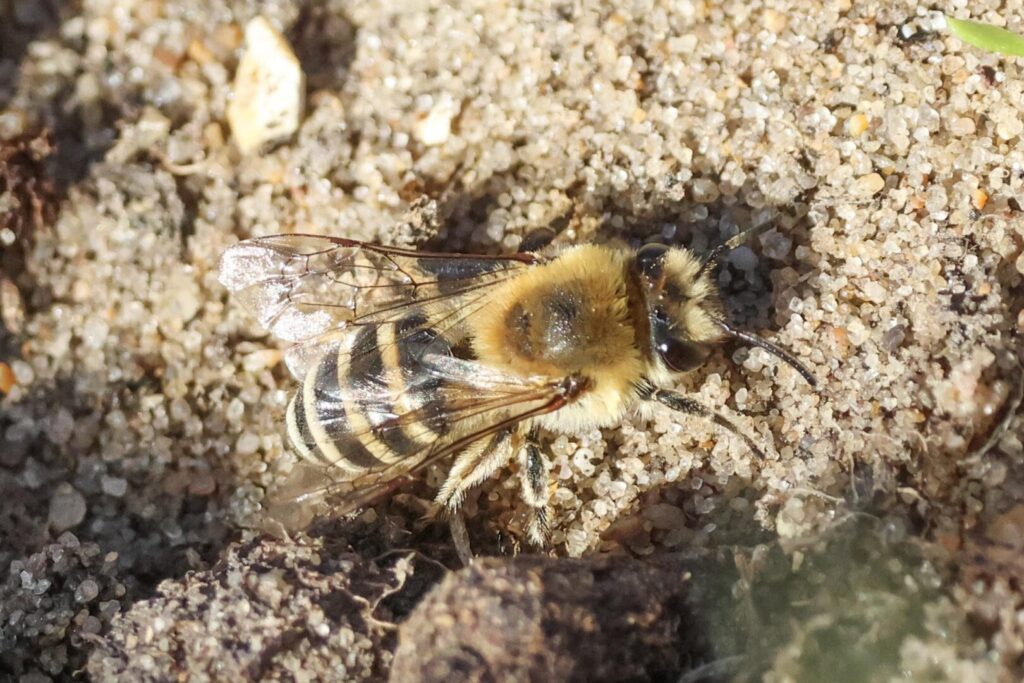
There still seemed to be lots of waders on the Pit, just some of the Oystercatchers were filing out in small groups now. We decided to head down to South Screen for a look. On the way, we stopped to admire a couple of Sea Aster Bees sunning themselves out of the wind in the entrance to the rabbit burrows.
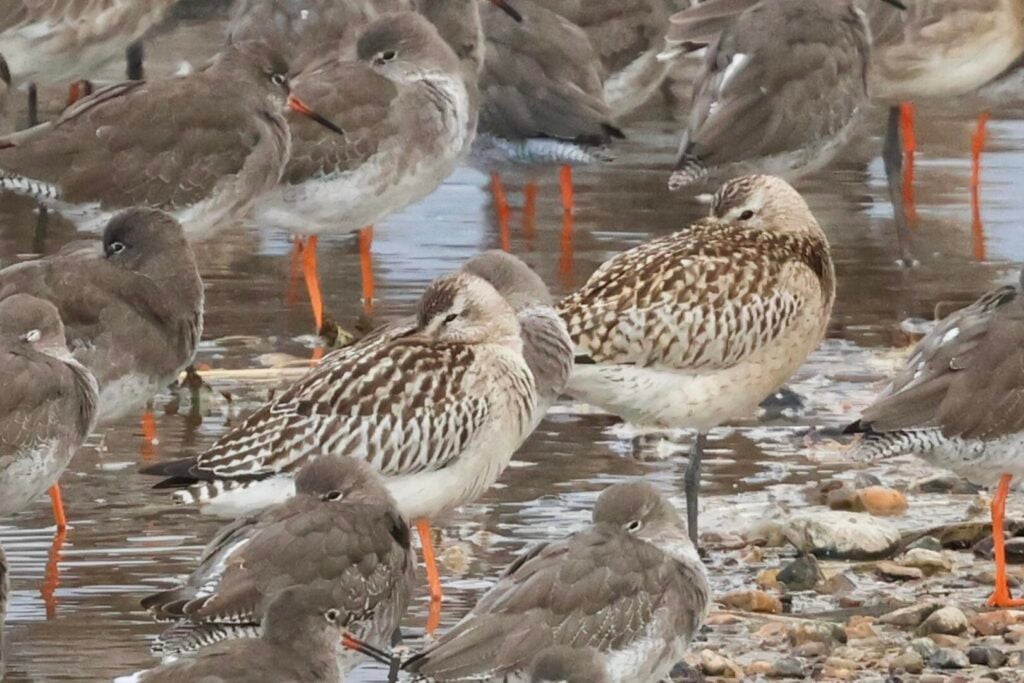
From South Screen, we could see there were lots of Oystercatchers still roosting on the shingle banks either side. It seemed to be mainly Common Redshanks and Black-tailed Godwits roosting on the islands this end. We could see a few strongly marked juvenile Bar-tailed Godwits in with them, a good comparison of the two godwit species side by side. There were only a few Knot on here today, and they tended to get lost in between the larger waders, but we did manage to find one on the edge to get in the scope.
A Little Stint appeared on the edge of one of the islands. It flew across and landed on the middle of the next one over, where it proceeded to feed. We had a good view of it picking around a small puddle in the middle of the shingle, dwarfed by all the other waders around it. We got the scope on a Common Sandpiper which was feeding on the same island too.

The waders were starting to fly back out to the Wash. Several of the Redshanks woke up and started preening. After a few seconds they flew up calling and took more of the Redshanks with them. Looking back out to the middle of the Pit, we could see just one bird left where the redshanks had been earlier. It was awake and we could see it was a single Spotted Redshank left behind. We could see its longer, needle-fine bill.
It started to rain but we could see it was just a shower and would quickly pass over. We were going to continue admiring the waders but a Marsh Harrier flew in from the Wash and spooked them. They all flew off and the islands were left empty. We waited for the rain to stop and then walked back.
We drove round to Titchwell next. Thankfully the car park wasn’t full today, although it was still very busy. It was time for lunch, which we ate in the sunshine in the picnic area. A Parent Bug landed one one of the group’s lunch bag so we transferred it carefully to the nettles. to Afterwards, we walked out to explore the reserve.
Out of the trees along the main West Bank, the NE wind wasn’t as blustery or as chilly as we feared. A Cetti’s Warbler shouted from the reedbed but typically remained well hidden. There were lots of Gadwall on the reedbed pool, the drakes already emerging from their dull eclipse plumage, but not much else.
The first compartment of the Freshmarsh looked rather quiet too. We walked on past Island Hide and set up the scope on a small group of Ruff out in the water, admiring their neatly scalloped back feathers. Four Common Snipe were feeding around the front of one of the island, between the sleeping Teal. Another couple of Snipe were along the edge of the bund beyond, where a Grey Heron had found a sheltered spot in the sunshine to stand. There were just a few Avocets, Black-tailed Godwits and gulls further back.
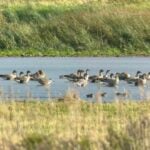
On the next compartment, it was mainly Greylags and more brown ducks. A couple of Ruff were feeding on the mud, one with a limp due to a damaged leg. A few Lapwings were out on the saltmarsh the other side, surprisingly well camouflaged in the vegetation. A couple of Great White Egrets flew across over the reedbed.
There had been a Curlew Sandpiper on the eastern compartment, so we walked on round to Parrinder Hide to see if we could find it. There were more Ruff out on the mud from here and we then found some Dunlin over by the East Bank. We were looking through the tops of the reeds but we could see the Curlew Sandpiper with them. We went up to the terrace, but even though we could see over the reeds now it was still tricky to make out due to the distance and some heat haze.
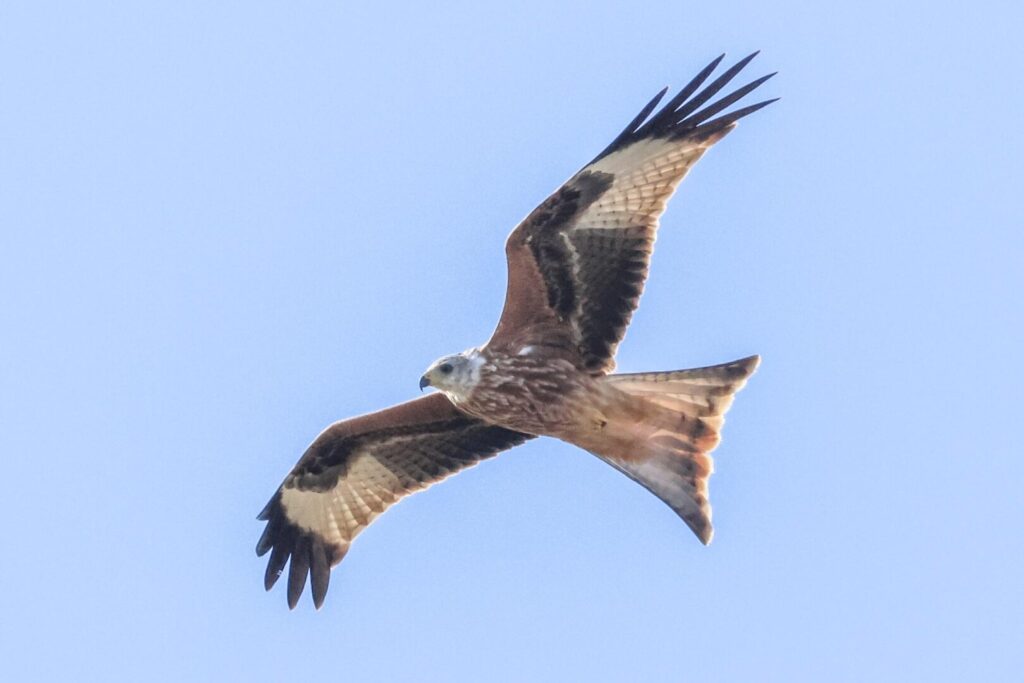
When the Dunlin all flew out to the middle of the scrape, we thought we would get a better view but the Curlew Sandpiper disappeared. Several of the Dunlin disappeared behind the various islands, so we figured it might just be out of view. We decided to walk round to try from the far end of Autumn Trail. Back out to the main path, a Red Kite flew in from the saltmarsh in front of us and continued on out over the scrapes.
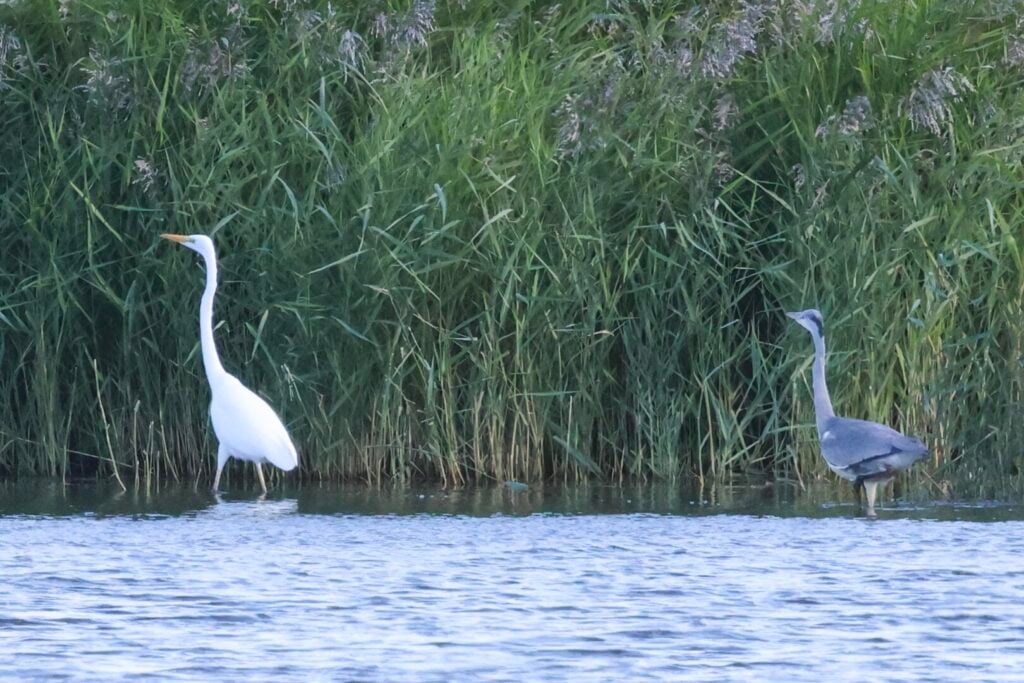
Back at the Reedbed Pool, one of the Great White Egrets was out in the water in the middle now. A young Grey Heron landed next to it, giving a good size comparison – the Great White Egret was noticeably bigger. The Grey Heron followed the egret over to the edge of the reeds and then seemed to walk round after it, a few metres behind. A Marsh Harrier drifted over.
We cut round on Meadow Trail. There were several Migrant Hawkers buzzing round over the wildflower meadow and Common Darters basking on the boardwalk. We stopped to look at a Willow Emerald damselfly resting on the sallows. With a few things arriving along the coast this afternoon, we were hoping for migrants in the bushes but it was very quiet here. We could just hear one or two Chiffchaffs calling.
Round on the East Trail, we passed the warden who was out looking for migrants too. There were a couple of Wall Brown butterflies enjoying the sunshine on the ragwort flowers. We stopped to look at a flock of tits working its way through the bushes by Willow Wood but they quickly disappeared off towards Briarfields.
Round to the end of Autumn Trail, we couldn’t even see the Dunlin at first. It looked very quiet, like there had been a bit of a clearout. Perhaps the Red Kite had spooked everything? The Dunlin did eventually start to reappear from behind the islands but there was no sign of the Curlew Sandpiper with them now.
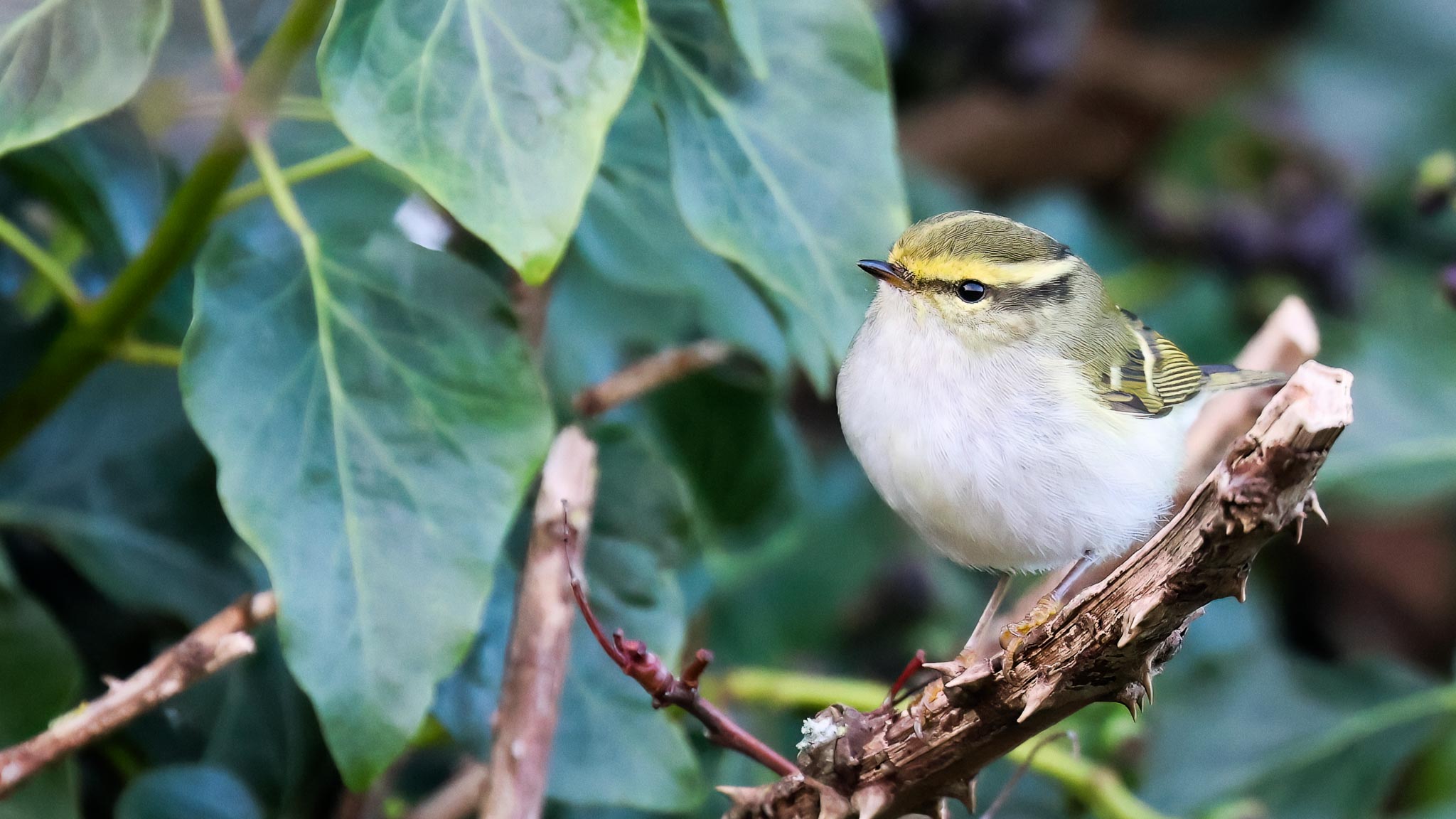
It had been a very early start this morning and unfortunately it was not time to head back. As we walk round on East Trail, we heard the warden shout to us from behind. He had found a Yellow-browed Warbler by the back gate into Briarfields and kindly wanted to let us know in case we wanted to try to see it. It sounded like it was elusive, so there was every chance we might not be able to refind it, and it would almost certainly need some time looking. It had been a long day and everyone was tired, so we decided to stick to the plan and head back.
It had been a wonderful day – a Wader Spectacular which had lived up to its billing once again, and some other nice autumn waders to boot.