Day 3 of a 3-day Summer Tour in Norfolk. It was another bright and sunny morning but clouded over in the afternoon – just thick enough for a few brief drops of rain later on. It was cooler too, only reaching a maximum of 20C on the coast with the light northerly wind.
Our destination for the morning was Snettisham. There was a big tide today. Not enough for a full Spectacular, but enough to push a lot of the waders in towards the shore. When we got out to the edge of the Wash, the tide was already in.
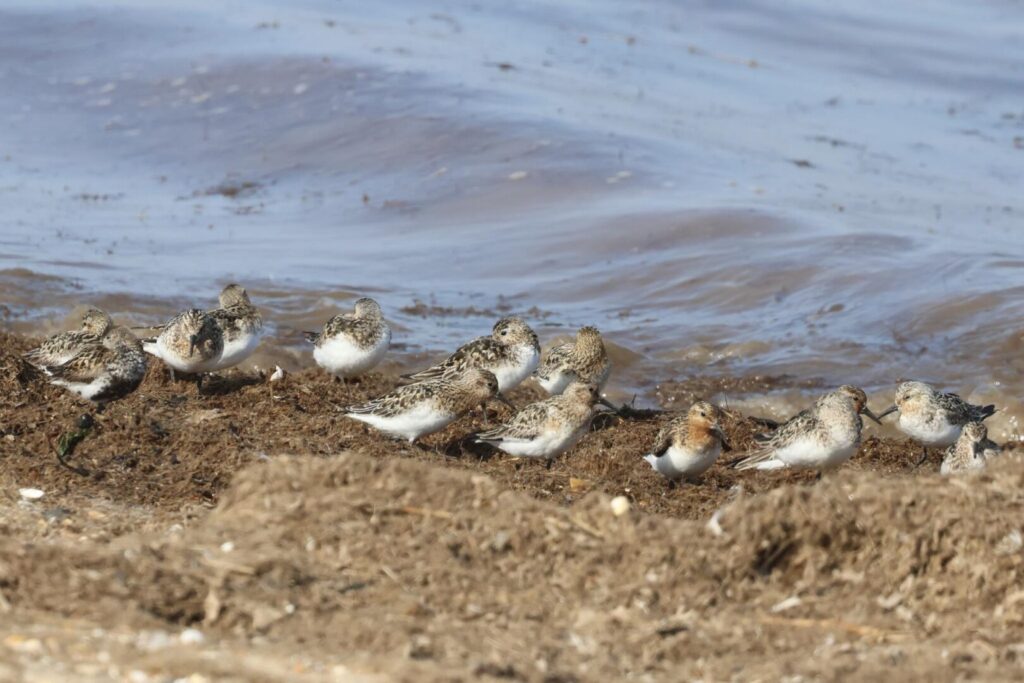
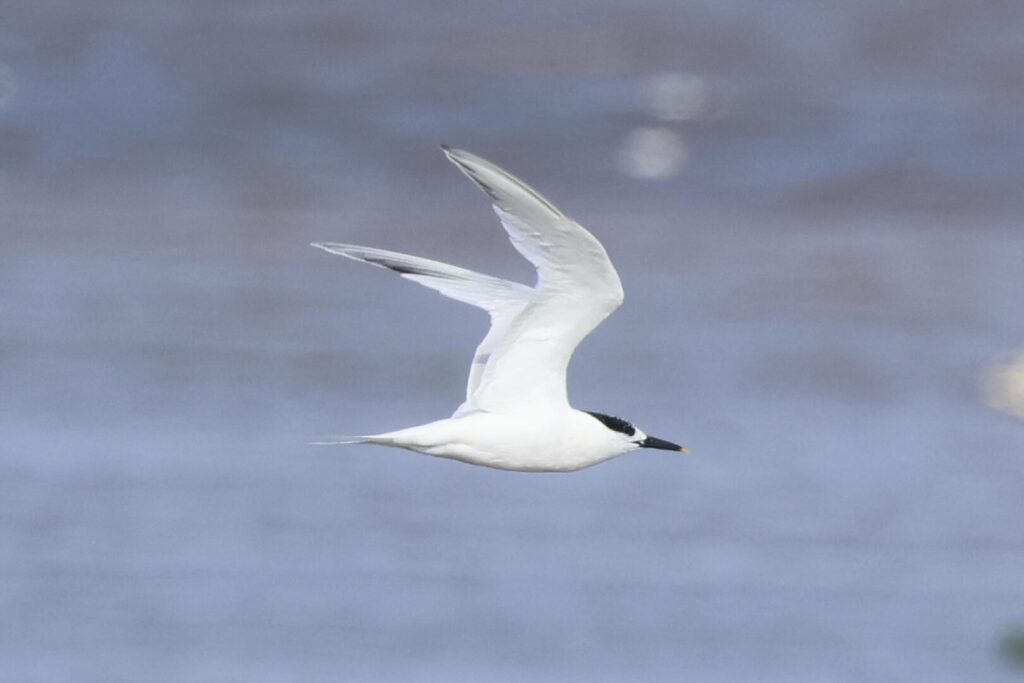
As we made out way down along the seawall, a small group of Sanderling was roosting on the shingle with a couple of Dunlin and Ringed Plovers. Lots of Oystercatchers were scattered down along the shore too. Noisy Sandwich Terns were flying up and down calling, several carrying fish in their bills. More were roosting on the beach further down.
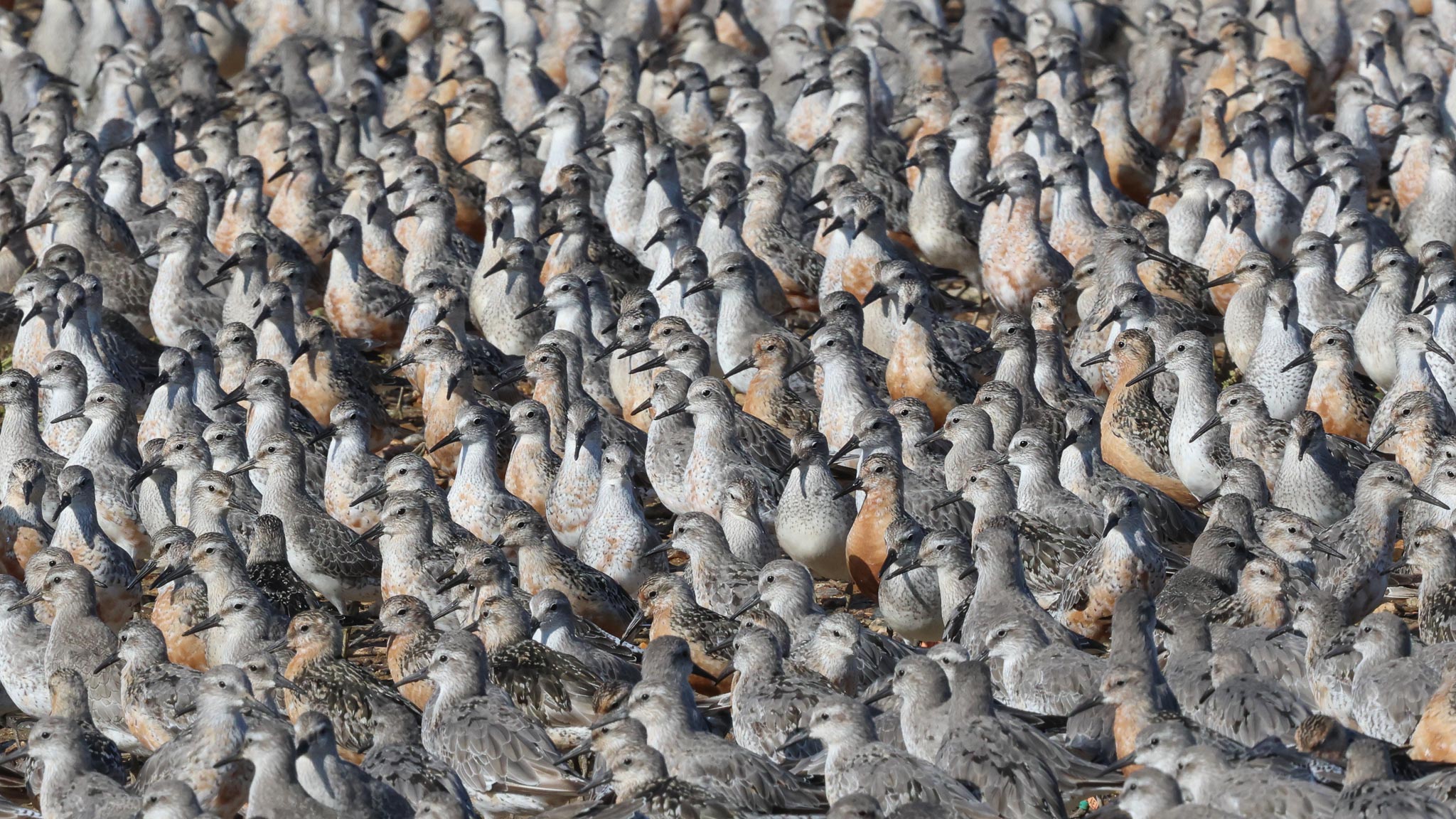
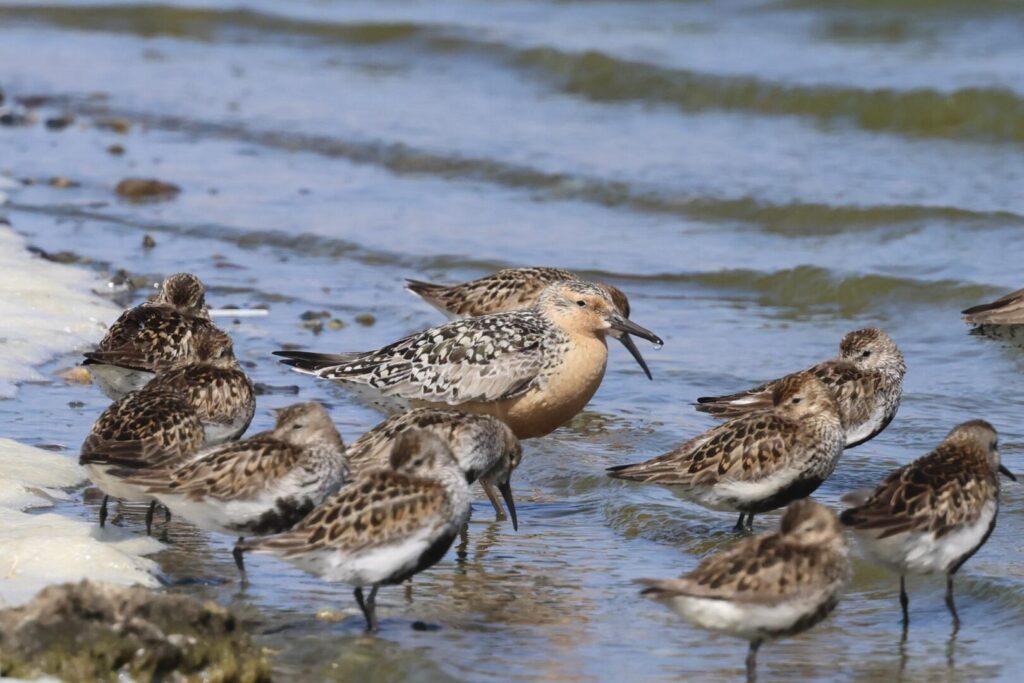
With the tide in, we carried on straight down to the far end. The last corner of mud was still dry and lots of Oystercatchers were standing out in the middle of it. Further back, we could see a large gathering of Curlews roosting and several Bar-tailed Godwits behind them on the edge of the saltmarsh. Through the scopes, we could see some of the Bar-tailed Godwits were still in full rusty breeding plumage. A few orange summer Knot (actually they do look like there full name, Red Knot now) were scattered in amongst them.
Four Ringed Plovers walked down along the shingle towards us. A few small groups of Dunlin flew out over the wet mud. A couple of Common Sandpipers were feeding along the muddy edge of the channel at the front.

There were more Sandwich Terns flying round in front of us here and several more down on the wet mud. It was good to see several juveniles, presumably having fledged already from up along the coast. A few Common Terns were flying in and out between the mud and the Pit behind us and we picked up three Little Terns out on the Wash too. There were lots of Mediterranean Gulls here, including a couple of fresh scaly juveniles.
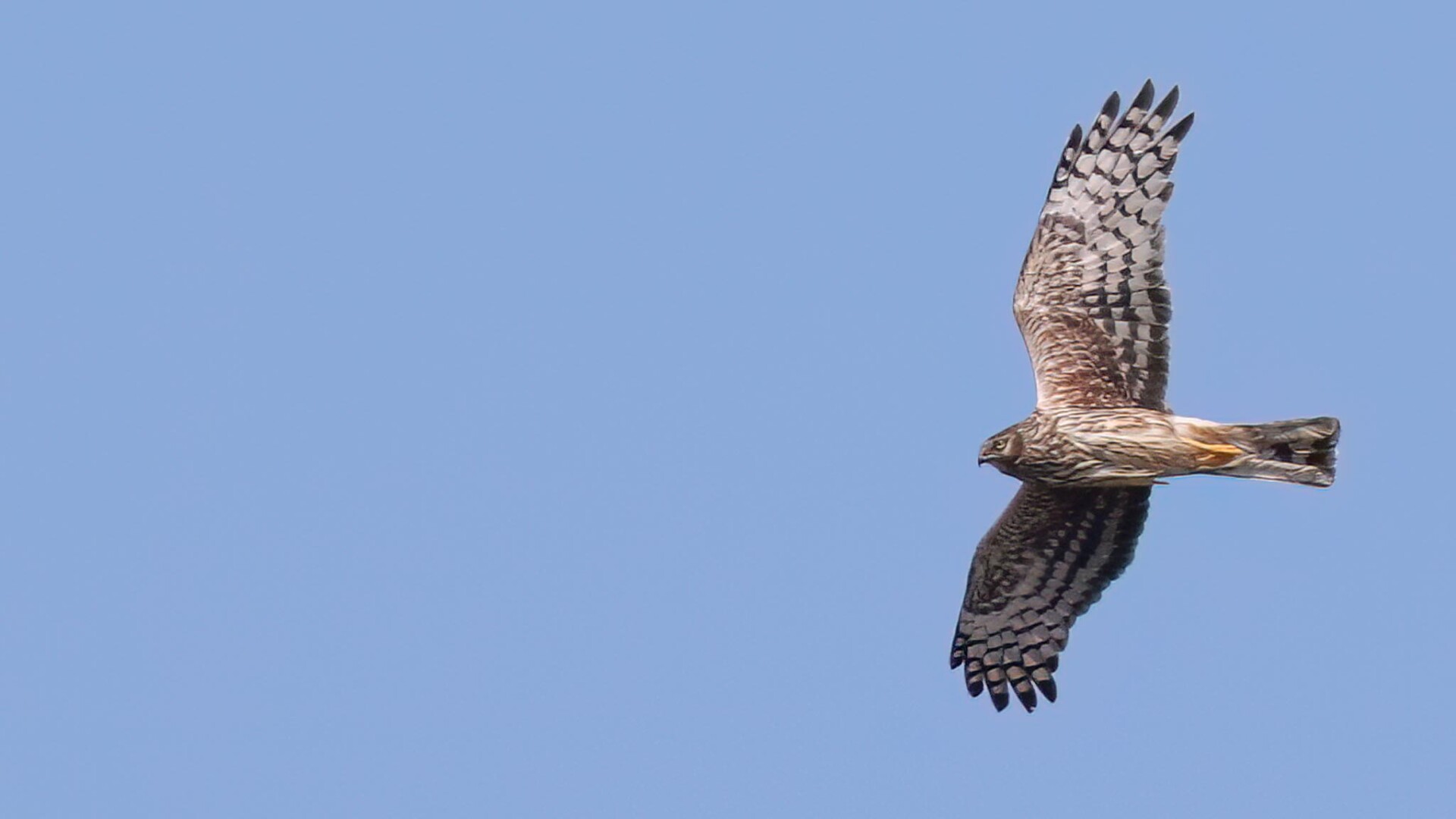
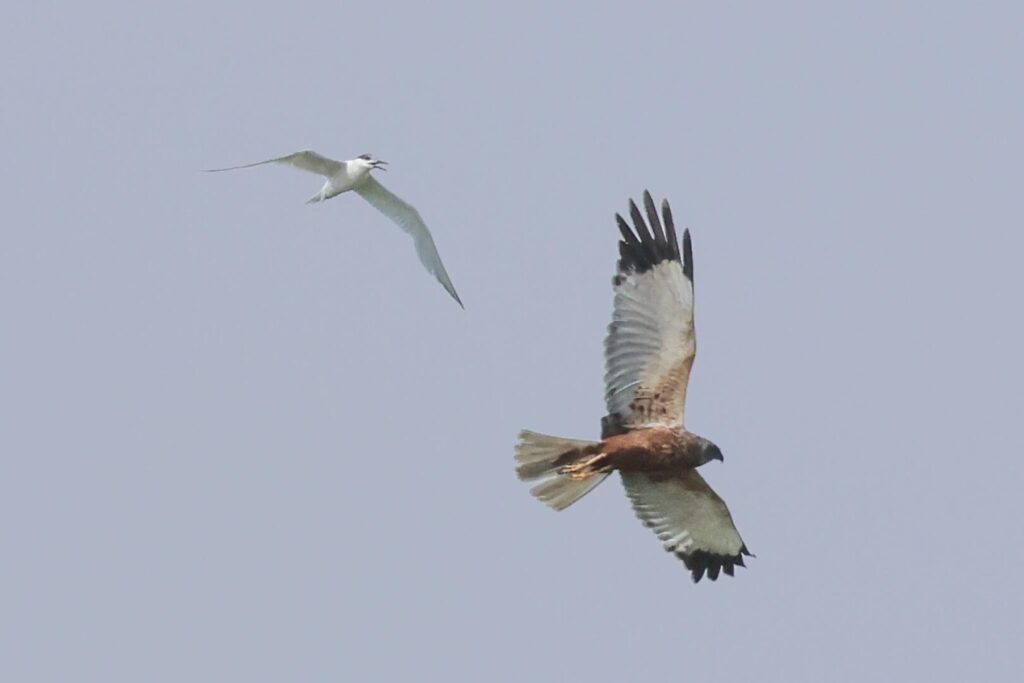
There were lots of Shelduck on the mud and out on the water beyond and a gaggle of Canada Geese, the first we had seen this weekend. A male Marsh Harrier drifted in from the left, over the saltmarsh, but was chased off by the Sandwich Terns before it could get to us.
In to Shore Hide and the Spotted Redshanks were in their usual spot, roosting on the rocks in the middle with the Cormorants. They are already moulting, their black summer underparts now patchy with white. When they woke up from time to time, we could see their longer, needle-fine bills.
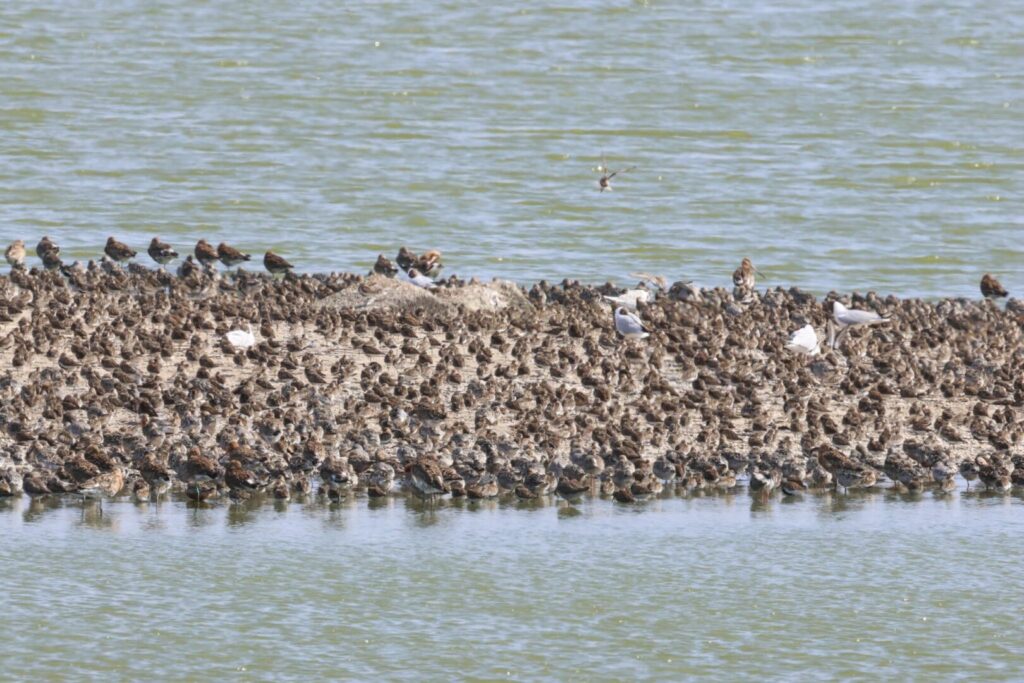
The small island to the north of the hide was packed with waders. Dunlin, Knot, Black-tailed Godwits and Redshanks all roosting together. We picked out a single Turnstone in with them, its white summer head giving it away. More waders flew up in large flocks from the southern end of the Pit and joined the ones which were already there. There had been some Curlew Sandpipers and a Little Stint here in the last few days. We scanned back and forth through the flock but couldn’t find anything different in with the regular waders.
A couple of local RSPB volunteers, friends of ours, came in. Apparently they had been told by someone leaving that the different waders were down in the flocks at the far end of the Pit, so we hurried down there before the tide went out too far and they might return back to the Wash.
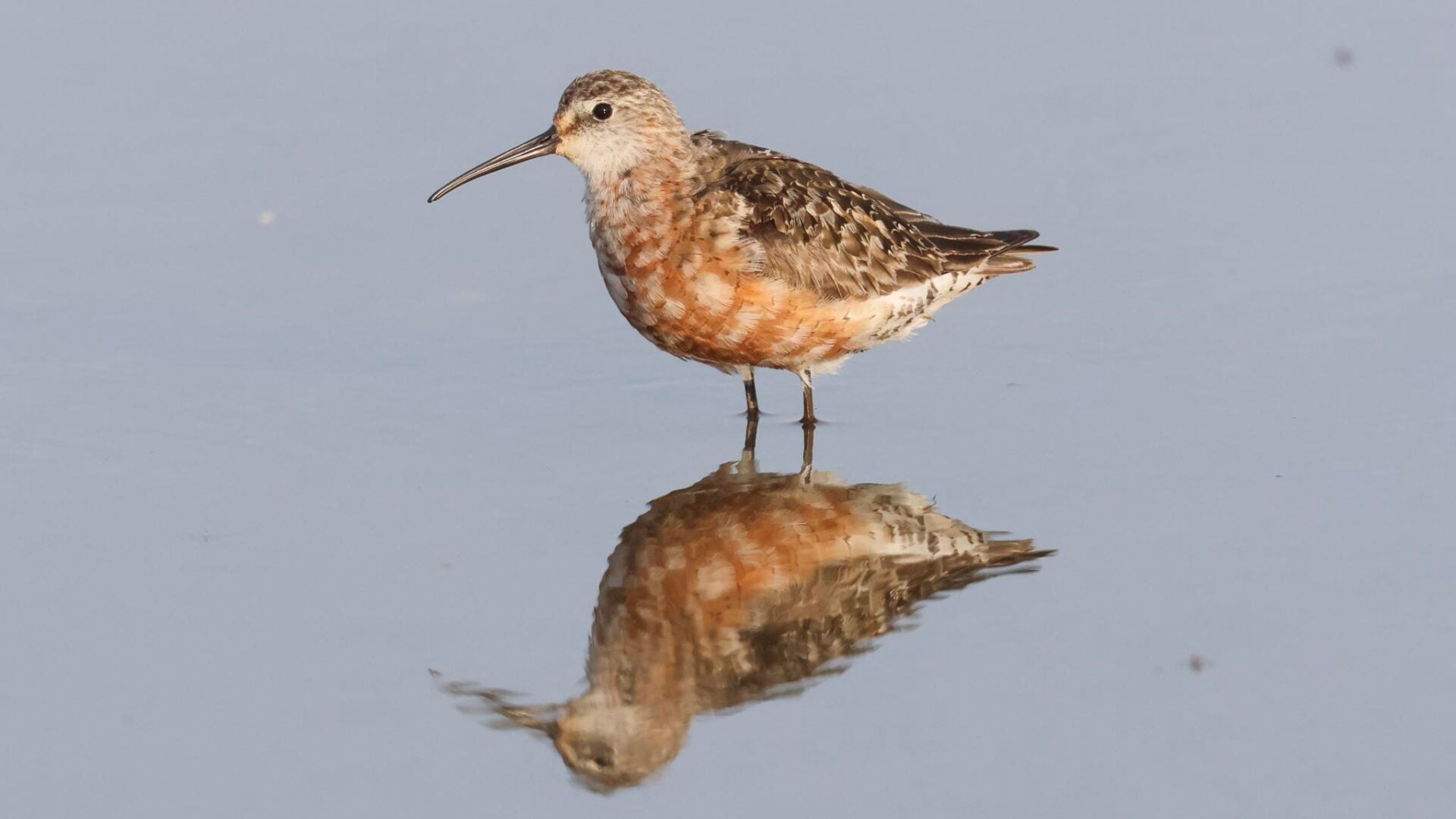
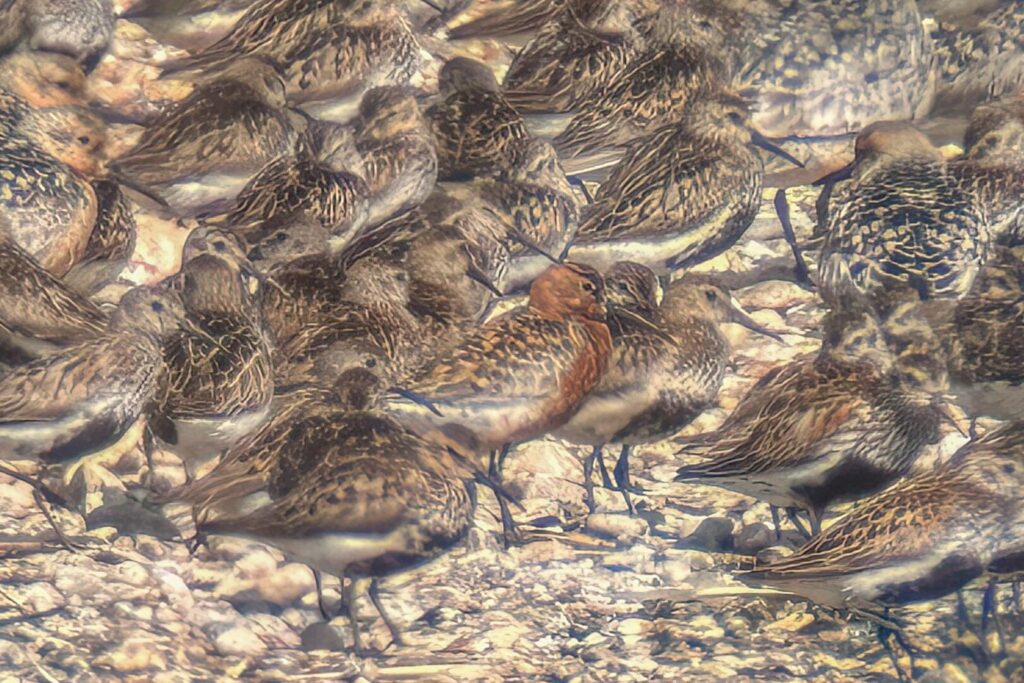
From South Screen, there were lots more waders gathered on the islands and the edges of the Pit. At first, all we could see were more Dunlin, Knot, Black-tailed Godwits and Redshank. Eventually we picked up the Curlew Sandpiper roosting in with the furthest group of Dunlin out on the bank. A smart rusty adult still in full breeding plumage. We got it in the scope, although it was mostly asleep and hard to see.
Then a Moorhen walked along the shore, and all the waders scattered ahead of it. The Curlew Sandpiper woke up and hurried into the water with the Dunlin. The Dunlin then spooked and flew and we thought that was it, but the Curlew Sandpiper landed on the island much closer, and we had an even better view of it now.
Then the Little Stint appeared with the Dunlin feeding in the shallow water on the edge of the shingle, away to our right. We got it in scopes from here, another smart adult. We realised it would be right in front of ‘Knots Landing’ hide so we hurried round there for a closer look. Just as we arrived, it walked up onto the shingle island behind and went to sleep!
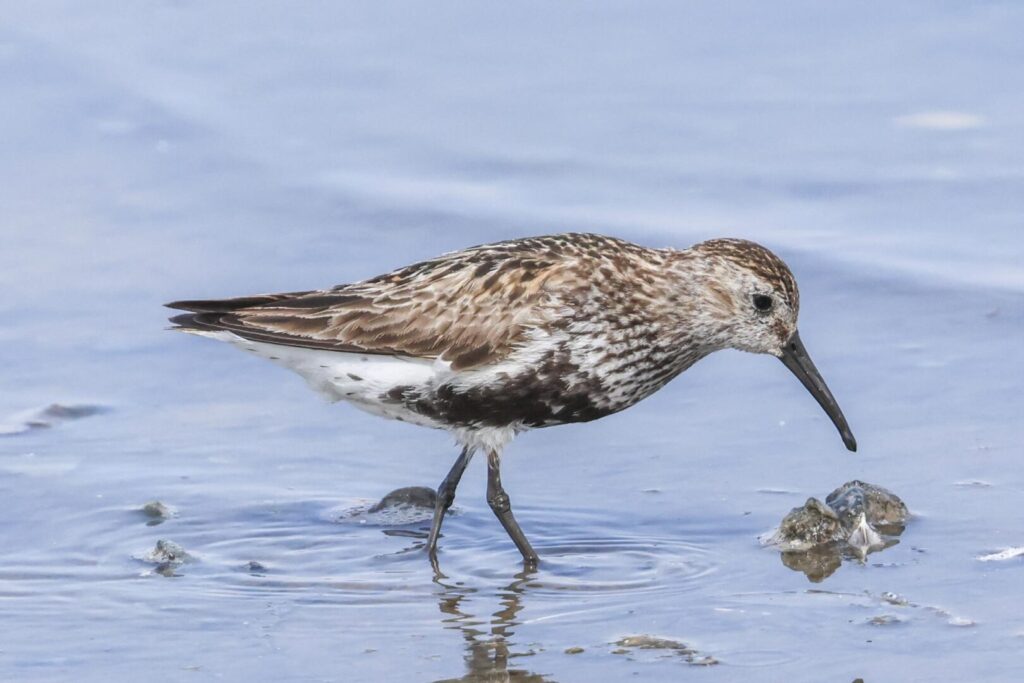
We did have lovely views of several Dunlin feeding right in front of the hide, still sporting their black summer bellies. A few orange Knot and rusty Black-tailed Godwits were scattered around the edges. The Curlew Sandpiper was now asleep on the island in with the Dunlin, tucked down and very hard to see. It did stand up briefly a couple of times. There were nine Spoonbills roosting on the bank away to the right.
After a while, the Little Stint woke up again. It walked down to the edge of the island and then worked its way straight towards us, picking at food items in the foam on the water. It was a little wary of the Dunlin, and turned back a couple of times, but eventually came down to the shallow water right below the hide. Stunning views.

Eventually the Little Stint walked back and went to sleep again. We were hoping the Curlew Sandpiper might do the same, and come out to feed at the front of the island, but it had shown no sign of waking up. Then a Mallard flew in low over the bank behind the hide and everything spooked. The flocks of waders all flew off up over the Pit. Some landed on the island at the north but most went back out to the Wash.
The waders had been slow to go back out this morning – nice for us, as we had more time to enjoy them close up on the Pit. As we walked back, the tide was now well out and we could see nothing but mud. A couple of Mediterranean Gulls flew over our heads calling.
We made our way round to Titchwell next and when we arrived, it was time for lunch. A Speckled Wood butterfly was sunning itself on the bench in the picnic area and the two tables were occupied too, but with picnickers. We carried on to the Visitor Centre and used the tables there instead today.
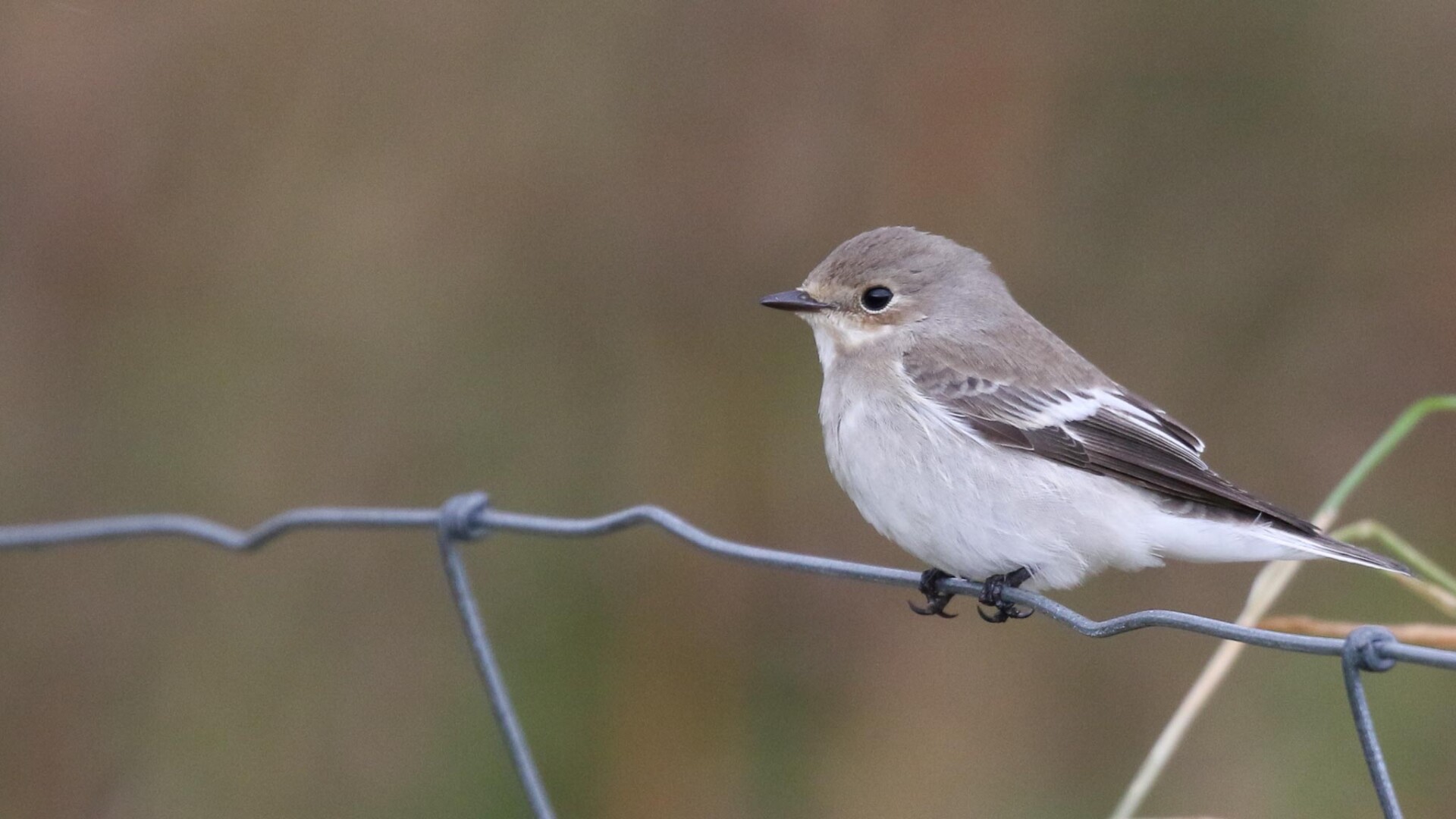
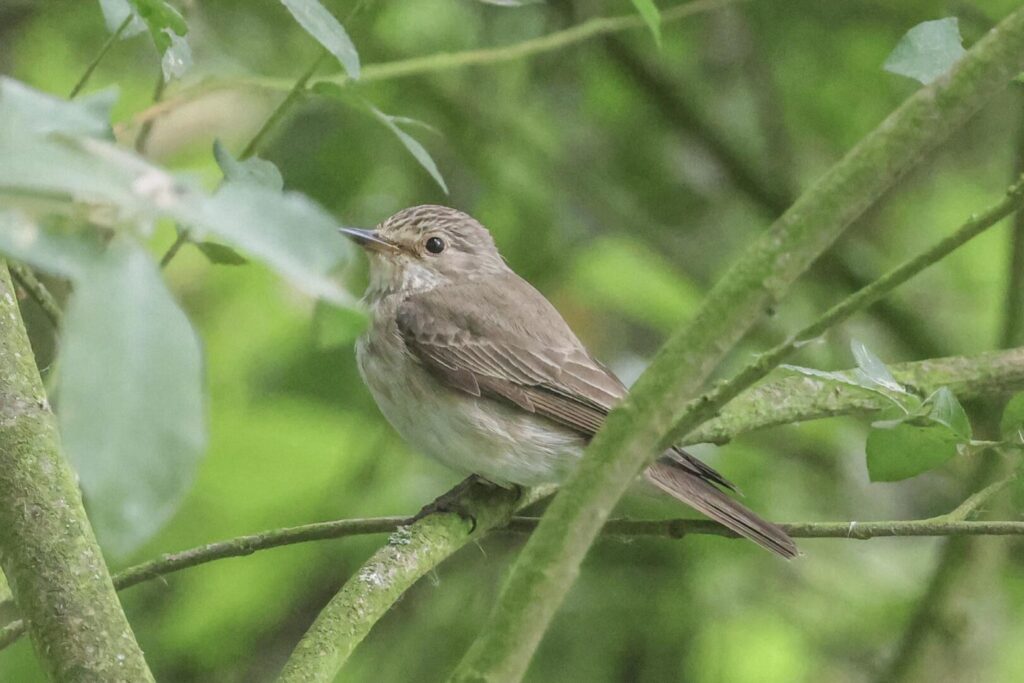
After lunch, we made our way back to the minibus to get the scopes and drop our bags. On the way, we stopped to look for the Spotted Flycatchers. We didn’t have to wait too long before one flew in and then posed nicely in the trees and on a couple of branches above our heads. Two pairs have had at least six breeding attempts here so far this year and all up to now have been predated. Hopefully this time they will be able to fledge a brood – fingers crossed!
We then headed out onto the reserve. Just beyond the Visitor Centre, we heard a Goldcrest calling in the trees. We stopped to look and could see it and a Treecreeper up in the tall hawthorn bushes. They were hard to see though, in all the dense leaves.
As we walked on past the reedbed, a Cetti’s Warbler called, the first we had heard this weekend. They always go quiet at the end of the breeding season. A couple of Marsh Harriers were hanging in the air right over the back, over Brancaster marsh.
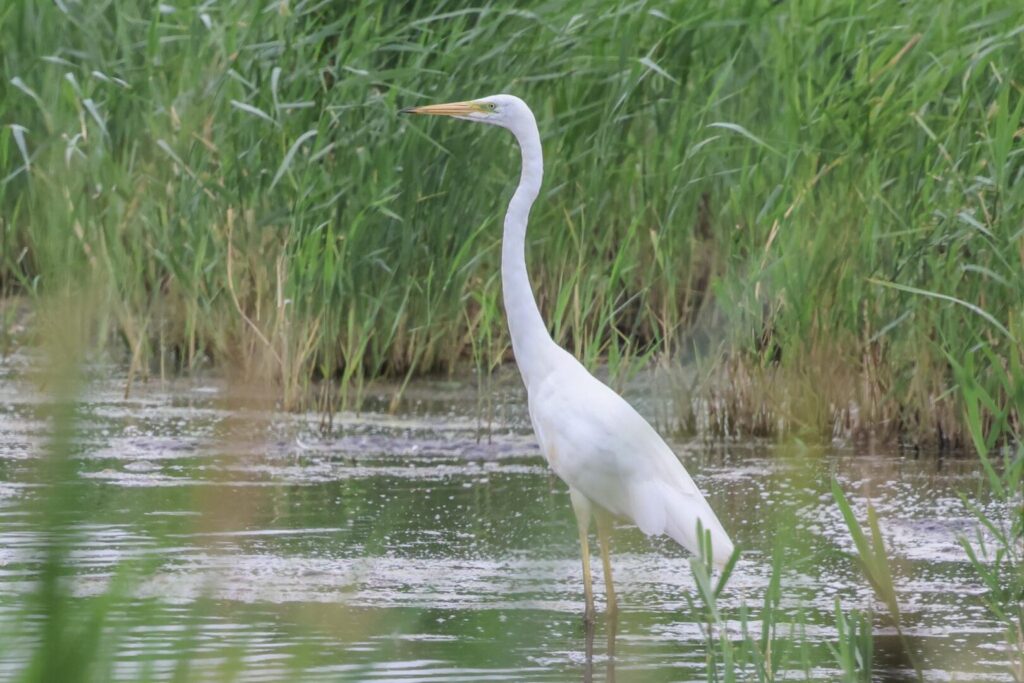
A Great White Egret flew in over the water and landed again on the reedbed pool. When a second flew in too, the first chased it off towards the Freshmarsh, then landed back down on the edge of the reeds. A single Tufted Duck diving at the front was a new bird for the trip. A family of Little Grebes was right at the back.
On to Island Hide, there were lots of Avocets out on the first compartment of the Freshmarsh. A big group of mostly Icelandic Black-tailed Godwits was feeding in the water at the back. We picked up one with a set of colour rings. A lime green ring with a black ‘E’ identified it as a Continental Black-tailed Godwit from Welney. It was noticeably larger and longer billed, and had already largely moulted into non-breeding plumage. A single Spoonbill was sleeping out in the water too.

A single male Ruff was asleep on the closest island at first, although it did eventually wake up. Another was walking round the edge of the next island over. The male Ruffs always come back early, and the first thing they do is lose their ornate ruffs and then moult into non-breeding plumage. While they are moulting, they are sometimes referred to as ‘Scruffs’, as they do look a bit messy.
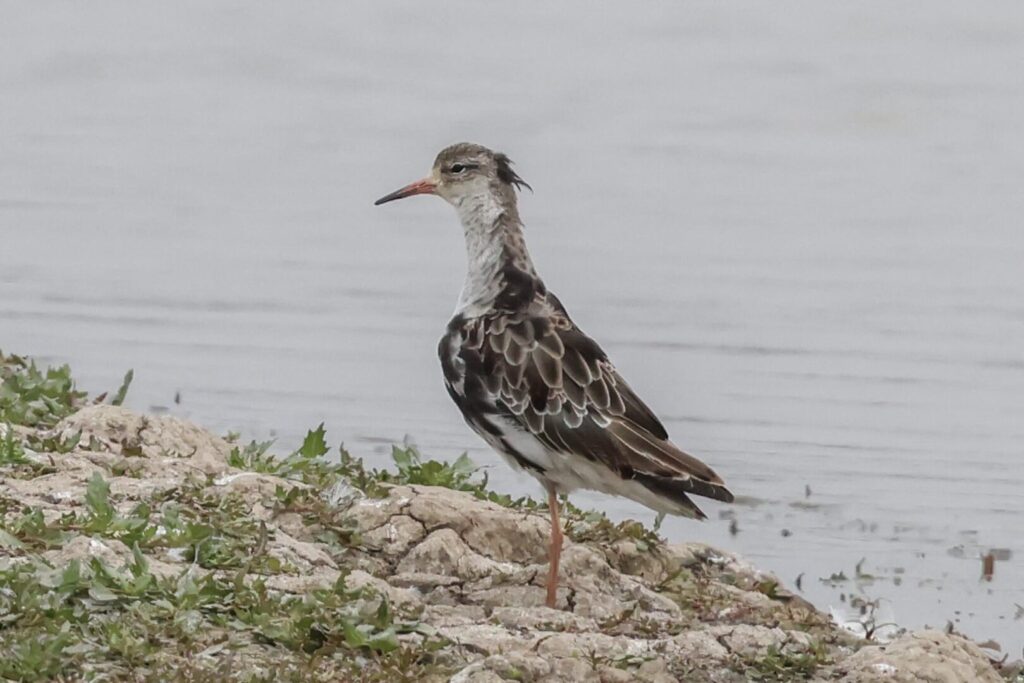
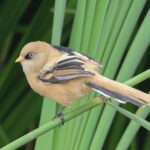
Several Common Terns were still out on the islands. We had hoped to find Bearded Tits on the mud on the edge of the reeds but the water level has been raised again and there isn’t much mud here now. We made our way back out onto the West Bank.
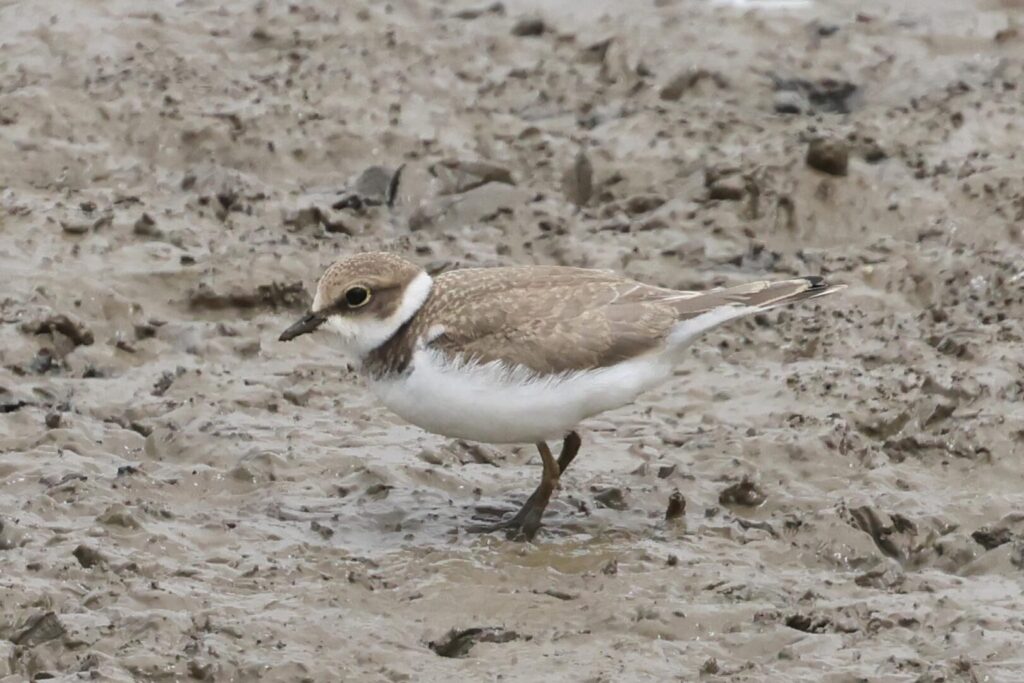
A lone Common Sandpiper was on the next compartment over. There were more Ruff here too. Most were males again but there was a single female with them, known as a ‘Reeve’, noticeably smaller and in different, dark patterned breeding plumage. Several Little Ringed Plovers were around the edges of the mud, mostly juveniles. Brown headed, with just a ghosting of the golden yellow eye-ring.
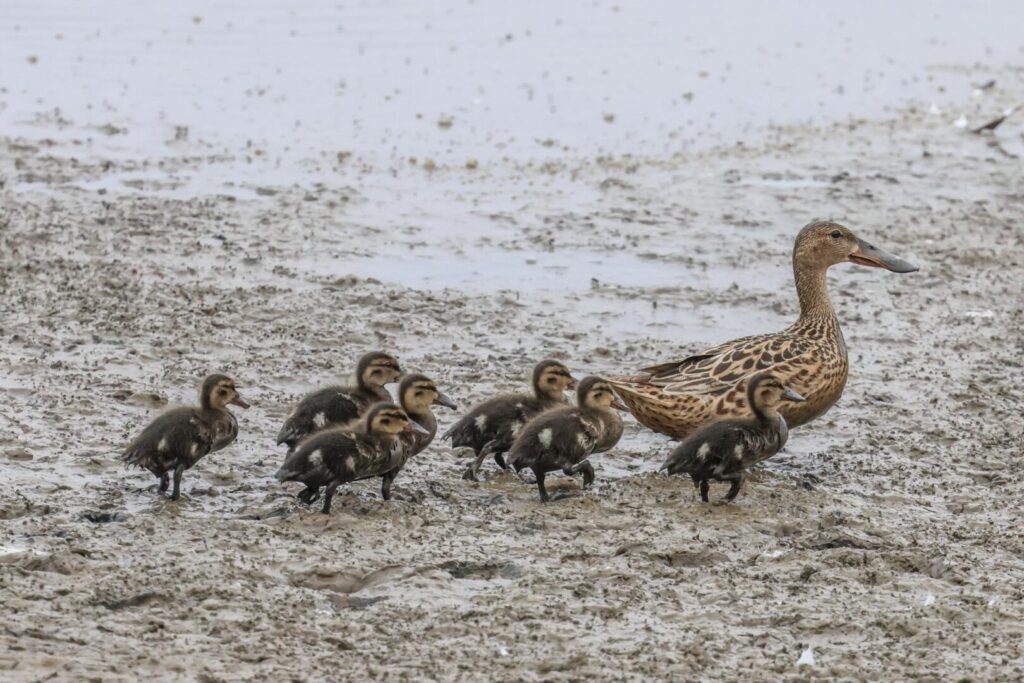
Several Linnets flew in to drink on the edge of the mud. One of the group spotted a male Yellow Wagtail which came down to bathe in the shallow water before preening on the grass nearby. A female Shoveler with seven small ducklings walked past, right down in front of us. A scarce breeder here, so always nice to see.
One of the volunteers had told us over lunch that he had seen a couple of Wood Sandpipers in the far corner of the Freshmarsh. We weren’t sure they would be visible from Parrinder Hide, so looking over there from the path now we could make out several very distantly. There looked to be five of them now.
On to Parrinder, we tried first from the terrace. We could just make out one Wood Sandpiper when we arrived but it quickly disappeared behind reeds, before we could get it in the scope. The direction it was going, we thought it might come into view from the hide, so we went in. Three Wood Sandpipers then emerged from the behind the reeds. They were still rather distant but we had fairly good views in the scopes. Then for no apparent reason, all five flew up and we watched them disappear off south-east. Migration resumed, after a feed up here.
There was a distant Spotted Redshank out on the back of the compartment, another moulting adult with black and white underparts. A single Golden Plover was walking around on Avocet Island and there were more Little Ringed Plovers and Ringed Plovers scattered around.
We just had enough time for a quick walk out to the beach. As we passed Volunteer Marsh, a Curlew was feeding in the channel right next to the main path. It walked up onto the mud on the edge of the saltmarsh beyond. There was not much down in the wider channel at the far end, perhaps not a surprise as it was a long time after high tide now.
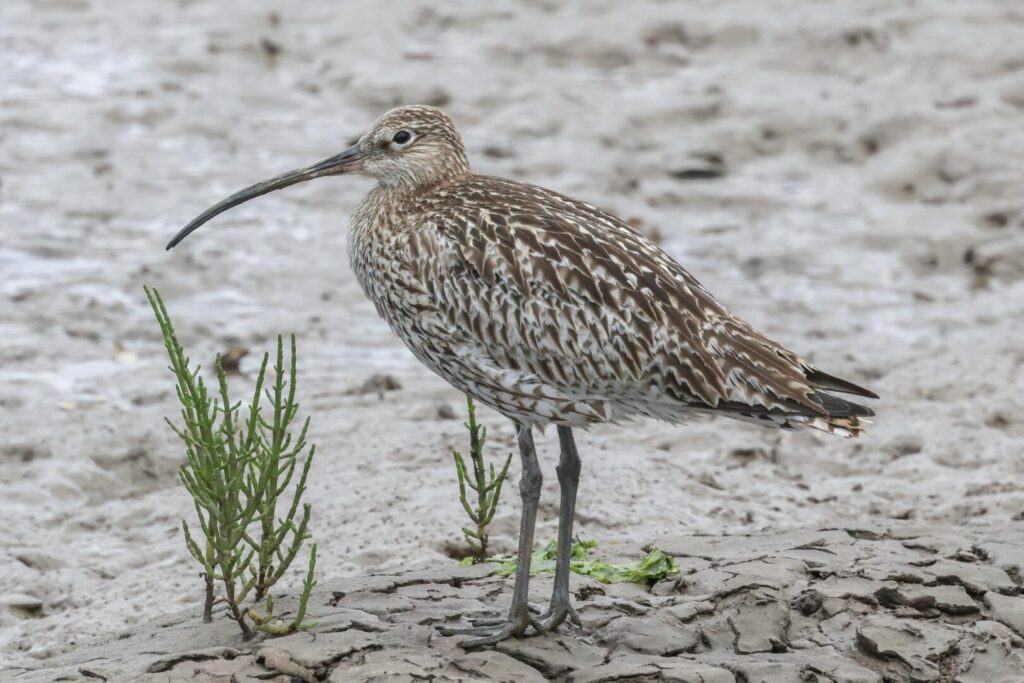
There was very little on the Tidal Pool, so we pressed on quickly to the beach. We could see lots of Black-tailed Godwits and several non-breeding Bar-tailed Godwits on the mussel beds, along with a couple more Curlews.
Three Great Crested Grebes were out on the sea and two distant Gannets flew past. The cloud had been building and it was just enough for a few spits of rain now. Several of the group had already set off back when we found a single Common Scoter on the water. A dark brown first summer male with a ghosting of yellow on its bill.
Then it was a quick walk back to the car park. Time to head back to Hindolveston, so those who were heading home tonight could get away in good time. It had been a very productive three days of Summer Tour with some very good birds, despite the hot weather at times.