A single day group Summer Tour today. The weather was mixed but nowhere near as bad as was forecast, which had been fairly apocalyptic. There was some light rain for the first half on the morning and the odd shower later, but no sign of the predicted thunderstorms. We spent the day on the North Norfolk coast looking for returning migrant waders and some of our regular breeding birds.
It was raining when we met in Hindolveston and drove down to the coast at Cley. With the forecast for heavy rain all morning, we decided to head to the hides and hope it brightened up as forecast in the afternoon. It was only light though when we arrived and nothing to stop us from walking across the road and out to Bishop Hide.
We were hoping there might be some waders dropping in on the scrapes in the rain. On the walk out along the Skirts Path and out to the hide, there were lots of warblers flying in and out of the vegetation, Reed Warblers and Sedge Warblers. Presumably it was wet lower down in the reeds and they had come out to feed in the more open flowers in the rain.
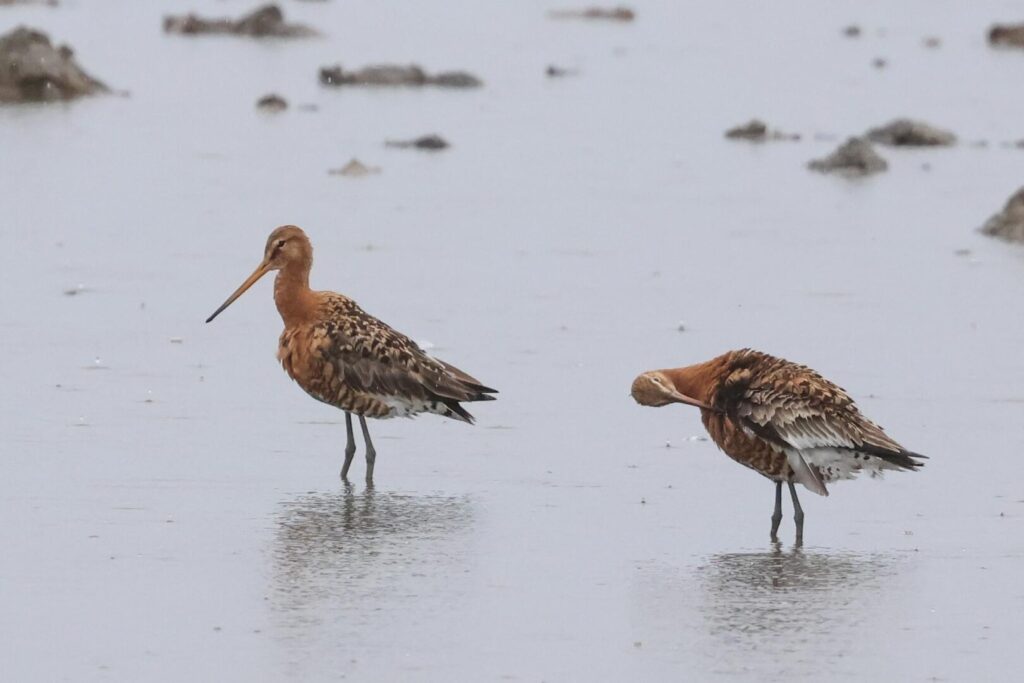
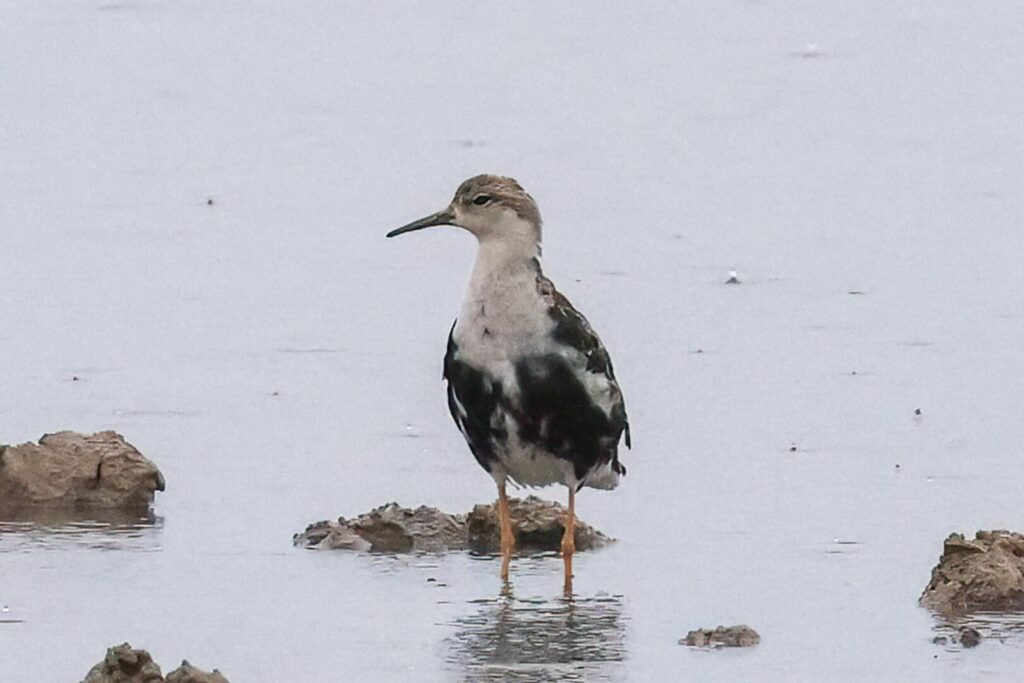
There was a nice selection of birds from the hide but nothing obviously fresh in. Several smart Black-tailed Godwits were feeding in front of the hide, probably recently returned from Iceland and still sporting their bright rusty breeding plumage. We could see at least a dozen different Ruff too, mostly males at the moment and quickly moulting to non-breeding plumage. They are looking decidedly scruffy at the moment, and no two are alike.
A couple of Common Sandpipers had apparently been feeding in front of the hide earlier, but were now right over the far side, in front of Teal Hide. A Green Sandpiper dropped in amongst the lumps of mud closer to us and stayed long enough for us to get it in the scope before it flew off again.
We heard a Kingfisher call and it flew in and landed briefly on the post in front of the hide. They are regular here in the winter but this is the first we have seen since the spring. Probably just returned from breeding somewhere, possibly inland.
There were also the usual breeding waders – Avocets and Lapwings. Two half-grown juvenile Redshanks were feeding on the mud in the corner of the scrape, with one of the adults keeping watch from the edge of the island opposite. The rain eased off, so we decided to walk round to the central hides. As we started to close the windows, two Little Ringed Plovers flew in and landed in between the lumps of churned mud.
There were still lots of warblers along the Skirts Path. Several House Martins were still flying round over the Warden’s House. Out along the boardwalk, a Reed Bunting and a Meadow Pipit were chasing round over Cricket Marsh and perched up in the top of some low vegetation. Two more Meadow Pipits were in one of the bushes in the reeds and a little further on, we flushed a Yellow Wagtail from another bush by the boardwalk. All the small birds had come up out of the wet grass.
A Cattle Egret flew over as we made our way round and in to Daukes’ Hide first. Opening the flaps with the squeaky hinges, several Spoonbills were right in front of the hide. We had to be careful not to disturb them. They were all juveniles, ‘teaspoonbills’ with only partly grown bills.

The Spoonbills were just standing around, preening, until one of the adults flew in. Immediately, three juveniles set off after it, bobbing their heads up and down and flapping their wings, begging to be fed. The adult took a couple of swipes at them with its bill and unusually after only a minute or so, the young gave up and the adult went to sleep.
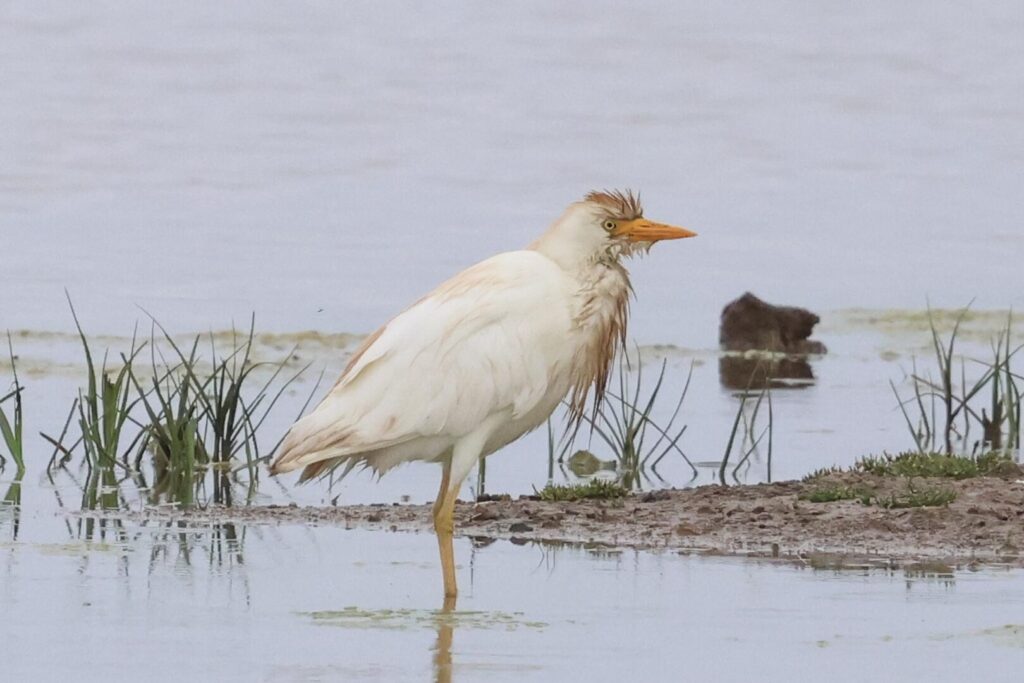
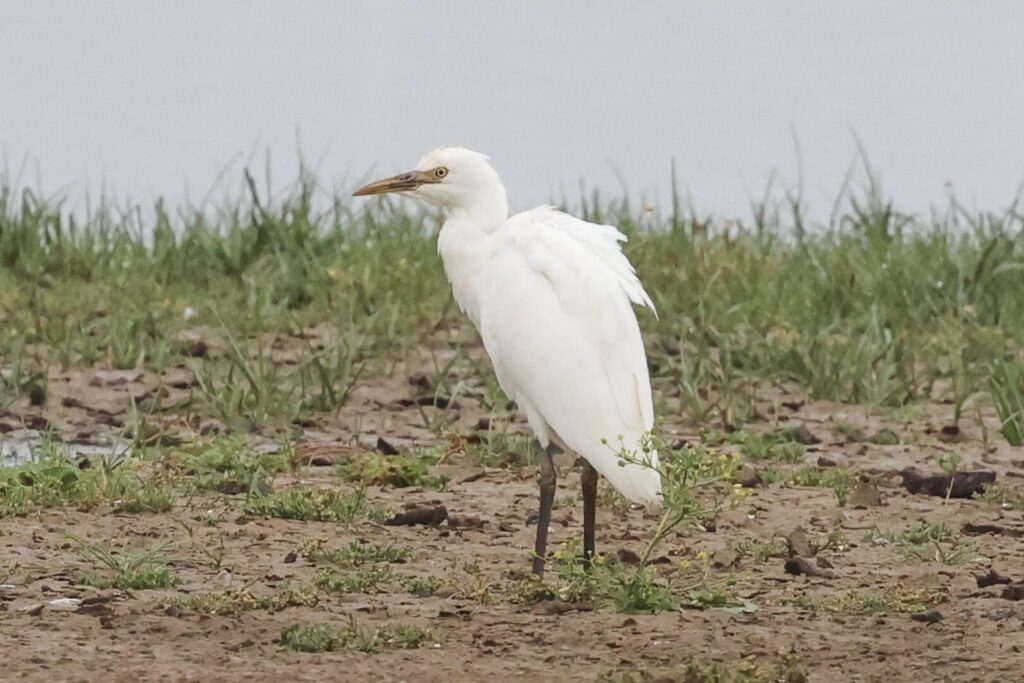
An adult Cattle Egret flew in and landed behind the Spoonbills. Still in breeding plumage, with orange on head, breast and back. It was very wet though, presumably from walking around in the grass. A short while later, a juvenile Cattle Egret flew in too. All white, without any orange, and still with dark juvenile bill and legs.
There were lots of Black-headed Gulls on the islands on the scrape and two adult Mediterranean Gulls in with them. We could see their brighter red bills and white wing tips. They are starting to moult their black summer hoods now. A single Sandwich Tern was next to them too. Through the scope, we could see the yellow tip to its long black bill.
There were fewer waders on Simmond’s Scrape. When we arrived, we found about twenty Curlew on the islands, preening and loafing, but they quickly flew off. We did manage to find a single Ringed Plover right over the far side. There had apparently been a Whimbrel earlier, but it had disappeared.
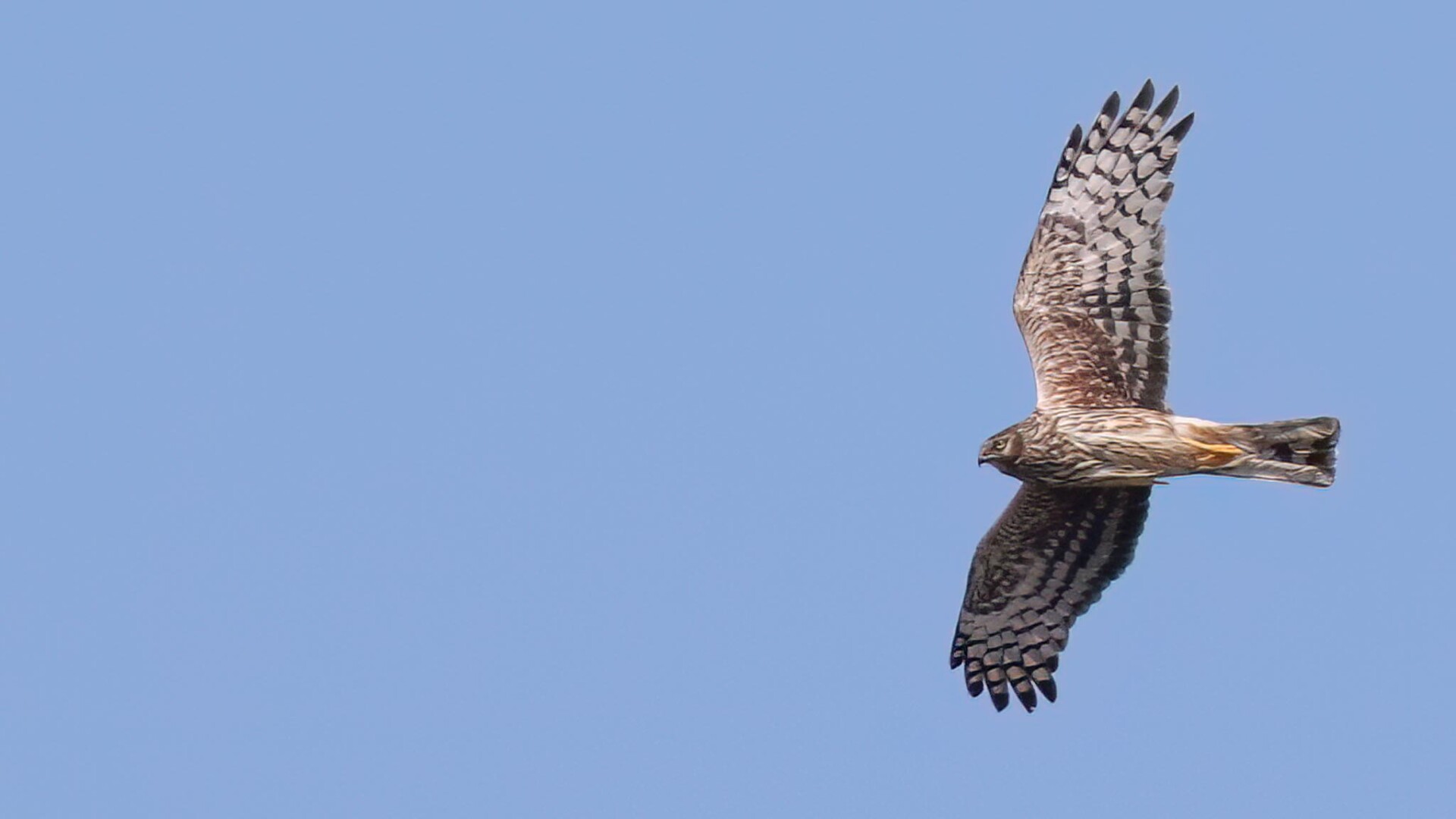
As the weather improved, the Marsh Harriers started to come up. There were a couple of distant juveniles hunting over the reeds and the back of Billy’s Wash. A female Marsh Harrier landed on one of the gateposts out in the edge of the Eye Field, where it stood preening. Another Yellow Wagtail flew up from the bank calling.

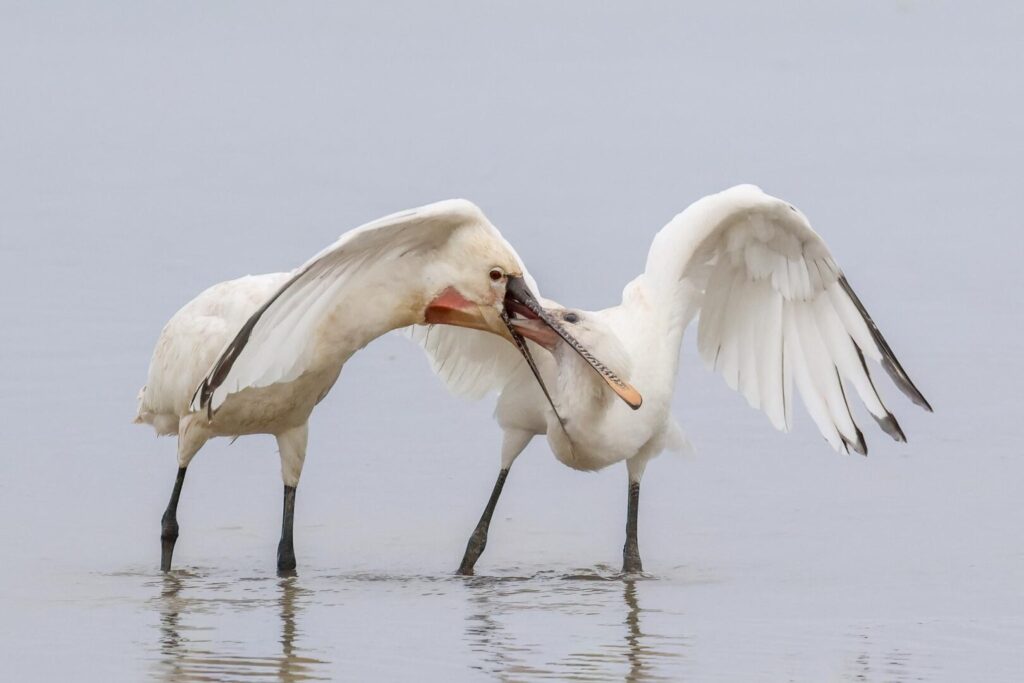
Another adult Spoonbill flew in and got the same treatment as the first, chased round relentlessly by juveniles. Possibly the first adult was now chased round again too, two after one adult and one after another. This time it didn’t take long before the adults gave in and fed them, regurgitating food for them. The juveniles pushed their bills into the adults gape – it looked distinctly uncomfortable!
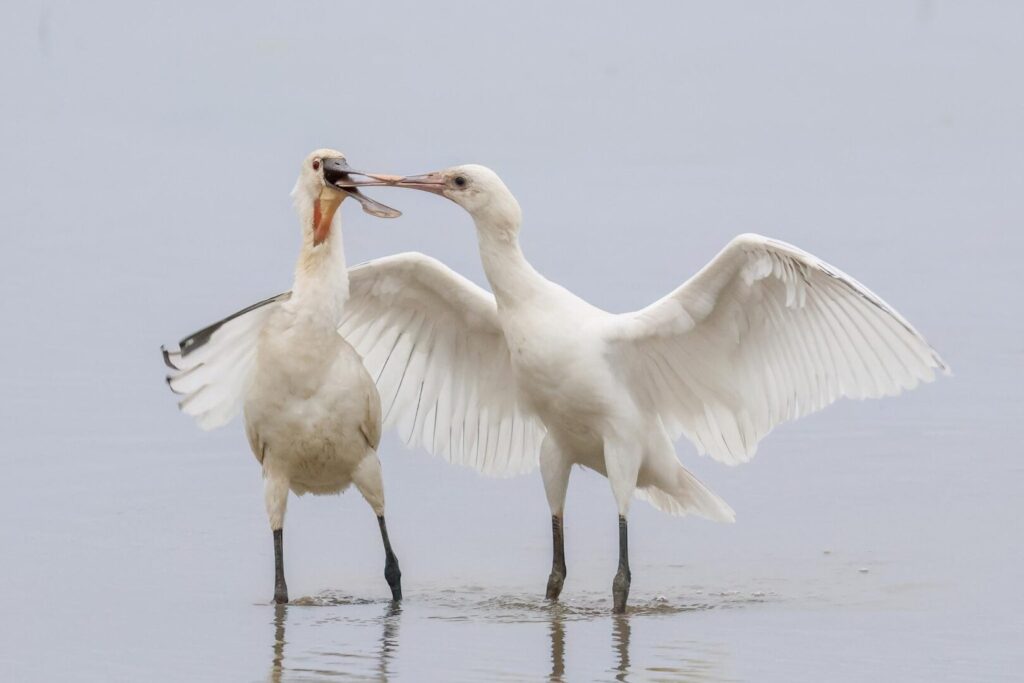
The single juvenile Spoonbill still wasn’t happy and kept chasing round after its parent. In the end, we watched it get fed three times in succession. Who would be a Spoonbill parent! It was a great show for us to watch though, right in front of the hide.
We went round into Teal hide next. The two Common Sandpipers were still over this side and a Little Ringed Plover was feeding on the edge of the grassy island in front.
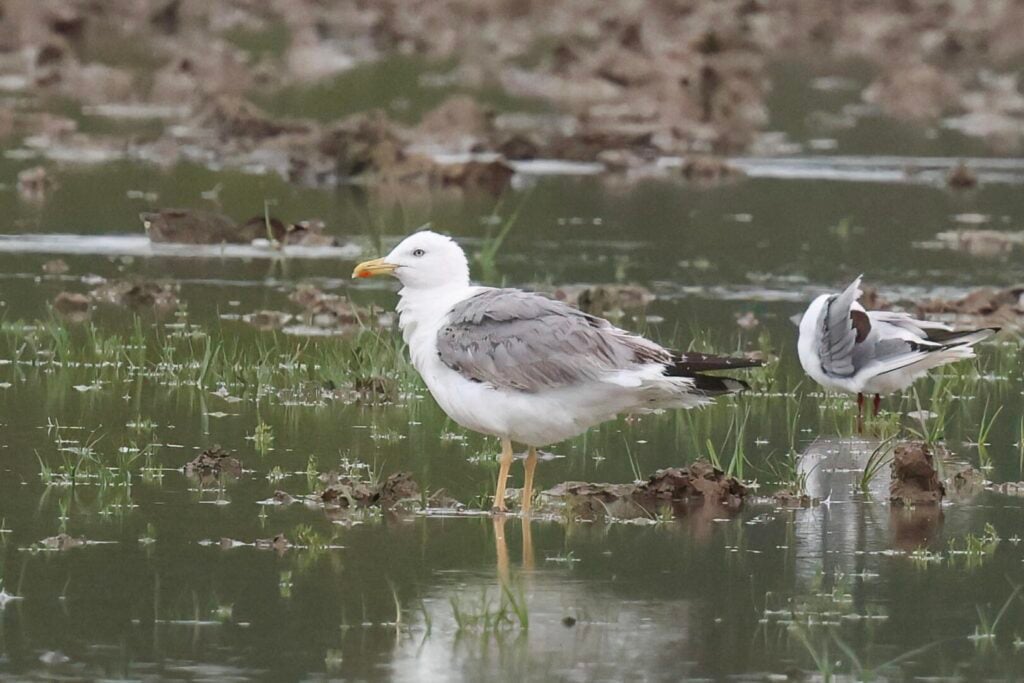
There had been some gulls roosting on here earlier, but we could only see a single Lesser Black-backed Gull from the other side. We had a better view from here and the gulls had woken up. There were several Lesser Black-backeds and now we could see a Yellow-legged Gull with them. It looked like a 3rd summer (4cy), close to an adult but still with some immature feathers in its wing. We could see its grey mantle and wings, paler than the Lesser Black-backeds but noticeably dark compared to some nearby Black-headed Gulls, and its yellow legs.
The sky seemed to be brightening up from the east now and it seemed like we had seen off the worst of the rain. We decided to make our way back to the Visitor Centre and then head out for a walk up the East Bank. With the risk of showers lingering, we thought it would be prudent to have the minibus within range. So we drove round and parked in front of Walsey Hills.
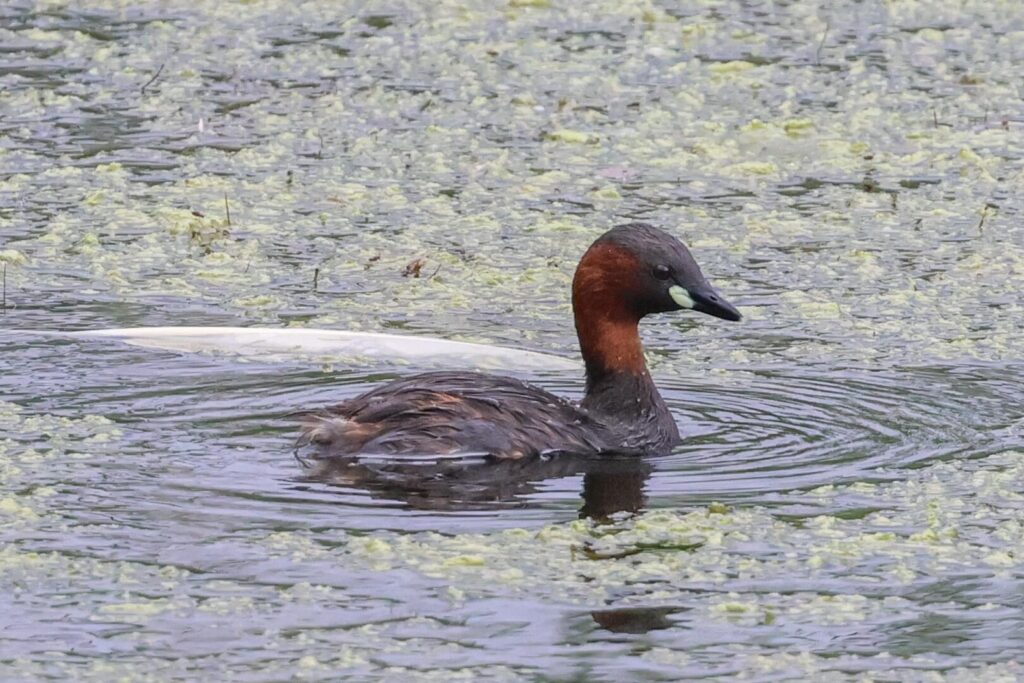
Snipe’s Marsh is drying out and the water at the back is very shallow now. A single juvenile Little Grebe was on the edge of the reeds closer to the front. It was playing with a small fish, which presumably it had caught itself. There was no sign of any adults now, so perhaps they have left it to its own devices. Another Little Grebe was on Don’s Pool as we set off up East Bank, diving in the blanket weed.
It feels like it has probably been a poor breeding season for Bearded Tits as there has been comparatively little activity along East Bank recently. This time of year is normally good for seeing them, when there are lots of juveniles around. There have been a couple of juveniles around the back of Don’s Pool and one of the group heard one call briefly. It probably didn’t help now too that the wind had started to pick up noticeably. There were a few Reed Warblers and Sedge Warblers flitting in and out.
As we walked on up the East Bank, a Skylark fluttered high overhead singing. Looking back, a couple of Cattle Egrets were perched in the top of the trees in North Foreland plantation, along with two Little Egrets. There were lots of Curlews out in the grass again, and a couple of Greylags. Pope’s Pool remains dry but there is still plenty of water in the Serpentine. Once again, there was surprisingly nothing on there today.
We heard a Greenshank calling and found it when we got up to Arnold’s Marsh, feeding out in the shallow water. There were two Dunlin further back and two Knot still in orange breeding plumage. The latter were probably fresh arrivals – at least some sign of waders dropping in this morning. Otherwise, all we could see were the regular Redshanks, a couple more Curlew and two Ringed Plovers on the shingle island.
There had been lots of Common Terns offshore here in recent days but when we got out to the beach, we couldn’t see any at first. We eventually picked up two or three fishing very distantly just off the beach to the west. Otherwise, the sea was remarkably quiet with no signs of anything moving.
A lone Turnstone was down on the ridge of shingle nearest the sea, still in bright breeding plumage. It flew further along past and landed again. When we looked over we realised it had joined a Ringed Plover which was hunkered down in the stones and otherwise impossible to see. Another couple of Ringed Plover were walking around down closer to the water’s edge beyond. A single Sanderling flew past us over the beach and off towards Blakeney Point.

We looked off to the west again and saw lots of Common Terns now. A couple of Little Terns were with them too, fishing just off the beach. They seemed to be coming our way, so we stood and waited. For several minutes they came streaming past, presumably heading off to fish further east. A few Sandwich Terns powered past much more powerfully as well, a nice tern comparison. When the terns seemed to dry up we decided to walk back.

As we got back to the minibus, two Spoonbills flew out of North Foreland and disappeared off inland, to the south east. An odd direction for them to head if they are off feeding, perhaps they are leaving us already. It was lunch time now, so we made our way back to the Visitor Centre. There were a few spits of very light rain but thankfully it stopped as soon as it started and by the time we got to the picnic area it was dry.
After lunch, we headed west along the coast road to Stiffkey. On our way, a pair of Ravens flew low over the road right in front of us. As we got out of the minibus, three dark chocolate juvenile Marsh Harriers were playing in the wind over the trees opposite, practising their flying skills. There were a couple of Coal Tits and Chiffchaffs in the pines by the barn and a Stock Dove flew over. Several Common Swifts flew over, heading east. Perhaps on their way already, leaving us for Africa until next year.
The sun was out now and along the permissive path between the hedges, there were lots of Gatekeeper and Meadow Brown butterflies. Across the road and down along the side of the river, lots of House Martins were flying round over the house on the hill. A couple of Blackcaps flew up from the brambles with several Blue Tits just beyond. A couple of Speckled Wood butterflies were in the shade of the trees.
The reeds are too high to see the Fen from the path now, so we pressed on to the end. From up on the seawall, we could see lots of Spoonbills roosting out in the middle. We counted at least 30, along with lots of Little Egrets, a single Great White Egret and a Grey Heron. There were several Egyptian Geese too.

The pool is drying out fast now. We could see two Green Sandpipers and a Common Sandpiper feeding on the mud just beyond the remaining water. A single Greenshank was roosting nearby along with a lone Redshank. From further along, we could see more Ruff and Black-tailed Godwits gathered on the dry mud.
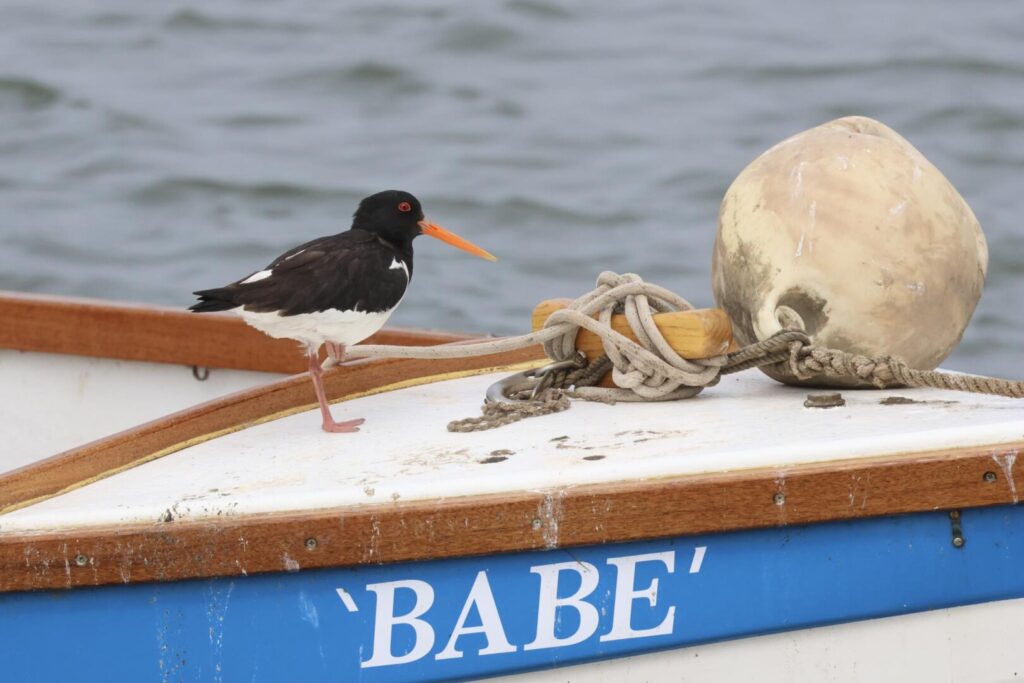
The tide was in and seemed to be slow to go out today. There were a few teenage Mute Swans swimming on the channel although the gang here is a bit depleted now, possibly the result of recent bird flu years. Four Oystercatchers flew round calling noisily and another two were roosting on one of the boats, as we walked round to the edge of the harbour.
The mud was just starting to reappear but there were not many waders here yet today. We found a small group of Redshank roosting and a Curlew across the channel. A single Whimbrel was standing in the lee of some vegetation, preening. We got it in the scopes and had a good view of its humbug striped head before it decided to fly off west. Three Greenshank appeared on the shingle spit further out in front of us but quickly walked out of view into one of the channels.
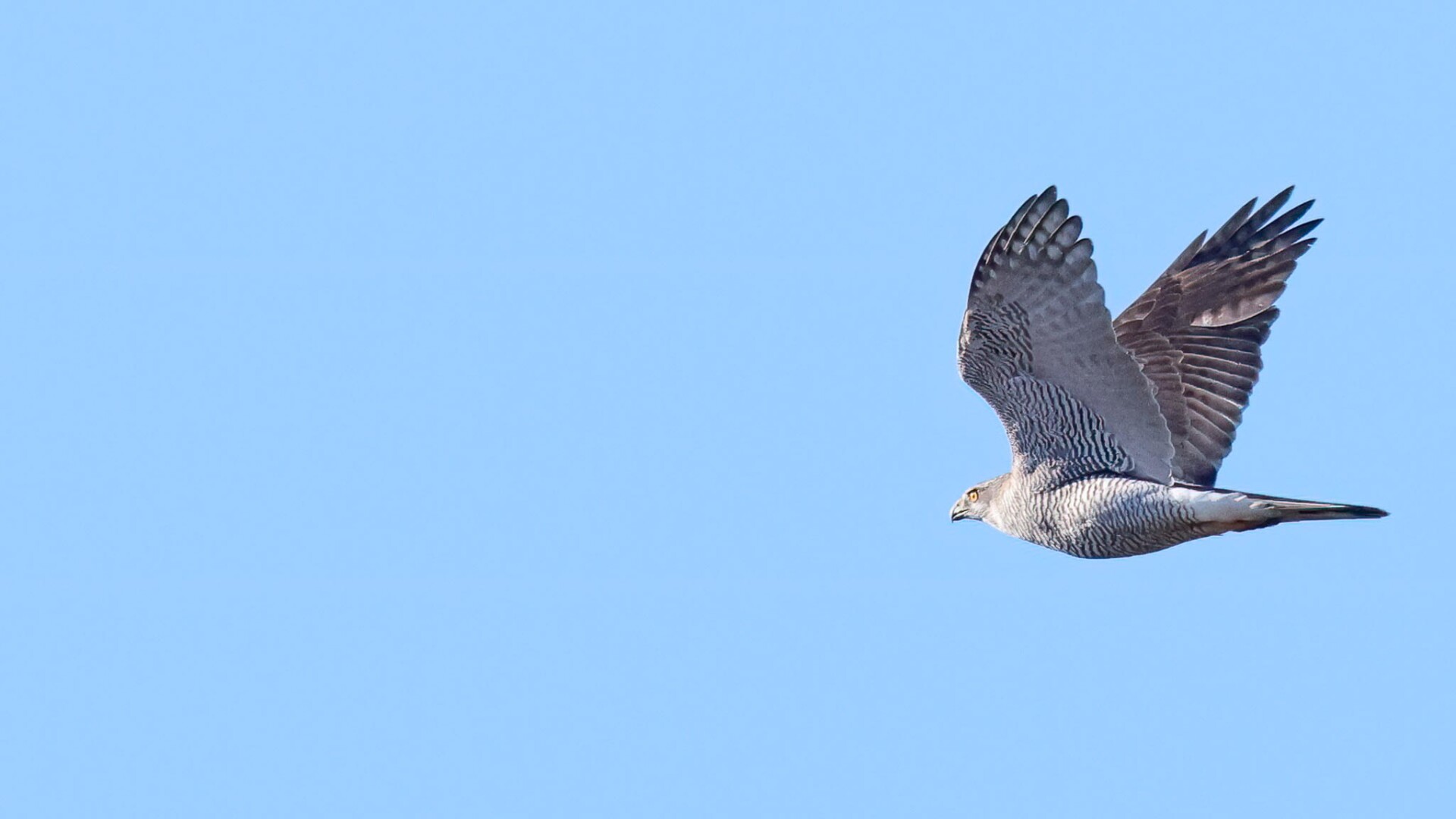
It was clouding over and we could see from the rainfall radar that we were likely to get some more rain in the next hour or so, so we decided to walk back. As we got to the minibus, a Sparrowhawk flew low over the field beyond, skimming the flowers. There was still a little time before the rain arrived but we figured we needed to be somewhere we could stay close to the minibus now. We drove on along the coast to North Point.
The field left of the path is dry now, but the water level on the larger eastern pool is starting to drop, making it more attractive to waders. Scanning from the car park, we counted at least 5 Green Sandpipers and several Ruff. Six more Spoonbills were sleeping at the back – no shortage of those along the coast today! There were lots of gulls in from the pig fields but we couldn’t see anything different in with them.
A rather pale Common Buzzard was preening on a fence post. The cloud didn’t look thick enough yet for the rain, so we decided to walk a short way down along the path. We could see more Ruff and a Common Sandpiper on the edge of the rushes now. A second generation Wall Brown butterfly was basking on the vegetation.

We didn’t get too far before it started to rain though, so we beat a hasty retreat back to the shelter of the minibus. The rain was going clear through after a while and we thought we might have time for one last quick walk, so we drove back east towards Cley.
We were hoping that a combination of the time it took driving and the change of position might mean it was drying out by the time we got there. But when we got to Wiveton, it was still raining hard and we could see it was still very grey inland. It probably wouldn’t stop by the time we had to be heading back so we decided to call it a day half an hour or so early and stay dry!
It had been a remarkably productive day of Summer birding on the coast. Thankfully, we hadn’t believed the forecasters or we would surely have cancelled beforehand and missed it all.