Day 3 of a 4-day Autumn Migration tour. It was a blustery day with occasional sharp showers blowing in off the North Sea. The strong northerly wind was perfect for seawatching but made finding birds on the coast difficult, so in the afternoon we headed down to the Brecks.
This morning, we drove to Cley again first thing and down to the beach car park. It was already almost full, lots of people already rowed up on the shingle looking out to sea. Everyone had come out for seawatching, hoping the northerly wind would blow seabirds and other exciting birds inshore. We stopped to watch the flock of Golden Plover which came up from the Eye Field whirling round behind us. Then we took up our places on the end of the line.
There were lots of Gannets offshore again, and plenty of Razorbills and Red-throated Divers on the sea, as we had seen yesterday.
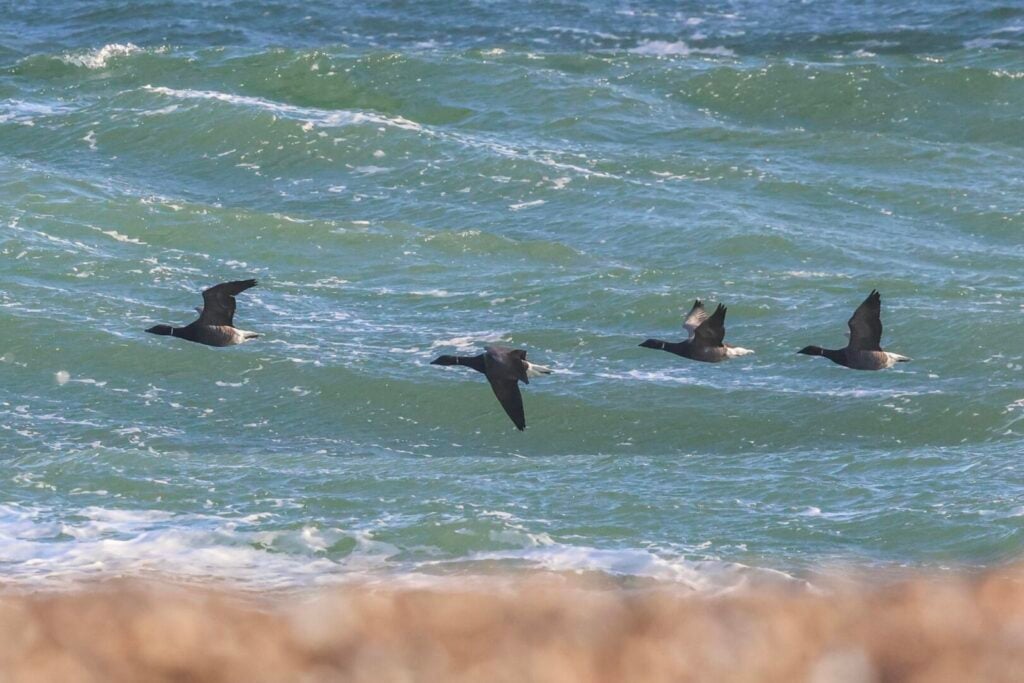
In addition today, there was a good variety of birds moving offshore. A succession of flocks and small groups of Brent Geese flew past, coming in for the winter after spending the summer in Siberia. Smaller numbers of Wigeon, a few Teal and a single Mallard flew past too, more autumn migrants arriving from the Continent.
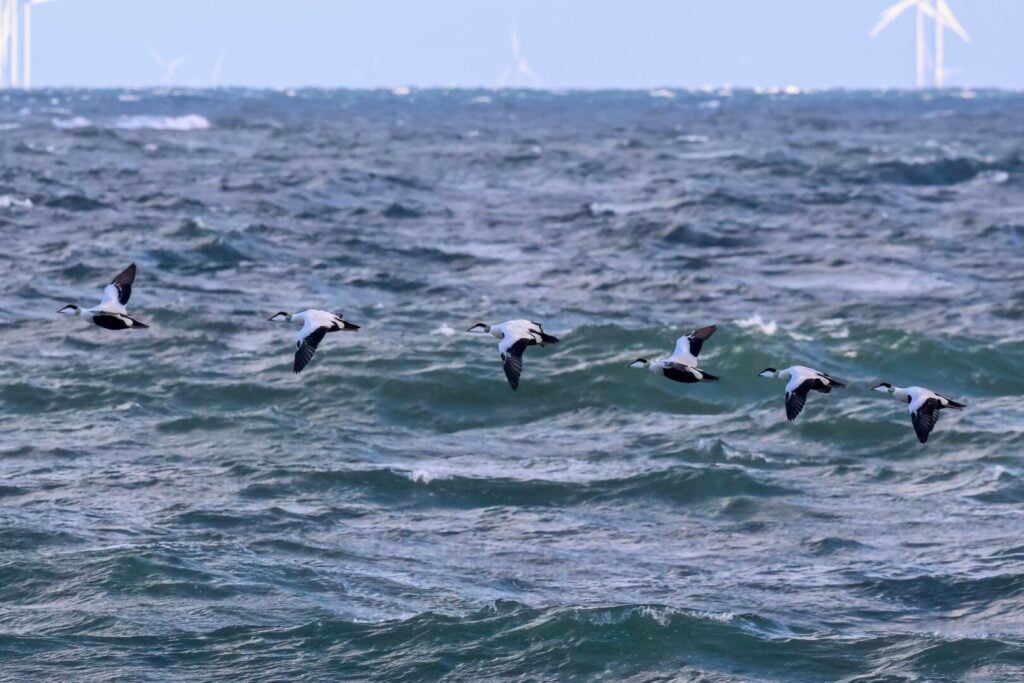
A single Common Scoter flew west, as did a very close line of Eider. A dark female in the lead, followed by several smart drakes. All against a suitable dramatic backdrop of the crashing sea. Exciting stuff!
There was a trickle of waders arriving too, a few Dunlin, three Knot, three Ringed Plover, three Oystercatchers and a Curlew all passing us over the sea. Several Mediterranean Gulls were lingering offshore again, probably the same we had seen yesterday.
A couple of Common Terns were battling into the wind just off the beach too. Several Kittiwakes and Little Gulls were doing the same further out. Unfortunately we missed a Sabine’s Gull which was seen flying west past Salthouse but apparently headed off inland before it got to us. Two Rock Pipits flew west along the shingle.
There were already a few seabirds starting to appear while we were there. A distant Manx Shearwater flew west, a lone Great Skua appeared to be coming our way but then disappeared off east. The biggest surprise was when we picked up a Storm Petrel very close in, flying west through the breakers. It was so close, everyone managed to get on it. A rare bird here.
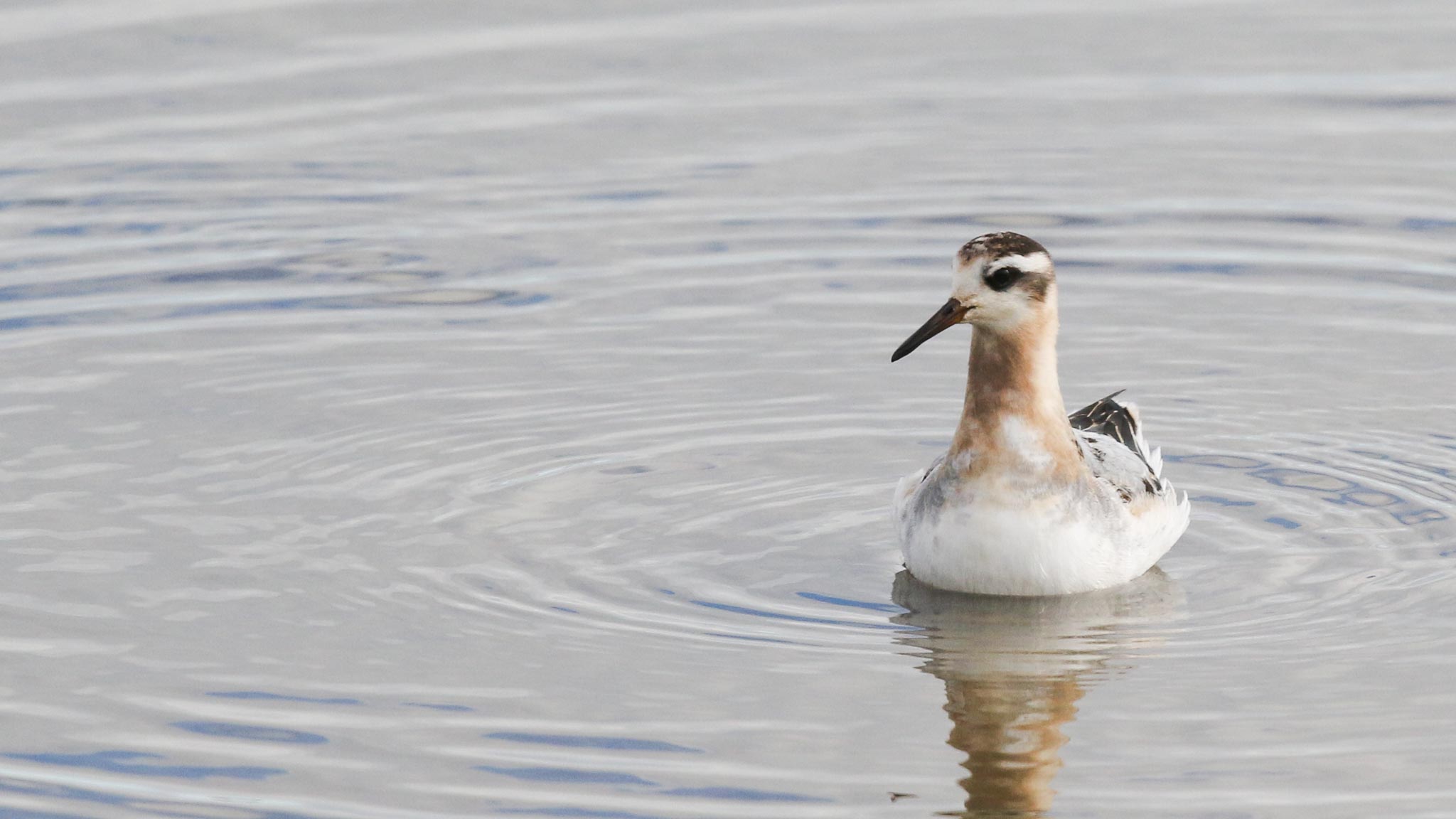
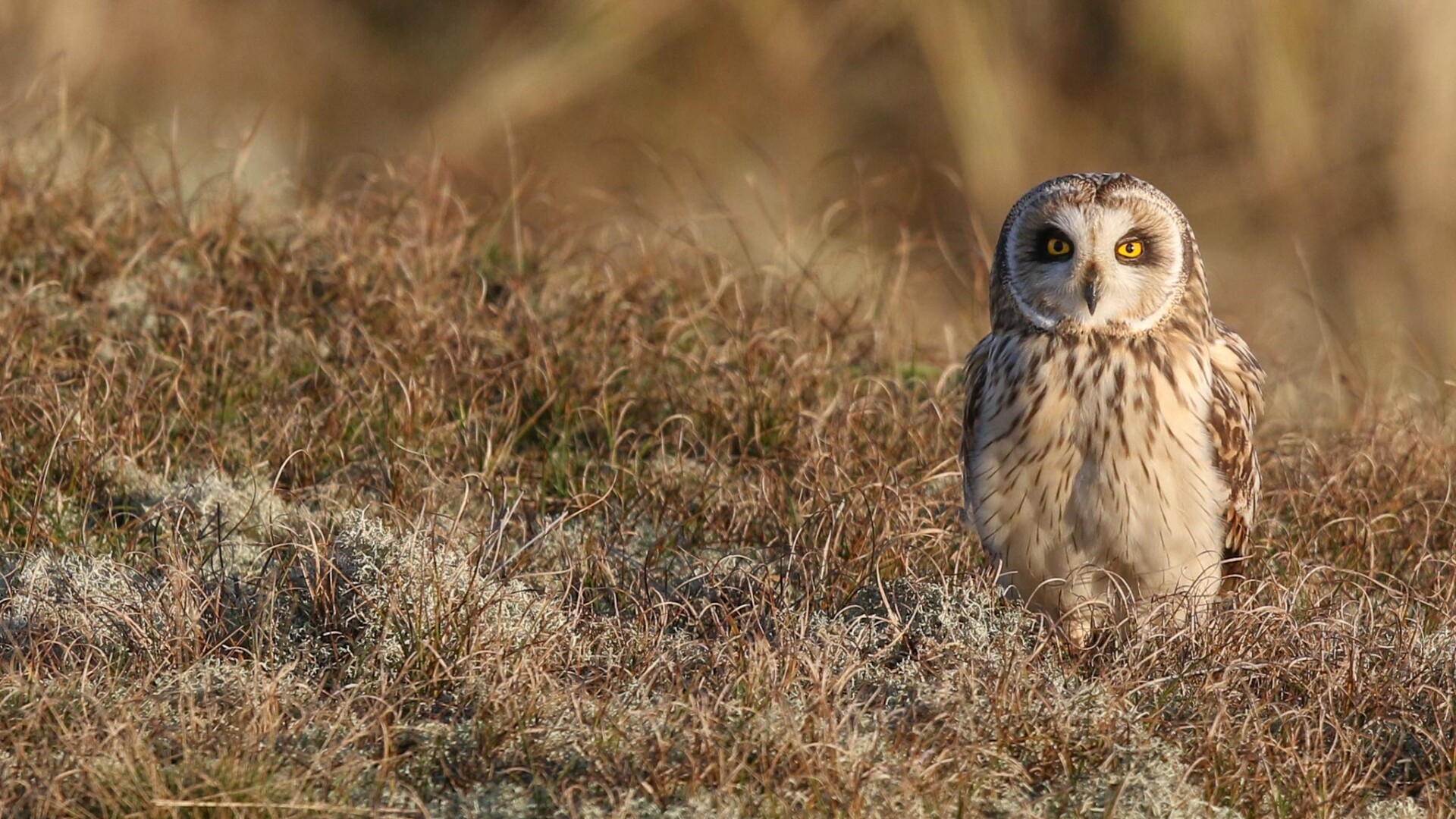
The best birds of the day would always be looking out to sea today – all four Skuas, two species of Shearwaters, several Sabine’s Gulls, Leach’s Petrels and Grey Phalaropes were all seen flying past along the coast today, and several Short-eared Owls were seen arriving in off the sea. Unfortunately there is always a limit to how long we can stand here with a group before people get cold and interest levels wane, so after an hour we had to move on.
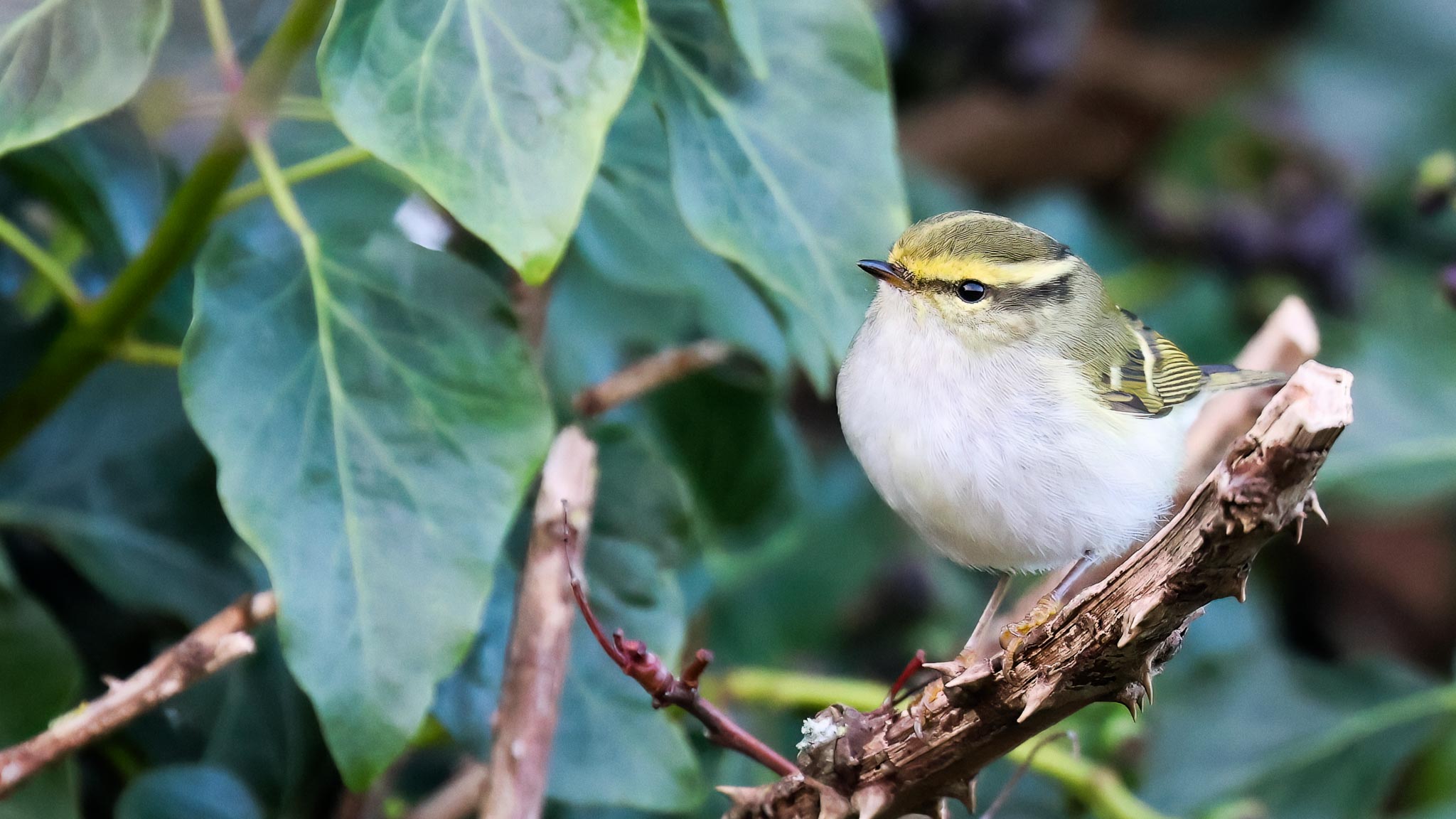
Walsey Hills is always a good place to check for passerine migrants, so we drove round there next. There had been a Yellow-browed Warbler in the trees here the last few days, although it was very elusive, so we thought we could try our luck for that too.
The feeders have just been put up again so we stopped to check those first. Lots of Blue Tits and a couple of Great Tits came in and out, as did lots of Chaffinches and Goldfinches. No sign of any migrants though. We walked further in and stopped to check the willows at the back. There were several Chiffchaffs calling but no sign of the Yellow-browed Warbler, although the inclement conditions meant it could easily still be there but just hunkered down.
The sun was on the back of the willows and it was more sheltered out on the south side, so we walked out of the trees and scanned from the footpath beyond. One of the Chiffchaffs flew out and up into a birch tree. A few Chaffinches and a couple of Reed Buntings flew over, and three Skylarks chased round over the field next door.
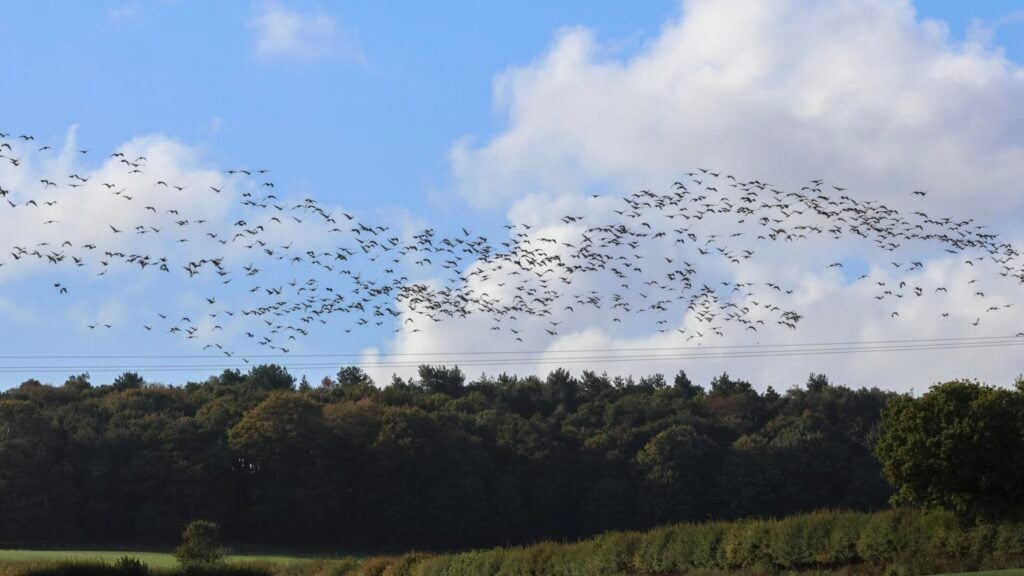
Looking up towards The Hangs, a large flock of Pink-footed Geese came up off the fields, presumably flushed by something. An impressive sight, and sound, they dropped down again beyond North Foreland plantation.
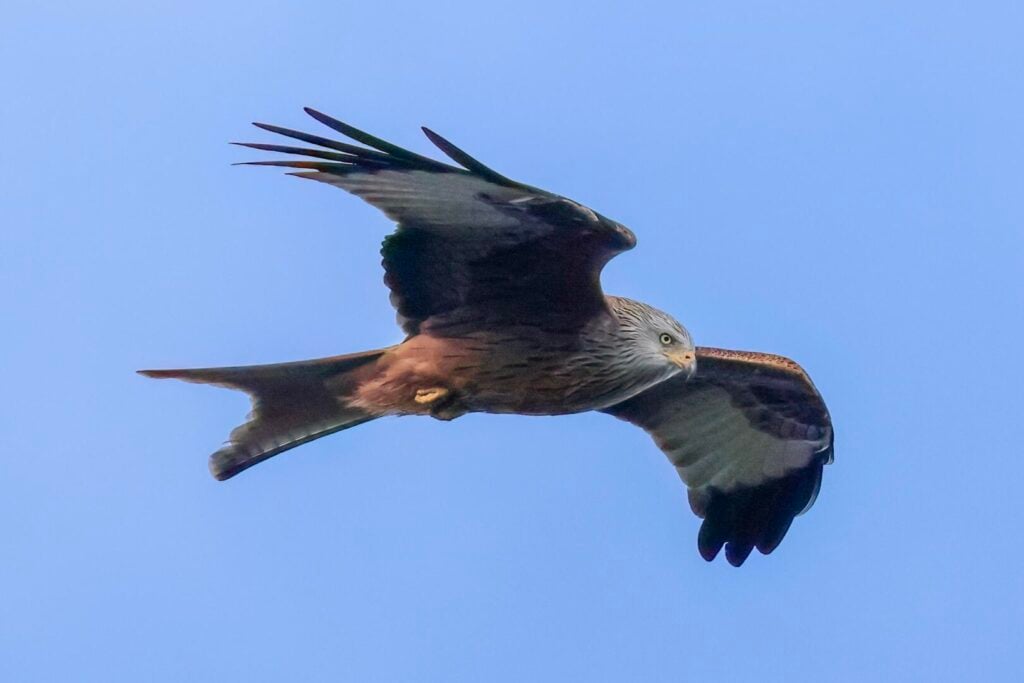
A Jay flew down along the hedge line on the far side of the field. We watched a Red Kite come up over the trees and then drift right over our heads. A Common Buzzard was hovering into the wind further up the hillside. No sign of any migrants moving here though.
We decided to check the wild bird seed crop on the top, so we walked round the edge of Walsey Hills. Several Chaffinches flew up out of the crop as we got round the corner. We were hoping for a Brambling but couldn’t see anything with them.
Up on the top, we checked out the site of the recent gorse fire. Thankfully the fire brigade got to it quickly and stopped it from spreading too far. Just an isolated area of gorse burnt, which will quickly recover. It could have been so much worse. A large mixed flock of Goldfinches and Linnets flew up out of the crop further along.
It started to rain, just the edge of a squally shower passing over, so we walked back down where it was more sheltered. It had stopped by the time we got there. Back to the minibus, we drove back to the Visitor Centre. A break for coffee, and a chance to warm up. We could see the ten Cattle Egrets still with the cows out on the reserve.
After a break, we headed out again. Up to four Glossy Ibis have still been coming in to roost most nights at Cley, and in previous days had been feeding on Blakeney Freshes during the day. We decided to check there to see if we could find them. As we walked in, a lone Greenfinch flew out of the hedge. There were a few Blue Tits and Blackbirds but no obvious migrants in the bushes.
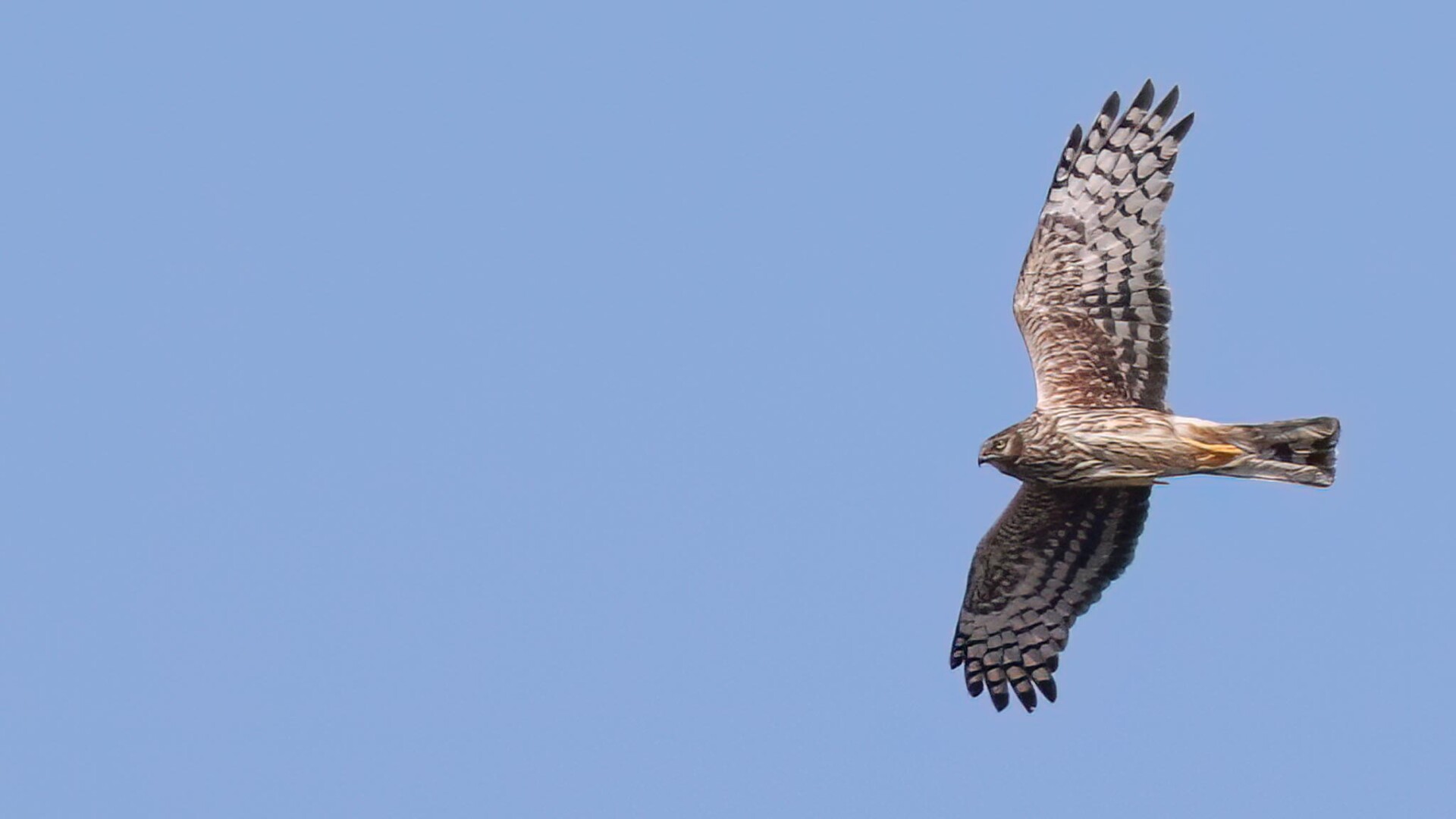
From up on the top, we could see nine Cattle Egrets with the cows here as well. A couple of Grey Herons lurking in the ditch behind too, but no sign of any Glossy Ibis. If they had any sense, they would be hiding somewhere out of the wind. A male Marsh Harrier drifted over the middle of the Freshes. We picked up a large flock of Starlings flying west – despite the weather, there were some of those at least still on the move. A Sparrowhawk shot across low over the grass.
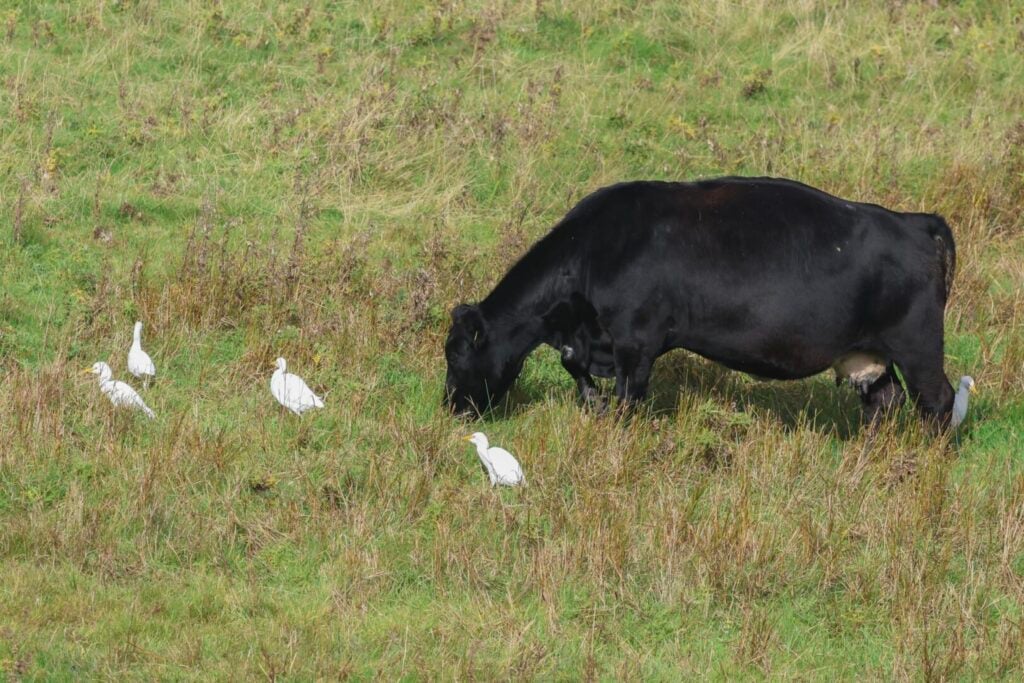
Looking out to the sea beyond, we could see another line of Eider flying west. Lots of Gannets were passing too, more adults now. The white birds stood out at a distance as they caught the sun. There seemed to be a lot more auks moving too now, a succession of small clouds flying past out to sea.
We walked further round to the next bench and scanned again. Several groups of Canada Geese were feeding out on the short grass. We picked up three Pink-footed Geese too and got them in the scope. Two Greylags walked across to join them, a nice comparison.
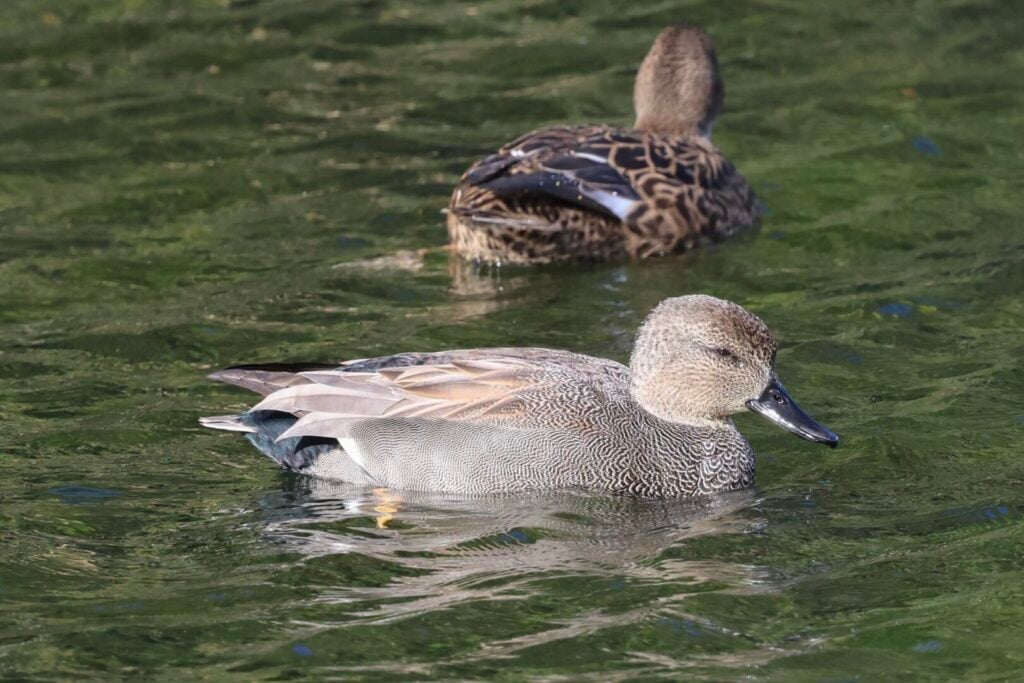
There were more dark clouds coming in to the west and we just caught the edge of another shower. We walked down and back to the minibus. We had planned to go far a walk out on the harbour bank but we were not sure what it would be like out there today. As we passed the old duck pond, there were lots of Mallard, a few Gadwall with them and several Moorhens. No ornamental ducks any more, sadly they were all lost to bird flu.
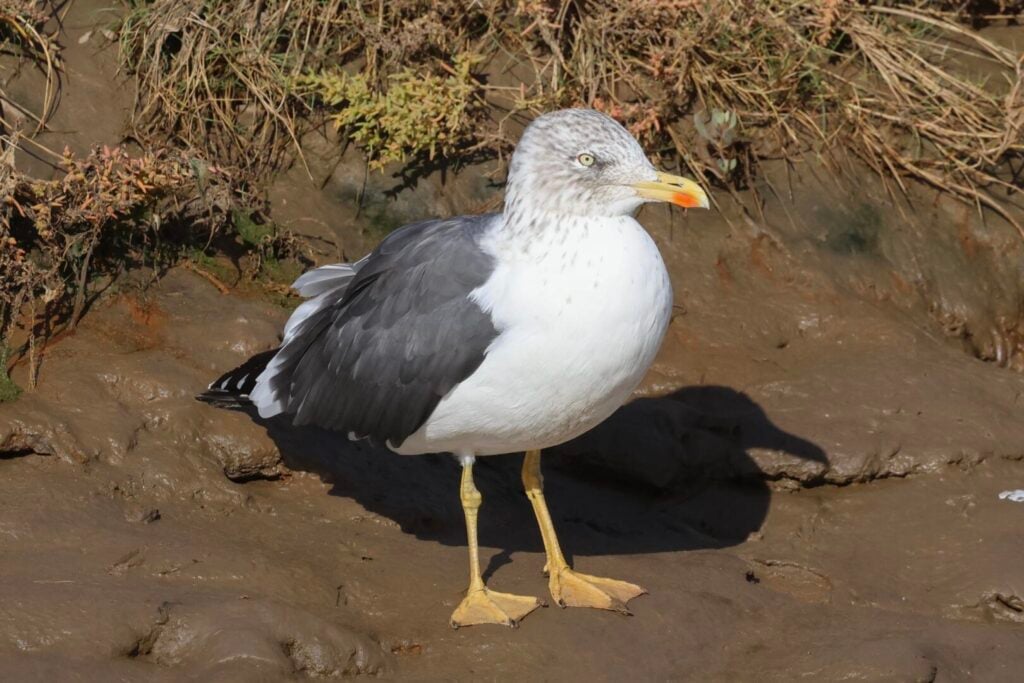
We could see people battling out on the seawall and it didn’t look like they were enjoying it so we continued on to the west side of the quay. A Lesser Black-backed Gull was standing on the mud on the far side of the channel, showing off its yellow legs.
There was no sign of the Kingfisher which sometimes has wintered in the harbour in previous years. Out to the corner beyond, the saltmarsh looked rather quiet. There were some small groups of Brent Geese feeding out in the vegetation, a couple of Curlew and several Redshank in the harbour channel.
We could see more dark clouds coming in off the sea towards us. Definitely not the time to walk out on the seawall now! Back to the minibus, we drove back to the Visitor Centre at Cley for lunch.
We thought it might just miss us but we had just started to eat when the rain arrived. Not ideal timing but thankfully it didn’t last too long and quickly blew over. A Marsh Harrier was out over the scrapes stirring everything up. Lots of Lapwing and Ruff flying round.
It was always going to be hard going in this weather looking for birds on the coast. So after lunch, we decided to head inland. We drove down to the Brecks to look for Stone Curlews. There was no sign of any in the first field we checked, where they had been recently. But the farmer had clearly been working there recently and had ripped out the hedge on one side – the one which the Tree Sparrows liked, obviously! A large flock of Linnets flew up and whirled round out in the middle.
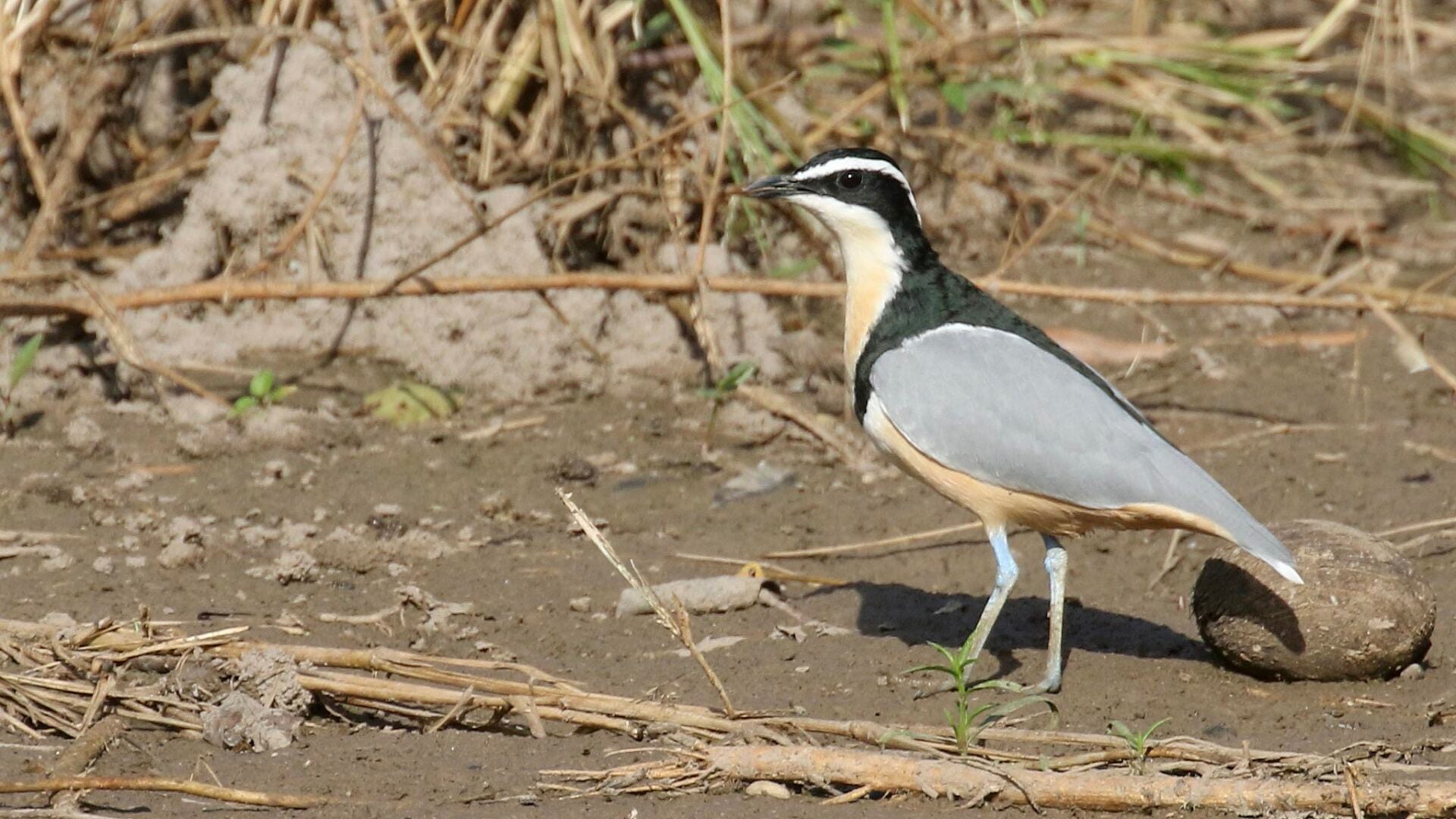
We tried again from the next gate along. There were lots of Egyptian Geese in the field and a gathering of Lapwing further back. No sign of any Stone Curlews here either though.
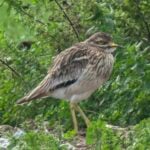
So we drove on to check another field which the Stone Curlews sometimes like. We walked up to the gap in the hedge very carefully and immediately saw a line of Stone Curlews and Lapwings along the far edge of the stony field. Then we noticed another two Stone Curlews even nearer. We got one in the scope – lovely views.
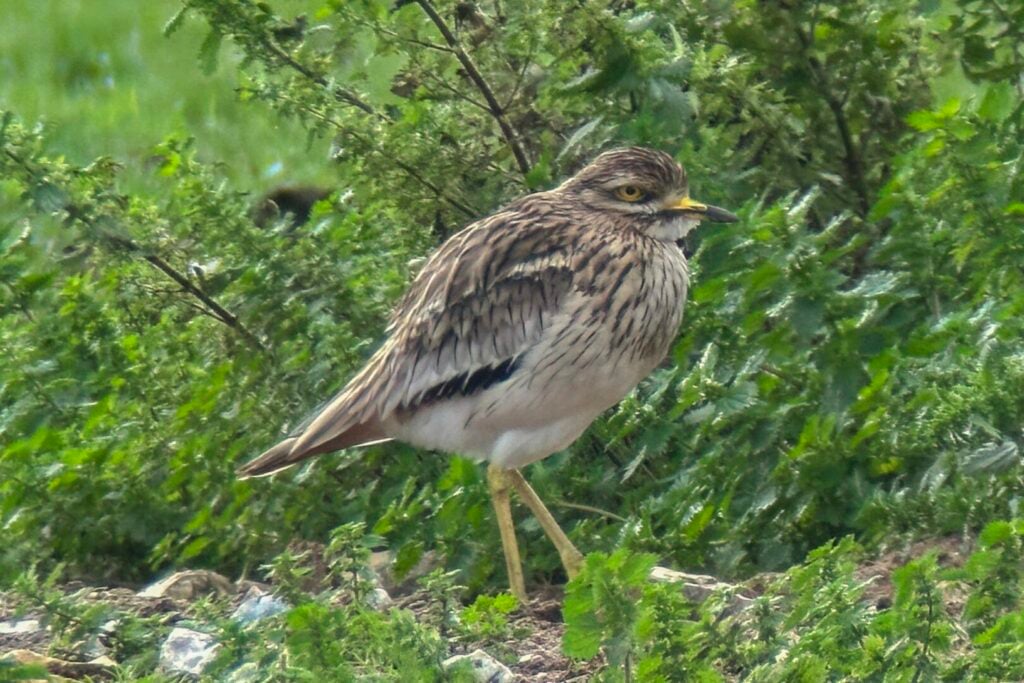
Scanning across, we counted at least 21 Stone Curlews, but some were hunkered down so there were probably more we couldn’t see. They always gather in favoured fields at the end of the breeding season, before most then head south to Spain for their winter holidays. Numbers are already dropping although a small number may linger through the winter, if it remains mild.
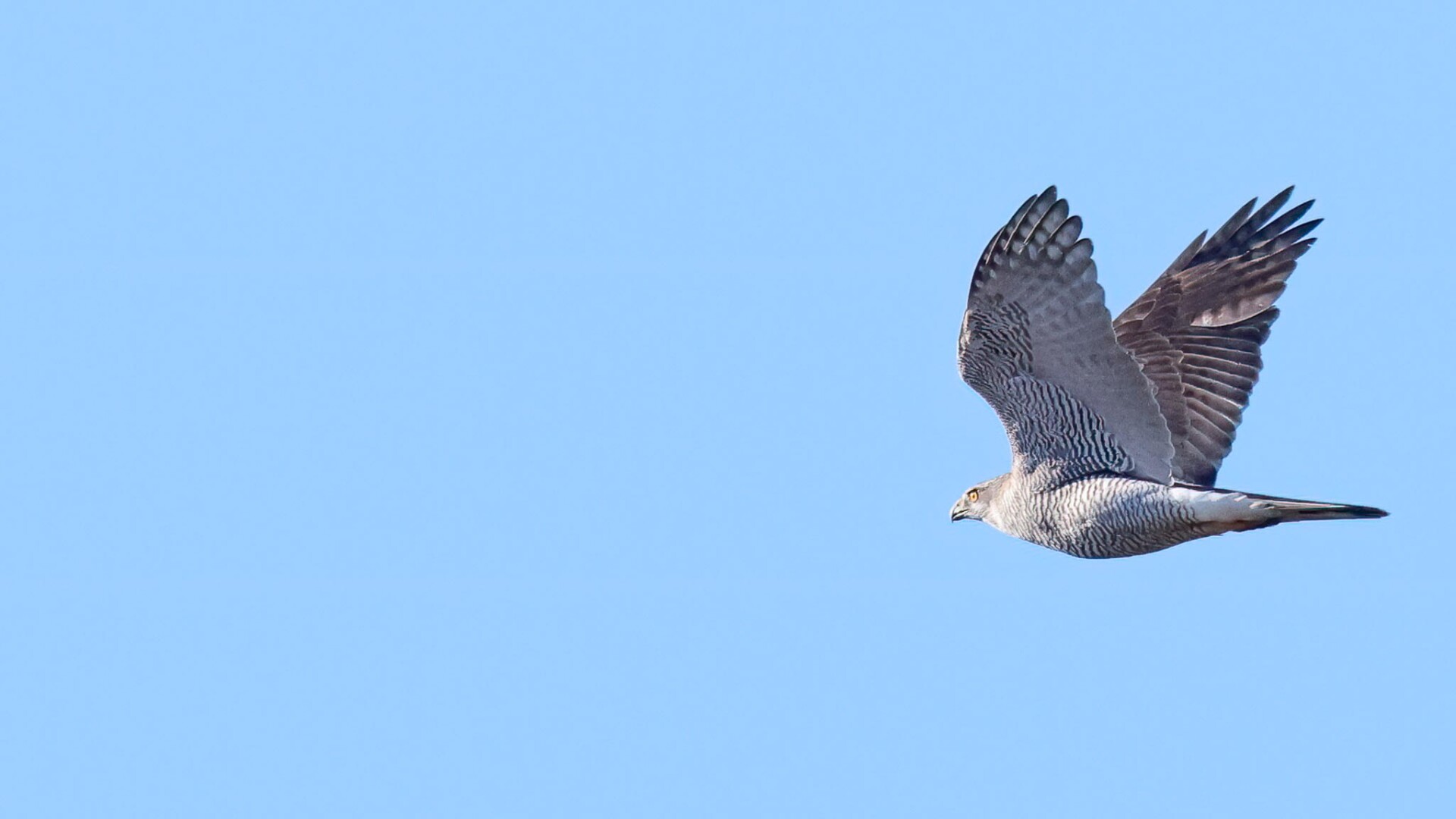
Mission accomplished here, we decided to have a quick look to see if any Goshawks were up in the wind. We drove over to an area nearby overlooking forest. Our luck was in – we hadn’t been there five minutes when a pair of Goshawks appeared over the trees.
We could see the much larger female Goshawk compared to the male, both adults with silvery grey upperparts and white underneath. They started displaying briefly – flying with exaggerated deep wingbeats, the female with her white undertail coverts fluffed out. Then they dropped back down behind the trees.
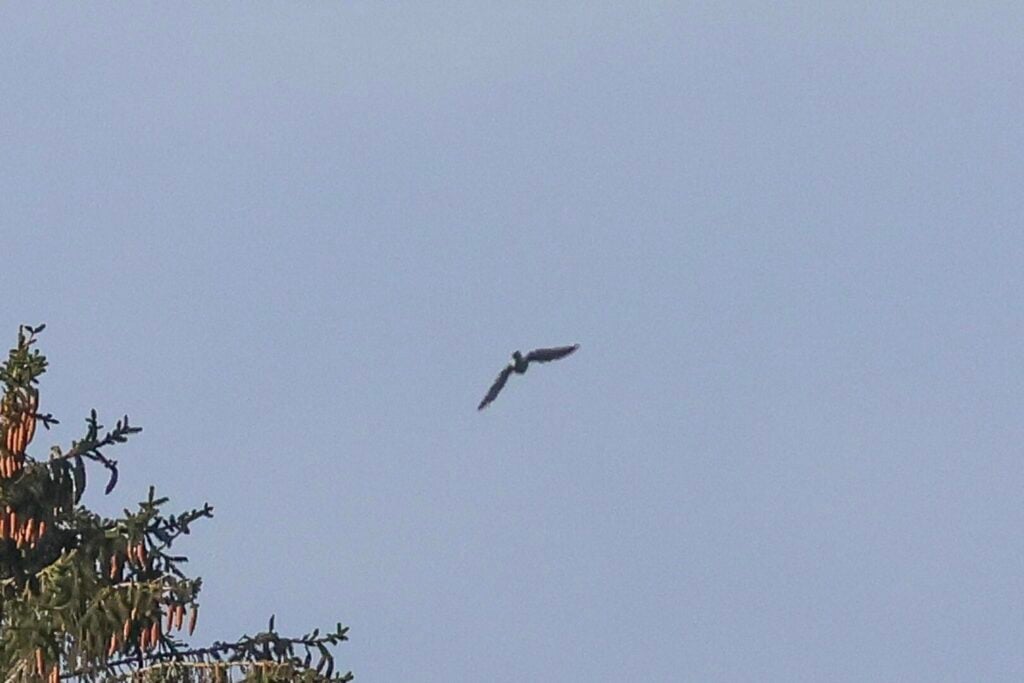
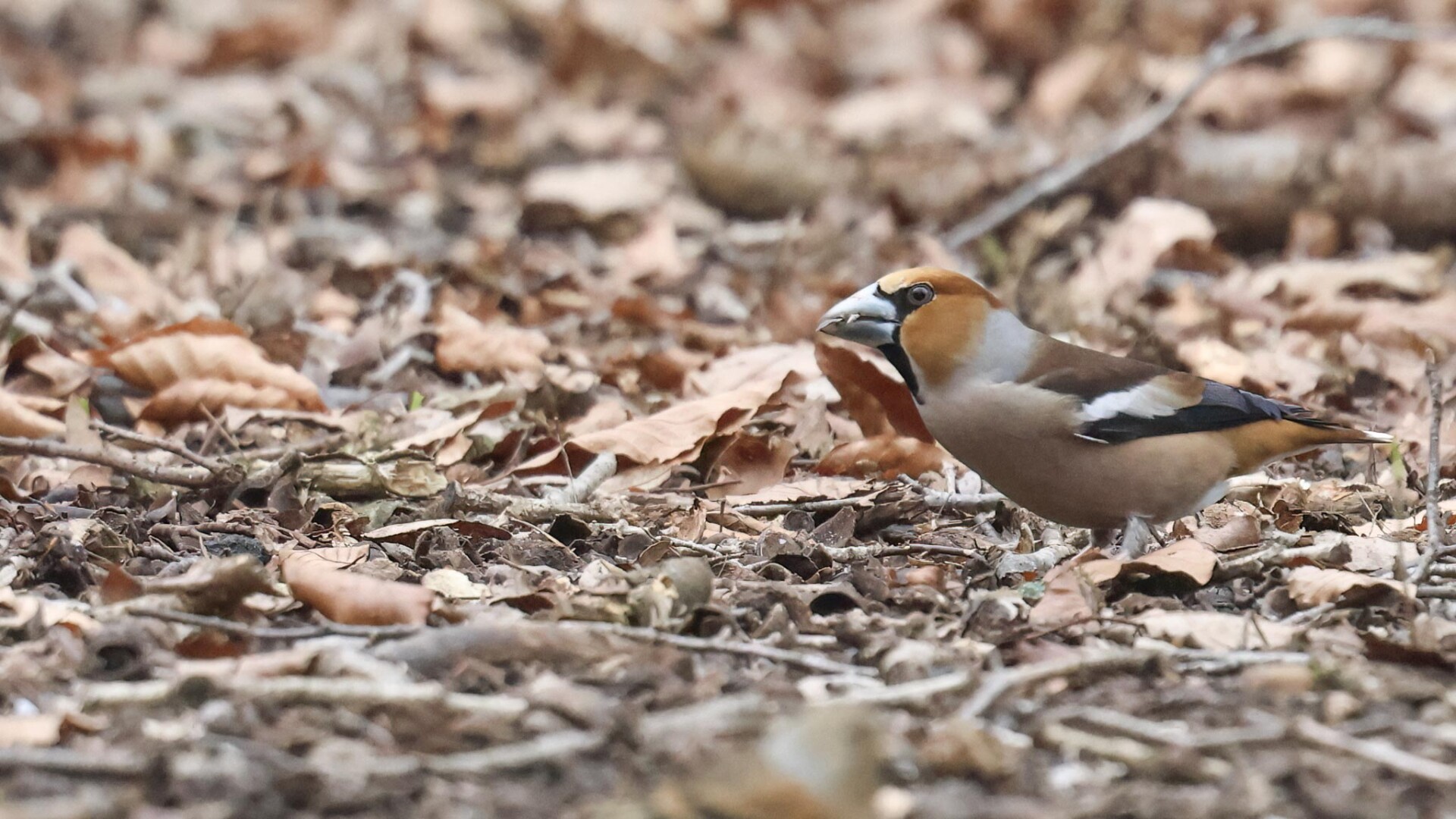
We stood for a while to see if the Goshawks would come up again. A small group of Redwings dropped in to the top of the fir trees. Distant, but we could see a couple in the scope. Then a large flock of Bramblings flew in too. Harder to see but a couple perched in the tops. Two Roe Deer were feeding on the edge of the field in front.
One of the Goshawks appeared again briefly but almost immediately disappeared behind the trees again. We had been lucky earlier and clearly they were not going to repeat the display.
We decided to head back. Still time for coffee and cake when we got to the B&B today. More birding tomorrow.