Day 2 of a 4-day Autumn Migration tour. It was a wet and gloomy start but thankfully the rain eased off fairly quickly, the skies gradually brightened, and it was sunshine and blue skies by the afternoon. With the wind swinging north, it was noticeably cooler today though.
With the early rain, we headed up to Cley first this morning, where we could get in the hides and out of the weather. As we parked in the car park, a large flock of Pink-footed Geese came up over the fields behind the Visitor Centre calling. Waterproofs on, we made a quick dash out to Bishop Hide.
It was misty and grey at first, in the rain. A Common Snipe flew from the near edge of the ditch right in front, landing on the mud piled up on the far side of the channel. It stood there for a while, facing into the wind, wondering what to do next. Then it flew off across the scrape.
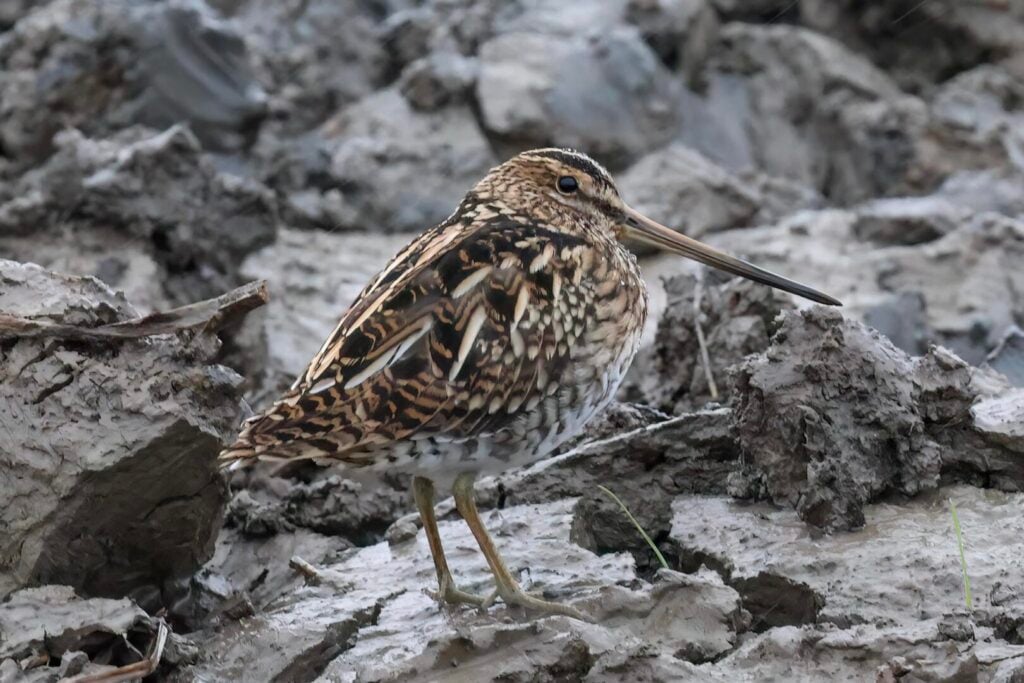
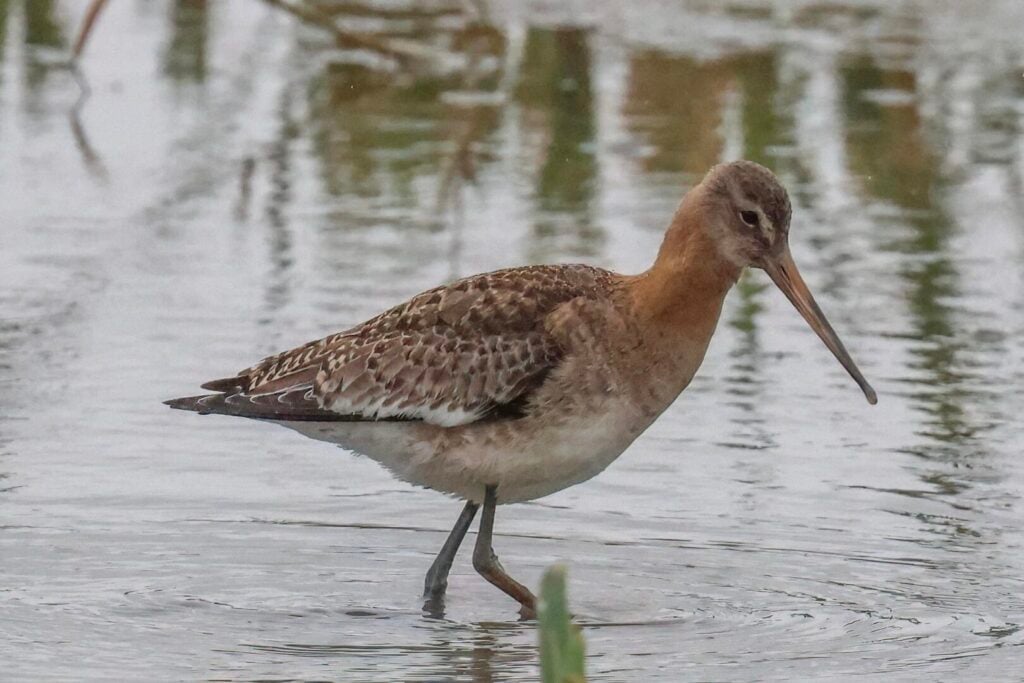
A couple of Black-tailed Godwits flew in and landed close in front of the hide. A winter adult and a brighter juvenile, the latter identifiable as an Icelandic Black-tailed Godwit.
Further back, there were a few Avocets. One was feeding in the shallow water, sweeping its bill from side to side. You could see the advantage of an upturned bill.
There were a few Dunlin on one of the nearer islands, and more right over the back of the scrape. Looking through the latter, we found a couple of juvenile Curlew Sandpipers with them. A little larger than the Dunlin, neater, cleaner white underneath. Someone in the other hides had reported the Little Stint still present, but we couldn’t see it from here.
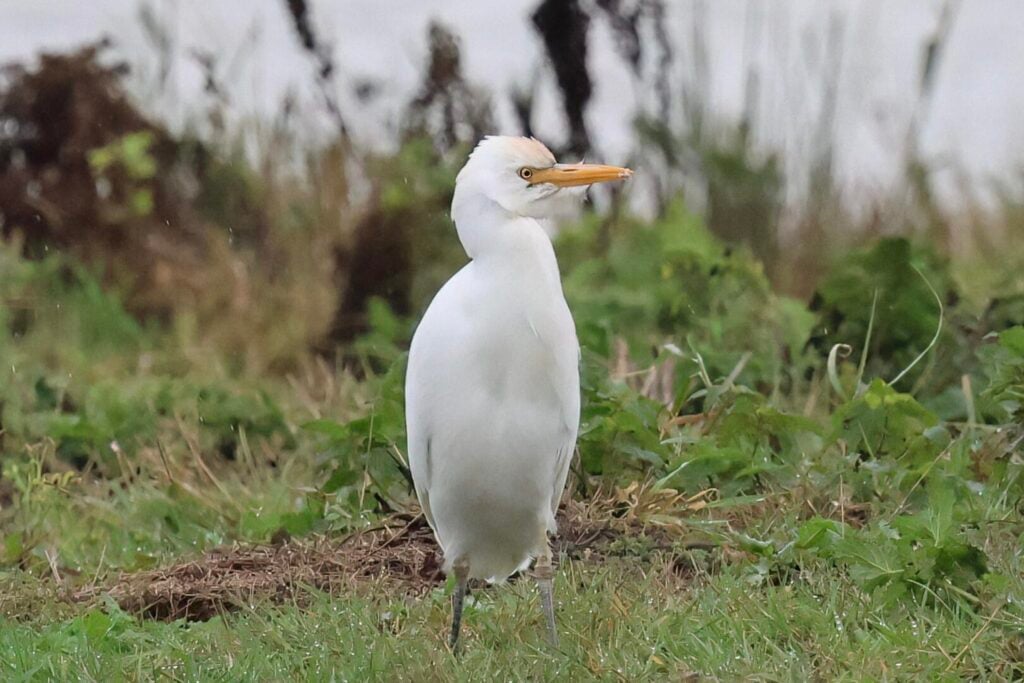
Three Cattle Egrets were feeding around the feet of the cows on the bank over the far side of the scrape. A couple of Lesser Black-backed Gulls were standing in the water. A Kingfisher called but only one of the group got a flash of it as it flew down the channel out to the side of the hide, away from us.
It had gradually brightened up a bit and the rain now eased off. We decided to head round to the central hides to see if we could find the Little Stint from there.
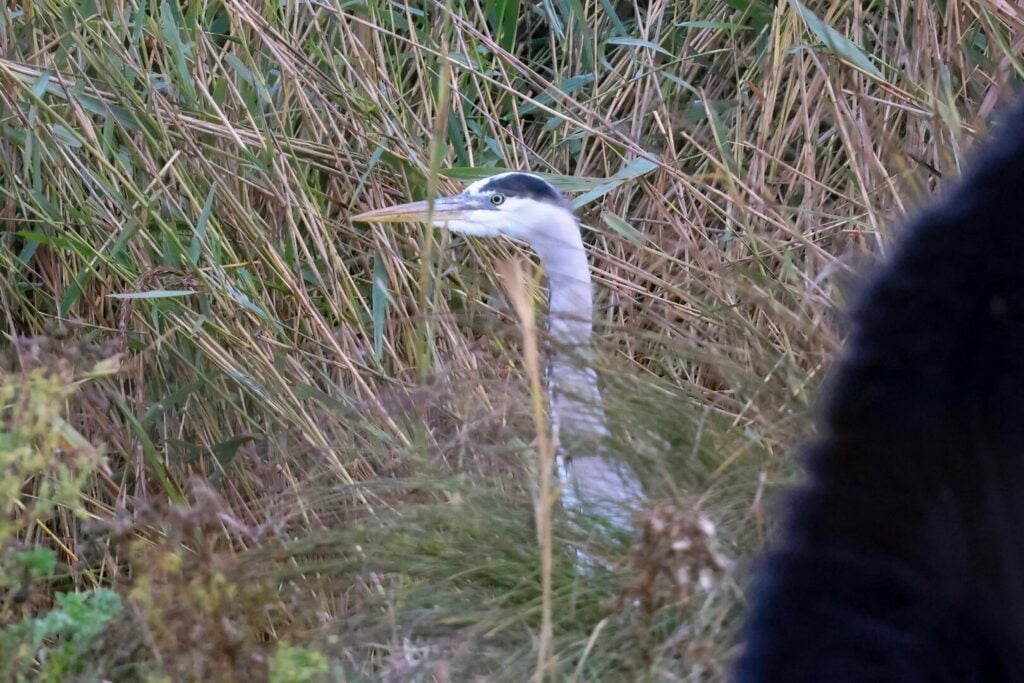
Out of the hide, we saw a couple of Marsh Harriers up now over the back of the reedbed. It was still damp, so we made a quick dash round. A Grey Heron was standing in the reedy ditch just behind the cows from the Skirts path.
All the Marsh Harriers were coming out now that the rain had eased. Another flew over South Pool and drifted across to Pat’s Pool. It flushed all the waders and we watched them whirling round. A little further on, a male Marsh Harrier was hunting out over Keeper’s Marsh, then flew across right in front of us.
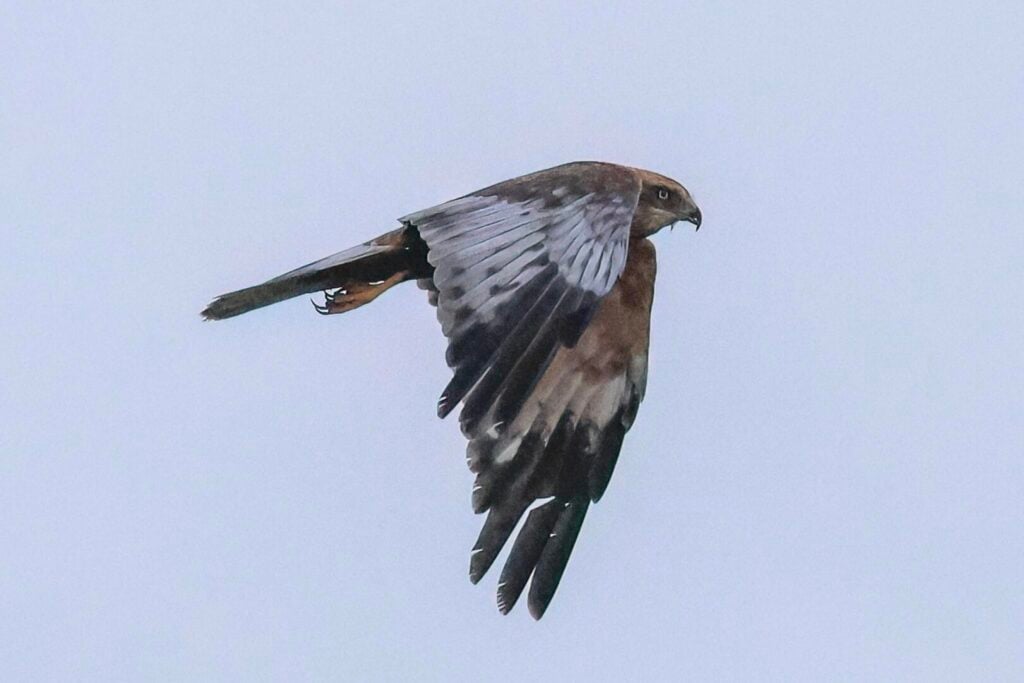
Into Teal Hide, we found that the Dunlin which had been over this side had now flown over the back. They kept getting flushed by Marsh Harriers flying across. We could still see the Curlew Sandpipers but couldn’t find the Little Stint with them.
Most of the young cattle were on the marsh by South Pool but the adults were feeding all around Simmond’s Scrape. Presumably, they had been separated now. The cows walked over to see if they could get to the youngsters and then stood right in front of the hide, calling to them. They were unhelpfully blocking our view of the scrape but at least they brought the Cattle Egrets with them. Much closer views and now we counted up to six.
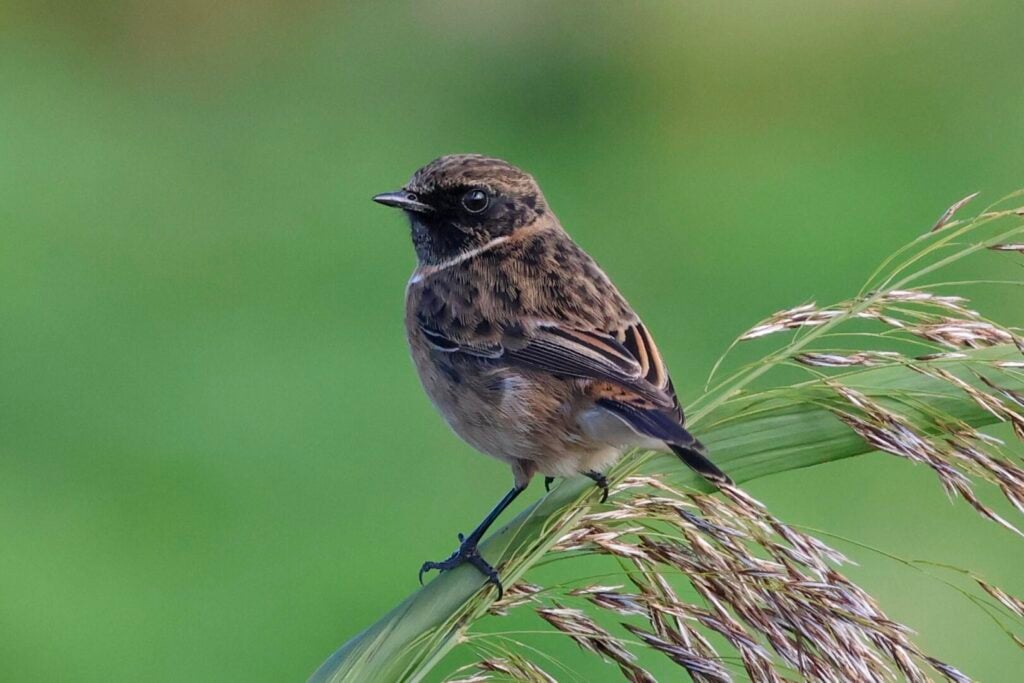
The bull was lingering further back on one of the culverts. We noticed a Stonechat hovering over the reeds next to it. Then a second appeared and, as they worked their way closer along the edge of the ditch, we could see there were three. It was probably difficult to find insects in this weather.
Looking out over the young cattle, which were now clustered outside the corner of the hide, we could see the male Marsh Harrier feeding on a kill by South Pool. Looking over the reedbed, we picked up a flock of Starlings coming through. Autumn migrants, on the move again today, coming in from the Continent for the winter.
A lone swan flew over. We made sure to double check but it was only one of the local Mute Swans. As we said to the group, there is always a chance of Whooper Swans coming in at this time of year.
Looking across to Simmond’s Scrape, we finally found the Little Stint in with the Dunlin on there. We walked round to Daukes’ Hide., where we managed slightly closer views of the Little Stint. We could see its prominent pale ‘braces’, its mantle lines. Two juvenile Ruff were feeding around the muddy edge of the scrape.
There were some nice Gadwall out on Simmond’s Scrape, the males already moulted out of eclipse plumage. We got the scope on them for a closer look, admiring the intricate patterns of their breeding plumage. A young Marsh Harrier with a still rather tawny head was perched on a post out on Cricket Marsh, preening.
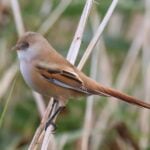
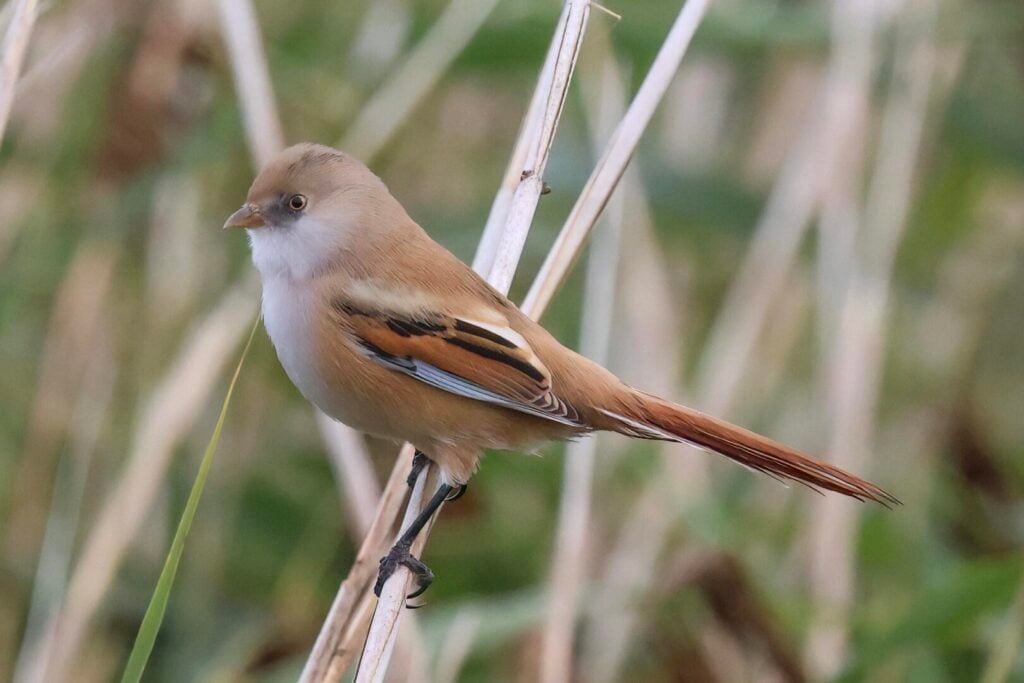
We set off to walk back to the Visitor Centre. As we made our way along the boardwalk, we heard a Bearded Tit calling ahead of us. As we stopped to look, a female flew up out of the reeds and landed again in front of us. It was partly obscured in the top of the reeds though. It flew again and landed even closer. This time it shuffled up the reed stem out into the open and perched there calling. Great views. Then it flew off across the boardwalk and off into the reeds behind us.
Back to the Visitor Centre, we had a break to warm up. Coffee and cheese scones for those who wanted. Afterwards, we drove round to Walsey Hills.
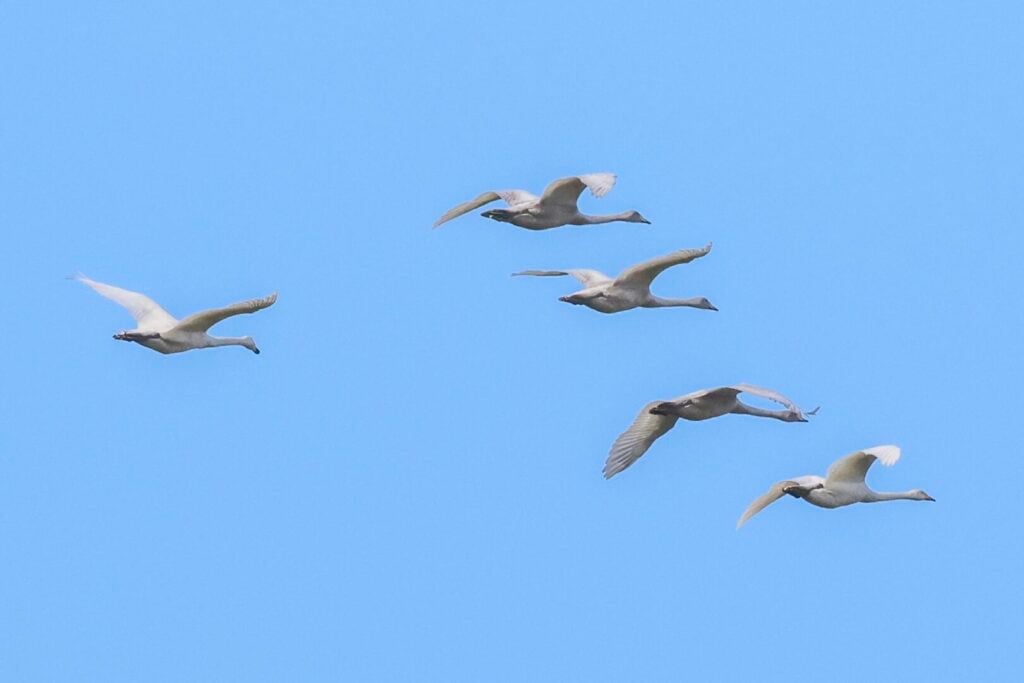
As we set off to walk along the road to the East Bank, we looked up to see five swans flying in over North Foreland plantation. Five Whooper Swans! A family group, two adults with three greyer juveniles. As we watched, they dropped down towards the scrapes, presumably for a rest after their journey. It turned out we were right and they were on the move today. A group of 110 had apparently arrived at Welney too today.
Up onto East Bank, we set off to walk out towards the beach. Another male Stonechat was hunting from the tops of the reeds in the ditch on the edge of the grazing marsh below us.
Up to the Serpentine, there were lots of Wigeon on here today. The drakes are mostly still in rusty eclipse plumage. Several Teal and Shoveler too, and a single Ringed Plover on the grass nearby. Just beyond, we could see a couple of Little Grebes diving in the Main Drain.
There was a nice selection of waders out on Arnold’s Marsh. Lots of Dunlin again, and a single Curlew Sandpiper with them. Possibly different to the ones we had seen on the scape earlier. There were several Grey Plover and a single Turnstone briefly. One Bar-tailed Godwit towards the back, with a group of Black-tailed Godwits nearby asleep.
On to the beach, we found several Red-throated Divers very close in. They were diving in the breakers. One was still in breeding plumage, still sporting its summer red throat. Great views in the scope, as it caught the sun. Even more interesting, two of the Red-throated Divers were calling repeatedly. Not something we hear very often.
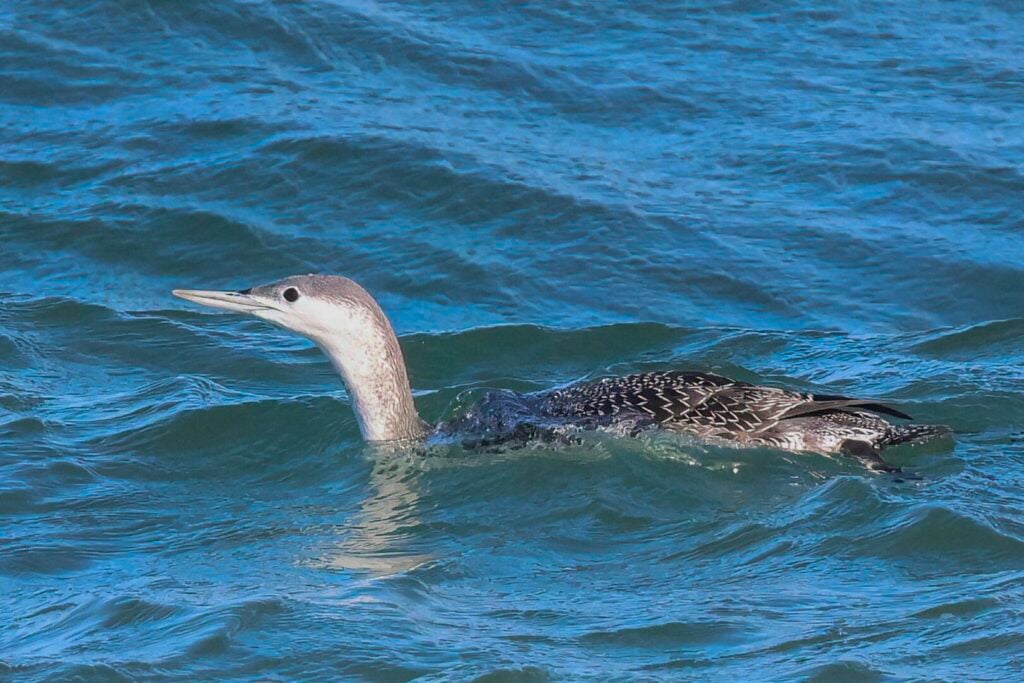
We could see fish jumping offshore. Small baitfish, probably being chased by Mackerel or Bass below. Free food for all the birds. There were lots of Razorbills close in too, and a single Guillemot swam past, diving.
Several juvenile Gannets were close in too, taking advantage of the bounty. One was diving just behind breakers. Impressive to watch, as it folded back its wings and arrowed straight in to the sea. As it was so close, we could even see it under the water!
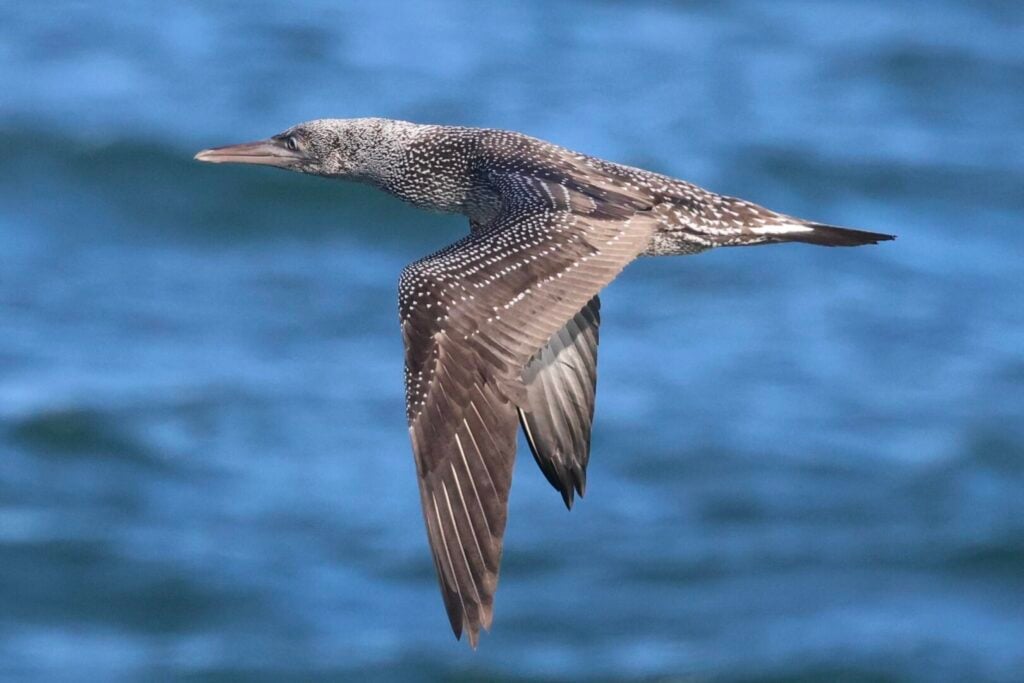
There was not much sign of autumn migrants moving offshore now. Three Brent Geese flew past, coming back in for the winter after a summer in Siberia.
There were a few gulls offshore, dropping down to the water to catch fish too. We could see several Mediterranean Gulls in particular, a couple of adults with white wings, at least three 1st winters, and close views of a 2nd winter with a small amount of black in its wingtips. A few Common Gulls looked to be autumn migrants, just arriving back from the Continent for the winter.
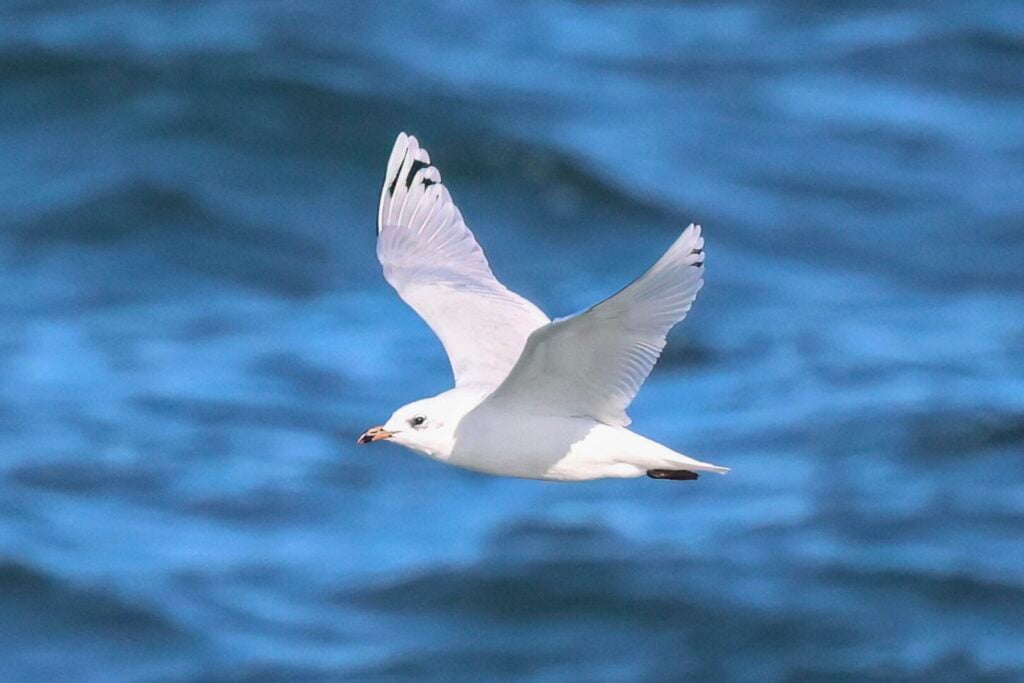
We noticed something dark chasing through the gulls off to the east. A juvenile Arctic Skua. A couple of times it pursued a gull in over the beach and round over the brackish pools towards Salthouse. Pirates of the sea, looking to steal the food from gulls and terns. Eventually it lost interest and headed off east.
As we started to walk back, we noticed a Wagtail flying over from the east. A quick check through binoculars, we could see it was a Grey Wagtail. Presumably an autumn migrant, it carried on west over the Brackish Lagoon without stopping.
When we got back, it was time for lunch. We drove to the Visitor Centre and made us of the picnic tables. The Pink-footed Geese were still feeding in the fields behind and came up calling a couple of times. A male Marsh Harrier dropped down into the reeds just across the road. A Pintail flew in and dropped down on Pat’s Pool. We counted ten Cattle Egrets with the cows around the scrapes now.
After lunch, we drove to Kelling. The sun was out now, and it was nice out of the wind in the Lane. A Common Buzzard was hanging in the air over the top of Muckleburgh Hill. There was nothing in the fir tree by the school or coming to bathe in the beck yet. Further down, we saw a Robin and a Wren in the hedge. A quick glimpse of something looked a little more interesting and after waiting a minute, a Blackcap flew out.
We walked on down the Lane to the metal gate. Scanning the Water Meadow, we could see the usual single Mute Swan out in the wet grass but no snipe today. A Red-legged Partridge was out on the grass at the back and two Common Buzzards were up on the hillside beyond. A male Yellowhammer flew over the copse in front of us, dropped back and landed in the top of the hedge. Nice views in the scope.
As we walked on, a Great Spotted Woodpecker flew in from the east, over the track and landed in the dead pine tree in the field to the west. Hard to tell but possibly a dispersing bird, we have seen them moving along the coast in recent weeks. A group of Curlews came in over the fields calling, carried on off east.
We noticed a Marsh Harrier over the ridge at the top of the field to the west. It turned and stooped, and flushed a Grey Partridge from below. It flew over the vegetation, up over the hedge and was lost to view.
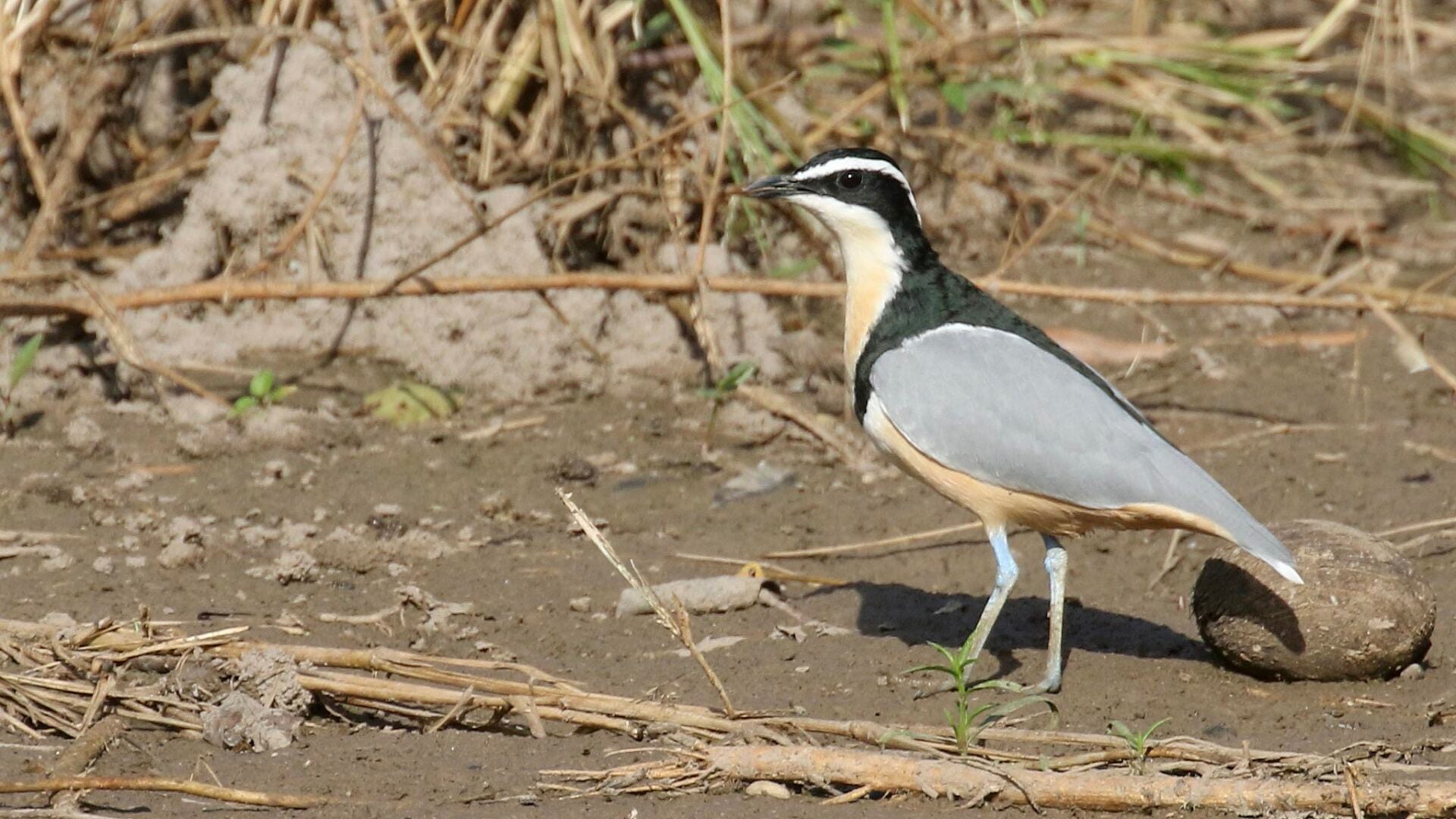
Scanning round the pool the other side, we could see a pair of Egyptian Geese on the grass. There were a few ducks on the water but we couldn’t see anything out of the ordinary.
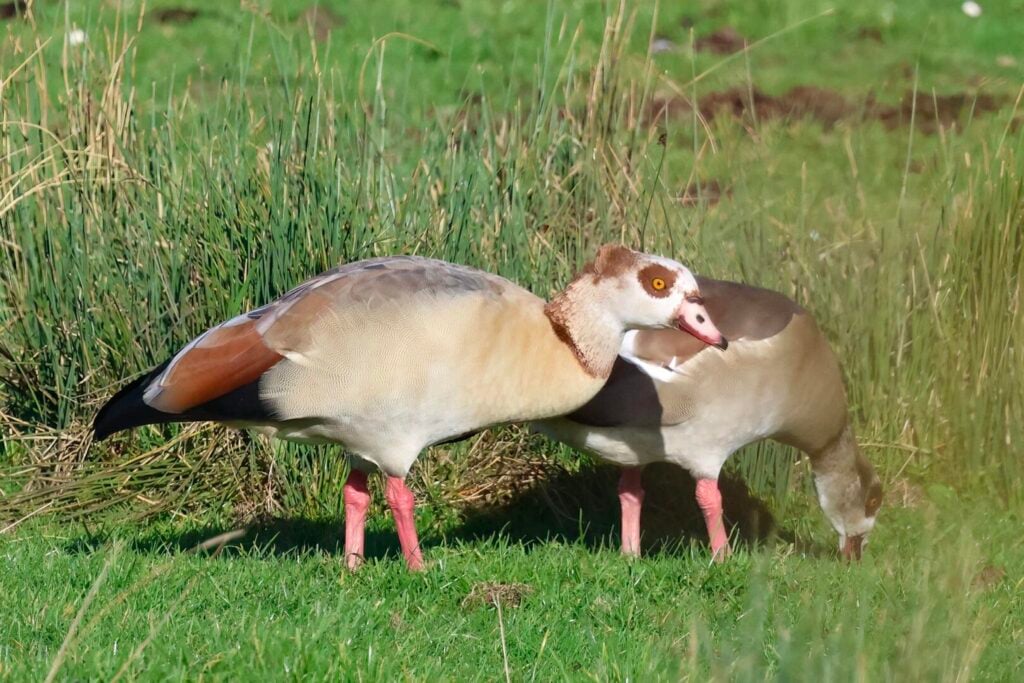
As we walked down to the crosstrack, a Stock Dove flew over. There had apparently been a couple of Jack Snipe here recently and having missed them at Holme yesterday, we hoped to catch up with one now. Scanning carefully all round, all we could find were a couple of Common Snipe though. Nice, but not quiet what we wanted.
We continued on down towards the beach. There were several Linnets and Stonechats in the bramble field as we walked past. We continued halfway up the hillside towards the guns. Two more Stonechats were on the bushes behind the Hard.
Scanning out to sea, we could see some distant Gannets and a few lines of auks now flying past. We picked up a lone Little Gull but it was distant and disappeared away very quickly. It was followed shortly after by another five or six Little Gulls in a group. Maybe the wind had finally gone round and was starting to blow things in.
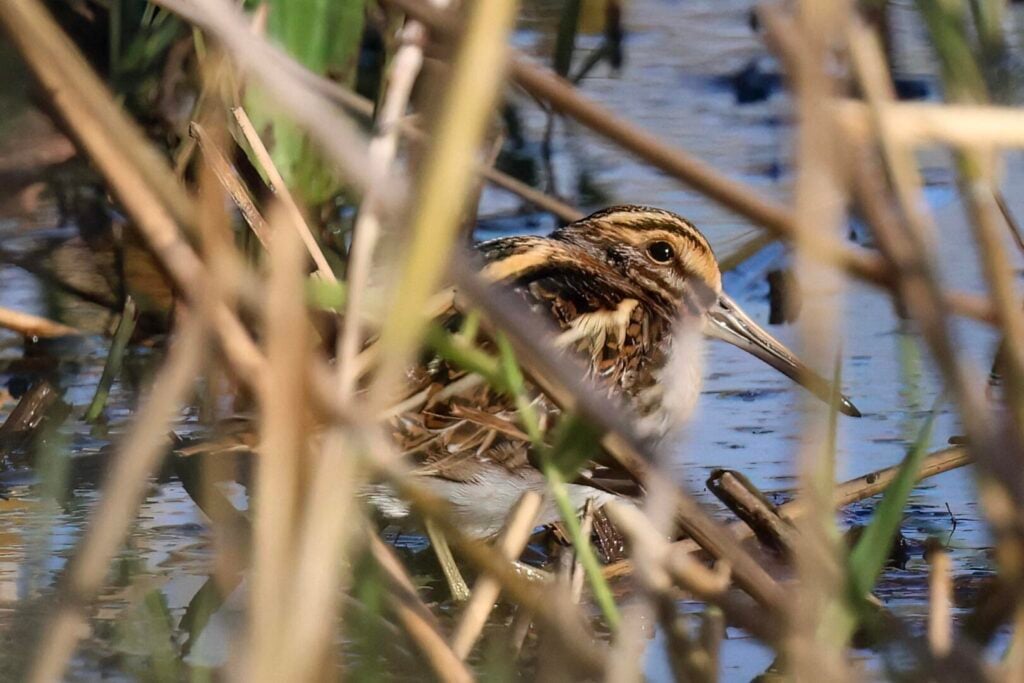
We walk back round to the Water Meadow and stopped to scan for Jack Snipe again. There was no sign of any at first and most of the group walked on. Keen to get back for coffee and cake? However, we persevered nonetheless and it didn’t take long to find a Jack Snipe now. It was where we had looked earlier but had presumably emerged from where it was hiding.
The Jack Snipe was very close but froze behind the reeds where it was feeding. We got it in the scope and called the others back. Lovely views now. It stayed there for some time before eventually deciding we weren’t going to leave straight away. It started bobbing briefly before running off into the reeds.
A nice way to end the day, now we set off back. On the way, we noticed three Common Gulls on the pool now. They weren’t there earlier, so possibly fresh in. Three Ringed Plovers flew over the pool and carried on west, possibly migrants just arriving.
We got back to Hindolveston in better time today. Enough time for tea and cake!