Not a tour, but a fact-finding trip to Taiwan. Like many other islands, Taiwan plays host to a wide variety of endemic species. At the time of writing, 32 species of bird are considered endemic. But with over 50 endemic subspecies on top of this, that total has been growing as some of the more distinctive subspecies have been elevated to full species status. However they are classified currently, there is a very interesting selection of birds to see there.
Our visit was planned to try to catch up with as many of these endemics as possible, as well as being timed to coincide with the best period for seeing Fairy Pitta. We would also visit Lanyu (Orchid) Island, which lies about 60km off the SE coast of Taiwan. Lanyu’s biodiversity shares more with the Philippines to the south and the Ryukyu Islands of Japan to the north, than it does with mainland Taiwan.
If you like what you read, we are hoping to be able to lead a group to Taiwan in the future. Let us know if you would be interested to join us.
8th/9th May
We took a late flight out of London Heathrow with EVA Air on 8th May, taking off at 9.35pm. A refuelling stop in Bangkok of about 1h30 gave us the chance to tick off a few birds around the airport (just like we do on the Thailand tour in February!). We eventually arrived in Taipei at 9.35pm, 7 hours ahead of London time. It was just a short shuttle ride to the Hyatt Regency airport hotel where we spent the night.
10th May
Our first birding day. We were picked up from the Hyatt Regency by Rio and our driver Mr Hong and, after grabbing some breakfast and coffee in one of the ubiquitous 7-Elevens, headed straight up into the hills above Pinglin.
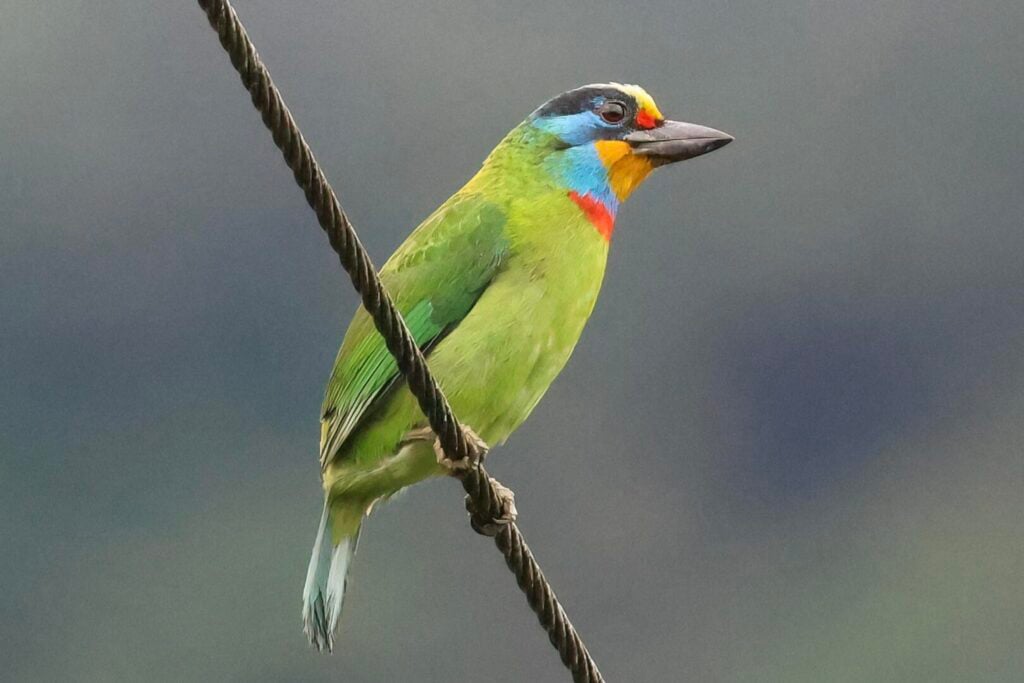
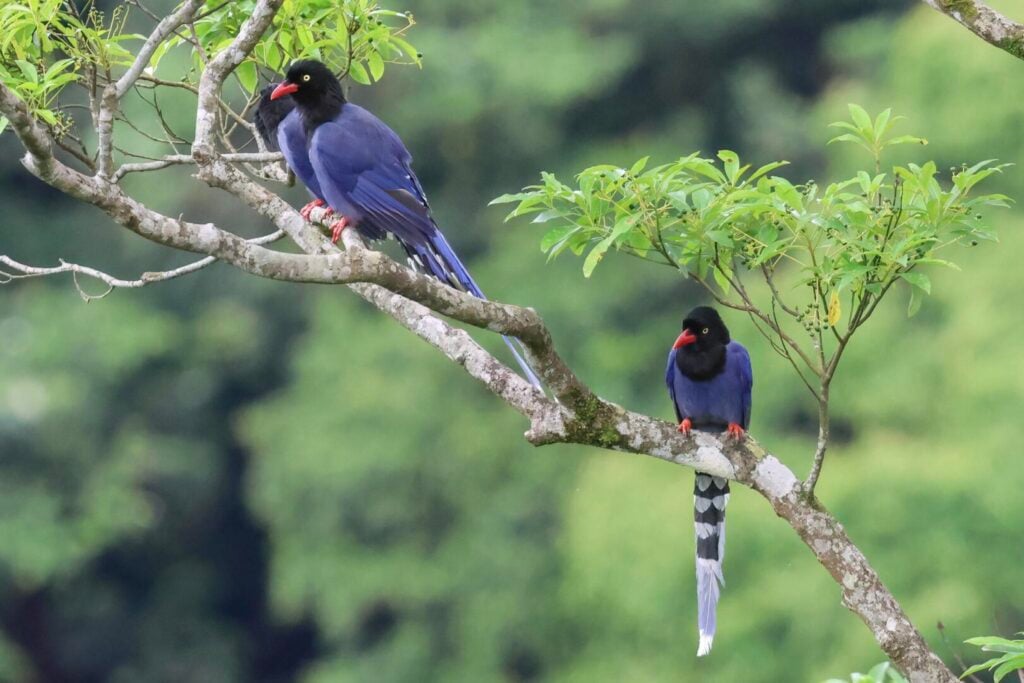
We got off to a good start here, with our first endemics. At our first stop, we saw a couple of Taiwan Barbets (endemic #1) and one posed nicely on some roadside wires, along with a family of Black Drongos, a couple of Bronzed Drongos and some Grey-chinned Minivets. A couple of Taiwan Blue Magpies (#2) flew over and we managed to see one in the trees distantly.
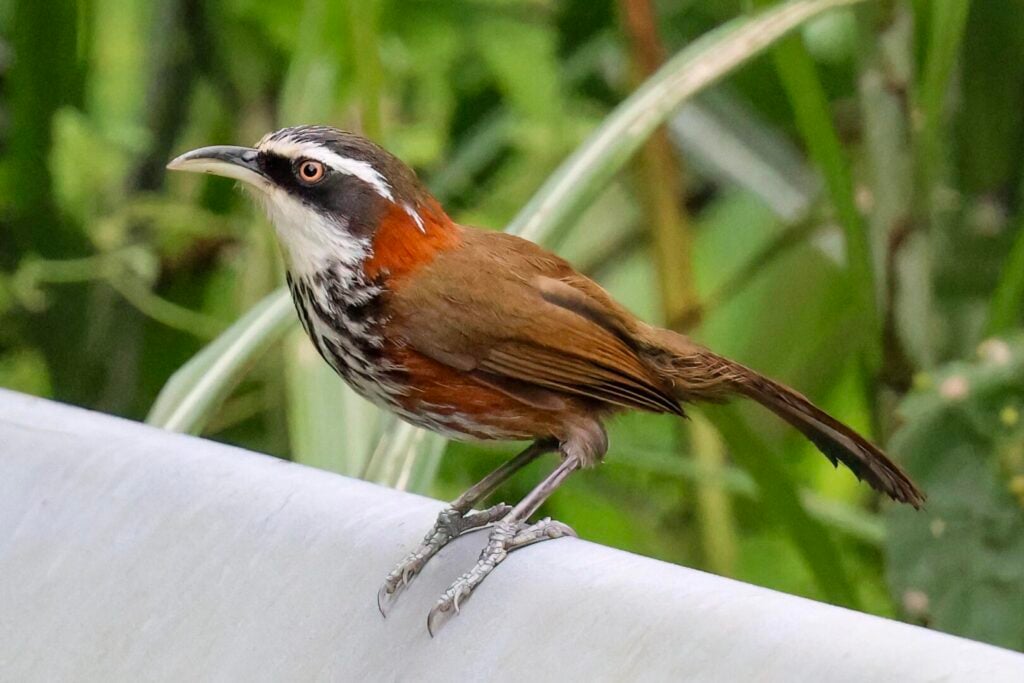
We heard a group of Taiwan Scimitar Babblers (#3) calling and they eventually hopped up on the armco barrier right in front of us. Great views.
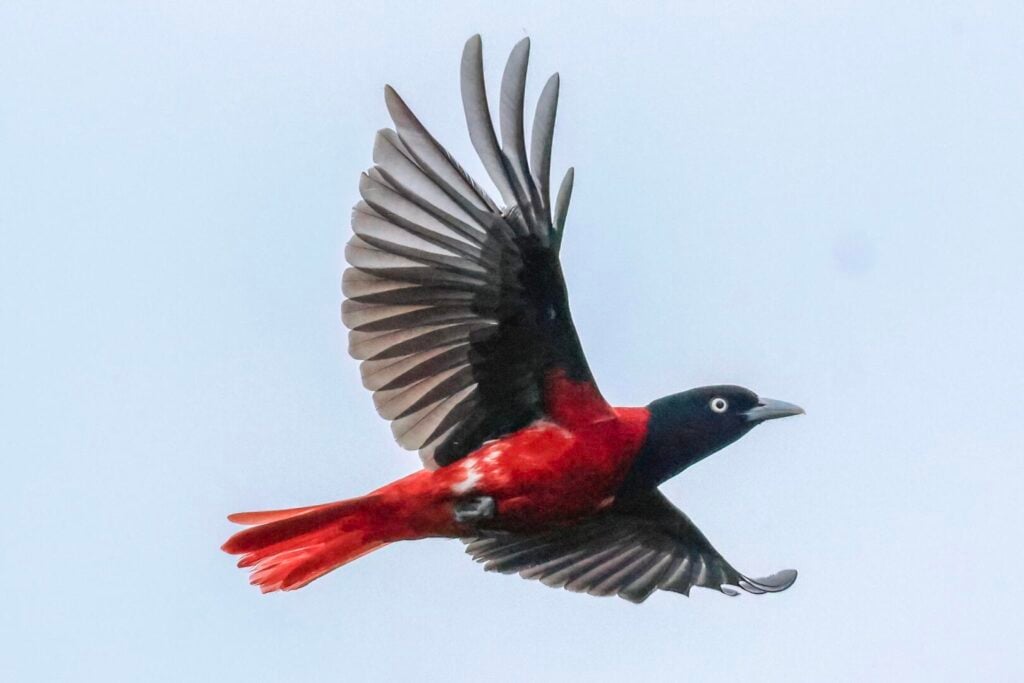
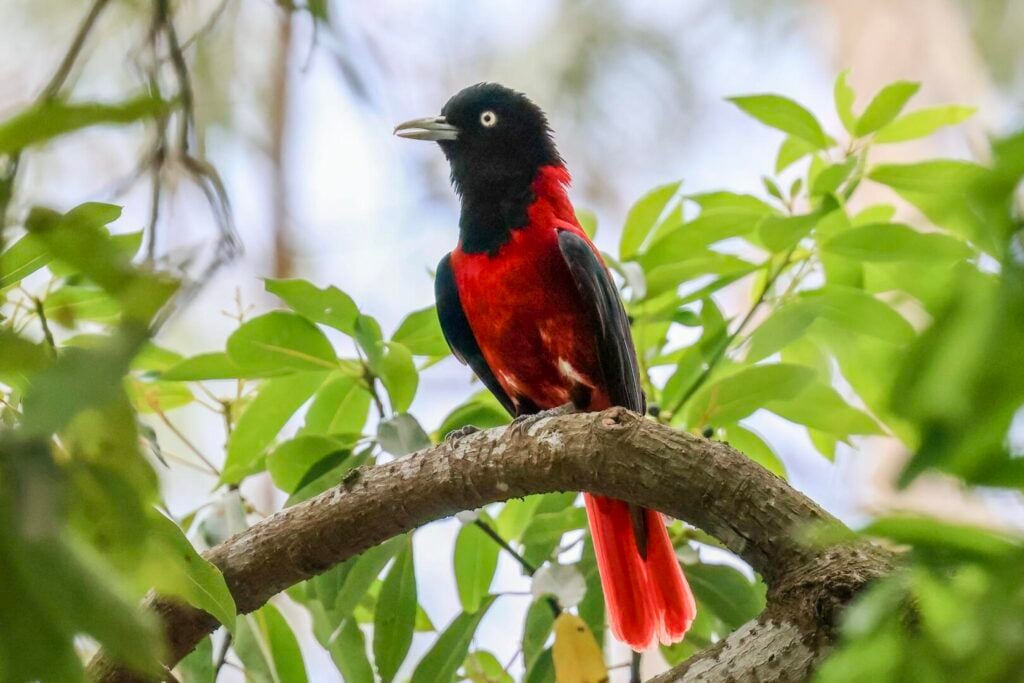
Walking further up the road, we found a couple of Maroon Orioles in the trees. The birds here look very different from the Maroon Orioles in (most of) SE Asia, much brighter red.
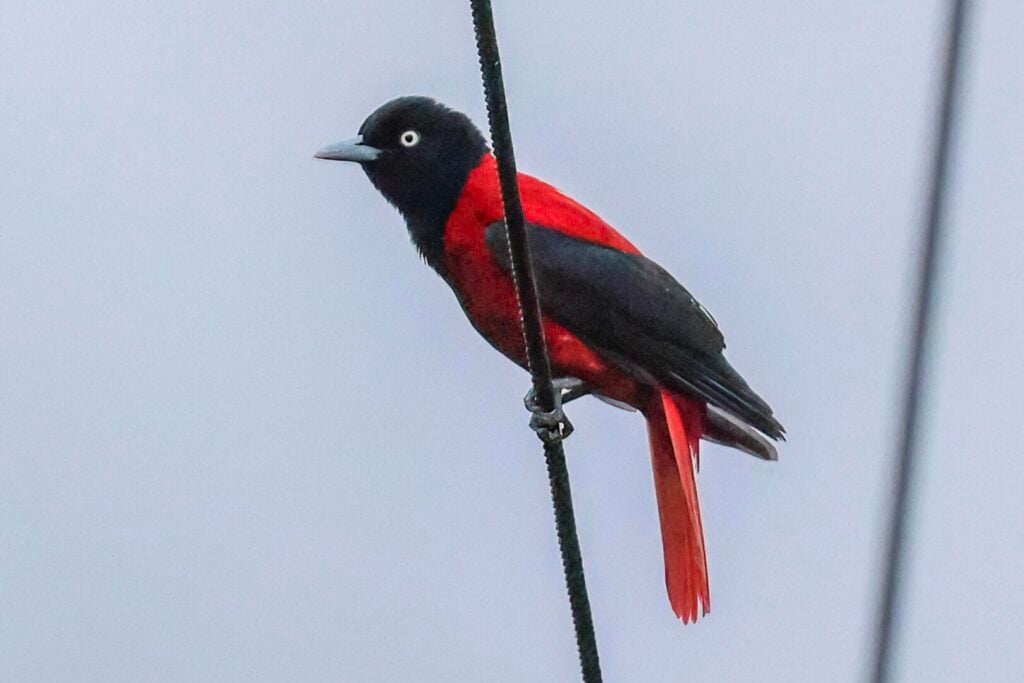
Taiwan has its own subspecies of Maroon Oriole (ardens) which is closely related to the birds on Hainan (nigellicauda) and the two are genetically distinct from other mainland Orioles. It seems likely that these two may be separated as a full species at some point in the future. Although not an endemic, this was one we wanted to see. Smart birds too!
From here, we drove on further into the hills to try a site for Chestnut-bellied Tit. On the way, we stopped to watch a family of Taiwan Bamboo Partridge (#4) on the side of the road. They disappeared into the long grass as we pulled up but we could still see the adult occasionally when it lifted its head.
Taiwan Blue Magpie proved to be quite common along here and we saw several from the car. An Oriental Cuckoo was calling from a bare tree by the road. We didn’t find any Tits but we did add White-bellied Green Pigeon to the trip list, with a male in the trees.
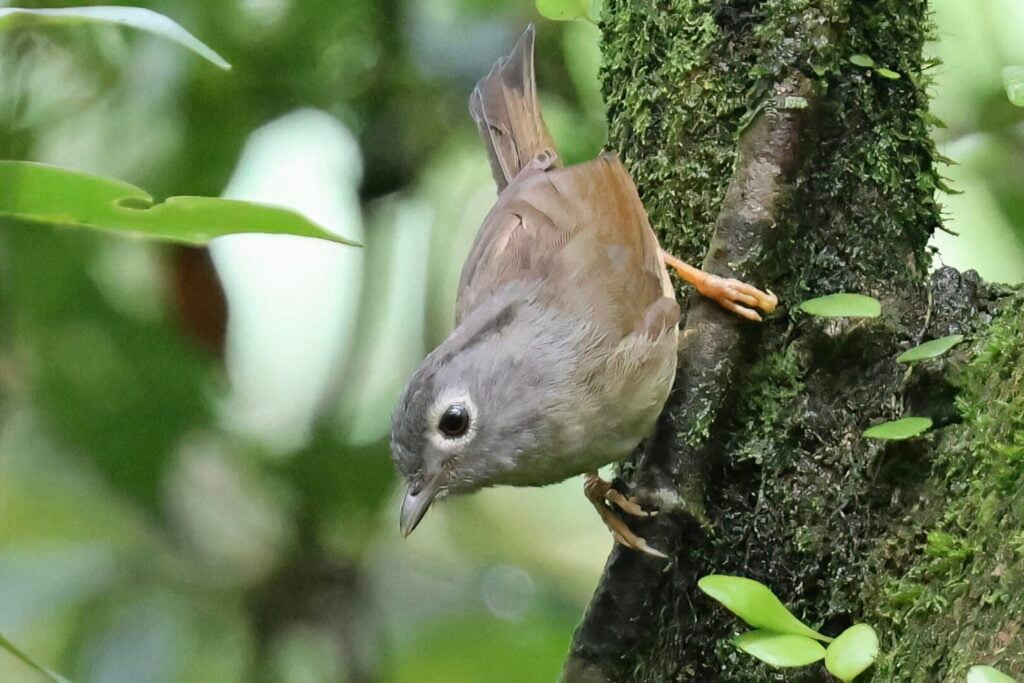
Our next stop was at a site for Swinhoe’s Pheasant. Someone had put food out for them but there was no sign of any Pheasants at first. We decided to go for a short walk down the road and we came across a nice mixed flock. This included several Morrison’s Fulvettas (#5), White-bellied Erpornis and a single Black Paradise Flycatcher which was more of a surprise. A single Dusky Fulvetta appeared briefly.
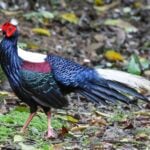
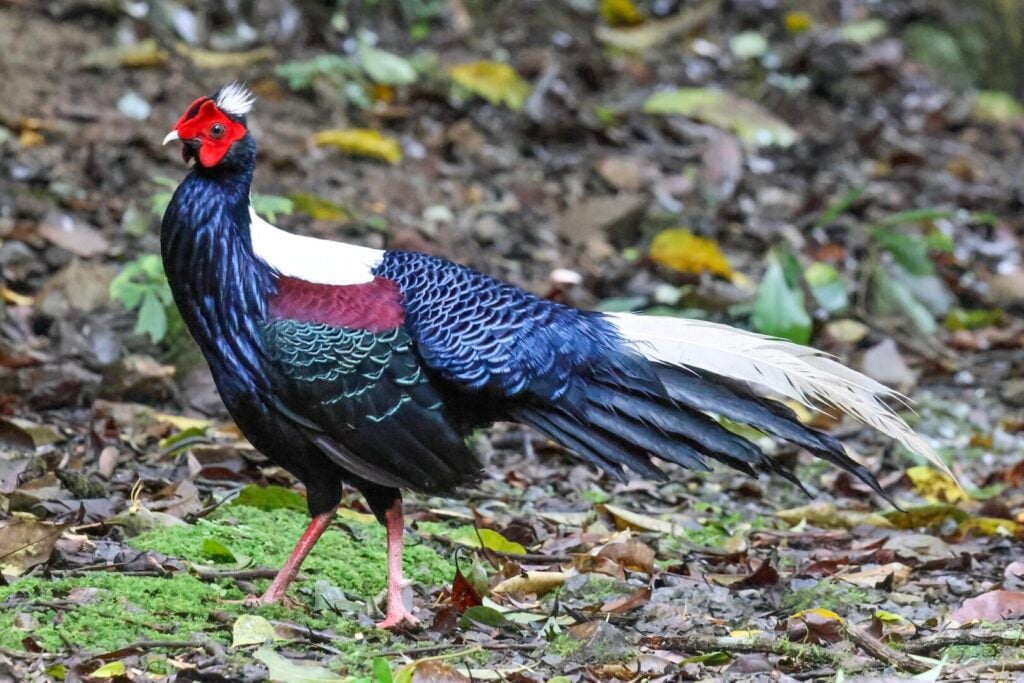
When we got back, we didn’t have to wait long. First a female Swinhoe’s Pheasant (#6) came out of the trees and down to feed on the grain. A distant male ran away up the track, then another male Swinhoe’s Pheasant came out to feed right in front of us. Very striking birds. Several Oriental Turtle Doves came down to feed on the track too.
We stopped for lunch back down in Pinglin. As we walked from the car park, we were distracted by a a colony of Eastern Cattle Egrets in the trees by the river. Really smart birds in breeding plumage and so different from our Western Cattle Egret.
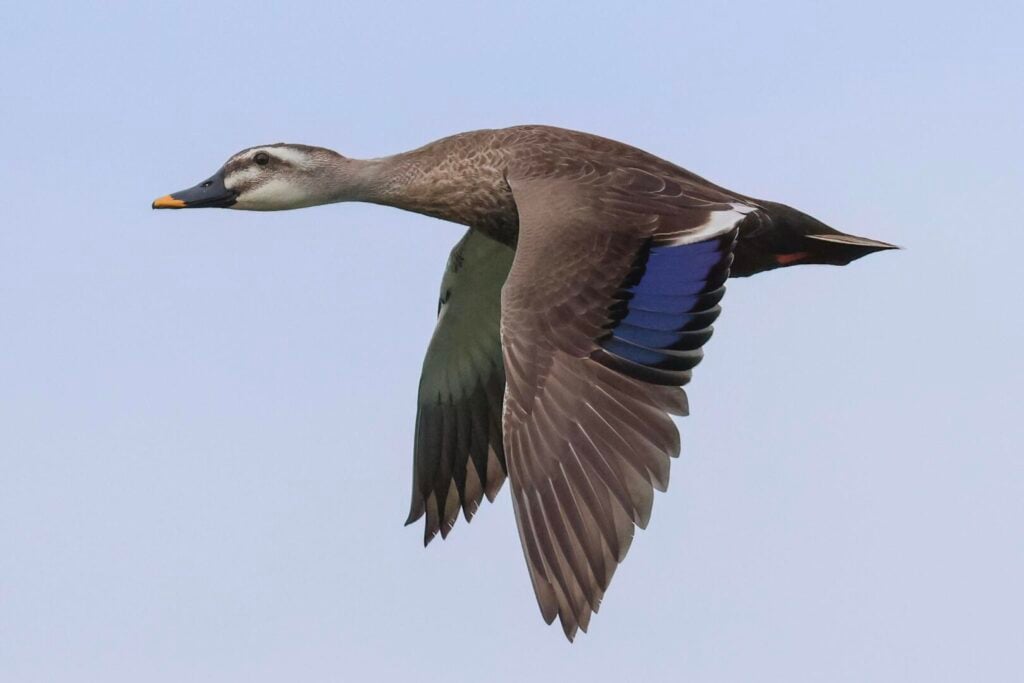
After lunch, we headed out to an area of lotus fields to look for waders. We drove round for a while, seeing several Eastern Spot-billed Ducks,and Lesser Coucals. Eventually we found a suitably wet field and it was full of birds. It was particularly nice to see lots of Sharp-tailed Sandpipers in smart breeding plumage, not a species we see very often.
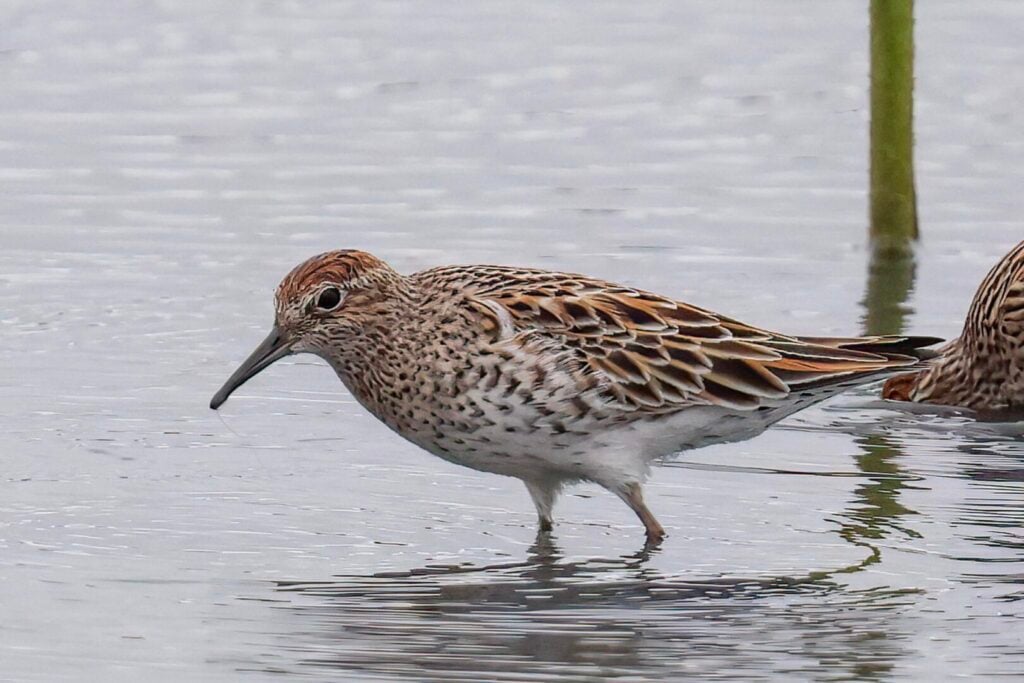
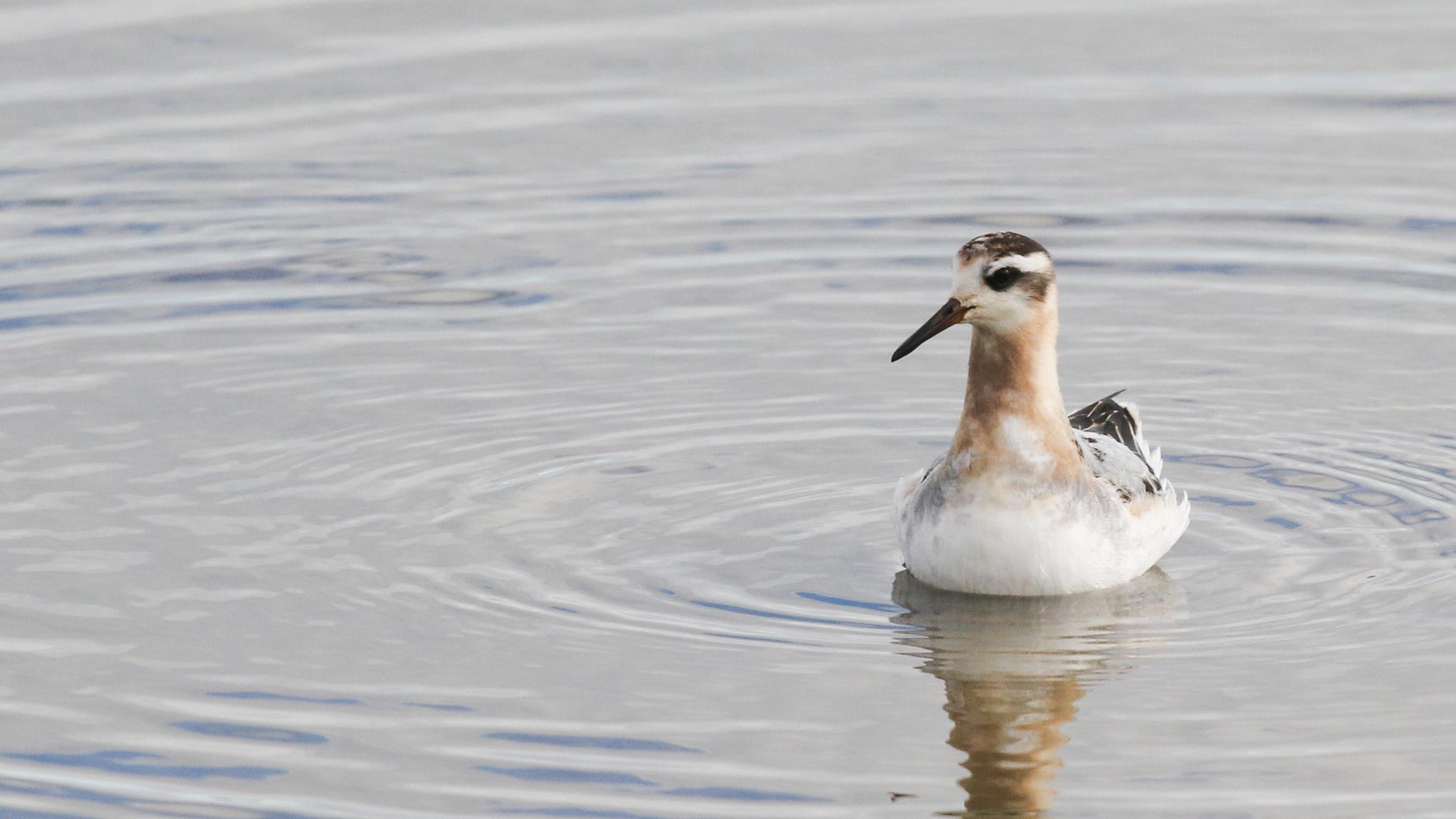
There was also a nice close Red-necked Phalarope, plus Terek Sandpiper, a single Red-necked and numerous Long-toed Stints, Marsh and Wood Sandpipers. Several Eastern Yellow Wagtails of the race taivana were also good to see. A couple of Grey-throated Martins were hawking round with the Barn Swallows.
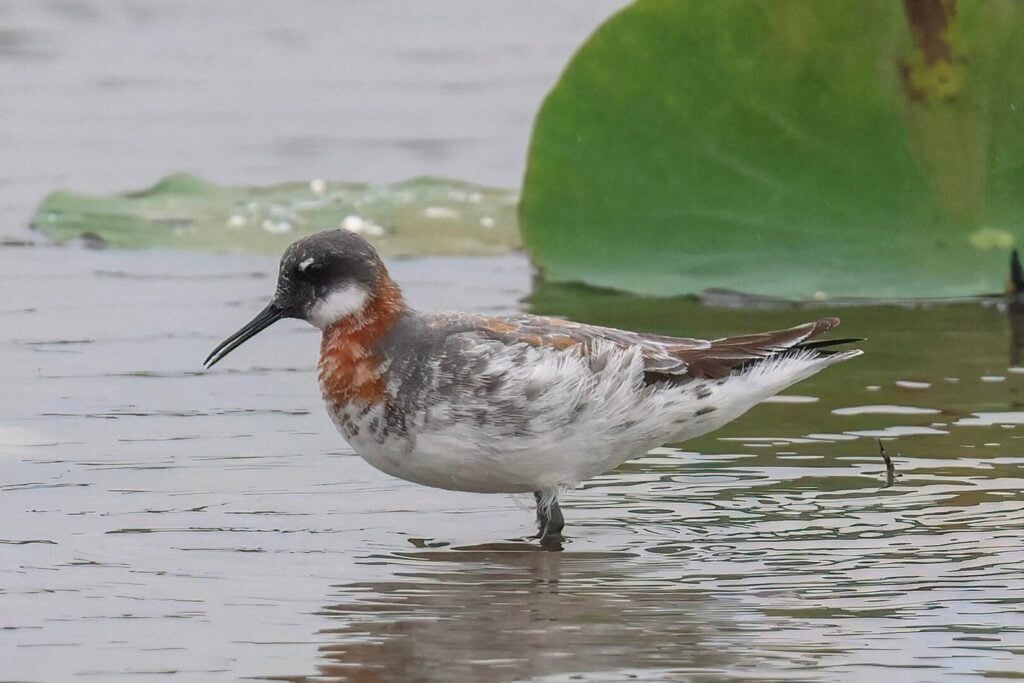
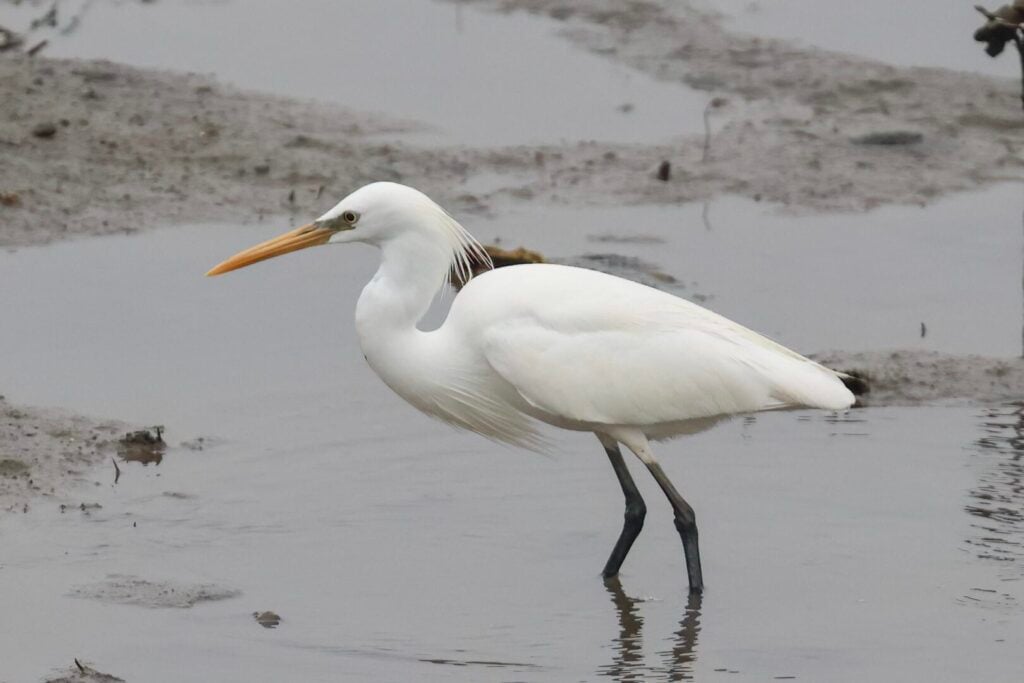
From there we headed on to a nearby estuary. Several Chinese Egrets were feeding around the edges as we drove in.
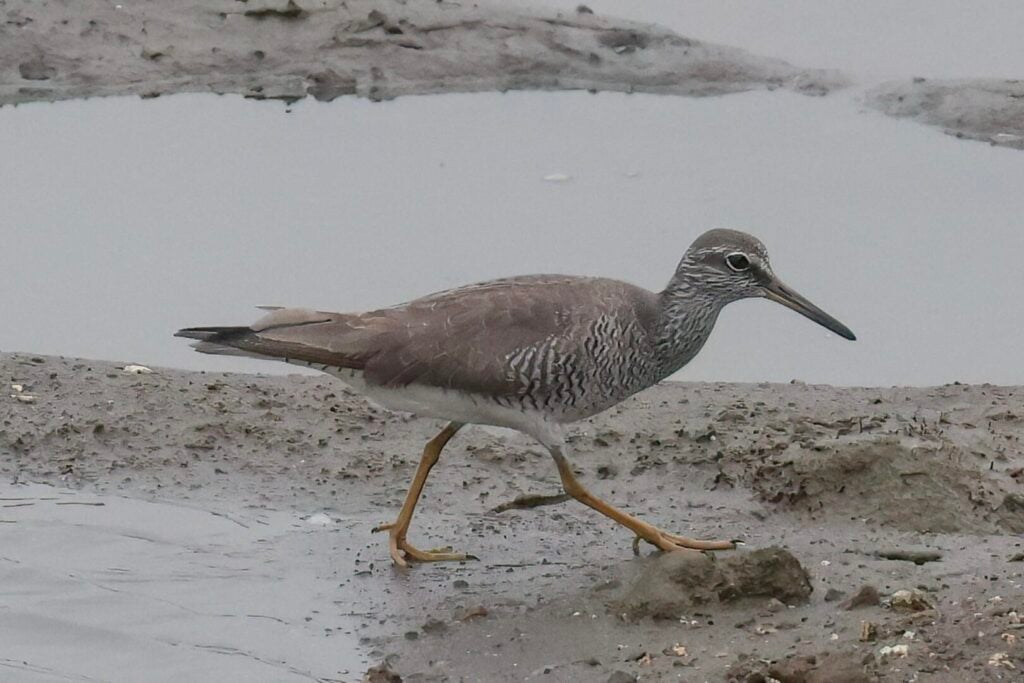
There were more waders here too, the highlight being several Grey-tailed Tattlers. It was nice to see a good number of Siberian Sand Plovers in breeding plumage, as well as a couple of Greater Sand Plovers. We also found a couple of Great Knot and a single Red Knot, several Broad-billed Sandpipers and a Curlew Sandpiper, lots of Red-necked Stints and several more Terek Sandpipers. A selection of waders to dream of back home!
A quick look at the sea produced a very distant group of terns feeding offshore, which were presumably Greater Crested Terns. A single Streaked Shearwater flew past, though it was a long way out.
A fantastic first day birding in Taiwan, with six of the endemic species seen already. We stopped off at a beef noodle restaurant for dinner, then headed to our hotel for an early night.
11th May
After breakfast at the hotel, we drove to a nearby site for our first go at seeing Fairy Pitta. As well as the endemics, this was one of our main targets for this trip. Unfortunately it seemed they were on the nest and not coming out in to the open area where they had been seen in recent days. We had to settle with hearing two different Fairy Pittas calling in the dense undergrowth not too far away but just out of view. Frustrating. But we would have more opportunities to try to catch up with them.
From there, we moved on to Dasyueshan, where we would be spending the next few days. The road to the top passes through different elevations and many of Taiwan’s endemics can be seen along its length. We started at the lower reaches, driving up along a small side road. As we pulled up and got out, we heard Taiwan Bamboo Partridge calling.
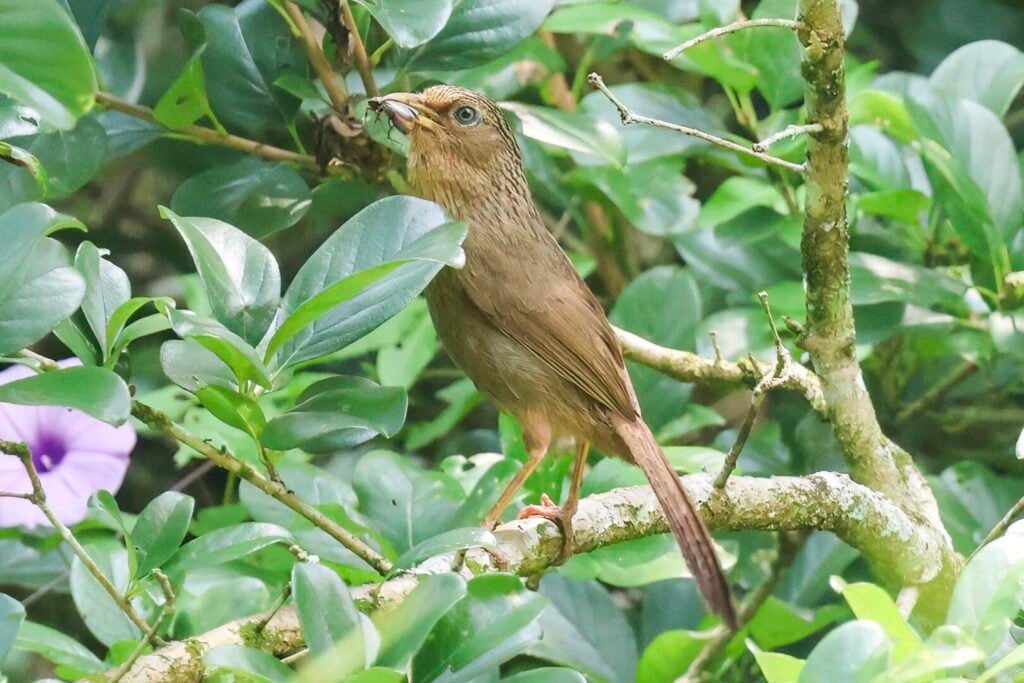
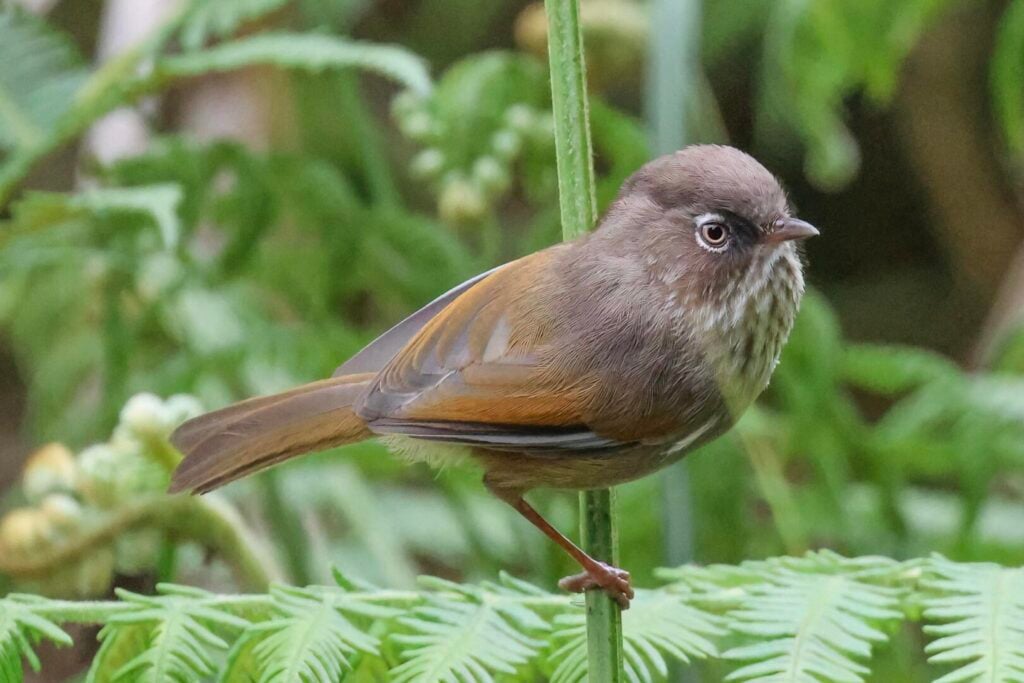
Walked on further, we quickly heard Taiwan Hwamei (#7) calling, our main target here. With a bit of perseverance, we managed to get eyes on a couple briefly when they emerged from the undergrowth. There is an increasing problem of Taiwan Hwamei hybridising with the introduced and closely related Chinese Hwamei. The bird in the photo below lacks the obvious white brow of clear hybrids but shows a hint of a broken pale eye-ring. Whether this hints at influence from its Chinese cousin is unclear.
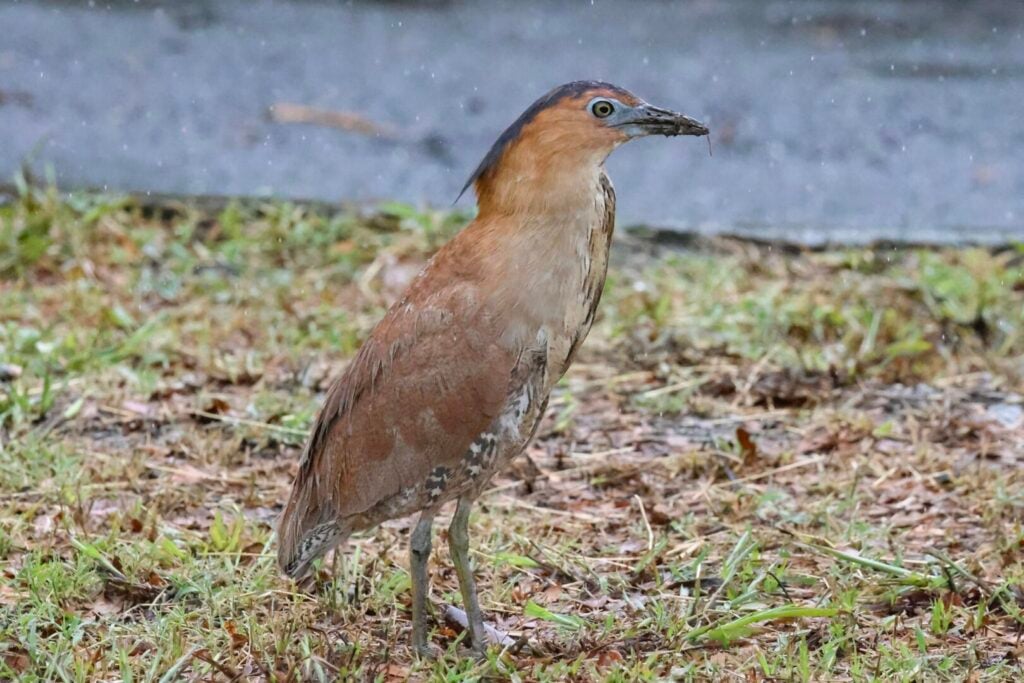
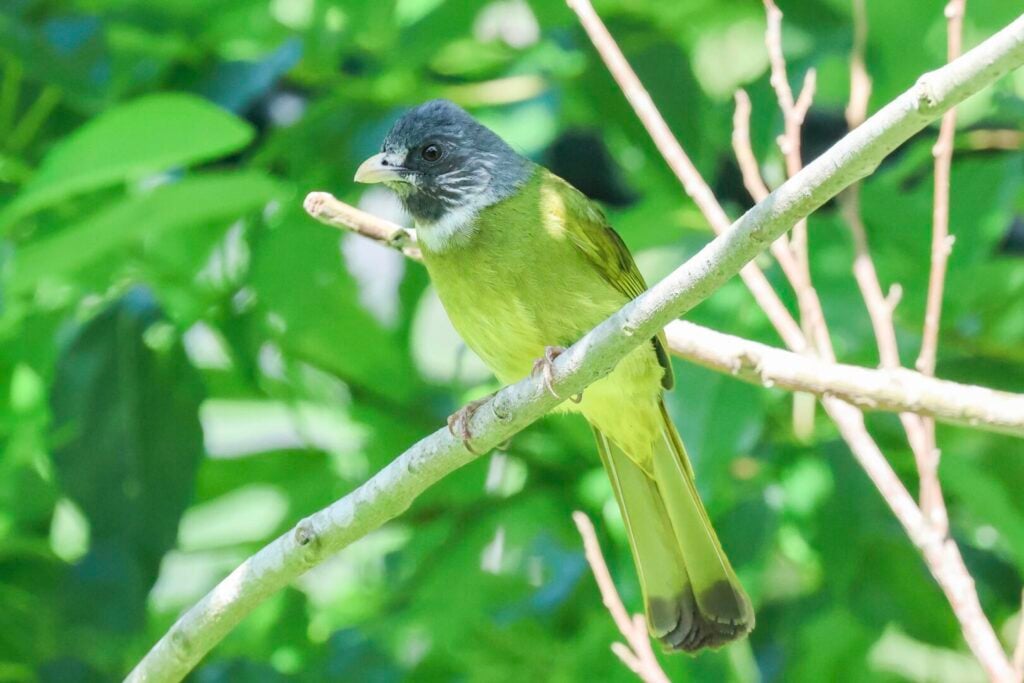
Continuing along the road, we saw a couple of Crested Goshawks. Rio took us to where a Malayan Night Heron was nesting right above the middle of the tarmac. The single juvenile was looking right down at us. On our way back, we heard three more Fairy Pittas calling but the vegetation was very think here. No way we would see them. Back to the car, a couple of Collared Finchbills were in the trees opposite now.
Back to the main road, we had lunch at a small local restaurant. Afterwards, we drove on higher. At our next stop, we tried for Brownish-flanked Bush Warbler in the vegetation on the slope below the road. We could hear a couple singing and what was presumably one shot across between the bushes but it never showed properly. One to try for again later.
We continued on up, and while we were driving along Rio heard Rusty Laughingthrush (#8) through the open window. We stopped and scanned the bushes and eventually managed to get views of three in the dense tangled undergrowth above the road. This can be one of the harder endemics to see, so we were grateful for Rio’s excellent hearing!
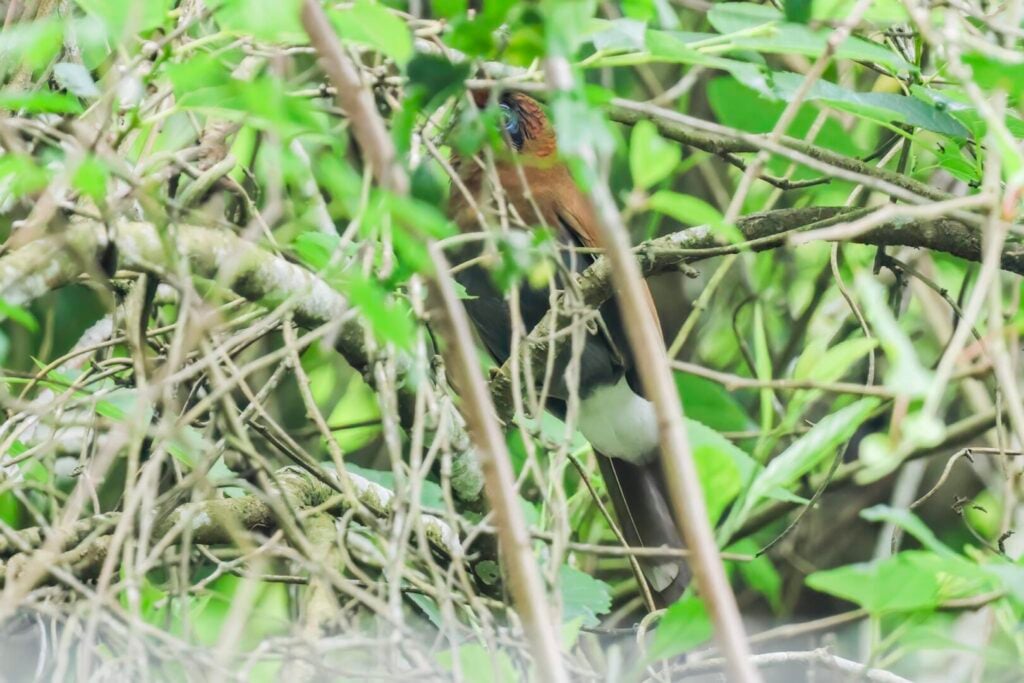
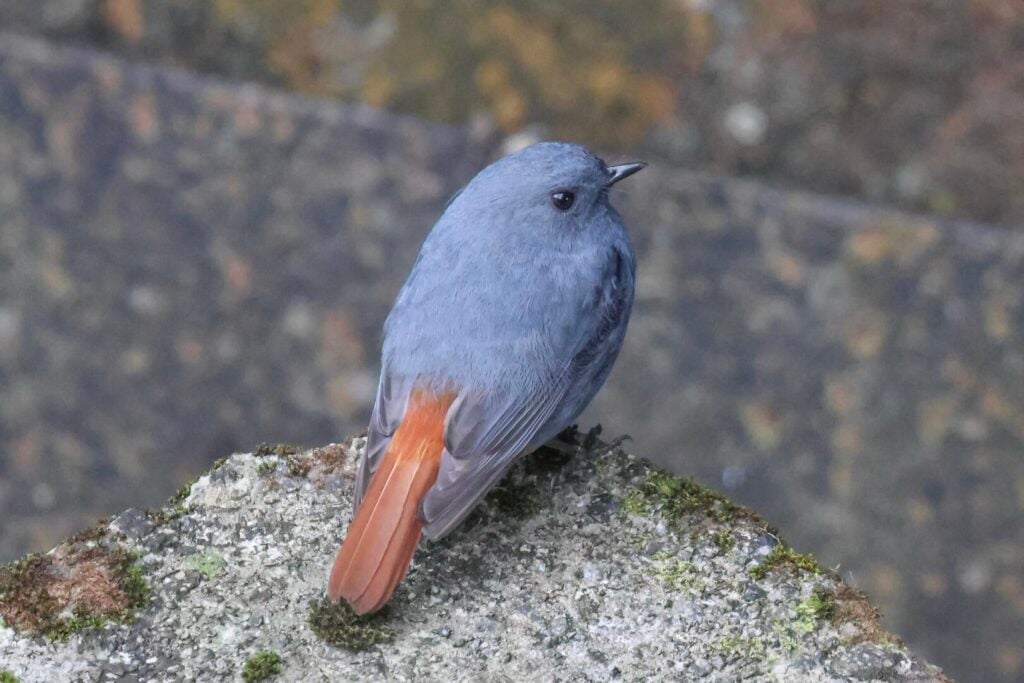
Our next scheduled stop was at a bridge over a stream. This used to be a good area for Brown Dipper, but it seems like they are not regular here any more. Walking up along the track, we came across a group of Taiwan Yuhina (#9) in the trees. As we walked back down, a pair of Plumbeous Redstarts were under the bridge.
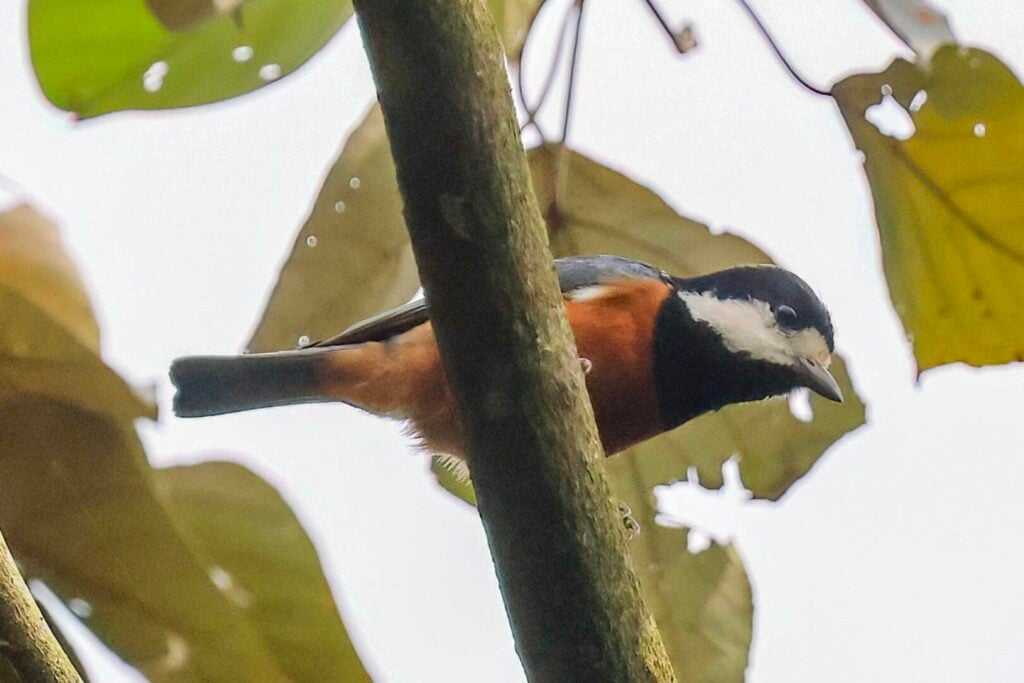
Another group with a colleague of Rio’s were on the mountain at the same time as us and they told Rio they had just seen Chestnut-bellied Tit (#10) slightly lower down. We drove down to try there but drew a blank. Thankfully, Mr Hong knew of another location a little higher up and we enjoyed nice views of one around its nest site here. A Formosan Giant Stag Beetle was on the edge of the road, a very large and formidable looking beetle!
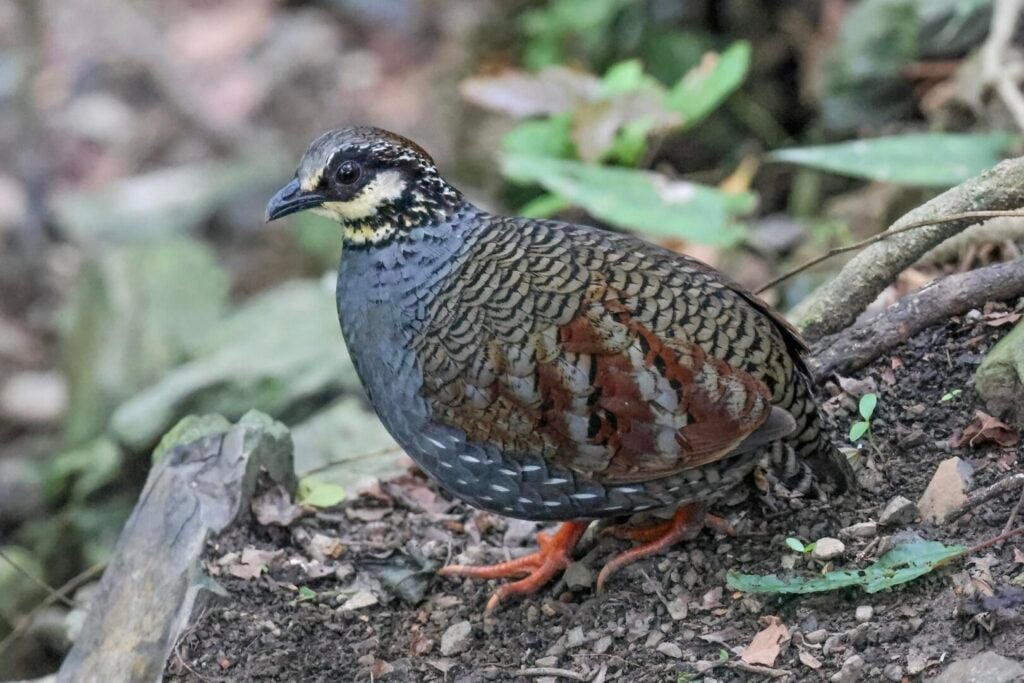
The other group were further up, ahead of us, and Rio got a message now to say that the Taiwan Partridges (#11) were showing well at km 23.5. Mr Hong got us up there suitably quickly and the pair of Taiwan Partridges were still feeding on the slope just below the edge of the parking area. Again, great views of what can be a tricky species to catch up with, before they disappeared off down the slope.
From here, we decided to head on straight to the summit. On the way, Rio heard Rufous-crowned Laughingthrushes but they had gone quiet by the time we stopped and got out. A Taiwan Vivid Niltava (#12) was singing on a bare tree by the roadside. We made a quick stop by a small waterfall above the road but there was no sign of the Little Forktail which is sometimes here. Almost to the summit, we heard a couple of Taiwan Cupwings singing by the road.
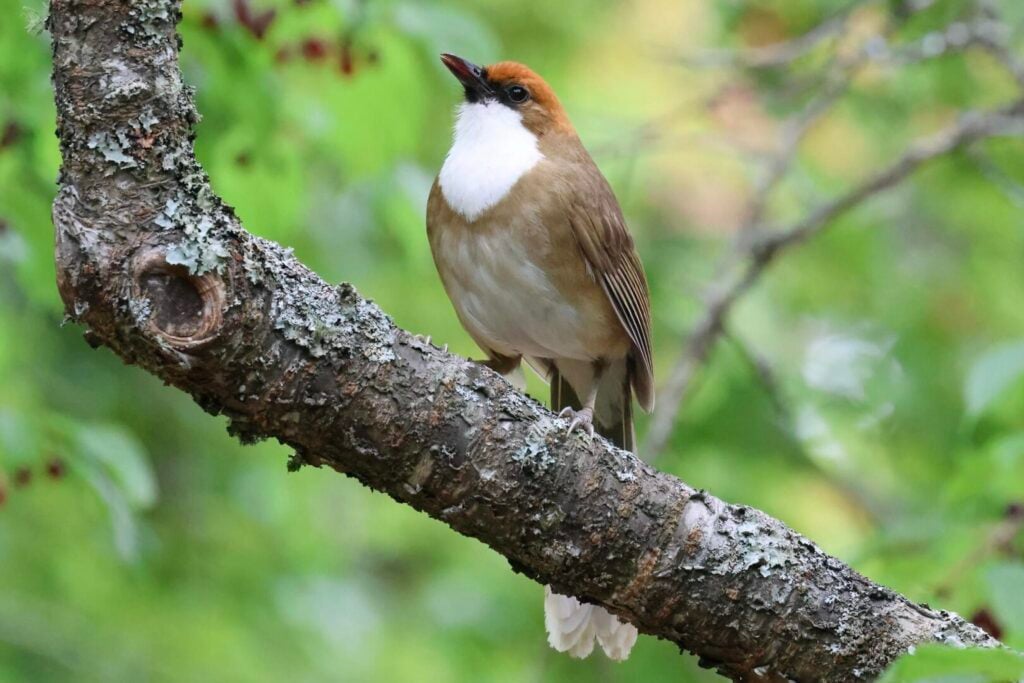
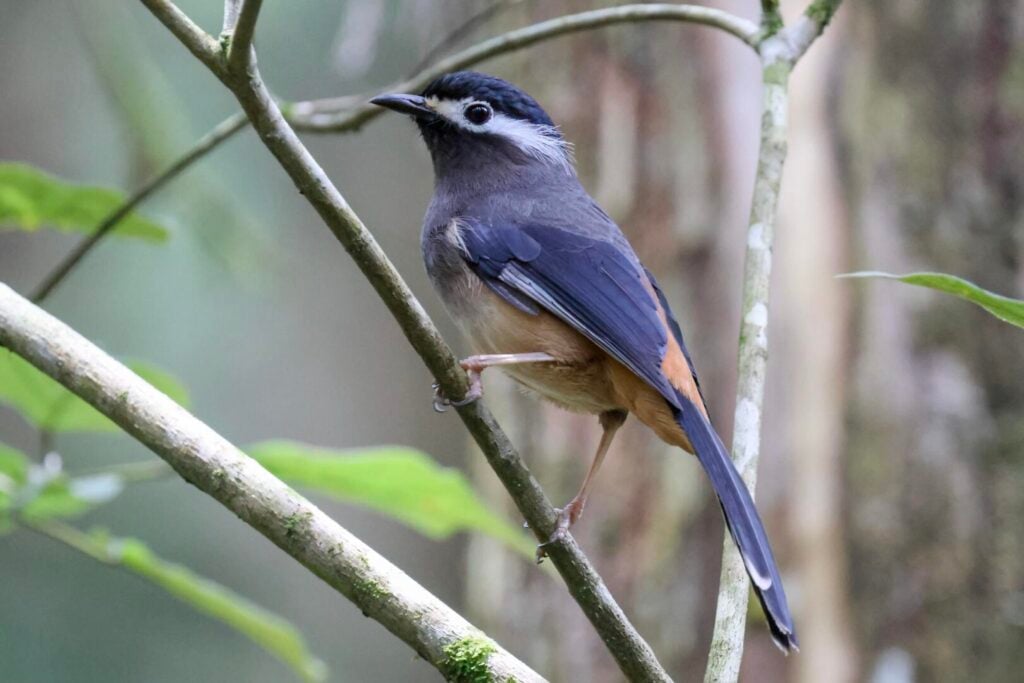
The summit car park provided us with our first White-whiskered Laughingthrushes (#13), one of the commoner and easier to find endemics.
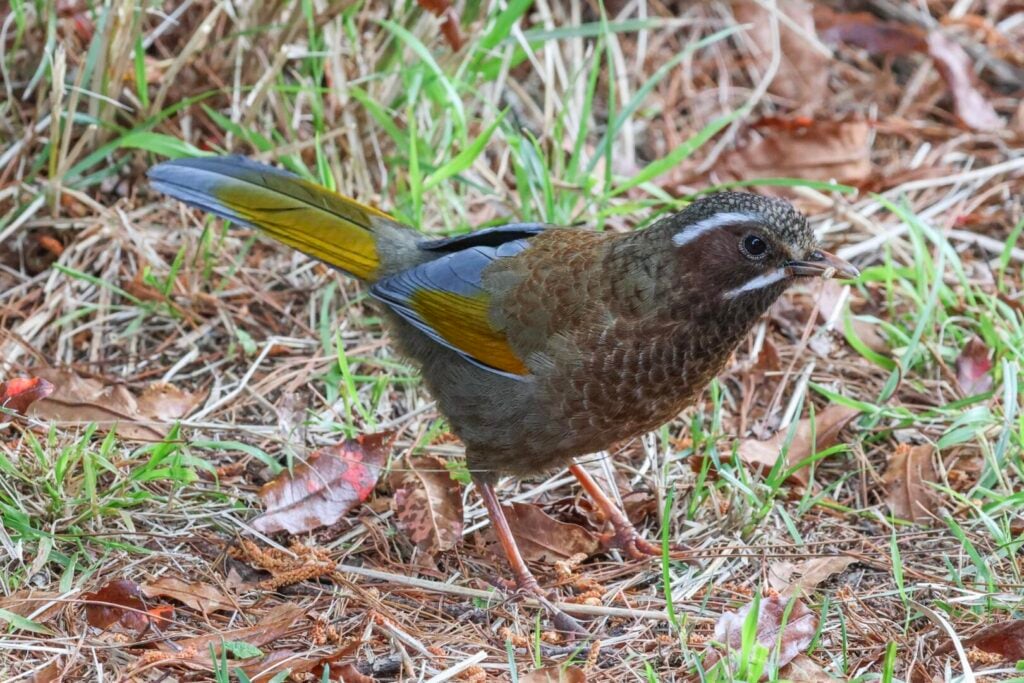
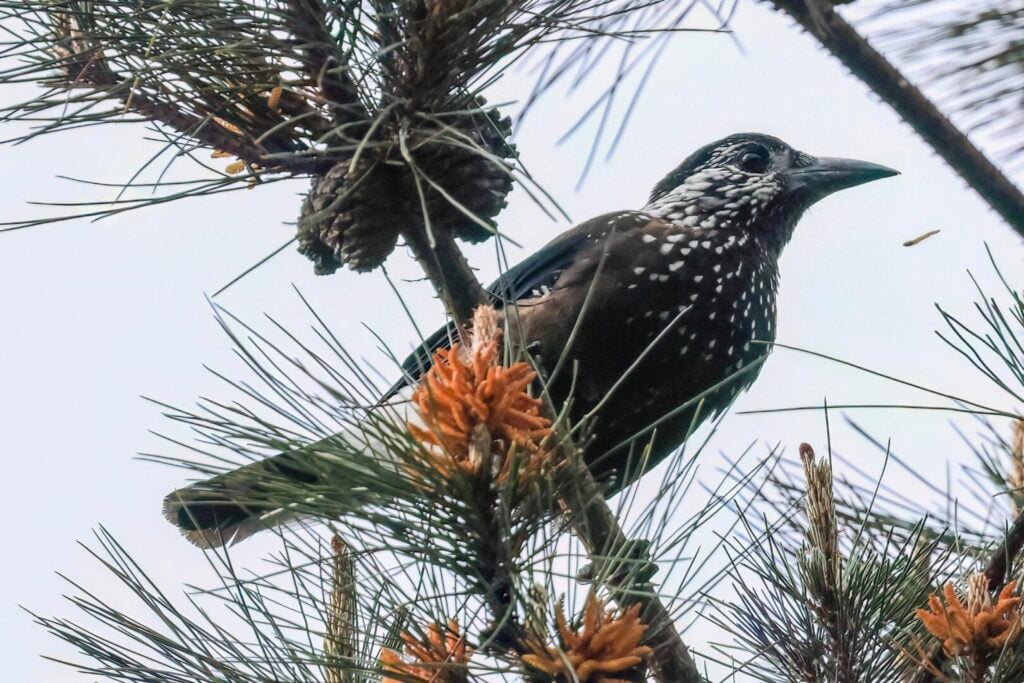
Walking along the trails at the summit, several Taiwan Fulvettas (#14) and Taiwan Liocichlas (#15) were a little harder to see, hiding in the undergrowth, though we did see them both. There were also Southern Nutcrackers, Green-backed and Coal Tits, a couple of Black-throated Bushtits and two Ferruginous Flycatchers.
Both Taiwan Shortwing and Taiwan Bush Robin were heard only – we would have more chances for both of these endemics. The bird we were really hoping to find here though was Mikado Pheasant and unfortunately of that there was absolutely no sign.
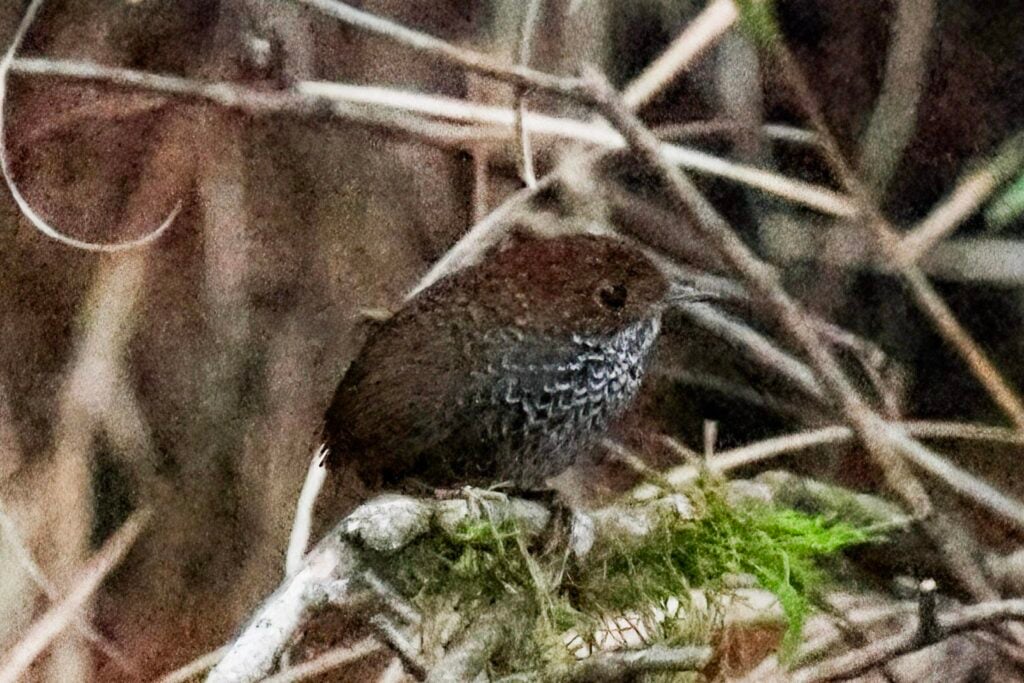
Eventually, it was time to make our way back down to our hotel. On the way, we heard two Taiwan Cupwings (#16) singing again, one of which was clearly very close to road. This time we stopped and. although the light was fading quickly, we had very good views of it hopping around on the verge.
12th May
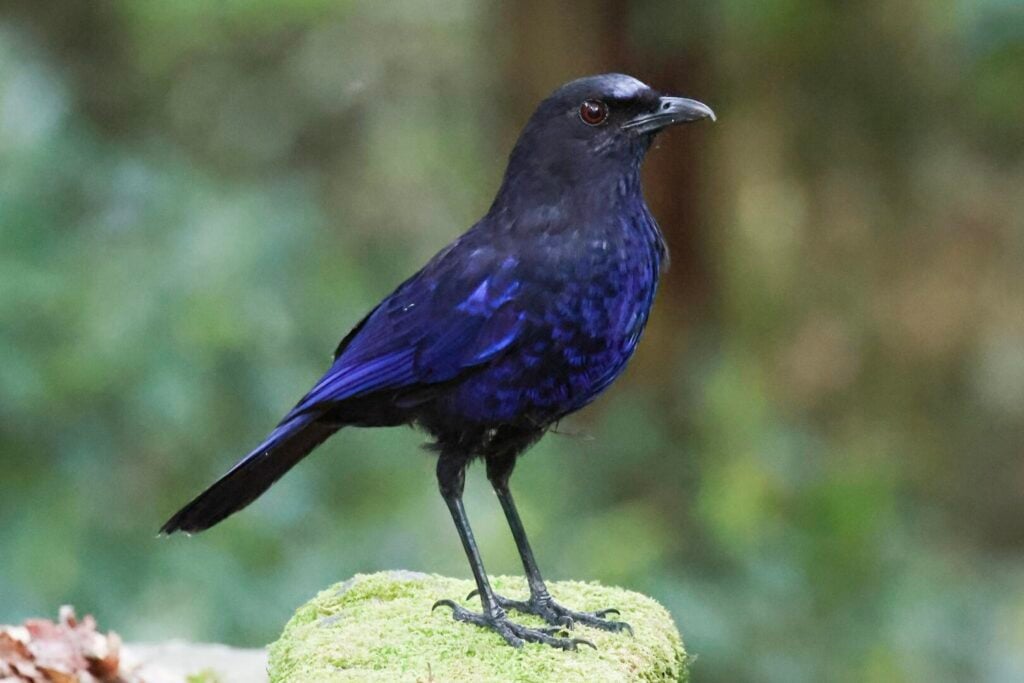
We had an early walk round the hotel grounds before breakfast. This produced a couple of Green-backed Tits, a Formosan Macaque and a Perny’s Long-nosed Squirrel. A Taiwan Whistling Thrush (#17) was hopping around in the car park but we just missed a party of Rufous-crowned Laughingthrushes which moved quickly through where we had been standing a few seconds earlier and were gone when we got back!
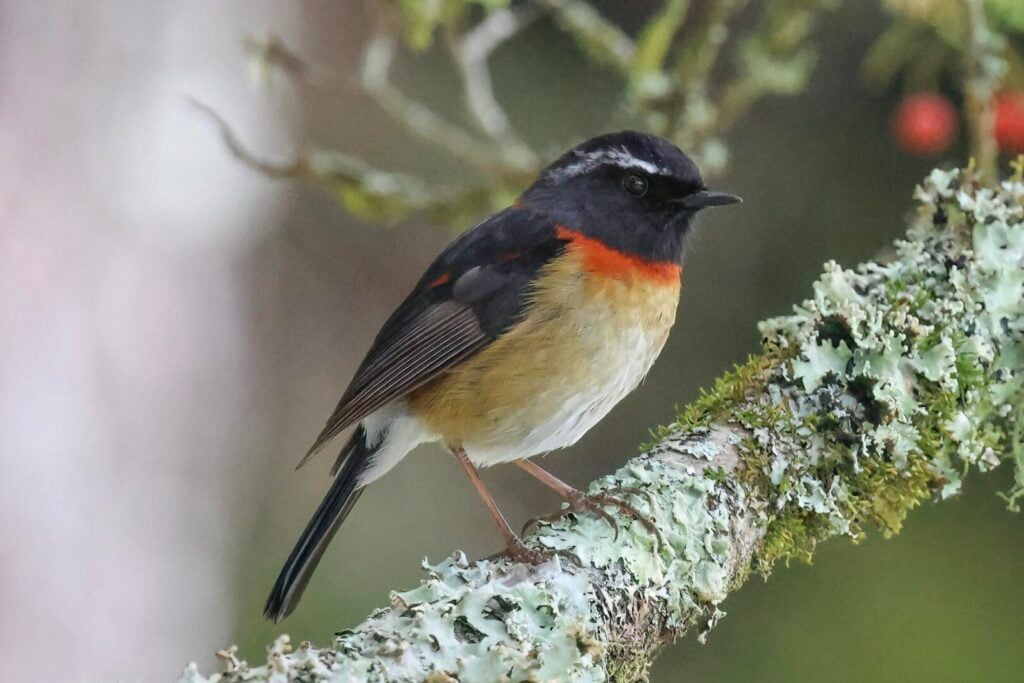
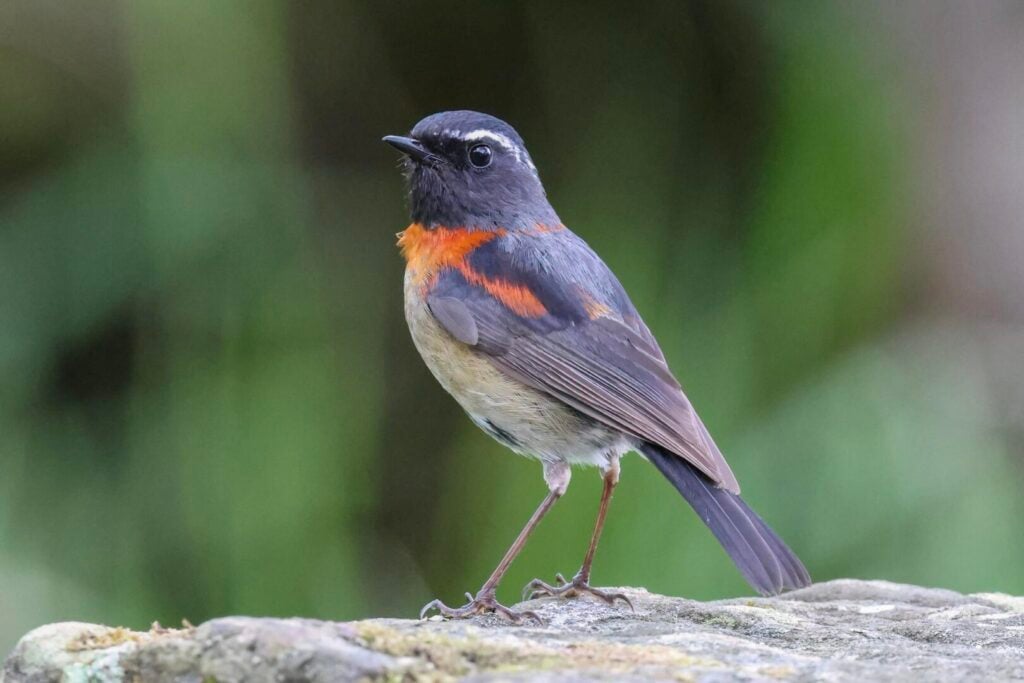
After breakfast, we headed back up to the summit. Several Collared Bush Robins (#18) were around the buildings here now. Like yesterday, we walked the trails again. This produced views of White-eared Sibia (#19) plus our first Flamecrest (#20). We heard several Taiwan Bush Robins (#21) again and eventually managed to see a brown young male. We heard Taiwan Rosefinch too, and got good views of a pair of Taiwan Bullfinch (#22) when we flushed them up from the side of the track.
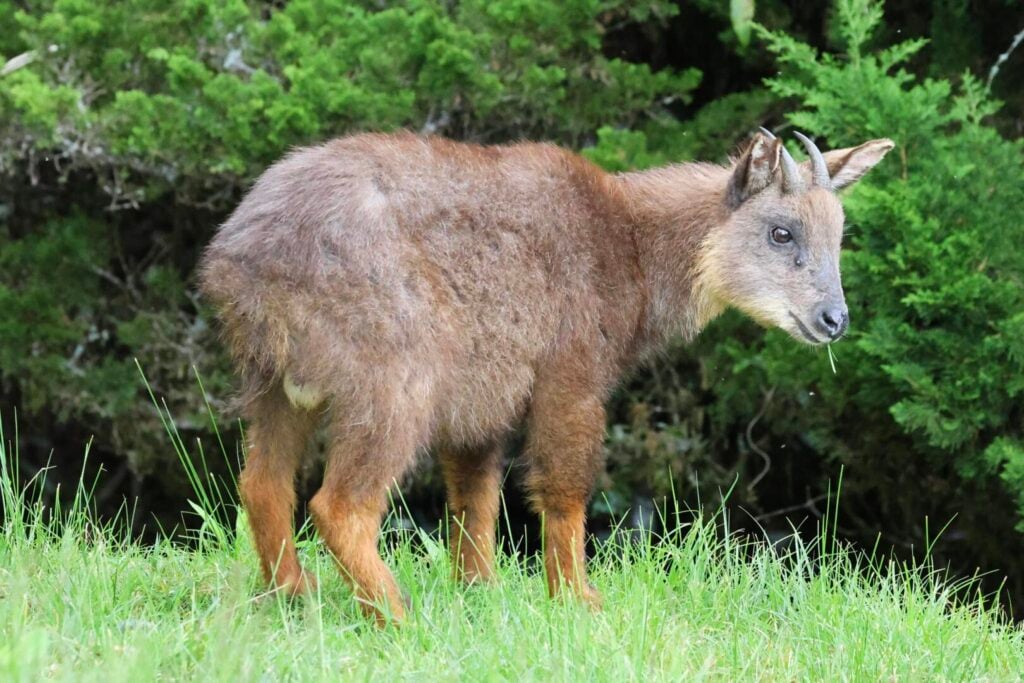
When we got back to the buildings, a Taiwanese Serow was feeding out on the grass by the toilet block, despite it being the middle of the morning. They are meant to be difficult to see and best looked for at dawn or dusk! There was still no sign of any Mikado Pheasants though. This used to be a reliable site for them but it was becoming clear that they would be tricky here.
We walked up the train to the summit marsh where we heard Taiwan Bush Warbler (#23) singing briefly. With a bit of patience, we managed to see two skulking in the low bamboo scrub just above the pond. One seemed to be collecting nest material.
Back to the restaurant by the hotel for lunch, there were several moths which had been attracted to the lights around the toilets. Afterwards, we drove down to the car park just above the park entrance at km 35. Here we finally managed to see Rufous-crowned Laughingthrush (#24), several of which were coming in to feed in the fruiting trees by the toilet block.
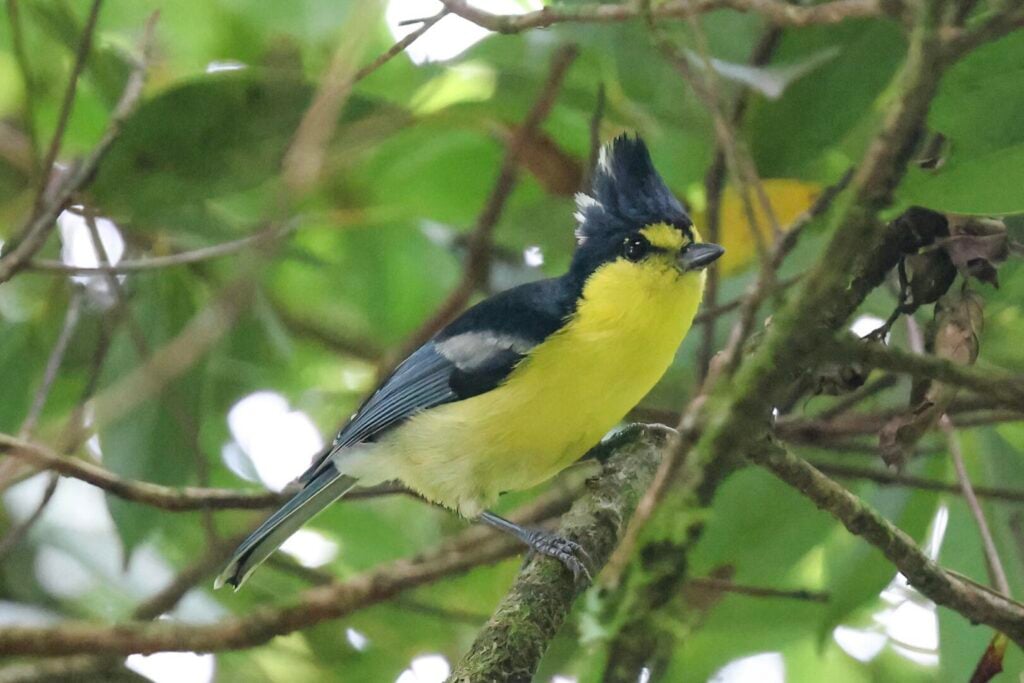
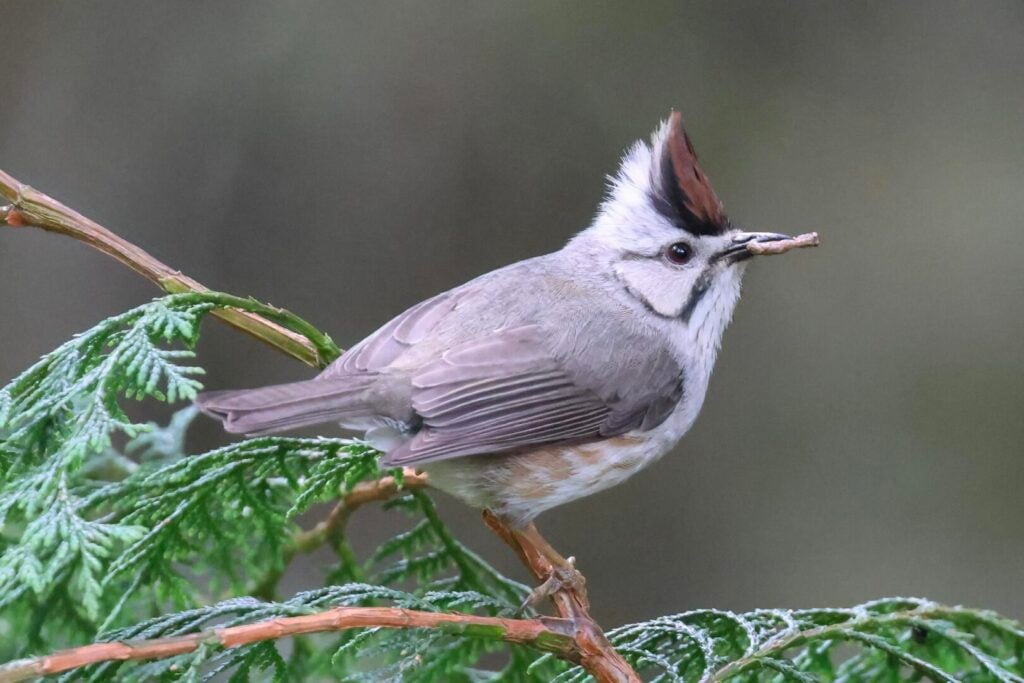
As we walked across the road, we found a pair of Snowy-browed Flycatchers under the trees. At the start of the trail opposite, we got good views of two Yellow Tits (#25) moving through the branches above our heads. Another sometimes tricky species which we had been lucky to find relatively easily.
Continuing along the trail, it was rather quiet. We heard a couple of Large Hawk-Cuckoos calling, but they just wouldn’t show themselves. This has been a site for Taiwan Thrush in previous years but no sign of any here now.
Back up to the summit, we had another go at trying to find Mikado Pheasant. We walked the trails again, and managed better views of Taiwan Fulvetta and finally managed to see a Taiwan Barwing (#26). The Pheasants still remained elusive though.
Back down to the hotel, we had a short night walk after dinner which produced a Taiwan Giant Flying Squirrel in the cherry trees.
13th May
We went back up to the top before breakfast – one last try for Mikado Pheasant. We walked one trail, while Mr Hong tried the other. We had nice views of Yellow-bellied Bush Warbler and a female Taiwan Rosefinch (#27) by the trail as we walked back. But no sign of any Pheasants again. It didn’t help that the weather was dry and comparatively warm, and we were getting into the breeding season. But there has been no feeding allowed since Covid and new lodges have been put in the bottom car park which has undoubtedly resulted in increased disturbance. They are nowhere near as reliable here as they used to be.
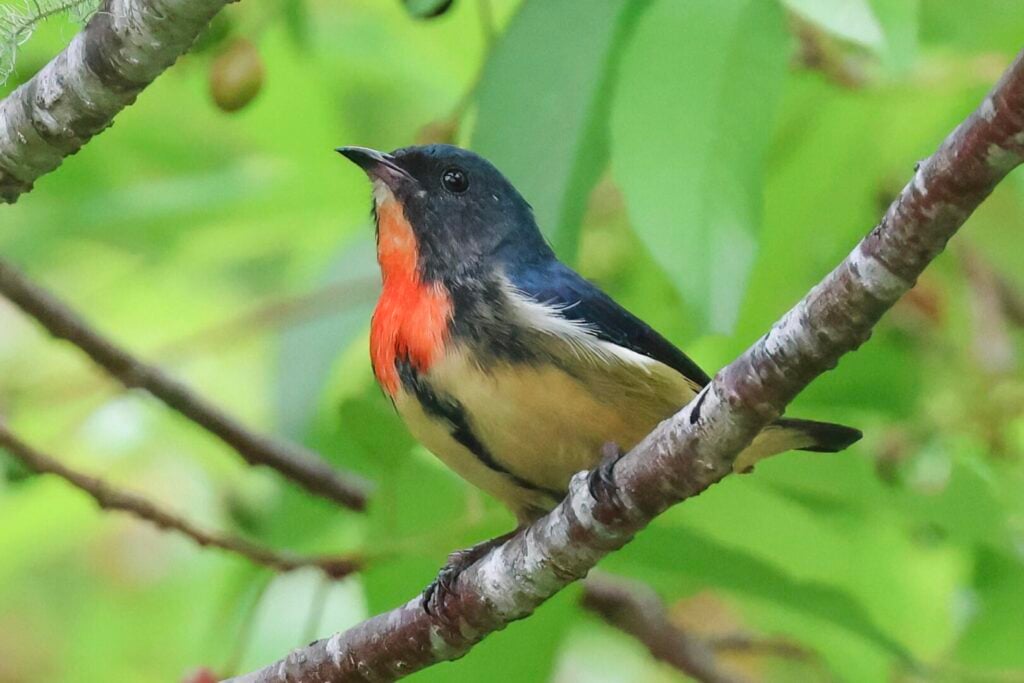
Back down to the hotel for breakfast, we stopped to look at a couple of Fire-breasted Flowerpeckers coming down to feed in the cherry trees in the car park.
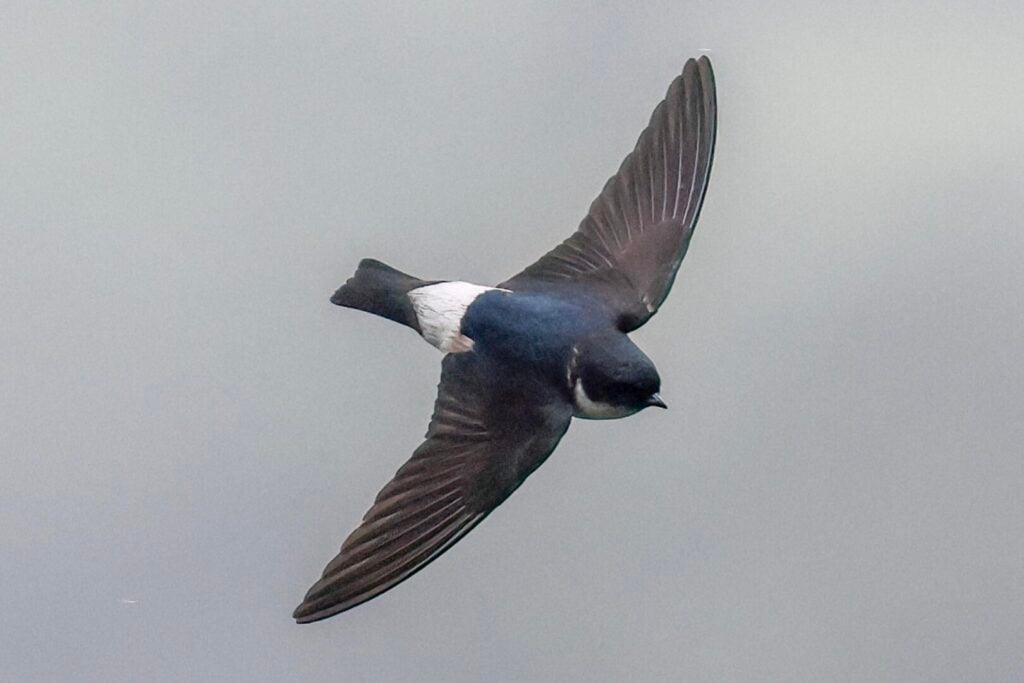
It was going to be mainly a travel day today. After breakfast, we checked out and started to make our way down the mountain, out of Dasyueshan. On our way out of the park, we stopped for a closer look at the Asian House Martins which nest at the blue bridge. A good chance to study this species at close quarters, from above and below.
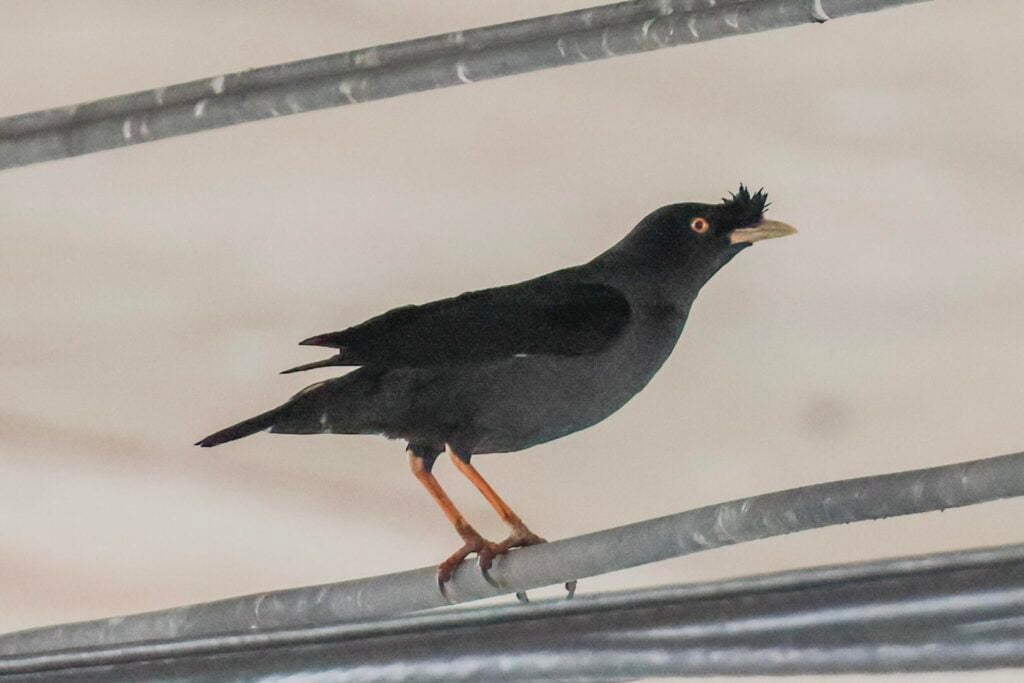
Down into the lowlands, we were driving through an urban area when Mr Hong offered to stop at a spot for Crested Myna he knew. It was under a multi-lane highway and sure enough, there they were. Most of the Starlings and Mynas on Taiwan are introduced, but this species is native here.
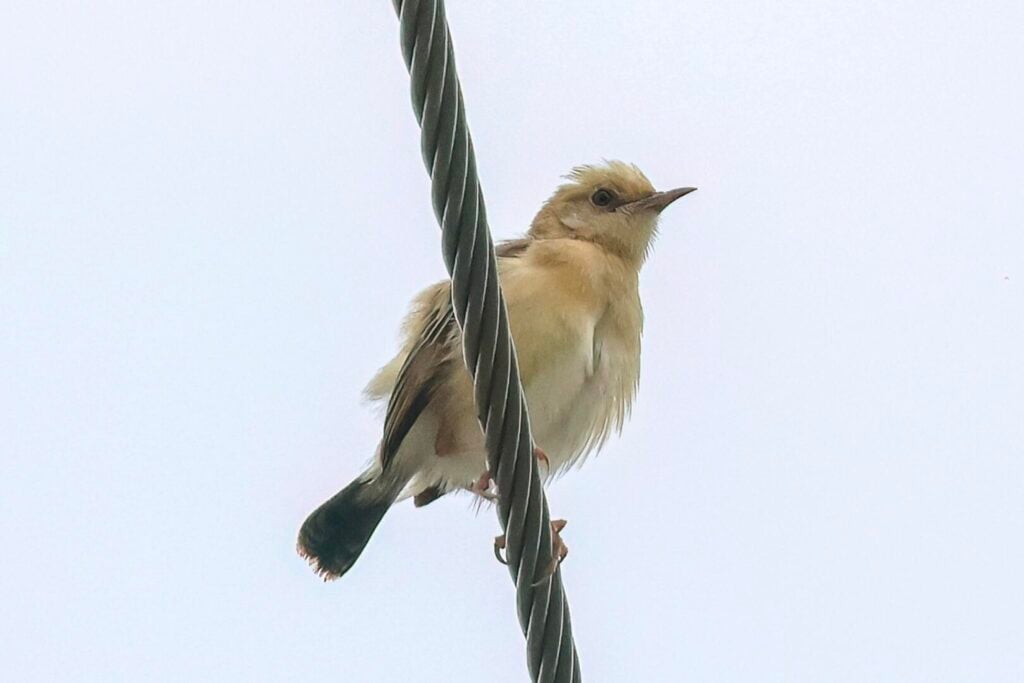
Then another stop in some random ricefields we were passing for Cisticolas. Both Zitting and Golden-headed Cisticolas were flying in and out of a weedy field, along with lots of Scaly-breasted, Chestnut and a few White-rumped Munias. One of the Golden-headed Cisticolas landed on the wires over the road, singing. An Asian Glossy Starling flew over.
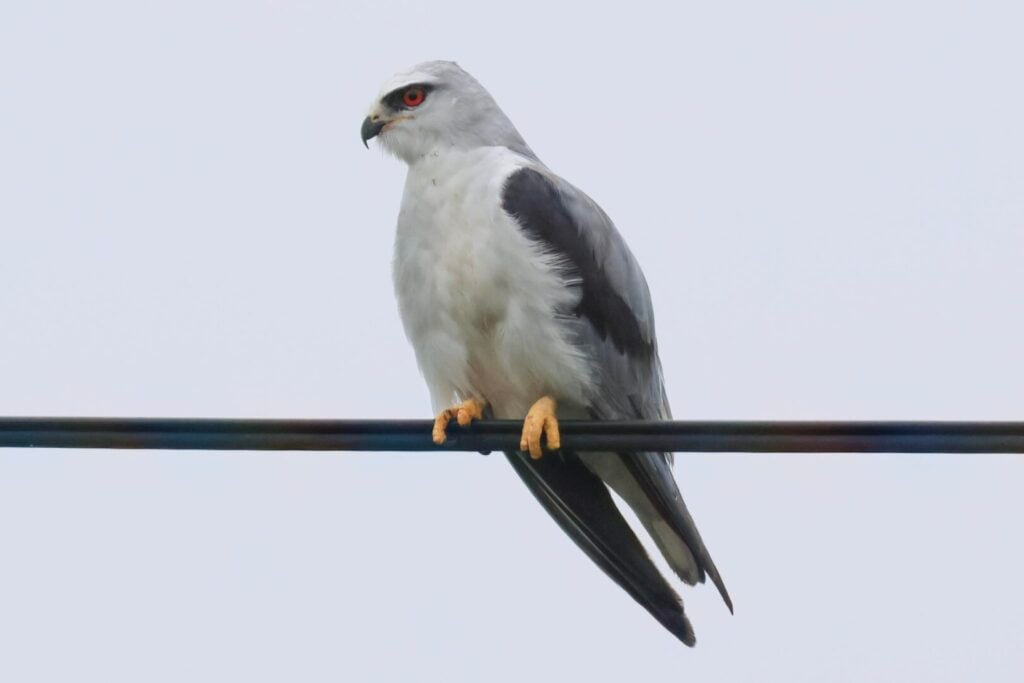
We called in at a nearby 7-Eleven to get lunch, then continued on our journey. A Black-winged Kite was perched on some wires as we drove past, an incongruous setting in the middle of a suburban area.
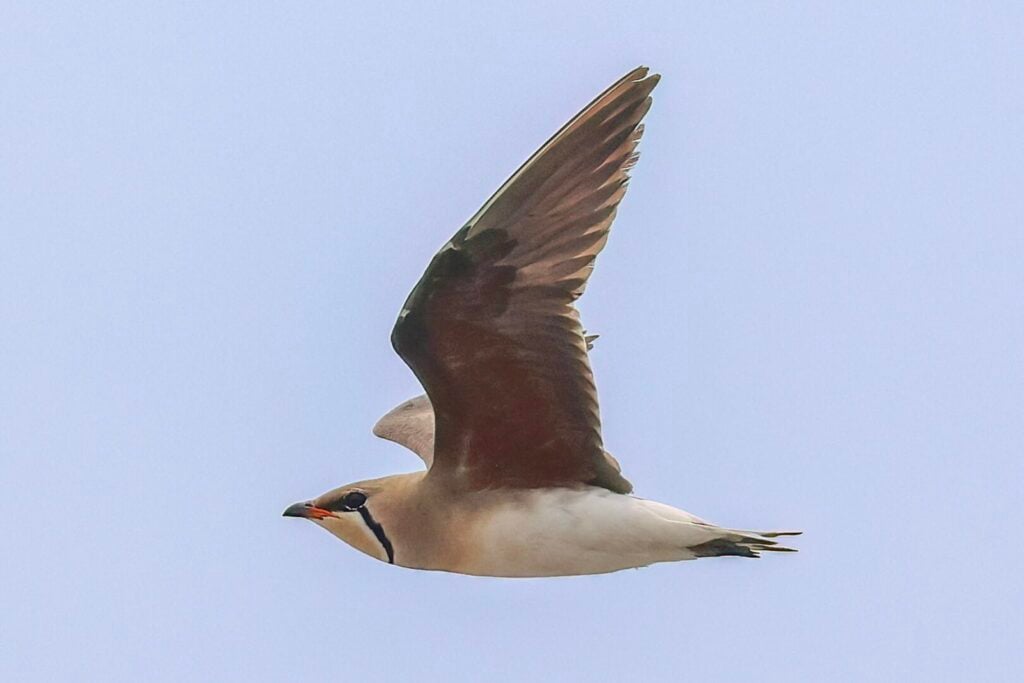
Then Mr Hong took us on to another site to look for Savanna Nightjar, on a large dried up riverbed on the edge of Taichung City. As we walked out over the stones we duly flushed a couple of Savanna Nightjars, which flew off ahead of us. There were several Oriental Pratincoles here too, nice views as they circled around over us. One landed a bit further on and settled down on the gravel. It looked like it may be nesting.
When we finally arrived in Renai, we checked into our hotel. Mr Hong drove us down the driveway and we got out again for a walk in the tea fields. Our main target here was Black-necklaced Scimitar Babbler (#28) which we found quickly, although views were rather brief. We walked on a bit further and found several Rufous-capped Babblers. Much better views of Taiwan Liocichlas and White-eared Sibias, which were both common here.
As we came back, we stopped again where the Scimitar Babblers had been but they had gone quiet now. Rio went back to the hotel for a break but we stayed on to try to get photos of some of the commoner birds. Then it started to spit with rain so we walked back too. Just in time, as the rain got much heavier not long after we got in!
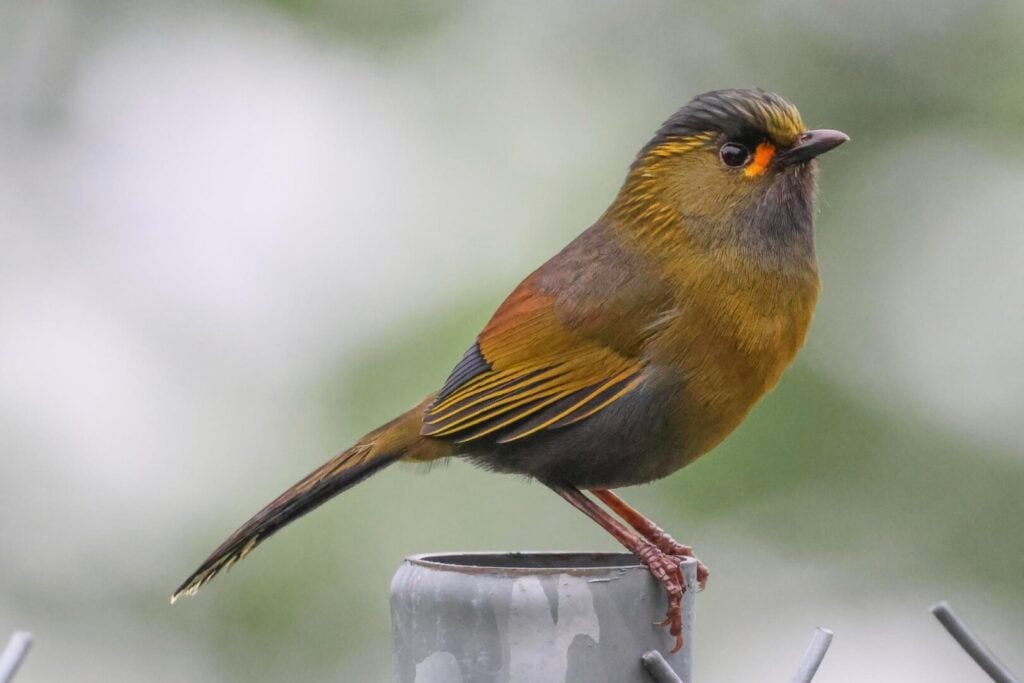
We met outside again later, after the rain had stopped, and walked back round to the Scimitar Babbler spot. It was cooler and damp after the rain and mostly rather quiet, although we did manage another view of one Black-necklaced Scimitar Babbler. We walked on from there down into town, to a local restaurant – Taiwan hot pot tonight.
14th May
We went for a short walk before breakfast. A Collared Owlet was calling off in the distance. We heard several Black-necklaced Scimitar Babblers again but none close enough to see. As yesterday, there were lots of White-eared Sibias and Taiwan Liocichlas.
After breakfast, we set off in the car to drive up to Hehuanshan. It was thick cloud in Renai so it was not a great surprise when we got to the top car park and found it was shrouded in very thick fog. We could barely see a couple of metres in front of us. Miraculously, first a pair of Taiwan Bullfinches appeared. Very tame, feeding right in front of us, which was handy given the limited viewing distance.
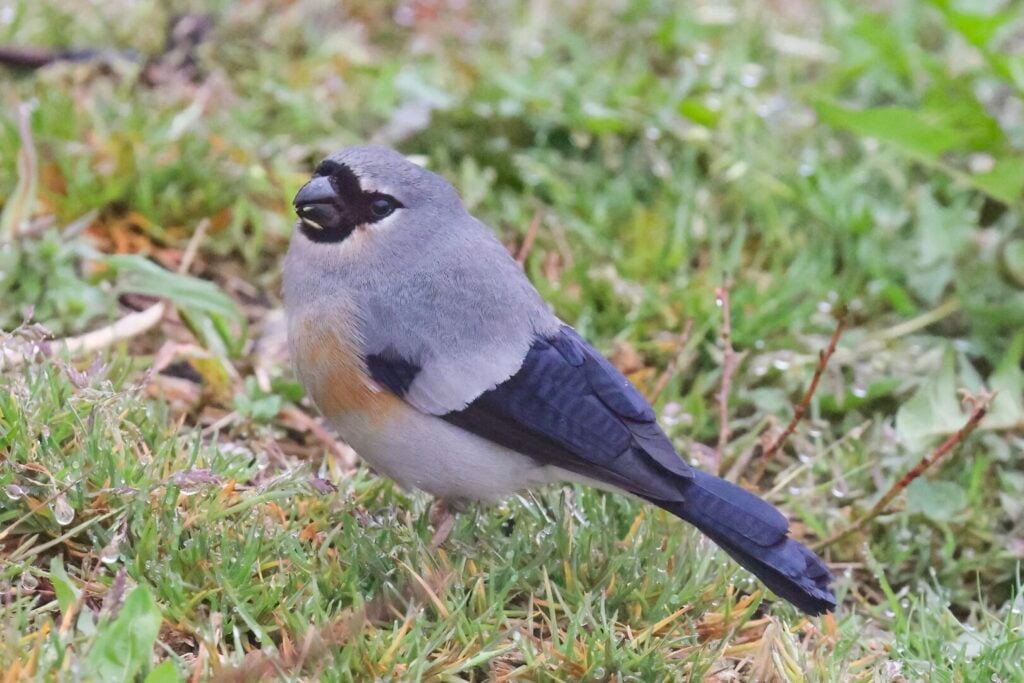
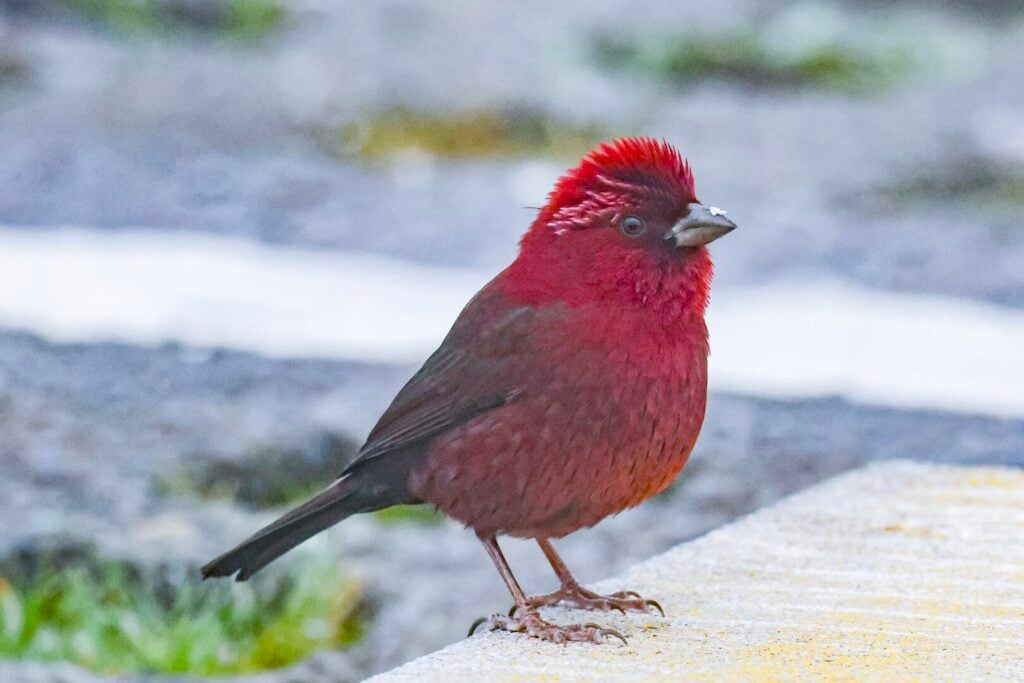
Then a pair of Taiwan Rosefinches appeared in the car park too. Nice to see a male now, as we had only seen a female in Dasyueshan. Two White-whiskered Laughingthrushes were here as well. We were hoping to find Alpine Accentor but it quickly became clear this would be impossible in the conditions.
We drove on down to the Visitor Centre beyond, out of the fog, below the cloud base. Walking down along the track which goes below Songsyue Lodge, Luke spotted a small bird right on the top of the ridge above the Visitor Centre behind us. It was just a dot, but we could see it was an Alpine Accentor.
When we got down to the pines on the corner, we had good views of Flamecrests in the trees. We heard Eurasian Wren singing. There were several Collared Bush Robins here and we had a brief view of a Taiwan Bush Robin in the pines. It started to rain and this quickly turned very heavy, so we walked back up to the Visitor Centre and stopped for hot chocolate.
When it stopped raining, we walked down to the Lodge but it was clearly likely to rain again. We decided to cut our losses and drive back down to Renai for lunch in a roast chicken restaurant. It was still thick fog on the top as we drove over.
We were heading for Yushan NP next, which meant a long drive this afternoon. Not a bad day for it, given the rain. On the way, we made a short diversion to Jiji to try for a Ruddy Kingfisher which had been found yesterday. The site was a tiny area of trees in an urban area. It looked unlikely the bird would be still present and the weather was still horrendous. Mr Hong volunteered to go out for quick look while we stayed in the car. Unsurprisingly, no sign.
It was late afternoon when we arrived at our hotel in Dongpu Hot Springs and it was still raining hard. We decided not to go out birding now. Relax and an early night.
15th May
Thankfully the rain had stopped overnight. We drove down to 7-Eleven to get breakfast and something for lunch. On our way down, a couple of Taiwan Bamboo Partridges were in the road. They had come out of the wet vegetation to feed in the open on the verge. Hopefully some other birds might be doing the same this morning.
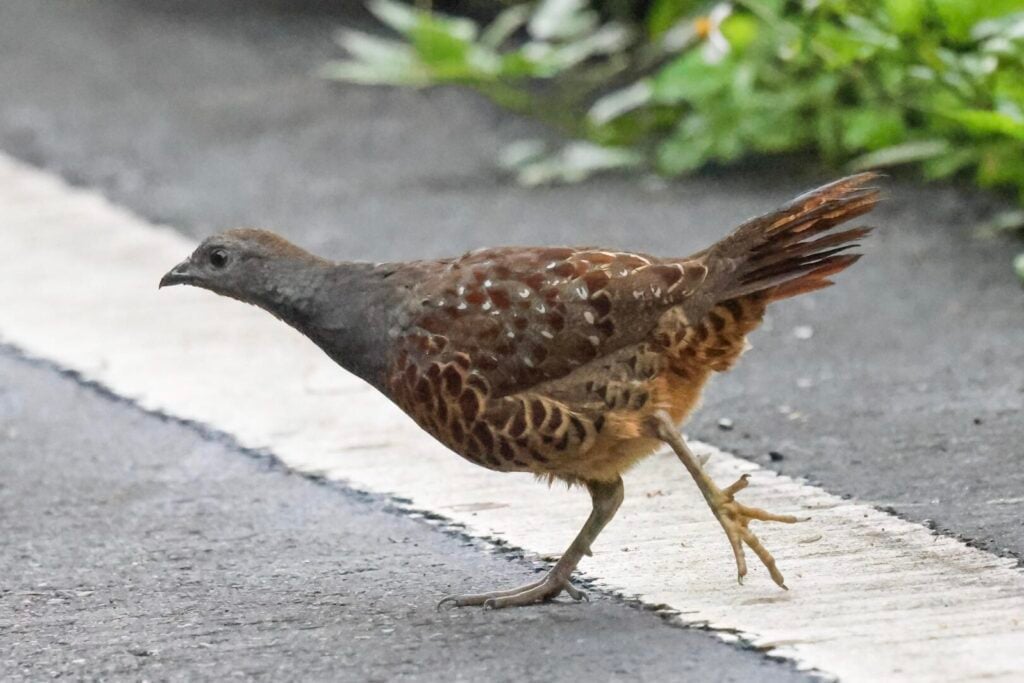
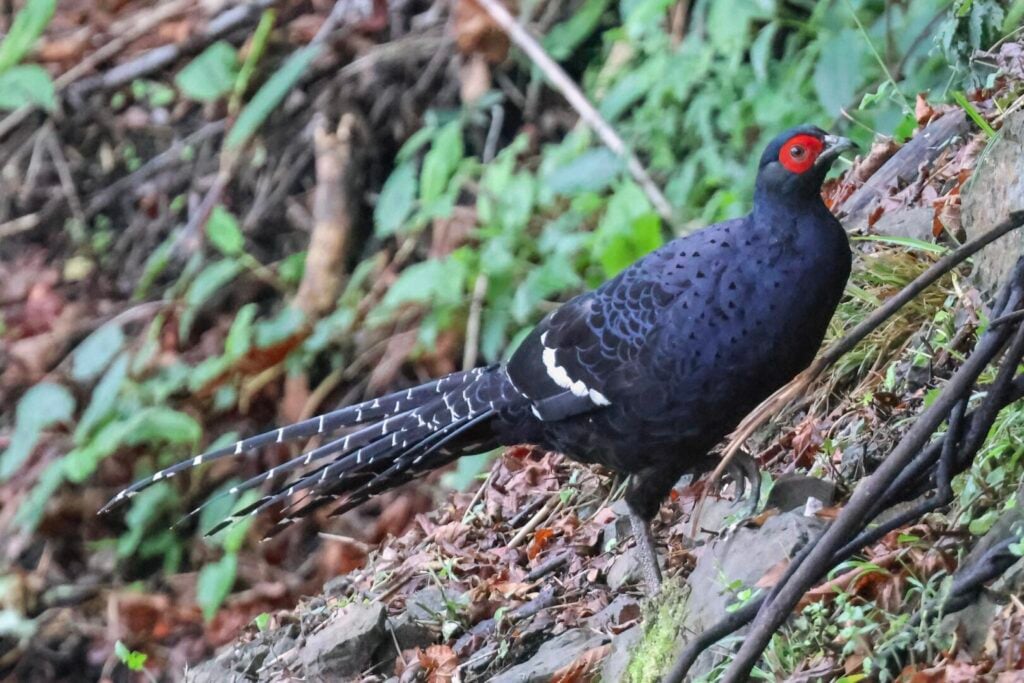
We took route 21 over towards Alishan. On the way, we first came across a male Swinhoe’s Pheasant feeding by the road, then a male Mikado Pheasant (#29). Finally! We parked and got out and watched it walking slowly up the hillside above the road.
Pressure off now we had found our last main target here, we had a leisurely morning around Tataka. Stopping at the parking area above Dongpu Lodge, we heard a distant White-backed Woodpecker and a Taiwan Vivid Niltava singing in the trees above us. A Formosan Rock Macaque was lurking on the railing next to the cars, trying to steal food from people’s bags. A male Collared Bush Robin was in the parking area too.
Walking down the path to the Lodge, we had much better views of a couple of Taiwan Yuhinas, feeding low down in the trees. A Yellow-bellied Bush Warbler was lurking in the bamboo, along with a couple of Taiwan Fulvettas.
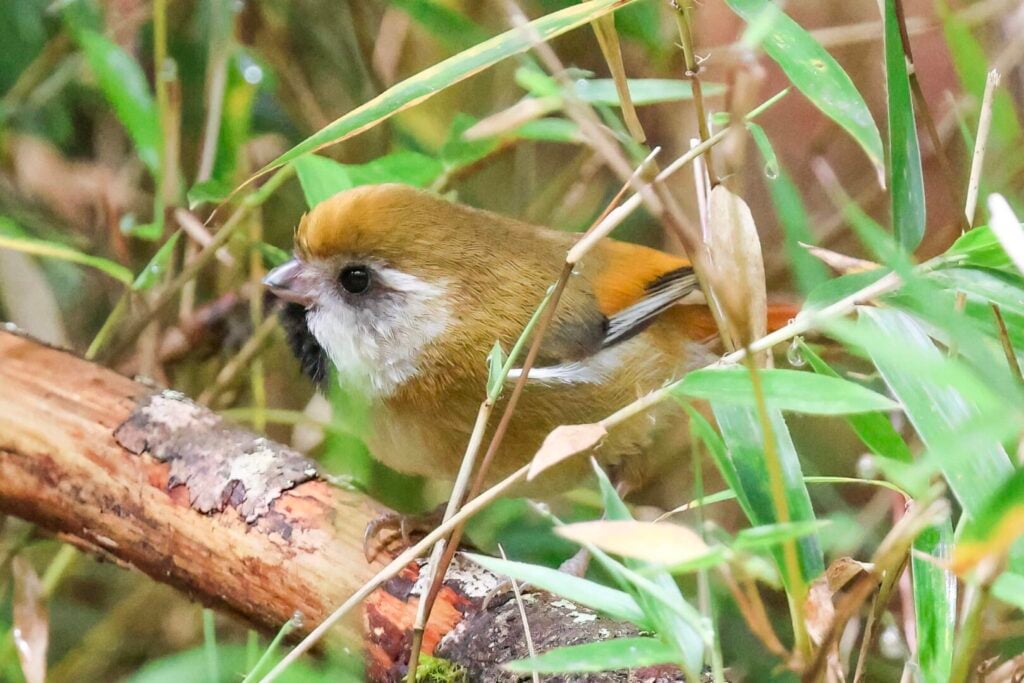
Crossing the main road, we walked up towards the Giant Hemlock. Several Golden Parrotbills were in the bamboo just above the road.
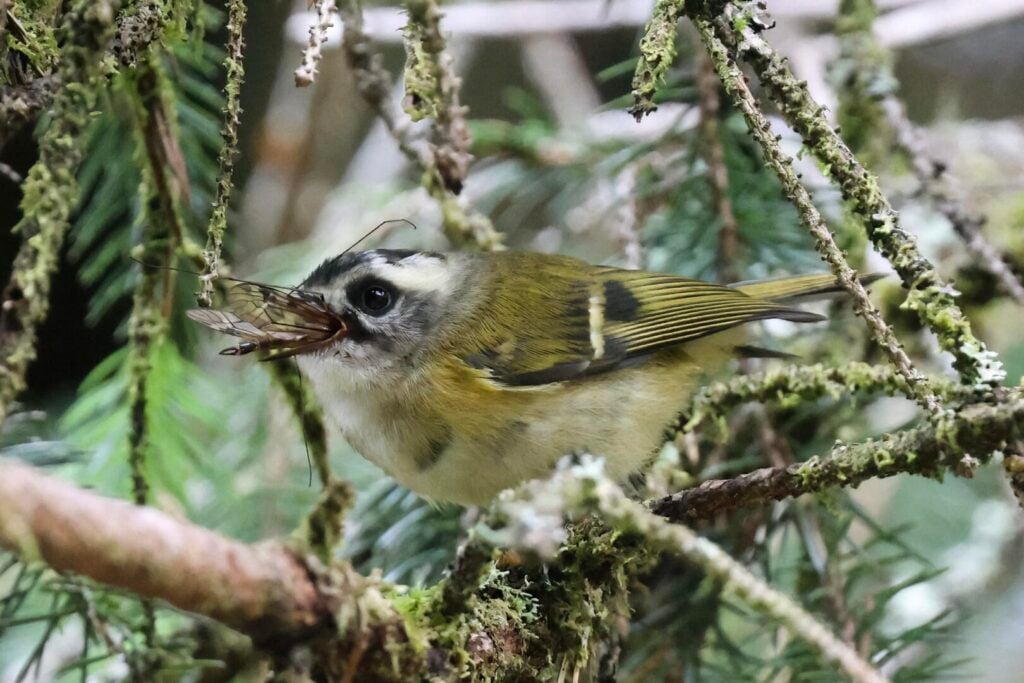
There were lots of Flamecrests in the fir trees and we heard and briefly saw a Yellow-browed Warbler in with them too.
We heard several Eurasian Wrens on the walk and finally managed to see one in the branches of the Giant Hemlock itself. A couple of Ferruginous Flycatchers were hanging around the Hemlock too. Lots of moths had been attracted to the lights around the toilet block.
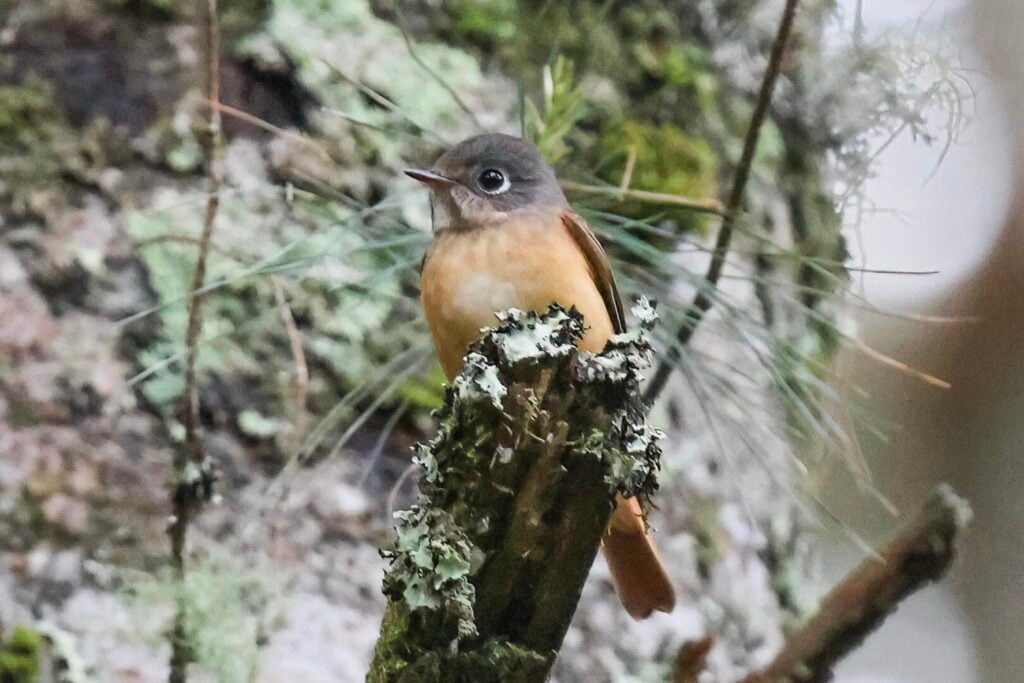
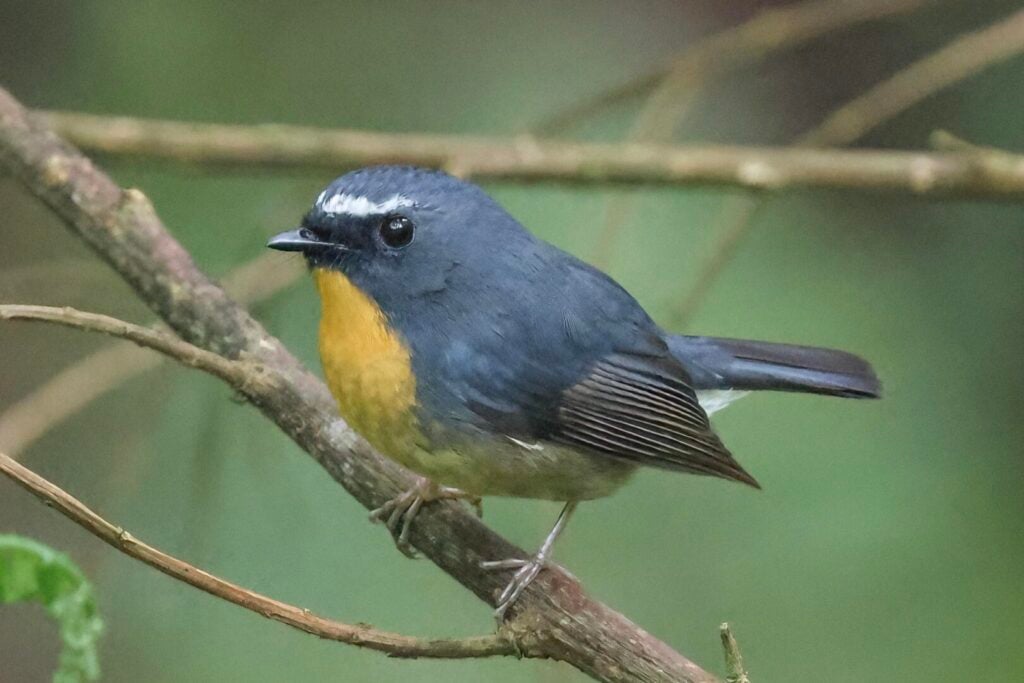
Taiwan Bush Robin was relatively common here and we had our best views of a rather scruffy male in the trees by the road as we made our way back down.
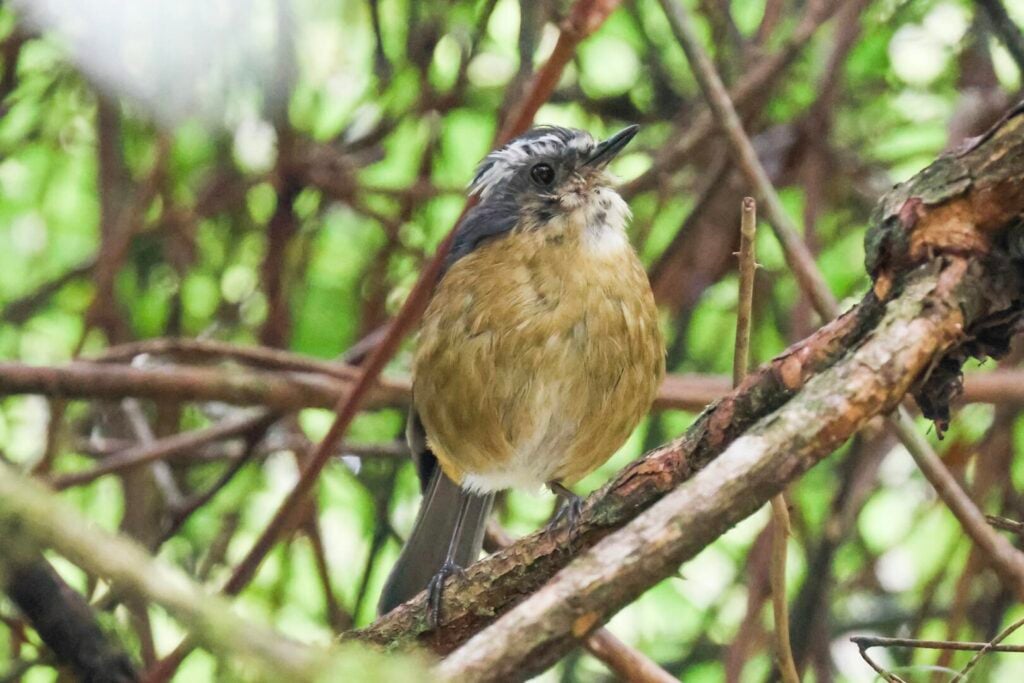
Taiwan Shortwing (#30) was our main target this morning. They are very common here, and we heard them everywhere. Typically, they were much harder to see. Eventually, with a bit of perseverance, we got views of three and good views of one in particular, singing in the dense vegetation behind the police station.
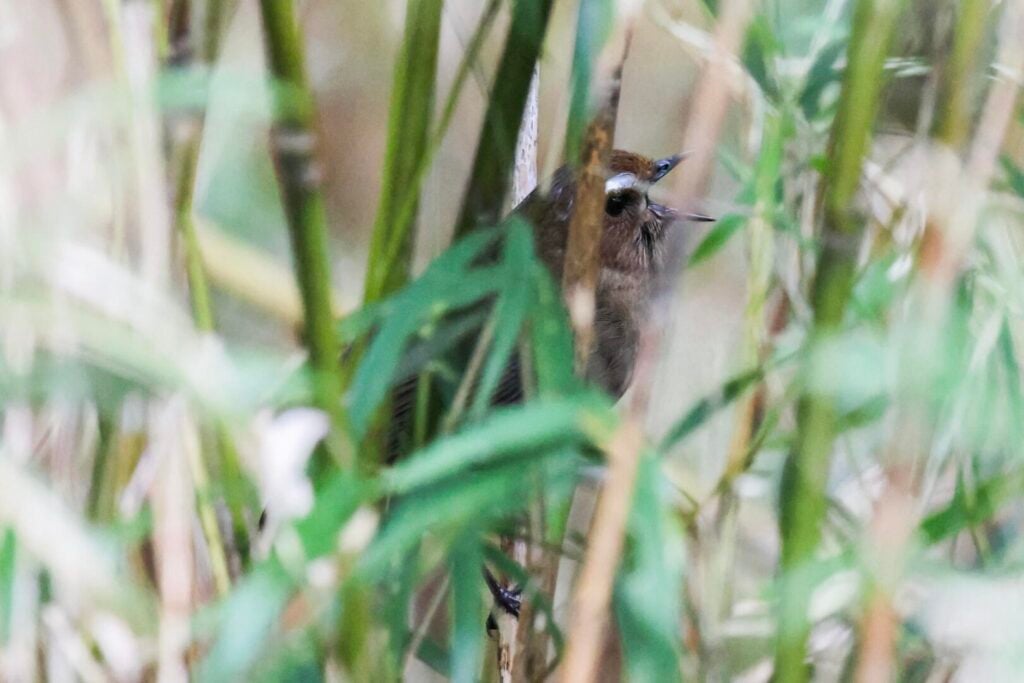
We drove down along the road to the Alishan Youth Activity Centre next and made a couple of stops in the sunshine now. We could hear Large Hawk Cuckoo calling, and it responded but once again would not come in. A Taiwan Cupwing started singing nearby, and we had very good views of it when it came up and started climbing around in the undergrowth on the verge.
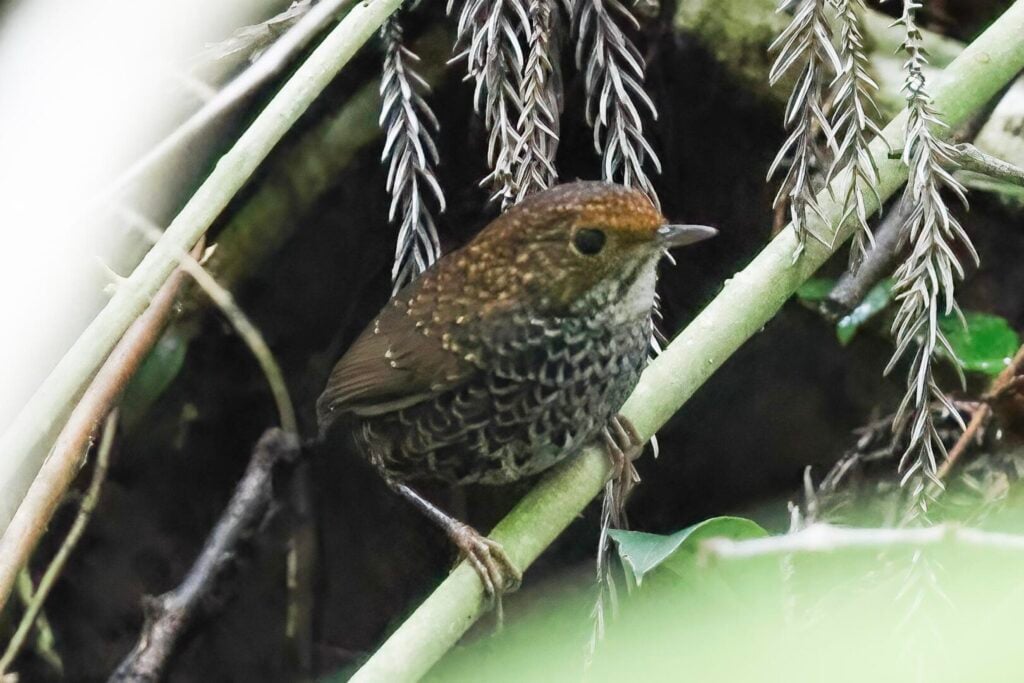
As we walked a short way along the road, a male Snowy-browed Flycatcher appeared in the vegetation just below us.
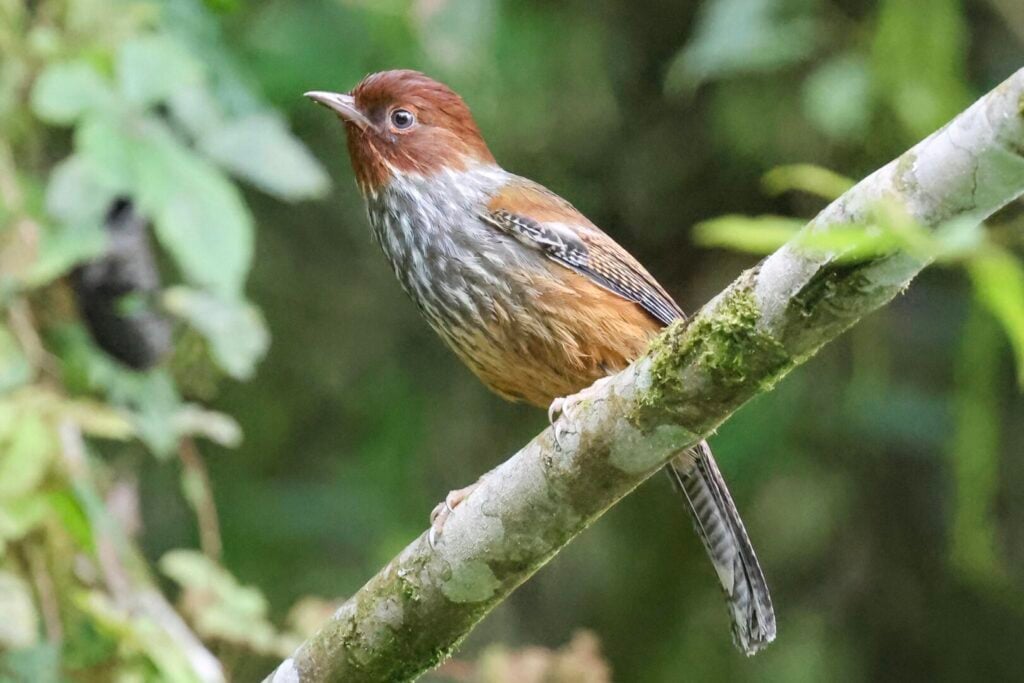
After a quick loo stop further down by the railway, we turned round and started to drive back to the main road. On the way, we made a quick stop as a group of Taiwan Barwing was in the trees by the road. Lovely views in the sunshine.
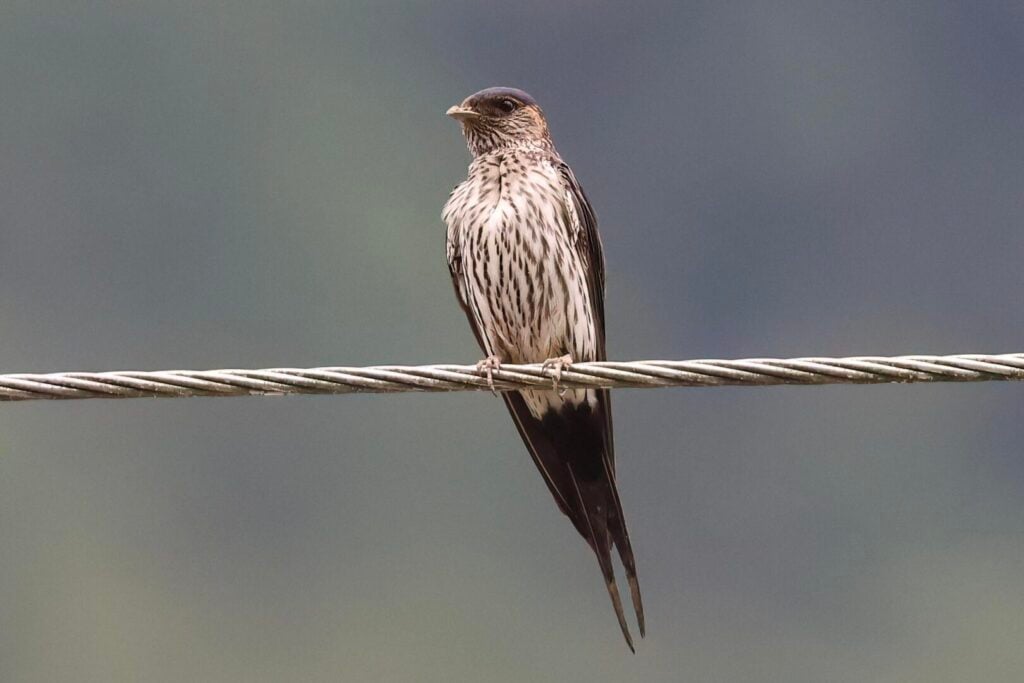
Dropping down lower, we made our nest stop in an area of fields to look for Striped Prinia. We tried a short track into a tea plantation first but no joy here. There were several Pacific Swallows on the wires and lots of Eastern Red-rumped Swallows of the subspecies striolata (formerly known as Striated Swallow) hawking over the fields.
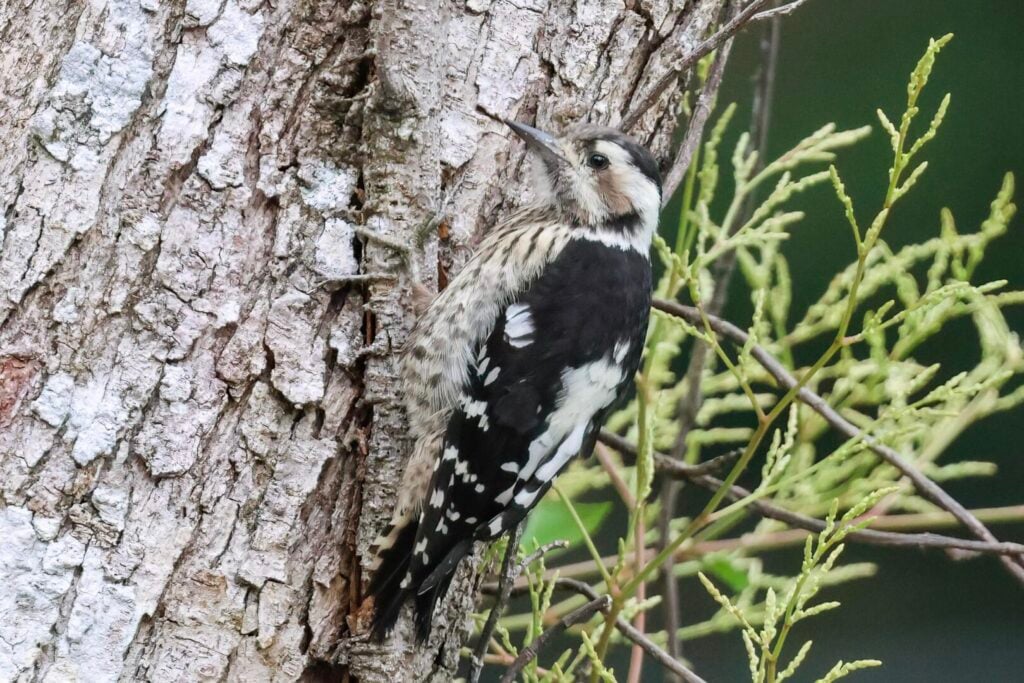
We drove on a little further down and took a side road through some gardens and smaller fields. Good views of Grey-capped Pygmy Woodpecker and Eurasian Nuthatch feeding on a tree trunk in front of us. Several Swinhoe’s White-eyes were in the gardens. As we were leaving, a Striped Prinia finally gave itself up!
We could see dark clouds descending down the valley as we left and drove into more rain. We had originally been booked in to the Star Resort tonight, which offered our best chance of seeing Mountain Scops Owl in the grounds. However, Rio and Mr Hong were worried about the heavy rain and the risk of rock falls closing the small road there. They did not want to risk it. So they rebooked us into a hotel in the small village of Fenqihu instead.
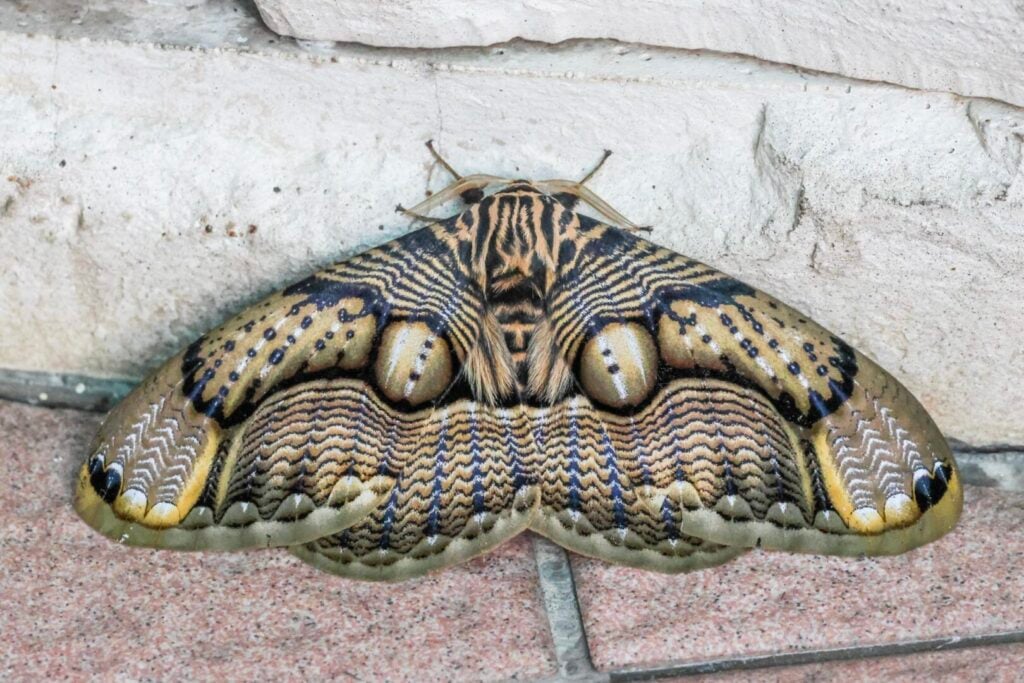
It was mid afternoon and still raining hard when we arrived at the hotel so we decided called it a day. A very large (almost the size of our iPhones) and stunning moth was on the edge of the pavement by the hotel entrance. A Taiwanese Owl Moth Brahmaea wallichii insulata.
Fenqihu is a very pretty little village. We walked out through the narrow streets, along Fenqihu Old Street, to a local Taiwanese restaurant for dinner. The rain finally stopped while we were there.
16th May
The weather was much improved this morning so we left early and drove down to the main road to get breakfast in 7-Eleven. On the way, Rio heard Brown Bullfinches calling, so we stopped. Two were in the trees but flew and then a flock of 8+ circled round above us.
After breakfast, we drove to Linnei to try for Fairy Pitta. As we walked in along the path, it was very busy with people out walking. We were pointed by some locals to a spot where a pair of Pittas was apparently nesting but it all seemed very quiet. There was nothing moving and we couldn’t hear any so we didn’t linger. We would have a better chance of the Pitta tomorrow.
We drove on to Xitou. A bit of a speculative stop, not on our original itinerary, to try for one of our last outstanding endemics, Taiwan Thrush. It had already become clear that no one had a reliable site for this species this year and it would need a massive amount of luck to just stumble upon one. We were a little surprised when we arrived to find a vast car park almost full with cars and buses full of people. It was very busy – it was a Saturday but Mr Hong said it was busy like this every day.
A couple of Large Hawk Cuckoos were calling in the car park but as ever proved impossible to see. We went in and Rio tried playing Taiwan Thrush song in an area where he had seen them in the past. Nothing.
Walking up the riverside trail, the river was mostly dry. Lots of White-faced Sibias were in the trees, our best views of this fairly common species here. We also saw several Taiwan Barwings and Taiwan Liocichlas and two Rufous-capped Babblers lurking in the undergrowth. At the top, we stopped for an early lunch at the noodle shop by the ‘big tree’.
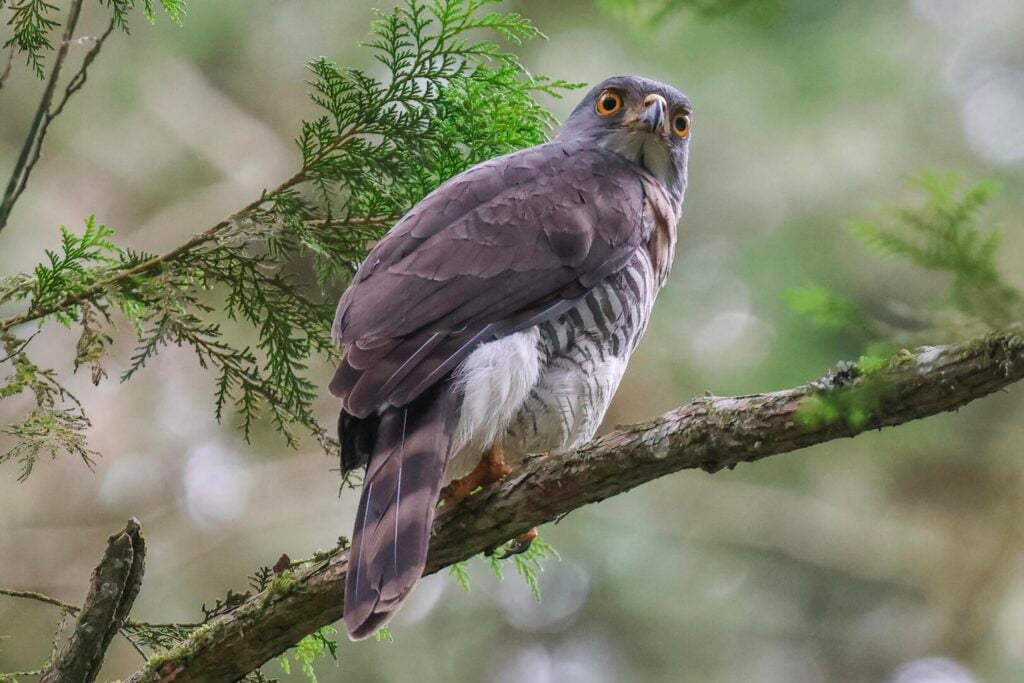
After lunch, we walked on a short way uphill and tried another spot for the Thrush. A Crested Goshawk flew in and landed in a tree right in front of us. Great views of that, but probably not the best to encourage a thrush out. Further on, a Black Eagle circled up the valley. A family party of Rufous-faced Warblers was in the trees.
As we walked on round, there were lots of people but fewer birds. We cut back across to the stream to try for Little Forktails, which are usually to be found here. But it was mostly dry now and there was no sign around the few small pools which were left.
Back to the car park, we left and drove to some fields to look for Little Whimbrel. They are just passage migrants and apparently there had been some here recently. there was no sign and checking eBird, they hadn’t been seen for a couple of days so had presumably moved on.
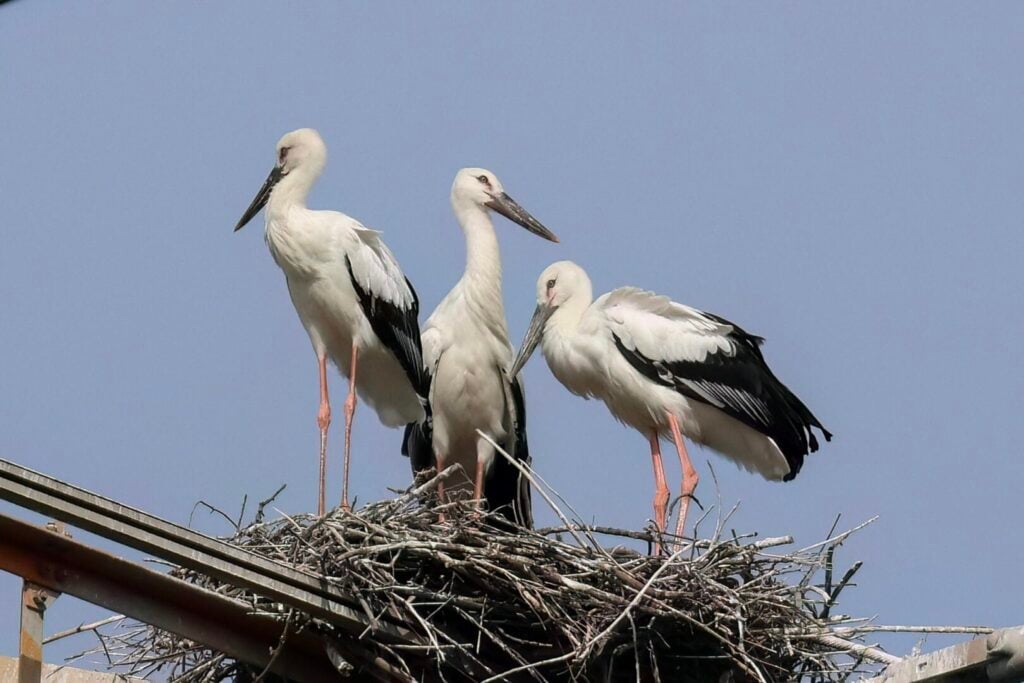
Our nest stop was at a site along the Zhuoshui River in Yunlin County. Oriental Storks have nested here this year, the first time they have been recording breeding in Taiwan, well to the south of their normal breeding range. Historically they were a rare winter visitor but numbers have been increasing.
When we arrived the three young Oriental Storks were standing on their nest platform high up on a nearby pylon. Several photographers were clustered below – these Storks have become something of a local celebrity.
From there, we drove another half an hour or so to some fishponds near Fangyuan. Several Spotted Redshanks and a single Greenshank were on the pools. Lots of Whiskered Terns were flying round and round over the water, and several White-winged Black Terns were with them. Lovely close views.
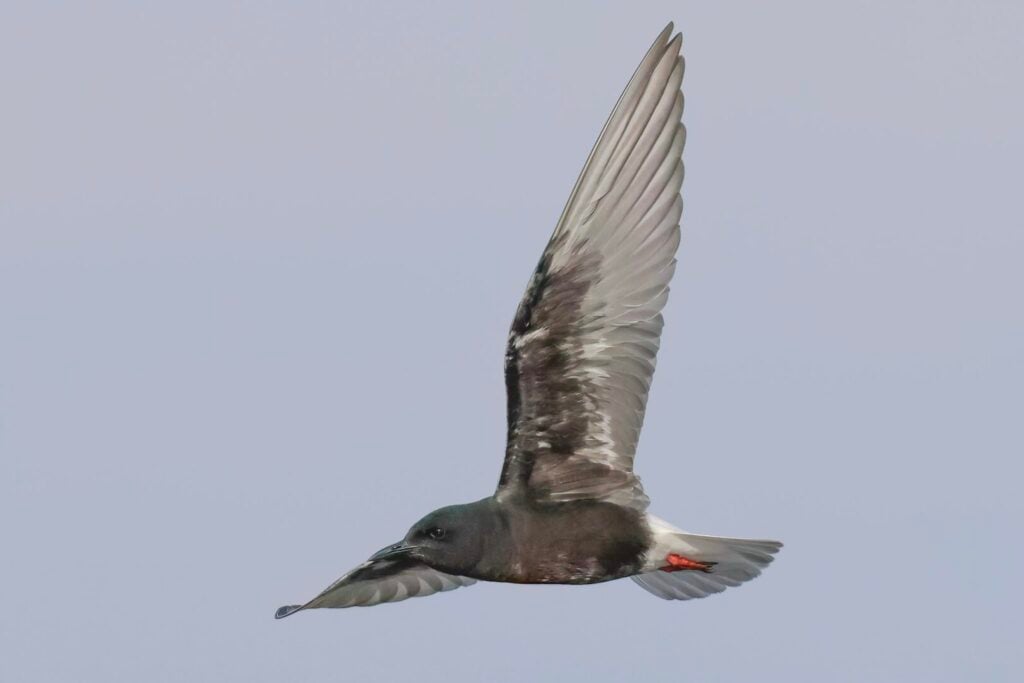
As we drove out, a Spoonbill flew past. From the back of the car, we couldn’t see what species through the tinted windows. Presumably a Black-faced Spoonbill, it was flying away by the time we stopped and got out. We ate dinner at a restaurant close to the fishponds and then drove to our hotel in Douliu. It was already dark when we arrived.
17th May
Fairy Pitta morning, an early start. We drove to the Pitta Café in Huben where we were met by a local Pitta guide. We followed him on his motorbike out of town and up into another valley.
As we walked in up the path, he tried playing the Pitta call but got no response. Further up, he put out some mealworms and played the call again but no response there either. Maybe we were just a little too late, and they were breeding already.
Tension was rising, but he had a trump card up his sleeve. He led us further up the valley to a small makeshift hide where a colleague was waiting. He put more mealworms out on the ground and played the call again. This time we didn’t have to wait too long before a Fairy Pitta came in. Success! We watched it feeding for a while in the leaf litter below the trees, before it disappeared back into the forest.
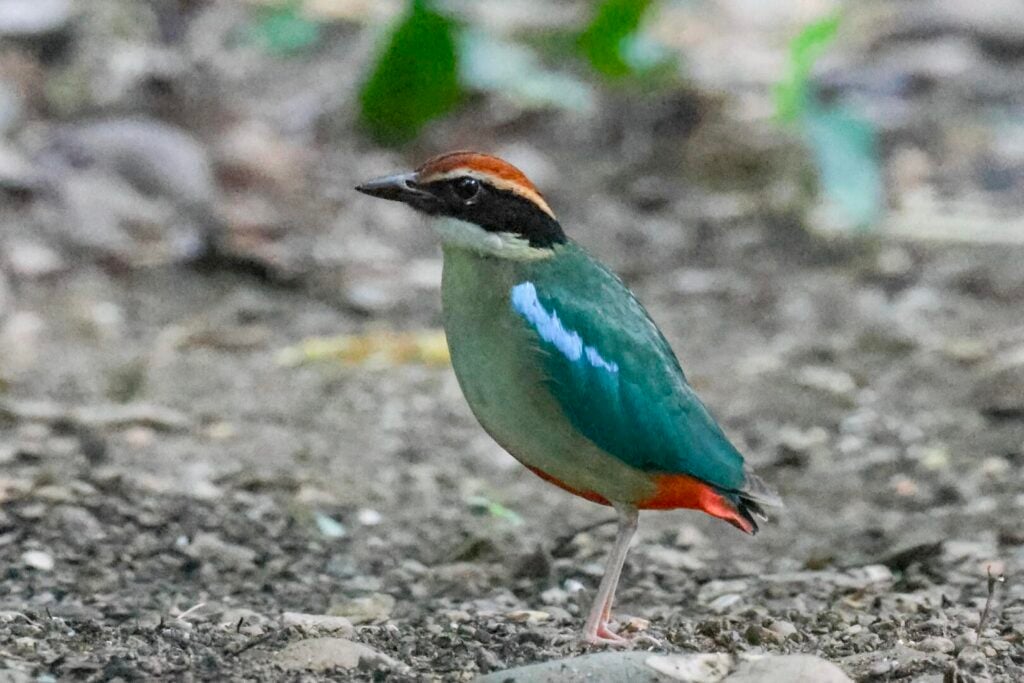
Breeding in Korea, Japan, mainland China and Taiwan and wintering mainly on the island of Borneo, this is one of the most reliable places to see this species. Hence we had timed our visit hoping to catch up with Fairy Pitta. In hindsight, we were perhaps a little late – many of the pairs of birds we had looked for were already quiet and breeding, so a couple of weeks earlier might be a better bet. It didn’t matter though and we were very grateful to our Pitta guide this morning.
Vinous-throated Parrotbill was a species we had failed to connect with properly up until now. The canal in front of the Pitta Café is a regular site for them, so Rio agreed to go back. I walked down the road scanning the vegetation and playing the calls myself but we hadn’t been there long before I was told we were out of time and had to leave.
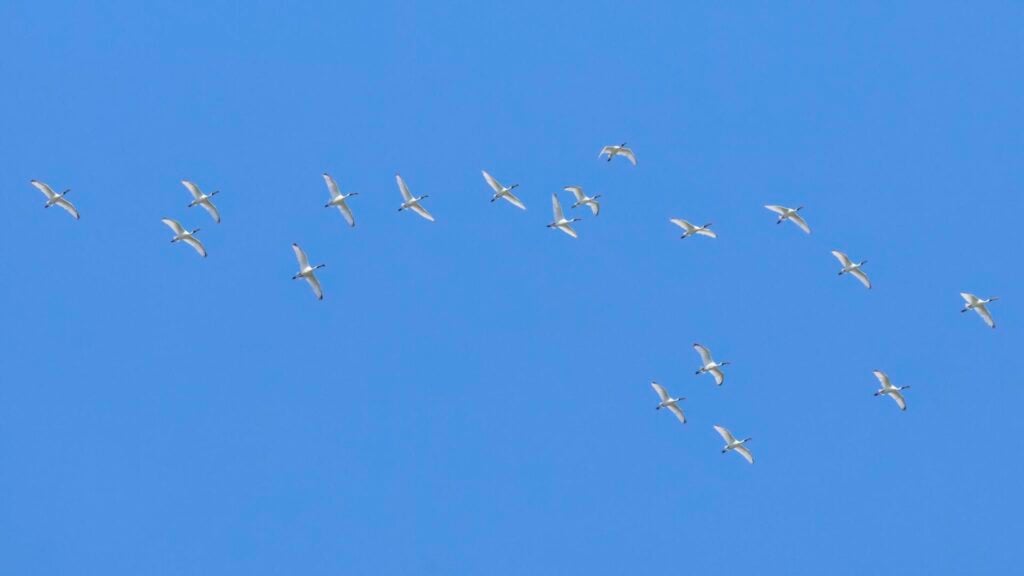
We drove on to an area of saltpans and Rio noticed a flock of Spoonbills circling over the road ahead of us. We stopped and got out and could see they were Black-faced Spoonbills, about 25 of them. They were getting higher all the time and drifting away from us.
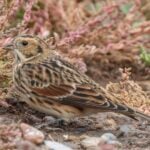
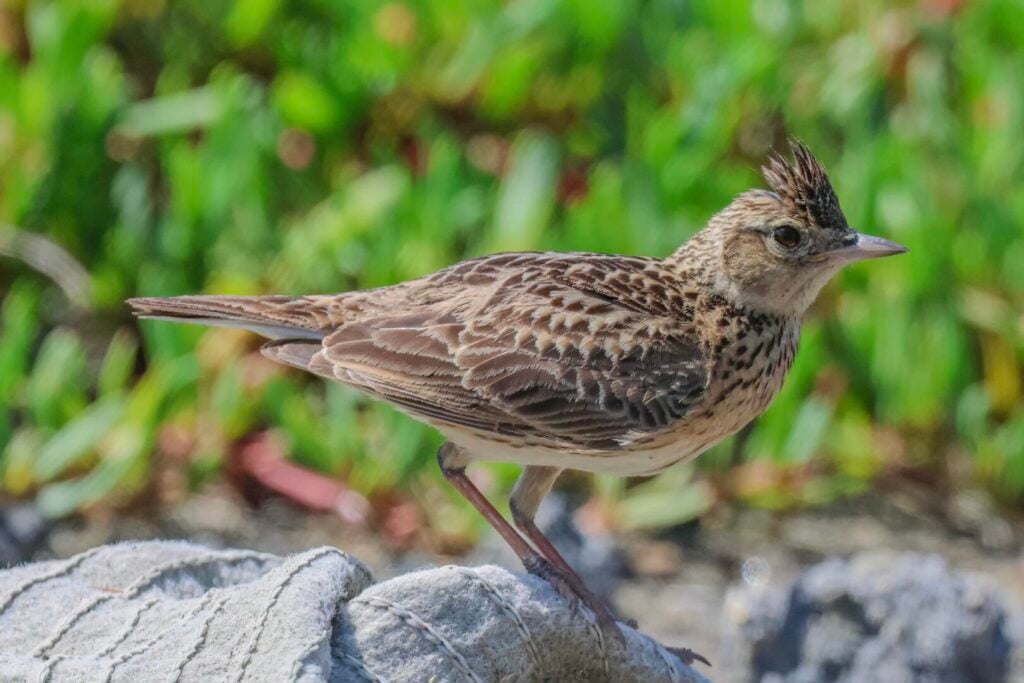
Driving slowly round, we flushed a Yellow Bittern from the edge of one of the saltpans. Stopping to scan here, there was a good selection of waders around the muddy margins, including three Eurasian Whimbrel. Several Caspian Terns were roosting on another area. A rather tatty looking 1st summer Black-headed Gull was on the mud at a third site. There were lots of Little Grebes here and good views of Oriental Skylarks on the neighbouring waste ground.
Our next stop was at a regular wintering site for Black-faced Spoonbills. There was still a good number here, at least 50, but they were very distant and mostly asleep (like their European cousins!). We walked down to check some wader pools nearby and it was a pleasant surprise to find an Asian Dowitcher in breeding plumage there.
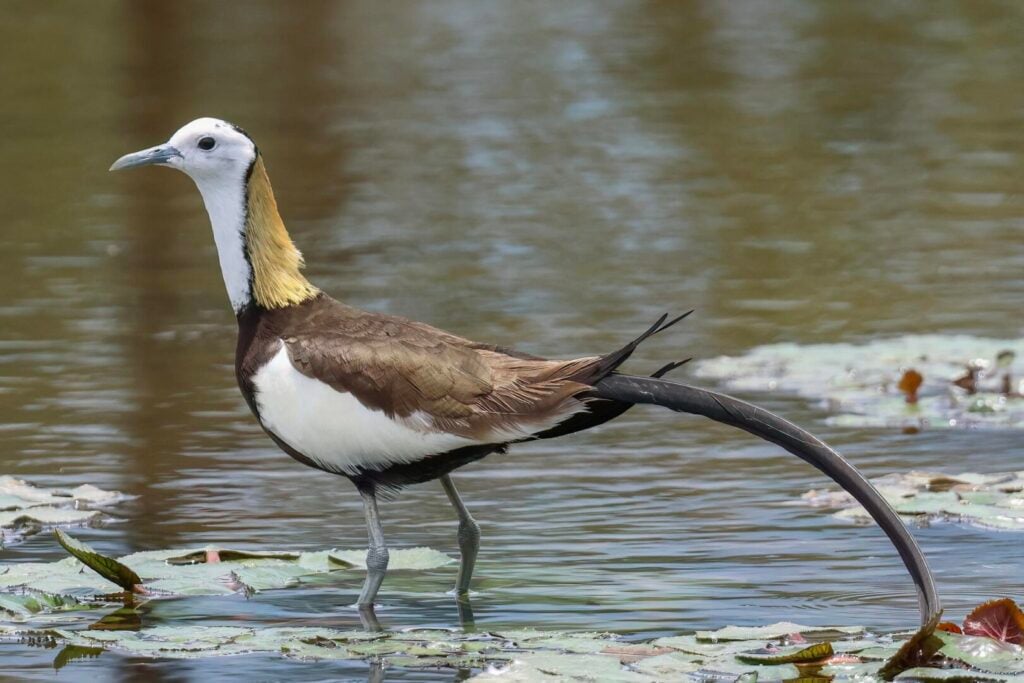
After a stop at a local seafood restaurant for lunch, we drove over to a site for Pheasant-tailed Jacanas. They are found on the small lotus pools here and we had amazingly close views here from the car. The best views I have had of this species which can sometimes be rather skittish and hard to approach.
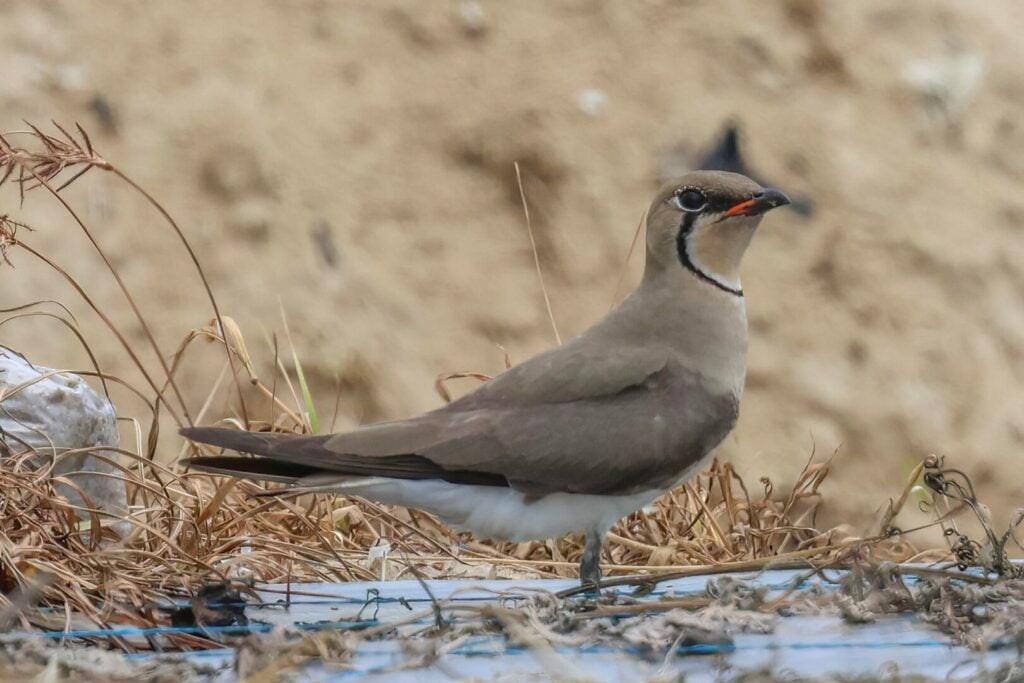
On to an area of melon fields next, a Common Pheasant was an addition to the trip list. Genuine wild birds here, not like the tame introduced ones back home! Several Oriental Pratincoles with half grown juveniles were here too, as we drove round on the tracks between the fields.
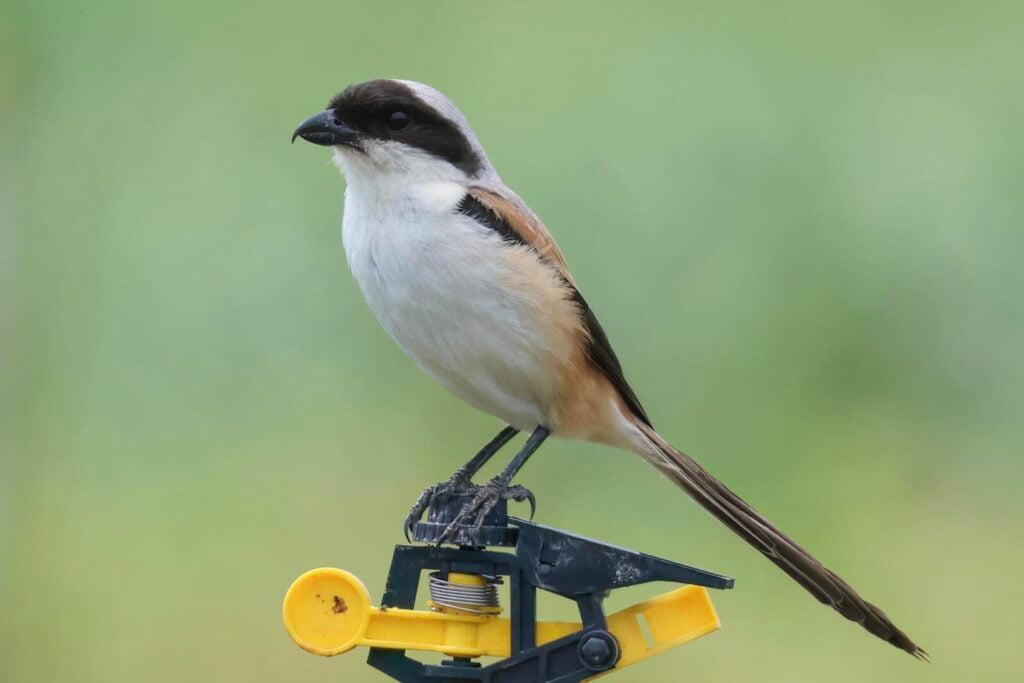
A very obliging Long-tailed Shrike was perched on one of the sprinklers in the fields close to the track. A perfect perch from which to hunt.
From here, we had a long drive south. We stopped on the way at Xinwei Forest Park, which Rio said was a site for Oriental Cuckooshrike. But just as we got out of the car it started to rain and quickly turned heavy, so we beat a retreat.
We stopped again at another park for Hwamei and Collared Scops Owl but it was still raining heavily. Rio suggested we could call in on our way back north in a couple of days instead so we turned around and left. Thankfully I checked and realised before we had gone too far that this would be impossible – by the time we got back from Lanyu and drove here it would be dark! So we had to turn round and drive back.
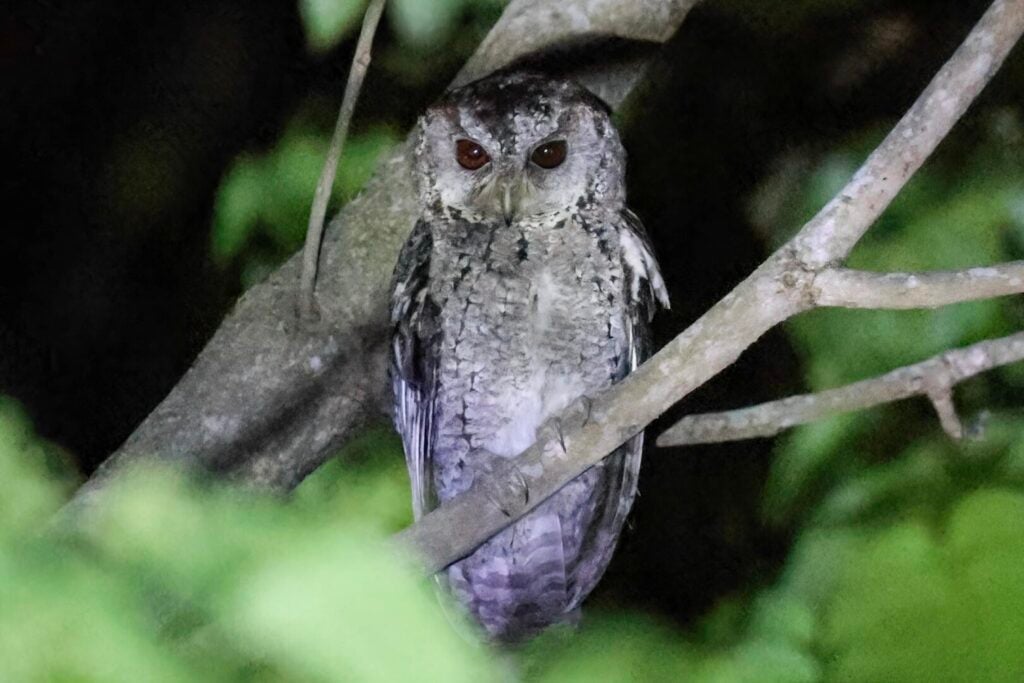
The rain had eased off when we got back and we quickly found one Collared Scops Owl in the tangled climbers on the outside of the park visitor centre. It was well hidden today though, clearly trying to shelter from rain. Then the rain picked up again so we beat a quick retreat back to the car. As we drove out, a Malayan Night Heron was standing on the verge right next to the road.
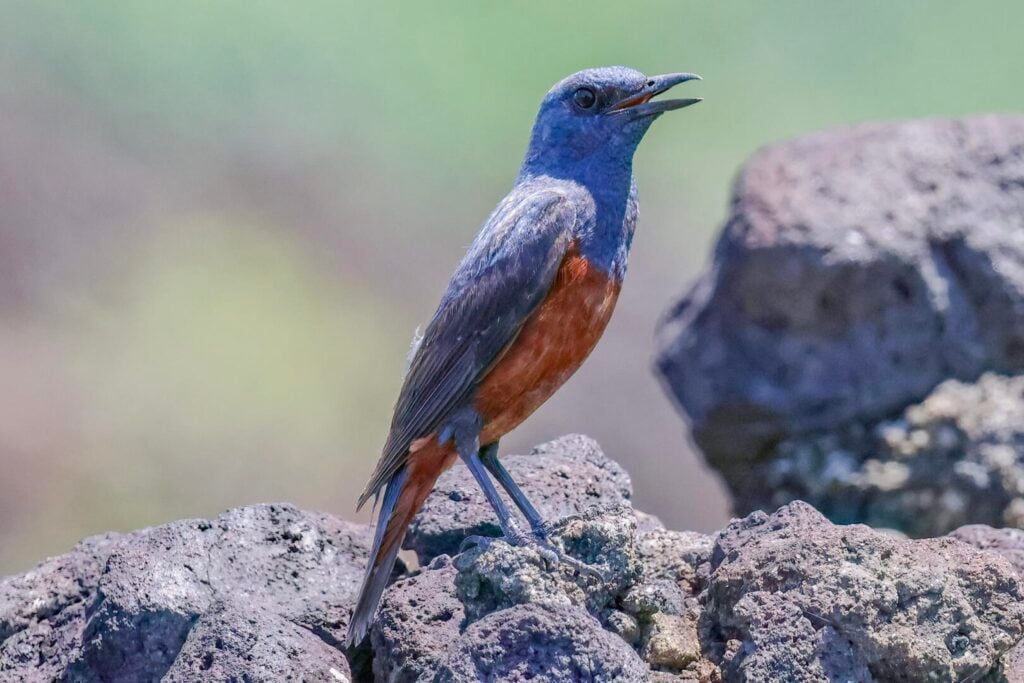
Continuing on south, we stopped again at Hengchun. Turning off the main road, we drove round through the fields behind the airport looking for Styan’s Bulbul (#31). They proved very easy to find, despite the fact that it was very windy now. Taking us to 31 of 32 endemics seen already, with only the elusive Island Thrush left. On the way out, Luke spotted a Cinnamon Bittern on the river below the road. A male Blue Rock Thrush in the fields was of the chestnut-bellied race philippensis.
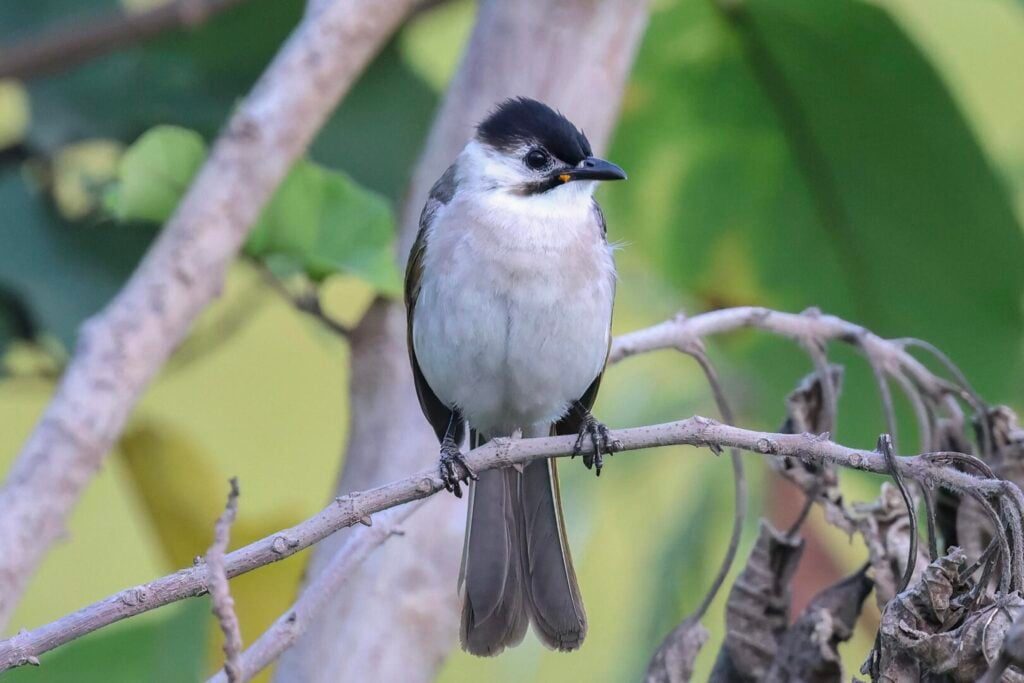
We stopped at a local restaurant for dinner, then round to our hotel. An early start tomorrow, we had a ferry to catch.
18th May
We had an early ferry across to Lanyu Island today. After calling in at a convenience store to get breakfast, we drove on to Kenting port. The ferry left on time at 7am.
The crossing can be very good for seabirds but Rio said there was no chance to get outside on deck today. So I stood and scanned from the rear door looking astern. There were lots of flying fish but relatively few birds. I did see a couple of unidentifiable petrel/shearwaters but more of a surprise was a superb adult Long-tailed Skua which flew across the wake behind us, all around the mid-point of the journey.
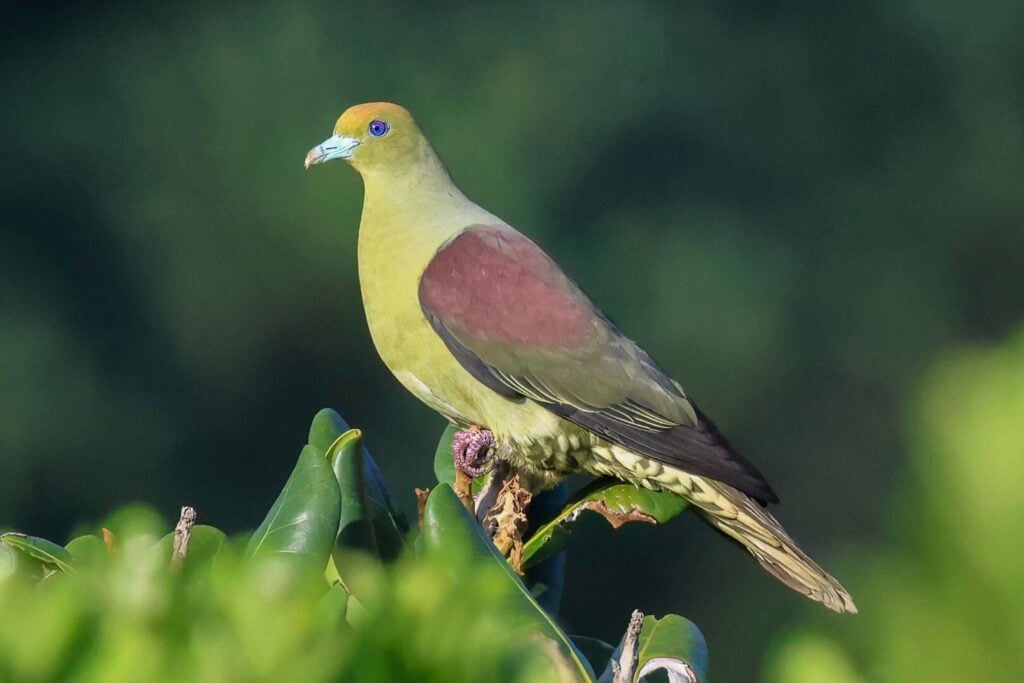
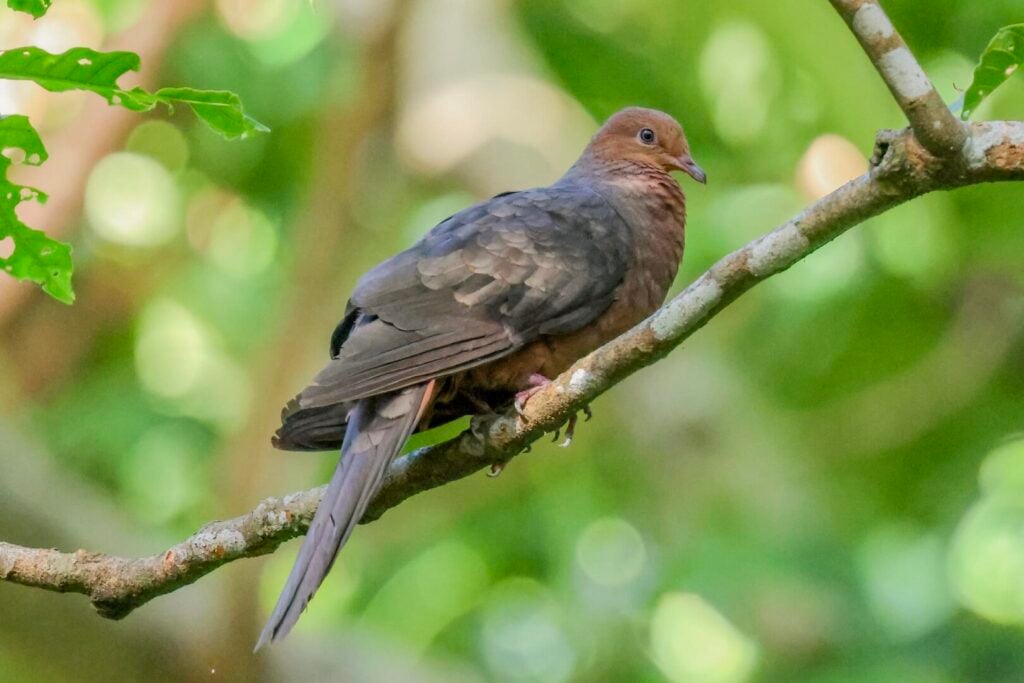
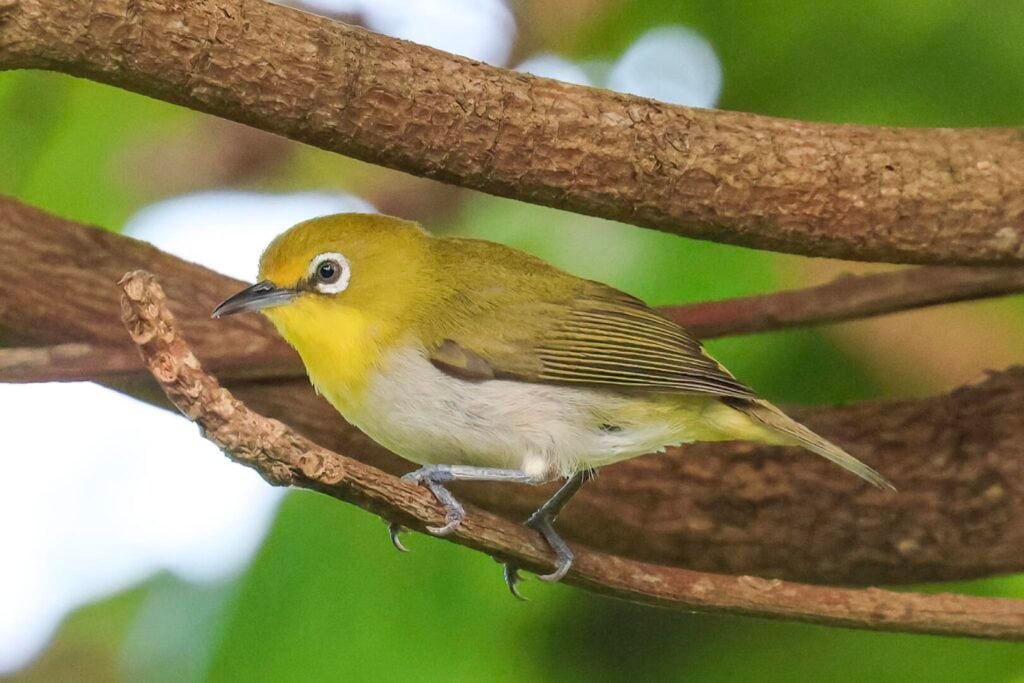
We arrived on Lanyu at 9am, picked up the hire car, got some fuel and headed off. We made a couple of stops on the road. First just outside the port to try for Philippine Cuckoo Dove. No joy, but it did produce our first Lowland White-eyes. Then further on when Mr Hong spotted a Whistling Green Pigeon, the first of our main target species here. While found on the mainland, it is much easier to see here on Lanyu and its range is otherwise limited to the Ryukyu Islands and the northern Philippine islands.
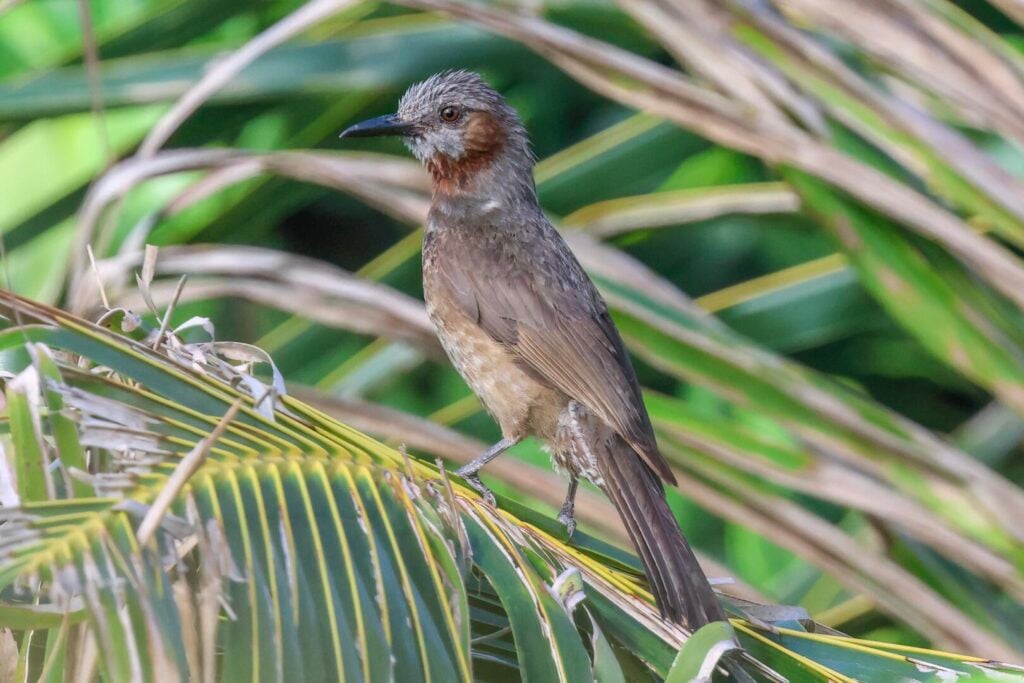
Driving on round the coast, there were a few Oriental Pratincoles and lots of Brown-eared Bulbuls. The endemic subspecies of the latter breeds only on Lanyu, Turtle and Green Islands and not on mainland Taiwan. We turned off to explore a wooded valley, netting our first Black Paradise Flycatcher and a pair of Philippine Cuckoo Doves, two more of the main target species here. Then we crossed over to the other side of the island, stopping for the obligatory scenic tourist photos on the way.
We drove up the coast, past our B&B and on to a small wood. That quickly got us Ryukyu Scops Owl and we had already completed the set of target birds for Lanyu, after less than 3 hours! The birds here are an endemic island subspecies, botelensis, which is considered a separate species by some. They are vocal in the daytime but if you can’t find them during the day it requires a return visit at night. So we were pleased to get such good views in daylight.
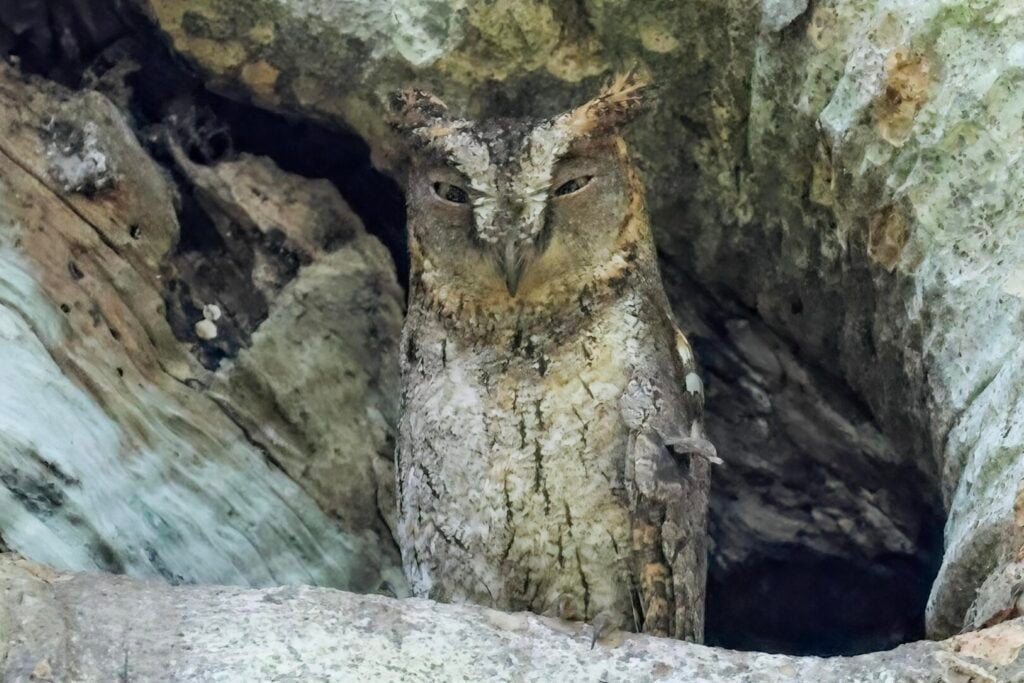
Back past the B&B, we stopped for lunch. Rio got us all bubble tea and we ate at a seafood restaurant where I tried the local speciality, dried flying fish. After lunch, we went for a drive around the north end of the island, sightseeing and stopping for several Pacific Reef Herons and Blue Rock Thrushes. We ended up coming back round past the port and then back over the middle, the way we had come when we first arrived.
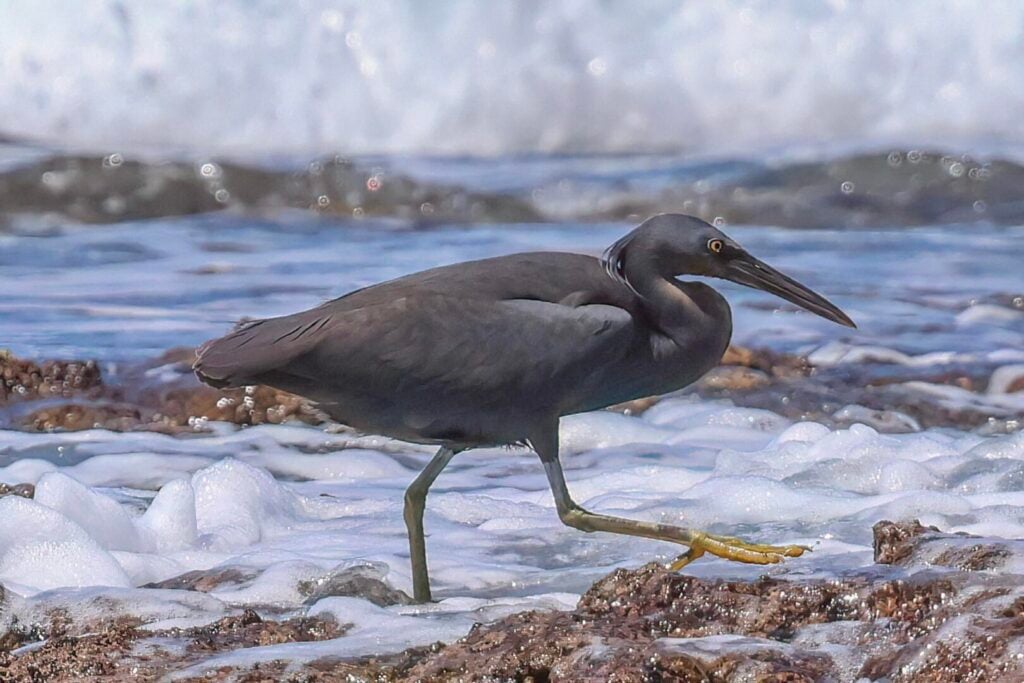
I had asked to try for male Paradise Flycatcher but was told they had all probably dropped their tails now. We went back to the same wood we had been to just before lunch and promptly found a male Black Paradise Flycatcher with a full tail, two more Ryuku Scops Owls and two more Philippine Cuckoo Doves. The subspecies of Black Paradise Flycatcher here, periophthalmica, is only found on Lanyu and Batan Island of the northern Philippines.
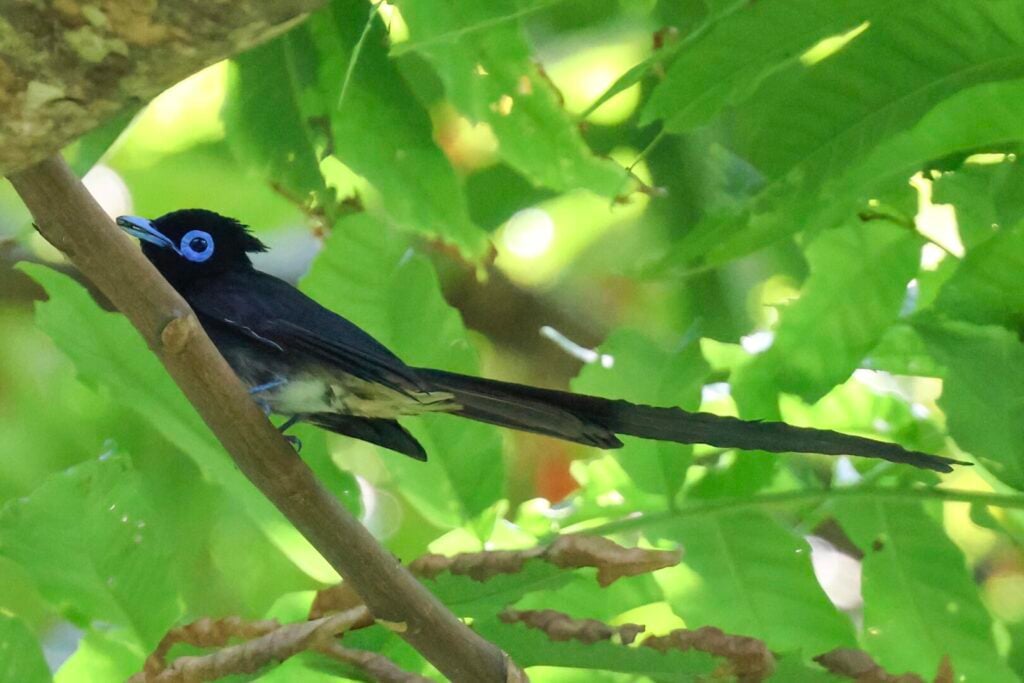
Mission very successfully accomplished, we checked in to the B&B and had some downtime before going out to dinner.
19th May
We were allowed a lie-in today, as we had cleaned up yesterday. I woke up early anyway and went for a walk all the way to the Scops wood again. Great views of Whistling Green Wigeon on the way in and an Asian Common Toad on the road.
I arrived in the trees to find a couple of people ringing. They seemed to be targeting Lowland White-eyes and had one in the hand, including taking blood samples. Hopefully this might help in resolving the taxonomy of this difficult complex! There were several Philippine Cuckoo Doves in the wood again, as yesterday. But the only Ryuku Scops Owl I could find was higher in the canopy today, much more difficult to see.
Despite stopping to photograph the Brown-eared Bulbuls on the way back, I still made it there in time for us to go out for breakfast.
After breakfast, we checked out and drove back to the wooded valley where we had been yesterday. We were hoping to find Northern Boobook but drew a blank. We did however succeed in the other mission to get some better photos of Lowland White-eye.
Our ferry back to the mainland was not until this afternoon, so we had time to kill. We all went back to the Scops wood again, although it didn’t produce anything new. The Scops Owls were all hiding high in the canopy, as earlier. Back over the island. we called in at 7-Eleven to get lunch. While Rio was getting money out of the cashpoint by the port, we noticed a group of seven Black-naped Terns flying past.
When Rio got back, we chased up to the north end of the island to try to see them but they had disappeared. A male Blue Rock Thrush was more obliging. Then Mr Hong drove us up a very narrow and steep road to the Ponso no Tao Lighthouse right on top of the north end. Amazing views!
Back to the port and eventually our ferry departed, only a few minutes late. It was a different boat to yesterday and although we managed to get a seat by the window, the glass was positively filthy. We were heading into the sun too, so not great views, but we still managed to see a number of Streaked Shearwaters and Bulwer’s Petrels.
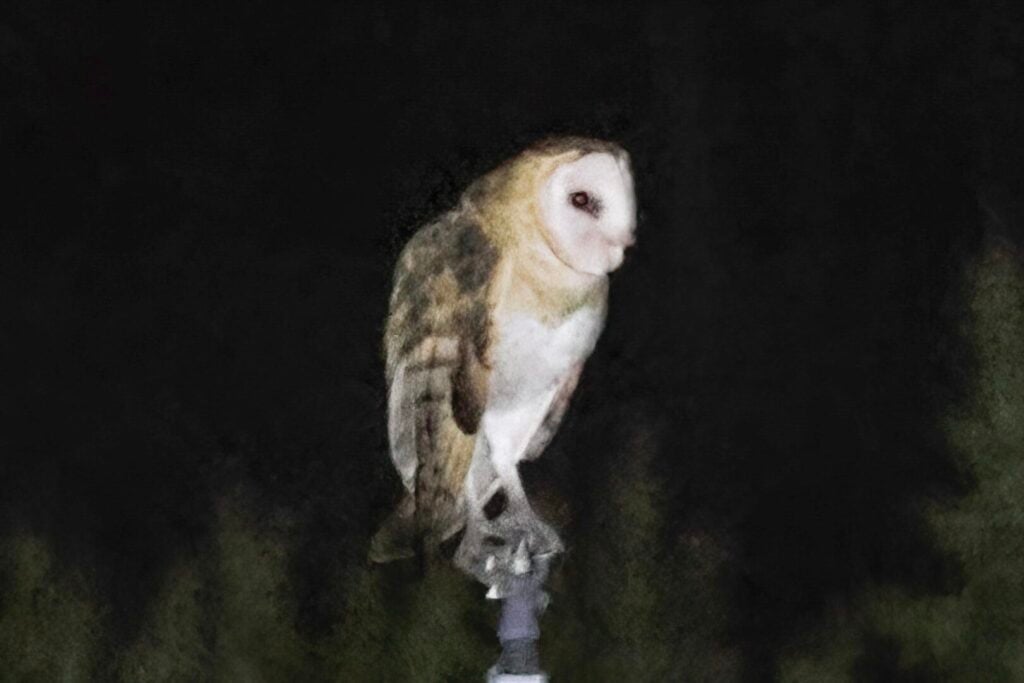
We got back to Kenting around 5.15pm and stopped at a nearby restaurant for a quick dinner. It was a long drive to Tainan, where we would spend the night, but we had one last stop to make. We called in at a site to try for Eastern Grass Owl. Driving slowly along the track, scanning with torches and thermals, we quickly found two, using the sprinklers in the fields as hunting posts. There were lots of Savanna Nightjars here too.
We arrived at the hotel around 8.35pm, so by the time we had checked in, it was straight to bed after a long day.
20th May
For breakfast this morning, we went to a local restaurant to have beef soup, a Tainan speciality. Delicious! We had seen almost all our target birds now, the only one left being Taiwan Thrush. We knew it would be a long shot at this time of year. Still, we might as well try. After getting coffee at a nearby convenience store, we drove to Baoshan.
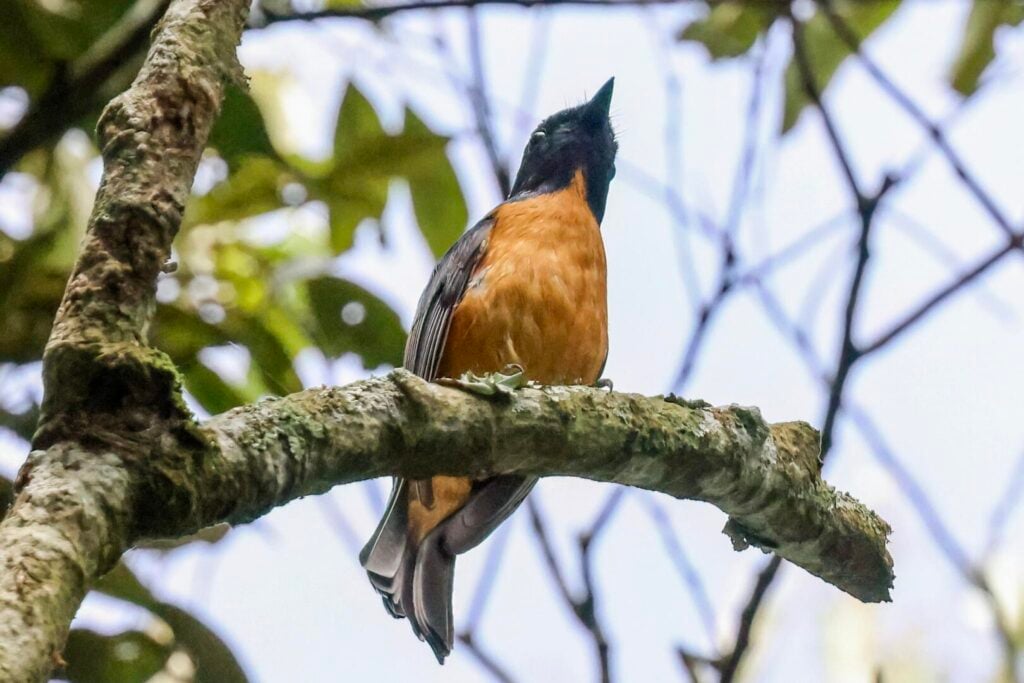
We tried playing the song first from the car on the road up to no avail. The park at the top was very open and didn’t look very promising, but we walked up the hill and then down into a more wooded area. This looked more promising but still nothing responded. Nothing ventured, nothing gained. A Taiwan Vivid Niltava sang from the tree right above us, the best views we had of this species which seems to like singing from high up normally.
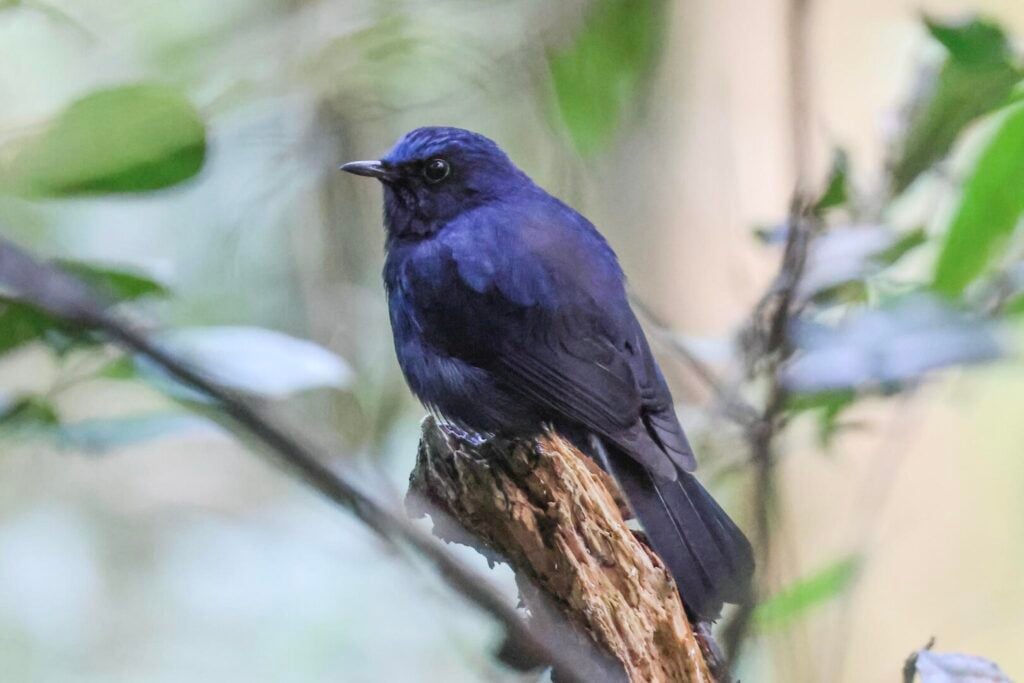
We also got good views of White-tailed Robin here. Prior to this, we had heard lots but only had various glimpses of them.
Over the next couple of days, we need to make our way slowly back north. On the way today, we called in at Xinwei Forest Park to try for Oriental Cuckooshrike again. It was not raining this time but no sign. We then discovered they hadn’t been seen here since 3rd May, so had probably moved on. We had lunch here, in the Visitor Centre. We did find several Maroon Orioles in the trees which showed very well.
Further on, we stopped next at a site for Vinous-throated Parrotbill and got good if slightly distant views. A stretch of stream/river in town, where we hoped to find closer Parrotbills or Painted Snipe produced neither.
We went into town to get dinner, Taiwan Hot Pot again. Then we went out to look for owls, hoping to catch up with Mountain Scops Owl which we had missed due to rain earlier in the trip. We managed to get better views of Collared Scops Owl but only heard Mountain Scops Owl and Northern Boobook.
21st May
We had drawn up a list of a few commoner birds we had missed to target today, as well as having one last go for the enigmatic Taiwan Thrush. After breakfast in the hotel, we drove back to Dasyueshan. Our first stop at the lower levels quick got us the first target, Plain Flowerpecker, and a couple of Taiwan Hwamei again. The Collared Finchbills were also in the same place we had seen them on our first visit.
Further up, we took a small side road for Dusky Fulvetta. Luke had missed the one on the first day and with a bit of perseverance we managed to find one here. We stopped next in the same layby as last time to try for Brownish-flanked Bush Warbler. Again, we could hear one distantly from here so we drove on to the next corner where we found it had now gone quiet.
Rio suggested trying a different site for the Warblers, where apparently he had also found a singing Taiwan Thrush last year. Unsurprisingly, there was no sign of the thrush, but we found a couple of Brownish-flanked Bush Warblers which eventually showed well.
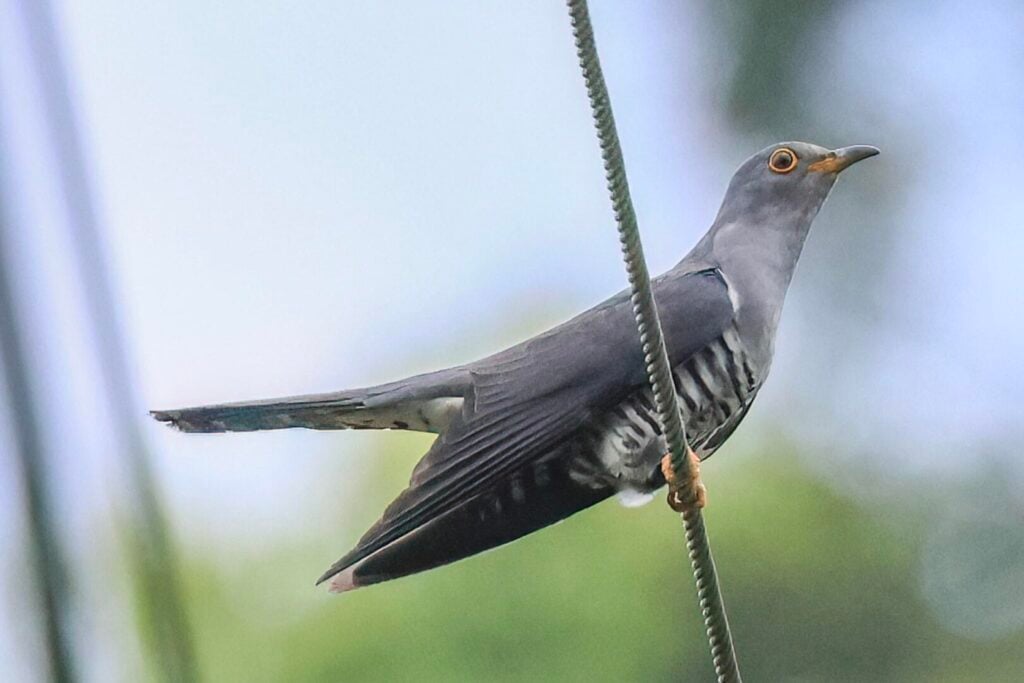
There were a couple of Oriental Cuckoos here too, one of which looked like a young female. We tried to turn it into something more exciting but in the end concluded it was Oriental but an unusual plumage.
We drove back down to the lowlands and spent the afternoon checking out some spots on our way back towards the airport. At the first stop by a small stream, Rio was hoping for better views of Vinous-throated Parrotbill. We heard them again here but didn’t see them, just a pair of Plumbeous Redstarts.
We stopped again by a wide canal through ricefields near Hsinchu. As we pulled up, Mr Hong spotted a Ruddy-breasted Crake crossing the road over the other side but we didn’t get onto it in time before it disappeared in. We had hoped for Painted Snipe here but there was no sign of any. A walk along the road just produced better views of some Eastern Spot-billed Ducks which flew past.
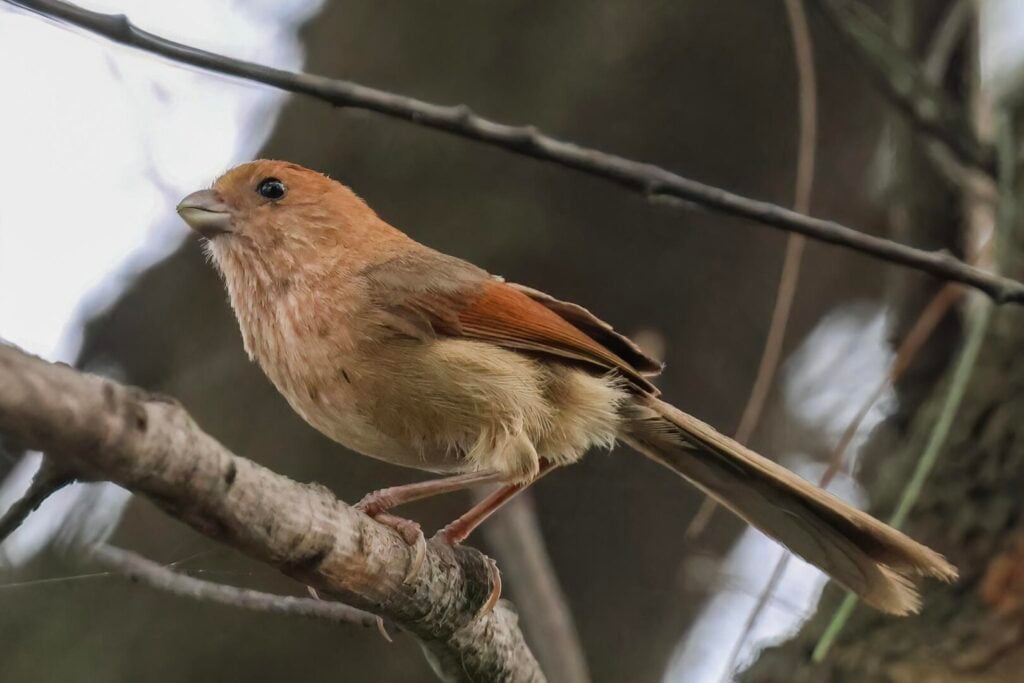
At some wetlands further down, we finally managed good views of Vinous-throated Parrotbill. A Purple Heron out in the wet grass was a last late addition to the list. Then on to the coast at the nearby river mouth, all we could find out on the mud were a few Kentish Plovers. Six Asian Glossy Starlings flew over.
We still had about an hour’s drive from there, so we left just after 4.30pm and headed for the airport. Our flight wasn’t until early tomorrow morning, so we would be spending the night at the Hyatt Regency again. Rio and Mr Hong dropped us at the hotel where we said our goodbyes and thanked them for all their help. We had a bit of time to get all our stuff sorted out, before opting for dinner in the hotel rather than trying to venture into town.
22nd May
We caught the shuttle from the hotel at 4.30am and, after checking in, had breakfast in the departure lounge. Our flight was scheduled for 8am and pushed back pretty much on time at 8.10am. Again, we had a refuelling stop of about an hour and a half in Bangkok Airport. We finally landed back in London Heathrow just after 7pm.
A great trip, we connected with pretty much all our targets. For Fairy Pitta, a couple of weeks earlier would probably have made life easier but we still connected. Taiwan Thrush is easier to find in the winter, when they come to feed on fruiting trees, but then you would not have a chance to see the Pitta. There was only one sighting of the thrush reported on eBird during the whole of our visit, so you need a lot of luck to find them at this time of year.
A good reason to go back.