Day 2 of a 3-day Autumn Migration & Wader Spectacular Tour. It was a rather grey start with some light mizzle on and off late morning/early afternoon. Thankfully, it eventually cleared through and brightened up for the rest of the afternoon. We spent the day in the Cley area today.
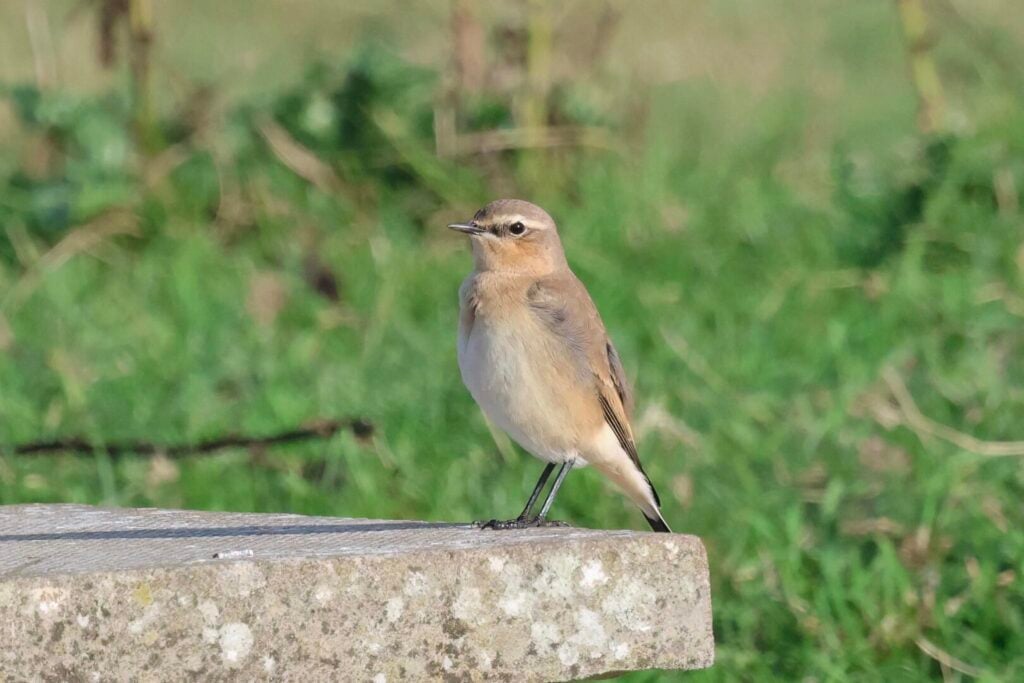
It had been raining earlier but it was dry when we got to Cley, so we decided to start with a look at the sea. As we drove down Beach Road, a Wheatear was in the corner of the Eye Field by the cattle pens. It flew up to a fence post as we stopped and perched there for a few seconds. Then it was spooked by some Rooks and flew off further back out of view.
We parked in the car park and walked up onto the top of the shingle. The sea was flat calm today, like a mill pond. Several Gannets, including a couple of juveniles, flew past offshore and we got the scope on an adult which had landed on the water. A succession of Sandwich Terns flew back and forth, the juveniles begging noisily from the adults. A single Common Tern flew past too.

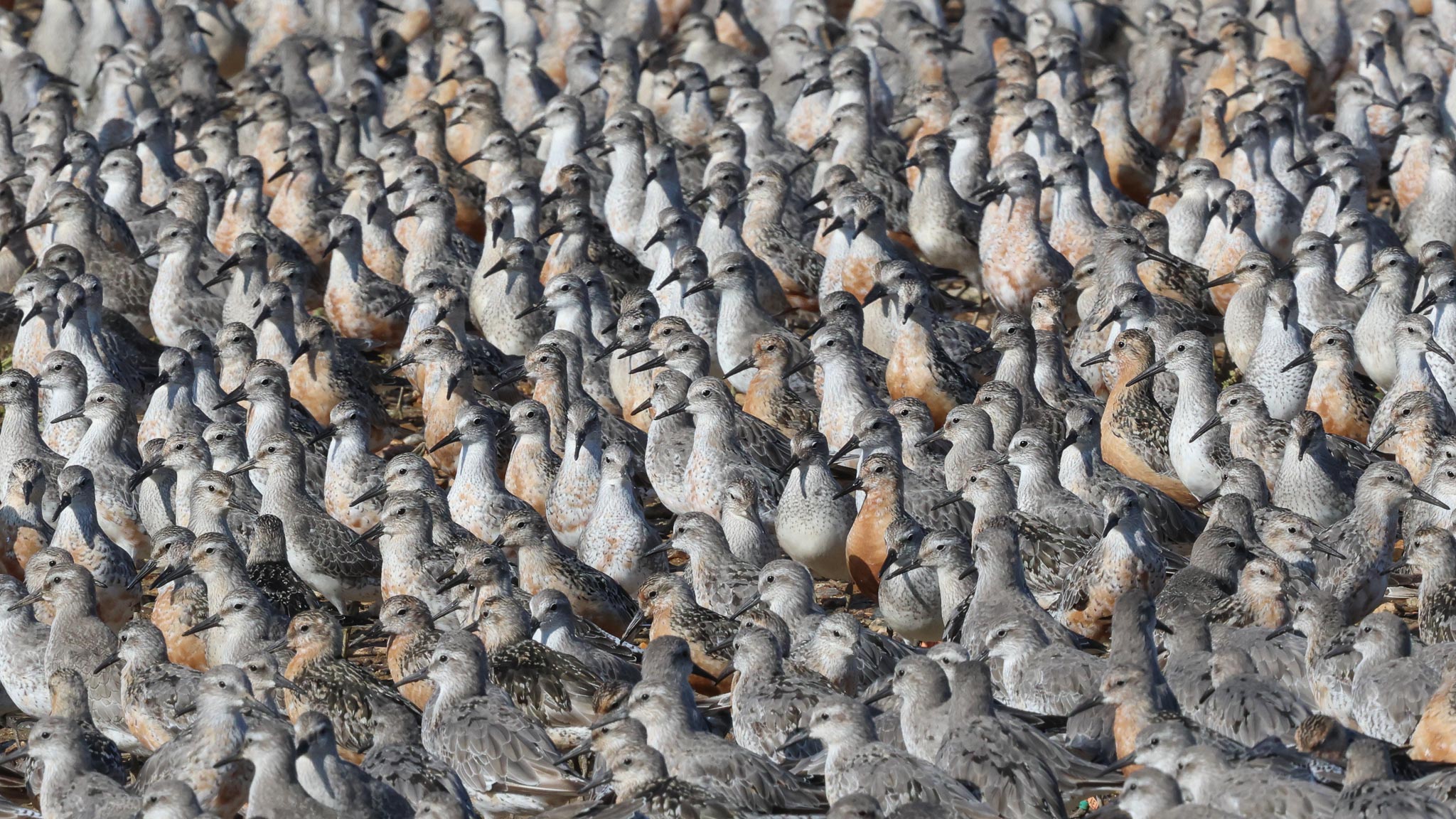
There has been a steady arrival on birds in over the sea most mornings recently but there was not much obvious migration in action this morning. Less than a handful of Teal flew past and a small group of five Knot. A Grey Heron flew high west behind us but hard to tell whether it was a migrant or just a local bird.
Scanning the Eye Field, lots of geese were feeding out on the grass, mainly Canada Geese, with a few Greylags and several Egyptian Geese. A couple of Golden Plover were very well camouflaged in the grass. It was a big high tide in Blakeney Harbour, and lots of birds had obviously been displaced. Small flocks of Teal and Curlew were flying round. A couple of Turnstone flew in and landed on the beach.
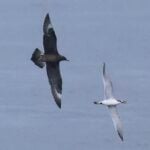
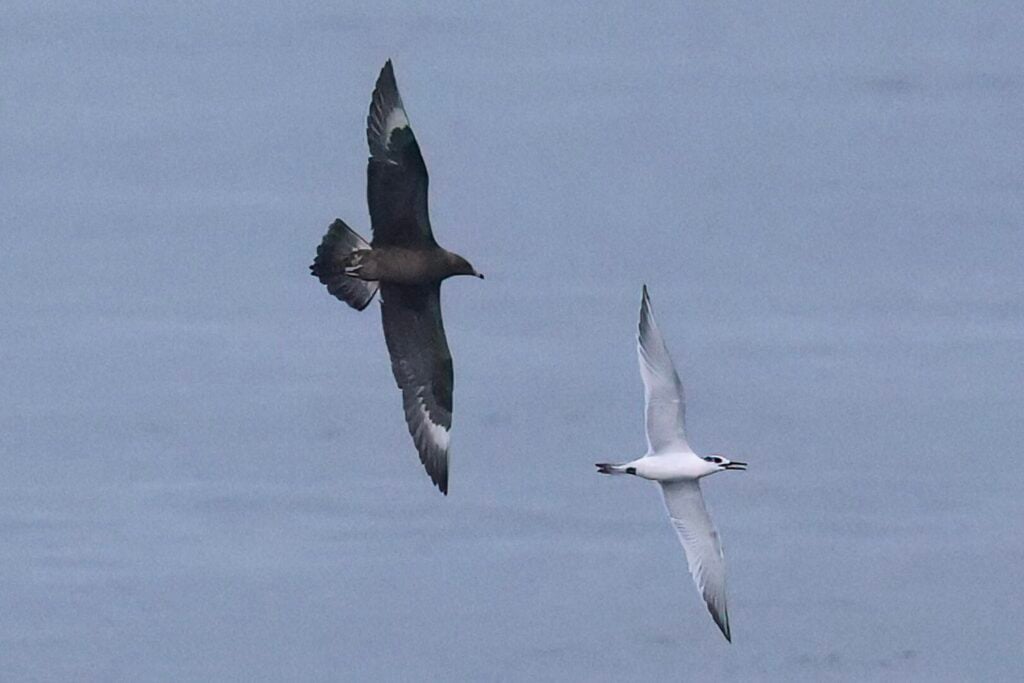
One of the group picked up an Arctic Skua on the sea. It was moving swiftly east with the tide, getting closer all the time. Suddenly it took off and flew in strongly. It had spotted a couple of Sandwich Terns and started to chase round and round after them right in front of us, trying to steal their breakfast. Great for us to watch, though not so great for the terns! Eventually the Arctic Skua seemed to give up and drifted off east. A little later, we picked up a single distant Great Skua flying east above the wind turbines.
With the sea so calm it was easier to pick up birds on the water this morning. A small group of five Razorbills was offshore though rather distant, preening and flapping their wings. A Guillemot flew past, and landed away to the west. We eventually picked up on the sea too. Then a second Guillemot appeared on the sea to the west of us, much closer in. It was diving all the time, but eventually came past us.
A juvenile Razorbill swam past the other way, just off the beach, carried very quickly by the tide. It had to go round the people swimming, who were a little surprised to see it. Then we picked up a summer plumaged Red-throated Diver on the sea off to the east.

A very nice selection of birds to stat the day, we decided to walk down to North Scrape next. We were hoping there might be some migrants in the weedy areas of the shingle, behind the beach, but we didn’t find a single bird there today, not even a Meadow Pipit. A Small Copper butterfly landed to bask on the path ahead of us.

There has been a digger working on North Scrape this week, but it was parked up now, not working over the weekend. It had churned up some of the mud, so we were hoping some waders might have dropped in. All we could see were two Shelducks though. Another Wheatear was on the shingle just east of the entrance to the hides. One autumn migrant out here, at least.
As we walked back, it was like the Swallow tap was suddenly turned on. For a couple of minutes, Swallows poured past us, following the beach west. One of the locals estimated 150 flew through in just 10 minutes. They are leaving us, on the long journey down to Africa for the winter. Migration in action. Fourteen Bar-tailed Godwits flew west over the beach too, but hard to tell whether these were migrants on the move or local birds displaced out of the harbour this morning.
The sky was looking rather grey and threatening to west. We got back to the minibus and drove round to the Visitor Centre to use the facilities, a chance to get a coffee, and buy permits for the reserve. Afterwards, we set off to walk out to the central hides. The weather had finally caught up with us and it started to drizzle now, but thankfully it was only light and we didn’t really get wet.
We went in to Daukes Hide first. There had apparently been four Little Stints and a Little Gull on here earlier but no sign of either now. There were lots of Black-headed Gulls of various ages. A single Greenshank was asleep with a Redshank and a Ruff by one of the islands. A Ringed Plover landed at the back briefly but quickly flew off again. There were the usual ducks, the drakes still mostly in brown eclipse plumage.
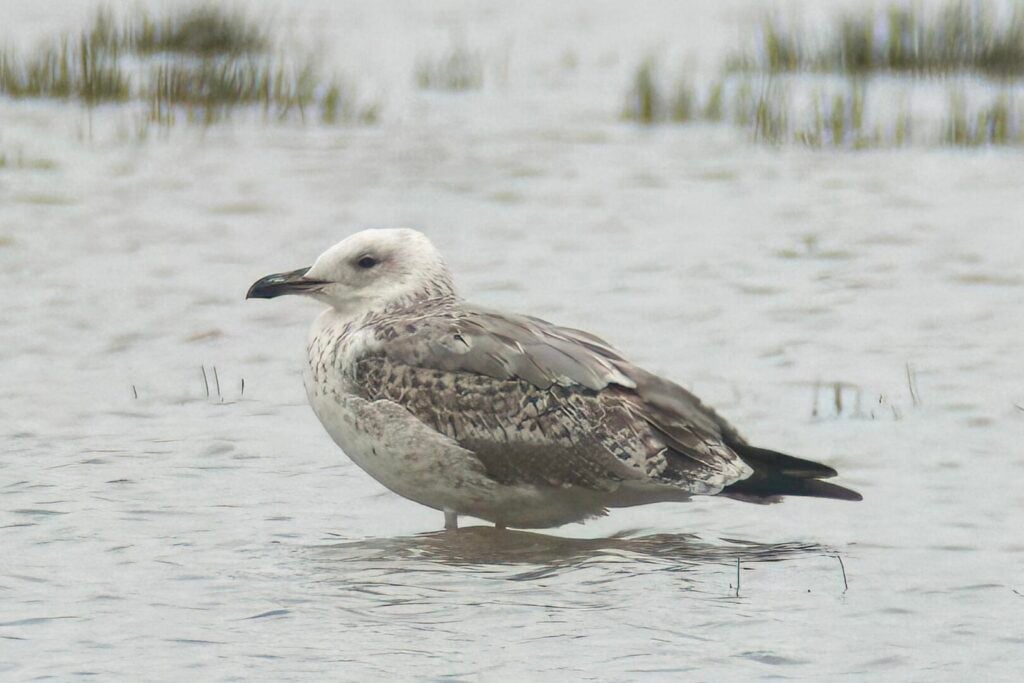
One of the group asked if there was any chance of seeing a Caspian Gull. There had only been a Herring Gull and a couple of Lesser Black-backed Gulls when we had checked through the gulls a few seconds earlier but we looked back now and there was a Caspian Gull. What are the chances of that! A 2nd calendar year bird, its white head with dark shawl stood out, as did its long, parallel-sided bill. The new grey feathers in its mantle were a shade or two darker than the nearby Herring Gull. Then it flew back out to sea.
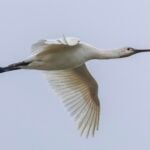
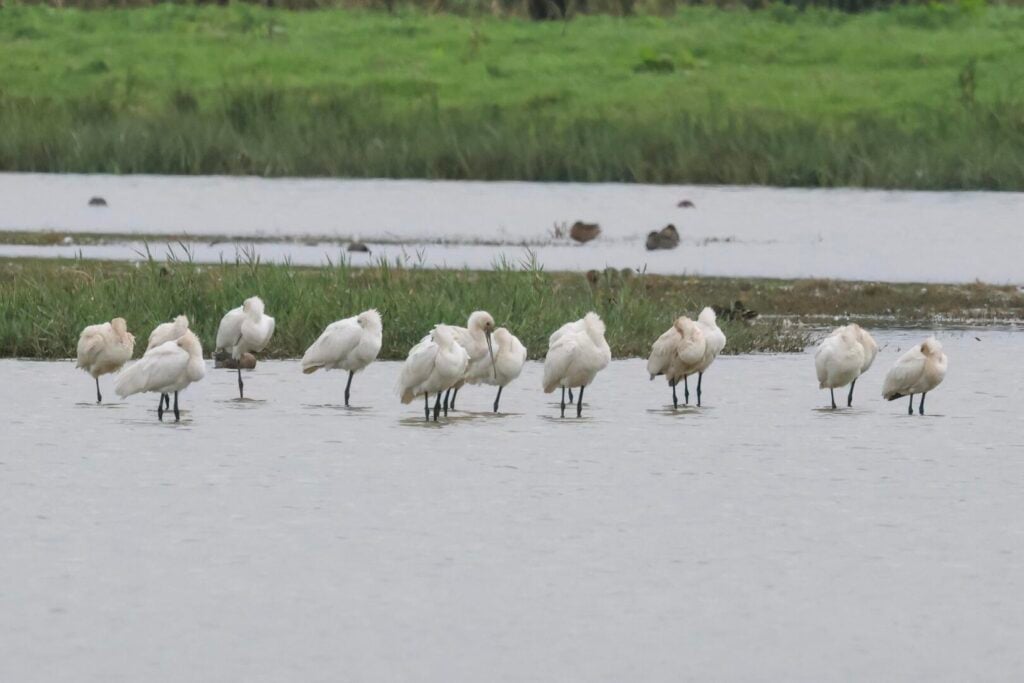
The rain had stopped by the time we made our way round to Teal Hide. Sixteen Spoonbills were out on Pat’s Pool, mostly asleep of course. They did wake up at one point and flash their bills.
A few Dunlin and Common Snipe were feeding around the edges of the grassy island in front of the hide, along with several Ruff. A large number of Black-tailed Godwits were mostly feeding in the deeper water over on the left hand side of the scrape. Looking through, we found a single juvenile limosa, a Continental Black-tailed Godwit. It looked very different from the nearby islandica juveniles, much plainer and duller brown.
Looking over to the islands on the far side, we found a Little Stint in with the Lapwings. Hard It was hard to see, very small and disappearing behind all the other birds. Then we realised there were actually two Little Stints there. We still had a small window before lunch, so we decided to walk back round and have a quick look in Bishop Hide, to try to get closer views.
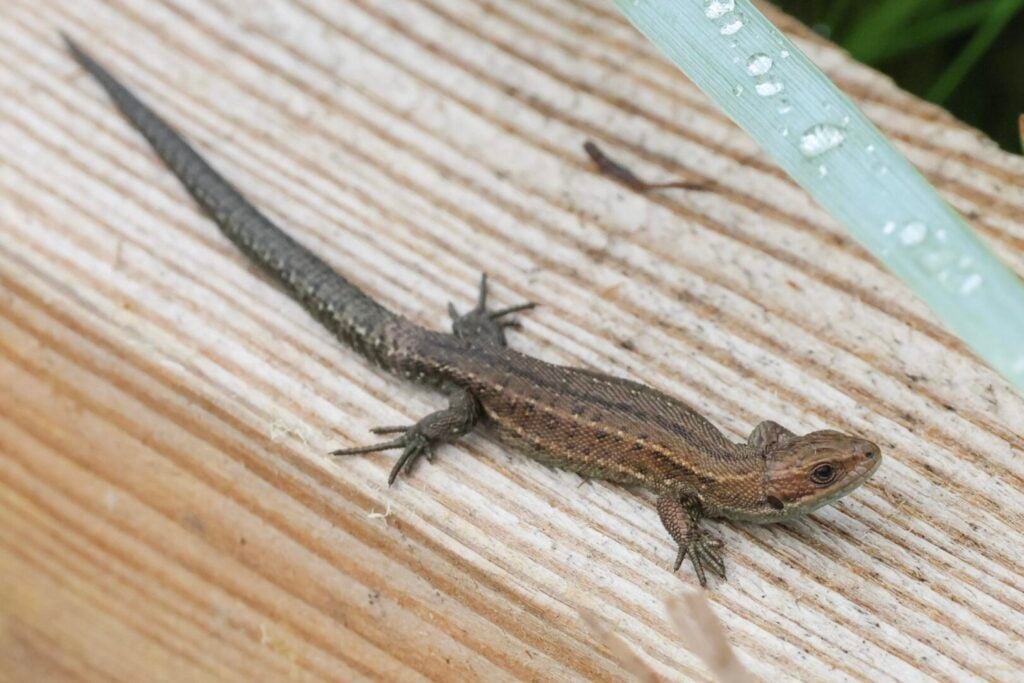
Back along the boardwalk, a Common Lizard was basking on the wooden rail on one side. Lots of Pied Wagtails flew up out of the fields by Old Woman’s Lane but we couldn’t see anything different in with them. Four Pink-footed Geese flew in high from behind the Visitor Centre calling.
Into Bishop Hide, and thankfully the two Little Stints were still on the island with the Lapwings. Much better views from here, much closer. Better than yesterday’s views too, better light. Smart, fresh juveniles with bright fringes to their wings and upperpart feathers, and pale mantle lines. A young Chinese Water Deer was feeding on the bank right in front of the hide but realised it was being watched when it came out from behind the reeds and ran off.
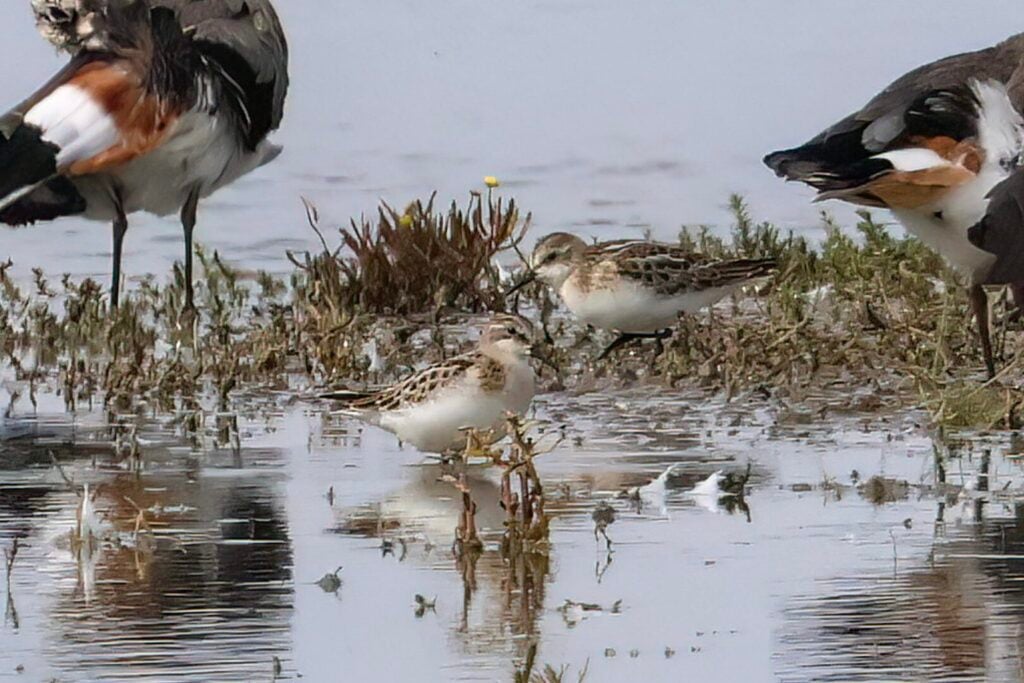
One or two Bearded Tits called briefly, but there was no sign of them in the reeds out from the hide. Another Caspian Gull dropped in – they are like buses! This one was a 1st winter, lacking the grey in in the upperparts, already with a very white head and a tertial pattern with neat white tips. We were spoilt for Caspian Gulls today.
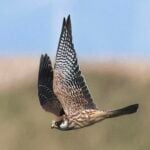
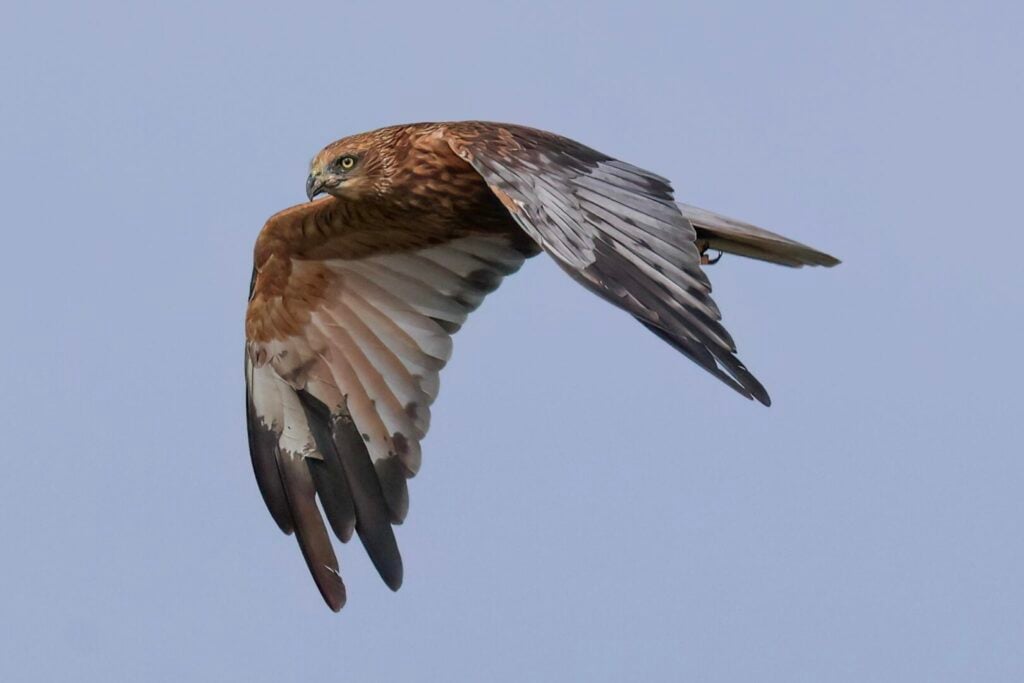
Two Hobbys were hawking over the back of the reeds. We could see them catching dragonflies, bringing their feet up to their bills to eat them. A female Marsh Harrier over the reeds behind, drifted in over the scrape flushing everything. Then a juvenile Peregrine zoomed in from behind us. It stooped several times at the scrape, causing pandemonium, before flying off again. When we looked back to the island, the Little Stints had flown off.

Bishop Hide had proven even more productive than we had hoped. As we walked back to the Visitor Centre for lunch, a Reed Warbler flew over the Skirts path ahead of us. When we sat down in the picnic area, it was dry and bright at first. Then more mizzle appeared out of nowhere. Thankfully it was only very brief and once again, not hard enough to get us wet.
After lunch, we drove round to Walsey Hills. As we got out of the minibus, we could see one of the Hobbys still hunting low up and down the East Bank. Then it flew off east. Snipe’s Marsh is still bone dry, after the summer, so we continued straight on to the East Bank.
We stopped by Don’s Pool to listen but it was all quiet here today. Up to the Serpentine, there were just a few ducks and a single Avocet. A few Curlew were preening on Pope’s Pool, and a single Bar-tailed Godwit was bathing in with them. Looking through the ducks gathered at the top end of the Serpentine, we found a single eclipse drake Pintail asleep in with the Teal on one of the grassy spits. A couple of Wigeon were with them too.
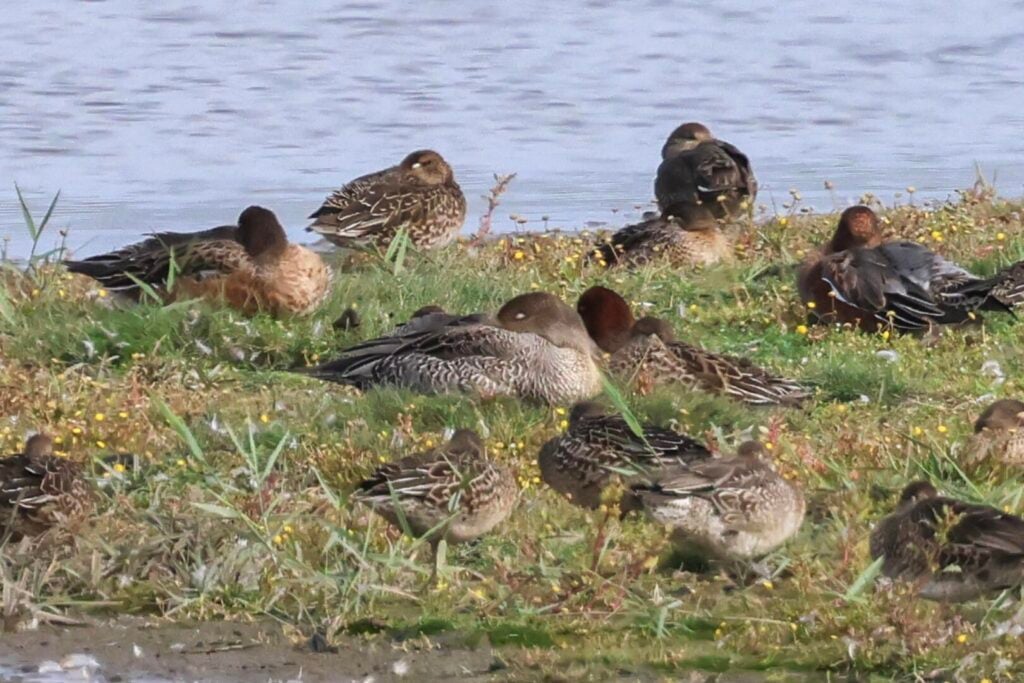
A smart male Marsh Harrier came in, hunting along the bank on the north side of the Serpentine. All the ducks spooked, and most flew and landed in the water. The Pintail woke up too, but it just walked to the edge of the mud for a drink.
We walked on further to check Arnold’s Marsh. There were plenty of Common Redshank, as usual, but no sign of the Spotted Redshank today. We did find a single Common Sandpiper feeding in the samphire. There were lots of Ruff, a couple of Dunlin and several Curlew at the back. Lots more Wigeon on here too. Several Sandwich Terns were perched on the posts at back. A Great Black-backed Gull was loafing in with the Cormorants. Three Dunlin were on the Brackish Lagoon behind, but no sign of any Little Stints on here today.
We decided to walk back and we still had time for one last stop. We drove round to Kelling. There are no House Martins over the Reading Room now, the last of them seem to have departed in the last few days. Crossing the road, it was rather quiet around the back of the school today, nothing coming to bathe in the beck.
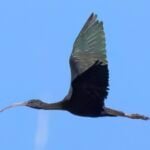
As we walked up the lane, there was lots of activity around all the ivy flowers. We could hear the buzzing of all the Ivy Bees and hoverflies. Several Chiffchaffs were calling in the hedges and a couple in the small copse. We stopped to scan from the metal gate. A Grey Heron was out in the wet mud and a single Mute Swan, but no sign of any Glossy Ibis. There were lots of Rooks on the hillside beyond, and a Brown Hare. Two Red Kites and Common Buzzard circled up over the field behind us.
Further down, two Chinese Water Deer in the field opposite ran off as we approached. There were just a few ducks on the pool, Mallard, Gadwall and a single Shoveler. Walking along the crosstrack, a Barn Owl suddenly appeared from nowhere. It flew across the track in front of us and landed on one of the fence posts on the edge of the Quags. It was staring intently down into the grass below, and largely ignored us even though we were not far away.

Only when two people walked the other way along the path did the Barn Owl fly. We could see now it had a very tatty right wing, with lots of feathers damaged. That was maybe why it was out in the middle of the afternoon. It was probably struggling to hunt. It landed again on the fence on the far side.
Along the path down to the Hard, a Common Whitethroat with a half-grown tail flew out of the brambles ahead of us. Several Stonechats were along the fence on the edge of the bramble field, flitting up and down, to and from the grass below. Another Common Whitethroat was with them and a few Linnets were perched in the brambles too.
We had seen a couple of Whinchat here two days ago and there was one still here this morning apparently. We couldn’t see any here, but there were more Stonechats further down so we walked on to check those. They were moving quickly, up the path towards the guns ahead of us, so we couldn’t be sure there wasn’t a Whinchat with them. A Wheatear came up from path and landed on the fence. There were a few Linnets here too.
Half way up, we looked back and could see two Glossy Ibis very distantly out on the grazing marsh towards Salthouse. So we stopped and got them in the scopes. Several dogwalkers came down the hill the other way now, and we realised we had lost track of the Stonechats. We tried a little further up the path. Two Wheatears were now around the gun emplacements and feeding in the field where the sheep had been grazing below. Lovely in the sunshine.
We figured the larger group of Stonechats had probably gone on to Weybourne Camp. Private land, as the signs warning of land mines, vermin being shot and birders being unwelcome constantly remind us. What a friendly place! Walking back down, there were still three or so Stonechats in the bramble field, but still nothing with them.
It was time to head back. Another interesting day of Autumn Migration and still another day tomorrow.