Day 1 of a 3-day Autumn Migration & Wader Spectacular Tour. There were some nice bright and sunny spells and cloud at times, the latter just thick enough to produce some brief light spots of rain once or twice. It was rather breezy too. We started at Titchwell and worked our way back east along the coast in the afternoon.
Once again, we cut across country to the coast this morning. The road through Choseley past the drying barns is still overrun with ridiculous numbers of tame Red-legged Partridges, but we managed to avoid them. When we got to Titchwell, the first part of the car park was already filling up so we parked in the overflow car park.
We had a quick look at the paddocks from the gate at the far end first. There were not many birds out here so we turned our attenti0n back to the bushes in the overflow car park. There were lots of Blue Tits and Great Tits in and out of the apple trees and the brambles, and a few Long-tailed Tits in the sallows at the bottom. A couple of Chiffchaffs and Blackcaps moved through with them. Three or four Greenfinches and a few Chaffinches and Goldfinches flew in and out of the trees.
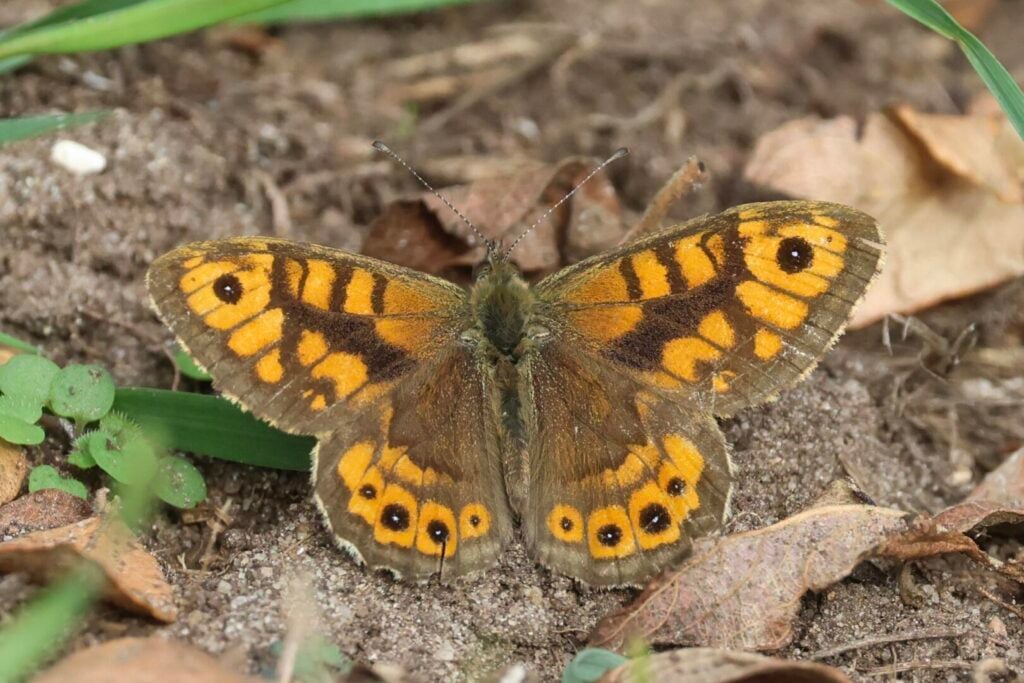
As we made our way out onto the reserve. The staff and volunteers were setting up for the Titchwell BIG Weekend in the picnic area. Onto the main path, several butterflies fluttered around the bushes in the early sunshine, Wall Brown and Speckled Wood. One Wall almost settled on its name on the sign on the bank. There were a few Migrant Hawker dragonflies out too.
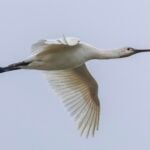
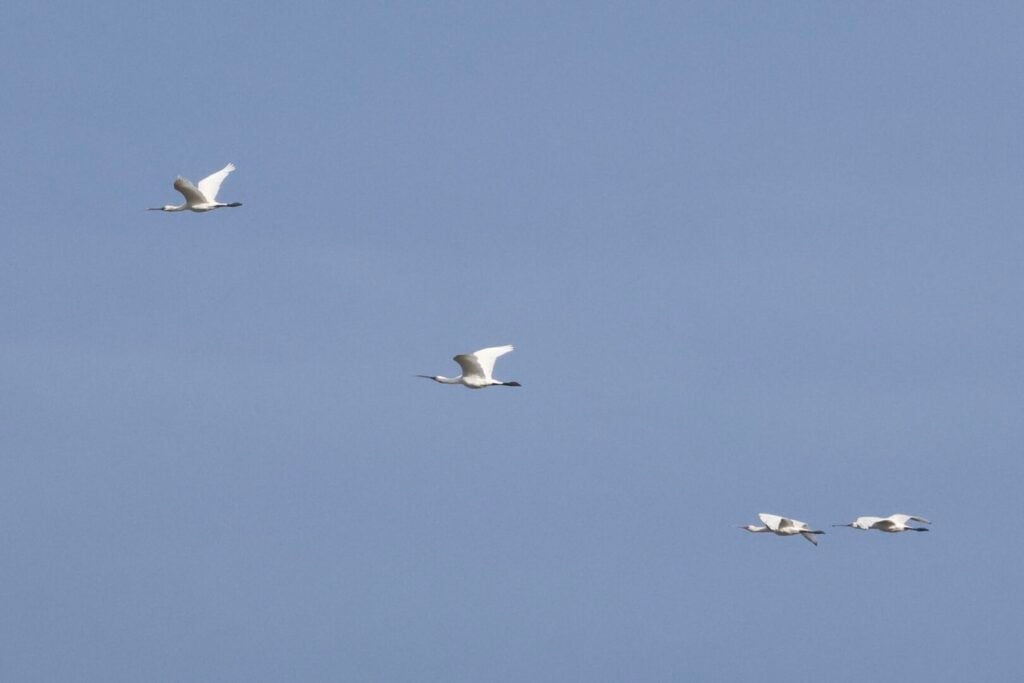
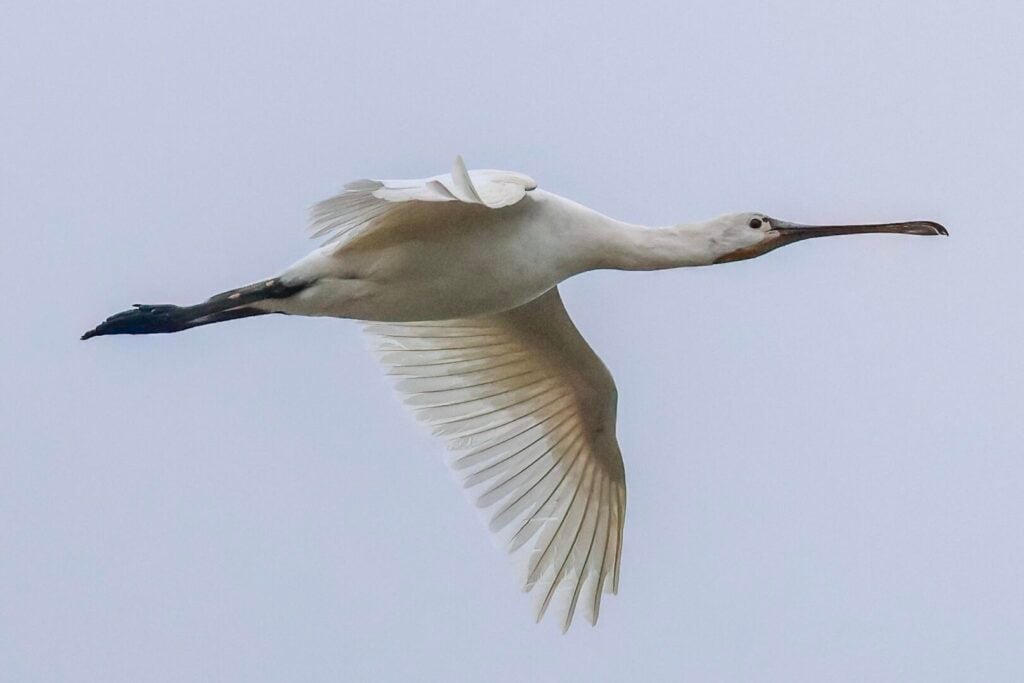
Out of the trees, we could only see a Redshank on Thornham pool now (there had been four Greenshanks earlier). One Marsh Harrier was out over the saltmarsh towards Thornham, and another was over the back of the main reedbed the other side. A couple of small groups of Spoonbills flew out from the reserve, over the West Bank and out towards Thornham harbour.
As we looked back, a Great Spotted Woodpecker flew out of the trees and headed off high and strongly to the west. Another one presumably on the move, we have seen a few in recent days.
Looking out towards Holme, we could see some very distant flocks of Golden Plovers flying high in the sky. They looked very white as they turned in the sunshine, particularly against a rather dark grey backdrop to the west. A Greenshank called, and we picked it up as it flew across briefly and dropped into ditch out of view. There were quite a few Lapwing, Redshanks and Ruff roosting around the small pools and a scattering of Curlews out on the saltmarsh.
Stopping to check the Reedbed Pool, there were not so many birds on here today. A few ducks, mostly rather brown at this time of year, Gadwall, Teal and Mallard. A Little Grebe was diving between the islands of cut reeds, where a couple of Little Egrets were roosting. There was no sign of a Great White Egret at first, but then one flew over the reeds further back. A few Swallows and House Martins were hawking over the reeds beyond the pool.
The threatening dark grey clouds were coming our way now, in from the west. It looked like it might rain so we headed for Island Hide. Half the hide was completely packed with people trying to see the Spotted Crake. It was showing on and off too. One of the volunteers asked for people to leave if they had already seen it, to make room for other. But only one person did.
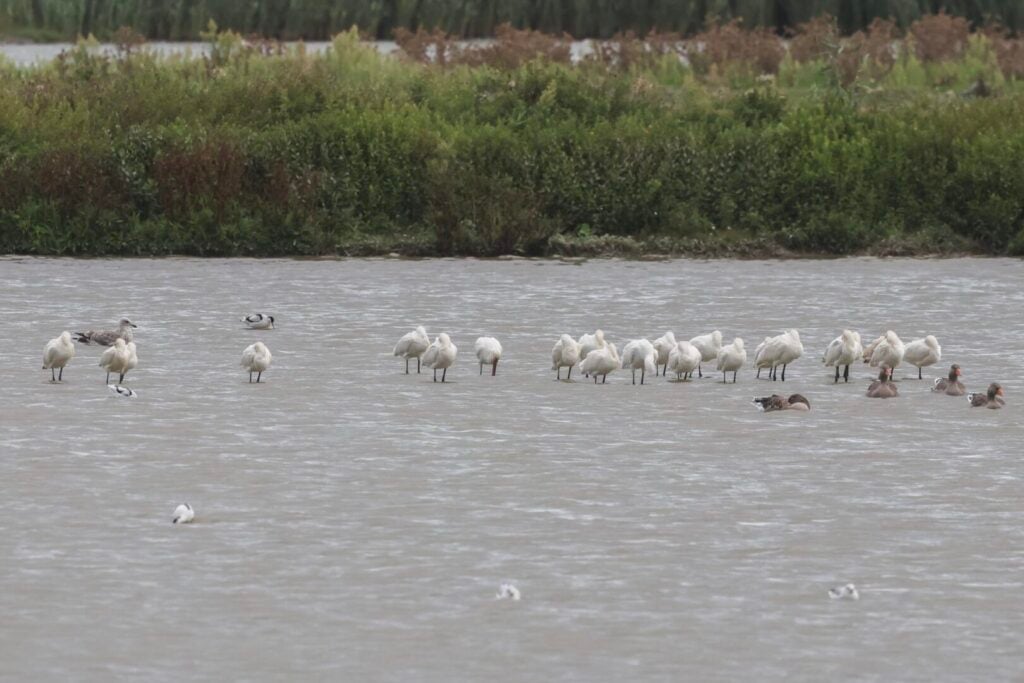
We concentrated on the other birds out on the Freshmarh. A group of about twenty Spoonbills was still standing in the water towards the back. They were doing what Spoonbills like to do best, sleeping. Occasionally one would lift its head and flash its bill briefly, before going back to sleep.
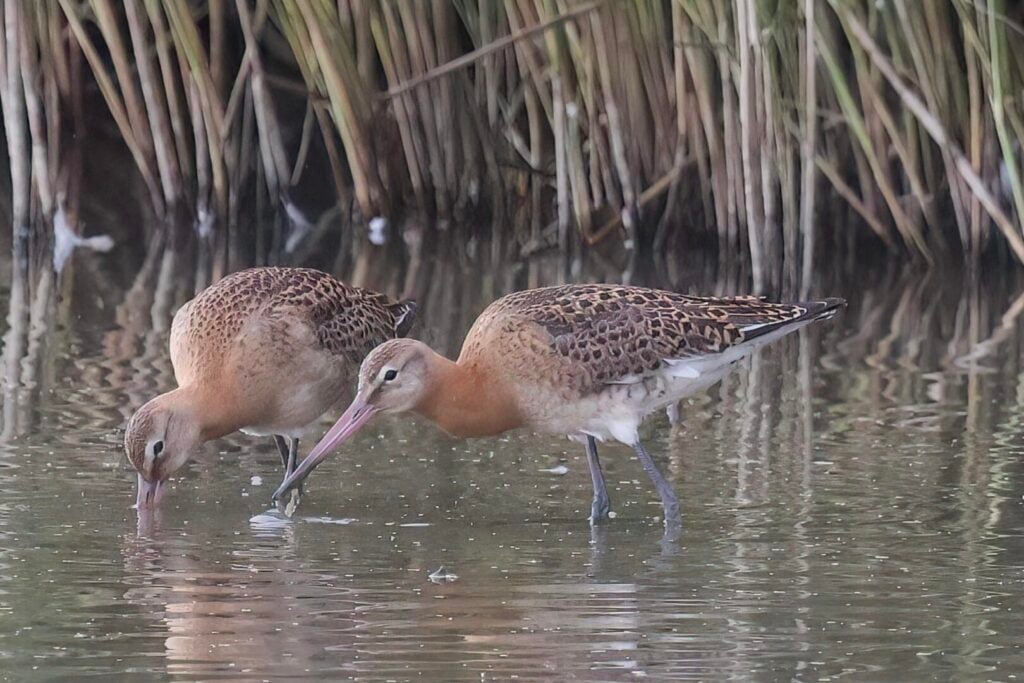
There were lots of Black-tailed Godwits roosting on the islands and feeding in the water, including some nice bright juvenile Icelandic birds. The juveniles are relatively easy to separate to subspecies. There were several Ruff too and lots of Avocets. Lots of Greylags and the usual selection of ducks, similar to the Reedbed Pool.
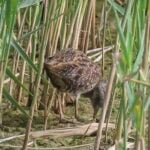
Eventually, the crowd thinned down a bit on the other side of the hide, and we managed to set up one of the scopes. The Spotted Crake duly came out in the corner of the reeds, under the West Bank path. Everyone managed to get a look at it before it walked back into the reeds. We decided to move out to let more recent arrivals have a turn.
Back out on the main path, we walked further up to view the next compartment. The second Spotted Crake was showing even better here, in the sparse reeds on the edge of the mud below the Parrinder bank. We had some lovely views of it in the scopes before it eventually ran across and into the near corner, where we lost sight of it behind the reeds. There has been some discussion about ago of these birds, with some people suggesting there is an adult and a juvenile. In fact, they are both juveniles.
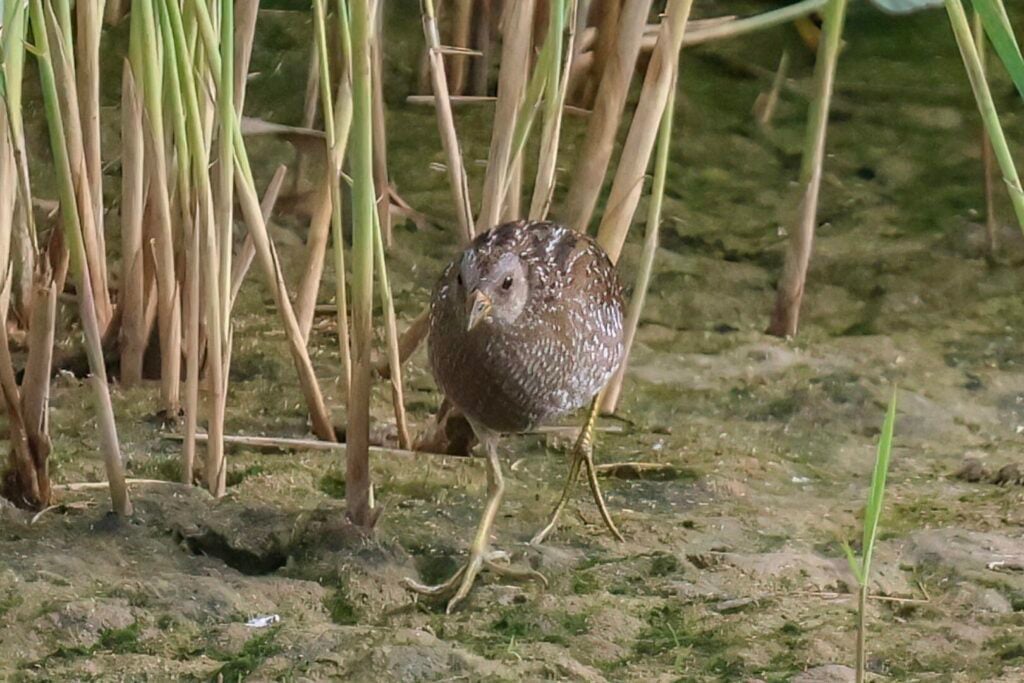
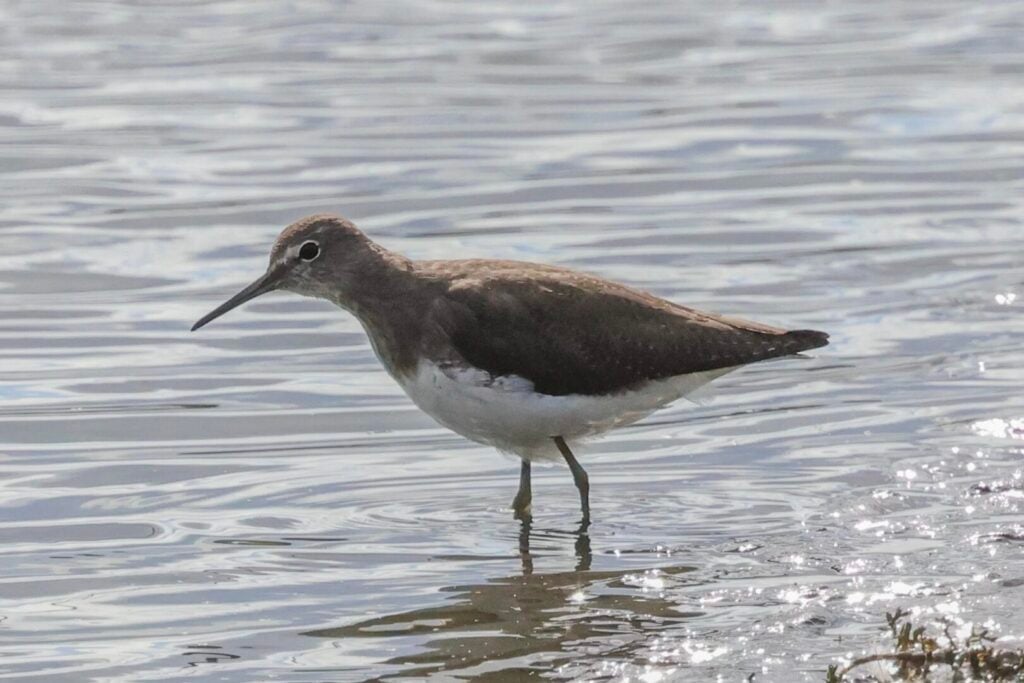
There was also a Green Sandpiper on here, further back in one of the muddy channels, and a single juvenile Little Ringed Plover on he mud by the reeds. Small flocks of Linnets kept dropping in to drink and several Pied Wagtails were on the grass in the middle. Scanning over to the compartment beyond, we found a very distant Common Sandpiper.
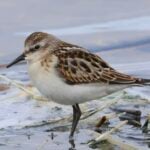
Round in Parrinder Hide, the Common Sandpiper was much closer, together with a Turnstone. A flock of Dunlin flew round and landed over by the reeds on the far side. The sun had come out again and we shouldn’t complain, but we were looking right into the light now. Still, we could see the two juvenile Little Stints in with them. They were noticeably smaller and shorter billed. Amazing long distance migrants, on their way from for northern Scandinavia or Russia, probably to West Africa for the winter.
There were also plenty of Ruff and Redshanks, and a few Black-tailed Godwits on here. Three or four Common Snipe were feeding around the muddy edges. The Green Sandpiper had moved across and was now right in front of the hide.
As usual, there were lots of geese on here, Greylags, Canadas and the odd hybrid, plus a couple of Egyptian Geese. A similar selection of ducks too. There were lots of hirundines hawking for insects over the pool and we picked up a single Common Swift flying through too. Most of our Swifts are long gone, but just a few are still moving through.
Scanning along the edge of the reeds opposite, we found a very distant Bearded Tit on the mud. It disappeared out of view behind the island in front. Scanning again a few minutes later we found a Water Rail now, walking along the edge. When we looked back, the Bearded Tit had reappeared too.
A distant Greenshank dropped in over by the east bank. There had apparently been a couple of juvenile Curlew Sandpipers on here earlier, but we hadn’t been able to find them yet. We were just about to give up when one walked out from round the back of one of the islands over by the reeds. Mission accomplished, we decided to head out to the beach.
Back out to the main path again, we stopped to check the wider channel on the far side of Volunteer Marsh. There were lots of Redshank, including a small group roosting on one bank, several Curlew and a single Black-tailed Godwit on Volunteer Marsh. A single Greenshank was further back, looking very pale compared to the Redshanks. A couple of Reed Buntings came up out of the reeds and one perched on the bushes.
A flock of Spoonbills flew west over the sea beyond the dunes. We hadn’t seen the ones leave the Freshmarsh, so we wondered whether they could be birds on the move. There was not much to see on the Tidal Pool, just a couple of Curlew at the back. We walked on to the beach.
It was rather windy out on the beach now. We stood by the old watch tower and scanned the sea. Two or three Great Crested Grebes were just offshore. A couple of Sandwich Terns flew past close in and a few more were feeding further out. Several Common Terns flew round with the gulls over the beach towards Brancaster. Three Wigeon flew past.
There were a few waders on the mussel beds, Oystercatchers, Turnstones, Black-tailed Godwits and Redshanks. Scanning further up the beach towards Thornham Point, we found a couple of distant Bar-tailed Godwits and a single Grey Plover.
Given the wind, we decided not to linger out here today and head back. We hadn’t seen any on the way out but we managed to find just one Sea Aster Bee (Colletes halophilus) now. It was a bit cool and windy for them today.
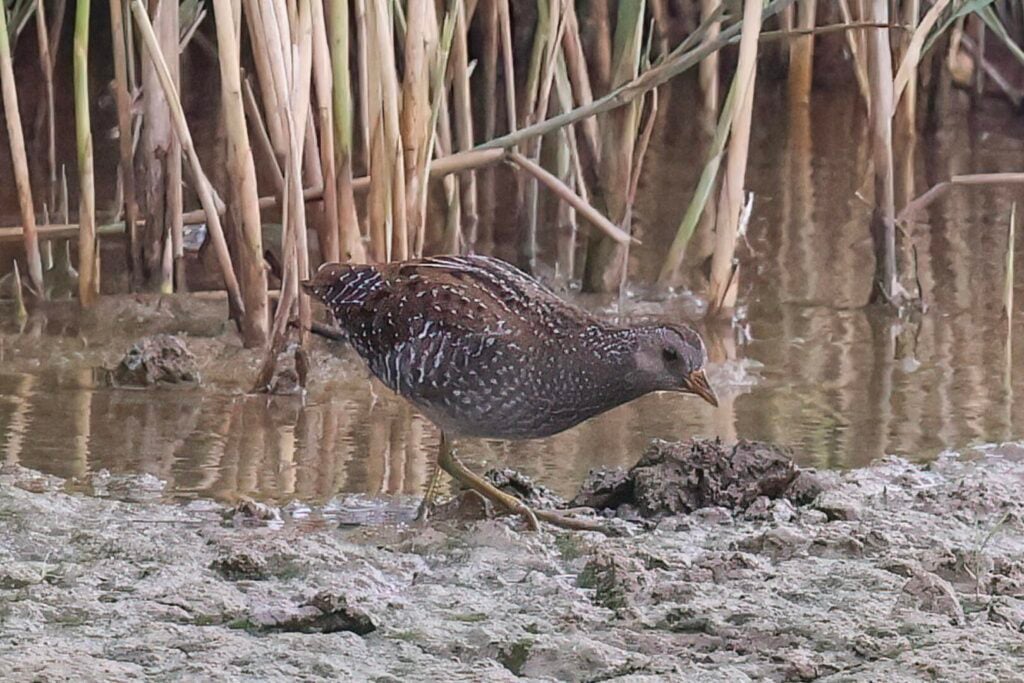
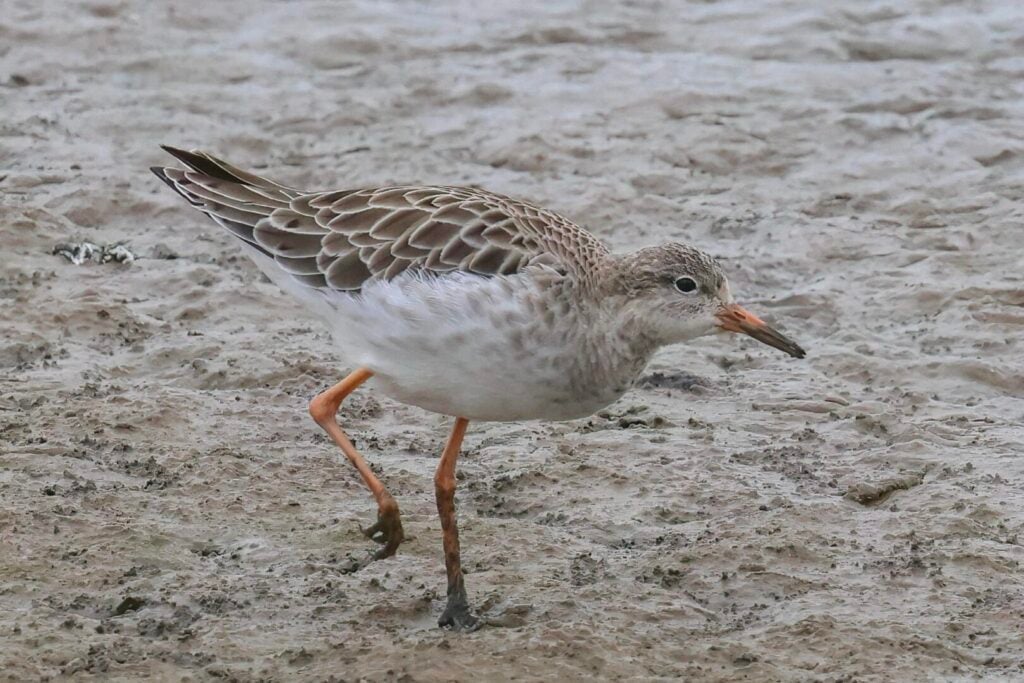
The Spotted Crake was out again, just beyond the Parrinder Bank, showing well. Then a Greylag flew low over Parrinder bank and the Spotted Crake turned and bolted back into the reeds. The regular adult Ruff with the damaged leg flew in and landed on the mud.
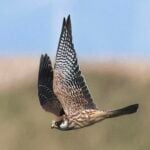
As we walked past the Reedbed Pool, a Sparrowhawk flew up from the reeds and landed in one of the bushes. We could just see the bottom half of it, where it was perched. Two Hobbys appeared distantly over Willow Wood briefly. Another Swift flew across over the back of the reedbed. Another Spoonbill flew in from the east and continued on west past us. Another one on the move? It won’t be long now before they mostly leave us for the winter.
Back at the picnic area, we managed to find somewhere for us all to sit, between the various stalls. Afterwards, we set out for a quick look along Fen Trail. A tit flock was working its way through the sallows and crossed the boardwalk ahead of us. Several Long-tailed Tits, one or two Chiffchaffs and a Treecreeper, which landed on the big trunk of one of the trees in front of us.
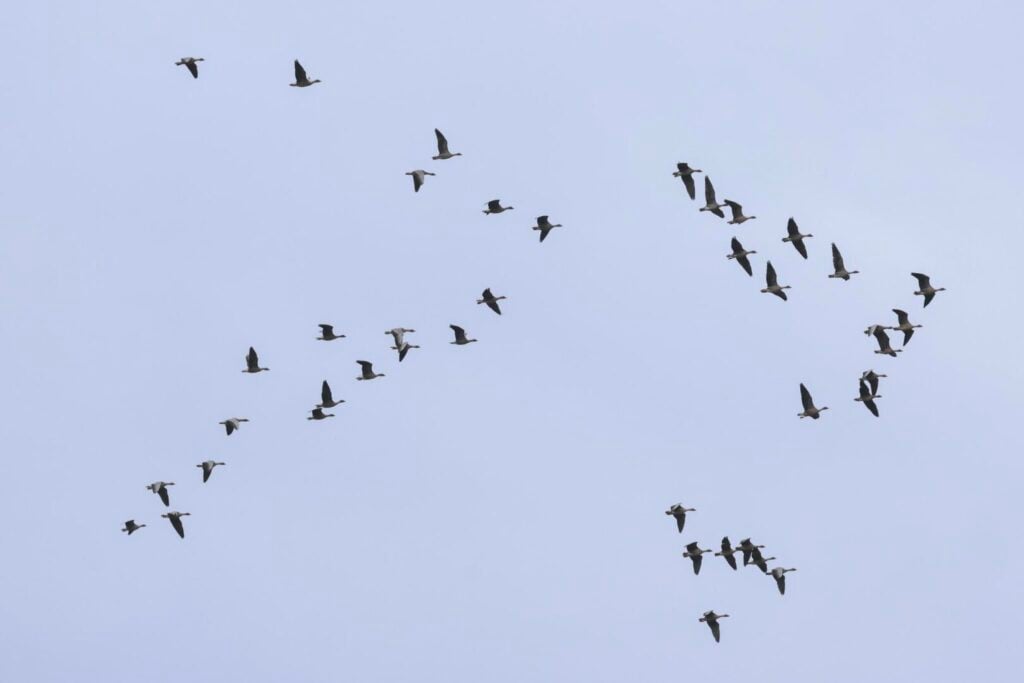
Past Fen Hide, as we came out of the trees, we heard Pink-footed Geese calling. We looked over to see a flock of about fifty flying in from the west, which then continued past us over the reedbed. Coming in for the winter now, this will be one of the sights and sounds of the next few months here. Always great to see.
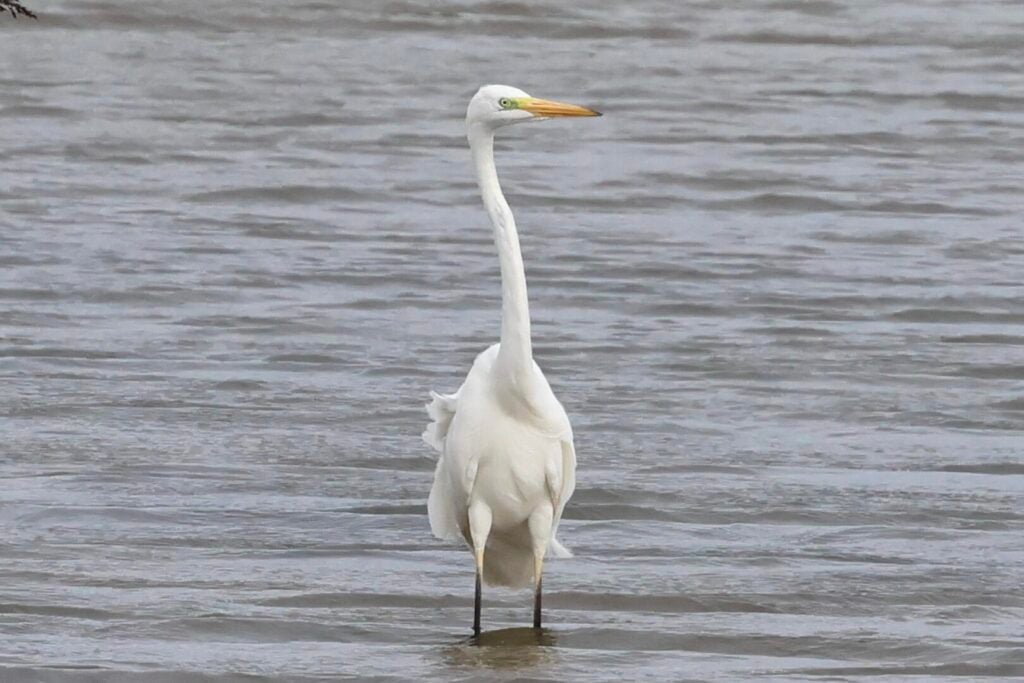
On to Patsy’s Reedbed, a Great White Egret was standing in the water at the edge of the reeds. A second flew in over the reeds behind, and was immediately chased off by the first. Scanning the water, we could a Little Grebe, two Tufted Ducks, a single Common Pochard and a young Coot. There was not much sign of anything moving this afternoon, very few hirundines now. A couple of Stock Doves flew in and out.
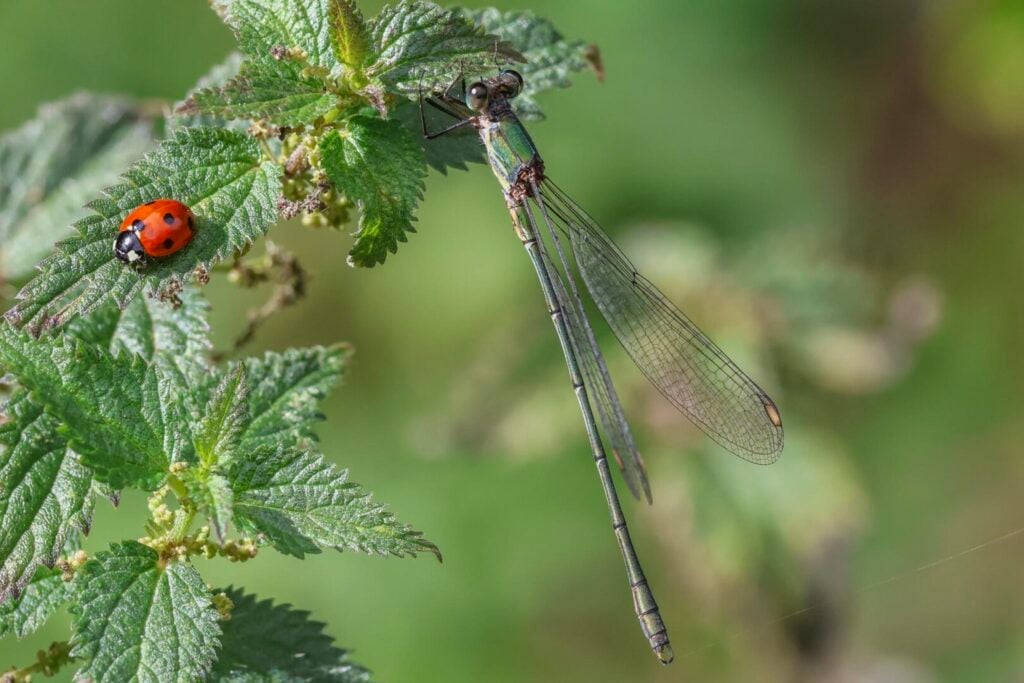
As we walked back round, there were lots of dragonflies now that the sun was out. Mostly Common Darters and Migrant Hawkers, but also several Willow Emerald damselflies, a couple of which perched obligingly. On our way back through the picnic area, we stopped briefly to look at the moths which had been caught and were arranged on one of the stands. The most notable was an Old Lady.
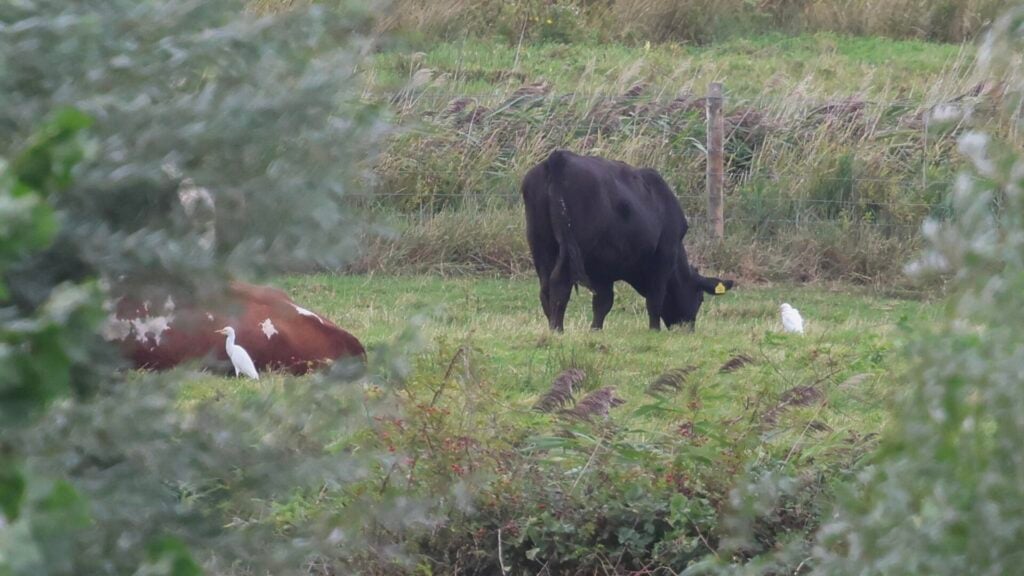
We drove back east along the coast road now and stopped briefly at Holkham. We managed to find a few Cattle Egrets with the cows out on the marshes, but they were mostly out of view behind the willow trees. The only Pink-footed Geese were a long way over, in front of the pines. A young Marsh Harrier circled in and out through Decoy Wood but there were no other raptors up despite the sunshine.
Continuing east past Wells, we stopped again at North Point. As we drove down the track, everything flushed off the pool to the east. A large flock of Lapwings flew round but settled again mostly out of view. Most of the gulls left. There were just a few ducks visible on the water now and three Mute Swans at back.
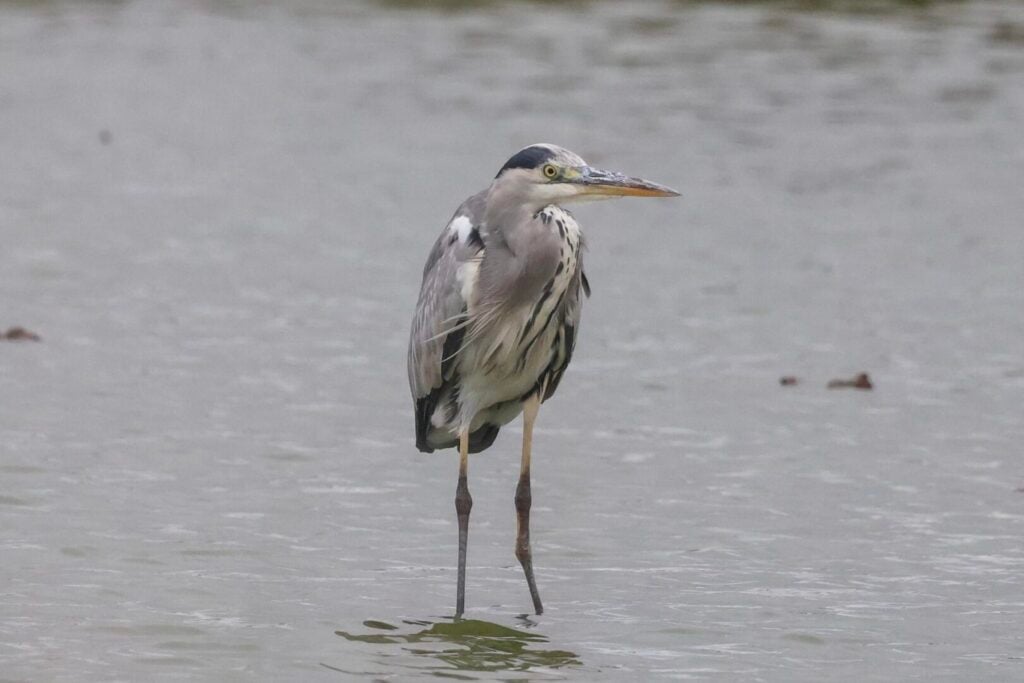
The cloud was steadily building up again and we were not sure if it might rain. Still, we walked down the track to get a better view of the eastern pool. Two Little Ringed Plovers flew in and landed on the mud. A Common Snipe was feeding nearby, over by the rushes, very well camouflaged. Two Greenshank flew up and off past us calling, heading towards the saltmarsh. A Grey Heron flew in and landed on the pool in the corner.
The vegetation around the pool is very high now, making it hard to see what is over on the far section. Scanning from the far end of the track, we managed to find several Pintail right over at the back. We still couldn’t see the Lapwing again from here though, so it was hard to tell if there was anything else lurking out of view.
The rain was still holding off, so we decided to continue on further. Walking through the bushes, we found a few Blue Tits feeding but not much else, no sign of any migrants. Up onto the seawall, there were several Redshanks and Curlews out on the saltmarsh and a three or four Spoonbills. A Greenshank flew off calling, perhaps one of the two we had seen heading on this direction earlier.
There were lots of gulls roosting on the sandbanks in the bottom of the channel through the middle of the saltmarsh. Of the ones we could see, they were mainly Herring Gulls and Lesser Black-backed Gulls, and what looked mostly like a first winter Yellow-legged Gull.
Up to the corner of the seawall, we scanned the surrounding hedges and bushes. We found a small group of Stonechats in a recently mown field but no Whinchat with them. Several Brown Hares were out on the grass.
Then we turned and made our way back to the minibus. It had been a good first day – more tomorrow. Time for tea and cake back at base now.