Day 2 of a 3-day Summer Tour including a Nightjar Evening. When it was cold and rainy earlier in the week, we were promised there was a heatwave coming this weekend. Well they got that one wrong! The BBC did finally include an admission hidden away in the forecast at 6.30am this morning, but then forgot about it by the time most people were up to listen to the later forecasts.
It was mostly cloudy today, with some brief sunny intervals. But very windy, gusting 31-36mph all day. Nominally reaching the heady heights of 17.6C in the afternoon, it felt even cooler in the wind. We spent the day on the North Norfolk coast and just inland. Then we went out again in the evening for Owls and Nightjars.
As we set off from the B&B in Hindolveston, to head up to the coast, one of group asked about seeing Red-legged Partridge. They can be trickier to see at this time of year, now that the vegetation is tall. Then another asked about Grey Partridge, which are even harder! Cutting across country, we took a route along which we sometimes see Red-legged Partridge and lucked in with one crossing the road.
A couple of hundred metres further on, another partridge ran out briefly. This one looked rather dumpy, but we we only had a quick glimpse as it disappeared back into the verge. Surely not. As we passed the gateway where it had gone in we could see it now. And it was indeed a Grey Partridge! We reversed and watched it walk slowly back into the vegetation. A lucky start!
There had been lots of Quail around in the last week or so, and one was reported this morning not far away. It was only a very short diversion, so we stopped to listen. We could hear a Muntjac barking and a Chiffchaff singing. But the Quail had gone quiet – it was a bit too cool and windy. We continued on and made another quick stop at the field where we had heard Quail last week, but it was all quiet there too.
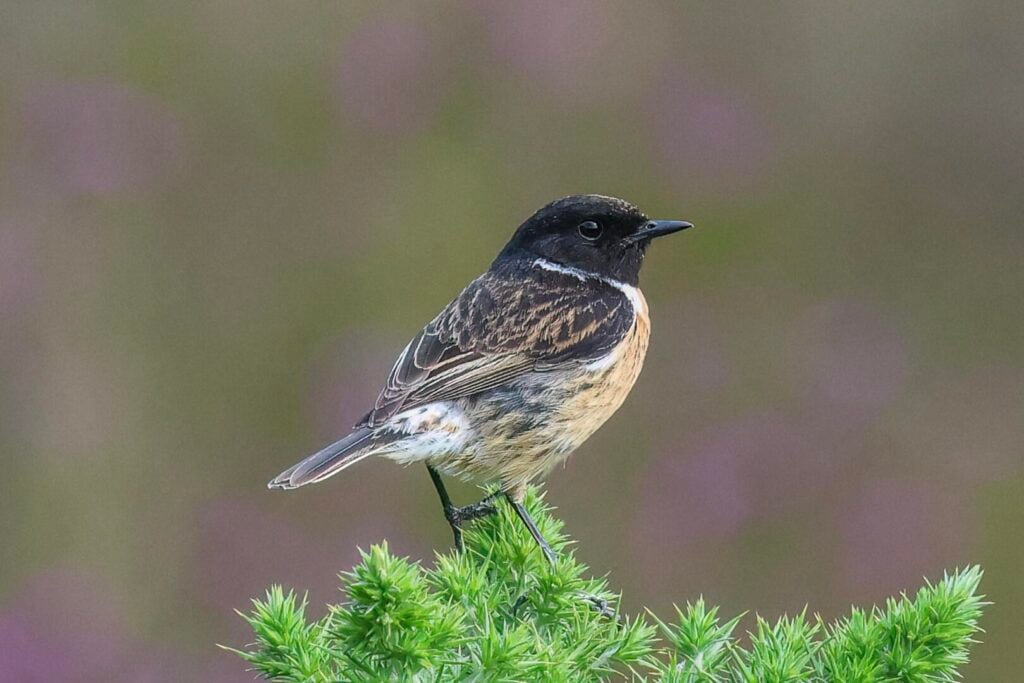
We parked and walked out on to the Heath. It seemed quiet at first, not ideal weather conditions today. There was no sign of any Dartford Warblers where we had seen the male several times in the last week. We did find the pair of Stonechats in a sheltered corner. Good views, but nothing was with them today.
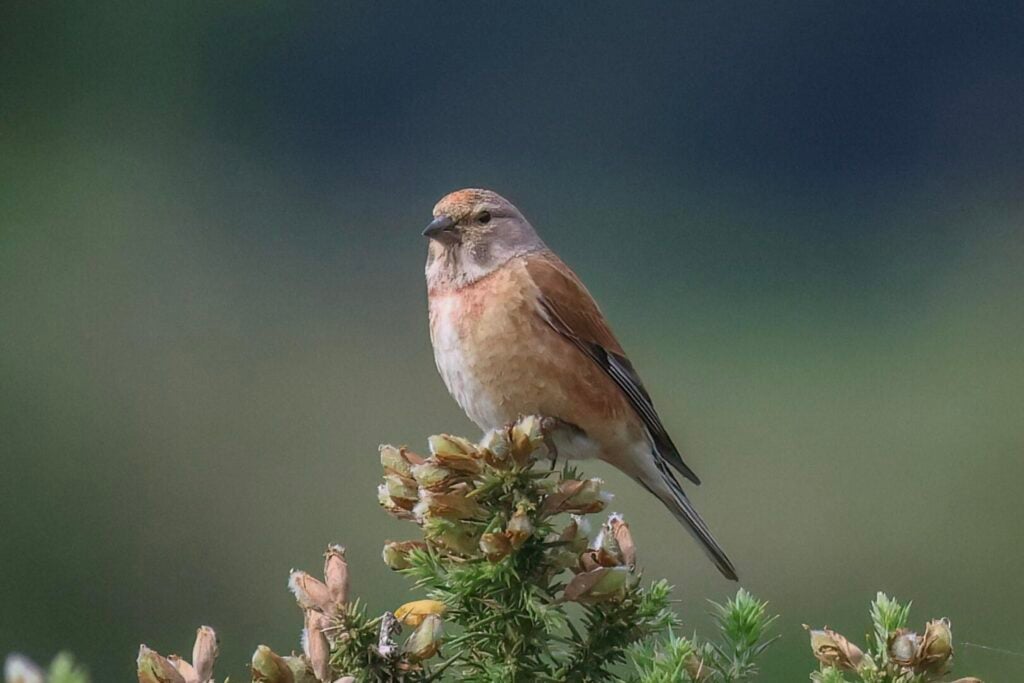
There were lots of Linnets too, perched on the gorse or flying over. We could hear a Coal Tit singing nearby. A trickle of Common Swifts flew over, heading west, and a couple of Sand Martins did too.
We decided to try our luck with another pair of Dartford Warblers. As we walked down the track, we could hear a Woodlark singing. Another birding group were just ahead of us watching it. We stopped to watch it too, fluttering up high in sky. Patrolling round in its undulating song flight, different from the straighter up and down of a Skylark.
We caught up with the other group again where we both hoped to see Dartford Warblers. They were gathered waiting by the path, so we walked a little further on, to try a different angle. We didn’t have to wait too long before a Dartford Warbler shot across the path between us and disappeared into the gorse the other side. Then the other group had a couple of brief glimpses. After that, it was our turn again and we saw it zip across between gorse bushes.
Then it seemed to go quiet. Another Woodlark was singing now, fluttering up very high over the middle of Heath. We decided to walk round a little further to see if another male Dartford Warbler was any more active. But it was less sheltered here, nothing doing. Back to where we had just seen the Dartford Warbler and it flew across in front of us again. We stood and scanned the gorse but there was no sign of it coming out again.
We decided to walk back. On the way, another pair of Stonechats were flicking in and out of a large patch of gorse. A Willow Warbler was singing in the birches. We had a brief glimpse of a pair of Bullfinch disappearing into the back of a tree. A couple of seconds later, they flew out again and over us calling.
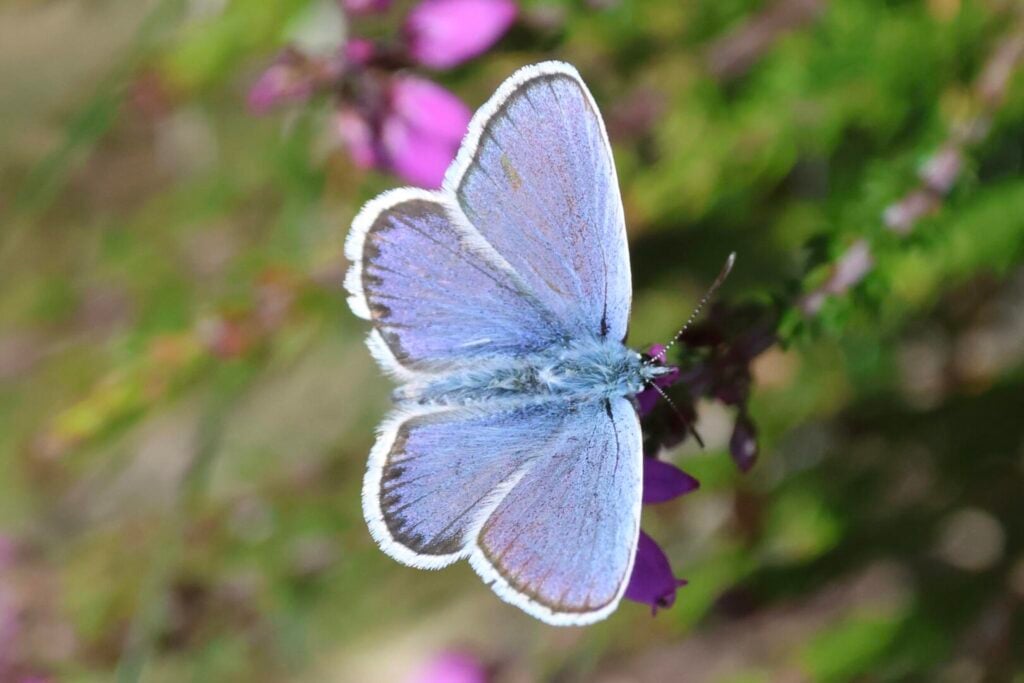
The sun had at least come out now, even if it was still very windy. Further on, we took a small diversion to an area of cut gorse and heather. Several male Silver-studded Blue butterflies were fluttering around and sunning themselves.
We looped back round where we had tried for Dartford Warbler earlier. The Stonechats and Linnets were still there, but nothing else. So we continued straight on, back to the car park.
We drove down to the coast at Cley now. After a stop at the Visitor Centre to use the facilities and get permits, we walked out to Bishop Hide. A Hobby shot over the road ahead of us and we watched it drop down over the reeds towards Pat’s Pool. We watched a House Sparrow on the path struggling to eat a large Peacock caterpillar.
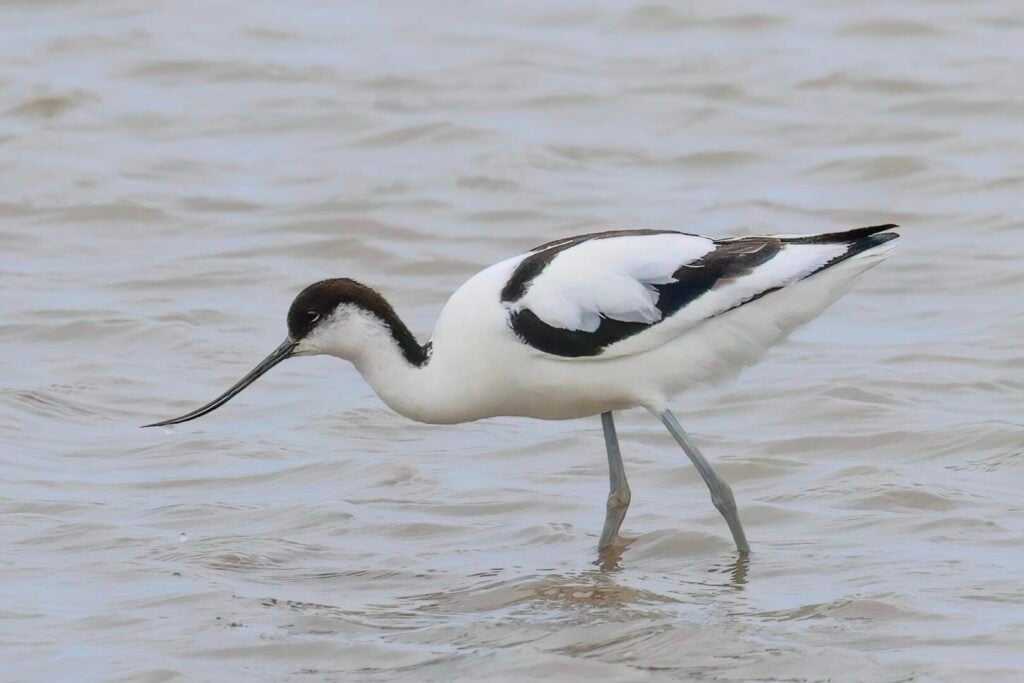
Out to the hide, the other group from the Heath were here too, just leaving. They pointed out the Greenshank, over on the far side. There were several Black-tailed Godwits on here, mostly 1st summers but one adult was in smart rusty breeding plumage. Presumably returned from Iceland already – it felt rather like autumn again here today! There were plenty of Avocets and a couple of Little Ringed Plovers too.
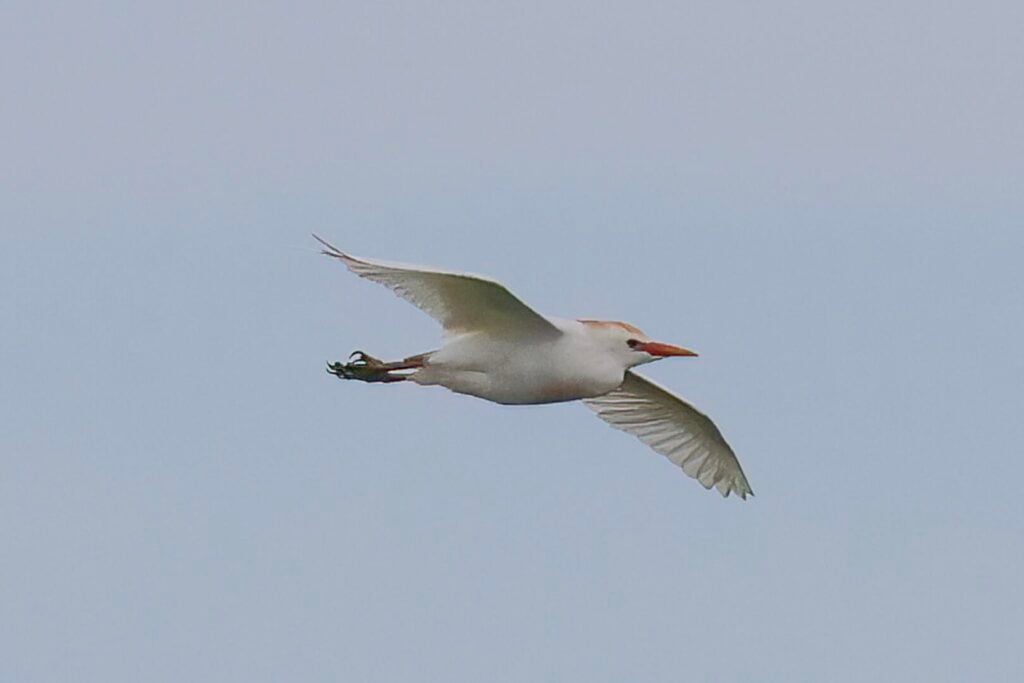
The ducks on here were mainly Gadwall, plus a few Shoveler and Teal. The latter another presumed returning autumn migrant. Lots of Sand Martins were hawking back and forth low over the water. A pair of Swallows were in and out of their nest in the corner of hide, feeding young. We picked up a single Cattle Egret flying over the reeds at the back.
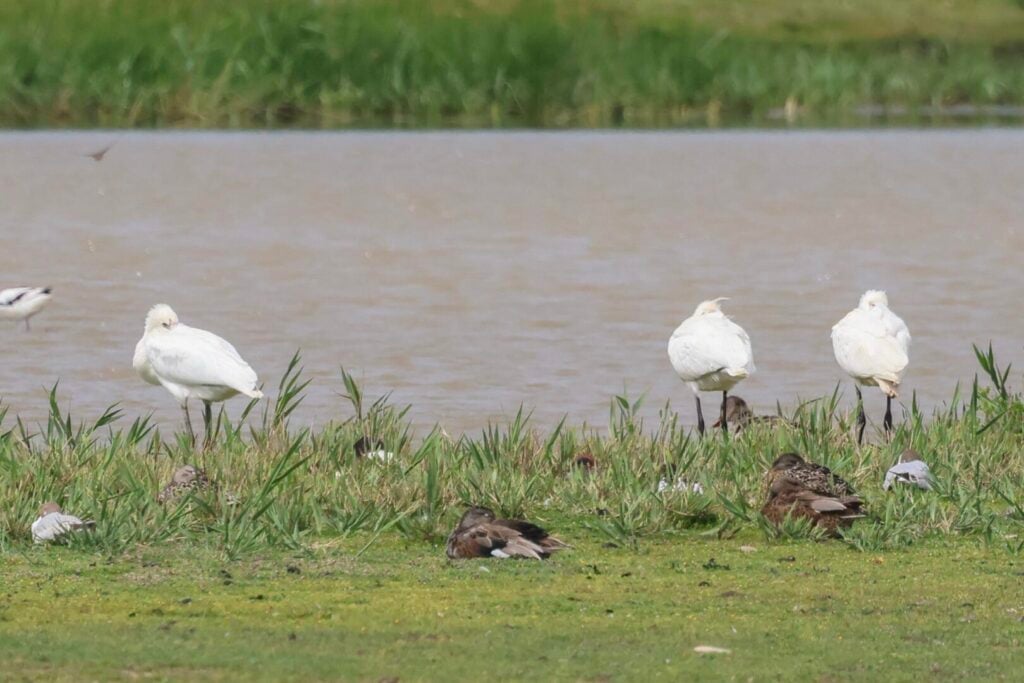
Three Spoonbills were on the small island off to our left. As usual, they were asleep! When another flew in and walked across to join them, they woke up briefly and had a little reshuffle. We could see the adults’ yellow-tipped black bills. Then back to sleep.
It was time for lunch, so we walked back to the Visitor Centre. A Drinker caterpillar was feeding on the reeds just outside hide. Back to the Skirts, the first of the group saw an unidentified white bird fly across low over the reeds and drop down. When we eventually relocated it, it was a leucistic House Sparrow. A striking looking bird, sure to be reported as something rarer at some point!
In the picnic area, we managed to find the most sheltered of the tables. A Common Whitethroat flew in and out of the brambles on one side. We could see Cattle Egrets occasionally in the distance, flying up from the cows on Cricket Marsh.
After lunch, we drove round to the beach. On the way, we stopped to look at the Cattle Egrets. At least six were in with the cows, but right at the back, in the long grass. Most of the herd came out towards the gate to see whether we had any food for them, but the Cattle Egrets did not follow. Just as we were leaving, a few flew out but disappeared off over the reeds.
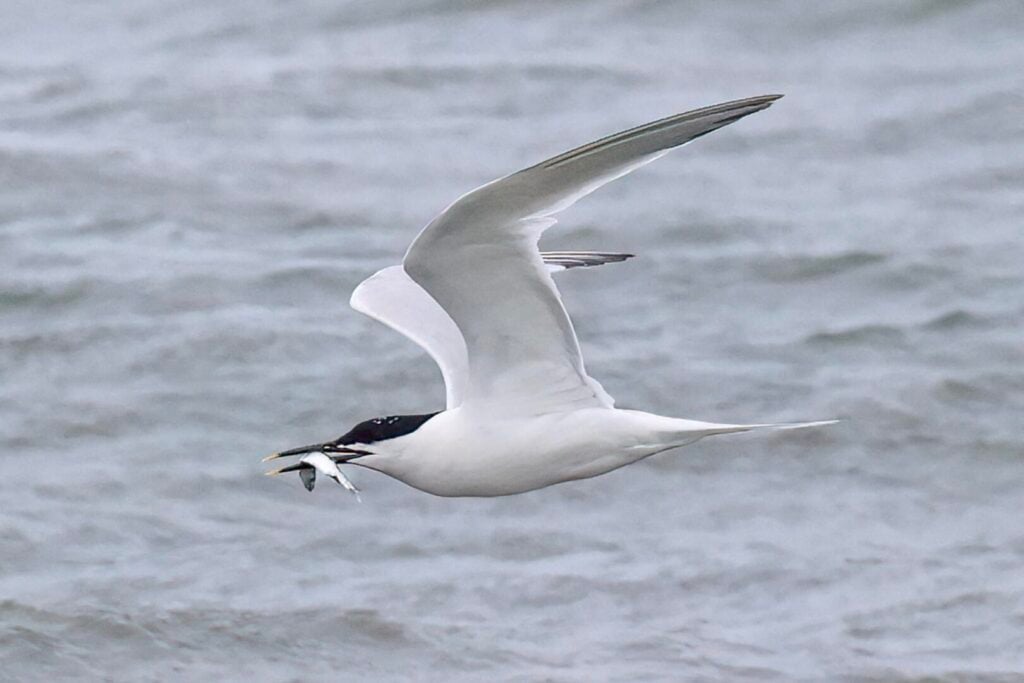
Out at the beach, we braved the wind and walked up over the shingle. We could see lots of terns offshore. A succession of Sandwich Terns flew back past, many with fish in their bills. Presumably taking them back to the breeding colony on Scolt Head.
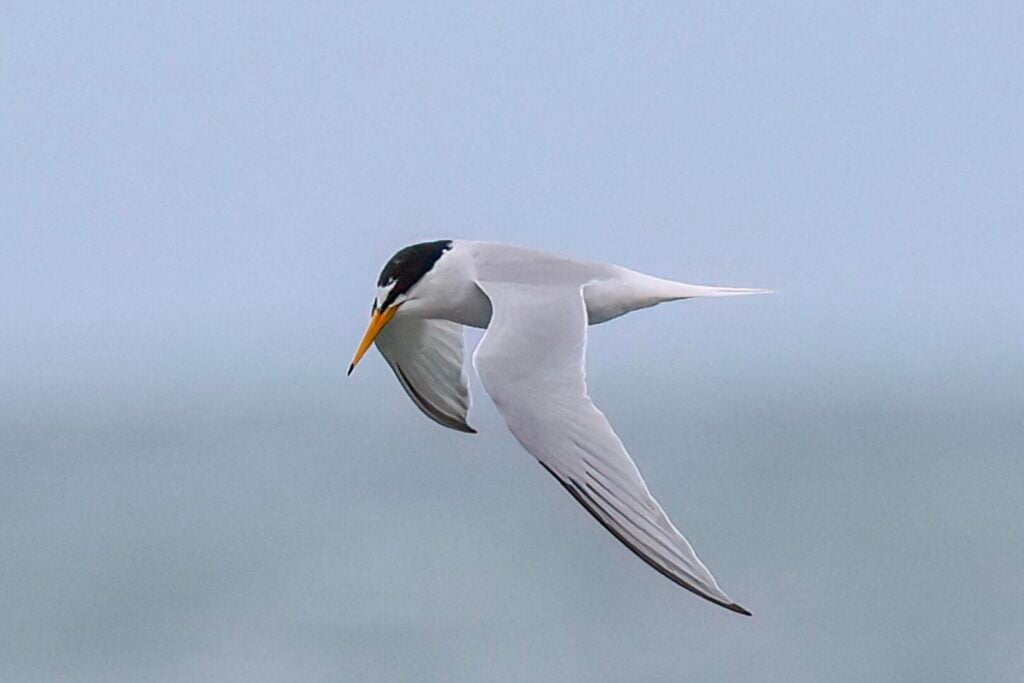
There were plenty of Little Terns too, some fishing just offshore, plunge diving. Nice views, close in. A large group of Common Terns had gathered further back, flying round and round. Presumably they had found a shoal of fish. A single Ringed Plover flew past.
Back to the minibus, we could see the Spoonbills now flying off west from Pat’s Pool, heading over the road. A Great White Egret flew west across over the reserve too. Back along Beach Road, the Great White Egret had landed now out on Bull Marsh. There were lots of Cattle Egrets with the cows now – we counted at least eleven as we drove past.
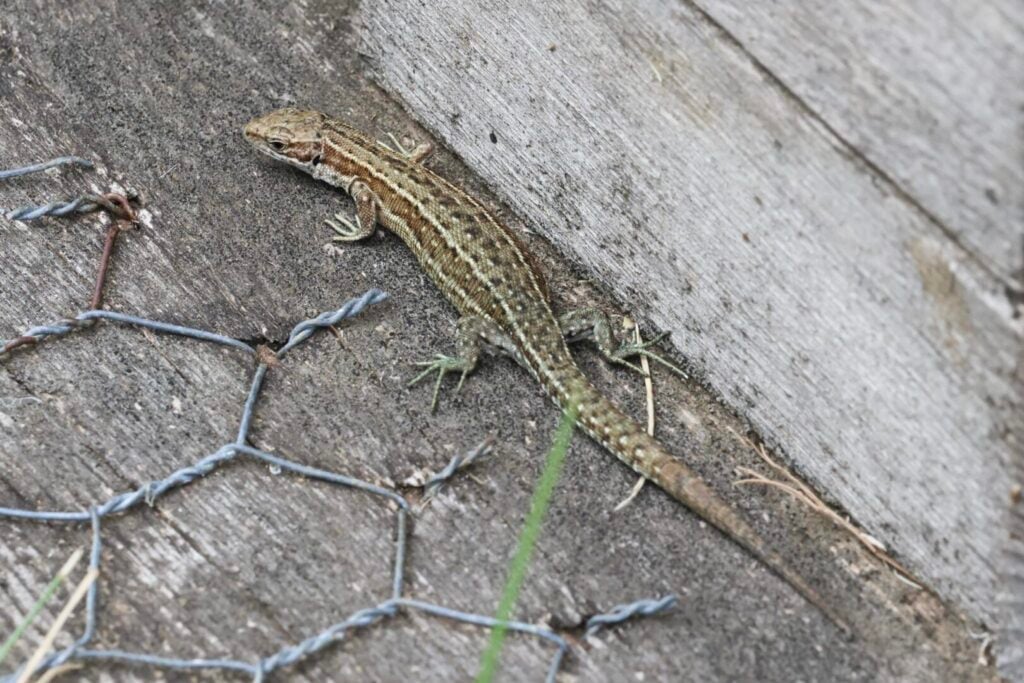
Back to the car park at the Visitor Centre and we walked out to the central hides next. Several House Martins were flying around the eaves of the warden’s house. A Sedge Warbler was singing in the brambles. Several Common Lizards were sunning themselves on the edge of the boardwalk. A Small Tortoiseshell was basking on the boardwalk too.
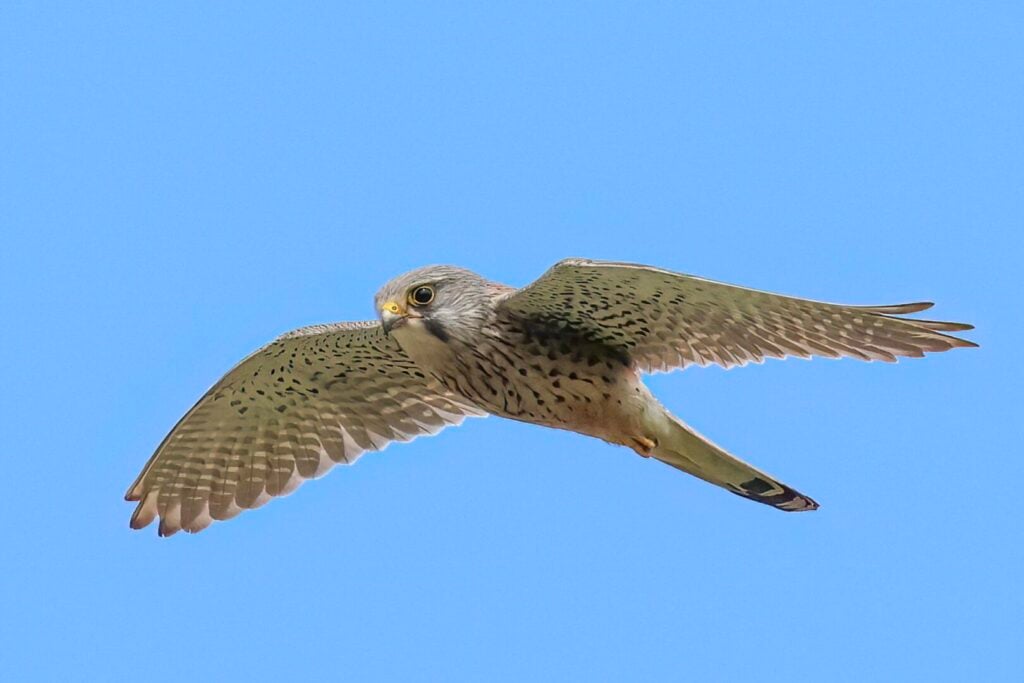
A Kestrel flew in over the reeds and stopped to hover right in front of us. Amazing to watch how it held its head perfectly still, despite being buffeted by the gusty wind.
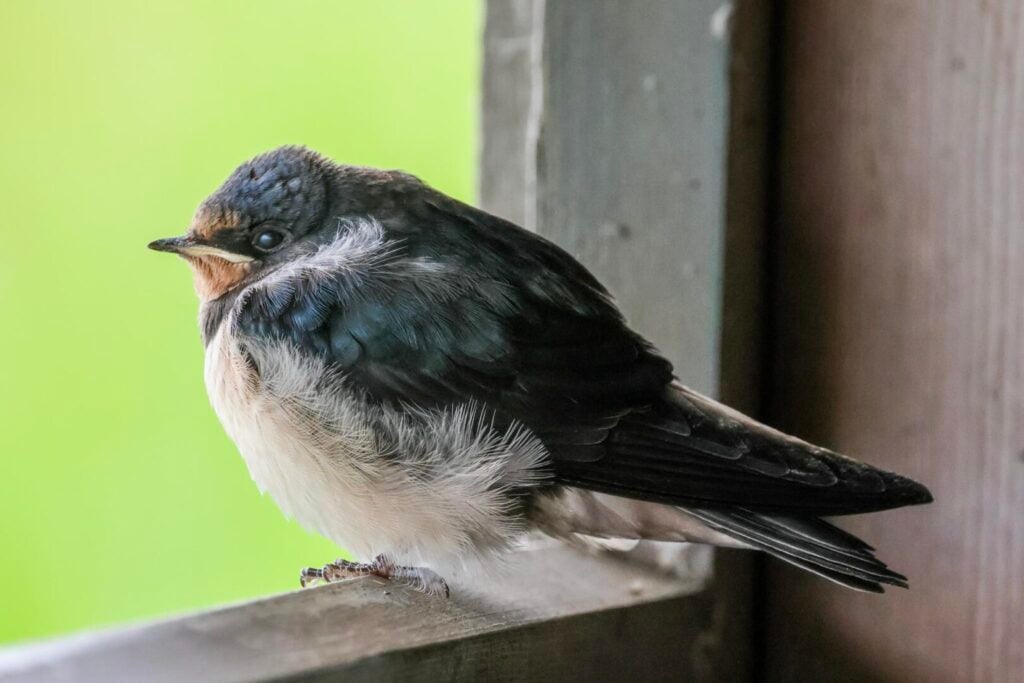
Into Daukes’ Hide, a brood of recently fledged juvenile Swallows was perching on the window flaps at the far end, the male with them. Occasionally, they flew out but came back, the parents bring food. We watched one juvenile struggling to swallow a large dragonfly.
Several gulls were roosting out on Simmond’s Scrape. They were mostly 1st summer Common Gulls but two 1st summer Mediterranean Gulls were in with them.
Looking across to Pat’s Pool, there was no sign of the Greenshank now, just several Redshanks. A Little Ringed Plover was a bit closer from here, so we got it in the scope to admire its golden yellow eye-ring.
One of the group asked it there was time to see the Little Grebes. We would normally go for a walk up the East Bank to look for Bearded Tits but it was too windy today. We figured we could have a quick look on Don’s Pool though. So we walked back to the Visitor Centre and drove round to Walsey Hills. We could see a Moorhen, a couple of Mallard and a Mute Swan on Snipe’s Marsh as we passed.
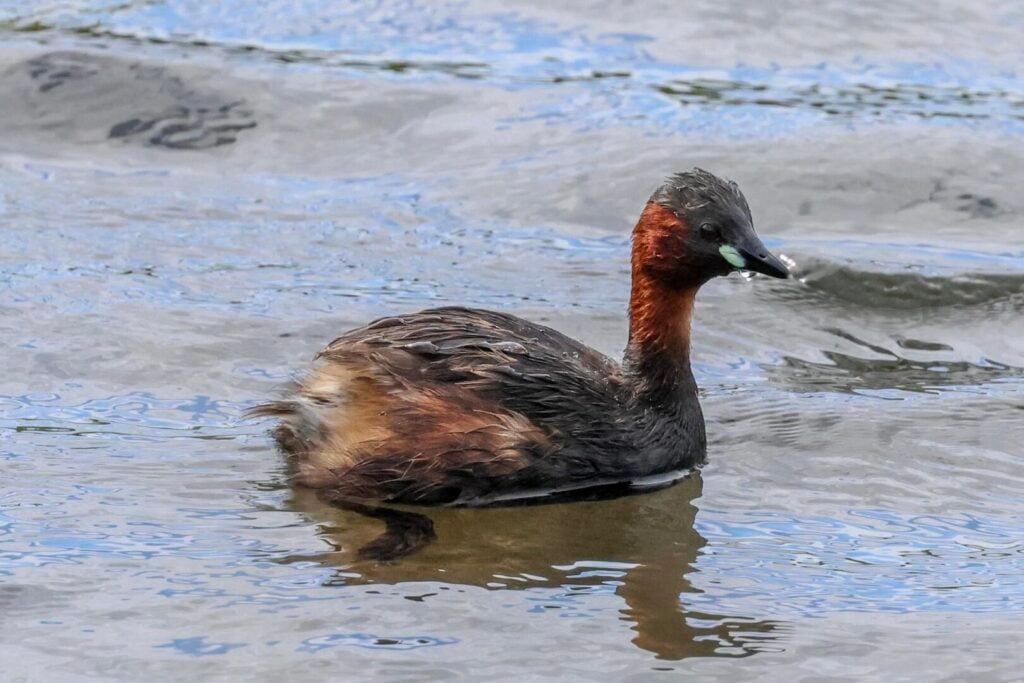
Up onto the East Bank, it was very blustery. We quickly found the family of Little Grebes, sheltering behind some bulrushes. One of the adults was diving and catching food, feeding the two almost full grown juveniles. We watched the other adult taking water weed into the bulrushes, presumably getting ready for a second breeding attempt.
It was just too windy for much else up here today. A quick scan of the grazing marshes opposite, produced a pair of Canada Geese with the Greylags. Another Spoonbill was unsurprisingly asleep. As we walked back, a female Gadwall had appeared out of the reeds with at least nine small ducklings now on Snipe’s Marsh.
We had time for one last stop. On the way, we had another quick listen for Quail but they were still quiet. We could see several Stock Doves dropping down into the field further over though, so we drove round for a look.
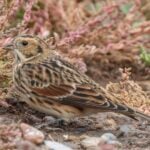
As we walked up to the gateway overlooking the field, a Mistle Thrush flew off. Lots of Stock Doves wheeled in and out. A female Yellowhammer was feeding along the margin and several more flew in and out of the hedge, across the field. A few Linnets flew in and out too. We saw a couple of Skylarks flutter up from the middle and then a Woodlark flew in high and dropped down into the grass.
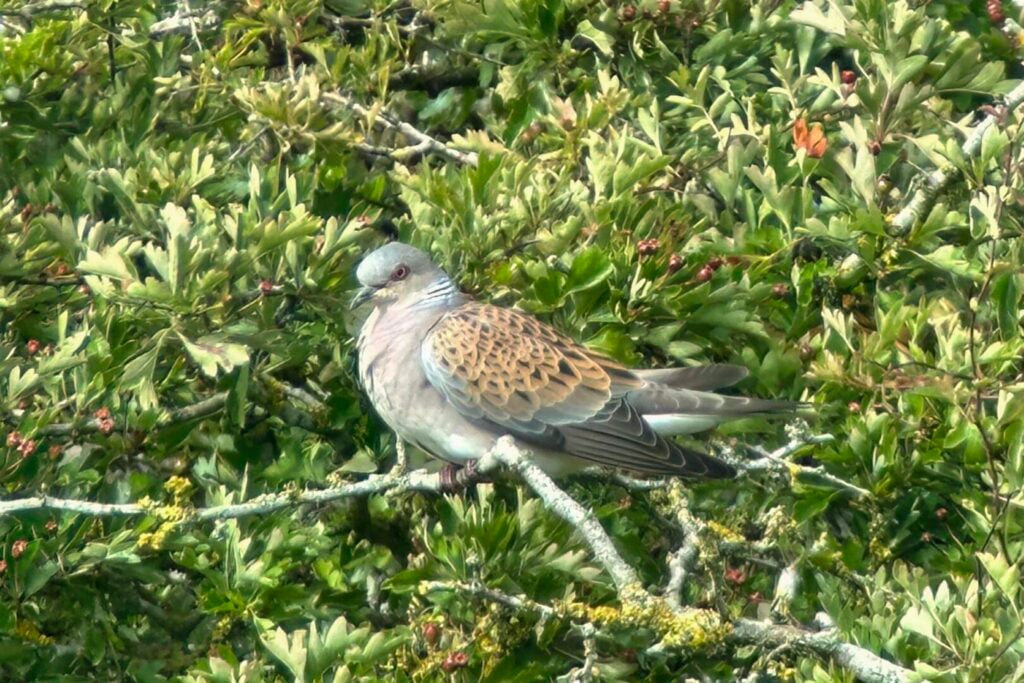
We had hoped to find Turtle Dove here but it looked like we would be out of luck. Then, just as we were about to give up, one flew in from behind us. We watched it heading out over the field and thought we would have to settle for that. But it turned and circled round before landing in the hedge in full view. Lovely views in the scope.
A great way to end the day, we had to get back to Hindolveston for an early dinner.
Nightjar Evening
We headed out again later. On our way, we drove round via the field where we had gone to listen for Quail first thing. It was rather disappointing to find that the meadow had been mowed during the day. No hope for Quail now!
We drove round to look for Barn Owl instead. Several people were looking from the bridge, and one of the locals there told us one had been seen earlier but had flown off. We continued round and hadn’t gone much further before we found a Barn Owl out hunting over the meadows.
It disappeared round behind a hedge ahead of us, so we drove on to check the next field. We arrived just as it was flying straight towards us over the grass. It looped round right in front of us just as everyone managed to get out of the minibus. We watched it working its way back.
The Barn Owl disappeared over the hedge again, back the way it had come. We were not sure whether to drive round or wait. Then we saw it flying away with a vole in its talons. Over the farm buildings in the distance, we lost sight of it behind the trees.
There was no sign of it coming back, so we drove on round checking the other meadows. We couldn’t find any out hunting now, so we stopped where we could scan the marshes. After about five minutes, a Barn Owl appeared out of the trees on the far side of the meadow across the road. It landed in a tree and we got it in the scope.
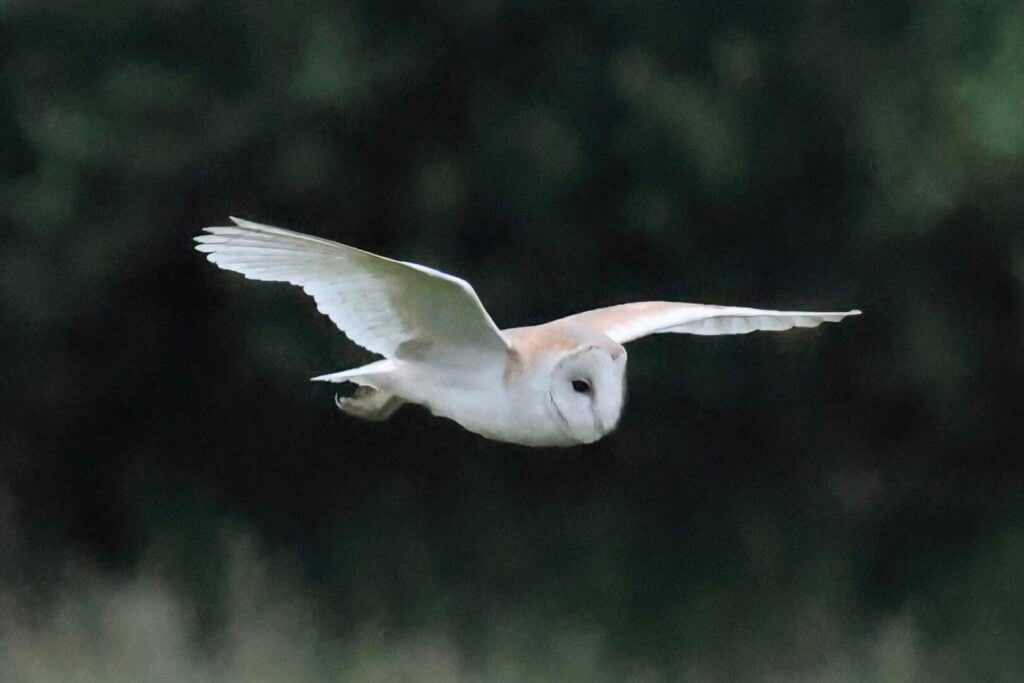
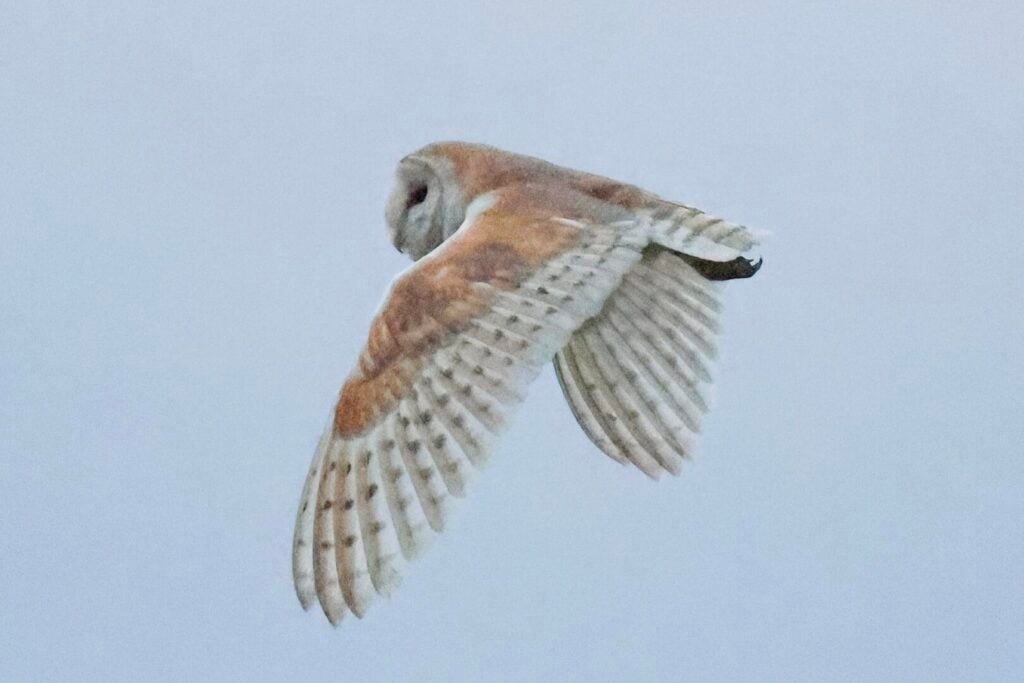
After a while, the Barn Owl took off again. It looked like it would start to hunt over the meadow but then flew straight towards us. Crossing over the road, it gained height and came almost over our heads. Then it turned and flew off towards the village. We watched it over the roofs of the pub and the houses, before it dropped down the other side.
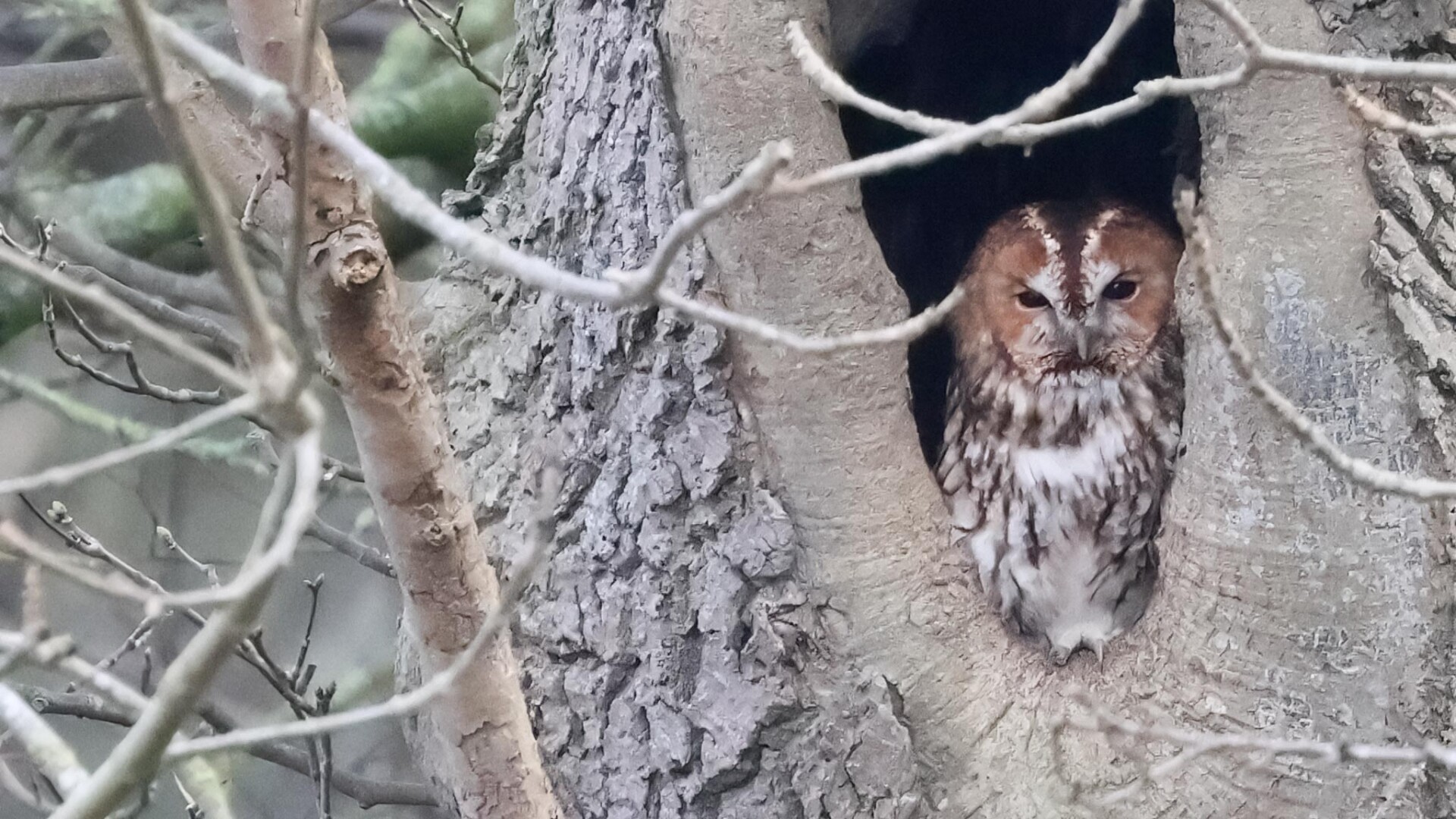
It was time now to head up to one of the local heaths for tonight’s main event. As we walked in, we could hear a Tawny Owl hooting. We hadn’t gone far, when we heard our first Nightjar churring out in the middle. An early start tonight. It stopped and we heard a flight call, so we looked over just in time to see it fly round the top of an oak tree briefly. Then it started churring again.
We decided to head quickly over to our favourite pair of Nightjars. A bit further up, we heard a second male churring. We got into position and almost immediately, another started churring out in the middle. When we heard one of the pair calling in trees, we hoped it would land in a bare tree. But instead it started churring where we couldn’t see it.
When it stopped, it flew round calling. The male Nightjar then came in and flew round right above our heads, checking us out. Great view! Then it landed round on the far side of an oak right beside us, churring. Fantastic to stand and just listen to it, what an amazing sound.
It flew off and after a minute or so the pair of Nightjars now flew round, calling. We watched the male fly back into the trees and start to churr again. It wasn’t on any of its favoured perches and seemed higher this time. We looked up and found it high in a pine tree on a bare branch, silhouetted against the last of the light. We got it in the scope and watched it. Very atmospheric.
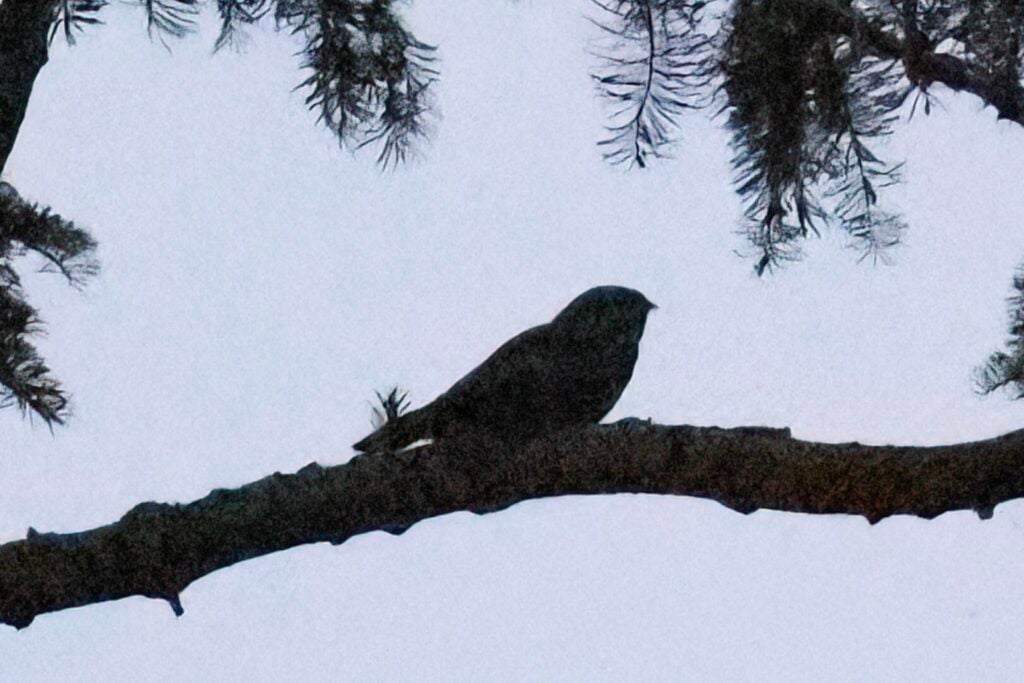
Eventually the Nightjar stopped and took off again. We watched it fly out into the middle of the Heath. We heard it churring again in the distance briefly, then it seemed to go quiet. Presumably out feeding now.
We decided to start making our way back slowly, and see if any other Nightjars were still churring on the way. The next couple of males were quiet too. Almost back to the car park, one started churring in an oak tree right next by the path. We stopped to listen. Impossible to see now in the gloom but great just to stand here and hear it. A great way to end the evening.
As we walked back through the trees to the car park, a juvenile Tawny Owl was calling now, begging to be fed. Time for bed for us.