Day 1 of a 3-day Summer Tour. It was a rather stubbornly cloudy morning, only finally breaking to sunshine by early afternoon. The wind was much more blustery than expected too, gusting to 35mph by the afternoon. We spent the day down in the Norfolk Broads.
Our first destination for the morning was Sea Palling, as we wanted to have a look for the long-staying Black-winged Kite. We scanned quickly from the main road first, but we couldn’t see it. Someone else was looking from the edge of the field nearby, so we pulled up briefly and asked. He hadn’t seen it either. We decided to try round the other side.
We pulled up by the metal gates, where we had seen it back in April. Scanning the bushes, we found the Black-winged Kite perched on the hedge, preening. It was a long way off but OK views in the scope. We stood and watched it for a while, but it showed no sign of moving.
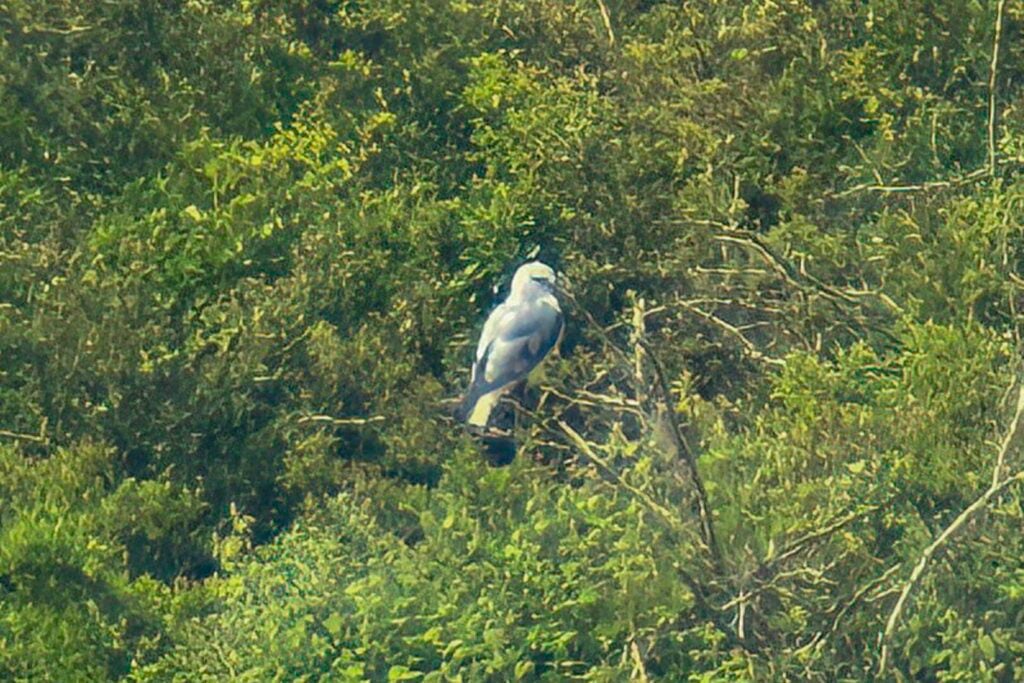
There was already a fresh breeze picking up, which we hadn’t been expecting today. Several Common Swifts swept back and forth out over the marshes. A couple of Skylarks were singing, fluttering up over the field in front. A Common Whitethroat was singing in the hedge behind. A distant Common Buzzard flew across.
When we looked back, the Black-winged Kite had gone. We didn’t see where it went and there was no sign of it hunting. It must have dropped down out of view.
We decided to move on, and drove back round to Hickling. As we made our way along Stubb Road, a Hobby flew in over the fields and across the road ahead of us. It was surprisingly busy today in the car park (despite being a weekday). There was a long queue to check in at the Visitor Centre and to use the loos. A Chiffchaff was singing in the bare tree by the picnic area.
Eventually, we walked back out and down the track towards Stubb Mill. Out on Brendan’s Marsh, we could see a Grey Heron, several Mute Swans, a couple of Shelduck, Shoveler, Gadwall, Mallard, Lapwing and a few Little Egrets. Several Hobbys were hawking distantly over the reedbed behind and a couple of Marsh Harriers patrolled back and forth.
Several families of Greylag Geese were grazing on the bank and we flushed a couple of Muntjac. We stopped briefly to watch several Norfolk Hawker dragonflies over field the behind the trees.
At the first platform, three people were already in residence (despite the max 2 people sign!). They had already been there a while, but showed no sign of moving. We scanned from the track and could see two Spoonbills out on the marsh. One was a juvenile with a half-grown bill, a ‘teaspoonbill’. We could just see a couple of Little Ringed Plovers on the islands, and one flew round displaying. There were also three Avocets, several Redshank and a lone Dunlin.
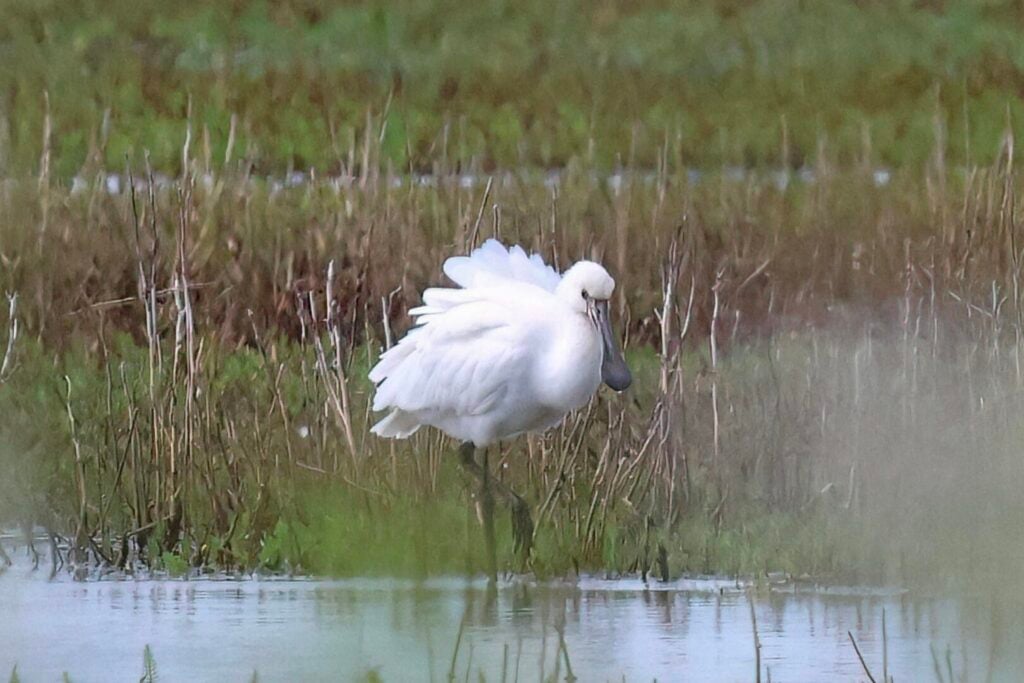
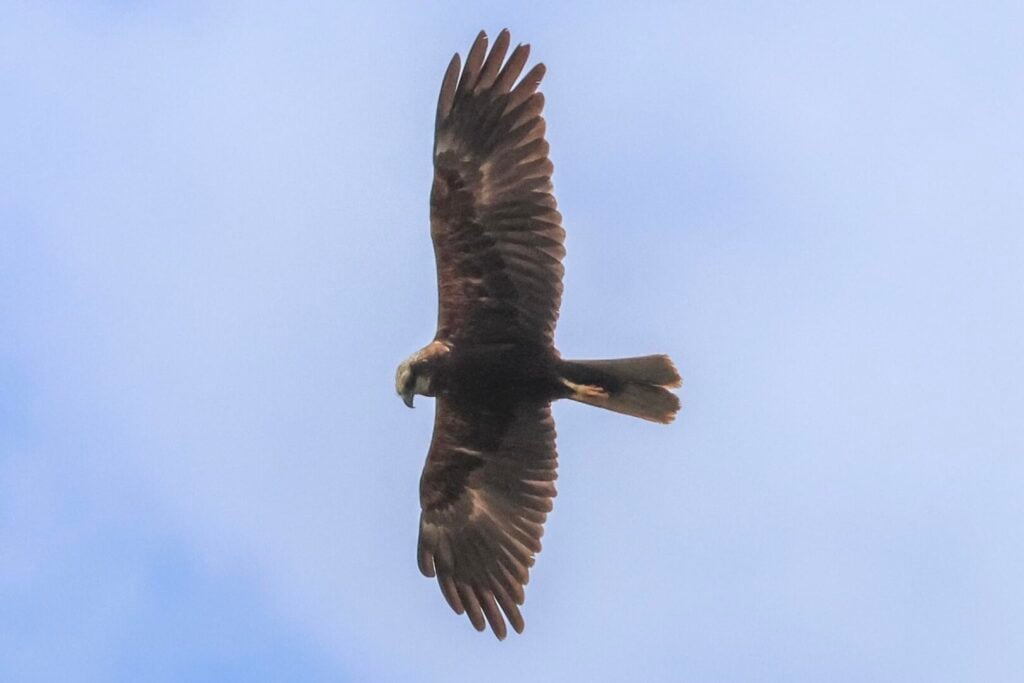
We walked on to the second platform, which was free. Scanning from the platform, a Marsh Harrier flew in past us right in front. It flushed all the waders, most of which flew off. There were more ducks on here. As well as those we had seen from the track further back earlier, there were lots of Teal asleep on the mud. Possibly returning birds already? It felt rather autumnal in the wind today!
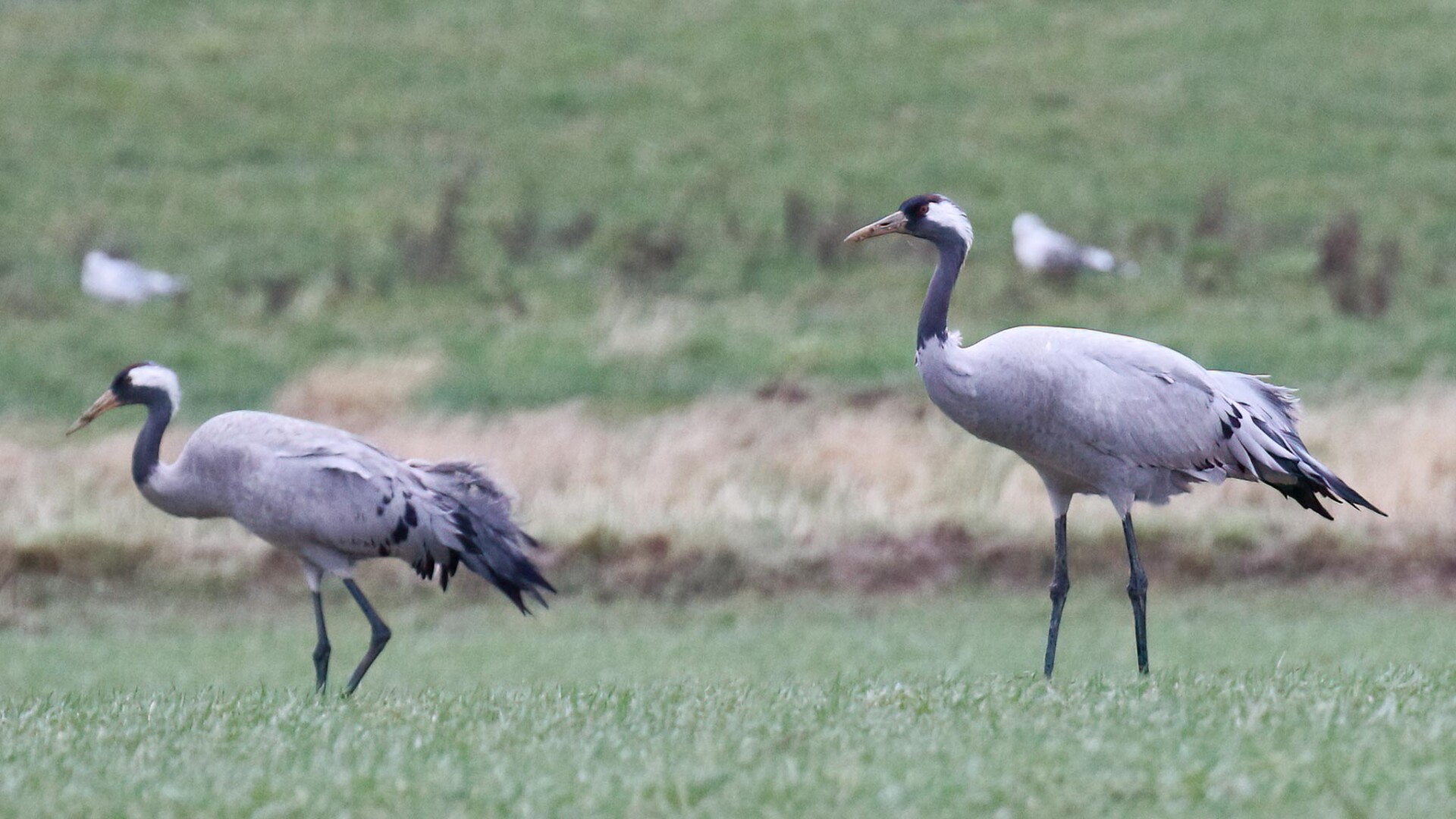
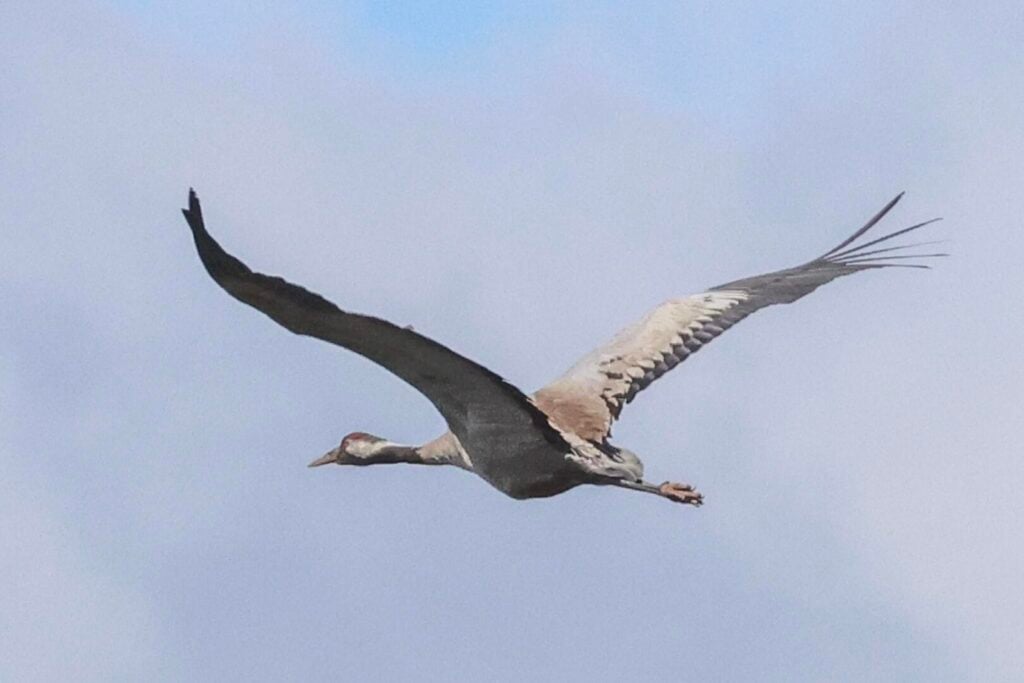
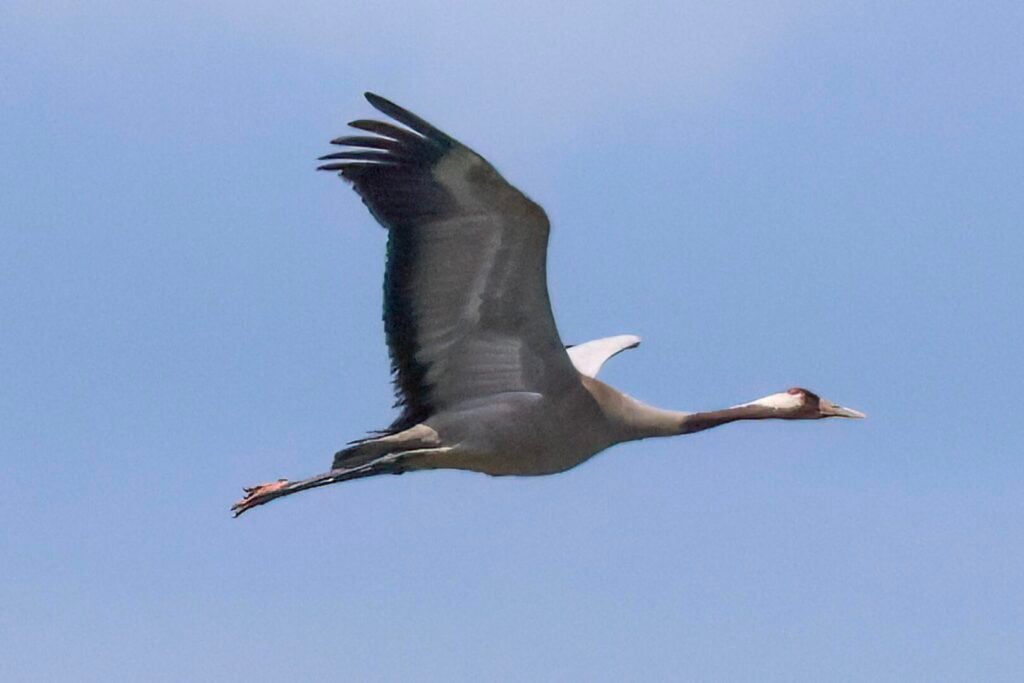
One of the group spotted a Common Crane flying in over the fields behind. We lost sight of it behind the trees and then it flew out in front of us. We watched it fly out over the reedbed, before circling round and dropping down.
Continuing on, a Reed Warbler was singing from the ditch by the path. Another flew across and disappeared into the hedge the other side. We walked up onto the bank at the far end and looked out over the reedbed. A male Reed Bunting was singing from the bush in front of us. There were still several Hobbys and Marsh Harriers flying back and forth.
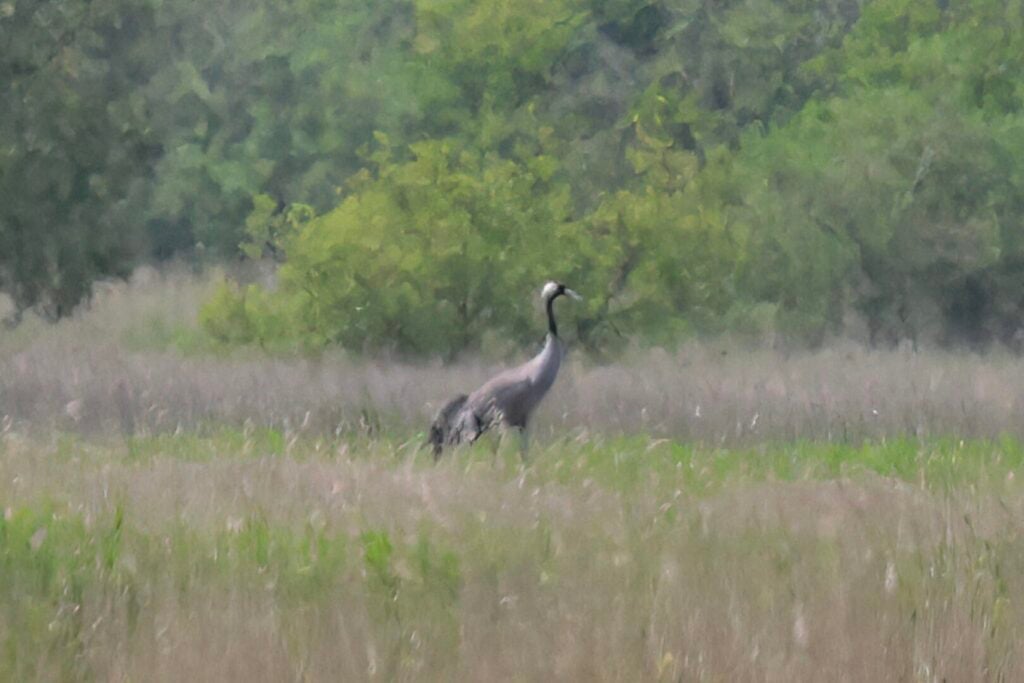
Scanning the reeds, we found a Common Crane standing on the bank which runs through the middle. Distant and there was a bit of heathaze, but nice views in the scope. After a while, it disappeared back down into the reeds.
There were lots of ducks on the last pool. Mostly Gadwall, they were sat around on the islands. Breeding over, they have started moulting now. A gaggle of Canada Geese were on here too. A Great White Egret flew across over the reeds behind.
A Common Crane flew up from where we had seen the one land earlier. Presumably a changeover in parenting duties, we watched it fly back out in the direction from where the other one had flown in earlier.
We had done well for Cranes out here, so we decided to walk back and try the other side. We could just hear a Cuckoo calling in the distance, the sound carrying on the wind.
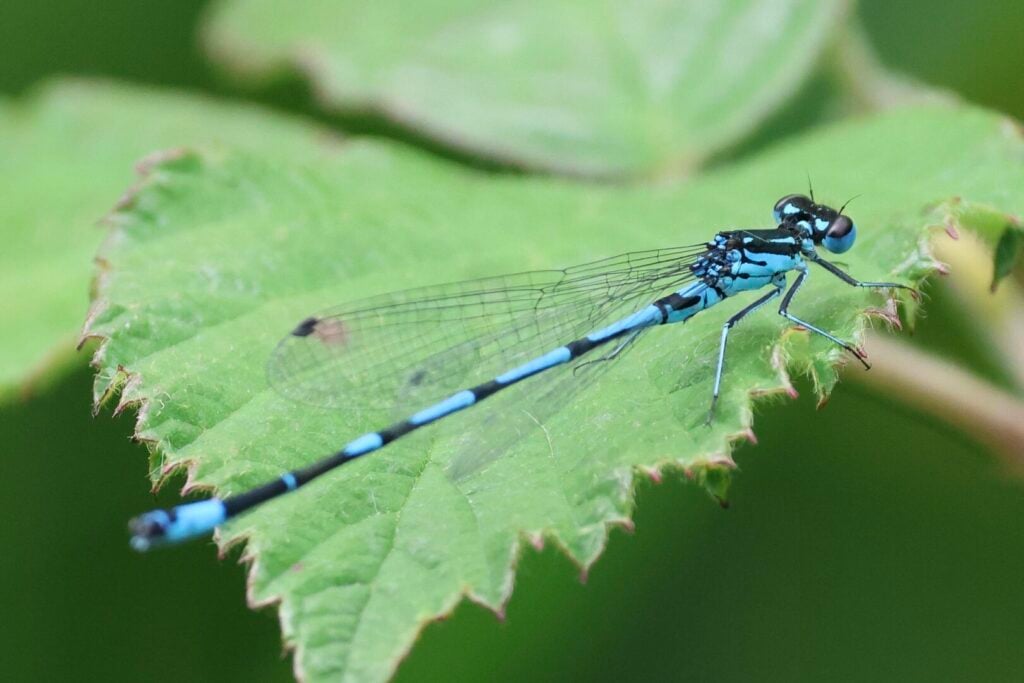
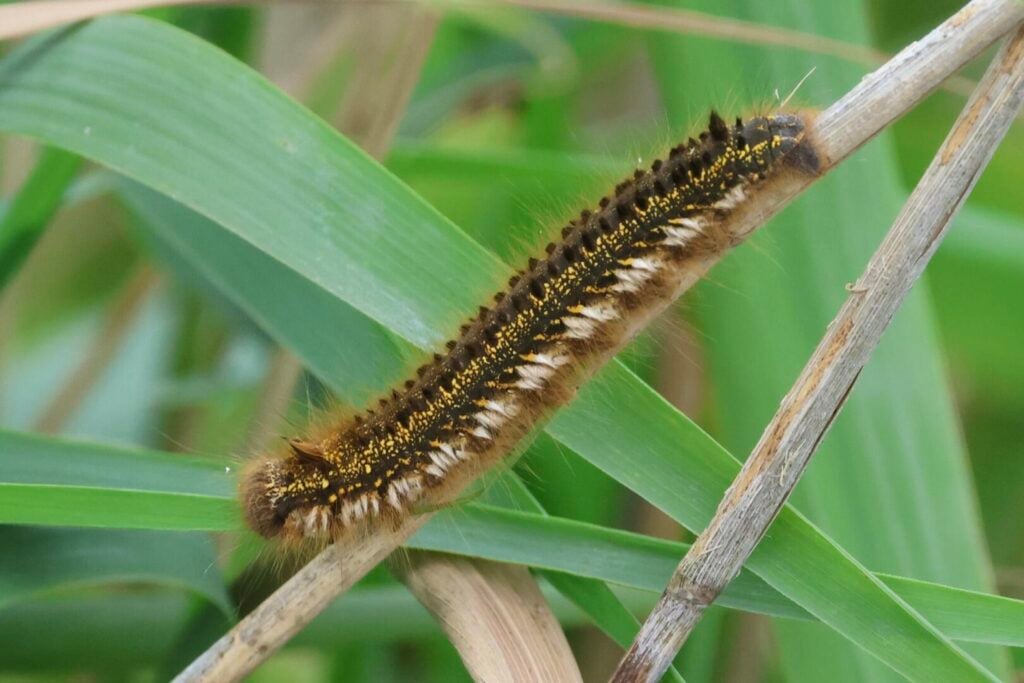
Several blue damselflies were in the vegetation by the track but being blown round by the wind and not sitting still. We managed to identify a couple of Azure Damselflies before we found a Variable Damselfly which landed briefly. We stopped to watch a Garden Tiger caterpillar crossing the track.
The first platform was empty now, so we stopped for a quick look. There were a few waders back out on the scrape – four Ringed Plovers and several Little Ringed Plovers, but no further sign of the Dunlin.
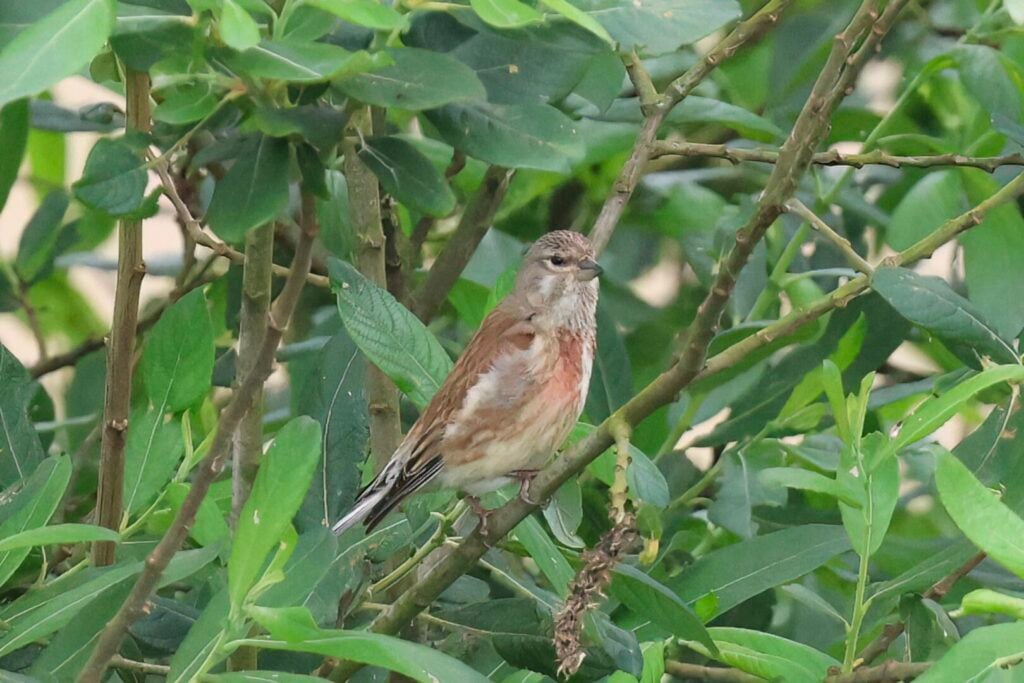
Back to the Whiteslea track, we walked up to the viewing mound. A Great White Egret was fishing in the channel in front. A male Linnet perched obligingly in the bush behind.
There were several Little Egrets on the pool in front and a few Shovelers dozing on the banks. When all the waders flushed, we couldn’t see why, but about thirty Lapwing appeared from behind the reeds. Several Little Ringed Plovers appeared too. When everything settled back down, we got one in the scope.
We had been hoping to see Swallowtail today. The brambles along the track back through the wood can be good but there was no sign of anything around those now. It had been brightening up this morning but clouded over again now. The wind was picking up all the time too. Not ideal conditions for butterflies.
We were in two minds as to whether to try up by Whiteslea Lodge, but we heard a Volunteer telling people there had been one up there earlier. So we walked up, stopping on the way to watch a Sedge Warbler singing in brambles.
At the far end of the track, a Blackcap was singing in the trees and we could hear a Willow Warbler calling. Perhaps unsurprisingly, there was nothing around the brambles or bushes here sadly. The wind was now really lashing the trees along path to the Observatory, so we decided to walk back the way we had come.
Back on the track, one of the group heard a Grasshopper Warbler reeling in the reedbed. Stopping, we could just hear it on the wind before it went quiet. We had a good view of a Norfolk Hawker patrolling up and down the ditch by the track. a Drinker moth caterpillar was on the reeds just behind. A Cetti’s Warbler flew out of the bushes and landed again back the way we had come. We heard it shouting.
We cut across on the path through the wood. There was still no sign of any Swallowtails on the brambles here either. Although we did find a single Small Tortoiseshell and a Painted Lady.
Back to the Visitor Centre, it was time for lunch. It was more sheltered in the picnic area and there were a few more butterflies out here. Two Large Skippers and a Meadow Brown were flying around in the grass. A couple of Red Admirals and a Hummingbird Hawkmoth were around the bramble flowers on the edge. We heard a Great Spotted Woodpecker calling in the trees.
There had been a Red-footed Falcon at Strumpshaw for several days. It was reported again several times this morning and also at 1.30pm. So after lunch, we decided to head over to see if we could see it.
We checked in at Reception Hide, but the volunteer on the till seemed pretty clueless as to where it had been seen and when. Several people were looking out of the windows, one shaking his head at the advice we were being given. They were a bit more helpful. No one knew anything about the 1.30pm report, no idea where it had gone. Two of the people had been around when showing well earlier and had managed to miss it. It was not going to be easy as we had hoped!
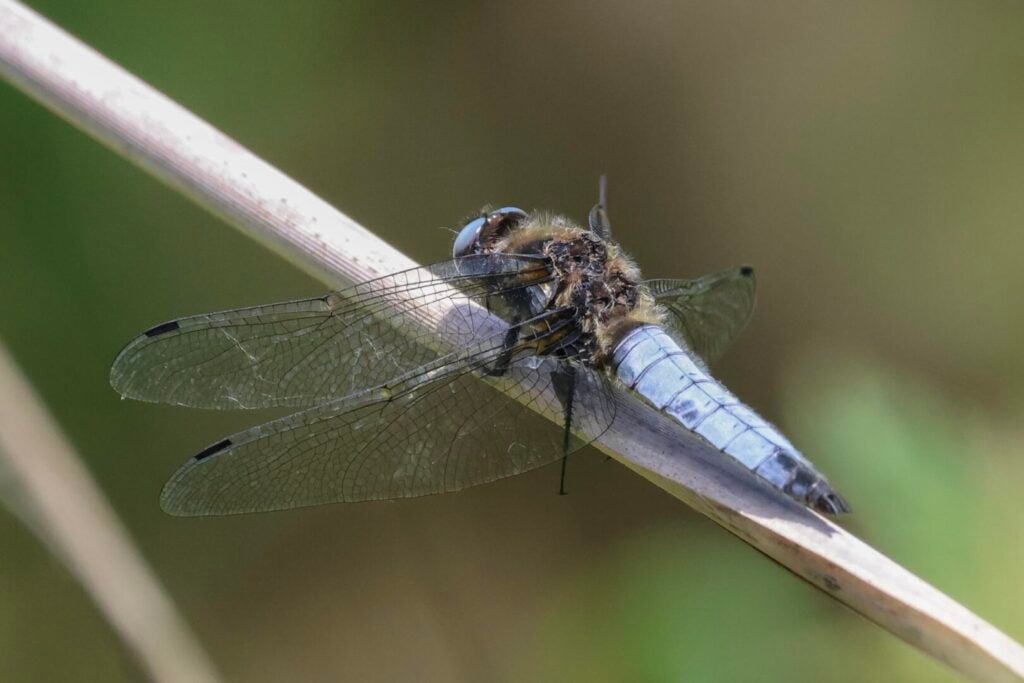
We had a brief glimpse of a Hobby out beyond the Broad, so we decided to try our luck out at Fen Hide. Out on Sandy Wall, it was very blustery now, despite the sunshine. Looking out over the meadows, where it had been reported mid morning, we couldn’t see anything. We found a male Scarce Chaser sunning itself on the brambles and a Brimstone butterfly nectaring.
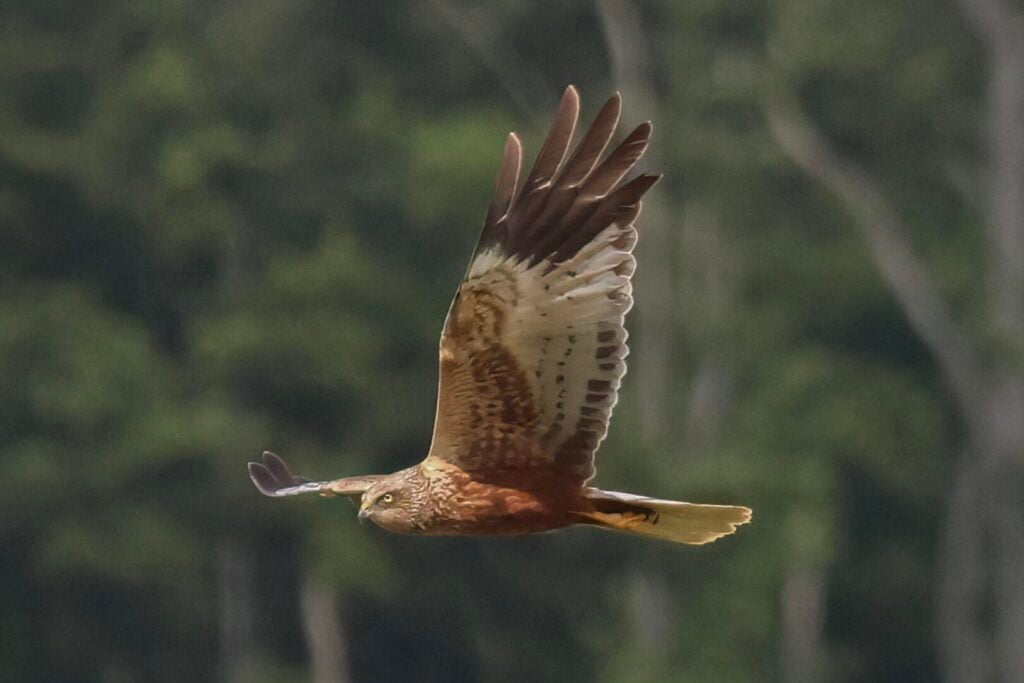
Looking out over the reedbed, through the gaps in the willows, we could see several Marsh Harriers. Two Hobbys circled over high. A Jay flew past and a Water Rail squealed.
We had been told Fen Hide was very busy, but surprisingly there was only one person in here now. We sat down and scanned over the reeds. There were several Marsh Harriers back and forth. Occasionally, a Hobby flew over – mostly distant, but one close over the roof of the hide. It was obviously too windy for the Red-footed Falcon to be hunting. It would probably be perched in a tree somewhere more sheltered.
A brief Bearded Tit skimmed over the reeds but dropped straight back in. Two or three Common Terns were over the pools in the reeds further back. Three Stock Doves flew round. A Chinese Water Deer was on the edge of the reeds briefly. Several Black-tailed Skimmers flew round low over the water.
Unfortunately, we were out of time. We had a long drive back to Hindolveston and we had to leave or we would be late for dinner. A solid start today – we go again tomorrow.