Day 1 of a 3-day Winter Birds, Brecks & Goshawks tour. It was a very grey morning with light drizzle on and off. Things gradually dried out in the afternoon and the sun was out by the end of the day. We spent the day in North Norfolk.
We met this morning at White House Farm in Hindolveston, as usual. On our way up to the coast, we made a small diversion round via some fields where a large flock of finches has been feeding recently. As we drove up, we could already see lots of Chaffinches flying round.
We parked on a concrete pad a bit further down. Several Tufted Ducks and Coot were out on the farm reservoir opposite. A Green Woodpecker was yaffling behind us.
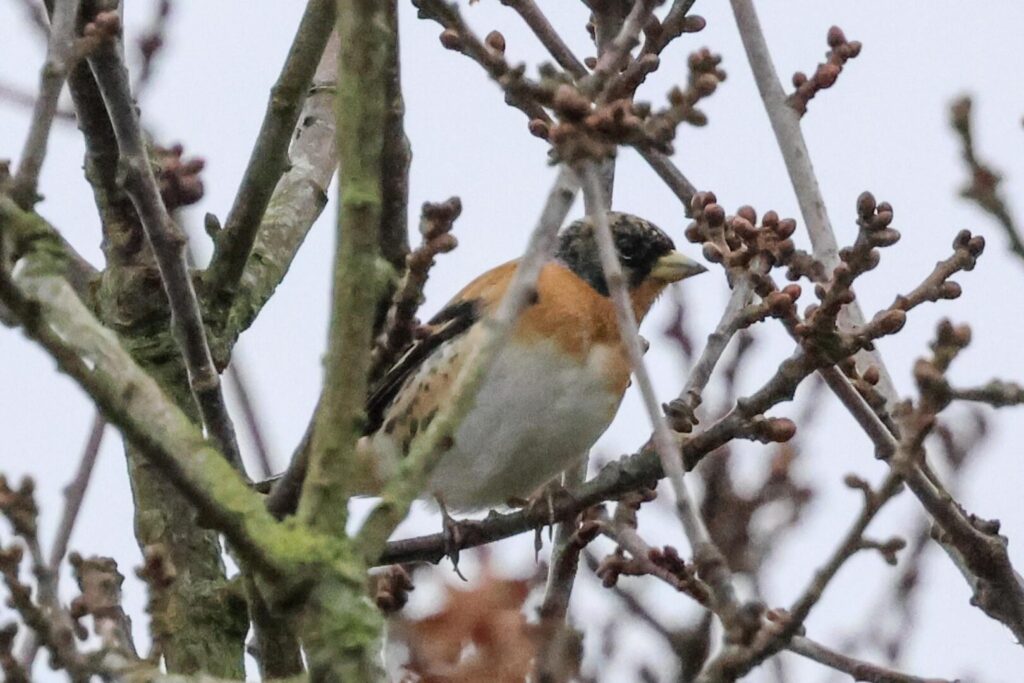
As we walked back up along the road, a couple of Bramblings flew up into the oak tree above us. They have been scarce this winter. Probably very mild weather in Scandinavia last autumn and early winter meant that comparatively few bothered to come all the way to the UK. This is one of the few places we have seen a few recently, hence our quick stop here this morning.
Two more Bramblings flew up into a small tree in the hedge a bit further down. Two Reed Buntings landed in the hedge too. There were some more Bramblings with the Chaffinches in a small patch of bushes in out in the middle of the field, and one or two Greenfinches too. A Marsh Harrier drifted over. Mission accomplished here, we walked back to the minibus and continued on down to the coast.
It was drizzling steadily. Only light, but we headed for Cley where we could at least get in a hide. As we walked down along the Skirts path, a Cetti’s Warbler shouted from the reeds. We turned in time to catch a quick glimpse as it shot across. Typically it disappeared deep back into the reeds as soon as it landed. A Little Grebe was diving in the main Catchwater Drain as we crossed the bridge.
Along the path to the hide, several Stonechats were flycatching from the reeds either side. of path. Probably at least six of them, but they were hard to count as they were on the move all the time.
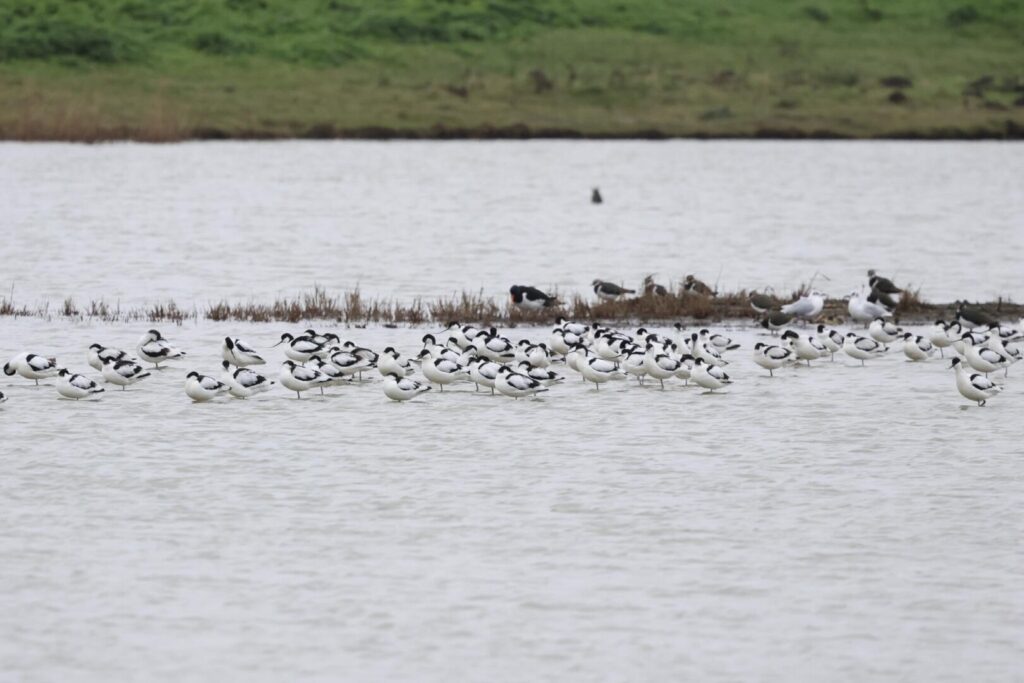
Into the hide and we could see lots of Avocets out on the scrape now. Numbers have increased steadily over recent weeks and we counted at least 140 on here today. A couple of Black-tailed Godwits were roosting in with them.
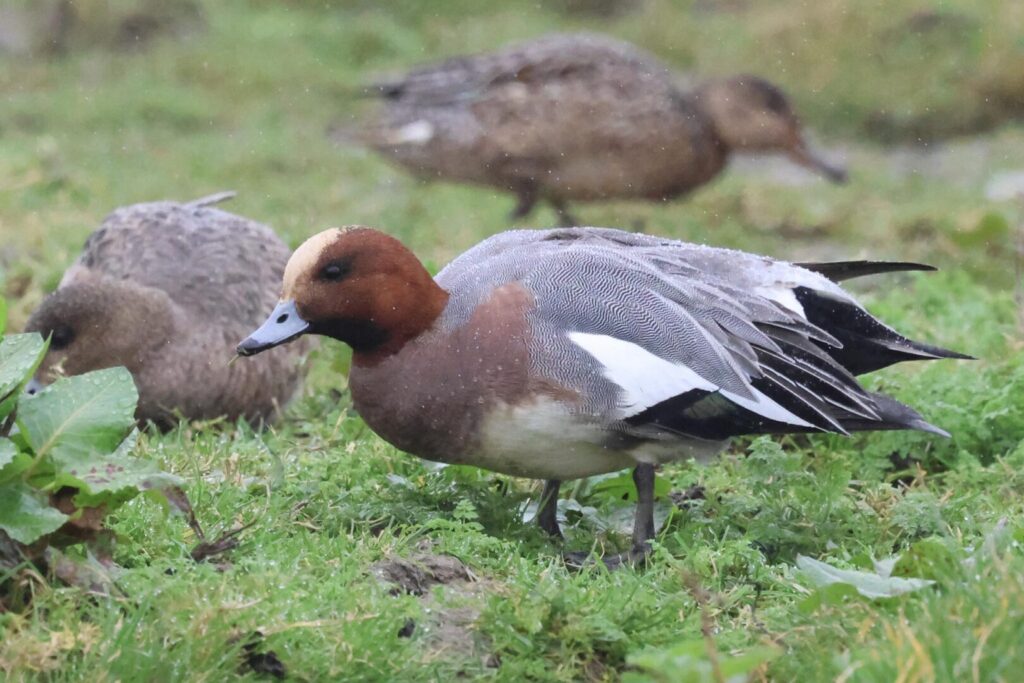
There were several Shelducks and Teal scattered around out on the water. A small group of Wigeon was feeding on bank in front of the hide. Two Shoveler were asleep on the edge of one of the islands at the back. We had a good scan but couldn’t find any snipe on the cut reed in front of the hide now, and the Water Pipit remained wherever it was hiding too.
The drizzle seemed to be easing off so we made our way back to the minibus. We drove on east to Sheringham next and parked by the ornamental gardens on the clifftop. As we started to walk round, we quickly found the overwintering Eastern Black Redstart perched on a low wall in front of us. Obliging as ever, we stood for a while and watched it feeding in the flower beds.
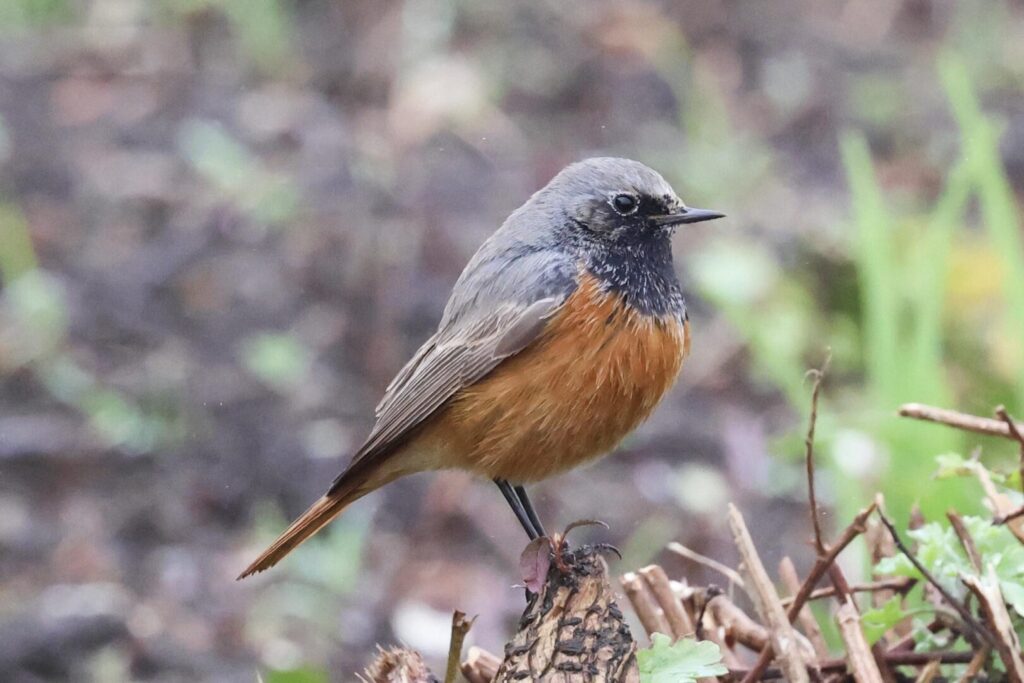
After a while, the Eastern Black Redstart worked its way round behind us and disappeared behind the clifftop shelters. It reappeared briefly on top of the arch then dropped down and we lost sight of it again.
Down through the arch, we stood by the benches on top of the prom shelter and scanned the sea. There didn’t seem to be anything offshore today, just one of two of the local Cormorants flying past. There were a few gulls around the groynes, mainly Herring and Great Black-backed Gulls but a single adult Lesser Black-backed Gull was perched on the basket on the end of one. We could see its yellow legs in the scopes. Further down, a few Turnstones were scattered around on the rocks.
The drizzle had been coming and going all morning but seemed to be easing again. We decided to go for walk back at Cley. As we parked in front of Walsey Hills, we could see a Spoonbill feeding out on the grazing marsh opposite. Seven Grey Herons were standing out on the edge of the ditch nearby too.
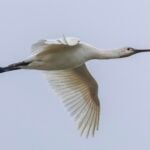
As we walked down along the road, a Little Grebe was diving on Snipe’s Marsh. From up on the East Bank, we had much better views of the Spoonbill now. It was feeding in the pools and channels on the grazing marsh, head down, sweeping its bill back and forth in the shallow water. When it came out and walked across to the next channel, we could see its shaggy nuchal crest and yellow-tipped black bill. A smart breeding adult, hopefully prospecting.
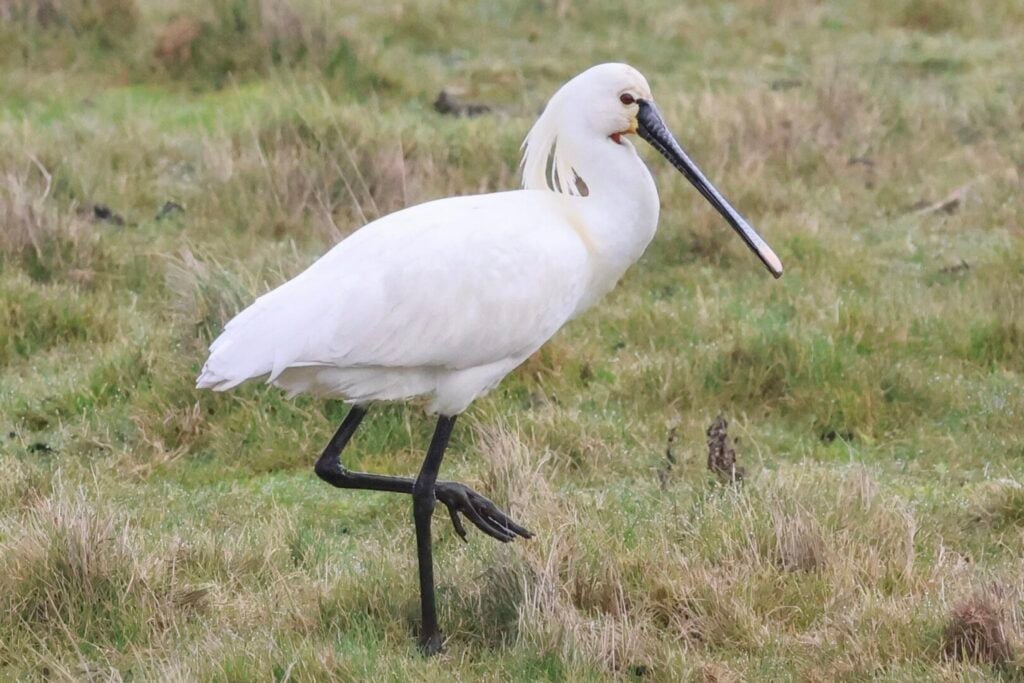
Despite the weather, there were several Lapwings displaying out over the grazing marsh and one or two Skylarks singing. There are a good number of ducks out here still, mainly Wigeon and Teal. We could see more Shoveler and Shelduck further back on Pope’s Pool.
We were just watching a Ruff with a damaged leg limping over the grass in front of the pool when something flushed everything. A small flock of Golden Plover circled round, before eventually landing with the Lapwings and Starlings back in the grass. Nice views through the scopes. We could see several more Ruff and a small group of Dunlin here too now.
As we continued on, we managed to find a couple of Common Snipe asleep in the wet grass by the Serpentine. A couple of Meadow Pipits were feeding with the Pied Wagtails on short grass beyond the water.
Several Marsh Harriers drifted across over the reedbed and in and out over the East Bank. At one point a male came back in with something in its talons. A female circled up calling, but the male didn’t seem interested. We couldn’t see whether he dropped the food for her or carried on with it. A reminder they are getting ready for the coming breeding season already.
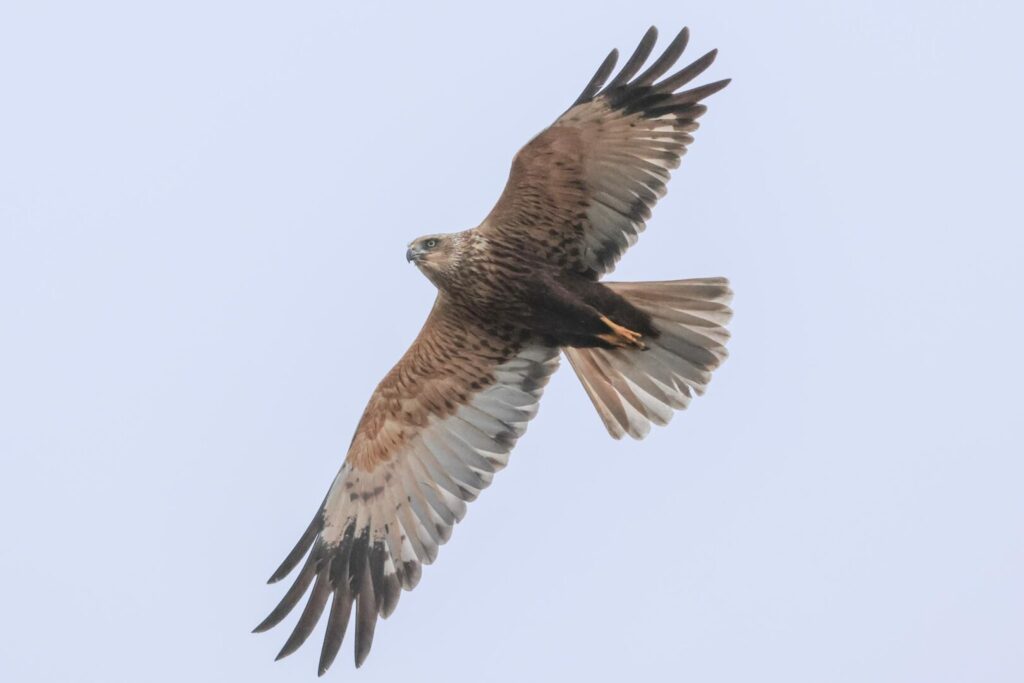
On to Arnold’s Marsh, we could see lots of waders. Mainly Dunlin and Redshank, but also several Curlew and a single Black-tailed Godwit. A couple of Ringed Plovers were feeding on the shingle margins. Three Pintail were upending right over in the back corner. There was nothing different on the Brackish Pools, but a single Curlew was feeding right by the path as we passed.
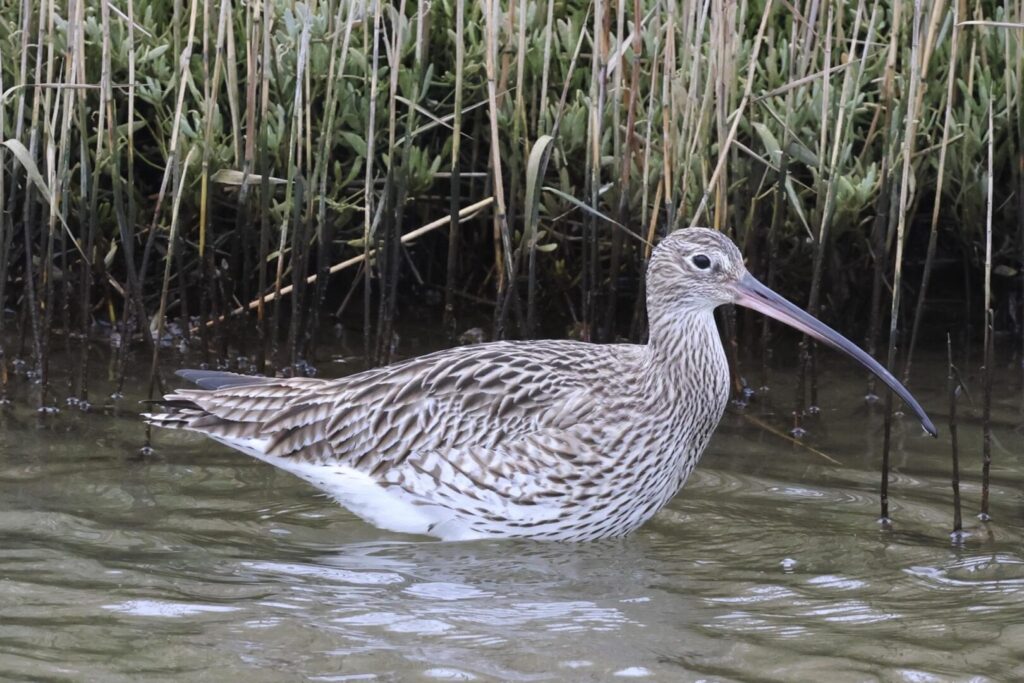
Out on the beach, we had a quick look at the sea. Much as at Sheringham earlier, it was pretty quiet here too today. We did manage to find a couple of very distant Guillemots on the water. Four Dunlin flew past, the only sign of anything moving.
Walking back along the East Bank, there were two Spoonbills now on the grazing marsh. Doing what Spoonbills like to do best – sleeping! A Chiffchaff flicked up out of the reeds as we walked back past Snipe’s Marsh. A small skein of Pink-footed Geese flew in from the south and continued on high west. Presumably on the move, possibly coming up from the Broads.
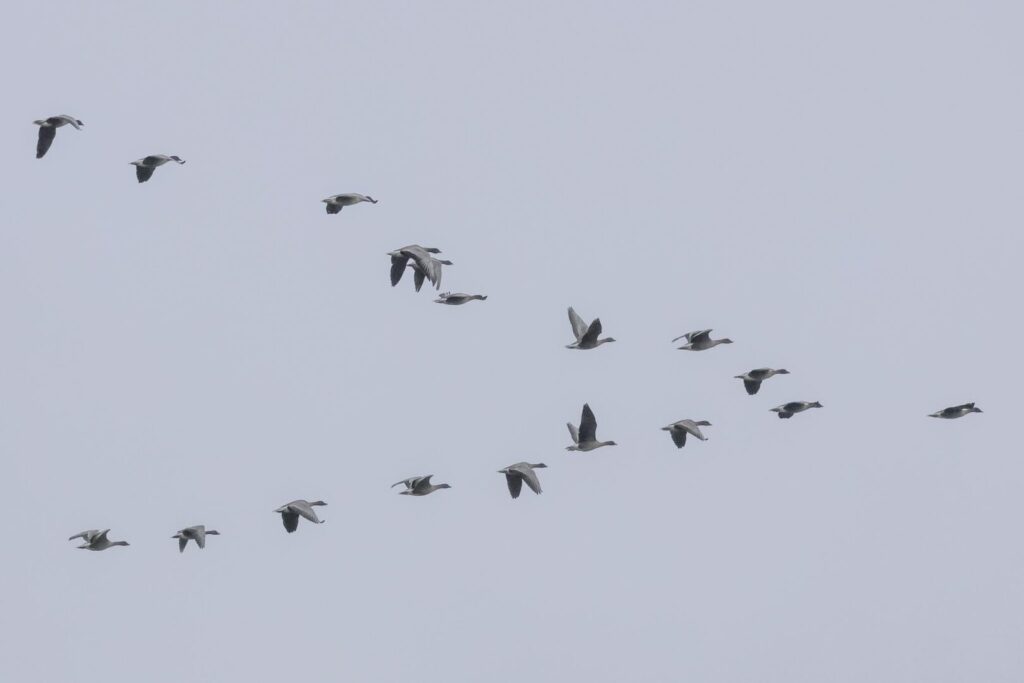
It was dry now and a bit brighter, so we made our way back to the Visitor Centre for lunch. We managed to make good use of the picnic tables, but just as we finished up it started to drizzle again.
As we drove on further west, we stopped briefly at Stiffkey. The three Glossy Ibis had been reported on the flood opposite the Red Lion again in the last couple of days. When we arrived, the Wigeon were a bit scattered. Some further up, others over towards the houses, and few on the main part of the flood. Perhaps they had recently been spooked? There was no sign of any Ibis though so we didn’t linger.
We carried on to Holkham. As we drove in along Lady Anne’s Drive, something flushed all of ducks up off the grazing marshes. We pulled up to one side just in time to catch the back end of a Peregrine flying away.
We parked up at the far end – unsurprisingly it was not very busy here today. The ducks had settled back down and there were lots of Wigeon out on the grazing marshes, plus a smattering of Teal. A couple of Egyptian Geese were on the big pool. A few Pink-footed Geese were distantly out on the grass, so we got those in the scope. More Pink-footed Geese were coming up from Quarles Marsh, over toward Wells, and flying off inland.
We could hear White-fronted Geese calling behind us, and turned to see a small flock whiffling down to land on the grass to west. As we made our way west along the track, the trees were quiet. There wasn’t much on Salt’s Hole today, just a couple of Little Grebes still, hiding in the reeds.
Just beyond, we could see the White-fronted Geese out on the grazing marsh behind and hear their yelping calls too. It was hard to get a clear view through the gaps in the trees though at first. Eventually we found an angle where we could get a better look. We counted at least 200 White-fronted Geese here, with more flying in all the time. A Great White Egret flew over.
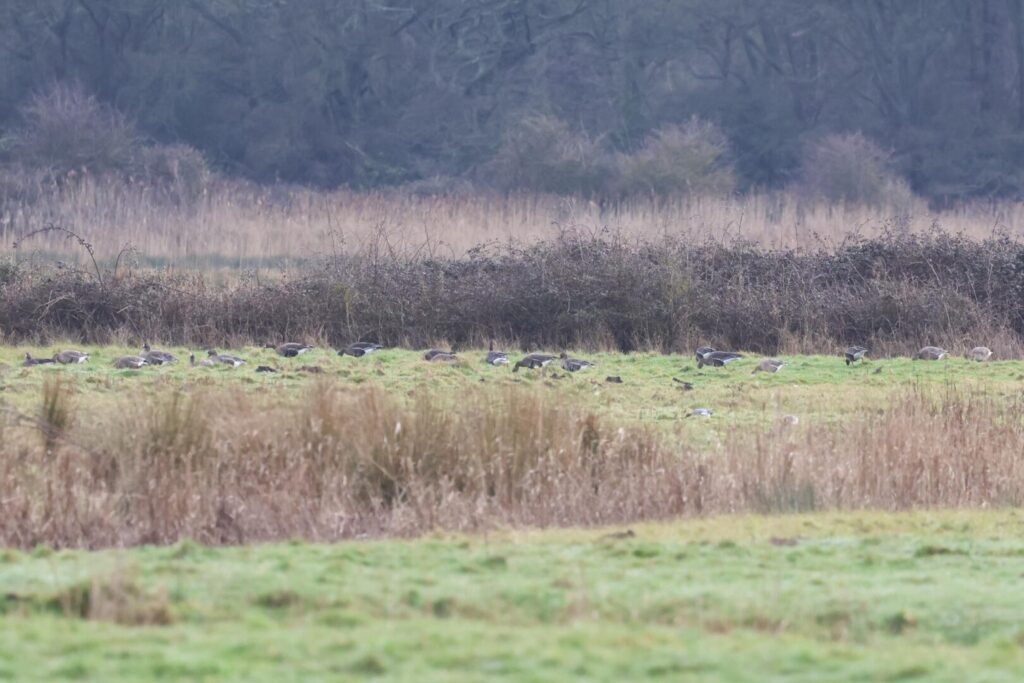
As we carried on west, we found another large group of White-fronted Geese on the grass beyond Meals House. We counted at least 130 here. There had been a big arrival of White-fronted Geese (and Tundra Bean Geese) into the UK this winter, probably pushed over from the Netherlands by cold weather there. Numbers here are much higher than we would normally expect – great to see and hear.
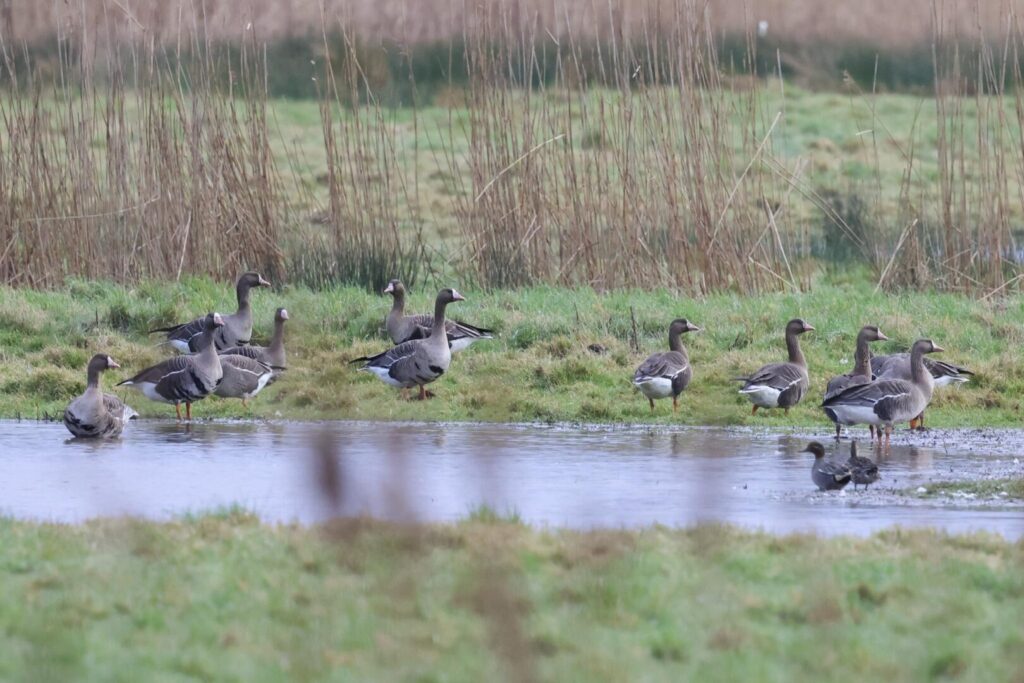
We managed to find one White-fronted Goose in the flock here which was fitted with a neck collar. Submitting the code online later, we found out it had been ringed back in January 2017 in the Netherlands. It has spent subsequent winters there and been seen presumably on migration also in Germany, Poland and Lithuania. This is the first winter it has been seen in the UK and it was first seen at Holkham back on 30th December.
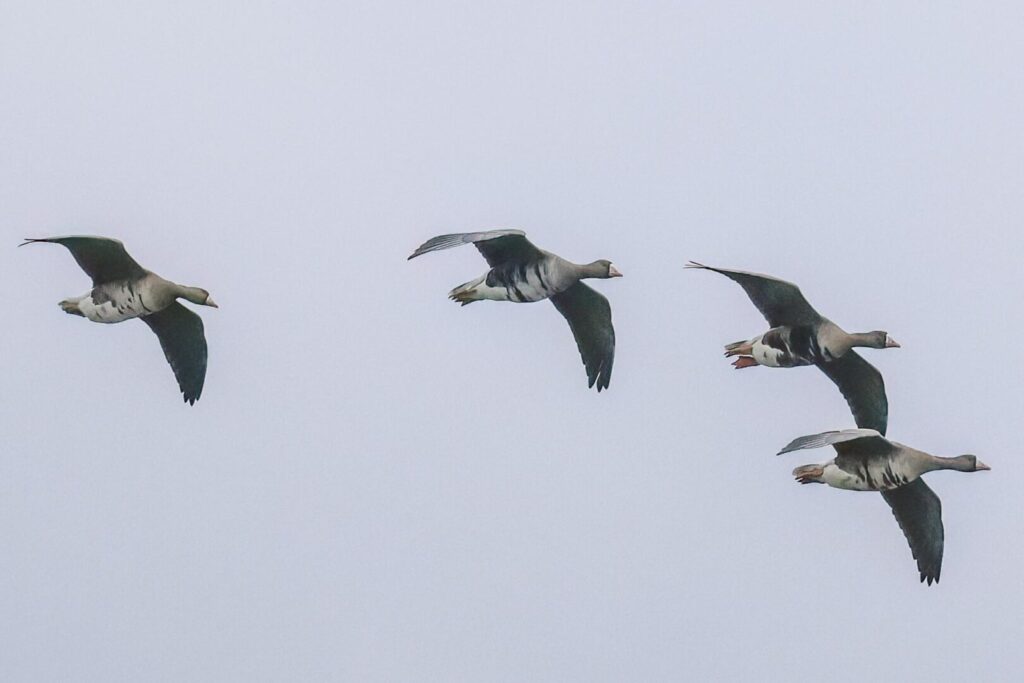
On to Joe Jordan Hide, the sun had come out now. We were looking into the light, but we shouldn’t complain! Another large group of White-fronted Geese were out on the grass to the west, at least another 180. More were flying in and out all the time. Looking through the scopes, we found two Pink-footed Geese with them and several Greylags but no sign of any Bean Geese today, which was what we were really hoping to find.
There were several Great White Egrets scattered around the pools out on the grazing marsh. We counted at least four, and a single Little Egret. Five Spoonbills flew up and circled round over the trees. They landed on the edge of one of the pools a bit further over, where they were joined by another two. The first Spoonbills always return to the breeding colony in early-/mid-February. Hopefully another successful breeding season ahead.
It was time to head back. We finally found some Long-tailed Tits in the holm oaks on Lady Anne’s Drive. We got back just in time, as they were getting ready to lock up for the night. The car park attendant was already closing the gate as we drove out!
On way back, we found a Barn Owl hunting by the side of the road. Given the weather this morning, it had been a very successful day. More tomorrow, back for tea and cake now.